The Unsuspected (1947)

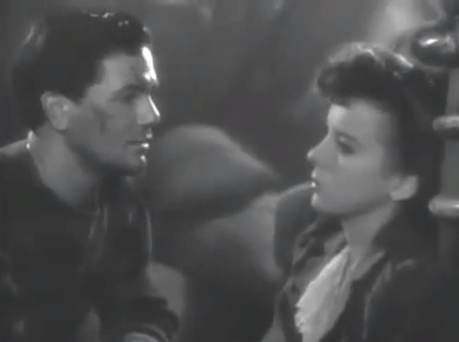
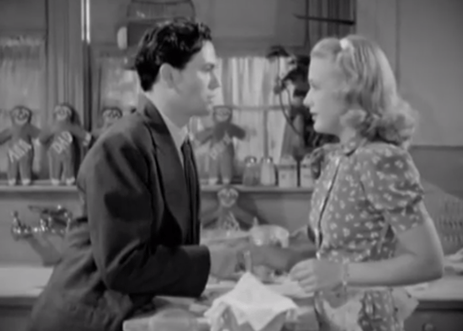
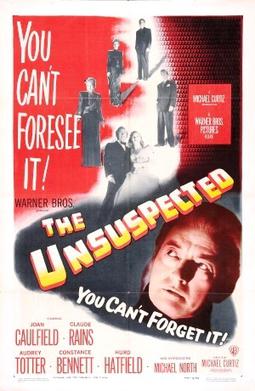
The Unsuspected has a delicious opening dripping with a foreboding chiaroscuro atmosphere. It’s the dead of night. There’s a woman on the telephone tucked away in a back room. The familiar face of Audrey Totter picks up on the other end of the line. She’s out enjoying herself at a club with some male company.

Someone emerges and descends on the flustered secretary. Moments later, she winds up hung from the ceiling — a grisly murder framed as suicide. For ’40s Hollywood, it doesn’t pull punches.

Since Totter is a consummate femme fatale, it’s easy to question what angle she could possibly have in this whole affair. We don’t have the answers, and so we must follow the rest of the film to find out; it’s a genuine pleasure to be afforded the opportunity.

If it’s not apparent already, we are in the hands of professionals with Warner Bros. stalwart Michael Curtiz directing a screenplay by Ranald MacDougall and the director’s wife, Bess Meredyth.

The film is dressed up nicely for a bit of noirish drama with the added benefit of the shadowy, gothic interiors when the story moves to the abode of one Victor Grandison (Claude Rain), a revered radio mystery performer who is reeling after the death of his secretary and the loss of his beloved niece who perished recently at sea.

Rains is an actor with such poise and regality, but building off his turn in Notorious, he plays another complicated figure. It’s a role worthy of his talents, and he anchors a packed menagerie of the usual suspects.

Totter as the sultry Althea always seems to take vindictive pleasure in playing the venomous harlot, and she’s just about one of the best from the era. With her arched eyebrows and intense eyes, she reflects the perfect epitome of an opportunistic, venomous vamp. Though it’s possible she only looks the part. Other people are willing to stoop to murder.

Her inebriated wet noodle of a husband (Hurd Hatfield) feels like a non-entity in comparison, and that’s precisely the point. Fred Clark always has a shifty authority about him, and he’s a close associate of Grandison. Over time, we realize he’s actually the local police detective, a handy man to have as a friend…

The ubiquitous Classic Hollywood heavy Jack Lambert is introduced in one lingering shot, looking out the window of some dive hotel window. What could he have to do with all of this? It’s difficult to implicate him immediately, but we know he’s waiting there for something.

Constance Bennett might just be the finest addition to the cast. She was the wit and experience like Eve Arden a la Mildred Pierce, both beautiful and able to trade banter and wisecracks with just about anyone. She lends a sense of levity to a movie that might otherwise feel oppressively dour. In some ways, she lives above the fray of everyone else, providing a kind of narrative escape valve for the audience.

If you think you already have a line on The Unsuspected, it’s a joy to mention it’s a movie full of perplexing wrinkles. A mysterious stranger (Michael North) shows up on their doorstep unannounced like a specter, and he asks to see Grandison. His next claim is even more outlandish: This young man, Steven Howard, was secretly married to Grandison’s niece Matilda.

Then, a dead person is resurrected like an apparition. Joan Caulfield’s character suffers from a cruel lapse in memory. What happened to her? I should have noted it sooner, but she has the aura like Gene Tierney in Laura, down to the portrait.

Like that picture, it’s a movie spent deciphering people’s motives; it feels like everyone is keeping secrets and no one wants to tell. Is it a case of elaborate gaslighting? It’s not unthinkable in the noir worlds of the 1940s, and Caufield is a ready victim, so sweet and innocent.

What are we to think? Who can we trust? In taxicabs, we find conspirators of a different kind — those trying to ascertain the truth behind a suicide. Because they know there is more than meets the eye.

Matilda returns to her home, lighting it up with the glow of her virginal white countenance in the dark recesses of the family mansion. It feels like oil and water. She does not belong there, but the story is still unresolved. There are several skin-crawling moments as Matilda is subjected to danger with a touch of Hitchcock’s Suspicion (1941). Something’s not quite right, but perhaps her mind is playing tricks…We know she’s not crazy.

It might be low-hanging fruit, but the crucial nature of the antagonist makes the film feel like an early precursor to the Columbo series. Although we don’t know everything right away, eventually the audience is given the keys to the murder, and we must sit back in earnest to watch how they play out, from botched murders to car chases with the police toward the city dump.

I’m also intrigued by the trappings offered by murder mystery radio programs, and though they are used in other films like Abbott and Costello’s Who Done It?, to my knowledge, they aren’t as prevalent in Classical Hollywood as one might imagine.

There’s a delightful meta-quality with Grandison narrating plotlines that played out in the story around him, adding another perturbing layer for the filmmakers to play with. It feels especially fitting here, thanks to Rains’s mellifluous voice and the continued prevalence of mystery and true crime stories to this day. It seems like we still can’t get enough of them over 75 years later. The Unsuspected represents the best of Warner Bros. and the mystery genre, wrapped up in a movie that rarely gets talked about.

4/5 Stars
King Creole (1958)

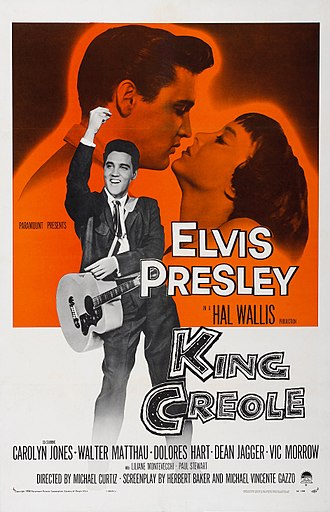
It might be on the nose, but Elvis Presley doing a call and response rendition of “Crawfish” from his balcony with the lady vendor (jazz singer Kitty White) on the street below places us instantly in the movie’s milieu.

We’re in the French Quarter of New Orleans, a place blessed with so much musical culture thanks to the Black community. Like many films of the era, they exist on the periphery underrepresented and unappreciated, but they must be acknowledged.

King Creole came out at an earlier juncture in Elvis’s career. He still has license to be himself, and yet the cult of Elvis doesn’t completely overwhelm director Michael Curtiz’s picture. It’s about “The King” in so many ways, yes, but it still has an identity outside of him as a genuinely absorbing story.

His movie career went down hill when everything was about formula and easy cash grabs relying solely on his personality. King Creole actually has substance and danger because it functions as both a vehicle for him and a genuine showcase for his talents and the talents of the actors around him.

Danny Fisher (Elvis) is a teenager who works bussing tables, morning and night, while he tries to squeeze in high school. It’s a tough schedule to maintain, and he’s already failed one year. But his father (Dean Jagger) is out of work so he feels there’s no recourse but to continue in the dive establishment. Danny’s a good kid dealt a tough hand.

It gets even worse one evening when a couple of drunken thugs induce him to sing for them, and then start pushing around one of their lady friends (Carolyn Jones). He comes to her defense, but he has a target on his back and his new female companion causes a mini scandal (and fistfight) on the last day of school. He flunks out again and that’s the end of his short-lived scholastic career.

I feel compelled to bring up Blackboard Jungle because although they’re set in different places, we’re dealing with the same segment of society: struggling working-class teenagers.

You could easily see Elvis in a version of that film especially because it was one of the instigators of the rock ‘n roll craze in movies. King Creole also depicts  delinquency though not purely in an instructive sense. We feel like we are watching a movie that’s entertainment first without an attached agenda (aside from banking on Elvis’s stardom before he was drafted into the military).

It evokes the aesthetic of gangster movies of old with Bogart and Cagney, which were directed by Curtiz two decades prior. King Creole has a self-contained world. There’s nothing outside these sets and the interiors that make up the movie. And there’s a sweaty claustrophobia to the tenements and cruddy street corners.

The French Quarter positively oozes with atmosphere, but there’s no way to run away because everyone and everything is tied together. It just so happens that Maxie Fields (Walter Matthau) pulls most of the strings.

The money, economy, and the inertia of almost everyone gravitates in and around the big kahuna. It’s just the way he likes it. He calls for Danny since he’s heard about his voice and his tenacity. Also, Ronnie (Jones) is his girl and he’s a jealous, vindictive man. He likes to keep tabs on what’s his.

Danny takes a job singing at the only spot Maxie doesn’t have his hands in — the modest club King Creole — and he becomes a local hit. Meanwhile, he reluctantly falls in with a few ambitious street hoods led by Vic Morrow. They’re vying to join Maxie’s payroll.

It’s the old story of Danny trying to stay out of trouble, and yet he’s constantly drawn in by want of money and further ashamed of his father’s subservient role as a stooge at the local drugstore. He also starts seeing a pretty shop girl (Dolores Hart). Although his intentions seem far from honorable, there’s still something sympathetic and not fully-formed between them.

All the narrative sinews don’t fit together seamlessly, but I appreciate the dynamics with different actors rubbing up against one another like matchsticks. There is a gritty, operatic quality to it. The music elements are a case and point, allowing us to stretch the parameters of reality just a tinge as Elvis entertains his audience both in-camera and beyond the screen.

Carolyn Jones could be a kind of one note Carmen-like Vamp — the other woman pulling Danny into the web, and she does this, but it’s all in spite of her best efforts. She wants him to get away from Maxie and the same hold the gangster has over her own life. Perhaps in the back of her mind is the hope of some freedom and a life beyond for both of them outside of this private hell.

What can I say about Walter Matthau? It amuses me to even make this comparison because I had never thought about it until this film, but Matthau had a trajectory similar to Bogart’s. Based on how I perceive him in hindsight, I always find it funny he started out as a heavy, and over time he became not only a comic hero but a leading man and a love interest. Here he’s everything despicable and abhorrent about local crime.

Dean Jagger could play characters with such bearing and integrity, and yet in a picture like Bad Day at Black Rock or here, he isn’t squeamish about portraying a bona fide weakling. It’s not a showy part, but there is a sense of bravery to it.

Vic Morrow’s still fairly early in his evolution as he moves on from Blackboard Jungle in the next stage of his dashing hoodlum career. It would be easy to typecast him in the role since it fits so seamlessly.

The same might be said of Dolores Hart but for completely different reasons. She embodies the good girl of the movie reminiscent of Eva Marie Saint a few years earlier, representing a reach for something more tender and resolutely decent opposite Brando in On The Waterfront.

Hart’s eyes are always so vibrant even in black & white. I find it fitting when she divulges to Danny about Father Franklin, a man of the cloth she’s known her entire life — someone who’s excited to meet him. And yet Danny’s despondent over his own failings. He cannot bear walking into a church given his current crisis. Nellie represents a level of graciousness to him and of course, Hart famously gave up an ephemeral acting career to become a nun driven by a similar higher calling.

There’s weight to everything Danny does and every mistake comes back to haunt him. His sister (Jan Shepard) strikes up a relationship with the older owner (Paul Stewart) of the King Creole; their relationship also hangs in the balance.

We see Elvis at his most tortured and earnest because he actually gets some material to tear through and try his hand at acting. The part gives him even a small sliver of what Brando had in Waterfront or Dean in Rebel. You can’t put them on the same plane, but then Elvis did what they could never do on the stage with his voice and his pelvis. King Creole is the finest showcase he got to do both in the same film.

The fist fights are pretty epic, and they mean something. Violence is not glorified, but it is an integral and unabashed element of this story. It’s one of the few ways to bring equilibrium to the world.

I’m no pre-germ medical theorist, but a lot of these Classical Hollywood movies seem to function by their own unique humoral theory where you have imbalances of all these different fluid forces at work: the good and the evil, the apathetic and the weak. There’s constant interplay and war between them until finally some kind of stasis is found at the behest of the production code.

The bad is lost and all the abscesses, both corrupt and sullied, are excised until all that’s left in the primordial moral soup is the good. It doesn’t matter how wild the undulations. Finally, our hero is given an existence made up entirely of hope and happiness as everything is brought back into balance.

With the antagonist gone and the promise of a pretty girl’s love, Elvis is able to sing out one final ditty as all the most important people in his life look on with smiles. It’s a classic denouement that doesn’t devalue the seedy sides of humanity. It really is a fine piece of work and it just might be Elvis at his very best. It’s a shame his career took a more insipid trajectory going forward. Because he had so much more to offer beyond a pretty face and peppy music.

3.5/5 Stars

Classic Movie Beginner’s Guide: Olivia de Havilland

With the recent passing of Olivia de Havilland — one of the last living ties to some of the Golden Age of Hollywood’s hallowed classics — it seemed fitting  to acknowledge her talents in our latest classic movie beginner’s guide.

Her most visible role was that of Melanie in Gone With The Wind (1939) a film that has been the subject of a lot of important conversations of late about representation and censorship.

However, Ms. de Havilland’s career had many other facets. Two that will most likely be remembered are her sibling rivalry with fellow actress Joan Fontaine, and then her famed court case against Warner Bros., which was a landmark decision for actor’s rights. Here are a handful of her most memorable films you should search out showcasing her civility and grace.

The Adventures of Robin Hood (1938)

The Adventures of Robin Hood (1938)

Olivia de Havilland’s most illustrious on-screen partnerships was with Errol Flynn as she and the dashing Tasmanian actor starred in 8 films together. Captain Blood was their first foray together and began an auspicious screen romance bursting with chemistry (and conflict). The pinnacle was The Adventures of Robin Hood followed by other beloved classics like Dodge City and They Died With Their Boots On.

Charles Boyer and Olivia de Havilland - HOLD BACK THE DAWN ...

Hold Back The Dawn (1941)

On the prowl for more challenging and gratifying work other than a pretty damsel, Mitchell Leisen’s film scripted by Billy Wilder and Charles Brackett was a fine step forward for de Havilland. Her sympathetic schoolteacher opposite Charles Boyer took hold of a story of an immigrant’s purgatory and imbued it with swelling sentiment, heartbreak, and warmth.

To Each His Own (1946): Olivia de Havilland Does Melodrama Well ...

To Each His Own (1946)

At first, it doesn’t seem like a prestigious part, but Olivia de Havilland proved her talents spectacularly in this quintessential melodrama. She plays a middle-aged woman, who made the ultimate sacrifice for her son, charting her own course from youth in a small-town, war-time romance, and private tragedy. It’s ending is perfectly orchestrated for emotional impact.


The Snake Pit (1948)

The Heiress is, rightfully so, a hallmark of de Havilland’s career, exhibiting her immense dramatic talents, but equally emblematic is The Snake Pit. It becomes a harrowing portrait of a woman battling the voices in her head as she navigates a life in a psych ward. Far from being solely melodramatic, she grounds the performance making it as sympathetic as it is terrifying.

Worth Watching

The Charge of The Light Brigade, It’s Love I’m After, Strawberry Blonde, Dark Mirror, In This Our Life, Hush Hush Sweet Charlotte

The Sea Hawk (1940): Errol Flynn Against The Spanish Armada

sea hawk 1940.png

Anyone who knows even a smidgeon about historical dates knows what the big to-do with 1588 is. If anything, 1588 automatically means the sinking of the Spanish Armada by Queen Elizabeth’s forces. So when a film opens in Spain in 1585 we already have a good idea of where we might be going. It’s the voyage to get there which matters most.

I can’t quite help but see the parallels between Spain and the Nazis aspirations for world domination. Because in the year 1585 there is a King in Spain named Phillip II who not unlike an incumbent dictator in 1940 was looking to conquer all of Europe with England being a priority.

With this historical backdrop, Warner Bros. gathers another classic ensemble anchored by Errol Flynn and director Michael Curtiz along with the steady support of Alan Hale. Following his debut as a film composer in Captain Blood (1935), Erich Wolfgang Korngold returns to similar waters to provide the scoring once more.

The film does feel empty without Olivia de Havilland but she was by this point fed up with playing second or third fiddle in swashbucklers. Be that as it may, Brenda Marshall (the future Mrs. William Holden). with a shining countenance, fills in swimmingly in one of her most prominent performances.

Leading his pride and joy The Albatross in the service of her majesty Queen Elizabeth, English captain Geoffrey Thorpe (Errol Flynn) makes a glorious conquest of an enemy ship. The thrilling surf soaked cannonball-filled action picks up right in the same waters as Captain Blood.

He just happens to commandeer the boat carrying the Spanish ambassador (Claude Rains) across the English channels. It is the conniving man’s mission to ingratiate himself with the queen and being the two-faced scoundrel that he is, he finds Thorpe to be an incorrigible scoundrel.

Though he makes a monkey of court and her closest advisor Lord Wolfingham who seems quite sympathetic toward the Spaniards on a whole, Elizabeth is fond of Thorpe’s patriotic brand of cheekiness. Envisioning vast spoils at the hands of the Spanish, he takes on a clandestine mission off the record albeit with the Queen’s permission behind closed chamber doors.

Cloak and dagger countermeasures ensue as Don Jose looks to ensure that his mortal enemy will be cut off before he has any chance to do anything. Although initially turned off by the scoundrel, his daughter soon becomes enchanted by his chivalry even as she fails to intercept him in time. They are riding off into a trap.

They set out through the sepia-toned world of Panama in search of vast treasures to be plundered from their enemies. Instead, they get brutally ambushed and pushed back into the mosquito-infested swampland by the waiting conquistadors.

Whereas Captain Blood found Flynn starting at the bottom in The Sea Hawk he is brought down into the pits of despair once taken prisoner. He and all his men are imprisoned aboard a Spanish ship, oarsmen chained to their places and beaten mercilessly. They grind it out and take the torture while biding their time behind the oars.

It takes time but eventually, a chance is created culminating in a brazen escape attempt. The midnight mutiny is aided exquisitely moment by moment by Korngold’s score put on full display and nearly urging the men on in their quest while instigating an underlying tension.

The final burst of drama comes when Thorpe returns to shore, reunited with his love in her carriage making amends and sneaking back to the queen’s castle cloaked by night. Making it to the queen proves a nearly insurmountable task with all the guards on high alert and Wolfingham waiting to intercept him for one final duel. But Flynn could never be outdone and Henry Daniell is certainly no Basil Rathbone. The Queen gets the news and vows to battle the Spanish Armada. We know the rest of the story.

While not quite eclipsing the jaunty heights of Captain Blood, this worthy successor nevertheless has its own share of thrills and fine action with Flynn maintaining high form. Perhaps it’s partially a testament to how captivatingly the film opens because it’s difficult for any picture to maintain that kind of vigor all the way through. But with a valiant effort led by its charming rapscallion and his crew, they wade through any slow passages to bring us back around to the grade-A entertainment of a quality swashbuckler.

The production thriftily saved on funds by repurposing the exquisite period costuming from The Private Lives of Elizabeth and Essex from the prior year. They become a perfect extension of the storyline to match Flora Robson’s formidable turn as the Queen. Meanwhile, Claude Rains is transformed into a dark-haired Machiavellian villain which he pulls off with the required amount of duplicity. This time around, Flynn’s character is based on the legendary Sir Francis Drake and yet like Robin Hood before, the Australian falls into the part and makes it his own through magnetism, athleticism, and wit. It’s another sterling achievement.

Queen Elizabeth gives one final stirring message that again can be taken in its time as a veiled indictment of Hitler’s belligerent aspirations. America had yet to enter the war and yet in over a year’s time, they would be right by England’s side. It wasn’t quite the surprise defeat of the Spanish Armada but it would take long hard years of waves of sacrifice and hard toil against the enemy. Winston Churchill is said to have admired this picture immensely and it’s hardly difficult to see why. It sums up his guiding sentiments exactly. After all, he is the man who famously said:

“We shall fight on the beaches, we shall fight on the landing grounds, we shall fight in the fields and in the streets, we shall fight in the hills; we shall never surrender.”

4/5 Stars

Note: I watched the original restored uncut version of the film that clocks in at 127 minutes.


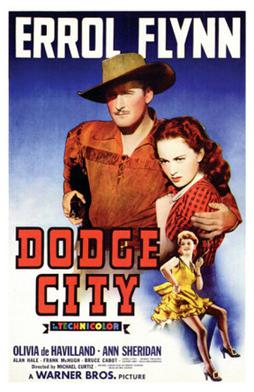
Dodge City (1939): An Errol Flynn Western

Dodge_City_1939_Poster.jpgThe year is 1866. The Civil War is over and anyone with vision is moving west. One such outpost is Kansas where the railway is replacing the stagecoach. It’s a world of iron men and iron horses. Because a place like the notorious Dodge City is a “town that knew no ethics but cash and killing.”
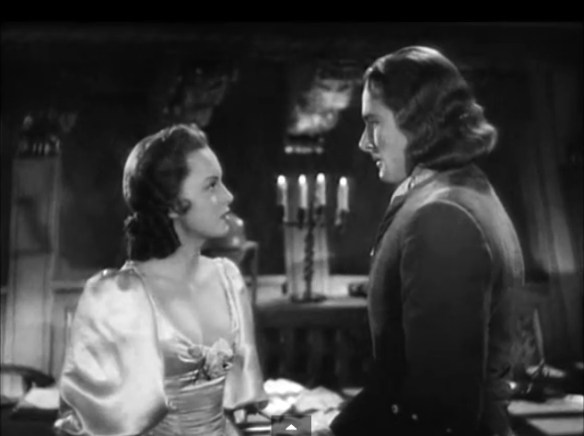
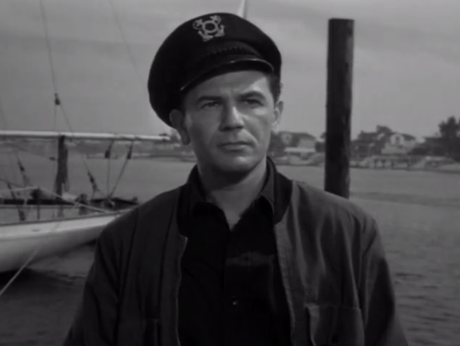
It’s not a decent place for children and womenfolk for the time being. But some affluent magnates with vision see the profits it affords. That’s their business. It will take others to smooth out the rawness and make it into a land worth cultivating and settling down in.

Though lawlessness runs rampant in the streets led by town bad boy Jeff Surret (Bruce Cabot), a wagon train led by a caravan of seasoned cowhands looks to be yet another signifier of change. Because one of the men riding with the rest is self-assured Wade Hatton (Errol Flynn) supported by his pals. You can bet even with an accent Mr. Flynn makes an able-bodied western hero but he’s not alone.

Alan Hale was forever Flynn’s right-hand man from Robin Hood to The Sea Hawk (even playing his father in Gentleman Jim). They also get the boisterous and yet generally good-natured Tex (Guinn Big Boy Williams) to round out their trio. Hatton has his eyes on a pretty passenger who is easy on the eyes. Unfortunately, her younger brother is a drunken hellraising nuisance. He instigates a stampede that turns deadly and from thenceforward Wade and Ms. Abbie Irving (Olivia de Havilland) have a contentious relationship at best.

Seeing Dodge growing so much leaves everyone all agog. Never has a western outpost been crammed with such activity. It feels authentic in one sense. You understand how disease and waste could begin to run rampant in such a bustling atmosphere and crowded conditions. Hatton gets his first taste of Surret when one of his business associates named Orth is shot. But the story is not all drama.

In an ongoing scenario, the boisterous Algernon Hart (Hale) forgoes the tempting calls of the local Gay Lady Saloon for the Pure Prairie League, residing right next door, attended by all the town’s most proper womenfolk.

What follows just might be one of the finest brawls ever, spilling over into the lady’s social, overwhelming the scene with all sorts of gory sights and gut-busting crashes, bams, and bangs. It feels wild, alive, and somehow thoroughly enjoyable. Maybe because we get to sit on the outside looking in at the merry madness accompanied by whoops and raucous accordion music.

What’s more, it forces a response. A drunken Hart is singled out by Surret and his thugs who get ready to string him up in the plaza right then and there. While Hatton quells the injustice without a standoff, there’s a sense that things will only continue to escalate. No sheriff will stick out their neck in such a country. No man seems strong enough.

Finally, a child (Bob Watson) is lost; it’s the final straw and Hatton vows to clean up the streets and bring civility, law and order to the territory. Rounding up the rowdy troublemakers and ending the citywide shootouts forcibly. He clamps down like no one has ever done and it begins to make things peaceable again.

It’s the old story of civilization moving in on the wheels of law and order, which slowly begin to push out the graft and corruption. Someone must have the guts to lead the crusade with ideals and guns, if necessary. But it takes a community behind him to make it stick.

In this case, he is backed by the paper and its audacious editor Joe Clemons (Frank McHugh) an ardent purveyor of free speech. Change happens incrementally. Scare tactics come and go. De Havilland joins the paper too in order to represent the interests of the local ladies and then becomes an integral member of Hatton’s crusade for good. He takes Surret’s right-hand man Yancy (Victor Jory) into his custody knowing full well that fierce retribution is coming.

Because it’s common knowledge that when two immovable objects come barreling toward each other, there’s bound to be drama. In Dodge City it comes to pass in a flaming railcar finale, one moment dire and in another thrilling, with faceoffs, ambushes, gunfights, prisoners, hostages, and some stellar sharpshooting. But a man like Wade is not meant to remain stagnant. Husband and wife ride off toward their next adventure on the range.

It truly is double trouble with Ann Sheridan and Olivia de Havilland. But Sheridan’s role had the potential to be far more compelling than it is, unfortunately. Aside from a few musical numbers and screaming for a brawl to stop, she doesn’t get much screentime before disappearing for good.

De Havilland is the obvious ingenue love interest and though she abhorred the unimaginative parts she was being handed, she nevertheless has ample talents to imprint herself on the picture. She and Flynn go through the expected beats of mutual distaste toward ultimate affection, and we delight in their chemistry even if it’s easily plotted from start to finish.

However, to survey Dodge City is to look at various pieces that feel almost incongruous. Here is Erroll Flynn playing a cowboy. The palette is Technicolor but the action is focused on towns and interiors opposed to magnificent plains. It’s not Ford. It’s not Wayne or Fonda, and yet it manages to be a fine actioner to add to the western canon due to compelling characterizations, deep-seated conflict, and of course, enough gunplay and romance to make it a true horse opera.

4/5 Stars

Captain Blood (1935) Starring Flynn and De Havilland

Olivia_de_Havilland_and_Errol_Flynn_in_Captain_Blood_trailer

To a certain stratum of society — namely classic movie fans — it’s nearly impossible to imagine Errol Flynn and Olivia de Havilland not being paired together or not being box office draws, for that matter. However, on both accounts, in 1935, the studio was taking quite the risk, still undoubtedly reeling from the heart of the Depression Years and shelling a hefty sum of money for a vehicle essentially starring two unknowns.

Sometimes you catch lightning in a bottle, and it remains for all posterity. Scoring, again and again, is quite another matter entirely. The pair would be placed together in an astounding 8 films in total!

This initial entry opens in England in 1685 and a band of patriotic rebels has taken it upon themselves to depose the current tyrant James II. Though he chooses to forego involving himself in the fighting, physician Peter Blood nevertheless goes with them in spirit and is ready and willing to operate on a fugitive who is mortally wounded. However, in the process of attending to the man, the king’s guards burst in upon him and all involved are arrested.

Their future is decided in a trial of pomp, circumstance, and unyielding justice. There are few figures in the legions of contenders as charismatic as Errol Flynn, beginning with his attempt to exonerate himself and extol his own noble profession. Even that fails to keep him from the executioner though the king fancies himself a humanitarian and decides to send the lot of traitors on slave ships to the West Indies instead.

There is a blatant irony in the depictions of white slavery while the deep wounds of black slavery were still being felt in our country through the oppression of Jim Crow Laws and racial injustice. This continues on the island plantation prison where the lads find themselves.

There they are sold on the auction blocks like chattel though much to his shame, Blood finds himself indebted to a pretty matron Arabella Bishop (Olivia De Havilland) who bought him for 10 pounds. Their relationship begins on the rockiest of soil and life thereafter is hard. Though eventually, Dr. Blood gains favor when he cures the hissy hypochondriac governor of his gout, earning himself greater freedom.

And with that the good doctor bides his time, planning an escape to coincide with a timely interruption on the outpost by Spanish Pirates. In the drunken escapades that follow, Blood gathers his men together, switching places with the invaders and a new band of pirates is born. They are a hardy lot including Blood’s faithful pilot and friend Jeremy Pitt (Ross Alexander), the sturdy gunner Hagthorpe (Guy Kibbee), and one Bible-spouting mate who has a bit of scripture for every occasion (And then the whale came and the whale swallowed Jonah. I hope!).

Their acclaim grows to such an extent that they fall into the company of a band of French Buccaneers led by a salty lady’s man named Levasseur (Basil Rathbone). He and Blood draw up a loose pact which quickly falls apart as they quarrel and end up dueling for the company of their esteemed “guest” Ms. Bishop. Laguna Beach, California ends up filling in for the Caribbean as they have it out in stirring fashion. Flynn and Rathbone were the best of foes when it came to crossing swords, even when they were purportedly allies.

In the final act, the outlaws are redeemed (like Robin Hood anyone?) taking up the banner of the new king William of Orange to fight a valorous battle for the glory of Merry Ol’ England. Thus, in spite of the tumultuous path he traversed, Captain Blood and his boys reach the pinnacle. He’s a hero and, of course, he gets the girl. There’s nothing her indignant uncle can do about it now as he’s been replaced by a far more benevolent governor.

I would be remiss if I didn’t ruefully admit how much I yearn for the epic swashbucklers of old. Captain Blood was the beginning of great successes to come and the type of Hollywood entertainment that is sorely missed today.

Although I hardly can remember their lips even touching, nevertheless, Flynn and de Havilland are fire together, all but cementing a screen partnership that would continue for many more. Even in the final scene together what becomes apparent is this genuinely contagious brand of fun. If anything they make it seem like a blast for the audience.

There’s a splendidly pulsating finale at sea where it’s convenient enough to cast inconsistencies overboard and instead be overwhelmed by the sheer mayhem of 2500 extras called on to do battle and make a show of it. They take to it handily clashing their cudgels, swinging from the yardarms, and falling into the drink, casualties of pistol fire.

Captain Blood is blessed with laughter as much as action and romance. The tenets of quality adventure filmmaking mean the picture enthralls us as much today as in its day because it knows what it means to have a good time. The seriousness can be shed for the sake of light-hearted, invigorating, no holds barred entertainment.

Because in the assured hands of Michael Curtiz, with a dashing new screen idol in Errol Flynn, Captain Blood never loses sight of what makes movies communal and thoroughly gratifying. Movies of old had a habit of being all things to all people, and it’s true this one has it all, I’m delighted to say.

The final testament is a smile imprinted on the face of the viewer as big as Flynn’s jaunty grin. Oh, what we wouldn’t give to be on the deck of that ship brandishing our cutlass and romancing a pretty young maiden just like he does. Maybe that’s my boyhood imagination speaking, but he really is the ideal action hero.

4.5/5 Stars

The Breaking Point (1950): Updating Hemingway and Hawks

the breaking point 1.png

Michael Curtiz, to all those who revere him, has far more than Casablanca (1942) on his resume. It’s stacked with classics including The Adventures of Robin Hood (1938), Mildred Pierce (1945), White Christmas (1954) and even a less-heralded picture like The Breaking Point.

Those familiar with the original source material, from Ernest Hemingway, might also realize an earlier version of the story was made starring Humphrey Bogart opposite his future wife, Lauren Bacall, in her crackling debut.

Director Howard Hawks helmed To Have and Have Not (1944), which proved to be very loosely based on the eponymous material indeed. About the only elements comparable between the two renditions are the oceanic atmospherics with salty seafaring types and other undesirables mixed together liberally. Though donning a new name and casting a new star in John Garfield, it’s easy to make the case that The Breaking Point is a lot more authentic.

To Have and Have Not is a delight because it is such a cinematic creation with indelible characters filling up a world, not unlike Casablanca, ironically. But its successor unfurls qualities that feel less done up and artificial in a still delightfully atmospheric Hollywood fashion.

the breaking point 3.png

One could wager it begins with a location that’s very much a real place. In fact, it’s a place I have known quite well in my lifetime. I was first tipped off to its whereabouts when Garfield gives money to his daughters to go see a movie and tells them to be careful on Marine Ave.

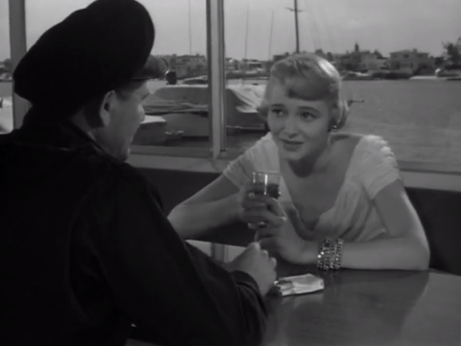
As I only know one Marine Ave., I double checked the film’s shooting locations and looked ever more closely at the exteriors. All this confirmed the fact The Breaking Point was shot in and around Balboa Island in Newport Beach, California. I know the area well as I used to spend some summer days there as a kid. The exteriors are most obvious when our protagonist comes back from the bar, walking by the docks, and he’s already day drunk.

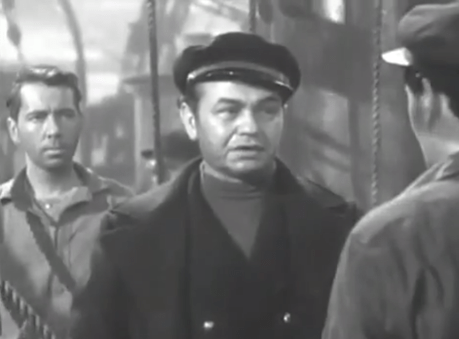
We have yet to describe any of the narrative but already we have something vastly different from its predecessor. The main character is a family man, a seaman, and simultaneously trying to drown his sorrows in alcohol. What adds insult to injury is the fact Harry Morgan (Garfield) was a highly commended Navy Seamen during the war. Except, ever since coming back from the war a hero, he’s never been a somebody and that’s hard to take for a proud human being.

All he knows is the sea and so he’s tried to make a go of it obdurately, working furiously to subsist off his boat but it seems like everyone is pushing his head underwater. Try as he might, he can never get ahead. He needs dough for the reasons we all do. To pay the bills. To put food on the table. To take care of his wife and daughters.

the breaking point 2.png

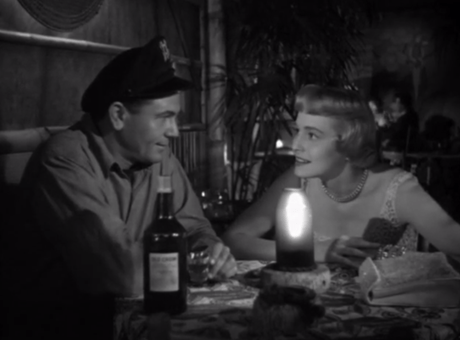
Soon Harry’s peddling a would-be fisherman and his gal pal (Patricia Neal) off the coast of Mexico. Of course, the shyster runs out without paying and leaves his girl behind. Harry’s been played for a sucker, stuck on the wrong side of the Mexican border, without any fare to get home. He’s kept his nose clean thus far but times are desperate. In a dive joint, he gets approached by a slimy undesirable, chomping on cigars and proposing a shady business proposition. Momentarily, our hero has been submerged back into the world of Bogart and Hawks.

He’s tasked with sneaking a group of Chinese passengers into American water illegally. However, following an altercation with his contractor (Victor Lee Seung), with Ms. Charles (Neal) and his mate Wesley (Juano Hernandez) aboard, he backs out leaving the Chinese behind. He’s escaped for now, his mores still intact.

But that doesn’t help him when he gets home. The Coast Guard soon confiscate his livelihood. His wife takes on work at home to try to compensate and he has one last chance to save his boat from being taken away from him in order to make ends meet. He feels compelled to take a second job bringing him back into cahoots with the same cruddy opportunist named Ducan, albeit reluctantly.

It’s in these dire straights where it becomes evident The Breaking Point is on the same moral plane as The Bicycle Thief (1946), where our protagonist is forced to make horrible decisions, all for the sake of his family. Should we blame him for the deadly finale that follows? It’s so difficult to enact decisive judgment.

Surely Patricia Neal has the flashy role because she’s the flirtatious blonde who’s never tied down and seems ready to get with anyone. But Phyllis Thaxter, even as she competes with the other woman, dying her hair in an attempt to win back her husband’s affection, has a softer more vulnerable tremor in her voice that feels so very transparent.

When we look into her eyes and see her get angry with her husband for not throwing in the towel and taking up a life on her father’s farm, the concern there is so very real. We understand it because it’s plaintive and deceptively unprepossessing. Because there are deep wells of beauty inside of her making the film’s romantic dynamics that much more intriguing.

John Garfield maintains the working-class persona he always seemed to flaunt so easily but here he’s surrounded by a family — two daughters and a loving wife, making his struggle all the more relatable.

He’s also a loving father bringing his daughters trinkets from his trips, cradling them in his arms affectionately, and slipping them change so they can go to the picture show again. The same goes for his wife. Even as they struggle and fight fairly regularly, over the kitchen table, there are other moments where he makes his love and faithfulness supremely evident. He compliments her looks and the new hairstyle she’s trying after the girls criticize it.

the breaking point 4.png

Because the one thing The Breaking Point is not is a story of infidelity. Sure, it comes close on multiple occasions with Neal playing the tantalizing siren but Garfield unreservedly loves his wife. He’s honest with her in that sense, even as he keeps other secrets on the side. He thinks it’s a way to protect his family and his friends. The waters of the film are undoubtedly choppy, even perilous; that’s partially what makes the solid rock of the marriage at its core all the more refreshing.

Any relationship with a firm foundation is predicated on transparency. There’s no other way if you don’t want to harm your spouse and push them further and further away. I admire The Breaking Point deeply for this unflinching portrayal of marriage that, while not always polished, feels inherently real.

4.5/5 Stars

The Sea Wolf (1941)

sea wolf 1.png

“Better to reign in hell than serve in heaven” – John Milton in Paradise Lost

Though some noir film layered in London fog is probably up for contention, otherwise, there’s arguably no movie murkier than this atmospheric sea-faring delight from Michael Curtiz. But what puts it above and beyond some of its contemporaries, especially swashbucklers like a Black Swan, has to do with a variability and surprising depth of characterization for what feels like such a minor vehicle.

From the framework of Jack London’s novel, screenwriter Robert Rossen has cleverly repurposed the material and made it thoroughly well-suited for the cast at hand, expanding the roles for his stars. For most of its running time, in fact, the story is aboard the ominously named vessel, “The Ghost,” while maintaining an unwavering level of intensity.

Certainly the aforementioned climate plays into it because it can exude a level of impending menace. Still, you can only get so far on that. There needs to be legitimate emotional resonance and some amount of real even complex conflict at the core if a glorified chamber piece like this is to stay afloat. Thankfully, due to its characters, it does. At any rate, we are provided several fascinating figures to try and comprehend.

John Garfield is one of them, a fiery sailor named George Leach who is on the run and he doesn’t care where he ends up. In his case, he winds up a lowly cabin boy. Again, he doesn’t care.  Meanwhile, Ida Lupino is escaped from a woman’s reformatory and seeks the corroboration of a fiction writer named (van Weyden) as it ends up, their voyage is ill-fated following a collision that sets off a deluge of water leaving them hopelessly shipwrecked.

In the aftermath, they are picked up by the schooner “The Ghost,”  its tyrannical captain Wolf Larsen (Edward G. Robinson) leading a crew of no-good and hard-bitten seamen. Barry Fitzgerald excites as the knife-toting cook who’s as ornery as you’ve ever seen the plucky Irishman. The writer is brought on as cabin boy given the rude awakening that the captain has no designs to drop him off onshore. His vocation and unwavering monotone are perfect for conveying this impartial point of view for the benefit of the audience. Meanwhile, John Garfield embittered with a chip on his shoulder is forced to take on harder labor and his anger smolders against everyone.

sea wolf 2.png

The girl, Ms. Webster (Lupino) is deathly sick and the swacked and constantly unstable doctor (Gene Lockhart) seems to be of little help. His nerves as a physician look completely shot. By some miracle, he’s able to get sober enough to nurse the lady back to health, of course, when she makes her first public appearance looking to be the picture of propriety, the seafaring men are quick to see through her. She’s another unwanted sea rat just like all of them.

It’s plain to see she’s not about to earn any favors and the same goes for the other newly acquired deckhands. They have few rights as the sea captain runs the ship with a dictatorial hand. In all affairs he controls everything and he can be a ruthless taskmaster with his boys carrying out his every order with a rowdy mania, even turning against their own when given a chance.

However, although Wolf is a tough man, he nevertheless has an inscrutable side well-read in Milton and knowing a past of innumerable hardship. It’s these very traits that make van Weyden crucial as someone who is able to get closer than the others in order to try and tease out who Larsen really is.

A mass of contradictions, with a brain and a need for dignity in a harsh world but he also has a vengeful brother hanging over him, avowing to blow him to smithereens. If there is any regret in Larsen, he’s resolutely set his course and rarely looks back, making sure to maintain his supremacy over his men in all circumstances. His philosophy is purely self-serving.

But even he begins to crack. The film is laden with claustrophobic and seasick-inducing interiors depicting living hell on the waves with Larsen lording over it with an iron fist. Of course, with mutiny afoot instigated by Leach, finally able to exercise his lust for authority, there’s bound to be drama, even as he begins to carry a torch for Ruth.

Because later he, Ms. Webster, and van Weyden look to escape only to have their provisions sabotaged by Larsen, and “The Ghost” is ultimately ambushed by its mortal enemy. The hourglass is running out. But even as the captain goes down with his ship, a near pitiful figure now, he looks to take as many others down with him as he can. In opposition to such selfishness, a contrasting force of sacrifice is called for.

4/5 Stars

Note: The cut I watched was the shortened 1947 cut. The restored cut was reissued in 2017 at its full length of 1 hour and 40 minutes. This was the theatrical cut before it was edited to fit on a double bill with another Curtiz picture The Sea Hawk (1941).


Four Daughters (1938)

four daighters 1.png

The entire packaging of this Warner Bros. film includes director Michael Curtiz, screenwriter Julius Epstein, composer Max Steiner, and Claude Rains all who (not unsurprisingly) would have their hand in that revered classic Casablanca (1942).

Here the Lane Sisters are joined in their quartet by Gale Page with Claude Rains playing the musical patriarch of his family who has trained his daughters up to be an orchestra right in his living room. He’s a belligerent but good-willed father with all his show of bluster merely a facade to hide a heart of pure gold. The role slightly subverts many of Rains’ typically even-keeled gentlemen.

Most of these opening sequences draw up just how quaint and delightful they all are together and what a perfect little life they share as the men begin to show up in their lives to call on them. Isn’t love grand? That’s what we might be prompted to surmise is the film’s main theme.

Four Daughters teeters perilously on the edge of being insufferably schmaltzy to its core and yet it seems that the arrival of John Garfield and the insertion of his character into this idyllic world of giggling girls and small-town romance is just enough to save this story and make into something worth remembering.

Mickey Boyd (Garfield) walks into their home as an acerbic outsider who thrums his nose at the picture-perfect American family in their quintessential American home but he also has a gift for the piano and as musicians themselves, that’s an instant point of connection. Furthermore, he’s come into town as a favor to his old colleague Felix Deitz (Jeffrey Lynn) who happens to be a close family friend and maybe one of the nicest guys you’ve ever met, either onscreen or off.

Still, Mickey is a tough one to crack but that doesn’t keep the maternal Aunt Etta (May Robson) or vivacious young Ann (Priscilla Lane) from trying their best to figure him out. In fact, Mickey becomes a bit of a pet project for Ann as she looks to slowly transform him into an honest to goodness genial human being. She does a fairly good job at it too as he is brought into the fold of the family for every subsequent round of holiday festivities.

The second act proves to be the most potent and whether or not the turn of events are truly probable does not detract from how affecting these sequences turn out to be. And ironically, at the center of it all are Mickey and Ann. The man who has always been the outsider looking in and the youngest sister full of playful precociousness. He is the one who helps her see things as they actually are and she, in turn, continually spruces up his life and to use an inane phrase, she “turns his frown upside down.”

But I think that’s the key to the final act of Four Daughters. It’s dramatic but it loses that almost sickening layer of sugarcoating and shocks everyone within the frame of the film back to the reality of the world with one tragic event or two events depending on what you deem the tragedy to be. This doesn’t simply feel like a mere play for our emotions — though it might be partially this — but it’s really a bit of a representation of what life actually throws our way.

That’s why Mickey is by far the most important character in this picture and he’s so necessary for it to be anything more than typical Hollywood fare because in some sense John Garfield makes that man into a real person. He’s not necessarily a bad fellow. In fact, we kind of like him because he seems a bit sardonic, frank, and he’s not going out trying to be something that he’s not.

True, the Hollywood happy ending is tacked on as we come to expect but perhaps in the closing moments, as the sisters look through the drawing room window and Ann is back to her gate-swinging ways with her beau as before, we can gain some satisfaction in the moment. Not simply because all is right in this little universe but the family went through trials and now are better for it — more attuned to the world. They are no longer simply four daughters or soon to be four wives. They are four women.

The film was dressed up in Technicolor in Young at Heart (1954) with Doris Day and Frank Sinatra and Sinatra elevated that film much as Garfield does here. His tune “All the Way” while having no bearing on the plot is nevertheless a memorable number. I have nothing against Mr. Lemp’s taste in music nor his disdain for the contemporary bilge of his day but I rather like the crooners myself.

3.5/5 Stars


Review Yankee Doodle Dandy (1942)

James_Cagney_in_Yankee_Doodle_Dandy_trailer“My father thanks you, My Mother Thanks you, My Sister Thanks you, and I Thank you.” – James Cagney as George M. Cohan

I write this on Yankee Doodle Dandy’s 75 Anniversary on Memorial Day and I can say with much regret in my heart that it’s probably not nearly as resonant now as it was back in 1942. Perhaps, as it should be, because we are not living in the thick of WWII in a recently post-Pearl Harbor society. This was a film meant for a very particular cultural moment and it functions as such.

We look at the musical numbers and some are impressive routines with a full array of song and dance sprinkled throughout but there’s nothing outstandingly eye-popping about any of it. It’s true that this musical biography does suffer from a bit of Biopic Syndrome. By now we have been inundated with so many renditions that this version of George M. Cohan’s life is hardly revolutionary.

At best it’s a beaming tribute to an American icon with a bit of palatable wartime propaganda that never does anything unusual nor does it attempt to. At worst you could call Yankee Doodle Dandy overlong with a stiff script that lacks a lot of invention and shows more and more chinks in its armor over the excessive run time. But like Cohan himself, it’s an unabashed flag-waver and in that arena alone it does do some justice to its hero.

Certainly, none of these initial assessments can take away from the great appeal of the main players. More on James Cagney later but for now let’s just say he is incomparable and leave it at that. But we also have the estimable Walter Huston who had a notable career in his own right before being slightly overshadowed by his son John. In Yankee Doodle Dandy he plays the patriarch of the Cohan family, married to a lovely and talented woman (Rosemary De Camp) who is his partner and equal in both wedded life and on the stage. They are loyal All-Americans and they raise up their son and daughter to love their line of work and their country just as they do.

Thus, the Cohans are born as a collective entity, precocious Josie (Jeanne Cagney) and her ever cocksure brother George (James Cagney) who has a big head to go along with a load of talent. While his attitude gets him ostracized, his persistence as a songwriter ultimately earns him success after he unwittingly joins forces with another struggling writer Sam Harris (Richard Whorf). Somehow together they find a winning formula that for decades thenceforth makes George M. Cohan into a household name and subsequently an American legend. He is the undisputed king of unabashed, feel-good, good old-fashioned entertainment.

America’s favorite wartime ingenue Joan Leslie falls easily into the role of the love of George’s life, Mary, the impressionable young gal who fell for him at an early age and stayed by his side as the years rolled ever onward. Everything else changed but her love and faithfulness remained steadfast. With Mary by his side, she sees him through a string of successes, a few minor failures, the birth of WWI with the sinking of the Lusitania, and even the inevitable deaths of his kin. When it’s all said and done, he’s christened by FDR himself with a Congressional Medal as one of the great patriots capable of catalyzing the American Public with nationalistic fervor. So he serves a very important purpose on the Homefront.

The fact that Cohan’s life was practically born and lived out on the stage makes it perfectly suited for a musical adaptation allowing Michael Curtiz to seamlessly segue between vaudeville and Broadway routines and the formative moments that make up George’s life. They all fit together in a fairly straightforward manner that nevertheless is bolstered above all by the talent.

But the opening and closing framing device is unforgivably corny and is probably hampered most by a President Roosevelt lookalike who is so artificial it makes the genuine vivacity of James Cagney all the more disarming. It works the other way too. Cagney feels like he’s acting opposite a lifeless mannequin. And it’s true that as he always seemed to have the habit of doing Jimmy Cagney steals the whole picture.

He had left the gangster fare that had made him famous behind and in pictures such as Strawberry Blonde (1941) and Yankee Doodle Dandy he was given a true chance to strut his stuff and what dynamic stuff it is. Now I’m not much of a dance connoisseur so I have no reference point on where Cagney’s dancing could possibly begin to stack up to the likes of Astaire or Kelly, men who also performed their own choreography. Still, if anything, Cagney’s feet are constantly lively and self-assured as is his entire performance.

He seems like the perfect man to embody Cohan himself an Irish-American who started out as a song and dance man on the stage and whose blood ran red, white, and blue. First and foremost, he is a performer and his performance turns Yankee Doodle into something special, despite its various shortcomings.

Curtiz is a highly capable director but Cagney is the one we have to thank. Because while the film is never daring he always is and my estimation of him grows exponentially every time I see him act. Some performers have the knack of making every scene they’re in better by doing something exceptional that you remember — something that really catches your eye whether minor or grandiose. You only have to watch him tap his way down the White House stairwell to know James Cagney is one of the special ones, no question.

4/5 Stars