Heroes For Sale (1933)

heroes for sale.png

We are inserted, presumably, into a war picture courtesy of William A. Wellman, situated in WWI trenches. The downpour is compounded by the constant hail of bullets as a group of men conduct a near suicide mission. One of the soldiers, Tom Holmes (Richard Barthelmess) proves his heroics on the battlefield while his friend Roger dissolves in fear. But the battle leaves Tom, now a prisoner, with debilitating pain from some splinters of shrapnel lodged near his spine. He’s given morphine to keep it manageable.

He comes back from the war addicted. He gets the shakes at his bank job where he works under his war buddy Roger and the other man’s father. Tom is constantly in need of his fix and it just keeps on getting worse and worse.

Early on, the picture begs the question, how are heroes made? We turn them into near mythological beings and even if it’s well-vested that doesn’t mean that they consider what they did to be anything extraordinary. Imagine if it’s not deserved. Tom and Roger understand exactly what this is like. In the wake of a scandal and his ousting from the bank, Tom gets interned at a drug clinic only to come out a year later a new man ready for a fresh start.

It struck me that in a matter of minutes the film drastically shifts in tone, suggesting at first the dark shadows overtaking a picture like All Quiet on the Western Front (1930) only to come out unscathed and don the coat and tails of an industrial comedy-drama. I must say that while the former feels more akin to Wellman’s usual strengths, I do rather prefer the latter, though the picture doesn’t dare end there.

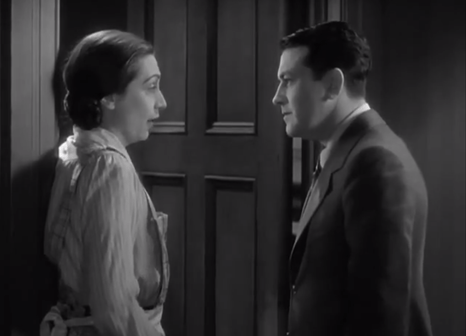
Wellman introduces us to our latest locale with a dash of humor delivered through an array of pithy signs adorning the walls of an old diner. But it’s the people under its roof that make it what it is. Pa Dennis (Charley Grapewin) is the most genial man you ever did meet and he would give you the shirt off his back if you needed it. His daughter Mary (Aline MacMahon) is little different though she chides her father for his loose finances.
heroes for sale 1.png

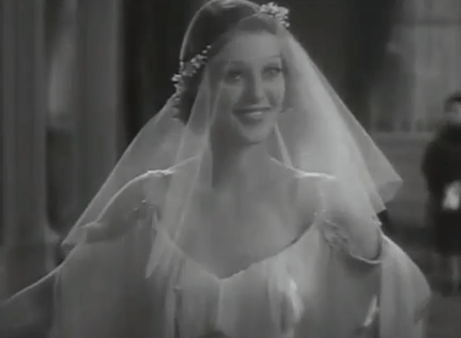
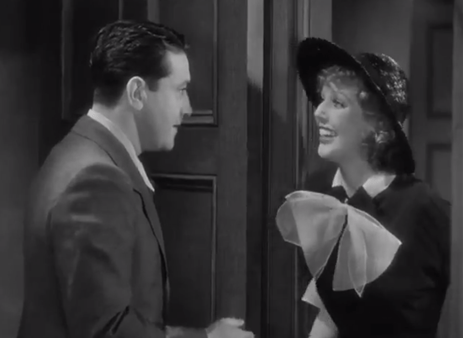
Still, her jovial hospitality charms Tom into striking up a conversation and considering renting a room from them. Meeting the disarmingly attractive Ms. Ruth Loring (Loretta Young) from across the hall all but seals the deal. Cue the music as Young enters stage right and let’s disregard it and just say she more than deserves the fanfare.

You would think the inventor with overt “Red” tendencies, adamant criticisms of capitalism, and a chattering habit like a squirrel would be a turnoff for prospective boarders. Not so.  Soon Tom joins the ranks of the local laundry where Ruth also works forging a happy life for themselves.

The mobility of Heroes for Sale is another thing that struck me. It results from a different era but this is also very much a Depression picture in the sense that we are seeing what a man can still do even if times are tough as long as he has a strong head on his shoulders. Machinery is implemented not to steal work away from eager employees but to cut down on long working hours and increase output. All in all, it sounds like a thoughtful and humane objective.

But a heart attack leaves the company in different hands that are looking to work only in dollars and cents, not in humanity. Thus, it looks like Tom’s idealistic enterprising has been turned on its head, now completely sabotaged. All the folks who put their trust in him are bitter with the prospect of losing their jobs. Put out of business with their own funds.  This same unrest runs through the pages of Steinbeck’s Grapes of Wrath (1940) too as modernity begins to put out all outmoded methods standing in the way of so-called efficiency.

What we have here is a populist picture daring to show the plight of the people. Richard Barthelmess is an affecting lead because he seems almost unextraordinary. His voice is steady and calm. He’s not unkind. But there’s an honesty to him that asserts itself. The fact that he gets a bum steer and takes it without so much as a complaint speaks volumes so he doesn’t have to.

Heroes for Sale feels like a micro-epic if we can coin the term. It’s ambitions somehow manage to be grandiose as it sweeps over cultural moments like WWI and The Depression which underline further social issues including heroism, drug abuse, communism, and worker’s rights. All done up in a measly 71 minutes. Look no further than the standoff between an angry mob and the riot squad for squalid drama. This is no minor spectacle. Nothing can quite express the anguish watching Young frantically run through the violent frenzy in search of her husband.

There is no excuse if this is the standard we put longer films up against. Not a moment seems wasted. Yes, it goes in different directions. Yes, it feels like a couple different films and yet what connects it all is this abiding sense of Americana. Themes that resonate with folks who know this country and its rich history made up of victories and dark blots as well. Most brazenly it still manages to come out of the muck and the mire with a sliver of optimism left over. Heroes For Sale is no small feat.

4/5 Stars
Employees’ Entrance (1933)

employee's entrance 1.png

Not only is Employees Entrance a film made for the Great Depression, but it’s also a project that would have no life if it were not for the lax enforcement of the Production Codes at the time. The same could be said of its protagonist — if he can dare call him that.

Warren William embodies the mercilessly driven businessman named Kurt Anderson like few men before, or even after him, could. He’s a brutal taskmaster who has no sense of integrity. A John D. Rockefeller except less religious. So he has even less of a moral framework. His main purpose is to crush other people because he’s running a business, not a charity ward.

He throws out the weak and surrounds himself with like-minded people. It’s how he’s managed to keep Monroe Company Department Stores a flourishing enterprise even after “The Crash.” Not everyone can say that.

An ambitious, young man named Martin West (Wallace Ford) impresses the autocrat with his idea of upping sales of men’s drawers by selling them to women. Meanwhile, Anderson finds time to sink a clothing supplier who can’t deliver on a shipment and fires a senile department head who nevertheless has stayed with the company well-nigh thirty years.

Thus, we get this sense that he wields a two-edged sword. Anderson is surprisingly generous and accommodating to those who fit into his scheme of things. For instance, increasing a certain models salary if she distracts his colleague next door. Yet he will just as quickly dump someone who is not pulling their weight. That’s how survival of the fittest works. We know this already.

What suggests this more than anything, however, is his treatment of women. Loretta Young sporting those luminous doe eyes of her is gorgeous as Madeleine, a woman who is nevertheless down on her luck and looking for work at Monroe’s. She meets Mr. Anderson quite by chance, after hours, as she has made the stores home decor section her temporary domicile. He’s immediately taken with her. Is there a tenderness unveiled perhaps?

employee's entrance 3.png

Ultimately, he rewards her with a job and she’s quite the success on the floor. Even catching the eye of Martin. He professes his undying affection wordlessly through adverts. And they do the one thing that if he knew about it, Mr. Anderson wouldn’t approve of. They fall in love. In his estimation love is for saps, marriage gets in the way, and he wants his people to be enamored with their work as much as he is.

Young proves adorable even when she’s tipsy, bopping and popping balloons. But as often happens, people make decisions that they will come to regret while inebriated at parties. This film is little different.

The tone and trajectory break with the entire order that the Production Code soon set in place such that we never would see the likes of this again in Hollywood, at least not for a very long time.

It’s this seemingly admissibly trenchant material that makes navigating Employees Entrance onerous, similar to problems I have with more modern works. It comes down to not only issues of tone; because this is a humorous film undercut by some severely dark realities, even suicide and rape, but it also has to do with the integrity of our lead.

For all intent and purposes, our anti-hero hardly has an ounce of likability. The best that can be said for him is he’s enormously successful and good at his job in a tyrannical, ruthless sort of way. Otherwise, he has no heart, no soul, and he’s a misogynistic lout to boot. The fact that any of those characteristics got put into a man who is not cast as a villain truly is a marvel. It’s definitely worth taking note of.

But this is also a somewhat saucy Pre-Code number and the certain playful impertinence is personified best by Alice White who burst onto the stage during the flapper craze of the 1920s. In one particularly rewarding moment, she tells a stuffy old crone that the basement is on the 12th floor as nice as you please. It’s classic lip.

However, there’s this instant realization that Warren William was made for films such as this. The implications hit like a ton of bricks. He all but disappeared from movies since Joseph Breen literally excised his entire character type out of Hollywood’s new imposed master narrative.

Others might be able to do a far more convincing job of making the case but like his contemporary Kay Francis, it’s time for the likes of Williams to be resurrected from near obscurity. Certainly, not everyone will like him, particularly in this film, but there’s no question that he has something. It allows him to play those scathing characters with an unparalleled precision.

But I’ll be honest, I’m genuinely beginning to think that Loretta Young deserves a spot as a Pre-Code icon as well. In 1933 alone she was featured in nine films! The only problem is her efforts from the 1940s are more well-known. The Stranger (1946) and The Bishop’s Wife (1947) seem to overshadow most anything else. Yet another reason to uncover Employee’s Entrance.

3.5/5 Stars

The Bitter Tea of General Yen (1933)

bitter tea of general yen.png

The Bitter Tea of General Yen is no doubt a perplexing film to come at today but, in some respects, that makes the experience all the more gratifying. There’s still something within it 80 years on that will simultaneously rub up against our contemporary perspective while also surprising us with a certain adroitness. So many issues are stacked up one on top of another, it’s a weighty task to begin trying to unpack them all.

Certainly, we have the strains of colonialism driven by western missionaries looking to share the Christian faith with the outer reaches of the world. In fact, we can probably derive some similar themes from films such as Keys to the Kingdom (1944) and Silence (2016) which provide a myriad of questions in their own right. Are these missionaries really making a difference? Is their Gospel even being comprehended? Should they be so bold as to force their beliefs on other people groups? All of these are up for valid consideration.

Racism must also be tackled whether it is shown to prove a point or is simply a casualty of a previous generation’s approach to Asian portrayals. We hear the words of one elderly lady who in one moment is going on about how lovely a wedding is going to be and then the next she shares her true sentiments about the Chinese.

“They’re all tricky and immoral. I can’t tell any of them apart. They’re all Chinamen to me.”
It’s this kind of narrow thinking, this blatantly obvious cultural insensitivity, laid right out in front of us. Thus, it seems likely the film’s main thesis might be to prove the exact opposite. That in itself seems monumental.

We have the casting of a Scandinavian in Nils Asther for the role of the Chinese general to contend with as well. And while it’s easy to get stuck on this or go the complete opposite end of the spectrum and take it for granted given the cultural moment it came out of, I hope to arrive at another conclusion. “Yellowface” always perturbs me and yet I also realize we have to understand the intentions and so I’m apt to read this picture much as I would Broken Blossoms (1919).

Whereas Mr. Moto and Charlie Chan work in stereotypes and the Fu Manchu archetype is the demonizing of a race, you do not quite get the same sense here. Even with the problems inherent in the characterization, what comes through emotionally is resonant. Then, further still is the landmark consideration of interracial romance, no doubt a turn off for many contemporary viewers — or at the very least taboo.

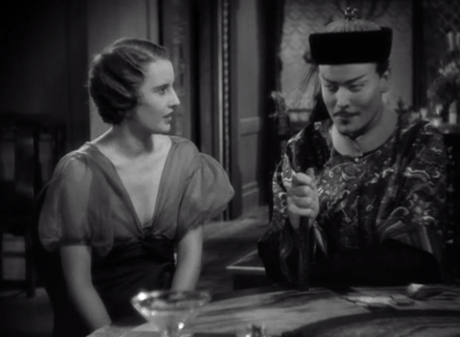
The whole narrative is really about the steadily evolving relationship between an American woman (Stanwyck) and this Chinese General (Asther) who keeps her in his domain on the pretense that it is for her own safety with the civil war still raging at large.

Megan is one of those naive yet well-meaning individuals who comes to a foreign land to do good. This is the imperative of “The Great Commission” and bless her soul, she takes her faith seriously, coming to join her soon-to-be husband wherever he may go.

But soon she is struck with a reality check. Her fiancee and she try and rescue some orphans caught in the middle of the hellish war zone, but the pass they’ve been provided is no good. In the ongoing turmoil, Megan finds herself brought to the palace of General Yen for safekeeping, her husband lost in the chaos.

What follows is an exercise not so much in polarizing romance, which would be the easier road to traverse, but instead cultural understanding through candid dialogue. He criticizes what he sees as a flaw in her man, that he will betray her every time for his God. Meanwhile, the idea all humanity is one flesh and blood is almost laughable to him.

And yet, again and again, he is drawn not only to her exquisite appearance but the undeniable sincerity that guides her every action. She, in turn, recognizes something of a hidden sensitivity welled up inside his soul. As he notes, “There has never been a people more purely artist, and therefore, more purely lover, than the Chinese.”

The most straining circumstance involves the General’s lowly concubine Mah-Li (Toshia Mia) who has all but disobeyed him. Megan chides him to forgive her even in her insolence (“I want you to see the beauty of giving love where it isn’t merited”) and for the greater offense of passing secrets which gives him the grounds to have her killed. You can either say he softens or finally lets down his guard. It’s semantics really.

This might very well be the Capra picture people don’t expect because it flies in the face of all the criticisms usually leveled against him. Specifically, that he always made overly sentimentalized films without a shred of hard reality. I’ve tried to push back against this presupposition countless times and I think The Bitter Tea General Yen is another fine counterargument. Look no further than the excruciatingly frank depictions of military executions, soldiers decimated by Gatling guns,  betrayal, suicide, and near surrealistic dreams that invade a woman’s consciousness.

However, it’s difficult not to begin comparing it most obviously to Shanghai Express (1932), a picture that reveled in its atmosphere and featured Josef von Sternberg’s visual infatuation with Marlene Dietrich. Frank Capra does Stanwyck justice in his own right because there’s no doubt she’s vibrant and alluring throughout. It’s brought into sharp relief through numerous stunning close-ups that capture the softness of her features. Not to mention the tears. Something that makes her different and more vulnerable than her German contemporary.

But we must ask the question. Is it a type of Stockholm Syndrome? Is it a true romance or simply an affection for a man who had more beauty, more artistry, than she would have initially given him credit for? I’m not sure we know and the ingeniousness, I realized retrospectively, of the film’s ending, is that we never hear Barbara Stanwyck’s thoughts on the matter.

Walter Connolly just won’t shut up and he’s supposing all these different things. Recalling what a great guy the General was, considering what Megan will do next, and summing up the General’s spiritual proclivities. Maybe he’ll come back in some new incarnation. But the lady says next to nothing and there is a cryptic power in this. Because The Bitter Tea of General Yen allows us to ruminate over the material and draw out conclusions of our own.

3.5/5 Stars

Lady For a Day (1933)

lady for a day

Apple Annie (May Robson) is one of the many impoverished individuals on the streets of New York City trying to eke by in the pits of the Depression. She makes a meager living as a fruit vendor. But appearances can be deceiving and Annie has long corresponded with and paid for her daughter Louise to grow up in Spain.

There her girl can receive breeding and make a better life for herself. However, she has never been made aware of her mother’s lot. Annie has never found the need to tell her. Instead, she’s painted a vivid picture of grandeur for herself as a society matron who resides at the Hotel Marberry. Of course, this could not be farther from the truth. But she wants Louise not to worry.

The kicker is that said daughter is making an impromptu visit, and Annie knows she will be caught in her ignominy. She’s so small and unimportant; it seems like a horrible situation. She must make a transformation if this whole masquerade is going to continue. Her last resort is Dave the Dude (Warren William), a local gambler and influential man who has always taken a liking to Apple Annie. She’s kind of his good luck charm.

So though he doesn’t have to do it, he decides to pay it forward and help her out as much as he possibly can. It starts with his girlfriend Missouri Martin (Glenda Farrell) giving the old gal a stunning makeover, then finding her a place to live more suitable for her image, and finally, a husband.

Where to find a man with enough class and eloquence to pull off such an endeavor? Look no further than the local pool hall. Guy Kibbee gives a veritably kingly performance as the theatrical pool shark who becomes Annie’s husband in a pinch. He’s a fantastic showman.

However, this is all only preliminary. The Dude must try and orchestrate this whole thing so it goes smoothly without a hitch. That means keeping nosy journalists away from the scene and never breaking the perfect illusion they have constructed. He’s got a capable staff of heavies to do his bidding. Happy (Ned Sparks) is an acerbic sidekick with garbled jargon and a sarcastic wit ready to duel with everyone. Comically, Shakespeare (Nat Pendleton) is the dumb lug who takes care of all the dirty work and messenger boy duties.

Best of all, young Louise is deliriously happy to see her mother and Annie has been allowed to maintain her dignity thus far. Almost everything has gone exquisitely. Guy Kibbee and Walter Connolly have a lovely scene together as they look to genially settle the issues of a dowry over the billiards table. The police are out for blood after a couple reporters mysteriously disappear and they believe The Dude is implicated.

He, on the other hand, is trying to get his gang of cronies and Missouri Martin’s floozies in shape for the going away gala that The Duke so kindly offered to host to send the Count  (Connolly) and his son off with. The rehearsal is a shambles that nearly makes The Dude tear his hair out. And the cops have caught wind of something fishy going down, so they’re about to close in the dragnet, threatening to end the charade for good.

However improbable, there’s a touch of sentimental fairy dust floating over the film. Serendipity or Providence. Whichever you prefer. With this band of actors, you really do get a sense that they are pulling a little magic out of their hats, because they aren’t necessarily well-known. For all intent and purposes, this could very easily be their world.

It’s true it does feel like a rather ragtag assortment of talent. By today’s standards, there’s no prominent star though Warren William was later labeled the “King of Pre-Code.” Most everyone else was a character actor, a stage performer, or an extra pulled off the streets of L.A. to provide some authentic color. And actually, it works very much to the picture’s benefit. Sure, it would have been lovely to have a William Powell, James Cagney, Marie Dressler or any number of other performers. No doubt what’s created in their absence is an unassuming charm.

Where everyone from the governor to the mayor, to the police department, and the journalists find it in their hearts to observe a little chivalry and goodwill. True, since the normal eight balls are leading the charge in the decency department the sentiment is laid on rather thick. But even if it’s a pipe dream, it’s a delight nevertheless.

I only recently discovered the picture One Way Passage (1931) and here I get the same sense of a dream being prolonged and realized beyond any human belief. Rather than the implausibility being a fault, it takes the film into a realm that only movies can take us. Where we can believe in wonderful things and therefore carry them back into our lives to hopefully brighten up reality in a similar manner. While not Capra at his finest, you can no doubt see the uplifting allure found within its frames.

3.5/5 Stars

Taxi! (1932)

taxi! 1.png
Taxi! is indubitably parked in the pantheon of misquotes and few people probably realize it. Yes, this is the film where Warner Bros. tough guy James Cagney purportedly sneered, “You dirty rat, you killed my brother!” I remember hearing the line in everything from The Monkees to M*A*S*H and it no doubt showed up in just about every show from here to eternity. Right up there with Cary Grant’s apocryphal line “Judy, Judy, Judy.”

But none of that speaks to this film or what it’s actually about. Well, the title says it: Taxicab drivers. So let’s talk about the talent instead and when I say talent that mostly means two people, James Cagney and Loretta Young. They’re the main draw.

In the opening gag, we see James Cagney using his Yiddish to placate a customer who can’t seem to get any help from a policeman. But he’s also back to running off his mouth and throwing his fists because after all, this is the same man that electrified the world with his portrayal of a gangster in William Wellman’s Public Enemy (1931) of the previous year.

The crucial event in this film is a rash of strong-armed maneuvers pulled by a taxi conglomerate in New York City looking to shoulder their way into the industry through scare tactics and willful sabotage of their competitors.

One of their victims is a veteran cabbie (Guy Kibbee) who isn’t about to take this lying down and he guns down one of the perpetrators of injustice. Justice is swift and he is given a prison sentence in lieu of death. But it might as well have been. His life is all but over.

In the wake of this outrage, Cagney begins a call-to-arms for his fellow colleagues to fight back and fight fire with fire as it were. The incarcerated man’s daughter (Young) stands tall as well and calls for action by peaceful means. She receives the disdain of Nolan for behavior that he sees as selling out her own father. Of course, he doesn’t know the whole story.

For some inexplicable reason, maybe it’s his animal magnetism, Sue falls for the cad of a cabbie. What follows are dates at the picture show which provides some free publicity including a weepy starring Donald Cook and a poster for The Mad Genius (1931) starring John Barrymore.

Sue’s fellow waitress at the local grub hub, the oddball chatterbox Ruby (Leila Bennett) even makes a passing comment to her beau about Frederic Marc though Joe E. Brown is still here personal favorite. It makes sense.

Next, comes a Peabody contest at the nightclub, featuring an appearance by George Raft, where the fiery Cagney tries to wail on his real-life friend. If it’s not that then it’s a fat man in an elevator or most obvious of all Buck Gerrard the big oaf who had a part in the shady tactics that landed Sue’s father in jail.

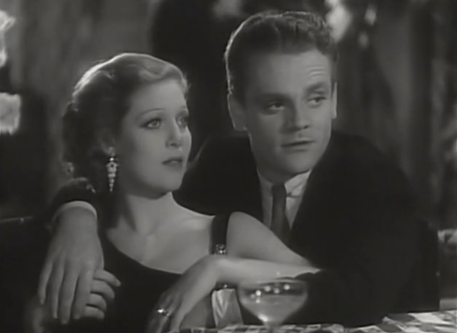
Matt’s not a happy camper for most of the film and yet he still manages to keep his gal. After a lover’s quarrel, a silky smooth Cagney takes his love in his arms and they dance while he slips a ring on her finger. He’s also a self-confident son-of-a-gun.

But as electric as Cagney is, one of the best to ever light up the screen — there’s no doubt about that — I’m not sure if I can forgive him slapping around someone as loving and as innocent as Loretta Young. Especially today, it just doesn’t come off very well. She deserves someone better.

3/5 Stars

Baby Face (1933)

baby face 1.png

Even in its opening moments, Baby Face made my heart heavy. I look at Lily, this young woman played by Barbara Stanwyck and sadness wells up within me. Because her environment is so oppressive. Getting constantly pawed at and manhandled with a father who has no conception of love. Then, she opens the window to get away from the asphyxiating haze of cigarette smoke only to be met with more smoke from the steam engines outside. This isn’t a life that anyone should be subjected to and it’s brought into sharp relief because she is surrounded by so many filthy men: Mangy scuzzballs, if you want to get scientific.

But the picture, even in this opening moment, before it gets to the nitty-gritty at hand, grieves me because it still has increasing pertinence in the present world we find ourselves in. Isn’t that strange? But I am met with this fact time and time again. You would think I would be less surprised there is still nothing new under the sun. In such an environment, Lily is essentially perceived to be worthless and the men around her keep her down.

However, there’s one man in particular who rallies her to get off the trash heap. In fact, Bragg is a man who broadens her perspective and helps her to realize her own worth.  The only unfortunate part is that he bequeaths her the philosophy of Nietzsche. And I say unfortunate very purposefully because the language he provides her is like so.

“You must be a master, not a slave. It’s about exploitation using men and being strong to get the things you want.” It’s laid out as overtly as you could possibly expect. This remains only the root of a wider problem that is exasperated because, of course, this is exactly what Lily ends up doing.

baby face 4.png

She goes to New York with her constant companion Chico (Theresa Harris) and subsequently charms her way into a job, slowly moving up the ranks due to her ambitions and calculated manipulation. There’s no other way to put it. She’s systematically sleeping her way to the top.

The funniest anachronism of them all is seeing John Wayne, young and handsome, behind a desk in a corporation. He is one of Baby Face’s early conquests. But believe me, there will be more. No sooner has one top employee lost his job due to Baby Face then another man has become seduced by her inviting eyes and soft touch. There’s one particular mirror shot from the ladies’ room that says it all. The man is saying one thing and when he sees her his whole demeanor changes. Like putty in her hands.

But there’s another running gag easily understood with a little inference. A close up on the exterior of the mortgage department with a soft pan to the accounting department or wherever else ambition takes her, the score playing “St. Louis Blues” saucily to say all that needs to be said. And you get the sense that it’s for these very interludes that the film was marketed.

It pushed the boundaries of the censor’s board at the time and many have supposed, rightfully so, that Baby Face was one of the pictures which actually led to greater enforcement of the production codes in 1934. Certainly, all this is true.

But more than anything, the most troubling thing for me is her Nietzschean code of conduct continually dictating her worldview. He is the man who most famously said “God is Dead,” not as a derisive proclamation but more so a disillusioned fact. There is no hope or grace found in such a point of view. But of course, Lily never received any of those things in her formative years so how is she to know? She just keeps plodding on using her attributes the best she knows how to make a comfortable life for herself.

To quote Proverbs, “her lips drip honey and yet her feet go down to the grave.” She’s nothing but trouble and yet I would never hold it against her. She makes us so conflicted because there is so much manipulation there — even vindictiveness — while she still nurses wounds from youth that we cannot even begin to understand.

Stanwyck never ceases to amaze me with her incredible range of performances and the deep truth she seems to mine in each and everyone to make them charming, funny, or heartbreaking — whatever the tone calls for. She always seems to have it in ready supply. It’s little different in Baby Face.

As far as the film itself, what we have here is the epitome of efficient Hollywood filmmaking that somehow is still laced with a potency of emotion, at times heartbreaking and at others verging on the salacious. Still, it’s a picture that leaves you with something. There’s no way that any of the Barbara Stanwyck faithful would forget her, but this picture gives another reason to stand up and take notice.

It’s a striking image as the phonograph turns and all the men in her life flash by. In such a short time there’s been so many and yet some passed by like a blip we almost forget they were there. George Brent is the most substantial and even he comes into the storyline far later. That’s purely a testament to the picture’s ability to really fill out the entire scenario with surprising depth.

However, it’s crucial for the film to end on a realistic and deadly note because anything else would be untrue to the life that Lily has lived thus far. It was never pretty. The denouement cheats a little bit by leaving events open-ended but all that’s left to say is Stanwyck is devastating. She just might bowl you over.

4/5 Stars


Miracle Woman (1931)

miracle woman 1.png

“Beware of False Prophets which come to you in sheep’s clothing” – Mat. 8:15

The Miracle Woman is offered as a rebuke to anyone who, under the cloak of Religion, seeks to sell for gold, God’s choicest gift to Humanity —- FAITH. 

There are title cards that open up Miracle Woman to make it crystal clear what its intentions are. Though pointed, they hardly seem necessary given the motion picture we are about to witness. The images speak for themselves.

Inside an old-fashioned church building, we hear the opening throes of “Holy, Holy, Holy.” Most every contemporary audience knew that standard hymn well — cherishing its heavenly imagery. But when Barbara Stanwyck steps into the pulpit to pass along her father’s final words as pastor she breaks into the reverie and brings the house down. If there’s ever been a stirring depiction of righteous indignance she is most certainly it.

Like Jesus clearing out the temple of all those peddling their goods, Stanwyck empties out the entire building condemning the pews of hypocrites and lukewarm believers who sit before her. They willfully tossed her father aside for a younger man once they had no use to him. He died of a broken heart and Florence feels affronted.

A few voices chime in on her behalf but she’s all but left to wallow in her sorrows alone. One man stays behind and he’s important for this story. Bob Hornsby (Sam Hardy) was just passing through town and stopped by the church but was impressed by Fallon’s knowledge of scripture and charisma up in the pulpit. With his streetwise business acumen and her stage presence, he thinks they can really make something for themselves.

They soon resurrect a “Temple of Happiness” from a converted barn and it has the words Florence Fallon, Evangelist, and FAITH boldly emblazoned on its front for all to see. The main thing that has changed in 85 years is that the Christian faith has become less widely practiced compared to back then. But this narrative puts a voice to issues that have long plagued the organization of the church in the United States.

Namely, people make a near sideshow attraction out of the whole thing with brass bands and showmanship while simultaneously promoting selfish gain over any kind of advancement of the pronounced commandment to “love God and love thy neighbor.” I am grieved to say those root issues look very much the same all these years later.

We watch as Florence is slowly persuaded into getting back at the fickle people who sold her father out and she’s very good at it, even sincere, while Hornsby runs everything else from hauling in donations to dreaming up the next gimmick.

miracle woman 2.png

However, whether she meant to or not, Florence’s voice on the radio convinces a blind man (David Manners) to not give up on his life though he is struggling mightily. For that he is grateful but it becomes even more personal when he gets up on stage with her and then after that meets her face to face. There’s something inside of him that’s so genuine and attractive to a woman who is used to working with shifty characters.

The boy shows her a good time with some parlor tricks including a music box, cards, and his roommate a very forthright dummy named Al. In many ways, it’s this wooden doll who speaks for him from the depths of his heart. The things he doesn’t know how to say outright start spewing out of the little man.

While Florence finds herself falling for John, her partner who was so warm and genial that first day they met has started to get more demonstrative — even aggressive. Because Florence means a lot to him, not only as a companion but also his current livelihood. She’s fighting against him but it looks like he’s got her where he wants. She will have one final swan song and then has no choice but to go off with Bob, never to return.

However, John looks to manufacture his own miracle for her but unlike her other man, it’s not to sell tickets or pull the wool over the eyes of the public. It’s purely an act of love. He takes it a step further by fearlessly saving her life in the face of a hellish conflagration.

Capra never struck me as a terribly religious person but there’s no doubt he believed in humanity and he had faith in their capacity for good and their ability to love others. I think that perhaps this is the core of the whole “Capracorn” slogan. Because Capra as a director ultimately dwells on what he perceives to be the inherent good in people. That is not to say the conniving, corrupted, licentious side isn’t given any screen time. No place is that more clear than in Miracle Woman.

And yet the final image is of Barbara Stanwyck parading with a Salvation Army band singing “Glory, Glory, Hallelujah.” True, she gave up a lucrative career worth more money than she could imagine but she gained something worth exponentially more — her soul. She has learned how to love again and how to trust a man who in turn loves her deeply. That’s enough of a miracle.

One does have to question where her belief in God stands or if she deems the romantic love of her life to be enough. Regardless Stanwyck gives a stirring ever-impassioned performance that put her on track for continued success. She was a wellspring of talent even at this early juncture in her career.

4/5 Stars

“What God? Who’s God? Yours? This isn’t a House of God. This is a meeting place for hypocrites!”

Night Nurse (1931)

night nurse 1.png

We’re introduced to the day-to-day in a hospital ward with mothers giving birth, delinquents under police custody, and bootleggers coming in on the lamb with mysterious ailments. Barbara Stanwyck arrives in the office inquiring about a position as a nurse and she is flatly rejected for her references and lack of a full high school education.

Reluctantly she exits only to make a connection in the revolving door with a white-haired genial doctor (Charles Winninger) who pulls some strings and lands her a spot as a trainee. Her roommate and guide to this new existence is the lively Maloney (Joan Blondell). The male interns send her a warm welcome too. Namely a skeleton in her bed which gets her in particular trouble during a late night bed check from the head nurse who rules the nurses quarters with an iron fist.

This is all only a setup of the films main concerns which have roots in sordid drama and soap opera-like thrills. The melodrama comes into full view as we are introduced to none other than a mustache-less macho Clark Gable who upon being asked who he is, replies “Nick the Chauffeur” only to be captured in closeup while eliciting a gasp from a night nurse.

It’s textbook stuff and then he proceeds to wallop her as she tries to use the telephone. But a smidgen of context is in order. Lora starts her first shift as a night nurse looking after two darling little girls. But from what she can tell they are systematically being starved and their perpetually tipsy mother, Mrs. Ritchie, seems to have very little input. Meanwhile, the doctor who took over the case when Dr. Bell was deposed is shady at best. All the while, Nick leers and strong arms his way around, making sure that Lora doesn’t do anything against the doctor’s orders. Conveniently that means no nourishment.

But “Little Miss Iodine” doesn’t go down without a fight. With the girls slowly wasting away upstairs and needless extravagant parties being held continually downstairs with booze freely flowing, Lora lays down the law. She smacks the girls’ mother around a little for her parental negligence. Also, it turns out that Lora’s new boyfriend comes in handy when he’s not bootlegging. They make a swell couple.

On the whole, this picture of emaciation is slightly disjointed and hyperbolic in its own right. There’s also probably too liberal an amount of undressing on camera. Because it’s only purpose is to be provocative.

I’m not quite sure if I ever figured out the mechanics of it all but there is an undeniable fury to it and William Wellman directs it as such through every beat from comedy to romance to mystery thriller. So with stalwart performances by Stanwyck and a no-good Clark Gable on the rise, matched by a certain enigmatic potency, there is enough meat here to make it a mildly diverting Pre-Code effort.

3/5 Stars

Red Dust (1932)

red dust 1.png

My earliest recollection of knowing anything about Red Dust comes from the novel A Confederacy of Dunces where it’s recounted how the feckless oaf of a main character was born soon after his parents saw the picture being so caught up in the throes of Gable and Harlow’s cinematic passion. The fact we had this film in part to thank for such an annoying lout kept me away no fault of its own. But let’s forget Ignatius Jacques O’Reilly and cut to the picture.

The world we find ourselves in is a far-off land in Indo China on a rubber plantation. As such, Red Dust is a Pre-Code colonialist tale full of romantic heat, natives, tigers, and more heat. The only speaking part these natives are accorded belongs to the giggling cook who is not too bright as far as stereotypical Asian characters go. The tiger speaks a few times too. It’s noted more than once to be a dirty rotten country. It’s also true that to an untrained eye like my own the rubber industry looks a bit like a maple syrup colony but hardly as tasty.

The man running this particular one is named Dennis (Clark Gable). Why he could care for such a life is a worthy question and the one and only answer is that he was made for this country. It runs in his blood and he was born smelling the smells of rubber. But that doesn’t mean he wants other people in his life.

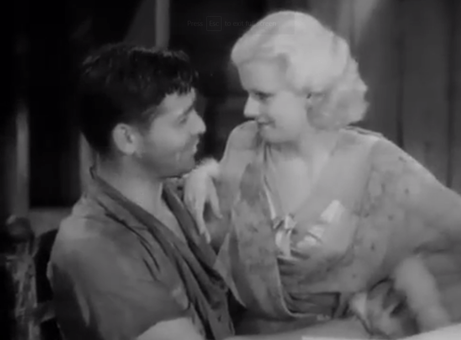
The film introduces two women in particular who test him in different ways. The first is (Jean Harlow) who gabs and gabs while pushing the boundaries of what is decent during the 1930s. She annoys the man mostly. There’s no question that Clark Gable and Jean Harlow light it up. In fact, they sizzle like hot coals. It’s often the case that true romantic chemistry that burns like this comes out of conflict and they have plenty of it.

He’s a strapping man’s man and he doesn’t want a worthless gal with a dubious reputation motoring her mouth off around him. He’s got work to do. She’s not about to be pushed around and she’s going to push all his buttons (You won’t grow up to be a big strong boy if you don’t eat your din-din ) and stay around as long as she pleases. The kerosene and gorgonzola is provided. Just stay around for the fireworks also free of charge.

This could be the picture right there. However, the new surveyor arrives, which is news enough, until it comes out that his wife is with him as well. It’s an added complication especially for Dennis because after her husband gets sick and they nurse him to a full recovery, he finds himself falling for a married woman. The difficulty is that the feelings are mutual.

red dust 2.png

There’s a clear evocation of David and Bathsheba when Gable sends off his new surveyor into the swamps and his wife is left behind. It’s the perfect opportunity to get to know her a lot better. He knows what he is doing. She probably does too.

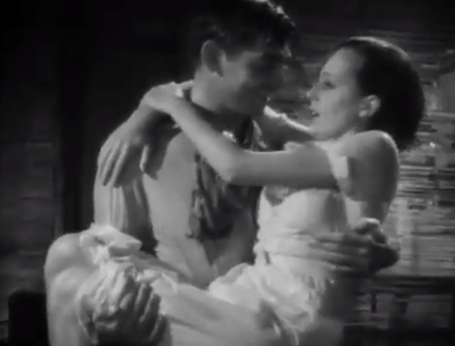
When the monsoon hits and Clark Gable plucks Mary Astor up and starts carrying her through the underbrush you can feel the forces of nature ripping through the country. It’s one of those precise moments when you remember why we go to the movies.

Then we also realize why Clark Gable was so popular with the ladies. He was a brash yet handsome cad. “Dreamboat” was written all over his rugged features. In the movies it spelled stardom but if this were real life it would mean disaster for true romance.

In some sense, you would think that Gable and Harlow own the picture but Astor has just as much right to it as anyone with her performance that while begging pathos is still slightly muddied by her own indiscretions. She’s not quite without fault as we find out.

But the film ends with imperfect people making certain decisions that look to preserve lives rather than utterly ruin them. Sometimes those are the most impressive feats. It’s not simply the white knights remaining untarnished but the already muddied ones willfully doing something decent. So Red Dust is a fairly landmark love story but to the credit of its cast and crew, there’s still some magic left in it even today. I won’t begrudge Red Dust anymore than I already have. It deserves that much.

Famously John Ford would remake the story as Mogambo (1953) which brought back Clark Gable 20 years later with two more ladies portrayed by Ava Gardner and Grace Kelly. I feel like colonialism was more in vogue during the 1930s.

4/5 Stars

Red-Headed Woman (1932)

red headed woman 1.png

Ironically Harlow as a Red-Head feels more representative of her projected image than Harlow as a Platinum Blonde (1931). Lil is a malevolent seductress. A homewrecker. The queen of meretricious relations. Simultaneously frisky and fun.

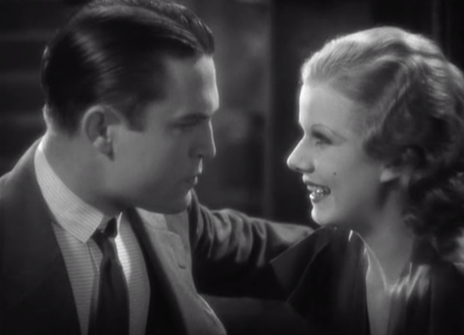
But she’s got one specific man (Chester Morris) on her radar and she makes it her goal to bring him down. Of course, he’s married and he has means. Everything she could want in a man. Perhaps there’s a tinge of actual romance in the air too. She kisses him enough for it to be so.

She continually ambushes him to begin with and he’s not particularly averse to her. He’s not as strong as he would like to think. First, in his office. Then, in a telephone booth and so on and so forth. As strong as he is and as much as he glares at her, there’s only so much he can take. “Red” goes back to her boarding house to regale her roommate (Una Merkel) about her daily victories. It seems she enjoys the hunt, mechanizing her feminine wiles to serve her. But she’s not above knocking back a few drinks slowly sinking into a stupor on the floor with the lively strains of “Frankie and Johnny.” That about sums up the woman we have before us.

Finally, she locks her prey in a room with her and throws away the key as it were. In the end, it works. Soon Bill’s marriage with his sensible childhood sweetheart “Rene” (Leila Hyams) is utterly trashed. Lil has got him where she wants him and he resigns himself to this new lifestyle. Divorce follows. She’s got him tied down.

Their life together isn’t perfect as “Red” wants more of a society life with parties and notoriety. And of course, little surprise, there are other men she’s openly involved with. Still, she exploits her charms fishing for compliments, flirting, throwing out typical Harlow baby talk. All the works.

Baby Face (1933) with Barbara Stanwyck seems like an obvious answer to this picture’s themes. And it must be said that while there’s the inkling of an idea here, what the latter film has is a greater resonance because it’s not just a trashy romance propelled by a leading performance. But Stanwyck beyond being a siren also has a depth to her that while not fully fleshed out leads to some amount of conflict.

Here Harlow’s no good and that’s most of the novelty. There’s not a speck of true integrity in her and we are given few cues to why she’s the way she is. Maybe if we were provided more it would be easier to empathize even a little.

Baby Face makes me dismayed because Stanwyck is a tragic figure. Red-Headed Woman gets to me for a different reason. There is no remorse in Harlow’s “Red.” She’s just a sleaze and there’s little interest in anything else. It feels exploitive.

Everything is summed up perfectly by an uncomfortably comical ending. After taking a shot at her former husband and nearly killing him, she finds a life for herself in France with her chauffeur (a dashing Charles Boyer) no less.

F. Scott Fitzgerald purportedly got taken off the picture in favor of Anita Loos because he took the material too seriously. However, I’m inclined to want to see how his rendition would have panned out. For some reason, I cannot find it within myself to laugh at these characters. That’s undoubtedly a tribute to Jean Harlow but it’s still ribald entertainment any way you slice it.

3.5/5 Stars