
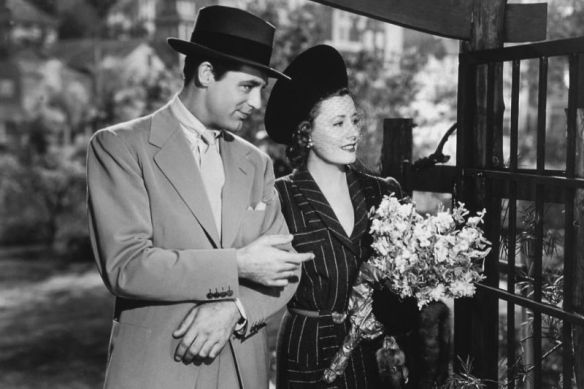
Irene Dunne still remains one of the most underrated actresses of the 20th century. She was both a lively comedienne, an impressive singer, and performed in melodrama better than most. Pair her with Cary Grant and director George Stevens and you have an impressive bulwark to build a film out of.
I disdain the rather condescending term “Woman’s Picture,” but if Mildred Pierce was one of the darkest exemplars of the genre than Penny Serenade might be one of the most heartfelt. It finds its inspiration in the revolving melodies of records on a Victrola. It’s true that music is so very powerful in evoking emotion and it is precisely these songs that lend themselves to Julie Gardiner’s myriad memories. They began when she initially met the love of her life, a budding journalist who was not too keen on getting hitched or the future prospect of having kids. But Roger’s career took him to Asia and he tied the knot with Julie because he was not about to let another man take her away from him.
The rest of the film can best be described as a marital drama concerned with the many moments that make up a marriage. The thrill of the honeymoon period. The little marital tiffs. The tough times when your fledgling self-run paper is not doing the best. The struggles of trying to have kids or wanting to adopt and realizing the process is far more arduous than you first expected. All of these moments can be found in Penny Serenade. But it is one of the sweetest that also becomes the most heartbreaking.
Julie and Roger get the child that they so desire and it’s hard and trying and oh so scary, but they make a go of it and truly revel in being parents. But even that joy is taken away from them. It’s that same pain that shakes the foundations of their marriage just like the deadly earthquake they experienced in Japan. Once more amidst the heartbreaking tremors, there are wonderful revelations and an ultimate resolution that is good.
It’s true that Penny Serenade is overlong, lacking a great deal of substantial conflict or direction but it certainly plays to its strengths. The third time around Grant and Dunne continue their impeccable chemistry that carries the film alongside the direction of George Stevens who always seems to know how to helm both drama and comedy with ease. And the secondary roles are filled out marvelously by the always venerable Beulah Bondi and a noticeably younger Edgar Buchannan playing his usual old softie with a gravelly voice.
So if you’re in a sentimental mood tune into Penny Serenade a film that is less of a classic than a film that rides on the laurels of its main players who elevate the storyline above the normal fray through sheer charisma and ingenuity. While Grant is always remembered as a comedic actor, there are several notable heart-wrenching sequences where he taps into a different side of his persona. In the end, having Cary Grant and Irene Dunne together again is worth it in itself.
3.5/5 Stars
 Richard Donner (Superman) has an understanding of the balance of grand spectacle and more subtle moments. The opening aerial shot and the tenuous desert rendezvous with a helicopter churning up sand capture our attention. But it’s the little bits of humor and vulnerability that make the showmanship of Lethal Weapon ultimately worth it. There’s a vibrancy that runs through Shane Black’s script in both the action sequences and character-driven moments.
 “I can be smart when it’s important, but most men don’t like it.” ~ Marilyn Monroe as Lorelei
 There is a lineage of psychological dramas most notably including the likes of Shock Corridor and One Flew Over the Cuckoos Nest. But one of their primary predecessors was The Snake Pit which is a haunting, inscrutable and thought-provoking film in its own right.
 I’ve seen both versions of Father of the Bride and Steve Martin is fine and dandy but there is no better lovable curmudgeon than Spencer Tracy and he dons the role of the protective and skeptical father so effortlessly.
 As a young boy, no hero was greater in my mind’s eye than Robin Hood and only Star Wars held a more honored spot in my childhood imagination. Because, to this day, Robin of Locksley remains the quintessential hero of mythical lore. Part historical truth mostly canonized myth and that’s the beauty of him. We can believe in him — see how he was in so many ways real but in the same instance larger than life.
 From what I know from Robin Hood folklore, specifically Howard Pyle’s seminal edition, the film is surprisingly true to many of the origin stories and tales that have long since proliferated. As an audience, we become privy to the first meetings of Robin and the formidable Little John (Alan Hale) who lays him out in the local stream after a bout with quarterstaffs. Then, in another instance, Robin provokes the portly Friar Tuck (Eugene Palette) who happens to be a master swordsman and a lover of good food and drink. Still, other vignettes include Robin’s successful masquerade as a lowly archer who wins the grand prize at the Sheriff of Nottingham’s Archery Tournament.
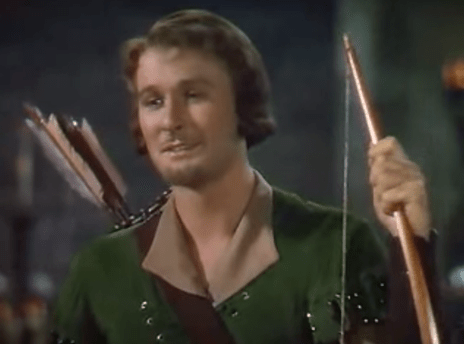 For me, the reason very few heroes surpass Robin Hood is based on his innumerable qualities. He’s a superior fighter with bow, sword or staff. He’s blessed with a wonderful wit and impressive leadership capabilities. He wins over the girl with his charm. He gets to live out in the forest with his best friends, eating great food. But most of all, he’s a rebel with a heart of gold, robbing the rich to feed the poor.
 It’s a B-picture title to be sure but with Robert Siodmak and such an ensemble, this is an enticing noir all the same. The well-to-do Quincy family of small-town America are an odd bunch, still holding onto their surname with pride as they slowly drift further and further into obscurity within the walls of their old mansion.
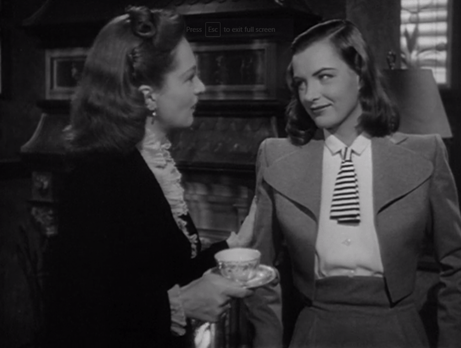 The dominating sister Letty, played by Geraldine Fitzgerald, is more aloof in her ways, veiling everything with a conviction that what she does, she does for the good of her brother. But it’s all really due to the fact that she cannot bear to let him go. In this way, she’s constantly controlling his life and undermining his happiness. She’s hardly your typical femme fatale, more cultured and refined than most, but there’s still something exacting about her.
 Children believe what we tell them. They have complete faith in us. They believe that a rose plucked from a garden can plunge a family into conflict. They believe that the hands of a human beast will smoke when he slays a victim, and that this will cause him shame when a young maiden takes up residence in his home. They believe a thousand other simple things. – Jean Cocteau
 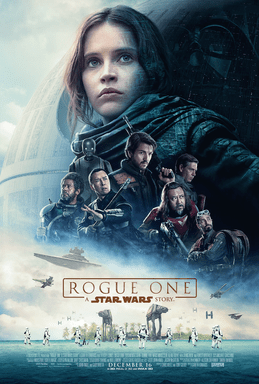 For so many, there is a deep connection to Star Wars that started at an early age. As I have alluded to on numerous occasions, I am no different. And if I feel that way about even the prequels, it’s exponentially greater for the original trilogy, as I can imagine it is for legions of others. Thus, when I watch Rogue One I do not linger on its shortcomings, though they most certainly exist, instead, I’m fixated on that very same suspension of disbelief that overtakes me every time I enter that world, a long time ago in a galaxy far, far away.
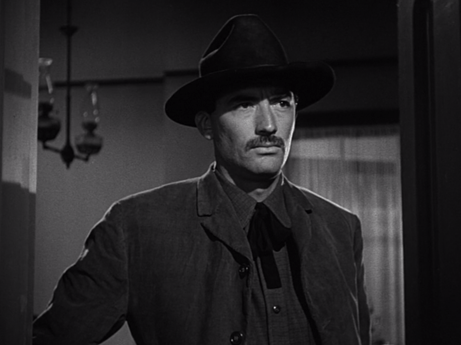 “Ringo don’t look so tough to me.”
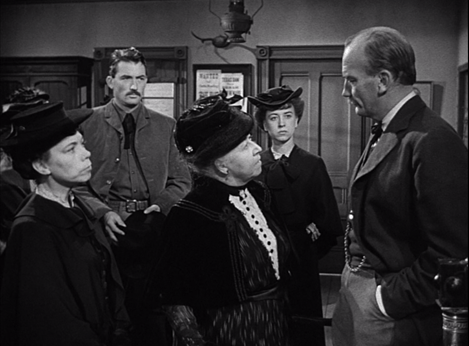 Of all men to understand Ringo, you would think that the local Marshall (Millard Mitchell) would be the last, but he happens to be an old friend of the gunman. They used to run in the same circles before Mark softened up. His life mellowed out, while Ringo’s reputation continued to build.
 The main reason Ringo stays in a town that doesn’t want him is all because of a girl (Helen Westcott). He waits and waits, biding his time, for any word from her, and finally, it comes. He gets his wish to see her and his son in private. These scenes behind closed doors are surprisingly intimate, casting the old gunman in an utterly different light.
 4 Star Films