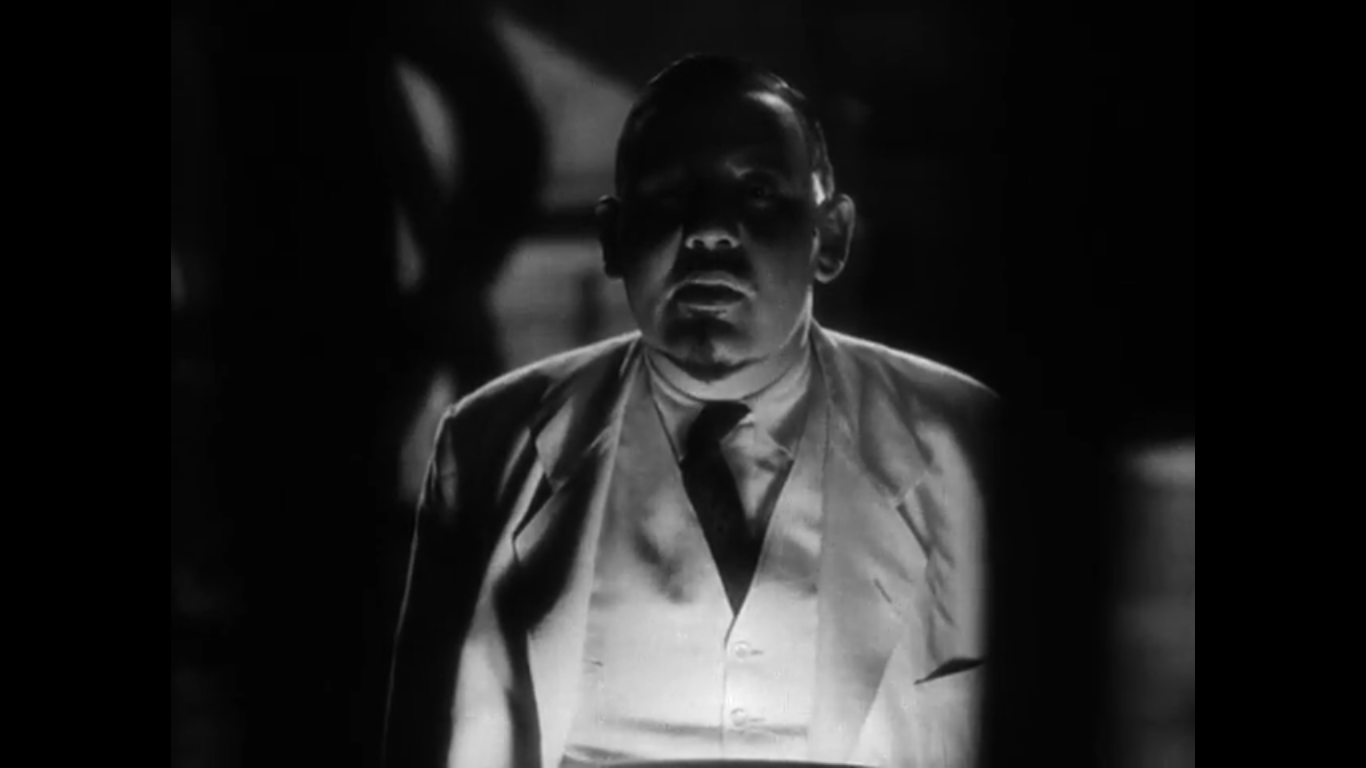
Time Limit (1957) Directed by Karl Malden

Time Limit sounds like it should be the title of a syndicated TV program or at least a game show in the heyday of family entertainment. It is not. The themes are heavy, and there’s a weight behind the picture that means something. And in spite of the clunky title, it bears testament to the main players both behind and in front of the camera.

Like his acting compatriot, Marlon Brando, Karl Malden only ever directed one full feature-length picture. Here it is before us, and you can see his sensibilities in it if only because it does stand for something. There is a purpose to it.

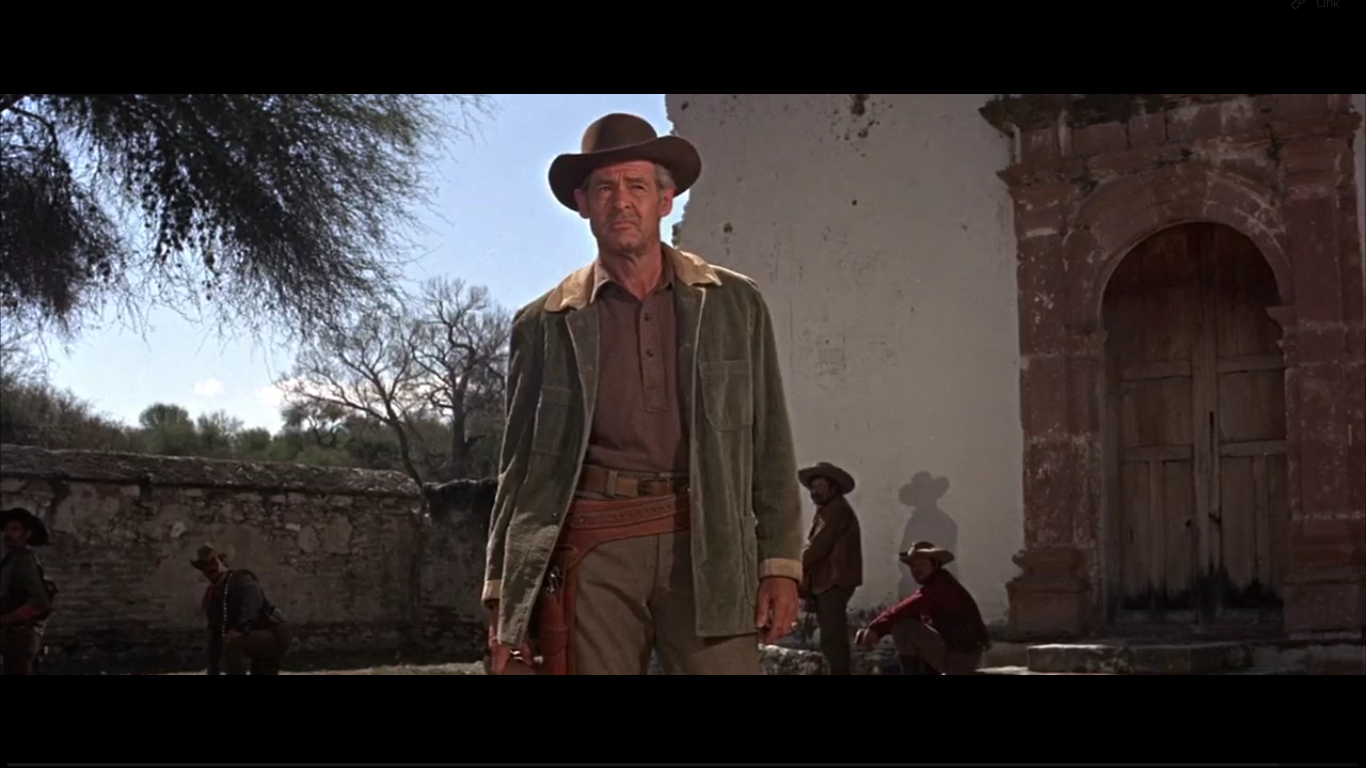
Although we never even see the inside of the courtroom, it still reminded me nominally of Man in The Middle with Robert Mitchum solely due to the scale. They both seem to rely on performance and actors who are up to the task.

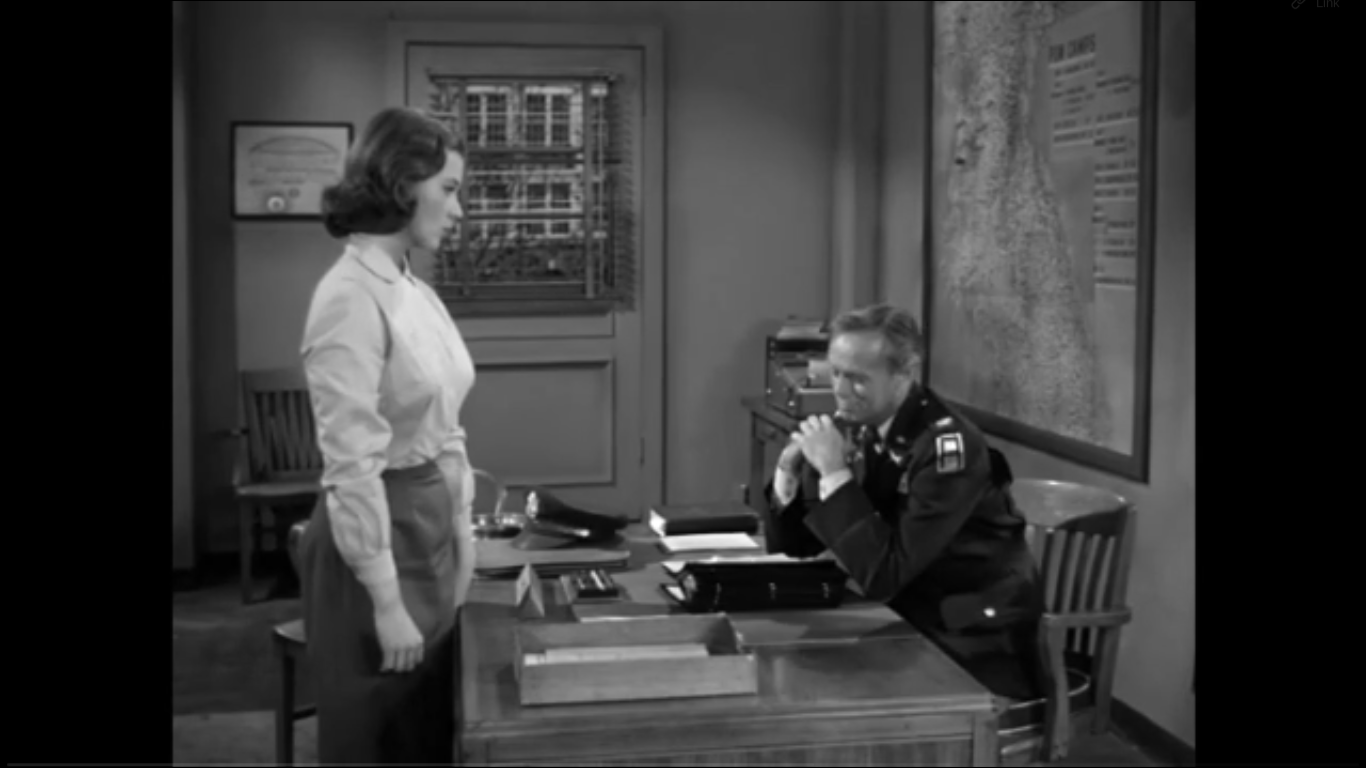
Time Limit hones in on an investigation into a potential court-martial of a major who looks to have caved to Communist ideology and committed acts of treason against his men and his country in a North Korean POW camp.

Richard Widmark, as the producer and one of the primary architects, is the anchor of the movie as the primary officer — a clear-minded Colonel — called upon to compile the details of the case.

But it is really Richard Basehart with the most complicated, ever-shifting role. It’s easy to sleep on him because of his stint in Europe, and he was never intent on being a movie star. And yet over a serpentine career, he left a trail of memorable noir (He Walked by Night, Tension), arthouse classics (La Strada), and mostly forgotten dramas like Reign of Terror or Fourteen Hours.

Because Time Limit functions mostly as a character piece albeit laced with flashbacks and ratcheted with tension. The ensemble itself is made up of a handful of others. General Connors is the Colonel’s immediate superior, and he’s pushing for a quick court-martial. He doesn’t want the boys to suffer through any more trauma. Although he’s not a totally unlikeable fellow, he does have a very concrete way of thinking. It’s abrasive, to say the least.

If you’ve read me before, you know I have a soft spot for Martin Basalm, and it started with movies like 12 Angry Men and Psycho and steadily built over time. He’s just so versatile while never losing his personal DNA as a performer.

Time Limit finds him on the more irksome spectrum as a busybody rat fink, who always has a way of divulging information to interested parties, much to Widmark’s displeasure. But for every tattletale by Sergeant Baker, there’s a supreme act of loyalty by the faithful and whipsmart corporal Jean Evans (Dolores Michaels). If we were to codify the movie purely between good and bad, she is one of the movie’s unsung heroes.

But they must also have witnesses — people with first-hand knowledge of the case — both personal and otherwise. An almost unrecognizable Rip Torn is a clean-cut, fresh-faced member of the unit who was there in the POW camp when the Major turned. Mrs. Cargil (June Lockhart) has a much different point of view because she still can’t believe the debilitating change that has come over her husband. It’s not like him. Something else is going on under the surface.

The score rages too much for my liking, but for what it is Time Limit plays quite well. The General starts breathing down Edwards’ neck — with personal interest invested — his son was one of those killed in the camp. It certainly cannot be discounted. Then, there are these very particular repetitions in the many testimonies (describing factors like acute dysentery). Something does not add up because everything lines up almost too perfectly.

More than anything, it does feel like Malden makes his actors look good. I’m thinking of a particular scene where Widmark is absent. Balsam leads Basehart into the office to wait but then prepares to ambush him and give him a piece of his mind. Michaels makes sure she is present to moderate, but first Balsam leans over his superior in his chair. Then, the close-ups cut back and forth between him and Ms. Evans as they have at it.

The tension in the sequence is palpable because the scene is blocked and covered in such a way that we feel the entire essence of what is going on. The visuals not only augment the performances but also the emotions underlying the sequence.

Winston Churchill is cited as saying, “In wartime, truth is so precious that she should always be attended by a bodyguard of lies. Widmark turns these words on their head because he says, “Truth can be more rotten, more vicious, and destructive than any lie.” Within the context of this move, he’s right.

Like Act of Violence, it becomes a film of making sense of a clouded past under circumstances the offenders are not proud of. The General invokes an unbreakable code for all his men — even his son — a code that must be adhered to with unswerving resolve. It’s a graceless proposition that no one can stand up to. Because for the hundreds of days men are heroes, there’s always going to be a few where they falter.

The question remains how do we canonize others? Is it at their most cowardly and despicable or at their very best? For those paying attention, the irony in the General’s final convictions should not be lost on us, “The Code is our Bible, and I thank God for it.”

If you’ll allow me one final digression, a book that’s pierced me to the core is Silence by Shusaku Endo. It is about Catholic priests, not soldiers, but they face a similar conundrum: the desire to attain some sort of martyrdom. However, what if someone is forced to face the ultimate ignominy instead? Each must struggle and make peace with a world that will openly disdain them, and that is a tough pill to take for any person.

3.5/5 Stars

Backlash (1956): Donna Reed and Richard Widmark

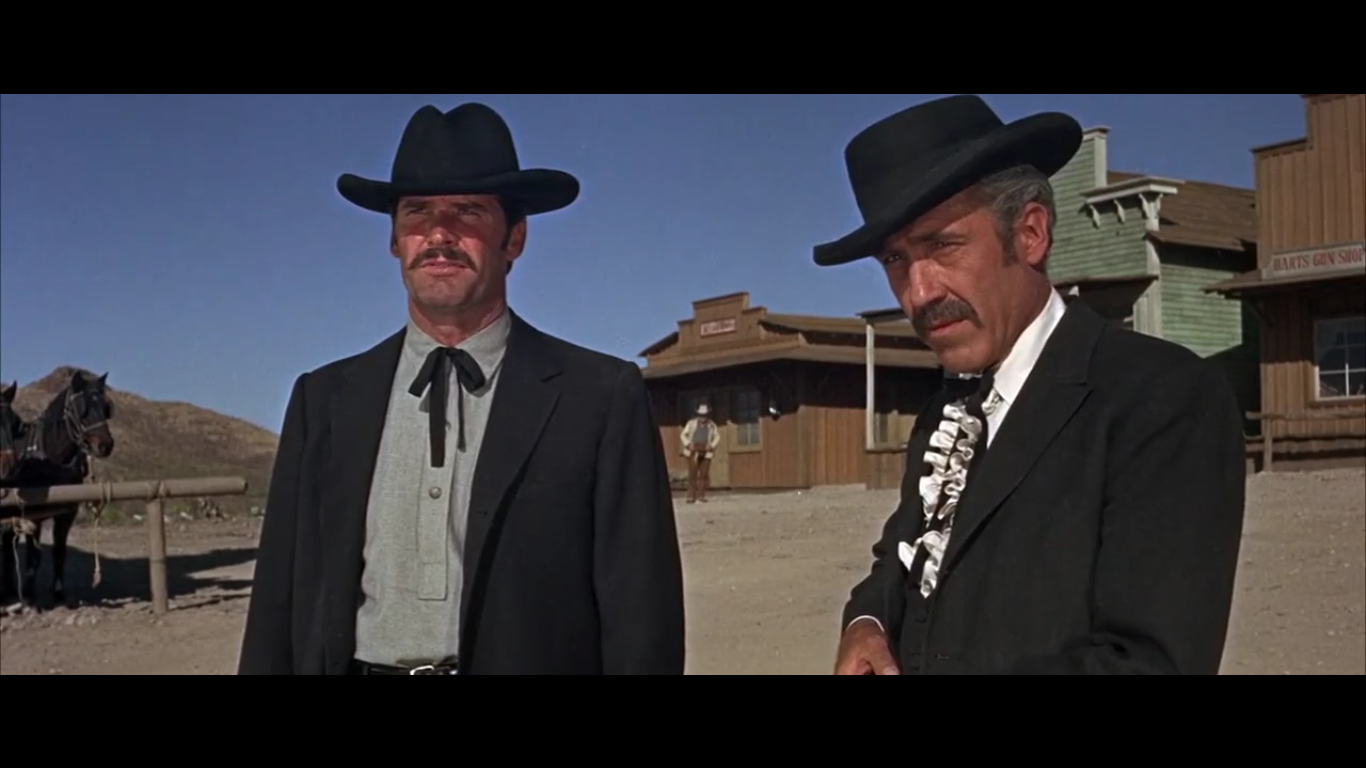
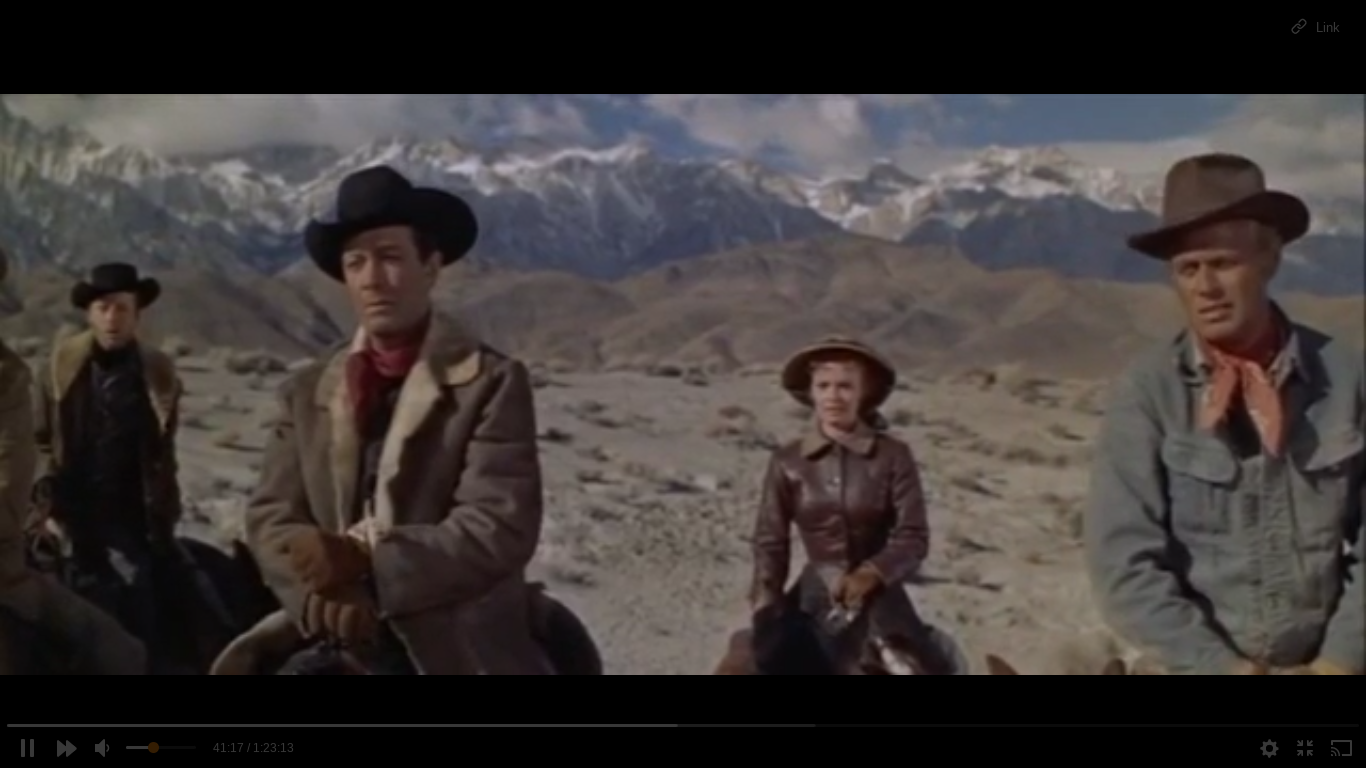
Only in a western could we meet our protagonists in a sand trap known as Gila Valley. It says everything you need to know about the Arizona landscape, and then the sweeping Technicolor tones say a bit more.

Richard Widmark is easy enough to place as an enigmatic figure. There’s a glint in his eyes, and we know from his pedigree he’s capable of playing shifty. The true pleasure is watching Donna Reed — because she becomes very much his equal — another sturdy customer with her own personal agenda.

It feels so very unaccustomed for the woman who played Mary Bailey and anchored her own family comedy. Then, again, the edges of From Here to Eternity are not too far in the past. It’s hard to forget what she did there across from Monty Clift.

The movie gets its legs when a man takes a shot at Jim Slater (Widmark) from the rocky crags above. He thinks he’s been a mark. The woman, Karyl Orton, was trying to play him, and he nearly fell for it. Leaving her behind, he scurries to the rockface to have it out with his enemy on the high ground.

Backlash is a constant exhibition in deciphering characters’ intentions. Because as an audience we are thrown into the action and asked to follow what’s going on. She’s searching for some gold, and he asks us to believe his interests are purely in his father who disappeared in the territory.

Although it’s adapted from source material, it does feel reminiscent of some of Borden Chase’s other patented efforts with a craggy showdown reminiscent of Winchester 73′ (1950). Thematically, John Sturges’s turn as director also proves a decent facsimile of some of Mann’s best westerns where the blending of psychological duress, perturbing imagery, and in-your-face action strings out the story into a taut state of tension.

It’s easy to become genuinely immersed in the first act with a fleeing stagecoach looking to cut across the open plains with Indians in hot pursuit. As they fall back, they’re forced to hold down an isolated trading post against the onslaught of marauders.

Unfortunately, all this buildup feels a bit too convenient. Because Slater searches for a seasoned soldier named Lake (Barton MacLane), who was a part of the detail that found the dead bodies that were left behind in an earlier massacre. In serendipitous Hollywood fashion, the old man keels over from a battle wound, just before divulging the remnants of what he remembers of a “6th man.” Surely he is the key to the movie, and Slater has been propelled forward.

If we can stop for a moment to acknowledge them, Backlash has a couple doozy bits of casting with the normally maniacal heavy Jack Lambert playing a sniveling Indian trader. Then, Harry Morgan, in a role reversal, takes on the role of a squat, no-nonsense heavy out to hunt Slater with his big brother. Because Slater killed their sibling.

But if there was any doubt in the red-hot chemistry of our primary stars, it sizzles while Reed brandishes a knife to cauterize the gunman’s most recent injury. It is a movie moment made for the big screen audience if there ever was such a thing. This smoldering passion and growing relationship are nearly enough to salvage the picture in its slower ebbs as they continue their search for answers.

In the end, they split the thread pretty thin between the two of them. It can only go one of two ways. Either the man he’s looking to find is her long-lost husband, a corrupt man, or it’s his own father — a man he’s never known a thing about. We must wait to discover the answer.

But the factions in the buildup are interesting. Our protagonists meet a man named Major Carson (Roy Roberts), who runs a local ranch. He seems like a pragmatic, sensible sort of fellow, and he’s got a range war on his hands thanks to a man named Bonniwell (John Mcintire).

One hotheaded sharpshooter (William Campbell) goes turncoat, and there are still thugs looking for Slater to gun him down in an act of retribution. The local sheriff (Robert Foulk) aims to remain impartial in all of this while still maintaining some manner of civility. He’s not concerned with private vendettas, only some semblance of local law and order. Widmark quickly gets tossed into the jailhouse, effectively sidelining him and leaving him incapable of exerting any influence on either side.

I won’t spell out the final act because that’s part of the fun of the picture, watching it unfold. There’s a dog-eat-dog mentality; it’s about family, but it never stops being a picture founded on Richard Widmark and Donna Reed. If you’re curious about seeing them together, that’s a good enough reason as any to invest in this western from an often underrated craftsman.

3.5/5 Stars

Colbert and MacMurray: Gilded Lily, Take a Letter Darling, Egg and I

One of my latest ventures was to view a handful of romantic comedies of the ’30s and ’40s, many with screwball elements, and you could not broach this territory without eventually crossing paths with Claudette Colbert and Fred MacMurray. They starred in 7 films together throughout the decade and also paired opposite some of the most prominent stars of the era (including Clark Gable and Carole Lombard).

Here are three of their movies, two that star both of them, and one with Fred MacMurray in the lead with another worthy romantic partner:

The Gilded Lily (1935)

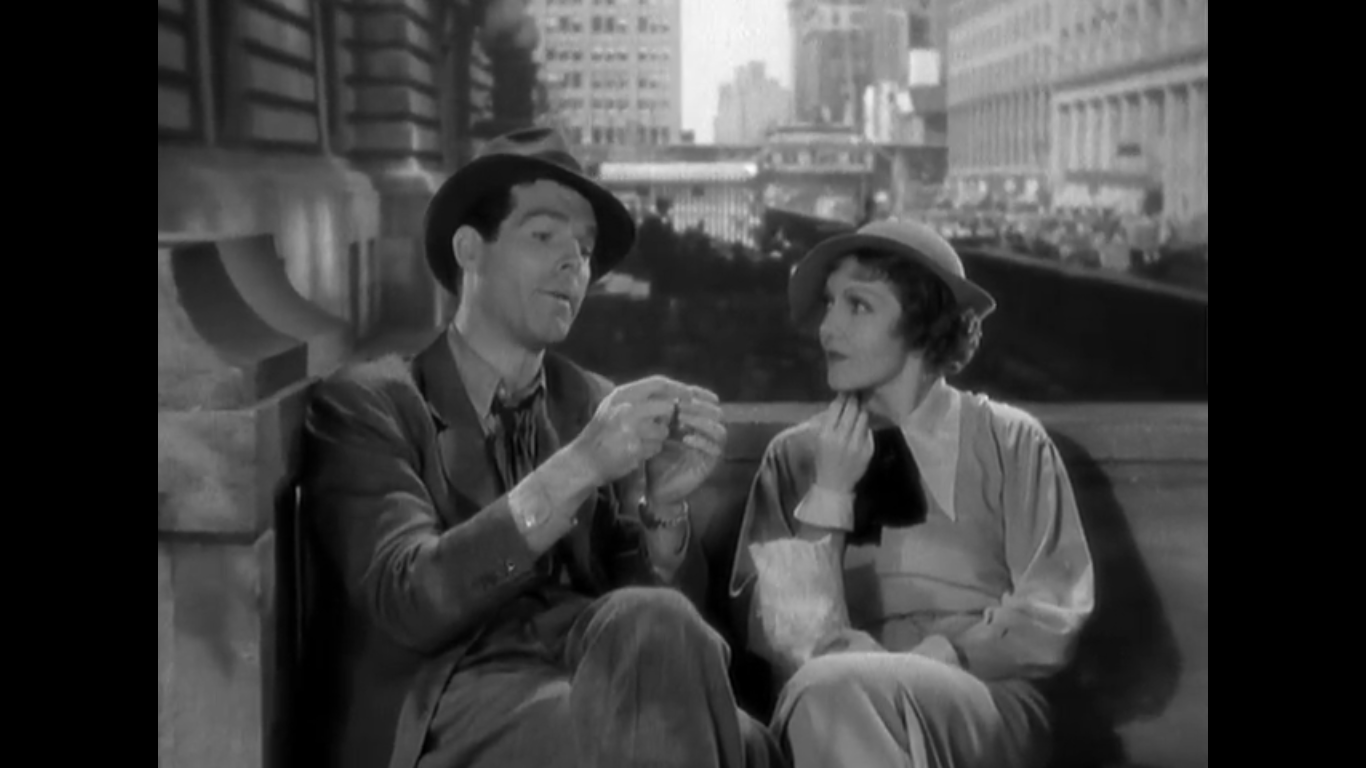
It opens on a park bench with MacMurray and Colbert chewing the fat as they share a bag of popcorn. What it does is create this instant familiarity going far beyond the bounds of the film as we’re thrown into their relationship that feels more platonic than romantic.

Thus, it’s not so much about the build-up to a prototypical relationship but the chafing that comes with their differing feelings. He has the hots for her. She loves him as a friend but still seems to be looking for her prince charming.

Prince Charming comes in the form of Ray Milland, a rich British aristocrat who’s come to America incognito. You can immediately imagine the complications arising from the fact Peter (MacMurray) is a nosy newshound and the other man has a secret to hide. They’re still to be cast as true romantic rivals and there’s already a tense undercurrent between them.

Meanwhile, Marilyn finds herself having to choose between two men as Lord Charles (Milland) promises a life of cultured sophistication. But Peter is always there, her ever-faithful confidante, and he’s also not going down without a fight.

He churns up the news mills to turn her into a household celebrity and the whole world seems to know her name. Even Charles is tickled by her world-class notoriety, but this is only a paltry imitation. If it’s not evident already, she needs a man who wisecracks, buys her popcorn, and wants to love all of her, whether she’s a big shot or not.

I’m still a bit smitten by the movie’s public bench premise because it allows our stars to do what they do best: laugh at the world together. No one can break their bond, and it teases out new contours to the Colbert-MacMurray partnership.

3.5/5 Stars

Take a Letter Darling (1942)

Although he does have a devoted following, Mitchell Leisen still does feel like a mostly unheralded director in broader circles. Take a Letter Darling is another modest feather in his cap, and it has numerous charms.

The gender norm-bending premise was actually quite intriguing for the era and MacMurray and Russell are more than up to the task of sparring in and out of the office. She’s a high-powered businesswoman who enlists a male secretary who can help her land her deals. He has a very important job: keeping jealous wives satisfied as she trades shop talk with their husbands.

There’s an obvious level of emasculation to the part, and MacMurray is more than game for it as he becomes the laughingstock of the secretarial peanut gallery. You see, he’s MacGregor’s fourth man and she’s running out of options. Still, it’s a lucrative way to bankroll his true passion: painting.

If Claudette Colbert was in fact originally earmarked for the part, I think I’m still partial to Russell in this particular role. I just find her brand of delivery perfectly metered for any kind of antagonistic comedy. And there’s a sense it builds on the kind of workplace dynamics she stirred up with such legendary fervor with Cary Grant in His Girl Friday, between quizzical glances and whipsmart repartee.

I will admit that Take a Letter Darling loses some of its comic edge when it turns saccharine, and the inevitable romance materializes. Until this point, the movie uses its premise to mine a plethora of laughs only to peter out as it makes Russell shed her authoritative business acumen for warm, fuzzy feelings.

However, while the final act can’t quite maintain the same level of comic tenacity, it also doesn’t whimper out as much as I was expecting. Yes, MacGregor wants her man back, but in typical Russell fashion, she crosses paths with him out on the road and comes armed with pebbles. She’s not going down without a fight, and she won’t totally acquiesce. It’s against her nature.

I feel like womanhood, especially in the ’50s, is glazed with this perceived antiquated patina, but watching the likes of Russell, Barbara Stanwyck, Jean Arthur, or even Irene Dunne during the ’30s and ’40s, provides a more nuanced landscape. It wasn’t all marriage and motherhood. They managed to grapple with the lives of modern working women in numerous ways. While Take A Letter Darling is no unsung masterpiece, it’s still easy enough to extend the recommendation.

3.5/5 Stars

Egg and I (1947)

Egg and I is based on a popular real-life memoir by Betty MacDonald, but for anyone who doesn’t remember it, it’s easy to pitch it as the original Green Acres — a Hollywoodized version of Grant Wood’s American Gothic. The fact it began with source material explains Claudette Colbert’s conspicuous introduction to the audience.

Otherwise, much of the movie is forged through comedy of the situation much like the wacky ’60s comedy with mostly mild and goofy trifles to contend with. The long-standing screen chemistry of Fred MacMurray and Colbert anchors the movie as its most imperative asset.

They’ve bought themselves a dilapidated house that’s riddled with leaks during the first rain. And once they’ve hunkered into their new home, next come the daily rituals that come with tending to a farm, and its livestock. They have lots to get used to. However, there’s also the local anthropological element.

Before the “Rural Purge” in the early ’70s, in deference to more urban entertainment, Hollywood has long mined comedy out of eccentric country bumpkins. Egg and I was no different introducing audiences to the first incarnation of Ma and Pa Kettle who became a bit of a low-budget institution in their own right with Marjorie Main and Percy Kilbridge.

One of the representative moments involves the local hoedown where men of all shapes, sizes, and dancing styles whirl Colbert around the dance floor, leaving her feet sore and her ears talked off. However, her greatest concerns are the advances of a local beauty (Louis Albritton), who her husband must do business with. She’s worried it’s a bit more than business, but if you watch him look at her, it does feel a bit silly.

I found the movie to be a bit too long and a tad more twee than it was gripping. Especially because Green Acres had numerous episodes and seasons to engage with analogous themes and character tropes to greater effect.

However, there are a few rewarding moments. It’s easy to recall the almost deceptively moving solidarity when the whole town bands together to loan the couple resources after a devastating fire obliterates their livelihood. For all their flaws, it’s a reminder of the close ties of small communities, and it makes Egg and I easy to root for even if it is mostly light-hearted recreation.

3/5 Stars

1930s Screwball: Love is News, Double Wedding, Young in Heart

I normally try to focus on a theme to better curate my viewing. This post will encapsulate 3 films whose primary players don’t have much in common. However, if you wanted a loose point of connection, all three are comedies from 1937-38.

It all happened when I was on the lookout for some underrated screwball comedies and though some of them are more innately screwball, I was pleasantly surprised by what they had to offer. If you haven’t seen them already, consider this a hearty recommendation to check out some underrated films:

Love is News

Love is News (1937):

Although it traverses the same worlds of pictures like The Front Page, Platinum Blonde, and Libeled Lady, there’s something rather lustrous about getting Tyrone Power in his first headlining role with his leading lady being such a fine rival as Loretta Young.

In the 1930s the prevalence of newspaper movies makes them a workplace subgenre all their own. Love is News is made by this sense of good-natured ribbing and antagonism found end-to-end. In the office, Tyrone Power and Don Ameche feud incessantly, always buzzing the intercom to pull one another off the payroll. And this comic fodder continues when Steve Leyton (Power) finagles a scoop from the “Tin Can Heiress” (Young), sidestepping all the red tape and effectively gaining her confidence.

The piece de resistance is (no, not George Sanders playing a jilted French lover), but the fact the heiress hatches her own scheme as an act of revenge. She calls in a story to say she and Leyton are to be married!! She’s used to the publicity hounds, but he is pummeled by his newfound notoriety without a moment’s peace.

What makes the movie is the kind of rambunctious reunion you would expect given such a scenario. A podunk Judge (Slim Summerville), with a jailhouse falling apart at the hinges, locks them both up: She receives a speeding violation, and he’s apprehended in the middle of grabbing, err “stealing” her vanity case.

By now the last place he wants to be is stuck right next to her — anything else would do — but she orchestrates everything just so. There’s an exuberance because now the game is afoot as Young playacts her way to her desirable conclusion.

Even if the enemy-to-lover romantic arc is something we see so often, it’s the leads who make it spark, and there’s enough chaos to make it more than palatable. I couldn’t help thinking about how bright-eyed Power and Young both feel at this point in their careers, and it gives a kinetic vitality to their chemistry.

3.5/5 Stars

Double Wedding (1937)

Double Wedding feels like it banks on all the best characteristics of William Powell. He’s witty, at times churlish and juvenile, but boy does it make for goofy, ever-contentious comedy. This was one of his prevailing gifts as a film actor. We have a fine time messing about with him, and he never quite relinquishes his charm.

I’ve previously mentioned how I’m partial to The Thin Man movies because it plays off the amenable chemistry of Powell and Myrna Loy; not on their antagonism. It’s more about their repartee as comedic and matrimonial equals than it is watching them quarrel and make up.

But enemy-to-love arcs must cast Loy in some other way. In movies like Double Marriage or I Love You Again (1940), she must seem unreasonable from the outset or at least chafe against the wisecracking good humor of Powell.

In this story, she’s the fastidious businesswoman and older sister, who effectively runs her younger sister Irene’s life. It makes her an easy target for Charles Lodge, a man who’s probably a bit slap-happy and far too bohemian for the ’30s, living out of a trailer and putting on his own stage productions.

He scorns this kind of buttoned-up oppression and though Irene and her wet-noodle of a fiancee are charmed by his influence, they’re also not brave enough to stand up to Margrit. It’s so easy to sink back into tedium as she begins to set about planning their future wedding.

Powell feels like the lynchpin of the movie as he rebuffs Irene’s newfound advances, tries to help the dreary Hugo reclaim his manhood, even as he tries to woo Margrit under the most unconventional circumstances. It hardly seems material that the title gives something away. It feels like more of a signpost for us to aim for.

The escalated chaos of the finale exceeded my expectations as folks crowd in and around Powell’s mobile home for the wedding proceedings overseen by the ever-handy Donald Meek. It just keeps on going and going, but then again, I should expect nothing less from a Powell/Loy comedy. John Beal and Edgar Kennedy are other personal standouts to keep an eye out for.

3.5/5 Stars

Young in Heart (1938)

Without any preconceived knowledge of Young in Heart, it actually positions itself with an intriguing premise. It’s built out of a family ensemble of con artists who are always looking for ways to get ahead with varying degrees of success.

Their esteemed patriarch and matriarch are played by Roland Young and Billie Burke respectively. Father is constantly ingratiating himself as a distinguished Colonel who fought with the Bengal Lancers. The grown kids (Janet Gaynor and Douglas Fairbanks Jr.) are out on the prowl for eligible suitors, who also happen to be loaded. The French Rivera has more than a few prospects though the authorities are especially vigilant.

The whole movie comes into its own after they’re unceremoniously kicked out of the country and then stuck aboard a train trying to figure out their next angle. George-Anne (Gaynor) meets a kindly old lady, “Miss Fortune,” who has her own compartment. She gladly shares it to stave off her loneliness and the family is quick to oblige. She’s just another mark they can perform for.

She welcomes them into her home, glad to have the company, and they realize if they’re nice to her, she could very easily credit them in her will. For modern audiences, it has the ring of Bong Joon-ho’s Parasite albeit without the social commentary. Instead, this family secretly unearths their soft hearts finding that as they model goodness, they find it suffusing throughout their lives.

The Colonel becomes a revered car salesman of “Flying Wombats” to the wealthy.  Richard stumbles into an engineering firm because of the pretty girl behind the desk (Paulette Goddard) and soon learns the edifying nature of an honest day’s work. They also fall in love.

If we see the progression from a mile away, it’s still a pleasure to watch this family evolve in front of us, and it feels like each member gets their individual moments to shine. Gaynor feels like the undisputed focal point, and though I don’t necessarily buy her in a skeevy role, we like her already, which is half the battle.

Young and Burke might be known for a single role each (in Topper and The Wizard of Oz), but they always can be counted on with a highly specific brand of comic eccentricity. There’s something wonderful about watching their charms bubble over. Although we could have easily had a Fairbanks-Goddard rom-com on its own, it might have been a bit bland. The ensemble brings the best out in everyone.

3.5/5 Stars

Autumn Leaves (1956): Cliff Robertson and Joan Crawford

You might not immediately connect Joan Crawford and Nat King Cole, but his brand of velvet crooning provides a fine backdrop (and namesake) for Autumn Leaves. It presents the consummate leading lady with a lighter more congenial personality — the kind of Joan Crawford who seems easier to connect with.

She’s known for her typing speed, working from home before it was en vogue, and banging out manuscripts for thankful clients. Although she leads a solitary existence alone, she’s buddy-buddy with her landlady and seems generally contented with life. When she goes out to a show or dinner, she’s comfortable going alone — it doesn’t feel foreign to her — and she enjoys her time in solitude.

There’s a moment in Autumn Leaves as Crawford sits in an audience, the lights go out so the spotlight is only on her, and the pianist on the stage takes her back into her memories. It felt so reminiscent of a scene in Penny Serenade where music, whether live or on vinyl somehow fills up the human heart and carries with it so many easily-tapped emotions.

“Autumn Leaves” feels less like a gimmick to cash in on the season’s newest love song, and it starts to pervade and then slowly suffuse throughout the entire movie until it becomes the tactful accent to almost every scene of the ensuing romance.

Because this all feels like a prelude. We have yet to meet our other primary player. Cliff Robertson was from the east coast and an actor forged out of his training at the Actor’s Studio. He’s still fresh-faced and Autumn Leaves was his second truly substantial movie role after the movie adaptation of Picnic with William Holden.

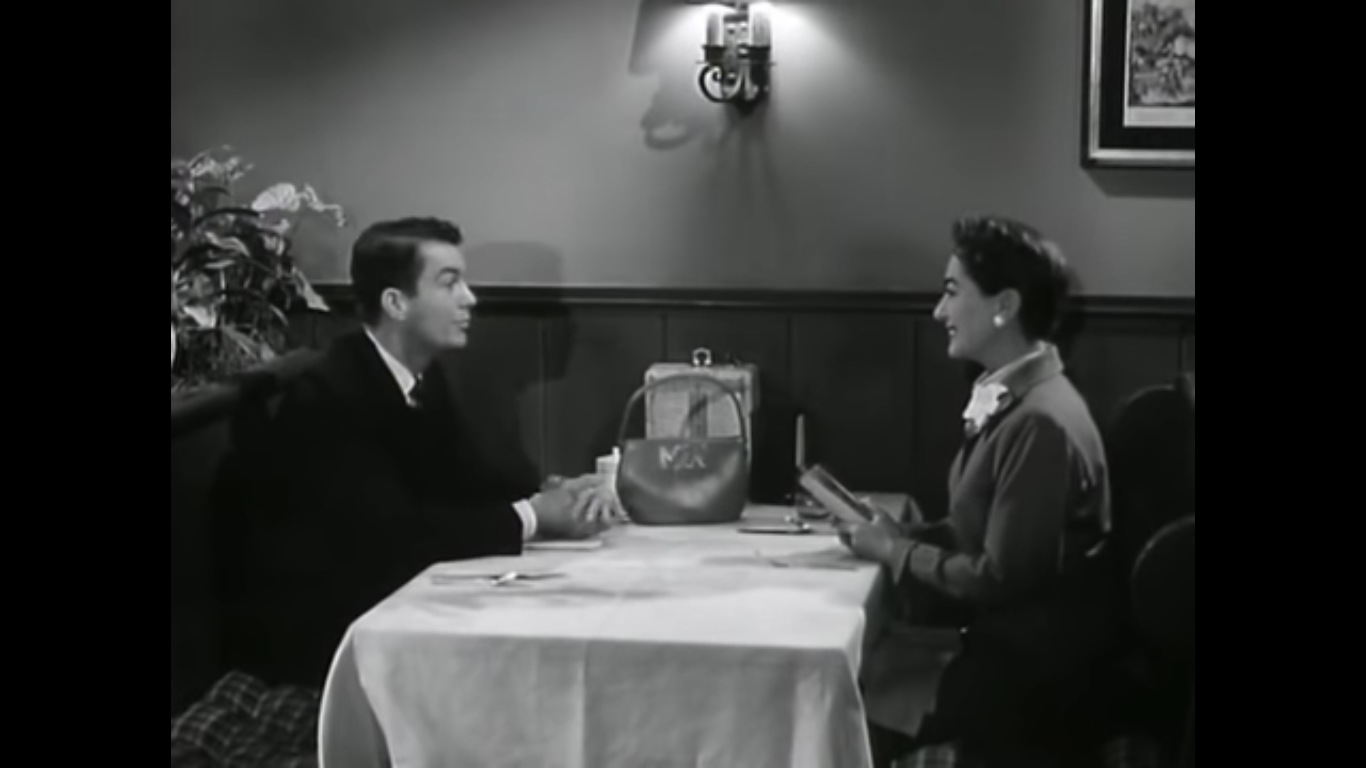
When he steps into the bustling restaurant and eyes Milly in the one booth with an extra seat, he makes his way over. There’s a disarming approachability about him. It starts to melt the ice and break down the barriers between him and his new acquaintance. Partially because there’s no threat to him though he’s still good-looking. Rather you feel like you can get to know the guy and like him. And she does.

They spend time together, going out more and even taking day trips. It’s a mutually beneficial relationship, and yet I hesitate to use these terms because it makes it sound mercenary. In the most innocent ways, they just enjoy one another’s company, and it shows.

The former Army veteran shows off his beach body on one outing chasing Milly into the waves. He feels like a movie creation. Can Joan Crawford have her own version of a 1950s manic pixie dream boy? But this is only a momentary suggestion. He becomes more of a person in the ensuing scenes. When she prods him about his old girlfriends, he shrugs them off. “Young people are too young for me,” he says.

If they do seem like an odd couple, they aren’t totally unprecedented. Because while loneliness is not a foundational reason to get married, it’s true we need each other. Burt believes that sometimes you meet someone and you know; they provide something you are lacking. I’m reluctant to say they complete you. Still, maybe with someone else’s hand to hold, it makes the world just a little less lonely and the pain a little less galling. Milly loves him and after minor reservation, falls into his arms for better or for worse.

They have a bit of marital bliss below the border, and yet something starts happening. Burt lets bits of his biography slip. All very matter-of-factly and there’s nothing guileful about it; it feels innocent enough, but she begins to realize they don’t match up. First his hometown, then his military service, and there are other discrepancies.


Then, Vera Miles shows up on her doorstep as a manifestation of all her sinking fears about Burt. His insinuating father (Lorne Green) is next to appear. There was a time when the movie could have easily been Joan Crawford’s Middle of The Night. Instead, she becomes devastated by the newfound revelations about her husband, and then must become protectorate shielding her love from the unfeeling world all but ready to exacerbate his condition.

She’s ready to battle for him. If it’s not righteous anger then it’s certainly indignant anger. She sees people for who they really are and calls them on it. Whatever Burt’s shortcomings, he has everyday, common decency. Her maledictions against the character of others might seem excessive (“Your filthy souls are too evil for hell itself”), and yet she’s not entirely wrong. If nothing else, she’s lashing out as a defense mechanism.

However, she’s also caught in the most excruciating of conundrums — one of those scenarios where it seems you are required to do something against your nature out of the deepest sense of sacrificial love, even if it’s not perceived as such. Her deepest longings are for Burt to be born again — that he might live a new, better life than he had before. It leaves the door open for another outcome. It’s very possible if he overcomes his illness, he might come out on the other side as a man who wouldn’t need her anymore. It’s either keep him for herself or watch him return to a happy, normal life (without her).

In the meantime, Burt isn’t getting better. In fact, his circumstances are far worse, and so Crawford is stirred to action. One of the film’s more pronounced shots is of Crawford as she reaches for the phone and resolves to make the fateful call. The low angle makes her loom large in the frame, not so much in a threatening way, but expressing just how much magnitude this moment is imbued with. Her eyes flicker slightly, this way and that, before she speaks into the receiver. There is no turning back.

Whether it’s purely a credit to the scenario, the direction, or the winsomeness of Crawford, I’ve never felt so devastated for her before. She’s put through the emotional wringer, not from noir tension or antagonism, but the kind of burden cutting deep and breaking your heart in the most tender of ways. She’s rarely been more sympathetic and her fortitude is easy to admire.

The final moments are quick, but that is not to say they aren’t pregnant with meaning. The couple is reunited, and I will leave the rest up to you to experience. Robertson and Crawford make the movie work, and this whole story hangs in the balance of their rapport. They weather both the mundane and the melodrama together. It’s pleasantly captivating watching them.

4/5 Stars

Sudden Fear (1952): Joan Crawford in Peril

I had no prior knowledge of what Sudden Fear was about, and I was relatively taken aback to see a film set during a stage rehearsal. You have your lead actor in the middle of a passionate soliloquy. This is Jack Palance getting a go at a more substantial role. Then, there’s the writer and authoritative creative mind behind his current material: Myra Hudson (Joan Crawford).

They are immediately at odds because she proposes to give him the axe and being the artistic force that she is, she makes the decision stick. He’s not her idea of a true romantic lead. This level of occupational animosity feels like a portent for something to come — what it is exactly we don’t know yet.

It starts out fairly innocuous when the writer and actor reunite. It’s quite by chance. They get awfully chummy on a train to San Francisco cutting through the awkwardness to play poker and share a drink together. The story trades the New York atmosphere for the West coast and with new geography comes new developments in their story together.

Her rejection of his casting was nothing personal, and she grows fond of him. He in turn gets brought into her life little by little. One moment in her office, he’s caught up in the swells of her poetry and speaks it back to her through a fancy dictaphone.

Crawford’s reaction shots are evocative, on the verge of something as if she’s just about ready to run over to him for an embrace. She’s been moved, but the dividing line between reality and fiction, or at least stage acting, is not something a writer should so easily confuse. Still, emotions get muddled.

What follows are interludes of pure ebullient joy appropriate for a budding couple. It’s hard to describe but amid all of this, there is also a mild sense of unease. The feeling is perfectly encapsulated by the moment when the newlyweds trek down to the water’s edge together only for the man to say just how dangerous the drop below looks to him. It’s something for us to put away for later consideration.

It seems apropos that the introduction of Gloria Grahame would almost instantly act as an augur of total noir. Suddenly, the movie has its twist toward the shady and undesirable. It’s the shift one waits for and relishes just the same. And this is just the beginning.

Some part of me wants to proclaim Sudden Fear the crowning achievement of the woman in peril subgenre or at least the greatest of the San Francisco iterations, though there are others like House on Telegraph Hill (I’m conveniently leaving Vertigo out since it’s mostly from the male perspective). Regardless, it has to do with laying the dramatic groundwork as well as fully utilizing the reputation preceding Joan Crawford.

Because Grahame and the scorned Palance not only know each other, they have a history, and Myra Hudson is a part of their plans. However, it hinges on the dramatic irony. Their target finds out what’s going on.

Voices amplified and booming out into the open space sends her back peddling against the walls in sheer horror. It’s her slice of domestic bliss being totally annihilated in one instant. Then in her distress, she loses her one shred of definitive evidence. From there we’re sucked into her dilemma as all rationality quickly evaporates. We don’t have time to care.

Obviously, everything in the movie is between actors; this is not reality. However, it’s intriguing to think about how the level of performance shifts. Palace is playing an actor, but then Crawford finds out his true intentions, now she must put on a performance of her own and so they are both playing parts within the movie to satisfy one another. The question remains who will break first in this charade. Because it must end at some point.

If you care about spoilers, my discussion of Sudden Fear might be a letdown, but for me, it feels like a picture wrought with tension more than relying on secret keeping. This is how we can make sense of it and appreciate all its mechanisms working on us as an audience. It’s so important for these women in peril movies that there is some level of identification or at least empathy for our lead. In this case, Crawford.

The whole ordeal weighs on her because she’s not trained to be an actor, and yet she takes to her role whether it’s snooping around an apartment or touching up her penmanship. Her final performance is almost as premeditated as any crime might be, and there’s some pleasure in watching it play out.

There are an array of these subtle intricacies executed in front of us for our viewing pleasure. A brief glance. A note left in a glove. The emblematic shot is the shadow of a clock hand swinging like a metronome across Crawford’s incomparable face. There’s an inevitability of what’s coming next…

I’ll double down on my early championing of Sudden Fear as a superlative woman in peril movie. However, my reasoning developed a new layer. What makes this movie particularly thrilling is not the fact Crawford is set up solely as a victim. Actresses whom I admire like Joan Fontaine, Barbara Stanwyck, Audrey Hepburn, and Grace Kelly all faced similar fates in the movies.

The difference here is how Crawford takes matters into her own hands, not just in a last-ditch struggle for survival or a convenient turn of events. She’s prepared to end others just as coolly as they wanted to end her. I’m not sure if it’s believable, but it’s a stunning transformation nonetheless. We must also recognize this is not really who she is. Her core humanity is made very plain.

Only after the fact with some space do we recognize the vortex of this entire story. There are no policemen or your typical authoritative experts. No helpers. Bruce Bennett and Virginia Huston are no use (even future P.I. Mike Connors is negligible).

It’s really a cat-and-mouse game with three characters and no innocent bystanders. Sudden Fear feels lean and gaunt because the thrills are directed very intensely and there’s not a lot of expositional fluff. That’s what the introduction was for. In the end, it’s pure noir drama with a kind of blistering doom.

4/5 Stars

More Film Review of 2022

I watched so many films in preparation for award voting, I almost forgot I had written other capsule reviews at the end of last year. As this year’s award cycle comes to an end, I thought I might as well share my thoughts on some of 2022’s other releases.

Elvis

Elvis is a schizophrenic biopic full of decadence and a giant performance from Austin Butler. He’s cast as an atomic individual with gyrating hips and supernatural energy imbibed by Black spirituals – the Holy Spirit as transcendent superpower. Likewise, homage is paid to inspirations like B.B. King and Sister Rosetta Tharpe, and a bit like The Great Gatsby, Baz Luhrmann develops this cultural collage with the nostalgia given a contemporary facelift via Eminem and Doja Cat. The cradle-to-grave blueprint almost feels too monumental with the biggest leap coming between Elvis’s enlistment in the military in 1958 to his cultural nadir in 1968.

I’m intrigued by the decision to frame the story through Colonel Powers, though I didn’t entirely appreciate the execution. Tom Hanks seems to pull us out of the movie in a disconcerting way. The images themselves can feel plastic albeit underpinned by Butler’s sympathetic moodiness. Somehow this seems to work well, and he goes for it in all manner of ways from the vocals, to the costuming and the fluctuating register of his voice. 

I have one primary qualm: although we tear through so much territory with Luhrman’s quintessential panache, we get very little time to actually appreciate these characters, nay, even get to know them. Elvis and Priscilla share a few solitary scenes of heartbreak and tenderness. Still, the rest of the movie feels more like an aesthetically pleasing clip show or montage projecting the aura of Elvis. Because he was such a gargantuan figure. The film gets that right.

But it never demystifies him in a way where we can get to know him and fully empathize. The most gripping moment might be right at the end when Butler fades out, and we suddenly realize we are looking at the real Elvis in his last performance of “Unchained Melody.” He gasps for air, he looks like an incoherent wreck on stage, and yet when he starts to belt out his song, we are reminded he was touched by something sublime. Perhaps Luhrmann wasn’t far off the mark after all.

Women Talking

Women Talking has a powerful theme at its core – a noble theme – and it takes it on with quietude and immense consideration. It is based on Miriam Toews’s novel dealing with a Mennonite enclave in the aftermath of a revelation: the men in their religious colony have been drugging and raping the women, and attributing it to the supernatural. The title somehow makes an implicit suggestion: men should be slow to speak and quick to listen – at least quicker than we normally are. And Sarah Polley creates this arena for all sorts of personalities and viewpoints to chafe against one another. It can be painful, but there’s also some catharsis found in this space up in a dimly lit grain silo. 

Although its tone is different, the nature of the material reminded me of last year’s Mass. These are self-contained dramas; they could have easily been performed on the stage instead of celluloid, and yet the breadth of the performances wields immense power. If you run down the gamut of Rooney Mara, Claire Foy, Jesse Buckley, et al, there are innumerable emotions – piousness, vengeance, and hurt. There is no easy way to parse through the trauma.

In one scene, a young girl questions the excommunicated man, August (Ben Whishaw), if his family was cast out because his mother questioned God. He makes a distinction: She did not question God; she questioned the power and the rules made in the name of God. These are the accoutrements Kierkegaard might have labeled Christendom, and many of them are rancorous having nothing to do with the teachings of Jesus Christ.

Aesthetically I’m still trying to parse through its washed-out color palette, and while I understand what it’s trying to accomplish, somehow it detracts from the film. It’s not just ugliness for uglinesses sake, but it feels like a visual faux pas or at least a missed opportunity. In Women Talking a sense of scenery and landscape comes out most in the final minutes as we recognize we are watching an exodus to a land they do not know. The resplendent scoring does leave a sense of anticipation and hopefulness in a film offering very little optimism otherwise. 

Nope

“I will cast abominable filth at you, make you vile, and make you a spectacle” – Nahum 3:6

The meta-irony of the movie should not be lost on us. Jordan Peele has created a spectacle movie about our collective obsession with spectacle. I’m certainly not the first to notice, but it’s telling he names his sibling duo OJ (Daniel Kaluuya) and Emerald (Keke Palmer). He effectively weaves together allusions to OJ Simpson’s trial and car chase with the Emerald City out of Frank Baum’s beloved fantasy. Somewhere in the mix, we’ve found the perfect cultural touchstones for what we end up witnessing.

But the best part of Poole’s films is how he gives us what we desire as an audience with the genre expectations and still, he finds time to grapple with deeper thematic ideas. It morphs into a kind of Sci-Fi revisionist western as OJ looks to maintain his father’s Hollywood stunt riding and horse business under mysterious circumstances. Poole grafts them into history – including the images of Edward Muybridge – even as he begins to redefine images of Blacks in the West, if not necessarily the representation of the western in cinema itself. Still, if you look closely, you’ll quickly spy the very intentional posters of Duel at Diablo and Buck and The Preacher, two westerns both starring Sidney Poitier, in a genre that otherwise lacked black heroes. 

The movie’s horrors come at the cost of gut-wrenching voyeurism over gruesome tragedy, and I appreciate how the director creates an entire matrix for his story to swim in with a history paralleling our own. He also recognizes the imperative need for pervasive tension and not just jump scares. In fact, it can almost be said the film is slow in patches, although it’s all about creating this world. It involves a child star-turned-family attraction man (Steven Yeun) and a tech whiz who works at the now-defunct Fry’s electronics. It’s big and ambitious, and yes, a bit messy, but somehow all these disparate pieces build something in front of us.

Leave it to Poole to conjure up a predatory UFO using our rubbernecking against us. We are inundated with wreckage and upheaval that comes at the cost of our collective obsessions. So Nope serves up the writer-director’s genre thrills while never shirking the broader social commentary.  It’s this combination making his movies into what can only feel like cultural events. Only the audience can determine if he’s feeding into the spectacle machine or not and how you would like to respond to it. A faceless spectacle seeker chides OJ to make a name for himself, and it’s difficult not to hear this as an evocation of babel. It feels almost like the temptation on the flip side of the oracle in Nahum. Because we make a spectacle out of everything: TV show tragedies, carnival attractions, and certainly UFOs. 

Everything Everywhere All At Once

I was hesitant about The Daniels thanks to their pedigree gleaned from twerking music videos and Swiss Army Man trailers. Still, they have grounded their outrageous proclivities in something I can appreciate, and EEAAO is their broadest film yet by its very design. In a generation swimming with multiverse movies, this outrageous creative tandem has conceived their own spin with a choose-your-own-adventure of a different sort starring a Chinese-American immigrant family front and center. 

As Michelle Yeoh, Ke Huy Quan, and James Hong are framed in an elevator together, I recognized this is the movie I always wanted to see and never get the chance to as a kid. It feels like a kind of much-awaited wish fulfillment within the Asian community: A beloved star taking on a role initially envisioned for Jackie Chan only to lend her own heartfelt and butt-kicking presence. A former child star who disappeared from in front of the screen thanks to the dearth of roles only to make a triumphant return. And a journeyman, utterly ubiquitous icon who finally garnered his due. And here they all are together cast as a family of genuine action heroes. And yet within these parameters of the family unit and what that means within this very specific context. We have stories like Crazy Rich Asians or The Farewell, and I continue to yearn for more and more of them.

What the Daniels bring to this space is an inexhaustible imagination taking creativity to its zenith with its share of gross-out scatological humor. Their sensibilities are not always to my liking, but it is a tall order to be all things to all people even with the aid of a multiverse. The movie pings through time and space with a wacky abandon flinging our heroine Evelyn into all sorts of circumstances before becoming an existential meditation on life. We only have one life left to lead: This one.

Family turmoil sends her spiraling and The Daniels evoke the impending nihilism with two rocks sitting next to the edge of the abyss, then pinatas swinging without self-determination, or finally a scribbled drawing without defined form or context. Surely the world is collapsing around us. But I can’t get away from this cast and how happy I am to see them together and how they fight mightily for some kind of solace and personal restitution. Because this is the film’s battle – a battle familiar to any of us with family. My final thought is only to consider the film’s sense of language and even how the end credits are written out with each actor’s family characters (along with the English). I’m not sure I’ve ever seen that before. Movie aside, these small recognitions feel like mini revelations. 

Till

“I keep asking myself why is this happening. Why did he take my child from me? What am I supposed to do?”

There’s something classical in Chinonye Chukwu’s techniques. For anyone familiar with the killing of Emmett Till, it could be a gruesome story, and yet in the moments where she could go for the visceral jugular, she goes for tact and a level of forbearance. Tension and the ache that comes with our own imaginations and the empathy welling up inside of our hearts are more than enough. In fact, it’s probably more potent.

In making it a mother’s story about Mamie Till-Mobley (Danielle Deadwyler), it doesn’t strip away any of the power or detract from the focus. Instead, it’s made supremely evident Mamie has such a stalwart moral constitution and an unwavering faith. Her son’s horrific death at the hands of southern racists was not something to cripple her. Instead, she carried his mantle with bravery so the whole world might be opened up to the despicable hate still festering in American society. What’s more, Emmett’s funeral – honoring an irrepressible boy lost far too soon – was met with the resoluteness of the old hymn: “It is Well with my Soul.” It could easily sound like religious folly unless you have a deeper understanding like Mamie about what her purpose was. 

Sadly, it’s hard for the film to climax after the egregious moments surrounding Emmett’s death, with a court case that feels all but inevitable in its conclusions. Still, the closest thing to a revelation might be when Mamie turns and sees the image of her son in the flesh smiling in front of her again. To her, this was not wishful thinking but a galvanizing belief that she would one day see her boy again. I don’t know any other way you could move forward and keep from being inconsolable. There must be a groaning even a yearning that the aberrant hatred of this world is not the final word. Justice will ultimately roll down, and she vowed to fight for it on this side of eternity until she saw her boy again.

Emily The Criminal 

If you’re a 20-something saddled with debt or trying to make a go of it in a gig-driven economy, Emily The Criminal might hit home. It’s centered on an L.A. that does seem to exist under the surface and still somehow exhibits a very specific milieu riffing off the focused austerity of someone like Michael Mann. 

It’s a modern-day neo-noir in a sense as we watch a young working professional live two parallel lives leading her deeper and deeper into one of the dark underbellies of the city. Although she aspires to be an artist, Emily currently works for a catering service, and when a coworker gives her a tantalizing tip – $200 for an easy hour of work, it sends her on her dramatic journey. For all those with fond memories of Aubrey Plaza as the misanthropic Parks and Rec intern, she upends expectations once again driven by a sense of listlessness and desperation. The world of credit card fraud mills and dummy shoppers is so tantalizing to the outside observer and depending upon your station in life, it’s a hop, skip, and a jump away from our own experiences. 

The romance between Emily and her general enabler and guide Youcef (Theo Rossi) feels like one of the most unlikely pairings of the year and still, it works to feed the film’s drama and lend it an emotional credibility. Because it feels like the film teeters perilously on the precipice of easy stereotypes, and yet it somehow comes out intact. Like all great neo-noir films, there is a grittiness to the picture where we feel and sense the danger; it is tactile and yet we can’t bear to look away because it has a grip on us.

I recall Christopher Nolan’s advice about finding ways to hide your budget with the weapons you use. Guns are pretty important for a crime picture, but they also come with their own production pitfalls. Nolan used hammers in his debut, and to that point, I’ve never seen Exacto knives and tasers used to such stirring effect as they are in this picture. They act as a practical extension of the world and the everyday menace ever-present. Plaza continues to show her abilities and no doubt will earn a new following from those who never conceived her as this kind of crime hero. She’s good and somehow her reputation for darkly comic sensibilities is given an even more incisive edge. What’s more, it looks to be just the beginning. 

RRR

At first, RRR seemed like a package of shoddy pyrotechnics, CGI, and over-embellishment, but about an hour in I began to rethink these cursory perceptions. There’s a sense that S. S. Rajamouli is effectively rejuvenating the epic biopic with newfound energy in a way Hollywood hasn’t managed for some time. Perhaps we’ve been too afraid to try with Marvel acting as such a comforting security blanket for the industry coffers.

Still, RRR, one of the priciest Indian productions ever, has gone for the fences and proved itself to be a lucrative international sensation without quite caving to the lowest common denominator. It maintains its own very specific identity as a Tollywood film albeit dressed up with all the aforementioned action and special effects. But out on the dance floor with our two heroes leading the charge with “Naatu Naatu” and a host of women in 1920s ballroom dress, there’s something dynamic and alive about how brash and rambunctious it is tearing through conventions. 

I’m by no means an expert on this cinematic space. Until recently I didn’t know there was a Tollywood to go with Bollywood; I’ve seen Lagaan, some of the films by Ray, and a few others. What’s excellent about RRR is that you don’t need a specific pedigree. You just have to open up your arms and enjoy what it has to offer. I found myself initially unmoved and bored with the tedium of its swooping and exploding action.

I can get this from the western shores of Hollywood. And it’s easy to acknowledge these characters are hardly realistic, and yet our own industry sustains itself on a steady diet of comic book characters so it seems quite unobliging not to welcome two more onto the world stage. Beem and Raju are capable heroes, and they work as an exercise in contrast – not only as physical specimens but also with their personal histories and how they manifest in their interlocking journeys.

The opening and climax of the film feel overwrought with action spectacle, and it wasn’t of particular interest. It’s for those with their popcorn looking for this kind of thrill. I was much more compelled by the middle of the picture with Beem bursting into the British compound and having to face his brother now cast as his utter antagonist. Because not only does he exhibit a Robin Hood-like daring, going into the enemy’s midst, but we can also sense the import of each of their arcs.

Initially, it’s about their growing relationship and the tension because their secret is separating these two friends. But then it becomes physical, and it’s impossible to untangle the action from the emotion.  Because at its very best RRR is able to speak into our universal longings for brotherhood and seeking out justice in a world often dominated by violence and blatant disregard for the vulnerable. Folk heroes like these somehow tap into our deepest longings since they are capable of doing everything we long to do but can’t.

Marcel The Shell with Shoes On

As a PBS-bred kid, there’s kind of a no-frills stability and general integrity coming with the name PBS. And although 60 Minutes had its lightning rods, there’s something almost solace-like about how it features in this snail-sized story. Marcel The Shell is the kind of benevolent content we need more of in our news stream. I use content because this is the parlance of the new millennium as we have the proliferation of stimuli trying to capture our eyeballs and constantly vying for our attention. Watching Marcel the little Youtube sensation my sister introduced to over a decade ago feels like a bit of a marvel. The brainchild of Jenny Slate and Dean Fleischer-Camp feels positively quaint by today’s standards, and it reflects how rapidly internet years speed by. 

If I’m honest, I’m not sure if there’s enough here for a feature, and yet…I’m not angry because in bringing Marcel to the fore again, we get a quiet meditation on the simpler things in life. As Slate becomes the little guy’s mouthpiece, the faux documentary gives us innumerable fresh pearls of wisdom. For instance, an audience is not a community. One feels vulgar the other involves personal investment. Likewise, by some obscure paradox, Marcel notes it’s easiest to rest when you have a party in your home and you go upstairs to a quiet room knowing there are people around you. As a raging introvert who acknowledges my need for people, I know this to be true.

Lesley Stahl feels like one of the unsung stars of the year and Isabella Rossellini is the consummate professional. How a film about a pretend shell with googly eyes could become one of the year’s most heartfelt explorations of losing loved ones is beyond me. But with “Amazing Grace” playing in the background and the methodical rhythms of the movie, it offered a lot more than I was expecting. Sometimes the unassuming packages become all the more meaningful. 

Joan Crawford: Possessed, The Damned Don’t Cry, Harriet Craig

In our ongoing exploration of Joan Crawford and Bette Davis’s filmographies, here are three more films building on Crawford’s renewed critical success in the 1940s after Mildred Pierce (1945) and Humoresque (1946).

Possessed (1947)

Possessed opens with Joan Crawford wandering the city streets past cable cars and hamburger joints with a far-off look in her eyes. Although I should briefly clarify this is Possessed from 1947 (as the actress made an earlier movie with the same title). The unknown woman is searching for a man named David, and instantly we have the pretext for our story.

There’s a  wonderful extended POV shot of Crawford being wheeled into the hospital as she is overtaken by a catatonic stupor, and the doctors try to piece together what to do for her and who she is.

If they’re in the dark, then we at least learn a little bit more about her. David (Van Heflin) was a man in her former life, in love with a piano and a parabola but not ready to marry her. He doesn’t want to be tied down and his ambitions lie in his work and a job up in Canada.

She’s obsessed and crazed with him, and the thought of him leaving her forever. Instead, she resigns herself to a life with her employer (Raymond Massey) who has lost his wife and has sent his kids away to school.  Crawford’s not a villain, but how this relationship blooms, there’s another obvious reference point. It’s apparent how the movie blends and finds itself at the crossroads of Double Indemnity and Mildred Pierce.

As her mental instability takes over, it’s almost as if a scene from Mildred Pierce is playing out in her head as she duels with a vitriolic stepdaughter. However, while this feels more like a facsimile of the prior’s year success, it’s really Hefflin who steals the picture’s other half.

Because Possessed finds Hefllin at his most caddish and cold (“My liver rushes in where angels dare to tread”). He has wit like Johnny Eager, but he’s also willing to run roughshod over Crawford without any amount of remorse. He’s a hedonistic, self-serving creature, and it only becomes more evident when the impressionable Carol (Geraldine Brooks) gets drawn in by his casual wiles.

They get married and Louise becomes more paranoid and hallucinatory by the hour. This movie is bookended by her descent into mental turmoil, and it’s hard not to laud Crawford for her genuine alacrity for the part making the rounds of psych wards and facilities just so she could provide greater authenticity. No matter what feels antiquated to our modern sensibilities, the movie is worthwhile for her performance, which seems to come in sharper relief with each subsequent layer of her ever-shifting personality.

3.5/5 Stars

The Damned Don’t Cry (1950)

The film’s title was ripped from a Eugene O’Neil quote, and it gets at the poetic essence of the movie more than its particulars. When a racketeer’s carcass is found ditched near a desert resort, it sets off alarm bells and triggers a search for a missing oil heiress played by Joan Crawford.

The impetus of her entire existence in the film is summed up in a single scene of definitive exposition.  She lives alongside her husband, parents, and their little boy near the oil fields where her husband works. It’s a meager life. They can’t afford pleasure. And so when she splurges to get their son a bright new bicycle, her agitated husband (Richard Egan) tells her to take it right back.

The bike effectively becomes a vehicle for their marital conflict since they are scrimping and saving just to make ends meet. However, it’s also a token of tragedy in Ethel’s life searing her with wounds she will never forget. She leaves her past behind to make a new life for herself as an individual because her corner of familial bliss looks to be dead.

As the story progresses, it feels like a bit of a throwback for Crawford from the ’30s and her days as a driven working girl making a go of it. She learns quickly how to play the game to get ahead, modeling and then doing some overtime with out-of-town buyers after hours.

Then, she literally meets a man, a CPA (Kent Smith), at the water cooler. She winds up sprawled out on his desk asking for a cigarette and making his acquaintance with her self-assured flirtations. She has some misguided notions about his importance and yearly take-home pay. Either that or she confuses her acronyms.

In other words, he hardly has the money to bankroll the evening he has unwittingly been escorted to. Still, she goes to bat for him putting Martin in contact with some of her other “friends.” It starts out with the men discussing business together behind closed doors with Lorna left in the drawing room withing for their return. It feels oddly uncharacteristic because we know Crawford will get into that room eventually (and most likely dominate it).

George Castleman (David Brian) is the kingpin at the top, an elegant self-made mobster fascinated by art and antiquities. He’s trying to keep his cronies in check, the most headstrong of the bunch being Steve Cochran, who’s running the racket out in California. This is not Martin’s world, but Ethel has gotten him into it, and for the time being it’s lucrative enough.

But with her innate ambitions, Crawford’s character always has her sights set on the next prize. With the help of the society pages, she turns herself into the newly-minted heiress Lorna Hansen Forbes.  Going forward, the movie blends the world of some of Crawford’s Pre-Code working-class drams with that of 711 Ocean Dr., another ’50s film concerned with wires, bookies, mob influence, and of course, California desert getaways.

Here it’s a more hands-on approach. For most of the film, Cochran waits in the wings brooding, but he gets his moment in California with some filming even taking place at Frank Sinatra’s own home made up in mid-century modern. Crawford has them all. The whole crux of the drama is composed of these spokes radiating out of Joan Crawford leading to four men who are attached to her at different times.

It gets so overblown and preposterous, and yet you can’t quite look away because the dilemma is made plain. She’s ingratiated herself with so many people to get what she wants, and since she’s caught between so many options, for the first time in her life, she’s not sure what to choose.

Everything must succumb to a bombastic round of Production Code comeuppance where all retribution is neatly doled out and moral ambiguity is left to languish. It makes for a hearty round of theatrics but also a minor disappointment. Because we’ve seen these tactics used in this kind of forced storytelling so many times before. Still, you can’t take the film’s title away. It’s one for the ages. Moreover, Crawford seems more than worthy of it.

3.5/5 Stars

Harriet Craig (1950)

“How many ways do you lie Harriet?” – Wendell Corey

In Harriet Craig, Joan Crawford plays the quintessential domineering lady of the manor. Before we even see her onscreen she has her whole staff in a tizzy as she rushes off on a last-minute visit to her sickly mother. If we can make an early observation, she’s a bit beastly.

Wendell Corey makes her stand out all the more thanks to his free and easy charm as her husband. He’s rarely been more likable playing gin rummy with the elderly Mrs. Fenwick, a woman of good humor and a light in her eye.

As Crawford’s opening perfectionism slowly burns off or at least is put aside, Harriet Craig somehow gives off the sense of an early sitcom of the era. It has to do with the setting and the world — the way the spouses interplay — and it doesn’t seem like the scenario could possibly boil over into something cataclysmic.

At first, Harriet feels nitpicky and fastidious. These aren’t negative qualities on their own per se, and her husband coaxes out brief moments of good humor. However, it becomes evident how deeply manipulative she really is.

Suddenly Harriet Craig becomes a blatant subversion of the portrait of post-war suburban bliss. Walter is offered a job to work with the company over in Japan. It’s a big promotion, and he’s elated. Harriet finds ways to derail this threatening source of change.

She drops a few intimating remarks to keep her orphaned cousin (K.T. Stevens) and her husband where they can serve her best. She gets snider by the day trying to preserve her life under glass.

One of the few who sees through her is the perceptive housekeeper Mrs. Harold, who has faithfully shared Walter’s family for years, but recognizes just how much Harriet is a canker. Her household is all a sham cultivated by its primary architect: Harriet.

Eventually, her pyramid of well-orchestrated deceit begins to tumble as all her half-lies and casual mistruths are found out. In all her neurotic pride, she’s prepared to rot in that house. The irony of the picture is how she’s tried to control everything — she’s particular about every iota of that place — and now that she’s made her own mausoleum, she has to lie down in it. That home is all she has.

I’ve never ventured to watch Mommie Dearest, and far be it from me to pry the fact from fiction, but part of me wants to know how the core faults of Crawford’s character were indicative of her real self. Part of me likes to believe she intuitively made the role into something that resonated with her, whether she fully recognized it or not.

3/5 Stars

Humoresque (1946): John Garfield and Joan Crawford

The manner in which Garfield is lit in the opening scene is striking. We don’t know the reason yet, but there’s a prevailing angst and discontentment spelled out over his face. It sets the tone for the rest of Jean Negulesco’s swelling drama Humoresque.

I’m not sure if it’s curious or not how John Garfield, the man who made a break for himself with Golden Boy on the stage, did a boxing movie — a story of brawn — and then did a violin picture — one focused on art. It’s as if he broke off in both directions thereafter because these are the two dualities at the core of Clifford Odet’s original work.

At first, I didn’t know who wrote Humoresque, but these themes made it ridiculously simple. Yes, Odets obviously wrote this too. It inhabits the same world and gives Garfield a similar context — one that he knows firsthand.

On one fateful birthday, Paul (Robert Blake) wants a violin. His father (J. Caroll Naish) holds firm and won’t buy it for him, but he’s not a bad man. Just a poor shop owner. However, his mother (Ruth Nelson) wants to cultivate her son’s talents opting to buy him the extravagant present in the hopes he will make good. Instead of playing ball, he stays home and practices, eventually growing into his own. He literally turns into John Garfield.

At first, Oscar Levant featuring in this movie feels a bit like Hoagy Carmichael in the Best Years of Our Lives. They don’t necessarily fit with the continuity of the drama, but we have enough grace to forgive them and enjoy what they bring to the table. To his credit, Levant evolves into more of a snarky mentor before coming into his own as Garfield’s quipping second banana.

Of course, that’s what he always seems to be, but piano playing aside, that’s what he was always so good at, ready with a remark for every situation. He’s one of the singular figures. Naturally gifted in front of the camera, but also an astounding artistic talent.

Garfield also has some of the best fake instrument playing I’ve seen in some time. Isaac Stern is his stand-in, and yet they film Garfield in a way that feels especially tight, never fully breaking the suspension of disbelief. He feels like a virtuoso on strings. Levant, of course, needs no assistance.

But we’ve held off long enough mentioning Joan Crawford. She was coming off her own success in Mildred Pierce from the year prior and during the ’40s and early ’50s, she would continue in a row of pictures that continue to bolster her reputation (ie. Daisy Kenyon, Sudden Fear). It’s no different with Humoresque.

She makes her ravishing appearance at a soiree. It’s Paul Boray’s coming out party with some real tastemakers. His first acquaintance is an older fellow, not unkind but passively resigned to his fate with a bit of wry commentary. This is Mr. Wright. She’s the woman at the center of it all: Mrs. Wright. Slightly tipsy, near-sided without her glasses, yet still alluring and swarmed by a host of other men.

They all fall away as she puts on her glasses to watch Paul play. She playfully rides him, and he fires right back. It sets the precedent for what their relationship will be, and we would expect nothing less from both stars.

Violin films are few and far between, but during Garfield’s first grand performance when everyone turns out from his family, including a local sweetheart, and then the social elite led by Crawford, the cadence of the scene is rather like a boxing film. You have the action, in this case, his fingers on the strings, instead of boxers in the ring, and then everything is made by the reactions from the crowd. They play in tandem with one another to add up to something richer than the sum of their parts.

The Garfield-Crawford dynamic really is appealing because they carry off such command of the screen. She calls him an obstinate man, but she’s hardly a pushover, and it makes their working relationship, with the suggestive romantic undercurrents, all the more intense.

There’s a cut from her seltzer water to the ocean surf that feels like an ellipsis in the story and their relationship. Otherwise, it doesn’t make much sense. Garfield is suddenly more forward in pursuit of her, although prior he was busy trying to ward her off. It’s analogous to his romp at the beach with Lana Turner in The Postman Always Rings Twice as the visual consummation of their romance.

Later, there’s a lovely introduction of an ice rink and the adjoining restaurant. It’s instant ’40s atmosphere, and Paul and the long-smitten Gina (Joan Chandler) sit waiting for the perenially tardy Levant. It leaves ample space for dialogue over their relationship, which, aside from a couple scenes and mild inference, is all but non-existent. What it suggests is the promise of an alternative life if Paul were to choose it. She is the good sensible girl his mama would love. But, still, there’s his music to think about…

In another packed-out hall, he plays again, and this time Mrs. Wright watches from the balcony. The camera lingers on Crawford’s face and closes in on her expression, with a look that can only be described as ecstasy washing over her eyes and lips. They can hardly be seeing this, and yet as the camera cuts to his mother and Gina in the cheap seats down below, their own faces fill with worry. Their intuition or the cinema fates are telling them Paul is lost, and he’s been taken over by other powers altogether. Something uncontrollable has taken over.

I’ve never taken much notice of Jean Negulesco, but here the artistry of the creators feels very much on display in the most intriguing ways. It pairs nicely with the motifs of Odett’s work dabbling in art and commerce and dreams versus pragmatism. Because these are often the forces that divide people when it comes to pursuing a life of art and then sticking with it. Boray finds someone to commission him even as he has plenty of his own private ambition.

There’s a perceptive change in his parents as well. His father becomes warmer and proud of his son’s talents in old age. Then his mother, who empowers and even coddles him, grows highly protective. She becomes wary of the company her son keeps.

Oddly enough, I never found myself totally detesting her. Because I see her point of view. She wants her son to have stability but also the space to pursue his life’s passion. As a divorcee and a different breed of woman, Helen strikes out on two accounts. But it’s not simply this. Ruth Nelson has a gaunt sadness in her eyes I could not get away from.

Even as his familial relationships shift with his newfound success so does his love life. Helen goes from mere patron to jilted lover. She doesn’t want their relationship to be business and formalities, and yet she’s “playing second fiddle to the ghost of Beethoven.” Paul’s first love is really his music.

In the final concert, Helen listens from her Malibu beach house. His parents have gotten upgraded to a box. Gina still sits by faithfully in the audience. But it’s all overshadowed by Crawford as she heads out to the shore. Her listless walk on the beachfront is perplexing. A man playing with his dog wanders into the frame, and it feels unexpected. Because she is in her own world overwhelmed by the music totally deluging her life at this moment in time.

I was mesmerized by the waves crashing around as we get fully submerged through image and score, immediately comprehending the weight of what is happening before us. The actual ending doesn’t rationalize or totally sugarcoat this story, but the words Garfield gets out can’t do anything to improve on the preceding images.

Humoresque feels like an uncommon movie. Its subject matter in this particular form is not often examined with this much detail, and John Garfield side-by-side with Joan Crawford makes for a tumultuous, rapturous, confounding melodrama. Try as I might, I can’t quite put it into words. It deserves music.

4/5 Stars

Bette Davis: In This Our Life, Now, Voyager, Mr. Skeffington

In an effort to gain a greater appreciation for the breadth of both Bette Davis and Joan Crawford’s careers, we wanted to watch some of their films including a majority we hadn’t seen before.

Here are some of our thoughts on a trio of Davis movies from 1940s Warner Bros:

In This Your Life (1942)

It sounds like an impeccable title for a soap opera, and this presumption is not totally baseless. Here John Huston early on in his career takes on another Warner Bros. project. This one has no bearing on The Maltese Falcon or much of his later work. Instead, it became an outcropping of his contemporary fling with Olivia de Havilland.

As such, the movie is set up early around a local family. The father (Frank Craven) is a man with a benevolent twinkle in his eye. His wife (Billie Burke) is a bit of a drama queen playing favorites between her grown-up daughters. De Havilland is the sensible one, Roy, who is betrothed to be married soon. Stanley (Bettie Davis) is the feisty one with plenty of temerity. We never learn how their parents arrived at their naming conventions.

However, we do meet their uncle: ever-domineering, agitated uncle Fitzroy (Charles Coburn) with a touch of Rockefeller and an affinity for tough-minded folks such as himself. Namely, Stanley. And right about this time, given the tone, content, and world, we realize we have been handed a small-town melodrama easily playing rival to the likes of Kings Row.  Max Steiner’s score rages quite liberally to accentuate the narrative unrest in case we had any lingering doubts.

In other words, the story feels worthy of Bette Davis. Her particularly protuberant eyes somehow undercut her actions. She doesn’t look all that bad, but as Kim Carnes famously sang in “Bette Davis Eyes,” “She’ll tease you. She’ll unease you. Just to please you.” She also has no scruples.

Dennis Morgan is featured in one of his more “daring” roles. He only remains a soft-spoken heartthrob for the majority of the movie. There are actual interludes where he’s petty and unstable. Of course, he can’t hold a candle to Davis or De Havilland.

Because it does become a drama of fluctuating love interests. George Brent starts the film with Davis (his perennial costar) but spends most of the movie being uplifted by De Havilland. It is a film mediated by the weak and the strong, the soft-hearted and the hard-hearted.

Olivia de Havilland comes off like most of her early, generally thankless ingenues, but there’s some sense she is inching toward something more substantial. We see it later as she evolves in front of us — hurt by her own sister — and vowing to never let something this egregious injure her again. She resolves to switch camps once and for all.

But I have yet to mention the film’s most intriguing character and arguably its lynchpin. Parry (Ernest Anderson) is the young black man who works for the family. However, he has ambitions that include becoming a lawyer. He is well-spoken and indirectly combats all the stereotypes piled up from years of dismissive cinema. It’s so refreshing to have a part that looks and feels so strikingly different than many of its contemporaries.

And he becomes far more crucial as the story progresses, thanks in part to the histrionic privilege of Stanley. She tries to use Parry in her own lies knowing intuitively the state of the world: A black man’s word will never hold up against hers (“It ain’t no use in this world”). In the end, Hollywood morality must prevail even if reality feels like a much murkier affair.

3.5/5 Stars

Now, Voyager (1942)

If films like All About Eve and What Ever Happened to Baby Jane? were in dialogue with Davis’s persona on and off-screen, then Now, Voyager seems totally representative of what her Hollywood image actually was. She’s the homely girl who in the same breath can transform into an immaculate beauty. This is her success story and grand fairy tale.

Mrs. Vale (Gladys Cooper) is a stern woman of authoritative means when it comes to ordering the life of her youngest child and ugly duckling Charlotte. I have difficulty looking at Bette Davis early on not because she’s “ugly,” but because they’ve tried so hard to make her frumpy, and it just looks a bit unnatural. In general, I find the deglamorization process a bit mystifying for these types of pictures.

Claude Rains provides his brand of benevolent authority that’s never threatening and lends a level of enlightened wisdom to the proceedings. Ilka Chase and Bonita Granville add levity, and I’d be remiss not to mention the incomparable Mary Wickes.

20 minutes in we see Davis emerge totally reincarnated as a regal creature capped in the most iconic of hats. Paul Henreid is rightfully pleased to make her acquaintance, and we have our movie.

The shorthand of glasses and ugly duckling syndrome being cast off feels rather simplistic, but I tried to stretch my imagination to make this into a Hans Christian Andersen world.

Paul Henreid lays the groundwork for Casablanca by playing the quintessential symbol of self-sacrifice, which in itself is such a powerful bulwark for romantic drama. In Now, Voyager his lot in life is made plain. Not that he goes grousing about it, but it’s evident he has a wife back home who plays the martyr. He’s tied down to her.

The moments between Davis and Henreid are like a dream and the rest of the movie feels like unnecessary baggage at times. That’s not to say we should cast off all the cares and responsibilities of life, but in the movies, these are the details that somehow get in the way. They distract from the reverie between two people.

Of course, it’s perfectly articulated in its most intimate and imitated act of affection, if not out and out chivalry — a man lighting up two cigarettes in his mouth and giving one to a lady. It plants Now, Voyager in a different era and perhaps this is part of the rose-colored allure.

I do appreciate what the lapse in the middle means for them both. He must go off, and she returns home to her mother’s house, prepared to do battle there. Because she is different, no longer a child anymore. Then, when she makes a big reveal in front of the family, she commands the room with the aplomb of a seasoned socialite.

Finally, the moment arrives and the two lovers are reunited when their private tete-a-tete crosses back into the real world at a dinner party. Alas, it cannot be so Charlotte must find ways to show her affection vicariously. She takes on a pet project — it’s a mission of mercy — to bless her man.

Although I will always subjectively like Greer Garson in Random Harvest or Gene Tierney in Ghost and Mrs. Muir better, I must admit Bette Davis is one for the ages. Try as I might, I could never take that away from her or begrudge the legacy she rightfully garnered for herself. Now, Voyager reminds us — no matter the pitfalls of the studio system on display — people like Davis really could turn it into a dream factory. In bandying about words like auteur, she certainly lays some claim to the label because the whole movie feels molded to her vision. She commands not just the screen but the entire production.

3.5/5 Stars

Mr. Skeffington (1944)

The opening plays like an Epstein Brothers riff off an Ernst Lubitsch drawing-room comedy. There’s an immediate comic lightness to the scenario. A row of eligible young men show up fashionably early to pay a visit to Fanny. It just so happens they all had the same idea.

They also adopt that slightly risible movie convention of constantly calling one another by first names, but of course, that’s part of the point. They’re partially hoodwinked when another man pops in and saunters up directly to Fanny’s quarters. No, he’s not another love interest but her solicitous older cousin George (Walter Able).

Davis is as airy-voiced and bright-eyed as ever doted up in the most flamboyant regalia. It covers up the salient fact that she and her brother are broke, and they have wealth in name only. They’ve all but used up everything their dear departed father ever bequeathed them.

Fanny’s a superficial girl, chatty and taken by the many whims of the wind. She’s turned off when the proclamation of war spoils her perfectly good dinner engagement with a quiet gentleman named Mr. Skeffington (Claude Rains).

There’s something about Davis and Rains together that’s easy to favor. I think they noticed it too, with Davis supposedly saying years later that he was her favorite costar. She went to bat for him, and he wound up in one of his most prominent roles. He’s never going to upstage Davis, and yet his wit is deceptively charming. It settles the movie and gives it an anchor.

Over time it feels like a gargantuan narrative, albeit not without its curiosities. One of those is the undercurrent of the whole picture. It starts with Skeffington himself. He is a man like so many remade after a childhood kicked off at Ellis Island. There’s a sense about him and his origins, even an inference here and there, but never anything outright.

And then, he sits at dinner with his daughter as a final goodbye. He has paid a settlement to his wife, they are getting a divorce, and his daughter will go live with her mother. She doesn’t want to leave him, and he explains part of what makes them different. He is Jewish. She is not.

In the year 1944 and the contemporary moment, it suddenly becomes a far more serious issue worth our time and consideration. Though within the movie it feels mostly like a loose end as Rains all but disappears from the picture. At least for the time being.

However, the movie evolves into something else almost like a vanitas portrait of the Charles Foster Kane variety. Vanity of vanities, thy name is Fanny Skeffington. It becomes evident that beauty is fleeting as her suitors stay young, and she continually staves off the advances of age.

She has a bit of a nervous breakdown; all her old boyfriends are long since gone, balding and gray-haired, and she looks in the mirror and her illusions are shattered by the lonely fragility staring back at her. Because time can be cruel. Her daughter (Marjorie Riordan) returns as a grown young woman and Fanny recognizes how the years have passed her by. She missed out on knowing her.

But it’s inevitable. Our primary players must have a reunion. The final scene has a real emotional import as we wait for Rains. It’s building to a crescendo and then falls into place as a weirdly contrived propaganda piece. The development is a bit disappointing because it means Skeffington isn’t able to explore all of its themes. Given its length, this is profoundly unfortunate.

3.5/5 Stars