Shanghai Express (1932)

shanghaiex2The same year as Grand Hotel there came another film, that while still boasting an ensemble cast felt far more intimate. In its day it was christened “Grand Hotel on wheels” and its narrative does unravel aboard a train. However, Josef von Sternberg’s film opens with a faceless atmosphere spilling over with the bustling commotion of a railway station. It takes a few moments to lock onto the characters we will be making the journey with, but we won’t soon forget them.

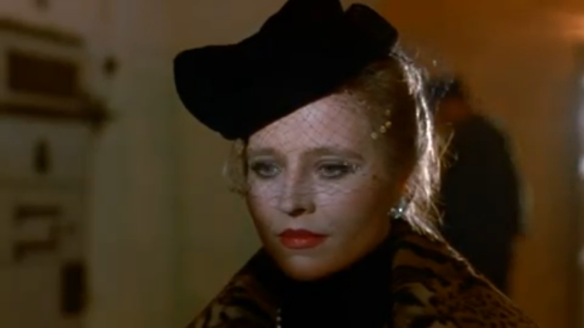
The always reputable Eugene Palette, perpetually gambling his way to Shanghai. The invalid opium dealer is rather an annoying fellow, and the man of faith appears conventionally narrow-minded, although he does make a turn for the better. Warner Oland takes on a more menacing iteration of his Charlie Chan character, while Anna May Wong gets a well-deserved role as a fellow passenger who shares a room with the famed Shanghai Lilly, the fastest lady in the East. Yes, Marlene Dietrich is Lilly, a woman of notorious reputation, but she also carries a distant, wistful love affair in her memories. The train to Shanghai brings all that hurtling back in the form of Captain Donald Harvey (Clive Brooks).

All this is set against the backdrop of a Chinese nation fraught with unrest. When the engine isn’t impeded by a stray cow or chicken, Chinese soldiers board it to apprehend an enemy agent. But that’s just the beginning. The rebels retaliate by holding up the train as well and questioning all the passengers on their financial and political capital. It’s a tense sequence of events that has no simple resolution.

shanghaiex1It is in these moments that are two female heroines must act. Hui Fei (Anna May Wong) so that she might defend the honor of herself and her country. Lilly so that she might express the great, expansive depths of the love she still holds for “Doc.”

Shanghai Express exhibits a simplistic view of religious faith as well love, but perhaps that’s actually one of its strengths. It suggests that faith and love go hand and hand whether it be Christianity or romantic relationships. It’s true that there’s no greater act of love than someone laying down their life or putting their life on the line for friends. There’s nothing overly melodramatic here, but everyone ends up where they are supposed to and justice is dealt. It’s an eventful, passionate, perilous train ride indeed.

Ironically enough, this is a film for the masses that completely disregards their class in favor of the first class club car. Except you could make the argument that they rather preferred the sumptuous extravagance of the upper classes to their own Depression-filled lives. Movies most certainly were the grandest of escapes from reality. Shanghai Express undoubtedly quenched their desire. At the same time, it’s simultaneously a story of exotic intrigue and human drama that blends the prodigal and the personal in high fashion.

To its credit, the film makes comment on Warner Oland’s complete lack of ability to look Asian, although he does fall into some other stereotypical potholes. Also, it acknowledges the preconceived expectations of Asian women that Anna May Wong resoundingly rebuts with her performance. She represents everything pushing back against the Yellow Face of Oland’s numerous portrayals. The effort by Asians to get more complex, multidimensional, and sympathetic. The path is still yet to be fully paved, and representation in media for any class or race is never going to be fully realized. We can never expect it to be perfect or overly politically correct. Because humanity is inherently broken and always and forever incorrect.

You can certainly say that Marlene Dietrich unequivocally overshadowed the career of her longtime lover and collaborator Joseph von Sternberg, but Shanghai Express belongs to both of them. He as her director. She as his muse. Despite, its meager running time, it’s a fine achievement and an enduring Pre-Code classic. 

4/5 Stars

October: 10 Days that Shook the World (1928)

Octyabr_posterIt’s curious that the first image October conjures up is a biblical nightmare from the book of Daniel. In that instance, the Babylonian king is frightened in his dream by a giant statue that comes tumbling to the ground. Of course, in that context, it had a lot of the same connotations, that his kingdom would come crashing to the ground with a resounding thud.

Obviously, there is an overarching narrative which holds importance, but Eisenstein always was a filmmaker of emotion elicited through moving images. So if I’m to be completely honest, the exact particulars of October don’t altogether interest me that much. Certainly, the Russian Revolution is an interesting and cataclysmic moment in 2oth century world history. However, all its crevices and nuances could just as easily be found in a textbook or piece of historical literature.

October is engaging visually, as not only a piece of historical documentation, but of propaganda, and artistic expression through a highly visual medium. Sergei Eisenstein is one of the forefathers of editing and even to this day how he decided to cut his films is fascinating. Part of this is his complete and utter break with the classical Hollywood style of editing that most of us have been born and bred on. Eisenstein is in complete juxtaposition with these normal sensibilities, and that gives his work a perplexing quality that carries a great deal of weight in its own right.

There are scurrying people, smiling faces strung together with montage and quick cutting. It’s grand chaos that is stirring even as it’s, at the same time, rather frightening to behold. The images are bursting forth with fervent energy and vigor for a cause still very much on the rise across the contemporary landscape.

The sheer mass of the mayhem is mind-boggling rather like Metropolis. Its frames are inhabited by seas of people, forests of guns, earthquake of feet hitting the pavement, constantly reverberating and repeating at different intervals. The grizzled yet ecstatic faces of the common man lend credence to Einsenstein’s unifying message waving the banner of the Communist nation.The palace being overrun by hoards is difficult to discount as is the spliced together images of varying religions. These are only a few of the eclectic pieces of the train that make up October. It is a document of a time and place that just happened to be St. Peterburg Moscow on October 27th, 1917. The clocks at the denouement suggest that it had a universal impact on the entire world. If the Cold War is any indication, then Eisenstein might be right.

4/5 Stars

Review: True Grit (1969)

truegrit1My father has always maintained that two of his favorite films are The Magnificent Seven and True Grit. The first one makes sense with its stellar cast, resplendent score, and some top rate gunslinging. The second film, well, it makes sense too, but for completely different reasons.

Director Henry Hathaway is never flashy but he is a self-assured worksmith of early film-noir and westerns such as The Sons of Katie Elder. Those are minor classics, and yet each one is gripping in its own way.

John Wayne is just John Wayne pure and simple except with an eye patch slung over his eye, but do we care? Not in the slightest. When you have such a presence in a film, it will never lack at least a shred of viewing value. He was always memorable, but he was probably never more iconic than his turn as Marshall Rooster Cogburn. He’s a gruff, tough, drinking man who is willing to take on anyone and everyone at the drop of a hair. Yet despite all of that fury, Wayne embodies him in such a way that makes him lovable all the same.

Wayne is usually a given to steal the spotlight but Kim Darby gave him more than he bargained for as the stubborn, no-nonsense Maddie Ross. Following suit, singer Glen Campbell showed he can do more than knock back a tune, playing the Texas Ranger.

Darby beautifully embodies the rational-minded young Maddie with her terse and straightforward rhetoric. She knows what she wants and she will not budge on those proclivities – whatever they might be. Glen Campbell was hardly an actor, but instead a country music superstar and yet the musician makes a handy Texas Ranger in a pinch bringing a sense of camaraderie and humor to wrangle with his counterparts.

As with many of his other great westerns, Wayne and company are surrounded by a solid group of stock characters including the likes of Dennis Hopper, Robert Duvall, Strother Martin, and even John Fiedler.

The film is adapted from the Charles Portis novel where Maddie, intent on catching the man who killed her father, hires Cogburn to track him down. They are joined by Laboeuf and thus begins their search.

Looking at the plot alone, this film is about a journey to apprehend a fugitive man named Tom Cheney, who killed Maddy’s father as well as a Senator back in Texas. But really what we’re watching is this unlikely trio joins forces to do things we would never expect from them. It’s certainly no coon hunt, but then again it’s hardly a single-minded mission. Maddy has one opinion, the Texas Ranger has another, and Rooster Cogburn’s mostly drunk when he’s not belittling his rival or poking fun at “Baby Sister.” Do we mind? Certainly not because time makes these three companions into friends. Their ribbing gives way to trust and their anger and annoyance breed mutual respect.

Nothing beats the adrenaline rush of seeing Wayne charge across a vast meadow towards Ned Pepper and his cronies, with his guns drawn and a bridle between his teeth. The sequence is enhanced by the spectacular Colorado landscape that adds another character to the entire film. You cannot witness such a scene and simply write it off as average. That’s part of the reason we go to the movies – to see men with True Grit.

The Coen Brothers brought us a darker, more dramatic interpretation of this film, but it is hard to beat the fun of Henry Hathaway’s version. John Wayne, Rooster Cogburn, whatever you want to call him, he has True Grit. Isn’t that right baby sister?

4.5/5 Stars

Review: The Magnificent Seven (1960)

themagnif1“Nobody throws me my own guns and says ride on. Nobody” ~ James Coburn as Britt

People always resonate with stories of valor, honor, and bravery. It doesn’t matter if it’s a war film, a tale of samurai, or a western. Thus, Akira Kurosawa’s Seven Samurai rather seamlessly became The Magnificent Seven, one of the most reputed westerns of the 1960s.

In theory & practice, it has everything you want in a western from a stellar cast to thrilling gunfights matched by one of the most epic soundtracks ever coming out of the annals of cinema.

But although it’s script is not exactly taut, you can hardly accuse The Magnificent Seven of being superficial. Its characters and its narrative are too satisfying for such a claim. After all, who wouldn’t want to see such a company as Yul Brynner, Steve McQueen, Horst Bucholtz, Charles Bronson, James Coburn, Robert Vaughan, and Brad Dexter? You have “The King and I,” “The King of Cool,” and about every other figure you would want in a good shoot’em up. They were seven who fought like 700.

In not completely splitting with its samurai roots, this western deals in moral codes and issues of honor perhaps more closely than even many of the best known western. The main issue here is that this laconic and sleek gang is brought together to defend a small Mexican border town made up of farmers against a bandit and his band of marauders. What causes men such as these to take on such a dangerous and in many ways such a one-sided job? For some it’s money (because they have none), some want the excitement, and for others, it’s something different. But all that matters is they all go into this together – some of the deadliest guns prepared to duke it out.

themagnif3Into the valley road the seven rather like the light brigade, at first simply preparing to train up and prepare their little village of farmers to fight back against the brutal outlaw Calvera (Eli Wallach). But there’s something that happens over time. When you spend time in close proximity with people, eating their food and sharing their shelter, it’s hard not to build a bond — a connection that holds you there. At first, it seems of little consequence when the enemy gets beaten back, but everyone knows they will return with a vengeance.

Ultimately, the seven are betrayed and are given a clear choice. They can keep moving on or turn back the way they came. It’s just a small inconsequential town, but they cannot turn their back on it, even when they were betrayed. They grapple with what’s good, what’s right, and what’s rational, and then make their decision. It goes against all reason and yet into the valley road the seven together (eventually).

themagnif2And we get the final skirmish with guns blazing, bullets flying, and lives being put on the line. Here is a film where the final body count deeply matters. Not so much of the enemy, but of our heroes, because each one chisels out a little niche for themselves. Everyone has worth and importance even as they jockey for screen time and it pays off in the end. They fight with honor just as they die with honor. Perhaps it might seem futile, but not without significance. The little village is left in peace to live out their days in tranquility. Calvera’s final words echo in their ears: “You came back – for a place like this. Why? A man like you. Why?”

Elmer Bernstein’s score is masterclass. Majestic, grand, playfully prancing about, and at the same time eliciting a grin from any boy who has ever dreamed of the Wild West. Furthermore, there are so many characters to idolize, because this film made ensemble action films the style along with the likes of The Great Escape, The Professionals, and The Dirty Dozen to name a few. This has always been one of my father’s favorite film’s and I can completely understand why. It has gunfights, bad guys, and good guys, quips, and tricks. But at the most basic level, it’s a striking parable about moral codes, personal pride, and the sacrifice that goes along with such things.

4.5/5 Stars

Living is Easy with Eyes Closed (2013)

Living_Is_Easy_with_Eyes_ClosedI still remember driving through the hills and dales of the English countryside listening to Hard Day’s Night in the family rental car. Back then I had a haircut that could best be described as a mop top. And then during my one visit to Liverpool, I was beyond ecstatic. I’m a fairly reserved person and yet standing in Paul McCartney’s kitchen at 20 Forthlin Road (his childhood residence) what else could I do but bend down and kiss the floor?

So you see, Living is Easy resonates with me a great deal. I’ve had similar feelings, similar joys and epiphanies listening to the Beatles. Even as I have matured and branched out in musical taste there’s no doubt that the Beatles will always be a part of my cultural heartbeat. When I was younger I would say that I idolized them and as I’ve grown older those feelings continually evolved.

That’s why sometimes our hopes are dashed and our heroes fall off their pedestals. We get so close to them — feel like me know them so well — without ever having met them or interacted with them. But they don’t know us and they can’t know us in the same way.

No superstar, musician, actor or athlete can hold up to the kind of scrutiny that we put to their lives. So maybe this is an utterly ludicrous fantasy, a dream wrapped up underneath the unassuming folds of a Spanish comedy-drama. But David Trueba’s film is the perfect summation of our pursuits in life. Going after the long shots just for the sheer invigorating fun of it. For Antonio (Javier Camara) that means meeting John Lennon. For others, probably someone else. It’s no different. I still wouldn’t mind meeting Paul McCartney someday. That’s the point. We can dream and pursue big things.

And I don’t think there’s anything wrong with that, especially the way Antonio goes about it. He practically is an enigma within the culture he lives in, repressed, fearful and stiff as it is. He breaks all those molds, teaching English with enthusiasm, using the Beatles’ lyrics (most memorably “Help”) as a didactic tool to get his little pupils to think beyond the nominal.

His journey, to find John Lennon in the rural town of Almeria during the filming of Richard Lester’s How I Won the War in 1966, is an inspired heroes journey and the beauty of this story is that he doesn’t go it alone. In fact, being the personable, talkative and genuinely fun-loving man that he is, he welcomes others into his adventure. Belen is a woman struggling to figure her life out as she tries to hide the fact that she’s well along 3 months pregnant with nowhere to turn. Juanjo sports a mop top rather like the one I used to have, except in this case his father doesn’t approve. The familial tension is too much for him and he skips out, looking for something different.

These are the crossroads at which they end up riding down winding coastal roads as Antonio slowly puts them at ease with his charms — and an unfathomable enthusiasm for the Beatles. The following interludes of Living is Easy are better seen than explained because they generally unfold with the clarity and everyday delights of real life. And in this case, the Fifth Beatle gets his happy ending. He was rewarded for the disarmingly audacious way he chose to live.

Admittedly, I probably don’t hold up nearly as well against the fandom of Antonio, but if nothing else, I admire the Beatles for their lyricism and the pure, revolutionary nature of their music. I never grow sick of it. And like a great many of us out in the audience, I hope to live out these kinds of adventures with the people I meet along the way. To badly paraphrase Tennyson, it’s better to say you tried and failed than to never have tried at all. Because you never know, you just might get lucky.

For all those who don’t know, the film’s title derives from Lennon’s “Strawberry Fields Forever,” a very personal song in its own right. However, as I scanned the backlogs of my mind, I thought to myself, of all the options, what an odd song to choose. But, in truth, it fits perfectly with the themes of this magical mystery tour. An evocative song for a deeply heartfelt film.

4/5 Stars

The Set-Up (1949)

SetupPosterWhat it manages to bring together within the frame of a meager B-film plot is quite astounding, balancing the brutality and atmospheric visuals with the direction of Robert Wise to develop something quite memorable. Boxing movies have been bigger and better, but film-noir has a way of dredging up the grittiest pulp and the Set-Up is that kind of film.

Its fight sequences are violently staged with human forms evoking the early realist images of George Bellows. However, it’s as much of a backroom drama as it is a fighting film. We see the payoff taking place behind Stoker Thompson’s (Robert Ryan) back as his manager (George Tobias) cuts a deal with the opposition without telling his main man what’s going on. He figures Stoker is all washed up at 35. There’s no way in heck he can beat the young buck he’s up against.

The dressing room is full of has-beens, young guns, and hopefuls who in just a few minutes paint a picture of what the boxing world really is. It’s a cruel game that is sweet in victory and sometimes even deadly in defeat. Still men of all backgrounds and values are drawn to it for one reason or another.

In fact, they are not the only ones. One of Robert Wise’s most formidable allies in this film are his close-ups that ratchet up his drama by utilizing the emotive reactions of his crowd. He builds a cadence introducing each nameless face early on and riding their reactions all the way through the fight. There is the woman who feigns repugnance only to reveal her ugly penchant for brutality. There’s the tub of lard who fills up on every concession imaginable while greedily watching the violence unfold. Then, the nervous husband who is constantly hitting and jabbing a phantom opponent. The list goes on.

We also witness the initial reluctance of Stoker’s girl (Audrey Totter) to go see him get beaten to a pulp. This is more than just fighting–it affects their future life together. And while he gets ready to fight, she listlessly wanders the streets too frightened to watch him get his block knocked off and still not yet empowered enough to change things. All she can manage is a jaunt through an arcade parlor, a few furtive glances overlooking the passing trains, and finally a lonely visit to a midnight diner. But this is hardly casting blame mind you.

The bottom line is that Stoker doesn’t see his girl ringside, and it feels like everyone down the line has abandoned him. There’s a need for vindication–to prove his worth when no one will give him a second thought. And that’s a dangerous place to be when people are betting on you to take a fall compliantly, namely one big whig named “Little Boy.” But Thompson’s not about to do that, fighting until he has nothing left to give. And he wins someway, somehow.

It’s when he gets ready to leave the building after the crowds have filed out and the trainers have left for home, that he meets an ominous welcoming committee. It’s not an unsurprising conclusion, but still, Thompson’s story finds a silver lining amidst all the violence. This film is a miracle of the studio age and Wise makes it an incessantly interesting piece of noir.

3.5/5 Stars

Animal House (1978)

AnimalhouseposterYou can take Animal House one of two ways. Either it glorifies fraternity life to chaotic proportions or it’s a satirical mockery of the collegiate institutions. Either way, the film works, because the bottom line is that it has laughs. Sure, some of them take hold of nostalgia while simultaneous instigating the trend towards crude, gross-out humor, but Animal House has some generally uproarious moments of mayhem to match some quality pieces of irony. When you actually think about it a lot of these characters are great fun too.

By now John Belushi’s role has taken almost a legendary-like aura and it’s true that he seems to exist in his own world of continual cosmic anarchy that never ceases. He’s the heartbeat of the film’s comedy, but he’s not what keeps us around. Our initial introduction to frat life comes with our two protagonists who just happen to be future pledges. “Pinto” is the shy one and Kent “Flounder” Dorfman the chubby doofus no one really takes seriously. There’s no way they can hang with the elite Omega pledges (ie. Kevin Bacon), but at Delta, they make the grade. In fact, although they have a few standards, there aren’t many and the upkeep of Delta’s house says as much.

Aside from Bluto, their ranks are made up of “Otter” the confident handsome one in the group and his bud “Boon” who is trying to hold things together with his girl (Karen Allen), while still keeping up with fraternity life. Robert is the clean-cut one of the bunch and D-Day (Bruce McGill) fits his name as the motorcycle riding anarchist second only to Bluto.

Their life and escapades don’t have much substance sans sex and alcohol or redeeming value for that matter, but there could be worse guys to spend a night with, arguably. Even the nice ones get in their share of trouble. “Otter” unknowingly makes advances on the Dean’s wife (Oops), while Lawrence starts a budding romance with a smiley girl who happens to be the mayor’s daughter and a minor. Major oops.

John Landis seemed the perfect helmsman if what I’ve heard of The Kentuck Fried Movie is any indication. In truth, the film is American Graffiti with an edge, going so far as to utilize the earlier film’s character epilogues, and yet Animal House can hardly be called derivative. It too brought new interest in old modes of music like Sam Cooke, “Louie Louie,” “Shout,” “Let’s Dance,” and Percy Faith’s oddly airy “Theme from Summer’s Place.”

However, it focuses on a different slice of life altogether and as its name implies, it’s looking to lampoon the college experience as only young people can. In fact, most of the individuals connected with The National Lampoon magazine and the resulting film still were not all that far removed from college (Douglas Kenney, Chris Miller, and Harold Ramis). They still got the essence of the experience, only ratcheting up the extremes a bit.

Beyond Belushi, you have caricatures like Dean Wormer who is the hard-nosed czar of Faber College, looking for any way to put away the infamous Delta for good. He’s essentially the original Mr. Rooney, college addition. He’s in cahoots with the rival fraternity that’s equally objectionable, it’s just that they function inside of the rules. Thus, the “good guys” are easy to hate and the “bad boys” easily garner our love. Aside from the food fights, toga parties, and obligatory late-night shenanigans, Animal House wrote the rules of subsequent generations of mediocre frat comedies. Amidst all the hubbub and tumult it remains the undisputed champion of the genre.

It’s all perfectly summed up in the final parade that channels all the earlier rambunctiousness in one final act of vengeance. It predicted the formulation of the phrase YOLO. Because if you’re already expelled what else do you have to lose? But enough of that. See Animal House for yourself and make your own judgment. All I can vouch for is that my college life never looked like that, although truthfully I was never involved in a fraternity. I am envious of that dining hall though with so much food to be wasted in an utterly arbitrary food fight. It must have been nice to be part of the affluent classes circa 1962. But then again, “Fat, drunk, and stupid is no way to go through life.” Viewer discernment is advised.

4/5 Stars

In the Mood for Love (2000)

inthemood2“Feelings can creep up just like that” – Mr. Chow

Wong Kar-wai’s In the Mood for Love is a visual exhibition in style. It has a smooth elegance that extends across its entire length. Colors mixed with 1960s nostalgia. Decadence mixed with urban depression. The perfect blending of the cinematography of Christopher Doyle and Mark Lee Ping Bin. There are brief fades between many sequences and more often than not a shot has a focal point while the fringes are out of focus, but it’s all strangely beautiful. We’re often viewing characters from behind or from the side — seeing how they interact with their environments that keep them confined in a certain space. The numerous hallways, doorways, and rooms that cohesively make up their existence.

inthemood4But enough talk about aesthetics at least for the present. The film opens in 1962 with two couples moving into an apartment complex simultaneously. There are four individuals involved obviously, but we only ever see two of them. Mr. Chow is a journalist and his wife is often away for business leaving him alone. The stunning Mrs. Chan works as a secretary and she too feels lonely due to her husband’s many trips abroad. There’s the constant passing in the hallways at times and in truth, it can be laborious at times. After all, they are both perfectly civil and respectable people, although one night they finally have a tete a tete at a cafe. It’s there where they come to understanding about their significant others. Coincidences are not so coincidental. They are both cheating with the other’s spouse.

inthemood1And of course, Mr. Chow and Mrs. Chan do not want to stoop to that level so they keep their relationship platonic worrying about what the neighbors will say, but also taking great comfort in the other’s company. Even together there is a distance, a restraint, that I suppose reflects the times — reflects the cultural expectations of that time. But the isolation and the loneliness is far too great and Mr. Chow enlists his new companion’s help in crafting a martial arts serial for the local newspaper. For once in their lives, they have the kind of interpersonal relationships they crave, and in this way In the Mood for Love shares some of the same sentiments as David Lean’s Brief Encounter.

Although Mr. Chow shows perhaps even greater restraint finally moving away from his love and relocating because he knows she will never leave her husband. Thus, it’s not worth the risk for them to stay together unless she were to come with him. But as often happens in such situations stars are not meant to cross and they constantly miss each other between Hong Kong, then Singapore, and finally Chow goes to Cambodia. And that’s where his story ends.With a detached denouement that is cryptic and in the same instance deeply melancholy.

inthemood3An important distinction to makes is that In the Mood for Love could have been a lurid drama, but with only two of the characters shown it becomes a more intimate even sorrowful portrait of forbidden love. In truth, it’s a portrait accented with spiraling wisps of cigarette smoke and the rhythmic water droplets of falling rain. The always fashionable Mrs. Chan is dressed impeccably in wonderful juxtaposition to the atmosphere behind her. “Yumeji’s Theme” is constantly pirouetting and sashaying around the images on screen combined with the sultry notes of “Quizas, Quizas, Quizas” courtesy of Nat King Cole.

It’s a mesmerizing recipe that tells of the complexities and intricacies that run through interpersonal relationships. What crosses the line? What is moral? What is fair in love and Wong Kar-wai’s universe? That’s just it. This is one of those films that has grace enough not to give us all the answers but instead, leaves us captivated by its vision. The rest is left up to us to judge as we see fit. It maintains an air of mystery, because, after all, love is far from a two-dimensional phenomenon.

4.5/5 Stars

Love in the Afternoon (1972)

loveinthe1Is it possible to love two women at once? In essence, that’s one of the main conceits of this moral tale from director Eric Rohmer’s series. Sometimes Rohmer feels like the Woody Allen of France although Allen’s films are slightly more geared towards comedy and the former’s films have an inclination towards love stories. But both fill their storylines with characters engrossed in thought — men and women who are well versed in the ideas of the ages they come out of. They are well off, well-educated, and have problems relevant to the bourgeoisie. At times it can get a bit stuffy and yet in this case Rohmer examines the issues of one man’s lifestyle with immense clarity. Although it should be noted that this a very patriarchal world and the ideas brought to the forefront emerge from that perspective.

loveinthe2Our main character Frederic has a degree of autonomy working at his own law firm. He has a beautiful and intelligent wife who is a professor of literature. Together they have one cute little girl and another on the way soon enough. His office is full of pretty Parisian girls and he often finds himself swimming in a sea of attractive women, But he can return home to his wife, read, think, and sit in the relative lap of luxury. Except there is something else inside him. Some desire that leads him in a small way to lust after other women. He tries to categorize and passively analyze all the women around him. His dream life is comprised of first loves and lasting loves — nothing that will dissipate with age. But he is addicted to a city where people come and go — vanishing never to be seen again. There is the innumerable but fleeting presence of women. He lives in a daydream, an innocent enough fantasy (so it seems), watching girls from a cafe and imagining chance encounters with them. A lot of the faces look strangely familiar if you know a bit about the Moral Tales.

Then all of a sudden Chloe comes back into his life quite by accident. She used to be his former flame and now he’s happily married and she recently broke up with her boyfriend and picked up some dead-end job. But being a good husband and a respectable citizen Frederic never seems to cross the line, although he seems to spend more and more time with Chloe.  In this way, Rohmer’s characters never seem inherently corrupt and they fit nicely into the mold of bourgeois sensibilities. But that does not mean they don’t dance around some rather sensuous lines. Even when thoughts do not give way to physical or even animalistic desires there is still a volatility in dwelling there. When reality gives way to any sort of fantasy things can get dicey because expectations are distorted — even our perspective on the opposite sex begins to teeter dangerously.

loveinthe3And it’s not simply that this is set in the sultry city of Paris. There is an obvious desire of Frederic to be with this woman and they spend afternoons together. She becomes his confidante as he is so often reserved and taciturn in his marriage. But the complexities get even greater as Chloe says she wants a child by Frederic, but not marriage. He still goes home to his wife and seems to deeply care about her.

It’s the dichotomy that so easily could tear his life apart or make his resolve even stronger. In this case, it’s the latter. He acknowledges his aloofness to his wife, his communication skills or lack thereof. And it is in this moment that husband and wife truly show their vulnerability. It’s in this instance of intimacy that they once more discover love in the afternoon. This film can easily be called Chloe in the Afternoon and it was called that in the U.S. to avoid confusion with Billy Wilder’s romantic comedy, but Love in the Afternoon is more universal. Furthermore, it becomes more fitting as Frederic takes one last crucial turn in his love life.

4/5 Stars

Review: High and Low (1963)

highandlow1High and Low (or Heaven and Hell in the original Japanese) is a yin and yang film about the polarity of man in many ways. Gondo (Toshiro Mifune) is an affluent executive in the National Shoe Company. He worked his way up the corporate ladder from the age 16, because of his determination and commitment to a quality product. Now his colleagues want his help in forcing the company’s czar out. They come to his modernistic hilltop abode to get his support. Instead, they receive his ire, splitting in a huff. What follows is a risky plan of action from Gondo that is both fearless and shrewd. He takes all his capital to buy stock in the company so he can take over, but his whole financial stability hangs in the balance. He knows exactly what it means, but he wasn’t suspecting certain unforeseen developments.

Then in a matter of moments, everything changes. Gondo gets a menacing phone call claiming that his young boy is kidnapped and an astronomical sum of money is expected in return. Gondo and then his wife are instantly horrified by the news only to be relieved when their boy winds up unharmed. The same’s not true for his chauffeur’s boy Shinichi. The mistake in identity is obvious, but it makes no difference to the perpetrator because he still has leverage. He wants to make Gondo sweat since this is more than an isolated incident. He wants to make the man suffer – bringing him down to the level of all the unfortunate souls who live in the wasteland down below.

highandlow2At this point, the police are called and they arrive incognito, ready to stake out the joint and do the best they can to get the boy back safe and sound. This section of the film almost in its entirety takes place within the confines of Gondo’s house and namely the front room overlooking the city. It’s the perfect set up for Akira Kurosawa to situate his actors. He uses full use of the widescreen and his fluid camera movements keep them perfectly arranged within the frame.

Although the number of bodies also increases the anxiety in the space with Gondo at the center of it all trying to figure out what to do. Moral issues begin bubbling up that no man would have to deal with and yet they end up right in his lap. His whole business empire that he’s given his heart and soul to hangs in the balance of this decision, but he must make it nonetheless. Make the difficult choice to pay the ransom and do what’s moral, or not pay it and maintain his financial stability. For once in his life, their’s a hesitancy.

It’s as if he’s getting pulled back and forth with his wife chiding him, “Success isn’t worth losing your humanity,” while his opportunistic right-hand man is chomping at the bit to get a move on. He’s not going to allow his superior to sink all their prospects at financial gain.

As things progress, we finally move from the living room to the train where Gondo prepares to make the drop, but his adversary has planned out everything and has a clean getaway. The money is gone and now the police double their efforts. Meanwhile, behind the scenes, his backers are prepared to push Gondo out, because of his inability to pay them. Public opinion soars for the selfless act, and we finally meet our protagonist’s unknown adversary.

Really this second leg of the film is mostly about the procedural aspect as they begin hitting the pavement canvassing and trying to close in on the culprit. This section intercuts the reports going on at headquarters with actual police work on the streets and it’s strangely engaging.

highandlow3Finally, with the help of Shinichi, they make a startling discovery that ties back to the kidnapper. And the boy’s drawings along with a colorful stream of smoke help them move in ever closer. What follows is an elaborate web of trails through the streets as they work to catch the culprit in his crime, to put him away for good. And it works.

highandlow5But High and Low cannot end there without a consideration of the consequences. Gondo has been brought low. He’s losing his mansion and must start a new job on the bottom of the food chain once more. His enemy requests a final meeting as he prepares for his imminent fate, and this is perhaps the most grippingly painful scene. Gondo’s face-to-face with the man who made him suffer so much. Toshiro Mifune’s violent acting style serves him well as he wrestles so intensely with his own conscience. And yet at this junction, he is past that. What is he to do but listen? In this way, it’s difficult to know who to feel sorrier for — the man who is resigned to a certain fate passively or the one who goes out proud and arrogantly against death. Both have entered some dark territory and it’s no longer about high or low or even heaven and hell. They’re stuck in some middle ground. An equally frightening purgatory.

Yes, this works as an indictment of the justice system and even the capitalistic framework of an industrialist post-war Japan, but it’s even more so an acknowledgment of man’s own morality and mortality. We are far from indestructible, unfaltering beings.

4.5/5 Stars