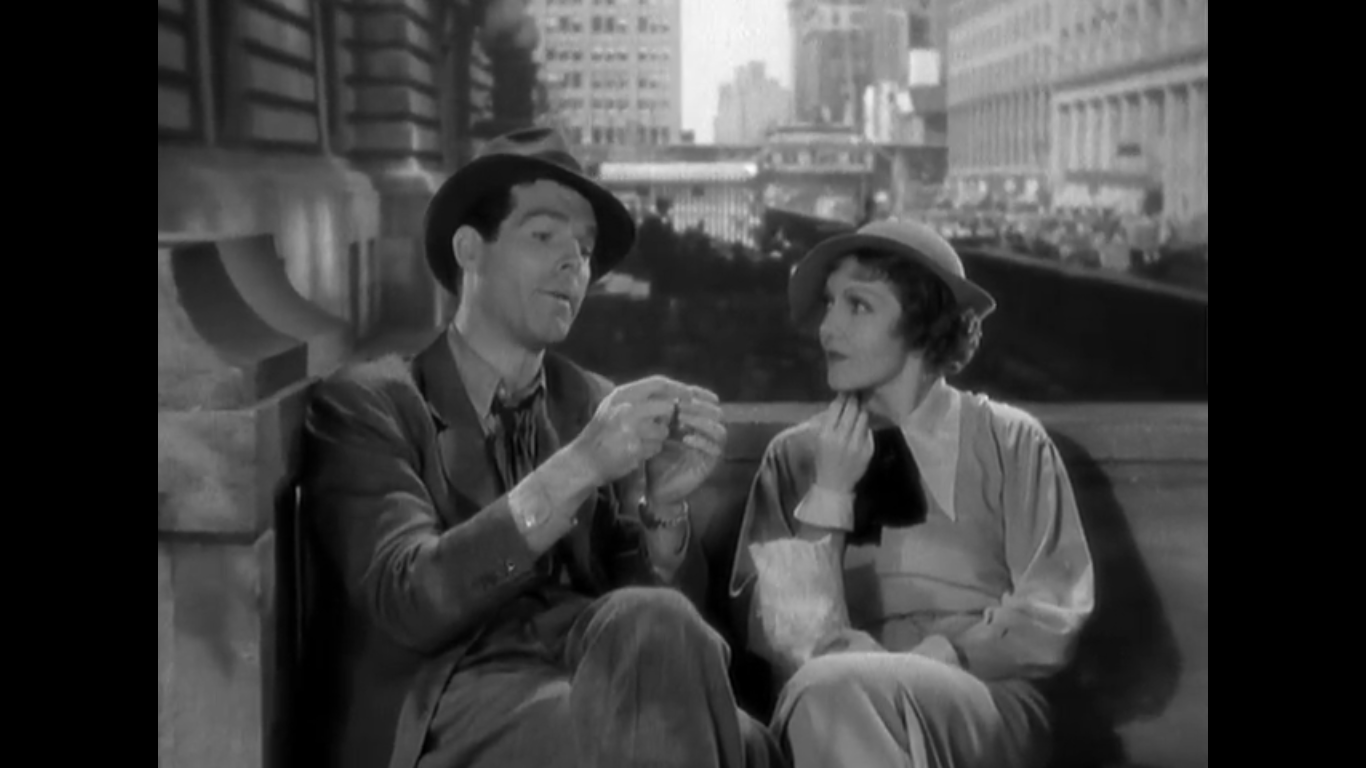
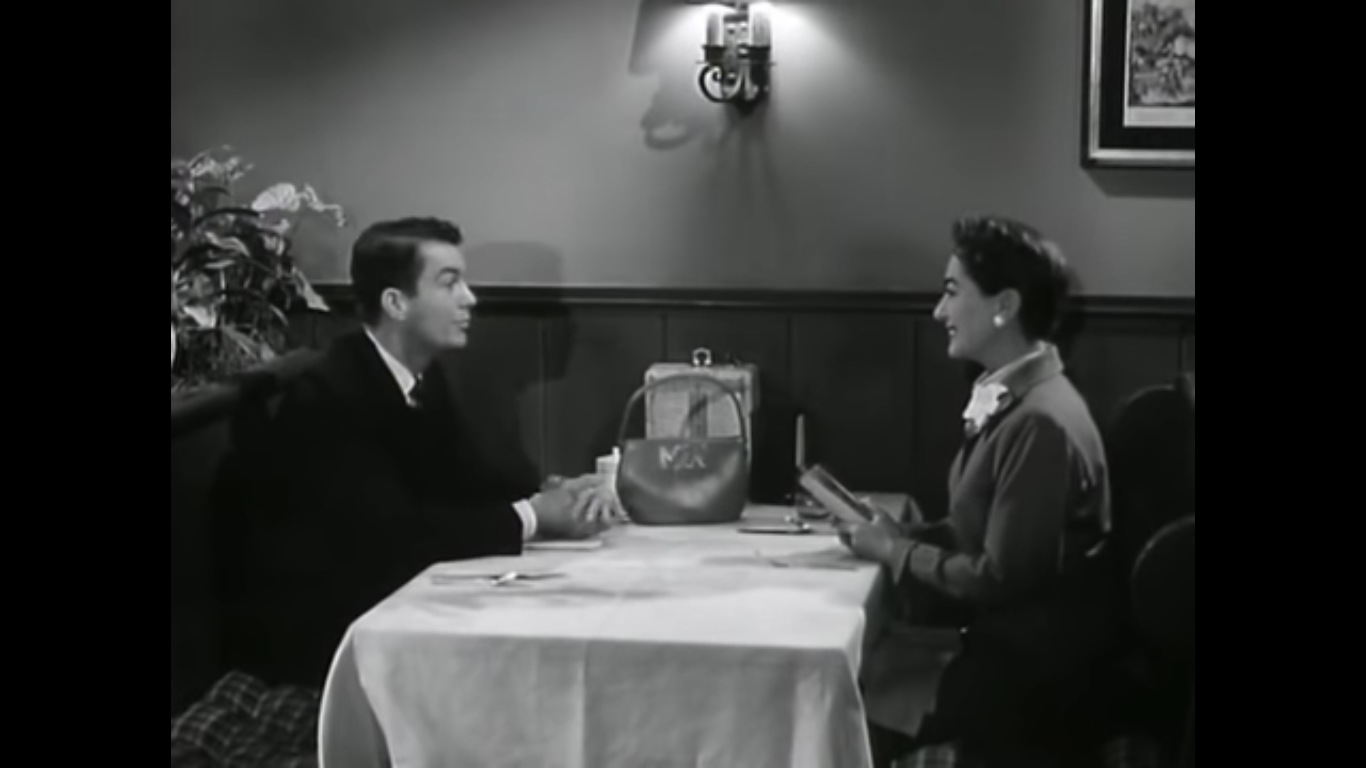
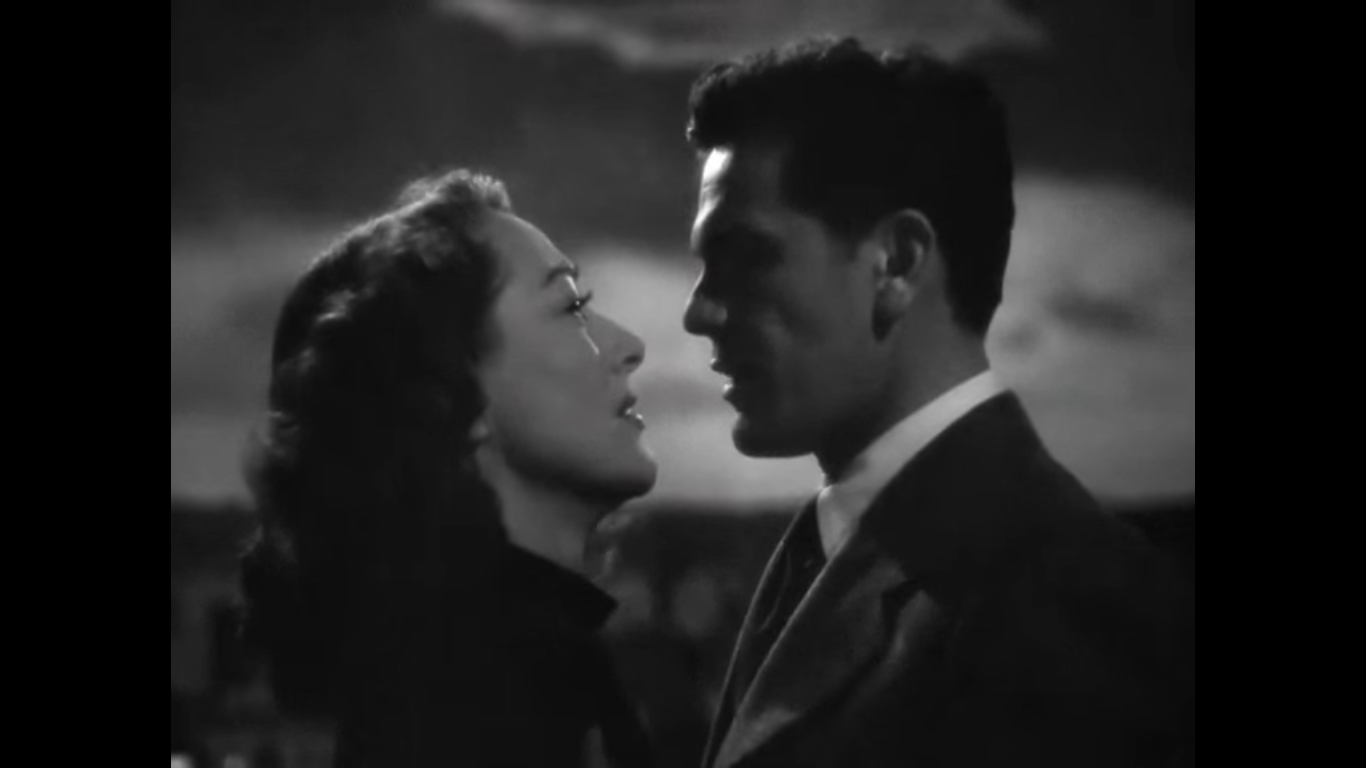
A Woman’s Face (1941)

The movie’s faux Scandinavian backdrop can be traced back to its origins in an early vehicle for Ingrid Bergman back in her native Sweden that was released in 1938. Since I haven’t seen the original, I cannot attest to Bergman, but she doesn’t immediately spring to mind in a role that calls for some amount of moral ambiguity — at least on screen.

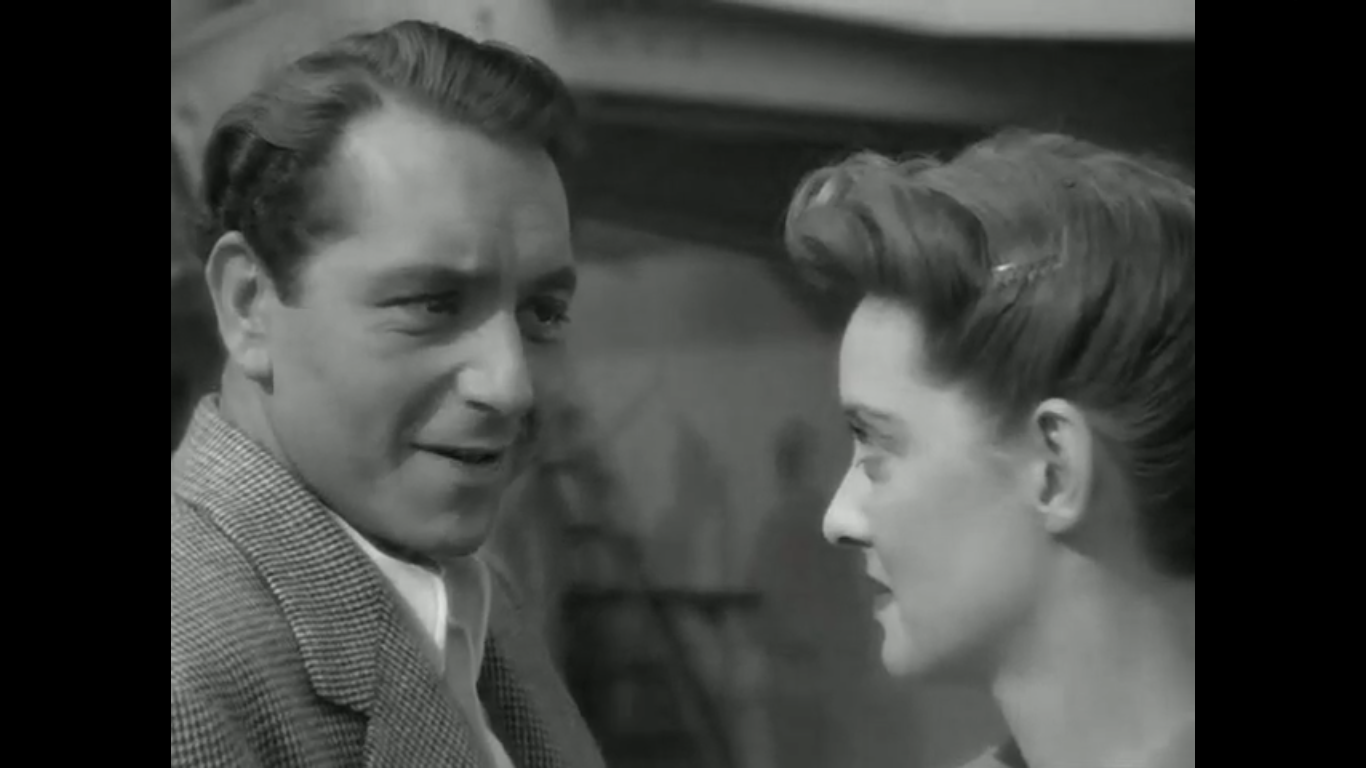
Still, A Woman’s Face was a stepping stone part for Joan Crawford, from her effervescent flapper days and pertinacious working gals to something vulnerable and bold for a fresh decade. She sheds all glamour, something used so often as a mask in Hollywood, and willfully puts on a different facade of scars and perceived ugliness. It’s a move her rival Bette Davis readily made as well.

Here Crawford is a creature tormented and self-conscious about her own appearance. She’s crawling with shame. Mildred Pierce always gets the plaudits, and rightfully so, but surely there’s room in the conversation for this picture. Still, let’s not get ahead of ourselves.

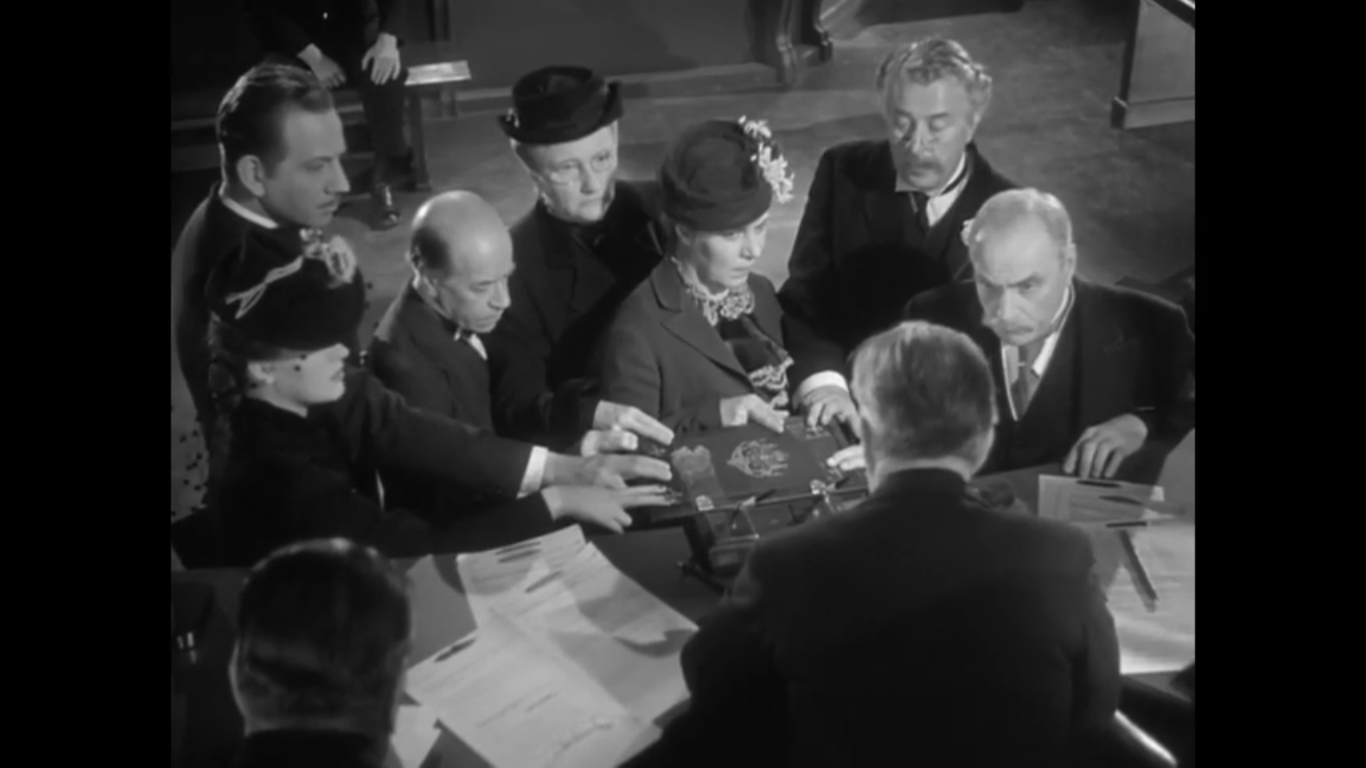
We stand by as a prisoner is marched through the hallways of a court. A menagerie of witnesses has been called to testify in the wake of a murder trial. The very same woman, her face hidden by her hat brim, stands accused, and the film effectively uses each of these disparate individuals to elucidate her story for the sake of the jury (and the audience).

It’s not an unheard-of device, but it’s rather clever, starting on the outer ring with a peculiar sort of character before getting closer and closer to who she is as a person with each subsequent flashback. As such, a sprightly waiter (Donald Meek) and a more guarded manager (Reginald Owen) recount their days serving at a local tavern.

One of the guests, Torstein Barring (Conrad Veidt), is a curious fellow. He’s the life of the party and expects certain privileges. One of those is running up an overflowing tab at the establishment after a merry night of wining and dining. He exhibits a piercing kind of magnetism, sleek and somehow unnerving.

When the lady of the tavern steps out of the shadows and excuses his bill, he’s immediately taken by her. She’s scarred over her face, and yet all he sees are those striking Joan Crawford eyes. There’s something immediate between them, and it comes out in the courtroom that the whole tavern was essentially a set-up for petty blackmail. When people get giddy their tongues loosen, and they are availed of all their faculties.

There’s a level of dubiousness and doublespeak with her underlings providing another layer to the film involving both humor and intrigue. Because they ran a fine and highly lucrative con game complete with all manner of deception. Now they’re looking to save their necks.

The ready victims are the adultress Vera (Osa Massen) — wife of reputed surgeon Gustaf (Melvyn Douglas) — and then her latest beau. The joy of A Woman’s Face is how there are building blocks for melodrama. In literary form, it might come off as convoluted and unclear, but the cinema screen makes it sing.

In one moment Anna (Crawford) is trying to peddle some stolen letters for a weighty sum with a level of vindictiveness. She scoffs at others. In another, she meets Gustaf, who returns home unexpectedly both catching this woman in the act and becoming genuinely interested in her. His wife doesn’t want any of her dirty business getting out so she reluctantly plays along.

Almost everyone has an enigmatic side, some sort of angle or self-serving motive we’re trying to detect. Melvyn Douglas is the one character who is straightforward and easy to read. He offers to transform her face. Not with an ulterior motive, but out of a sense of decency.

There’s a fine level of suspense waiting to see Anna’s face reconstructed. We know what it will be and yet are forced to wait for moments with the camera working to evade a direct shot of her; it adds something, a level of expectation.

It’s yet another soap opera contrivance that works wonders. Because Joan Crawford takes this blemish and turns it into something powerful and ultimately beautiful. With it comes new confidence and new life. Anna and Torstein grow closer and closer and he’s even more drawn to the vision of her rebirthed self. Also, her disposition shifts.

Still, he has almost a Nietzschean charisma, and he coaxes Anna into playing nursemaid to a young relative who’s set to inherit a large fortune. She’s become a governess of the Phyllis Dietrichson persuasion.

Watching Crawford come down the stairs with the precocious little kiddy, I couldn’t help but think of those old glossies of Marion Davies parties except this is a party at a Scandinavian version of Hearst Castle. Images of piano and dancing superimposed over Crawford’s face say everything.

Actually, I misspoke earlier because aside from the young tyke and the kindly Gustaf, the Consul Barring (Albert Bassman) is a jolly old man, who welcomes Anna cordially even as his housekeeper (Marjorie Main) remains distrustful of their latest guest. In truth, they’re both right. They see the two different sides of Anna on display.

There’s an old Hollywood axiom about getting an actor’s good side, and I couldn’t help noticing how A Woman’s Face plays with this practically. Crawford’s right side is kept hidden for much of the first half of the movie and traditional 180-degree filming means it’s all but masked from us.

I noticed the change at the party when she meets the good doctor again. Finally, she’s on the left side of the frame fully unmasked and open to us. It’s true we see her in a different light just as he does too. Perhaps she’s changing — softening even — and he has something to do with this.

Arguably the best scene of the entire movie comes when Crawford’s with her charge in the trolley over the waterfall. It’s the moment akin to Gene Tierney letting the crippled boy drown in the lake in Leave Her to Heaven. There’s the intent. We know what’s happening, and we watch the mechanisms on the face of Crawford. It’s totally wordless and, thus, so effective because the whole sequence is borne on her features. She has a choice to make — caught in a moral conundrum — and it’s a showcase for the total evolution of her character.

In some strange sense, it feels like the dissolution of a femme fatale starting out one way and then slowly changing and eroding until she has a heart of flesh and blood again. She chooses her inclinations to protect over those to destroy. It comes with consequences. Watching a crazed villain disappear into the snowy rapids below is mesmerizing in black and white. Somehow something so deadly looks equally gorgeous.

The ending itself is pat as Anna is exculpated in the courtroom, and yet it somehow works contrary to a whole generation of noirs made in its wake. In other words, I don’t mind the happy resolution because it leaves just enough to the imagination.

4.5/5 Stars

Double Feature: Apartment for Peggy & Take Care of My Little Girl

Recently I was appreciating some films starring Jeanne Crain, an alluring actress who was at the height of her popularity during the ’40s and ’50s. Although she was rarely touted as a preeminent actress, I wanted to highlight two films of hers that more than highlight her appeal.

Both Apartment for Peggy and Please Take Care of My Little Girl are set in the context of college in the post-war years. One has Craine as a newlywed wife tracking down student housing and in the latter film she plays a naive college freshman with sorority aspirations.

Read my thoughts on the two films below:

Apartment for Peggy (1948)

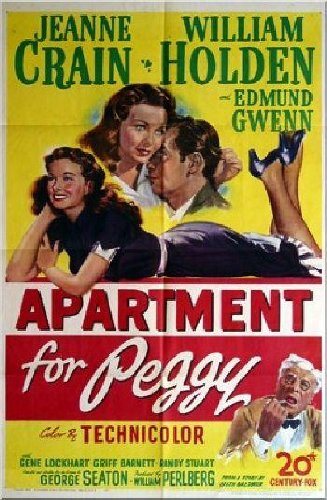
Apartment for Peggy is one of those Classic Hollywood films packed with pleasant surprises. The first of them is Edmund Gwenn. He’s best remembered as Kris Kringle in Miracle on 34th Street. Here he’s directed once more by George Seaton this time playing a listless university professor.

He lives off his pension in his crusty old abode spending his evenings with the same colleagues playing the same music they have for years. However, one evening he quite matter-of-factly announces his aspirations to commit suicide. He’s very rational about it. Still, his doctor won’t give him more than two sleeping pills at a time so he dutifully stores them up for a rainy day.

Then, something else far more momentous happens. He meets a young woman (Jeanne Crain) on a bench. Peggy Taylor motors about 1,000 miles per minute — her mind and conversations leapfrogging all over the place — so her new acquaintance can barely get a word in edgewise. He’s bowled over by her irrepressible zest for life. She’s precisely the person to prickle the professor’s curmudgeonly sensibilities. But she’s also the best equipped to turn Mr. Hypothetical’s life upside down for the better.

Because she tackles just about anything she sets her mind to with this same infectious verve. This is not just the age of the GI Bill (her husband is currently a student), but they are also dealing with a housing crisis. She puts her ear to the ground and manages to scrounge up a space in Pop’s decrepit attic. He’s quite against the imposition and still, Peggy keeps ping-ponging off the walls leaving no room for a rebuttal.

It’s one of many miracles how she spruces up the space and puts it through an astounding transformation. This is just the beginning. With Pop’s begrudging help, she conceives a daytime course for wives and mothers so they can learn about the great philosophers of the modern age (Spinozi included). They want to receive intellectual stimulation on par with their husbands so they can communicate with them.

Pops soon learns his new students are intrinsically driven to learn, and the professor is delighted to serve as their instructor because they seem to intuitively understand his teaching as his most receptive pupils. Their discussions are life-giving. You see already how Peggy single-handedly resurrects the old man so he’s able to see the world with new vim and vigor. Now it’s his turn to return the favor.

William Holden is just about the most innocuous thing about the picture, and that’s not to say he’s bad. Still, this is a picture made by the chemistry of Crain and Gwenn. It acknowledges the generation gap chafing between most any generations with varying perspectives on life with a comic touch. However, any conflict on the part of the elders ultimately engenders mutual affection.

Best of all, it’s a film about ideals and worthwhile pragmatism where the merits of both are made evident. But then again, film is not so much a science as it is a philosophy, an art — concerned with humanities — and the film works in this manner.

It gives off the appearance of a light, inoffensive comedy as we conceive would exist in post-war America. There are many. Certainly, this is true. However, it also sheens with warmth and goodness. Seeing the movie multiple times, the appeal of its brand of geniality just continues to bloom.

3.5/5 Stars

Take Care of My Little Girl (1951)

Sorority movies certainly feel like they’re solely made to meet an audience demand as a convenient cash grab. Take Care of My Little Girl wasn’t the first picture in this genre as I can think of at least a couple predecessors like Sorority House and These Glamour Girls (1939).

However, this movie actually had its origins in the master’s thesis of Peggy Goodin, who eventually turned her research into a novel. She was particularly concerned with how racial and religious discrimination played out in the highly moderated spaces of college sororities. To be clear, 20th Century Fox’s adaptation excises all of this commentary by casting their stable of homogenous Hollywood starlets (Jeanne Crain, Jean Peters, Mitzi Gaynor, Betty Lynn et al.) and a couple of male heartthrobs.

And yet that doesn’t mean the film doesn’t come with any teeth. For its day, it was actually rather controversial if only for its forthright portrayal of the social politics and hazing rituals that have continued to go under scrutiny generations later. The film looks different and yet at its core, it speaks to the very same issues we see today.

Jeanne Crain has such a radiant poise, it’s so easy to like her and not only like her but admire her for how she cares about others. Because she’s a shoo-in as a legacy at Tri-U sorority. Just as importantly, she’s probably the prettiest girl on campus. Not even the resident mean girl Dallas (Peters) can blackball her.

Liz cares deeply for her friends and isn’t totally swayed by the popularity contests even as she strives to make a good impression. She strikes up a rapport with a slightly cynical G.I.-turned-student (Dale Robertson), who helps advise her on classes and thrumbs his nose at the establishment after everything he’s been through. He recognizes something different in her that he likes.

Still, she’s not totally impregnable. Like any young person, she wants to be well-liked helping the class flirt (Jefferey Hunter) with the answers to his French exam. This in turn leads to being pinned. She’s the talk of the sorority house. And yet she’s not easy to categorize.

The picture is surprisingly poignant and perceptive. It’s not some hyperdramatic, superficial portrait of college life even if it’s playing to a specific audience. Also, thanks in part to Crain, there’s a genuine candor to the picture and a visible evolution to this young woman.

It may not be a lot, but it’s something. We do see her change as a human being. Surely college life looks so different now 70 years on from what we’re used to, and yet there are elements that have not changed. We still have fraternities and sororities and social hierarchies. I was aghast to realize even bluebooks have been around for well nigh a century!

This movie doesn’t necessarily suggest these institutions are inherently bad. However, sometimes we believe that tradition is good only because it’s the way things have always been done. But there should be better reasons. There need to be dissenters and people to challenge the status quo. There need to be brave folks who are willing to do what is right compared to what is easy. People who are loyal to their friends rather than simply playing the games for want of status and approval.

Even if the Epstein Brothers’ script forgoes some of the most intriguing aspects of the original story, I appreciate that they explore their topic with something a little bit more involved than superficial exploitation. It actually strives to be about something, however small.

3.5/5 Stars

Vagabond (1985): Agnes Varda’s Empathetic Kane

Vagabond (or Sans toit ni loi, in French) plays as the sum of a fairly dismal life but not an unworthy one. For those familiar with Agnes Varda’s filmography, whether the penchant for seascapes or her concerted empathy for the discarded, it’s easy to see how this picture fits in with the others. In many ways, it blends her sensibilities for narrative fiction and her later documentary work like The Gleaners and I.

However, from a storytelling perspective, Vagabond also plays as her Citizen Kane, except she sets her sight on someone on the complete opposite end of the human spectrum. It’s curious how the paragon of money and power could somehow share fundamental things in common with a proud, young drifter. They feel so isolated and in some sense unknowable because they rarely allow others in.

Citizen Kane is a veritable jungle gym of technical invention and play. There’s never been anything quite like it, but the qualm I always maintained on early viewings is how there’s no connection. Because this is the point. It feels a bit hollow. We never get to truly know Charles Foster Kane because he never really let anyone know him.

The curious thing is how Varda derives so much concern for her subject. If we don’t end up knowing a great deal about her personal biography, it does feel like we at least appreciate her as a ceaselessly proud and increasingly worn-down human being.

I have so little history with Sandrine Bonaire and know only that she made an auspicious appearance in Maurice Pialat’s A Nos Amour (1983). However, watching her is a pleasure; she looks like a more stoic predecessor to Brie Larson.

In many ways, Bonaire’s character informs the structure of the film and so it functions well. She is an itinerant young woman, free and apparently happy with her lifestyle. It’s easy to label her as a vagrant and a loafer. She never holds down a consistent job and maintains a brusque belligerence in the face of others. It makes her fiercely independent, and skeptical about the prevailing philosophies of life.

Through it all, we don’t know where she will go; she fosters these short, finite relationships that have a definite beginning and end, and then she moves on to her next destination. There’s no goal or visible endpoint. All we have is the frame of the story to give us some reference to make sense of her life.

It’s composed of scenes featuring these kinds of visual ellipsis as people she interacted with recount their meetings. Each person views her in a different light, and we must come to understand her in this piecemeal fashion only through the perspective of others.

There’s a bohemian family of shepherds who used to be a part of the establishment but now live a rural, much simpler life taking care of livestock. The closest thing she has to a friend and a saint is a beautiful academic (Macha Méril), who has spent her life researching a fungus brought over during WWII that is slowly killing the local trees. She has a conscience and a warm spirit. Far from deterring her, the girl’s standoffish nature of cigarettes and glowering glances only seems to bring out greater adulation. There’s a hint her benefactor feels it too.

A Tunisian farmhand with a welcoming spirit is another person of generosity in her life. They seem to have nothing in common, and yet they bond because they have shared a similar experience of the world as perennial outsiders. He’s the only person she actually shares her birth name with: It’s Mona.

But our protagonist opens herself up only to get hurt. He offers to let her stay in their quarters and help take care of the local vineyards. It’s another brief promise of something beyond a drifter’s life, however small. Still, upon his coworkers’ return, they’re not agreeable to having a woman in their midst. She’s forced to push on again. It’s the life she’s used to, and yet the circumstances make the moment a far more painful point of departure.

There are signs that this is not sustainable no matter how romantic it might seem. Mona befriends an old white-haired lady slowly dying in her grand estate after posing as her maid. Would Mona have been a friend of Charles Foster Kane? This is the closest thing we have to answer, although it too becomes a closed door as the woman’s only kin, a young nephew is anxious to get what’s coming to him.

In a bit of serendipity worthy of Varda’s husband Jacques Demy, there is a kind of interwoven fate to these relationships as some of them begin to fold over on one another and interconnect with Mona in the middle. But this must not be mistaken for Providence.

Her lot becomes increasingly bleak, and there’s obvious intent here. There’s no other place to go. Whether Varda failed to show them before or not, I started to notice the makeshift carpet shoes Mona wears on her feet. She feels all the more pitiful falling in with dubious company and beginning to drink more.

She’s also accosted by some local practical jokers who run about town throwing paint bombs in a mad show of anarchy and artistic expression. There’s no rhyme or reason to it per se, although it leaves her more disillusioned and covered in brown paint that makes her look even more feeble than before. Then, a fire takes her belongings, and she must flee in the wake of an angry confrontation. She’s offered no respite.

At once such a proud and independent individual, she looks so dejected when we finally leave her shivering in her blanket trying to stay warm as a dog barks at her from right outside. It does feel as if the window has closed for her. She had glimpses of other lives and yet they all amounted to nothing. And she is left with nothing.

Freedom is such an exhilarating thing, not being totally beholden to the strictures of the world around us. But it’s equally terrifying being cast out into a life where we have no one to care for us, no one there to love or be loved by. Here again, Vagabond and Kane are so closely related. Whether we die in a luxurious bedroom or a ditch by the roadside, it doesn’t much matter. The outcomes are the same. There’s something ultimately deceptive and debilitating about their respective freedoms. It’s not freedom at all.

4.5/5 Stars

Le Bonheur (1965): Varda’s Sunshine Horror Film

The aesthetic of Agnes Varda’s Le Bonheur is strikingly deliberate. Her title cards are filled with sunflowers. All her characters — members of a lovely little family — wear a rainbow of colors. There’s a verdant gaiety to the forest landscape around them. The score comprised of the buoyant elegance of Mozart does wonders to accentuate this very salient mood. In short, it’s gorgeous. Surely this is happiness personified.

In the middle of the 1960s, that turbulent time of upheaval and the nouvelle vague, it deigns to be domestic and cheerful in a way Godard would never dare and Truffaut could only manage through a boyish point of view.

But it has such a vibrant and daring color palette on par with anything in Contempt (Bardot included), Pierrot Le Fou or Weekend. In fact, this could very well be her answer to a glorious Jacques Demy musical (her husband) and a predecessor to Stolen Kisses and Bed and Board.

The couple’s children are adorable as they toddle around, ride in the back of the family truck or feed sugar cubes to their daddy’s horse — the bicycle he rides home from work every afternoon. Like any young kids, they like to imagine, they’re enthralled by a newborn baby, and they take naps (under the mosquito netting their mother puts out in the forest for them).

By this point, the movie could feel sickening and twee, but there’s an impulse to see the movie out and where it might go. It leaves some questions about a dramatic situation with its title (especially with how fiercely unironic it resolves to be from the outset).

When they return home to their idyllic town, it’s little different. True, the husband, Francois (Jean-Claude Drouot), wants to see a western at the cinema — a prototypical American film. His wife Therese (Claire Drouot) is enchanted by a French film, the first pairing of “[Bridgette] Bardot and [Jeanne] Moreau.” Otherwise, they seem perfectly aligned, going to work and raising their family together.

This all quite effectively lulls us into a false sense of security. Varda knows quite well what she’s doing. As an audience, we want to believe this is what life is like, but we are privy to a movie and so something must change…If there is a source of drama, it’s when the man starts to flirt with a local telephone operator Emilie (Marie-France Boyer). Even this tête-à-tête is light and affable. They feel innocent enough. Hardly prepared to wreck a home.

His wife and his lover aren’t mirror images exactly — they look different — but Varda does very little to distinguish their visible traits (ie. blonde vs. brunette or juxtaposed costuming choices).  They’re both pretty young blondes, affable, draped in bright colors. It feels like a curious coincidence until it builds into something more.

This trifling love affair morphs into exactly the kind of circumstances the exterior does its best to dispel. Surely infidelity does not have license to break into such reverie and tear a family apart. This does not fit with the perfect marital equation or the glorious mise en scene.

So we begin to discover a kind of perturbing even disheartening dissonance about the picture as it continues to break with reality. It builds and begins to ambush us with new contradictions.

Here is a man deliriously happy, both with his wife and then with another woman. He assures his new love, “I have enough joy for both of you. Happiness works by addition.” Then when he cordially breaks it to his wife he says, It’s as if he has 10 arms to love her and he has extra arms (to love someone else).

It doesn’t matter how emphatically or candidly he says those words. They come off poorly. Even as he continues to live in his rapturous dream world without consequence, for the first time the words ring out in the landscape with an inherent hollowness. It’s yet another signal of paradise lost. We have hit upon a point of no return.

Le Bonheur is devastating in a manner that I never would have imagined. Because Varda finally does allow the film’s glorious bliss to crack even if the tone and coloring never waver or fade. The way the young carpenter relives one horrifying moment over and over again in front of the camera feels reminiscent of C.S. Lewis when he wrote about grief and how “The same leg is cut off time after time.”

However, now we have a suspicion of where it might go. The final few minutes of Le Bonheur are not a total surprise; they do feel like a shocking betrayal of our initial assumptions. This is not a criticism; it simply shows how effectively the movie evolves over time while maintaining a certain surface-level palatability. It’s ceaselessly beautiful to look at even as the currents turn.

Whatever its reputation, Le Bonheur feels commensurate with some of the most unnerving psychological horror films and thrillers I’ve seen through the ages. I think of the uneasy denouement of Gone Girl or the unsettling conspiracies in Rosemary’s Baby or Get Out. The curious part is how the perpetrators have no idea what they have done. It’s not a film of premeditated plots, more “happy” accidents, and this in itself is terrifying.

Because we have the same set dressings, the same motifs — almost everything feels the same — but we have an entirely different context. If we’ve settled back into a comforting equilibrium, then something almost imperceptible grates at us. Something has soured with the happiness set before us. It establishes a level of disquietude I won’t forget for some time. Surely something is not right here. I leave it to each viewer to reconcile it for themselves.

4/5 Stars

La Pointe Courte (1955): Agnes Varda and The French New Wave

Agnes Varda became a modern-day cinema celebrity in the 21st century thanks to her immediately recognizable profile and modern incarnations of her work like Vague Visages. Because it’s true she never stopped creating, never ceased exploring this terrestrial sphere.

Watching something like La Pointe Courte (1955), one of her early efforts, one begins to imagine and reconfigure how the movie canon gets forged. Some of it has to do with accessibility (Varda’s Cleo from 5 to 7 seems to gain a resurgence in popularity by the year).

But whereas 400 Blows, Hiroshima Mon Amour, and Breathless became the lodestars for an entire seismic shift in film, Varda is rarely considered in this dialogue. If at all, it’s in tandem with Alain Resnais or her husband Jacques Demy from the Left Bank who were contemporaries of The filmmakers from Cahiers du Cinema. But never is Varda mentioned as a predecessor or the initial pioneer of forthcoming movements and yet she shot a film with little money, passion, and a point of view.

Early on as we glide down the alleyway with the laundry swaying in the breeze I couldn’t help but think how Yasujiro Ozu would have photographed it so differently — stagnant and beautiful — still, Varda makes it feel graceful and alive.

She uses it as a way to get into the house. There’s a man loitering around on the corner, we see boats in the background, and then we’re past the very same laundry through the window into the home of a working-class family.

The stranger by the fig tree has the locals suspicious. They snatch a glance at him, suspecting he’s an inspector come to turn them in. Sure enough, health services show up to pay a house call.

This is a story of the steady degradation of a way of life. These men earn their livelihood through fishing. But with the local bodies of water increasingly polluted, the authorities are quick to come down on them. Young children are tasked with keeping watch and sounding the alarm so the men can rush back to shore and hide their spoils. But the antiquated ways of kids keeping watch don’t stand a chance against newfangled motorboats. Later a man is taken off to prison for such an infraction.

A movie like this looks deceptively simple and yet I’m able to pore over it with such relish. Look at the street, the shape of a tree, some bit of wood, or fishing equipment tossed on the ground. None of this can be fabricated on a green screen. This is a unique and real-world before us that we get to feel and experience in all of its immediate eccentricities.

The way a cat crawls through a hole in a wooden fence. Women crowd in the doorway to acknowledge the death of a child. A man skipping over the train tracks to greet his love. The reunited lovers walking along a stone wall or crouched in the enormous darkened hull of a boat.

Because La Pointe Courte also tells of a Parisian couple (Silvia Monfort and Philippe Noiret), who have returned to the husband’s childhood home. They have different philosophies. For him, it is simple but the lap of contentment. Just living is a pleasure. He can be satisfied here.

His ambitions lie with the intricate, extraordinary things — the kind of everyday visions that prove plentiful in Varda’s gaze, but his woman wants something else. She wants to travel — to see more than the humble alleyways of his small backwater town.

We might liken her to a connoisseur of Hollywood delicacies. Although they are not a pair of Hollywood faces and Varda’s camera finds them immeasurably interesting. She photographs and frames them in all manner of ways: profiles, from up above, side by side, and walking apart. It makes no difference. They are totally worthy of her close consideration.

I find it easy to reminisce about Roberto Rossellini’s Stromboli another film that ties together the worlds of fishing and apathetic romance. There are even touches of  Ingmar Bergman from the boating of Summer with Monika and the visual melding of two human beings in Persona.

It also features water jousting a generation before Cesar et Rosalie. But one must once again acknowledge the imprint of Resnais — he helped edit the picture — and La Pointe Courte predates such seismic works as Hiroshima Mon Amour or Last Year at Marienbad.

This is not an empirical observation but although both their films share momentarily visible sensibilities — how they glide through space — allowing lovers ample opportunity to quibble poetically if not totally inexplicable, Varda seems more invested in the world around them.

These are still real people to her with real problems, not merely the symbols or totems of countries and generations (ie. Nevers and Hiroshima). And so although Resnais’s characters share some intimacies, Varda’s picture is intimate in a different way, allowing for understanding outside the umbrella of romance alone.

She’s intent on humanity — a little boy licking his ice cream cone — in a way Resnais probably wouldn’t devote time to. The moment develops into something bitter and then sweet. He thinks his woman has left him and then she returns with two ice creams (economy size). He gives his cone to a small child. Rather than a mere act of charity or guilt, he’s probably lost any appetite.

The movie is this constant dance between signs of dissolution — these steps back and apart — and then steps forward leading them together again. It’s romance played out in the moments of conversation and indifference rather than any form of malicious Hollywood tirade.

It’s telling Varda ends her movie, not with her couple pontificating as they wade through a local dance party in the streets. For them, it’s practically a joyous occasion. However, she leads us back to a family as they get in their boat to ride off into the distant night. It never loses this level of familiarity in its humble origins. It relishes them even as it signals the inevitable dwindling of a way of life. Whether Varda recognized it or not, her film remains a presage for coming attractions.

4/5 Stars.

Abbott and Costello Films: Naughty Nineties, Time of Their Lives, A&C Meet Frankenstein

The Naughty Nineties (1945)

The next genre Abbott and Costello took on in The Naughty Nineties was the show boat-style musical. Henry Travers fits as a kindly old ship captain who promises family-friendly entertainment headlined by his daughter and a very familiar leading man (Bud Abbott).  Costello crops up in a local band pounding his drum with a parade off the beaten path. Soon enough he’s getting up to all kinds of his usual shenanigans as the lone stagehand for their stage production.

Comedy like this must have a rightful antagonist: Rita Johnson and Alan Curtis lead a trio of shady malcontents. They’re getting brushed out of town, but they set their sites on the naive Captain. His one vice is gambling, and they know how to bend the odds. Soon he has no recourse but to work with them by their rules. They commoditize and taint all he’s worked so hard to build.

Enter Abbott and Costello. They take on a crooked roulette wheel with the hiccups using a wad of chewing gum. Lou makes himself useful in the kitchen whipping up a feather-filled cake though he gets his comeuppance with a cat burger routine that has him cringing over his dinner after every mew.

Although it’s not very organic and feels like the most shoehorned gag in the story (because it was), we do get one of the recorded versions of “Who’s on First?” standing in the halls of comedy as one of the most revered routines of all time. Partially because it only works with the duo. You need the straight man, you need the comic, and then the situation to put them at odds. Few have done it so cleverly as this one.

The rest of the movie isn’t so lofty and that’s okay. Costello’s running around the deck being chased and chasing. It’s puerile entertainment, but not the worst we could have. If nothing else, his ever-present wheezing, warbling sound effects feel reminiscent of Stan Laurel though Costello’s portly frame makes him feel a little more like a man-child. This too became the bedrock of Abbott and Costello’s comedy.

3.5/5 Stars

Time of Their Lives (1946)

Time of Their Lives feels like an obvious departure for the team. We found ourselves planted in a colonial drama with a spritzing of the usual comedy. Box office woes or not, I’m not quite sure I’m amenable to how they retooled the Abbott and Costello formula. This movie begins as a straight period piece. It can be done well with something like The Court Jester, but it does feel like the boys rarely get enough time together. Perhaps this was by design.

Still, like many of the great comedians of their day and age, they seem to work best when they can break away from the rigors of plot and the confinement put on them by a narrative arc even if it’s for the sake of a few throwaway gags. Because this is what their entire reputation is founded on, and it’s these moments in between where they lose the plot and we gain laughter.

Time of Their Lives is certainly in danger of becoming moldy pretty fast if not for a quick change of direction leading into an entirely different movie. The ghost angle is something — Mr. Topper redux if you will — but it feels a bit uneven and not quite in the vein of what we’re used to. What it does morph into is a bit of the Costello and Marjorie Reynolds show, which isn’t an entirely bankrupt proposition. In comparison, Abbott as a straight-laced and tormented psychiatrist doesn’t provide much in the way of genuine laughs. He functions best in conjunction with his able partner.

I’ve already made it painfully apparent, I’m not an admirer of haunted house films with seances and the like, but Abbott and Costello probably give us the funniest version (although I need to rewatch I Love Lucy to make doubly sure). I especially appreciated when Costello the apparition made his presence fully known by rapping his comedy partner over the foot. There’s not a great deal of this kind of interplay in the picture, but it seems telling these are still among the most noteworthy moments.

3.5/5 Stars

Abbott and Costello Meet Frankenstein (1948)

Between the animated credits and their pairing of some historically lucrative stars, Universal does well to promote their assets. Abbott and Costello Meet Frankenstein also shows an understanding of the continued shelf life of IP. If that was true in the 1940s, it’s even more of a buzzword in the modern media landscape.

At its best, we get Abbott and Costello trading off their impressions of some of the most iconic monsters. But more important than that is how our team is back together again. All is right within their world with their patented antagonism restored along with their attempts at menial labor.

Abbott’s bossing Costello around even as he’s somehow managed to nab the pretty girl. It’s really a reversal of the Hope & Crosby dynamic where Bing always seems to get the girls. Here it’s the lovable pudgy nincompoop Costello. Though both his pretty ladies have ulterior motives.

They also have ample opportunity to bump heads with a belligerent businessman. It’s only the beginning of their troubles. McDougal’s House of Horrors is a personal showcase for the traditional gags where Lou crosses paths with Dracula who is very much alive, though he’s never around when Bud comes back to investigate.

Lou can’t catch a break, but of course, that’s the gag. Bela Lugosi’s Dracula, Frankenstein’s Monster, Lon Chaney Jr.’s Wolf Man, he unwittingly has run-ins with them all, and somehow comes out on the other side still intact. This is the ultimate joke that can only work with a foundation of laughs. It’s his absurd invincibility in the face of all of this supernatural threat and menace that seems bent on destroying him time and time again.

It’s also one of the first movies in their catalog with a dramatic turn — Abbott must believe his buddy for once — he knows he’s not just seeing things. It does disrupt the situational irony fundamental to their brand of comedy, but it comes late enough, we’re ready for our resolution, and the movie pays it off in the most melodramatic Hollywood form.

But it is a glorious crescendo of scaredy-cat comedy, and it seems to suggest to forthcoming generations just what can be done if you successfully meld these genres together. Because it doesn’t merely trivialize them. By weaving together the mythology of the Universal monsters from their own standalone entries, this addition effectively built on all their legacies. 

3.5/5 Stars

Abbott and Costello Films: Buck Privates, Hold That Ghost, Who Done It?

Buck Privates (1941)

Service comedies almost feel like a rite of passage for comedy teams, and it’s no different with this early success from Abbott and Costello. Against their hijinks, there’s a blatantly obvious love triangle (Lee Bowman, Jane Frazee, and Alan Curtis) meant to lend some balance to the drama. It feels reminiscent of what studios tried to do by domesticating all the Marx Brothers’ later works with “plot.”

The Andrew Sisters — at the height of their powers — also sing a couple of their best toe-tappers including “Boogie Woogie Bugle Boy” and “Bounce Me Brother, With a Solid Four.” There’s a certain amount of buoyant jingoism about them. This is a staple of their appeal.

Still, it’s strange to think Pearl Harbor had not yet occurred when the film was shot. The country was on the cusp of something but not yet plunged into the abyss of World War. For now, Abbott and Costello can live their charmed comedic life.

This is the picture that transitioned them from the vaudevillian circuit and really made them lucrative movie stars. It’s all about the bits from playing craps to army physicals and a bumbling drill regimen as only Abbott and Costello could pull it off. They do have a mark and easy rival who goes from police officer to hulking company officer (Nat Pendleton), but just as often the comic tension is borne out of their own self-made antagonism.

Costello is always a hapless victim and Abbott always has a way of either berating his ineptitude or egging him on. This was the crux of their not-so-secret formula. Again, like the Marx Brothers, it’s not like they were an overnight success trying to come up with their personas as they went along. They already feel like a well-oiled machine we can thoroughly enjoy without any reservations.

3.5/5 Stars

Hold That Ghost (1941)

Hold That Ghost finds Abbott and Costello perfectly in rhythm. First, they’re bumbling waiters at a fancy restaurant. Then, they’re gas station attendants and in both places, they find themselves unwittingly linked with a local gangster named Moose, who’s tangled up with a blackmailer and the D.A.

All of this is a set-up because the majority of the picture takes place in a haunted house. Even if the studio added these earlier scenes to capitalize on the musical success of Buck Privates, it does feel like the perfect entree.

Our hapless heroes are piled into a jalopy full of a menagerie of mostly second-rate character players and then dropped off in front of a dark and haunted tavern. There’s a ridiculously handsome professor with his head buried in his work, and the pouting blonde just waiting for him to notice. The third member is a jovial radio actress who’s more than game to make Lou’s acquaintance. I was gleeful when the cast took to the floor of the haunted manor for some after-dinner dancing with some raucous choreography courtesy of our portly twinkle toes.

The dark and stormy night elicits all the typical scares especially because Costello is the king of the yellowbellies (and for good reason). Because while his partner chides him for being a lily-liver, gangsters commit murders, detectives show up unannounced out of nowhere only to disappear, and of course, there are the ghosts.

The way Costello sounds off like a little kid taps into his shtick at its best. He’s known for being hoodwinked and demonstrative in some of their most well-known skits (ie. Who’s on First?), but the dynamic works when he’s totally nettled his straight man with his utter idiocy. One can only work with the ire of the other. The same goes for any of the sleights of hand or deception gags they pull.

They work on this spectrum of perceived intelligence. Costello sees things and protests. We know he’s speaking the truth, but to any objective outsider (in this case Abbott), he’s being unreasonable.

Like Stan Laurel, he’s a bit of a charmed character, and the world in all its many lunacies is observable only to him. His hat is swiped from his head, a bedroom turns into a gambling joint, and dead bodies fall on the floor only to disappear into thin air.

The ongoing candle gag only works due to this same principle predicated on timing. Abbott’s out of view and yet standing just off stage so he comes back into frame at the most inopportune (or opportune) time for the visual gag to take. Abbott and Costello pretty much built a career on this, and why not? I find it delightful even after all these years.

4/5 Stars

Who Done It? (1942)

It wouldn’t be an Abbott and Costello picture without them taking some menial job ripe with some humor to show off their usual conflicting ineptitude. They display perfectly out-of-sync, synchronicity if you will. You have to be working together to be so visually discordant.

Costello’s behind a cafe counter cutting a piece of cheese — Linberger cheese — and he’s about to suffocate from the smell. The customer’s grousing for his food and Abbott’s barking after his pal, who has no recourse to bring out a gas mask…

Again this feels like the appetizer whetting our appetite for coming attractions as Costello keeps on getting fleeced by a kid bellhop. But they’re on to better things because our boys are aspiring radio talents moonlighting as soda jerks.

They meet another professorial fellow, who might be their inroad to a career in radio murder mysteries. However, when the network president (Thomas Gomez) gets murdered mid-program, they have a chance to prove just how good they are at solving crimes. Most of the movie takes place in these stationary interiors, inside the radio set, and yet the boys tumble all over the place as per usual.

What sets the movie a cut above some of the other A & C pictures comes with the supporting cast. Who Done It is bolstered by some well-remembered talent of the era falling into their readily available parts.

Patric Knowles and Louise Albritton are well and fine as the prospective young lovers caught in the drama after losing the good colonel. Mary Wickes brings her ever-wry wit to play up her own fledgling romance with Costello.

William Gargan and Bendix can be called upon in a pinch to lampoon their typically hardboiled cops plucked from just about any noir you’ve ever seen. There’s Jerome Cowan in another role. This familiarity helps carry the lulls when our heroes aren’t front and center.

All the rest of the time they’re hard at work filling us with belly laughs. There’s a familiar-sound “watts and volt” bit. Then, with a killer on the loose, Costello gets beset by transcription machines, stage acrobats, and sound effects; it feels like a comedic jungle gym with so many possibilities for his elastic talents. I’ve rarely considered halitosis so funny.

But just about everything is superseded by the finale kicked off by the anxiety-inducing phone gag I knew in another iteration during my childhood. Every person and his brother is able to patch through their calls in an instant — the world over — and yet the operator tells poor Lou his line is busy.

It doesn’t matter if he has thousands of dollars on the line or if there’s still a murderer to be apprehended. Because he constantly reminds us these pictures are about the means, not the ends. This one’s a lively ride hyping up the melodrama and leaning into chaotic bits of slapstick in all the best ways.

4/5 Stars

A Kiss Before Dying (1956): Technicolor Noir

A Kiss Before Dying signals its intent with a score befitting a light musical or frothy romantic comedy headlined by youthful heartthrob Robert Wagner. For the uninitiated, the story is based on Ira Levin’s novel and remains all but prepared to plunge into the depths of deceitful drama. This happy pretense only remains for an instant.

The first scene of Gerd Oswald’s picture is between two people we would come to know quite well. Joanne Woodward is turned away from the camera and the handsome profile of Robert Wagner is on full display. They share an intimate conversation as she bawls, and he tries to comfort her. The word “pregnant” was a trigger in 1950s society and so much of the dialogue dances around, but the point gets across clearly enough.

This young woman has gotten pregnant, and she’s not married to her young man. They’re still in school. If you’ll allow me the first of many comparisons, Bud Corliss (Wagner) feels like a less conflicted take on Monty Clift’s protagonist in A Place in the Sun. As a sociopath and a man of ambition, he is an even fiercer aberration of the Horatio Alger archetype. He has no intention of remaining with this girl even as he continues to soothe and placate her.

It’s true that premeditated collegiate crime feels so involved in the 1950s. There’s no worldwide web so Bud nabs a book from the school library on toxicology and sneaks into the chemist supply room to mix a deadly cocktail for his girl. His objectives are explicitly clear.

Mary Astor is almost unrecognizable a generation after her greatest successes as Bud’s mother, but she’s still got spunk. Jeffrey Hunter feels a bit out of place in the picture. It’s true his holding court with a pipe throughout the entire movie is not the most believable bit of business for him. If I’m getting my dates right here he is the same year he was cast as young Martin Pawley in The Searchers.

Whether it’s purely bad casting or the fact he gets shoehorned into a convenient role as a college lecturer and part-time police detective, it’s a shame he was not set up for greater success. Regardless of his handsome face, he usually displays an incisive earnestness propelling him into more interesting territory. It plays rather like the inverse of Wagner’s turn here since Wagner pushes past his outward appearance to give us a brooding performance full of palpable malice.

If there is an element of A Place in the Sun in the movie, then the pessimistic adolescent worldview, specifically in the classroom, feels reminiscent of Rebel Without a Cause‘s Griffith Observatory scene. In a brief classroom discussion of man, reconciling predestination and free will and theological determinism, there’s this same sense of young people having no idea what to make of the philosophy they’re being force-fed. At their worst, they totally disregard its bearing on their lives.

Then, Joanne Woodward’s unceremoniously tossed from the picture. One wonders if it’s her early exit or the fact that it was an early film credit that made her rate the performance lowly.

Regardless, the most obvious touchstone going forward is a bit of Psycho. The intrepid sister (Virginia Leith) of the deceased starts by joining forces with a man to get to the bottom of the death, though she lacks the plucky fire we might easily attribute to Vera Miles.

As a fairly curious filmgoer, I’m always drawn to performers I’ve never been familiar with before. My own viewing habits have a way of fastening onto new faces that intrigue me — often those who I’m unfamiliar with — but they carry the screen in an impressionable manner. Even in a picture like Violent Saturday, Leith turned an eye with a performance that stood out. Here it’s generally amicable but never electrifying.

The film also has two moments that might be considered dramatic “setpieces,” and they both feel generally corny. They lack the Hitchcockian ingenuity, the unrivaled commitment to the vibrant theatricality of Douglas Sirk, or the impassioned emotion of Nicholas Ray. It really is a shame because otherwise, buoyed by a gorgeous palette, the movie suggests all sorts of kinetic energy.

A lot of it flows directly from Wagner, who is delightful front to back as a conniving devil. I only wish there might have been more of Astor and George Macready and that Hunter and Leith were put to better use. The same might be said of Woodward who was on the road to bigger and better things.

We’ve seen this story done better in so many other forms. I’ve listed many of them off quite shamelessly all throughout my discussion; here is part of the core issue. How can you begin to compare A Kiss Before Dying with all these bona fide classics? How do you even begin to compare it with its source material? Instead, if we allow ourselves to remain present, and invested in the individual experience, A Kiss Before Dying is a tantalizing Technicolor noir.

3.5/5 Stars

Violent Saturday (1955): Richard Fleischer Heist Movie

“It’s so stupid and pointless to be alive in the morning and dead in the afternoon.”

There’s a lovely contradiction in crafting a De Luxe noir in Cinemascope. It’s visually luscious and still shot on the kind of cheapo budget Richard Fleischer was able to make sing early in his career. This fits its ambitions as a bit of a genre hybrid.

The town of Bradenville is butted up against the mountains with a prominent mining industry. They also happen to represent everything that’s good and decent about an American town in the 1950s. Stephen McNally appears to be one of their ilk, just returned to town on business by bus. He chats up the desk clerk at the hotel and settles into his room.

However, anyone with any familiarity with McNally, knows he must have an angle. True to form, he will shortly be joined by two accomplices as they plan out their robbery of the local bank. The train goes hurtling down the tracks toward town with Lee Marvin and J. Carroll Naish.

It’s a visual cue that feels rather reminiscent of Bad Day at Black Rock, and in some general sense, the comparison is not too far off base. For one, we have the return of both Marvin and Ernest Borgnine. The former is a sickly thug in gray, who doesn’t go anywhere without his inhaler, while still burning with that typical sadism. Borgnine, for his part, has a rather twee role as the patriarch of an Amish family. It’s true the crucial element of the plot revolves around these three criminals convening in the hotel to case the local bank and lay out their plans to break in.

However, there’s also this sprawling, rather unnerving gravitas to the whole scenario. The story introduces a number of key figures throughout the town, and it does a fine job of building out the world from there to make it feel alive and expansive beyond just a handful of main players.

Bespectacled Mr. Reeves at the bank (Tommy Noonan) holds down a reliable job. Like much of the local male population, Nurse Linda Sherman (Virginia Leith) has his heart all aflutter. It doesn’t matter much what she’s doing. Sylvia Sidney is a librarian who has fallen on hard times with the bank threatening her with punitive action.

Victor Mature is a family man who helps run the copper mines alongside the company manager (Richard Egan), who has a troubled marriage. He spends more time with a bottle than with his wife. She in turn can be found on the golf course with a dashing gigolo (Brad Dexter). It seems ridiculously easy for such a patchwork to feel convoluted and yet it rarely loses itself.

Because the pieces always feel attached and deeply entwined in the town’s buried indiscretions. And I’m not just speaking of the clandestine heist. You have the moment when a thief and a peeping tom out walking his dog meet on the street late at night outing one another.

In another scene, the local siren and the equally alluring wife have it out over the man who now lies in sleepy inebriation on the couch of his gorgeous mansion. These mini-conflicts aren’t the point of the movie in so many terms, but they leave an impression adding up to a kind of tableau that’s ripe with all sorts of sordid bits of drama. It’s a world where children get into fights in the streets and small-town love feels tainted.

In one of its most sublime moments it takes a drugstore, that beacon of Middle America you often see represented in pictures like The Best Years of Our Lives and It’s a Wonderful Life. They’re a local watering hole of sorts and in this film, it serves to tie all the movie’s various strands together in one moment of choreographed synthesis.

From thenceforward we see it all unfold. The tension is a bit like watching all the plates spinning and not wanting them to fall while at the same time realizing a bank robbery is about to take place. The moment arrives and it gives off all the alarms. However, there are other moments built into it. Take how one of the bank robbers — the bookish one — hands a feisty kid a piece of candy, and it quiets him down. He performed the same act on a train with a group of Amish. These are the types of touches allowing you to recognize the humanity and something beyond the mere cookie-cutter objectives of a movie script.

It’s a horrible thing to realize lives we’ve come to understand if not totally appreciate are not sacred. They too can be snuffed out like any of us. Nor does it desist with the violence. In its day, it was probably deemed graphic. Whether or not that remains entirely true now, Violent Saturday is another one of the old movies that actually lives up to its name as much as can be expected.

Victor Mature and the meek Amish patriarch played by Borgnine must hold their own against the three bank robbers after being locked away in a barn silo. In a different time and place, they might throw out the key that the bandits needed and then they would go their separate ways. However, the very sinews of the characters whether its their religious sentiments or moral fibers, make it imperative that they stand up against this evil even if it’s not the devil himself and only a group of man overtaken by avarice and human corruption. In some small way, they redeem or at least preserve the American ideal. They are projected as heroes to the awe of the neighborhood kids.

The only perceivable letdown with the picture might be the way it wraps up. In some sense, it gives us more than we need in terms of denouement. In others, it leaves us guessing, but even in this, there’s something apropos about the movie sinking back into this status quo of post-war America. It gives the illusion of everything being patched back together like all those folks in the hospital, but you never know what future threats will present themselves. Until then, some men get to live as heroes and others have to grieve irreplaceable losses. It doesn’t seem fair.

4/5 Stars

The Long Haul (1956): Diana Dors and Victor Mature

Although it was distributed by Columbia, The Long Haul is a bit unique from your typical Hollywood offerings. Victor Mature is an American G.I., who settled in England with his English wife following the end of the war. He has a cross-cultural marriage in a post-war landscape and since this is a British production, you have an American as the outsider.

While Victor Mature often comes off as a pretty face, even a plastic one, movies like The Long Haul offer him something to work with, and he gives it an earnest turn. There’s also some audience identification for the sole fact he is one of us (I’m speaking as an American), and if you’ve ever lived anywhere where you felt out of place, it’s easy enough to relate.

The Long Haul is also subtly a movie of family favors. Even as his bride is hesitant to leave her home country for the purported prosperity of America, she gets Harry a job with her uncle’s trucking company. There aren’t many prospects and it’s tough work, but he doesn’t have much choice if only to placate his wife.

It also turns out to be a dirty business, run more like a black market operation than a legitimate business and those with the most brazen tenacity are the ones who get ahead. Right at the center of the racket is Joe Easy (Patrick Allen).

As far as characters go, he’s probably the most intriguing with his lascivious, take-no-prisoners mentality. Again, he’s a heavy not unlike what we’re accustomed to seeing. Still, it’s up to the performer to make something out of it, and Allen has a brutal kind of conviction that makes him a worthy adversary. He’s not the kind of man you want to cross.

Harry does it unwittingly and finds himself thrown out of the man’s office in the presence of his sympathetic moll (Diana Dors). She’s with Joe, and also finagled a job for her brother — he’s off a stint in prison.

Sans the interludes of out-and-out melodrama and complementary scoring, there’s a lot to enjoy about the world in a noirish sense. We watch Mature as he is handcuffed, trapped in a life and a world he cannot get out of, and he finds himself doing a deal with the devil.

He tries to do the right thing, but the prevailing forces against him all seem corrupt. At the very least, the most powerful cogs are handled by the most devious hands. Over the course of the movie, he vies for the affections of the blonde draped in furs. She’s treated like a tramp, and Dors, while not given a whole lot that’s novel, tries her best to make the part a bit more fragile. She does garner some sympathy caught between all the loveless shows of affection.

Although it’s probably the weakest of the lot, it comes out of a solid tradition including They Drive By Night, Thieves Highway, and even Wages of Fear. The Long Haul of course offers its own British flair (if not exactly Liverpudlian).

The beginning of the end comes when he agrees to take one final load. They are racing against the clock whether it be creditors or the police, and they are forced to take the road less traveled. Their giant cache of furs rumbles through the woods, the rocky passages until it’s finally derailed in a stream. As the wheels come off, we’ve reached a tipping point. The uneasy alliance between Harry and Joe is terminated for good.

Depending on how you look at it, Harry is either aided or hampered by a conscience. Despite all the chaos, there is light at the end of the tunnel. He has a taxi with Lynn headed to the coast. They can catch a boat to America and begin a new life. But he’s not a selfish man. His heartstrings still tug at him — no matter the state of his home life — he feels compelled to be there for his son. The beautiful blonde watches her own plans crumble around her.

While Mature’s protagonist maintains his own private sense of integrity, it’s crucial in adhering to the tenets of noir. Heartbreak is the only answer, and there’s a dour question mark for an ending. While it’s nothing spectacular nor particularly original, there is some enjoyment gleaned from Mature and Dors being cast as tragic companions. In a cutthroat world, it just wasn’t meant to be.

3.5/5 Stars