
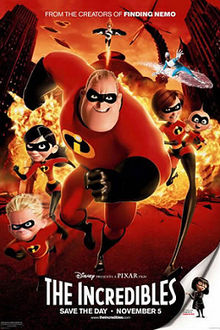
 Certain superhero storylines are beginning to overstay their welcome. Spiderman, The Fantastic Four, and even The Avengers spring to mind. The remarkable thing is the fact that this wildly popular genre headlined by numerous wildly popular franchises does not appear to be leaving us anytime soon. And when the prospects of monotonous superhero film after monotonous superhero film get a little too much, it’s rather comforting to return to The Incredibles. Yet again Pixar proved they knew how to craft animated films with great storytelling, but also a depth of character.
Over a decade ago now Brad Bird helmed a project that would introduce us to a very different batch of superheroes. Yes, they began as individuals named Elastigirl and Mr. Incredible, but soon enough they ceased being that. But these weren’t a ragtag alliance like the Avengers or the Guardians of the Galaxy. They were something perhaps more broken and complicated – a family.
Back in the glory days, the superheroes were civil servants held in high regard – one of the foremost of those being Mr. Incredible (voiced by Crag T Nelson), but they soon fell out of favor due to scandal and public controversy. Thus, they drifted into obscurity and their aliases quickly became their real life.
This is where this story gets interesting, as Bob and Ellen Parr, as they are known now, are living life with three kids. Ellen (voiced by Holly Hunter) is happy to give it a go and live the normal everyday existence, but Bob yearns for something more than rush hour traffic and a cramped cubicle in a thankless job. And when he gets a mysterious message with mission impossible-like implications. He is indubitably intrigued.
He begins moonlighting again, sneaking around behind Ellen’s back not wanting to needlessly worry her. He touches bases with his old friend and colleague Edna Mode (Bird himself), who supplies him with a new super suit sans cape. It’s just like old times with the super getting the respect he once garnered from everyone, and his family is happy and healthy. Everything is looking up.
But of course, behind these missions of his is something a little more sinister than he could have ever imagined. Of course, when his wife catches wind of it she expects something completely different – their marriage must be failing. That’s the only possible reason for him sneaking around.
Thus, mother and two stowaways head to a volcanic island smoldering with destructive peril. Mr. Incredible meets his match and is brought low as his past mistakes finally catch up to him. He realizes his weakness and more importantly how much his wife means to him. He could not go on without her. However, his wife and kids do not wallow in their predicament as they try and save the world from the dastardly deeds of the begrudging supervillain Syndrome. It’s in this final showdown that Mr. and Mrs. Incredible are back in their element with their compadre Frozone (Voiced by Samuel L. Jackson). Except now they are joined by their speedy son Dash and their invisible, force-field wielding daughter Violet, who both feel confident in their skin. A giant mechanical robot is no match for such a crew, especially when they’re a family.
True, these characters have superpowers and special abilities, but then don’t we all in some way, shape, or form? This is a story about the nuclear family when that dynamic is blowing up, and a story about being comfortable in your own skin, in a society that often makes that difficult. So Pixar does the seemingly superhuman yet again by delivering up a popcorn-action-adventure-family film, that still somehow holds up to multiple viewings. It’s retro cool, quotable, and gives its voice actors space to gel. They breathe life into this story, while their contours come alive on screen. It’s a childhood favorite and for a very good reason.
4.5/5 Stars

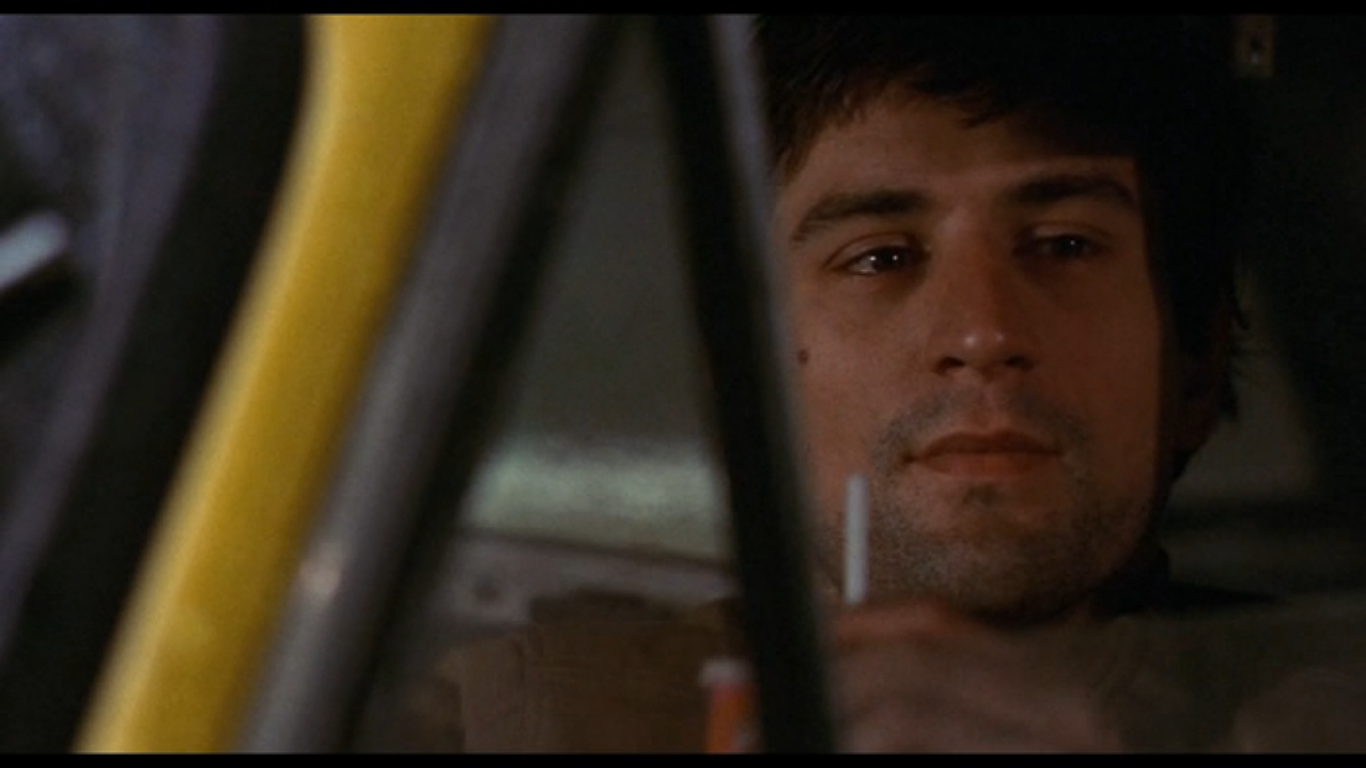
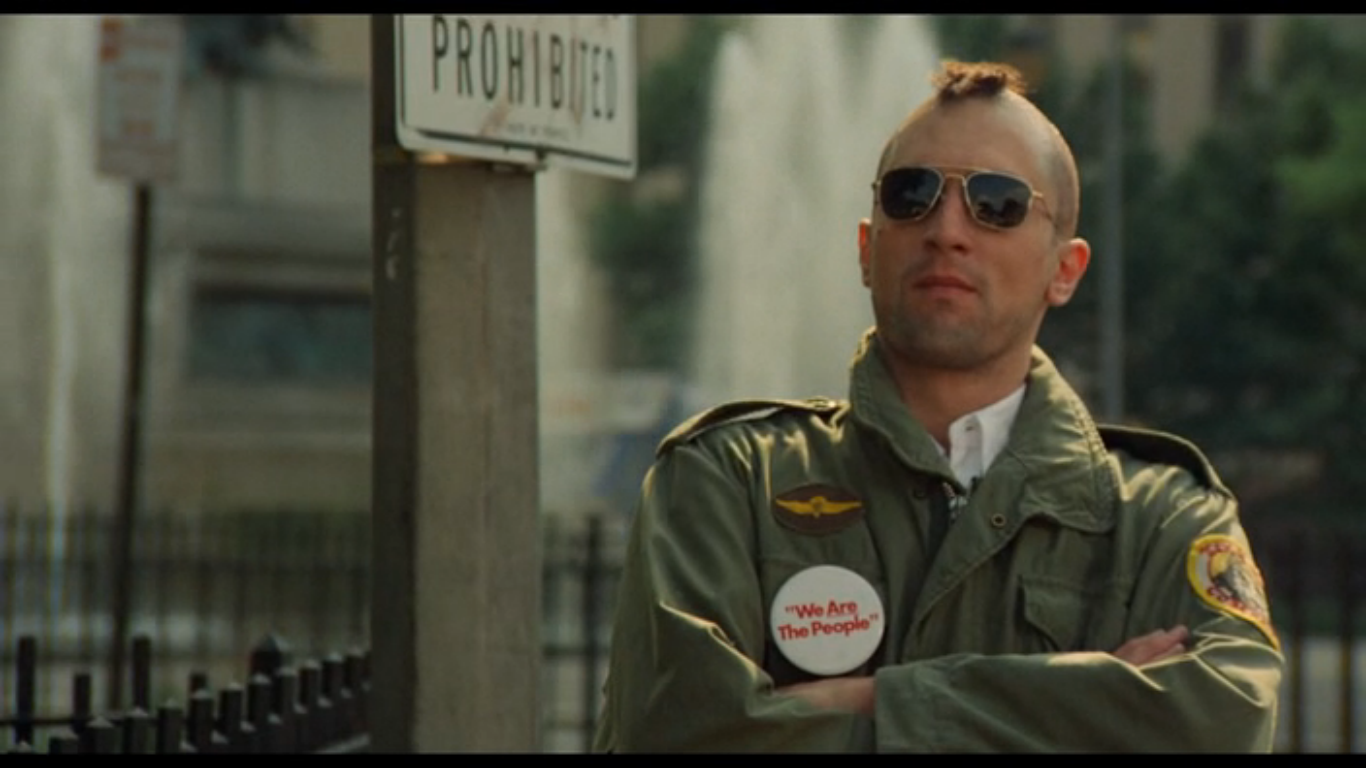

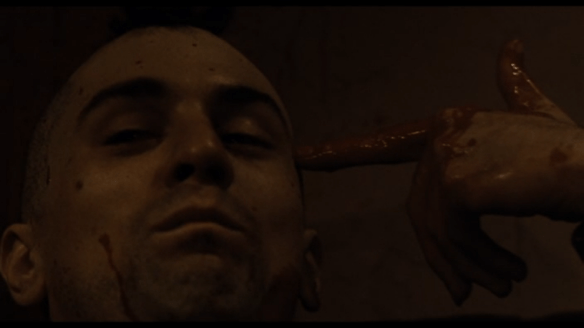 Martin Scorsese’s film has also received pointed criticism for its violence which is hard to downplay. However, Taxi Driver remains interesting because it is not bloated with killing (in fact only one scene is actually bloody). Most of the film has to do with relationships or lack thereof because a lot of what Travis does is watch and listen. It might be Martin Scorsese in a cameo as a jealous husband or a presidential candidate asking Bickle’s opinion from the back seat. Furthermore, like any warm-blooded boy, he knows that Cybil Sheppard is a dream girl. And he has enough compassion to want Iris to have a normal childhood. It’s just that his conscientiousness is misdirected and subverted.
 In truth, I always thought this film had a well-suited title for its material. It was rather unusual and unique. There was not much more to think about otherwise. But when you actually think about it, whether or not you consider Alexander Pope’s poem from which it originates from, there is great truth that can be gleaned from this phrase “eternal sunshine of the spotless mind.” In fact, it’s truth that points to the heart and soul of Charlie Kaufman’s story.
 He swims in and out of consciousness between the past and then the present that is going on outside his head. The voices inside his head, or more aptly, the voices right outside his head come from two engineers (Elijah Wood and Mark Ruffalo) from a company in charge of erasing his memories. They create a map of them so they can remove the memories later.
 Finally, the narrative folds over on itself again as Joel’s mind returns to the present — a present without any recollection of Clementine. They meet again and there’s a strange sensation in the air. It’s a true deja vu moment that has them befuddled and confused. Will they go through with their relationship even when they find out about their rocky history?
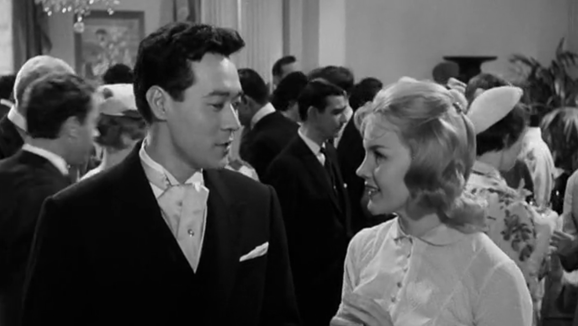 Bridge to the Sun is one of those films that was ahead of its time. Its main players are hardly remembered by modern audiences. Belgium director Etienne Perier was only a little blip on the Hollywood radar. The leading lady Carroll Baker was probably more notorious for her controversial role in Tennessee’s William’s Baby Doll than she was famous. James Shigeta was a pioneering actor, who was famously told, “If you were white, you’d be a hell of a big star.” He aged gracefully, but was slowly relegated from leading roles to bit parts in Hawaii Five-O and Die Hard. In truth, the film, based on the memoirs of one Gwen Terasaki, does suffer from a clunky script at times, and the box office returns were not too favorable. In fact, it was an outrageous flop back in 1961.
 In fact, this film does not shy away from showing that affection, even though it undoubtedly made some viewers squeamish at the time. More than once Gwen and Terry embrace in intimate moments that signify the deep-seated love that holds them together. Because it’s far from easy. Gwen finds it difficult living in a Japanese culture where the woman is meant to be wholly subservient to her husband. She’s fine with the bowing and the taking off of shoes even, but not being allowed to talk is about the limit. With his family, her strong, lovable husband now seems cold and distant. However, they cannot stay mad forever and soon enough their little girl Mako is born, making them a happy little family. But of course, imperial Japan and isolationist America are on the brink of conflict and Terry and his family are tottering on the brink of calamity. He’s seemingly one man trying to hold together the relations of two nations that he has such close ties to. One because of his wife, the other due to his birth. Then, on a fateful day in December 1941 Japan struck the first blow and life would never be the same. Terry is now being detained and Gwen is fearful she might be forever separated from her husband. Disregarding what everyone else says, she takes her young daughter and follows her husband once again to his homeland – knowing full well what might be in store for her and her daughter.
 And when they arrive abroad there is the discrimination and the myriad of strange looks. Even as she makes the long journey across the sea all the white folk scoff at her, but Gwen takes it calmly and fearlessly. Once overseas the climate has changed greatly and now Terry is being questioned for his loyalty. The ethnicity of his wife doesn’t help and the firebombs raining down from above don’t exactly calm their nerves. But again and again, Terry and Gwen prove to be a resilient couple. The anomaly that should never have happened—seemingly could never have happened, and yet they did and they remained unequivocally together.


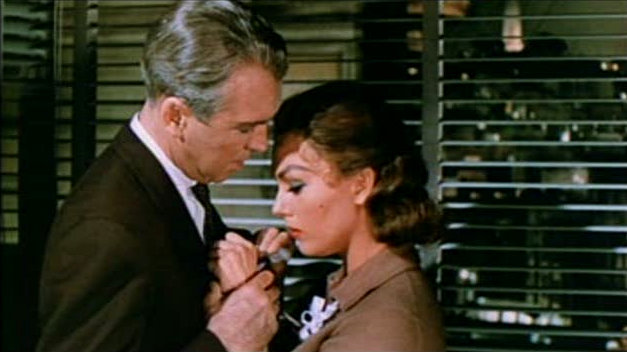

 “Now there are just two of us – young Aubrey Montague and myself – who can close our eyes and remember those few young men with hope in our hearts and wings on our heels.” ~ Lord Lindsay
 Back in the 1920s, a brash young Abrahams (Ben Cross) is about to enter university at Cambridge intent on becoming the greatest runner in the world, and taking on all the naysayers and discrimination head-on. He’s a Jew and faces the antisemitism thrown his way with defiance and a bit of arrogance. He’s a proud young man who loves to run, but more than that he loves to win. His best friend becomes Aubrey, a good-natured chap, who willingly lends a listening ear to all of Harold’s discontent. Soon enough Abraham’s makes a name for himself by breaking a longstanding record of 700 years, at the same time gaining a friend in the sprightly Lord Lindsay. Together the trio hopes to realize their dreams of running for their country in the Paris games of 1924. They are the generation after the Great War and with them rise the hopes and dreams of all those who came before them.
 Simultaneously we are introduced to Eric Liddell (Ian Charleston) a man from a very different walk of life. He’s a Scot through and through, although he grew up in China, the son of devout Christian missionaries. Everything in his life is for the glory of God, and he is a gifted runner, but in his eyes, it’s simply a gift from God (I believe God made me for a purpose, but he also made me fast. And when I run I feel His pleasure). His sister is worried about his preoccupation with this seemingly frivolous pastime, but Eric sees a chance at the Olympics as a bigger platform – a platform to use his God-given talent to glorify his maker while living out his faith. Abrahams is a disciplined competitor and he goes so far as to bring on respected coach Sam Mussabini (Ian Holm) to help his chances. Liddell is a pure thoroughbred with life pulsing through his veins, and of course, they must face off. It’s inevitable.

 4 Star Films