Bob Le Flambeur (1956): Melville’s Noir Heist

bob le flambeur.png

“Montmartre is both heaven and…hell.” 

While Melville would continue to cultivate his own unique canvass and pulp sensibilities, Bob Le Flambeur, as a slightly earlier work, shows its deep abiding debt to the American noir cycle. Because it was at this juncture in time where analogous crime pictures like Asphalt Jungle, Kansas City Confidential, and The Killing were still being churned out in the States.

Bob The Gambler must fit into this same conversation with how it instantly calls on voiceover and submerges itself in the throes of darkness as its constant palette of choice. Melville’s yet to have a Jean-Paul Belmondo or Alain Delon to hang his hat on, as it were (the latter actor was turned down for an early role). Still, he does have Bob (Roger Duchesne), more than meeting the prerequisites of a noirish hero.

He’s silver-haired with piercing eyes. His dress is nice, impressive, but not altogether flashy. Someone says of him, “Both young and old and already a legend.” Even as the voiceover draws us into the world — and the landscape in itself becomes not only a metaphor but a character — we meet a dame too, all before getting to the focus of our story.

Exteriors at times feel harsh and dilapidated. Trash collects in the gutters of the streets, and no one’s doing the city any favors, dumping their refuse wherever they please. At times, interiors, like a gambling joint or a kitchen, are so spare they play as a unique aesthetic all their own. Bob’s home is full of paintings and paisley wallpaper designs. The eye strays to the tiling, which along with the wallpaper, aid in creating this satisfying geometry of checkerboards, shapes, and patterns filling out the film.

Bob is forever the focal point guiding the movie’s progressions. In one scene he’s ready to shell out money to those in need, but he has his own code — he’s no fan of pimps — and since the cops are looking to run one in, he’ll willingly leave Marc to the police dogs.

For someone with such enterprises and acquaintances, Bob still manages an oddly amicable relationship with the police chief. He’s gone straight for 20 years, after a famed bank job he was forced to pay penance for. He’s done his time and reformed. His noble side has come out on more than one occasion.

But this is Bob The Gambler and so a bit of card play, roulette, and chance should be a part of it. Certainly, Bob more than lives up his name, always winning big on the horses only to lose it the same evening on something else. The capricious nature of it all somehow entices him.

When he hears from a buddy that the local gambling house is full up on cash, he makes a near-instantaneous decision. He’s going to rob it. It seems such a drastic way to end 20 years living under the law, and there’s no real inclination of why he decides this. It’s somewhere in between the lines there, and Melville has left us to figure it out. All we know is he is resolved to do it.

Simultaneously, he moves on with the planning measures. All the paces. The inside man. The financier. Layouts, schematics, gathering the crew together. Each is a single step in this methodical process. Bob proves himself to be no slouch when it comes to the details.  An abandoned junkyard becomes his chessboard to lay out all the pieces in real-time, helping all his crew visualize their parts.

However, despite such intricate planning, it only takes one chink in the armor to ruin it. She’s a young woman — only a girl really — and Bob feels somehow responsible for her. He doesn’t want to see her get harmed and, subsequently, hardened by a life walking the streets.

bob le flambeur 2.png

He treats her well, gives her money, even lodging in his apartment, and he expects no favors in return. After all, it is his young colleague Paulo who is madly in love with her. It’s this that causes him to run off his mouth. He wants to impress her and keep her for his own. Little does he know there are others. She’s not tied down by any stretch of the imagination, and her feminine wiles find her moving up the totem pole, from cigarette girl to hostess to a floor show main attraction.

Meanwhile, the squirrely croupier who has vowed to be their ticket on the inside has a prying wife who catches wind of the scheme. At first, it appears she might be one of the moralistic types, but it becomes apparent she’s even more of an opportunist than him. She wants more of the cut and so if we can go out on a slight limb, she is our second femme fatale.

The police commissioner receives his tip and readies his men, that is if the information is in fact true. Bob seems all but oblivious to these details. True enough, he learns the girl let the word slip, and he gives her a going over. And yet, according to plan, he gets into his tux and heads to the casino. There are only two options: either it works or it doesn’t.

There’s not a gunshot until well into an hour of the picture. When it comes is not important; simply knowing it does is something. No question there’s a weight to the action because when you’re waiting for a gun to go off, instead of having them blasting every few minutes, the impact is more apparent. It punctuates the action.

Fully cognizant of the tension wrapped up in the heist, Melville cuts between faces waiting in cars or sitting in bedrooms — all a part of this plot in some way, shape, or form — and Bob still keeps on gambling at the roulette wheel.  Gambling becomes not just a distraction for us but for Bob as well. Surely, he cannot have forgotten? Is it possible? I’m not sure. One could hazard a guess; it becomes his undoing, but hardly in the way that you might initially expect.

The tragedy in the final moments of Bob Le Flambeur is a different strain verging on the height of comic irony. It might easily elicit a chuckle from a few for the sheer chance of it all. It’s a textbook example of how a heist can go utterly wrong and somehow come out right in another way. When I say textbook example, it might actually be the only one just like this, and this is the film’s final trick. It’s indelible in its own right.

Melville came into the gangster genre with deep reservoirs of understanding and his own applied sense of understated style. Just as he stole and borrowed from others, he would, in turn, become the influence for the generations to come — not least among them the Godards and Truffauts of the world. For the time being, he lived with minor acclaim, but the film community would learn his name soon enough. Although, even that, he borrowed from another man.

4/5 Stars

Sahara (1943): Bogart Against The Nazis…Again

sahara 1.png

The opening crawl of Zoltan Korda’s Sahara sets the scene, though contemporary audiences were probably already well aware of current events. This war film details the exploits of members of the Armored Corps of the Army Ground Forces. In June 1942 an American detachment joined British forces in North Africa to aid against the troops of Field Marshall Erwin Rommel.

We meet three of our heroes in the heat of battle. Their tank is stalling, mortars are bursting all around them, and they are the only contingent left from their company. With the finesse of a man whispering sweet nothings to a lover, Master Sergeant Joe Gunn (Humphrey Bogart) coaxes their tank Lulu Belle into operation.

His meager crew of Doyle (Dan Duryea) and Waco (Bruce Bennet) are grateful, if not slightly incredulous. However, they’ve learned to trust his shrewdness under fire. As becomes a habit, they make a bet on the outcome, and one of them always comes out of the jam a little bit richer. It’s this manner of gallows humor that allows them to cope with these high stake scenarios.

Before losing radio contact, they were ordered to head south, and they follow through on their orders, wind their tank coalition back from whence they came. However, this story, although it boasts an eventual objective, is really about the arid road to get there. Because out in the bleak sands of the Sahara they find themselves gathering up the dregs of other units, left all but obliterated by enemy stukas.

One can almost hear Bogart explaining how he came to the Sahara for the waters. He was misinformed, of course, but then that’s a different film altogether. In this picture, it’s all about camaraderie. A typically hardboiled Bogey takes the lead with his usual tenacity only after the British officer (Richard Nugent) of more propriety defers to his command.

He knows full-well they must enlist total discipline if they are ever to survive the perils set before them. The first order of business is rationing water against the cries of indignation from his subordinates and yet the rest of the British crew begrudgingly fall in, including the token “Frenchy” (Louis T. Mercier), who is resolved to do whatever it takes.

sahara 2

The storyline systematically introduces new characters into the sand-swept drama, and they are not just new stimuli. They feel like living, breathing characters to tease out another facet of the world conflict. The first is a Sudanese soldier (Rex Ingram) toting a groveling Italian prisoner (J. Carroll Naish). In a plea to be taken along, he speaks of his wife and child and the relatives he has working in a steel factory in Pittsburgh.

The film looks destined to take its darkest turn when Bogart is intent on leaving the enemy soldier behind — they need to conserve as much food and water as possible — but he relents because in Hollywood the allies don’t do such things; even Bogart briefly sheds his steely surface layer.

The Nazis, on the other hand, are another matter. A solitary German fighter pilot (Kurt Kreuger) looks to wipe out their faction with several sweeps overhead, strafing them with all he’s got. Ultimately, he’s shot down and taken prisoner. Of course, his Aryan philosophy means he doesn’t want to be searched by an inferior race.

Admittedly, it feels like a slightly ironic footnote. Major Tambul gets vouched for by his American ally and yet this country wasn’t exactly the pinnacle of racial equity either.

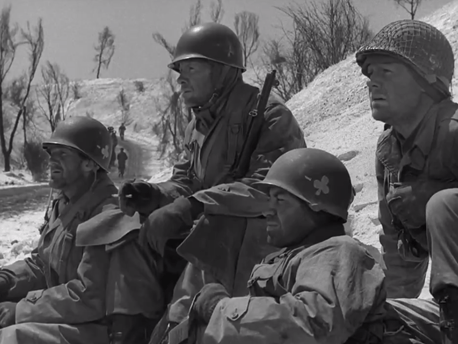
Later, the captured German turns his attention to the entire company, sneering at the ragtag assortment of soldiers they’ve gathered together. They’ll never outlast the German war machine. They’re too disparate. One is reminded of a similar tactic used by Sam Fuller in The Steel Helmet to highlight how the enemy (in that case, a North Korean) looks to play mental war games.

As a side note, it always fascinates me when you have seemingly native German speakers in these old WWII movies. Obviously, this never happened with Japanese (enter Richard Loo) and rarely with Italians. But with Germans and other Eastern Europeans, it was a different case because of the scourge of Hitler.

Kurt Kreuger, as well as John Wengraff, are a couple actors to add to this very unique category. In some ways, although they no doubt detested playing the despicable, the very fact that they are so diametrically opposed to the people they were portraying is another level of cutting derision.

In a subsequent desert storm, the company seeks desperately for any kind of shelter. It proves rather fortuitous leading them to water, which they must painstakingly extract from a trickling well, deep in the ground. It’s a vital resource, and the Nazis are in need of it too. They are the lumbering beast who is rapidly approaching — desperate for resources.

Now time is of the essence, but water is life so they wait to fill up their reservoirs. What this interim period does is give the Allies time to care for their equipment, but, practically, it also allows us to get to know each man better. Their religious beliefs, their wives, the places they call home.

I couldn’t help thinking of Tom Hanks in Saving Private Ryan when one soldier asks where their commander is from. Gunn is far less accommodating. He simply says “no place, just the army.” In each case, their responses more than fit their respective backgrounds, and it gives them a moment to assert themselves as being all the more human.

When a German recon unit arrives, they are dealt with soundly and tempted with water. It’s all a ploy to draw the enemy in for as long as possible. Waco volunteers to try and go off for reinforcements to aid against the impending Nazis. For now, all they’ve got are the men in front of them.

Generally, the film revels in pithy dialogue, but there are a few instances it can’t help but wave the flag for a moment or two. For instance, when Bogart gets candid it feels like a “hill of beans” speech in Casablanca. It could be corny and sentimental but Bogey somehow makes his speech, spattered with references to Dunkirk, Bataan, Moscow, and China, feel like a stirring call to arms.

sahara 3

However, they still have a treacherous enemy in their midst, bent on sounding the alarm for his countrymen — by any means necessary. Because, of course, the outpost is now drained of its liquid gold. They’re being played for suckers. This is when the Italian, Giuseppe, gets his moment to shine — his own speech denouncing Hitler and the German way. It’s a stirring stance even if it’s purpose is blatantly obvious.

With waves of German soldiers looking to take their post, the Allies rally to hold them up for a while, taking as many men down with them as possible. They fight the hundreds with their lusty force of less than ten. It’s a David versus Goliath-like struggle.

The tension doesn’t abate as Sergeant Major Tambul chases down the fleeing Nazi pilot in no man’s land. He tracks him down in a scene imbued with so much real emotion that Ingram got so caught up in the moment, he nearly choked Kurt Kreuger to death.

The strafing is heavy on both sides. Waves upon waves of Germans are brushed back, even as the defenders are knocked off one by one. American fortitude and teamwork involving everyone rules the day as want of water finally cripples the opposition. The drama cools off even as we must take account of the losses. Sacrifices are warranted on all sides.

Sahara is a rousing war film for the very fact it builds a whole world out of California’s Anza-Borrego Desert further fortified by a compelling scenario that’s easy to relate to. What it forfeits in terms of all-out authenticity, it more than makes up for with character. All of a sudden, World War II becomes personal and spearheaded by Bogart — a perfect embodiment of American grit and determination — we soon get behind every heroic action. It’s home front propaganda, nevertheless, functioning, at its best, as unadulterated entertainment.

4/5 Stars

Five Graves to Cairo (1943) and The Desert Fox

five graves to cairo.png

For modern audiences especially, the movie’s opening crawl gives us a bit of helpful context. It’s June, 1942.  Field Marshall Erwin Rommel’s Afrika Corps was pounding the Brits back toward Cairo and the Suez Canal. His notoriety as a tactician and “The Desert Fox” is already spreading. That’s enough on the historical moment.

However, as far as the film is concerned, this was Billy Wilder’s second film behind the camera. Not only is Charles Brackett producing, but he also shared script-writing duties with Wilder, deep into their lucrative, if complicated, collaboration. With the gorgeously perfected cinematography of John Seitz, it’s hard not to consider what was just around the corner. We can almost feel Double Indemnity peeking through. But we’re not quite there yet. There is still space to grow.

Wilder’s opening image is a fine vision: a phantom tank trawling across the sands driven by the dead weight of a corpse. Except, there is one survivor inside the rolling tomb; his name is Corporal John Bramble (Franchot Tone), of the British army. He’s exhausted and terribly disoriented trying to make sense of his curious predicament just as we are.

In the end, the tank gets away without him, leaving the corporal to wander through the desert in a one-person exodus. Plagued by sunstroke, he eventually trades the vast arid emptiness for a ghost town, the former regimental headquarters for the British forces. They have long since left the premises.

One of the only people left in The Empress of Britain Hotel is Farid (Akim Tamiroff), a bumbling wreck of a man, trying to keep his neck and assuage all parties at every turn. The other is Mouche (Anne Baxter), a Frenchwoman in the middle of nowhere, serving as a maid. His cook ran out on him and his only waiter got it in the most recent blitzkrieg.

There’s no time to form a decision about the delusional Brit because just to make things more tenuous German forces roll into town, in preparation for the high command. It’s enough to make any man cave, much less a pile of perpetual nerves, wearing a fez, like Farid.

He obviously acquiesces to their every whim, except giving away their newest guest, currently stowed away behind a counter. He gets by on the skin of his teeth and through the clemency of his newfound benefactors as they vouch for him in his position as their waiter. For the time being, no one can catch them in the lie.

In full transparency, I’m not quite sure what to make of Baxter’s performance — that of an American playing a Frenchwoman, however, I’m rather hesitant to admit she does a fairly spot-on approximation of a Simone Simon or other French contemporaries speaking in English. Truthfully, the whole picture brazenly scrambles all the nationalities, somehow normalizing all the casting. Another American as a Brit. A Russian as an Egyptian, An Austrian as a German, and so on.

Italians come in as well, represented by the boisterous baritone, Fortunio Bonavova, grumbling about the state of affairs for his army. There proves to be a testy relationship even within Axis allies. As always, the Italians feel like the comical little brother in the scenario. If we take the Germans nominally serious — as a kind of threat — the Italians are all but dismissed.

Erich Von Stroheim gives a blood-chilling introduction, back turned completely toward the camera. One thing he doesn’t lack is stage presence, capturing the screen with the entirety of his entrance. While he’s not doing an imitation of the real Rommel, it seems Von Stroheim does us a greater favor by being a version of himself. After all, this is the same hallowed figure who gave us Greed, showed up in Renoir’s Le Grande Illusion, and subsequently Sunset Blvd (1950). He is a worthy enigma in his own right.

The story twirls on a peculiar, if not altogether compelling, coincidence. Bramble takes on the persona of the crippled waiter as a pure survival tactic, only to find out he’s not what he seems. The Germans are the ones who make him realize this, by bringing him into their confidence. They seem in one sense highly rational — at any rate, not utter buffoons — and yet would they have actually been so stupid? We can only conjecture. Regardless, here we are. He’s been given an invaluable if precarious, opportunity.

With an influx of British prisoners, there’s a fear that the jig is finally up. They only need give the word, and he’s done for. Instead, they too play along, realizing their brilliant luck. 20 questions over dinner with The Desert Fox only elicits more riddles when it comes to his plans and unparalleled success.

Even more so than Stalag 17, Wilder’s picture is a small-scale war film. What’s present is a decently solid script by he and Charles Brackett. While it doesn’t always jump off the page, there are frequent lines, giving a stirring reminder of who is penning this story. These are the men behind Double Indemnity.

five graves to cairo 2.png

It also becomes obvious the battles have been left for others to reenact. At its best, Five Graves to Cairo is about character and with it, cracking the code of Rommel. It might seem like an insignificant victory but the implication for the broader war are made obvious. It’s easy to admit lives are at stake, even as Bramble teeters precariously close to being ousted. Mouche has no allegiance to him or the country that left her countrymen stranded at Dunkirk.

Instead, Wilder uses the bombers overhead as a bit of a tumultuous symphony for what is going down in the bomb cellar. Chiaroscuro is most boldly on display as our hero must flee for his life. If any character is redeemed, it is Mouche, but for the narrative to function, she is also forced to pay the consequences.

The ending is nothing to bat an eye at — certainly no extraordinarily inventive digression — but it suitable enough for its purpose. There’s a bit of satisfaction as Tone returns back to the place he once stumbled into, now victorious. There’s time for a laugh or two, even as a hint of somberness sets in. In the end, a new resolve has been instilled. We’re ready to go out there and do our part. It fits conveniently enough into the contemporary propaganda machine.

It left me thinking, what’s really missing is the trademark Wilder wit, whether trenchant or wholly subversive. Thankfully, there was still ample time for this to come to fruition. There’s certainly no illusions about war smelling like honeysuckle with enough sand, killing, and residual dead to rule that out completely.

But this early in his career, it still feels like Wilder willingly propagates an ongoing idealism about the Allies and America — the country that openly took him in when he needed a place. He would never lose his gratitude, even as he began to subvert convention soon enough. One could contend Wilder started to understand his adopted nation to its core — warts and all — and still managed to love it. This is one of the true marvels of his career.

3.5/5 Stars


Touchez Pas Au Grisbi (1954): Gabin’s Aging Gangster

Touchez pas au grisbi 1.png

On only two occasions have I had the pleasure of watching a Jacques Becker film, and I hold him in the highest esteem even based on this admittedly meager sample size. It seems a fitting observation to acknowledge how closely he was tied to one of France’s foremost titans, Jean Renoir, serving as his assistant director on a number of his projects including A Day in The Country and The Grand Illusion. 

The overt connections between the so-called poetic realism of Renoir and brethren like Marcel Carne seem intuitive, not merely in visual style and content, but going so far as casting some of the same actors — in this case, a Renoir regular like Jean Gabin.

While completely seamless transitions are hard to come by, it’s not all too difficult to go from Renoir to Becker and see how his work bleeds into the crime pictures of Jean-Pierre Melville and then the Nouvelle Vague and so on and so forth. If nothing else, it is a tangible reminder that all cinematic artifacts find their roots in ancestors. Nothing exists on its own completely outside the undue influence of others. As it should be.

Touchez Pas Au Grisbi, translated to “Hands Off The Loot” in English, rarely gives much pretense of being a crime picture. Sure the people within its interiors are criminal types; it’s easy enough to decipher just watching and listening, but this is a film reminding us how mundane even their lives can be.

If there is anything half resembling a prototypical inciting incident it would be the brief moment when the veteran gangster, Max (Gabin), scans the newspaper to note a cache of gold bars have been stolen in Orly. Nothing is said of it but the implications are obvious, and Becker’s movie is made up of such moments.

The director never telegraphs anything to the audience, remaining content to examine scenes, playing around with seemingly trivial or unimportant details, and letting his story rely on such details for its enjoyment. The trick in the initial scenes is the feeling we are driving toward some inevitable end while Becker is content to coast along. As a Hollywood-bred audience, we wait a bit impatiently for the next beat to rev up the action, but the real game is right in front of us the whole time.

In his own way, Jean Gabin has the weight of a Brando or a Jimmy Cagney. He can be “The Godfather,” and we believe it, and yet there is something amiable dancing in his eyes this time around. Of course, he’s nothing like those other men — never unhinged and always settled in his surroundings — but he brings the same boldness of being.

When he’s in a room with others we want to watch him and see what he will do. There is an instant gravitational pull toward him. He can carry these moments like the greats. It’s not to say he can’t be violent, even brutal. Burning like hot coals at times. Slapping people around. Still, he’s always measured.

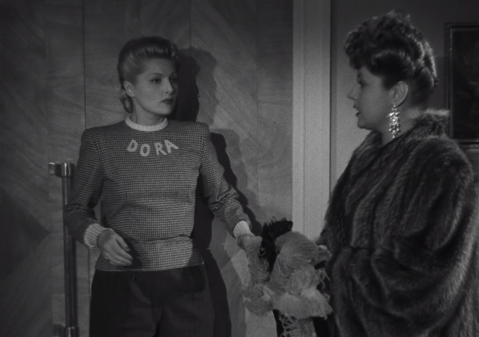
Touchez Pas Au Grisbi opens as a series of scenes (like most movies) where we go from a restaurant to a car to a club. Two gangsters, including Max and his cohort Riton, are spending time with their pleasant female company (Jeanne Moreau and Dora Doll) — it’s the customary social life of people in their business — they have to make the rounds and keep up appearances.

We are privy to this as an audience and maybe we are waiting for something to happen in the conventional sense. There’s a conference in a backroom were Max pays his respects to a couple of work associates, one a thuggish gangster Angelo (Lino Ventura), the other a bespectacled nightclub owner Pierrot (Paul Frankeur). In another accompanying sequence, he walks in on Angelo with his partner’s girl Josy. Still, he doesn’t do anything rash. He takes it in stride as Josy defends her decisions. In a movie where a plethora of lovely ladies (including Miss America Marilyn Buferd) exist as eye candy, Moreau manages a few defiant acts of rebellion.

Touchez pas au grisbi 2.png

We follow Max home only for him to be tailed by a shady ambulance with two “physicians” looking to take him in. He nonchalantly walks up to his flat, pulls his gun out of a drawer, and wards them off with his piece, darting off into the night to pay a visit to his accomplice Riton (dour-eyed Rene Dary). Call it action if you will, but it’s all a bit discombobulating, never smooth or modulated. This in itself speaks to something. Nothing is written out on a billboard for us. We have to infer and do the work on our own. Becker is content with this arrangement.

Finally, Max and Riton are sitting around a table once again, crunching on food disconsolately. Why are they so bleak? It barely seems as anything has happened to them. Perhaps this is the point. We realize for the first time their discontentment with the life of crime. They are old, at least for such a young man’s racket. They’ve seen it all and as Max says, they’re fed up with it all. More than any amount of danger, it’s a nuisance staying ahead of the pack.

As with any such person, whether thief, gangster, gunslinger, or outlaw, it becomes very difficult to run away from a lifestyle once you’ve been marked by it. The world you initially chose reciprocates by choosing you, and it always has a habit of catching up with you.

For now, they watch and wait. Never before have I witnessed a robber gargling as he gets ready to bed down in his pajamas or later on reaching into the cupboard to pull out the bedclothes. It’s practical, but surely, this is not kosher. Unwritten rules say cinema is life with the boring bits cut out. Becker is brazen enough to make a gangster picture with the dull bits stitched back in. In his own creative patchwork, they inform his characters.

We’ve all but forgotten about their payload. That is until Max pays a visit to his uncle, who also happens to be his shady dumping ground. Haggling over hot money has even lost its luster. It takes all the fun out of having wealth.

Most importantly, we are reminded Max is human. It’s what previous generations — namely the Greeks — would have termed hamartia. This is his fatal flaw. For us, it simply makes him more relatable. He’s a sentimentalist — no longer The Godfather figure. He is fallible. His weakness has been ousted. Surely these themes slowly progressing through the story are not unfamiliar ones about aging and friendship in a dirty business. But they have their own crucial perspective — an individual point of view.

One of the most gripping scenes occurs in a cellar. They’re shoving a young kid down the steps for spying, ready to work him over. He gets a few smacks. In such a banal world it feels all the more terrifying, clamped in our faces with glowing close-ups. There’s little in the form of action up to this point, aside from the film’s fairly explosive climax, as a kidnapping triggers a mini gang war.

Again, Becker appears more interested in the outcomes than the actual events. What is leftover would normally be termed superfluous scenes, but once more, they hold true to the essence of the characters. The ending gives way to these curious moments with Max back around a lunch table with a beautiful woman, on the phone, and hearing some sad news. The melancholy sets in. It all matters. Some might argue there is no movie at all. For me, there’s no movie without Gabin.

4/5 Stars

Destination Tokyo (1943) and There’s No Place Like Home

destination tokyo.png

“This is sort of a blind date. We’ll just have to wait and see what happens.” – Cary Grant as Captain Cassidy

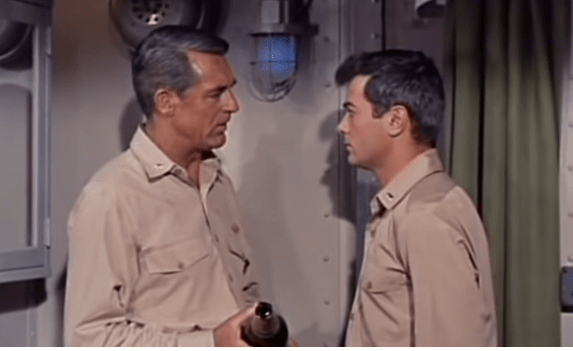
No pretense can be made to suggest Destination Tokyo functions as an original entry of a “men on a mission movie” from a couple decades later. For one thing, Cary Grant doesn’t strike one as the soldiering type. He’s not Lee Marvin or Charles Bronson.

However, it must have worked on at least one kid. Years later Tony Curtis would recount how he saw the picture in theaters and the images of Grant looking through the periscope inspired him to enlist (and maybe become an actor).

He ultimately realized both aspirations — even starring with his hero in the Blake Edward’s comedy Operation Petticoat, which ironically, is set aboard a submarine! In Destination Tokyo, Grant is more business but an amiable skipper nonetheless, with a family waiting for him back home. Still, he’s more than prepared to face the task at hand.

Although they are not much of a secret, thanks to the built-in spoiler in the title, Captain Cassady (Grant) waits the designated 24 hours into their excursion before opening their orders. Obviously, they’re headed to Tokyo. They are also required to pick up a package en route: a meteorologist named Raymond (John Ridgely).

What the film does well is creating an ecosystem for characters to be empathized with because once we have the framework of the task at hand, we can readily spend our time getting to know the men onboard.

There always must be the callow recruit and this story is no different with Tommy Adams (Robert Hutton) stepping into the role. Meanwhile, John Garfield has a fine time hamming it up as the spirited Wolf enthralling the stir-crazy crew with his exploits with the fairer sex. His active imagination fuels their own hopes and dreams about sweethearts all across the sea, whether they exist or not.

Dane Clark readily complies to the rank and file with his own average G.I. Joe, “Tin Can,” an equally spirited Greek-American intent on getting his chance to make the “Japs” pay. Alan Hale, always counted on for comic relief, is little different here as the bubbly chef Cookie doing his best not to clang pans when they’re diving deep to evade the enemy.

Otherwise, he’s a handy fill in for Santa Claus for a Christmas spent 20,000 leagues under the sea, metaphorically speaking, of course. For someone like Adams, this is his first Christmas away from his family and the accordion accompanied quartet singing out “O Little Town of Bethlehem,” and a few other yuletide favorites is a much-appreciated touch of home.

destination tokyo 2.png

The crew begins to truly feel the weight of circumstance when a pair of Japanese zeroes come upon them on the seas. They let ’em have it with their anti-aircraft deck guns firing into the sky.

One curious stylistic choice is to actually show the enemy pilots raining hell down on them. It hardly feels like an empathetic turn, however, and more of an easy way to label them. If you see someone like this, know they’re the ones doing injustices against us. We’ve got to stick it to them whatever the cost. It becomes more blatantly clear only minutes later. They’re backstabbers.

In a film with an understandable but generally misguided sense of Japanese culture, it does become an intriguing task to begin to unwrap the ideologies being promoted. One cannot quickly forget this is propaganda meant to mobilize mom, dad, and everyone else back at home.  It makes it easier to comprehend how ignorance and general misconceptions can be so widely propagated.

Delmer Daves would soon become well-versed in these kinds of wartime tales from The Very Thought of You to Hollywood Canteen and The Pride of The Marines. One can note actors like John Garfield, Dane Clark, and John Ridgely readily being recycled throughout. However, to its credit, instead of merely painting all Japanese people as terrors, it frames them as victims of a broken system of government.

The token metaphor alighted on are roller skates — those vehicles of carefree child-like recreation — we need more rollerskates in this world including the next generation of Japanese kids. Because it’s a far better alternative than more international conflict.

In the most harrowing interludes, the crew of the USS Copperfin surreptitiously sneak into the minefield of Tokyo Bay under the cloak of an oblivious enemy cruiser. They squeak past the enemy netting and hold their breath as they move into the heart of enemy terrain. Their covert mission continues with three men, including Wolf, going ashore to undertake reconnaissance. It feels somewhat eery for the very reasons two years later nearby locales would be absolutely obliterated by Big Boy and Fat Man.

The balance of the human drama with wartime objectives remains the film’s greatest strength. It’s not all pulse-pounding action necessarily, but it maintains interest through the investment in its characters over the long haul.

An unexpected complication involves an impromptu appendicitis operation. A former pharmacist student, not formally trained as a surgeon, is given the unpleasant task of removing the burst organ based on the written procedures in a textbook. Meanwhile, on land, Tokyo Rose jeers the Allies only for our protagonists to send vital weather reports over the radio to waiting Allied receivers. This entire operation is purportedly under the nose of oblivious Japanese operatives.

The most laughable reaction comes from an incredulous Garfield, “If the Japs pick it up, they’ll think it’s one of their own guys.” He didn’t take into account how stifled John Ridgely’s pronunciation sounds. My Japanese is abysmal, but it doesn’t take a linguistic genius to know he’s probably never spoken a lick of Japanese in his life. But I digress.

The return trip is fraught with bombardment from above as the Japanese get wise and in the ensuing pursuit, the sub gets hammered. The situation is dire with the interior leaking and filling up with water. It’s all hands on deck just to bail them out.

However, when the proverbial fog clears, miraculously, they’ve got off scot-free. The next prominent landmark they see is the Golden Gate Bridge, and it triggers all their fluffy feelings of Americana. After being in foreign waters, the relief of being back home in the good ol’ U.S.A is too great to pass up. As an American who has lived for an extensive period of time in Tokyo, somehow I can relate, though for very different reasons. There’s no place like home.

3.5/5 Stars

Air Force (1943): Howard Hawks Takes on WWII

air force 1.png

At times, Air Force functions like a staged documentary. It feels both instructive and informed by Howard Hawks’ own passion for aviation. It has the simple task of making sure the folks at home can empathize with their boys up in the air. In fact, it falls short of being a mere instructional manual because its highest purpose is to be a stirring propaganda piece.

Certainly, the War meant all hands on deck, even when it came to filmmaking. You had John Ford famously capturing The Battle of Midway. Frank Capra oversaw the series Why We Fight, as a member of the Army Signal Corps. George Stevens notably took footage of Dachau Concentration Camp after it was liberated. This is Hawks’ contribution to the same effort, mobilizing the American public behind the war, in part, by harnessing their emotions. In this regard alone, Air Force is generally a success.

Although some of its players have been generally forgotten in the modern movie pantheon, Air Force features a surprisingly robust cast of actors. Their leader is pilot “Irish” Quincannon (John Ridgely), who has been charged with leading the crew of the Mary-Ann, a much-beloved B-17 Flying Fortress. Its caretaker is a crusty veteran (Harry Carey) whose own boy is currently stationed in the Philippines.

The rest of them feel like fine red-blooded Americans, from co-pilot Gig Young, navigator Charles Drake, and a youthful Arthur Kennedy as their bombardier. George Tobias adds his humor while John Garfield ably plays the outsider with a chip on his shoulder.

They are a perfect menagerie for Hawks to impose his always cognizant sense of male camaraderie because what more galvanizing situation is there than the throes of war? Very little.  It’s this link — a kind of communal gravitational pull — that helps them weather thick and thin, as the enemy hounds them at every turn. Without it, the picture wouldn’t have much pathos. These relationships are experienced vicariously by the audience.

Their assumedly routine mission is humanized through sendoffs from loving mothers and wives. Later on, they pay a visit to a sister stationed as a nurse on an island hospital. All these touches are very purposeful, implying how each life is interconnected with a web of loved ones and sweethearts. This could be any of us if we grew up in wartime America.

Against these waves of systematic sentimentality, the bad boy cynicism of John Garfield fits like a glove, and he peddles his usual pessimism with ease. For a time, that’s all the conflict we have.

Then, they pick up Japanese radio chatter — it’s odd — they don’t understand what could be happening until they see it for themselves. It is, of course, December 7th, 1941, and they’re right in the thick of the attack on Pearl Harbor. When they finally get a chance to inspect the situation on the ground, the aftermath is understandably grim.

In the moment, creating a broad conspiracy involving fifth column dirty treachery on Hickman Field is an effective paranoia tactic. However, in hindsight, there are a few pernicious details used to paint the scenario, namely, a band of rogue vegetable trucks used to clip the wings of planes on the ground. As if the enemy had ground forces orchestrating sabotage to coincide with the aerial attack. This, in fact, (considering the Munson Report) never occurred.

Regardless, the crew is ordered to get on the move again before any other trouble arrives. Their next leg is Wake Island en route to the Philippines. Along the way, they strike up a playful competition with a pursuit pilot, allowing our men to reconcile their differences. Even a dog christened “Tripoli” conveniently doesn’t like Japs (ie. Mr. Moto)

The ensuing dog fights in the skies feel atmospheric and like a dead ringer for George Lucas’s original Tie Fighter-Millenium Falcon duel, with turret guns blasting away. In this chaos, their one solitary flying fortress becomes an emblematic symbol in itself, representative of the American spirit, grit in the face of adversity, and a never say die mentality.

Battered and broken as it is, their sole purpose becomes putting it back together again, to fight another day, and it’s fitting because that’s very much what America was forced to do after Pearl Harbor. A victory at The Battle of Midway would have meant little if we didn’t get to that point. Air Force seems to suggest, with men as tough of these, we got there and ultimately we prevailed. It’s an easy narrative to swallow about the “greatest generation,” and there is a certain amount of truth in it. However, it’s certainly not a nuanced picture. We know its intentions full well.

The final minutes are all but a foregone conclusion, necessary for closing out the dramatic arc. There’s quite a large deal of bombs bursting, planes crashing, guns blasting — all key elements of the fog of war. Even in their archaic simplicity, there are some thrilling moments. However, most of what’s of interest still remains up in that airplane – – the men we’ve gotten to know along this arduous journey.

Of course, in 1943 the journey wasn’t done yet. Thus, there was the need for this picture in all of its patriotic fervor. In this realm, it’s fairly effective, amassing the third-highest box office pull in its day. There’s no doubt it spoke into a particular cultural moment. For those admiring of Howard Hawks, it’s a less-heralded but still intermittently gripping adventure in the skies, awash with jingoism though it may be.

3.5/5 Stars

Pride of The Marines (1945): John Garfield Plays Al Schmid

pride of the marines.png

During WWII there’s no question John Garfield was integral to the war effort despite having never served in the military. He did yeoman’s work when it came to morale, through his pictures at Warner Bros, originating the famed Hollywood Canteen with Bette Davis, and going on war bond tours with the likes of John Basilone.

No question he was a devoted champion of the Allied cause and so when he learned of the true-life heroism of marine Al Schmid, flipping through the pages of Life magazine one day, he started the wheels turning in Hollywood. Schmid was a Philadelphia native who was deployed in the deadly warzone of Guadalcanal in 1942. He and two mates held onto their gunnery outpost against hundreds of enemy soldiers. Their valor was not without sacrifice.

There are certain stories you could hardly write better for the cinema screen and The Pride of The Marines is one of them. As such, Schmid’s story fits fluidly into three distinct segments. It begins as a bit of a hometown romance. In the opening voiceover Garfield, in character as Al, explains how Philly and the Liberty Bell is all he’s known and although this is his life, it could have just as easily been someone else’s. There’s no missing that Delmer Daves’ film is a universal flag-waver for the whole country to get behind.

Like any red-blooded American, Al’s a confirmed bachelor, though he loves the company of his landlords, the genial Merchant clan. Jim (John Ridgely) is always good-naturedly tinkering on everything with varied success. His wife Ella May (Ann Doran) is just about the warmest beacon of hospitality one could ever meet. And if they are both benevolent spirits, their bubbly daughter Loretta (Anne E. Todd) is equally so. Al is affectionate toward them all, even as he remains fiercely independent. No girl the resident matchmaker tries to set him up with will make him think otherwise.

It’s much the same when he finds a quivering Ruth Hadley (Eleanor Parker) at the front door in the dark. A fuse is blown. The lights are out. The family scurries around as a brusque Garfield lets her in. He’s prepared to tear her apart as she confirms all his assumptions about the typical girl-next-door.

This is the rockiest of meet-cutes but I must say, I like it because there is this instantaneous conflict. No disrespect to Dennis Morgan in The Very Thought of You, but Garfield brings his brand of tougher authenticity that’s far more compelling. The beauty of Parker is not simply being an attractive face — on par with any of the Hollywood starlets of the 1940s — there is an earnestness and a feistiness present in her very being.

It comes out over a miserable bowling date tacked onto their already awful evening. She’s been continually humiliated, and she retaliates with her bowling ball and a forceful march out the front doors, which receives whoops and hollers from all the patrons. This is when we realize we have a story and with it a true love affair.

pride of the marines 2.png

At first, it’s tentative. The second stint begins as Al prepares to ship out after Pearl Harbor. Nothing has been agreed upon between them. He’s noncommittal. She’s not one to beg and plead, though she has her own private desires. Their hours together are dwindling and in one final burst of emotion, he asks for a promise: to wait for him and he provides a token of his faithfulness. They’re tied together now like we always knew they would be. There were too many sparks for it to be any other way.

The war can really be summed up in one extended scene played out within the morass of war. Enemy “Japs” wade across the divide toward their waiting machine gun encampment, mowed down in the mayhem. They taunt them throughout the night, coming relentlessly, hour after hour, only to be stopped dead in their tracks, piling up everywhere.

I couldn’t help feeling some amount of conflict in witnessing all this. I am an American and I love John Garfield as much as the next fellow but this senseless killing — even in a fairly chaste old Hollywood movie — still feels like too much. The problem is it featuring war at its most intimate.

“Don’t shoot until you see the whites of their eyes” is a practical axiom, but it also makes hand-to-hand combat far too personal. The film tries, but you cannot keep the enemy completely at arm’s length. Watching something like Fire on The Plains (1959) and we get an idea of what their side of the story might be. In this case, a stir-crazy Schmid holds them off in a gutsy stand that, nevertheless, leaves him without the use of his sight.

Phase three is arguably the most significant yet. He must start to grapple with this new reality, even as he’s rehabilitated in an army hospital in San Diego with some of his wounded buddies. He’s lying to himself, believing an operation will give him back his vision. The letter he dictates to be sent to a concerned Ruth paints much the same tale. Unfortunately, it doesn’t work that way.

The best shot comes in the moment of truth when the bandages are off in the darkness and as a flashlight is about to be brought up to his face, the camera focuses on his jet black hair and goes black as the voices keep talking. The image says enough already. We know the outcome without seeing anything or, precisely, because we don’t see anything…

Still, Al’s not ready to come to terms with reality nor is he prepared to tell Ruth. He wants to disappear so she’s not burdened with his disability; he’s even more dismayed to learn the presentation of his Navy Cross will take place back home. Because a “Marine doesn’t lean on nobody.”

pride of the marines 3.png

The old conundrum is not a foreign one. Each one of us wants to be loved, but what if you come back and we are not the same person — disabled or maimed in some way — that our significant other fell in love with? Will they still take you back or loathe the very sight of you? The answer is not always obvious.

Ultimately, it is his solicitous caretaker Virginia (Rosemary DeCamp) and the moral support of his buddies, including Lee (Dane Clark), pushing him forward. In one private phone call, the nurse confirms her suspicions. Ruth fits into the unconditional love category. She’s not going down without a fight, even if it’s a battle over the heart and soul of her disconsolate husband.

We need not dwell on what happens next. The imagination can all but fill it in. A bit of deception, the warmest of welcomes home, and the long haul ahead, forged by two people together as one. Al Schmid would die in 1982 and receive burial in Arlington Cemetery, while his beloved wife would follow him there in 2002.

Predating the likes of Best Years of Our Lives and The Men, The Pride of The Marines digs into the trials of soldiers coming home from war. Garfield is the most capable man I can think of to bear the brunt of this trauma. He battles the demons with his usual grit.

When he’s not at the center of the drama, it falters a bit into the typical didacticism. All the boys with honest, real-life problems, nevertheless, feel like they’re being used to preach to the audience about the plight of the G.I. It’s real, but the heavy-handed roundtable instigated by Daves gets in the way of everything of interest.

The starry-eyed adulation Loretta showers upon him about his exploits in Guadalcanal is also peculiar to me. “You killed 200 Japs, didn’t you Al?” She sounds breathlessly incredulous at this gargantuan feat; it’s like a trophy. I couldn’t help feeling a bit queasy about the statistics in this domestic context. It just goes to show my conflicted nature as a Japanese-American (who lived a stint in Japan) trying to parse through the complexities of World War II.

What’s not difficult to comprehend is just how brilliant Garfield and Parker are as a couple and if they do a fine job, then their real-life counterparts are even more extraordinary. Because they weren’t picking up a salary from Warner Bros. They were out in the trenches in the real world, living life, and facing everything together.

3.5/5 Stars

Dancing Lady (1933): Joan Crawford & Clark Gable

Screenshot 2020-03-27 at 84300 AM

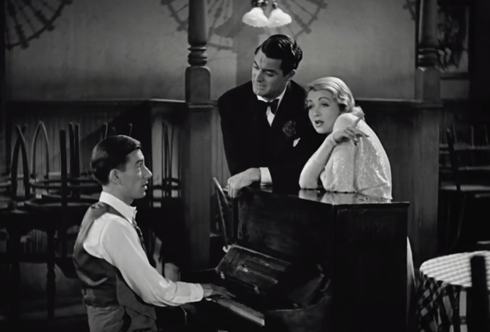
You know the drill. In the throes of the Depression, the idle rich fritter their wealth away at such social events as striptease and then attend the ensuing night court until they get bored with the whole affair. Tod Newton (Franchot Tone) is one of their ilk, but he’s more engaged than others thanks to the pretty girl on the other side of the courtroom.

Down-on-her-luck Janie Barlow (an effulgent Joan Crawford) is a casualty of a police raid undertaken on the saucy dancing joint she’s been working at. Beyond being smitten, Tone (Crawford’s real-life husband for a time), is invested in helping give her a leg up, ulterior motives notwithstanding.

If it’s not obvious already, Dancing Lady has a premise to rival Warner Bros’ superlative successes with risque backstage, rags-to-riches musicals like 42nd Street. So, while the plot is nothing special, it somehow taps into Crawford’s innate sense of ambition as an actress.

There’s a feeling she’s not entirely acting a part; she’s driven to make it to the top. It’s this impetus that leads her to stick to “thousand-to-one-shots” over any man — even Park Avenue know-it-alls swimming in cash. She’s going to make it of her own accord. She’s going uptown toward the art world.

The script purposefully bears down on the vernacular to differentiate the patricians from the plebians and with it Janie’s attempts to make something of herself — first, through improved diction and then a newly cultivated wardrobe.

Without knowing it, she’s probably aspiring to the entertainment funded by such nincompoops as Mr. Bradley and his roly-poly walking gag of a son Junior. They are a father and son comic echo chamber if you will, and they also hold the purse strings for one of the industry’s latest productions.

It’s not altogether glamourous stuff but Patch Gallagher (Clark Gable) and his taskmaster-like regimen, turning chorus girls into a full-fledged production, is the “big time” for someone like Janie. The only problem is getting an audition. The head honcho has his right-hand man Steve (Ted Healy) run interference for him — it didn’t go so well for a wisecracking Eve Arden. Still, the “Dutchess” is an assiduous gal if there ever was one.

Director Robert Z Leonard is evidently enamored with his whip pans, but he does evoke pace rather well, especially when Crawford tries furiously to catch up with Gable as he streaks down the sidewalk. While it’s a cliched rom-com montage that would be recycled time-and-time again, it still stands out within the context of the film. The leads don’t speak a word to one another for several minutes at least.

In what feels like a non-sequitur, the Three Stooges make a lightning-quick cameo. Well, they actually show up twice, posing as stagehands. It’s true they feel completely at odds with Joan Crawford’s story arc, but it’s delightful to see them, even momentarily, as she continues her ascension. This is only to be surpassed by the appearance of Fred Astaire! (And I nearly forgot to mention Nelson Eddy, so there you go).

Tone continues to go to great lengths to win her affections, secretly bankrolling her star vehicle, dancing and dining her, and flaunting his swimming pools. When all else fails, he resorts to taking her to Cuba, conveniently far away from the other man in her life and the career she’s chosen.

The red-hot sparks are given a literal gymnasium to work themselves out in — positively buzzing between Crawford and Gable — as they get in their morning exercise to keep their svelte dancing figure and brawny physique respectively. It goes unspoken, but an unwritten rule of storytelling tips us off that antagonism usually denotes love. They have copious amounts ready-made to dish out at one another.

Unfortunately, by this point, the story gets less and less interesting by the minute as it continues to sink into the preconceived notions of the genre. In other words, what we suspect to be derivative proves itself to be precisely that. It speaks to the charisma of the stars who make the well-trod paces watchable, even engaging, and there are a few momentary delights around the fringes.

The final extravaganza is a not-too-veiled Busby Berkeley knockoff infatuated with beer. The surreal foray that follows offers up a luxuriant carousel of beauties and giant fan blades strapped with women — not to mention the surreal moment when a host of old maids go behind a curtain only to be dismantled to come out as gorgeous dancing ladies.

With Fred Astaire showcased prominently alongside Joan in a very fluffy ensemble, it felt strangely out of place. Astaire and Rogers had yet to be placed together and it’s true their trajectories could have been so much different. I don’t know a thimbleful about dancing, but at the very least, Crawford has an earnestness on taps. Though, she’s not quite Ginger Rogers either. No one ever said she was.

With Tone’s gigolo scorned and “The Duchess” going in to check on her dejected “Duke” after their stunning success, there’s a sense the working-class heroes are being reunited in a triumphant victory for all the blue-collar folks in the audience. In other words, it’s not just Depression-era pap, there’s this genuine element of wish fulfillment.

The movie is gracious enough to supply one last obligatory scene between Crawford and Gable for contemporary audiences. Because there are a lot of distractions (and some unique surprises like Astaire), but the romantic chemistry is present and delivered on a silver platter with the kiss that the whole movie’s been culminating to. Surprising, I know. What’s the axiom? Give the people what they want? Dancing Lady is case and point.

3.5/5 Stars

Possessed (1931): Joan Crawford and The “In” Crowd

Screenshot 2020-03-24 at 65703 PM

We open up on the Acme Paper Box Co., which has a down-and-dirty industry strewn about its edges. If the people flooding out of the factory are any indication, this will be a dusty, grubby, little picture.

Two of their employees are Al Manning (Wallace Ford) and Marian Martin (Joan Crawford). He’s a concrete worker with a penchant for bricks, and he’s also positively smitten with her. Meanwhile, her gaze is focused somewhere else. She’s not about to settle for “happiness on an installment plan.”

It’s summed up by the train tracks — a handy conduit for the luxurious upper classes who coast by with their dancing, music, and cocktails. They have no idea about a life like Marian’s, nor do they have any reason to care about it. However, she gravitates toward them, peering in at their affluence from the outside. She would do anything to breach the space in between.

She does meet one fellow as he knocks a few drinks back and stares out at the sorry landscape. They strike up a momentary conversation; it’s nothing more and nothing less, but it leaves an impression. Among other things, he tells her there two kinds of people: those who are “in” and those who are “out.” And before he’s whisked away, he offers her one of his cards like a (drunk) gentleman.

Richard “Skeets” Gallagher, a character who ultimately becomes of minor importance, nevertheless fascinates me for some unequivocal reason. As best as can be described, he is the kind of actor who feels stuck in the 1930s, and I mean it as a kind of backhanded compliment. There’s a frequency to his voice perfect for radio tones but somehow it’s hard to see him existing outside the era. That’s perfectly alright.

At any rate, intrepid Marian having eaten the fruit, so-to-speak, and gained knowledge about their world, can never go back to her simple ignorance. Instead, she returns to her mother and Al telling tales of what she’s just seen.

In the city, folks see the world as a woman’s oyster. Poor folks think men are meant to go out and get whatever they can out of life; women are meant to stay where they and get married. If anything is obvious, Joan Crawford’s not one for the shabby status quo. So she goes out and does something about it.

However, she really is in a sorry state, showing up on the doorstep of the one man she knows in town. With nothing else to lose, she tries to sneak her way into a lucky break, fumbling around brazenly, foot in her mouth, but she’s definitely got guts. There are no pretenses when she tries to get in with his friends; she’s a straight-forward gold digger and she knows what she wants.

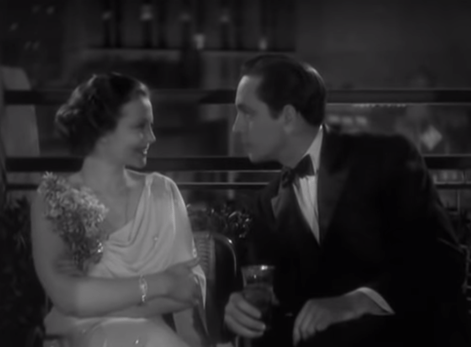
For some, that’s a turnoff. For self-assured up-and-coming statesmen Mark Whitney (Clark Gable), he finds it oddly attractive and so he gladly leads her by the arm and allows her the benefit of his bounty. A few years down the road she’s made strides in the life of a social hostess. For all intent and purposes, she acts as the perfect wife. Directing the servants, choosing the wine, throwing dinner parties like a seasoned professional.

What’s the big reveal, you ask? They’re not married. They have a mutual agreement and being pragmatic seems to have paid off. Even as she continues to educate herself in the finer things, including French and German loves songs, there’s still something in her upbringing that sympathizes with a lowly tramp brought to one of their gatherings. The woman feels woefully, even uncomfortably, out of place, surrounded by so much class.

Marian realizes no manner of jewels or perfume can totally cover her own genetic makeup. The gravest development in the story starts in Crawford’s own character. She settles in and softens up. In some ways, she wants marriage, because she’s gone and fallen in love. It’s no longer a convenient relationship with fringe benefits.

Right here, it’s evident how it courts similar themes as Back Street or any movie about women trapped in somewhat unenviable positions in a society where their only recourse is to take what they can get by any means necessary. We pity them even as some of their actions feel unfortunate.

Al comes to the city bitten with the same bug that once got her, with the goal of making “the big time,” asking favors from the man she’s already attached to. He’s utterly ignorant of what he’s stepped into — what Marian’s arrangement entails — still, he knows what he wants.

It should be noted Clark Gable never gets a lingering closeup as fine as the ones extended to Crawford. After all, her name is over the title credits, not his. But what’s refreshing about his character — he doesn’t feel like an out-and-out cad — there’s some integrity to him. Still, life must complicate everything. Their relationship begins to disintegrate, on the behest of friends and advisors, as he must make a choice between a political career a woman.

A new normal is soon established. The wheels of the political movement begin to spin, unnamed naysayers look to stir up scandal against him, and Marian somehow evaporates into the background. The final scene is the lynchpin of it all. Joan Crawford feels like an anonymous civilian walking through the rain with her umbrella and mac amid the usual foot traffic. They all make their way to a grand pavilion with posters of her man plastered on all sides.

In a purely cinematic moment, she takes the stand on his defense and gives a tearful, overly sincere annunciation of his character. It wins over the audience as she’s overcome with emotion and stumbles out in tears.

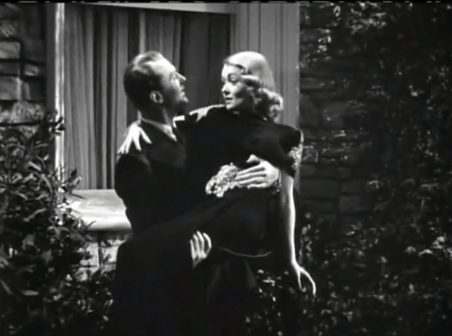
Again, the key is that we follow Joan. We are with her as she bursts through the doors and totters her way out onto the street with the rain pelting her as she labors up the stairs…That’s when her leading man comes and wraps her up in his arms. It’s what these old movies were made for. The final embrace propelled by emotion and buoyed by the attractive glamour of their stars.

Enough films of the era take a bleaker road; it’s safe enough to give this one its Hollywood ending. It is Hollywood after all, the land where Lucille Laseurr could become Joan Crawford: one of the most indelible figures Hollywood ever created.

3.5/5 Stars

Alias Nick Beal (1949): Ray Milland’s a Devil

Alias_nick_beal (1)

This is my entry in the CMBA Politics on Film Blogathon.

Alias Nick Beal handily flips the paradigm of cinematic angels in vogue with Hollywood, specifically during the 1940s. You could make a whole subgenre out of them. As its name suggests, the lynchpin character of the entire movie is Nick, though this is admittedly only a pseudonym. Across time and space, he’s come in many forms, under many names, including the serpent, Lucifer, or the Devil.

Ray Milland portrays him in bodily form, providing a deliciously evil turn in fine threads. He’s not quite the “blonde Satan” out of Dashiell Hammett’s Sam Spade literature, but he’s almost there, about as close as you might possibly come in the flesh. With such a devious figure pulling the strings, Alias Nick Beal becomes noir mixed with myth and allusion in a rather unusual manner. It is the first of its kind: a Faustian noir.

The story itself opens in more conventional territory. There’s an earnest, hard-working district attorney named Foster (Thomas Mitchell) who is looking to clean up local corruption, manifested as always by cigar-chomping Fred Clark with his host of slot machines and bookies just looking to rake in the dough.

Try as he might, he’s never been able to deal the definitive blow to the town’s graft. Regardless, he’s an upstanding man of principle with a devoted wife (Geraldine Wall) of many years and a solid base of friends, including local minister Reverend Garfield (George Macready). Of course, even someone like him falls to temptations; they seem innocent at first even honorable. The trajectory of his entire political career starts to change for the better, although his personal relationships are poisoned beyond repair. More on that later.

For now, he has an inauspicious meeting at the local watering hole, the dubious China Coast Cafe. It’s the kind of joint that can only exist in the foggy back lots of some Hollywood studio (in this case Paramount Pictures).

It’s the cheap, low-lit atmospherics of such an obviously stylistic or phony facade that make Alias Nick Beal feel like low-grade entertainment. With noir, however, this often proves more of a blessing, and what’s more remarkable is how impressive the cast manages to be. The cafe also happens to be a fitting place to meet the devil’s incarnate.

No, Foster doesn’t go and sign the pact right then and there. His new acquaintance is far too cunning, far too diabolical to be so direct. But it comes soon enough as his new undue influence makes an insidious impact on the politician’s life. Isn’t it true that small habits compound as days, weeks, months, and years go by before you realize how much you’ve actually changed? Whether good or bad.

Simultaneous with his public ambitions, Foster’s reverend friend helps run a boys’ home not unlike similar storylines in Boy’s Town or Angels With Dirty Faces. It’s a conventional if generally uninteresting element. The one moment prodding the movie’s core conflict with a stick comes with the daily Bible reading.

Nick doesn’t want to be caught dead near the good book, but the minister opens it all the same as is his practice reading the following words to his charges:

“The earth is the Lord’s, and the fullness thereof; the world, and they that dwell therein. For he hath founded it upon the seas and established it upon the floods. Who shall ascend into the hill of the Lord? Or who shall stand in his holy place? He that hath clean hands, and a pure heart; who hath not lifted up his soul unto vanity, nor sworn deceitfully. He shall receive the blessing from the Lord, and righteousness from the God of his salvation.”

If they’re not obvious already, the passage is an implicit call for Foster — to make him take heed — a warning against his current trajectory. Nick knows if Foster heeds the words, all his tireless work in interference will be thwarted. However, he’s still got some tricks up his sleeve.

One of them is named Donna Allen (Audrey Totter), a dame he found out on a street corner by the same upstanding establishment he just happened to meet Foster at. Audrey Totter does her gloriously acerbic rendition for this strange character and plays it nice and tender as well. It’s a fluid performance for a peculiar role calling for a hooker to get promoted in status to that of a campaign manager and confidante.

Suddenly, the works of devils and angels don’t look altogether dissimilar. After all, he raises this woman of ill-repute out of the gutter, gets her an apartment, drapes her in mink coats and stoles. However, it’s the ulterior motives that are most revealing.

Because eventually, Nick has worked his way up — greasing the wheels of Foster’s ego as it were — so they can start talking about the murky grays of politics. His line of arguments are deceptive to the point he has his victim finds himself conceding on the same points of moral bedrock as Claude Rains in Mr. Smith Goes to Washington.

They buy into the lie that this is the only way to get anything done. Maybe it is partially true. Who am I to say? Conveniently, in the other picture, Thomas Mitchell was the wisecracking journalist who could observe from a comfortable distance. In this one, he’s embroiled right in the middle of the mess.

With Nick Beal constantly needling him and all the conflicting forces and voices in his life swelling, it really is a tug-of-war for his soul. Everyone wants a piece of it. His wife, the reverend, Nick, even Donna. It’s the intent that colors their true character.

Thus, Alias Nick Beal is an impeccably noirish take on spiritual warfare — the necessity of “pinning the devil to the mat” — before he totally makes you into a self-serving, arrogant person. Given the context it’s already working within, Nick Beal is a creative riff on Faust, but it never feels like full-fledged noir since the moralism is laid on a bit thick.

Neither of these elements is altogether detrimental, but it does feel like the movie is diluted in all its efforts. It’s this curious amalgam of disparate points of interest and self-reflexive in its orchestration with Milland being allowed to be villain and impresario. Again, the pieces and the resulting performances are intriguing, but it feels too cut-and-dry in the scripting department.

There’s never the great intrigue of watching a movie where we imbibe the sense of drama, romance, laughter, or whatever else. It feels like a story is being spun for the sake of Nick Beal so we can see him pulling the strings in front of the camera. Meanwhile, other themes are either cast aside or never fully explored. They could have been the building blocks for another movie entirely.

All told, I’d put it a couple rungs under the likes of The Bishop’s Wife and Here Comes Mr. Jordan. And it’s not quite on par with director John Farrow’s The Big Clock or His Kind of Woman. Milland is enough to make it nearly worth it.

3/5 Stars