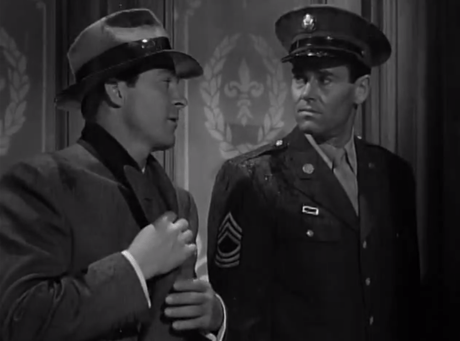
Boomerang (1947)

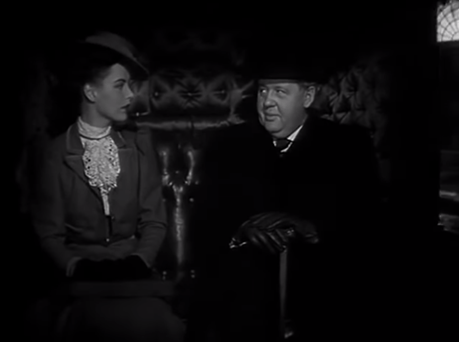
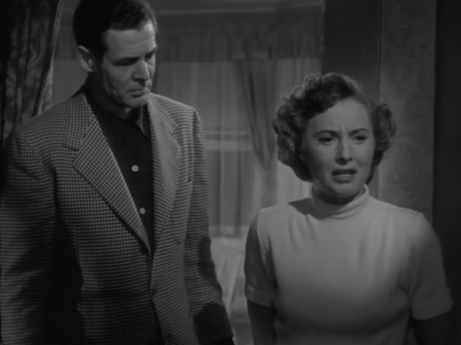
Boomerang!Boomerang shares some similarities to Call Northside 777 (1948) and Panic in the Streets (1950). Like the latter Elia Kazan film, this one boasts a surprising amount of real-world authenticity and a loaded cast of talent. Those are its greatest attributes as Kazan makes the bridge between the stage and the silver screen. He brings with him a sensibility for a certain amount of social realism matched with quality acting connections he had accrued in his career thus far.

The only problem is it’s not very compelling just a good, solid, well-made human drama without much fanfare. At the very least, it hits all the procedural beats it’s supposed to. Sometimes that’s alright and it is interesting the narrative goes fairly in-depth into actual events which occurred back in 1926.

In that year a beloved local preacher in Connecticut was gunned down by a fugitive who ran off in the night before he could be apprehended but not before seven witnesses caught a glimpse of his face. The rest of the film is a buildup of the frenzy churned up in the aftermath. The police frantically try and catch the man-at-large with the papers on their back and several political reappointments hanging in the balance.

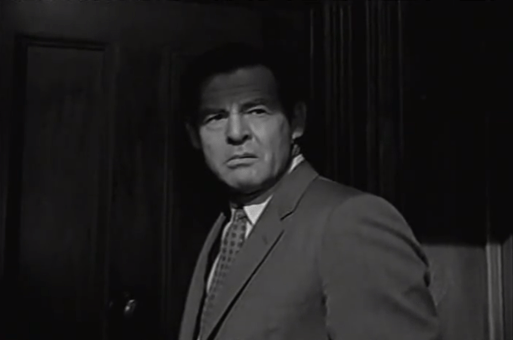
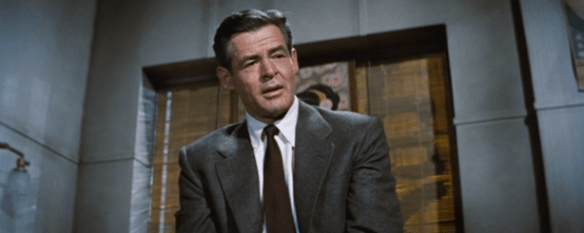
It’s true Boomerang does become a more interesting exercise once we’ve entered a courtroom and a man (Arthur Kennedy) is put on trial for the murder of the aforementioned minister — a defendant who has pleaded his innocence since the beginning although the evidence is stacked up against him including a vengeful witness (Cara Williams). Except the district attorney (Dana Andrews) takes a stand to promote his innocence. In this case, it’s not quite so straightforward.

True to form and all parties involved, the acting is a great joy to watch with a mixture of untrained actors filling in as the locals of a sleepy Connecticut town and then bolstered by a formidable supporting cast.

We have Dana Andrews at the center but he is buttressed by some quality performers who would make a name for themselves in subsequent years on the stage and screen. These include Lee J. Cobb, Ed Begley, Karl Malden, and, of course, Arthur Kennedy.

Not one of them is a classically handsome or groomed Hollywood star but in the post-war years, they would be crucial to the trajectory of noteworthy films of the decade. Look no further than Death of a Salesman, A Streetcar Named Desire (1951), On the Waterfront (1954), or 12 Angry Men (1957) as living proof.

The underlining moral conundrum of this film is evident as Henry Harvey is faced with political opposition and heady threats with his doting wife (Jane Wyatt) acting as his pillar of strength. The sides begin to get drawn up as the District Attorney takes a stand to uphold real justice and not just win another conviction and approval from the local populace. It’s a risk but also a move of immense integrity.

The real-life inspiration for this man, Homer Cummings, far from becoming governor took on another position instead, as Attorney General of the United States under FDR. Not too shabby.  The same can be said of this picture. Not too shabby as far as docudrama noir go.

3.5/5 Stars

Aguirre, The Wrath of God (1972)

aguirre the wrath of god 1.png

The making of Aguirre, The Wrath of God might be as rich in myth as the film itself which charts a semi-fictitious story of Francisco Pizarro’s expedition to discover the golden kingdom of El Dorado. Not only was it the beginning of director Werner Herzog’s notoriously stormy partnership with Klaus Kinski, but it was also shot entirely on location in Peru — a logistical nightmare in its own right.

Herzog purportedly penned the screenplay in a matter of days while riding the bus with his football club. Meanwhile, many of his resources including his camera and film stock had been purloined from Munich Film School years earlier as required tools of his trade.

In conception alone, it proves titillating as a piece of Spanish history from the point of view of a monk, Gaspar de Carvajal, traveling in a pioneering convoy led by the crazed adventurer Aguirre. But it is colonial history by way of West Germany circa 1972.

The opening images are some of the most breathtaking in the film or maybe in any film. We are instantly hooked as angelic tones herald from above and shrouds of mist engulf the mountaintops. Legions of men and natives weave their way down through the treacherous territory. It feels instantly recognizable.

Because I recall hiking up the side of a mountain one Christmas vacation with friends. As we wound our way up and I could see the edge and the drop off below, I realized rather matter-of-factly, “I really don’t like heights that much.” It comes with playing minds games. Caring too much about where you’re feet are and imagining yourself taking a false step and ending up in the chasm. Tossing some biodegradable object down there is certainly invigorating as it spirals down until you think to yourself that might just as easily be you.

Some of those same friends, more adventurous than me would actually go on to hike Macchu Pichuu the next year. Long story short I wasn’t available but I’m not sure if I would have joined the trip. Far from simply being a long-winded illustration of my cowardice or lack of adventurousness, I think it somehow makes sense in relation to the mesmerizing introduction of Werner Herzog’s Aguirre, the Wrath of God.

There are those same perilous heights presented here simultaneously awesome and equally harrowing. For good measure, we watch a container of what looks to be chickens dropped and go hurtling down to the rocks below with a crash. We half expect a couple of people to follow.

This trailblazing along the Amazon River totally embroils them in the muck and the mire. Slaves are seen clumsily carrying a cannon and a lady’s litter in the most forsaken of places. It’s absolutely ludicrous. Next, they tackle the rapids on hastily constructed rafts. If you’re prone to seasickness don’t even dare watch the sequence which is yet another instance of fully enveloping cinematography.

The camera spattered with water is continuously bobbing up and down enough to make even a viewer queasy. The incredulous thing is we are only an outside observer and yet we get impacted so. It becomes increasingly apparent Werner Herzog will readily allow himself to suffer for his art. Not just in this picture but from everything I know Fitzcarraldo (1982) too. He doesn’t fudge on any of the locations. Why do this to himself? Just look at the results for your answer.

Green screens, CGI, studio lots. None of those methods could give us anything half as real as this picture. They seem positively quaint and nondescript compared to the astounding atmosphere he’s able to capture. It’s the same authenticity here validating such laborious works as Apocalypse Now (1979) or The Revenant (2015).

aguirre the wrath of god 2.png

Meanwhile, Kinski totters around the space half like he’s drunk, the other half pure craziness. The film benefits by this razor-thin dividing line between fiction and reality not simply in its environment but also in its actors. He reminds me of the animal magnetism of Toshiro Mifune in a picture like Seven Samurai (1954). You can’t help but keep your eyes on him for the next unthinkable thing he’s about to do.

The weight of Kinski’s crazed performance comes mostly out of the fact that we constantly expect him to do something completely unhinged. He treads dangerously right on the precipice of sanity ready to jump at any moment. Furthermore, Herzog never leaves him alone. His face is constantly being examined time and time again because personal space is all but nonexistent.

Aguirre, The Wrath of God settles into a status quo that is far more pensive than I was expecting. The narrative is full of insurrection but more pervasive is the ever-present dangers suggested by negative space, undoubtedly swimming with stealthy savages. And the fear of the great unknown never ends.

People are killed or die with little fanfare. Those soldiers still living suffer from fever and malnutrition. Their king propped up by Aguirre is an oafish lout. In the figure of Caravajal especially one is further reminded of the oppressive guise Christianity took in this age like many others before and after. Outsiders come in with such a hypocritical superiority complex.

In the end, the only thing Aguirre commands is a raft swarming with monkeys, frankly one of the most indelible images in the film and a fitting point of departure. Though it’s mere coincidence, I watched Terrence Malick’s film Badlands (1973) recently. What it shares with Aguirre which is so captivating is this illusory quality. We have a framework of a conventional tale, in this case, an adventure into the dark murky depths of uncharted territory. And there are moments when we have mutiny, death, starvation, momentary battles but what sets it apart from anything else is the imagery.

Like Malick’s picture, it verges on the dreamlike in a way that is utterly hypnotic. The power is not so much in the excess of things happening one after another but in this continual, unswerving articulation of near monotonous insanity.  In both films, a certain kind of madness takes over and becomes the new status quo. Somehow Aguirre manages to be so immersive and yet leave us still feeling so detached at the same time. The descent into hellish depths is a shared experience, as much documentary as it is historical fiction. But it is also a hallucination.

4.5/5 Stars

NOTE: This is my entry in THE GREATEST FILM I’VE NEVER SEEN BLOGATHON hosted by MOON IN GEMINI!


Shanghai Gesture (1941)

shanghai gesture 1.png

Josef Von Sternberg always seemed preoccupied with telling stories involving places that he indubitably knew little about but therein lies the allure. He could develop the Moroccos, the Shanghais, the Macaos into places imbued with far more meaning than they probably ever could have in real life.

Because he is hardly working in reality but with the inventions of his own mind and he was a master when it came to setting the scene and texturing atmospherics. He was a world maker and one of the finest craftsmen in Hollywood exoticism.

The opening prologue juxtaposes the seedy underworld that we are about to witness to the last remnants of the Tower of Babel where Man coalesced in his indiscretions before being scattered over the ends of the earth. It proves to be a rather odd analogy as the film revolves around a velodrome of gambling — a pit of worldly devices that the camera slowly descends on.

Visually it’s the inverse of babel as our eye is led to sink into this world of Mother Gin Sling’s establishment, joining the ranks of Rick’s Cafe, the Cantina, and countless others in the pantheon of dubious melting pots of humanity captured on the screen.

We meet a fair many of the individuals who play a small part in her operation including Dr. Omar (Victor Mature) and Poppy Smith (Gene Tierney), a young provocative beauty looking for a good time and a glimpse of the notorious proprietor.  Then our friendly neighborhood dragon lady (Ona Munson) makes an appearance and things are in full swing.

The kind Doctor easily distracted by an attractive young woman, lets himself get wrapped up with Poppy while still sharing drinks with Ms. Dixie Pomeroy. But this is only a minor spat.

The main problem is Mother Gin Sling’s who has been ordered to relinquish her property and move her establishment to the Chinese sector which is far less profitable. But being the conniving magnate that she is, she’s not about to go down without a fight before the New Year.

She will host a little dinner party inviting many prominent guests including Sir Guy Charteris (Walter Huston). All of this feels fairly straightforward and mundane though there is an obvious sense that dark secrets are being veiled in shadows to be revealed at the most advantageous moment.

Though it never truly grips us with a substantial climax, the film’s laurels rest mostly on its setting and the breadth of its character reservoir. It always makes me sad to see Marcel Dalio relegated to a roulette man following the work he commanded in the films of Jean Renoir. Meanwhile, Eric Blore always delights me even in his smallest, most insignificant appearances. In this picture, he plays the Bookkeeper. There’s not much to be said about his cruciality to the plot but he’s delightful all the same.

The feisty Phyllis Brooks delivers an acerbic and spirited performance as the chorus girl that comes with a lot of panache even if it feels so at odds with the world she has fallen into. Perhaps that’s the point.

But rather remarkably her screen presence is only surpassed by Gene Tierney in a seemingly uncharacteristic role — though I admit that the assertion is made with a certain degree of foresight glancing over the extent of her career.

In Laura (1944),  Tierney played a character who was a femme fatale without ever trying to be — men simply got drawn under her spell but in Shanghai Gesture, there’s a markedly different glint in her eye. It’s probably the same glint that would make her so deliciously evil in Leave Her to Heaven (1945). But no matter, she’s a conceited and ungrateful woman with a compulsive nature for the roulette wheel. Thus, her main companion is not Dr. Omar but gambler’s fallacy.

While there are some enjoyable performances, the aforementioned providing perfect specimens, the holes or inadequacies of the cast in certain areas is also an obvious weak point. Yellowface and other types of whitewashing are not just a matter of bad taste they simply take the world of the film and make it feel a little bit hokey when you think of the alternatives.

It really is a shame that at the very least Anna May Wong couldn’t have donned the role of Mother Gin Sling, especially because she appeared prominently in Shanghai Express (1932). Some might consider this as a spiritual sequel to von Sternberg’s earlier film barring the absence of two of its finest assets, namely Marlene Dietrich and Wong.

True, once again even if she was cast, there could be another digression on perpetuating negative stereotypes but if you don’t even have a part, to begin with, that’s a whole different problem. No disrespect to Ona Munson whatsoever but she seems woefully miscast. Anna May Wong would have at least been a step in the right direction.

There’s also the issue of the Hays Code which called for a markedly different script and numerous rewrites. Much of the content changes were for its earthier more debauched aspects, but another crucial change was Dr. Omar replacing a character named Prince Oshima.

Instead of the plastic piece of eye candy Victor Mature, we could have had someone maybe a little more authentic like a Keye Luke, Philip Ahn, or Richard Loo. And I’m not being very discriminating about acting styles just the fact that these men are actually Asian (not even Japanese) and they had some prominence in Hollywood. Just not enough to wind up in a film such as this — set in Asia — though completely enveloped in Hollywood’s own distillation of reality. Not even von Sternberg could save the film in that capacity with his production values. Still, fezzes are cool. It’s an undisputed fact. But if I had to make a personal preference I would take Greenstreet in Casablanca (1942) to Victor Mature here.

3.5/5 Stars

Scandal Sheet (1952)

scandal sheet 1.png

There’s no need to mince words here. With a film christened Scandal Sheet you already have a good idea of what you’re probably going to get before it arrives. That’s fine. Straight to the point can be good.

But the media angle is only a half of it. It’s as much a film of lurid cover-ups and back-alley beatings as it is about dirty journalism. You need those lightning rods for a juicy scoop and it’s precisely these types of events that bring the newspaper hounds out of the woodwork.

If Samuel Fuller couldn’t wind up being the director of his original story, The Dark Page, then there’s arguably no better man to take up the project than Phil Karlson who has comparable sensibilities and an appreciation for gritty crime pictures and pulp fiction though he’s not quite as dynamic.

It’s true at one point Howard Hawks even had the project flagged to star two of his past favorites in Humphrey Bogart and Cary Grant. What a film that would have been. But when Karlson came aboard John Payne was offered the role (he would work with Karlson later on) that ultimately went to John Derek.

He and his faithful cameraman (Henry Morgan) are integral pieces of one of the most parasitic relationships on the Bowery that develop between newspapermen and the police. They’re rather like scavengers picking over the carrion or any other delectable scraps that might perchance be tossed their direction.

However, oftentimes the methods of an organization are employed from the top down. In fact, Steve McCleary (Derek) has become the star reporter under the tutelage of Mark Chapman (Broderick Crawford) the man who has taken over the helm of the New York Express. He took the once reputed but faltering behemoth and turned it into a sensationalized tabloid that subsequently has the highest readership it’s been able to attain in years. There’s no denying the stuff sells like hotcakes fresh off the griddle. What can you say? Sensation is tasty stuff and scandal is the favorite food of the masses.

The paper’s latest gimmick in pursuit of ever-rising levels of circulation is the implementation of a Lonely Hearts Ball trying to play up the angle of a few nobodies falling in love. It’s a real sob fest with all the trimmings for a great story. No one knew how right that assertion was.

What follows is a conflict of interest that’s ripe with dramatic irony. There’s a murder investigation and the paper is embroiled in the middle of it trying to drudge up the answers with the help of their readership. With such hysteria at its core Scandal Sheet shares, some of the same journalism beats of While the City Sleeps (1956).

However, in this picture, Donna Reed is the moral center because how could we ever suspect her of being anything other than that clean, respectful, Midwestern gal with heaps of integrity? She’s much the same here not wanting to besmirch her editorials with sleaze and believing in old washed up writers when no one else will give them the time of day. Even when her boyfriend is guilty of precisely that. In fact, that’s where a bit of their romantic tension is founded.

Steve’s good at his job and a real bloodhound on the beat and a handsome devil at that but a fairly ignorant stiff, the most aggravating reality about the picture being just that. The case is right under his nose and he doesn’t see it for the entirety of the film.

The easiest way to try and explain it away is much the way Walter Neff did in Double Indemnity (1944) though the roles are reversed, “The guy you were looking for was too close. Right across the desk from ya.” Except Broderick Crawford is no Edward G. Robinson and there’s not the same genial relationship that can be attributed to the earlier picture. It’s all business.

That’s why his romantic ties are so important. Because that’s the one area where he is steered in the right direction. Once again, Donna Reed is that crucial moral compass in a choppy sea lacking any amount of rectitude otherwise.

But then again, you get the feeling Donna Reed would never turn up in a Sam Fuller picture if this was his. Still, that should not completely neutralize what Karlson was able to do here — developing a film that’s pretty much as advertised. A gritty bowels drama that cases the insides of New York drudging up all sorts of drama in the name of yellow journalism. If that’s what you’re looking for you’re in for a treat.

3.5/5 Stars

The Country Girl (1954)

the country girl 2.png

Yet another example of the prevalent trend of turning plays into film adaptations, director George Seaton took Clifford Odett’s eponymous work and plugged in three stars to carry the weight. Without question, the allure of The Country Girl is purely the trifecta of stars it assembles. Yes, it’s stagebound but the talent is certainly present.

William Holden is sturdy even intense when he needs to be as stage director Bernie Dodd, intent on recasting his new play The Land Around Us after his initial choice didn’t pan out. It’s a tough break but if they get it together, there’s still enough time to right the ship before the opening. He willingly takes a chance on a has-been named Frank Elgin (Bing Crosby) even fighting for him despite the criticisms of his producer. He has visions of what the man was and could be again, not the pitiful mess standing before him.

Holden slides relatively easily into the role based on prior expectations. This might be due in part to his work with Billy Wilder. The dark edges of Sunset Blvd. (1950) and Stalag 17 (1953) create almost a seamless continuity that fit with this narrative as well.

It’s the other two names on the marquee who might well surprise some viewers. It has song and dance like High Society (1956) made two years later, but this is an entirely different beast, functioning as an embittered drama more than anything else. Bing Crosby and Grace Kelly appear as you’ve rarely seen them before, if ever.

Elgin, for one, is a hopeless alcoholic, his confidence is shot, and he and his wife live in a humble flat getting by on his demeaning work doing radio jingles. It’s a far cry from the audience he used to command. I’ve never seen Crosby in anything so daring, even detrimental to the image that he cultivated his entire career.

The man puts up a happy-go-lucky facade for everyone else as his wife sees him slowly deteriorating from nerves and alcohol abuse behind closed doors. But by being a people pleaser he’s constantly tearing up his wife’s reputation with his lies. Because this is a story where the wife gets turned into a villain.

the country girl 1.png

But Grace Kelly stands bravely in opposition to the tall tales her insecure husband spins about her in the presence of others. Because it’s true he has projected all his fears and shortcomings onto her. She is in most regards everything he is not. There’s nothing flashy in her portrayal. It’s not the usual image of Grace Kelly, alluring elegance head to toe. The ultimate shorthand comes when we are introduced to her wearing glasses, those objects meant to conceal beauty behind their frames.

This is a movie of all sorts of misconceptions and little white lies cultivated by Elgin. He is the source of all the marital strain and hopelessness in his life, failing to let go of past trauma and bounce back. Critics make or break it for him. His skin is paper thin and his liver is getting doused night after night. The only chance he has is the stability of his wife and even she is brought to her breaking point. No thanks to him.

The most interesting theme making its way through the story stems from Bernie as he takes on righteous indignation against Mrs. Elgin, a woman he believes to have sucked her husband dry of all he has to offer. His continual clouded judgments are a testament to seeing only what he wants to see. Because the man is always the truth-teller and always right. It is the female who causes strife and selfishly stretches the truth due to insecurities and petty jealousy. It’s an easy enough narrative to write and for a man to swallow, horribly regressive as it is. But it’s just this version of the story that unearths these underlying biases.

Upon reevaluation, Mrs. Elgin is a far more nuanced and stalwart woman than Dodd would have ever given her credit for. He’s also rightfully humbled in the realization he made a grave error in judgment.

the country girl 6.png

By the picture’s end, he’s in love with this woman he once wrote off — the faithful wife of his star — and that could be the final twist of The Country Girl. He really wants it. She shares an affection for him too, no doubt. But that’s just it. She is a loyal wife and stays by her husband’s side in his successes just as she did throughout all his failures. We look at such behavior and through a modern lens, it seems needlessly sacrificial.

What does she owe him? Why should she forego what makes her fleetingly happy for a man who gave her more heartache than joy as of late? Is this just another instance of the subservient woman being kept down? These are certainly valid opinions. However, one could make the case more vehemently still this woman, this country girl, is driven by a sense of goodness, of sacrificial love, and a moral framework allowing her to perceive the situation with immense lucidity. This is a way she might bless her husband.

If marriage is to still stand for anything, we would expect the same from her husband if ever the tables were turned. That he might be willing to reciprocate for her someday. In this regard, it’s a moving reminder of the bonds of matrimony. Grace Kelly though less extravagant gives one of the most quietly assured performances of her meteoric career which blooms into a boon of emotional sensitivity. She never ceases to captivate.

3.5/5 Stars

THIS IS MY POST IN THE 4TH WONDERFUL GRACE KELLY BLOGATHON PUT ON BY THE WONDERFUL WORLD OF CINEMA AND THE FLAPPER DAME! 

The Window (1949)

The_window_1949.jpg
The main conceit is just too delightful to ignore. It posits the following dramatic question: What if the boy who cried wolf saw a murder being committed immediately afterward? Because that’s precisely what happens to little Tommy Woodry.

He’s one of those imaginative little boys who likes playing Cowboys and Indians while telling his contemporaries that his family has a large ranch out west where they raise horses. It all seems perfectly innocent except in close confines such stories take on a life of their own. Soon the landlord assumes that the Woodrys will be moving out shortly.

It’s not just this incident either but Tommy has a history of dreaming up all sorts of stories and wanting to teach their son good old-fashioned American values and honesty, his parents say there will be consequences if he lies again.

What happens next is so absurd and outrageous Tommy is sunk even before he’s begun. He spies the upstairs neighbors Mr. and Mrs. Kellerson (Paul Stewart and Ruth Roman) take part in a grisly murder. He does the fairly logical thing and goes to wake up his mother to let her know what he witnessed. But it’s not so logical based on what has already happened.

First, she dismisses his stories as a bad dream but after he goes down to the police station to get them involved, his mother is even more alarmed. Mr. Woodry comes back home from the night shift to hear about his son’s behavior and as much as he doesn’t like to do it, he does the fatherly thing and punishes the boy.

He’s meant to stay in his room and that wouldn’t be so bad if his father didn’t work nights and his mother wasn’t called away to take care of her ailing kinfolk. Because the Kellersons know he’s been snooping around and they’re not about to be found out — especially not by an inquisitive kid. When they figure out what he knows, he’s little better than a sitting duck.

If it wasn’t obvious from the outset the picture sets itself up for a claustrophobic finale that’s quite the piece of entertainment. Rear Window is one of my favorite films and it’s hard not to draw up comparisons between the two pictures because they both utilize their limited space well and allow us to get inside the plight of our protagonist in a way that’s excruciatingly disconcerting.

For L.B. Jeffries it’s the fact that he’s trapped in a wheelchair with a purported murderer living right across the courtyard from him. In this picture, it’s that little Tommy has his freedom revoked and finds himself made prisoner in his own home with his parent’s gone because they are angry with his constant fits of fibbing.

But more so than Rear Window which is a fairly opulent picture, The Window suggest the impoverished state of the characters at the fore, living on the Lower East Side as they do. Their lives are not glamorous at home or at work. They have a tough time scraping by and it shows in their dress and how they present themselves every day.

Arthur Kennedy and Barbara Hale do a fine job as Tommy’s parents because they feel like decent folks, generally humble and wanting to raise their son the best way. That doesn’t make their immune to parental blunders but, nevertheless, they love their boy.

Likewise, Paul Stewart is a bit menacing and thuggish veiling it with a good-natured facade while Ruth Roman normally remembered for fairly upright roles is cast as a wife who seems more frightened by her circumstances than anything else. She’s hardly a villain but that doesn’t make her any less complicit in this whole affair.

Bobby Driscoll was on loan out from Disney and he embodies the precocious nature of a boy in a way that’s completely believable and at the very least compelling.  It’s a wonderful live-action performance to fit right alongside his voice work before his life took a tragic dive into drug addiction.

It might be an unnecessary connection to make but director Ted Tetzlaff was formerly a cinematographer and one of the films attributed to him was Alfred Hitchcock’s Notorious (1946) from only a few years before. Hitch would come out with his home thriller in 1954. I’m still partial to the later film — it’s one of my personal favorites — but there’s no doubt The Window proves itself as a harrowing family thriller in its own right.

3.5/5 Stars

They Won’t Believe Me (1947)

they won't believe me.png

We open in a courtroom and with a flashback but what’s stunning is that the man relating the information is on the witness stand and also the defendant in a murder trial. So much hangs in the balance of the perspective he’s about to disclose and that’s how the picture nabs us. Often there’s no import to the use of voiceover. It’s only a stylistic choice or a bit of lazy storytelling utilized without a great deal of forethought. This testimony actually matters.

The man in question is one Larry Ballentine (Robert Young). His Saturday afternoons most recently have been spent in the company of his “Skipper” Janice Bell (Jane Greer) and their relationship is full of good humor. You can see it on their faces that they enjoy each other’s company tremendously. But he has a wife of 5 years. It’s the old story. He’s only realizing now when another woman comes into the picture that he never really loved Helen (Rita Johnson), marrying her instead for her healthy endowment. She’s quite rich.

We can discern already a tale of adultery is in the works as Larry plans to break the news to his wife and leave with Janice for Montreal though the other woman wants no part of being a homewrecker. Still, Helen loves him dearly and tries to do everything to salvage their marriage so Larry relents and vows to stay with her. He ditches Janice without even a word of goodbye.

But he’s a man with a pathological problem and although his wife has set him up with a cushy job, he’s already up to his philandering ways again. One day his alluring secretary (Susan Hayward) saves his neck with the boss and starts to flirt with him. It begins again. Secluded cafes. Hidden spots — a game of “hide and seek with fate” as Larry so aptly puts it. He’s hardly phased by Virna’s admission to being a gold digger and while Helen vows never to divorce him, he plans to clean out their joint checking account and run off with Virna.

they won't believe me 2.png

Up to this point, They Won’t Believe Me is an engaging albeit straightforward tale of infidelity but then it goes wildly out of control as Larry’s life careens off the tracks. He leaves his wife a note with no forwarding address as he goes off with his latest gal toward fateful consequences. Later, he winds up meeting an understandably aloof Janice again in Jamaica of all places. He is clearing his head. It’s unclear how she got there. But it’s yet another prime example, to evoke Detour (1945), of how so often fate can put the finger on you. There’s no chance of getting away from it.

There’s also the sense this is a picture and a version of film noir that is akin to the common everyday circumstances of James M. Cain’s crime novels. But this is spun in such a way where we still have empathy for our perpetrator. The same can hardly be said of Double Indemnity (1944) or The Postman Always Rings Twice (1946).

However, the moral ambiguity is still very much apparent to the final moment when an explosive action twists up the narrative threads in such a way that’s meant to evoke some form of cognitive dissonance. How are we suppose to respond to it all?

Because the film’s title is almost beside the point. It’s one of those lurid melodramatic billboard toppers meant to make you look up and take notice. But as per usual, it doesn’t actually get to the core themes of the film nor does it really matter. Whether or not he is believed is an arbitrary issue. Larry might as well have been a killer. This is the quintessential role (aside from The Mortal Storm) if you are looking for something to subvert your view of Robert Young as the world’s perfect father. Here he’s the perfect cad.

They Won’t Believe Me also deserves note for its producer Joan Harrison who began as Alfred Hitchcock’s secretary and eventual co-screenwriter before she became one of the pioneering female producers in Hollywood and a great one at that.

This picture can be added to an illustrious list of noirs including The Phantom Lady (1943) and Ride The Pink Horse (1947). Perhaps her influence is most obviously felt in the fact that our female characters have a rather refreshing resonance. Though they might be unfairly used and manipulated there’s a certain traction to the roles that give them an extra dimension often lacking in other works. Each performance adds something of value to the picture.

3.5/5 Stars

Note: The reissued version of They Won’t Believe Me put out in 1957 was cut down to 80 minutes. 

The Sniper (1952)

the sniper 1.png

From the outset with Stanley Kramer’s name emblazoned over the opening credits it gives an indication of what this film is as does the name of Director Edward Dymtryk. Kramer is, of course, remembered as one of the most fervent socially-conscious producers behind a string of classics like Defiant Ones (1958), Judgment at Nuremberg (1961), Guess Who’s Coming to Dinner (1967) and…It’s a Mad, Mad, Mad, Mad World (1963)?

But then there’s Dymtryk who was one of the most visible casualties of the blacklist as one of the scapegoated Hollywood 10 and also the helmer of such earlier pictures as Crossfire (1947) which had a very obvious message behind it.

Thus, the Sniper looks to be the perfect collaboration with a harrowing story that hopes to simultaneously enact some amount of social change. We are introduced to a man who is one of the “sex criminals” alluded to in the opening crawl who provide a major problem for the local police force.

In this case, we get stuck inside the head of the troubled figure named Eddie Miller, a deliveryman for a local dry cleaning service, who is plagued by not only paranoia and cold sweats but a burning hatred of women.

There’s a peeping tom, voyeuristic manner to the camerawork as we follow Eddie and his morbid curiosity. He sits in his second-floor apartment picking out women through the scope of his sniper rifle and pretending to pull the trigger.  He’s an unstable personality, an isolated individual with a mother complex that sends him seeking out brunettes. But rather than getting some perverse pleasure out of the thought or actual implementation of their suffering, it comes off as a nearly uncontrollable urge.

So rather than hating Eddie for his indiscretions, it’s quite easy to pity his impulses because they feel like precisely that. Something he cannot seem to rein in. In one particular moment, he sticks his hand on the hot burner of a stovetop scalding his hand because it’s the only release he can get from the maddening thoughts hammering inside his skull.

There’s also the suggestion that people like Eddie are the ones who need mental help and yet they get kicked back out to the curb in deference to more priority cases — the suggestion being that physical injury is more pressing than psychological problems. It’s true that it can be a difficult issue to reconcile with.

The front half of The Sniper proves to be a surprisingly frank depiction and we can attribute this to the fact that as an audience we get so closely tied to Eddie Miller as a character. It’s an unflinching portrayal delivered remarkably well by Arthur Franz.

But the picture falters in its efforts to get didactic and it becomes overtly a message picture instead of purely a character study of a troubled man. We sense it trying to make its point rather than allowing the actions to dictate what happens and thus allowing the audience members to arrive at their own conclusions.

The most obvious extension of this is the all-knowing psychiatrist who lays down his wisdom though no one seems ready to listen to his insights. He’s a proponent of nipping the problem of sex offenders in the bud at a latent stage putting them into a mental institution with newly proposed legislation. It’s not that the idea is bad but it’s the execution in cinematic term that proves heavy-handed.

The latter half is more about the investigation to find the killer headed by Detective Frank Kafka (Adolphe Menjou). Meanwhile, Frank Faylen was apparently promoted and transferred from New York following his days in Detective Story (1951). Marie Windsor appears in an uncharacteristic sympathetic role as a victimized nightclub pianist. Her outcome and a number of others subsequently turn The Sniper into a commentary on gender whether it meant to be or not.

I rather like how the film utilizes the streets of San Francisco and there’s no need to overtly make a point that the film is set there, existing within police precincts, humble apartment buildings, and hilly streets. It’s simply the world that the film makes its home. It includes a rather authentic Chinese restaurant which besides providing a little flavor, shows that Menjou could use some work on his chopstick form. Though on a positive note, Victor Sen Yung snags another uncredited appearance after showing up in the S.F. set Woman on the Run (1950) as well.

Still, despite the reality that the picture gets a bit too preachy, there’s often a modicum of truth in this type of film we could do well to consider. The same psychiatrist notes the following, “You’ll catch him and they’ll kill him and everyone will forget about it. That is until the next one comes along and it’ll start all over again.”

It’s the endless cycle that we as humans allow without actually ever fixing problems. Such issues cause me to say, again and again, there’s nothing new under the sun. The same old problems just reassert themselves in different ways. It doesn’t help when our attention spans get shorter and shorter while our knowledge of history continues to dwindle.

3.5/5 Stars

His Kind of Woman (1951)

His Kind of Woman.png

A real disaster. That’s what His Kind of Woman could have easily been because with Howard Hughes meddling in any production it was very likely that something would get dragged out, lopped off, or in some way switched around.

In this case, the whole film was shot by John Farrow only for Hughes to bring in Richard Fleischer (The Narrow Margin) to reshoot some material as well as calling on the services of Earl Fenton for some script doctoring. Not only that, but the picture sat on shelves unreleased for at least a year. Despite Hughes’ best efforts even unintentionally, His Kind of Woman somehow still succeeds for the very fact that it is so different from many of its contemporaries.

There are moments in hindsight where you see where one thread was tied to another or one scene was inserted to make the story comprehensible. However, in its essence, this picture is not so much a product of its plot but of its characters and the tone it deems germane in any given situation.

The chemistry is sizzling hot down to the last clothes iron between Robert Mitchum and Jane Russell. It’s also a contest of the sidelong glances as they both case each other’s faces with their pair of iconic eyes. One pair indifferently cool as Mitchum always was and Russell as her playfully seductive self. But this venture is as much of a farce as it a true blue film noir. More on that momentarily.

It opens in Italy where a gangster (Raymond Burr) is on the lamb still trying to figure out how to get back into the U.S. to protect his interests. Our narrator (Charles McGraw) relates the action from Italy to Mexico and then Los Angeles where we finally get a line of one of our stars. Dan Milner (Robert Mitchum) is a detached gambler with few things tying him down when he receives a house call.

His kind of Woman 2.png

The premise, on the whole, is an odd one. Mitchum goes to Morro Lodge on assignment. His orders are to wait and he gets $15,000 in advance for doing so and $50,000 total. We don’t know why he’s there but it gives us time to feel out the people who inhabit this curious getaway on a hidden inlet below the Mexican border. And it’s quite the crew aside from those already mentioned. It’s the same story for about an hour and the good news is it’s actually quite a diverting place to be.

We find out that Mitchum does have a noble side pulling a parlor trick in a game of poker that feels rather like Rick’s roulette wheel in Casablanca (1942). Then, a swacked pilot drops down at the nearby airfield. At first, it’s easy to surmise he’s a Howard Hughes caricature until you realize he’s actually a Federal Agent. Otherwise, we don’t know what we’re waiting for or even really why we’re waiting at all but in the meantime, we have some quality entertainment — a real first-rate floorshow from the stock company.

Jim Bachus is a wise-cracking real estate man who constantly searches out his latest gin rummy partner while trying to relive his old glory days out on the football field to impress the wife of another vacationer. His flabby physique and general manner do not do much to win her over. Still, he’s not a bad sort of fellow though he thinks the love life of a real estate man might make a good motion picture.

Anyways, the true attraction and the figure who causes us to stick around and truly relish the back end of His Kind of Woman is Vincent Price. He provides one of his most brilliantly wacky performances to offset any moments in the film that might give the pretense of being serious.

Mark Cardigan is batty about hunting and so enraptured with his own performances on the screen. One night he’s cooking up his duck for a nice dinner for three only to get his party disrupted by his publicity agent who also brought his estranged wife. Finally, he goes into battle spouting off Hamlet just as the film starts getting tense and someone must be spurred to action.

He’s a gung-ho hero both on the screen and off gathering the most delightfully mismatched band for his counterattack on the enemy fleet parked nearby. But to say they’re sunk before they’ve started proves too true.

What follows is a perfect collision of tones as has probably never before been captured in film noir. Though I must admit it’s a bit of a shame that Jane Russell is conceivably trapped in a closet for much of the film’s prolonged finale. She did so much to bolster the opening moments but alas Robert Mitchum is at it alone fleeing his adversary aboard a clandestine barge.

In fact, everything takes a turn toward a brutal course that feels much more like prototypical noir. However, this cannot outlast the vein of light humor and sensual chemistry that comes with the onslaught of Vincent Price and his seafaring battalion followed by a romantic reunion. Russell gets out of the closet just long enough for another sweltering exchange with Mitchum that reminds us just why she was missed.

3.5/5 Stars

Russell: What’s Out There?

Mitchum: Islands. 

Russell: Samoa and Tahiti

Mitchum: Bikini

Russell: You’re such a wise guy. 

Pursued (1947)

pursued 1.png

A film like the Searchers (1956) or even The Bravados (1958) frames the western as a tale of vengeance, where a vendetta is carried out from start to finish, only to get twisted up along the way across moral lines. Pursued is a psychological western that takes up the story from the opposite end of the barrel, as its name implies, though the way it goes about it isn’t altogether straightforward. Such stories very rarely are.

Jeb (Robert Mitchum) is hiding out in a cave as his love Thor (played by Teresa Wright) rides to him. We don’t know their history, why he is there, or who is coming after him. All we know through obvious inference is that all these things must be true.

It’s screenwriter Niven Busch’s ploy to draw us into our story and then he fades into a flashback that carries most of the picture’s weight. As many stories channeling Freudian theories must begin, this one is conceived in childhood.

A young boy remembers glimpses of a horrible event. Bullets flying. A body of a woman crawling towards him as he hides under a bed. And this woman (Judith Anderson) would become his adopted mother as her two own kids become rather like his siblings. Thor and Jeb get on well enough but from their boyhood, there has always been an unresolved conflict between Jeb and Adam. The animosity stems from the fact Adam will always see the other as not a true part of his family and Jeb lives with a bit of a chip on his shoulder, understandable or not.

For the sake of their mother and their sister, they begrudgingly tolerate each other and that’s the extent of it. When the Spanish-American War erupts one of them must go and so they decide it in the most arbitrary way possible. With a coin flip. Jeb loses and goes off to be a war hero.

When the family finally reunites and gathers around to sing “Danny Boy” to the tune of Londonderry Aire, there is a sensitivity we feel unaccustomed to, since the rest of the story is brusque and distant nearly scene after scene.

While in its opening moments it began as a story of hospitality and family, Pursued really starts falling apart and allows its core themes to exert their full presence. It’s in these moments where we begin to see hints of a story playing out not unlike a crazed version of the prodigal son.

On another coin flip, Jeb loses out on his piece of the ranch and after having it out with Adam turns to his buddy (Alan Hale Sr.) at a gambling house. He is brought on as part of the operation. Meanwhile, the jealous older brother character begrudges the fact his mother will give Jeb an equal inheritance so he is looking to avenge this personal affront. It doesn’t end peaceably.

At his ensuing trial, Jeb’s life is on the line but even though he gets away scot-free, his relations with his surrogate family will never be the same. And it’s only made worse with every subsequent moment including a town dance where Thor’s latest beau (Harry Carey Jr.) is egged on to confront Jeb.

Dean Jagger makes a nuisance of himself hanging over the entire picture menacingly, but it does feel like his talents are generally wasted. Because when everyone else is gone, the most traumatized parties are Mitchum, Wright, and Anderson.

However, this noir western is a genre-bender blessed by the beautiful black and white imagery of James Wong Howe matched with the direction of that old Warner Bros. vet Raoul Walsh. Whether it’s the distant silhouette of Robert Mitchum illuminated in the doorway at night or the sheer magnitude of the cliffs and crags as they frame insignificant riders galloping by on their horses, the images are undeniably evocative.

There’s nothing all that surprising or thematically interesting about the film’s content initially. Still, this is not a full denunciation of the picture outright. Because the way it plays out does become marginally more intriguing as Mitchum comes under attack and finds himself becoming more abhorred by the minute.

I must admit it’s hard to buy sweet, innocent Teresa Wright could be vindictive at all. However, what the two stars breed is the most detached married life known to man. It’s a tribute to both of them. But they can’t stay that way forever.

What does remain is the fact Mitchum has been hounded his whole life by some unnameable specter hanging over him, and the picture has been hemming and hawing for a final showdown all along. It finally comes, though the ones who take a stand are not who we might expect.

The psychology puzzle of it all is up for debate — how memories come flooding back at just the right moment or how people can love someone and them turn around and hate them and then love them again almost on a dime.

But this does not completely neutralize Pursued which still deserves a reputation as a brooding and atmospheric take on the West. It’s not as mentally stimulating as might have been warranted but with the cast of Robert Mitchum and Teresa Wright, even ill-fit as they may seem, this oater still comes as a fairly easy recommendation.

3.5/5 Stars