San Francisco (1936)

san francisco 1.png

There was a time when San Francisco was synonymous with the earthquake. Before Rice-A-Roni, The Golden Gate, Bullitt, or heaven forbid, The Giants. For me, it’s hardly a major spoiler to say this film revolves around this tragic date back in 1906 (a strikingly recent 30 years before the film came out).

What the film does for most of its runtime is stack the bricks of the foundation while developing some kind of connection to the material through the world of that age. Because for destruction to mean anything there must first be context.

Clark Gable is Blackie (a name he also carried in Manhattan Melodrama), a man who runs a club in the dubious Barbary Coast sector of the city. It’s not a ritzy joint by any means but due to his outspoken nature, he’s a beloved pillar of society — especially when the society is a difficult place to live in.

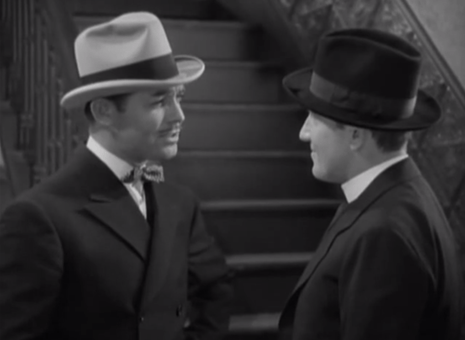
Similar to the earlier film, it’s about people on the opposite side of the railroad tracks at least when their vocational calling is concerned. You see, Blackie can at best be called a saloon keeper moonlighting as a gambler and his best bud from childhood just happens to be a priest — Father Mullins (Spencer Tracy) — who runs the local parish.

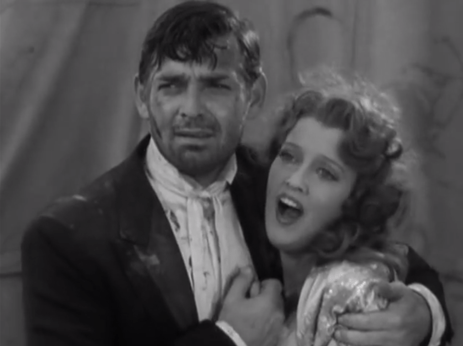
An up-and-coming Mary Blake (Jeanette MacDonald) is hired on to sing San Francisco honky-tonk by Blackie because she needs work bad. Despite the prominence of the male actors, this was actually meant to be a vehicle for MacDonald and though she is no doubt vocally powerful, she’s not my favorite, blasphemous as it might be. Clark Gable didn’t like her much in real life for some reason.

Their relationship within the film proves to be a complicated one because she is a preacher’s daughter and her style of singing cannot find its true audience in Blackie’s place. She has the training of an opera singer who is far above the trash that’s she’s expected to peddle. But she is loyal to him and the favor he has shown her. She becomes a fan favorite.

That doesn’t make the tantalizing glow of the opera any less seductive nor her relationship with the man who made her any less difficult. Father Mullin tries to reform his good friend and he sees Mary as the perfect figure to help him in his crusade and yet in the same instance, he wants her to get away from Blackie’s influence. There are some happy times dancing in the park (“Would You”) but ultimately it seems she can find nothing but heartbreak in his presence.
san francisco 2.png

Meanwhile, Blackie is coaxed into making a run at the position of local supervisor to finally get some reforms including fire regulations. Father Mullins has long been trying to scrimp and save for an organ to have at the church. Without batting an eye Blackie donates one to his old pal. And that’s what makes this character fascinating given his paradoxical qualities.

He’s a tremendous force. He lives by a code and always has. But to him, religion is just a bunch of hocus-pocus making monkeys out of everyone. He’s a relativist. If that’s what you believe it’s alright by him. He won’t hold it against you for being a sap. But in his world, Blackie is number one.

Now that the context is set, the forthcoming impact is inevitable and it’s one of the great setpieces of its day. In fact, it’s a sequence so overwhelming even today and that import is placed on it because we have been so conditioned; it leaves us feeling truly shaken to the core. Yes, it’s a visual feat, to be sure, but there’s an equally crucial understanding to be had. There are consequences to this horrendously devastating disaster. It matters deeply. Not just the damage from the earthquake but the ensuing rash of fires that broke out all over town too.

I must admit I balk slightly at the film’s finale, however, as we see Blackie fall to his knees and pray to God after all the destruction he has experienced first hand. I want this transformation to be true as much as the next person but I couldn’t help thinking that this is often not how the world works or at least based on the little I know of humanity. Would a man who has no belief in a God all of a sudden drop to his heels and be made prostrate?

If anything he would seem more likely to lash out in anger. How could a loving God let this happen? How could He be silent with so much suffering? Those are the questions that ring out within me. Those are the burning thoughts that need an answer. And usually, I get them but in my own way. Still, what do I know?

Each person processes through grief and tragedy in different ways. I’ll begrudgingly give the film San Francisco its happy Hollywood ending. That might speak truth to somebody. There’s no doubt powerful emotions course through the scene based on all we have already witnessed thus far. I’ll willingly concede that. The emotional resonance in the wake of the visual horrors is unparalleled. It actually does make me feel something. That alone is something to marvel at. Not whether or not those emotions are logical or so-called correct. They very rarely are. I’m realizing now that that is okay.

Although I must admit it’s rather strange that MacDonald belts out a few rallying lines triumphantly as Clark Gable holds onto her and he just walks forward silently. Somehow it lacks camaraderie. It was as if he was implicitly saying, “You can sing but you won’t get me to do it in a million years.” However, don’t let this completely detract from the moment.

3.5/5 Stars

Man’s Castle (1933)

220px-Mans-castle-1933.jpg“Blessed are the poor in spirit for their’s is the kingdom of heaven”

With Frank Borzage taking on both WWI and WWII in his career it only makes sense that he would take on the event that in many ways bridged them — The Great Depression.

It’s fairly early on in the story where the local resident Ira (Walter Connolly), a minister by day and a night watchman by night cites the Sermon on the Mount and later references 1 Corinthians 1:27. The moral being: Blessed are the poor in spirit and God chooses the lowly things of this world and the despised things to nullify the things that are strong.

If nothing else a character such as Ira is one of the lovable figures in this fairly dank and dreary tale but his words breathe an inherent worth into the masses of everyday individuals slogging their way through the Depression.  In many ways, this film is a eulogy to those very people, the downtrodden, the poor, the heavy-laden folks.

But sometimes those same folks seem to come in all shapes and size making it nearly impossible to get a line on them. We first meet Bill (Spencer Tracy) a veteran fast-talking Artful Dodger-type who works the streets of New York in his top hat and tails. In this very first sequence, he’s in the middle of a seemingly frivolous activity offering breadcrumbs to the pigeons.

He catches the young gal (Loretta Young) next to him giving him the eye and calls her out. Although she might not look it, she’s destitute, going without food on two days now so he begrudgingly agrees to treat her to some fine dining. Of course, when the time to pay the check comes so comes the big reveal. Bill is just about as broke as Trina and they get thrown out (at least with full bellies).

For the rest of the film they hold up together in a shantytown in the local Hooverville where the existence is sparse but Trina exists as a happy homemaker whose indefatigable spirit never seems to dampen. Bill spends his days drifting finding bits and pieces of work here and there and in the evenings he comes home to his gal. Any other circumstances and their lives would seem fairly normal.

He playing the breadwinner. She playing his devoted spouse. Except he gets the bread by serving a summons to a local stage performer and stilt walking in his free moments, among other things. But he scrapes together enough to get Trina a new stove for their hovel. The fact that they remain unmarried is invariably inconsequential and Trina’s not looking to tie down her man — she’s far too understanding and open-minded for such thoughts.

And although partially unbelievable its integral in how Tracy’s protagonist reveals his true character. Yes, he is a man with restless feet constantly playing the curmudgeon — disdaining the “ball and chain.” However, there’s an old adage that would be apt in describing him. His bark is worse than his bite.

There’s no conceivable way that two individuals such as this should remain together and even in the film there are moments when their symbiotic relationship seems to be splitting at the seams.

Tracy is brusque and surprisingly stink-eyed but as is his custom he comes around and has the audience on his side for the very fact that Loretta Young is so devoted to him. On her part, the sprightly and ever-effervescent Young at the ripe young age of 20 might be skinny but she holds her own and is crucial to making this love story something of substance.

Borzage once more dissects a romance that’s, in this case, one of the most unlikely pairings but Bill ceaselessly subverts our expectations. He’s not such a bad cad after all and Trina makes him be better than he has any right to be.

In this specific instance, the two lovers get their happy ending clutching each other closely in a pile of hay aboard a freight train. The destination nor the future seems to matter because the underlining factor is they have each other. You’ll be hard-pressed to find many affluent people in this picture and this is an important distinction to make. This is not a screwball comedy. On the contrary, center stage is given to members of society who are usually marginalized and it comes off exceedingly well thanks to Tracy and Young.

3.5/5 Stars

Note: It’s most likely that the cut you will see is the 1938 reissued version following the installation of the Hays Codes. I’m not actually sure if an original print is still available or if it’s considered lost.

Fury (1936)

spencer_tracy_furyYou could say that Fritz Lang was fascinated, even preoccupied with issues of justice. M, Fury, and You Only Live Once all take a particular interest in crime in relation to systems of justice while still functioning as tense thrillers. Although Fury was his first film across the pond in Hollywood, Lang maintained his fine form in a potent debut.

Joe Wilson (Spencer Tracy), is an average stiff. He’s got his name for a reason. He’s got a lovely girl (Sylvia Sidney) and they’re madly in love but he’s also hardly scraping by and the same goes for his two brothers. Still, he believes in his country and the fact that if he goes about his life honestly, he will ultimately be rewarded. But in truth, his idealistic convictions are soon put into question when he finds himself caught up in some unfortunate circumstances.

He’s arrested for the kidnapping of a small child, a crime that he’s innocent of no thanks to some circumstantial evidence and the suspicious local law enforcement. Soon a chain of “Telephone” spreads the juicy gossip like wildfire through the town of Strand. Everyone’s writing his confession of guilt for him and they rather enjoy it.

In the meantime, the excitable, uneducated masses aren’t about to wait for the district attorney and when the higher ups in the state government balk at sending in the national guard, the locals take justice into their own hands. It’s a bit like the storming of the Bastille — a tumultuous revolution of sorts — and yet this is Middle American in the land of the free and the home of the brave. Still, the sheriff’s jail is soon seized. It’s a barrage of brawling fists, chaos, and general mayhem that adds a noticeable edge to the drama. This is no joke. They want Joe’s hide and they’re willing to raze the jail to the ground if they have to.

The ensuing court case puts 22 men on trial for the senseless murder of Joe Wilson. But from the grave, he looks to get his sweet revenge as his killers get their due. Newsreel footage is brought in as evidence when the entire line of witnesses are all conveniently town locals not wanting to cause a stir. But there’s very little disputing images. They hardly lie. On the other hand, man is very prone to deceit and that’s a great deal of what Fury hinges on. Lies from defendants and witness, even from our protagonists. A couple of Joe’s personal traits serve an important purpose to the plot including his love for peanuts and a penchant for misspelling the word ‘memento.’ And it’s when the truth is finally settled on that real justice is able to be enacted.

I am not sure if I quite buy Tracy’s progression towards a raging vendetta completely but either way, it sets up a troublesome moral dilemma. The kindly and bright-eyed Sylvia Sidney as his girl ultimately acts as his compass. He is looking at trading justice, what is fair with what is not. That’s what he expects and not what he gets. The American justice system was and still is a flawed system but there’s still so much to it that champions justice for all (and liberty for that matter). That’s what Fury is really about — both sides of the coin.

The ending is obviously a Hollywood cop-out but if nothing else it highlights what we are called to do as citizens and more universally as human beings. Unfortunately, despite our best efforts, the world is not always fair nor will it ever be completely so. All we can hope to do is keep short accounts and forgive others with graciousness (God forgive him and our trespasses, as we forgive them who trespass against us). It’s at its most difficult in a situation such as this with such a horrendous wrong being committed.

But then, grace is a scandalous thing. When someone’s actions result in others obviously in the wrong getting what they do not deserve that rubs us the wrong way. That’s why justice, as well as grace, are so powerful when paired with wisdom. Everyone under the sun is at fault at one time or another. Joe lets vengeance guide his decisions rather than righteous anger. Fury envelops him. But he turns from that — however reluctantly — he still does.

4/5 Stars

-Let them know what it means to be lynched.
-Don’t you think they know by now?
– No.
-What you’ve felt for a few hours, they’ve had to face for days and weeks! Wishing, with all their souls, they could have that one day to live over again. Joe…don’t you see?

~ Joe and Katherine

The Father of the Bride (1950)

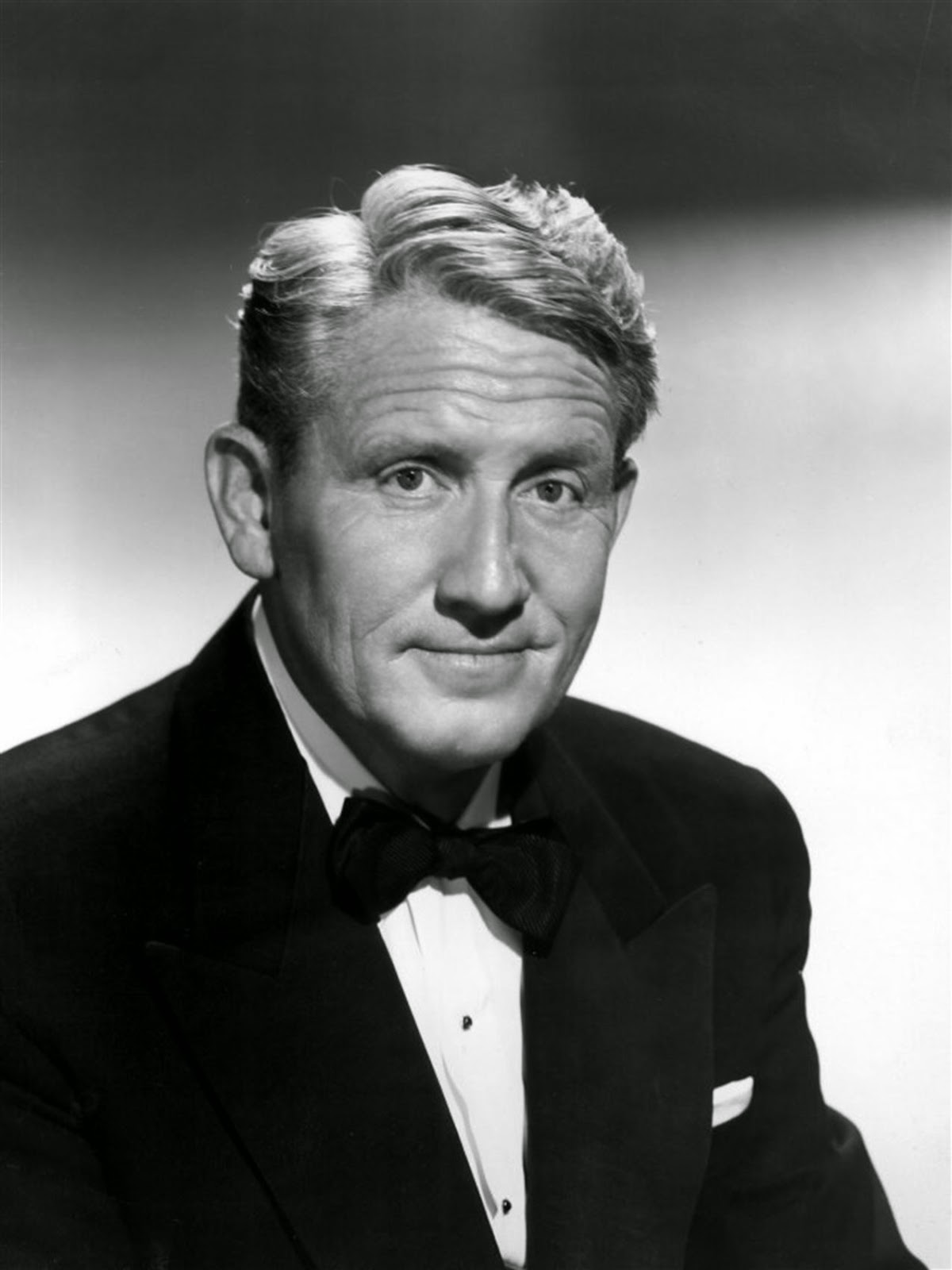
FatheroftheBride1950I’ve seen both versions of Father of the Bride and Steve Martin is fine and dandy but there is no better lovable curmudgeon than Spencer Tracy and he dons the role of the protective and skeptical father so effortlessly.

Furthermore, all down the line this production is an impressive gathering of talent with a radiantly young Elizabeth Taylor embodying the role of Kay, Joan Bennett leaving behind femme fatale roles for that of the level-headed mother and, of course, Vincente Minnelli positioned behind the camera. All in all, it’s a delightful light comedy that also finds time to say something heartfelt about the relationships of parents and their children, especially between fathers and daughters.

It’s rather like sitting back for story time as Tracy struggles with his shoes and begins to regale us with the recent happenings — the events that left his stately home looking like a hurricane disaster zone. It was all as a result of his daughter’s wedding. The event that is bound to challenge his sanity and bankrupt him in the process. But it’s for his “Kitten” so he’s willing to go through it out of his unwavering love for her.

First, he’s dubious of his future son-in-law, cringing at the thought as he shuffles through his memories of Kay’s many beaus. In his estimation, none of them was a winner, but then again, no one is good enough for his daughter. He’s not too excited about giving his daughter away nor by the prospect of supporting her good for nothing husband either. I’m sure most every father has the same conundrum to wrestle with. And it’s important to note that it’s played for comedic effect but never in a way that belittles these characters.

Minnelli was always a master of the color medium but here he still takes on the important role guiding us through the comedic moments with a deft touch and allowing us to track with the mayhem at large when necessary.

There are also some wonderful spots for veteran supporting players like the overly stuffy wedding coordinator Leo G. Carroll and the charmingly enthusiastic Melville Cooper as he guides the wedding rehearsal with a chaotic vigor.  Then, of course, there’s the prospective groom Buckley, played by the always affable everyman Don Taylor.

But everything must return to Tracy and Taylor because they are the nucleus of the storyline and as such, they work well together. Admittedly, Taylor might feel slightly out of place in such a family, but she is Elizabeth Taylor and she’s captivating all the same. Putting her together with Tracy means a lot of poignant sequences. Those moments where he comforts her, encourages her over a midnight snack at the dining room table, and finally, willingly gives her up to the man she has chosen to have and to hold for the rest of her life. To its credit, the film strikes a fine balance between comedy and heart always returning to this father-daughter relationship.

3.5/5 Stars

It’s a Mad Mad Mad Mad World (1963)

itsamadmad1It’s easy to forgive this sprawling comedy for a weak script because it does a wonderful job of playing to its strengths and delivering a hilarious payload of laughter. Stanley Kramer (known mostly for his social dramas) drops this raucous comedy full of bone-shattering slapstick and violently wild antics. It also assemblies arguably the greatest comic ensembles with some of the biggest names you could ever hope to see on the big screen. Everyone seems to come out for a who’s who of comedic talent in roles big and small. Half the fun is recognizing a familiar face on the screen for a quick cameo, giving a nod of approval, and then grabbing hold of this rip-roaring comedy once more as it hits breakneck speed. There’s nothing sophisticated about it and that’s part of its charm.

The film opens on a mountainous road when a car goes careening off the side of the cliff. Some onlookers go to see what they can do, but little do they know they’ve stumbled on to a gold mine. It’s not hidden under Jimmy Durante’s big nose, but a giant “W” in Santa Rosita State Park. It’s all very suspect, and everybody gets ready to head their different ways. However, a little old-fashioned, All-American greed sets in and they begin to high-tail it down the coast. The prize of a $350,000 payoff is too much to disregard.

After a harrowing car chase the treasure-seekers break off as follows:

Sid Caesar and his wife Edie Adams charter a prehistoric bi-plane and wind up spending the majority of the film trying to escape the basement of a convenience store using any means possible. Buddy Hackett and Mickey Rooney find a plane of their own, the only problem is that their pilot (Jim Bachus) gets a little tipsy mid-flight, leaving landing duties in their inept hands.The long-suffering Milton Berle constantly is being berated with the incessant babbling of loud-mouthed Ethel Merman. Poor Jonathan Winters is ditched by everyone else, then double-crossed by Phil Silvers, before he’s finally is able to hitch a ride. Berle finally loses all patience and teams up with buck-toothed Brit Terry Thomas. Spencer Tracy the wry police chief Culpepper watches all these events unfold with a play by play being fed his way. Meanwhile, his life begins to fall apart, but that pales in comparison to the gas station that Winters demolishes with his bare hands. That’s not the only destruction this gang leaves in their wake either. They total cars, destroy buildings, and do every type of damage you could ever expect. It’s great!

When everyone finally happens on the treasure they’ve picked up a couple cabbies played by the venerable Eddie “Rochester” Royal and Peter Falk. The mayhem leads to an excavating party and a final chase as Culpepper takes the money and runs with the gang hot on his heels. It all ends thrillingly from the top of a fire escape with a precariously situated ladder. The boys all end up in the hospital, but it’s still a laughing matter thanks to a stray banana peel.

Although the laughs slow down a bit in the second half, this film is a wonderfully good time. You have cameos from everybody like Jerry Lewis, Jack Benny, William Demarest, Buster Keaton, Don Knotts, Carl Reiner, and even The Three Stooges. Since there so many people who did make the cut I’ll be a glass half empty misanthrope and list off a few names who did not end up joining the film’s cast. Red Skelton, Bob Hope, Jackie Gleason, Stan Laurel, Bud Abbott, Lucille Ball, Peter Sellers, and of course Don Rickles who never let Kramer live it down for not inviting him. Quite the list, but mind you I’m not complaining too much.

The film takes on a personal note too because my dad actually saw the movie being shot on highway 73 back in the 1960s, and he remembers it rather fondly. To me, the film takes on deeper significance due to the crisscrossed palm trees which also became the iconic symbol of Inn-N-Out Burger all across California. What’s not to love about such a Mad Mad Mad Mad World?

4/5 Stars

Review: The Philadelphia Story (1940)

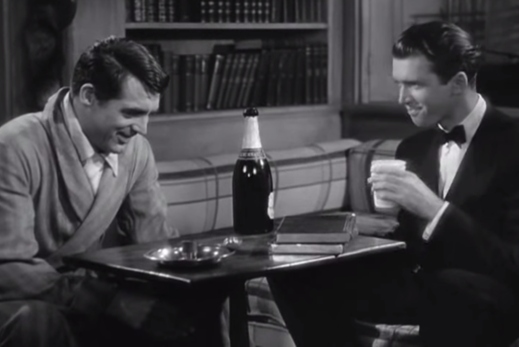
philadelphiastory1If there ever was a benchmark for the sophisticated, high-society brand of comedy, The Philadelphia Story is most certainly it. It’s less screwball because instead of Howard Hawks, George Cukor takes the helm and injects the film with his more refined sensibilities. It’s still very much hilarious and impeccably witty, but it’s not quite as scatterbrained as it could have been. Once more you have the iconic pairing of Cary Grant with Katharine Hepburn. Previously they had been in two other Cukor pictures (Sylvia Scarlett and Holiday) and of course Hawks’ romp Bringing up Baby. However, this time they’re joined by another cinematic titan in James Stewart and it proves to be a wonderful battle for command of the screen. The story ends up being a wonderful clash of classes and culture that also manages to illuminate a few bits and pieces of truth.

C.K. Dexter Haven (Cary Grant) had it out rather acrimoniously with his wife Tracy Lord (Katharine Hepburn) and now two years down the line, she is set to marry someone else. She couldn’t be happier to be rid of him and all his faults. Her new husband is a real “man of the people,” the wooden George Kittredge (John Howard), and he got his money doing an honest day’s work. In other words, he’s everything Haven isn’t when it comes to class and manners, but he’s also quite different than Tracy. But she doesn’t seem to mind. She’s on cloud nine to be rid of Haven.

Although Cary Grant does take a back seat at times, it’s only so he can manipulate and connive in the background, because he most certainly has an agenda. It’s great fun to watch. First, he brings in the folks from Spy magazine to do a full spread on the big wedding. There’s belligerent journalist Macaulay Connor (James Stewart) scoffing at all the opulence around him and then photographer Ms. Eilzabeth Imbre (Ruth Hussey), who has something complicated going on with her colleague.

They’re all here because the editor of Spy has a nice juicy expose piece on Tracy’s father and so C.K. advises her to go along with it. She suspects her old spouse has something to do with it, and it’s true, he didn’t put up much a protest when it came to taking part. However, Tracy’s not ready to let him ruin what she’s got going. She and her younger sister the crack-up Dinah (Virginia Weidler), put on a good show of upper-class snobbery to utterly bewilder their guests.

The funny thing is that while Tracy detests C.K. with the vehemence of the plague, her mother and sister quickly welcome the old gentleman back into their home with open arms. After all, what kind of trouble could he cause a couple days before the wedding, and Dinah is always game for a little chaos. She and C.K. have a mutual affection for each other. They’re both serial troublemakers.

After the surprise of Dexter wears off, the next person Tracy clashes horns with is the brusque newsman Connor, who is as turned off by her as she is annoyed by him. As she sees it, he’s invading her house as part of the paper’s plan to make her life miserable and steal away all her privacy. For him, she’s a stuck-up brat, who has had everything served to her on a silver platter in the west drawing-room. He thumbs his nose at the whole set-up. But a chance encounter at the library no less opens up a different side to these characters. Mike Connor is actually an accomplished poet far more skilled than his lousy journalistic pursuits would suggest. He learns just how perfectly imperfect she is.

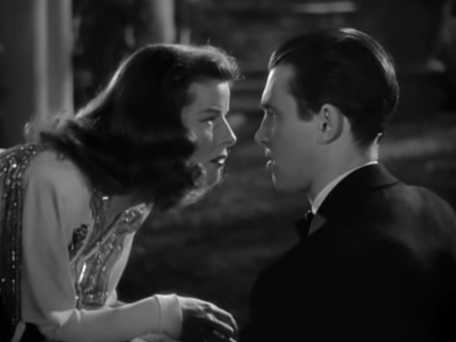
philadelphiastory2It’s at a party the night before the big day that things get particularly interesting. A lot happens when you fill people up with a little bubbly, some wine, and some early morning gaiety. Tracy is absolutely swimming in exuberance partially thanks to alcohol, partially because of the dancing, and maybe in expectancy of tomorrow’s high. But when things come a little loose around the edges, things happen that you regret. As it turns out Tracy doesn’t remember quite what happened that night, but Dinah saw all the good parts from her balcony. It involved a drunken Mike taking a jaunt to Dexter’s home at a godforsaken hour followed by Ms. Imbrie with an inebriated Tracy in tow. What this sets up is a wonderful little sequence where a hiccuping Stewart helps Grant orchestrate a plot to get back at Spy magazine editor Sidney Kidd. Then, Connor gets to spend the wee hours of the morning rambling on and on. It’s innocent enough, but quite the evening no less. It makes Kittridge quite distraught finding his bride to be in the arms of a man who is singing “Somewhere Over the Rainbow.” And of course, with such an unfortunate moment so close to the wedding it looks like things will be called off. But Kittridge is willing to make amends. It’s Tracy who realizes she has to break things off because ironically this man is too good for her.

philadelphiastory3It looks like Haven has won, but in a split second Connor is proposing marriage and ready to tie the knot with Tracy to save the wedding. Once again Tracy makes a sagacious decision (which is surprising given her earlier condition). Hangovers on your wedding day are not usually a good thing. In this moment everything falls back into place as it should and as we want it to. These are characters that we grow to care about, despite their misgivings and class differences.

When reading up on this film I was astounded to hear that the film supposedly had no outtakes. Everything we see was as it was when it was first shot and that has to be a testament to the strength of these actors and maybe a little luck. It’s true that the film sometimes enters territory that feels unscripted and loose. That’s when it really gets fun. Stewart and Hepburn. Grant throwing a quick retort here and there. Imagine, this could have been a vehicle for Hepburn paired with Clark Gable and Spencer Tracy. I’m sure that would have been great, but the whole dynamic would be very different.

So who is the winner in this film? Grant as C.K. Dexter Haven? Hepburn as “Red?” Stewart as the “Professor?” The Philadelphia Story is a real winner for the audience. What more could you want in terms of high-brow comedy bursting with legendary star power?

5/5 Stars

Libeled Lady (1936)

Poster_-_Libeled_Lady_01Libeled Lady has screwball comedy written all over it and that’s perfectly alright with such a glorious cast. Myrna Loy and William Powell reunite once again (for one of their 13 pairings), but we also get Jean Harlow and Spencer Tracy. Amazing!

The set-up is easy and pretty self-explanatory. Warren Haggerty (Tracy) is the managing editor of the New York Evening Star, but while he is reluctantly getting ready to walk down the aisle, he gets the horrific news that the paper sent out a misinformed scoop by mistake. Now Haggerty is faced with a $5,000,000 libel suit from wealthy socialite Connie Allenbury (Loy), and it brings his weddings proceedings to a halt, much to the chagrin of his peeved fiancee (Harlow). This isn’t the first time that their big day has been postponed after all.

Stuck between a rock and a hard place, he goes to one of his former reporters, Bill Chandler (Powell), who really rubs Haggerty the wrong way, but he also happens to be a whiz when it comes to libel. He’s the only man who can get the paper out of the major jam so he leverages his position. Things go down like this. Chandler will ingratiate himself to Ms. Allenby and soon afterward Gladys Benton (Harlow) posing as his wife, will rush in on them. Presto! The suit will be dropped. Simple, right?

It’s the consequences that get even dicier. At first, Gladys absolutely despises being cooped up in a hotel with Chandler and she’s still fed up with Warren. But over time, the close quarters cause Chandler to grow on her. Meanwhile, Chandler tries to learn everything he can about angling, to charm Allenby’s father (Walter Connolly), who is a fishing aficionado.

From the start, his daughter has Chandler pinned as a fake (which of course he is), but by some act of heaven his act actually works and he wins them both over. Worse, Connie is falling for him and he’s reciprocating, but Haggerty is still waiting for the plan to be executed. Gladys is waiting impatiently for her “husband” who she seems to genuinely miss. It’s all a big mess to be sure.

The finale involves the four leads together for one final climactic barrage of pandemonium and spouse swapping. As you would expect everyone ends up with the right partner, but it was sheer craziness to get there. It had been a while since I had seen a screwball, and Libeled Lady is a striking reminder why the genre is so fun. It had me laughing pretty hard whether it was the utter absurdity of the fishing sequence or any of the other madcap moments. It boasts quite the cast too. It’s crazy to think that in only a year Jean Harlow would be gone, a short but vibrant career behind her.

4/5 Stars

The Best Films of Spencer Tracy

1. Judgment at Nuremberg
2. It’s a Mad Mad Mad Mad World
3. Captains Courageous
4. Adam’s Rib
5. Guess Who’s Coming to Dinner
6. Fury
7. Libeled Lady
8. Bad Day at Black Rock
9. Inherit the Wind
10. Northwest Passage
11. Father of the Bride
12. Woman of the Year
13. Pat and Mike
14. The Seventh Cross
15. Boys Town
16. San Francisco
17. Thirty Seconds Over Tokyo
18, Edison, The Man
19. Desk Jet
20. How the West was Won

Bad Day at Black Rock (1955)

8435a-bad_day_at_black_rockStarring Spencer Tracy and Robert Ryan with Lee Marvin, Ernest Borgnine, Dean Jagger, and Anne Francis, the whole story takes place in an isolated desert town. Tracy as the one-armed man Macready comes to the town and soon is face to face with many cold, detached, and suspicious folks. He has his own reasons for being there so that he can find the father of a Japanese-American war buddy of his. He asks around and no one is willing to talk. Macready soon realizes their secret and understands how much danger he is in. However, with the help of a couple of townspeople he is able to resolve everything. Then, he leaves town aboard the train just as calmly as before. This film intrigued me for a number of reasons but especially since a central topic was racism towards Japanese-Americans.

4/5 Stars

Guess Who’s Coming to Dinner (1967)

ff836-guess_who27s_coming_to_dinner_posterThis film directed by Stanley Kramer, has a relatively simple story line revolving around a major issue. Joanna Drayton has fallen in love with a doctor she met only 10 days before and wishes to get married. Obviously, her parents played by Spencer Tracy and Katharine Hepburn, are startled by this whirlwind event. They are even more dismayed when they discover he is a black man. Hepburn’s character lightens to the idea while her husband is adamantly against it. Soon everything becomes even more complicated when the man’s parents are invited to dinner, only to be equally startled. Eventually giving it more thought, Tracy does condone the marriage realizing how much his daughter is in love. This would be Tracy’s final film and he would die only a couple weeks after shooting ended. He and Hepburn do a wonderful job with Sidney Poitier and Katharine Hougton as well. This movie is good and also monumental for the racial issue it covered.

4/5 Stars