A Guy Named Joe (1943)

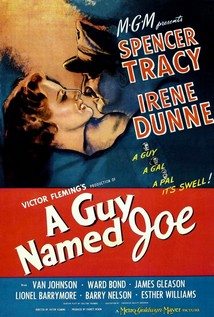
Although I would probably choose 30 Seconds Over Tokyo, a movie also penned by Dalton Trumbo and featuring Spencer Tracy and Van Johnson, there are numerous reasons to search out A Guy Named Joe.

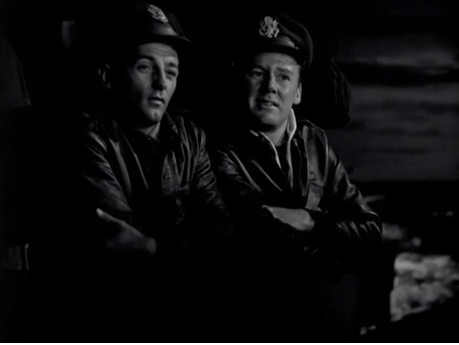
This was Van Johnson’s first starring role, allowing him to craft a stage presence that would only become more self-assured with time. It nearly got derailed by a gruesome car accident that purportedly left him with a plate in his forehead. And yet out of this came one of the most popular young stars of his day.

Also, Irene Dunne, one of the often unsung comediennes and finest dramatic actresses of the 30s and 40s, gets the opportunity to show her stuff opposite Tracy. I will never miss an opportunity to see her because she’s easy to rate next to other luminaries like Katharine Hepburn and Barbara Stanwyck.

Some well-informed viewers might also be aware that Steven Spielberg transposed the action to the 1980s with his light remake, Always, starring Richard Dreyfuss, Holly Hunter, and a cameo by Audrey Hepburn. It’s easy to surmise the later film misses out on the historical context, making A Guy Named Joe about something immediate.

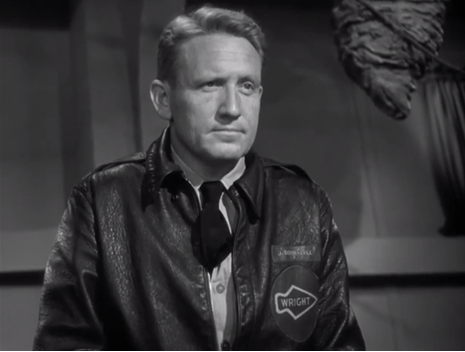
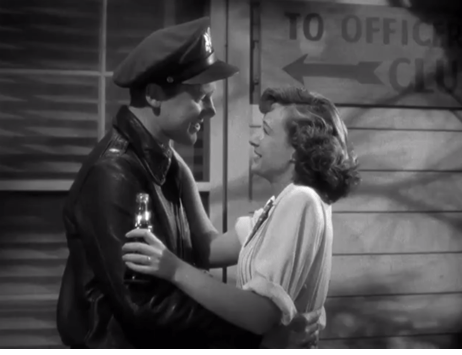
Pete Sandidge (Tracy) is your stereotypical loose cannon, hotshot who’s always receiving the ire of his superior (James Gleason). Nevertheless, the two of them maintain a playful game of cat and mouse because deep down, they both know they’re invested in the same cause.

Pete’s also reunited with his effervescent girlfriend, the alliterative Dorinda Durston (Dunne). She also flies planes, albeit not in combat. All the lovey-dovey grousing and such isn’t new, but between Tracy and Dunne with Ward Bond as the third wheel, it’s inherently watchable. They channel a love-hate relationship: getting sore at each other and making up in a passionate reverie.

Tracy and Dunne aren’t normally associated, and yet watching them together is an immeasurable pleasure because they have a grand capacity for bits of sly humor and shared humanity, elevating the material above mediocre fare.

The movie also boasts some impressive and truly immersive aerial sequences as Pete leads his men on one of their perilous bombing raids against the enemy. This latest mission also signals a shift in the story; a fatal crash occurs, and Pete’s last gasp of heroism means he’s good and dead.

He’ll spend the rest of the movie as a guardian angel, though he’s more like a ghost. So A Guy Named Joe quickly shifts from a purely WWII picture to another film in the cinematic angel canon (It should come as no surprise that producer Everett Riskin also worked on Here Comes Mr. Jordan).

Pete walks through the clouds of the afterlife not with a harp but a decidedly more militaristic objective. There’s a pointed weightiness in casting by making Lionel Barrymore the CO of the heavenly realms. He passes down to the newly deceased his marching orders: He will be serving as an unseen co-pilot to some new recruits.

Again, the movie shifts to focus on Don DeFore and Van Johnson as two problem flyers still wet behind the ears. Johnson plays a wealthy, if diffident, young man named Ted Randall who can barely keep his plane airborne. Tracy shudders at the future of the war in the hands of such callow talent, but he tries to get them up to speed anyway, albeit subconsciously.

These sequences are rather mundane because, unlike other stories in the angel canon, Tracy’s connection to the real world is very thin compared to Claude Rains, Cary Grant, or even Henry Travers in It’s a Wonderful Life.

The movie picks up again when Van Johnson is on the ground and progressing in confidence. We see an early pairing of Johnson and a nearly unrecognizable Esther Williams, perhaps because she’s not robed in Technicolor and a swimsuit. They share a dance, and he extends an act of kindness to a homesick soldier.

Tracy is forced into being an observer in the physical sense, and somehow, the passivity doesn’t suit him. It’s good for a few gags and dress downs of former friends and colleagues who can’t hear him, but it becomes a bit of a gimmick.

And after waving a movie about Tracy and Dunne in front of us, it tries its best to stitch together something between Dunne and Johnson that just feels a bit disjointed and forced.

Still, A Guy Named Joe has these compartmentalized moments of human connection, laughter, and tears, making it more than worthwhile. You get the sense of the war years, the transience that these young men and women felt on so many accounts. Be it the death of friends and comrades, or even the distance of loved ones so far away. Everything spells heightened emotions.

To its credit, I never thought I would see a movie with Irene Dunne breaking ranks to fly a bombing raid solo and drop a payload on a Japanese target. There’s something both ludicrous and oddly progressive about it, never mind how it seems to muddle the collectivist themes the movie seems to be aiming for.

However, the fact that there can be no catharsis for Tracy and his lost love might be a final lesson about the war years. It is a dream and a desire that cannot be fulfilled. In its wake, Johnson and Dunne must chase after each other instead in a swelling romantic ending without any earthly consequences as Spence disappears into the distance. It’s a pale imitation, but it will have to do.

3/5 Stars

Brigadoon (1954): Cyd Charisse and Gene Kelly

I have fond memories of traipsing across the Old Course in St. Andrews and attending the Military Tattoo near the Royal Mile in Edinburgh. There’s something untamed about that landscape remaining austere and beautiful, perfectly suited for tartans, bellowing bagpipes, and the rat-ta-tat of drums. The country feels wild and free and still imbued with years of ancient history.

Brigadoon is hardly an authentic look at highland life. It was based on a Broadway play after all. They traded out the actual highlands for a studio backlot to save money. But as such, the world feels like a total Hollywood confection from Vincente Minnelli. I hardly mind just as I barely mind the California heather of National Velvet for a stand-in.

It comes down to representing a place that is more mythic than a concrete place we know firsthand. It exists in our memories and recollections. Now, this is dangerous: It can lead to a myriad of stereotypes and misconstrued truths. I’m not sure how cultural appropriation or even “whitewashing” ties into this tale, but it’s true Hollywood has borrowed from the Scotts and spun their own version.

However, the film itself couldn’t be more pleasant. Gene Kelly and Van Johnson are lost up in the fogs of the highland in the midst of their pheasant hunting expedition. Meanwhile, we get acclimated to the village of Brigadoon. There’s a charming number, “Waiting for My Dearie,” with Cyd Charisse surrounded by all the fair maidens of the town as she dances with a gal with a pot for a helmet and a mustache on her lip. They all prepare for the marriage of Fiona’s sister to a local lad.

Johnson and Kelly are soon integrated into the community through a moment of gaiety as the tune “Bonnie Jean” becomes emblematic of the merry way of life these people live where song and dance are the only conceivable way to express themselves. In this way, it seems to suit the parameters that the musical inherently provides.

However, something else happens: Tommy (Kelly) falls for Fiona (Charisse) almost at first site. What else would you expect because every character he ever played must fall hopelessly in love with the girl. This is what Fred Astaire did a generation before them.

He’s pleased to find it is the younger Campbell lass who is getting married and not the elder. “The Heather on The Hill” feels like the lynchpin number. We saw something similar in “Dancing in The Dark” with Astaire playing opposite Charisse in The Band Wagon. Because this is the moment where all other distractions momentarily subside, and we are able to distill this movie down to its core relationship. What other emotion could dance hope to convey but the rapturous, ineffable palpations of romantic joy.

It’s enchanting to watch their forms move so fluidly through the space where they become an extension of the world around them. Where a limb of a tree or a basket is part of their movements and the dance that they are undertaking together. It says all the things they feel for one another not in word but in deed and action, and it feels all the more evocative for this very reason.

It occurs to me that dance often comes in two distinct forms: there’s the utterly communal and then the strikingly intimate. They bring people together, reflect their woes, and put a voice to their romantic elation. Sometimes they’re even comic. Johnson more than provides his share of sardonic wisecracks, and he’s quite good in the role.

However, my main qualm with the picture is in the story department. Now the film is based on a stage production, and that’s where the initial weakness lies. Because this is yet another tale of transcendent love. We learn something telling about Brigadoon midway through the movie, which would have been helpful for setting the stakes early on.

It’s hardly an “I See Dead People” revelation, but it tries to give some context to why these folks live so isolated from mankind — all but forgotten — and so Fiona takes them to the village schoolmaster to tell the tale. Salient or not, the movie slows down to explain itself and thus loses some of its luster in the process. They don’t even try and use song and dance to save it from the horrors of over-exposition.

Likewise, the ending feels all crammed together and while we have the tent pole moments one might expect from a Golden-era MGM musical, the narrative cohesion simply is not simpatico. The two travelers leave Brigadoon behind for the urban hysteria back in New York. The juxtaposition is obvious and Tommy’s having none of it; he vows to return to the one place he’s ever truly been happy.

It’s dubious that a wise guide in one moment can explain the mysterious nature of Brigadoon, and then still later can announce with a grin how grand romance can supersede all manner of hindrances between two lovers. It’s like the most convenient cop-out explanation — the path of least resistance.

There’s the expected reunion. It’s what the story is meant to build up to — there’s this sense of appreciation, after all, Gene and Cyd are back together as they should be. But something else nags at us. It feels hollow because the story doesn’t gel — it doesn’t feel earned — and we wanted this reunification more than anything. It’s a shame because otherwise I’m a big fan of what Brigadoon represents and no matter its flaws, it still remains an underrated musical.

I’m not surprised Charisse voiced it as her favorite picture with Gene Kelly. Their scene together in Singin in Rain is a provocative showstopper, and It’s Always Fair Weather blooms with a melancholy and timeliness in the television age. In Brigadoon, you could easily argue they share some of their finest individual moments together regardless of your verdict of the overall film.

3.5/5 Stars

Divorce American Style (1967): Debbie and Dick Get Divorced

Divorce American Style starts out as a symphony of marital nagging, and it looks to build off this cacophony to make some sense of the current state of affairs in 1960s America. While the title doesn’t capture the same milieu of its Italian counterpart, it fits for a plethora of other reasons. It’s satire in the American mode and Norman Lear, who would become renowned for his brand of socially conscious comedy, is hard at work. In order to go about it, he hones in on one couple in particular: Richard and Barbara Harmon.

Off the top, it’s an important distinction to make. Creatively, it seems like a stroke of genius to cast Dick Van Dyke and Debbie Reynolds as this bickering couple slowly tearing apart at the seams. I say this purely from the likability factor. Their entire career trajectory thus far from sunshiny MGM musicals to crowd-pleasing family sitcoms all banks on their likability quotient.

Here is a picture that tests all of that built-up reservoir of goodwill and fuzzy feelings we have for them. If you only accept them as the picture of Cathy Seldon in Singing in the Rain or Rob Petrie in Dick Van Dyke, there’s a reason to vehemently oppose what Lear has done with them here.

While it’s not my favorite pastime to see two such actors put each other through such hell, some part of me understands why they wanted to take a stab at it. Because it’s not safe, and it challenges the status quo and how we accept them as performers. To their credit, in stretching themselves, it’s an attempt to get past one-note characterizations.

True to form, their first full scene starts with a fight. It’s postponed due to the party they are throwing only to reconvene after all the friends have shuffled out the front door. They can drop the veneer and all pretense is cast off again.

She bemoans the fact he’s critical of everything, and he just doesn’t understand her anymore. He’s frustrated that when they finally get some of the things they always dreamed about, his wife seemed to turn unhappy, and he can’t figure it out. It was another picture from 1967 that famously acknowledged a failure to communicate. This one gives it a whole new domestic context.

We see their bedtime rituals and there’s something almost mechanical to them because there’s no intimacy between them even in this highly intimate space as they open cupboards, plug in razors, and do their bits of business…without a word and still somehow in perfect cadence.

By day, Barbara continues seeing a psychologist and Richard begrudgingly gives it a try, although he’s uncomfortable sharing his feelings with a stranger; the way he was brought up it just isn’t done. If we wanted to add something else to their marital complications, it’s their kids. Normally, their two boys would be trapped in the middle, but there’s a pollyanna-like understanding about them. They are so easy-going and well-adjusted as their own parents continue to go down the tubes.

One call to a lawyer and all of a sudden it’s like the trip wires have been set off on both sides. There are trips to joint bank accounts and friends on both sides supply their two cents worth, not to mention their respective legal counsel. It’s not a new phenomenon, but we are reminded how these things can escalate; this is divorce taken to outrageous proportions.

They sit at a table in the law office as their lawyers casually settle their case, mixing in chit-chat about their latest golf games and shared business associates. Then, Richard is taken under the wing of Nelson (Jason Robards), a fellow divorcee, who gives him advice about alimony and how to survive. His life is fairly abysmal and pretty soon Richard is going down the same path moving into his new digs and trying to find romantic direction.

Meanwhile, Barbara tries to make her own way with an oft-married family man (Tom Bosley), getting to know all his children. It devolves into another madcap orchestration, reminiscent of the opening prelude. This time we have the notes of parents and step-parents, kids and step-kids all being assembled for a day out.

With the robust cast, it’s rather curious the film was not better known in its day because it gradually introduces other familiar faces including Joe Flynn, Lee Grant, Robards, Jean Simmons, and Van Johnson.

In the epochal year of 66-67, it does make sense Divorce American Style never received the same plaudits as Whose Afraid of Virginia Woolf, The Graduate or Two for the Road. If not altogether a sitcom episode, it’s the American counterpart to its more high profile continental brethren starring Audrey Hepburn and Albert Finney.

Again, there is the sense of the middle-class malaise where things and stuff and cars are in one sense inconsequential compared to the relationship. And yet they mean everything when it comes to comfort and status.

To the very last frame, there’s something subversive about seeing sweet Debbie Reynolds and lovable Dyke Van Dyke as divorcees with a marriage hitting the skids. But if this is true, there might also be a kind of catharsis for Reynolds when a hypnotist puts her under on a stage in front of a whole host of people. She’s been through so much and there she is throwing off the shackles of all our preconceived notions. She heads off stage and goes to give Van Dyke a big ol’ kiss, effectively rekindling their romance.

The film hasn’t aged particularly well, but then again, what better way for it to remain as a testament to the social mores of the times and the prevalent anxieties? It’s probably better for it. Because all the fracturing, recoupling, and suburbanization of society definitely created a new kind of landscape.

It’s all there in the later scenes as all the stars couple up uneasily. Van Dyke is with Simmons who was Robards’s former spouse. He’s trying to marry her off so the alimony doesn’t break his back. Then, Robards and Simmons try and set up Reynolds with Johnson — a genial used car salesman — because that makes Van Dyke even more unattached.

I tried to make this all needlessly convoluted but hopefully, the point has been made. Love is strange. Love is messy. Love is complicated. If that’s true of love American style, then it’s true of divorce even more so.

3/5 Stars

Battleground (1949): Bastogne and The Screaming Eagles

battleground 1.png

“We must never again let any force dedicated to a super-race or a super-idea, or super-anything become strong enough to impose itself upon a free world. We must be smart enough and tough enough in the beginning to put out the fire before it starts spreading.”  ~ Leon Ames as the Chaplain

This is the story of Bastogne in 1944 and the renowned Screaming Eagles. Admittedly, if you’re like me, this means very little, but fortunately, we are in good company because the men we get to know over the course of two hours didn’t know anything about the city either when they first arrived. This was not the Battle of the Bulge; it was simply a stepping stone or a weigh station on the road to their future destination. That is until it became, you guessed it, a battleground in its own right.

For the time being, they can be found drilling in smartly executed formations and getting ready for an unnamed assignment ahead. This is our chance to feel them out before they get in the thick of everything.

Director William A. Wellman does them a service in the first full scene together spread out in their cots. There’s barely enough room for the dust to settle but within the close confines, camaraderie is immediately palpable as is each man’s personality.

What a great group of guys they are covering a lot of the bases of humanity. Van Johnson and even a Don Taylor are easy to pin down because of their broad appeal and charm. They make most any armed forces picture a little more affable. Among their finest traits is exuding good old-fashioned Americanism.

There’s old college grad Jarves (John Hodiak), who gets jeered for his presumed stuffiness. There’s the gruff cynic (Douglas Fowley) always playing around with his set of false chompers like his most prized possession. (They kind of are because without them he can’t eat). Squished in with them is the gangly and drawling southern boy (Jerome Courtland), who feels like an easy trope to target in these pictures. The new recruit (Marshall Thompson) can be found nervously bed-hopping from cot to cot trying to find one he can take.

In something genuinely unusual for the period, even a Latino from L.A. (Ricardo Montalban) is represented. His best bud Pops (George Murphy) all but has a ticket home on a hardship discharge. A young Richard Jaeckel rounds out the band along with a chaw chewing James Whitmore, acting as their weathered drill sergeant.

What is meaningful about these relationships is how they reach outside the confines of the film with this inferred history we don’t know explicitly, and yet we can read into it. We know what guys have a bone to pick with the army and the ones who are trying to make the best of it.

The perilous journey ahead is riddled with enemy planes overhead, and the fog of war is quite literally laid on thick, complimenting the mud the army trucks slog through on the road. One minute they’re diving into ditches at the sound of sniper fire, and the next they are tasked with the backbreaking toil that goes with digging in for the evening, only to be pulled away on revised orders.

battleground 2.png

There’s absolutely nothing permanent aside from the constant patrolling, lack of sleep, and perpetual snow. Battleground is one of the snowiest war movies I can recall, at times, deeply striking and equally relentless

Private Holley scores quite a cache of eggs, dreaming of the scramble he’s whisking up in his helmet time and time again — only to get pulled off for another assignment. Watching the yolk drip from his helmet is one of the defining images of the film for me as is his utter indifference. You’re never clean so why even bother.

As a fitting inflection of the Cold War, we have Germans in G.I. uniforms sneaking behind Allied lines to wreak havoc and sabotage important strategic assets like bridges. More than anything, it continually triggers this terrifying threat of infiltration. Thus, one cannot help but draw a connection to the Chaplain’s stirring speech later on (reference at the top of this page).

Amid the paranoia, it’s almost hilarious to think that the best way of telling friend from foe is baseball terms, idioms, Terry and the Pirates references, and the relationship status of the war’s favorite pinup Betty Grable (Note: Cesar Romero is out for Harry James).

When they do come upon the Krauts, Wellman captures the firefight and the subsequent hand-to-hand combat in a stylized manner to conform to the Hollywood production codes. Regardless, he manages to accentuate the rough-and-tumble brutality through boots pounding on the snow and violent inferences.

Battleground leaves unabashed sentimentality behind and it is not squeamish about death. People get picked off one by one leaving a trail of dead and wounded in their plucky company. This carnage hurts because of the rapport we build up. But even in the face of these micro-tragedies, there is no time to mourn, and their stand against the Germans proves a gutsy one. There’s no other alternative in their minds.

As we bunker down, it’s true the ensemble melds together nicely with no one actor totally upstaging the others. Certainly, Van Johnson is just left of center, if not the undisputed headliner, but even he has to navigate conventional feelings of fear and loathing when it comes to military service. He is by no means impervious to the toils of war.

In a moment of duress, Holly looks all but ready to turn tail ignominiously, but he finds his courage in the urging of another man who looks up to him — as they double back on the German lines and catch them off guard. They’ve girded their loins about them now and when ceasefire agreements and surrender are suggested by the enemy, they unceremoniously scoff at the very idea.

As alluded to already, in the thick of the hard pelting enemy artillery fire, the Chaplain holds an impromptu service. He’s of a certain denomination, but a very succinct point is made of the fact his service and his message is all-inclusive. In fact, it’s hardly a spiritual homily at all but a candid rallying cry against the forces of evil. It’s one of the most blatant examples of the film getting on any sort of didactic soapbox.

In response, each man kneels down to pray in his own way the enemy artillery fire still bursting in the background. The results are a stirring image of solidarity. They have not yet begun to fight.

Even in the simulated soundstage action, there is a compelling commitment to the atmosphere, which aids rather than hinders the story being told. It brims with the elements and forces of nature on all sides. In a last-ditch effort, all the terminally ill are moved out of the makeshift hospital, and the walking wounded are brought in for one final stand of desperation.

There is a slight sense Robert Pirosh’s script skipped over what might have been the most rousing scene. Wellman tackles the counterattack from the rallied forces with their new batch of airlifted ammunition, gasoline, and K rations in only an extended montage.

battleground 3.png

Although the ending of the war is a foregone conclusion, it very nearly could have been a letdown that we don’t get a more pronounced action scene. However, it’s quickly salvaged by the effectiveness of the final scene. It says all the same things and exudes all the same battered but resolute emotion with one simple drill, leading them off toward the rear. The men sound off with a renewed vigor knowing theirs was a job well done.

In my book, James Whitmore is the unsung hero of the picture because his grizzled mug brings so much understood texture to the world of the movie. Van Johnson is the vision of what an idealized American G.I. is and Whitmore is the more likely reality. And in the final minutes, he’s the one who leads them to the finish line. He maintains an unswerving grit and pride as tenacious as anyone.

Battleground is quite the sensational war picture while also holding the distinction of being one of the most high profile WWII films following the conflict’s cessation. It allows for this strange limbo of sorts where the war is still fresh and within grasp of the collective consciousness, but there is enough wiggle room to begin looking back in hindsight.

Surely it’s not a complete portrait, but it does well to blend shades of action with the everyday gumption needed to make it through such a conflict. What a pleasure it is to be reminded each of these soldiers is a singular human being.

It’s refreshing to have their warmth and their fears in plain view along with their courage. It feels like we can look them in the eyes and truly marvel because they are not a whole lot different than us in many ways. Their courage is extraordinary in just how ordinary it appears.

4/5 Stars

Thirty Seconds Over Tokyo (1944): WWII Written by Dalton Trumbo

30 Seconds over Tokyo.png

“One-hundred and thirty-one days after December 7, 1941, a handful of young men, who had never dreamed of glory, struck the first blow at the heart of Japan. This is their true story we tell here.”

It’s easy enough to lump Air Force and Destination Tokyo with this subsequent film because we have the impediment of years between us. We have yet another cast rallied around a star; this time it’s Spencer Tracy leading the charge, as the pragmatic James Doolittle, on a highly confidential mission that would be known to future generations as the Doolittle Raids.

In the contemporary moment, if they had enough time and/or money an audience would possibly have a much easier time differentiating because each picture took on a slightly unique facet of the war. Air Force is all but a flying fortress in the days leading up to and directly following Pearl Harbor. Destination Tokyo is about the recon needed for the Doolittle Raid. 30 Seconds Over Tokyo is a bit like the triumphant exclamation point or at least the start of one.

The work wasn’t done for the Allies but it was a sign of forward progress. And with the benefit of hindsight, we can fill in the open-ended conclusion. We know V-J Day eventually happened only a year later. Consequently, it was also deemed one of the more accurate war pictures as far as military details go.

Much of Tracy’s time is spent as a no-nonsense observer of what is going on. The rest of his performance feels like it’s made up of monologues and yet, as is normally the case, he’s so candid and earnest when he delivers them. He quickly draws the moviegoer in just as he does with all the crew members under his command. It’s the magic he has over a rapt audience to the point you believe every word he says.

Otherwise, Lt. Ted Lawson (Van Johnson) is pretty much our lead. I know he’s not much of an emoter, but he might as well be our stand-in for the American G.I. For the time being, he is surrounded by a bevy of compatriots including Robert Walker, Don DeFore, and Robert Mitchum, among others. They all raise their hands when it comes to volunteering for a top-secret mission.

There’s an electricity in the air as they prepare for news of their assignment even as they are warned that they will be pushed to the limit of their capabilities and then some. The utmost secrecy is maintained and their training is commenced in earnest. The work is hard and they play hard after.

One of the crowd is a goofy down-home caricature portrayed by John R. Reilly. He can be found pounding away to the rhythms of “Chattanooga Choo Choo” in the barracks, intent on any merriment he can muster during off-hours. Meanwhile, the crew of the self-proclaimed Ruptured Duck becomes proficient in their new skill set.

30 seconds over Tokyo 2.png

In his free time, Lawson (Johnson) looks to get all the time in with his beaming wife as possible. Though Phyliss Thaxter glows with utter radiance in every scene, it does feel a bit overly twee at times.

Since a group of the fellas have their brides with them, they get together to dance, finding solidarity in songs like “Deep in The Heart of Texas” and a Hollywood mainstay, “Auld Lange Syne.” It’s especially effective for wringing out every last drop of emotion. Wives tearfully cling to their husbands for the last time, knowing that they will soon be separated for who knows how long.

Sure enough, the men get their assignment after coming aboard an aircraft carrier. They will be paying a visit to Tokyo by air and the anticipation sets in even as the flyers all look a bit like fish out of water (on the water). Regardless, it becomes a perfect excuse to play up the camaraderie between the army and the navy away from the football field. They’ve got a job to do, and they’ll do it together.

Robert Mitchum and Van Johnson share a most curious conversation lounging on the prow of the boat, staring off into the darkness. One can only imagine it is screenwriter Dalton Trumbo speaking — not in propaganda but humanity.

First, Johnson offers up how his mom had a Jap gardener once who seemed like a nice fellow. Mitchum says he doesn’t like ’em, but he doesn’t hate ’em either. They agree you get mixed up sometimes. Where are they going with this meandering interchange?

The answer: Trumbo’s brand of what might be most precisely termed “American progressivism.” Some rationale must be proposed for what is at hand and so he does his best. Though it foregoes demonizing the enemy, it takes an alternative path with the same conclusion. It’s the most rational progression. Drop a bomb on them or they’ll be dropping a bomb on Ellen or loved ones like her. It’s highly practical even as it remains problematic.

30 seconds over Tokyo 3.png

Still, the gears are turning. They have their final briefing with Doolittle and agree to meet in Chungking for the biggest party they’ve ever seen. In reality, the moment of truth really does feel like little more than thirty seconds. When they hit the mainland a flurry of Japanese Zeroes fly over, only to pass them by without notice, moving on with their normal patrol. It’s a lucky break.

They end up dropping their loads on the designated targets with efficiency. It’s the aftermath where things get a bit dicier, not so much due to the enemy but weather conditions. The Ruptured Duck is forced to bail out, sustaining injuries, and rescued by Chinese locals under bleak conditions.

Though poorly resourced and kept on the run by impending Japanese, the Chinese are held aloft as loyal Allies ready to aid in this joint cause against the Japanese. It becomes so intriguing how they become such sympathetic figures. Two close-ups come to mind. The Chinese characters are not kept at arm’s length. We are given a chance to study their faces. It’s maybe not a lot, but it’s something. The juxtaposition between the Chinese station versus the Japanese is made supremely obvious.

So while Thirty 30 Over Tokyo has understandably been lauded for a certain level of historical accuracy, there is still a necessity to parse through its stances as a cultural artifact. Like any film, it is a product of its times and a tribute to the minds behind it, whether Mervyn LeRoy or Dalton Trumbo. Each man no doubt had his own agenda, be it bugetary or ideological.

To that point, the picture is framed by a corny romantic crescendo that’s difficult to take seriously. Otherwise, it an intermittently rewarding portrait of a specific time in WWII history. It’s difficult to remake a movie such as this without losing some of its inherent credibility.

3.5/5 Stars

Go for Broke! (1951)

goforbrokeWWII is always a fascinating touchstone of history because it has some many intricate facets extending from the Pacific to the European Theater to the American Home Front and so on, each bringing with it unique stories of everyday individuals doing extraordinary things. One of the best-kept secrets is the 442nd Infantry Division later joined with the 100th and effectively making the first all Japanese-American fighting unit which served over in Italy and France.
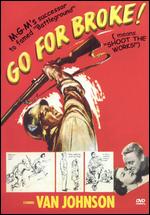
But perhaps the most striking thing about this band of men was the inherent hypocrisy they unwittingly pointed out within America’s own society. As their loved ones sat enclosed in tar paper barracks and barbed wire fences within internment camps, these courageous lads went off to prove their allegiance to their country. Reflecting the very freedoms and liberty that America was founded on, in spite of the injustices that were thrown their way.

But really instead of simply reflecting the bad, Go for Broke! is a far more empowering story and Robert Pirosh’s film does a stellar job at showcasing these men with a great deal of respect. He had previously shown an aptitude for realistic war films like Battleground, and joining forces with Van Johnson once more, he delivers another authentic picture.

Going so far to fill out the rank and file of the film with real 442nd veterans, Go for Broke! begins with a newly promoted officer born and bred in Texas. At first, he shows a slight distaste in being called upon to lead a unit of Japanese, partly due to the fact that he was torn away from his buddies, the other simply a result of his own narrow-mindedness.

After all, he becomes the stand-in for the prototypical viewer and as his character slowly begins to evolve as they go through boot camp, then Italy, then France, the impact on the viewer is duly noted. Thus, although he proves to be an important figure, it should not be forgotten that in many ways the 442nd is front and center.

Among the men we get to know are the level-headed Sam (Lane Nakano) who has a girl waiting for him back in the states while his family remains interned as public aliens. Tommy is the runt of the group, a funny sort of fellow, who makes the ultimate sacrifice when he gives his beloved pig to a starving family. There’s the bespectacled college boy who was in the process of becoming an architect and the defiant Chick (George Miki), ready to fight with whoever crosses him. Far from being stiff, these men lend a certain realism to the film that elevates it to that of a fascinating historical artifact.

There are some wonderfully humorous moments that diffuse the conflict of cultural identity. The recruits of the 442nd walk up the gangplank as the soldier in charge struggles to read off their family names and as each man passes by he responds with a very basic anglicized name. George W. and Thomas H. In another moment an angry Van Johnson looks over at his second in command Oharra during a patrol to inquire what a Japanese word means. Without skipping a beat the man quickly apologizes, “Sorry sir, I don’t speak Japanese.” Only later as these soldiers become his loyal comrades does he learn what “Backatare” means. It becomes a film where soldiers from California and Texas can poke fun at each other, but that’s only because mutual respect builds between the 36th and 442nd.

Lt. Grayson reveals his final transformation when he enters into an altercation with his old pal Cully who has a heavy dose of bigotry. By the end of the film, the man’s still not exactly a saint, but his eyes are opened at least a little bit. And in the end, the 442nd comes to the aid of their brethren. The film concludes with one of their greatest triumphs, rescuing the lost battalion pinned down by the enemy on all sides. The casualty tolls were high, but in such moments the Japanese-Americans proved their grit and determination right alongside all the other fighting men. This is the film they deserved and the type of recognition that they deserve even today. It’s a shame that more stories like Go For Broke! have not been told, but it makes this one all the more important.

3.5/5 Stars

Go for Broke (1951)

Starring Van Johnson along with a handful of WW II vets, this film looks like your average war film. It follows this group of soldiers from their initial training all the way to deployment. Then, we follow their exploits in Italy and France that coincide with their everyday interactions. However, this film is very significant because it actually tells the story of Japanese Americans in the 442nd infantry unit. They not only faced the enemy on the battlefield, they also had to deal with a great deal of prejudice within the armed forces. However, as with the example of Van Johnson, the Budha-Heads were able to win respect because of their courageous fighting. In the climatic moments of the film these men save a lost division and then return home as heroes. Since I am half-Japanese it was exciting for me to come across this film because this kind of topic has not been covered often. The fact that it actually had Nisei actors and was  made quite soon after the war is also amazing.

3.5/5 Stars

The Caine Mutiny (1954)

With a stellar cast starring Humphrey Bogart, Van Johnson, Fred MacMurray, and Jose Ferrer among others, the film begins with a young ensign assigned to the mine sweeper named the Caine. After the first lax captain is reassigned, their new commander Queeg (Bogart) is a stickler for detail and order. After a series of incidents the crew becomes increasingly annoyed with him. The situation worsesn when Queeg begins to obsess about a few missing servings of strawberries. All these events boil over during a typhoon when the second-in-command (Johnson) prodded on, feels Queeg is unfit for command and he takes over control of the Caine. In the ensuing court martial, he is put on trial for mutiny and his attorney (Ferrer) must try to show Queeg to be truly unstable. Although he wins the case, everyone soon comes to realize Queeg was just a war-wearied man who gave a lot of himself. Despite some stark revelations the young ensign finally marries his girl and gets a pleasant surprise when he is reassigned to another boat.

4/5 Stars