Hangmen Also Die! (1943)

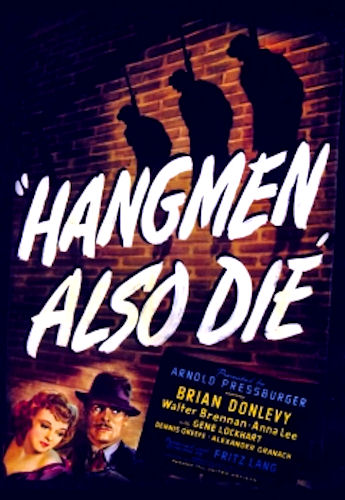
Hangmen_Also_Die_1943There are some fine pieces of intrigue in this modest WWII period film from Fritz Lang. The plot is based off real events in Czechoslovakia surrounding the assassination of Nazi Holocaust proponent Reinhold Heydrich. Mascha (Anna Lee) finds herself admidst a web of trouble when she helps a member of the underground after he commits the killing. But the Nazis are soon hounding her and it brings danger to her father’s household (Walter Brennan) . Ultimately she is forced to choose where her greatest allegiance stands.The film features Gene Lockhart playing the Nazi collaborator Czaka. Perhaps this film is not all that realistic and the casting is not perfect (although I did enjoy seeing Anna Lee in a leading role). At the time it came out this movie functioned as an anti-Nazi film and it still packs a decent punch from that perspective. It deserves some acknowledgement at the very least.

3.5/5 Stars

They Drive By Night (1940)

They_Drive_by_NightThis is a surprisingly nice little film-noir that follows two brothers (George Raft and Humphrey Bogart) who make their meager living transporting loads of produce by night on a big rig. Despite the seemingly mundane topic, They Drive by Night has some juicy bits of drama as the brothers struggle to survive and make their way in life. Along the way there is disaster and treachery. Ida Lupino is absolutely psychotic in her role opposite George Raft and Alan Hale. Then Ann Sheridan plays the nice girl role. I wouldn’t say that this is a great Noir but it certainly is far from boring.

Raoul Walsh proves just how adept he was at making entertaining melodramas and Humphrey Bogart is yet one step closer to his breakthrough with The Maltese Falcon (1941).  The truck drivers can always be found at the local diner getting their burger, talking up the waitress and maybe playing some pinball. When there time is up, it’s a long night ahead hauling fruit crates. The film is a slice of Americana reflecting a bygone era, at least for most of us.

3.5/5 Stars

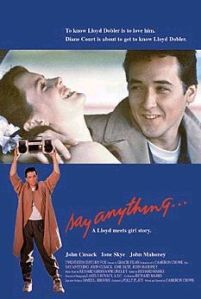
Say Anything… (1989)

Say_Anything“How’d you get Diane Court to go out with you?”
“I called her up.”
“But how come it worked? I mean, like, what are you?”
“I’m Lloyd Dobler.”

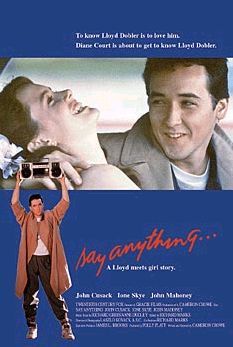
She’s a brain, he’s not, sounds simple right? For such a basic premise Say Anything… has surprising depth. A lot of this is a credit to the performances of John Cusack and Ione Skye, along with the script by Cameron Crowe. The story is this: high school is over and the unknown future is what looms ahead. For Diane Court that means college, a fellowship in England, and the like. For Lloyd Dobler, we do not know what that means and he doesn’t either. For the moment he still has time, and he wants to use that moment to pursue Diane, the seemingly unreachable girl.

First of all, you have to understand how insane that goal is for a guy like Lloyd. He is a lover of kickboxing, The Clash, and he is an average student who lives with his sister and little nephew. Diane is the class valedictorian, doted over by her loving father, and she is a surprisingly sweet girl who dresses well and is a cut above. Not in a million years is he supposed to get her, but I said that already.

Anyways, Lloyd is a straightforward and to the point kind of guy, so he simply calls her house to ask her out. She finally gives into to his requests, and they go to a party to celebrate the end of their high school career. For him, it’s their first date, and she sees it just as a very nice evening. Diane leaves with a new found appreciation for Lloyd because he’s not like other guys. He periodically checks on her during the party to make sure she is alright and points out broken glass on the pavement for her to avoid. He is a gentleman in a trench coat, a strangely vulnerable figure.

Lloyd’s only future plans are to hang out with Diane as much as possible and as far as career plans he is not really sure. When everyone else, even his high school counselor, worry about the future, he always seems strangely, even naively, content.

Diane and Lloyd are slowly growing more and more connected and intimate. However, when Mr. Court goes under criminal investigation things begin to change. At first, everything is the same, with Lloyd teaching Diane how to drive stick shift and Diane growing more and more comfortable with him. And yet, with the familial situation at hand, she feels it necessary to break it off with him, leaving him a pen to write her with. Lloyd is especially wounded, confessing to his sister over the phone, “I gave her my heart and she gave me a pen.”

Soon enough Mr. Court’s account is cut off and in some ways, I felt strangely sorry for the man, but more so for Diane. One day Lloyd comes by with his boombox in tow, standing outside her window in one last monumental act of devotion. Nothing happens right then. Diane is still struggling with her father who it turns out has been swindling his elderly clients, but all for her future. She feels lied to and the only person she could run to is Lloyd, so she does and he takes her back.

Later on, he sees her father in prison and shares that his plan is to go to England with her, despite all the objections that come with it. The two jet-setters are together again proving all the doubters wrong. They wait for the ding of the smoking sign signaling the beginning of the rest of their lives.

This is perhaps one of the greatest high school romances ever, because it is far from the typical superficiality. Lloyd Dobler is played so wonderfully by John Cusack. You cannot help love this lanky guy who is fearlessly straightforward and willing to take a chance. Ione Skye is a bit overshadowed, but she is still convincingly sweet as the victim who finds the perfect guy. John Mahoney’s character is a despicable man and yet it is a credit to him that he actually makes us feel a bit of pity, for an instant. Obviously, the boombox scene is iconic, but I think it is the little things about Lloyd that make this film great. Every person could probably take a page out of his playbook by being honest, vulnerable, and most definitely loyal.

4.5/5 Stars

Howl’s Moving Castle (2004)

Howls-moving-castleposterCertainly this newer addition to the work of Ghibli Studios and Miyazaki is not his best due to a lack of cohesion within the story-line and the rapid coming and going of characters.

However, with that aside, as always the animated landscapes and backdrops are as beautifully breathtaking as ever. It is yet another whimsical world that came partially from Miyazaki and also from its British source novel.

It is occupied by some wonderfully fascinating characters including the eponymous Howl, Calcifier, Sophie, and cute little Markl. I ended up watching the dubbed version with the voices of Christian Bale, Josh Hutcherson, and the always comical Billy Crystal. I think I was perhaps most appreciative to hear the voice work of Lauren Bacall and Jean Simmons. Their work in this film exemplified that their illustrious careers spanned well into their 80s. That is quite the feat.

I have to say that the dog and Turnip Head had to be two of my favorite characters. I’m not quite sure why… Still I would recommend this film and it is certainly a must for Anime or Miyazaki fanatics.

4/5 Stars

Clueless (1995)

CluelessHere is a high school teen comedy that is actually quite entertaining. Based off Jane Austen’s Emma, the story gets a 90s face lift. Cher is the quintessential ditsy Beverly Hills girl. She is popular, beautiful, and she knows how to dress. However, perhaps most importantly of all we learn over the course of the film that she has a heart.

Initially she loves to play the matchmaker and she takes on pet projects while trying to find a relationship of her own. In end she finds her true love sitting right in front of her all the time.

The film is propelled by a memorable characterization by Alicia Silverstone who is balanced out nicely by a young Paul Rudd. Cher’s voice overs throughout the entire film work swimmingly and there is a bit of a fairy tale ending. Not to mention some sagely advice and hip jargon.

Now I know never to go for a Monet. AS IF! I’m not that clueless.

3.5/5 Stars

Review: The Shawshank Redemption (1994)

ShawshankRedemptionMoviePoster (1)This film originated from a Stephen King novella called Rita Hayworth and Shawshank Redemption. The actress actually does play into this movie and her famed hair flip from Gilda even makes a memorable appearance. However, the shortening of the title not only simplifies things, but it refocuses the film on what it is all about. You guessed it. At its core, Shawshank is about the redemption of one man who would never let his hope or ardent spirit be quelled. That man is the memorable, but generally unassuming, Andy Dufresne (Tim Robbins).

His story began back in 1947 when he was put on trial after being accused of riddling his unfaithful wife and her lover with bullets in his drunken rage. We see bits and pieces of what happened, but not everything. Andy quietly maintains his innocence, but he is dealt two back-to-back life sentences in the Shawshank state penitentiary.

When he gets there initially he looks to be a pushover, not ready for the dark recesses and the harsh reality that is prison life. In his typically smooth mode of voice-over, Morgan Freeman, as camp grifter Red, recalls when he first set eyes on this man. He didn’t know it then but Andy would prove to be a life-changing acquaintance, and he also proved to have more guts than Red was expecting.

They first cross paths when Andy comes to Red inquiring about getting a rock hammer and Rita Hayworth. Red obliges and these trinkets allow Andy to shape rocks to form a chess set. The poster goes up on his wall and others soon follow. He’s a man who always strives to stay busy, and he never lets his circumstances get him down.

It doesn’t come easy though because the local prison gang christened “the sisters” are used to getting their way with any inmate they cross paths with. Andy is not one such individual, and he pays the price, receiving beatings on multiple occasions. Still, he keeps on living and ultimately makes a name for himself by providing tax advice for one of the most notorious guards. It’s after this specific moment when he wins a round of beers for his mates that they begin to see the extraordinary individual in their midst. He goes by the credo, “Get busy living or get busy dying.”

Following his own words to a tee, Andy begins to prove his worth and earn respect as he gives tax advice to many of the prison attendants and guards. Even the hypocritical warden uses his services to keep his finances and office in order.

Andy is also transferred from doing grunt work to helping the aged prisoner Brooks in the library. It’s a step up and unprecedented in the history of the prison, but then Andy is truly special. After Brooks is released and tragedy strikes his life, Andy continues to improve things. He regularly writes his representative for funding so he can get more books and his work finally pays off. He also sets up a program so prisoners and workers alike can gain the equivalent of a high school education.

As the years pass, the prisoners get older and the posters change on Andy’s wall from first Rita, to Marilyn, and finally Raquel. About that time, a young prisoner named Tommy finds himself in prison and all the old timers like his energy. Andy resolves to get the young man an education and Tommy, in turn, shares some potentially life changing evidence with Andy. But it all comes to naught. The warden maintains his tyrannical reign and the defenseless Tommy is struck down.

Andy begins to lose some of his privileges as the warden starts to clamp down on him again by throwing him into solitary confinement for two months. When he gets out, Andy’s hope is still alive, sharing with Red about his dream of someday going to Zihuatanejo in Mexico to live in solitude. Red thinks it’s all folly, but agrees to do something for him if he ever gets out.

Then during an upcoming roll call, all of a sudden, just like that, Andy Dufresne is gone for good. To add insult to injury, he used his business acumen to stick it to the warden who is investigated by the police. Andy has the last laugh.

After so many rejections and denials, Red finally gets his parole and he looks like a mirror image of Brooks, a man who grew to know the Shawshank as his only way of life. It looks pretty fast and grim on the outside now. But Red has a purpose that Brooks did not, in Andy. He keeps his promise to Andy and rendezvous with his old friend.

Shawshank is a thoroughly engaging film and it works because of the performances of Tim Robbins and Morgan Freeman. Robbins acts as such a bright light despite his solemnity and subtlety. He is unceasingly upright;  the perfect contrast to this prison which is a vile, disgusting place full of corruption and violence. Freeman is the cynic and in many ways, he stands in for the audience. He wants to believe in a man like Andy as much as us, but the world initially tells him he cannot. However, Andy proves Red and the world wrong, by redeeming what has fallen. I can never get over that truth because it is such a powerful message told in such an engaging way.

4.5/5 Stars

Review: Rear Window (1954)

Hitchcock_stills_0006_rear-windowWho in their right mind would make a film that takes place in a courtyard? Rear Window has always been fascinating from a technical standpoint, and Alfred Hitchcock is certainly not “The Master of Suspense” for nothing. He uses the confined space of a single Greenwich Village courtyard with an incapacitated individual to truly build the tension to immeasurable heights. The events within the film are often highly bemusing as Hitchcock has a wicked sense of humor, whether Jefferies is trying desperately to scratch that itch or the conversation turns morbid as he tries to eat breakfast.

The script has so many great little moments of back in forth repartee; some supplied by the always dynamic Thelma Ritter who plays the nurse with a lot of advice and opinions about rear window ethics: “We’ve become a race of peeping toms. What people ought to do is get outside their own house and look in for a change. Yes, sir. How’s that for a bit of home-spun philosophy.

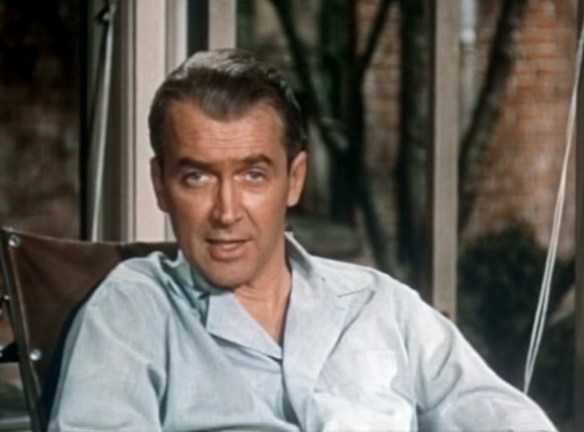
James Stewart is always a pleasure, but this time around he is perhaps at his most constrained as famed photographer L.B. Jefferies, who is laid up in his apartment for weeks on end with a leg in a cast. He got the injury thanks in part to his last big photo shoot where he ran in front of an oncoming race car. With nothing better to do, he spends his idle moments people watching and getting to know his neighbors. That’s one way to put it at least. As an actor, Stewart is stuck and relegated to conveying his whole performance through his gaze and the dialogue he speaks to those few who come in and out to see him. Most of what he’s doing is simply looking across the way and yet it works.

His neighbors are as follows:

There’s Ms. Torso who is an aspiring dancer and always the target of many men. There’s Ms. Lonelyheart who never can find the love she so desires. A washed-up composer spends the entire film trying to figure out his newest project (even getting a visit from Hitchcock himself). There are the newlyweds who hardly ever leave their bedroom because they’re doing something… Then, comes the older couple on the second floor with a cute little dog and the sculptor who lives below.

Most interesting of all is the couple directly across the way from Jefferies’ because that’s where a long-suffering husband and his wife live. All seems normal, to begin with, however, Jefferies begins to have his suspicions thanks to circumstantial evidence and no sign of Mrs. Thorwald. His first thoughts immediately shoot to murder, but it seems highly unlikely. Day and night he continues to watch seeming to get more evidence, only to have his theories crushed, and then gain new hope through more evidence.

James_Stewart_in_Rear_Window_trailerThe interesting part is that as an audience we are fully involved in this story. We see much of the picture from Jefferies’ apartment, because there is no place to go, and so we stay inside the confines of the complex. In this way, Hitchcock creates a lot of Rear Window‘s  plot out of actions occurring and then the reactions that follow. We are constantly being fed a scene and then immediately being shown the gaze of Jefferies. It effectively pulls us into this position of a peeping tom too. Danger keeps on creeping closer and closer as he discovers more and more. The narrative continues to progress methodically from day to night to the next day and the next evening.
In the climactic moments, he finally faces the man who he always looked in at from the outside and yet by the end the roles are reversed with Jefferies space being fully invaded, and yet he can do little to flee, because of his cast. Hitchcock cuts it in such a choppy and chaotic way which breaks with the smooth continuity of the rest of the film, but it works so wonderfully in stark juxtaposition.

This is one of the main appeals of Rear Window because it has this Hitchcockian story of murder, mystery, and suspense. However, I am constantly eager to revisit this story, since there are so many other intricacies that are of interest.

Although the film uses a score by Franz Waxman, the majority of the sounds heard are diegetic and they either are street noises or music wafting around the courtyard from one of the apartments.  Also, there is only one small outlet to the outside world. At times, it becomes fun to survey what is going on whether it is kids playing on the street corner or cars passing back and forth. It builds this sense of realism suggesting that this world that has been created is larger than this one set full of apartment buildings.

Another important element is themes of romance and love. Jefferies comes into the film with issues in his own love life. His girl is the elegant and refined Lisa Fremont (Grace Kelly), who seems perfect, too perfect in his estimation. In his mind, they just don’t seem compatible enough, and he cannot see marrying her. It’s something they have to work through because she truly loves him.

Really every character essentially has a different outlook on love and different struggles, because romance is never an easy thing. Like the lyricist’s song, it is so often fragmented, but in their case, Jefferies and Lisa seem to figure things out just as the song finally gets finished. The moment where you can see it in Jefferies’ face that he is both impressed and worried for Lisa’s safety seems to be the time when things change. He realizes his love for her since she is very dear. He quits his thinking and his analyzing of their relationship, as gut-wrenching emotions take over when she is caught. In a sense, he listens to Stella’s earlier advice: “Look, Mr. Jefferies, I’m not an educated woman, but I can tell you one thing. When a man and a woman see each other and like each other they ought to come together – wham! Like a couple of taxis on Broadway, not sit around analyzing each other like two specimens in a bottle.”

Wendell Corey, in his supporting role as Jefferies’ friend and the police detective, is a man who can be a skeptic and still prove his loyalty as a friend. They can be at odds and still poke fun at each other with mutual affection. It feels real. Raymond Burr as the villainous Lars Thorwald works well too because he is certainly an angry, unfriendly grouch, but he does not seem altogether evil. It shows how easy it is for the lines to be blurred.

rear-window-first-shot-of-gkAbove all, Grace Kelly shines opposite Jimmy Stewart. There’s no one quite like her, so elegant, eloquent, with a touch of playfulness and adventure. She is willing to fight for her man and even go out on a limb for him (ie. breaking into Thorwalds’ apartment). One of the film’s most extraordinary images, out of many, has to be when a shadow covers the face of Stewart as he rests. Then there is a close-up of Kelly, her face slowly descending towards him. It’s hard to forget and for the rest of the film, she attempts to not let him forget her.

It’s not often easy for me to make statements like this, but Rear Window has to be close to my favorite film of all time. Yes, I said it. It never gets old for me, and I pick out new things every time. It’s more than just a mystery thriller. Hitchcock made it a technical marvel that is also steeped in themes of love and ethical questions. The players are the best of the best from James Stewart, to Grace Kelly, to Thelma Ritter, all down the line. It’s at times deliberate, but never boring, completely immersing the viewer into this drama as a firsthand witness. It’s the type of cinema we just don’t get every day because it has everything and it cuts to the core — to the most visceral level. That is the sign of cinematic greatness.

5/5 Stars

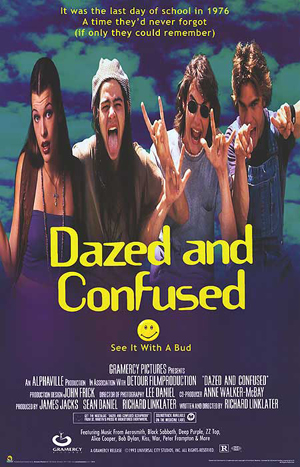
Dazed and Confused (1993)

DazedConfusedThis film struck me as being very reminiscent of American Graffiti. It did for 1976 Texas, what the other film did with 1962 Modesto California. It has its own share of cars, a killer soundtrack, and ensemble cast involved in all sorts of vignettes and escapades.

School’s out and all that is left to do is live it up. However, as the kings of the school, the seniors have it easy. They get to subject all the new freshmen to initiation. Girls just get embarrassed, boys get paddled and you cannot choose your poison. You would think that all the seniors have the life that they want. After all, they have friends, they have good times, but for some of them they do seem to realize there is something else that’s missing. Of course right now they just want to have one epic good time.

This is one of Richard Linklater’s great earlier films and for the most part is was pretty good. He’s come a long way with films such as Before Midnight and Boyhood, but this is an important film if you want to understand where he’s come from.

4/5 Stars

Lost Horizon (1937)

LostHorizonPosterCertainly this is not the most well known or the best film of Capra. It is, in fact, quite different from a lot of his filmography. That is not to say that it is not an enjoyable film about a man who finds a little piece of Utopia called Shangri-La. Ronald Colman was certainly a likable fellow in the lead role and Jane Wyatt was pleasant during the time she was on screen.

What I really enjoyed in this film was the quibbling and bickering of Thomas Mitchell and Edward Everett Horton’s characters. These are two tremendous character actors who represent all that was great about the stock characters of Hollywood’s Golden Age. They are so recognizable and though not the stars they seemingly steal their scenes.

Because some of this film was lost, parts were understandably choppy since there was no visual aside from photos to go with the dialogue during certain moments. Despite this, the film is an enjoyable, albeit dated, 1930s fantasy.

4/5 Stars

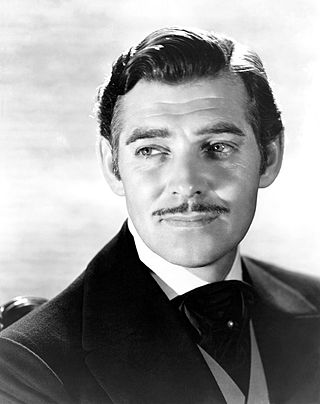
The Best Films of Clark Gable (1901-1960)

“I’m no actor and I never have been. What people see on the screen is me.”

Clark_Gable_
  • Gone With the Wind
  • It Happened One Night
  • Mutiny on The Bounty
  • The Misfits
  • Red Dust
  • San Francisco
  • Run Silent, Run Deep

Frequent Leading Ladies: Myrna Loy and Jean Harlow

He was married to Carole Lombard until her death in 1942