Howl’s Moving Castle (2004)

Before the movie played, there was a short featurette following famed animator Hayao Miyazaki leading up to his Oscar win for Boy and The Heron in 2024. He sits with one of his fanciful drawings and mumbles something to the effect that it’s a pain going back to the real world. 

You only say that if you have an extraordinary imagination. But like many of us, Miyazaki seems to yearn for a better if not a different world altogether. When he wins the award, the man’s nowhere to be found.

Because that’s not why he made his film. It was the process and the exhilaration of reaching back into his imagination and exploring a different world. In documentaries, the director always strikes me as a somewhat cagey if unassuming individual, but what a joy it is to be privy to his creations. 

It’s little different with Howl’s Moving Castle, which now sees its 20th anniversary come to pass. It’s a striking opening image following this mechanical Baba Yaga-like castle (from Russian folklore), almost anthropomorphic in its movements. Howl’s abode is not only a visual marvel, but it is also the seat of this entire story. 

The eponymous man is a charismatic wizard, benevolent if somewhat vain and periodically selfish. But he is not the film’s only hero. Its true core begins with Sophie, a young girl who works as a hat maker. She has the humble beginnings that fit right at home in a fairy tale, and true to convention, her fearlessness means she has a spell cast on her by the menacing Witch of the Waste. 

Instantly, her youth is snatched away from her, and she’s stricken with the wrinkles and arthritic posture of old age. But Sophie is a driven, ever stalwart heroine, and she resolves to find a resolution for her fate. She must venture to Howl’s Castle in search of answers. Upon seeing how dank and grungy the wizard’s abode is, she hires herself on as a cleaning woman, determined to cultivate it.

Once again, I’m struck by how Miyazaki conjures up a world of the grotesque, from creepy crawlies to ghoulish, otherworldly adversaries, and dark forces. But the fairy tale almost demands these elements; they feel like a prerequisite because they give us a threshold for great beauty and even serenity in the lap of nature. One would not be as potent without the other. 

Like some of the great adventure stories, Sophie and her newfound acquaintances form a disparate family unit reminiscent of The Wizard of Oz, Star Wars, or even Pixar’s UP.

There’s Markl, a precocious little boy with a bearded cloak who earnestly tries to hold down the fort while the master of the house is indisposed. Calcifer is the obstinate fire demon who begrudgingly powers Howl’s mobile fortress even as he dreams of being freed from his fate. Later additions include a scarecrow christened “Turnip Head” by Sophie, and then a sad-eyed, wheezing canine Heen and, eventually, a wilting Grandma.

In a subsequent scene, Markl looks up to his surrogate maternal figure and asks her if they are family, and she quietly affirms him with added conviction. What he asks is right and good. Not only that, it is true. They look after one another. 

Joe Hisaishi’s score, including the jaunty waltz-inflected “Merry Go Round Life,” augments the entire panoply of Miyazaki’s world as the composer always seems to do. In this case, it’s an added European flavor to go with the opulent architecture. I could not help thinking of the French phrase, “La Ronde.” It no doubt has many meanings, but it suggests to me that stories, like life, often come full circle. We’re all interconnected. 

In another sense, I was struck by the way Howl seems timeless, even as a film that turned 20 years old in 2024. It stands outside of that moment to mean something more to us that’s universal.

The story is gripped in the throes of war and the destructive chaos it engenders. It’s difficult not to see the film living in the literal shadow of The Bomb, as many Japanese films have post-WWII. Because while Howl is not about a literal time and place, that’s not to say history cannot bleed into the storyline. Especially because Miyazaki is a personal filmmaker laying himself bare and sharing his thoughts and emotions through his creative offerings.

The glory of a Miyazaki movie is how deep his imagination takes him as he pushes to the limits in the most glorious of ways. I come out of his most epic films overwhelmed. If you asked me to give a rundown of plot points, I could not without feeling discombobulated, because watching his films is not about plot points but an overarching experience. It’s so easy to remember crystallized interactions, character moments, and these grand, almost innate themes.

In the deepest sense, perhaps Howl’s Moving Castle is a love story. Transcendent, yes, but also a tale about opening up your heart. I’ve often heard the words in a spiritual context, but it fits here too: I will give you a new heart and put a new spirit in you; I will remove from you your heart of stone and give you a heart of flesh. The metaphor is clear. 

It feels as if Howl is transformed and regains a heart and a desire for love he never had before. As the Narnia author C.S. Lewis wrote, “To love at all is to be vulnerable. Love anything and your heart will be wrung and possibly broken.”

Howl is injured, and our heroes are taken to the brink of death on multiple occasions, and yet the risk seems worth it. Because there is hope and then elation before the final curtain when those who are meant to be together are reunited. 

Of course, this is all a world Miyazaki has conceived with the aid of Diana Wynne Jones’s novel, but just as his real life seems to bleed into the fantasy, I feel like we would like to believe that the fairy tale permeates the real world, too. Love, sacrifice, beauty, camaraderie, these are profound things to strive for in life. They can hardly put us to shame.

They give meaning in ways worldly accolades like an Oscar could never satiate. Miyazaki seems to know deep within his bones that this is true. Look no further than his films for proof. 

4/5 Stars

Note: This review was originally written in 2024 around the 20th anniversary of Howl’s Moving Castle.

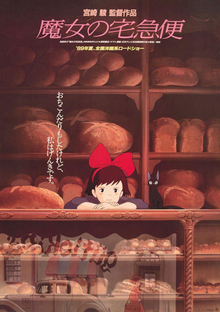
Kiki’s Delivery Service (1989)

For the two years I lived in Japan, one of my immediate joys was discovering music that was new to me: It included the likes of Happy End and Mr. Children. And that’s before you broach the subject of City Pop. But about the same time, I was smitten by some of the tunes of Yumi Arai.

It wasn’t until recently that I learned two of her most famous classic tracks gained a second life in Kiki’s Delivery Service, and a third was used in The Wind Rises. For this, I must thank Studio Ghibli because the songs evoke instant nostalgia even if you’ve never heard them before. They pair so wonderfully with the opening and end credits, setting the mood with such a peppy rush of gleefulness as embodied by our titular heroine.

It’s always a consummate joy watching Hayao Miyazaki’s films for the very reason that they rarely follow the most well-traveled road. Closer still, his films pursue what we want in our heart of hearts.  There’s a vigor of youth, an idealism, and space for big dreams and aspirations that reach high into the atmosphere.

What you come to admire about him as a maker of animated films is how magic is nothing to be skeptical about. In his stories, it feels integrated like a crucial part of everyday life. Something that he probably acknowledges when he’s walking around his neighborhood.

Who else would think about taking the story of a young witch coming of age and spin such a delightfully winsome yarn? In truth, he adapted Eiko Kadono’s 1985 novel, but there is a sense that Miyazaki has an outsized influence on where the story occupies itself.

Kiki leaves her parents behind at the ripe young age of 13, armed with her broom and transistor radio, and her black cat companion Jiji, to find a new town to settle in. It could be such a lonely tale with the slant of Oliver Twist, and yet it’s rarely this kind of story.

She finds a place to stay in the attic of a bakery called Gutiokipanja, thanks to the maternal warmth of the proprietor, Osono, who becomes like a surrogate mother to Kiki. Her husband is hard-working and taciturn, proving himself to be covertly kind. They provide a framework of warmth to build the rest of the movie around.

We are still in Miyazaki’s early period. As best as I can describe it, the hand-drawn images look older, but the vintage quality is part of their charm, helping us venture back into a bygone era right alongside Arai’s pop songs. They fit well together.

And yet Miyazaki has made a career out of layering all these influences that have endured throughout his work. Joe Hisaishi’s scoring is the height of elegance, while the animation itself is replete with architecture, street corners, and automobiles, accentuating a European sensibility fractured through a romanticized Japanese lens. Regardless, it’s a beautiful, ever-magical world to be privy to.

With her lodging and provisions in place, Kiki sets out to make a life for herself using her talent for broomstick travel into a local delivery service. In the days before Lyft and Uber Eats, she feels cutting edge, delivering all sorts of things across the countryside.

Her first booking is a present for a young boy’s birthday, and the stuffed toy looks strikingly like Jiji. However, en route, she runs into a spot of bother, and so her faithful companion takes one of the team so Kiki can save face and try to recover the original.

This vignette introduces the family’s elderly dog, who languishes lazily by the hearth with nary a sound. In a Disney movie or Warner Bros. cartoon, he would be the obvious villain of the scenario, and yet Miyazaki, with his bewitching kinship toward animals, makes him into a wonderful ally. In fact, Kiki meets many such people across her journey.

Try as one might to manufacture conflict, most of these interactions feel refreshing and honest. Surely this is not how you make a movie traditionally, and still, by some alchemy, Miyazaki pulls it off. Kiki spends most of her time with a zest for life and in the service of others, with the trusty Jiji by her side.

Her biggest crisis comes near the end. It’s hardly a spoiler to say she loses her powers as well as her ability to talk with Jiji. Even here, she gains a ready-made mentor in Ursula, an independent artist who paints and lives in the nearby forest.

The final act evokes Miyazaki’s constant preoccupation with the skies, building off Kiki’s broom-riding, the young boy Tombo’s propeller bike, and finally, a giant zeppelin that evokes a bit of the Hindenburg. He gives the finale of his picture a slam-bang bit of spectacle as the aircraft loses control and Kiki must summon her talents to save her young crush. To say any more would rob the audience the pleasure of experiencing the culmination of the film for themselves.

Because eventually, the world does settle back into its rhythms and the prevailing good-nature that runs through the entire story. The only curious change is how, now that Jiji has a lady friend, even after Kiki’s triumph, she doesn’t seem able to speak with him. Perhaps it’s part of her coming-of-age journey. Giving up childish things in a sense, while never totally relinquishing her wonder.

One imagines this is how you grow up to be the ripe old age of someone like Miyazaki. Still being able to call on your imagination vividly, and believe in forces that seemingly break into the mundane moments of everyday life. In the waning moments, it’s apropos that Yumi Arai’s final song sends us off just as we began. Kiki’s Delivery Service goes from strength to strength, never allowing us to falter in having a good time.

4.5/5 Stars

Favorite Films of 2023

I was a bit behind on my movie-watching for 2023, but here is a list of a few movies I enjoyed from the past year. I’ve either linked to a previous review or included a short capsule. Enjoy!

Past Lives

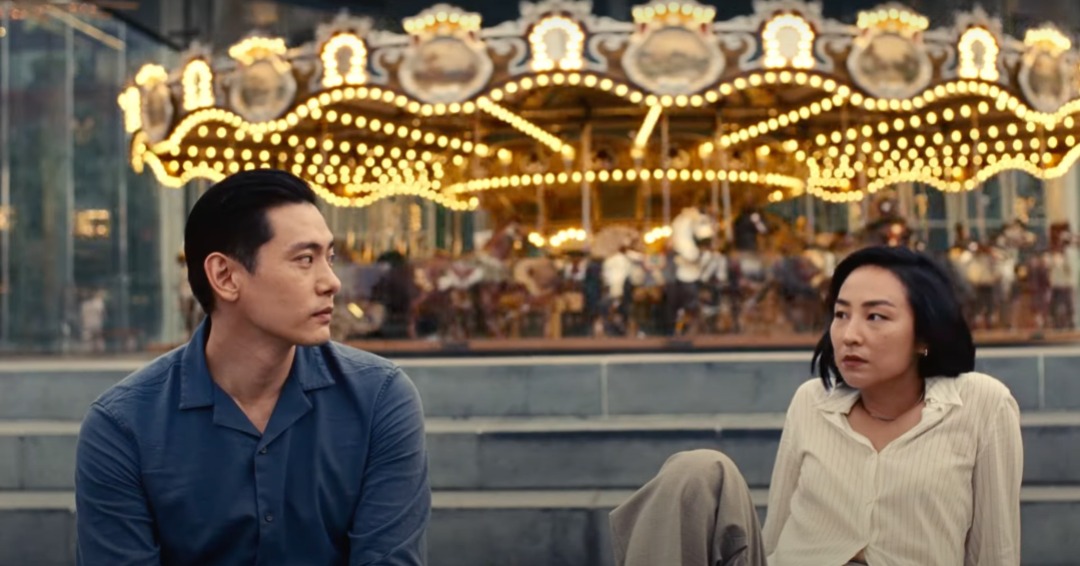
Writer-director Celine Song’s use of time is self-assured and brazen. She’s loose and elastic with it, bravely allowing her story to cut 24 years into the past before fast-forwarding 12 years and then 12 years again. But these jumps in time feel subtle and right with the perfectly applied sense of space and context. We never feel like we’re being rushed. The elliptical nature of a single cut is imbued with so much power. The movie is the epitome of contemplative cinema as it tells a fated love story.

Greta Lee is such a phenomenal conduit of this drama, and she takes every scene with a composure full of warmth and feeling. Teo Yoo has a forthright candor morphing from a boyish heartthrob to a man still grappling with unresolved feelings. John Magaro could easily be a whiny-voiced annoyance — the white evil of the movie — and yet it’s a credit to his humanity that we like him and even empathize with him (especially if we don’t speak Korean like this viewer).

As humans, we’re always looking to discern what our future will be. Religious people question God’s plan for their lives. And often we have the nagging thoughts of what-ifs and how things could have been. Perhaps I’m the only one who thinks like this. But Past Lives seems to suggest this is not the case.

Perfect Days 

It feels almost too convenient to evoke Jim Jarmusch’s Paterson from a few years back when considering this new film from Wim Wenders, but I can find no other alternative. They both focus on individuals who live contented analog lives with daily rhythms that feel almost radical in the face of the world around them. It doesn’t matter if it involves bus driving or in the case of Hirayama (Koji Yakusho), cleaning toilets in Japan under the watchful eye of the Tokyo Skytree.

Jarmusch, much like Wenders, has always felt like a sojourner with an insatiable curiosity, and both men seem to be continually expanding the cultural canvas of cinema through their travels and observations of a wide swath of humanity. Of course, Wenders started out first and has been doing sustained work for many years. It seems fitting that a film like this, while focusing on a very specific Japanese milieu, with the help of co-writer Takuma Takasaki, still boasts some of Wenders prevailing passions from photography to rock and roll music.

But what could feel like a mere gimmick gives rise to a man, thanks in part to Yakusho’s disarming performance, who has so much to offer the audience and others within the frames of the film. Because there’s something so quietly instructive about him. We can learn so much and appreciate so much more if we only observe the people and things around us. I found it charming, and it was a stirring reminder of why I love Japan (and the films of Wenders).

The Taste of Things

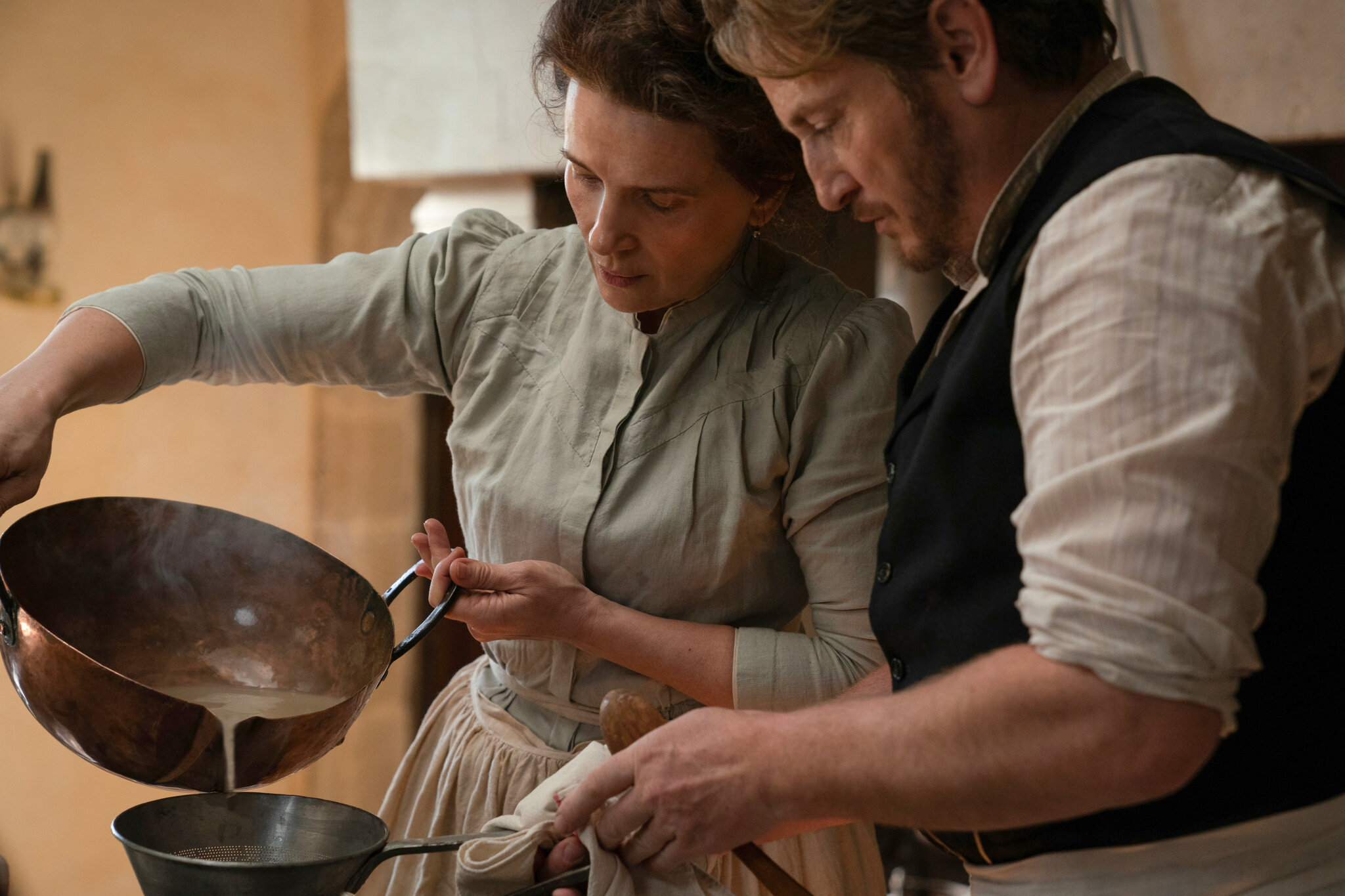
Babette’s Feast is a film that was a revelation to me from the very first time I watched it. I’m no gourmet and yet such sumptuous delights are hard to resist wrapped up in a Danish parable as it is. The Taste of Things is much the same – coming out of the same lineage – and the unbroken introduction to this tactile, delicious world of food in a 19th-century French kitchen is equally entrancing. There’s something so compelling and equally remarkable about these epicurean delights being created before our eyes. How something can have an extravagant simplicity to them requiring the utmost amount of tender loving care (and the freshest ingredients plucked straight from the garden).

While it’s not quite as thematically rich as its predecessor, it does rest on a love story brought to the screen by the incomparable Juliette Binoche and Benoît Magimel, a pair of performers with a real-life history albeit one in the past. Food is their undisputed love language. It buoys their romance in such a rapturous way paired with the delicious cavalcade of eateries and a vow to train up another generation of chefs who have the intuitive gifts and the innate passion for food that can be further cultivated. There’s something quiet, beautiful, and melancholy about Tran Anh Hung’s film that I greatly relished. 

Killers of the Flower Moon

There’s something more fundamental here. You see it in many of Scorsese’s movies from Goodfellas, Wolf of Wall Street, or any of his gangster pictures showing the traditional villains in an intimate if not entirely sympathetic light. He always seems to return to this because this was his childhood — he grew up in a neighborhood with these sorts. By the world’s standard are they corrupt? Yes, but they aren’t personified evil. They act as complicated characters full of charisma, humor, and whatever else.

It feels like this is his gift as a filmmaker. Because we don’t always like these people, but he was never interested in a black hat and white hat morality. Perhaps that’s why he did not make Killers a more traditional Western because this would not be true to the ethos he’s had since the very beginning.

Lily Gladstone is such a powerful emotive force in this movie because if Leo’s performance is so pitiful, she is his perfect scene partner by maintaining an equilibrium; there’s a regality to her that’s not easy to break and yet she’s not an unknowable stoic. She loves deeply and with Ernest and her family, we see both her affection and her deep sorrow when they are ripped away from her one by one. The movie requires her strength to hold it together and instill it with resonance. Scorsese never asks easy questions, and I believe that comes with honesty, and it’s part of the reason he’s still one of our premier filmmakers. He’s still curious and the questions he asks with his films are ones he’s still wrestling with now 80 years on. They’re universal.

Oppenheimer 

It’s easy to cast Oppenheimer as one of the most important figures of the 20th century since he was the “Father of the Atomic Bomb,” but he was also one of its greatest tragedies. There’s a scale and scope to this narrative woven right into the very fabric of history. A whole movie could be borne on Cillian Murphy’s face and it is. Between his vivid eyes, gaunt contour, the porkpie hat, and pipe, there’s something instantly iconic about him. He’s haunted and profound even before he says or does much of anything.

It’s also dizzying watching Christopher Nolan develop the rich world around Oppenheimer packed with substance — a real world of real people and events we get to experience firsthand. This immediacy is key and although I’ve read the book, I don’t think you’re required to keep it in your back pocket. Nolan has done the unthinkable by making a potentially stodgy historical piece into a gripping blockbuster. In the age of superhero movies, studios have mostly assumed historical genres are dead.

Likewise, by shaking up a prosaic biopic form, the director alights on something that’s narratively audacious even when it falters. That’s why he’s remained one of our most beloved filmmakers over the last decades. He makes big movies for thinking people, and if nothing else, I hope Oppenheimer acts as a clarion call for more thoughtful tentpoles in the industry. The audience seems to be more than rewarding his efforts.
The Boy and The Heron

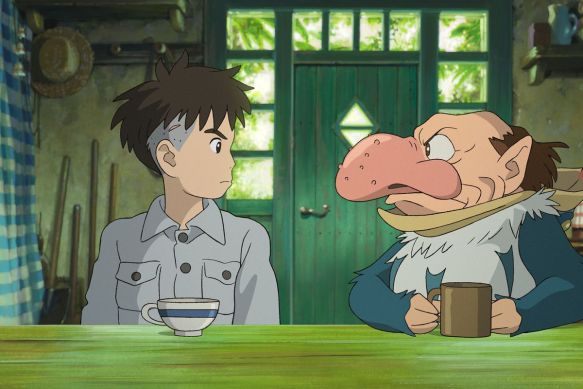
I was thinking how grateful I am that filmmakers like Martin Scorsese and Hayao Miyazaki are still giving us their art. How lucky are we? The Boy and The Heron gleans some inspiration from the 1937 book How Do You Live? and also the annals of Japanese history and Ghibli Studio’s own lineage. Watching the film there are many echoes of Miyazaki’s favorite topics and also the influence of his mentor Issao Takahata.

For a Western audience, it has the tinges of Narnia where the war is an everyday tragic reality, and thus a world outside our own gives space for respite and marvelous things that can break in and heal our hurts so we might make peace with them. I was reminded of Petitte Mamam where the magical can somehow bring a parent and child closer together, even forge them by fire and trials of many kinds. 

All this fits for the simple reason that the film is very much a fairy tale. I couldn’t get away from this idea that Miyazaki’s film is so beautiful to look at, absolutely resplendent (he also has a penchant for the cutest creatures), and yet it has these pointed moments of ugliness even terror that feel like a necessity. The contrast is key to making the magical world feel in a sense real because we recognize both the good and evil from our own lives. It’s within this space where children can grow and thereby enter back into their lives ready to face the challenges ahead. It occurs to me that Scorsese, Miyazaki, and others like them maintain the curiosity and wonderment of youth. The years they’ve been on this earth belie their child-like spirit. It makes their movies still so accessible and universal to the masses, well worth our time and consideration. 

Afire

I appreciated Afire because, like many of the director’s earlier films, it’s deep in conversation with the vast annals of cinema. This one in particular feels like a paler, pudgier version of an Eric Rohmer movie. Something in the vein of La Collectionneuse, Pauline at the Beach, or even A Summer’s Tale. I felt vindicated hearing that Petzold was in fact consuming some Rohmer films during the pandemic, but that was only part of his inspiration. Unlike Hollywood, Germany doesn’t have a lineage of summer movies about the last day of school or hanging out at the beach with no adult supervision. The summer had vanished not only from their filmographies but from Germany as a whole. The nation rarely got this opportunity with the ascension of the Nazis and this historical backdrop gave rise to many of the specters which have haunted most of Petzold’s oeuvre.

If you wanted to make a case, Afire is actually Petzold’s most comedic film to date and his closest to romantic comedy thanks to its lead. I’m still trying to get my feelings in order, but Afire delivered like the director always seems to. It’s deeply observed and engaging with its perceptive vision of humanity and interpersonal relationships. But what makes it richer comes with how the writer-director takes a simple premise and simultaneously imbues it with all this intertextual meaning. His references are not always overt, but couched within his stories are the echoes of his nation’s films as well as literature and mythologies – many of his projects over the years have been adaptations of much older work. In our current age of cursory knowledge and vapid fads, he’s a refreshingly thoughtful filmmaker.

Godzilla Minus One

I found Godzilla Minus One feeling like this year’s Top Gun for what it teaches us about sequels. Obviously, Godzilla is an institution in Japan, but here we see a film that takes the very specific context of the original film amid the nuclear age — reminding us of the context of a post-war world — while building on the past in new ways. Top Gun: Maverick did much the same as its predecessor, and it was oddly such a human and intimate film in the same way that this giant monster movie with tinges of Jaws (and The Dark Knight Rises) feels even least nominally invested in interpersonal relationships beyond mere kaiju eye candy.

This new film is a spectacular bit of construction blending period drama with solid special effects, a quintessential demolition of Tokyo, and deep sea confrontation that brims with menace and personal stakes. Perhaps what’s most spectacular is how director and general mastermind Takashi Yamazaki was able to offer up a low-budget tentpole full of invention and a stirring message of hope. In a film full of devastation and general destruction, the narrative bends refreshingly toward a message promoting the sanctity of human life. This feels like a radical position for a genre that feels almost antithetical to this kind of sentiment. 
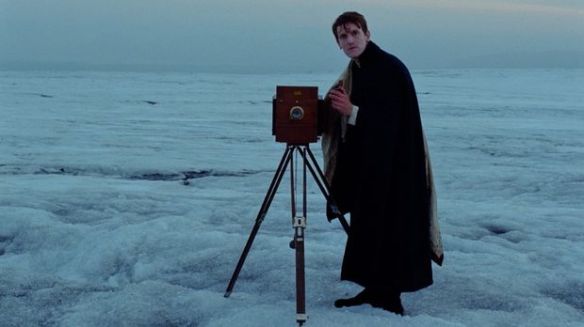
Godland

It’s the kind of taxing epic that is not for everyone. Positioned somewhere between Carl Theodor Dreyer and Werner Herzog, it’s both gloriously desolate with the raw beauty and power only nature can attain. It also brims with the kind of existential weight one feels when your attempt at Christian faith is found lacking and all your pride and human vigor are laid bare.

Our protagonist cuts a gaunt figure. He’s the most ascetic and joyless man of the cloth, but out of many striking images in the film, there is a sequence that feels emblematic of the trail he leaves in his wake. First, an interpreter who must be buried, and then his horse which is left for dead, followed by a final summative death. Seasons change and yet in our limited capacity we are so insignificant in comparison to God’s creation and his majesty and it is arrogance and folly to think otherwise. I am reminded of the verse: “What is man that you are mindful of him, and the son of man that you care for him? Yet you have made him a little lower than the heavenly beings and crowned him with glory and honor.”

This is a spectacular perspective, and it is something to be held with a loose rein of humility. Grace is something to be cherished because it changes your outlook and how you treat others. Meanwhile, colonialism is something we still feel the repercussions of here, and we see it here in the cultural and linguistic tension between Denmark and Iceland. Condescension has no place in the supposed Christian way of life; it’s ultimately a pernicious force. 

Across The Spider-Verse

As we watch the live-action Marvel comic book movies show what feels like signs of slightly waning dividends, it makes the animated iterations all the more intriguing. They exhibit a meshing of style and storytelling. It’s exquisite to look at, but they’re not simply empty animated images. The form fits the content and we get a sense of atmosphere, even emotion through the way they are distilled through the visual palette. There’s an invention and a sense of craft that takes into consideration the modern landscape while still staying true to the form of split panels or even the evolving painterly watercolor aesthetic of Gwen’s world. Somehow everything is all but typified by our hero fighting a Renaissance vulture with Jeff Koons balloon sculpture left as collateral damage. 

I still remember when they made Star Wars literature legends and they were no longer canonical. That was probably one of the first instances I began to understand the term. Now it’s pervasive across fan culture. Canon events form the building blocks of the spider-verse world, but they also say something about our search to make meaning out of circumstances. It may be entertainment but it could probably spawn a whole conversation about predestination, free will, reincarnation, and the afterlife in general.

Part of me wonders if the reason these concepts are so intriguing to us or even comforting is that we are longing for something more (or something else) — something beyond the life that we lead. Surely this can’t be all there is. Why else would the world continually clamor for sequels and ever-expanding universes? My only qualm about the movie is my problem with all these “metaverses.” We can never leave well enough alone. But then again, they never satiate us. 

Documentaries: Beyond Utopia, The Mission, The League, Still: A Michael J. Fox Story, Being Mary Tyler Moore

Honorable Mentions: Are You There God? It’s Me Margaret, Earth Mama, Suzume, Flora and Son, and Fallen Leaves
Whisper of The Heart (1995): Take Me Home Concrete Road

Whisper_of_the_Heart_(Movie_Poster).jpgWhisper of The Heart is wholeheartedly a Japanese anime and yet learning John Denver’s “Country Roads” holds a relatively substantial place in the plotline might catch some off guard. After all, as the metropolitan imagery establishes our setting, we hear a version of the song playing against the bevy of passersby, cars, and convenience stores.

Director Yoshifumi Kondō boasts animation both simple and clean yet ever so attractive for those very same reasons. It positively glows with nostalgic yellow hues and employs anime’s preoccupations with the most intricate details — moths drawn to a light being just one prime example.

When I lived in Japan, I became fascinated by foreign music and how it gained a foothold in the country. You only have to look to jazz, The Ventures, The Carpenters, or Mariah Carey to see how deep their imprint is on the collective culture. The same goes for John Denver who made tours of Japan on several occasions.

But whereas musicians often become icons, sometimes Japan cultivates an environment where nuggets of culture can take on a life of their own. This theme serves as a perfect breeding ground for Ghibli’s classic coming of age story.

Shizuku is, at her heart, a spunky and feisty heroine with the kinds of hope and aspirations that often seem buried in a very restrained culture like Japan. In her middle school existence, an unknown person named Amasawa becomes an almost mythic figure in her life as they have checked out all the books she’s so voraciously eaten up in her nascent but ambitious literary odyssey.

They look to be a kindred spirit. It takes a fortuitous meeting with a commuting cat on the JR line to sustain her adventure. The disaffected animal leads her to a Secret Garden of sorts. This one is not found in nature but in the home of a delightful old man.

Because Whisper of The Heart is full of the blushing love of adolescence in its many tangles found throughout the student body. It’s no different in Japan, at least on the emotional level, or for that matter, the utter denseness of the male sex.

But it’s also a very particular world where dwarves and fairies can coexist with the mundane elements of everyday life. Shizuku comes to realize this when she reaches the end of her adventure — the peculiar second-hand shop cluttered with clocks, violins, and shiny doodads of all shapes and sizes. It’s run by a genteel proprietor who also happens to relate to her not so fictitious phantom: Amasawa.

This looks to be the working of Hayao Miyazaki behind the scenes because no matter how mundane we might perceive the world to be, he’s always allowing for bits of magic to seep in and liven up our existences. Implicitly, he always seems to be suggesting we need the richness of our imagination girded around us to make the most out of life.

He also employs the most amicable cultural appropriation, turning Denver’s down-home “Country Roads” into a lively, bright-eyed violin jam session in a Tokyo back parlor. It’s the strangest incarnation of the song I could have ever imagined and yet somehow it manages to be apropos. I only need to remember pop instrumentals of “Daydream Believer” during my former days frequenting 7-Eleven’s in Tokyo. It fits the aesthetic.

But back to Shizuku. Her newfound companion dreams of being a Violin maker and going off to apprentice in Italy. Not to be outdone, she wants to write stories. She’s charged with empowerment and then the subsequent doubts ambushing anyone who’s ever endeavored for such a thing. I am reminded of the artistic encouragement churned up by C.S. Lewis and J.R.R. Tolkien that blessed the world over with two of the most formidable fantasy worlds: Middle Earth and Narnia.

Because we need people who will gladly court our ideas, gives us encouragement, and supply even the brief inkling that our passing daydreams are not complete balderdash. If they provide enjoyment or engage with beauty or goodness for just one person, perhaps even this makes them entirely worthwhile.

The sagely old man charges Shizuku that craftsmanship of any kind is never perfect. But we must begin. We need to start somewhere. To pilfer the film’s own metaphor, we are all unburnished stones waiting to be polished to the point of perfection. There’s the necessity of time and effort to make it work. The diamond must be pulverized. The brass burnished. The grain sent through the thresher. 

Again, Miyazaki’s imprint is all over the picture because he is always and forever the spinner of benevolent fairy tales paired with creative inspiration. His avid imagination never ceases to mesmerize. Surely there are lots of magical beings, soaring through the air, lands full of castles and kings, and yet the seat of it all is found in the revelation these very things can exist in our everyday reality. They need not be distant. Far off lands can come to meet us, be it through books or writing, music, or people with memories that extend far beyond what we see and know.

It’s easy for me to laud Whisper of The Heart for being timeless. Yes, we see word processors, a dearth of cell phones, more antiquated train services, and yet so much of the interactions, the yearnings, and the derivations are universal.

I must turn my attention only to the sound of cicadas, the warning bell near the train tracks, or the clink of a mailbox at the front door. They are so basic, so unextraordinary, and yet they sound so familiar. To my ears, they remain almost comforting. Because this movie is comfort food, whether you fancy udon or steak and potatoes.

Full of warmth. Love. Longing. Passion. Miyazaki and Ghibli have captivated the world over with such sensations. Yoshifumi Kondō more than proved himself capable of eliciting this same type of wonder. It’s only a shame he was not able to give us more films. But there only needs to be one solitary act of creation to leave an impression. Whisper of The Heart is an unassuming monument to his career.

4/5 Stars

From Up on Poppy Hill (2011)

Kokurikozaka_kara_film_poster.jpgThe song “Sukiyaki” sung by Kyu Sakamoto proved such a charming enigma for me. Here was a record that was so quintessentially Japanese, a melodious ballad, that was nevertheless branded in the West with a more novel title and became a smash hit. However, here within the framework of this anime, the song feels perfectly at home once more as “Ue o Muite Arukō” an impeccable benchmark of an era in Japan’s history. It’s true that the full extent of the musical score is noticeably more western than we might be used to with anime yet the cornerstone of the soundtrack is Sakamoto’s iconic tune.
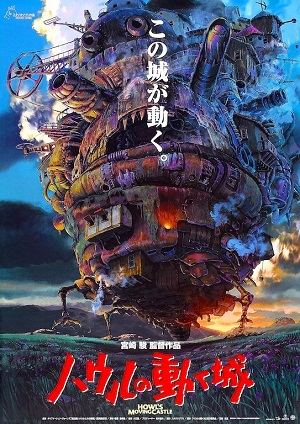
What we are given by director Goro Miyazaki and a script by his father Hayao Miyazaki is a small-scale nostalgia piece that still manages to have broader implications for all of Japan. More crucial yet is how it aims to hone in on a story that is part family melodrama, part love story, and even a high school feel-good tale.

We are planted in Yokohama (south of Tokyo), circa 1963, with the nation setting its sights on the 1964 Olympics famously documented in films such as Kon Ichikawa’s official documentary and Walk Don’t Run (1966). Here Up From Poppy Hill gives a more up close and personal approach that allows us to empathize with a very different type of narrative.

Because even with the pull for modernity feeling so prevalent, there is this sense that Japan, as not only a nation but a culture, must not forget the past. Yes, the war years were rife with so many tragedies but therein still lie traditions and the ways of old that must not be forgotten.

The greatest emblem within the confines of the film is the so-called “Latin Quarter” on the high school campus — a dingy rickety old building that serves as headquarters for many of the school’s circles including philosophy, chemistry, archaeology, and of course, the school newspaper.

Umi is a young student who must help run her family’s boarding house by preparing meals daily after school and the like. But after a fateful encounter, she is drawn to become a member of the academy’s journalism circle transcribing news.

One of the figures who leaves an impression on her is Shun, a stalwart member of the journalism circle, who is part of a band of students intent on fixing up their headquarters. But more so than that these audacious students must plead with the local chairman to reverse his plans to demolish the old relic. For them the reasons are twofold. First off, it’s their home and secondly, it’s part of their history.

Poppy Hill also takes great care to consider Umi and Shun’s parents. Her mother is a professor and her father was a sailor who died during the Korean War. Shun’s past is something that’s even more murky, clouded by facts that he’s never quite been able to reconcile. Their coming together at school proves a near act of fate since their personal histories are tied closer than they could have ever known. Again, the past and the present prove equally important to their identity.

The main draw for me is the throes of nostalgia that wrap up the picture. Pictorials that capture the innate beauty of living in Japan generations before with the harbor and the fresh sea air off in the distance. While simultaneously you have the degradation left over from the war and the increasing pollutants which come with what is termed “progress.” It’s true that in all things there can be derived both a positive and a negative. The same could be said of the love/hate relationship with the U.S. and the constant give and take between progress and remembering the past. These issues prove universally applicable.

But this is never a story to dwell on the bad, far more content with forging an innocent and genial path. That’s one of its finest attributes and you can see Hayao Miyazaki’s own warmth coming up through the seams. There is little animosity here as it’s replaced by laughter and more pleasant aspirations. While son might never reach the heights of his father as a storyteller, Up From Poppy Hill is nevertheless a quaint tale that brims with benevolence.

3.5/5 Stars

Howl’s Moving Castle (2004)

Howls-moving-castleposterCertainly this newer addition to the work of Ghibli Studios and Miyazaki is not his best due to a lack of cohesion within the story-line and the rapid coming and going of characters.

However, with that aside, as always the animated landscapes and backdrops are as beautifully breathtaking as ever. It is yet another whimsical world that came partially from Miyazaki and also from its British source novel.

It is occupied by some wonderfully fascinating characters including the eponymous Howl, Calcifier, Sophie, and cute little Markl. I ended up watching the dubbed version with the voices of Christian Bale, Josh Hutcherson, and the always comical Billy Crystal. I think I was perhaps most appreciative to hear the voice work of Lauren Bacall and Jean Simmons. Their work in this film exemplified that their illustrious careers spanned well into their 80s. That is quite the feat.

I have to say that the dog and Turnip Head had to be two of my favorite characters. I’m not quite sure why… Still I would recommend this film and it is certainly a must for Anime or Miyazaki fanatics.

4/5 Stars

My Neighbor Totoro (1988)

7eaa5-my_neighbor_totoro_-_tonari_no_totoro_movie_posterFrom the famed Japanese animator Hayao Miyazaki, this enchanting film is about two little girls and their very unusual neighbor Totoro.

The film opens with Satsuki and her little sister Mei arriving at a new home out in the country with their father. They are two energetic and rambunctious girls, who are excited by this new adventure. Their father is a kindly man, who spends a great deal of time with them when he is not working. Several other characters play a part including the elderly lady Nanny, the young boy Kanta, and of course the girls’ mother who is in the hospital. First, the girls chase dust creatures through their supposedly “haunted house.” Then, one day Mei follows a strange furry little creature under their house and then into the depths of the woods nearby.  She takes a tumble and all of a sudden she finds herself in the dwelling of a big fluffy Totoro spirit and falls asleep on its belly. When she tries to show Totoro to Satsuki and her father she cannot find him.

However, one evening as they wait for their father’s bus, Totoro comes to the stop, and this time Satsuki is introduced to the spirit who leaves them with a gift. After they spend another magical night with Totoro a few days later, the girls learn to their dismay that their mother is not coming home as planned. An annoyed Mei decides to take some corn to the hospital many miles away. Her disappearance causes a panic in the town, especially with Satsuki. She searches tirelessly for her little sister until her feet are sore. Her only other option is to plead with her neighbor Totoro to help her. Thanks to Totoro Mei and Satsuki are reunited and they see to their delight that their mother is in high spirits at the hospital.

This is certainly a film for children, but it would be unfortunate to call this a childish film. I must take a brief moment to praise the animation led by Miyazaki too. Every single image could almost be a painting they are so beautiful.  In my limited knowledge of anime, it is far above anything I have seen before. It was great to see this film in the original Japanese because it seemed more authentic, but what really struck me was the realistic nature of these young girls. Perhaps they speak a foreign language (to me) but their moods are universal. They can be extremely loud, they pout, share moments of laughter, and they love their parents.

Furthermore, this story does not need some major conflict to drive the plot. Their father is a loving open-minded man who does not even briefly doubt their adventures. I was even thinking that the obvious turn of events was that their mother would die and yet that is not the case. What this film really has is a wonderful innocence which can be appreciated by all ages. Instead of creating some major pathos we are simply able to enjoy this magical friendship between this remarkably cute fluffy spirit Totoro and these two girls. I certainly cannot wait for more from Studio Ghibli and I’m sorry that such an artist is retiring soon.

 
4.5/5 Stars