
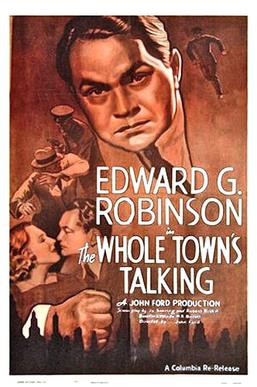
 Comic mayhem was always supercharged in the films of the 1930s because the buzz is palpable, the actors are always endowed with certain oddities, and the corkscrew plotlines run rampant with absurdities of their own. Penned by a pair of titans in Jo Swerling and Robert Riskin, The Whole Town’s Talking opens with an inciting incident that’s a true comedic conundrum.
Bald and beady-eyed Mr. Seaver is called upon to fire the next employee who comes in late to work. A tough proposition to begin with but it gets worse. Arthur Ferguson Jones has not been late to work in 8 years and of course, today’s the day his alarm clock doesn’t work. Although he gets a reprieve. Still, the next person walking in isn’t so lucky. The hardy, wisecracking Miss Clark (Jean Arthur). And that’s our introduction to our main players.
But the real wrench comes from an age-old device that’s easy to scoff at initially. There’s a doppelganger. Yes, the same upstanding, timid Arthur Ferguson Jones is cut in the spitting image of Public Enemy No. 1, Killer Mannion. But before you check out, consider what this does for this ruckus of a story. It ties it up in knots.
Jones is the talk of the town. Exploding flashbulbs. Cover stories. Tumult. Back in the glory days when the press ran in a pack like hyenas. His boss invites him to dinner, wants an autograph for his boy. He’s being ribbed by his coworkers and Miss Jones takes an interest in his literary endeavors. This leads to a gig ghostwriting the gangster’s life story in the local paper.
Meanwhile, the police argue about what to do about him. They finally decide to give him a special passport. It says he’s not Killer Mannion. And hapless little Mr. Seaver still badgers his employee to finish up his waiting caseload. What no one expects is that Mannion will sneak into Jones’ home and sets up camp.
And from that point on, everything gets confused. Robinson gets a chance at a great deal of range sometimes having his two diverging roles playing off each other in the same frame. All you need to know is the gangster is looking to leave his new benefactor holding the bag for his numerous crimes. Whether it works out or not is quite another story.
This a particularly odd film for the talent assembled. It doesn’t especially feel like a John Ford film and not simply because it’s not a Western. But at this point in his career, his stock company isn’t even assembled.
Edward G. Robinson will always be identified with gangster pics and it’s true he was tired of that association. Here he’s playing comedy. He has one foot in his usual wheelhouse but the other seems utterly alien to his usual persona. As such it’s great fun. And his timid common man isn’t even a tragic figure like Chris Cross (Scarlet Street). The comedy is far more apparent and that in part stems from Arthur.
She shows up late to work, gets fired, and still has quips coming out of her ears. She plays all the journalists trying to pump her for facts and at the same time falls for this dope who has her picture framed by his bedside. Perhaps better than anyone she perfected how to be cheeky but still wholesome and caring. Arthur feels most at home in this film more than anyone else, given her comedic pedigree but she and Robinson bounce off each other well.
In a few years she would play a Miss Jones but for right now she’s content calling her colleague by the pet name “Jonesie” and (tiny spoiler) she does become Mrs. Jones. So an oddball romantic pair they might be, but that doesn’t make the partnering of Robinson and Arthur any less amusing. They’re both on their A-game in The Whole Town’s Talking and thankfully there would be many more arresting performances to come.
4/5 Stars
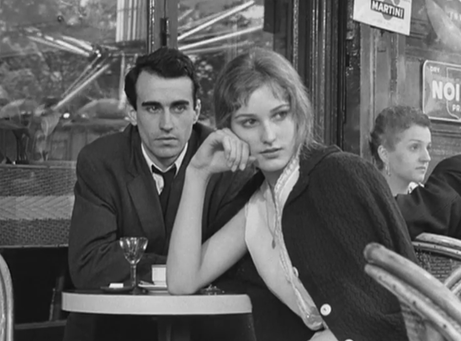 Pickpocket is an intricately staged, truly intimate character study from the inimitable Robert Bresson solidifying itself as one of his greatest works. As was his practice, Bresson took Martin LaSalle, a non-actor to be his leading protagonist.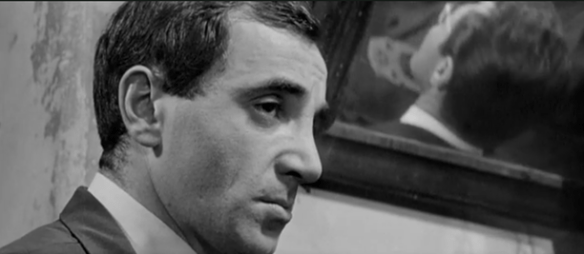
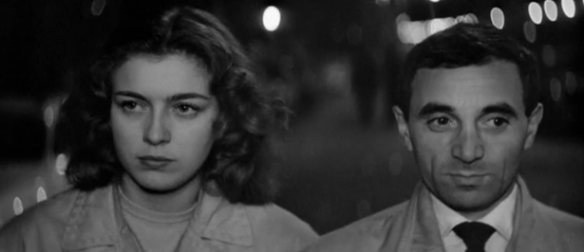
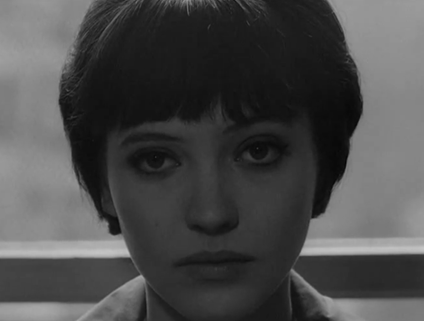 The opening credits of Vivre sa Vie commence with the opening note “dedicated to B-movies” and indeed many of Jean-Luc Godard’s best films could make the same claim. They’re smalltime stories about little people living rather pathetic lives if you wish to be brutally honest. This isn’t Hollywood.
 There’s a moment in Kelly Fremon Craig’s The Edge of Seventeen where Nadine (Hailee Steinfeld) suffers the ultimate humiliation third wheeling with her older brother Darian (Blake Jenner) and her (former) best friend Krista (Haley Lu Richardson). Needless to say, the evening is less than stellar but it gets worse after Nadine feels like she’s been totally betrayed. She’s been hating her brother recently and her best friend is dead to her now. The fact that she sets up an ultimatum doesn’t make things any better.
 It’s a joy to watch Agnes Varda dance. Or, more precisely, it’s a joy to watch her camera dance. Because that’s exactly what it does. Her film opens in color, catching our attention, vibrant and alive as the credits roll and a young woman (Corinne Marchand) gets her fortune read by an old lady. She’s worried about her fate. We can gather that much and this is her way of coping. Superstition and tarot cards but she’s trying and the results are not quite to her fancy.
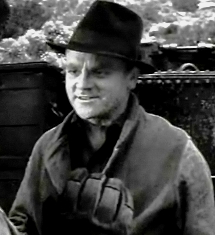 White Heat burns like hot coals even today as the epitome of incendiary cinema. It’s a gangster picture from master Warner Bros. craftsman Raoul Walsh that’s volatile and intriguing, highlighted by the always fiery James Cagney as a crazed man-child with a mom complex.
 In his opening introduction, Kumail (
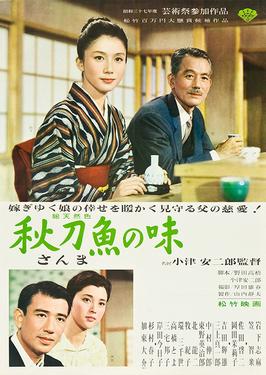 There’s something overwhelmingly soothing about Ozu, simultaneously slowing my pulse and calming my nerves. Yes, An Autumn Afternoon stands as his final film. Yes, he would sadly pass away the following year. But there’s a comfort to watching his films unfold — even his last one. The drama is everyday and somehow disarming and pleasant. We often take for granted that Ozu was not planning to end here. This was not supposed to be his last film. It just happened that way.
 Whaddya hear, whaddya say ~ Jimmy Cagney as Rocky Sullivan
