Unknown's avatar

About 4 Star Films

I am a film critic and historian preserving a love of good movies. Check out my blog, 4 Star Films, and follow me on Twitter @FourStarFilmFan or Letterboxd. Thank you for reading!

Don’t Bother Knocking (1952)

Don't_bother_to_knockYou’re silk on one side and sandpaper on the other.” – Richard Widmark as Jed Powers

For a film so short, Don’t Bother Knocking is overflowing with wonderful talent from Richard Widmark to Anne Bancroft to a haunting performance from Marilyn Monroe. Then Elisha Cook Jr. shows up as the obliging doorman, Jim Bachus as a young girl’s father, and even the prolific Willis Bouchey takes a turn as the bartender. It’s one of those story’s that revels in the classical age of the Hollywood studio actor. The familiar faces carry with them a certain amount of depth that allows the characters to mean so much in only a few fractions of the time normally required.

Anne Bancroft’s nightclub singing (in her screen debut) sets the background mood for everything going on within the  McKinley Hotel — a seemingly upstanding establishment. It’s precisely this aloof demeanor established by the music that lends itself nicely to the strangely haunting aspects of the film.

All characters seem to lack passion, emotion, and most any type of energy except the bubbly camera gal who goes around trying to sell snapshots to patrons. Widmark is at his morose dirtbag best yet again as Jed Towers, a guy who can’t figure why his girl has dumped him.

It’s a chamber piece, and while not a man on a ledge story like Fourteen Hours, it still uses the corridors and diegetic street sounds to create a mildly intriguing environment for some minor noir thrills. You can see the lust in Widmark’s eyes when he looks out the window at Monroe prancing and swaying about seductively. Little does he know what her deal is. His frustration with life and love is right at the center of this film and he must rectify his situation one way or another.

For her part, she has some telltale signs of psychological distress aside from a constantly glazed expression. Namely, scars on her wrists. Strings of little white lies, compulsive fibs that trickle out and a flustered edge that slowly becomes more and more demented by the minute.Whether it’s Monroe’s best performance is up for interpretation but it’s certainly her most terrifyingly dramatic.

She becomes the lightning rod for all the drama, lashing out against the little girl put in her stead and distressing her uncle (Elisha Cook Jr.) who got her this gig, despite her utter lack of experience. Nell Forbes flutters so quickly between fear and hysteria, at first wary of Towers and fawning all over him the next moment — afraid that he will leave her.

It’s her histrionics that force a reaction out of Jed. He must choose what type of guy he wants to be, whether he chooses the tame or wild side of life. And as it turns out, there’s absolutely no contest in the end. He knows full well which girl is for him.

Unfortunately, the ending is a bit of a cop-out, because it is the relational and psychological dysfunction of the characters that becomes most rewarding and, in the end, most indicative of the noir malaise. A happy resolution, therefore, does not stay true to the heart and soul of this film. Stone cold and depraved. Still, this one’s a winner at 76 minutes.

3.5/5 Stars

An Officer and a Gentleman (1982)

an officer and a gentleman 1Lou Gossett Jr. What a performance. He imprints himself on our brains just like the new recruits he berates, pushes, and toughens on a daily basis. He’s inscrutable. We want to hate him. We want him to get his comeuppance.  Yet in the end, we cannot help but appreciate him. We are just like one of his recruits and that’s, in part, why this story works at all.

We’re there in the mud and the mire. We hold our breath in preparation for the latest inspection. Every drill has some consequence. Each failure and each conquest is like one of our own. And the desire for intimacy and love is in us too. This film takes many of its characters through the hell that is Aviation Officer Candidate School. But isn’t it the most trying times that remain the most memorable and truly mold us as human beings? It seems so.

It’s easy not to like the coolly defiant Richard Gere as Zach, even when we know a bit of his past because he can be distant at times. But we learn more about who he really is and as with most people, he grows on us. The same goes with his best buddy  Sid (Keith David) who is well-liked by everyone but realizes he’s been living his life all wrong. Likewise, Paula (Debra Winger) and Lynette (Lisa Blount) the two bodacious gals who have dreamed of dancing the night away with a pair of up and coming cadets, have their own set of problems.

an officer and a gentleman 2Watching An Officer and a Gentleman, it is rather amazing that it succeeds as part romance, part war drama since all its action takes place at an air force cadet school. They haven’t even reached the front yet. There are no explosions or bombs bursting in air. It even shares similarities with Fred Zinneman’s star-studded From Here to Eternity (1953) years before. But that story had far more star power and a climatic event like Pearl Harbor to build the story around. Here there’s nothing quite like that. But it’s not really needed. We are reminded that mankind is inherently interesting and when you throw a bunch of them together under duress it’s a formula for heightened emotions.

an officer and a gentleman 3Certainly, the film functions because it has all the necessary components, a rebellious hero played by Gere, troubled pasts, innumerable odds and the like. However, breaking the film down to its simple plot points hardly gives the film the credit it is due. There are so many intangibles when you watch something on the screen that really gets to your gut. It’s not necessarily manipulation on the part of any one person, director, screenwriter or otherwise. It’s simply the emotional clout that the medium of film is capable of.

As I watch Richard Gere carry his love (Debra Winger) out of her dead-end factory job, rather like a groom taking his bride over the threshold of their new lives, I too cannot help but smile ruefully. This is the schmaltzy ending of passionate love. But that is only one scene bookending so many others. Some that take us in a stranglehold. Others that fill us with contempt or pity. And as with any film, some that feel superfluous. What stays with you though when the screen goes black are the highs and the lows. An Officer and a Gentleman hits them both with ample fortitude.

4/5 Stars

4 Living Legends Part 4

rose_marie_1970Here is another entry in our ongoing series of Classic Hollywood Stars who are still with us.

Glynis Johns (1923-)

Whether it’s a blessing or a curse (I consider it a blessing), Glynis Johns will forever be immortalized as Mrs. Banks the woman suffragette in Mary Poppins (1964) bringing a certain amount of energy and personality to Disney’s musical classic. However, she also makes a memorable turn opposite Danny Kaye in the zany medieval comedy The Court Jester (1956).

Rose Marie (1923-)

A veteran of vaudeville, Sally Rogers is undoubtedly best remembered as part of Rob Petrie’s comical gag writing team on The Dick Van Dyke Show developing a particular comic rapport between herself, Morey Amsterdam, and Van Dyke for some extraordinary moments. She also frequently guested on The Hollywood Squares hosted by Peter Marshall.

Jacqueline White (1924-)

Perhaps she is a little-known actress, but Jacqueline White left an indelible mark on film-noir for two films in particular. The first being Crossfire (1947) and the fantastic B film The Narrow Margin (1952).

Richard Erdman (1925-)

Richard Erdman has a very, very special place in my heart. The reason being I first got to know him as Leonard Rodriguez on the incomparable comedy Community. Guessing there might be a story behind him, I looked him up and little did I know he had an illustrious Hollywood career in many films I had seen early on in my introduction to film. His acting credits include such classics as The Men (1950), Cry Danger (1951), and Stalag 17 (1953). Even back then, even though he had more hair, there’s still that unmistakable sense of humor.

Penny Serenade (1941)

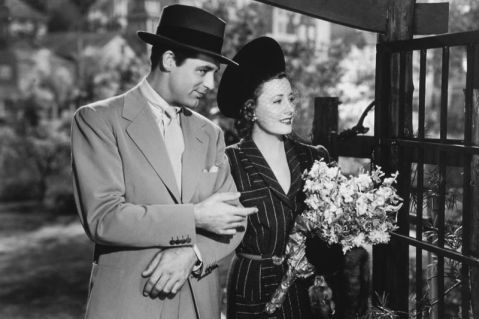
cary_grant-irene_dunne_in_penny_serenade

Irene Dunne still remains one of the most underrated actresses of the 20th century. She was both a lively comedienne, an impressive singer, and performed in melodrama better than most. Pair her with Cary Grant and director George Stevens and you have an impressive bulwark to build a film out of.

I disdain the rather condescending term “Woman’s Picture,” but if Mildred Pierce was one of the darkest exemplars of the genre than Penny Serenade might be one of the most heartfelt. It finds its inspiration in the revolving melodies of records on a Victrola. It’s true that music is so very powerful in evoking emotion and it is precisely these songs that lend themselves to Julie Gardiner’s myriad memories. They began when she initially met the love of her life, a budding journalist who was not too keen on getting hitched or the future prospect of having kids. But Roger’s career took him to Asia and he tied the knot with Julie because he was not about to let another man take her away from him.

The rest of the film can best be described as a marital drama concerned with the many moments that make up a marriage. The thrill of the honeymoon period. The little marital tiffs. The tough times when your fledgling self-run paper is not doing the best. The struggles of trying to have kids or wanting to adopt and realizing the process is far more arduous than you first expected. All of these moments can be found in Penny Serenade. But it is one of the sweetest that also becomes the most heartbreaking.

Julie and Roger get the child that they so desire and it’s hard and trying and oh so scary, but they make a go of it and truly revel in being parents. But even that joy is taken away from them. It’s that same pain that shakes the foundations of their marriage just like the deadly earthquake they experienced in Japan. Once more amidst the heartbreaking tremors, there are wonderful revelations and an ultimate resolution that is good.

It’s true that Penny Serenade is overlong, lacking a great deal of substantial conflict or direction but it certainly plays to its strengths. The third time around Grant and Dunne continue their impeccable chemistry that carries the film alongside the direction of George Stevens who always seems to know how to helm both drama and comedy with ease. And the secondary roles are filled out marvelously by the always venerable Beulah Bondi and a noticeably younger Edgar Buchannan playing his usual old softie with a gravelly voice.

So if you’re in a sentimental mood tune into Penny Serenade a film that is less of a classic than a film that rides on the laurels of its main players who elevate the storyline above the normal fray through sheer charisma and ingenuity. While Grant is always remembered as a comedic actor, there are several notable heart-wrenching sequences where he taps into a different side of his persona.  In the end, having Cary Grant and Irene Dunne together again is worth it in itself.

3.5/5 Stars

Lethal Weapon (1987)

Lethal_weapon1Richard Donner (Superman) has an understanding of the balance of grand spectacle and more subtle moments. The opening aerial shot and the tenuous desert rendezvous with a helicopter churning up sand capture our attention. But it’s the little bits of humor and vulnerability that make the showmanship of Lethal Weapon ultimately worth it. There’s a vibrancy that runs through Shane Black’s script in both the action sequences and character-driven moments.

It’s the quintessential buddy cop action film that in many ways defines the ’80s and that’s because it has a different slant. That’s part of the secret to its success. The main man (Danny Glover) is different and it’s not simply because he’s African-American. His family holds an important place in his life and he’s a genuine person — not an action hero. His partner in crime (Mel Gibson) also has his own deal. We meet Riggs in an abandoned trailer with bedhead, smoking and drinking a beer before he’s even awake. The loss of his wife causes him to contemplate suicide and everyone on the force questions his sanity. But when duty calls these two men are thrown together and out of their initial incompatibility comes mutual respect and genuine fun. As an audience, we enjoy watching them together.

What sets Lethal Weapon apart is how the violence is almost a side thought because what really matters are the characters and their relationships. Friends and family are important. Certainly, there are profane moments but they come in moments of extreme provocation. There’s even gratuitous violence at times but there’s consequence to it, more often than not.

Those in trouble are not simply damsels in distress because most everyone is in the same boat. Martin and Roger both are put in danger, captured and tortured. They don’t just dispense retribution. Their lives and families are put on the line too. However, it’s easy to point out the fact that some characters are killed, most notably in the opening moments, and they feel like mere plot points. For such reasons, the film’s certainly not perfect.

Also, its final moments are admittedly out there. It could be a scene out of Mad Max as Mel Gibson battles in the deluge of a spewing fire hydrant nearly to the death. The question is why, can’t they just arrest the culprit? It’s this scene that allows the character of Riggs to get his desired resolution. In fact, both he and Roger Murtaugh earn a bit of satisfaction as they rise up above the tumult. They are a pair of lethal weapons. But what matters most is that after a hard days work they can get together for a mediocre Christmas dinner. That’s true friendship.

3.5/5 Stars

Gentlemen Prefer Blondes (1953)

Gentlemen_Prefer_Blondes_(1953)_film_poster“I can be smart when it’s important, but most men don’t like it.” ~ Marilyn Monroe as Lorelei

Marilyn Monroe and Jane Russell together. It’s a crackerjack combination and Howard Hawks milks it for all its worth. There’s streetwise Dorothy  (Jane Russell) wooing all the boys from here to kingdom come. She cares about more than just money, especially when it entails having fun. Her other half is the vivacious bubble-headed beauty Lorelei like only Monroe could pull off. She’s the girl looking to get hitched with her bookish millionaire and she’s not afraid to admit that his money sweetens the pot. It certainly doesn’t hurt (Don’t you know that a rich man is like a pretty girl? You don’t marry her just because she’s pretty. But, my goodness, doesn’t it help?).

Time and time again words and bits of dialogue leave her lips that are almost astonishing. She delivers them with such a fluid air of seriousness that they force a double take and each and every time she has the audience in the palm of her hand. We think she’s dumb, but whether it’s the just the persona she puts on or a bit of Marilyn Monroe herself, she is extremely intelligent. If nothing else she knows how to captivate an audience, not letting them soon forget her magnetic performance.

If she had been playing against anything else Jane Russell would have been the primary attraction and she’s always wry and lovely, but with Monroe in the equation, they develop into a dynamic duo, leaving a wake of hapless boys behind them. There’s the old playboy Piggy (Charles Coburn) with a tiara Lorelei has ambitions for, the hired private investigator Ernie Malone (Elliot Reid) who finds himself falling for Dorothy, the diminutive Mr. Spofford and, of course, the hapless Gus (Tommy Noonan).

It can be easy to write Gentlemen Prefer Blondes off as a superficial musical — a provocative color extravaganza aboard an ocean liner. After all, it’s a story complete with pools, water slides, romance and a whole squad of athletes with bulging biceps. But it is a genuinely enjoyable film with Howard Hawks once more showing his aptitude for skirting between genres, this case indulging in musical comedy.

The sparkling and most remembered number is, of course, Monroe’s sultry turn in “Diamonds are a Girl’s Best Friend,” clothed in velvety pink,  but really for the entire running time of the film, Monroe and her costar are continually strutting and snapping their way into the hearts of everyone they cross paths with. A final comedic twist of an ending, playing off the comedic dynamic of the film’s pair of heroines, gives Jane Russell an equal chance to show off her star power. This truly is a team effort, even if gentlemen circa the 1950s were discriminatory towards all non-blondes.  Obviously, this film and my commentary are not meant to be taken too seriously. Still, they can be enjoyable. At least in the case of this film. My commentary, not so much.

3.5/5 Stars

The Snake Pit (1948)

Snakepit1948_62862nThere is a lineage of psychological dramas most notably including the likes of Shock Corridor and One Flew Over the Cuckoos Nest. But one of their primary predecessors was The Snake Pit which is a haunting, inscrutable and thought-provoking film in its own right.

But rather than trying to sum it up with words, it’s necessary to look deeper at what makes this such a potent film and it begins most obviously with Olivia De Havilland. She undoubtedly gives the best performance of her career — in so many ways drifting so effortlessly across the emotional spectrum. She’s either sane or “crazy” with fits of paranoia and inner turmoil, voices sounding off in her head and the like. But the most beautiful things are the moments when all the drama derives from the look on her face, a furrowed brow or a panic-stricken reaction we cannot fully understand.

That’s why it takes us the entire film to comprehend what is actually happening and it’s wonderful that we enter her story while she is in a sanitarium. Why and how she got there we don’t know right away, so as an audience there’s a similar sense of disorientation. Several reliable points of reference exist early on. Those being the genial Dr. Kik (Leo Genn)and Virginia’s concerned husband Robert (Mark Stevens) who visits her during every possible hour.

The film does intermittently feel disjointed but that hardly seems due to faulty storytelling and more a convention of Virginia’s narrative. It all comes to us in incoherent bits. In reality, months have passed but her memory is poor, causing her to lose track of the days. She drifts in and out of different wards and soon forgets the people and places that have been there all along. Furthermore, her progress waxes and wanes, with special visits from her husband and the faint chance of being released. Then in her darkest moments come electroshock therapy and even a straight jacket confining her in the depths of the sanitarium.

Anatole Litvak would hardly be considered an auteur but he still finds a way to heighten the tension with whip pans and nightmarish imagery when necessary. A pounding score adds yet another layer of anxiety reverberating with a vengeance, most memorably to simulate the jolts of electroshock therapy. But the greatest compliment that I have for his film is that it knows when to simply sit back and watch, like many of the great Classical Hollywood films. It lets its story, actors, and script all work and, in this case, they develop something with lasting depth.

Earlier I alluded to  The Snake Pit being part of a lineage including Shock Corridor and One Flew Over the Cuckoo’s Nest. It contains similarly shocking revelations about the reality behind sanitarium walls except they feel more realistic than the former film. Furthermore, De Havilland is surrounded by a wide array of odd bodies and patients with all sorts of psychoses rather like Randle McMurphy. But although there are some antagonistic people, her problems stem partially from the system around her and mostly from the pain buried deep within her own past.

It’s Dr. Kik who is able to dredge up the truth hidden inside of her over time. His calming, reassuring voice balanced with his psychoanalytic practices are able to work on Virginia’s psyche systematically. But in the same instance, it’s easy for her to get lost among the masses. Nurses do their jobs, doctors pass verdicts but they’re woefully understaffed and overworked.

The film’s resolution is actually hidden within its title. Because like the madmen of old, Virginia was thrown into a snake pit of her own that, far from driving her crazy, revealed to her that she must, in fact, be sane — at least compared to many of those around her. It’s up to the viewer to decide, aside from the happy denouement, if this is a troubling conclusion that the film comes to or not.

However, it’s paramount to note The Snake Pit’s conclusion on personal trauma and mental illness, based on childhood experiences. A lot of Virginia’s struggles came out of guilt and dysfunctional relationships with her parents. Yes, this is the punchline of the movie, but I only say this to point out how frightening or more precisely, how universal that revelation make this movie. Virginia’s parents weren’t altogether bad people and the reality is that all of us will face personal tragedy. We will have our share of guilty consciences too.

It’s how we cope with those things that matter most because it’s going to happen. We can hide it but we can’t escape it. All of us are broken in one way or another — even if we don’t want to admit it. That’s part of what The Snake Pit begins to bring to light.

4/5 Stars

4 Living Legends Part 3 (sort of)

800px-dorothy_malone_-_written_on_the_wind_-_studio_publicity_photoFor my ongoing series of living legends, I chose 5 individuals actually who in some way had an impact on the film industry as we know it today. Without further ado, here are a handful of living legends.

Gene Reynolds (1923-)

So Gene Reynolds began as a child actor back in the 1930s first appearing ni the Our Gang shorts and also making appearances in films such as Captains Courageous and Boys Town. Truth be told, I have yet to see one of his early performances. It’s unforgivable I know. However, Reynolds also had a great affect on me because of the many television shows he created/directed/produced later in his career. The list begins most prominently with MASH which he co-created but also Leave it to Beaver, The Andy Griffith Show, Hogan’s Heroes, and Lou Grant.

Billy & Garry Watson (1923 and 1928)

Okay, so this entry is a little unique because Billy and Garry Watson are hardly known on their own but as two parts in an acting entity, The Watson Family. If the name doesn’t ring a bell, that’s not necessarily unbelievable, but this group of siblings shared the screen with many of the great stars of the 1930s. Their film credits include the likes of Showboat, Young Mr. Lincoln, and perhaps most memorably, Mr. Smith Goes to Washington.

Lola Albright (1924-)

Lola Albright had a long and varied career in both film and television. Perhaps her most memorable role was opposite Kirk Douglas in Champion (1949) as one of his many flings on his way to the top of the boxing world. However, with the popularity of television, she also took many guests spots and even had a stint filling in for Dorothy Malone on Peyton Place.

Dorothy Malone (1925-)

Dorothy Malone will best be remembered for her work in some of Douglas Sirk’s greatest melodramas including Written on the Wind and The Tarnished Angels. She also took on a particularly memorable cameo opposite Humphrey Bogart in The Big Sleep. She too dabbled in television with her most prominent role being that of Constance Mackenzie on the syndicated television version of Peyton Place.

4 Star Films’ Favorite Movies: 21-25

somelikeithot2

One of the reasons film is so engaging and fascinating is the discussion that it evokes from all people. Every person, no matter their age or knowledge, can have their own subjective opinion on a film and why they liked it, or better yet why they hated it so much that they wanted to throw up.

But I’m going to cut the discussion short and put my cinematic life on the line by being completely vulnerable with some of my admittedly subjective picks for my favorite movies. Any agreement is highly encouraged. All dissenting opinions will be disregarded without a thought. Enjoy #21-#25 in this ongoing series:

21. It’s a Mad Mad Mad Mad World (1963)

This first title was love at first sight. All the things I love about a great comedy. Completely lacking sophistication and full of hilarious insanity. Also, Mad…World has arguably the greatest ensemble every assembled for one film. Everyone shows up for the party and it’s wonderful. Jonathan Winters was my favorite discovery from this film because he truly was a comic gem of a man.

22. Some Like it Hot (1959)

Jack Lemmon will always and forever be one of my favorite actors. Maybe it’s because he reminds me of my Grandpa because my Grandpa is a funny man. But that’s neither here nor there. Some Like it Hot stems from the genius of Billy Wilder, always ready with a funny storyline (two cross-dressing musicians fleeing Chicago gangsters) and a rapier wit. Of course, there’s Tony Curtis and Marilyn Monroe too, and the Hotel Del Coronado makes a memorable appearance filling in for Florida. Boy, oh boy, am I a boy!

23. The Young Girls of Rochefort (1967)

Now this one might seem kind of random. But I quickly fell in love with the fateful whimsy of Jacques Demy. His love of American musicals is evident with the casting of both Gene Kelly and George Chakiris, but this is also undeniably a French production starring sisters Catherine Deneuve and Francoise Dorleac. Michel Legrand’s music is surprisingly catchy and the fact that the film’s exposition is all given through song intrigued me from the beginning.

24. Laura

Film-Noir became a favorite genre, movement, style (whatever you want to call it) early on and Laura was one of the reasons why. I think I was smitten with Laura (Gene Tierney) much like our protagonists, and the film’s core mystery was gripping in more ways than one. David Raksin’s haunting score adds yet another layer to the drama as does Otto Preminger’s direction through the film’s interiors.

25. To Kill a Mockingbird

By now Harper Lee’s novel and Gregory Peck’s portrayal of Atticus Finch are almost intertwined in my mind, so much so, it becomes difficult to separate the two. And since I loved the book growing up, it’s only fitting that the film adaption would also hold a special place. Its set of sentiment and moral uprightness is hard for me to disregard, even when I’m at my most cynical. Mary Badham does a wonderful job as does Brock Peters — the perfect foils for Peck’s monumental portrayal.

The Father of the Bride (1950)

FatheroftheBride1950I’ve seen both versions of Father of the Bride and Steve Martin is fine and dandy but there is no better lovable curmudgeon than Spencer Tracy and he dons the role of the protective and skeptical father so effortlessly.

Furthermore, all down the line this production is an impressive gathering of talent with a radiantly young Elizabeth Taylor embodying the role of Kay, Joan Bennett leaving behind femme fatale roles for that of the level-headed mother and, of course, Vincente Minnelli positioned behind the camera. All in all, it’s a delightful light comedy that also finds time to say something heartfelt about the relationships of parents and their children, especially between fathers and daughters.

It’s rather like sitting back for story time as Tracy struggles with his shoes and begins to regale us with the recent happenings — the events that left his stately home looking like a hurricane disaster zone. It was all as a result of his daughter’s wedding. The event that is bound to challenge his sanity and bankrupt him in the process. But it’s for his “Kitten” so he’s willing to go through it out of his unwavering love for her.

First, he’s dubious of his future son-in-law, cringing at the thought as he shuffles through his memories of Kay’s many beaus. In his estimation, none of them was a winner, but then again, no one is good enough for his daughter. He’s not too excited about giving his daughter away nor by the prospect of supporting her good for nothing husband either. I’m sure most every father has the same conundrum to wrestle with. And it’s important to note that it’s played for comedic effect but never in a way that belittles these characters.

Minnelli was always a master of the color medium but here he still takes on the important role guiding us through the comedic moments with a deft touch and allowing us to track with the mayhem at large when necessary.

There are also some wonderful spots for veteran supporting players like the overly stuffy wedding coordinator Leo G. Carroll and the charmingly enthusiastic Melville Cooper as he guides the wedding rehearsal with a chaotic vigor.  Then, of course, there’s the prospective groom Buckley, played by the always affable everyman Don Taylor.

But everything must return to Tracy and Taylor because they are the nucleus of the storyline and as such, they work well together. Admittedly, Taylor might feel slightly out of place in such a family, but she is Elizabeth Taylor and she’s captivating all the same. Putting her together with Tracy means a lot of poignant sequences. Those moments where he comforts her, encourages her over a midnight snack at the dining room table, and finally, willingly gives her up to the man she has chosen to have and to hold for the rest of her life. To its credit, the film strikes a fine balance between comedy and heart always returning to this father-daughter relationship.

3.5/5 Stars