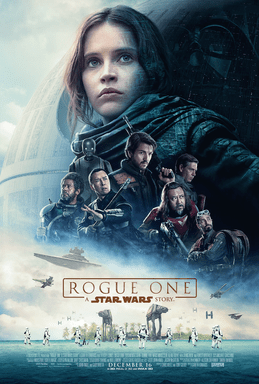
 For so many, there is a deep connection to Star Wars that started at an early age. As I have alluded to on numerous occasions, I am no different. And if I feel that way about even the prequels, it’s exponentially greater for the original trilogy, as I can imagine it is for legions of others. Thus, when I watch Rogue One I do not linger on its shortcomings, though they most certainly exist, instead, I’m fixated on that very same suspension of disbelief that overtakes me every time I enter that world, a long time ago in a galaxy far, far away.
If Rogue One had been an unredeemable, thoroughly bad film I would have been the first to say so. Perhaps it sounds crazy (or to fans maybe not so much) but I am deeply protective of Star Wars. I only want fanservice if it’s logical, fits the parameters of the world, and so on. I’m not a voracious fact checker of every Star Wars Wookieepedia page known to man and yet I might as well be. I was one of those who was deeply defensive when Disney looked to shake up George Lucas’s original canon. Though I digress…
But even as it stands as a mediocre story with vague contours at times, Gareth Edward’s Rogue One is propelled by fun characters, space opera entertainment, and, of course, A New Hope nostalgia. For those very reasons, it’s invariably easy to lend a heavy dose of grace to this standalone entry. And that’s what I will do.
We are introduced to Jyn Erso at an early age which gives context to her later exploits. In fact, when the story flashes forward after traumatic beginnings she (Felicity Jones) is a prisoner — not on behalf of the Rebel cause — and she has no plan to help the Rebels anytime soon. But in this way, she becomes one of their unassuming champions receiving news from her father (Mads Mikkelson) that the Death Star must be destroyed and she must spread the word.
It leads her to join forces with Rebel scoundrel Cassian Andor (Diego Luna) and his sarcastic droid co-pilot K2SO (voiced by Alan Tudyk). The bottom line is that all the various trips to planets and skirmishes with the Empire lead to a final showdown on the planet of Scariff where the ragtag group of Rebels lands a sneak attack on their unsuspecting enemy led by Imperial Director Krennic (Ben Mendelson). Meanwhile, a space battle erupts in the skies above and Jyn looks to transmit the vital plans to the Death Star before it is too late — so that hope might live on in the galaxy — and she does.
Not surprisingly, Rogue One has its share of callbacks involving the likes of Ponda Baba, Mon Mothma, and Bail Organa all returning to the Star Wars cinematic universe. And unused footage from the original film of Gold Leader exchanging callsigns is repurposed in the final offensive sequence as well. Although Grand Moth Tarkin and Princess Leia (the late Peter Cushing and Carrie Fisher returning from 1976) somehow look like carbon copies of their prior selves, they nevertheless sound vaguely different, giving off this peculiar sensation that they are CGI constructions and not the real thing. Still, it’s a remarkably impressive piece of work.
Obviously, the main objective of Rogue One is simple from a narrative perspective. The Rebels must obtain the plans to the Empire’s Death Star because without those, A New Hope would not be possible. But in order to get there, there are other necessary outcomes that feel a touch more suspect. I can see the need for finding Jyn’s father since his work is so critical to the Rebellion’s objective. However, the idea of a main switch to open up communication, her father’s hologram, Jyn’s final push to broadcast the vital schematics by reaching an antenna, and yes, even Kyber crystals, all seem like easy fixes to explain away the need for certain plot outcomes. I am, however, still trying to come up with an explanation how that is any different than the Force, aside from the very fact that its balance is crucial to the entire galaxy. I’ll get back to you on that one…
Furthermore, the idea of hope comes center stage in Rogue One. In fact, even despite the influences of eastern monism, Star Wars’ mythology reminds me of the Biblical text that reads like so, “We rejoice in our sufferings, knowing that suffering produces endurance, and endurance produces character, and character produces hope, and hope does not put us to shame.” The same could be said of the Rebels. And people might scoff but in its resolution, the film even takes a page out of Shakespeare’s Hamlet. That’s what makes this idea of hope so important because there could very easily be none at all with so much death and destruction.
My loyalty towards the franchise (more so than DC or Marvel or Star Trek) makes me also fear the continued mechanization of this world into a continuing box office cash cow. With film after film, story after story, it’s indubitable that Star Wars too will lose its allure. It will be run into the ground or become besmirched by some egregious plot hole, discontinuity, or for some far worse fates like the return of another Jar Jar Binks.
That is my major concern with Rogue One because with the absence of an opening crawl, what it really did was signal a changing of the times, a new seed has been planted as the extended Star Wars universe continues to germinate and grow. Time will indicate if it flourishes or sucks all the nutrients out of the vibrant creations that were given so much vigor by the likes of George Lucas, Mark Hamill, Carrie Fisher, Harrison Ford, John Williams, and so many others. Only then will we see if this franchise is one with the force and the force is in it. Because with so many films, it’s difficult not to falter. Being both critical and an avid fan, I care all the more deeply about its fate. But for the time being, enjoy Rogue One and afterward slip in A New Hope again to be reminded exactly why Star Wars remains a cultural landmark.
4/5 Stars

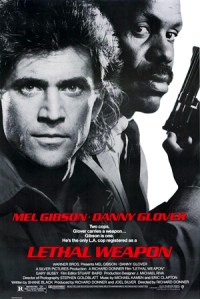 Richard Donner (Superman) has an understanding of the balance of grand spectacle and more subtle moments. The opening aerial shot and the tenuous desert rendezvous with a helicopter churning up sand capture our attention. But it’s the little bits of humor and vulnerability that make the showmanship of Lethal Weapon ultimately worth it. There’s a vibrancy that runs through Shane Black’s script in both the action sequences and character-driven moments.
 “I can be smart when it’s important, but most men don’t like it.” ~ Marilyn Monroe as Lorelei
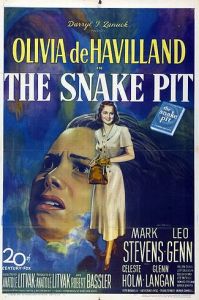 There is a lineage of psychological dramas most notably including the likes of Shock Corridor and One Flew Over the Cuckoos Nest. But one of their primary predecessors was The Snake Pit which is a haunting, inscrutable and thought-provoking film in its own right.
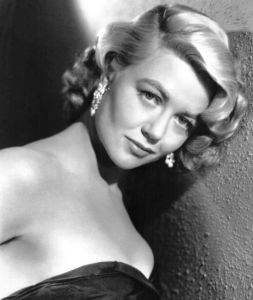 For my ongoing series of living legends, I chose 5 individuals actually who in some way had an impact on the film industry as we know it today. Without further ado, here are a handful of living legends.
 I’ve seen both versions of Father of the Bride and Steve Martin is fine and dandy but there is no better lovable curmudgeon than Spencer Tracy and he dons the role of the protective and skeptical father so effortlessly.
 As a young boy, no hero was greater in my mind’s eye than Robin Hood and only Star Wars held a more honored spot in my childhood imagination. Because, to this day, Robin of Locksley remains the quintessential hero of mythical lore. Part historical truth mostly canonized myth and that’s the beauty of him. We can believe in him — see how he was in so many ways real but in the same instance larger than life.
 From what I know from Robin Hood folklore, specifically Howard Pyle’s seminal edition, the film is surprisingly true to many of the origin stories and tales that have long since proliferated. As an audience, we become privy to the first meetings of Robin and the formidable Little John (Alan Hale) who lays him out in the local stream after a bout with quarterstaffs. Then, in another instance, Robin provokes the portly Friar Tuck (Eugene Palette) who happens to be a master swordsman and a lover of good food and drink. Still, other vignettes include Robin’s successful masquerade as a lowly archer who wins the grand prize at the Sheriff of Nottingham’s Archery Tournament.
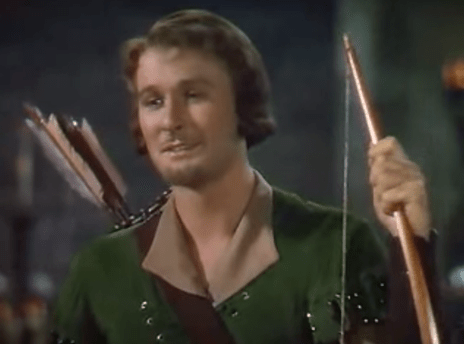 For me, the reason very few heroes surpass Robin Hood is based on his innumerable qualities. He’s a superior fighter with bow, sword or staff. He’s blessed with a wonderful wit and impressive leadership capabilities. He wins over the girl with his charm. He gets to live out in the forest with his best friends, eating great food. But most of all, he’s a rebel with a heart of gold, robbing the rich to feed the poor.
 It’s a B-picture title to be sure but with Robert Siodmak and such an ensemble, this is an enticing noir all the same. The well-to-do Quincy family of small-town America are an odd bunch, still holding onto their surname with pride as they slowly drift further and further into obscurity within the walls of their old mansion.
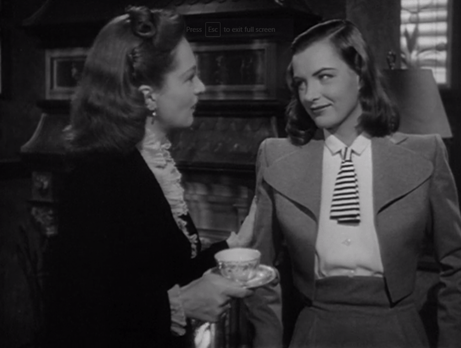 The dominating sister Letty, played by Geraldine Fitzgerald, is more aloof in her ways, veiling everything with a conviction that what she does, she does for the good of her brother. But it’s all really due to the fact that she cannot bear to let him go. In this way, she’s constantly controlling his life and undermining his happiness. She’s hardly your typical femme fatale, more cultured and refined than most, but there’s still something exacting about her.
 Children believe what we tell them. They have complete faith in us. They believe that a rose plucked from a garden can plunge a family into conflict. They believe that the hands of a human beast will smoke when he slays a victim, and that this will cause him shame when a young maiden takes up residence in his home. They believe a thousand other simple things. – Jean Cocteau
