Unknown's avatar

About 4 Star Films

I am a film critic and historian preserving a love of good movies. Check out my blog, 4 Star Films, and follow me on Twitter @FourStarFilmFan or Letterboxd. Thank you for reading!

Safe in Hell (1931): Greater Than Pre-Code Expectations

safe in hell

“Have a little faith will yuh? There’s a great big plan that we don’t get. But the fella that’s made the plan knows what it’s all about.”

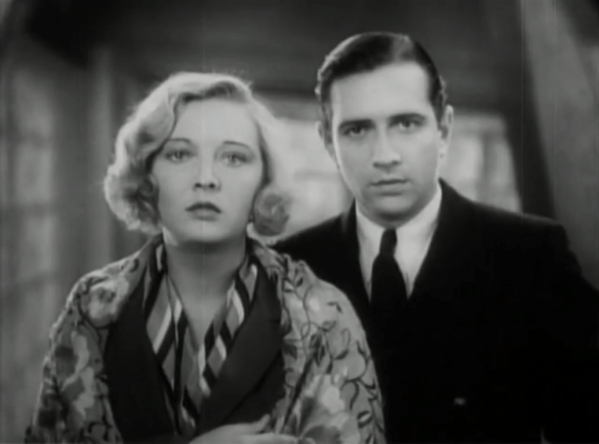
Safe in Hell leans into its title as fire literally crackles behind the opening credits.  The story’s origins begin on the back alcoves of New Orleans at the Claybridge Apartments. For those familiar with the reference, Dorothy Mackail’s Gilda Karlson feels like she just might be a Baby Face prototype.

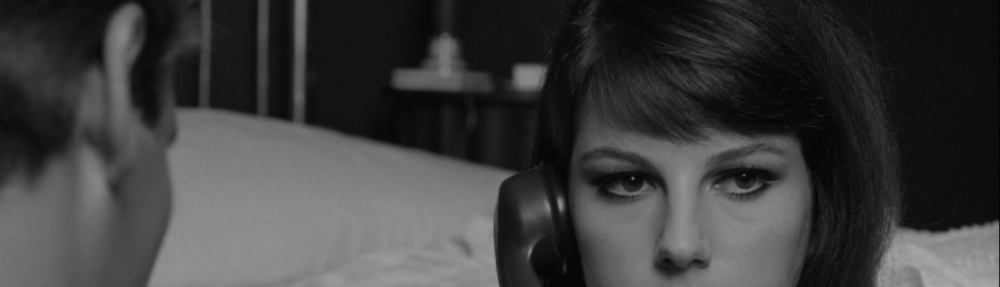
She is a woman strong and independent. She’s seen the seedy side of the street — knows what it means to survive in a man’s world — and she’s done precisely that. Even as the camera admires her slinking form, she sits propped up seductively in her room, speaking into the receiver of the old-fashioned telephone. This says everything that needs to be known about her character. At least at face value.

Mackail is not a remembered talent at least not to the extent of a Barbara Stanwyck or a tragic case like Jean Harlow, but she fits the bill here. If her eyes aren’t exactly sultry they are disaffected by the rotten world she’s grown accustomed to. Cynicism breeds everywhere like rats. It’s become a part of her life.

One of those rats is a man named Piet (Ralf Harolde). He’s supposed to be a picture of the average All-American working man. But he’s a philanderer formerly involved with Gilda while he was married and simultaneously getting the girl fired from her desk job. Now she works out of her hotel room, and he’s back for more.

But she lashes out. Wellman zooms in on her face for dramatics before she races down the stairs to make a frantic getaway. The place goes up in flames another inferno-inspired allusion.  Now she’s wanted guilty or not.

However, we get the benefit of witnessing another facet of Gilda’s personality. She has a hardened shell meant to protect her from the onslaught of a callous world. With her real man, the sailor named Carl (Donald Cook) there’s a skittishness even a sensitivity cloaked about her like the shawl he’s bought for her on his many travels. The way she says his name casual and smooth with a soft-hearted affection.

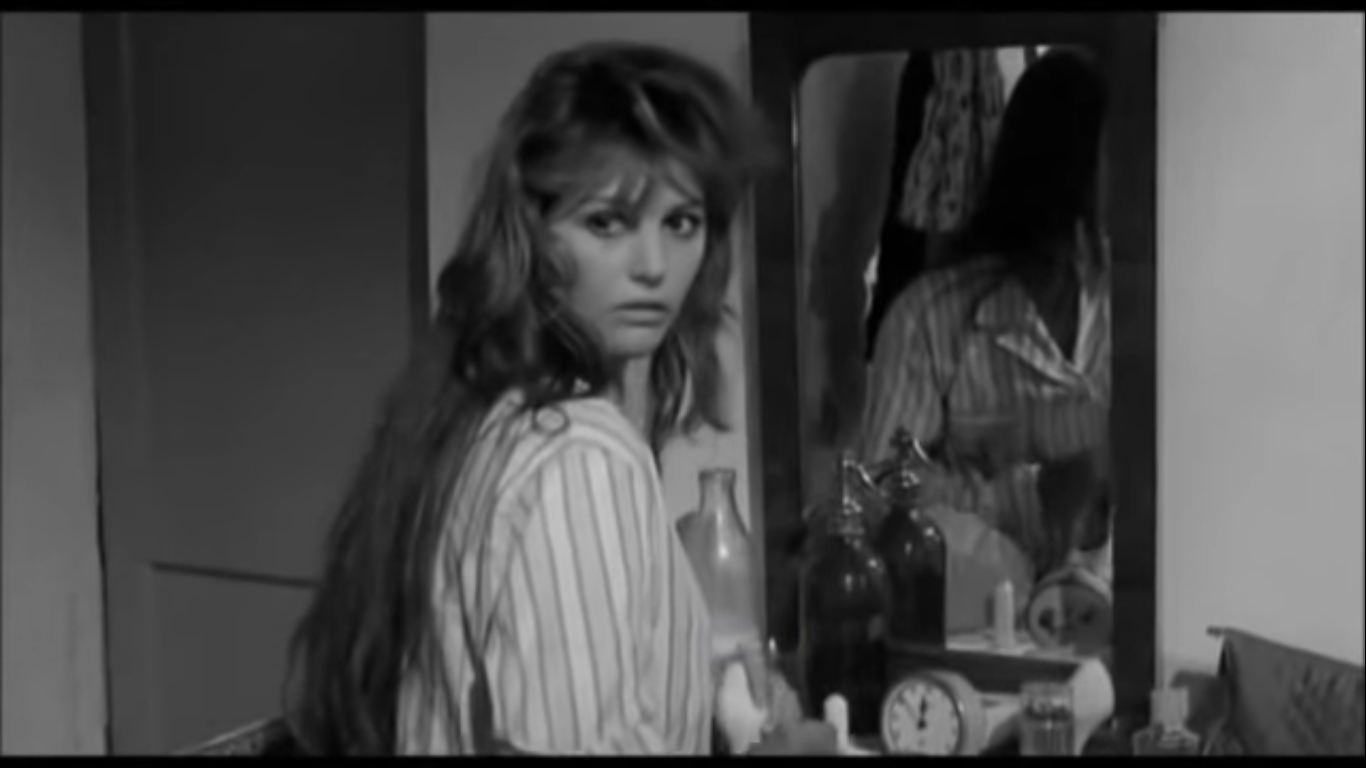
She deeply loves him and doesn’t want to hurt him by divulging how low she’s sunk. He doesn’t know what she’s been subjected to. It’s another stellar visualization as they stare right at the camera simulating a mirror, but it builds this instantaneous connection with the audience. It’s arresting and difficult to forget moments after. But there is no time to linger.

Carl almost feels Pollyannaish with an overt belief in Providence, but this undoubtedly is part of what makes him attractive to Gilda. He still maintains his optimism. Also, he does provide her a lifeline. With his connections he helps her flee the county as a stowaway, their destination is an island off in the Caribbean where fugitives cannot face extradition.

Far from fire and brimstone, it’s a man-made death trap. Nevertheless, it’s a haven run afoul with murderers and thieves — the lowest of the low from every segment of society.  The isle is ruled rather nonchalantly by the resident despot Mr. Bruno (Morgan Wallace) and it’s swarming with lusty-eyed suitors starved for a little female company.  There are slimy worms in the water and lounging in the hotel lobbies.

safe in hell mirror

They aren’t frequented by many white women and as Carl leaves her nervously in a local hotel, there’s an uneasy feeling, he’s leaving her to the wolves. They lounge in the downstairs chewing the fat, chewing on nuts, sinking down in their chairs, and kicking back in an odd community ritual. They wait for even a glimpse of her and she keeps them waiting — at arm’s length as much as possible — rebuffing each and every advance.

In the rogue gallery, the hotel clerk Leonie (Nina Mae McKinney) and the hotel bellman (Clarence Muse) stand out not just due to the strength of their characters in such a seedy milieu; they feel like genuine people rather than the stereotypical submissive blacks often propagated by Holywood with their ignorance and minstrel dialect. There’s none of that here and as a result, they feel positively modern placed opposite some of their brethren even decades later even as they become two of Gilda’s most sympathetic allies.

It’s when the wolves start circling we remember that when she wants to be, she feels like the female equivalent of James Cagney. Why should he have all the fun slapping and shoving faces in and dousing with water? It proves a universal pastime in Pre-Code cinema and Mackail gets in on the action with a plucky relish.

In fact, the movie is a battle for her propriety in some thematic sense. Carl and she pronounce their wedding vows in the only church on the island, ending with a fitting line out of the Lord’s Prayer, “Lead us not into temptation but deliver from evil.” This is the seat of her entire existence laid bare.

She resolves to remain steadfast and chaste for her sailor until he returns, but you can only play so much solitaire. She finally blows off steam with the boys who gladly oblige though she cuts it short of any monkey business. That doesn’t mean temptation or, closer still, her lingering demons don’t come back to haunt her. It’s a deja vu moment if there ever was one complete with another murder. And if we have learned anything, we know each act must come with a consequence. It’s all the more certain on an island of miscreants.

The ending of Safe and Hell precedes One Way Passage in its emotional heft conjured up in a moment of dramatic irony — all the unspoken feelings imbued through a kiss and an embrace meant to last a lifetime. Once again Carl heads off again on another voyage even as Gilda marches off to her own foregone conclusion.

The picture isn’t everything its title suggests; it’s actually more, and it gives its heroine the benefit of the doubt with multifaceted contours highlighting the fragmented, complicating factors of life.

What a delightful find it is and not for any amount of happiness or goodwill it supplies, but quite the opposite. It feels skeezy and despicable at times, but there’s also a surprising amount of virtue bursting forth. It meets our Pre-Code expectations and still somehow supersedes them to give us something even ampler — all packaged into 73 swift minutes of entertainment.

4/5 Stars

Other Men’s Women (1931): Moving Pictures are Alive

mary astor grant withers

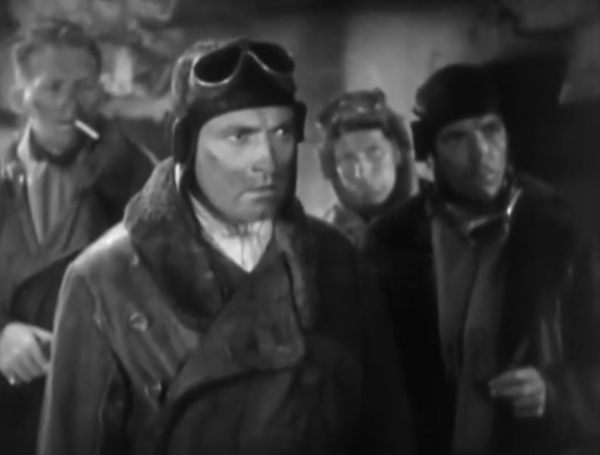
There’s an underlying sense that The Other Men’s Women was a primitive picture and yet it has a plucky energy as if it doesn’t know any better. Warner Bros. was at the cutting edge of talking pictures and Vitaphone wasn’t exactly old hat. The medium was still in its relatively latent stages.

Given this backdrop, William Wellman seems to take to the amount of freedom he has with a maximum amount of relish. The camera already feels slightly more versatile. With the shackles gone and a new amount of mobility, he moves his camera all over the place conducting dialogue scenes in any manner of places we would normally take for granted.

But he also slices the conventional 180-degree line to smithereens. It’s off-putting given our filmgoing sensibilities, and yet there’s something equally raw and frenetic about it that gives it a very appealing flavor. His camera is atop trains or out in the garden by the sweet peas. Moving pictures are alive!

Part of this may have been out of necessity because in 1931 alone Wild Bill churned out 6 movies for Warner Bros! That’s an insane amount of output. But this same rapid-fire outpouring of movies included the likes of Public Enemy, Night Nurse, and Safe in Hell, just for starters.

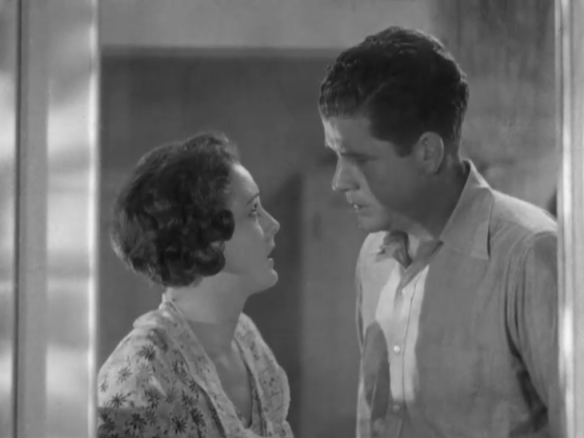
If we were to scour this movie for a conventional throughline, it would start with our protagonist, a cheeky railroad hand (Grant Withers), bright-eyed and generally contented with the life he leads. His best friend in the engine room is Jack (Regis Toomey), and they have an inseparable camaraderie together. In what world is Toomey lifted out of the periphery and promoted to a primary role? Here he is as living proof.

He brings his good friend home to his wife Lily (Mary Astor). She’s playful and warm. There’s a lovely affability filling up the spaces and planted in the gardens with the flowers. Their next-door neighbor is a kindly man with a peg leg, and they have built for themselves a fine slice of tranquility. It’s innocent until it’s not. In the kitchen Withers and Astor alone. And they don’t realize it until it’s too late.

They look and they kiss — almost on accident it seems — but they love each other. It’s irrevocable. There’s no taking it back, and it pains them both. If this is the film’s menage a trois, it’s the most devastating of outcomes. They never meant to hurt anyone. But then nobody ever does.

The two friends wind up slugging it out on their locomotive overturning their friendship and livelihood in one fell swoop. A stake is forever driven between them. But there’s more. Jack’s life is beset with personal tragedy. Bill is ridden with the ensuing guilt. He never wants to see either of them ever again. It’s too much to take, looking them in the face — especially knowing he can never have Lily.

Whereas the amended title looks to capitalize on the more scandalous element, the original title: The Steel Highway might fit the picture equally well. These are before the days of Le Bete Humaine or Human Desire, but there’s something elemental about a man and the railroad. Like the western, there’s a mythos attached — a historical shorthand — evoking something of expansion and progress.

As such it flits back and forth between its two spheres. That of the man’s working world out on the rails where life feels itinerant. There’s a danger but also a freedom and a mystique about it. The home life is sweet and domestic until it’s not.

The picture also boasts some of the best rain sequences I remember in recent memory. They are worth mentioning in how they augment Wellman’s film in its latter stages. It becomes expressionistic not merely through the illusions of light and dark, smoke and shadow, but the sheets of raindrops showering down. It adds yet another contour, another layer of emotional atmosphere to this film’s final act.

Jack sloshes around in the downpour helplessly as Bill hurtles toward his resolved conclusion. The climax is fated and fittingly catastrophic. Then, days later, he’s back in the old haunts, sitting at the same cafe pit stop, with a different waitress behind the counter, only to cross paths with an old friend…They share a smile, a few words. Does it really matter for us to have this? I don’t think so. It’s spelled out on their eyes.

Then, Jack does something unexpected. He hops back on his train and begins sprinting over the top. Where is he going? He’s got to get to the engine room — to bring it to a halt. We never see it, but we know he’s staying put. My thoughts linger on Wellman again with his camera perched in such a place where he captures his hero sprinting off into the distance. Yes, movies are alive thanks to people like him.

What a curious wrinkle it is to have James Cagney and Joan Blondell off-center with supporting assignments. That very same year they would be spotted together as leads but such is the studio system they could pull duties in a 70-minute railroad thriller like this. Cagney showing off his dancing and that swell-guy charisma of his. Blondell’s got that spark and spunk in spades. They’re equally delightful, and this isn’t even their movie. They provide yet another reason to enjoy the fundamental pleasures of Other Men’s Women.

3.5/5 Stars

Rocco and His Brothers (1960): An Epic Family Drama

Screenshot 2020-07-12 at 8.02.52 PM

One immediate takeaway from Luchino Visconti’s Italian epic Rocco and His Brothers is its gorgeous, swoon-worthy black & white that’s absolutely magnificent. It shares hallowed ground with films such as The Grapes of Wrath or The Godfather where the palette does yeoman’s work when it comes to informing the drama.

At its most essential level, the movie is about a poor rural family from the South journeying to Milan to make a new life for themselves. Their patriarch is dead and now his wife (Katina Paxinou) heads up north with her four boys to reconnect with the oldest brother.

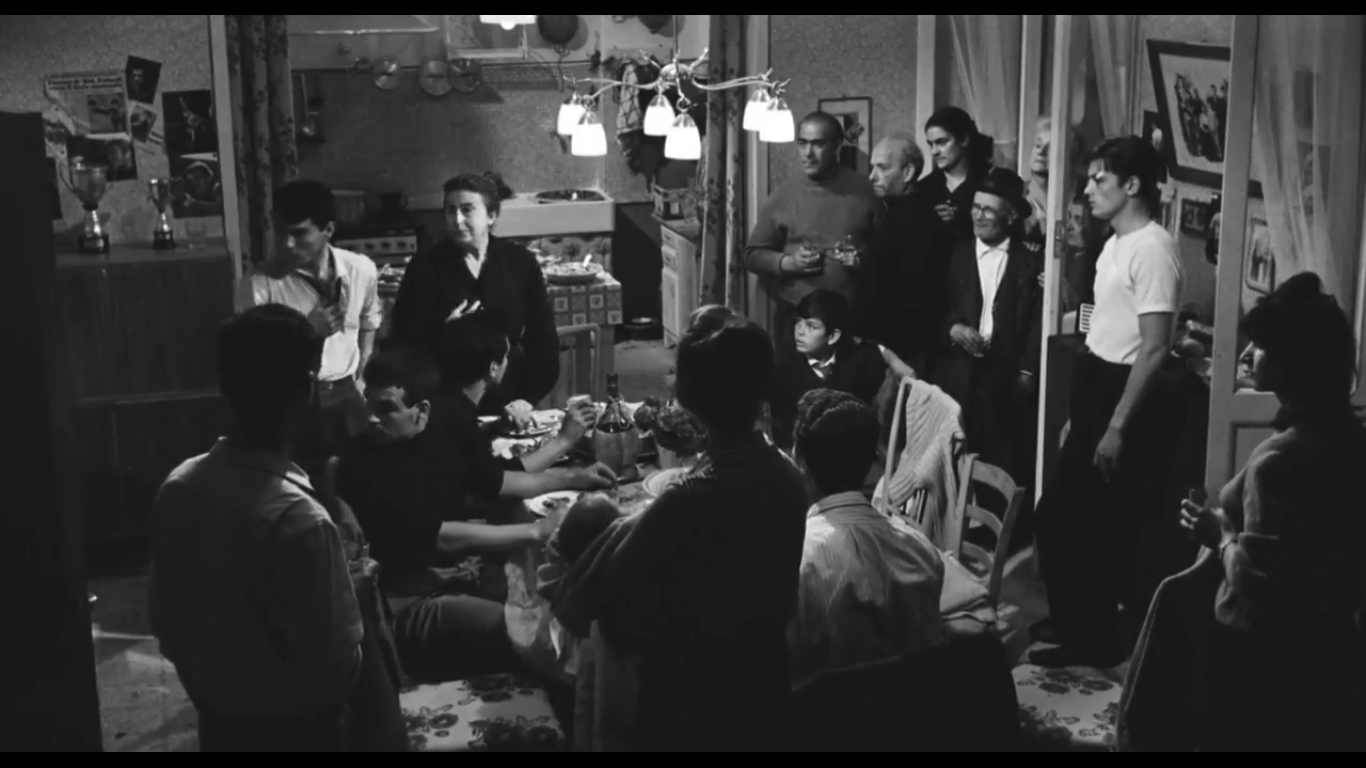
Vincenzo (Spiros Focás) is courting a dark-haired beauty (Claudia Cardinale) with thoughts of marriage once he gets steady work. Their home feels gay and bright with the roving camera capturing the full expanse of their household. It’s positively overflowing with family, and we expect nothing less.

I think some contemporary critics were disappointed by its sheen which is very un-neorealist. But it does boast its own brand of truth about family and life and love and all the constellations of emotions that we grapple with every day whilst living with other people. In this way, it shares a brand of authenticity with those earlier generations of films.

Francis Ford Coppola was certainly influenced by the picture, not only based on his hiring of composer Nina Rota but also in a more general sense in courting themes about family. It makes for a compelling ensemble telling their stories in a manner that feels totally immersive and honest to who they are as human beings. And yet it’s destined for heightened tragedy akin to Rebel Without a Cause or West Side Story.

Screenshot 2020-07-12 at 9.21.48 PM

What a raucous opening it is; it’s spectacular with the families pitted against one another and by families, I mean the mothers butting heads, while their children are left to pick up the pieces and play peacemakers. It feels all too real. Vincenzo quickly finds himself with an angry mother and a whole pack of brothers he has to find lodging for, no wife, and still no job. Everything goes to hell in a matter of moments.

Despite its sheer expanse, Rocco and his Brothers feels simultaneously well-organized and still free to follow the whims of life. Each brother gets a chapter of sorts and yet each one bleeds into the next. They’re never obvious sections and so it feels more like poetry woven throughout a story than hard and fast rules that must be adhered to.

For the time, Vincenzo lands them a temporary place to live, somewhere they can stay on until they get evicted. It’s not a promising life, but the family does receive a couple propitious bits of luck. Newly fallen snow means work shoveling snow, and the boys wake up early, downing their mom’s piping hot coffee, as they scramble out into the early dawn to bring home some bacon as it were.

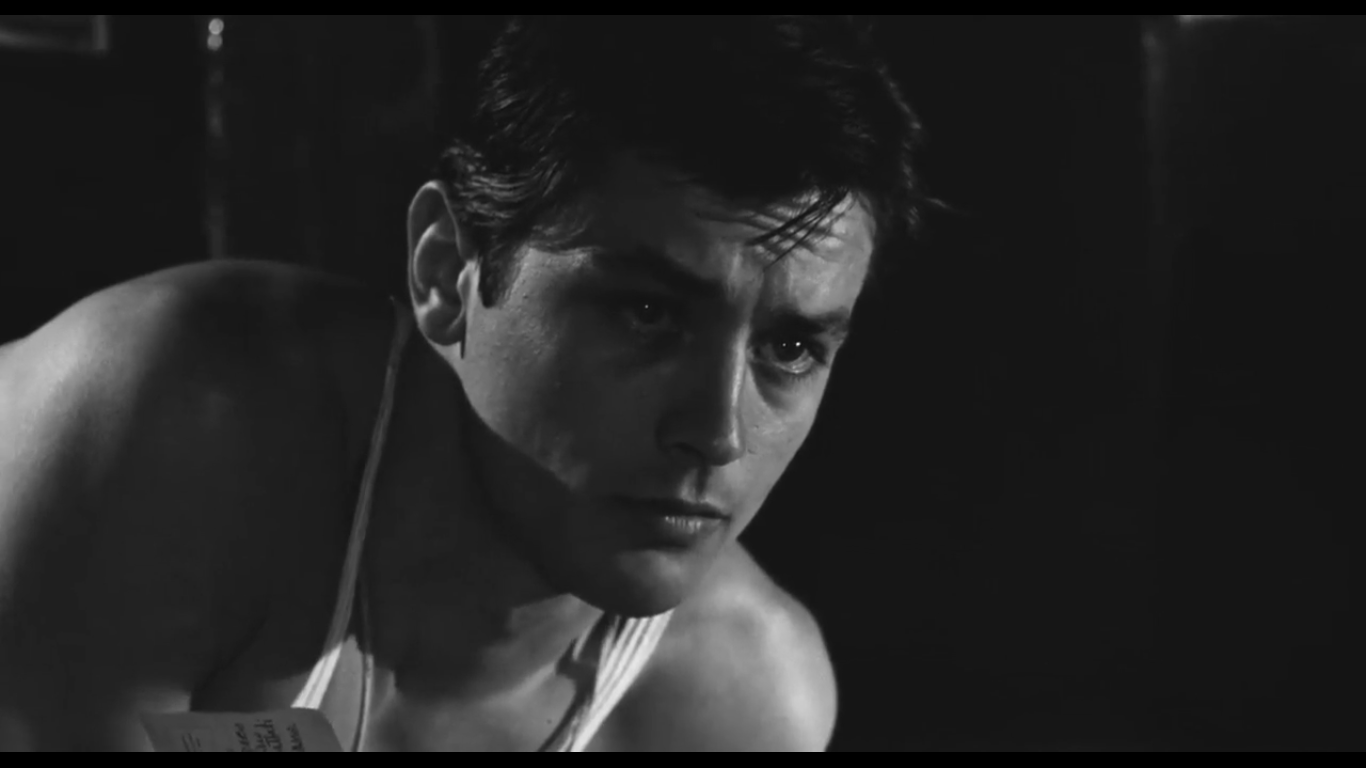
Because it becomes a story of each brother exercising their worth. They are valued by the manner in which they are able to provide bread money to the family unit. Rocco (Alain Delon) bumbles his way around a dry cleaner weathering all the young ladies teasing with a good-natured stoicism. Ciro goes the sensible route, conducting his schooling so he can land a suitable job at the local Alfa Romeo factory.

Simone (Renato Salvatori) fancies the idea of joining the local boxing gym as a chance at some easy dough, and he gets the biggest break out of all of them. A trainer takes a chance on him, and he wins his first fight, despite a belligerent temper.

If these scenes are only preliminary, they provide the framework to understand our characters going forward. Simone presumably lacks the moral prerequisites for a lengthy boxing career: a rejection of drinking, smoking, and women. Rocco is called upon to be his sparring partner and his guardian.

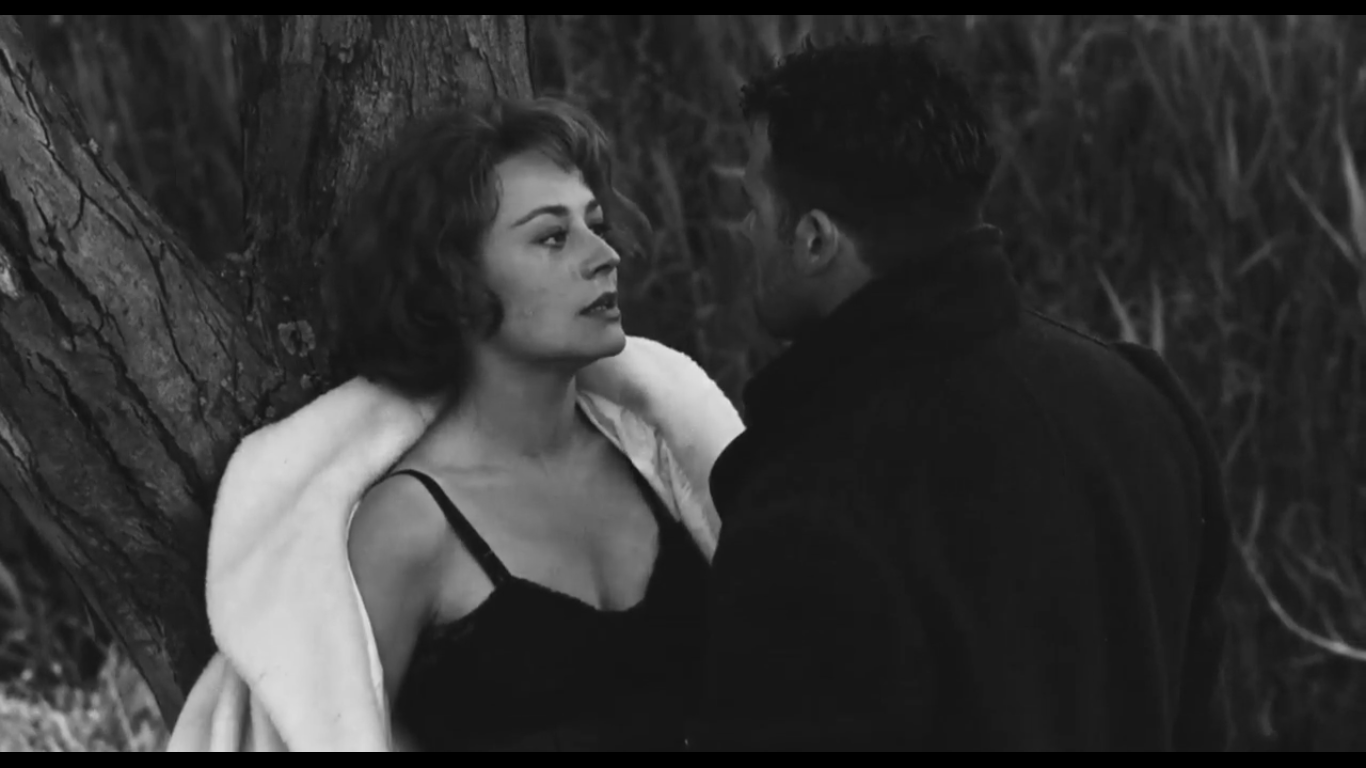
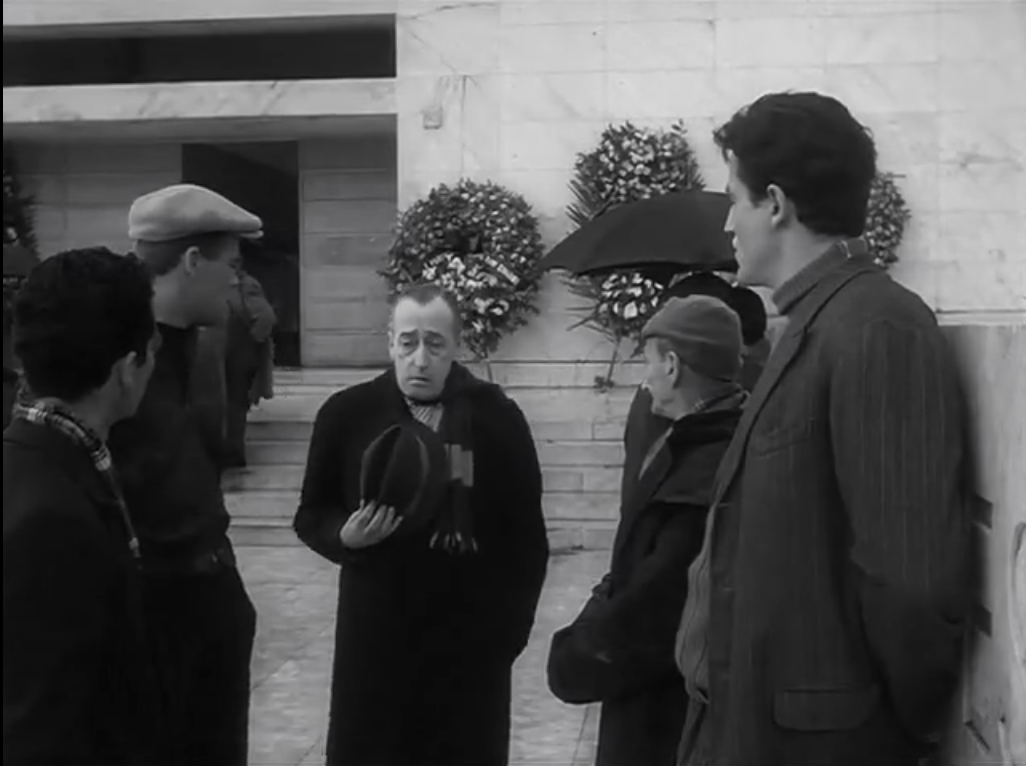
After his glorious showing for the home crowd, the brothers proceed to get embroiled in a street fight only to wander off with the pretty streetwalker Nadia (Annie Girardot). Simone’s behavior doesn’t bode well. Life roles onward and with few prospects, Rocco pursues his military service. It’s far from a digression. Instead, it reflects the passage of time

Screenshot 2020-07-12 at 8.06.38 PM

Rocco is one of those enigmatic figures who watches the world and seems to see everything. Those who think he’s quiet or unfriendly, over time, come to realize he’s perceptive, carrying deep reservoirs to make the most of life and have faith in everything around him. There’s a dashing nobility to him. This becomes even more true when he returns home.

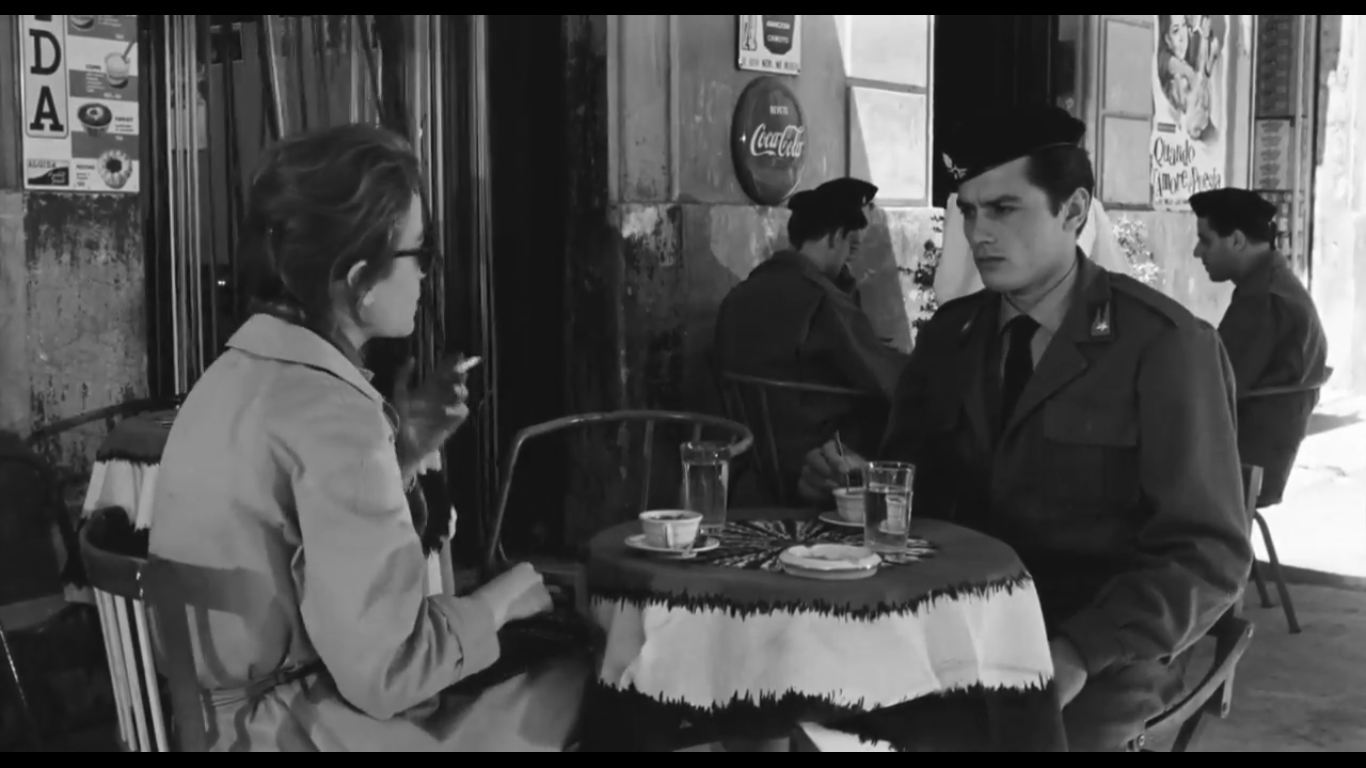
The first person he meets at a sidewalk cafe is a face from his past: Nadia. He, smartly dressed in his uniform. Conservative. She, in her sunglasses looking him over. She’s no longer with Simone — at least they drifted apart — because she was serving a prison term. In Rocco, she finds someone understanding and kind who never demeans her. She feels understood in his company. Pretty soon a subtle romance blooms between them, warm and tender.

What we haven’t taken into account is Simone. The time has changed him as well. Now he’s hardened, disgruntled, and disillusioned with his boxing career. He dedicated himself to smokes, drinks, and pool with the boys. But he’s also intent on ripping Rocco and Nadia apart. Jealousy takes hold, and it’s the stuff of melodrama. To detail it all now would be rote and a disservice.

You need to see it as he brings them down to his level with a wounded tenacity nearly as electric as anything Dean or Brando managed in East of Eden or Streetcar. Suddenly, everything that was so blissfully and right between the two lovers is besmirched. And they cannot get it back. The way the camera clings to them violently as Simone tries to advance on Nadjia feels convulsive. It’s the film’s cataclysmic event.

Screenshot 2020-07-12 at 9.14.36 PM

In its wake, Rocco ascends in his own boxing career channeling his hatred into his rounds in the ring and shedding tears for how the harshness of the world has changed him. 

As Vincenzo settles into his own familial life, it is Ciro’s turn to respond to the fracture between his other brothers. He confronts both on his mother’s behalf, entreating Rocco, “A seed gone bad must be weeded out. After all, trees are meant to bear fruit.” However, the well-meaning boy doesn’t quite know how to apply this teaching into practice.

Rocco continues on the rise in his singular objective. Simone’s sunk into the gutter as not only a malcontent but the laughing stock of the community — his debts piling up and Nadia staying with him, partially out of malice and a promise to Rocco. It is here where the film’s editing comes front and center as the two brothers go their separate ways.

My mind is drawn to a curious interchange between mother and son as they dialogue on the self-destructive nature of the black sheep of the family:

“It’s not for us to judge him but to save him.” – Rocco

“Christ will regret the suffering he visited upon us.” – Mother

“We’re no longer under God’s grace. We’re our own enemies.”

Rocco proves himself again to be this near-otherworldly figure. He has an almost unfathomable amount of grace for others, and yet he’s prepared for penance and to take the burden and sorrow on his back. He is Christ-like and yet unable to be their savior.

It makes for a dismal denouement drained of all hope. Still, the family must pick themselves up out of the muck and the mire and make a way in life — each brother on his own path. Rocco finds his face plastered all over the news kiosks for his latest exploits. Simone has fallen into disarray. Ciro represents a certain hopefulness — what his brothers used to be, and Vincenzo is what they could have been — both settling down with families. Little Luca’s fate is yet to be decided. He’s indicative of the fight still left to be forged.

But I am left to return to my opening metaphor. Whether it’s Tom Joad or Michael Corleone, and in this case, Rocco, these are young men who made irrevocable choices in their lives from which there is no turning back.

The chasm between who they were and who they become couldn’t be more disparate and in all accounts, it has heady implications on their family unit. What they do, they do for their loved ones, and they still see everything they love crumble around them. It’s not a new concept — it’s not novel — but there’s something distinctly profound in this. Because we all experience something of the same.

My final thought is only this. It occurs to me that the Parondi brothers might all represent the seeds in the parable, falling all along the road. I’ll leave it up to you which ones will make their way through the straight and narrow and which ones will bear fruit. Because human beings are often resilient, and they are often granted second chances in life if they accept them. Perhaps they can remain under God’s grace after all or maybe it’s not for us to know.

4.5/5 Stars

Girl with a Suitcase (1961): Claudia Cardinale Shines

Screenshot 2020-07-12 at 1.19.51 PM

It’s a slippery slope when you begin to consider the attractiveness of women in films because the conversation can get needlessly superficial. All I will say about Claudia Cardinale is that God was very good to her. But beyond her immaculate beauty, the joyous discovery of Girl with a Suitcase is unearthing a character underneath.

No, she is not playing herself, but in the figure of Aida is someone we can readily empathize with. We meet her and she’s riding in a fancy convertible with a suave young, smart-aleck named Marcello Fainardi (Corrado Pani). We watch them, and they make a handsome pair, but all the while it’s a matter of deciphering the nature of their relationship.

When he ditches her suitcase and flees back to his family mansion inhabited by his younger brother and protective aunt, it becomes all too clear. She’s been duped and he led her on, boasting about some business connection of his. It was all a ruse.

As our dramatic scenario becomes more clear, A Girl with a Suitcase suggests a premise not too far removed from Milos Forman’s Loves of a Blonde, both about women who seem to be victims, whether it’s of love or, more broadly, society on the whole.

Forman plays up the comedy to make his story into something, more and the same might be said of Valerio Zurlini’s earlier film. Marcello all but disappears from his movie, and it becomes framed as one of those coming-of-age stories through the eyes of a young impressionable boy. In this case, the eyes belong to Marcello’s younger brother Lorenzo (Jacques Perrin).

He vows to cover for his sibling, although he doesn’t realize the extent of it until Aida shows up on their steps, armed with her suitcase, looking for someone. Instantly he’s conflicted between his initial agreement and the pity he feels for this woman.

In one passing moment, he asks his tutor, a local priest, whether we are responsible for what our relatives do. His mathematics teacher ironically seems generally incapable when it comes to answering questions of morality. In an effort to extend the man some grace, maybe he believes a boy’s problems are never as big as they seem. It takes some perspective, and perhaps he’s right.

However, he also misinterprets the thoughts that occupy his youthful pupil’s mind. There’s an importance and a candor behind his inquiries. You can see the gears turning in his mind because he is a creature of compassion. Youth often knows no other way.

Soon he becomes Aida’s benefactor and confidante. He provides her a loan, invites her to take a bath in their mansion. What’s comforting is how there are no ulterior motives between them and so they relax and come to appreciate one another as equals and as friends.

2020-07-12 at 1.12.31 PM

She in turn tells him of her unofficial fiancee. Sometimes she loves him madly. Sometimes she wants to strangle him for his ego and selfishness. She’s a singer he’s a musician, but he holds antiquated views about a woman’s place; he wants to clip her wings. She says “In art, couples don’t work,” She bemoans the men in her life. One robs me, another dumps me. Only Lorenzo extends her common decency.

I’m no musical savant but the soundtrack is a fine extension of the world with this almost tinny harpsichord quality we often associate with 18th-century drawing rooms. It’s cultured and yet set against the conversations still manages to be intimate.

She becomes more and more loquacious as he eagerly listens to everything she has to say. In the kitchen, they eat eggs and she finishes up the dishes, regaling him with her travails with a troupe of dancers. They frequented the cruddiest hotels on their circuit with nights full of conversations about hopes and dreams, careers, and future husbands. These are the most intimate of things and Lorenzo is let in. They feel a connection.

If there is anything like drama in the movie it’s generally subtle. Aida takes advantage of a big shot and dances with him at the hotel. Lorenzo watches jealous and angry with her for being so phony. Then, her boyfriend returns and it stings a bit more.

Lorenzo’s never had so many conflicted feelings welling up inside of him and so he tells Aida a white lie that might wind up hurting her. There’s a lovely moment on the steps of some museum. She is waiting in good faith. Instead, the father shows up to question her and get to the bottom of what is going on between them. Lorenzo is disconsolate. He came home drunk. Won’t study. He lies.

What can it be but something more than friendship tearing him apart? The movie does well to highlight what an ambiguous task it is to begin making sense of relational boundaries. In one sense it makes sense we do have marriage and dating to try and make sense of romance and feelings. To help us understand our emotions in a manageable context. Still, when you’re in love (and even when you get older), it is such a bewitching force.

How do we describe it? Yes, there is love between them. Is it romantic? Possibly. But there is a level of concern there proving far more genuine than we are normally used to seeing. Because youth often takes people as they are and sees the best in them when others are either dismissive or manipulative. While this is a beautiful thing, it can also lead to heartbreak. Sometimes it happens by accident.

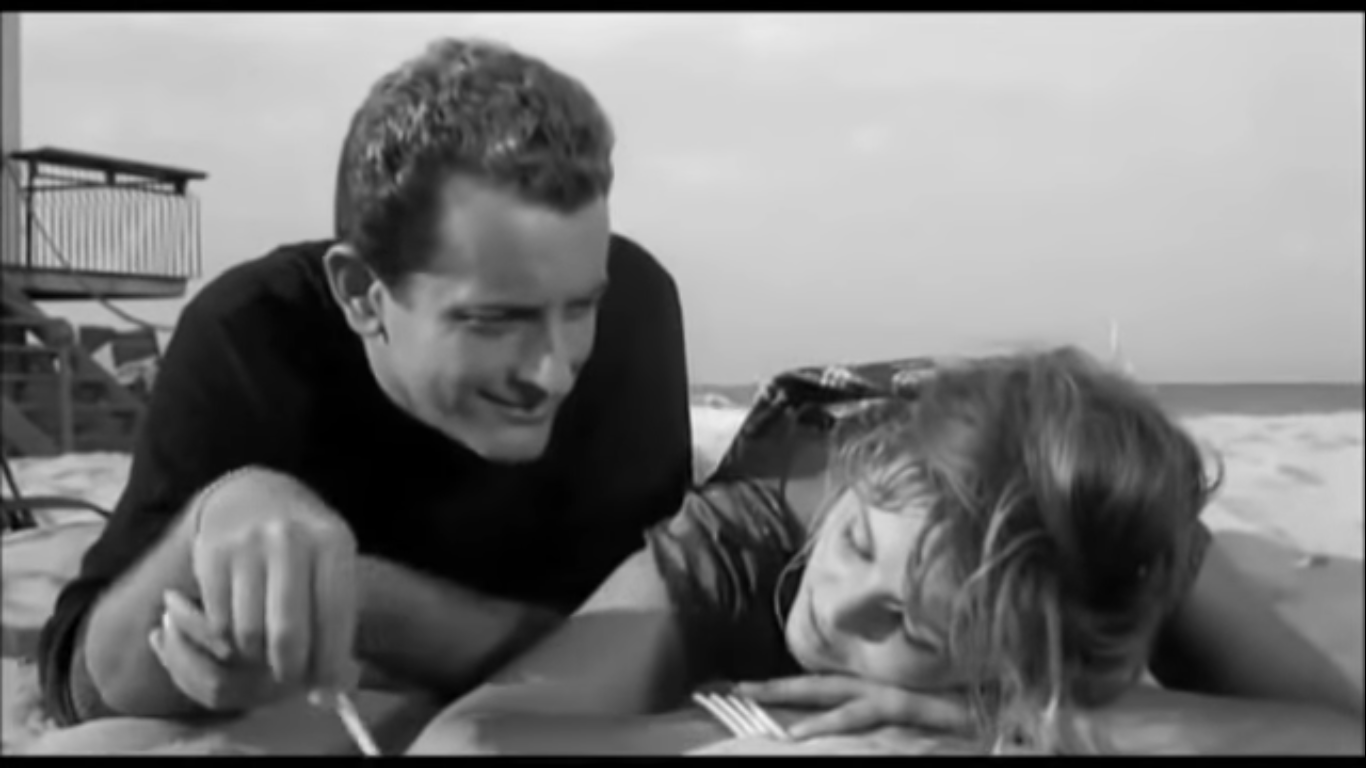
For a good portion of the movie we almost forget about Lorenzo following Aida to the beach as she returns to her lover and then quickly finds a new one. They’re dancing in the cafe and then lounging on the beach together. She’s both obliging but not quite ready to give herself over to him. Then, Lorenzo returns and for the first time in his life, he’s prepared to make a stand to win her.

Screenshot 2020-07-12 at 2.52.19 PM

In everything from The Leopard to The Pink Panther or even Once Upon a Time in the West, Cardinale feels more like a dressing — one element of an ensemble. She does quite well and leaves a lasting impression, but in Girl With a Suitcase, she shines all the brighter.

There’s none of the money or pretentiousness that comes with bigger productions. Granted, there’s nothing wrong with any of the aforementioned movies. I like each one of them, but here it’s different. It’s intimate and alive in its characterizations in ways those other films were never meant to be. That was not their function.

Those were always about Marcello’s story or Alain Delon’s story, Burt Lancaster’s or David Niven’s stories. This is mostly hers. By the time it’s done, we know full well she’s not just a pretty face, but a lovely personality with a beating heart.

To my knowledge, it’s the finest showcase of Claudia Cardinale’s individual talents, and she deserves to be remembered in her own right: As a supernal, full-bodied beauty, yes, but also a tender, joyous personality. She is more than a pretty face. With that beating heart come fears and desires bubbling up through her character. And she’s beautiful inside just as she is broken. They are not mutually exclusive. In fact, they might even be interconnected.

Lorenzo learns this truth even as he grapples with his own affections and desires. Because the ending of the movie is reasonably dismal. If you’ll pardon the liberty, I’m reminded of a phrase: Foxes have holes, birds have nests, but the girl with the suitcase has no place to lay her head. In her case, it might be partially self-inflicted though not all her own doing. The society around her exacerbates her struggles.

I’m not sure if I know an Aida personally, but I can imagine her. A woman who is used or taken advantage of, who wanders or has no one who truly wants them or loves them, so they keep on looking, keep on searching, and continue getting hurt. It’s a downbeat cycle — totally futile — and yet in the youth of Lorenzo is still a resilient hope and a prevailing decency. This is what we must cling to for the future. Otherwise, there is no possible response other than despair.

4/5 Stars

Big Deal on Madonna Street (1958): A Heist Comedy of Errors

big deal on madonna street

If you need only one scene to be indicative of everything Big Deal on Madonna Street exemplifies as a caper comedy, the opening scene puts it out on a platter, ready for consumption.

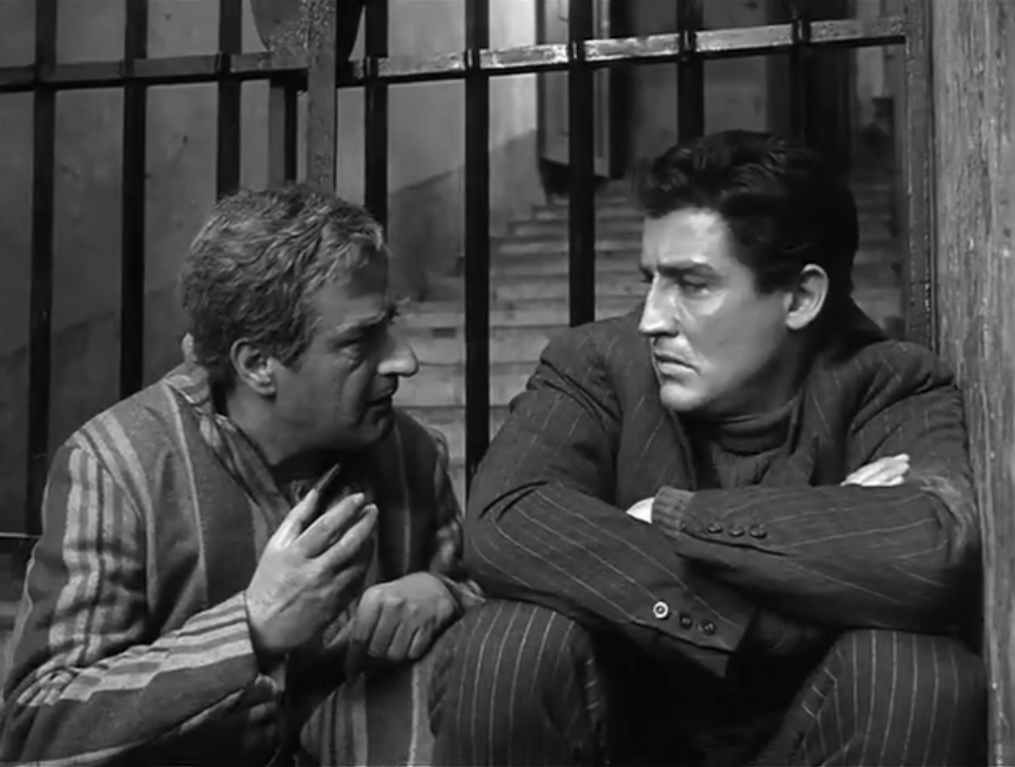
A shrimpy man with a mustache waits on the street corner as a lookout while another named Cosimo (Memmo Carotenuto) busts open a window to hotwire a car. Except he totally bungles getting nabbed by the cops for his efforts. Even as the alarm goes off, he’s too much of a stiff to make a break for it. Now he’s on the inside, and he deserves it, if not for his botched crime, then at least for being a numbskull.

But he’s also an idea man looking to get out of the can as soon as possible. The job now is finding someone to be his scapegoat. It’s not as easy as it sounds. Everyone has their underlining excuses. A wife already in prison. A baby to take care of. Previous prison time. It’s difficult to scrounge someone up when all your dopey friends are two-bit crooks.

Finally, they settle on Peppe (Vittorio Gassman), a beefcake with a glass jaw. He has no prior record and with a dead-end boxing career, he could use the dough. So he goes into the police precinct, lays out his sob story, and proceeds to get handed a prison sentence of his own. Now he’s in the clink to keep Cosimo company.

He requests at least the common courtesy to know why he had to end up in prison in the first place. Cosimo tells him about a golden opportunity in the form of a heist. He’s got it all planned in his head, sans all the gory details. Regardless, it’s going to be the crime of the century, or the decade, or the year, or maybe the month…You get the idea.

When he finally gets on the outside on parole, it’s now Peppe who gathers the usual suspects together to put their plans into action. Their first mistake is probably taking their cues from a lug head, but they’re desperate and a little loopy themselves.

Soon they’re casing the joint and making sure they know what they’re getting into. It’s all very “scientific,” but not quite foolproof. They’ve watched one too many crime movies. The first professional they actually cross paths with is a safecracker (Toto) — a real pro — but he just gives them advice; he’s not actually prepared to take on the job for himself. He’s got his own parole to think about. And so he supplies them some of the tools of his trade and wishes them well.

big deal on madonna street

Normally heist stories are constructed in a very specific manner. There’s the planning process, then the heist, and the reversal where everything goes haywire. Big Deal is made entirely in its foundation — the best-laid plans that have no choice but to go awry — and their continued complications and digressions only make the scenario more hilarious. Rest assured, we foresee the problems before they ever come to a head. How can we not? But they proceed to get worse and worse.

The vacant apartment they were going to use as their in-road has been filled and so they look to woo one of the tenants so they can gain access. Peppe dons his most charming persona to get a foot in the door, except he goes and falls in love with a maid (Carla Gravina) he’s supposed to be romancing, getting jealous of her steady row of suitors. Then, she gets herself fired and the whole reason she was of value to them in the first place goes out the window. Peppe still loves her.

What ever happened to Cosimo, you ask? He finally gets out, intent on his cut, only to then seek vengeance on his former compatriots, going so far as to ambush Peppe in the carnival’s bumper cars. The youngster Mario (Renato Salvatori) starts his own forbidden love affair with the chaste younger sister (Claudia Cardinale) of one of their co-conspirators. Soon he loses heart and drops out. The family man, Tibero (Marcello Mastrianni), struggles to take care of his son. He also gets his arm broken nabbing a camera for recon. Worse yet, the camera’s worthless.

Their luck never gets better, nor should it. When it comes time to synchronize their watches, of course, they don’t have any. They’re either too expensive or already hocked. A lover’s quarrel heats up, and with it, the lights go on, cutting into the crew’s surreptitious activities up above on the rooftops.  Their timetable is abruptly derailed.

Big Deal on Madonna Street milks comedy from the telling observation that life is never picture perfect and even the most tightly wrought plans have a way of being unraveled or upended by the most unsubstantial wrinkle. These fellows aren’t exactly master criminals to begin with so their brand of setbacks more than fit the size and scope of the crime.

When they do finally get inside, there are leaks. Noises. Cats. Midnight snacks. Major miscalculations. They continue bumbling their way through every waking minute and we wouldn’t have it any other way. Normally heist films go horribly amiss at the most inopportune moment. In Big Deal on Madonna Street, they shoot themselves in the foot countless times, and still, they go for it anyway.

You’ve got to admire their dogged determination and this motley crew is quite likable. It comes from knowing they are criminals who never will succeed. They are armed with a prevailing obliviousness. We can laugh at them and like them, and watch them stumble off into their lives, after having made a complete mess of everything.

Part of this comes with walking with them in their lives and seeing them as common folk with all the foibles that come with small-town life. What a lovable pack of misfits and malcontents they are and we learn them to appreciate them for precisely these reasons. They’re unequivocally silly. If nothing else, they provided their audience with some quality entertainment. As a heist film shot as a comedy of errors, Madonna Street has never quite found its equal.

4/5 Stars

The Shop Around The Corner (1940): A Christmas Love Story

The_Shop_Around_the_Corner_trailer

The Shop Around The Corner samples a Hollywood-style Hungary that nevertheless establishes it as a much humbler, quieter picture than seasoned Lubitsch aficionados might be accustomed to. It’s subsequently one of his best efforts for this very reason. There’s an intimacy to it, recalling his own upbringing working in his father’s tailor shop based out of Berlin, during his youth.

Initially, it feels like curious casting — James Stewart playing a Hungarian is absurd and he makes no attempt at an accent — and yet Lubitsch had the foresight to understand his appeal. He lacks all the suavity and urbanity normally associated with the director’s creations. In fact, for an American audience beginning to grow used to Stewart’s own steadily rising star, they connected with his disposition since it was very much the antithesis of stereotypical Hollywood or the highbrow of 1930s Lubitsch pictures. But it is the tone that matters most.

Because, again, this is not Hungary in the flesh — it is out of the mind of Lubitsch, a creation of nostalgia, warmth, and sentimentality — and on its streets, Stewart is more than at home. He fits the spirit of what The Shop Around The Corner cordially represents.

It is not a place right in front of us but just out of reach in the near-beyond of our memories and our imaginations. It represents our hopes and high ideals, even the sentiments of hope wrapped up in the Christmas season. Stewart as a figure — a token — is somehow able to stand in for so many things.

But there is more to it. Stewart delivers something a bit more substantial than his “aww shucks” persona, which was continually teased out leading up to the days of Mr. Smtih Goes to Washington. There’s also a stern assertiveness present, ready to come out; it just needs a spark, some point of instigation.

Enter Margaret Sullavan, his perfect counterpart and sparring partner. Her breathy delivery is quiet and understated, while still somehow implying this spunky resilience residing inside her character. This is what Sullivan brings to the part herself, earning a reputation as a demanding and “difficult” performer who sent shivers down the spines of major studio magnates, knowing full-well what she wanted. As a result, she found initial success though she’s mostly forgotten today.

Accordingly, her Klara Novak turns out to be a crackerjack saleswoman, at first pleading for a job, then proving Mr. Kralik’s rebuttals wrong by turning right around and earning employment. This sets the stage for their prevailing antagonism from which a love story must bloom. 

But that comes a bit later. The movie opens with all the staff of Matuschek and Co. congregating outside before the workday commences waiting for the front door to be opened by their employer.

Frank Morgan is Mr. Mathuchek, a blustering and a demanding fellow who can never quite make up his mind about the shop’s inventory. For that, he trusts his most faithful and pragmatic right-hand man Kralik (James Stewart), who has been the company’s longest-serving employee. If there are any decisions to be made, he’s the man to make them.

Felix Bressart is a fine family man and friend who always has a habit of fleeing the scene when the boss is requesting personal opinions. What he provides is quiet stability and an encouraging ear to Kralik.

Among the other current employees is the brownnoser with fine threads Vadas and the precocious errand boy Pepi (William Tracy) who does everything in his power to get ahead. With their communal workspace, a number of things come to pass. The relationship between Kralik and Ms. Novak continues turbulently as she manages to sell one of their useless purchases to an unsuspecting customer — a cigarette box that plays “Ochi Chernye.”

Simultaneously, Mr. Kralik is maintaining letter correspondence with an unknown paramour who engages his intellect on ideas of art, culture, and literature. One is reminded how The Shop Around The Corner extrapolates the axiom of not judging a book by its cover. Closely related is the fallacy of getting caught up in books such that you fail to see and comprehend the reality playing out right in front of your nose.

You read Anna Karenina, Madame Bovary, Dostoevsky, only to realize the people living and breathing right beside you are not only more than what’s meets the eye — they are simultaneously writing their own stories. We can’t always mold them to fit the narratives we know. Both Ms. Novak and Mr. Kralik seem to know these issues intimately without realizing it.

Because this is a Lubitsch picture, irony comes into play quite early; although it’s difficult to know if Stewart or the audience come up with the answers first. Maybe it hits us at the same time. If you don’t already know what it is, I’m not licensed to say. Allow it to happen to you.

Meanwhile, for some unseen reason, Mr. Matuschek grows cold and distant — going so far as relieving Kralik of his post in an uncharacteristic move. It’s the film at one of its lowest points. This was the fountain of all Kralik’s joy until he is so unceremoniously plucked from his position. Because we realize this job is his life, these people his extended family. Even Ms. Novak feels sorry that they must say goodbye, though patching things together might be altogether too little too late.

Sampson Raphaelson’s story kindly reconciles this conflict as Kralik and Mr. Mathuschak smooth out the situation. What still remains is the meeting with his mysterious correspondent. The Christmas season is upon the shop, and they work tirelessly to have the biggest sales in Christmas Eve history. They succeed. It’s punctuated by holiday bonuses for everyone, a soft powdering of snow, and genial celebrations all around — even for lonely Mr. Matchuchek.

This could be the end, but of course, we cannot forget the main reason Lubitsch has cast his eye on this inauspicious shop. Among many other things, it’s to unpack themes of love. The lights are low in the backroom, and Kralik is trying to get the words out, playing up the piece of jewelry he bought for his unseen beau.

Ms. Novak tries to accept her own fate with fortitude as her former rival tramples over her dreams with a reality check. Their words meet midsentence as she recites the recitations from her own dream suitor:

“True love is to be two, and yet one.”

“A man and a woman blended as angels.”Heaven itself.” That’s Victor Hugo. He stole that.”

“I thought I was the inspiration for all those beautiful thoughts. Now I find he was just copying words out of a book. He probably didn’t mean a single one of them.”

“I’m sorry you feel this way about it.”

She’s been led to believe he’s a balding, chubby fellow playing at a great romantic. As it turns out, he’s lanky and bowlegged, but not without his charms; he meant every single word. He says to her, “Take your key and open the post office box and take me out of my envelope and kiss me.” His proclamation of love stops her cold as the recognition comes over her face. She follows suit soon enough, and there you have it…

No more fanfare is necessary. We have the cathartic moment as a romantic tree-topper that Stewart and Sullavan more than earn. Even right here, it’s the same old Lubitsch with an unequivocal knack for finding the most satisfying conclusion, whether in drawing room comedy or backroom romance.

4.5/5 Stars

Note: I wrote this in conjunction with a series of reviews on the films of Margaret Sullavan released earlier this year.

Christmas in Connecticut (1945): Yuletide Cheer and The War’s End is Here

Barbara_Stanwyck_in_Christmas_in_Connecticut_trailer.jpeg

Christmas in Connecticut functions as a fine way to cap off 1945, a year full of jubilation and relief for the American public. The war was finally over! Given this context, the setup might feel familiar. A sailor who was shipwrecked out at sea in the Pacific was rescued. Now he’s seeing the war from the sidelines in a hospital.

Because in the mind of the viewer the war is already won, it feels like a relief. Jefferson Jones (Dennis Morgan) is an American hero, and all he has to worry about are building his strength and getting to know the pretty southern belle nursing him back to full health. Still, with the holidays approaching, he can’t help yearning for a little bit of good old-fashioned Americana, the down-home comfort and hospitality he’s missed out on overseas.

A letter of request gets sent on his behalf and the old battle-ax, famed magazine publisher, Alexander Yardley (Sydney Greenstreet) catches wind of it. The idea is to serve up the soldier a meal in the home of famed columnist Elizabeth Lane, known for her idyllic farm, snow-covered nostalgia, and domestic tips and tricks. (The character was based on real-life Gladys Taber of Family Circle Magazine who actually lived on a farm in Connecticut)

As he could use a bit of comfort and home cooking himself, Yardley thinks it’s a fine suggestion, and he’s prepared to invite himself and the soldier out to the country for the holidays. He has no thought that it might be an inconvenience.

But of course, this is hardly the problem. It’s worse than that. Elizabeth Lane does not exist, at least not as vividly as she does on the pages of Yardley’s magazine captivating nationwide audiences coast to coast.

In truth, she lives in a drafty apartment overlooking the outside laundry as she knocks away at her typewriter eating sardines for breakfast. Because she’s no cook nor a wife with a baby and a farm. She’s more of a city girl living off a diet of independence and mink coats. Of course, no one knows about the sham aside from her and her editor.

What makes it worse is the fact Mr. Yardley is a very principled fellow and a stickler for printing the truth. If he ever caught wind of this charade, it would be the end. So to take stock of the damage, her boss is about to show up on her doorstep (one which she doesn’t have) for Christmas eve with an unwitting soldier who believes in what she comes to represent.

Barbara Stanwyck dons this kind of part with ease as the street-wise lifestyle columnist. She rides out the comedy with her usual aplomb, but she can play romance and the sentimental in a manner that doesn’t totally rob them of their import.

Men vying for her affection will be an ongoing theme throughout the picture and why not because Barbara Stanwyck is the picture of self-confident beauty with an undisputed vivacity.

The film is salvaged — from solely a narrative perspective — when she impulsively accepts the routine marriage proposal from her suitor, the wealthy businessman John Sloan. He’s been trying to get her hand in marriage for a time. This time she acquiesces and accepts. Might as well have some stability.

However, it’s also the decision leading the shambles around her to all slide into place. It gets to the point where they might have a fighting chance making the impression stick at least for a weekend. John will be her husband because he is, isn’t he? They’ll conveniently use his farm. Check. Uncle Felix (S.Z. Sakall) will come along to cook the meals. Now there’s just the issue of the baby…

They assemble everything to make a go at the charade. They call out a judge to perform the marriage before their arrivals show up. There’s one hitch. Jefferson shows up early! It’s a scramble to pull everything together but the game is on whether they like it or not!

Morgan is an old star I always find to be a bit blah if generally genial. Thankfully, the film is replete with a formidable supporting cast to round out the holiday household. Not least among them Sydney Greenstreet (in a rather uncharacteristic role), then S.Z. Sakall, and Una O’Connor.

Felix and Norah go to war in the kitchen with their equally pertinacious attitudes. After all, Sakall is the king of the kitchen and catastrophe while subsequently becoming the film’s most lovable secret weapon when the story gets convoluted and a savior is called to bring it back around.

The many scenarios are easy to list off: bathing the baby with company on hand, flipping flap jacks at the behest of Mr. Yardley, putting the cow to bed, and the most calamitous of all, the baby swallowing a watch! It’s the actual unraveling of the scenes which become most delightful because Stanwyck rides them out with her typical flair for situational comedy.

A major turning point comes at a festive dance where love blooms though it does give a strange impression to outsiders looking in. The “married” Mrs. Sloan looks to have taken a shining for the tall man in uniform and the feelings are mutual. But that’s quite out of the question. Think of the scandal. This would never do totally dousing the prevailing happiness brought on by the cessation of war.

Still, they take a magical sleigh ride together. Because one of them knows they are unattached and Morgan’s character is just naive and self-effacing enough for us to believe he would never have presumptuous intentions.

However, everything must come to a head as this is tantamount to Murphy’s law in cinema. In this movie, it’s thanks to a miscommunication and a kidnapped baby. One of the highlights of the movie is observing the subtle antagonism of Sakall toward Greenstreet. He mutters “Fat Man” which might be a fairly blatant reference to his incorrigible part in The Maltese Falcon.

However, they also go at it in the kitchen because Sakall is the glue and the matchmaker — everything required to hold the story together and see it to the desired ending. It means stopping Yardley in his tracks. In fact, these scenes are only topped by Stanwyck laying into the Fat Man of her own accord and then falling for Dennis Morgan as it’s meant to be. They really are 1 and 2 on the film’s list of greatest attractions.

In a movie such as this with snow, sleighs, a warm hearth, and friends and family, not to mention the end of WWII, what would the ending be without our protagonists wrapped up in each other’s arms? If you’re like wartime audiences with generous spirits, it’s excusable to find Christmas in Connecticut to be agreeable holiday entertainment as the mood strikes you.

3.5/5 Stars

Black Narcissus (1947): Another Archers Masterpiece

Screenshot 2019-12-22 at 65652 PM

Under their collaborative umbrella, The Archers, Michael Powell and Emeric Pressburger formed one of the most mystifying and extraordinary partnerships within the annals of British cinema history. Black Narcissus is just one of the many enchanting jewels in their collective crown.

Part of the acclaim must be heaped on Jack Cardiff because there’s little doubt; his compositions are absolutely stunning front to back. It starts with this gorgeous even intoxicating brand of Technicolor mingling the real and artificial in a manner on par with anything Hollywood was cranking out at the same time.

Whether through miniatures, grandiose matte paintings, or Pinewood Studio sets, it creates a spectacular illusion as a cinematic representation of the Himalayas. In perfect juxtaposition are the sculpted interiors with columns and facades bathed in this equally mesmerizing patchwork of glowing light and meticulous shadows. Not in the sleazy low-grade setups of film noir, but rather like the Rembrandts and Carravagios might have done it in their Baroque works.

One of the earliest images to leave an impression comes from the POV of two nuns as they gaze down at a cruciform table with nuns moving about for their daily meal.

Deborah Kerr as Sister Clodagh comes off somehow regal in her white habit, proud and imperious, even as she sets out assiduously to manage the task at hand. The Sister Superior divvies out her allotted help scrounging up a task force of sorts, within the convent walls, to send out into the world and form a community.

Admittedly, the veteran sister has her doubts about the youthfulness of her counterpart, chiding her pupil, “The superior of all is the servant of all.” This is her word of admonition as they head off to face the unknown set before them.

I’ve never fully considered the methodology of the habit and yet purely from a cinematic perspective, what it does is put all the focus on an individual’s face — their features and, thus, their emotions speak for them. Then, of course, hidden under the garb is their heart and this is the seat of all their actions whether sympathetic or callous. Otherwise, they might all look the same. But of course, the head and the heart are what set us all apart.

While they are nestled in the Himalayas, there is some mention of Darjeeling, India as a stepping stone to civilization, and yet otherwise they are quite secluded. Still, they make it clear they are not merely looking for a place of solitude to live out a reclusive existence.

Mr. Dean (David Farrar), the knowledgeable yet resident cynic, is meant to be their point of contact to help them settle in, but his brusque often insinuating comments lingering in the air don’t begin the relations in a cordial manner. The fact he’s a handsome, strapping young specimen creates yet another layer of unspoken tension.

He explains the local General used to keep his women there — his concubines and wives — in a place where the nuns have plans to turn into a medical dispensary with a school and a space to minister to the needs of the local populations.

But there are numerous reasons to be uneasy. The people pile into their compound with their sick and old overwhelming the newly installed outpost. There’s also the wind, altitude, and disease which have a curious joint effect on the new transplants still trying to gain their legs.

Screenshot 2019-12-22 at 65153 PM

The sisters find everything distracting, even disturbing, and Sister Clodagh, for the first time in ages, finds her mind clouded by past memories — triggering flashbacks from her former life. Could it have been a mistake to join the order? Are these her nagging regrets come back to haunt her? She yearns for the liberation of a normal life, and she’s not the only one.

Likewise, the best encouragement she can muster against the elements and spiritual forces working against them is to, “work hard, work until you’re too tired to think of anything else.” She hasn’t been equipped by any other means, and it becomes obvious she will not be able to succeed with such a plan.

At the same time, they receive requests to take in a local outcast Kanchi (a bedazzled and brown-skinned Jean Simmons) known for her meretricious ways. Also, a young prince (Sabu) inquires about being a pupil within the establishment, which normally only caters to women and children.

We see the remnants of imperialistic disdain especially in Sister Ruth (a wildly manic Kathleen Byro). Far from being all marked with the image of a higher being, she sees the indigenous people around her as lesser beings whom she deigns to help in all their ignorance. It is this relationship between the enlightened few on Christian mission and the impoverished heathens.

We must come to terms with this complicated relationship even with Sabu playing opposite the Anglo Jean Simmons in brownface. Effectively a cross-cultural attraction forms between them even as he is her social and patriarchal superior within the storyline.

The aftermath of WWII also meant many displaced people groups were readily available to serve as extras in the picture, and in this regard, the film is blessed with some genuine sense of authenticity around the edges to counteract the whitewashing represented by Simmons, Edmond Knight, and May Hallat.

The film implicitly dances around these ideas. One moment the fiery-eyed Sister Ruth dismisses the young general as vain and black like a peacock. Although she does seem utterly tantalized by his lavish clothes and his pervasive scent: the titular black narcissus.

He’s also the one who on Christmas night says with all candor, ” I am very much interested in Jesus Christ.” Sister Clodagh extends him some leniency for speaking of their Lord and Savior with such familiarity. Ironically, it is the half-drunk Mr. Dean who chastizes her in the very same moment: “He should be casual and as much a part of life as your daily bread.” Truthfully, she doesn’t like it; it hits far too close to home, especially from a man of such ill-repute.

Screenshot 2019-12-22 at 63158 PM

While not quite the same sentiment as Luis Bunuel, there is something about the movie that proves unsettling in a religious context. There’s some unseen force, whether merely ill-fortune or closer still spiritual warfare, taxing them and splintering their meager enclave apart.

The two defined poles have been made obvious. Either you give yourself up to the world like Mr. Dean or live like the Holy Man. Neither will do for the Nuns who are stuck in the middle as the emblem of Christ in this far-off land.

After, the locals are scared off by the death of one of their infants and leave the Sisters all alone, hysteria sets in. With time, the impending psychological drama fills the world with unease. It has all these unnerving undercurrents accentuated by Cardiff’s own striking palette bursting with this vibrant even violent color scheme.

Mr. Dean matter-of-factly notes there is “something in the atmosphere that makes everything feel exaggerated.” The comments feel strikingly self-reflexive of the film’s own art direction burning images deep into our retinas.

Screenshot 2019-12-22 at 63518 PM

Still, the sisters are left drifting and dreaming through the world. It matches the, at times, hypnotic often queasy psychological torment in Hitchcock’s Vertigo to the point it pulls you in and wears on the psyche. That’s before even getting to the climax, which coincidentally also relies on a bell tower. It manages so much out of the very fact it is being manufactured to create a heightened impression of reality by manipulating the audience.

Even in the final scene, as the clouds envelop the castle high above and the Nuns are led off dejectedly in their little caravan, there’s nothing but this residual innervation. They must give up their mission and be humbled knowing they will be sent to other lowly assignments having failed by the world’s standards.

While India isn’t central to this story there is this lingering sense of colonialism as missionaries were often tied up with this since they were such a staple of the British Empire. There are enough movies to suggest this is true including The Bitter Tea of General Yen, Keys of The Kingdom, and 7 Women.

The rain starts to pour down in sheets as if signaling the end of something — something being totally overrun. Could it be the British Empire collapsing right in front of us? If you were curious like me, India officially gained independence in August 0f 1947. This was after Black Narcissus‘s release in the U.K. and during its run in the U.S.

Somehow they feel interlinked even as this story bursts out of the confines of reality under the exhilarating vision of The Archers. It remains an astounding feat in cinematic magic verging on the otherworldly, positively possessed by color. Like all the most enduring films, it stays with you long after the credits roll like a bewitching fragrance.

5/5 Stars

Marnie (1964): An Inflection Point in Hitchcock’s Career

marnie red

“You don’t love me. You just think I’m some kind of animal you trapped.”

Forgive me if you disagree, but Marnie has wrapped around it the full confidence of Alfred Hitchcock with all his trick and thematic ideas. Its use of visuals to cue the action. The intensity of both color and the swirling score of Bernard Hermann (indeed, his final with Hitch), creating this almost obsessive fever dream.

Tippie Hedren returns as an icy, calculated blonde more like Vertigo than The Birds, and it feels like with the talents at his disposal and his harnessing of all the studio system has to offer, he’s able to make it sing like a finely wrought orchestra. While not his best film, it stands proud and tall next to his most identifiable works.

If we are to tinker with the auteur theory, we must also acknowledge cinematographer Robert Burks, who had worked on over a dozen Hitchcock pictures. This would be his last. Then, editor George Tomasini, who had a stellar run with “The Master of Suspense” in his own right, would die in 1964. One could see how you could easily situate Marnie as the end of one of the most fertile periods of filmmaking and also the most terrifying.

These words are chosen purposefully. Because Marnie is not another man on the run thriller or even a game of romantic cat-and-mouse like To Catch a Thief. It fits into the lineage of the Vertigos and Psychos where it feels like Hitchcock is dipping into perturbing territory, partially because it feels self-reflexive, and it deals in the potentially grotesque and unseemly sides of humanity.

Marnie opens on a bag. The back of a woman walking to a train station. We don’t see a face before we cut to a man who bemoans a bank robbery. His secretary ran off with some of his funds.

Eventually, we learn this woman is prone to such behavior. She’s taken many such jobs and undoubtedly committed many such infractions under different aliases. However, her true name is Marnie and like a dutiful daughter, she turns up on her invalid mother’s doorstep to check in on her, give her gifts, and try to earn more of her affection.

Because it becomes immediately apparent this woman has attachment and mother issues; she’s an independent woman yes, who is also independent of men, but she hangs onto her mother’s love. Even covets after it and clings to it jealously when maternal affections are directed towards a neighbor’s little girl. And then, she leaves as quickly as she arrives.

marnie connery and hedren

Her cycle begins again when she’s up for a new job at Rutland & Co. The exchange during her interview would be banal if not for a certain undercurrent, the dissonance at the core of the entire picture. They’ve done business with her former employer, but she has no way of knowing that.

The one man who knows her secret is there too. His name is Mark Rutland (Sean Connery). He looks on rather bemusedly as she explains her backstory to her interviewer. Something about a deceased husband and leaving Pittsburgh behind for more demanding, interesting work. As Rutland watches her, it serves a kind of dual-purpose, giving rise to our conflict while also highlighting this kind of queasy sexism in the workplace. Where women are hired as objects and often viewed as such.

He knows and still hires her out of curiosity — is that the case? However, there’s something more — a kind of kleptomania — and Hitchcock funnels the entire movie through Marnie’s private obsessions. So as a secretary drones on about some HR forms, we are busy watching the office manager pull out his key and unlock the safe. We vicariously take on the obsessions of Marnie — caught in the same vortex thanks to Hitchcock’s camera — a camera that enters a fevered frenzy whenever she sees the color red. It’s akin to Jimmy Stewart’s Vertigo in how it totally usurps the picture in an instant.

On a very different note, it’s always a pleasure to see Mariette Hartley, a personal favorite in TV reruns, and assuredly in Ride The High Country. But it is Diane Baker who might be the unsung hero of the movie and Hitchcock, if anything, sets her up as an integral figure to cement the film’s core drama. She is Marnie’s foil and ready to protect Mark even as she’s intent on winning him over.

But the relationship between Rutland and Ms. Edgar continues to vacillate, exemplified by very pointed snatches of dialogue. Take for instance, Rutland’s training in Zoological science or as he puts it “instinctual behavior.” He likens predators out on the Sahara to “the criminal class of the animal world,” and he’s as fascinated by Marnie as he is passionate about her.

They go to the races and then to see his father’s stables maintaining these implicit themes of husbandry and animalistic desires raging through Marnie’s core. She cannot help these impulses.

It’s true the film boasts some phenomenal wide shots: The first I’m thinking of is inside the stable before cutting to a close-up to the passionate embrace of our romantic leads. The second is an exercise in irony. Marnie is in the midst of her first burgle of the company safe. She snuck out of a bathroom stall after hours. Just around the partition, the night cleaning lady goes about her duties. To each her own.

For several minutes it is a silent movie. No music. I don’t think Hedren makes a sound. Because of course, Hitchcock is milking the moment only to magnify it seconds later. It reminds us how marvelous he was at punctuating the drama, lest his filmmaking ever be mistaken for realism.

Marnie continues in its duplicity as Rutland first accuses his employee of her theft and then comes right back around with the proposal of marriage. It drudges up the unseemly realities of sexual harassment and powerlessness as Marnie cries out about how she can’t bear to be handled by men. She doesn’t want to get married. It’s degrading. Even animal.

“You say no thanks to one of them and then bingo, you’re a candidate for the funny farm.” It breaks my heart even as I feel implicated in the issues. No, I wasn’t born then, but the indiscretions against women have not totally been expunged at least while men still have lust in their hearts. Hitch is part of the problem. I am part of the problem by any sin of omission or even passivity.

Before there was a mystery plot to hang its hat on in Vertigo or the money propelling Psycho. With Marnie, it hardly feels as if there’s a pretense to the often demented predilections of humanity. Husband and wife are “playing doctor” and free association with Marnie feeling as if she’s continually being needled by her spouse’s callous analysis. Is this love or torture?

diane baker and sean connery marnie

We mentioned Diane Baker before and it’s worth acknowledging her again. She is slightly impetuous and a bit impish — ready to go to war for her man. Hitchcock even gives her a line to mirror Norman Bates from Psycho as she offers observation on Marnie (A girl’s best friend is her mother). But she also eavesdrops because it’s this that allows her to know the film’s main secret and look to bring it to the surface.

The next sequence opens with that unmistakable Hitchcock high angle, at the party. It’s Notorious rehashed and yet instead of a key in the hand, it is the front door because through it will come a very important person: Someone who can implicate Marnie and unravel the stasis Mark has willingly corroborated for her. They must find a way to get out of this, to come to a mutual agreement, or else Marnie is sunk.

I must admit, this and the sense of suspense anticipated by the climax, are of the most intriguing since the psychology the final flashback relies upon feels too convenient. Maybe Hitchcock does not really care about any of this. It is a bit like Spellbound, but now it feels even more antiquated, whereas the moments leading up to the reveal of the trauma are contorted and alive, horrifying and convicting all at once.

Others could do it better, but I would be remiss not to mention the storyline of Hedren and Hitchcock, who harassed her all through the shoot. It’s an unsettling reminder of how he would control women and beyond that, how toxic masculinity has fueled our society and industries like Hollywood. It reveals the underlining brokenness in many of us that come out compulsively. It’s almost like we do what we do not want to do or we give ourselves over to them entirely. And what a nightmare that is.

Psychology cannot completely dispel our fears nor does it warrant a society and social spheres where men take advantage of women and where women feel fearful and scandalized. Forget his films. Hitchcock himself is emblematic of problematic fissures in society. That’s a great deal of what makes his film’s so disconcerting.

However, just as he tanked Tippi Hedren’s career, Hitchcock would never quite be the same. Not because of this mind you, unless there was some force of karma working against him I’m unaware of. Instead, the industry was changing and also the structures around him that he had to work with.

Torn Curtain and Topaz are passable films with glimpses of his cinematic eye, but they never amount to the same kind of intoxicating, bewitching drama we would see during his high point during the 1950s and early 60s. Of course, Frenzy was what some called a return to form, but it was, again, back in his native England so it’s obviously laced with a different flavor. His final film was in 1976 — Family Plot — and if it wasn’t evident already the industry had changed.

By then, he was a revered master but more of a relic than an up-and-coming auteur. No, Marnie feels like an inflection point as if it’s catching his very particular genius in a moment in time. It’s also a startling caveat to the career of one of the most lauded directors Hollywood has ever known. We cannot fully speak about one without reflecting on the other.

3.5/5 Stars

The Trouble With Harry (1955): Hitchcock, Humor, and The Macabre

jerry mathers trouble with harry

Idyllic is the word for The Trouble with Harry, and it positively crackles with the autumnal delights one can only know in locales where the seasons give way one to another.

Alfred Hitchcock’s filmography boasts many opulent and gorgeously shot sequences, but Trouble With Harry might have some of the most supernal. Part of this comes from the fact it comes in such stark contrast to his environs in Northern California.

Because the East Coast — Vermont in particular — affords him a very particular canvass and he uses them to full effect. The story goes that he went so far as to have leaves pinned back onto trees to try and replicate the shots on a sound stage. Whatever the techniques it boasts something distinctly tangible.

If the locale is not entirely functional, it still manages to be another integral character in the story just as the satisfying crunch of leaves underfoot or the thought of a lemonade out on the porch conjures up visions of a very specific sort. But of course, all of this connotation would be for naught if it was not juxtaposed with the typical Hitchcockian proclivity for the darkly macabre.

The Trouble with Harry might offer his lightest touch — it’s spritzed more evidently with humor than a great many of his movies — but the blackness at its core cannot go unnoticed. Take, for instance, that opening sequence. It’s emblematic of the whole picture. There’s tiny Jerry Mathers freakishly young (even before the days of Leave It To Beaver).

He’s running off on some boyish adventure his toy gun in hand, only to stumble upon the corpse of a man named Harry. The man’s nicely dressed. Laid out in the middle of an open pasture. More importantly, he’s dead.

Hitchcock employs a trick from the painterly masters using foreshortening to make the man’s body envelop the screen as the little boy stares down at him rather inquisitively, ready to run off and tell his mother. From the outset, Bernard Herrmann’s scoring is both rigorous and rather jaunty, perfectly in tune with the sense of place and tone.

But this is no conventional tale of malice or ill-blood. It is, however, the Macguffin to kick our story off. Edmund Gwenn is another fellow who comes upon the body quite by chance — he was out shooting rabbits unsuccessfully — could it be a stray bullet that took Harry out? He thinks it’s better not to risk it and decides to drag the body to more secluded terrain.

However, he’s met by one of his neighbors. John Michael Hayes’ script does splendidly in moments like these. It’s able to place small-town pleasantries up against a grisly murder as if it’s a small trifle — a mere afterthought to be dealt with in the manner of a pothole or a roach problem. In the end, Captain Wiles (Gwenn) and Ms. Gravely (Mildred Natwick), a kindly spinster, set up a date for afternoon tea with the promise of blueberry muffins and genial company.

forsythe macLaine trouble with harry

What of Harry? It’s true the whole world seems to turn up to find him. Soon little Arnie returns with his mother (Shirley MacLaine), and she hardly bats an eye. A local professorial fellow — his nose always in a book — trips over the body without much of an acknowledgment. Even local artist, Sam Marlowe (John Forsythe), has time enough to sketch a crude portrait of the dead man.

He’s your conventional starving artist. Kindly Ms. Wiggs (Mildred Dunnock) puts his particularly exuberant paintings out for sale near her Emporium, though he doesn’t stir up much business from the cows lingering across the pasture.

Ms. Rogers meanwhile is a twice-widowed young woman, and she admits her last husband was too good to live. She’s pursued by Mr. Marlowe even as the old-timers look to start courting in their own way.

The source of the frivolity and the casual delightfulness comes in painting the town as Hitchcock does — this combination of coloring the idiosyncrasies of the quainter side of life as well as the open-air mise en scene, whether pure illusion or not.

What’s lovely about Hitch is the way every movie becomes a sort of game or puzzle in its own right. Because The Trouble with Harry will never be held in the same regard as many of his most obvious successes — movies from this same period of time — but it’s ceaselessly interesting.

Audiences of the 50s would have had a time pinning it down in a conventional sense because it employs fairly frank dialogue whether riddled with innuendo or not, but it also lacks the kind of obvious star power big studios often banked on to sell tickets. Surely Hitchcock could have garnered the best talent and yet he chose not to.

This is a character piece, and it wasn’t meant for the Cary Grants or Jimmy Stewarts of the world — at least not in 1955. It called for something more mundane. And what of the humor? First of all, there are certain expectations from “The Master of Suspense,” and it’s hard to say they are met; it’s almost like he swapped the formula. He leads with the comedy with accents of suspense and the macabre.

A body buried and excavated, put back in the ground, and exhumed time and time again over the course of the day. It’s the film’s prolonged gag. One of the things that makes it feel continually comedic is the lack of a true villain of any consequence.

The closest candidate is Royal Dano, a slightly curmudgeonly sheriff who has a penchant for old cars. He’s sniffing around, always on the side of law and order. No, this is most definitely a comedy, and the two couples join forces to keep their local secret. Because they know quite literally where the dead bodies are buried. Though it’s quite possible none of them is the actual culprit. It’s typical of Hitchcock that his inclinations of Vermont are informed by murder instead of moonlight.

He is, after all, the man who keenly observed that the medium of TV “brought murder back into the home where it belongs.” The Trouble With Harry plays with the same form of morbid levity.

3.5/5 Stars