Unknown's avatar

About 4 Star Films

I am a film critic and historian preserving a love of good movies. Check out my blog, 4 Star Films, and follow me on Twitter @FourStarFilmFan or Letterboxd. Thank you for reading!

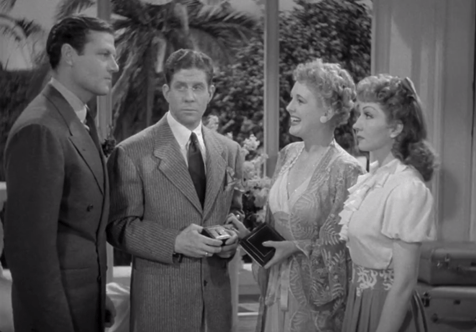
The Palm Beach Story (1942): Another Screwy Sturges Freight Train

the palm beach story 5

“After you’re married… That’s a funny thing to hear your wife say!” – Joel McCrea as Tom Jeffers

All the timeless Preston Sturges pictures have the pace of a freight train barreling down the tracks in loop de loops and figure eights. The Prologue of The Palm Beach Story sets up a raucous race to make it to a wedding ceremony involving a bride and a groom…and a woman tied up… It’s gone in a blink. Hold that thought.

Cut to present. There’s Franklin Pangborn, always hustled and harried. This time as an apartment manager trying to show off the new apartments he has for lease to the grouchy, incessantly deaf Wienie King and his bubbly wife.  These two initial scenes are textbook examples of how to juxtapose people and places for comic effect. In fact, sometimes Sturges will gladly lean into the joke before giving us any indication of what his story really pertains to.

When we finally find a premise, he’s already taken us for a spin. Because the previously revealed bride and groom, Tom and Gerry Jeffers (Joel McCrea and Claudette Colbert), sunk all their money trying to get a bite — namely the $99,000 he needs to get his suspended airport project off the ground. As of right now, there are no takers, and their marriage has tanked. Strangely enough, they still love each other madly. At the very least, their constant quarreling seems to hint at their continued devotion. That’s the wrinkle.

She wants to get a divorce (sacrificially, of course) so she might hook a rich husband to pay for his pet project. He selfishly wants to stay married to her. He tries to hold onto her, racing out of their apartment, in only the bed linens, as she resolves to go to Palm Beach — to find herself a millionaire — for him.

Sturges relishes the comic situation, which verges on the risque, especially for the day and age. The script was even repeatedly balked at by the Production Codes for the very same reasons and still they manage to mention the word “sex” quite frankly (Gasp)!

What becomes most evident is this increasingly flippant disregard for the institution of marriage. The ensuing world and the situations arising make sense originating from a man who himself came out of affluent circles with a row of marriages left in his wake. He’s in a sense writing what he knows intimately while still utilizing his own idiosyncratic perspective.

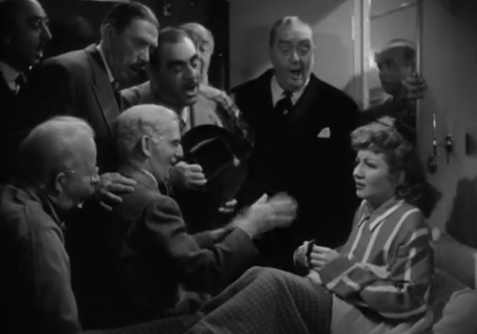
It’s a glorious trip to Palm Beach as he loads the cars end to end with his stock company, comprising a traveling circus of dopey millionaires making up the Ale and Quail Club. Gerrie gratefully becomes their mascot as they pay her way to the far off land of the Florida coast.

the palm beach story 4

In typical Sturges fashion, he overwhelms the screen with the sheer force of bodies and figures from the likes of William Demarest, Al Bridge, and just about anyone else you’ve ever seen in a Sturges film before. They divert themselves with any number of dalliances including hiccups, trap shooting crackers, and nighttime serenades of “Sweet Adaline.”

What’s even more hilarious is how we never actually see these characters again. They serve their purpose and service the writer-director’s scatterbrained devices. The extended sequence functions as its own standalone vessel of amusement.

He really is the king of writing robust character parts that, while never throwaway, need not be overly important. Today it feels like every bit role must be functional. For Sturges, a character functions, first and foremost, if they add to the comic maelstrom he’s whipping up. When they serve their purpose he can zip onward toward further zaniness.

Likewise, aside from being entertaining, The Wienie King is Sturges’s great enabler within the entire picture, gladly shoveling out money as if it were nothing, for rent and plane tickets — whatever the story requires — and despite his apparent obliviousness, he has these near-surreal bouts of hyper-lucidity. In considering his character, one cannot help surmising a stopped clock is right twice a day – even a tone-deaf one.

There must be a story, but the script gladly supplies a vehicle full of hilarity to deliver the goods for the benefit of the audience. As we progress with the ever-whirling thingamajig of wackiness, there’s the introduction of Rudy Vallee. The former matinee idol shows a certain penchant for comedy in his own right, added to the Sturges hall of fame of crazy aristocrats.

His dry idiosyncrasies serve him well, from the methodical removal and placing of his specs to the ongoing accounting he does in his little black book. Even a couple rueful in-jokes to his earlier crooning days, including “Isn’t It Romantic?,” send a few knowing winks toward the perceptive viewer.

the palm beach story 3

Although she purportedly struggled with her director’s style of mile-a-minute dialogue, Mary Astor, nevertheless, does the corkscrew language a major service as the ably speedy-mouthed Princess Centimillia, who bowls one over with her mixture of glitzy upper crust exuberance and ready-made amorousness. The perfect foil for her dry brother dear “Snoodles.”

To round out the quartet (quintet if you include the single misfire Toto), Tom Jeffers arrives to reclaim his wife but finds himself being turned into a brother named Captain McGlue before he can get in a word edgewise. The quarreling goes on behind closed doors as estranged husband and wife both find themselves romantic objects — currently pursued by other people.

One can’t help to compare it to Midnight, the Billy Wilder penned film with all sorts of little white lies and shenanigans being pulled to keep the charade going for as long as possible. It’s true often the best screwball farces — including some of Sturges’s successes — involve people donning aliases with highly comic ends, of course. Even in this frenetic company, The Palm Beach Story might be more outlandish than most, on par with the rambunctious insanity of Some Like it Hot.

What a glorious wisenheimer Sturges is holding off on the one loose end we’ve been wondering about since the outset of the movie only for it to be the final payoff, setting in motion another story that we’ll never hope to see. Everything is bookended by this ultimate gag that plays as pure Sturges. He’s shoehorned the whole story just so he can swoop in from left field with the most propitious footnote.

At its best, The Palm Beach Story exudes all the zany charms of Sturges’s screwiest works between a finely wrought cast with plenty of whiz-bang patter that time and time again gladly succumbs to silliness. Preston Sturges does his secondary characters a major service, and they more than return the favor. It’s a picture totally stolen away by the supporting cast and rightfully so.

4/5 Stars


The Great McGinty (1940): Preston Sturges & Politics

the great mcginty 1.png

“If it wasn’t for graft, you’d get a very low type of people in politics!” – William Demarest

The Great McGinty feels like a film of many notable firsts. The two most prominent ones being Preston Sturges’s first time in the director’s chair, famously agreeing to a salary of $10 for creative control of his screenplay. The second first has to be Brian Donlevy getting a break at a starring role, even if the picture itself was an inauspicious beginning. As an in-joke, he plays into his image as a heavy only to turn that on its head for something far more intriguing and intermittently hilarious.

We wind up in a banana republic for a hot minute. There’s the usual melange: dancing girls, sailors, drunks, and behind the bar is a very familiar face indeed. It’s the strangest of interludes for such an expedient picture and for a satire that will wind up whipping us all the way around the world to the grand ol’ United States of America. However, one should admit in the mind of such an inspired looney as Preston Sturges, the progression is as natural as X, Y, Z.

Because, formerly, Dan McGinty (Brian Donlevy) was no better than a tramp before his bartending days.  However, even someone like him was a vital cog in the crooked methods employed by a dirty political machine. Led by a bigshot shyster (Akim Tamiroff), they conveniently pad the ballot boxes in the favor of their rather limp candidate.

In fact, they finagle the homeless vote in return for some hot soup and a couple of bucks in their pocket, getting it down to a very dubious science. Each ballot box is manned by an inside man who supplies a name to each new recruit with the deceased, the elderly, and the chronically infirm played by masquerading vagrants.

They’re an easy market to exploit because when desperation is your only guiding light, you’ll bend to any low for some grub. Only one man is cunning enough to take advantage of their shady business for his own benefit. Soon McGinty’s weaseled his way into over $70 bucks and his tough-guy act gets him in with the boss.

He starts out on the lowest rung as an enforcer but soon works his way up thanks in part to his self-assured charisma and the built-in brawn to back it up. When the old mayor gets tossed out on the waves of scandal, the time is ripe for a new up-and-comer. The recurring farce of the movie is how easily the Boss shifts between tickets and candidates with the system all but rigged his way regardless of political affiliation. Is it some uncanny portent Tamiroff originated from the Russian Empire by birth?

the great mcginty 2

The Great McGinty might feel like a one-joke pony if it solely relied on the ludicrous premise of a nobody jumping through the hoops to become mayor and then governor. Instead, Sturges fills out his story with the details of a real life, including the highlights of marriage to his secretary, the new home they purchase together, and the mammoth parade that is thrown in his honor to celebrate his ascension.

Muriel Angelus’s name has been all but buried under years of celluloid — this was her last picture in a truncated career — but she has surprising bearing and charm throughout the picture. One is briefly reminded of Madeleine Carroll. But either way, it serves the movie well to lean into this highly irregular and totally ill-proposed couple. Somehow she manages to be well-suited for Donlevy because they appear so diametrically opposed. His hard-nosed rough and tumble bravado constantly chafes against her inbred propriety and ready-made home life with two kids.

After all, their subsequent marriage is only meant to be a vehicle of convenience although it’s easy enough to infer…perhaps she loves him dearly but is also too proud to force her affections on him. He’s a numbskull, yes, but perhaps there’s some deep-rooted affection in him as well.

They shape one another. He becomes a father figure. Catherine encourages him to tap into his inherent decency and the slivers of goodwill she’s seen glimpses of, even as he feels content to let well enough alone, riding the machine all the way to the governorship.

On the other hand, sweatshops, tenements, and child labor all need a champion to hasten their demise. He has the chance to actually stand for something of substance, and Sturges suggests behind at least some cutthroat half-rate men stands a great woman. They can change for the better.

Admittedly, The Great McGinty is actually a much darker, more foreboding film than we might be initially be led to believe from a production headlined by Preston Sturges. It’s easy to start cross-referencing it with the political graft featured in some of Frank Capra’s notable works, even as the wit and jabs of cynicism of a similar nature would also find their way into the work of Billy Wilder.

Capra’s pictures like Mr. Smith and Meet John Doe probably lay into the graft and corruption harder, but they grant us a sincere happy ending to smooth everything over. Wilder would have to subvert everything to the very last line. And Sturges is more so in this camp although Wilder would come in his wake as another prominent writer-turned-director.

But the stock company is his alone, and he is totally devoted not only to the word on the page but the utter mayhem of it all. It’s a story of graft and corruption where the “bad guy” winds up playing barman alongside the man he was looking to bury earlier on. That in itself is the grand joke Sturges gives us as a parting gag. Thankfully, it doesn’t kill the satire of this otherwise unheralded comedy. In fact, it helps punctuate the utter lunacy of it all. 

3.5/5 Stars

More Film Reviews of 2020

A Brazen Riff On 'Groundhog Day,' 'Palm Springs' Is Better Suited For The Small Screen | The ARTery

Since I watched more contemporary films than I usually do for award season, I put together some capsule reviews. There’s not too much rhyme or reason to these, but I thought I would include them here. Let me know what you thought of these movies. Thank you!

Palm Springs

In some serendipitous twist of fate, Palm Springs feels like the film made for the year of the pandemic — where the days are recycled and we are besieged by all the existential questions the world has to offer. It’s not just Groundhog’s Day redux because while Andy Samberg and Cristin Miloti spark romantic chemistry, the key is how they are stuck in a wedding day time loop together.

There are two ways to go about it: either accept the status quo or rage against it in the pursuit of something better. It speaks to love and intimacy and marriage in a way that wades through the refuse and the raunch and comes out with a resolute optimism. Life’s not just about finding your “Irvine.” It’s also made better when you find someone to walk alongside, especially when it’s for an eternity. 

The Way Back

If you’ve seen Hoosiers or any of those sports movies of old, there’s nothing particularly new about The Way Back. In spite of this, there’s something compelling; it’s borne on the performance of Ben Affleck — the inner demons of his character and this fractured road to redemption. It means something genuine and true to people who have played sports — been filled with that indescribable elation — and those who have been subjected to tragedy. It’s not just Affleck, but there’s a quiet and reserved profundity to many of these performances. I appreciated it a great deal more than I was expecting. 

Promising Young Woman

It grieves me that a film like this is deemed relevant in our contemporary society and of course I have no argument to the contrary because it’s true. Although the pieces of plot and fluctuating tone never totally gel with me, Carey Mulligan gives an evocative showing as per usual. I’m particularly fascinated by Fennell’s use of the thriller genre as a commentary, which feels perhaps more incisive than a one for one based on a true story expose might be.

All the pieces are there, the twists and turns, and the stings to a misogynistic society. But rather like last year’s Joker, I still rue the fact we’ve come to such a place in contemporary cinema — another discomforting representation of man’s inhumanity of man — much less man’s inhumanity to woman. It’s not like we were totally unaware of it before. However, we’ve given ourselves over to the vindictive nihilism of it all. I hope and pray for restoration. 

Mank' Official Trailer: Netflix Brings David Fincher Back to Theaters | IndieWire

Mank 

The film itself boasts a bounty of Classic Hollywood references and the kind of mimesis that might well turn moviegoers into black and white junkies. Alas, for me it had the opposite effect and despite any amount of technique and artistry by David Fincher, there never was a sense of true suspension of disbelief. Like Trumbo or Hitch, and other films before it, regardless of some notable performances, it all felt a bit like play-acting. And of course, such material cannot be taken as gospel. It’s a movie about movies after all.

But somehow the picture also lacks movie magic. I never felt truly captivated. For a film that took a closer, more personal look at one of the architects of that grand monolith Citizen Kane, somehow I wished the film had taken a more intimate even mundane scale. Oldman is winsome, but I couldn’t help flashing to Seyfried and Collins. Somehow their characters proved his most fascinating talking partners, though many have all but forgotten them in the shadow of Orson Welles and others.

Wonder Woman 84

Although it’s slow to get going and the pieces don’t always feel totally cohesive, there’s still a modicum of relish to be had from Patty Jenkins’s latest actioner. The 80s are not simply set dressing and eye candy, but they provide the perfect apex of consumer culture. Beyond hairstyles and workout regimens, it’s the emerging generation of instant gratification. Comfort and easy fixes are the world’s salve for any number of discomforts. But society still manages to splinter at its seams into an unfathomable entropy.

Diana (Gal Gadot) is once more a mighty protector of the nations, but the absence of Steve (Chris Pine), leaves a void in her life. This is her version of discontentment. While it never delivers the emotional import of its predecessor, it does attempt to synthesize some moderately intriguing thematic ideas. The ultimate temptation comes with the devil telling her she can have everything she wants. It becomes a tension of trading out selfish gain for a kind of utility, even personal sacrifice in service of truth. Wonder Woman’s greatest strength once again is her perceptive empathy. This doesn’t fail even when the blockbuster does. 

The Truth

While it provides a radically new context for Koreeda’s cinema, the quietly meditative quality that pervades his work is still present. The content feels foreign to us, but the form is familiar. Logistically, you can only imagine how the principal members were able to pull it off without a shared language. Still, cinema prevails. It’s steeped in this history, real and imagined, as the real-life legacies of Deneuve and Binoche, in particular, provide a richer backdrop for the film. Within the context of this tenuous mother-daughter relationship, it’s hard not to consider aspects like the tragedy of sister Francoise Dorleac or the missed opportunity to work with Hitchcock.

However, as Deneuve has her granddaughter brush her hair, we see the actress’s face in the mirror, and it must give us pause. She’s older but poised and immaculate as she has been for generations.  It’s so easy to impart our own desires of what the movie might be. After all, we have some of the greatest talents in French cinema. In comparison, Koreeda’s picture feels slight and deliberate. But for the gracious viewer, all these elements might just play to its advantage. 

Christopher Nolan's 'Tenet' Hopes to Kick Off Moviegoing Again - Variety

Tenet

Christopher Nolan is a director with unparalleled ambitions in the realms of narrative. It’s true Tenet is firmly entrenched in the traditions of Memento and Inception as he sculpts with time, in this case inverted, like we’ve rarely seen it before. It brings together many of his fascinations and folds them into a globetrotting spy thriller. There is so much here. We sit back, our minds racing as we take in the spectacle and look to play catch up with the story.

Because it is a puzzle and cipher for us to break as John David Washington, Robert Pattison, and Elizabeth Debicki are all implicated. There’s only one problem; it seems like comprehensible emotional stakes are missing altogether because we spend the whole time trying to crack Nolan’s code. There’s room for nothing else. If you’re contented with the perplexity of it all, the pincers through time might be enough, but I have an inkling a myriad of people will be dissatisfied. Still, others will feel he’s outdone himself. He’s a director always up for a new challenge.  

Da 5 Bloods

Da 5 Bloods stands at the crossroads of Vietnam and the black experience carved out across a tumultuous half-century of American history. There can be no other soundtrack than Marvin Gaye’s What’s Going On. Spike Lee is made to tell this story and he uses the tableau of newsreel footage to lay the groundwork for our story if it’s not already inculcated within our collective consciousness. It’s an impassioned collage of history, culture, and the like from Apocalypse Now’s “Flight of the Valkyrie” to John Huston’s Treasure of The Sierra Madre.

There are moments where the scripting feels corny and even the special effects feel abruptly unpolished. However, it revels in these moments of b-grade thrills creating a vehicle for a band of brothers to reunite in one last mission.  As our Bogey stand-in, Delroy Lindo positively seethes. Although when he marches off into the woods bellowing out the words of Psalm 23 or embracing his long-lost comrade Stormin’ Norman (Chadwick Boseman), there’s a semblance of healing rising up through his veins. He aids in making the movie about something substantive.

Meet John Doe (1941) and The Woman Who Made Him

meet john doe 1

“You don’t have to die to keep the John Doe ideal alive. Someone already died for that once. The first John Doe. And he’s kept that ideal alive for nearly 2,000 years.” – Barbara Stanwyck as Ann Mitchell

In their final collaboration, Capra and Riskin draw on the same cisterns with their usual success. Even the opening images matched with music, summons strains of unmistakable Americana from “Take Me Out to The Ballgame” and “Oh Susanna” mixed with “Roll Out The Barrel.”

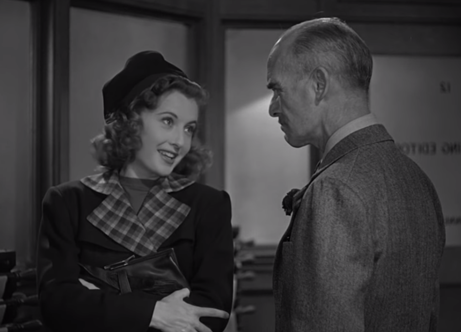
It taps into the precise sentiment all but embodied and propagated by all their pictures together. There’s always a point of inception. In this case, it begins with something bad. The Free Press gets axed for a new and improved streamlined paper and with the changes, some of the faithful employees get knocked off too. Among them is feisty newspaperwoman Ann Mitchell (Barbara Stanwyck) supporting her family on her measly paycheck. Now the new regime wants to take that away from her too.

I must open with this. I love Barbara Stanwyck to death. There’s something so energetic and alive about her, even the tonalities of her voice feel fresh and appealing. 1941, without a doubt, was a bumper crop of a year for her — the finest of her career — and she churned out three classics. The Lady Eve, Meet John Doe, and Ball of Fire all capitalized on her ready-made brand of wit, strength, and innate beauty.

Twice she plays Gary Cooper, once it’s Henry Fonda, and yet in all cases, she falls in love with the man. So much so she’ll fight to get them back. And they can be fiery in other movies, but when she shares the screen with them, they don’t have to be. She can supply enough verve and vivacity to cover both of them. It’s phenomenal to watch how she effortlessly commandeers scenes.

But this is jumping the gun. For the time being, she hasn’t met her man yet. She’s too busy being miffed, trying desperately to dream up one final hair-brained idea to reclaim her job. It comes with dreaming up an idealized man — the man she will come to fall in love with.

The origins are innocent. She wants to get back at the brusque editor (James Gleason) trimming the fat like there’s no tomorrow. Her Lavender and Old Lace column is too blase for what they’re looking for. They want fireworks. Well, she’s prepared to give them absolute dynamite. Because in a Capra-Riskin picture, ideas can flip the world upside down.

This one involves a universal “John Doe,” who has sent a letter to the editor to protest the state of the world and the lack of brotherly love. As an act of protest, the mystery man asserts he will commit suicide by jumping off a government building on Christmas Eve merely on principle. While it’s one last feisty stab at keeping her light burning, the John Doe column starts a wildfire across the country.

It’s a national phenomenon. People are clamoring for action to stop this preventable tragedy. They want John Doe to be reinstated into society, even bending over backward to offer charity. The idea is almost too big. The paper is forced to back up the lie by instigating a national search for the one and only John Doe.

meet john doe 2

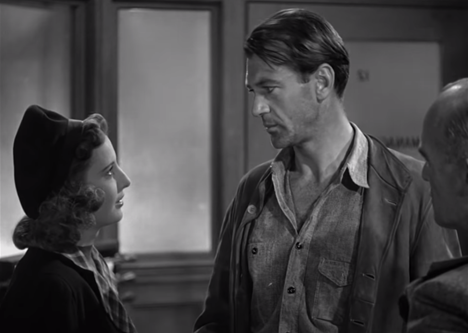
Wouldn’t you know it, among all the bums and vagabonds is Gary Cooper, tall and self-effacing as ever, accompanied by his buddy, The Colonel (Walter Brenan), a man continually suspicious of the helots. Moments later, Stanwyck beams up into Coops big brown eyes forming an instant connection. He’s the one.

With their substantial public support and the silent backing of a perfidious magnate D.B. Morton (Edward Arnold), Meet John Doe fits easily on the same plane with Mr. Smith Goes to Washington and A Face in The Crowd.

Long John Willougby (Cooper) looks to be propped up as a spineless ‘yes man’ and yet even with his national sway, he’s hesitant to use it. This makes him the utter antithesis of Lonesome Rhodes. He has his own choices to make because as it goes, indecision is a decision in its own right.

Thankfully, the flimsy gimmick deepens as Stanwyck humanizes it with her deceased father’s words. It’s no longer a totally phony-baloney stunt. She legitimizes it and falls for the ideal she’s created in its wake. The man standing in for her vision is the washed-up big-league pitcher who is simultaneously falling for her.

It’s pure Capra, pure Riskin, even as a rival newspaper tries to bribe him with 5,000 clams to read an alternate speech, effectively ousting himself as a phoney. He’s can’t help but be smitten so he goes forward as planned, and there’s arguably no better man to orate the words than Gary Cooper. He calmly calls on his fellow countrymen to tear the fences down between neighbors because the trouble with the world is people being sore at each other.

A grassroots populism shoots up across the country in response to his amicable radio rally. John Doe clubs dotting the country are almost a kind of humanistic church meeting ground, altogether apolitical and not overtly religious.

Regis Toomey represents the masses as one of the many folks taken up by Doe’s words. Ann Doran is all but uncredited as his doting wife and the guiding light behind his resolve. His candid soliloquy speaks to the same messages of brotherly love. It’s Williloby’s first realization that he’s a part of something far larger than himself. He has some sort of concrete responsibility to these people, whether real or imagined. 

meet john doe 3

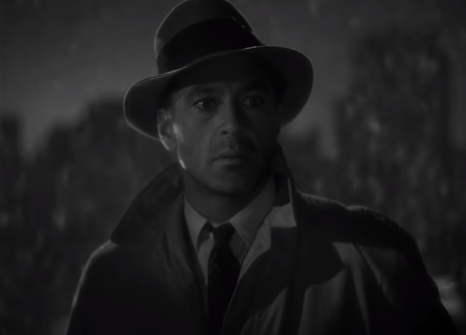
The story could end here on this most saccharine note if not for the customary sinister twists alluded to by the foreboding closeup on Mr. Morton as he eavesdrops on his help. He knows he’s in on something that he can use for his personal ends. The greedy are capable of taking something pure and twisting it with their duplicitous intentions.

He proves just how Machiavellian he is willing to stoop, ready to kill an idea when it gets in the way of his political ambitions. Prepared to ground Doe into the dirt and turn the whole nation against him with his amble sway in the media. The man who once promoted him, calls John out as a fake, a man paid off with 30 pieces of silver like Judas Iscariot — the most ignominious traitor the world has ever known.

Stanwyck can’t save him in the moment and she cries out, “They’re crucifying him!” The same people who loved him. A fickle generation fed on lies. Now with the biblical imagery increasingly clear, John Doe is prepared to be the sacrificial figure they don’t deserve.

The following Christmas Eve is understated and dismally captured. Instead of a bridge in Bedford Falls, it’s the top floor of City Hall where our man bides his time, resolved to jump to his death as not only an act of silent protest but sacrificial love.

Capra famously shot about four or five different endings to the picture trying to figure out how to resolve the story in a satisfactory manner. Whether you agree with the choice or not, one must admit he kept with the unifying thematics of his oeuvre. For me, Stanwyck is the standout MVP to the very last scene.

4/5 Stars

American Madness (1932) and The Capra-Riskin Connection

american madness 1

The entire premise is set around National Bank in New York City during The Depression. If it’s not enough explanation already, at least we have some hint of where we might be headed.

American Madness is an obvious relic of the saucier years of Capra and Riskin before the production codes set in and a movie like It Happened One Night dreamed up the “Walls of Jericho to maintain propriety between the sexes. In this picture, they kiss right out in the open and behind closed doors too. It doesn’t much matter.

With switchboard operators, secretaries, and people bustling every which way, there are also shades of Counselor at Law here. Again, we are dealing with a fairly limited space depicting working America in the 30s set against the backdrop of a Depression-era world. However, Capra’s picture appears more cognizant of its time and place, self-aware when it comes to poverty and the hard times hitting just about everyone.

The morning crowd comes in to open up the bank bemoaning one of their members who always finds a need to open the day with a corny joke out of his repertoire. His most pressing problem is owing $10 to someone else. That’s a lot of dough in the throes of the Depression!

The interest in these characters or their lives is not immediately apparent, and yet the story does pick up its steam borne on the shoulders of characters, dialogue, and a bit of drama.

There’s a joy in seeing fresh faces who became all too familiar friends in subsequent years. Sterling Holoway is one employer who gladly plays the gossip, supplying everyone else with his juicy tidbits over and over again (“You could have knocked me over with a pin”). Likewise, the obliging Principal at the It’s a Wonderful Life pool party (Harry Holman) passes through the bank seeking a loan. These are secondary pleasures of watching a film from an earlier decade like this.

Meanwhile, front and center is Matt (Pat O’Brien) a bank teller who the incumbent Mr. Dickson (Walter Huston) has set up with a job out of good faith. Everyone else seems to have given the man a bum steer because he served time once, but he’s been granted a second chance. With his sweetheart working under his boss, he feels beholden to his benefactor and maintains an unwavering loyalty toward him.

Because even as he mans his post and snatches kisses from his girl, a big to-do shakes the boardroom behind closed doors. “The four horsemen” and Dickson’s other partners have met on their own to discuss a merger. They want their other member to relinquish control of the company. They see the laundry list of outstanding loans and the needless hunches he’s backed as living proof. He’s sinking their upstanding institution into the ground. They’re all in agreement. It doesn’t help that the kindly Mr. Ives is always being cut off.

One has to admit, in a world sans Capra — gutted by the Depression — it seems like they have a valid point. Even this earlier rhetoric hints at a precursor to the Building and Loan that the Baileys famously ran. But when Walter Huston finally comes to the office with his affable charisma accommodating to all, we get something far more concrete.

Like any Capra/Riskin hero (George Bailey, Mr. Smith, Mr. Deeds, etc.), he finds his ideals under attack and makes a valiant effort to articulate why he feels so strongly about his convictions.

In his book, he’ll take an honest businessman against any amount of bad luck. To him, that is no risk and the way he sees it, it’s up to the bank to give people a break. He speaks in terms of relational capital where security is founded in quality character rather than stocks and bonds, even evoking one of the pillars of American banking, Alexander Hamilton.

Dickson readily invests in character that can pull the nation out of the doldrums, striving to keep cash liquid instead of allowing it to sit around in the vaults. It’s precisely because he runs their bank on such a flimsy thing as “faith,” he receives opposition. It’s true this point of contention really is an affront to all the “rational” sensibilities.

However although American Madness certainly acts as a platform for a certain call-to-action, in favor of the American everyman, there are mechanisms within the plot providing something to sink our teeth into.

american madness 2

Even as Dickson fights for his company, a blubbering inside man (Gavin Gordon) has found himself caught up with a noted gangster. However the spineless cad, also finds time to flirt with the boss’s wife. To him, it’s a bit more substantive and when Matt walks in on their would-be tryst, you can imagine his misgivings.

Then, a bank job goes down. Matt is a major suspect; he has a record, after all, and he doesn’t even try to exonerate himself. Of course, he’s covering for his boss, not that Dickson is guilty by any means. Still, it might kill him to find out his wife has drifted away from him, even as the bank begins to fold around him.

The once-formidable institution has its reputation steamrolled as the gossip makes the rounds. A “run” on the bank follows. This in itself is striking, not only as an early forerunner, again, of It’s a Wonderful Life, but also because, unlike that film, there is not the benefit of hindsight. These moments are being documented as close to real-time as you could manage. These are contemporary concerns laid out right in front of us.

Thus, the Depression is still fresh in the public consciousness; it still is a universal reality, and it shows me that the scene out of Capra’s later film was tapping into something real and profoundly relevant. My appreciation for both depictions broadens because of it. Although the ending is firmly planted in the Depression, it still manages to evoke the very same sentiments Capra would go back to in the final act of his greatest achievement after WWII.

But a short aside is in order. Because we can often quickly analyze someone like Alfred Hitchcock’s work and the through lines from 39 Steps to North by Northwest or even the evolution between his two versions of The Man Who Knew Too Much are easy enough to acknowledge. These happened over a period of decades.

We have the gestation period and the reworking of old ideas to garner more substantial results. However, even in a slightly less amount of time (about 14 years), Capra and Riskin managed a formidable collaboration with thematic elements that are also overtly visible.

Because fewer viewers are familiar with American Madness, less is made of the comparison, but the similarities are still uncanny. I’m not sure if it lessens the impact of the later film as much as it provides a blueprint and further proof that filmmakers often return to familiar themes to flesh them out even more.

In this case, going back to the well works because the culminating message champions the human spirit as Capra and Riskin always had a habit of doing. It’s smaller potatoes but still intermittently powerful blessed by Walter Huston’s own flawless magnetism. What’s more, Capra was on the cusp of his most fruitful period. It’s as if he would break out of the Depression into full bloom along with the American populous. For now, he and his collaborator were resigned to find a crevice of hope in the midst of the madness. It’s uplifting as only they could muster.

3.5/5 Stars

My Top Films of 2020

These are some of the films that I enjoyed from 2020. Because I watched more new releases than is typical in the last few years, I went ahead and wrote capsule length reviews to keep it more manageable. Enjoy!

Minari 

Minari plays as another perspective on the American Dream. It’s an immigrant story insulated by the family unit. You have a melding of cultures born across a smattering of languages and cultural references from Mountain Dew to the resilient minari plant. I can’t think of anything more resolutely American. Any conflict comes from within and there are real decisions to be made, whether it’s in service of a father’s compulsion to provide for his family or a mother’s commitment to stay together at all costs. Steven Yeun and Han Ye-ri are wonderful, but it’s just as much a story about their children or about the spirited grandma who comes to live with them.

These are living, breathing folks inspired by Isaac Lee Chung’s own experience and colored with the deep affections of personal filmmaking. There’s a tranquility about the film that feels like some sort of balm for the world we live in — if not this entire year — because hardship besets them as it does us. It’s taxing and dire. This is all but inevitable. This is life. Our only true sustenance comes from bringing family together, holding onto our loved ones, and praying for God’s daily mercies as we push forward. Though our experiences all differ, they converge at this one vital crossroad of understanding. Notice there is no “ending” to Minari. The fact that this lowly water wort flourishes, only after hardship, provides a symbolic glint of hope. 

Nomadland

There’s a reassuring shorthand that comes with Willie Nelson’s “On The Road Again” familiar to anyone who has ever trekked across America or been on a road trip. Chloe Zhao’s film is cinema, travelogue, and National Geographic all rolled into one with spectacular images of both intimate and indescribable beauty. Because they are snapshots of life imbued with a resolute empathy. What an incomparable and honest treasure Frances McDormand remains fully humanizing this itinerant lifestyle. There’s a striking a cadence between Fern and the flora and fauna of the world around her. It joins the lineage of meditative, hypnotic moviemaking that’s come before it — films collaborating with nature — and thus blending God’s green earth and the human experience. By the end, we come to realize how unified they really are. 

Wolfwalkers

Draped in folklore and armed with long-held political division, Tomm Moore’s latest with Ross Stewart is as visually resplendent and verdant as ever with its golden hues of green. The fact that the local city is the picture of Cromwellian drudgery and repression only puts the adjoining forest in sharp relief. The populous is made to fear it and the wolves that live there, but it’s also a space of unimaginable magic.

Myth is effectively brought down to its most relatable and intimate. It becomes a war between worlds and ideologies made tangible through the trials of an intrepid girl and her hunter father. There’s a debilitating fear in the face of the powers that be and religious faith is militarized. Life is man vs. wolf. And yet in the face of this unyielding landscape, something extraordinary is born. Fairy tales become fact. Resurrection is real. Grief is ultimately supplanted by newfound joy.

Sound of Metal 

Riz Ahmed proves himself to be thoroughly committed to his role as a drummer who is impacted by a sudden loss of hearing. The premise is immediately intriguing, but he busts the story wide open as it becomes far more than a handy idea. We get so much in the realm of performance and sound, existential weight, and deep wells of human empathy. Olivia Cooke is in a symbiotic relationship with him — his fellow bandmate and lover — and as the movie evolves what a revelatory thing it is to see them both change. He finds a community that he can grow into even as he comes to terms with his hearing and the distant hope of regaining his senses through the latest technology.

She also has facets of her character and background that we only understand when they reconvene overseas. But we also witness how lives can go in different directions, and that’s not always a bad thing — it can somehow be cathartic even in the waves of ambiguity. The same might be said of silence in the face of noise. That stillness can be the Kingdom of God for some people. It’s not a deficiency or a tragedy, but an entirely new beginning. Sound of Metal also featured one of my favorite extended cameos of the year. 

Small Axe: Mangrove

I’ve seen In the Name of the Father and I’ve seen Notting Hill, but what Mangrove gives us is a powerful portrait showcasing another facet of this world. That is the rich Trinidadian culture that holds its rightful place in the ecosystem of mid-century London. Steve McQueen’s film makes it more about the world than the words spoken. We have the privilege of existing in a neighborhood, frequenting a local establishment fraught with all sorts of opposition.

Mangrove is a validation that big historical events are not the only way to galvanize — though the movie does evolve into a stunning courtroom drama. Still, this only reaps fruit when the grassroots ambitions of everyday people standing up for what they see as justice, join together as one. Self-representation is a powerful thing indeed and there’s something extraordinary about McQueen bringing to life a world that is so near and dear to his own heart. 

Small Axe: Lovers Rock

It feels like such an unassuming picture. We’re accustomed to blockbusters or Oscar hopefuls with often gluttonous runtimes. Lovers Rock is nothing like that. It’s lithe and exuberant in all the best ways, identifying this universal sense of burgeoning romance. And yet it plays as such a full-bodied, deeply engaged, and present evocation of a specific moment. This specificity is key, supplying its vital life-blood and culture while allowing it to be a fitting ode to a bygone era.

However, director SteveMcQueen also allows time to flow at its own pace, capturing the vibes in a room alive with black joy and a myriad of a cappella voices. It’s so easy to get lost in it as if we are in that very room experiencing the tremors and pulses making their way across the dance floor. Far from being a mere jukebox movie, it has a kind of real-world substance about it that feels genuinely pure and honest. For the uninitiated, it’s a pleasant surprise and no doubt worthy of future viewings. 

The Assistant 

Kitty Green’s film shies away from sensationalized drama and settles into a far more harrowing and morose sense of powerlessness. I’ve had the ability to stay well outside the film industry so it’s never been able to fully envelop me. But here there is no place to hide. We imbibe the weight of depression and helplessness piled on Julia Garner. One particularly excruciating scene with an HR rep turns painfully cruel.  However, this is not only a film about sexual harassment — although this is a crucial piece — it’s indicative of a toxic culture and mindset from the top down. 

Still, in showing her plight and the network of similarly situated co-conspirators, it doesn’t so much provide them greater agency as it shifts the story away from the bosses. It also provides some much-needed empathy. In the quiet rhythms of an oppressive job, undertaken by aspirational people who feel like they’re trapped and their dreams have turned into a nightmare, suddenly we’re there with them. It’s a powerful film just as it is pressing. It speaks into our cultural moment not with a blaring megaphone, but a whisper we would do well to heed. 

Collective 

This Romanian documentary exposé lays out the groundwork for the story ahead of us so there is no initial confusion. That comes later when we are enveloped in a harrowing world that feels akin to the “follow the money” moments in All The President’s Men and even takes cues from the dirty black marketeering immortalized by Orson Welles’ charismatic cad Harry Lime in The Third Man.

Here everything is current and fresh happening in front of us. First, a horrible fire and then incompetence throughout the national health system that leads to greater human tragedy. The aftermath brings out shockwaves of negligence within the government and more sinister intentions with national implications. It’s worthy of righteous anger from us all, but what’s greater and more profound is this pursuit of veracity in the face of deception. Transparency and truth are still powerful instruments for good. 

Farwell Amor

The movie begins with the kind of opening shot that makes you hold your breath. Long takes can be boring, but they can also imbue scenes with such a greater understanding. Farewell Amor is about a family living in the transitory state as immigrants reunited after many years apart. It becomes increasingly apparent that they must now cross another great divide. It’s no longer geographical but beholden to cultural differences and lost time. A husband and wife hardly know one another. Religious faith does not hold the same import in their lifestyles.

Meanwhile, a daughter must acclimate to a father who she has not seen since her youth. Through its Rashomon structure, we are privy to three empathetic points of view, and it makes for a powerful experience. How lives can be outwardly connected — sharing the same space — and somehow disengaged and aloof. You have three people living in their own worlds, coming to terms with what it means to be a family again. There’s such care and sensitivity, when it falls apart it galls me. There’s not so much a Pollyanna happy ending to the movie. Rather it’s a vow to abide and share each other’s burdens. After all, that’s what families are meant to do. 

Never Rarely Sometimes Always

The film title remains effectively obscured until a pivotal scene where the submerged depths of the iceberg are unearthed and human frailty is made fully known to us. But until that point, the movie is defined by this overarching bleakness — a high schooler’s slice of life — inundated with the numbing rhythms of work and school. Sidney Flanigan brings so much to the young woman even as she bends away from us. A pilgrimage to New York with her cousin to take care of an unwanted pregnancy makes us come face to face with her innate wounds.

Suddenly the movie unravels and becomes one of the most emotive empathy machines of the year. It breaks your heart. It’s so vulnerable. But the bottom line, the song she sings, is “Don’t Let The Sun Catch You Crying.” The very same issues at the core of this film are full of emotional baggage in both religious and social spheres, but here they are allowed to be fully human, and I won’t say anything more for the time being. Broken people deserve dignity. This film looks to extend them this basic courtesy even as we can still grieve the outcomes. 

Beanpole 

Set in the context of post-WWII Russia, more so than almost any other country, you feel like these people know what hardship and tragedy engenders. There’s a matter-of-fact immediacy to everything that happens to these people — two young women who fought in the antiaircraft during the war and now serve the wounded as nurses. Of course, they have their own wounds both physical and emotional. Written on the page, moments of grief, pain, and blackmail feel like high drama, and yet here they are distilled into something both mundane and vulnerable. What a beautiful cast of characters they are and by this I mean in a way antithetical to conventional Hollywood glamor.

They feel real and honest with bodies and features that take on almost classical dimensions. Eyes say so much as do silence or an uninhibited, frenzied twirl in a dress. Against the rigidness and the jadedness of the world, there are these tiny acts of rebellion and by that I mean humanity. What does it mean to try to condone their behavior? Far more than that, it starts with beginning to understand even an iota of what they have experienced. 

One Night in Miami…

There are four men at the center of Kemp Howard’s reimagination of a fateful meeting: Malcolm X, Muhammid Ali, Sam Cooke, and Jim Brown. It’s sobering to acknowledge that only one of them is still living and only two lived into old age. It’s talky and stagy, for good reason, but it’s also a film about those core issues at the very fabric of America’s tumultuous heart. There’s a moment late in the movie where Leslie Odom Jr. as Cooke sings “A Change is Gonna Come.” It signals a change in Cooke’s ambitions as an artist — more in the vein of a Bob Dylan perhaps — but I wasn’t thinking of that. I was nearly moved to tears. It’s moments like these I turn out to movies for — to be moved in unexplainable ways — but what is this emotion if it doesn’t lead to a visible change in my own life?

Ma Rainey’s Black Bottom

Denzel Washington has shouldered a sacred mission to introduce the works of August Wilson to the uninitiated such as myself. What Ma Rainey has to offer has much to do with performance and a dialogue with heady topics, nevertheless carried out in a kind of cajoling, free-flowing style brimming with life, laughs, and animosity. It’s a film born on the stage and as such, it utilizes a limited, intimate space to navigate the cultural climate of the Jazz Age for black folks in particular. Conversations of cultural clout, the arts and ambitions of blacks in a white man’s world remain pertinent to this day.

While Viola Davis feels like the obvious standout as the eponymous, irascible, unfathomable Ma Rainey, it’s equally easy to be entranced by Chadwick Boseman. His spiritual anguish is probably one of the most affecting and terrifying cinematic experiences of this year. Oftentimes we are quick to heap praise or christen a posthumous performance a triumph, and yet in Boseman’s case, it feels true. He tears through his role with relish, alive with an irrepressible vitality and plagued with the kind of demons that make the film burn with a fire far greater than its simple premise. It’s the kind of characterization that sears into your mind’s eye, not soon to be forgotten. The same might be said of him. 

News of the World

Paul Greengrass hardly feels like a director of westerns, but here he helms one that takes the grand, blustering landscapes of the West and somehow makes them feel slight and less consequential. Try as I might, this is meant to be a compliment. Because at its center is Tom Hanks and a perfect riding companion Helena Zengel. Although, as the modern generation’s Jimmy Stewart, I would love to see Hanks dip into his vengeful side out on the range, his steady candor provides a disarming uprightness.

He need not revise the West just as he doesn’t rewrite his persona. Aside from his trade, he’s no Herculean gunslinger, and there are few grandiose moments, but the bits of characterization give us something to be relished for their universal humanity. Sometimes all you need is an actor set against a cinematic panorama and being rapt up in the moment is enough. It’s not quite John Ford and hardly Anthony Mann and yet it’s still a distinct pleasure to have a western again. 

On The Rocks

What a light and marvelous film this is because it’s not trying to be anything more. It’s about the mid-life malaise, it’s about a wife’s (Rashida Jones) suspicions of her ambitious husband (Marlon Wayans), and fathers and daughters, but it never aims for anything sordid. The streets of New York feel out of reach to me, but they are magical, and Coppola looks to be in love with the world as she is with Bill Murray. He has that same winking charm, older now (aren’t we all); always incorrigible, but real and honest. When he and Jones whistle “Laura’s Theme” in the back of a limo, I knew I was invested in the ride. It’s not Lost in Translation, and I’m thankful for that. 

Recommend: Driveways, I Used to Go Here, The Personal History of David Copperfield, I’m Your Woman, Boys State, Athlete A, Apocalypse ’45,
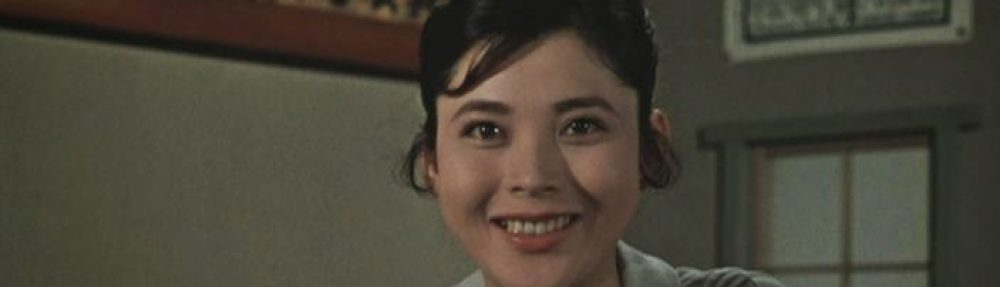
Johnny Belinda (1948) and Evoking Silent Cinema

johnny belinda 1

I must admit to committing an unforgivable fallacy. Maybe I’m the only perpetrator, but there might be others too. In my own mental computations, I often attribute Jane Wyman as the first wife of Ronald Reagan more than I equate her with her acting career. And though Nancy Davis hardly built such a substantial Hollywood career, I am quick to remember her because she was, after all, the First Lady.

However, with viewings of the Yearling and especially Johnny Belinda, I hoped to remedy this by recalibrating my brain’s gut responses. It was a stunning success. I’ve never been more mesmerized with Jane Wyman, and the core of Johnny Belinda’s merit lies in how simple it is. She does so very much with so little and in a medium often hampered by excess, Johnny Belinda is, in its finest moments, a quietly moving examination of a human being.

Cape Breton can be easily placed. There’s a wharf and a cannery. Men work at sea bringing in the days catch, and there’s nothing glamorous about their existence. The work is hard and the people blue collar. It’s the wrong coast, but these are the kindred of Steinbeck and certainly, you cannot help but think of Fritz Lang’s Clash by Night with its seascape and gale of drama.

However, I happen to think Johnny Belinda weathers the drama with a more delicate touch. We must turn to the characters to understand how this really happens. Because the small-town setting is stocked up with all types and shades of people. An amiable doctor named Richardson (Lew Ayres) has recently set up practice on the island making housecalls aided by a pleasant bedside manner. His swooning young housekeeper (an oft-forgotten Jan Sterling) is smitten and wishes above anything to be noticed.

It’s true he’s both a generous and obliging fellow though he doesn’t go to church on Sundays. It’s one reason for the old ladies in town to still somehow doubt his sincerity. He certainly can’t be familiar with “Christian charity” as they are!

Aside from the run-of-the-mill gossips, there’s the slimy reprobate Locky McCormick (Stephen McNally). Presently we might label him rightly as a bastion of toxic masculinity. However, the bottom line is he’s a vain and destructive human being who is able to fly under the radar due to the town’s hypocrisy. In other words, he goes to church on Sundays and manages to be romantically linked to the aforementioned housekeeper Stella.

We must also mention the gruff but not unkind farmer Black MacDonald (Charles Bickford). In fact, over time, he starts looking better and better as his work ethic and old-fashioned decency begin to let slide his affection for his daughter (Wyman). Meanwhile, his sister is played by Agnes Moorehead, a criminally underrated actress, perhaps because people do not superficially tout her looks. And yet she is a remarkable performer bringing strength and an acerbic edge to her part.

Even with these people, the spokes of a story aren’t altogether obvious as the kindly doctor takes the dumb and mute young woman under his tutelage, perceiving her intelligence and the dormant curiosity inside of her.

Wyman models her transformation exquisitely, first, picking up signing, then learning basic gestures of communication. However, in a town like this, there are certain types of ignorant people. People who will only ever see her as a “dummy.” There is no beauty or intelligence to unlocked inside her countenance because they can only comprehend the physical.

One prime example is when some merrymakers have an impromptu shindig at MacDonald’s barn fater picking up their weekly order of flour. The good doctor stands by Belinda beaming, showing her a fiddler plucking away joyously on his strings. The discovery is manifested on her face as she touches the violin with its vibrating strings and her feet begin to patter modestly. Her legs move tentatively but sweetly as if unshackled for the first time.

Others see it too. First, Locky his eyes burning with lust and then his jealous girlfriend trying to win back his affection with a carnal kiss. These are the only things they know about passion and romance. Add alcohol to the mix and it’s a volatile cocktail.

The film’s most helplessly terrifying moment comes when the belligerent thug wanders off from the party and finds a peaceful Belinda. His eyes burn with malicious intent. She has only innocence which quickly turn to fear as he encroaches. The subsequent inference of images and cuts speak for themselves as do ensuing events…

johnny belinda 3

Recently I’ve been pushing back against the era’s tendency toward over-illumination when it comes to spelling information out. However, some of the greats, Hitchcock and Lang among them, were able to imbue sound films with a certain silent sensibility where passages rely on the primacy of image over sound.

I won’t put Jean Negulesco in the same group as these others, but nevertheless, his premise necessitates a certain amount of nuance in order to approach the subject matter. It’s a tact that I very much appreciate because the film ably takes on the restraint and the functionality of a silent film especially when considering the subject of Belinda.

Consider, for example, a near-wordless entrance into the church with the stunned congregation looking on as a lovely Belinda enters in her Sunday best. In the same sequence, Dr. Richardson watches Belinda’s face swell with apprehension upon seeing McCormick for the first time. The power comes in this unspoken revelation.

The story must progress, and it evolves into a modern play on The Scarlet Letter with pernicious scandal digging in. You must remember this is the same small town with ears and eyes on every street corner. News travels fast that Belinda has a child and everyone has their preconceived notions on who the father is. They are intent on taking matters into their own hands. I need not expound upon this anymore.

More useful still are the impressions of the following scenes. In a strikingly poignant interlude, Belinda signs “The Lord’s Prayer” as the solemn bystanders join her in grieving the dead. We are reminded this is a different era imprinted with Christianity and a God who was a present comfort in the face of adversity.

Her moments taking care of her baby are also so tender and one is reminded of the universal experience of parenthood. Belinda might not be able to speak or hear but she feels and becomes both guardian and protectorate of that little bundle of joy no matter the cost.

An ensuing trial has her in the defendant’s seat and these scenes are generally conventional. They crop up in any amount of noir, melodrama, screwball comedy, whatever. It’s the precise circumstances that make it an engaging end. Because court is all about testimony and defense. What if someone is barely able to defend themselves?

They require others to intercede on their behalf. The final safety valve providing the audience a release is overblown and a foregone conclusion, but up to this point, what a joy it is to watch events unfold moment after moment.

This is a fine turn by late-period Lew Ayres although he is nothing without the quiet dignity and sprightly inquisitiveness of Jane Wyman. Johnny Belinda is a stunning reminder truth need not only come in the powerful wind or the quiet whisper. It can come in silence as well.

4/5 Stars

The Yearling (1946): A Boy and His Deer

the yearling 1.png

“When I was a child I spake like a child…” ~ 1 Corinthians 13

Like the previous year’s Valley of Decision, The Yearling opens with an establishing shot paired with Gregory Peck’s voice, this time in a folksier register. Aside from being unoriginal, one can hardly condemn director Clarence Brown for an act of plagiarism.

However, what it does go to exemplify is a certain amount of unspoken structure supplied to Old Hollywood films. This shorthand, along with needlessly informational title cards, feel very much like the bane of the era’s filmmaking. It’s as if with the age of the talking picture, film’s forgot about the primacy of the image and as such, they dumbed down movies for their audiences. After all, it’s so easy for dialogue to become a constant crutch to fill in any ambiguities.

Even despite this aspect, The Yearling still has innumerable elements going for it. Gregory Peck is a fine actor, even making ho-hum voiceover moderately palatable, and the gorgeous Technicolor tones of nature within the film are breathtakingly resplendent. In fact, the movie proves a well-situated follow-up to Brown’s earlier success, National Velvet. It is a portrait of pioneering before the days of Old Yeller, joining together such lucrative elements as adolescence and animals.

The adolescent in this tale, adapted from Marjorie Kinnan Rawling’s eponymous novel, is Jody (Claude Jarman Jr.), and the fauna deserves mentioning later on (although you probably already know what it is).

For now, the amiable Penny Baxter (Peck) and his boy form a bit of a good-natured partnership, sticking together as the men of the house. Their chemistry is undeniable making their onscreen pairing as father and son ripe with all kinds of affection. None of it feels like a fake veneer plastered on for the benefit of the audience.

The third member of the Baxter household is Ora (Jane Wyman), the no-nonsense wife and mother who’s both homely and severe, completely different than her kinfolk. Still, there’s something within her that Wyman does so well to intimate through her characterization. Thus, despite all she says and does that under normal circumstances might make us dislike her, most will find it within themselves to give her the benefit of the doubt. So much of it is understated and unspoken even as she never gives an inch. Her maternal heartbeat is undeniable although it maybe periodically obscured.

The Yearling really is fable-like by providing an impression of a way of life focused on a frontier family and more directly, the young boy who grows up right before our very eyes. While there is a narrative of sorts — all the events can be strung together as subsequent rungs in the journey — it’s mostly a vignette-driven piece meant to reflect the vicissitude of life.

One moment father and son are streaking through the forest with the family dogs to subdue ol’ Slewfoot, the ornery bear who mercilessly slaughtered one of their livestock. It becomes a lively jaunt and the first lesson in the boy’s nascent repertoire.

Due to the utter uselessness of his firearm in the tense encounter with the bear, Penny takes it upon himself to acquire a new weapon, and he manages quite ably through a bit of horse-trading with the nearest neighbors. One of the bunch is an ornery fellow also easily duped. By the end of the confrontation, he’s given up a beautiful rifle for an underperforming pooch.

Then there are the momentous trips into town to pick up materials at the general store. Mama is still dreaming of a well someday, and the obliging shopkeeper (Henry Travers) offers the boy a mouth organ as he comes face to face with a girl his own age. It’s hardly young love.

Instead, father and son get involved in a right neighborly brawl in the center of town, which is yet another of the film’s more jocular moments. It’s not afraid of the humor to punctuate the drama of life.

Because the next scene of note is really the turning point. Out in the forest, Penny is bitten by a rattler and fortuitously he’s able to shoot a nearby doe using the bodily organs to draw out the poison. It’s a scary incident leaving the man of the house weak and his son aims to take the orphaned doe as the pet he’s always been begging for.

The rapturous crescendo of angelic audio grandeur introducing our true main character is laid on a bit thick. However, if your heart is ready to be melted and you have held onto a shard of childhood innocence, The Yearling can remain a powerful tale of youth. No scene is more emblematic than this one.

the yearling 2

The film’s title comes front and center once again as we watch the parallel characters of a growing boy and his growing companion. He dotes over the little deer taking him to bed and imploring his mother not to take his pride and join away from him. Though the animal ruins them on multiple occasions trampling their crops.

If it’s not the fault of a creature, then nature whips up its own retribution. Their next tribulation is carried out by a torrential downpour decimating their hard-earned crops and sending emotions to a fever pitch. Evoking the sufferings of Job hardly seems a welcomed antidote to their plight.

But then, something begins to happen. A boy is becoming a man as he begins bearing the load of toil normally carried by his obliging father. He builds a fence to keep his deer out while fixing up their camp.

Then, they must say goodbye to a newlywed bride and groom. We don’t know them well but the family is deeply affected. Their exit by sea is a bittersweet departure, and as they ride back home Jody glumly notes, “I don’t like people going away it’s like they were dying.” His father only condolence is an honest observation, “That’s life boy. Getting and losing.” He must come to accept it. Death, goodbyes, trials; they never exactly get easier, but we must do our best to push through them with the support of our loved ones.

The Yearling might seem lightweight compared to some similar stories, but one must try and recall our own childhoods, where any number of thoughts and feelings experienced for the first time became monumental markers of life. That first pet you had. The death of a friend. The first girl you ever had a crush on. Each takes on varying degrees of importance in The Yearling and even for a story rich in sentimentality, these really are moral parables at their core.

Because it strikes some balance between maintaining a child-like wonder and zest for life while also understanding sometimes we must literally put to death our former ways. Finding that balance just might be one of the keys to a meaningful existence.

3.5/5 Stars

Valley of Decision (1945): Greer Garson & Gregory Peck

valley of decision 1.png

Gregory Peck’s pleasantly resonant voice brings us into the moment. The scene is unimaginative yet unmistakable with its obviously scaled-down establishing shot. Pittsburgh. Smokestacks and steel. These are the days of Andrew Carnegie and the transcontinental railroad wrapping its way east to west, making mythical magnates out of mortal men.

Valley of Decision is about this same monumental national narrative albeit stripped down to a microcosm meant to be far more intimate. In a manner of speaking, it succeeds by first setting our sights on a group of Irish immigrants. They are stereotypically spirited with a brogue to match.

Mary Rafferty (Greer Garson) makes her way home through the humble neighborhood she calls home to announce the latest piece of news. Amidst tough times, she has found herself a decent wage! The only complication is that she’ll be serving as maid to the Scott family, owners of the town’s local mill. Although Mary’s not a girl to turn down a job, her curmudgeon father (Lionel Barrymore) has maintained a lifelong grudge against Mr. Scott, seeing as it was the factory that lost him the use of his legs. He’s never forgiven them even with the recompense they’ve provided.

This is an instant source of conflict although it’s initially unrealized. Because given how they are built up, it’s rather surprising how everyone in the Scott household seems generally benevolent, if not a bit stuffy.

Mary arrives and we’re curious to know her place. We get our first look at Gregory Peck. He sneaks up the stairs to be rushed by his affectionate siblings. His mother (Gladys Cooper) follows in all civility. Each moment is taken in by the new help, perched in the drawing-room with each reaction made blatantly obvious. This is her first impression as well as ours and she beams ear to ear.

Garson’s character girds a spellbinding wit of the Irish about her, settling into her new occupation for the Scott family quite seamlessly and casting off her early nerves. Between the dishes and the spoiled children, she handles it with disarming aplomb and a certain bright-eyed reverence as only Greer Garson can supply.

valley of decision 2

If it’s not obvious already, Valley of Decision is a social drama with characters tied closely together. There’s the sectioning off of social spheres between the affluent and their more humble help. Then, you have the meeting of the men over cigars and business as the women busy themselves with frivolities. Curtains, for instance.

Tiptoeing through all these spaces like a fly on the wall is Mary Rafferty. Certainly, her place in this world is obvious, and yet she is accorded a very unique role walking through the parlors and dining rooms of the elite — privy to their conversations and activities — and an integral part of every part of her lives. No matter her family background.

It’s no secret a burgeoning romance starts in on her innocently enough. She’s a fine and glowing conversationalist. He’s charming and handsome. How could they not get together? But she dutifully understands her place. It wouldn’t be proper and with no prompting, she makes her way across the Atlantic in service of Ms. Connie (Marsha Hunt), effectively increasing the space between them. The mistress of the manor understands her predicament and privately pities her.

Then, one day there is a strike at the factories. Again, it’s no shocking epiphany. Anger and discontent are churned up and the bullish pride of Mr. Scott (Donald Crisp) and the sense of license for better wages by the unionizer Jim Brennon, looks to be at an impasse.

The true “valley of decision” (an allusion to the Old Testament’s admonition from Joel) is when all the events come to an inevitable head. A fragile peace can be maintained no longer, and all sides suffer calamitous devastation. Because the consequences are great when the Scotts and their opposition come face to face to have it out for good. Not even Mary nor her relinquished lover can make it right again.

Whether torn from the pages of the book or dreamed up by the screenwriter, Valley of Decision is very much a stilted melodrama with all sorts of manipulative twists coming at us with such continued force, it gets to be wearisome. It never ends.

The narrative flits so undecidedly between the warm chemistry of the leads and this overly theatrical landscape played out against the family’s steel mills. You might blend How Green is My Valley, King’s Row, Giant, Home for the Hill, and other analogous films, but somehow Valley of Decision still comes out the weakest of the brood. It cannot seem to reconcile its main conceit to a satisfying end.

It’s assembled with all the trimmings people might easily turn their noses up at when considering Hollywood movies of old. It boasts sentiment and courts melodrama. There’s the aforementioned voiceover to set the stage and stirring crescendos of mighty music in love and in tragedy. Characters can easily be pigeon-holed by their types all the way down to a spoiled Marsha Hunt, the insufferable childhood sweetheart played to a tee by Jessica Tandy, and Dan Duryea, not quite having found his more suitable niche as a noir baddie.

There’s also the underpinnings of Mary courting on the side of the wealthy and well-to-do. She sympathizes with them, making them seem like the victims of a system more so than the destitute bottom dwellers. I’m not sure what to do with this.

Because it’s true Mr. and Mrs. Scott are a most benevolent pair, and we grow to love them. Crotchety Lionel Barrymore, sulking in his wheelchair, doesn’t do much for the P.A. of the common man, but nonetheless, it’s a startling turn.

Taken as these disparate pieces placed together, the movie is an uneven compilation, all but borne on the shoulders of Greer Garson and Gregory Peck, who by any cursory glance, seem ill-suited as romantic partners. At the very least, they’re disparate figures.

She was a mature star, finally coming into her own as one of the prominent performers from the U.K. now making it big in Hollywood. He was an up-and-coming stage actor with the formidable build and roots in La Jolla California then Cal. Yet they share an amicable spirit somehow allowing them to fit together due to their mere ability to counter one another’s playful ebullience.

It does feel like a remarkable crossroads in careers. Garson was beloved, but would never regain her major box office with the dawning of the 50s and new tastes (even with a resurgence of success in the 60s). Gregory Peck was just beginning. One wonders what Greer thought of Roman Holiday and To Kill a Mockingbird? It’s easy enough to believe she would have liked them.

3/5 Stars

Madame Curie (1943): Starring The Indomitable Greer Garson

madame curie 2

Physics and Mathematics are the two primary focuses of Marie Curie’s life. In the early days, when she was one of the few solitary women in a Parisian sphere of academia, dominated by dismissive men, she still went by her maiden name and took on the rigors of study with ardent relish.

Thus, when her kindly professor (Albert Basserman), the prototypical white wizard with a likable twinkle in his eye, invites her over to his home to meet famed professor Pierre Curie (Walter Pidgeon), she jumps at the opportunity, purely on a professional basis. However, I will not suggest for even one moment Madame Curie takes its material into anything close to unconventional territory.

What looks to be an intimate affair turns out to be a bustling party packed with people. The two academics feel sorely out of place amidst the socializing and gravitate toward one another even more dramatically. There’s nothing concrete at the moment because we must remember these are two people with the utmost sense of dignity. They’re able to counter one another with a certain genteel propriety, not the klutzy screwball meet-cutes of some of their contemporaries. This no doubt plays to their personal advantage.

Time passes and Pierre grants the ambitious woman to set up shop in his laboratory, tucked away in a shabby little corner. Once more she jumps at the chance, seeing the space, completely devoid of any sort of facilities, as the perfect proofing ground for her ideas.

She immediately leaves an impression on the youthful lab assistant (Robert Walker). However, it’s her inexhaustible work in radiation that leads Pierre to revere her. Because over time he grows accustomed to her, at least in a professional sense.  While shrugging off her graduation initially, he finds himself making an appearance all the same. He’s compelled to.

The next course of action is his hesitant invitation on a weekend away, and she gladly accepts, meeting his parents out in the country over croquet, including an uncharacteristically bristly Henry Travers playing the elder Curie. The budding romance is obvious, and it’s convenient for our stars.

Mervyn LeRoy’s film, on the whole, is a lightweight, cordial biography working loosely with facts to draw up the life of Madame Curie and her future husband. It’s just as much a vehicle for the lasting chemistry of Garson and Pidgeon as it is an ode to one of the most renowned scientists of the turn-of-the-century. While I’m not exactly the most gifted empiricist, even I am aware of the substantial shadow the Curie name casts over the discipline. In some small manner, this movie allows them to be appreciated and palatable for a mainstream audience, albeit an audience of wartime viewers.

Even this admission is telling, suggesting this tale of romance and biography functions as a bit of timeless morale boosting. It showcases love and the triumph of the human spirit, even in the face of bitter tragedy. Still, it does not immediately signal propaganda like Mrs. Miniver or other such entries. This might be to its benefit.

madame curie 1.png

Taking everything into account, what makes it rather extraordinary is Garson’s heroine because certainly, Marie Curie is well-deserving of a biographical treatment and in an age where women were kept out of such positions, she provides a paradigmatic example for future generations. (No one can rebuff her two Nobel Prizes!)

Both her work and her career are important to her. The same goes for her future husband. But even with their work as a constant distraction, they realize in between the long lab sessions, living life without one another would leave a void. Beyond this, their work would be far less meaningful. In his rather roundabout manner, Pierre professes his need for her, comparing their marriage to NaCl. It’s not exactly romantic to be table salt, but they work well together, and they do form a solid union.

While the scientific jargon, filled with chemical elements, feels a bit clunky, it’s admittedly difficult to figure out a way to make their regimen of uranium-based experiments riveting. The major takeaway is the uphill push for funding since Curie is dismissed on all sides, not only based on her unprecedented research, but also for the arbitrary fact, she’s the opposite sex of every stodgy member of the scientific board.

Not to be daunted, the couple sets up business in a shack, and the Curies take on the task with their usual tenacity, their sole objective: separating barium from radium. This is Madame Curie in its stagnant phase and yet no one can doubt Greer Garson’s candor. One is reminded of the crushing moment she thinks the radium has all but evaporated and with it four years of toil. She’s nearly inconsolable.

Then, when their success is finally validated, she’s looking into her husband’s eyes and commending him as a great man, not by the standards of the world, but due to his kindness, gentleness, and wisdom. It’s a striking moment because this is no doubt her story, but as with any union, it takes two people to make it work.

But she subsequently has another sublime moment of indescribable vulnerability, pained to her core by the most grievous loss of her life thus far. She is a woman of science and of great intellect, but the service Garson does for Curie (authentic or not) is making her all the more human at her lowest point.

The final verdict remains that Madame Curie is an unimaginative bit of hagiography, but for the faithful fans of Greer Garson and Walter Pidgeon, it is another fitting eulogy to their joint talents. For some, this might be enough to charitably see past what flaws there are.

3/5 Stars