Unknown's avatar

About 4 Star Films

I am a film critic and historian preserving a love of good movies. Check out my blog, 4 Star Films, and follow me on Twitter @FourStarFilmFan or Letterboxd. Thank you for reading!

Cover Up (1949): A Christmas Crime B Movie

cover up 1.png

Cover Up is one of the dime a dozen noir titles you have to really dig around for. It’s actually not really a prototypical film noir at all. However, if you’re a fan of forgotten unadorned small-town whodunits, it might just grab you.

Its main assets are in the script department and the presence of a couple old pros like Dennis O’Keefe and William Bendix. They practically eat crime for breakfast, lunch, and dinner so to see them in another one hardly stretches the imagination. Still, they’re as capable as ever and though the context might be pedestrian — a small Midwestern town with a murder mystery — it’s how we get to the reveal that matters most.

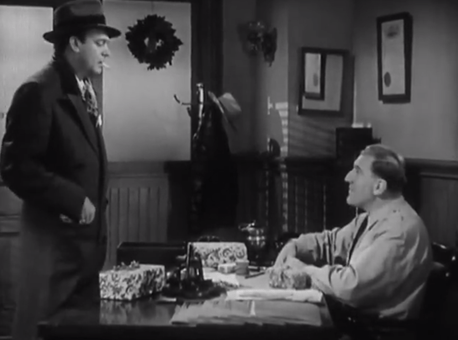
Take, for instance, the first time they meet at the sheriff’s office. O’Keefe is trying to file his report, and the sheriff keeps on getting distracted, telling him he should smoke less, get a pipe, etc. Meanwhile, he fumbles around wrapping Christmas presents. The quirks make the scene that much more enjoyable, though we’ve doubtlessly seen the exposition umpteen times before.

One feather in its cap as far as fleshing out an atmosphere starts with a simple detail like setting the action during Christmas. Shane Black is one to use this technique, but it immediately adds another layer to any story because it’s instantly recognizable, instantly relatable to almost every one of us. It also makes a fine contrast with any of the criminal elements.

Because it’s safe to say two of the things most diametrically opposed to murder are the Midwest and Christmas. At least until now. The out-of-town bus arrives at the local depot and we have our meet-cute over a towering stack of tumbling presents.

Sam Donovan (Dennis O’keefe) offers his services to the radiant Anita Weatherby and she reluctantly concedes. Barbara Britton is only one effulgent face among the plethora of post-war beauties, perfectly epitomizing the traditional values of the time, but she fits this role capably.

In fact, it cannot be summed up better than the moment Donovan comes a calling on the girl at her parents’ home. There’s nothing more quaint and somehow innocent than courting culture involving the entire family in cozy drawing rooms.

Donovan remains an insurance investigator by day poking around about a purported suicide based on an insurance claim. He has other ideas about the cause of death, but seeing as the gun has disappeared and all the locals are quite reticent, little progress can be made. Not unlike Reardon (Edmond O’Brien) in The Killers, he’s trying to get to the bottom of it for his company.

cover up 2.png

Soon it becomes obvious to him this was not simply a suicide as marked in the books, even a passing mention of a double indemnity clause suggests some form of foul play. But again, this is more The Thin Man Goes Home than it is any pernicious strain of crime flick. The token example is the sheriff’s office, which seems more in line with Barney Fife than Sam Spade.

Tired by the dead-ends and the seeming evasiveness of the local authorities, Donovan nevertheless, spends his evenings in the company of the beautiful girl. They go to the movie house where they get gawked at by an inquisitive little boy who’s already seen the picture multiple times.

The next dramatic development is the death of a beloved member of the community, Dr. Giroux, and this year, the Christmas tree lighting normally carried out by him is a little dimmer. The murder weapon also looks to be a German Luger — with at least two different owners having one of the guns in their possession. The town’s own sheriff and Anita’s own father Mr. Weatherby. It starts to make her spine shiver because she’s deathly afraid Donovan’s digging will lead directly to her loved ones. She is split between protecting her family and her new man.

Thematically, Cover Up plays a bit like It’s a Wonderful Life except the two men dueling for the soul of the town are off-screen enigmas. We never know them intimately and of course, murder is at the seat of it all. The fact this humble movie would attempt such themes is to its credit, but since these characters are never witnessed in the flesh, we have little interest in them.

It is the characters in front of us with the most relevance. So while it can’t quite manage to keep up the steam, for what it is, Cover Up is a minor Christmas delight, especially for the Dennis O’Keefe and William Bendix faithful.

3/5 Stars

Dance, Girl, Dance (1940): Lucille Ball and Maureen O’Hara

dance girl dance 1.png

Scanning the opening credits, I noticed two talents on the rise including Russell Metty and Robert Wise, but make no mistake; the focal point in the director’s chair is the criminally-forgotten Dorothy Arzner.

In retrospect, she certainly is a primary draw to this picture because, with the dearth of female personnel actually credited behind the camera within the film industry, she stands as a pioneer for those who are aware. This is a fine starting point.

For those drawn to talent more than technicians Dance, Girl, Dance boasts a seemingly disparate pair of heroines in Lucille Ball and Maureen O’Hara, with both women making their living in a chorus line.

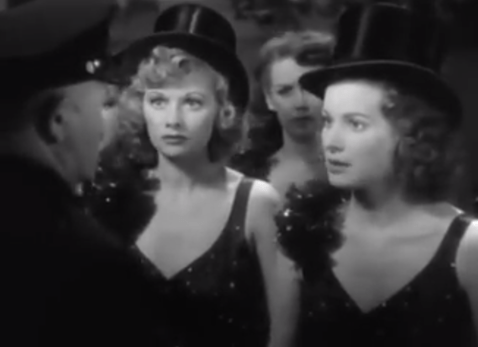
In their opening introduction, they are performing in some two-bit, slightly dubious joint only for the place to be raided by the cops mid-routine. It’s a sorry state of affairs as they come to terms with the fact they will not be getting any reimbursement for their night’s work.

In fact, it’s one of their good-hearted, slightly tipsy patrons who puts out his hat to take a collection. It’s not much, but the girls are grateful for his neighborliness. He’s the first of many side characters to drift in and out of their lives.

In the subsequent storyline, our two aspiring performers aptly reflect the two divergent paths with which to tackle a career in such an unstable environment. Bubbles is Ball as a full-on glam girl. She handles the part quite well because with her iconic career in humor, in some fallacious way, it often undermines just how alluring she was as a performer. Here Bubbles is shrewd when it comes to getting ahead and using all her assets to move up the social totem pole — both personally and professionally.

Meanwhile, O’Hara, in only her third Hollywood release (following Jamaica Inn and The Hunchback of Notre Dame), is called upon to exude the radiant exuberance of an ingenue named Judy O’Brien. She’s trying to do dance the right way in a callous world.

As it turns out, Louis Hayward isn’t actually attached to either of them even as they make eyes or have fancies of being with him. He’s currently still connected to Virginia Field. Yes, they are going through a divorce, but there’s still something amicable in their antagonism. Even as they play the field a bit, there’s this ongoing sense they’re still clinging to the thought of salvaging their relationship. It remains to be seen where this separate piece fits in with our two ambitious dancers.

Ralph Bellamy makes his own entrance as a dance impresario, and we also wonder how he figures into the puzzle. Though the man is never quite satisfied with the company’s choreography, he’s still Ralph Bellamy, armed with his usual lanky and unassuming charm. More than anyone else, his perceptive secretary Miss Olmstead (Katharine Alexander) is capable of getting a heartbeat out of him.

As the girls look for work, they are met with the hurdles that come with any profession. They lack transportation, they lack means; no one seems willing to give them a chance unless they degrade themselves in some manner.

Bubbles really starts raking in the dough under her new persona: Tiger Lily White. Of course, she is forced to hold court with a bawdier brand of onlooker, but she more than obliges them a la The Awful Truth’s with a slightly risque “Gone with the Wind” number. It fits her personality because she is, above all else, an opportunist, and this is the easiest, fastest way she can get ahead.  However, running with this personality trait, she also signs O’Hara on to be her stooge to milk the lascivious audience for more.

It’s less an act of goodwill and more so a calculated way to bring Judy down a peg with the rudest of awakenings. It’s the height of indignity for the idealistic girl to be relegated to such a state. Still, she pushes through it with fortitude, throwing aside her initial apprehension only to replace it with renewed determination. It’s in these interludes where our naive heroine matures and comes to terms with the world around her.

dance girl dance 2

One of the most striking elements of Dance, Girl, Dance is how each and every performance reaches out into the audience in some way. It doesn’t necessarily feel like a typical song and dance musical, but it plays up the communal, reactionary elements of film and, especially, the stage.

Even as the plot is strung along and feels flimsy and detached, at times, there’s something rather freeing and appealing about the oddball supporting cast all but drifting in and out of the main narrative as nice as they please. Hayward’s playful feud with his wife Field feels all but an unrelated subplot until it somewhat ties into our main story.

Then, Bellamy and “Ommy” have their own individual, rather serendipitous encounters with the young hopeful Judy, whether in a waiting room, on the lift, or waiting for a bus in the rain. The moments do not mean too much on their own, aside from providing dashes of character. However, as they begin to stack, one on top of another, the interactions create a renewed appreciation for our characters. Even Bubbles, despite her conniving, is a memorable part elevated by Ball’s innate kineticism.

However, the most poignant scene comes to pass when O’Hara does the unexpected. There’s a steely resolve born in her eyes as she walks into no man’s land, into the space of the crowd, and confronts them in their poor, sad little lives. They pay their lousy 50 cents so they can jeer and ogle and go back to their wives and sweethearts and feel like men. There’s no integrity, no strength, nothing worthwhile in them.

The most curious thing is how she wins them over by cutting into the bawdy filth with the sharpest truth anyone’s ever dared to utter in the skeevy burlesque joint. Tiger Lily is instantly out of fashion as she and her stooge have it out because her opener has finally gained her own resolve. She’s not about to roll over and take it anymore. Far from just being a comical image in the wake of this film, it signals a change in the balance of power, as corny as that might sound.

It is the crowning capstone. Our ingenue has grown up. She simmers with fire for the first time, and it feels like we are seeing the real-life fire of Maureen O’Hara. It’s the finest, most definitive moment of the picture, allowing her to finally break out of the demureness initially fashioned for her. Before she had to mask herself. By the end, she realizes her true nature.

In the very same instance, she is able to impress something significant upon her audience, both on the screen and those watching from their theater seats. This continual relationship is Dance, Girl, Dance at its best. It’s not a supernal musical, nor the brightest backstage drama out of the age, but there are some amiable performances fostering a kind of self-reflexive symbiosis. This and its striking perspective on a patriarchal world, brim with a certain agreeable ardor. Lucille Ball and Maureen O’Hara don’t harm its prospects either. I cherish them both dearly.

3.5/5 Stars

Merrily We Go to Hell (1932): Directed by Dorothy Arzner

merrily we roll to hell.png

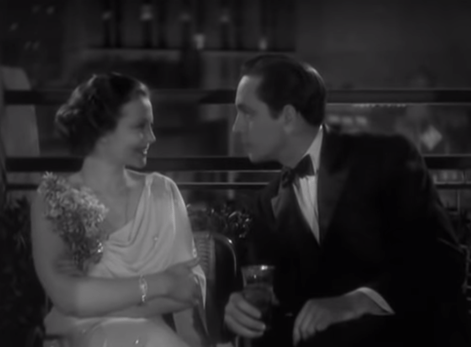
Bubbly is flowing and the gaiety abounds. Alcohol is not an evil, just a tonic to loosen morals, tongues, and dour countenances. When Joan Prentice encounters Jerry Corbett for the first time at a party, she’s immediately taken with him. He’s a few drinks in and has let the merriment overtake him. It comes off charming if a bit dopey.

Merrily We Go to Hell feels like a provocative title, and it’s true this alcohol-drenched drama is a predecessor to the likes of The Lost Weekend and Days of Wine and Roses.

Sylvia Sidney is about as winsomely sweet as she ever was and ever could be playing a socialite at a party. Frederic March has momentary glimpses of warmth and allure, though it’s hardly his finest hour on the screen. However, it is a testament to how phenomenal his career was at points, and even a picture like this seems to suggest how often he is an underappreciated star of Classic Holldywood.

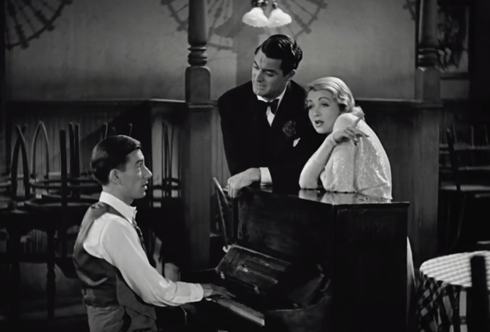
There’s also a third far more surprising presence in the movie filling what might be considered a minor bit part. Cary Grant is all there, but it’s a bit like seeing John Wayne in Baby Face or James Stewart in Wife vs. Secretary. We’re there but not quite there when it comes to their career trajectory. He still needed to meet Mae West and then Leo McCarey to really get the wheels rolling, thus entering the stratosphere of quintessential screwball suavity.

As it settles in, Dorothy Arzner’s picture is all for hitting the journalistic beats contemporary to the day and age. It’s a perfect arena for modern, capitalistic America. An arena of vocation, class, and in this case, alcohol. One easily recalls Platinum Blonde though March, despite all his able acting prowess somehow cannot muster the same fitting charisma Robert Williams managed as a newshound. The former performer lent almost a screwball sensibility to Frank Capra’s picture.

It’s the same kind of affable charm that made Jack Lemmon so effective even as he dipped into similar depths of hell in Days of Wine and Roses. But back to Platinum Blonde. It’s hard not to see the earlier movie’s imprint being reworked within this material (even unconsciously) with less handsome results. Because some of the same dynamics are present. We have a lead infatuated by a platinum blonde (Adrienne Allen) and then opposite him is the endearing “other girl” we know full well will actually win out his heart. At least, in theory.

And if that isn’t enough, both newsmen dabble in playwriting, suggesting the menial pavement-pounding, all for the sake of making a buck, giving way to a higher calling of art and patronage. It handily reflects rungs in the social ladder to mirror contemporary society, as the film’s of the Depression-era all have a habit of doing. Obviously, they can’t help it. This is their world.

However, in Merrily We Go To Hell, playwriting holds a more substantial role aside from being a narrative device for the sake of parallelism. It brings Jerry Corbett the highs and lows of such a career while throwing him back together with his former flame, the glamorous thespian Claire Hempstead. The scenario feels rudimentary and mediocre going through these typical dramatic progressions.

Before it becomes complicated, the film is a basic love story of the lowly working stiff smitten with the heiress, although not for money’s sake. As it predictably dips into drunken stupors, strained relations, and infidelity, the film actually loses some ground. Corbett rounds up his chums, partakes of some merriment, and resigns himself to the platinum blonde rival. In an act of preservation more than rebellion, his wife deflects by digging up her own beau (hence Cary Grant) in an attempt to be equally “modern.”

What resonates most fundamentally are some of the more curious shot selections by Arzner. She certainly manipulates the camera and the images in such a way we are aware of them as an audience, whether through early forms of product placement or a curious rear-view of two men sauntering through a mansion. It feels sporadically alive with invention and a very particular vision, even as it spirals toward an unimaginative soap opera denouement. The accompanying  Pre-Code elements are there, but the picture doesn’t entirely douse itself and drown in the melodrama.

This proves to be a key because any such digression could have been its final death. Instead, the sense of restraint and understatement proves a far more powerful tool of storytelling. It subtly undermines stock Pre-Code sordidness for something nominally more intriguing. This nor the actors, totally save the movie, but they keep it from completely sinking. More people are finally starting to talk about Arzner, and Merry We Go to Hell feels like a worthy touchstone in her career.

3/5 Stars

Merrily We Live! (1938): My Man Godfrey Redux

merrily we live

What a harebrained movie this is in all the best ways. The origins of Merrily We Live themselves are a tad murky or, at the very least, convoluted. It’s purportedly based on the novel The Dark Chapter, which subsequently received a Broadway adaptation, They All Want Something. There was a film in 1930, What a Man, with a similar vignette about a chauffeur falling in love with a woman. But for the classic film aficionado, basic similarities to My Man Godfrey are obvious enough to warrant some amount of comparison.

It is a shame ensuing generations have mostly forgotten Constance Bennett. (I must admit to paying more attention to her sister Joan.) Our leading man and amiable Englishman Brian Adherne is obliging if generally uninteresting. Certainly, we don’t have the pinpoint comic delivery of William Powell or the sheer frenzied force of comedic fury that is Carole Lombard so in this regard, Merrily We Live is a lesser effort, but that does not mean it can’t offer up its own mercurial delights.

We trade out a supporting cast of Alice Brady, Eugene Pallette, and Gail Patrick with one arguably just as good calling on the talents of Billie Burke, Clarence Kolb, and Bonita Granville. Alan Mowbray is one of the lone holdouts from the earlier picture. Thus, there is barely a drop in quality, which leads one to marvel at the sheer prolific nature of these character actors. It really was the heyday of the bit roles with actors building up such robust catalogues of appearances and seamlessly sliding into role after role.

The help, headed by Grosvenor (Mowbray), is constantly in disarray as the vexed valet threatens to walk out on his duties time and time again for all the egregious infractions he has to put up with. The latest affront was an unseen tramp named Ambrose (these character names are gold) who ran off with the family silver.

The breakfast table is an arena and a convenient microcosm for the wacky family dynamics to play out in farcical fashion. This particular morning, since there is a sudden lack of silverware in the house, the family must make do with any amount of ladles, chisels, and hammers. It’s highly irregular, but they are no normal menage.

merrily we live 3

We are blessed with another ridiculously rich and dysfunctional family of bickering oddballs. Constance Bennett, as the eldest daughter Geraldine “Jerry,” has a grand old time being mildly amused by the utter chaos that makes up their day-to-day in the lap of luxury and excess. She’s not quite as high-strung as Lombard before her, but bouncing off her family members is entertainment enough.

Baby sister Marion (Bonita Granville) is ready to whine and prank her way into getting funds for her latest scheme. She’s part whiny brat and certainly a budding comedienne. One need only remember her chilling turn in These Three to realize how starkly different she is. Then, their brother’s always bickering and complaining about the siblings he’s been saddled with.

Billie Burke is at her most ditsy-headed cycling through absent-minded hilarity and bubble-brained insufferableness. What’s not to like? She even holds a dinner party a la Dinner at Eight. Consequently, she’s also the source of some of this constant disarray with her most recent hobby of collecting “forgotten men” and bringing them on as servants. Ambrose was her latest pet project and also the most recent disaster.

Clarence Kolb is at his most physically brilliant given more than a mere scene or two to flex his comic talents. He doesn’t disappoint alongside his wacky costars. I’ve never been so delighted with his characterization while attempting to eat his breakfast or taking a cab home after becoming completely wasted.

The family is rounded out by their two absurdly named pooches “Get Off The Rug” and “You Too,” not to mention Mrs. Kilbourne’s pride and joys “Fishy Wishy.” It’s not so much pure spastic energy but the off-the-cuff remarks and sudden jolts of absurdity and slapstick carrying the film to its conclusion. These elements are what drag the story along its merry path of craziness with or without major plot points.

Of course, we would be remiss not to mention Rawlins (Adherne), the most important new piece in the screwball equation, acting as a bit of a willing catalyst for all the mayhem inside the mansion’s walls. There has to be one normal lout, and so he conveniently fits the bill as the resident straight man.

It begins when his car goes hurtling over the side of the road. He’s an author with no means of communication. His only recourse is to find a telephone. His attire and Mrs. Kilbourne’s dull-headed insistence pull him into the house quite by accident.

All he wants is to make his phone call, but he good-naturedly acquiesces when Mrs. brings him on to work as their new chauffeur. It’s a bit of good fun. This is the key. He gladly enables their quirkiness playing along with their daily madcap rituals.

merrily we live 2

One moment he’s assisting a fawning Jerry into the first-floor window after her flirtatious solicitation. Then, he’s covering for Mr. Kilbourne when he comes home from a bender with his buddies, as a cabbie tries to take advantage of him. The list of duties could go on and on, and very few of them have to do with his recently acquired occupation.

One of my personal high points from the movie includes Grosvenor repeatedly clunking into the chimes in the dining room, matched by the breakfast chatter. It’s not highbrow, but somehow I find this tromping around and people falling to the ground faint uproariously funny, in the right circumstances.

Merrily We Live is just the film, though one must admit it ends far too abruptly to do itself any favors. It’s a movie that’s never about the story anyway; it’s the brief instances of near serendipitous comic verve seemingly bottled more by accident than any amount of scripting. These are the interludes to truly relish and they just might be worth another viewing — once my blood pressure has settled down again.

3.5/5 Stars

Topper (1937): Cary Grant’s a Ghost

topper 1.png

We know what kind of movie we’re in for upon meeting Cary Grant, whistling a merry tune, as he drives his fancy wheels with his feet. His wife — a quizzical platinum blonde played to perfection by Constance Bennett — stares up at him in amusement. They are a picture of fun-loving decadence out of The Nick and Nora Charles mode.

Understandably, they are the main draw in Norman Z. McLeod’s corkscrew fantasy comedy but like its distant relative, The Thin Man, someone else’s name actually garners the title. In this particular instance, it is Mr. Topper (Roland Young), a highly successful businessman who is, nevertheless, enslaved by his rigid regimen, and it’s not of his own accord. His stifling spouse has cultivated his humdrum life like clockwork to her own liking. We don’t envy the man, hustled and harried as he is every day, with his breakfasts and innumerable sensibly scheduled appointments.

You quite forget Billie Burke can be insufferable in a different manner as the quietly exacting wife, giving the impression of a woman constantly on the verge of indignance, her voice teetering on the edge of fragility. I hardly believe myself saying this, but I like her at her more titteringly giddy spectrum. At least she’s allowed to be sympathetic; bubble-headed but sympathetic. If the point hasn’t been made apparent already, this enforced tedium is the baseline of the cinematic world needing to be spiced up by the Kerbies and their happy-go-lucky prodigality.

If we can hone in on a turning point, Topper really hits its stride in death — the death of Mr. and Mrs. Kirby, that is. Because as is the habit in the fantasy mills of Old Hollywood, our couple dies only to come back as ghostly versions of themselves, appearing and reappearing as easily as a snap of the figure.

They pull themselves away from the wreckage of their automobile and have their first out of body experience. Played straight, it would seem ghastly, but they are as gay and chipper as ever, nonchalantly debating how they’ll get through the pearly gates. Everything they did (or didn’t) learn in Sunday school says they need to do some good deeds. Regrettably, they’ve been living on the high horse for too long; they haven’t actually gotten around to the greatest commandment: loving their neighbors.

topper 3

Their pet project is “Toppy,” and he’s in need of vivification. His one act of rebellion against his wife is purchasing George Kirby’s old automobile. This is the foot in the door after he gets into a near-death fender bender of his own. It leads to his first out of body reunion with his old friends.

The movie effectively utilizes old-fashioned special effects dating back to the days of George Melies, making it effortless for Toppy’s two guardian socialites to drop in and out of his visual field. As an invisible Mr. Kirby makes himself useful changing the tire, Toppy is teased by the lady Kirby as she blows on a blade of grass like a giddy schoolgirl. It’s our first chance to play with the logic, the fact only the audience and Toppy are availed of seeing the deceased.

Because what’s really a treat are the ghosts and the ghosted. The ones who are oblivious to the somewhat explainable supernatural acts around them. We get similar moments in Here Comes Mr. Jordan and even It’s a Wonderful Life when the concrete and ethereal collide in a most comical fashion.

Roland Young does an admirable job in the part, and he’s on par with any number of the comparable characters of the day and age whether a Charlie Ruggles or Leo G. Carroll, though slightly less well-remembered for whatever reason. He finally has some pizzazz injected into his every day as the Kirby’s indulge his budding interests in wine, dancing, and song. He’s hardly a party animal, still, he gives it a go.

topper 2

It leads to a brawl in front of a restaurant that they must bail him out of and then a handful encounters with a hoodwinked doorman. At best, Mr. Topper is the hapless figure caught in the spectral screwball chaos with the Kirbys pulling all the strings for him. Unfortunately, the storyline becomes too stagnant without the constant presence of Grant and Bennett, visually or otherwise.

Toppy finds a new standard of living and comes to reconcile with his wife. These are wonderful things, mind you, but it feels like the movie itself has compromised and gone away from what really makes it zing — that is the screwball antics of its true leading couple. Without them, it feels insipid and frankly trite, arriving at its unequivocally saccharine ending.

He is the one playing it straight, in a boring perfunctory manner because this is what is requested of him. But there are a handful of quality character moments of note. Certainly, a befuddled house detective played by Eugene Palette is always good for a lark. Alan Mowbray is his typical snooty Jeeves-like valet and even Hoagy Carmichael shows up (in his screen debut) to knock back a tune on the honky-tonk with Cary and Constance.

I couldn’t help thinking, I wish our two dazzling leads had partnered in another rom-com. After all, Powell and Loy got together for over 12 offerings. Alas, it was not meant to be. It makes Topper even more crucial in charting the rise of the Cary Grant we would come to know and also an oft-forgotten starlet in Constance Bennett.

3/5 Stars

Operation Petticoat (1959): Blake Edward’s Cheeky Service Sit-Com

operation petticoat 1.png

“On a sub you have to operate in close quarters.”

Operation Petticoat positions itself as an easy film to enjoy and a difficult one to love. It’s true Blake Edwards was capable of stirring up breezy even wacky entertainment, from Breakfast at Tiffany’s to The Pink Panther to The Great Race. Even this is only acknowledging a very small subset of his filmography without consideration of the several exemplary dramas he directed.

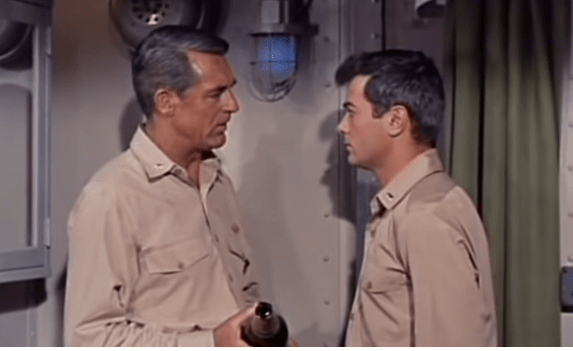
He was usually aided by fine casts, who could carry the material smartly, and it’s little different here. Cary Grant was hardly ever ruffled nor stretched in his later career, and Operation Petticoat could hardly be considered more than a lark for him. He plays his quietly bemused self — this time a submarine Lt. Commander, who must make the most of a wonky situation following the attack on Pearl Harbor. 

For his part, Tony Curtis is all but at ease as the wheeler-dealer with a touch of sleazy class. Let’s just say he’s got an affinity for the finer things in life and the ladies who can give it to him. It’s generally a delight to see Cary Grant return to a sub after Destination Tokyo, this time joined by Curtis, who looks to be relishing going toe-to-toe and rustling the feathers of his boyhood idol.

Forgiving the shameless pun, without its two stars, the movie would be sunk by mediocrity. If we want to give a slightly backhanded compliment, Operation Petticoat is a fitting precursor to some of the popular sitcoms of the ’60s.

Helping the argument are the presence of Gavin MacLeod, Marian Ross, and Dick Sargent representing, of all things, McHale’s Navy, Happy Days, and Bewitched. And of course, although it transposed the action of a submarine crew to a rural locale, one cannot forget Petticoat Junction.

Like McHale’s Navy, it would be all but impossible to pull off the wartime comedy set in the aftermath of Pearl Harbor if we hadn’t at least won the war. This gives freedom for some creative license and a bit of zaniness sprinkled in with the typical military fare. One must only remember one gag recycled in the TV show, namely, sinking a truck with a torpedo.

Before they can even get afloat, they have to put their belching sub back into working order. The man up for the task is their latest addition Lt. Holden. Though the commander doesn’t relish the idea, he turns the other way and lets his junkman get to work pilfering everything he can get his grubby hands on. He’s able to do what no one else could, securing all the parts (by dubious means) to get them back in commission.

If we want to point out the film’s flaws, it takes about an hour to really churn up some steam by entering the waters of a 50s era rom-com afloat in awkward waters. Because once they get past the fear that the Sea Tiger will fall apart around them, they find their newest conundrum. They are being tasked with accommodating a batch of stranded nurses. It just isn’t done. It isn’t decent. And yet somehow in this film it happens and, subsequently, becomes the source for most of the comedy.

Quite mysteriously, all the shipmen aboard fall ill and need medical attention from the nursing staff. Their commanding officer all but scares them back to perfect health. Holden is all but smitten by bodacious blonde, Dina Merrill, who has the ill-fortune for always falling in love with Mr. Wrong. He’s not exactly the prototypical image of the upstanding, clean-cut boy next door.

Major Heywood (Virginia Gregg) strikes up a boiler room romance with the local fix-it man (Arthur O’Connell) because she proves just as resourceful as he is. He’s forced to mince every small-minded word he ever said about women and washing in his workspace. Commander Sherman is hardly on the lookout for such flings, simply trying to navigate their highly irregular and awkward situation and the perpetual clumsiness of Nurse Crandall (Joan O’Brien).

Between designated shower times for the ladies, the sharing of pajamas between co-eds, and allowing for Lt. Crandall’s curvaceous figure in the tight quarters of the submarine, he gets more than he bargained for, all played for wry comic effect, of course. It’s these later interludes milking the sheer awkwardness that exhibit touches of redolence on par with Pillow Talk or any such brethren. It’s a reason to miss the films of old. Cheeky and more brazen than expected, but mostly good-natured, especially compared to the hypersexualized culture we now live in.

operation petticoat 2.pngVarious scenarios spring to mind of farcical hijinks worthy of McHale’s band of Eight Balls. Prime examples are Holden setting up a supply depot casino to wrangle parts and even resorting to pig-napping to augment their New Year’s festivities. Seaman Hornsby causes quite the stir and in order to hold onto the plump porker, Commander Sherman generously opens up his subordinate’s quarters so a disgruntled native can raid them in recompense. He comes away with a golf bag, tennis rackets, and all the doodads you can imagine.

In another stroke of brilliance, some Einstein has the foresight to mix white paint with the red so they have enough for a new coat. For any of those who passed preschool, that makes — not gray — but pink. When they’re not picking up more passengers and wayward goats, babies are being born in the makeshift ward.

 The most cringe-worthy moment comes when they get caught in the crosshairs of a friendly battleship looking to sink the unidentified, highly irregular submarine. As one last resort, they signal their allies with a trail of women’s undergarments. Surely the Japanese would not resort to the same tactics. 

The resolution to the story is fit for the crowd-pleasing, sunshiny rom-com we’ve been offered. Cary and Tony say a cheering goodbye to their old friend The Sea Tiger, and we get some novel if unsurprising exposition about their love lives. In case you didn’t guess as much, a movie about a pink co-ed submarine is not going to push your brain or the envelope. For the generous viewer, it’s intermittently mirthful and relatively harmless amusement not to be taken too seriously.

3/5 Stars

Battleground (1949): Bastogne and The Screaming Eagles

battleground 1.png

“We must never again let any force dedicated to a super-race or a super-idea, or super-anything become strong enough to impose itself upon a free world. We must be smart enough and tough enough in the beginning to put out the fire before it starts spreading.”  ~ Leon Ames as the Chaplain

This is the story of Bastogne in 1944 and the renowned Screaming Eagles. Admittedly, if you’re like me, this means very little, but fortunately, we are in good company because the men we get to know over the course of two hours didn’t know anything about the city either when they first arrived. This was not the Battle of the Bulge; it was simply a stepping stone or a weigh station on the road to their future destination. That is until it became, you guessed it, a battleground in its own right.

For the time being, they can be found drilling in smartly executed formations and getting ready for an unnamed assignment ahead. This is our chance to feel them out before they get in the thick of everything.

Director William A. Wellman does them a service in the first full scene together spread out in their cots. There’s barely enough room for the dust to settle but within the close confines, camaraderie is immediately palpable as is each man’s personality.

What a great group of guys they are covering a lot of the bases of humanity. Van Johnson and even a Don Taylor are easy to pin down because of their broad appeal and charm. They make most any armed forces picture a little more affable. Among their finest traits is exuding good old-fashioned Americanism.

There’s old college grad Jarves (John Hodiak), who gets jeered for his presumed stuffiness. There’s the gruff cynic (Douglas Fowley) always playing around with his set of false chompers like his most prized possession. (They kind of are because without them he can’t eat). Squished in with them is the gangly and drawling southern boy (Jerome Courtland), who feels like an easy trope to target in these pictures. The new recruit (Marshall Thompson) can be found nervously bed-hopping from cot to cot trying to find one he can take.

In something genuinely unusual for the period, even a Latino from L.A. (Ricardo Montalban) is represented. His best bud Pops (George Murphy) all but has a ticket home on a hardship discharge. A young Richard Jaeckel rounds out the band along with a chaw chewing James Whitmore, acting as their weathered drill sergeant.

What is meaningful about these relationships is how they reach outside the confines of the film with this inferred history we don’t know explicitly, and yet we can read into it. We know what guys have a bone to pick with the army and the ones who are trying to make the best of it.

The perilous journey ahead is riddled with enemy planes overhead, and the fog of war is quite literally laid on thick, complimenting the mud the army trucks slog through on the road. One minute they’re diving into ditches at the sound of sniper fire, and the next they are tasked with the backbreaking toil that goes with digging in for the evening, only to be pulled away on revised orders.

battleground 2.png

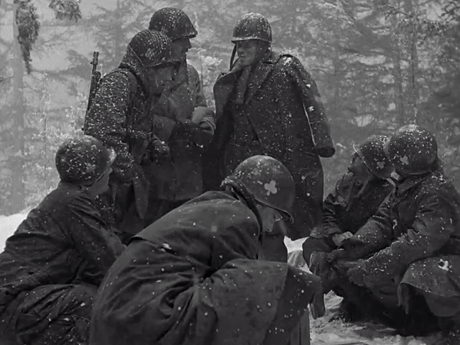
There’s absolutely nothing permanent aside from the constant patrolling, lack of sleep, and perpetual snow. Battleground is one of the snowiest war movies I can recall, at times, deeply striking and equally relentless

Private Holley scores quite a cache of eggs, dreaming of the scramble he’s whisking up in his helmet time and time again — only to get pulled off for another assignment. Watching the yolk drip from his helmet is one of the defining images of the film for me as is his utter indifference. You’re never clean so why even bother.

As a fitting inflection of the Cold War, we have Germans in G.I. uniforms sneaking behind Allied lines to wreak havoc and sabotage important strategic assets like bridges. More than anything, it continually triggers this terrifying threat of infiltration. Thus, one cannot help but draw a connection to the Chaplain’s stirring speech later on (reference at the top of this page).

Amid the paranoia, it’s almost hilarious to think that the best way of telling friend from foe is baseball terms, idioms, Terry and the Pirates references, and the relationship status of the war’s favorite pinup Betty Grable (Note: Cesar Romero is out for Harry James).

When they do come upon the Krauts, Wellman captures the firefight and the subsequent hand-to-hand combat in a stylized manner to conform to the Hollywood production codes. Regardless, he manages to accentuate the rough-and-tumble brutality through boots pounding on the snow and violent inferences.

Battleground leaves unabashed sentimentality behind and it is not squeamish about death. People get picked off one by one leaving a trail of dead and wounded in their plucky company. This carnage hurts because of the rapport we build up. But even in the face of these micro-tragedies, there is no time to mourn, and their stand against the Germans proves a gutsy one. There’s no other alternative in their minds.

As we bunker down, it’s true the ensemble melds together nicely with no one actor totally upstaging the others. Certainly, Van Johnson is just left of center, if not the undisputed headliner, but even he has to navigate conventional feelings of fear and loathing when it comes to military service. He is by no means impervious to the toils of war.

In a moment of duress, Holly looks all but ready to turn tail ignominiously, but he finds his courage in the urging of another man who looks up to him — as they double back on the German lines and catch them off guard. They’ve girded their loins about them now and when ceasefire agreements and surrender are suggested by the enemy, they unceremoniously scoff at the very idea.

As alluded to already, in the thick of the hard pelting enemy artillery fire, the Chaplain holds an impromptu service. He’s of a certain denomination, but a very succinct point is made of the fact his service and his message is all-inclusive. In fact, it’s hardly a spiritual homily at all but a candid rallying cry against the forces of evil. It’s one of the most blatant examples of the film getting on any sort of didactic soapbox.

In response, each man kneels down to pray in his own way the enemy artillery fire still bursting in the background. The results are a stirring image of solidarity. They have not yet begun to fight.

Even in the simulated soundstage action, there is a compelling commitment to the atmosphere, which aids rather than hinders the story being told. It brims with the elements and forces of nature on all sides. In a last-ditch effort, all the terminally ill are moved out of the makeshift hospital, and the walking wounded are brought in for one final stand of desperation.

There is a slight sense Robert Pirosh’s script skipped over what might have been the most rousing scene. Wellman tackles the counterattack from the rallied forces with their new batch of airlifted ammunition, gasoline, and K rations in only an extended montage.

battleground 3.png

Although the ending of the war is a foregone conclusion, it very nearly could have been a letdown that we don’t get a more pronounced action scene. However, it’s quickly salvaged by the effectiveness of the final scene. It says all the same things and exudes all the same battered but resolute emotion with one simple drill, leading them off toward the rear. The men sound off with a renewed vigor knowing theirs was a job well done.

In my book, James Whitmore is the unsung hero of the picture because his grizzled mug brings so much understood texture to the world of the movie. Van Johnson is the vision of what an idealized American G.I. is and Whitmore is the more likely reality. And in the final minutes, he’s the one who leads them to the finish line. He maintains an unswerving grit and pride as tenacious as anyone.

Battleground is quite the sensational war picture while also holding the distinction of being one of the most high profile WWII films following the conflict’s cessation. It allows for this strange limbo of sorts where the war is still fresh and within grasp of the collective consciousness, but there is enough wiggle room to begin looking back in hindsight.

Surely it’s not a complete portrait, but it does well to blend shades of action with the everyday gumption needed to make it through such a conflict. What a pleasure it is to be reminded each of these soldiers is a singular human being.

It’s refreshing to have their warmth and their fears in plain view along with their courage. It feels like we can look them in the eyes and truly marvel because they are not a whole lot different than us in many ways. Their courage is extraordinary in just how ordinary it appears.

4/5 Stars

It Always Rains on Sunday (1947): Drizzly British Noir

it always rains on sunday 1.png

“Lovely weather for a manhunt.”

Childhood vacations to England have given me a lifelong cache of fond memories of the British Isles. Tea and scones conjure up only good things as do Cathedrals and cobblestone streets. Somehow even the daily drizzle, when it feels quintessentially English, is something I don’t altogether mind. It has to do with it being novel as I always came from sunny California. We romanticize it.

However, It Always Rains on Sunday is nothing like that. It is a film generally for people who have lived in these locales all their lives. The novelty quickly dissipates; it’s always dreary, dismal, and damp. They have their slickers turned up and their Wellington boots on, if they have any. Of course, in a cinematic sense, rain functions as instant atmosphere. It sets a very specific tone while being an evocation of England through and through. It proves to be an ongoing theme.

Furthermore, the picture was produced by Ealing Studios, that British film institution, known for their Alec Guinness comedies of the 1950s and, subsequently, directed by Robert Hamer, most well-remembered for helming one of those Guinness’ comedies, Kind Hearts and Coronets.

But with It Always Rains on Sunday (the title fits the weather and therefore the environs), they found themselves crafting a proto-kitchen sink, day in the life drama that really dug into a community of post-war Britain. We get everything from the daily grind, the mundane activities, and the dodgy dealings playing court with everyday life.

As the rain pours outside, perpetually, men have their papers open. The front pages are plastered with the biggest headline: Dartmoor Escape. Escaped criminal Tommy Swann (John McCallum) is on the run! Coincidentally, three cronies are milling about. Could it be they have something to do with this man or maybe a load of rollerskates that were nicked?

it always rains on sunday 2.png

A typical British family becomes our anchor and Hamer is constantly drawing the story back to them. The husband is a generally benevolent chap content with his morning newspaper and the breakfast at the kitchen table. He’s remarried to Rose (Googie Weathers), a former bar hostess, who is not altogether horrid, but there’s an undercurrent of this being a marriage of convenience — at least for her. It becomes most transparent in her sometimes callous dealing with the step-children.

Two daughters, one dutiful the other blonde and bodacious, when it comes to the boys, and a young son bent on getting some extra spending money to buy a new mouth organ. She doesn’t seem to have any maternal concern for them even as she dutifully runs the house.

The question remains how these seemingly disparate strands might possibly be tied together. But this is a day in the life long before the Beatles ever cornered the market. We come to understand It Always Rains on Sunday is this type of story. It readily covers the beats of the city with all its shadings. This is the joy of the picture, especially all these decades later. It envelopes us in the highly colorful world of the East End, with its smells, markets, fish shops, and pubs.

The local policeman, Inspector Fothergill, goes about his usual business, making his rounds, followed by a cheeky journalist ready to pounce on a scoop. He’s looking for any news on Swann that might be of interest to him.

The best human interest story of the movie is actually behind the scenes romance. Because, upon meeting one another on the set of this picture, Googie Weathers and John McCallum would fall in love and get married soon thereafter. Their union lasted over 60 years, well into the 21st century.

The crucial reveal is that the current Mrs. Sandigate knew Thomas Swann in her previous life. Now he comes calling for a favor since he has nowhere else to turn, setting up a chilling reunion. For now, all we have is in front of the camera. It certainly heightens the available stakes as she harbors the wanted man, and he looks to coax her to remember the former life they had together. It’s obvious the situation can only end in some form of tragedy.

Simultaneously, one of the local gangsters, the angular-faced Mr. Hyams, checks in on one of his game parlors and offers a job then flowers to Doris Sandigate — claiming there are no strings attached though she unsure — he’s just feeling charitable.

Coincidentally, he also catches wind of some roller skates on the market, but he’s already had his hand in fixing the local fights. The dirty money is already being siphoned off from somewhere else. His generosity continues when he donates a large sum of money to the local gymnasium to counteract his shady dealings. One questions the state of affairs when we must turn to criminals as a primary source of charity.

In another vignette, a record store shopkeeper is caught kissing with one of his pretty clients, this time Vi Sandigate, who can’t stay away from any handsome face. He dishes out a pair of mouth organs to keep the blackmailing tykes quiet — including Vi’s baby brother Alfie. They proceed to stomp around town to the tune of “Colonel Bogey’s March.”

The music store owner’s wife Sadie is not stupid. She arrives at the local bar one day to let him know definitively, she’s walking out on him. In response, her weak-willed philandering husband goes scampering after her. Far from feeling like a sordid love triangle, it’s a pointless mess with at least two out of the three lives ruined for good (if not all of them).

Implicit to the movie is this context of a Godless nation. At least no one goes to church or has the normal Christian view of the world you half expect in mid-century Britain. However, given the context of the hell they went through during the war (and even after), I’m not sure the change is unwarranted.

One resident yells at the boys to pipe down with their infernal racket because they are desecrating the sabbath. Then, we see the priest running the orphanage in another scene. But these are isolated almost unimportant moments in a broader narrative.

it always rains on sunday 3.png

Otherwise, this world feels devoid of such religiosity. Maybe it’s simply from coming from an American perspective, but in films of the 40s and 50s, there’s a commonplace aspect to God in some way, shape, or form. Here such ritualism feels almost absent, if not done away with altogether. If nothing else, it does speak to something about our characters and the lives they lead.

It’s based on currencies of love and money. But everyone seems dissatisfied and always longing for something better. And to be completely clear, there is reason to gripe with the world set before them. America, more than possibly any nation, could recoup from the war without a physical need to regroup. Britain did not have such a luxury.

And while the police chase after a fugitive across brick-paved streets, train tracks, and train yards, not unlike the pursuit of Harry Lime, it all feels indicative of a broader problem. I’m not sure if we ever get to it. We are left with a climax and a conclusion that’s stirring enough. But the tale nevertheless leaves so many of its narratives in a state of indefinite suspension.

A lot like life, we do not know how or where they will fully resolve themselves. This illusion is powerful. Not only that, the stories extend outside the confines of a film, but also a happy ending, as it were, is not going to be handed to us blithely.

In short, It Always Rains on Sunday deserves to be named among the best of British noir alongside titles like Odd Man Out and Brighton Rock. The key comes with integrating the everyday occurrences with the criminal element. It makes us aware of how closely related they are. It’s pointless to try and pull them apart.

4/5 Stars

A Walk in The Sun (1945) with Dana Andrews and Company

a walk in the sun 1.png

Opening as it does with the cover of its source material, A Walk in The Sun makes itself out to be a bit grand and simultaneously undermines a certain amount of its ethos as a gritty war picture. Is it a fallacy to think a book can never capture all the textures of life? Does the same hold true with film? I’m not sure.

Regardless, the story is set in 1943 in Salerno, and, keeping with this novelistic form, an all-knowing narrator (voicework provided by Burgess Meredith) gives a brief word on each of the soldiers who will walk through the frames of the film. Some of them are quite familiar.

The real opening of the action feels a bit like further delay tactics. We are on the loading dock of a troop transport. The side has yet to go down, and the assault has not started. We are forced to wait in this pervasive dourness fashioned for the soldiers out of the cinematic mise en scene.

It’s our first indication of what this film will be about, and yet it concerns itself with the interims and the in-between-times when men wait for what’s next. The nervous chatter of the men matches the nervous new sergeant who is meant to lead them. Already we have some internal conflict with everyone unsure of what is ahead.

It feels a bit like D-Day, but this is Italy. Instead of meeting steep opposition, they take the beach relatively easily, entrenching themselves and waiting. Their most mettlesome member (Dana Andrews) never said a truer word when he notes, “you can’t fight a vacuum.” All there is to do, for the time being, is dig in.

Their subsequent mission is to blow up a bridge and take a farmhouse. Simple enough. For the conventions of a movie narrative, it makes following the action lines quite efficient. Except, A Walk in The Sun is rarely about its objective, until it finally is. In other words, it takes so many meandering trails and paths, riding conversations to the eventual outcomes.

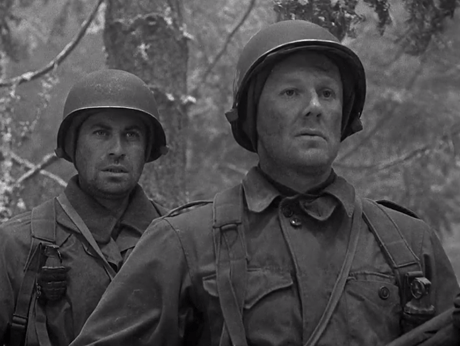
Robert Rossen’s script is probably too self-aware and witty for a fox hole, but this is Hollywood, after all. At any rate, it ably captures the nervous ticks — the repetitions making up human speech patterns. We have catchphrases. Norman Lloyd comes to mind (“You guys kill me”) as the company’s wry misanthrope, observing the world around him, drolling on about some future battle in Tibet to end all wars.

A jocular Richard Conte seems to relish the chance to run off his mouth as the talkative Italian-American, Private Rivera, always up for razzing his buddy and touting his own exploits as a gunner. There’s the ubiquitous nature of cigarettes or “butts” on the warpath, looking particularly anachronistic in the hands of a G.I. played by Sterling Holloway. Lloyd Bridges is one of the staff sergeants and an imposing fellow but the real center, equal parts cynical and indomitable, is Andrews as Sergeant Tyne.

a walk in the sun 2

Of course, in the army, it’s not always the most capable soldiers who are calling the shots. Between wounded superiors and casualties, this mantle falls on Sergeant Eddie Porter (Herbert Rudley), an indecisive brain with little practical military experience. The prevailing question remains, is he going to crack under pressure?

Certainly, a lot happens in the ensuing scenes, however, what feels most pertinent are the aforementioned lulls because a majority of our time is spent passing time with the soldiers. In these interludes, the narrative is intercut with song and score while being lent an introspective edge thanks to Meredith’s constant omniscient input. Here again, is this trace of self-importance cropping up.

However, A Walk in The Sun settles into something genuinely compelling as we realize we are getting the alternate portrait of war. Lewis Milestone chooses the theatrical nature of all the G.I.s crammed together in the frame just as his lateral shots capture the minimal action setpieces at their most dynamic.

We observe the shades of insubordination and passive aggression in the chain of command, a result of the lack of confidence in superiors. This is further compounded by lapses in judgment and real-world miscues, like forgetting your only pair of field glasses back down the road. It’s not so much atmospheric or authentic as it gives a sense of the personal truths of war. It brings the war picture down to ground-level, to its most intimate and idiosyncratic. In other words, it’s the epitome of human.

They must leave their wounded along the road to be picked up later. The sound of planes overhead is an infantryman’s worst nightmare. And still, they bide their time. Each man’s mind becomes distracted by anything but the war. They reminisce about Norman Rockwell’s paintings and the future of the covers of Time magazine.

Maybe it’s someone recalling their favorite records from Russ Colombo or Bing Crosby. The fat life would be getting The Andrew Sisters autographs and playing music all day long. For his part, Sergeant Ward, a farmer by trade, can’t stop thinking of nice, juicy apples, nowhere to be found in an arid environment like Italy.

During one telling interaction between an Italian-American soldier and two native Italians straggling through the countryside, I couldn’t help thinking this would have never happened with Japanese-Americans in Japan. In fact, the irony is that the all-Nisei 442nd Unit was also stationed in Italy on their way to rescuing The Lost Battalion in 1944.

There might be a single instance of heightened conflict in A Walk in The Sun; it’s when they come upon an Axis armored car and proceed to blow it up. But these types of moments are dealt with quickly, and the film sinks back into tentative homeostasis.

a walk in the sun 3

We can easily condense the narrative by jumping to the final push in realizing their mission. It’s relatively straightforward. We know what they need to accomplish, but the execution and the synchronization are key. It feels unnecessary to expound upon the results in great length. It’s about what you’d expect from an all-out ground assault. Of course, there’s a cost.

More intriguing is a fabled backstory to A Walk in The Sun. Fresh off his own military service and already a prolific journalist and screenwriter in his own right, Sam Fuller brazenly lambasted Milestones’ picture for its fictions even as he praised the earlier All Quiet All The Western Front. Because it is true the film from 1930 is a crowning achievement in pacifist cinema and a tour de force for the director.

Certainly, juxtaposing the final images alone, All Quiet on The Western Front goes out unsparingly. The full brunt of the gut-punch is felt as we see how much war has ravaged humanity. Its successor does not elicit the same guttural response. Then again, to parry Fuller’s point, it might be safe to concede its primary intentions were of a different nature altogether.

It becomes even more compelling to consider a brash young Fuller’s statements in lieu of his own forays into war pictures. He had several actioners of note including The Steel Helmet, which is easy to tie to A Walk in The Sun.

This earlier film perhaps is wordier — the characters mouths are filled with plenty to go on about. However, where I feel they can be linked together is through this sense of utter disillusionment with war. These are not career soldiers driven by dreams of valor and accolades in the service of their country.

Certainly, they are human. They have these kinds of thoughts too. Most of the time it’s idle chatter. It’s the mundane moments in-between where they are just people in a soldier’s uniform. What becomes apparent are their preoccupations, fears, and foibles, cutting through their daily existence. It comes down to survival.

Again, A Walk in The Sun might be a tad verbose and a bit too manicured and manufactured for a wheeling-dealing future maverick like Fuller. What it doesn’t sell us short on is the reality of wartime conflict. It’s not a pretty or mythic business between the gods. It’s brought down to earth into all our messy human concerns.

The message it preaches implicitly feels sharply antithetical to typical propaganda pics. It lives out apathy and levity as much as bare-knuckled heroics. Somewhere in the middle of it all, we’re provided some essence of what war truly is.

3.5/5 Stars

Objective Burma (1945): Errol Flynn During Wartime

objective burma 1.png

It’s nearly ubiquitous for all the old war movies to open with an instructive title card supplying some context and placing us in the scenario at hand. While not the apex of visual storytelling, it does serve a concrete purpose. Objective Burma is, of course, about the Burma campaigns — the toughest road — opening a corridor that had to be opened. It proved to be a combined operation across the spectrum of Allied forces, and the first ones to go in were the paratroopers.

This is where our specific story begins. It must be noted the events have been conveniently recast and, therefore, the history books were rewritten for the sake of Hollywood convenience. At first, you assume Errol Flynn might be a Brit until you realize all his crewmembers are tried and true Americans. And he’s one too.

From then on, we know where our picture stands. In fact, everyone else — aside from a Chinese ally and their native guide — American. Two personal favorites would be the ever-wise-cracking Richard Erdman (who passed away in 2019) and George Tobias, always good for a couple of jabs at his mother-in-law. Look close enough and you’ll even pick out a young Hugh Beaumont while veteran actor Henry Hull plays an Ernie Pyle war correspondent-type.

I find the script, penned by Ranald MacDougall and loaded with witticisms, useful in building unique voices all throughout the company, even offsetting all the typical wartime shop talk. The idiolect of each is conveniently differentiated so even in the melange of personalities, we get a flavor instead of a muddy amalgam of white noise. It serves the picture well, especially due to its substantial running time.

The terrain is fittingly immersive, but sometimes it feels that instead of finding the action within the environment, the story is content in simply being a nature tour, moment by moment. It remains some small comfort having James Wong Howe. His work in transforming Los Angeles County Arboretum and Botanic Garden into the miry underbrush of East Asia is quite the feat. One is reminded how Sam Fuller turned another section of Los Angeles — the grounds of The Griffith Observatory — into Korea for The Steel Helmet. In both cases, it works.

Their first task is to take out an enemy radar tower, and it couldn’t be easier. They quite literally catch the Japanese out to lunch and calmly mow them down after their forces have fanned out into position. It’s a bit like a video game, if not like shooting fish in a barrel.

Surely the rest of the movie cannot be this easy even as it remains flippant toward the enemy, continually referred to pejoratively as “Japs” or “Monkeys. It’s too true. Their subsequent air pickup has to be aborted due to imminent enemy forces, and Captain Nelson (Flynn) splits his unit up to find a new checkpoint. Though disoriented, his command is held together. The other contingent is not so lucky with only a few stragglers making it back unscathed.

One of the mortally wounded, cradled in the arms of his buddy, says he’s never seen anything like it. It was a slaughterhouse. The Japanese were waiting for them in a clearing and mowed them down. Later, when the remnant tries to recover the rest of the dead, they realize the maimed bodies of their comrades carved to pieces, all but unrecognizable, if not for their dog tags.

It’s this brand of sadism that makes antipathy toward the Japanese enemy that much easier. It’s not an out and out lie. We know these types of despicable practices took place in service to the radicalized nationalist ideology. When men become so arrogant and callous, their capability for evil only intensifies.

What is problematic is not that the enemy is all but faceless; it comes down to the same issue of mowing down the Japanese earlier. There is a double standard we often hold ourselves to. It’s another incongruity. Consider the fact that, in real life, prisoners taken by the Allies would have been executed in order to move forward with the operation. It makes pragmatic sense. In the film, they’re conveniently killed off in the opening skirmish so there’s no need to show the messy business. To be clear, it’s not a matter of making allowances for the enemy but realizing the shades of gray in our own conduct.

At the midpoint, one cannot repudiate the fact our covert operatives are no longer the chipper aggressors soaring toward victory. Their ambitions are now forced to become even more elemental. Somewhere around this juncture, Objective Burma ceases to be a war movie and becomes a fraught survival story.

The straits are dire. They’re all but trapped, surrounded by enemy forces patrolling on all sides, and the grind — not to mention the loss of their comrades — is grating on them. Morale begins to crumble as fatigue sets in. The bottom line is that they never cave completely in either regard, despite the hardships in the jungle.

One might chalk it up to their leader, and it’s true Flynn commands with a strong yet compassionate fortitude. He cares deeply about the well-being of his men, even as he stands unswervingly by the orders they’ve been designated with. Upon receiving word to disregard all previous orders, they get ambushed in a clearing over a supply drop and vaguely chart a course north to a destination they don’t know. They’re following orders, clinging to the hope of some deliverance. But even if there is help coming, the enemy knows their position.

In one final stand, they entrench themselves on a hilltop, sweating it out into the wee hours, surrounded by a maze of tripwires to keep the Japanese at bay. They are outnumbered, the enemy cloaked in darkness, looking to overtake their position. I cannot think of anything more terrifying.

Their triumphant stand is made in an instance of clarity, thanks to a flare lighting up the night sky, and a barrage of grenades they’re able to lob at their retreating enemies. The film see-saws back toward one side decimating the other. It’s a pulse-pounding final setpiece still underlined by this sense that the “good guys” won so all is well. Understandably, in 1945, there need not be any ambiguity to the moral gradient.

The story of why Flynn found himself only playing soldiers and never actually being one is a subject of some personal mortification. His laundry list of ailments went beyond his bad heart to purportedly include tuberculosis, malaria, and back problems. True to form, the studio kept it all conveniently on the down-low — quelling any leakage as to maintain the image of their masculine star. Of course, it created a bit of dissonance in the wartime years.

One of the curious results was the observation Flynn was never more malleable and easier to work with than during his wartime cycle of films. Whether it was his embarrassment in not being able to fight himself or his drive to do his part in Hollywood’s propaganda machine is not clear; although it may have been some of both.

Because, in 1945, I hesitate to say Errol Flynn was on the way out, but certainly with the end of WWI,I and the beginning of the post-war years, it was a time meant for a more youthful batch of matinee idols and stagy rebels meant to reflect changing times.

By 1959 Flynn would be dead, his career plummeting to its conclusion due to hard drink and hard living. For now, he still fit the ideals of the generation but even that had to be doctored by Tinsletown to hold onto the last vestiges of one of the 1930s preeminent action icons. The war changed everyone. Even Errol Flynn.

3.5/5 Stars