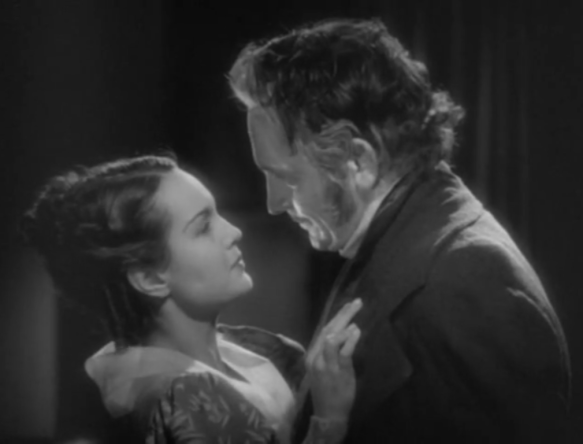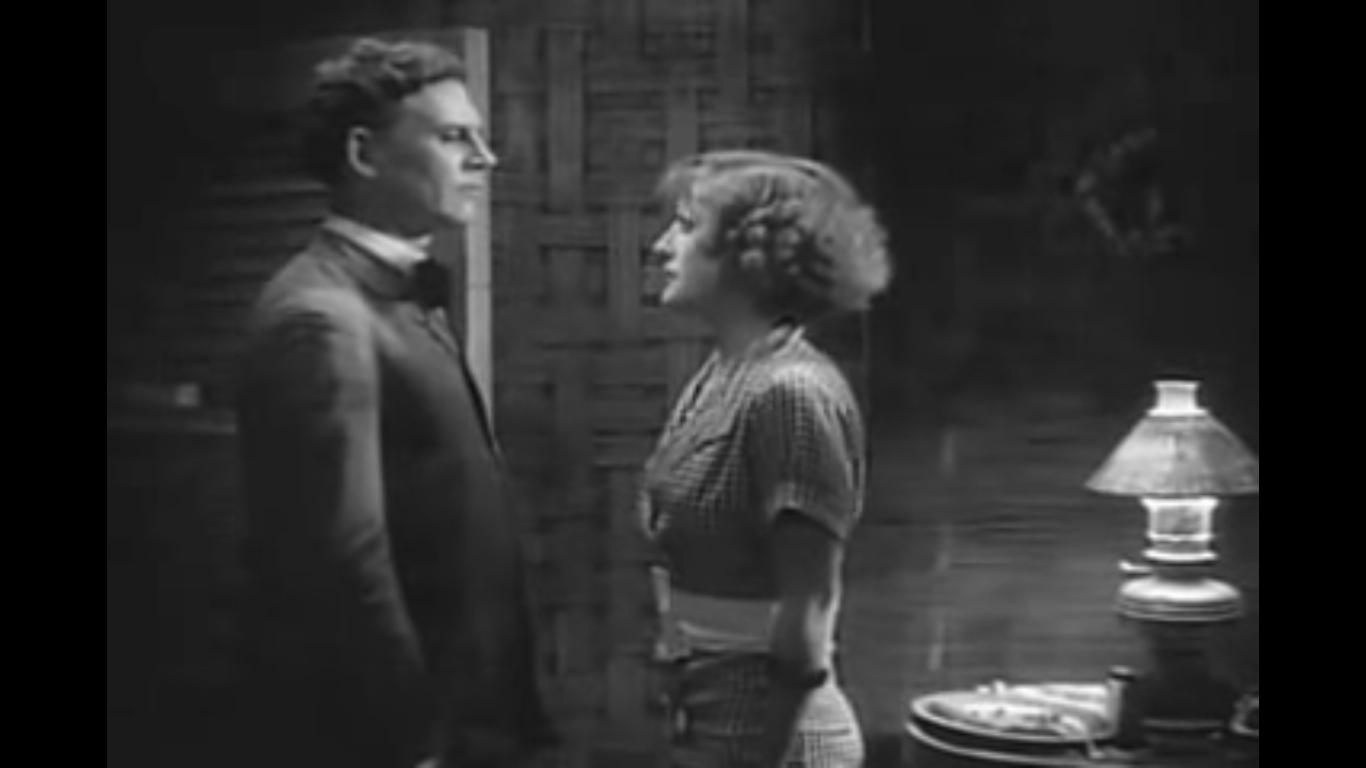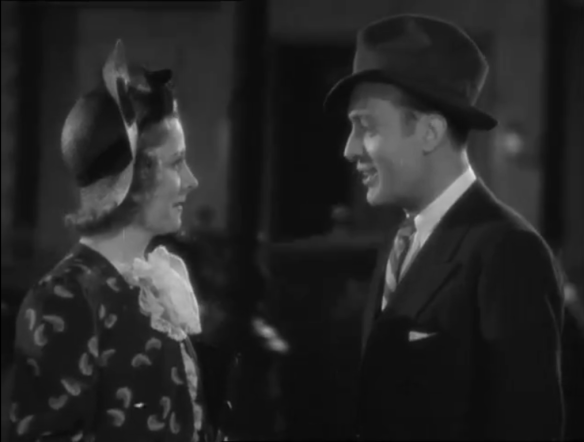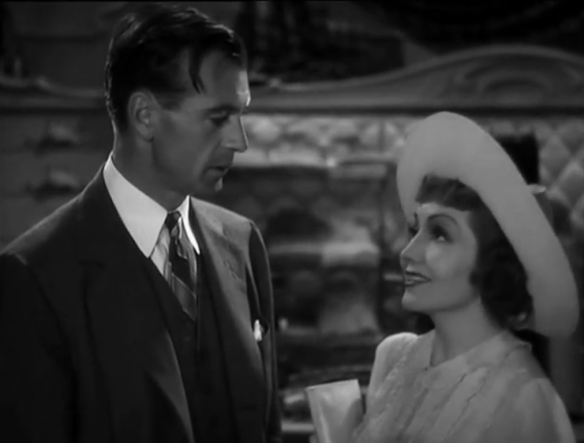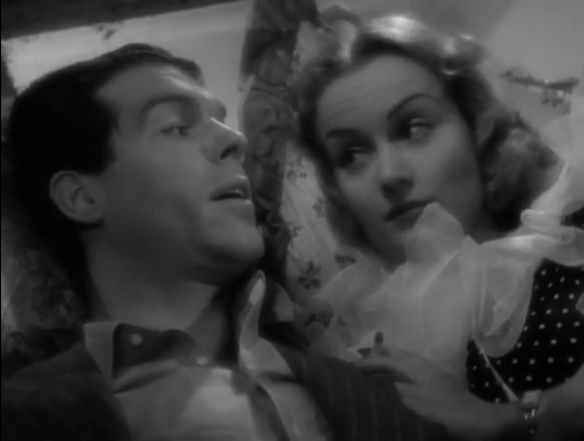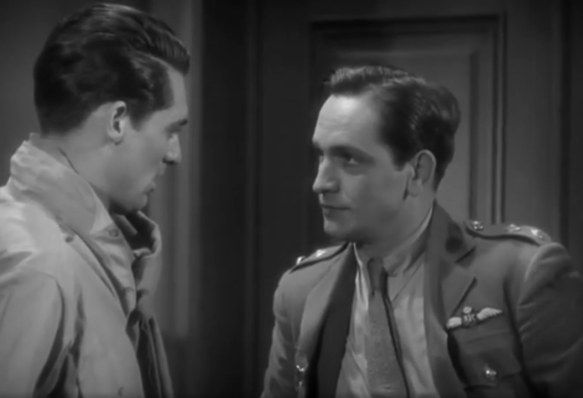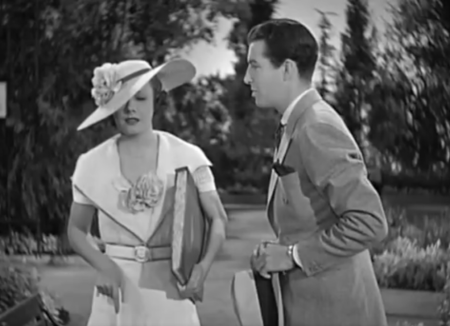
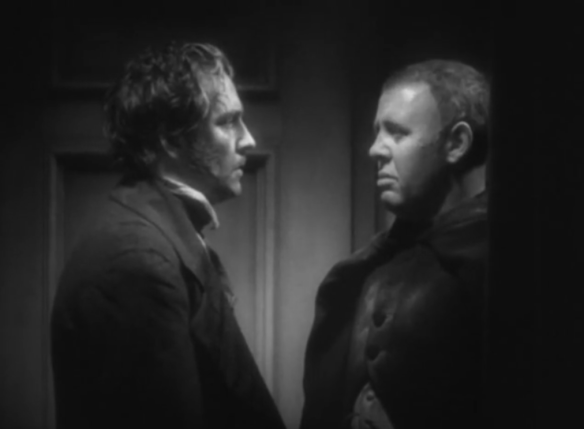
Rain (1932): Joan Crawford and Walter Huston

Rain finds its origins in a short story by W. Somerset Maugham, and it was also preceded by a picture starring Gloria Swanson titled Sadie Thompson. She is indeed the central character of this adaptation as well, although the title of this version focuses in on the dreary poeticism.

It’s true that a kind of rainy exoticism defines the entire mood of Lewis Milestone’s movie as this perpetual gloominess sets the tone for the story at stake. A few years before Safe in Hell, we have another picture set on an island. This one is named Pago Pago, and it serves as a weigh station for passengers during a cholera scare.

Among those laid up are Mr. and Mrs. Alfred Davidson (Walter Huston and Beulah Bondi), a pair of religious reformers, who are intent on completing their voyage so they might begin administering to the nonbelievers. They are reformers who’ll gladly break your back to save your soul.

The good, innocuous Doctor MacPhail (Matt Moore) feels like an author’s creation; he’s a character we can identify with as an audience — a stand-in of sorts — who ably fits into the company of respectable folks but remains an impartial observer.

Then, you have a much different ilk, part of the earthier, more salacious crowd, headed up by the island’s local proprietor (Guy Kibbee) and made a lot more enticing by the one and only Sadie Thompson (Joan Crawford). With her checkered dress and made-up eyes, she falls in with the soldier boys on leave, introduced in saucy fashion through a mixture of appendages and hot jazz. In her own estimation, some lively music and a nip of liquor are what rainy days are for.

The movie itself can easily be summed up by a clash of moral prerogatives; it becomes plainly apparent who’s on each side. Kibbee’s character is especially wary of their latest visitors because it’s crusaders like them who readily sully the last remnants of earthly paradise. This is his picture of Eden — freedom to do whatever he sees fit — although it’s quite different than their conception of it. He’s got a gripe with their kind because they represent the age and the newest commandment, “thou shall not enjoy life.”

Throughout the movie, Milestone’s whips and whirls make the film feel all the more alive even as it rages to burst out of the restraint and aestheticism of its more pious players. This obvious motion accentuates what otherwise feels a bit like an island chamber piece.

Because it’s built completely out of the performances. First, it’s Mrs. Davenport (Bondi) denouncing the lady of loose morals dancing on the Lord’s Day — the sabbath — and she wants her husband to put the fear of God into the tramp.

Soon enough, he does just that, confronting Sadie with the fervent belief that it is up to him to save her incorrigible soul. Though he admittedly burns with conviction, it’s his overall demeanor that’s off-putting to the likes of her. She doesn’t take kindly to his Pharisaic demeanor.

Their words, thoughts, and deeds are worlds apart as exemplified in this more understated confrontation. We see them for who they are fundamentally at the core of their beings. He talks of presenting her “a gift.” He’s speaking of eternal things — salvation as Christians think of it — this is her chance to be saved. Meanwhile, she’s thinking about life on this terrestrial rock. Where people get knocked down and beaten up and the like. It’s in this world where she reckons to make out and survive, living her happy-go-lucky kind of life day-to-day.

More than rejecting his religiosity, she rejects his self-righteousness even as his pronouncements come off almost incomprehensible to her. What she does understand is his dismissiveness, his callousness toward her precarious station in life. The doctor, standing by the wayside for most of the picture, finally lets his companion know he thinks the man harsh and tyrannical,  although Davenport affirms his heart bleeds for the poor wayward sinner.

The reformer evokes the Lord’s Prayer as Sadie rails into him with her own indignant tirade only for it to evaporate around her. It comes out of a place of fear and dejection. For all her outward confidence, she really doesn’t know what she’s doing. Shell-shocked piety is a strange garment for her to wear if altogether understandable. But others must judge the outcomes for themselves and the same goes for the denouement.

For all its provocative flaunting in the beginning, Rain relies on an ending of inference, happening between the lines. A lot is at play in the final moments on a subtextual level — be it latent desires or closeted hypocrisies. Instead of a hangman’s noose in a discarded field, it’s a cut throat on the shoreline, but the similarities are undeniable.

It sends shockwaves through the population even as it suggests the conflicted nature of humanity. As far as its impact on Sadie, it leaves her much where she began, though now at least she has a man (William Gargan) to take her by the arm.

Rain was not much of a box office attraction in its day and part of this might have to do with the brazen ending. It’s not a straightforward picture, but like Safe in Hell, between loose morals and redemptive religiosity, the picture jockeys for an uneasy equilibrium. If nothing else, Joan Crawford and Walter Huston make it feel like a seismic battle that’s eye-catching in fits and starts.

3.5/5 Stars

Letty Lynton (1932): A Hidden Classic

Letty Lynton is one of those hidden movies cinephiles look to unearth from the sands of time. In this case, it’s namely because it’s notoriously difficult to view after a court case in 1936 deemed it was too close in plot to the play Unfaithful Woman, which, coincidentally was made into a later movie with Hedy Lamarr.

It’s rather astounding, as we near a century later, the film is still fairly hard to come by though not entirely obsolete. Could it be that this plays mostly into its mystique as a forgotten classic? Partially, yes. But it’s yet another stellar showcase for Joan Crawford’s unparalleled stardom in the 1930s even as it highlights the perils and burden of womanhood.

Letty (Crawford) is a gorgeous socialite who has all the men fawning over her and why not? She’s Joan Crawford draped in luxuriant furs and the immaculate creations of Adrian. However, one of her suitors, Emille (Nils Aster) is particularly persistent. She’s made a habit of leaving him only to return for more passionate romance. This time she’s ready to end it for good.

It’s not healthy for her and so she and her faithful maid prepare to run to another far-off destination by ocean liner never to be seen by Emille again. This is of primary concern. It just happens she is birthed across from Robert Montgomery and you hardly have to tell him twice when he’s caught a pretty girl in his sights. He makes a note of it until the right moment…

Still, two can play the game. They’re both intent on making each other’s acquaintance, and so it is arranged. They spend a jaunty evening cavorting until the wee hours of the morning, being chased around the decks by the crew of sailors washing it down for the night. Their rapport builds fast and easily.

Crawford is a modern girl with her puffed sleeves as decadent as can be. It seems obvious that you need a certain amount of confidence or, dare I say, audacity, to pull off such a look, and Crawford was nothing if not audacious. It helps to cement her legacy in the annals of cinematic fashion.

Christmas comes with streamers and ice sculptures. Despite the gaiety, she has a few bittersweet tears, and he does everything to cheer her up. There they are in her cabin, their feet kicked up on the furniture, and he proposes marriage with a glance as he holds a lit cigarette.

Letty is incredulous, even mesmerized by him. He’s a different sort of man. In a world swimming with men all clawing to get their hands on her, Jerry’s not like that at all. He never tries to kiss her or hold her hand or any of that. He’s not looking to get fresh because his character is genuine.

It wins her over. And then we remember it’s still Christmas, and they are deliriously happy banging on every cabin door as they stroll down the corridor madly in love and rousing the deck with some late-night yuletide cheer. For the first time in her life, she’s going straight and sincere, and Letty’s never felt better.

But it’s inevitable. The boat docks and waiting on the other side stands Emille. It’s wishful thinking to assume he would leave her be. She’s faced with a problem: there are two men in her life. One she doesn’t want to lose and the other she wants desperately to get rid of.

Not taking “no” for an answer, Emille pulls her in his arms and kisses her — trying to seduce her — and she rears back to slap him.”I’ve never had anything in my life I’ve loathed like that,” she says.

In a world hopefully far more aware of the burden of proof thrust upon women, Letty Lynton hardly feels dated. The import of its core drama is here with us today, despite the obvious notes of theatricality. It’s all spelled out through the crazed expression on Crawford’s face, a mix of relish and abject horror at what she’s witnessing.

Because she was prepared to end her life with poison rather than be forced to be blackmailed by her former lover, but she never has the chance to drink her medicine. In a development analogous to future dramas like Blue Gardenia, she becomes both a victim and the accused simultaneously.

Again, she looks to delay the repercussions and kick the can down the line. There’s the obligatory meeting with Jerry’s parents. They are decent, down-to-earth folks who welcome her in, thankful their son has settled on such a fine woman.

Imagine the embarrassment when a police detective shows up to take Letty in for questioning as she is closely implicated in a crime. Her fiancé stays by her side as they go before the judge (Lewis Stone) in the privacy of his office as he deliberates on whether or not to bring the case to court. It doesn’t look good.

In her state of hopeless helplessness, Letty receives some steadfast aid from all sides. The ending is too pat — with looming consequences of perjury — but they insinuate the theme of the movie: happiness is tenable when we surround ourselves with loved ones who will loyally intercede on our behalf. So often relationships are tossed by the waves or racked with tension. What a wonderful thing it is to find the kind of renewed stability Letty installs in her own life.

The movie employs a bit of a cornball ending, but between the amiable chemistry of Montgomery and Crawford, and the redemptive arc, for such a hard-sought picture, Letty Lynton is a worthwhile film to seek out.

3.5/5 Stars

When Tomorrow Comes (1939) and Romantic Shelter From The Storm

Screenshot 2020-03-22 at 61849 PM

Waitresses bustle about on their beats passing along the news like busy bees: eight o’clock tonight unity hall! It caused quite a stir in the ranks and the girls are currently walking on eggshells afraid to get canned. A few of the gals are especially jumpy including poor Lulu who drops a whole tray laden with plates.

So when a Frenchmen sits down during the dinner rush it’s how do you say, disconcerting. He’s not rude by any means. His manners are fine. But he’s a foreigner and he asks for things outside of her comfort zone like bouillabaisse for instance (I had to look up the spelling just now). For instance, we can’t hold it against her when she says “To me all foreigners are spies until I learn different.”

The prevailing thought is he might be with the management to check them out. So they put their most level-headed colleague on the assignment. It’s none other than Irene Dunne. He has no malicious intentions at all. In fact, it’s quite the contrary. After making the acquaintance of such a charming lady, he wishes to see her again.

Irene Dunne feels like the original Norma Rae. She has spirit — the kind of spirit that stands up against injustice and will not allow others to be bullied into submission. But this is grounded by a charitable heart and a sense of decency. It’s what makes people get up and take note within the clamor. Because there’s genuine substance to her words. We believe them to be true.

Amid the host of admirers is one very special one. He’s attended in hopes of seeing her, a man oozing with names (and the Boyer charm). What might have been a chance encounter in real-life, in turn breaths life into an entire movie romance. The humid streets of New York don’t exactly scream love nest, but the man is so taken with his company, he doesn’t mind if he has to meet half the city just to be with her.

There are other interludes in this budding relationship, though we might as well focus on the focal point. It comes during the onslaught of a tropical storm. The man, she now learns is the famed pianist, and he welcomes her into his home to get out of the elements. Far from feeling surreptitious, it seems like an oasis from the world outside.

She walks around one of the bedrooms scanning around, leafing through an album of pictures, trying to glean more about the man downstairs. What follows is an enchanting zoom mimicking Dunne’s gaze as she returns from freshening up. She’s brought down the stairs by the sound of his playing. There’s a forceful authority to it to, matching the gale raging outside the windows. On her face, we see the love brooding right in front of us.

The dramatic situation is made plain by the inclement weather (that’s an understatement) and falling trees overhead. Blaring coast guard bullhorns warn of waters rising. They must find high ground.

Screenshot 2020-03-22 at 65009 PM

Rest assured, this is hardly a survival film. The scenario itself is ripe with more intimate pleasures as Helen and Philip seek asylum in a church during the brunt of the storm. After the crowded, liveliness of the city, the actors are contented in one another’s company, and it provides an understated satisfaction.

They light candles, she raises a prayer to the unnamed Providence for getting them to safety. He has the subtle tact to take her up into the balcony to the organ as the water starts to flood inside. It’s a thoughtful act, and they continue their genial conversation unencumbered. As she sits, listening to him quietly play “Fur Elise,” she thanks him. Because she saw what he did too.

What a lovely digression it is for those willing to partake of the solace. The gentle hospitality of the minister and church organist is yet another touch of decency in a picture ripe with such encounters.

If this sounds blase, rest assured, it plays to the rhythms we might attribute to a Stahl melodrama. They somehow bend away from the brunt of drama and pierce our hearts far deeper. Like Tay Garnett’s One Way Passage, there’s the sense of a destined love of the highest most ethereal kind — a love that can never be — it can never fully acted upon.

Because if it’s not evident already, they are people of principle and conscience. It goes unspoken for so long — the impediment between then. But she knows. He is not free. He is married to someone else, albeit loosely, as Mrs. Chagal (Barbara O’Neil) is a sick woman.

When Helen’s roommate notes it looks like she’s been away for 20 years like Rip Van Winkle upon her return, there’s some truth in the words. Even an evening can feel like a lifetime under the circumstances.

She eventually meets his catatonic wife and lovely mother-in-law. There’s no malice or ill-will, only a bit of sadness on her part to see what his life really is. She feels obligated to leave him behind — to not make this any more difficult for either of them. So she goes back to her picketing and wins the victory she helped champion. The film has gone too far though. It is no longer about unions or these type of ideals. At the very least it is about romantic ones.

There is another scene where she answers a caller at the door. It’s the wife, out on the street, as if she’s perfectly fine, and she might very well be. The scene has been written many times before: A wife confronts the other woman. We’ve seen the scene play out in so many stories it’s mind-boggling. Here it’s different. You almost don’t realize what is upon you.

There is a curious energy about it. Quieter and yet not unsure. Forthright and devastating in its very simplicity. What could be incisive and vindictive feels blunted and equally delicate in the hands of Stahl, and I believe this is quite purposeful. The main characters pull back, compelled by their sense of good and decent feelings. The “villain” in actuality is a helpless victim.

In another film the ending of When Tomorrow Comes would feel uncomfortably abrupt. Here it somehow works for me and not because the swelling music is cued. It’s because we know there is a foregone finality. It might not be today or tomorrow exactly, but it will have to end, going their separate ways and holding onto the love they had and what could have been. That is all.

Because unrequited love is not the most tragic form; it is the uninitiated followed closely by the unfulfilled romances that sear the most. If you are inclined, this is a tender drama more than capable of inducing a few misty eyes. I’ll never get over the grace of Irene Dunne, the adroitness of her reactions, touching on each and every emotion. Boyer has never been more gentlemanly. Together they feel sublime.

If my praise sounds too effusive, I’ll admit I haven’t seen Love Affair for some time. Have I simply forgotten what their chemistry was like? I’d like to believe Stahl brings something of his own to the material as well.

3.5/5 Stars

Bluebeard’s Eighth Wife (1938): Coop and Colbert

Screenshot 2020-03-21 at 31856 PM

The whole glorious entangled mess of the story feels like an obvious antecedent to Billy Wilder’s Love in the Afternoon (1957), which is one of his lesser films (even with the redeeming presence of both Hepburn and Chevalier). It seems like a fairly obvious observation to make because Wilder deeply admired  Ernst Lubitsch. Love in The Afternoon was an ode to his hero. Although it didn’t quite come off.

I have similar feelings about the screwball comedy Bluebeard’s Eighth Wife (1938). It doesn’t quite gel. But first let’s turn our attention to the illustrious opening gambit which, like many of the great Lubitsch beginnings, is too exquisite to pass up as the dramatic situation is brought to the fore.

Gary Cooper staves off the sales floor spiel of the pertinacious shopkeeper with a touch of Parisian charm. All he wants are pajama tops. No bottoms. But in France, this simply is not done. It’s unheard of. The chain reaction is set off from clerk to head clerk — rushing up the stairs to the manager, regional manager…all the way up the president! In a moment of incredulity, the disgruntled fellow rushes out of bed at the words. He yells, “Communism!” only to reveal he has no bottoms. And we’re hoodwinked from the outset as only Lubitsch could do.

It all amounts to a national calamity. You can just imagine the papers printing up a nice spread on the scandal. But none of this happens thanks to a most propitious solution in the form of a woman; she only requires bottoms for her man. If it’s not apparent already, Billy Wilder and Charles Brackett’s script might as well have written the book on the rom-com meet-cute.

They’ve piqued our interest and pricked up our ears. If nothing else, thanks to some talk of “Czechoslovakia” in the dark. Far from being risque, it’s supposed to be a handy antidote to insomnia.  The man is obliged to the woman, and they go their separate ways.

The story too moves on from a department store to a hotel hallway where Gary Cooper is still being hustled and harried, this time by none other than the perennial Classic Hollywood hotel clerk Franklin Pangborn.

Better still is Edward Everett Horton, the Marquis de Loiselle, a man squatting in the hotel with rent backdated for months. He’s trying to pawn off anything he can to anyone who will bite including Mr. Brandon (Cooper). He’s also connected with the same pair of PJs in another winking Lubitsch touch before the conversation suddenly switches to bathtubs.

If you want to get technical, the pajamas spell it out for him. It’s the reason why he’ll buy the man’s bathtub, already preemptively planning a honeymoon in Czechoslovakia. It’s Lubitsch shorthand for wedding bells. You see, Coop is intent with getting together with Claudette if at all possible, and it is. She’s the marquis’s daughter.

These elements are wonderfully conceived and textbook Lubitsch execution making the most of the script. However, I failed to feel the same way about the entire movie. If you’ll permit me a digression, I recently saw Paris When it Sizzles and there’s no doubt Lubitsch’s film is head and shoulders above the later picture — more lithe and clever at any rate — but there is the same problem at its core.

It ‘s almost counterintuitive to acknowledge this. The premise in each case feels almost too inventive for the story’s own good. However, it’s rather like we are following the mechanisms of a clever bit of story structure instead of really getting to enjoy the out-and-out thrills of romance, be they comedic or overly dramatic.

We never get past the stage of logline, hook, or gimmick into truly uncharted territory where the two characters are allowed space to breathe and do things that feel, well, natural.

The remaining elements are intriguing enough. She finds out he’s been married so often. Thus, Nicole’s ready to call the whole thing off. Instead, she decides to make him suffer. No divorce, just prolonged separation. It galls him to be so close to his wife and yet so far. He mounts an offensive inspired by Shakespeare.

What follows is a barrage of slaps, spankings, and iodine for bite marks. Colbert is able to out duel him with her onion breath — his fatal flaw is that he positively abhors the miserable vegetable. It’s all potentially brilliant stuff and a lot of it truly diverting with David Niven and a private investigator thrown into the mix. However, the pieces somehow don’t fit together in a manner constituting a decisive story, beyond some hilarious premises and snappy dialogue. Rest assured the film has both.

If we’re able to consider where it goes wrong, we can look to Gary Cooper and Claudette Colbert sharing the screen together. There’s no clear antagonism between them per se. Instead of antipathy, they have a kind of anti-chemistry. That is, they’re meant to be opposites. But there must be a sneaking suspicion on the part of the audience that they do really have feelings for one another. At least, this is what all the great screwball comedies of remarriage banked on.

Coop and Colbert never manage the same kind of underlying inertia. I never feel like I’m sitting back and having a grand ol’ time gallivanting through escapades with them. In other words, it’s not quite screwball. That was never the Lubitsch calling card. That’s not what his Touch is about.

Admittedly, I had a similar issue with Design for Living (1933) a film that was quite good on paper (and even in technical conception. The acting talents are to die for. The director one of the greats of visually intuitive comedy. Here we even have a script from Billy Wilder and Charles Brackett.  It all comes to naught if the parts don’t completely mesh.

One idea I would like to court has to do with the point of view of the story. Obviously, Gary Cooper’s our lead, and he’s far from a virtuoso comedic wit. He is a movie star. Still, what is the essence of the story?

Is it about a woman winning her man over under the most absurd circumstances? The Lady Eve did that quite well: Barbara Stanwyck taking in Henry Fonda. But that will never do with Coop (Then, again there is Ball of Fire). He began as our focal point, and he’s the main focus until the end. Even with a straitjacket gag, he gets the final kiss.

Really this should be Colbert’s movie to win over, where we get to cheer her on and relish her amorous conniving. Heaven forbid our leading man be upstaged (Then, again there is Midnight). Instead, Claudette felt like the enemy, a bit annoying, and because Gary’s strung out a laundry list of wives and meets everyone with a scowl and a brusque dismissal, there’s not much to like about him either.

Maybe the film’s take is too modern or my sensibilities not modern enough, but I couldn’t help feeling letdown. I’m not sure if doing a more thorough anatomy of the screenplay will change this, and I’m okay with that. It’s only a shame I don’t like this movie more. I wanted to. At least I know Gary and Claudette won’t hold it against me.

3/5 Stars

Hands Across The Table (1935): MacMurray and Lombard

Screenshot 2020-03-21 at 72315 AM

Regi Allen (the inimitable Carole Lombard) is a manicurist schlubbing along, working away at people’s cuticles, and jamming away on the subway two times a day. She’s looking for a major catch to grab hold of. Ralph Bellamy is a charming man with money, albeit resigned to a wheelchair.

This could be the perfect start of a rom-com right here. However, in the year 1935, the thought of such a romantic “couple” might have been too startling for conventional Hollywood hegemony. There must be another, and he’s soon introduced.

They meet as he plays indoor hopscotch like a weirdo right outside Mr. Macklyn’s apartment. The face belongs to the most boyish-looking Fred MacMurray I have ever seen. Because again, if you’re doing the math it’s 1935; Disney professorship and My Three Sons fatherhood would be decades in the making.

For the sake of this story, it’s fortuitous he too is another affluent moneybags or at the very least his family name has enough numerals after it to suggest he is a long-time member of the “vieux riche.”

Being an unabashed gold digger, she looks to seek him out even if he is a bit on the odd side. What matters to her is the bottom line. Namely, money. Of course, the perceptive viewer might have already guessed something is amiss here somewhere. There must be a catch or a gag or a complication of some sort.

To put it bluntly, he’s as much of a high roller as she is. Because The Crash conveniently took all his family’s fortunes in its wake. He now might as well be a member of the “new poor” though he still spends money like it grows on trees. To put a positive spin on it, he is radically generous with his capital.

They have a formal dinner date with an entree of the hiccups and onion soup. And their shenanigans continue even as she begrudgingly allows her new confidante to crash on her couch.

Fred is game now because they are actually quite alike — birds of a feather you might say. He does his most uncomfortable impression of a Japanese manservant as he becomes Ms. Allen’s live-in cook trying rather unsuccessfully to whip up dinner.

Imagine my surprise when William Demarest shows up behind the door as a new suitor for Regi. Ted has a ball of a time masquerading as her demonstrative husband scaring off the hapless chap from the adjoining room. Surely neither knew they would be reunited one day on the small screen. It’s a coincidental piece of happenstance only available in hindsight.

In turn, he tells Regi he’s supposed to be in Bermuda by now with his fiancee — an heiress of a pineapple empire — so they pay her a giggly prank call long distance. The way Lombard and MacMurray warm to one another is in one sense lovely but also a bit of a disappointment.

The best sorts of screwball, are the fall apart come back together passionately type of rom-coms involving red hot tension. All the elements are here, even the romantic foils, but for whatever reason, because the characters are so charming — no fault of their own I might add — it winds up being a lightweight iteration of the genre.

It’s funny in starts and spurts but never to the point of fever pitch or raucous absurdity. It’s never really prepared to go the extra mile off the deep end beyond hopscotch, hiccups, and heat lamps. Again, it’s a minor shame, but you also can’t take away from Lombard and MacMurray.

If you’re already a fan, it’s a delightful trifle courtesy of Mitchell Leisen who’s skill with this kind of material is often underrated. For their part, the Lombard-MacMurray partnership birthed three more pictures in rapid succession to meet the public demand.

If you’re like me, you pity Ralph Bellamy as he graciously contents himself playing the matchmaker for the two lovebirds running off into the street looking for the coin they flipped. Heads means they’ll get married. Tails they go out to lunch. The giddy couple instigates a traffic jam just to find out and wouldn’t you know it, the coin stands on end in a manhole cover. Ah, love. How sweet it is.

3.5/5 Stars

The Eagle and The Hawk (1933): March The WWI Flying Ace

Screenshot 2020-03-20 at 80407 PM

There are two elements in the opening of The Eagle and The Hawk that might catch some viewers off guard. First, is the matter of a plane landing upside down. Second, being the fact the pilot is an uncharacteristically abrasive Cary Grant. He’s still playing support to our true lead Fredric March.

It’s alright to admit the shoe never quite fits and, thankfully, Grant was not forever relegated to such unseemingly roles again (well, there is Suspicion or Notorious). Regardless, in this WWI picture, a group of American aviators ship out from London to give their British allies a lift in France.

New forms of technology like aeroplanes still feel a bit rudimentary, yet to be time-tested, and therefore they carry with them a bit more danger. They must take recon photos flying close to the ground and often engage the enemy in aerial combat. The footage of the dogfights is lively if equally rudimentary.

It’s Grant’s Lt. Crocker who has aspirations to be a pilot, not an observer — the less glamorous posts going to those who take pictures and gun. Cary’s got a chip on his shoulder, and it’s turned him sour. Jack Oakie is the complete opposite — chipper, well-liked by all, and conveniently supplying comic relief.

However, it is the final star, the leading man, Fredric March who stands head and shoulders above the rest, at least on this occasion. He goes through a startling transformation over time. He soon learns the hard lesson. For every two kills of a jubilant Jerry Young (March), there’s the searing reality of a comrade dead.

We are instantly reminded war never allows a man to rest on his laurels before inundating them with the sheer callousness of such a conflict. It shows no favoritism. Officers or enlisted men alike. Doughboys or flyboys. It makes no difference. Everyone is susceptible.

In a matter of minutes, the weight of war is made obvious. It happens between a letter written to a dead man’s spouse and a blackboard with names constantly being erased and added.  Beyond being indiscriminate, war also waits for no man.

As time progresses, the dogfight sequences maintain quite the impressive pace for their day and age. The sequences use the resources at their disposable and varied shots to develop something fairly immersive beyond mere back-projection fillers.

Finally getting his first go, Grant shoots down an unarmed parachuter with great relish, his first day on the job, only to kill the mood after hours. They say he’s a “dirty deuce,” but perhaps he’s the only realist around. He treats it like war. They treat it like an exhibition in some contrived form of chivalry.

There are rules to war and gentleman’s agreements to be abided by on one side and then the “killed or be killed” mentality of Grant. And yet even as March remains one of the righteous ones, he starts medicating with alcohol to get over what he’s been privy to.

Soon he can’t get over the insanity or reconcile with the consequences set before them. They are bestowed medals by the French military with the rain pouring down — it’s a wet affair — and he’s still soused. 

A new batch of fresh-faced youngsters come to replace those who have already expired. He’s enlisted to speak to the new recruits, sharing a message for the sake of moral, though it’s evident he barely believes what he’s spewing. Because some of them will die before even getting to the front. What’s the purpose of it all? So the folks back home might cling to some misguided patriotic fervor?

The night terrors begin — Jerry’s mind now filled with burning, blood, and snipers at night. A change of scenery is suggested and so he’s given leave.  But in the households, the conversations are boorish and needlessly taken with the romanticism of war and glory.

Here are people drunk on the same wine. Men laugh about the enemy going down in flames. Curious young boys ask questions about what it’s like to meet the enemy with hopes to be up there one day. No one seems to understand, and how can they. They haven’t been there.

Watching from a distance, there is at last one pair of perceptive eyes. They belong, of course, to Carole Lombard. She slides her way into Jerry’s cab as he tries to leave the idle chatter behind. Instead, they find a quiet park, out of the way, to share some champagne and engage in genuine conversation.

She has only a momentary part — it really is a glorified cameo if we should call it that — and this is a movie that’s already so succinct. Still, it’s a memorable spot, and she offers a sympathetic countenance in a world all but lacking such consideration. It makes her all the more attractive.

Still, Jerry must go back to the lines and maintain the burden of being a shining example for others. After all, he is the fitting emblem of what a military hero should be. Fearless in the face of the enemy. All but indestructible with a stirling flying record.

However, we become jaded with the same persistent cynicism of Jerry pulling him from the airs above back into the parties and routines down below at the base. He can’t even manage to muster any kind of good-natured sentiment in such a jocund company.

All he sees are the chunks of flesh and bone on his chest in the form of medals. And all he can think about are the boys who have died either by his hands or at the hands of others. He’s gotten his medals, gained hero status and adulation from his peers, for killing kids. What’s worse, few seem to acknowledge him, going on their merry way. Surely he’s merely drunk. He’ll get over it in the morning. Except he doesn’t.

The film’s ending is a brutal shock to the system, but it settles into an honorable arc. If anyone was worried, Cary Grant is redeemed in the final moments preparing to soar off toward bigger and better successes.

What I’m most impressed with is how The Eagle and The Hawk does such a phenomenal job distilling some of the most pressing themes of war in its harshest and most bitter realities in such a meager allotment of time. It’s like All Quiet on the Western Front lite, and I mean this as the most sincere of compliments. It adeptly hones in on the essential elements of the prior film as another stark, unfaltering statement exploring human conflict on this seismic scale.

It comes not through heedless idealism but a sobering, unblinking examination of what war really is. Any pretense is stripped away in a matter of minutes while March gives one of the most piercing performances, arguably, of his entire career. If you haven’t already, go seek it out. My hope is that you’ll be glad you did.

4/5 Stars

Magnificent Obsession (1935): Stahl Vs. Sirk Again

Screenshot 2020-01-12 at 85221 PM.png

As I continue my mini odyssey considering the differences between the melodrama of John M. Stahl and Douglas Sirk, one of the finest exhibit pieces is an early scene in Magnificent Obsession.

The beloved Dr. Hudson has died because the life-saving pulmotor he needed was being used on someone else. An irresponsible playboy, named Bob Merrick, is saved in his place, having capsized his boat during one of his typically drunken evenings. It just doesn’t seem fair. One man so good is lost and the man who probably doesn’t deserve to live regains his life. It’s a rather blatant allegory of Christian grace and it makes sense, after all, Magnificent Obssession was supposedly penned by a minister: Lloyd C. Douglas.

Here is my long-winded point. This plays as a critical scene in Sirk’s picture. We see Merrick on the water and we see it happen right in front of us. However, in Stahl’s rendition, it’s all over and done with after a few throway lines of expositional dialogue between doctors. It’s as if he’s purposefully shying away from the drama. It’s this quality that might save Magnificent Obsession from being a total bore.

I never gave much thought to it before, but Robert Taylor makes a modest approximation of Rock Hudson a few decades earlier. One could say Rock’s career was far more successful and well-remembered, but they both manage the smart-aleck ne’er do well quite easily. In both cases, this was one of the early movies helping to put them in the public eye as legitimate star power.

Regardless, a curious dichotomy is purposefully set up by the movie, with one man unseen a beloved martyr, and another one alive, the incorrigible playboy. Dr. Hudson’s goodness hangs over Merrick’s life — haunting him in a sense — making him feel even worse about who he is as a person.

Soon he’s struggling with self-loathing. Although it feels more complicated than that because he’s still overtly narcissistic; deep down he knows everyone dislikes him vehemently.

It becomes a movie of who Merrick falls into company with after sneaking out of the hospital against protocol. First, it’s Masterson (Charles Butterworth) who might as well be his comic sidekick unwittingly carried away by all his mischief.

Next, it’s Mrs. Hudson (Irene Dunne) the beautiful young wife of the man he indirectly killed. When he actually finds out who she is he feels even more ashamed to show his face in front of her. He just wants to get drunk and try to forget.

Then, by some curious bit of Providence, he winds up at the home of a stonecutter. The man happened to be a close friend of Dr. Hudson. Similar to Sirk’s rendition, he imparts the wisdom the good doctor provided him. He was taught how to make contact with a source of infinite power. If you think this sounds like a seance and pseudo-science, you’re not alone. It feels like the strangest introduction of religion into the storyline imaginable with electrical energy acting as some mystical metaphor for God.

This layman makes another fascinating statement that might not sound all that foreign to us today. He’s not interested in religion but interested in Jesus — the God-man — who was so successful in the science of generating human power. It’s as if he was a mere humanitarian or an entrepreneur in human capital.

I always have trouble dealing with these kinds of expressions in relation to the Christian doctrinal claims. It’s not that it’s simplistic; rather it seems to totally disregard some of the things this God-man purportedly said. They feel radical, unsettling, incisive at times — surely not warm and fuzzy enough for a movie like this.

Still, this pseudo-Gospel becomes a journey to find people who need help and then giving it to them. But, of course, there’s a catch. You must give to others in absolute secrecy — it’s a scrooge-like endeavor and there’s some truth in this kind of altruism, still, it feels laughable even folly to call it a theory to be followed.

It’s a kind of pay-your-way to the good person’s club, whether you believe in the afterlife or just in being a good person in a legalistic sense. Either way, surely we can agree these strict parameters seem suspect.

Regardless, Merrick somehow gets swept up by them as he vows to put this “theory” into practice. He’s done so much to injure and totally destroy Helen Hudson’s life through his own selfish negligence.

However, in a strange way, it’s as if he’s in pursuit of his dead rival’s wife. Although it might be totally out of the goodness of a changed heart, he looks to reconnect with her, and give her life new joy. It all feels rather twee in comparison to Sirk’s update, which at least swells with the kind of grandiloquence which seems, at the very least, self-aware.

As much as I admire Irene Dunne as an unsung and ever adaptable talent and my mild affinity for Robert Taylor has gotten a boost in recent days, Magnificent Obsession is rather hard to take. It’s an outlandish drama full to the brim with preposterousness that doesn’t even attempt to court any semblance of reality. Similarly, its religiosity, romance, and just about everything else feels sugar-coated and simplified. Somehow it hasn’t maintained its flavor as well as some of Stahl’s earlier efforts.

3/5 Stars

Imitation of Life (1934): Stahl Vs. Sirk

Screenshot 2020-01-12 at 84419 AM.png

The opening shot of Imitation of Life is memorable for its sheer novelty and the very simplicity of the space. It’s not an establishing shot of a place or a person. Instead, it’s of a rubber duck bobbing in the bathwater as a little girl whines about wanting her “Quack Quack” off-screen.

This is how we’re introduced to single mother Bea Pullman (Claudette Colbert) and her daughter. A moment later, an African-American woman, Delilah Johnson (Louise Beavers) shows up on her doorstep having mixed up an address (in her defense I’ve mixed up some avenues too).

In a matter of minutes, they’ve decided to join forces. They both lack money and resources, but they gladly make do with what they have, happy to share one another’s company as they raise their daughters together.

Bea starts setting up a shop on the boardwalk armed by Delilah’s secret pancake recipe and her own ambition. One of the movie’s more troubling caveats is how Delilah has little ambition in life and proves herself to be perfectly content looking after Bea’s home as her friend gets all the credit for her family heirloom.

While Delilah remains content sinking into the periphery, with $19 to their names, Bea takes a risk on their venture. They have to rent out the space, get a fresh coat of paint up, and of course, you can’t have a restaurant without furnishings. She finagles her way into all sorts of deals and alliances — one of her newfound associates happens to be a typically jolly Alan Hale. However, it’s the nasal-voiced Ned Sparks who gives them the $100,000 idea: “box it.” Immediately their business takes off with a sustainable reach.

Auntie Delilah’s Pancake Shop is bustling with business. It has a certain antiquated charm to it. The image is a combination of Aunt Jemima and some of the more troubling images out of Jim Crow minstrel culture.

However, the most intriguing — and the most groundbreaking — aspect of Imitation of Life is how it grapples with questions of personal identity throughout its run. These are questions that still manage to challenge and perplex me to this day. My heart breaks for Peola. She is Delilah’s light-skinned daughter who is ashamed of both her race and her mother.

Even as Louise Beavers’s role is dubious at times, reminiscent of some of Hollywood’s worst portrayals, Fredi Washington represents the hardship for African-Americans trying to break out of the molds set out for them. There were rarely roles of strength for the likes of Josephine Baker, a Paul Robeson, a Lena Horne, or a Rex Ingram, parts that fully illuminated their talents.

As with the later adaptation, this becomes the most intriguing piece of commentary, particularly in this instance since Washington actually identified as black and was proud of her heritage never choosing to pass as white. Her real life played as the antithesis of her character even as it comments on the hallowed place being white had in American society in the 30s and beyond.

Their stake in the pancake game blows up and as the exulted mastermind, our heroine becomes the Claudette Colbert one might be more accustomed to, glamourous and good-humored as ever. Warren William makes his dashing entrance at the party, and they’re smitten at first sight. It’s a particularly amicable role for him beyond his typical hard-nosed Rockefellers, and he proves adept enough at the characterization even if it’s not too stretching.

The budding romance with the ichthyologist is amicable if the most humdrum part of the picture. As is the return of a precocious Jessie from school. She forms a crush on her mother’s beau and you can fill in the rest. More interesting still is Peola totally repudiating her mother and with it, her identity, foregoing a prestigious negro college by looking to pass as white and get work in everyday society.

These are the biggest issues on hand, and it’s all romance and family in line with much of Stahl’s melodrama. He is not Sirk after all. But what exactly does that mean? Because thanks to both Imitation of Life and then Magnificent Obsession, it feels like there’s a need to try and decipher the variations in John M. Stahl’s work compared to Douglas Sirk. If nothing else, it might help get him out of the other man’s shadow.

There are obvious distinct differences in content — Colbert’s pancakes instead of Turner’s acting — although many of the same narrative beats are present. Sirk obviously eclipses this drama through sheer decadence, color, and all manner of staging. He was the maestro of using near-trashy spectacle to subvert his material, making it burst with new ironies. However, his picture also feels updated to somehow fit so distinctly into the civil rights conversation of the ’50s and ’60s.

Stahl’s earlier version is more sedate and straight while still being imbued with its own burgeoning power. We have to take it more sincerely at face value. So in a sense, for 1934, the story certainly pushes boundaries, and Stahl is capable of drawing out the subtleties with the typically raw candor we might attribute to many of his movies from the period.

Certainly, Louise Beavers’ funeral doesn’t have the color nor a Mahalia Jackson dirge, but somehow, again, it fits into the context of the surrounding scenes. There’s still indubitable pomp and circumstance to the solemn occasion. We feel this intuitively. We witness the casket being brought out of the church and black men in uniform, armed with sabers, guiding the procession.

This image alone plays interference against all the images of Stephin Fetchit, Willie Best, Hattie McDaniel, and even Louise Beavers propagating stereotypes of mindless, weak, subservient blacks. It gives off this innate amount of dignity.

After you’ve seen Sirk’s version, of course, it’s difficult to go back — it’s true Stahl’s version pales in comparison — and yet you could say this is almost by design. It’s as if his predilection is toward anticlimax or at the very least cushioning the blows of melodrama in an arena where Sirk would lay it on thick for all its worth.

Thus, we end not on the hard-hitting tears of a daughter but gay reminisces of “Quack Quack.” It’s like we watched two completely different stories: The white family and then the black family. Maybe that’s the point.

3.5/5 Stars

Waterloo Bridge (1931): Pre-Code Edition

Screenshot 2020-01-11 at 82932 AM.png

Many might best remember Vivien Leigh and Robert Taylor in the 1940 version of Waterloo Bridge. It’s immediately obvious this movie has a very different flavor from the outset. It’s an earthier more boisterous version of Waterloo Bridge before the Production Codes took their axes to the original material.

James Whale’s camera pans across a gay gang of chorus girls on the stage — they are alive and bursting with perky energy — putting on a show for their patrons. Behind the curtains and after-hours, the girls maintain the buzz as they chat in their skimpy Pre-Code attire. One of their ilk is Myra Deaville (Mae Clarke).

It’s delightful how the camera takes such a shine to our heroine though it’s so obvious to see she might play second or third fiddle to the band of big wigs and aristocrats in the world at-large. She really does feel like a nobody far away from home. Still, there’s something to be said for her way of life.

As is, London has a lovely artificiality that we can breathe in and still enjoy as the characters amble along the streets with car horns and horse carts to go with the post boxes and street lamps.

Likewise, the beats feel raw and unkempt in a way the 1940 remake would never have dared or been capable of to begin with. Somehow it takes on a grander more chaotic scale in the hands of James Whale. And yet the characters and vernacular are more casual even familiar.

Douglass Montgomery feels like an honest-to-goodness callow soldier boy. He doesn’t have the slightest sense of what he’s gotten himself into and with anything he does, there’s a latent fallibility you don’t get with Robert Taylor. He never feels endangered in the same way.

Likewise, Mae Clark is affecting yet generally capable of exuding an everyday ordinariness. We hardly remember her star compared to the likes of Vivien Leigh, who headlined one of the most grandiose, decadent epics of all time. Their trajectories and legacies could not be more disparate This is just the film to raise her reputation above one crackerjack scene playing opposite James Cagney and a Lemon.

She’s no star (the film coincidentally features a young Bette Davis), and the story seems to like it that way. Because both Clarke and Montgomery, by today’s standards, are hardly highly touted figures, but somehow they fit so genuinely here within the provided context.

It’s a youthful dynamic with a 19-year-old doughboy and the dance hall performer who’s been around. She also carries the forlorn look rather well even as Montgomery’s face is fresh and boyish.

They meet helping an old lady pick her potatoes off of Waterloo Bridge. It’s the same air raid from the earlier film with a certain frenzied uncertainty of war in the atmosphere. The gas runs out in her shabby apartment, and they talk to each other about their lives, mouths crammed with food.

It also cultivates a different dimension of ex-pats away from home. Because both Roy and Myra are born and bred Americans, and so there’s this inherent otherness they engender. It’s the type of visible difference that makes it all the more believable they would gravitate toward one another.

Furthermore, the film is not just consigned to the urban cityscapes but finds its way out into the countryside far from the signs of tumult and war. Because whereas the later version had the reverie of dance and “Auld Lang Syne,” this version needs its own escape valve, a respite before the final act’s guttural finale.

Here Myra is thrown in with Roy’s mother and an avuncular old step-father, hard of hearing and loving a good whiskey and soda. He’s a puttering scene-stealer — mostly because Bette Davis has nothing of import to do as an amiable sister. Her time would come in due time.

Meanwhile, the drama goes on behind the scenes as Myra is a woman of such genuine conscience — she admits she picked Roy up on Waterloo Bridge — she is no chorus girl. Though she could marry him, she chooses not to. She understands the mores of society and is willing to abide by them, even when it hurts.

You can call it the hooker with the heart of gold archetype to be sure, but what it really brings out is a culture so quick to label people as pariahs and outcasts — dirty and sinful folks not fit to be seen with the rest of God-fearing humanity. Then, behind closed doors, there’s gossip and what-have-you in the guise of propriety.

In the end, between passionate kisses, a crowded truck of onlookers shipping out to the front, and zeppelins raining down incendiaries, there’s not a moment to breathe before the curtain falls. This might be very well by design. Still, this movie zips along with a raw vitality worthy of consideration.

3.5/5 Stars

Theodora Goes Wild (1936): Irene Dunne The Comedienne

Screenshot 2020-01-04 at 80541 AM

The Lynfield Bugle, led by their fearless leader Jed Waterbury (Thomas Mitchell), keeps their nose to the proverbial grindstone printing the news as it happens in “The Biggest Little Town in Connecticut.”

Their latest act of rebellion constitutes printing a spread from the latest lurid bestseller from author Caroline Adams. It causes quite the to-do in such a proper, God-fearing community.

Because it’s true Lynfield has all the customary facets of a town its size, including emblematic moral watchdogs such as Rebecca Perry (Spring Byington), a key member in the Lynfield Literary Circle, the key force in swaying public opinion and consequently, keeping the town’s gossip in a state of constant flux. Rebecca just happens to be the most insufferable of them all.

With their mouths, they openly condemn Adam’s latest piece of titillating prose as they secretly relish its vivid detailings of passionate romance. One of their younger members, who sits zealously by, next to her two austere aunties (Elisabeth Risdon & Margaret McWade), is Theodora Lynn (Irene Dunne). She’s a devoted Sunday School teacher and plays the organ at church on a weekly basis.

Theodora also has a secret in the form of a pen name and a mendacious life as a writer, although that is rather harsh because this is Irene Dunne we’re talking about in a generally raucous screwball comedy. You see, she is the one and only Caroline Adams!

Her Uncle John is the so-called black sheep of the family (Robert Grieg) because he escaped the puritanical lives of his sisters for a much more “worldly” life in the city. He’s a jolly fellow and with a twinkle in his eye, he believes Theodora to be different. There’s still hope for her yet.

In fact, she has a streak in her that old Uncle John might just be downright proud of. It’s a decent streak mind you — helping a young woman be with her husband and setting her up with her job — but it’s the kind of activity people back home might turn their nose at. This all happens as she makes a meeting with her publisher incognito to talk business as part of her double life.

Although he does his best to keep her under wraps, that miracle elixir: whiskey has a habit of loosening the tongue. Their prying dinner companions are fascinated by the very contradictory nature of her character. Among them is a wry ne-er-do-well, Michael Grant (Melvyn Douglas). Soon the small-town gal finds herself in a fairly big city situation, in Grant’s bachelor pad, with deeply comic underpinnings.

Of course, nothing happens at first. That is until Theodora, that is Caroline Adams, has her cover blown — an old friend wanders through town quite by chance, with a furry companion Jake. He railroads his way into the aunties’ shed as a gardener and quickly sets up shop. As he sees it, he’s her deliverance from the clutches of her town, and he gleefully whistles his way into her life, tearing up their gardens backward and forwards.

She has very little in the form of a rebuttal aside from retaliating through a song of her own, “Be Still My Heart” through gritted teeth. This could be the end of the movie right there or else it wouldn’t have enough gas to wheeze its way to the finish. In this specific moment, it’s not what I would term a screwball in the strictest sense though, it does have a feel of some of the Loy and Powell comedies of the same vintage. Be it Libeled Lady, Love Crazy, or I Love You Again.

Screenshot 2020-01-04 at 95611 AM

Mervyn Douglas often feels like a version of Powell I don’t take a shining too quite as much. He has a similar playful banter at his disposal, even mustachioed good looks, but it doesn’t tickle the fancy in the same way — at least for me.

Irene Dunne, of course, in her first foray into out-and-out comedy is exquisite, although she would continue to up the ante with the likes of The Awful Truth, arguably her best film and the finest pairing she ever had with Cary Grant (or anyone for that matter).

But we must attend to this story because it doesn’t end right off, instead, it turns the tale on its head and once Theodora has been handily liberated of her small-town’s repressiveness, it gives her the freedom to have a go at Michael. Because it turns out they’re not all that different. He needs his own push of encouragement.

Instead of church choirs, temperance, and women’s book clubs, it involves high society, governorships, and public appearances. His father expects him to keep out of the newspapers and remain married to his estranged wife — at least until the public office is secured. Meanwhile, Michael becomes unhappier by the hour.

Dunne takes the movie by the horns now and truly kicks it into overdrive right when it could use a good jolt. The way she trollops and sashays around, first through her lover’s bachelor pad, and then making her way up the totem pool on the dance floor, with her new pal the governor, is the picture of jovial inhibition. She redefines our perceptions and the underlining dynamics of the movie shift wildly — and humorously — as a result of her antics.

She goes back to her publisher in fancy new duds absolutely gobsmacking him as she proceeds to drum up all the publicity she possibly can. Theodora Lynn is going to become a household name. Accordingly, she gets the newsboys in her corner, and they go to great lengths to help her (and themselves).

Soon she’s plastered over the front pages, and the ever-fastidious Bugle gets the scoop out. Like clockwork, the town is shaken into an uproar, and it even reaches the upper echelons too as Michael gets dragged into it. What a beautiful mess; just what the movie required to spruce it up. Theodora’s making waves like never before.

The key is how Dunne always has a firm handle on everything — turning the sass on and off as needed — she knows what she’s doing. Whereas other heroines are often dizzy and ditzy, like frantic hurricanes of passion and emotion, she’s probably the most controlled of all of them even as she does bring her own “wildness” to the party.

What’s even more hilarious is watching public opinion rise up like wildfire and turn in her favor. She gets as good a homecoming as the war heroes in Hail The Conquering Hero a few years down the line. All her decency and newfound transparency are met with affection.

By now, she’s harnessed the power of her neighborhood and finds a way to be a beacon of change in an uproarious manner with a romance to complement the major strides in her personal life.

As such, Theodora Goes Wild becomes a surprisingly pointed (and poignant) portrait of a young woman casting off the shackles of religious hypocrisy, societal repression, and general small-mindedness, all conveniently wrapped up in a quasi-screwball, rom-com format.

3.5/5 Stars