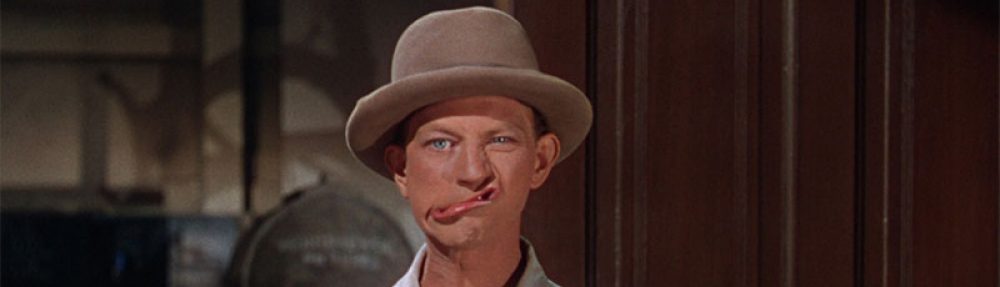
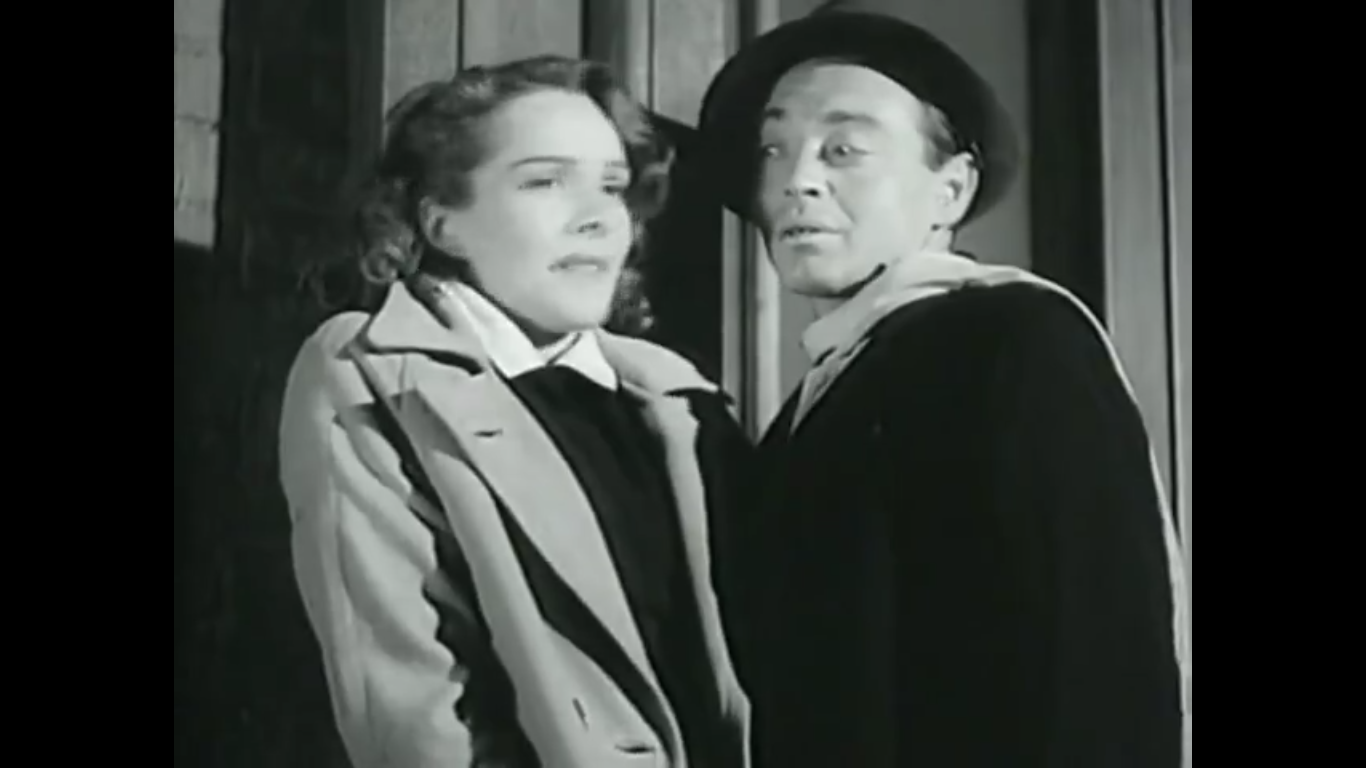
Peter Lorre: Stranger on The Third Floor, Mask of Dimitrios, The Verdict

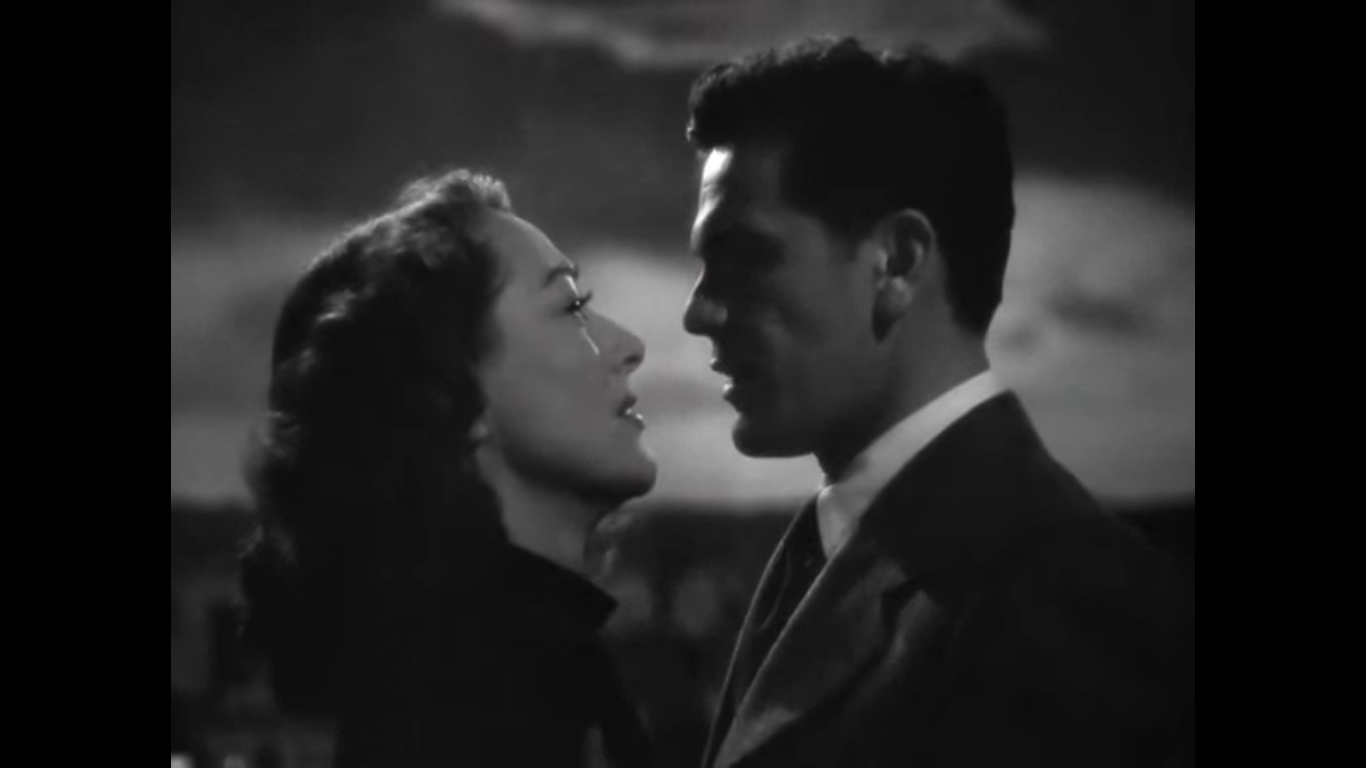
Stranger on The Third Floor (1940)

Although it’s not a highly touted picture, Stranger on The Third Floor feels like an important enough footnote to aficionados of film noir because it embodies a few of the earliest definable features of the movement. It’s not an entirely new concept per se, but it feels like it’s reaching a new market taking the influences of European Émigré cinema to the American public.

The influence of German Expressionism on ensuing generations cannot be underappreciated, and there’s this very practical suffusing of these techniques into Hollywood because many of these writers and technicians were physically transplanted to the west coast thanks to the scourge of Hitler. He unwittingly injected American cinema with some of its foremost talents.

Although he was an immigrant from Italy, Nicholas Musuraca would soon prove himself to be one of the foremost figures in noir cinematography thanks to his run at RKO Studios, which hardly had the budget and personnel to pull off the lavish A-list productions of MGM and other bigger studios. This necessitated a different niche and an ongoing visual ingenuity.

It becomes evident early on in the film thanks to severe shadows and a patchwork of light and dark. The story itself is incredibly contrived but the movie is saturated in voiceover and fatalistic dread thanks to a man (John McGuire) being sent up for murder.

The tenets of what would become noir are plainly evident. Still, there’s something organic about it. This is not premeditated; it simply happened with the confluence of talents and a bit of happenstance.

It’s fitting that while The Maltese Falcon feels like the most high profile distillation of noir as an American breed, Stranger on The Third Floor uses two of its primary culprits. By this I’m referring first to Peter Lorre.  He’s called upon to do an import of his psychotic killer in M complete with his gaunt hand crawling up an apartment door frame. He’s hardly as slimy and therefore as conflicted and interesting as Joel Cairo; it’s his slinking foreignness that conjures up menace in the eye of the viewer.

However, there’s also Elisha Cook Jr. who plays one of his more reticent types a bit different than his blustering henchman Wilmer. However, they would both become integral figures to the movement even if it were only for their association with that individual film.

Although the movie’s a quickie, it still finds time for mini flashbacks as the inevitable noose of noir gets tied ever tighter around our hapless hero’s neck. The finest moments are when he’s overtaken by the nightmare of his conscience with men in bowlers chomping cigars start to cross examine him, and he falls apart inside his own head. As such, it’s probably more intriguing for its place in film history than as an undisputed piece of art.

3/5 Stars

The Mask of Dimitrios (1944)

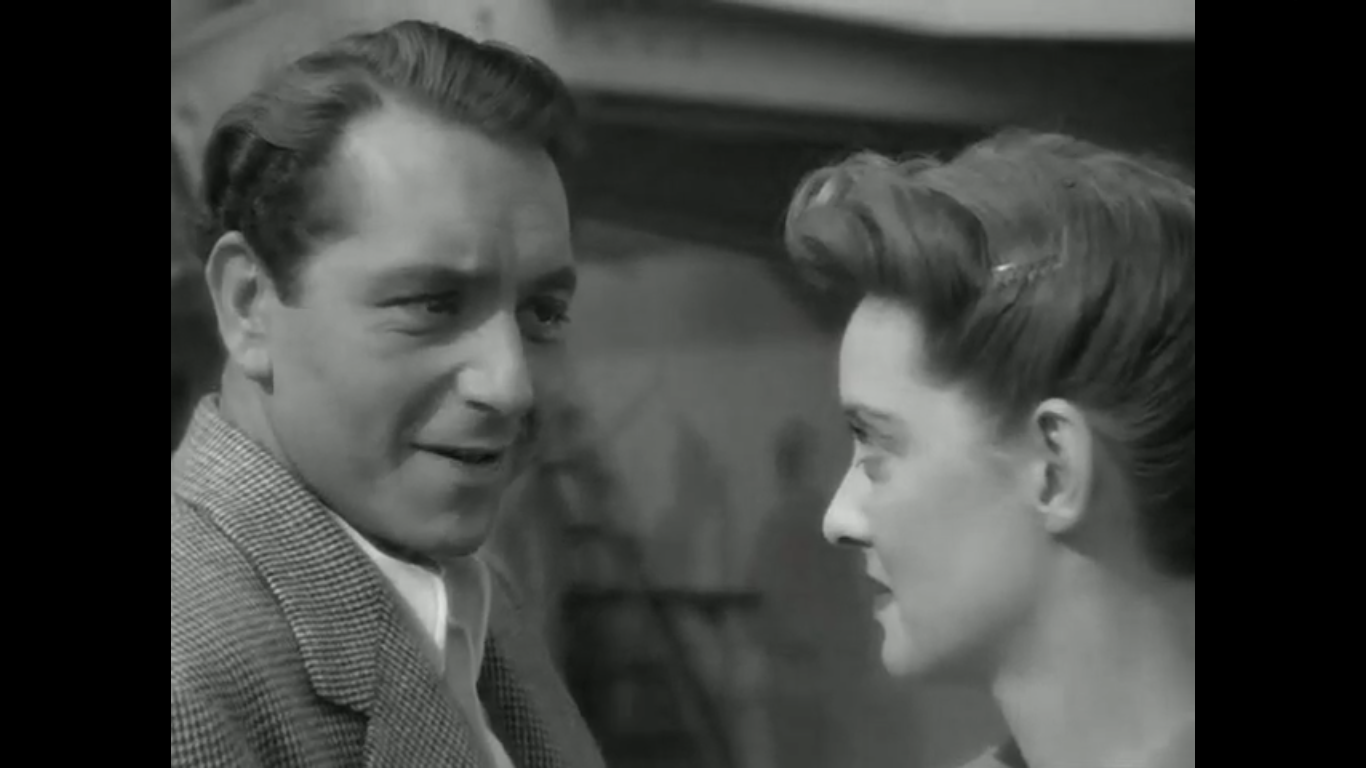
The Mask of Dimitrios feels like an old world adventure story centered around a phantom figure who becomes the picture’s version of a MacGuffin. Zachary Scott turns up mostly in people’s recollections as a precursor to Harry Lime, the man everyone wants to find.

Although the movies could hardly be made today, there’s something about Warner Bros. and it’s aesthetic and stable of actors that was made for transporting western audiences all over map. The movie literally globetrots around the world.

It’s a pleasure to have Peter Lorre offered a bigger piece of the film’s pie at this point in his Hollywood career.  He’s allowed to be a far more genial and charismatic figure, a writer of detective fiction and a seeker of this great mystery because he has time for such whims and frivolities if only they pique his interest.

Then, Sidney Greenstreet turns up ominously both a friend and a foe. They form a tenuous alliance after the fat man all but ransacks the other man’s room. Greenstreet and Lorre feel like unlikely cinematic bedfellows as it were, and yet they feel inextricably linked for all posterity. They feel a bit like the Laurel & Hardy duo of Warner Bros. crime pictures based on physical characteristics and also their palpable rapport.

Here there’s no Bogart in the limelight and Scott, while a headliner, is mostly the enigmatic engine behind the picture so they are allowed to anchor the story. Thus, what makes the movie are the same cloak and dagger elements that make a romp out of The Maltese Falcon where characters have motives and unseemly sides, but it feels more like unadulterated fun rather than totally depressing drama. This is a testament mostly to our two worthy protagonists.

The Verdict (1946)

The Verdict feels totally indicative of the evolution of Don Siegel’s career, a road paved with many well-remembered films, and it all began right here. We’re met with a foggy London frequented by Sidney Greenstreet with every constable and upstanding gentlemen bidding him good evening. It’s a long way from Dirty Harry although the picture is equally indebted to the criminal justice system.

This comes in part because Greenstreet made a lapse in judgment by sending an innocent man to the gallows. Instead of feeling altogether remorseful, he’s seems more intent in proving the incompetence of his supercilious successor.

It feels like a chatty picture once Peter Lorre and the rest get involved, drinking and quibbling about politics and social reform. There’s a rather vindictive pretense as the two men despise one another.

Lorre, now with a bigger billing, is allowed a broader portrayal of gravitas and jocularity. He’s the picture’s most welcomed source of inspiration. He’s found casually wondering in on murder scenes and eavesdropping in closets as it seems he has nothing better to do. What’s more, he makes it look like a grand old time as everyone else is hustled and harried going through the paces of the drama.

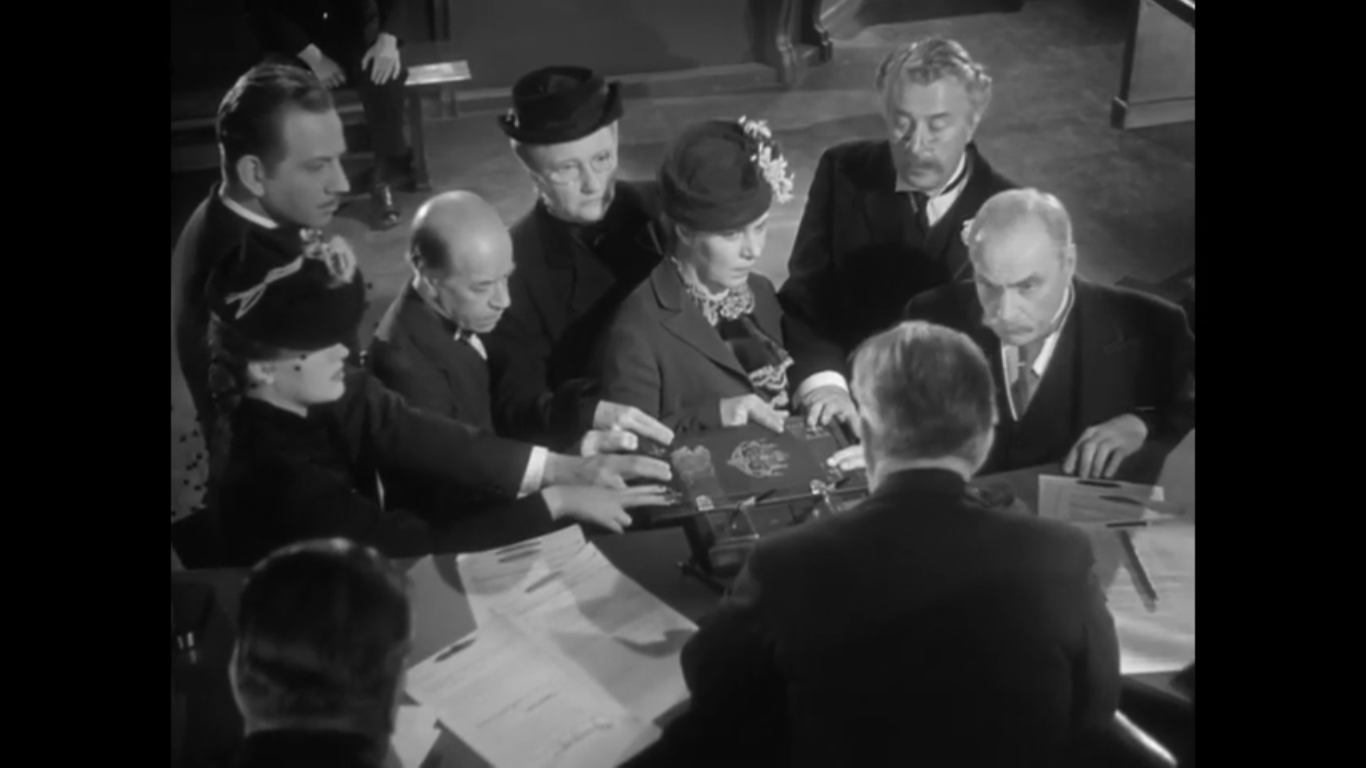
Because there is a murder, a murder queued off by the raging score before we’re even aware that anything has happened. The newly enlisted police chief at Scotland Yard is called to solve the mystery right quick. He proceeds to question his suspects, distrusting everyone, and keeping them all under surveillance, including a nosy housekeeper and a spirited night hall singer.

The whip pans over the faces when the verdict is made feels like a dose of Don Siegel, and the kind of visual octane he would give his movies for generations to come. Although there’s a danger with all the Victorian exteriors, the picture might easily feel stuffy. However, there’s enough noir and a surprising amount of wit sprinkled throughout to give the film a shelf life.

It somehow manages to play on both Greenstreet and Lorre’s reputation as shifty villains by first casting them as our protagonists and then making us second guess their motives again and again. It’s a perplexing picture with a dose of mystery and some twists. The fact that it’s ludicrous seems beside the point because it’s the wild ride of the experience offering the most impact.

3.5/5 Stars

Vincente Minnelli’s Films (1946-1955)

Undercurrent (1946)

Undercurrent hardly holds a substantial place in any noir conversations partially because Vincente Minnelli’s reputation in part seems antithetical to the dark style born out of chiaroscuro and German Expressionism. His background was squarely in luscious art design and stage productions.

Likewise, the combo of Katharine Hepburn and the two Roberts: Taylor and Mitchum, is not one that quickly springs to mind. However, there are some merits to it simply for the sake of it being different; not dramatically, these types of psychological women’s pictures were very much en vogue during the ’40s.

It’s the pieces assembled that feel unique if somewhat ill-suited. Still, the curious hybrid of tones and talents certainly is a historical curio more than intriguing to the invested party.

I almost have trouble buying Hepburn as a reticent, uncomfortable outsider among the D.C. elite her new husband Alan (Taylor) knows, a woman holding drinks in hand just waiting for someone to talk to. But if I don’t completely believe it, she does earn my empathy.

Mitchum, the legendary mule of RKO was simultaneously earmarked for 3 or 4 pictures at the time, and so he doesn’t show up in Undercurrent until much later. Still, he has the benefit of casting a Rebecca-like influence over the picture.

After an hour of building him up, we finally get sight of Mitchum, and we know where this story is going. Because he’s a real human being and fairly innocuous to the eye. As the presence of Mitchum begins to exert itself on the picture, the marital bliss of newlyweds grows more and more harrowing by the minute. We have a picture in the same vein as Suspicion and House on Telegraph Hill.

Despite choosing the part, the constraints of the role don’t feel totally in line with Hepburn’s talents. She isn’t a shrinking violet or the kind of timorous beauty befitting Joan Fontaine or even Ingrid Bergman. Robert Taylor is mostly adequate in the vengeful husband part. He flip-flops efficiently between these stints of gracious charm — a perfect husband and lover — then, becomes clouded by these perverse streaks of jealousy and rage.

3/5 Stars

The Pirate (1948)

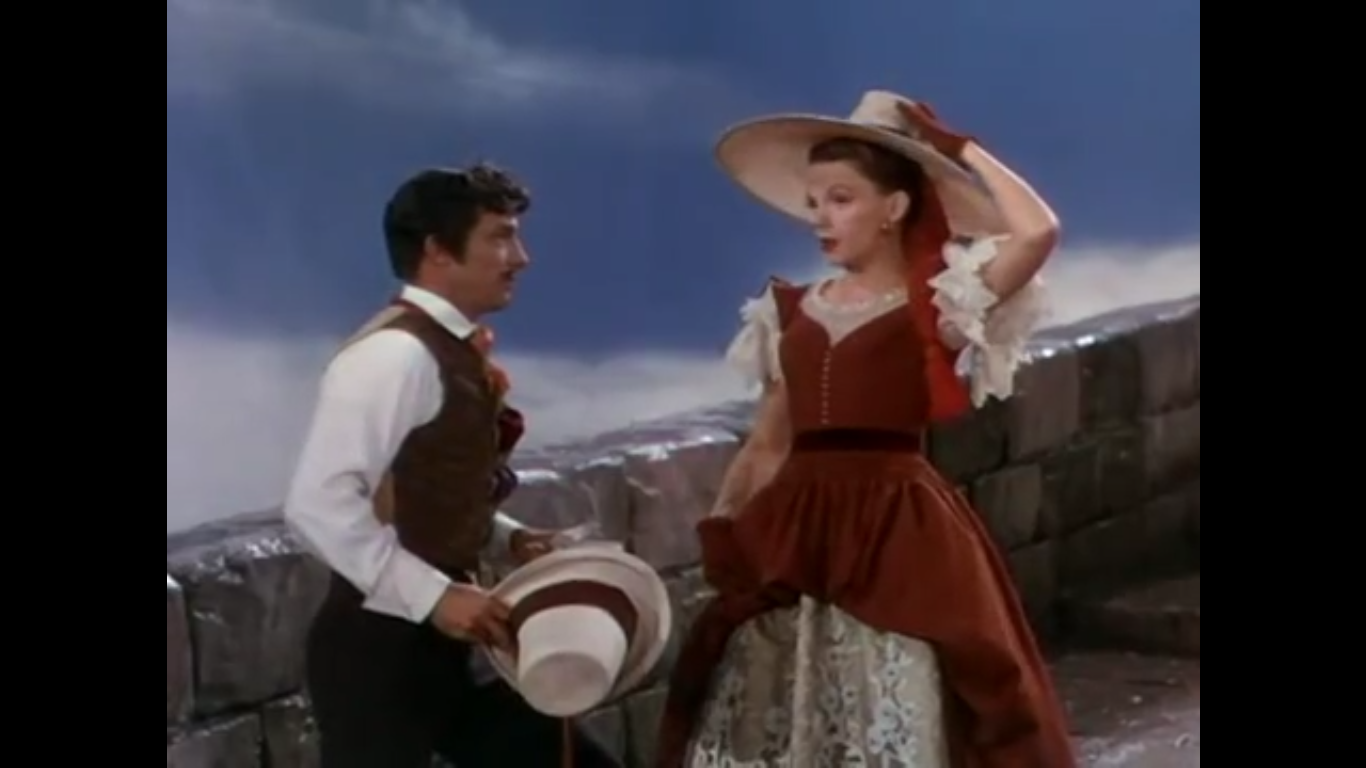
It’s plain that The Pirate is born out of the traditions of the 1940s Hollywood lineage like Blood and Sand or Black Swan, even Gene Kelly’s own Three Musketeers. However, between the bright evocative staging of Vicente Minnelli and the instant performance-driven rapport of Garland and Kelly, it works quite splendidly with what it has to offer.

Today it doesn’t hold much of a reputation, and I would stop short of saying it’s a minor masterpiece. What we do have is a picture banking on the charisma of its leads and a certain pictorial opulence supplied by its primary mastermind.

Kelly, taking all the niñas of the town by storm, is full of allure and his usual magnetism as he twirls, leaps, and bounds between all the pretty girls. It’s all about the patter between the stars as he plays the foxy street performer, and Garland is the put-upon maiden who is betrothed to another man. His vocation gives the director license to use these elements of theatricality and faux drama to tell the story.

What do I mean? It could be a story of tragic, unrequited love. It might just as well be a tale of marauding pirates, and yet somehow, between the song and dance, it becomes a kind of tongue-in-cheek comedy of two lovers perfectly suited for one another being thrown together.

There are moments where Garland and Kelly seem to be playing in a separate movie, or at least they are in on the joke with the rest of us, even as they mess with each other. Trashing his apartment feels like the highest form of romantic tension only for the drama to become slightly heady again: Kelly is set to be hung as the dreaded pirate Macoco. Is it a first to have a musical number performed under a hangman’s noose? I’m not sure.

Thankfully, he gets some stellar support. While I’ll be the first to admit “Be a Clown” feels like a less funny prototype for “Make em Laugh,” if you’ve never seen the Nicholas Brothers, it’s a small recompense to see them join Gene Kelly and get some commendation in the spotlight as his momentary equals. It feels like a flawed but heartfelt apex to a picture that could be described in much the same terms.

3/5 Stars

Madame Bovary (1949)

Madame Bovary is the kind of trenchant literary work the Production Codes would go to all costs to declaw. In one manner, it’s somewhat remedied by James Mason’s framing by providing a mostly blase narrative device to enter the story.

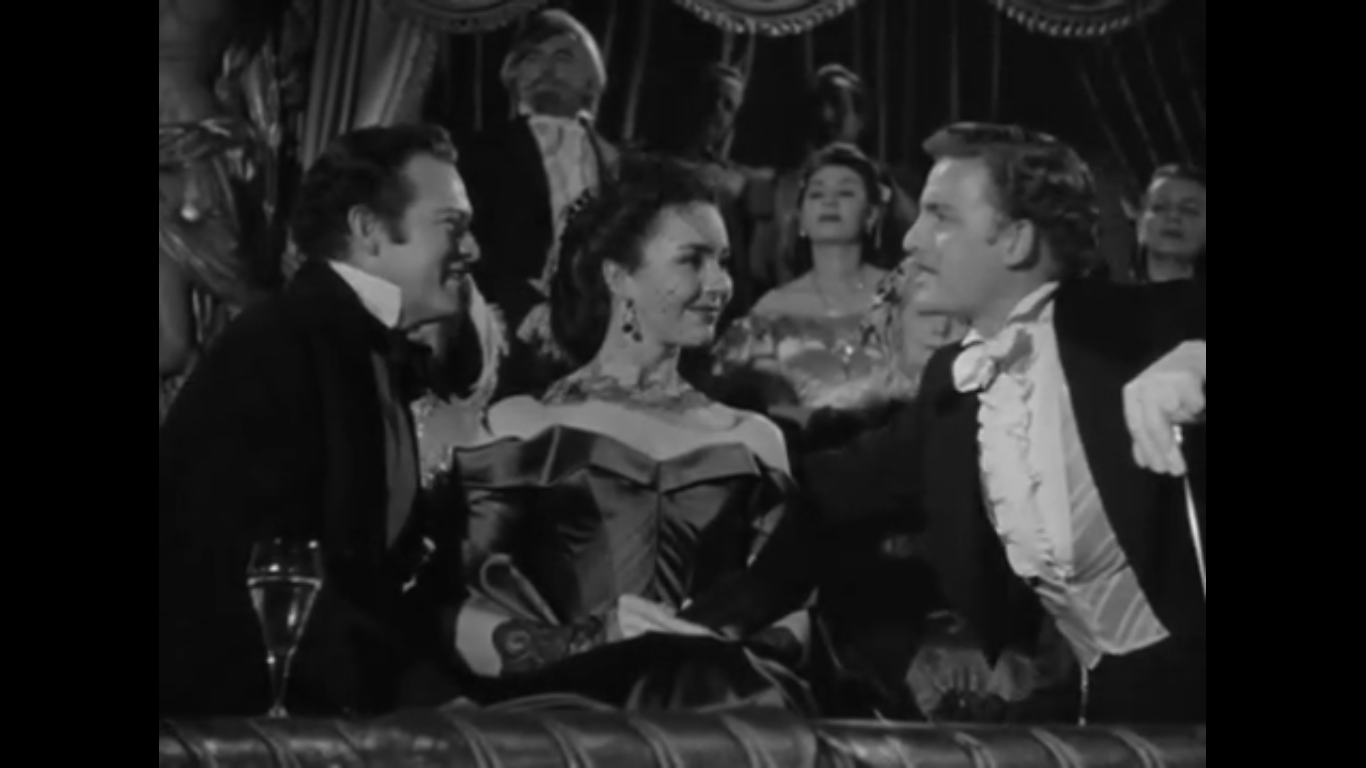
Even as something leaner in budgeted black & white (one could hardly confuse The Pirate with Madame Bovary), it’s still the same Minnelli. The ball sequence spelling the ascension of Emma (Jennifer Jones) as a society darling, while somewhat compact, exudes an impressive opulence.

The director makes sure to follow Jones’s incandescent form as she prances and waltzes her way across the dance floor with great distinction. Her gown alone is enough to make the upper classes stand up and take note. The dashing Louis Jourdan is certainly more than aware of her. It’s totally taken up by the kind of swirling euphoria also holding a place in the oeuvre of Marcel Ophuls — Letter from an Unknown Woman and Earrings of Madame De…spring instantly to mind.

It becomes more and more of a gothic drama as things progress, overtaken by gales of wind, thunder, lightning, and an incessant downpour of rains to go with the equally tumultuous score of Miklos Roza.

However, more importantly, Emma becomes possessed by all of her own ambitions and preoccupations. She is emotionally distant from her husband (Van Heflin), absent from her child, and totally involved with other men. She entreats them to take her away from such a dreary life, constantly prone to these histrionic gestures of love and loss at the hands of her suitors and husband. They hardly know how to respond to her.

If the terminology was present at the time, she is cut out of the cloth of some kind of femme fatale, albeit born out of the annals of classic literature. Moreover, she is a woman who never seems to know what she truly wants. She sends out an array of mixed signals — living a life made up of so many contours and emotions — and never settling on anything honest.

It’s as if she’s fashioned a kind of fantasy life for herself woven out of her own personal whims though she remains self-destructive to the very last iota of her being. There’s something unnerving about her and Jones plays her as such; it’s easy to understand how society was scandalized by her because she does not live by societal norms. Mason’s concessions for her character aren’t enough to totally wipe out the harrowing impact of the performance.

3.5/5 Stars

The Cobweb (1955)

“What happens if you go into town to the movies? You start screaming or something? They’d think you’re a critic, that’s all.” – John Kerr as Steven

If it’s true you can make a screwball comedy like Easy Living (1937) about a fur coat falling from the sky, then it’s equally possible to make a portrait of psychological horror about drapes. The Cobweb busies itself with the vast array of interpersonal relationships taking place on the grounds of a psych ward. Richard Widmark does his best to aid his patients in their recoveries as he juggles familial and boardroom responsibilities. It’s no easy balancing act.

For a film that is mostly disregarded, it’s easy to clump it together with something like Executive Suite (also produced by John Houseman) with one of the most phenomenal assortments of players one could hope to cobble together during the golden era of Hollywood.

Lilian Gish is at her most ornery but lest we forget, she truly is the queen of the movies. Charles Boyer and Lauren Bacall are equally crucial touchstones of film history, playing two respective love interests as Widmark struggles to connect with his wife, Gloria Grahame. Even ’30s scream queen, Fay Wray, has a brief appearance in a picture that boasts Oscar Levant and then the up-and-coming talents of John Kerr and Susan Strasberg.

In one scene with all the various folks blocked throughout the room, it’s almost difficult to distinguish who’s a patient and who’s not, but if we are to appreciate this drama, it doesn’t half matter. Widmark falls for another woman. Grahame flaunts her charms and goes looking for love from Boyer, who is now mentally compromised. Gish is incensed about having her opinions disregarded. Some of them are petty and others are stricken with loneliness and actual psychoses.

The palette becomes such an evocative way to color the emotional undercurrent and elements of suburban life, not unlike some of Nicholas Ray‘s work or something like Strangers When We Meet. The visual world is beautiful; still, it lets loose an environment full of pain and inner turmoil. Although Minnelli handles his characters deftly, there’s no place for the film to go but toward a hysterical fever pitch.

3.5/5 Stars

Cabin in The Sky (1943), Georgia Brown, and Lucifer Jr.

Like Stormy Weather, it’s a slightly unnerving form of mimesis as Cabin in The Sky sets about depicting the lifestyle of Blacks. There’s not a white folk to be seen, and yet there’s no doubt they have been integral in developing this musical fantasy out of a Faustian-like folk tale.

It’s telling that two of the only other mainstream films with prominent onscreen representation of Blacks were the religiously-tinged musicals Hallelujah and Green Pastures. Whether real or imagined, there was this perceived sense that Blacks were only identified with these limiting salient features. This was their only utility onscreen and thus, Hollywood kept on representing them in a narrowly defined manner.

It’s not like this is simply a modern observation with renewed enlightenment of the 21st century. First-time director Vincente Minnelli noted it too in a later interview, “If there were any reservations about the film, they revolved around the story, which reinforced the naive, childlike stereotype of blacks…If I was going to make a picture about such people, I would approach it with great affection rather than condescension.”

The eponymous Cabin in the Sky number is a perfect example of how Minnelli subtly develops the cinematic space, in this case expanding the intimate moment of his leads into a much broader chorus of singers. At least pictorially, the director seems to have his performers’ interests in mind.

In the opening moments, a booming minster calls upon two of his local parishioners: the devout housewife Petunia (Ethel Waters) and her backsliding husband Little Joe (Eddie Anderson), a hapless man prone to worldly vices like gambling. He wrestles with the devil on the daily while his bright-eyed wife prays ardently for the Lord to look with disfavor on his gambling and sure enough, he never wins a plugged nickel.

Be it box office repeatability or plain ignorance, there is no contest. Blacks had very few outlets in movies. But the talents are undeniable. It’s intriguing to think that while Jack Benny was performing in a Nazi satire like To Be or Not to Be, Rochester was finally getting out of his shadow, albeit playing a role that pretty much stayed true to his usual characterization. In both cases, it might be difficult to teach old actors new tricks, harder still is getting an audience to accept them as such.

In its day, the NAACP lauded the film. Most of the performances have a jaunty affability; it’s not about a lot of bells and whistles, the wall of orchestral sound notwithstanding, but it’s an agreeable diversion. One cannot help but see Ethel Waters as emblematic of the film: all smiles while she belts out “Taking a Chance on Love.” She brims with pious candor even as the actress looked to punch up her rather thankless role and give it more substance (and religious morality).

Somewhere between Hellzapoppin’ and Stormy Weather, we have a Faustian struggle done up with the musical trimmings and the stereotypical religious leanings of the time. The film can be considered using the same paradigms as a film like Here Comes Mr. Jordan or even A Matter of Life and Death, in this case, exemplified by a chorus of Black angels and Black demons doing a bit of spiritual jousting.

Little Joe is a simple fellow. His only aspiration, when he’s not lounging in a hammock, is to become a hotel elevator operator much to his wife’s delight (The picture makes a constant punchline out of his illiteracy).

At his wife’s behest he’s busy with the process of “getting saved,” and he has an appointment with repentance, but some of his gambling partners show up on the steps of the church ready to collect their outstanding debts.

God’s General and Lucifer Jr. (Rex Ingram in a particularly gleeful performance) use Little Joe as a spiritual battleground. I’ve known it for some time but haven’t had a reason to acknowledge Rex Ingram of late. It’s a pleasure watching him because he seems in on the joke more than he is a victim of the scenario like so many Black performers.

His Idea Men in Hotel Hades include none other than Louis Armstrong and two of the most troubling figures in 20th-century representation of African-Americans: the googly-eyed Mantan Moreland and bubble-headed Willie Best. They deserve more care and nuance than I can provide, so for the time being I’ll defer to others.

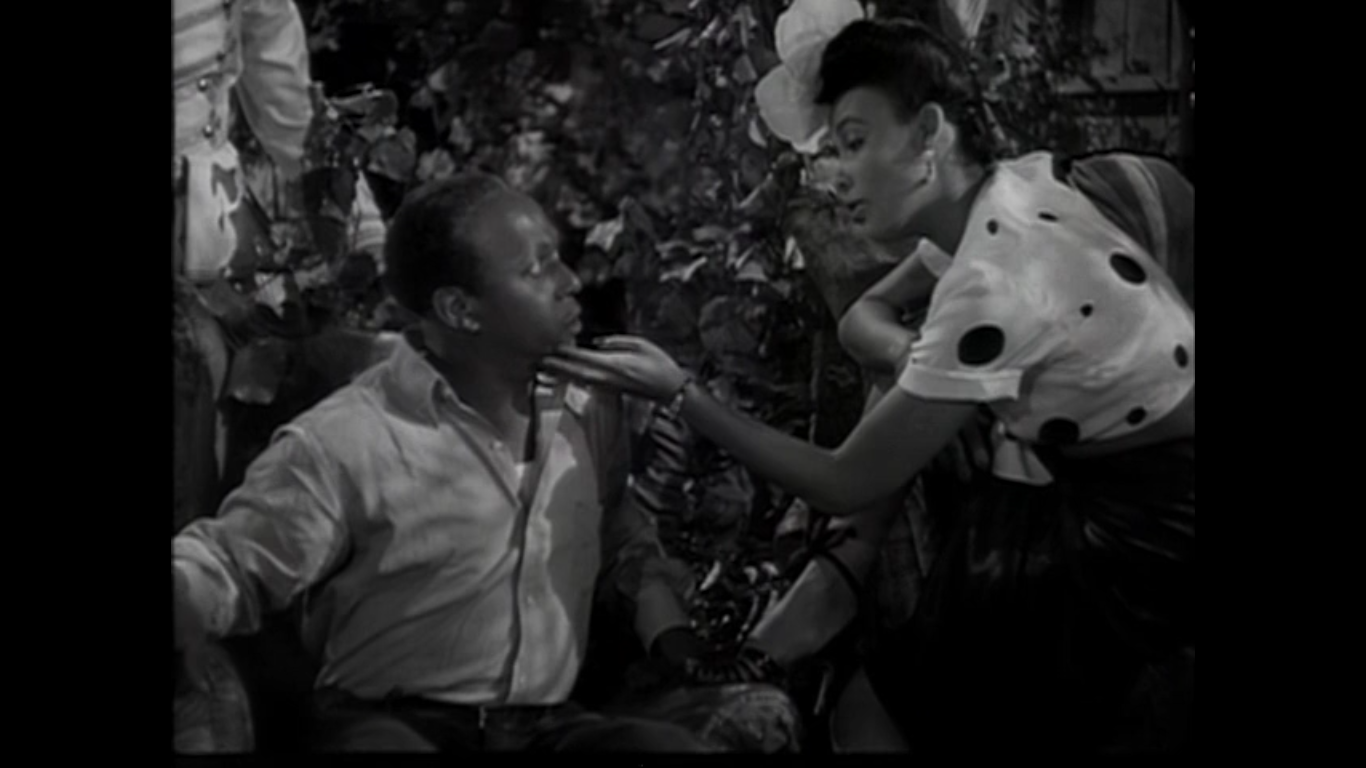
While there scenes in the hellacious office are talky and promote more dubious theology, they spin a couple of webs to entangle Little Joe. First, there’s sweet Georgia Brown. Lena Horne dons her best perfume and polka dots to knock his socks off.

She’s introduced with a sultry jazz motif, moseying along as Ingram plays the serpent kicked back on her bed, whispering little intimations into her ear as if by chance. Horne positively melts the celluloid as she coaxes Rochester toward the path of vice in “Life is Full of Consequence.” It becomes a marvelous dueling duet between the two performers forming one of the core conflicts of the film as Little Joe yowls, “I’ve been burnt more than twice.”

It hardly matters that a bubble bath scene deemed too racy for the era was totally excised. Horne leaves her mark, and it’s a memorable role. However, she deserved better in her career going forward.

Lucifer Jr. is surprised by the human’s steadfast fidelity to his wife and so Louis Armstrong dreams up a new scheme (“Give a man money. Watch him act funny”). An Irish Sweepstakes engenders consequences and misunderstood intentions of its own. It seems secular society has won out as represented by the blasphemous (and ridiculously fun-looking) halls of Jim Henry’s. It’s a hangout full of exuberant snapping, swinging, and Duke Ellington himself.

The overwhelming, overflowing of the moment is a joy to be a part of highlighted by the dapper dancing extraordinaire John Bubbles (John William Sublett). In his hat and cane tap dancing ensemble, ostensibly, it’s hard not to see echoes of Fred Astaire and in truth, in the early days the famed white hoofer was taught and no doubt patterned his style after his Black contemporary.

When Bubbles and Horne get these glorious close-ups to sum up a couple of their numbers, it feels deserved like a resounding show of recognition of careers that were never going to garner the plaudits of their white counterparts.

While not everyone will likely appreciate jazz being equated with worldly debauchery, it serves as a convenient metaphor. In contrast, religion seems regressive and prudish, anti-fun, with a God who is a cosmic killjoy.

The musical’s catastrophic ending is some humdinger. It doesn’t seem like typical Minnelli until we’re met with the aftermath, and we see how wonderfully conceived this smoke-filled, jagged-edge pile of rumble is as a newfound visual labyrinth.

Again, it’s not to be taken too seriously, but Little Joe’s life is reflected as a mission to balance the books in order to get through the pearly gates. After all, the heavenly ledger must be rectified. It’s mostly Hollywood hokum.

Instead, I feel compelled to end with something that moves me. Rock and Roll pioneer Sister Rosetta Tharpe sang the gospel spiritual “Journey to The Sky,” which conjures up a similar metaphor and begins like so:

There’s only one thing that I long for
When I reach that heavenly land
To see my Jesus in His glory
As I go from land to land
There’s only one thing that I long for
When I reach that heavenly land
And I know, I know we shall see Him
In that sweet, oh My Lord, peaceful rest

3.5/5 Stars

Colbert and MacMurray: Gilded Lily, Take a Letter Darling, Egg and I

One of my latest ventures was to view a handful of romantic comedies of the ’30s and ’40s, many with screwball elements, and you could not broach this territory without eventually crossing paths with Claudette Colbert and Fred MacMurray. They starred in 7 films together throughout the decade and also paired opposite some of the most prominent stars of the era (including Clark Gable and Carole Lombard).

Here are three of their movies, two that star both of them, and one with Fred MacMurray in the lead with another worthy romantic partner:

The Gilded Lily (1935)

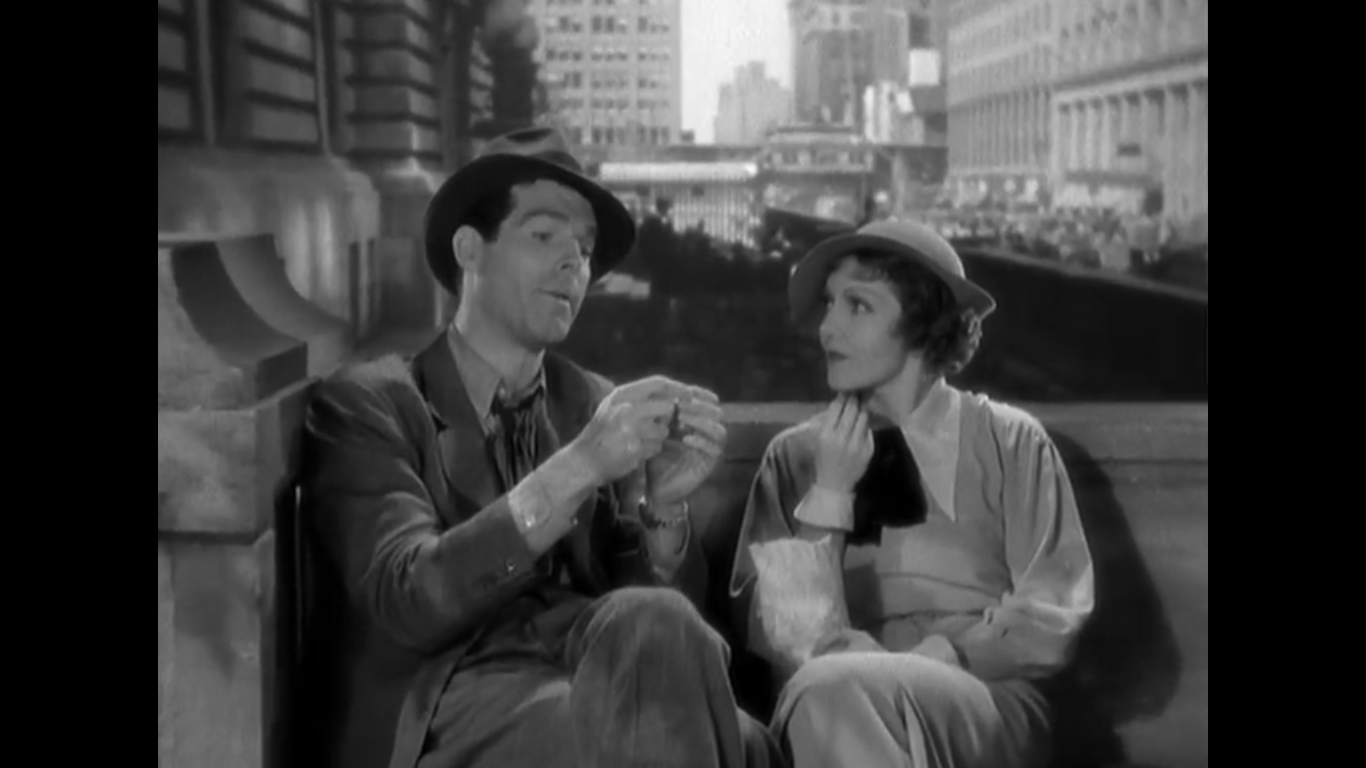
It opens on a park bench with MacMurray and Colbert chewing the fat as they share a bag of popcorn. What it does is create this instant familiarity going far beyond the bounds of the film as we’re thrown into their relationship that feels more platonic than romantic.

Thus, it’s not so much about the build-up to a prototypical relationship but the chafing that comes with their differing feelings. He has the hots for her. She loves him as a friend but still seems to be looking for her prince charming.

Prince Charming comes in the form of Ray Milland, a rich British aristocrat who’s come to America incognito. You can immediately imagine the complications arising from the fact Peter (MacMurray) is a nosy newshound and the other man has a secret to hide. They’re still to be cast as true romantic rivals and there’s already a tense undercurrent between them.

Meanwhile, Marilyn finds herself having to choose between two men as Lord Charles (Milland) promises a life of cultured sophistication. But Peter is always there, her ever-faithful confidante, and he’s also not going down without a fight.

He churns up the news mills to turn her into a household celebrity and the whole world seems to know her name. Even Charles is tickled by her world-class notoriety, but this is only a paltry imitation. If it’s not evident already, she needs a man who wisecracks, buys her popcorn, and wants to love all of her, whether she’s a big shot or not.

I’m still a bit smitten by the movie’s public bench premise because it allows our stars to do what they do best: laugh at the world together. No one can break their bond, and it teases out new contours to the Colbert-MacMurray partnership.

3.5/5 Stars

Take a Letter Darling (1942)

Although he does have a devoted following, Mitchell Leisen still does feel like a mostly unheralded director in broader circles. Take a Letter Darling is another modest feather in his cap, and it has numerous charms.

The gender norm-bending premise was actually quite intriguing for the era and MacMurray and Russell are more than up to the task of sparring in and out of the office. She’s a high-powered businesswoman who enlists a male secretary who can help her land her deals. He has a very important job: keeping jealous wives satisfied as she trades shop talk with their husbands.

There’s an obvious level of emasculation to the part, and MacMurray is more than game for it as he becomes the laughingstock of the secretarial peanut gallery. You see, he’s MacGregor’s fourth man and she’s running out of options. Still, it’s a lucrative way to bankroll his true passion: painting.

If Claudette Colbert was in fact originally earmarked for the part, I think I’m still partial to Russell in this particular role. I just find her brand of delivery perfectly metered for any kind of antagonistic comedy. And there’s a sense it builds on the kind of workplace dynamics she stirred up with such legendary fervor with Cary Grant in His Girl Friday, between quizzical glances and whipsmart repartee.

I will admit that Take a Letter Darling loses some of its comic edge when it turns saccharine, and the inevitable romance materializes. Until this point, the movie uses its premise to mine a plethora of laughs only to peter out as it makes Russell shed her authoritative business acumen for warm, fuzzy feelings.

However, while the final act can’t quite maintain the same level of comic tenacity, it also doesn’t whimper out as much as I was expecting. Yes, MacGregor wants her man back, but in typical Russell fashion, she crosses paths with him out on the road and comes armed with pebbles. She’s not going down without a fight, and she won’t totally acquiesce. It’s against her nature.

I feel like womanhood, especially in the ’50s, is glazed with this perceived antiquated patina, but watching the likes of Russell, Barbara Stanwyck, Jean Arthur, or even Irene Dunne during the ’30s and ’40s, provides a more nuanced landscape. It wasn’t all marriage and motherhood. They managed to grapple with the lives of modern working women in numerous ways. While Take A Letter Darling is no unsung masterpiece, it’s still easy enough to extend the recommendation.

3.5/5 Stars

Egg and I (1947)

Egg and I is based on a popular real-life memoir by Betty MacDonald, but for anyone who doesn’t remember it, it’s easy to pitch it as the original Green Acres — a Hollywoodized version of Grant Wood’s American Gothic. The fact it began with source material explains Claudette Colbert’s conspicuous introduction to the audience.

Otherwise, much of the movie is forged through comedy of the situation much like the wacky ’60s comedy with mostly mild and goofy trifles to contend with. The long-standing screen chemistry of Fred MacMurray and Colbert anchors the movie as its most imperative asset.

They’ve bought themselves a dilapidated house that’s riddled with leaks during the first rain. And once they’ve hunkered into their new home, next come the daily rituals that come with tending to a farm, and its livestock. They have lots to get used to. However, there’s also the local anthropological element.

Before the “Rural Purge” in the early ’70s, in deference to more urban entertainment, Hollywood has long mined comedy out of eccentric country bumpkins. Egg and I was no different introducing audiences to the first incarnation of Ma and Pa Kettle who became a bit of a low-budget institution in their own right with Marjorie Main and Percy Kilbridge.

One of the representative moments involves the local hoedown where men of all shapes, sizes, and dancing styles whirl Colbert around the dance floor, leaving her feet sore and her ears talked off. However, her greatest concerns are the advances of a local beauty (Louis Albritton), who her husband must do business with. She’s worried it’s a bit more than business, but if you watch him look at her, it does feel a bit silly.

I found the movie to be a bit too long and a tad more twee than it was gripping. Especially because Green Acres had numerous episodes and seasons to engage with analogous themes and character tropes to greater effect.

However, there are a few rewarding moments. It’s easy to recall the almost deceptively moving solidarity when the whole town bands together to loan the couple resources after a devastating fire obliterates their livelihood. For all their flaws, it’s a reminder of the close ties of small communities, and it makes Egg and I easy to root for even if it is mostly light-hearted recreation.

3/5 Stars

Joan Crawford: Possessed, The Damned Don’t Cry, Harriet Craig

In our ongoing exploration of Joan Crawford and Bette Davis’s filmographies, here are three more films building on Crawford’s renewed critical success in the 1940s after Mildred Pierce (1945) and Humoresque (1946).

Possessed (1947)

Possessed opens with Joan Crawford wandering the city streets past cable cars and hamburger joints with a far-off look in her eyes. Although I should briefly clarify this is Possessed from 1947 (as the actress made an earlier movie with the same title). The unknown woman is searching for a man named David, and instantly we have the pretext for our story.

There’s a  wonderful extended POV shot of Crawford being wheeled into the hospital as she is overtaken by a catatonic stupor, and the doctors try to piece together what to do for her and who she is.

If they’re in the dark, then we at least learn a little bit more about her. David (Van Heflin) was a man in her former life, in love with a piano and a parabola but not ready to marry her. He doesn’t want to be tied down and his ambitions lie in his work and a job up in Canada.

She’s obsessed and crazed with him, and the thought of him leaving her forever. Instead, she resigns herself to a life with her employer (Raymond Massey) who has lost his wife and has sent his kids away to school.  Crawford’s not a villain, but how this relationship blooms, there’s another obvious reference point. It’s apparent how the movie blends and finds itself at the crossroads of Double Indemnity and Mildred Pierce.

As her mental instability takes over, it’s almost as if a scene from Mildred Pierce is playing out in her head as she duels with a vitriolic stepdaughter. However, while this feels more like a facsimile of the prior’s year success, it’s really Hefflin who steals the picture’s other half.

Because Possessed finds Hefllin at his most caddish and cold (“My liver rushes in where angels dare to tread”). He has wit like Johnny Eager, but he’s also willing to run roughshod over Crawford without any amount of remorse. He’s a hedonistic, self-serving creature, and it only becomes more evident when the impressionable Carol (Geraldine Brooks) gets drawn in by his casual wiles.

They get married and Louise becomes more paranoid and hallucinatory by the hour. This movie is bookended by her descent into mental turmoil, and it’s hard not to laud Crawford for her genuine alacrity for the part making the rounds of psych wards and facilities just so she could provide greater authenticity. No matter what feels antiquated to our modern sensibilities, the movie is worthwhile for her performance, which seems to come in sharper relief with each subsequent layer of her ever-shifting personality.

3.5/5 Stars

The Damned Don’t Cry (1950)

The film’s title was ripped from a Eugene O’Neil quote, and it gets at the poetic essence of the movie more than its particulars. When a racketeer’s carcass is found ditched near a desert resort, it sets off alarm bells and triggers a search for a missing oil heiress played by Joan Crawford.

The impetus of her entire existence in the film is summed up in a single scene of definitive exposition.  She lives alongside her husband, parents, and their little boy near the oil fields where her husband works. It’s a meager life. They can’t afford pleasure. And so when she splurges to get their son a bright new bicycle, her agitated husband (Richard Egan) tells her to take it right back.

The bike effectively becomes a vehicle for their marital conflict since they are scrimping and saving just to make ends meet. However, it’s also a token of tragedy in Ethel’s life searing her with wounds she will never forget. She leaves her past behind to make a new life for herself as an individual because her corner of familial bliss looks to be dead.

As the story progresses, it feels like a bit of a throwback for Crawford from the ’30s and her days as a driven working girl making a go of it. She learns quickly how to play the game to get ahead, modeling and then doing some overtime with out-of-town buyers after hours.

Then, she literally meets a man, a CPA (Kent Smith), at the water cooler. She winds up sprawled out on his desk asking for a cigarette and making his acquaintance with her self-assured flirtations. She has some misguided notions about his importance and yearly take-home pay. Either that or she confuses her acronyms.

In other words, he hardly has the money to bankroll the evening he has unwittingly been escorted to. Still, she goes to bat for him putting Martin in contact with some of her other “friends.” It starts out with the men discussing business together behind closed doors with Lorna left in the drawing room withing for their return. It feels oddly uncharacteristic because we know Crawford will get into that room eventually (and most likely dominate it).

George Castleman (David Brian) is the kingpin at the top, an elegant self-made mobster fascinated by art and antiquities. He’s trying to keep his cronies in check, the most headstrong of the bunch being Steve Cochran, who’s running the racket out in California. This is not Martin’s world, but Ethel has gotten him into it, and for the time being it’s lucrative enough.

But with her innate ambitions, Crawford’s character always has her sights set on the next prize. With the help of the society pages, she turns herself into the newly-minted heiress Lorna Hansen Forbes.  Going forward, the movie blends the world of some of Crawford’s Pre-Code working-class drams with that of 711 Ocean Dr., another ’50s film concerned with wires, bookies, mob influence, and of course, California desert getaways.

Here it’s a more hands-on approach. For most of the film, Cochran waits in the wings brooding, but he gets his moment in California with some filming even taking place at Frank Sinatra’s own home made up in mid-century modern. Crawford has them all. The whole crux of the drama is composed of these spokes radiating out of Joan Crawford leading to four men who are attached to her at different times.

It gets so overblown and preposterous, and yet you can’t quite look away because the dilemma is made plain. She’s ingratiated herself with so many people to get what she wants, and since she’s caught between so many options, for the first time in her life, she’s not sure what to choose.

Everything must succumb to a bombastic round of Production Code comeuppance where all retribution is neatly doled out and moral ambiguity is left to languish. It makes for a hearty round of theatrics but also a minor disappointment. Because we’ve seen these tactics used in this kind of forced storytelling so many times before. Still, you can’t take the film’s title away. It’s one for the ages. Moreover, Crawford seems more than worthy of it.

3.5/5 Stars
Harriet Craig (1950)

“How many ways do you lie Harriet?” – Wendell Corey

In Harriet Craig, Joan Crawford plays the quintessential domineering lady of the manor. Before we even see her onscreen she has her whole staff in a tizzy as she rushes off on a last-minute visit to her sickly mother. If we can make an early observation, she’s a bit beastly.

Wendell Corey makes her stand out all the more thanks to his free and easy charm as her husband. He’s rarely been more likable playing gin rummy with the elderly Mrs. Fenwick, a woman of good humor and a light in her eye.

As Crawford’s opening perfectionism slowly burns off or at least is put aside, Harriet Craig somehow gives off the sense of an early sitcom of the era. It has to do with the setting and the world — the way the spouses interplay — and it doesn’t seem like the scenario could possibly boil over into something cataclysmic.

At first, Harriet feels nitpicky and fastidious. These aren’t negative qualities on their own per se, and her husband coaxes out brief moments of good humor. However, it becomes evident how deeply manipulative she really is.

Suddenly Harriet Craig becomes a blatant subversion of the portrait of post-war suburban bliss. Walter is offered a job to work with the company over in Japan. It’s a big promotion, and he’s elated. Harriet finds ways to derail this threatening source of change.

She drops a few intimating remarks to keep her orphaned cousin (K.T. Stevens) and her husband where they can serve her best. She gets snider by the day trying to preserve her life under glass.

One of the few who sees through her is the perceptive housekeeper Mrs. Harold, who has faithfully shared Walter’s family for years, but recognizes just how much Harriet is a canker. Her household is all a sham cultivated by its primary architect: Harriet.

Eventually, her pyramid of well-orchestrated deceit begins to tumble as all her half-lies and casual mistruths are found out. In all her neurotic pride, she’s prepared to rot in that house. The irony of the picture is how she’s tried to control everything — she’s particular about every iota of that place — and now that she’s made her own mausoleum, she has to lie down in it. That home is all she has.

I’ve never ventured to watch Mommie Dearest, and far be it from me to pry the fact from fiction, but part of me wants to know how the core faults of Crawford’s character were indicative of her real self. Part of me likes to believe she intuitively made the role into something that resonated with her, whether she fully recognized it or not.

3/5 Stars

Humoresque (1946): John Garfield and Joan Crawford

The manner in which Garfield is lit in the opening scene is striking. We don’t know the reason yet, but there’s a prevailing angst and discontentment spelled out over his face. It sets the tone for the rest of Jean Negulesco’s swelling drama Humoresque.

I’m not sure if it’s curious or not how John Garfield, the man who made a break for himself with Golden Boy on the stage, did a boxing movie — a story of brawn — and then did a violin picture — one focused on art. It’s as if he broke off in both directions thereafter because these are the two dualities at the core of Clifford Odet’s original work.

At first, I didn’t know who wrote Humoresque, but these themes made it ridiculously simple. Yes, Odets obviously wrote this too. It inhabits the same world and gives Garfield a similar context — one that he knows firsthand.

On one fateful birthday, Paul (Robert Blake) wants a violin. His father (J. Caroll Naish) holds firm and won’t buy it for him, but he’s not a bad man. Just a poor shop owner. However, his mother (Ruth Nelson) wants to cultivate her son’s talents opting to buy him the extravagant present in the hopes he will make good. Instead of playing ball, he stays home and practices, eventually growing into his own. He literally turns into John Garfield.

At first, Oscar Levant featuring in this movie feels a bit like Hoagy Carmichael in the Best Years of Our Lives. They don’t necessarily fit with the continuity of the drama, but we have enough grace to forgive them and enjoy what they bring to the table. To his credit, Levant evolves into more of a snarky mentor before coming into his own as Garfield’s quipping second banana.

Of course, that’s what he always seems to be, but piano playing aside, that’s what he was always so good at, ready with a remark for every situation. He’s one of the singular figures. Naturally gifted in front of the camera, but also an astounding artistic talent.

Garfield also has some of the best fake instrument playing I’ve seen in some time. Isaac Stern is his stand-in, and yet they film Garfield in a way that feels especially tight, never fully breaking the suspension of disbelief. He feels like a virtuoso on strings. Levant, of course, needs no assistance.

But we’ve held off long enough mentioning Joan Crawford. She was coming off her own success in Mildred Pierce from the year prior and during the ’40s and early ’50s, she would continue in a row of pictures that continue to bolster her reputation (ie. Daisy Kenyon, Sudden Fear). It’s no different with Humoresque.

She makes her ravishing appearance at a soiree. It’s Paul Boray’s coming out party with some real tastemakers. His first acquaintance is an older fellow, not unkind but passively resigned to his fate with a bit of wry commentary. This is Mr. Wright. She’s the woman at the center of it all: Mrs. Wright. Slightly tipsy, near-sided without her glasses, yet still alluring and swarmed by a host of other men.

They all fall away as she puts on her glasses to watch Paul play. She playfully rides him, and he fires right back. It sets the precedent for what their relationship will be, and we would expect nothing less from both stars.

Violin films are few and far between, but during Garfield’s first grand performance when everyone turns out from his family, including a local sweetheart, and then the social elite led by Crawford, the cadence of the scene is rather like a boxing film. You have the action, in this case, his fingers on the strings, instead of boxers in the ring, and then everything is made by the reactions from the crowd. They play in tandem with one another to add up to something richer than the sum of their parts.

The Garfield-Crawford dynamic really is appealing because they carry off such command of the screen. She calls him an obstinate man, but she’s hardly a pushover, and it makes their working relationship, with the suggestive romantic undercurrents, all the more intense.

There’s a cut from her seltzer water to the ocean surf that feels like an ellipsis in the story and their relationship. Otherwise, it doesn’t make much sense. Garfield is suddenly more forward in pursuit of her, although prior he was busy trying to ward her off. It’s analogous to his romp at the beach with Lana Turner in The Postman Always Rings Twice as the visual consummation of their romance.

Later, there’s a lovely introduction of an ice rink and the adjoining restaurant. It’s instant ’40s atmosphere, and Paul and the long-smitten Gina (Joan Chandler) sit waiting for the perenially tardy Levant. It leaves ample space for dialogue over their relationship, which, aside from a couple scenes and mild inference, is all but non-existent. What it suggests is the promise of an alternative life if Paul were to choose it. She is the good sensible girl his mama would love. But, still, there’s his music to think about…

In another packed-out hall, he plays again, and this time Mrs. Wright watches from the balcony. The camera lingers on Crawford’s face and closes in on her expression, with a look that can only be described as ecstasy washing over her eyes and lips. They can hardly be seeing this, and yet as the camera cuts to his mother and Gina in the cheap seats down below, their own faces fill with worry. Their intuition or the cinema fates are telling them Paul is lost, and he’s been taken over by other powers altogether. Something uncontrollable has taken over.

I’ve never taken much notice of Jean Negulesco, but here the artistry of the creators feels very much on display in the most intriguing ways. It pairs nicely with the motifs of Odett’s work dabbling in art and commerce and dreams versus pragmatism. Because these are often the forces that divide people when it comes to pursuing a life of art and then sticking with it. Boray finds someone to commission him even as he has plenty of his own private ambition.

There’s a perceptive change in his parents as well. His father becomes warmer and proud of his son’s talents in old age. Then his mother, who empowers and even coddles him, grows highly protective. She becomes wary of the company her son keeps.

Oddly enough, I never found myself totally detesting her. Because I see her point of view. She wants her son to have stability but also the space to pursue his life’s passion. As a divorcee and a different breed of woman, Helen strikes out on two accounts. But it’s not simply this. Ruth Nelson has a gaunt sadness in her eyes I could not get away from.

Even as his familial relationships shift with his newfound success so does his love life. Helen goes from mere patron to jilted lover. She doesn’t want their relationship to be business and formalities, and yet she’s “playing second fiddle to the ghost of Beethoven.” Paul’s first love is really his music.

In the final concert, Helen listens from her Malibu beach house. His parents have gotten upgraded to a box. Gina still sits by faithfully in the audience. But it’s all overshadowed by Crawford as she heads out to the shore. Her listless walk on the beachfront is perplexing. A man playing with his dog wanders into the frame, and it feels unexpected. Because she is in her own world overwhelmed by the music totally deluging her life at this moment in time.

I was mesmerized by the waves crashing around as we get fully submerged through image and score, immediately comprehending the weight of what is happening before us. The actual ending doesn’t rationalize or totally sugarcoat this story, but the words Garfield gets out can’t do anything to improve on the preceding images.

Humoresque feels like an uncommon movie. Its subject matter in this particular form is not often examined with this much detail, and John Garfield side-by-side with Joan Crawford makes for a tumultuous, rapturous, confounding melodrama. Try as I might, I can’t quite put it into words. It deserves music.

4/5 Stars

Bette Davis: In This Our Life, Now, Voyager, Mr. Skeffington

In an effort to gain a greater appreciation for the breadth of both Bette Davis and Joan Crawford’s careers, we wanted to watch some of their films including a majority we hadn’t seen before.

Here are some of our thoughts on a trio of Davis movies from 1940s Warner Bros:

In This Your Life (1942)

It sounds like an impeccable title for a soap opera, and this presumption is not totally baseless. Here John Huston early on in his career takes on another Warner Bros. project. This one has no bearing on The Maltese Falcon or much of his later work. Instead, it became an outcropping of his contemporary fling with Olivia de Havilland.

As such, the movie is set up early around a local family. The father (Frank Craven) is a man with a benevolent twinkle in his eye. His wife (Billie Burke) is a bit of a drama queen playing favorites between her grown-up daughters. De Havilland is the sensible one, Roy, who is betrothed to be married soon. Stanley (Bettie Davis) is the feisty one with plenty of temerity. We never learn how their parents arrived at their naming conventions.

However, we do meet their uncle: ever-domineering, agitated uncle Fitzroy (Charles Coburn) with a touch of Rockefeller and an affinity for tough-minded folks such as himself. Namely, Stanley. And right about this time, given the tone, content, and world, we realize we have been handed a small-town melodrama easily playing rival to the likes of Kings Row.  Max Steiner’s score rages quite liberally to accentuate the narrative unrest in case we had any lingering doubts.

In other words, the story feels worthy of Bette Davis. Her particularly protuberant eyes somehow undercut her actions. She doesn’t look all that bad, but as Kim Carnes famously sang in “Bette Davis Eyes,” “She’ll tease you. She’ll unease you. Just to please you.” She also has no scruples.

Dennis Morgan is featured in one of his more “daring” roles. He only remains a soft-spoken heartthrob for the majority of the movie. There are actual interludes where he’s petty and unstable. Of course, he can’t hold a candle to Davis or De Havilland.

Because it does become a drama of fluctuating love interests. George Brent starts the film with Davis (his perennial costar) but spends most of the movie being uplifted by De Havilland. It is a film mediated by the weak and the strong, the soft-hearted and the hard-hearted.

Olivia de Havilland comes off like most of her early, generally thankless ingenues, but there’s some sense she is inching toward something more substantial. We see it later as she evolves in front of us — hurt by her own sister — and vowing to never let something this egregious injure her again. She resolves to switch camps once and for all.

But I have yet to mention the film’s most intriguing character and arguably its lynchpin. Parry (Ernest Anderson) is the young black man who works for the family. However, he has ambitions that include becoming a lawyer. He is well-spoken and indirectly combats all the stereotypes piled up from years of dismissive cinema. It’s so refreshing to have a part that looks and feels so strikingly different than many of its contemporaries.

And he becomes far more crucial as the story progresses, thanks in part to the histrionic privilege of Stanley. She tries to use Parry in her own lies knowing intuitively the state of the world: A black man’s word will never hold up against hers (“It ain’t no use in this world”). In the end, Hollywood morality must prevail even if reality feels like a much murkier affair.

3.5/5 Stars
Now, Voyager (1942)

If films like All About Eve and What Ever Happened to Baby Jane? were in dialogue with Davis’s persona on and off-screen, then Now, Voyager seems totally representative of what her Hollywood image actually was. She’s the homely girl who in the same breath can transform into an immaculate beauty. This is her success story and grand fairy tale.

Mrs. Vale (Gladys Cooper) is a stern woman of authoritative means when it comes to ordering the life of her youngest child and ugly duckling Charlotte. I have difficulty looking at Bette Davis early on not because she’s “ugly,” but because they’ve tried so hard to make her frumpy, and it just looks a bit unnatural. In general, I find the deglamorization process a bit mystifying for these types of pictures.

Claude Rains provides his brand of benevolent authority that’s never threatening and lends a level of enlightened wisdom to the proceedings. Ilka Chase and Bonita Granville add levity, and I’d be remiss not to mention the incomparable Mary Wickes.

20 minutes in we see Davis emerge totally reincarnated as a regal creature capped in the most iconic of hats. Paul Henreid is rightfully pleased to make her acquaintance, and we have our movie.

The shorthand of glasses and ugly duckling syndrome being cast off feels rather simplistic, but I tried to stretch my imagination to make this into a Hans Christian Andersen world.

Paul Henreid lays the groundwork for Casablanca by playing the quintessential symbol of self-sacrifice, which in itself is such a powerful bulwark for romantic drama. In Now, Voyager his lot in life is made plain. Not that he goes grousing about it, but it’s evident he has a wife back home who plays the martyr. He’s tied down to her.

The moments between Davis and Henreid are like a dream and the rest of the movie feels like unnecessary baggage at times. That’s not to say we should cast off all the cares and responsibilities of life, but in the movies, these are the details that somehow get in the way. They distract from the reverie between two people.

Of course, it’s perfectly articulated in its most intimate and imitated act of affection, if not out and out chivalry — a man lighting up two cigarettes in his mouth and giving one to a lady. It plants Now, Voyager in a different era and perhaps this is part of the rose-colored allure.

I do appreciate what the lapse in the middle means for them both. He must go off, and she returns home to her mother’s house, prepared to do battle there. Because she is different, no longer a child anymore. Then, when she makes a big reveal in front of the family, she commands the room with the aplomb of a seasoned socialite.

Finally, the moment arrives and the two lovers are reunited when their private tete-a-tete crosses back into the real world at a dinner party. Alas, it cannot be so Charlotte must find ways to show her affection vicariously. She takes on a pet project — it’s a mission of mercy — to bless her man.

Although I will always subjectively like Greer Garson in Random Harvest or Gene Tierney in Ghost and Mrs. Muir better, I must admit Bette Davis is one for the ages. Try as I might, I could never take that away from her or begrudge the legacy she rightfully garnered for herself. Now, Voyager reminds us — no matter the pitfalls of the studio system on display — people like Davis really could turn it into a dream factory. In bandying about words like auteur, she certainly lays some claim to the label because the whole movie feels molded to her vision. She commands not just the screen but the entire production.

3.5/5 Stars

Mr. Skeffington (1944)

The opening plays like an Epstein Brothers riff off an Ernst Lubitsch drawing-room comedy. There’s an immediate comic lightness to the scenario. A row of eligible young men show up fashionably early to pay a visit to Fanny. It just so happens they all had the same idea.

They also adopt that slightly risible movie convention of constantly calling one another by first names, but of course, that’s part of the point. They’re partially hoodwinked when another man pops in and saunters up directly to Fanny’s quarters. No, he’s not another love interest but her solicitous older cousin George (Walter Able).

Davis is as airy-voiced and bright-eyed as ever doted up in the most flamboyant regalia. It covers up the salient fact that she and her brother are broke, and they have wealth in name only. They’ve all but used up everything their dear departed father ever bequeathed them.

Fanny’s a superficial girl, chatty and taken by the many whims of the wind. She’s turned off when the proclamation of war spoils her perfectly good dinner engagement with a quiet gentleman named Mr. Skeffington (Claude Rains).

There’s something about Davis and Rains together that’s easy to favor. I think they noticed it too, with Davis supposedly saying years later that he was her favorite costar. She went to bat for him, and he wound up in one of his most prominent roles. He’s never going to upstage Davis, and yet his wit is deceptively charming. It settles the movie and gives it an anchor.

Over time it feels like a gargantuan narrative, albeit not without its curiosities. One of those is the undercurrent of the whole picture. It starts with Skeffington himself. He is a man like so many remade after a childhood kicked off at Ellis Island. There’s a sense about him and his origins, even an inference here and there, but never anything outright.

And then, he sits at dinner with his daughter as a final goodbye. He has paid a settlement to his wife, they are getting a divorce, and his daughter will go live with her mother. She doesn’t want to leave him, and he explains part of what makes them different. He is Jewish. She is not.

In the year 1944 and the contemporary moment, it suddenly becomes a far more serious issue worth our time and consideration. Though within the movie it feels mostly like a loose end as Rains all but disappears from the picture. At least for the time being.

However, the movie evolves into something else almost like a vanitas portrait of the Charles Foster Kane variety. Vanity of vanities, thy name is Fanny Skeffington. It becomes evident that beauty is fleeting as her suitors stay young, and she continually staves off the advances of age.

She has a bit of a nervous breakdown; all her old boyfriends are long since gone, balding and gray-haired, and she looks in the mirror and her illusions are shattered by the lonely fragility staring back at her. Because time can be cruel. Her daughter (Marjorie Riordan) returns as a grown young woman and Fanny recognizes how the years have passed her by. She missed out on knowing her.

But it’s inevitable. Our primary players must have a reunion. The final scene has a real emotional import as we wait for Rains. It’s building to a crescendo and then falls into place as a weirdly contrived propaganda piece. The development is a bit disappointing because it means Skeffington isn’t able to explore all of its themes. Given its length, this is profoundly unfortunate.

3.5/5 Stars

A Woman’s Face (1941)

The movie’s faux Scandinavian backdrop can be traced back to its origins in an early vehicle for Ingrid Bergman back in her native Sweden that was released in 1938. Since I haven’t seen the original, I cannot attest to Bergman, but she doesn’t immediately spring to mind in a role that calls for some amount of moral ambiguity — at least on screen.

Still, A Woman’s Face was a stepping stone part for Joan Crawford, from her effervescent flapper days and pertinacious working gals to something vulnerable and bold for a fresh decade. She sheds all glamour, something used so often as a mask in Hollywood, and willfully puts on a different facade of scars and perceived ugliness. It’s a move her rival Bette Davis readily made as well.

Here Crawford is a creature tormented and self-conscious about her own appearance. She’s crawling with shame. Mildred Pierce always gets the plaudits, and rightfully so, but surely there’s room in the conversation for this picture. Still, let’s not get ahead of ourselves.

We stand by as a prisoner is marched through the hallways of a court. A menagerie of witnesses has been called to testify in the wake of a murder trial. The very same woman, her face hidden by her hat brim, stands accused, and the film effectively uses each of these disparate individuals to elucidate her story for the sake of the jury (and the audience).

It’s not an unheard-of device, but it’s rather clever, starting on the outer ring with a peculiar sort of character before getting closer and closer to who she is as a person with each subsequent flashback. As such, a sprightly waiter (Donald Meek) and a more guarded manager (Reginald Owen) recount their days serving at a local tavern.

One of the guests, Torstein Barring (Conrad Veidt), is a curious fellow. He’s the life of the party and expects certain privileges. One of those is running up an overflowing tab at the establishment after a merry night of wining and dining. He exhibits a piercing kind of magnetism, sleek and somehow unnerving.

When the lady of the tavern steps out of the shadows and excuses his bill, he’s immediately taken by her. She’s scarred over her face, and yet all he sees are those striking Joan Crawford eyes. There’s something immediate between them, and it comes out in the courtroom that the whole tavern was essentially a set-up for petty blackmail. When people get giddy their tongues loosen, and they are availed of all their faculties.

There’s a level of dubiousness and doublespeak with her underlings providing another layer to the film involving both humor and intrigue. Because they ran a fine and highly lucrative con game complete with all manner of deception. Now they’re looking to save their necks.

The ready victims are the adultress Vera (Osa Massen) — wife of reputed surgeon Gustaf (Melvyn Douglas) — and then her latest beau. The joy of A Woman’s Face is how there are building blocks for melodrama. In literary form, it might come off as convoluted and unclear, but the cinema screen makes it sing.

In one moment Anna (Crawford) is trying to peddle some stolen letters for a weighty sum with a level of vindictiveness. She scoffs at others. In another, she meets Gustaf, who returns home unexpectedly both catching this woman in the act and becoming genuinely interested in her. His wife doesn’t want any of her dirty business getting out so she reluctantly plays along.

Almost everyone has an enigmatic side, some sort of angle or self-serving motive we’re trying to detect. Melvyn Douglas is the one character who is straightforward and easy to read. He offers to transform her face. Not with an ulterior motive, but out of a sense of decency.

There’s a fine level of suspense waiting to see Anna’s face reconstructed. We know what it will be and yet are forced to wait for moments with the camera working to evade a direct shot of her; it adds something, a level of expectation.

It’s yet another soap opera contrivance that works wonders. Because Joan Crawford takes this blemish and turns it into something powerful and ultimately beautiful. With it comes new confidence and new life. Anna and Torstein grow closer and closer and he’s even more drawn to the vision of her rebirthed self. Also, her disposition shifts.

Still, he has almost a Nietzschean charisma, and he coaxes Anna into playing nursemaid to a young relative who’s set to inherit a large fortune. She’s become a governess of the Phyllis Dietrichson persuasion.

Watching Crawford come down the stairs with the precocious little kiddy, I couldn’t help but think of those old glossies of Marion Davies parties except this is a party at a Scandinavian version of Hearst Castle. Images of piano and dancing superimposed over Crawford’s face say everything.

Actually, I misspoke earlier because aside from the young tyke and the kindly Gustaf, the Consul Barring (Albert Bassman) is a jolly old man, who welcomes Anna cordially even as his housekeeper (Marjorie Main) remains distrustful of their latest guest. In truth, they’re both right. They see the two different sides of Anna on display.

There’s an old Hollywood axiom about getting an actor’s good side, and I couldn’t help noticing how A Woman’s Face plays with this practically. Crawford’s right side is kept hidden for much of the first half of the movie and traditional 180-degree filming means it’s all but masked from us.

I noticed the change at the party when she meets the good doctor again. Finally, she’s on the left side of the frame fully unmasked and open to us. It’s true we see her in a different light just as he does too. Perhaps she’s changing — softening even — and he has something to do with this.

Arguably the best scene of the entire movie comes when Crawford’s with her charge in the trolley over the waterfall. It’s the moment akin to Gene Tierney letting the crippled boy drown in the lake in Leave Her to Heaven. There’s the intent. We know what’s happening, and we watch the mechanisms on the face of Crawford. It’s totally wordless and, thus, so effective because the whole sequence is borne on her features. She has a choice to make — caught in a moral conundrum — and it’s a showcase for the total evolution of her character.

In some strange sense, it feels like the dissolution of a femme fatale starting out one way and then slowly changing and eroding until she has a heart of flesh and blood again. She chooses her inclinations to protect over those to destroy. It comes with consequences. Watching a crazed villain disappear into the snowy rapids below is mesmerizing in black and white. Somehow something so deadly looks equally gorgeous.

The ending itself is pat as Anna is exculpated in the courtroom, and yet it somehow works contrary to a whole generation of noirs made in its wake. In other words, I don’t mind the happy resolution because it leaves just enough to the imagination.

4.5/5 Stars

Double Feature: Apartment for Peggy & Take Care of My Little Girl

Recently I was appreciating some films starring Jeanne Crain, an alluring actress who was at the height of her popularity during the ’40s and ’50s. Although she was rarely touted as a preeminent actress, I wanted to highlight two films of hers that more than highlight her appeal.

Both Apartment for Peggy and Please Take Care of My Little Girl are set in the context of college in the post-war years. One has Craine as a newlywed wife tracking down student housing and in the latter film she plays a naive college freshman with sorority aspirations.

Read my thoughts on the two films below:

Apartment for Peggy (1948)

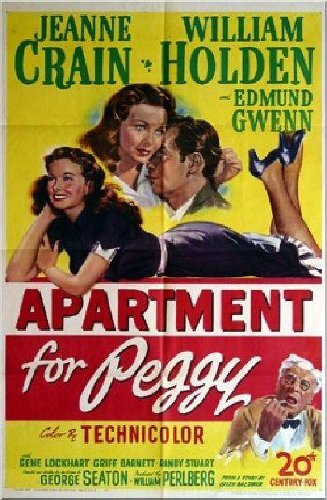
Apartment for Peggy is one of those Classic Hollywood films packed with pleasant surprises. The first of them is Edmund Gwenn. He’s best remembered as Kris Kringle in Miracle on 34th Street. Here he’s directed once more by George Seaton this time playing a listless university professor.

He lives off his pension in his crusty old abode spending his evenings with the same colleagues playing the same music they have for years. However, one evening he quite matter-of-factly announces his aspirations to commit suicide. He’s very rational about it. Still, his doctor won’t give him more than two sleeping pills at a time so he dutifully stores them up for a rainy day.

Then, something else far more momentous happens. He meets a young woman (Jeanne Crain) on a bench. Peggy Taylor motors about 1,000 miles per minute — her mind and conversations leapfrogging all over the place — so her new acquaintance can barely get a word in edgewise. He’s bowled over by her irrepressible zest for life. She’s precisely the person to prickle the professor’s curmudgeonly sensibilities. But she’s also the best equipped to turn Mr. Hypothetical’s life upside down for the better.

Because she tackles just about anything she sets her mind to with this same infectious verve. This is not just the age of the GI Bill (her husband is currently a student), but they are also dealing with a housing crisis. She puts her ear to the ground and manages to scrounge up a space in Pop’s decrepit attic. He’s quite against the imposition and still, Peggy keeps ping-ponging off the walls leaving no room for a rebuttal.

It’s one of many miracles how she spruces up the space and puts it through an astounding transformation. This is just the beginning. With Pop’s begrudging help, she conceives a daytime course for wives and mothers so they can learn about the great philosophers of the modern age (Spinozi included). They want to receive intellectual stimulation on par with their husbands so they can communicate with them.

Pops soon learns his new students are intrinsically driven to learn, and the professor is delighted to serve as their instructor because they seem to intuitively understand his teaching as his most receptive pupils. Their discussions are life-giving. You see already how Peggy single-handedly resurrects the old man so he’s able to see the world with new vim and vigor. Now it’s his turn to return the favor.

William Holden is just about the most innocuous thing about the picture, and that’s not to say he’s bad. Still, this is a picture made by the chemistry of Crain and Gwenn. It acknowledges the generation gap chafing between most any generations with varying perspectives on life with a comic touch. However, any conflict on the part of the elders ultimately engenders mutual affection.

Best of all, it’s a film about ideals and worthwhile pragmatism where the merits of both are made evident. But then again, film is not so much a science as it is a philosophy, an art — concerned with humanities — and the film works in this manner.

It gives off the appearance of a light, inoffensive comedy as we conceive would exist in post-war America. There are many. Certainly, this is true. However, it also sheens with warmth and goodness. Seeing the movie multiple times, the appeal of its brand of geniality just continues to bloom.

3.5/5 Stars

Take Care of My Little Girl (1951)

Sorority movies certainly feel like they’re solely made to meet an audience demand as a convenient cash grab. Take Care of My Little Girl wasn’t the first picture in this genre as I can think of at least a couple predecessors like Sorority House and These Glamour Girls (1939).

However, this movie actually had its origins in the master’s thesis of Peggy Goodin, who eventually turned her research into a novel. She was particularly concerned with how racial and religious discrimination played out in the highly moderated spaces of college sororities. To be clear, 20th Century Fox’s adaptation excises all of this commentary by casting their stable of homogenous Hollywood starlets (Jeanne Crain, Jean Peters, Mitzi Gaynor, Betty Lynn et al.) and a couple of male heartthrobs.

And yet that doesn’t mean the film doesn’t come with any teeth. For its day, it was actually rather controversial if only for its forthright portrayal of the social politics and hazing rituals that have continued to go under scrutiny generations later. The film looks different and yet at its core, it speaks to the very same issues we see today.

Jeanne Crain has such a radiant poise, it’s so easy to like her and not only like her but admire her for how she cares about others. Because she’s a shoo-in as a legacy at Tri-U sorority. Just as importantly, she’s probably the prettiest girl on campus. Not even the resident mean girl Dallas (Peters) can blackball her.

Liz cares deeply for her friends and isn’t totally swayed by the popularity contests even as she strives to make a good impression. She strikes up a rapport with a slightly cynical G.I.-turned-student (Dale Robertson), who helps advise her on classes and thrumbs his nose at the establishment after everything he’s been through. He recognizes something different in her that he likes.

Still, she’s not totally impregnable. Like any young person, she wants to be well-liked helping the class flirt (Jefferey Hunter) with the answers to his French exam. This in turn leads to being pinned. She’s the talk of the sorority house. And yet she’s not easy to categorize.

The picture is surprisingly poignant and perceptive. It’s not some hyperdramatic, superficial portrait of college life even if it’s playing to a specific audience. Also, thanks in part to Crain, there’s a genuine candor to the picture and a visible evolution to this young woman.

It may not be a lot, but it’s something. We do see her change as a human being. Surely college life looks so different now 70 years on from what we’re used to, and yet there are elements that have not changed. We still have fraternities and sororities and social hierarchies. I was aghast to realize even bluebooks have been around for well nigh a century!

This movie doesn’t necessarily suggest these institutions are inherently bad. However, sometimes we believe that tradition is good only because it’s the way things have always been done. But there should be better reasons. There need to be dissenters and people to challenge the status quo. There need to be brave folks who are willing to do what is right compared to what is easy. People who are loyal to their friends rather than simply playing the games for want of status and approval.

Even if the Epstein Brothers’ script forgoes some of the most intriguing aspects of the original story, I appreciate that they explore their topic with something a little bit more involved than superficial exploitation. It actually strives to be about something, however small.

3.5/5 Stars

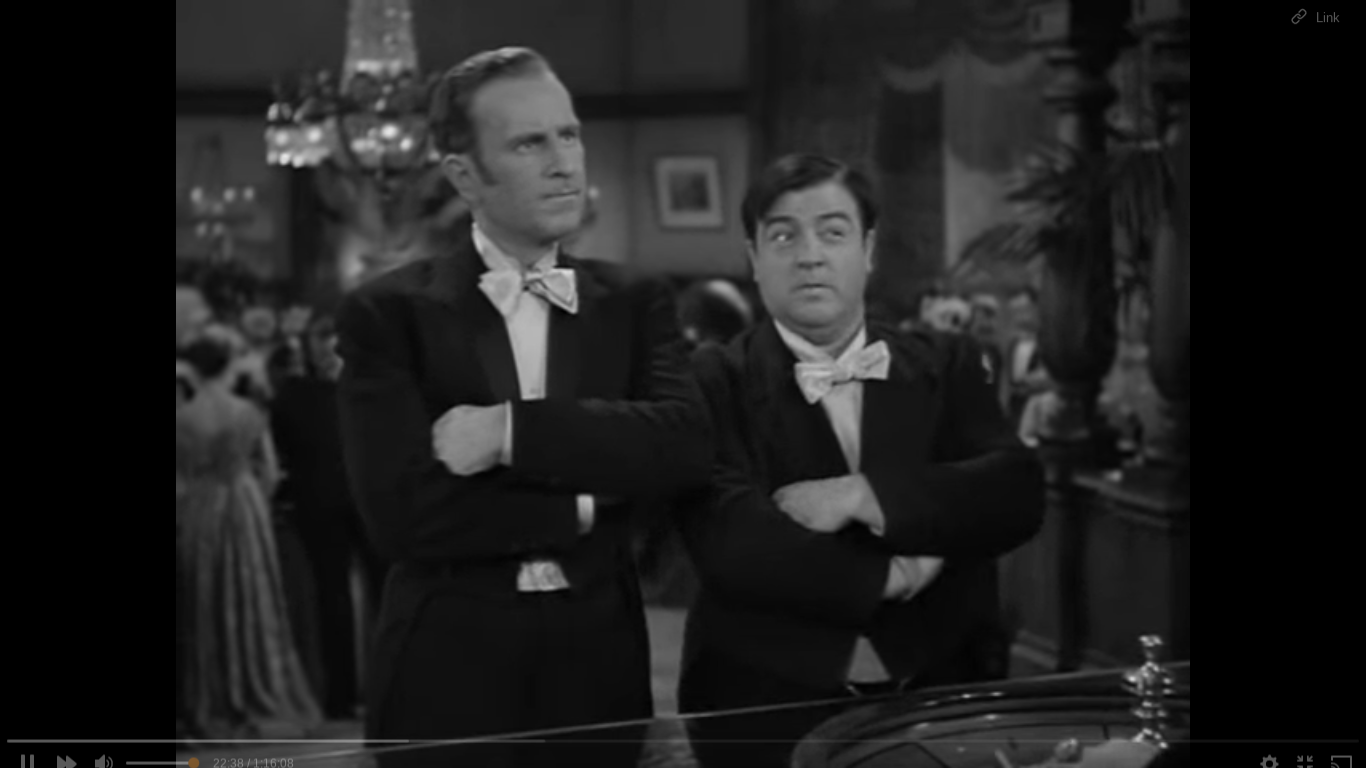
Abbott and Costello Films: Naughty Nineties, Time of Their Lives, A&C Meet Frankenstein

The Naughty Nineties (1945)

The next genre Abbott and Costello took on in The Naughty Nineties was the show boat-style musical. Henry Travers fits as a kindly old ship captain who promises family-friendly entertainment headlined by his daughter and a very familiar leading man (Bud Abbott).  Costello crops up in a local band pounding his drum with a parade off the beaten path. Soon enough he’s getting up to all kinds of his usual shenanigans as the lone stagehand for their stage production.

Comedy like this must have a rightful antagonist: Rita Johnson and Alan Curtis lead a trio of shady malcontents. They’re getting brushed out of town, but they set their sites on the naive Captain. His one vice is gambling, and they know how to bend the odds. Soon he has no recourse but to work with them by their rules. They commoditize and taint all he’s worked so hard to build.

Enter Abbott and Costello. They take on a crooked roulette wheel with the hiccups using a wad of chewing gum. Lou makes himself useful in the kitchen whipping up a feather-filled cake though he gets his comeuppance with a cat burger routine that has him cringing over his dinner after every mew.

Although it’s not very organic and feels like the most shoehorned gag in the story (because it was), we do get one of the recorded versions of “Who’s on First?” standing in the halls of comedy as one of the most revered routines of all time. Partially because it only works with the duo. You need the straight man, you need the comic, and then the situation to put them at odds. Few have done it so cleverly as this one.

The rest of the movie isn’t so lofty and that’s okay. Costello’s running around the deck being chased and chasing. It’s puerile entertainment, but not the worst we could have. If nothing else, his ever-present wheezing, warbling sound effects feel reminiscent of Stan Laurel though Costello’s portly frame makes him feel a little more like a man-child. This too became the bedrock of Abbott and Costello’s comedy.

3.5/5 Stars

Time of Their Lives (1946)

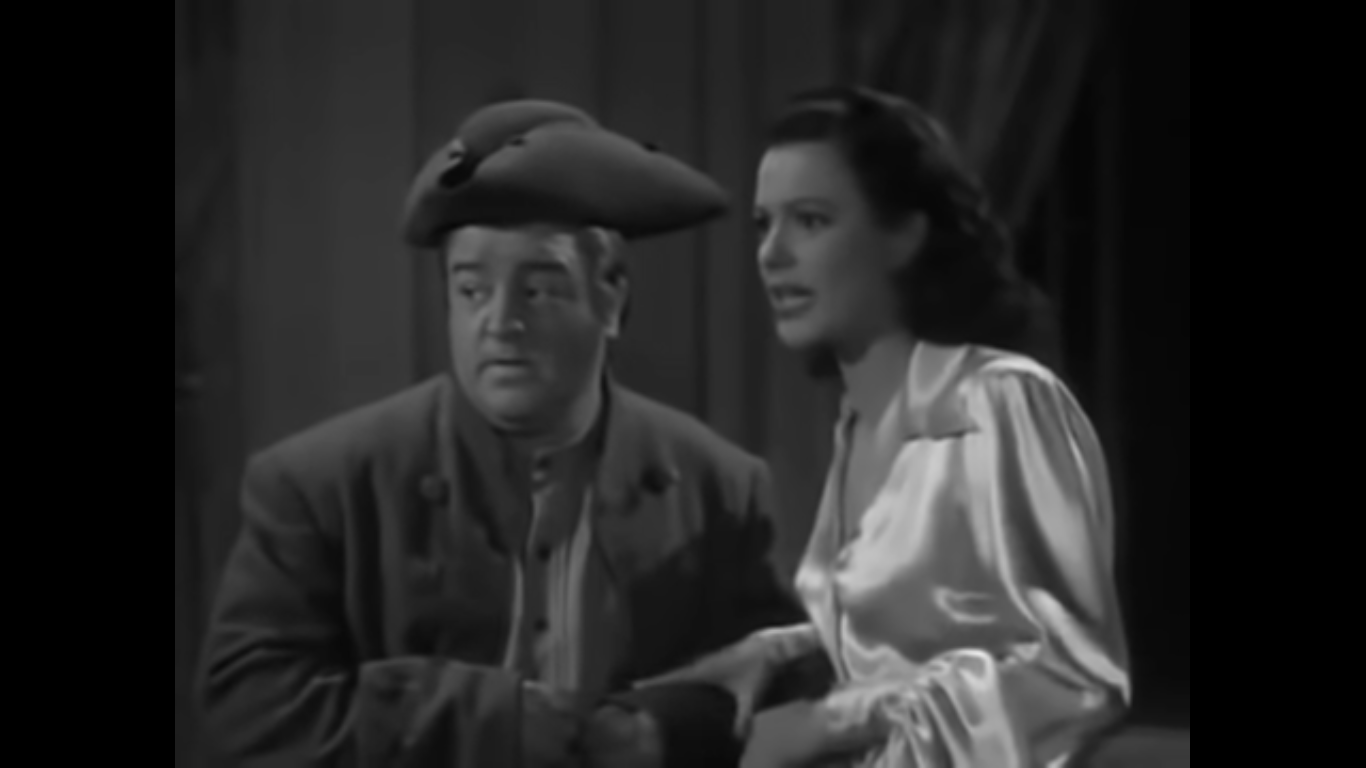
Time of Their Lives feels like an obvious departure for the team. We found ourselves planted in a colonial drama with a spritzing of the usual comedy. Box office woes or not, I’m not quite sure I’m amenable to how they retooled the Abbott and Costello formula. This movie begins as a straight period piece. It can be done well with something like The Court Jester, but it does feel like the boys rarely get enough time together. Perhaps this was by design.

Still, like many of the great comedians of their day and age, they seem to work best when they can break away from the rigors of plot and the confinement put on them by a narrative arc even if it’s for the sake of a few throwaway gags. Because this is what their entire reputation is founded on, and it’s these moments in between where they lose the plot and we gain laughter.

Time of Their Lives is certainly in danger of becoming moldy pretty fast if not for a quick change of direction leading into an entirely different movie. The ghost angle is something — Mr. Topper redux if you will — but it feels a bit uneven and not quite in the vein of what we’re used to. What it does morph into is a bit of the Costello and Marjorie Reynolds show, which isn’t an entirely bankrupt proposition. In comparison, Abbott as a straight-laced and tormented psychiatrist doesn’t provide much in the way of genuine laughs. He functions best in conjunction with his able partner.

I’ve already made it painfully apparent, I’m not an admirer of haunted house films with seances and the like, but Abbott and Costello probably give us the funniest version (although I need to rewatch I Love Lucy to make doubly sure). I especially appreciated when Costello the apparition made his presence fully known by rapping his comedy partner over the foot. There’s not a great deal of this kind of interplay in the picture, but it seems telling these are still among the most noteworthy moments.

3.5/5 Stars

Abbott and Costello Meet Frankenstein (1948)

Between the animated credits and their pairing of some historically lucrative stars, Universal does well to promote their assets. Abbott and Costello Meet Frankenstein also shows an understanding of the continued shelf life of IP. If that was true in the 1940s, it’s even more of a buzzword in the modern media landscape.

At its best, we get Abbott and Costello trading off their impressions of some of the most iconic monsters. But more important than that is how our team is back together again. All is right within their world with their patented antagonism restored along with their attempts at menial labor.

Abbott’s bossing Costello around even as he’s somehow managed to nab the pretty girl. It’s really a reversal of the Hope & Crosby dynamic where Bing always seems to get the girls. Here it’s the lovable pudgy nincompoop Costello. Though both his pretty ladies have ulterior motives.

They also have ample opportunity to bump heads with a belligerent businessman. It’s only the beginning of their troubles. McDougal’s House of Horrors is a personal showcase for the traditional gags where Lou crosses paths with Dracula who is very much alive, though he’s never around when Bud comes back to investigate.

Lou can’t catch a break, but of course, that’s the gag. Bela Lugosi’s Dracula, Frankenstein’s Monster, Lon Chaney Jr.’s Wolf Man, he unwittingly has run-ins with them all, and somehow comes out on the other side still intact. This is the ultimate joke that can only work with a foundation of laughs. It’s his absurd invincibility in the face of all of this supernatural threat and menace that seems bent on destroying him time and time again.

It’s also one of the first movies in their catalog with a dramatic turn — Abbott must believe his buddy for once — he knows he’s not just seeing things. It does disrupt the situational irony fundamental to their brand of comedy, but it comes late enough, we’re ready for our resolution, and the movie pays it off in the most melodramatic Hollywood form.

But it is a glorious crescendo of scaredy-cat comedy, and it seems to suggest to forthcoming generations just what can be done if you successfully meld these genres together. Because it doesn’t merely trivialize them. By weaving together the mythology of the Universal monsters from their own standalone entries, this addition effectively built on all their legacies. 

3.5/5 Stars