The Raid (1954): Starring Van Heflin

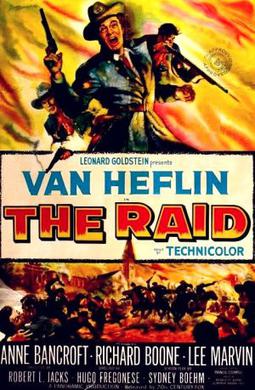
The_Raid_FilmPoster.jpeg

On first glance, The Raid feels like a punchier, B-grade version of John Ford’s The Horse Soldiers (1959). In time, it winds up being a fairly apt descriptor. The fact that the other Civil War piece is a lumbering giant gives The Raid an unpretentious edge. Because in the casting department it still has a fine ensemble to work with, despite its humble production values. When Lee Marvin is your fourth bill, the prospects for an absorbing experience are great.

Likewise, the story grabs hold of the real-life events, taking a few artistic liberties, but honing in on an interesting theme. It begins as a mere mission movie — a vehicle for revenge — only to evolve into something more nuanced and ultimately, heartbreaking. This time we see the action from the other side, beginning on September 26th, 1864. These are not rogue Union cavalry looking to wreak havoc but renegade Rebels preparing to break out of their prisoner-of-war camp.

In essence, we have Stalag 17 meeting not only The Horse Soldiers but some amalgamation of The Professionals and The Dirty Dozen, except, again, we are working within budget constraints.

Major Neal Benton (Van Heflin) is the calculating ringleader, who gets his men across the border to Canada in order to plot out the next plan of action. The Raid becomes a story of infiltration, watching and waiting for the best moment to strike. The man sent ahead to do the recon is of course Benton. He dons his best gentlemanly duds to make the necessary arrangement and takes on the name Neal Swayze as part of the masquerade.

News of General Sherman’s march to the sea stokes the flames kindling behind their ire. The purpose becomes twofold. They want to avenge their brothers-in-arms as much as they want to become a thorn in their enemy’s side. Their spot of choice is the Northern oasis of St. Albans. The undercover Rebel makes acquaintance with the local bank owner (Will Wright) and finds agreeable domicile in the home of a war widow.

Anne Bancroft’s role is not altogether demanding as she plays the docile love interest. Regardless, she does this well, even getting a few moments to assert herself. After all, she is the enemy with a human face and we care for her as much as we do for Heflin. This equal footing is key. It causes a schism because alliances have been split. We begin to understand the deep fissures running through the ravaged society.

Even with the mistrusting Captain Lionel Foster (Richard Boone), it’s less about him thinking the other man is traitor and more so, his belief Swayze is elbowing in on his territory. After all, he’s known Katie Bishop far longer. He’s protective of her.

So with time, these relationships grow and Swayze receives a generous amount of acceptance. Soon the Confederate forces slip into town incognito, ready to tear it apart and hit the Yankees where it’ll hurt — in their pocketbooks. An auction of scavenged Rebel goods boils the outsider’s blood. It instigates a contentious bidding war that he finally diffuses. It’s not yet the time for action.

Lee Marvin, forever the loose cannon, all but blows their cover, threatening to set off a disastrous chain reaction. After going on an alcoholic binge, he gets it together just in time to stumble into the local sanctuary of worship. Their hard-sought plans look perilously close to being spoiled. Swayze steps out of the house of God a local legend and feeling even more like a heel.

As such, The Raid is this strange jolting empathy machine. This crisis of conscience comes to bear because the enemy has surprised him and welcomed him into the fold as a fellow human being. Of course, he can barely look them in the eye much less take their generosity, knowing full-well what he has been commissioned to do — completely obliterate their homes.

After all, their soldiers did little better to his home in the South. If we were simply to go by the eye-for-an-eye mentality, and the fact this is wartime, he has more than a right. However, this does not make the endeavor any easier. On top of the logistical elements, Northern troops patrolling through, and the need for stealth and efficiency, all of a sudden he has to deal with complicated relationships.

In the form of the widow Anne Bancroft and her precocious son, the local banker Will Wright, and even the standoffish Richard Boone. He starts to soften to these folks. The most impressive evolution is with Captain Foster. He shows a vulnerability and an ultimately retained dignity as the plot progresses. He would be so easy to villainize because Boone, Marvin, and Claude Akins were so good at those parts. And yet they can all be in this picture and function differently. Boone actually comes out looking extraordinarily sympathetic.

The fact that these characters become more and more like human beings, makes his mission all the more perplexing. This very element gets at the core dissonance of the Civil War because we were literally turning brother-against-brother, sometimes across arbitrary lines of distinction.

What this film suggests is that we have more bringing us together than separating us. Still, we stand doggedly to our presuppositions. Certainly, we cannot downplay the crucial issue of slavery (though it doesn’t play into this tale at all), but I think there are already some intriguing implications.

The line between feelings and duty become perilous roads to traverse. Van Heflin, while never the classically handsome lead, had something far more compelling. There’s an inherent honesty within his stock. He can be genial, pragmatic, even harsh and unfeeling. Whatever he is you never feel like he’s being inauthentic as both hero and villain. This ability carries the picture’s emotional core opposite Bancroft and the stellar troop around them.

Events run their course and yet there is an unquestionable toll to them. A war picture often fails if we don’t feel abhorrence for the violence. But there also needs to be a human connection. The Raid somehow manages both with relative ease. Movies such as this never grow tiresome because they carry with them an invigorating life, in spite of the inherent restrictions hoisted upon them.

3.5/5 Stars

Saddle The Wind (1958): In Memory of Richard Erdman

Saddle-the-wind_posterJulie London provides her airy voice to the title track and Elmer Bernstein gives his scoring talents for the rest of the picture. In these beginning moments, Saddle the Wind evokes the expanse of the majestic landscapes of the West like the best of its brethren. There is a sense we really are out on the frontier, not some manufactured piece of artifice. For the time being, the film maintains this sense of the wind-open spaces away from Hollywood soundstages.
It gets its first jolt of action when a leering Charles McGraw stomps into a saloon and shoves his weight around for food and a bottle. He’s got his feet kicked back and starts breaking bottles over counters just to get his point across. The locals aren’t looking for any trouble, but he’s certainly looking for someone: gunslinger Steve Sinclair (Robert Taylor).

Here we must introduce the glut of Saddle The Wind. Robert Taylor is still Hollywood handsome but time has set in and made his features more applicable for the West. Where a hard life and past wounds lead people to make a new existence for themselves. The reformed gunfighter is not a new concept, but it is a handy one. It gives a man menace without him having to show it, until it’s absolutely necessary.

The real action arrives in the form of his spunky dynamo of a little brother, who comes back to the family ranch with a woman (London) betrothed to be his wife. His big brother is less than pleased to find Tony has gone and got himself hitched and spent his money on a spiffy new gun.

If anything is cemented in this preliminary scene, it is that one is the hothead, the other maintains reproachful silence. They are the yin and yang of the West. Cassavetes and Richard Erdman, as rowdy Reb veterans, form a rambunctious partnership looking to tear up the town and have themselves a bit of fun. They positively take the bar by storm, only to have their merriment disrupted by the same out-of-towner. Except the man Venables meets up with isn’t an old local or a squeamish bartender.

Tony is on top of the world, and if there’s one thing he’s never gonna do is back off even when the other man isn’t looking for trouble. His quarrel, after all, is with the elder Sinclair. Still, the feisty buck takes it as a personal affront. He goads the man into action. There is no other way for it. Guns are drawn.

Steven rushes on the scene an instant too late. His brother isn’t killed, but something worse happens. He’s filled with renewed fire. The taste of power — the ability to strike a man down with the pull of a trigger — is like an intoxicating liqueur.

Steve Sinclair has long kept the peace with the main landowner in the area Dennis Deneen (Donald Crisp), who is, by all accounts, a businessman and a pacifist. The stage is set for something…

Clay Ellison (Royal Dano) is a proud man clinging unflinchingly to the promise of land out west, formerly bestowed on his dearly departed father when the territory was still wide-open. He’s come on the scene to take back what’s his even as Steve tells him, brusquely, he’s trespassing. In a different context, that might be the end of the incident.

What ignites it irrevocably is a remnant of North vs. South animosity left over from the Civil War (Ellison is a proud Union man with great distinction). The torchbearers are Tony and the impish Dallas as they have a grand old time with the squatters, upending their wagons and chasing away their livestock in fits of gunfire and laughter. It’s a bit of festering payback for wartime grievances, and it’s easily the most devastating scene, right smack dab in the middle of the picture.

It’s a testament of what happens when men take squatter’s justice into their own hands and when the protective big brother does little more than beat back his baby sibling and throw money at a problem. Nothing is remedied.

However, Saddle The Wind ends up being far more contained than I was expecting. It’s fundamentally a character study about two brothers and how they grapple with one another, based on outside stimuli.

We could name a number of people, first the new wife who is brought home. The old vagabond war buddy who is an instant enabler. A gunfighter with a vendetta looking to tromp up old wounds. Even the obdurate homesteader who’s not about to get pushed out by a punk kid.

None of these characters seems to truly exist for themselves. Even lord of the valley, Mr. Dineen, though deeply humanized by Donald Crisp, is just another piece in the brother’s story. This observation might seem too harsh, but with Rod Serling as the story’s scribe, it seems conceivable to say the intriguing idea — because it is that — takes some precedence over the characters.

There are moments to turn the stomach, feelings of conflict, and wrenching segments of tension. This is not a completely lethargic film by any means. If anything, Cassavetes alone sets it ablaze with his youthful fire. Still, some component seems to be missing.

With this vast assemblage of characters, it could be that there are a handful of stories worth telling when the credits roll, and we only got over the cusp of one of them. The ending lacks all the cathartic payoffs we craved so dearly. The strands don’t entirely tie together, though the movie does try and solve everything with a silver lining. Surely it’s not that easy.

Whereas the opening moments felt like a regalia of western imagery, Saddle The Wind settles into almost small-screen paces, going from long shots full of real sagebrush to close-ups with backdrops painted on.

Although it’s hardly fair to consider the film’s merits on this issue alone — I think the suspension of disbelief being broken speaks to something — even as these characters never settle into something truly genuine. It’s allowable to be harsh with critique only because Saddle The Wind has its share of all-too-brief shining moments to go along with its potential. It’s an oater with enthralling elements not fully realized.

3/5 Stars

Note: I watched this film literally two days before the passing of Richard Erdman at the age of 93. He was one of my most beloved supporting actors. He will be deeply missed for his myriad of classic roles and for his work as Leonard on Community.

No Name on The Bullet (1959): America’s Hero Becomes a Villain

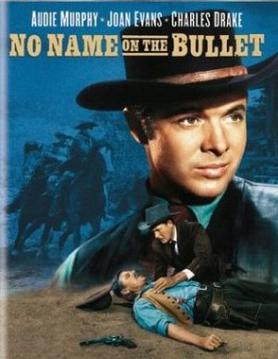
Nonameonthebullet.jpg“We might be the only two honest men in town.” – Audie Murphy as John Gant

Audie Murphy had the added reputation of being a hero in real life, and so it hardly hurt him in his efforts to portray valorous protagonists on the big screen. However, despite being a fairly humble effort, No Name on The Bullet deserves some acknowledgment for giving Murphy the chance to be on the other side of the spectrum.

He’s introduced in the picture with foreboding music. It’s the only character cue we need to go with his dark clothes. He’s no good guy. Soon he’s taken a room at the local hotel and his very presence has gotten the whole town buzzing with apprehension.

Initially, it feels like a somewhat corny setup hinging on overt melodrama. Although Murphy’s by no means over the hill, and even though I’ve only seen him in a couple films, he was never really a compelling lead.

Early on, his youthfulness aided him as did the mystique of his extraordinary war record. If anything, he is a living testament to courage not being solely predicated on imposing physical prowess. Whereas the westerns of old certainly were, and he does not meet one’s typical impression of a gunslinger. His part as John Gant, though menacing and curt, hardly can be considered intriguing at first glance. He feels like a walking trope.

But as he settles in, everything gets more and more engrossing. In fact, the movie’s increasingly deceptive because his part gets better and better the more involved the townsfolk become.

The implications are that his very name strikes fear in every man because he is a notorious assassin who has killed upwards of 20 or 30 men in the past. However, he’s never met a conviction of any kind because he always goads his targets into fighting back. The question remains: Who is he after? The subsequent punchline seems obvious. Someone is going to be dead by the time he leaves town.

The local Sheriff (Willis Bouchey) is a decent man who nevertheless feels helpless. If Gant doesn’t do anything, there’s no law against sticking around town. All he and his deputy can do is keep an eye on the fort.

It’s this unsettling, restless stalemate of the narrative conceit that proves to be the movie’s bedrock. There is also an innate reminder No Name on The Bullet functions very much as a morality play. In terms of story, Gant is the stimulus in the town causing the dark predilections to come to the surface or, more comically, the scurrying rats who want to confess their shading dealings.

Because his mere presence sends shockwaves through the community. The tension comes with not knowing who he is actually after. I even momentarily thought (like The Gunfighter) maybe he’s simply looking for a respite. Not so…

Despite the antagonism, Gant does find one benevolent soul (Charles Drake) who doesn’t hold his reputation or vocation against him, at least not initially. It’s easy since a certain amount of ignorance proves blissful.

Their mutual respect within the picture is informed by the real-life relationship between Murphy and Drake. Murphy considered the other man his best friend and used his pull to get Drake in many of his movies so they could work together. It’s not altogether magical, but there’s no denying it helps their rapport.

Luke Canfield (Drake) is son of the blacksmith while simultaneously filling in as the local doctor. He is pledged to be married to the perky daughter (Joan Evans) of one of his ailing patients. There is little doubt he has a stake in keeping the peace. Even as they come to understand each other, there’s a sense that he and Gant remain diametrically opposed. Still, the gunman suggests they aren’t actually all that different.

They commence a literal chess match that becomes a pretense for the town’s many issues. They trade personal philosophies, with everything that happens around them informing their views of humanity. In the wake of their meeting, the real games begin.

With the sheriff’s powers in question, the invalid judge proposes two alternatives: either vigilante justice — the western standard of mob rule — or let Gant kill his man. Then, everything would be settled.

Though hesitant, Canfield finally resolves to get at the head of the mob to try and ensure no further bloodshed will take place. As town physician, this is his main prerogative. As a trained killer with a job to do, Gant has other ideas, even if he’s not looking to take the other man down with him. They appear to be two immovable forces at a kind of impasse.

The final twist is a lovely bit of, shall we say, poetic justice. The story is served best by an open ending because this is not a distillation of reality; it is a western parable of good vs evil, human corruption, and ultimately, some form of instinctual integrity.

Thinking about it in retrospect, it really is a fine stroke of inspiration to turn America’s greatest WII hero into a villain. It sends a distinct message to your audience: We must look inside ourselves and consider our own character.

Do we stand up to scrutiny? Are the heroes we prop up all that different than our villains or do we often choose to see what we want to? For that matter, are we very far removed from those that we conveniently categorize as villains?

Now 14 years after the end of WWII, you might say America was in a place to start coming to terms with its specters. The 50s were still an age of innocence, but we were on the cusp of something far bleaker. No Name on The Bullet is a portent for a future generation of westerns. Those bearing the mark of a far muddier morality.

3.5/5 Stars

Man Without A Star (1955): Kirk Douglas Drifting

ManWithoutAStar1955Poster.jpgThere are few better ways to get yourself into the spirit of a western than the majestic gusto of Frankie Laine (self-parodied in hilarious fashion by Blazing Saddles). It’s the segue into a mythical world.
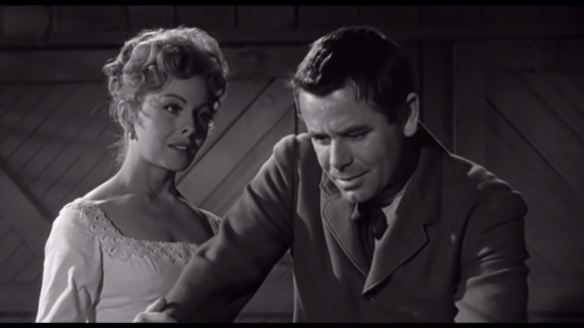
I assumed Kirk Douglas would be the fellow lacking a tin star. And yet the title is a bit more poetic, if not altogether helpful. He’s a staple of westerns just as the plot he finds himself ensconced in is an archetype. Dempsey Rae (Douglas) is the quintessential drifter, constantly on the move. He never had time enough to look up at the constellations and settle on his place among them.

Not surprisingly, all things in the film revolve around Douglas who brings his usual vigor to the role. A fun dose of jocularity tones down his usual intensity, finding time enough to even knock back a few tunes on the banjo. Because, if I’m completely honest, he’s not the first man you think of as a western star. Not the features or the physique.

Still, he’s able to inhabit the role such that he spills out into everything and holds down the film with his very presence. If not an immediately recognizable cowboy, he is a larger-than-life talent.  His part in the story begins in a cattle car where he winds up sharing his open-air compartment with a callow kid from Texas (William Campbell). They witness Jack Elam knife a man, turn him in to the authorities, and get out of further trouble as stowaways.

They stop at the nearest town just passing through with the two men joining forces and becoming instantly chummy. The older man mentoring the young buck — keeping him out of trouble, drubbing him up a job, and teaching him how to shoot. Fancy tricks don’t matter. You’ve got to be quick and sure on the handle. Furthermore, they keep each other constantly amused, a fine example being when the naive wrangler walks into the local saloon in the most hilarious new duds.

In fact, aside from the opening run-in with the authorities, this is a thoroughly amicable storyline, at least until barbed wire comes into the picture. One of the local ranching families aren’t bad folks by any means, but they certainly have a different way of thinking.

There’s a sense it all goes back to the mythos of the open range — nothing to stop you, nothing to drag you down — so you remain free. This is the type of idealized rhetoric Dempsey speaks in. The wire gets in the way of this tradition, finding a hard-and-fast way to section off and also commodify the land.

Strap Davis (Jay C. Flippen) is the foreman, a decent man who brings the boys on as cowhands to work The Triangle, owned by some unnamed investor from back east. Among other luxuries, they look with awe at the new-fangled inventions like indoor plumbing with a toilet inside the house. They’re in for an even greater surprise when their new boss turns out to be a woman named Reed Bowman (Jeanne Crain).

Crain is domineering as the cattle magnate and incumbent owner of the Triangle. Without question, it’s one of her most authoritative and thus, one of her most intriguing roles. Behind Douglas, she is the most commanding force as she looks to surround herself with cunning enablers, aspiring to oversaturate the pastures with her stock and gobble up as much wealth as she possibly can.

It’s the age-old conundrum. Douglas is smitten with her assured beauty, even to the proposition of marriage, and yet he can’t carry himself to stay with her as she becomes more and more consumed with her ambitions. The cattle wars end up being fought more by outsiders than those at its center.

Richard Boone and a new crowd are called in to give the cattle matron a more persuasive bargaining power. They rough up Rae something awful, leaving him hog-tied like a pig after one sound beating. Meanwhile, the formerly inseparable Texans are now on opposite sides of a feud. All of a sudden, Jeff’s not the callow laughing stock with a dumb grin on his face. He knows how to kill, losing a level of innocence. It becomes friend against friend.

Claire Trevor is a favorite, and she could play the hooker with a heart of gold part with her eyes closed.  Apart from being the obvious counterpoint to Crain, she is the friend and the romantic interest Rae can fall back on. She will always always have him unconditionally. She actually makes the dead-end role into something, but it’s a shame she’s not given something with more heft or narrative significance.

We have this continued swinging of allegiances. So it’s not a new storyline with its cattle and factions — disagreement over land, and guns looking to muscle their way in by railroading the competition. All of these elements are easily derivative from previous oaters.

But the cast is a joy to watch in action for what they are able to bring to the scenario. It makes for an engaging interplay as characters are turned against each other and stretched to their limits, just enough to make it compelling without breaking with convention too radically.

Expect there to be the preemptive happy ending where reconciliation is discovered and good gives evil a sound drubbing. There’s nothing wrong with that because it’s the drifter’s journey to get there holding our primary interest.

3.5/5 Stars

Note: This review was written before the passing of Kirk Douglas on February 5, 2020. 

The Fastest Gun Alive (1956) and Glenn Ford Eaten Up Inside

the fastest gun alive 2.png

“There’s always somebody faster.” – Walter Baldwin as a Blind Man

The Fastest Gun Alive chooses to reveal its threat before it offers up anything else. A hulking Broderick Crawford rides into a no-name town flanked by two cronies. He yells into the saloon for some man to come out and proceeds to gun him down in a quick draw. The only reason: Bragging rights. He wants to be known as the fastest gun, and now it seems he’s earned the title.

We now know the inevitable will happen. There’s always somebody else. In this case, it has to be Glenn Ford. Sure enough, the story takes us to another town. It seems like it’s made up of honest people trying to make a go of life on the frontier.

Among their ranks is George Temple (Ford), who runs the local general store with his devoted wife (Jeanne Crain), well along in her pregnancy. Per usual, Ford plays a variation on his grounded hero with a demon planted in his past. It’s not said explicitly — but his actions speak for him — his current life is eating him up inside.

So much so he hides his excursions out to shoot targets from his wife and buries his old firearm in the backroom where it can’t be found. Normally well-groomed for the West, Ford’s hair seems often stringy and plastered down on his face. A new look for him and he doesn’t have a hat to corral it. Because he has presumedly shed all aspects of that kind of life. Still, there’s little doubt it lingers in his past.

For now, there are happy times to be had. The high point is a town-wide shindig complete with some fancy stepping from a young Russ Tamblyn. His shovel stilts dance becomes a highly involved number showing off his physical prowess in what feels like a black & white extension of Seven Brides for Seven Brothers. In one solitary scene, The Fastest Gun Alive shows more technical verve than other less exuberant musicals.

However, soon thereafter, the stage brings news of the gunfight, and it has the whole town buzzing with excitement. It’s typical of simple folks. The pontificating old man McGovern keeps the town enraptured with his yarn-spinning about the event of the century, at least as he tells it.

Meanwhile, Temple continues to suffocate under the life in his store — where the games of customer service are driving him insane. Between insufferable customers with their petty requests and grubby children handling the confectionaries, he’s about had it. Except this is only a manifestation of his underlying problem. The news of the gunfight prods old wounds as does his conflicting issues of pride.

He starts falling back on old habits like whiskey drinking. The monkey on his back won’t leave him alone since he cares so deeply about how others perceive him, just as he cannot handle their unintentional derision. It’s what makes him the antithesis of Shane or Atticus Finch, for that matter.

George Temple is insecure. It goes back on the age-old tenets of manhood, being able to prove yourself, to be taken seriously in the ranks of your gender, whether through feats of strength, cunning, or sheer stupidity. However, the consequence is his greatest fear — making himself a whole lot more conspicuous — and sounding the call for anyone who wants to challenge him.

Echoing High Noon, the church becomes the town’s public forum, in this case, involving a man’s resolution to give up his gun and leave the town behind. The bottom line is no one wants him to leave, and he hasn’t committed any infractions. One by one they join in solidarity to keep the secret so no one will ever hear of Temple’s exploits.

It seems a rather strange scenario. But what it does is indicate just how close-knit this community remains. This alone is commendable and yet truthfully, the story stalls here. It opts to bide its time, milking the dramatic irony for all its worth. The inevitable feels like it’s continually being delayed in lieu of a debate.

Even if the townsfolk don’t know what’s coming, he knows that someone riding in to test out his skills is imminent. He doesn’t want to be around to meet them. That is, of course, unless they come to meet him…accidentally. Because it only takes one, in this case, a boy, to spill the beans.

There is no taking it back, and Crawford won’t rest until he’s proved himself the better shot, even with a posse on his trail. It’s these moments where not only Crawford comes into fuller relief but also his partners in crime, a pair of solid characters in Noah Beery Jr. and John Dehner. Two lesser men would have made this interim period far less agreeable.

Even then, it feels like the story’s fizzling out a bit, although it does maintain this one galvanizing strand of tension. It’s almost enough. The one crucial piece of information is finally revealed, and it’s not so much of a revelation as it turns our theme on its head.

Temple’s father was a famed lawman who taught his son everything he knew. He became an even faster man but he’s never drawn on another human being. It’s kept him scared out of his wits. He admits in the same scene, “I’m so afraid, I’m sick to my stomach.” So it’s no longer about pure bravado. True bravery is suggested to be doing something even when you are deathly afraid. I’ll leave the rest to your imagination.

This is arguably one of Ford’s better performances for the very fact he’s forced to shed his typically cool and robust exterior in favor of something far more tremulous and vulnerable. It relies on the unraveling of his purely masculine image. Otherwise, The Fastest Gun Alive deserves its place rightfully several rungs below the likes of The Gunfighter, High Noon, Shane, or even Day of The Outlaw. That is no criticism, only an honest assessment of a decent western with a unique perspective.

3.5/5 Stars

Indiscreet (1958): In Honor of Stanley Donen

indiscreet 1.png

Note: This post was written soon after the passing of Stanley Donen.

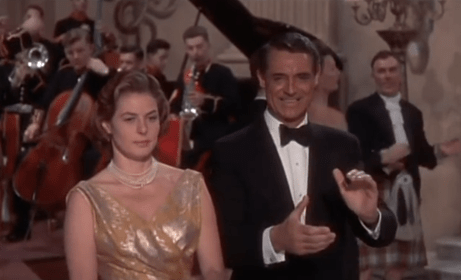
Cary Grant and Ingrid Bergman on adjacent title cards is all you should need to watch the movie. Although I came for an entirely different name because this past spring we lost Stanley Donen — the last remnant of Hollywood’s Golden age — and it seemed necessary to pay him the highest tribute I can. It’s not with words, no, but by actually sitting down and enjoying one of his films.

Ingrid Bergman is one of the sweetest screen stars. She’s not altogether impervious to vengeful thoughts, but you never see her taking it too far.  We always want the best for her, and it’s little different here. Her preexisting life is utter humdrum. Everything about it is just too immaculate.

As a well-to-do, internationally acclaimed actress, she is, nevertheless, a woman who comes back from a tour abroad totally dissatisfied with the men she’s been able to come across. It’s not that they aren’t handsome, rich, good dancers, or the like. But she wants someone interesting, an intellectual equal, and a little old-fashioned charm wouldn’t hurt. Her usual circles don’t appear to be a ready breeding ground for such types.

Anna’s emotionally involved sister — married to a high-ranking official — questions why she has never settled on a man. Perhaps her standards are just too high (don’t listen to her Ingrid!). No matter, it looks to be another dull evening out on the town at a foreign dinner. The speaker is no doubt a snooty new candidate for NATO. It’s a high-class bore.

However, the stuffy ordeal all of a sudden gets a lot more swoon-worthy for everyone involved when Cary Grant walks through the front door. We’ve all but been guaranteed a diverting evening. So Margaret, ever prying into her sister’s affairs, gets set to play a bit of a matchmaker, relishing the setup, and the predictable outcomes. We have our story. Grant being charming and Bergman enjoying his company while still remaining aloof. He’s almost too good to be true. What of skeletons in his closet?

Dare I say, it’s all inconsequential, lest you get the wrong impression? Because there’s no doubt about it. The plot is facile. The conflict is thin. On the other hand, the tete-a-tete is most agreeable. One would habit a guess, without our stars, the picture would be quite flat. With them, all of a sudden, characters and the subsequent story is given texture. Their chemistry is present before the picture begins, and it exits with them after the final curtain. This is one of the keys.

Stanley Donen doesn’t have to do too much touch-up around his already spectacular talent, but he does utilize a split-screen to conveniently mollify the production codes, with the two lovers sharing a telephone conversation in their respective beds. Nora Ephron purportedly loved this movie thus, When Harry Met Sally got much the same treatment. It can be seen as another homage just as Sleeping in Seattle came out of the tradition of An Affair to Remember.

In Indiscreet they occupy themselves talking about the mundane things from the weather, to playing the violin, elder statesmen, and lamb chops. We don’t care all that much because the bottom line is spending time with Cary and Ingrid. There is Grant’s mild reveal. He’s got a big secret. Well, it’s not too big, but I’ll avoid spoiling it all the same.

If Fred Astaire’s dancing is immaculate, then Grant’s is equally so for entirely different reasons.  It’s not from any amount of meticulous choreography, but his spry and innumerable graces. He always walked this phenomenal thin line between suavity and comic pratfalls, no doubt learned in his early days as an acrobat.

His physical prowess hasn’t atrophied, aiding him splendidly on the dance floor in Indiscreet, through every step of his flailing, jumping jig. What’s more, Bergman, eyeing him with an unfettered look of disdain, is equally important. There’s no question it’s a defining scene in an unassuming trifle of a rom-com.

The final act is consumed with Anna’s attempt at a bit of friendly revenge. She puts on a pitiful charade to get back at her masquerading lover, engaging the services of her in-house help. The final punchline is a genuine amount of sincerity coming over the man as the clock strikes 12. Why you ask? Because we want a happy ending.

It’s a strange sensation to see Cary Grant’s profile in an embrace, with Ingrid’s head nestled on his shoulder, smiling off past the camera. I felt like I’ve seen this all before somewhere. Was it in Notorious, An Affair to Remember, North by Northwest, Charade? Maybe it was all of the above. It never gets old. When the greats get together, it’s not always perfection; sometimes all we’re looking for is diverting entertainment.

It seems apt to call upon a line Cary Grant sneaks into the end of the film. He’s harried. It seems like he’s being laughed at for being vulnerable. He hasn’t understood the underlying joke.

So pacing around in front of his giddy romantic partner, he surmises men are the true romanticists. I cannot corroborate if this is true or not, but there’s a sneaking suspicion that Stanley Donen might believe this as well. It’s hard to dispute when you watch his movies, as buoyant and propelled by romantic fancy as they are. Indiscreet is little different. It’s a fitting testament to one of the unsung greats. He will be dearly missed.

3.5/5 Stars

Floating Clouds (1955): Capturing Japan’s Post-War Zeitgeist

floating clouds 1.png

The Odyssey to finally get to Mikio Naruse has been a long and arduous one. I must admit, like many before me, his name carries none of the recognition we commonly lavish upon Kurosawa, Ozu, Mizoguchi, and a select few. So, for the longest time, there was no pursuit. His name was totally unknown.

However, as you begin to familiarize yourself with Japanese cinema (and I must admit to still being a relative novice), there are certain names that you keep coming back to. Masaki Kobayashi and Kon Ichikawa fall right behind the illustrious trifecta. Certainly, you have the Japanese New Wave directors like Shohei Imamura, Nagisa Oshima, Masahiro Shinoda, and Hiroshi Teshigahara.

However, for some reason, I just could not stop thinking about Mikio Naruse. It seemed like I was always being reminded of him. Whether it was Kurosawa praising his writing or Hirokazu Kore-eda saying his style was more akin to the lineage of Naruse and not Ozu. Again, it reflects an oversight on many film aficionados. We do not pay Naruse much respect because, frankly, there’s not much access to his work in America.

In fact, because I am so fortunate to come of age as a cinema lover in a world that is so globalized, with content so accessible, it is not a form of helplessness that I have felt too often. It’s not simply a matter of his film’s being hard to come by; it felt like only a few were readily available.

This absence of his work made it all the more imperative to reach him. Finally, I can attest to dipping into his filmography and finding myself deeply fortunate to have made his acquaintance. If it’s allowable to use a German word to describe a Japanese condition, Floating Clouds captures the zeitgeist of Japan in the aftermath of WWII.

The film’s structure feels as fluid as its title. It trusts the audience to follow along without voiceover cues of any kind, drifting in and out of the present and flashbacks set before the war had ended. This is the fashion in which we get to know our two “destitute expatriates” now reunited in 1946.

They met for the first time in Indochina. It’s a world we can contrast with another romance like Red Dust. An outpost out in the forests of Asian proves a far more bearable place to pass the war.  If you recall, the earlier film is made by the red hot chemistry between Clark Gable and Jean Harlow (and with Mary Astor).

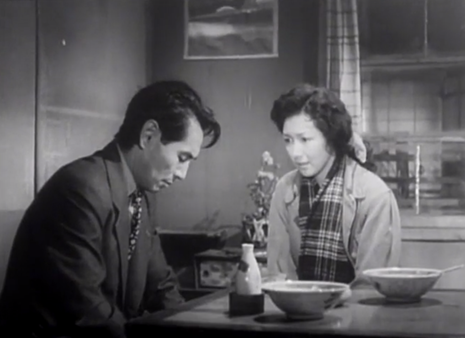
Except in such a patriarchal society, like Japan, it always seems to be the man who has the say. Tomioka (Masayuki Mori) begins his acquaintance with Yukiko (Hideko Takamine) with slight jabs at her, all but solidifying his gruff character for the entirety of the film. These rocky foundations give way to passionate romance and Naruse does something dynamic by cutting right between a kiss in the past to one in the present. So much has changed and yet nothing at all. Much of Floating Clouds is about this reconciling this past with the present.

The pensive serenity is one of the unifying hallmarks of the picture. This is another point of departure with a Hollywood romance like Red Dust. This, paradoxically, feels like a grand statement — choosing a tranquil path in a medium that is so often filled with noise and a world full of constant turbulence.

Even in considering his countrymen, Kurosawa is often more dynamic in composition and action. Thus, it seems most obvious to contrast Naruse with Ozu. However, whereas Ozu heralds his presence within the frames through the meticulous craftsmanship and attention to detail, you do not necessarily see this to the same degree in Floating Clouds.

It is stripped down to a near Verite approach, which still cannot be mistaken for shoddy work. In fact, it boasts beautiful interludes between two people on par with a picture like Late Spring. It’s not a perfectly ordered fabrication of reality where human drama plays out. The spaces feel rich with the impoverished and worn layers of Japan as it lay. The people are much the same, unadorned yet imbued with truth.

Hideko Takamine is extraordinary for how she is able to manage a spectrum of emotions — exuding an inner strength and individuality — while still giving way to honest feelings of regret. She can be the adulterer, the nagging lover, the broken heart, all of the above , as they cycle through time.

No less important is Masayuki Mori as he acts as her perfect counterpoint. He gives her nothing, or at least very little. Every potentially thoughtful action is dismissed and any form of commitment is avoided doggedly. There is even so much about their preferred temperaments putting them at odds. It seems like circumstance and they’re own interactions together all but destined them to part ways and move on with life. He returns to his wife “nobly,” while she is supported by the brother-in-law who formerly took advantage of her. Every relationship is riddled with these personal dilemmas.

There is another brief snapshot that resonated with me — both in its mild humor and how it proved indicative of the times — when Yukiko is walking down a street alone. In the periphery, we see what looks to be a Japanese woman with an American G.I. He seems to be at least a head taller than everyone else. Then, almost on cue there comes a voice, speaking my native tongue: English.

It’s a second G.I. looking for a date, and he affably asks her in broken, bastardized Japanese (rather like what I’m capable of speaking), if she’s alone and where she’s going. She simply smiles and moves on, either to brush him off or resign herself to a superficial evening of companionship. He exists as more of an archetype than a fully defined character even given that his name is “Joe.”

However, what it provides is a fascinating counterpoint to what we are used to in our little universe, where everything commonly revolves around the western world, if not America. Pictures like House of Bamboo, Sayonara, Teahouse of the August Moon, they all give us a very specific and tailored experience.

It’s somewhat strange and fascinating to feel like the “other.” The soldier here is the sailor in Lola (1961) or the soldier in The Marriage of Maria Braun (1979). In fact, they all serve much the same function. They come to represent a different type of relationship and with it a diverging life, even if it’s only meant to be a momentary fleeting fancy. 

This is not a picture where we see the chaos and the bloodshed. After all, these two were the “lucky ones” stationed in Indochina. And yet we see the shadowy imprint of a former life involving suffering, poverty, and the ignominy of surrender. It doesn’t seem too farfetched to claim Floating Clouds somehow channeled the thoughts and feelings of a generation. The Best Years of Our Lives might be similar to a generation of Americans.

Consequently, as a viewer in this contemporary moment and an American on top of that, there is a realization of how much I take for granted in this story. I am more like the American soldier than I am this couple. It proves a humbling observation, carving a path toward some sense of empathy.

floating clouds 2.png

 Eventually, her lover turns up again — still as brusque and egocentric as ever, looking around at her plain surroundings and commenting on how well she’s doing. These types of evasive, indirect proclamations are all she ever gets. So she’s hanging on his words, getting whisked this way and that with partial promises and empty hopes, never going anywhere. Later on, he has his eyes on the pretty young wife (Mariko Okada) of an acquaintance (even soaking in the public bath together). After all, in superficial terms, she is much more “desirable.”

To consider the American soldier again, he was on leave for two months before shipping home. Even in the short amount of time, he was overflowing with geniality. If we take Floating Clouds as indicative of all of Japanese society, it proves a telling portrait. There is no affection or sense of vulnerability within men. Endemic to the society and more so a holdover of the war. It’s not simply about women being overly emotional, though this is often the cultural expectation. More emphatically so, the men lack any type of emotion. They are ingrained with this stoic (sho ga nai) mentality.

There are numerous walk-and-talks, and the scenery and setup might as well be interchangeable, but the subtext and junctures in their lives are starkly different each time. So we have all these snippets wedged in between their life events as they orbit in and out of each other’s lives.

It’s easy enough to juxtapose it with Citizen Kanes dinner table scene where a relationship is seen crumbling in a matter of minutes. Stretched out as it is, within Floating Clouds, these walks continue this metaphor of progression. It is the progress of life, of a relationship, and of the world existing around us. Because while the steps might remain the same, the circumstances are different around every bend. Time marches on with each footfall.

It’s not about being ships in the night either — that they missed out on one another’s company — simply put, they are abrasive together. Their traits and identities are constantly causing them to attract and repel each other again and again.

The lasting image is a bent head, but this is not one of Ozu’s quiet forlorn scenes where a father has just made the honorable decision to give up his daughter. These are ugly, bitter tears. He is weeping. And this man, for the first time in his life, is providing physical acknowledgment of how much another individual human being meant to him. In a Hollywood picture, the action would be meaningful, but not unprecedented. In this movie, it feels heart-wrenching because we have yet to anything so transparent.

It’s an evocative final note in a work rarely prone to this kind of overt outpouring. It’s the cathartic release in a bittersweet tragedy. All we can do is bemoan the fact this man was never vulnerable enough to admit the depths of his love during life. Unfortunately, in this particular life, there is no resurrection.

4.5/5 Stars

The Stooge (1952): A Martin & Lewis Biopic?

the stooge 1.png

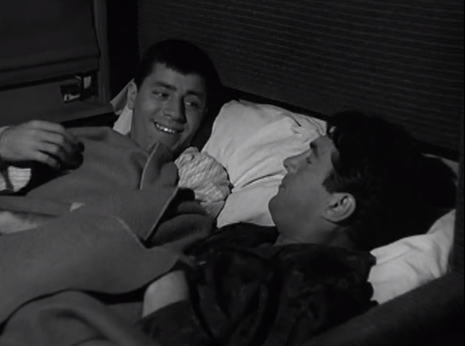
If the story holds, Jerry Lewis named The Stooge among his favorites of the work he did during his famed partnership with Dean Martin. This was the sole reason for watching it and this is probably the most effective lens in considering what to make of it.

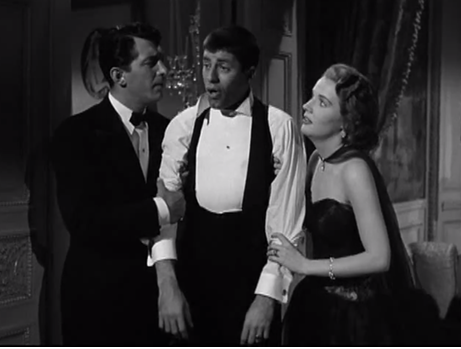
The plot itself follows a show business narrative and draws up a fictitious story about how they needed each other or how they managed to perfectly complement one another’s talents. Except that’s not entirely right because it’s really about how Bill Miller (Martin) is a bit of an arrogant control freak, using someone else’s talents to bolster his own career. He somehow carries this dissonant belief Ted Rogers (Lewis) is the secret weapon of his act and still of secondary importance. He, Bill Miller, is the real draw.

To provide some context, Miller has recently wed his best girl (Polly Bergen), who foregoes her own career as a performer to sit in the cheering section of her husband, so he can make a go at the big time. It’s the all-absorbing preoccupation of his entire life as he works with his agent (Leo Lyman) to become a star. Despite others giving him advice to the contrary, he wants to be a single. And even when he finds his missing piece, he still considers himself a solo act.

Lewis gets his opening in a hash house giving the man behind the counter real grief. Then, he pays off a cynical cabby with crumpled up bills hidden all across his person. It only gets more outrageous.

Obviously, it’s toying with the dynamic integral to the Lewis & Martin formula with Lewis making a racket from the balcony in his attempt at song, only to start up the patter between Dean down on the stage with his skimmer and accordion. It feels like they were meant to do together. The perfect counterpoints to each other’s images and strengths.

However, there are all these perfectly manufactured moments and thus nothing feels truly spontaneous, like catching lightning in the bottle. With the gags being set up, we have a sense of what is going to happen before they actually occur. One exception and somehow an immaculately hilarious image (not that it was ad-libbed,) is Martin bouncing Lewis continuously on the bedspread like a human pogo stick. The mental picture it conjures up is enough.

the stooge 2.png

It’s true Dino does feel like a bit of a tyrant. One can only surmise the picture was held out of circulation for a time so he could build an initial rapport with the audience. They released two other features before sending The Stooge off the assembly line.

All told, the most gratifying moment might be right at the end for the simple reason the picture no longer has to make a pretense of the drama because it’s just been resolved. The one zany off-the-wall man-child runs his crazy interference while Martin looks on with mild befuddlement, and they find some wry equilibrium in there somewhere. There’s no element of Miller’s colossal ego getting in the way so we go to straight to the heart of what made Martin and Lewis a lasting comedy team.

It’s a shame the film was plagued by a plot gumming up their routines. Not only was Dean Martin intermittently unlikable, it really dices up the film. The saccharine moments of applied drama are mostly throwaway. The comedy works slightly better. Though I must admit my personal preference for Dean over Jerry.

As a very subjective observer, I am drawn to consider The Caddy instead. Not only does the premise feel more conducive to gags, but the chemistry also allowed for our stars, as characters, to feel richer. They are part of a close-knit community and when their world includes Donna Reed and a snappy rendition of “That’s Amore,” it’s hard to ask for much more with already meager expectations in place. It’s the simple pleasures and, for me, The Caddy offers more of them.

In hindsight, The Stooge feels harrowingly close to loose biography. This is not to suggest the two men were their characters, but we have Dean’s drunkenness and Lewis’s own persona upstaging any and every bit of Martin’s talent. We could even wager a guess these are portentous moments, given their own eventual breakup. Certainly being the insane energizer bunny bouncing all over the stage has its drawbacks, but you do get a great deal of attention.

Most of the other Martin and Lewis pictures during their prolific run brought genre and camaraderie together. This was their charm bottled up so easily and then delivered to the masses. The Stooge doesn’t always employ the same brand of simplistic comedic commoditization, probably to its detriment.

In truth, it suggests my own reluctance to parse through the reality of the men behind the characterizations. A typical Paramount vehicle for the pair might be the perfect portrait of 1950s idyllic America on the outside and yet underneath there were festering issues. The country’s most beloved comedy duo was plagued by discord just like everyone else.  No fabricated sitcom setup can completely smooth over reality.

3/5 Stars

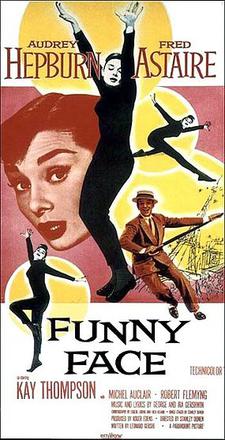
Funny Face (1957) Shows Audrey Hepburn’s Enduring Beauty

Funny_Face_1957.jpgI’m not an expert on fashion photographers, but with only a passing interest in the industry, two of the most luminous names I know are probably Richard Avedon and Bob Willougby. Their names seem to crop up more than almost anyone when you consider film stills. It’s no coincidence that they both famously did shoots of Audrey Hepburn: one of the most widely photographed women of all time.

I never realized it before, but it also seems little coincidence that Richard Avedon is fairly close in name to Richard “Dick” Avery, a fashion photographer, played by Fred Astaire in this picture. Avedon himself was an advisor on the musical even providing the now-iconic headshot of Hepburn, capturing her iconic eyes and the contours of her face.

That’s the first level of reality being reworked for a bit of frothy fantasy. We’re met in the opening minutes by a histrionic tastemaker, Magazine matriarch Maggie Prescott (an uproariously assertive Kay Thompson) who comes off a bit strong but slowly sinks into our affections. Ruta Lee is constantly scampering about with the rest of her staff, getting whisked around by Prescott’s every whim.

She champions a change in direction for Quality magazine as they’ve gotten a bit lax and set in the status quo, and so she catalyzes a pink extravaganza to shake up the fashion world. It just might work.

Astaire is as affable as ever, remaining mellow with age and yet the models he has to deal with, in his line of work, are shown to be ditzy and a dime a dozen. He proposes an even bolder deviation from the norm than Prescott. The idea: Taking a bookkeeper, frumpy and austere at first glance, and turning her into a starlet.

Hepburn makes for the sweetest intellectual, running a bookshop that gets overrun by a magazine syndicate in Greenwich Village. She’s all but lost in the fray while simultaneously giving Avery the touch of inspiration. It’s right there in her face.

As she flees from the editor’s frenzied staff of ladies, intent on finding her and making her over, it’s in the darkroom where she seeks refuge and comes face-to-face again with Avery, who lightens her spirits and makes her feel at ease. Now I can check another thing off my list, as Hepburn and Astaire share a lovely darkroom dance together, which I hardly remembered from before.

In the end, she takes a minor liking in the idea of traveling to Paris for a photo shoot, even if it’s only a means to get her closer to the philosopher that shes always deeply admired for his work with empathicalism. Apparently, it’s all the rage in some circles.

At any rate, a new kind of fashion icon is born. She’s denoted by “Character, Spirit, and Intelligence.” Imagine that. Of course, the bookish Jo Stockton doesn’t see it either. She confesses, “I have no illusions about my looks. I think my face is funny.” Upon closer observation, the near autobiographical aspects seep out again.

Because, if memory serves me right, Hepburn never considered herself attractive or glamorous, even if she was seen as such the world over. Her figure was too slight or her nose too this, and her eyes not enough that. It’s the typical human fallacy to only see the blemishes and imperfections. We either have too big a view of ourselves or too little. It takes other people to straighten us out. We see a funny face, and they see the character that dwells therein — the adorableness and glamour Audrey Hepburn personfied.

In Funny Face Hepburn also gets to relive some of her training as she initially had an extensive background in ballet and dance as a teenager. Her most visible number comprises a beatnik hangout teaming with new and peculiar forms of artistic expression. There she is right in the midst of them whipping around with a peppy hand-clapping verve that sees her arms and springy ponytail flying too.

Back on the fashion circuit, she’s turned into a stunning pink bird of paradise with the spotlight beaming down on her and everyone entranced by her pure exquisiteness. Meanwhile, Astaire gives his cane dances of old a facelift with an umbrella and overcoat, including a brief interlude as a whimsical matador.

“He Loves and She Loves” has them at their most euphoric, acting outt a wedding scene that can never be. They are co-workers and nothing more. But when the fashion gala is made a shambles of, and they have a major tiff over a certain French philosopher named Emile Flostre (Michel Auclair), it looks to be the end of the story. However, we’ve seen enough movies to know not to get up and leave in the seventh inning. There’s a comeback in the ninth.

Hepburn’s voice makes an appearance in all of its demure glory. While not spectacular in nature, I’m a proponent of hearing people’s actual voices when they’re given the task of trebling through a tune. I’m of the sentiment that I would rather hear an unadorned, even “warts and all” performance opposed to the airbrushed “dubbed” showings that were so prevalent. Hepburn was a particular casualty of this phenomenon in My Fair Lady (1964), even as her quivering rendition of “Moon River” goes down as one of the most intimate performances on film. I rest my case.

While not the most cohesive musical out there, we have enough glimmers of fun and frivolous entertainment to more than satiate our wants. Of course, our stars are two of the most sunshiny personalities the movies ever bore, and together there’s the expected amount of good-natured amiability. At least, in the end.

Likewise, Cole Porter and the rich imagery courtesy of Stanley Donen, Richard Avedon, Technicolor, et. al. make the balloons brighter and the wardrobes all the more luxuriant. A true feast for the eyes, as they say, even if the plot could be tipped over with a feather.

3.5/5 Stars

It’s Always Fair Weather (1955): A Musical For The TV Age

It's_Always_Fair_Weather_(1955_film)_poster_(yellow_background)

Conventional wisdom tells us you don’t make a musical quite like this. It’s a bit of a nostalgia piece and already it seems like American was ready to move on with life after WWIII.

It’s relatively straightforward to assume that It’s Always Fair Weather (1955) was a harbinger of a change in appeal with the general public because if we look back to Good News (1947), that’s arguably where the run of great MGM musicals began and they could hardly be stopped. There’s nothing drastically different about the foolproof formula or the players behind the scenes, for that matter. We still have Arthur Freed, Gene Kelly, Stanley Donen, Cyd Charisse, Adolph Green & Betty Comden, as well as any number of integral folks I failed to mention.

Well, we do have one primary demarcation, deserving some acknowledgment. Here is a musical with a cynical streak — something that feels incongruous, like oil and water almost. In the opening minutes, I don’t mind saying that I was of the same sentiment. It doesn’t seem like a musical.

We have three boys marching home: Ted (Gene Kelly), Doug (Dan Dailey), and Angie (Michael Kidd), victorious from the war and frequenting the bar they always called home before. But at some point, reality hits — the emering complications at home in a drama such as The Best Years of Our Lives (1946) or an insidious film noir a la The Blue Dahlia (1946) or Act of Violence (1948).

But you see, this picture sets up its premise when the three inseparable war buddies bet the hard-bitten bartender, come rain or shine or sleet, they’ll get back together in 10 years, because they’re the real deal. Time won’t dampen their friendship.

They share a drunken cab dance, escalating in a garbage can crescendo that’s got that same panache of old. However, the merriment dies dow,n and they realize they’re civilians now. The inevitable parting arrives, and they go there separate ways. Only time will tell what happens next…

The production itself shows parallel issues involving the passage of time to mirror the plot. Even in casting. Initially Green and Comden envisioned this project as a spiritual sequel to On The Town, reteaming that film’s stars. They got Kelly, but with new leadership at MGM headed by Dore Schary, Sinatra was out and Munshin wasn’t a big enough name. Thus, we got the underrated pair of Dailey — a quality dancer in his own right, and Kidd, a workhorse choreographer, who blessed audiences with the Barn raising scene in Seven Brides for Seven Brothers, among other efforts.

Still, undoubtedly, times have changed. Behind the scenes, Kelly was chafing with Donen. I suspect because the younger man had proved he could handle a highly successful picture on his own (Seven Brides with Seven Brothers), and he would continue to do so. The cracks in the collaboration were beginning to show.

And yet even as the film settles into the contemporary era, the ensuing themes become surprisingly resonant. The day is October 11th, 1955: 10 years to the day they split up, and things couldn’t be more different.

Ted never got married after his best girl dumped him and has stayed in Chicago working the crap tables, romancing dames, and recently winding up in the boxing racket with a young bull named Kid Mariachi. Doug has done well for himself, despite giving up his passion for painting, becoming a highly lucrative television advertising man. His sponsor spots for Molly Mop (voiced by the ubiquitous June Foray) are currently all the rage.

However, though married with a comfortable life, it doesn’t take a Sherlock Holmes to tell the years have left his stomach soft and his heart hard. Meanwhile, Angie’s married too with a whole house of kids and a loving wife who helps him run his burger joint: The Cordon Bleu.

The miracle is that they all keep there promise to be there! But as the euphoria subsides, they realize they have nothing in common. Beyond that, they can’t stand each other now, and it begins to gnaw at them. They’re ready to get on with their lives and accept this is how it goes when time marches on. Fate has other ideas.

It’s one shrewd advertising executive (Cyd Charisse) who spots an opportunity to reunite the boys on live television in the popular segment featured on Madeline Bradyville’s (Dolores Gray) nationally syndicated program. Ms. Jackie Leyton takes it upon herself to get Ted to the showing and enlists her colleagues to do the same with the other men.

She really is a marvel. Heading off any of his initial amorous advances and then taking on the male initiative to his complete bewilderment. On top of that, her Encyclopedic knowledge of any number of subjects has him speechless and wows the crowd at his boxing gym. Charisse doesn’t get too much time to flaunt her skill, but nevertheless, “Baby You Knock Me Out” is a comically upbeat number that does the trick.

Though the picture was shot in widescreen, it doesn’t necessarily lead to revolutionary musical numbers. However, much like Will Success Spoil Rock Hunter? the canvass is used on multiple occasions to draw out the limitations and satirize the “idiot boxes” fast becoming all the rage in the American household.

Meanwhile, things are just not going Ted’s way. Not only is he getting emasculated by this beautiful, befuddling woman, he learns from a dumb lug that a local gangster (Jay C. Flippen) has fixed his match. Kelly fails to have a truly singular moment until he pops on a pair of roller skates. We know it when he does the same charming shoulder shrug from Singin in the Rain that we are in for an indelible moment.

Sure enough, he goes gliding around studio street corners with ease, rolling and tapping his way along gayly until his curbside antics bring everything to a standstill — the masses cheering him on. It’s one of the first signs that fortunes might be turning.

It’s Always Fair Weather gets better and better with every passing minute maybe because it doesn’t ride the disillusionment all the way to the end. Even with commercialism, advertising, corruption, and whatever else, when we get out on the other side there is an underlying satisfaction to the ending.

Dolores Gray’s humorous “Thanks but no Thanks” complete with trap doors and rocketing male suitors off the stage, is another outrageous comic aside. Then, the three old buddies are brought together as part human interest story, part ratings gimmick. We think we know how it’ll go. It spells trainwreck in big, bold letters.

Well, that’s not quite right. Instead, we get a brawl captured by the candid cameras and broadcast the country over, complete with a confession by a top-level thug. It’s uproarious, fatuous, and far-fetched, but it’s also the exact catharsis we were begging for.

It reinforces values that we desperately hoped to be true, and it does it with a wink and a smile (along with plenty of broken tables and chairs). When friendship actually meant something. There was no Facebook or Skype or any faceless form of communication. To be with those people in the same space and share memories and go through galvanizing experiences together. That was all you had and sometimes, I would take one of those types of days over a boatload of the internet age’s connections.

Because I think most of us have gotten over Television. The medium has become status quo even quaint. It’s not killing us slowly (or maybe it already has), but the web is the new frontier just waiting to be eviscerated by a musical such as this. I would gladly watch that, but of course, such a project wouldn’t have names attached to it that mean so much to me: from Gene Kelly and Stanley Donen to my new favorite star Cyd Charisse.

Maybe It’s Always Fair Weather spelled that the classical Hollywood musical, as such, was dead, but even if contemporary reception was not stellar, it comes off today as a regularly insightful musical and satire. By now, I’d probably follow Kelly and Charisse to the moon and back again anyway.

4/5 Stars