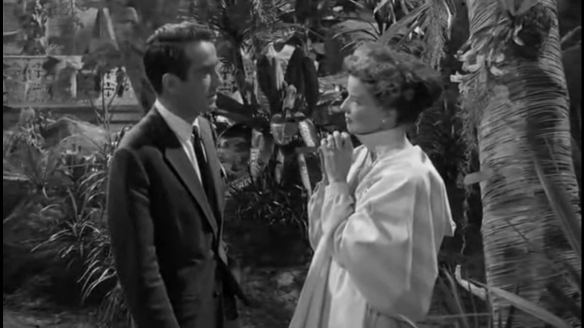
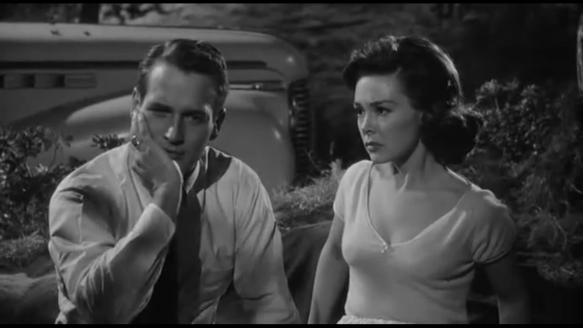
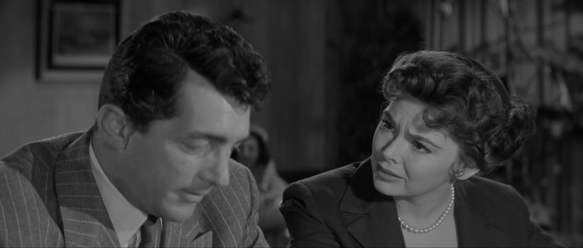
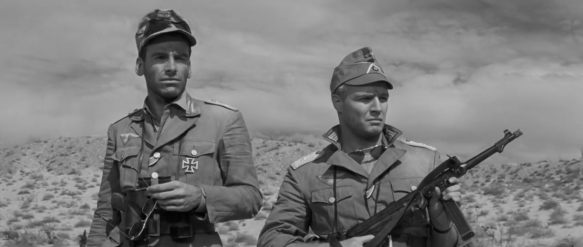
The Young Philadelphians (1959): Paul Newman Takes on Family Skeletons

young phil

What’s most intriguing about The Young Philadelphians is how it manages to be a composite of several standalone genres. It’s a rags-to-riches tale. There’s romance. Stunning courtroom drama. But the sinew holding it together are sudsy soap opera tendencies.

Like most any life, our story begins before our main character, Tony Lawrence (Paul Newman), was ever born. Back in the old days, his mother (Diane Brewster) was to have a church wedding with William Lawrence III, a man who was desirable solely due to his family name. Being attentive to such things, Kate is happy to marry him — leaving behind a lifelong friend Mike Flannagan (Robert Keith) to drown his sorrows.

What unravels in a matter of seconds is the kind of juicy drama offering up Adam “Batman” West himself in a blink-or-you’ll-miss-it debut, though he does have a crucial role in the ensuing tale. There are implied sordid details that need not be parsed through now. Regardless, Kate is left as a widow and looks to raise up her infant son to bear the reputable name of Lawrence. He doesn’t know his protective mother is sitting on a stick of dynamite for the sake of her son.

Tony grows up to be a fine, strapping young man of substance. The instant magnetism of Paul Newman is on full display. Not animal magnetism but the kind of charisma that would keep him a beloved figure long after many of his peers from the Actors Studio had mostly dissolved and given way to younger talent. The intensity comes later.

For now, he’s a Princeton boy working in construction because it pays the bills, though his ambitions are to pursue law — all in due time. What follows at the worksite is a contrived meet-cute but no less delightful do to the instant charm of Paul Newman and Barbara Rush. Not only are they beautiful people, but they have a playful rapport to back it up.

Later, he attends a high society party — his mother hopes he can make some invaluable social contacts — but he consorts with Chester Gwyn (Robert Vaughan), a prodigal rich boy with greased back hair and a penchant for getting plastered. His relatives, who run his trust fund, heartily disapprove of his carrying on even as Tony impresses them.

The other person of interest is the same debutant, Joan Dickinson (Rush), who tells them all her classmates are married to very nice young fellows, cautious prudent young men with button-down families. All and all, they are representative of the idle and affluent segment of society looking to find a nice life for themselves complete with a fine salary, a gorgeous wife, and an equally gorgeous home to boot. For those who haven’t had to work like Tony, it sounds like utter drudgery. It’s a lifestyle that has eaten many people like Chet and Joan alive as it molds them into their assigned conventions.

In their own way, Tony and Joan look to pursue their own happiness which — although it fits within the confines of society — still has a hint of the reckless, impetuousness of youth. They still have enough fervor and passion in their chests to see the world as an idealistic space meant to be conquered. However, their parents have other plans for them…

In mere moments, the entire story careens in another direction with twists and turns worthy of a soap opera. Suddenly, the romance burning between them is snuffed out and sullied by insinuations. Tony learns the rules of the game the hard way. Society, as they know it, is built on the bedrock of backroom deals, saving face, and family reputations.

He resorts to making the connections, climbing the social ladder, and running into some old acquaintances. It’s in these crucial interludes where Newman channels his youthful intensity by ripping off the band-aid of a broken relationship and charging forward with a newfound tenacity. Under the circumstances, he foregoes the law firm of the reputable Mr. Dickinson (John Williams) and makes a name for himself in the service of someone else. He lands a big fish by swiping one of his largest clients (played by the perennially bubbly Billie Burke), who literally wanders into his office.

Even as he’s driven by his own private ambitions, Lawrence never completely sheds his conscience. He rebuffs the advances of his boss’s sex-crazed wife (Alexis Smith), stomping out an affair before it can begin.

With the passage of time, we are led to ponder how these lives could have ended differently if given the chance? Tony is still unmarried. Joan found a rich money bags, who unfortunately died fighting in Korea. The war also took Chet’s arm leaving him a crippled and degenerate drunk.

In fact, Vaughan gives the final act all he has, and he is one of the film’s unsung heroes; he provides some outward manifestation of the myriad of issues conveniently swept under the rug by the city’s foremost families. When he hits the papers with a murder rap pinned on him, it rattles all the skeletons buried in the closets. His patriarch, the esteemed Dr. Shippen Stearns even says, “individuals are less important than the whole.” What matters is coming out of the mess without a scandal.

I do adore Billie Burke particularly because we never saw enough of her in this later period of her career, and she still brings the same genial energy she always had in her golden years. She’s another outlier in the film’s stuffy landscape.

However, it’s also a test of Tony’s true character as he juggles his own reservations and allegiances to people like his mother and Chet. Joan reopens wounds, now a decade old, going to the core of who they are as human beings — their ambitions and the ways that they have been changed due to the hotbed of the surrounding society.

It’s the kind of scene I wanted to playback because it feels like it comes at us out of nowhere. She wants to hire another lawyer to take him out of the grinder — fearing he may have sold out again — and he proceeds to bristle knowing he never meant to sell out. At least not really. Their fight, if we can call it that, is what spurs him on in the courtroom. However, there is something else.

We remember where this story began. His mother is forced to tell him something about his untold life and what happened before he was born. Suddenly, this isn’t just a matter of someone else’s life — that would be enough — but this holds implications for his reputation and that of his mother’s. Everything hangs in the balance.

So when he gets to the courtroom the stakes are heady. But he comes at the case with a level of acumen and genuine discernment (although the judge does seem to be giving him far more favor than the prosecutor receives). This observation is mostly immaterial. He puts the key witness, George Archibald (Richard Deacon), up on the stand and does everything he’s been training his whole life to do.

Somehow he’s never spoken a truer word when he says, “I’m not as good as I hoped I could be, but I’m not as bad as I thought I was.” Let them sink in for a moment. As we look on, we see a man who has found his happy medium as he’s slowly learned to be contented with the life put before him without any regrets. He can walk out of that courtroom, his best girl in hand, confident that his reputation is intact, but most importantly his moral conscience is as well. And we are right there with him.

3.5/5 Stars

The Young Lions (1958): Humanity in Epic Scale

the young lions 7 (1)

The opening of Edward Dmytryk’s The Young Lions, based on Irvin Shaw’s titular novel, could be plucked out of an earlier picture like The Mortal Storm. It’s New Year’s Eve 1938 in Bavaria, Germany. Young lovers ski and frolic in the snow as locals make merry indoors.

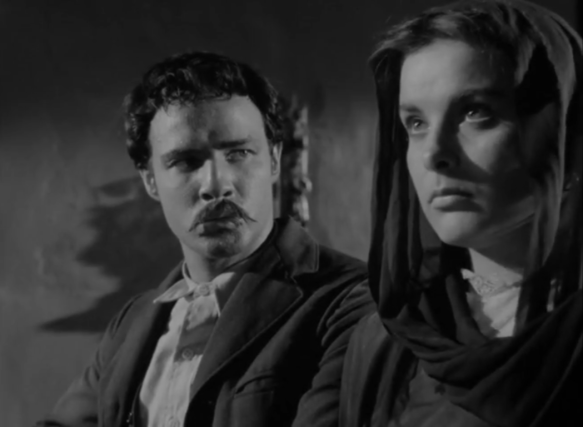
Marlon Brando is a sympathetic German or closer still a principled man named Christian, currently sharing the company of a beautiful American — one Margaret Freemantle (Barbara Rush). For her, the evening is quashed with the word of Hitler. However misguided it might be, he has a genuine optimism about what Hitler can and will do for his country. Christian is not a monster. Likewise, he believes if lives have to be sacrificed for the sake of peace, he will gladly go to war.

Although these two people will never share the screen again, this is the beginning of everything. Because of course, we know what happened next in the history books. War did come. First in Europe, making its way to France, then Britain, and finally, the U.S. got involved. Christian gets his start policing the streets of France, upending their derogatory view of the enemy, even as he struggles with the perils of radical ideology.

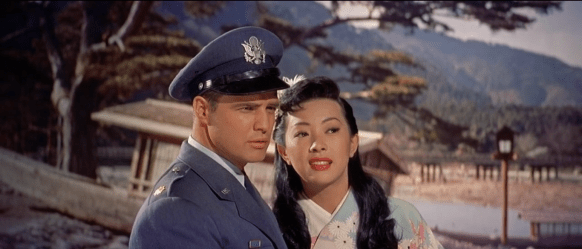
It occurs to me, part of Brando’s success comes with how his social consciousness paired with his acting prowess. Because when he still seemed thoroughly engaged with his career, he sought out parts of such diversity, bringing humanity to all sorts of disparate people. They didn’t always hit the mark (I think of Viva Zapata and Tea House of The August Moon), and yet during this same period, he played an informant, a southern ace who falls for a Japanese girl, and here a sympathetic German during WWII.

There’s a calculated empathy to the adaptation, casting a German and a Jewish man as two of our most prominent protagonists. It’s difficult to begrudge The Young Lions its inclinations because they seem genuine and earnest, especially in the capable hands of Brando and Montgomery Clift. Yes, we must take a moment to mention Clift now.

The older actor is sometimes clumped with Brando, but even in the context of this movie, it’s fascinating to begin comparing them. Brando burst onto the scene and ultimately let himself go — becoming disinterested and disaffected by his screen career. Clift, likewise, was an incandescent talent transplanted from the stage, but he was totally engaged in his craft.

His own setbacks were initially out of his control: a car accident that left him dependent on drink and pain killers. He considered Brando a squandered talent for all of his abilities, but if anything, it shows how devoted Clift was to his art, doubling his efforts even after his injury.

the young lions 2

While they’re not exactly “young” lions, Dean Martin and Clift are a pair of compelling ones as they are drafted to be sent out overseas. You would never think of putting them together. Their personalities seem so adverse to one another, and yet there is a component of loyalty found in their performances bleeding out into real life. They were there for each other, forged by fire as they were.

Dean Martin was two years removed from his split with Jerry Lewis, and The Young Lions was his first big chance to redefine his image as an actor. He gives it a valiant go in a performance that maintains shades of his persona. In this case, Michael is a stage entertainer hesitant about going off to war and looking to dodge culpability any way he possibly can. He jousts with his girlfriend Margaret (Rush), who simultaneously doesn’t want him to die even as she disapproves of his dereliction of duty. When the time comes, he proves his mettle and his steadfastness.

Maximillian Schell was a revelation to me quite a number of years ago when I first saw Judgement at Nuremberg. Because in a picture with such contentious stakes and with so many prominent acting powerhouses, for me, he is the film’s standout with the most spectacular stand. In The Young Lions, he plays Brando’s superior espousing the typical rhetoric: The German army is invincible because it obeys orders and it harbors no sentimentality, moralists, or individualists.

In one sense, he constantly castigates Christian for his lapses in judgment, for this softness he has, but for all his perniciousness, Captain Hardenberg still comes off as a human being.  He has a flirtatious wife (May Britt) waiting back home and a life ultimately crippled by injury. If Martin holds his own up against Clift, then Schell — learning his lines phonetically no less — certainly proves himself a compelling presence opposite Brando.

They get reassigned to Rommel’s Afrika Corps in North Africa working behind enemy lines. It’s in these moments, in particular, as they bomb and mow down their unsuspecting enemy, we get a gutting portrait of how merciless the world can be, but that lets people off the hook too easily.

Human beings — myself included — can be petty, mean-spirited, and cruel to one another, and The Young Lions is not only about this global scale of war between nations. It’s about the conflicts and schisms formed in what’s supposed to be a united front — a shared cultural identity. Whether it’s a German with a heart and soul or a Jewish man who is ridiculed and discriminated against in his own country for something that is out of his control.

the young lions 7

The onslaught of Allied forces sweeping across North Africa — the Brits with their bagpipes and Patton with his tanks — is a force to be reckoned with even as the homefront is ripe with the division. Even as Noah (Clift) finds himself a lovely small-town girl (Hope Lange) to wed, the systematic bigotry of his barracks-mates and his superior officer is crippling. He faces it with a lion-hearted resolve as Michael does his best to back him up.

The tide of the war finds Brando and Schell fleeing on a motorcycle to escape the steadily advancing enemy forces. Christian eventually loses his commander and must face the man’s wife with a renewed disillusionment. Even a return to Paris and greetings from old friends (Parley Baer and Liliane Montevecchi), show him the world has changed dramatically. He has as well.

On the Allied front, Michael finally asks to be sent to Normandy, and there reunites with Ackerman to liberate a concentration camp. It is the same camp that has opened Christian’s eyes about what the Germans have been perpetrating for the past 5 years under the guise of Nazism. While not a totally graphic scene, it’s no less of a gut punch as each character is forced to meditate on what is before them.

There’s this driving sense of fate as The Young Lions mounts to highlight one of the monumental absurdities of war. Here we have spent an entire film — through all its peaks and valleys, heartbreaks and reveries — and we finally bring together our three primary leads.

They are on opposites sides of the conflict though they are all men of a certain stock and decency. And yet because of war and how factions are aligned, they are meant to kill one another. They will never have a chance to sit down at a table together and know how similar they really were. This is the great tragedy The Young Lions underlines.

Not only does it exhume the hidden evils of the human heart, but it also annihilates all sense of common humanity, forcing us to only see a demonized enemy opposed to men and women who are not unlike ourselves.

In a better world or even in a world before the war, these three men could have been friends or compatriots. Alas, it was never to be and what’s crueler still, they will never know what they have missed out on. They already have so many traumas; it’s difficult to discern if these thoughts will plague them. But that is not the purpose. The film is constructed in such a way, it’s meant to commend us to cast off war altogether and this is far more telling.

The impression I am left with has magnitude. It’s a minor miracle how the grandiose scale of a cinemascope epic, backed by performances from such renowned talents, somehow still manages an immediacy and intimacy. The Young Lions might be lengthy, but it never loses its protagonists in a mass of humanity. Instead, it highlights the humanity of a few to illuminate a whole society.

4/5 Stars

“The young lions lack and suffer hunger; but those who seek the LORD shall not lack any good thing.”

Sayonara (1957): Marlon Brando and Miiko Taka

sayonara 9

Major Lloyd “Ace” Gruver (Marlon Brando) lands on the airbase in Korea and almost immediately gets assigned leave in Kobe. However, this leave has ulterior motives, signed by General Webster (Kent Smith), a friend of his father’s and the father of the pilot’s sometime girlfriend. It’s meant to be a contrived reunion no doubt so they can consider their wedding plans.

One of Gruver’s men, Joe Kelly (Red Buttons) is set to get married himself. Soon they’re showing off cheesecake photos of their girls until it evolves into something far more complicated with more uncomfortable implications. Because Joe is intent on marrying a Japanese gal named Katsumi (Miyoshi Umeki). If nothing else, you admire the man because he’s totally committed; there’s a complete integrity and personal conviction behind his intentions.

As the film points out later, he wasn’t alone. Lots of servicemen looked to marry Japanese girls after the war, and yet there certainly is something countercultural about him. What becomes immediately evident is this sense of casual (or not so casual) racism. Though hardly a spiteful person, Gruver has some preconceived notions about “slant-eyed runts.”

He has his misgivings about the wedding and yet, as a favor to his subordinate, he agrees to serve as his best man. The pervasive strains of discrimination continue as Gruver makes it to Japan and rendezvous with the Websters and Eileen (Patricia Owen). They attend a club for American personnel only to witness a soldier getting turned away with his Asian girlfriend. The coded language of “fraternization” is really just de facto segregation. For the time being, Gruver has no stake in the matter and so leaves it be.

His first true immersion into Japanese culture, at the behest of his girlfriend, comes from a Japanese kabuki performance put on by a revered actor. Although it’s a bit unfortunate having Ricardo Montalban playing Nakamura, he gives it his best showing, which actually comes off rather sensitive as far as yellowface goes.

While I’m not sure Joshua Logan exactly comprehends Japanese culture aside from its exquisite exoticism, he does take his stage pedigree and proceeds to translate the Japanese arts into flat two-dimensional showings mirroring their inherent performance elements. At the very least he understands their use of space and augments them within the framework of the broader film.

Owen is intriguing because she has all the attributes of a beautiful American girl: well-groomed and fit to be a 1950s housewife, but she has enough wherewithal to think for herself and not to be a “type” for her man to return home to. It forces Brando to make some kind of commitment. Currently, he’s not in a place where he feels that he can. If the movie were to continue down this commonplace path it would be dull going.

Instead, the camaraderie between Brando and a marine, Mike Baile (James Garner), is born. The other actor doesn’t have much to do except act as a cultural guide; still, Garner takes to his role genially and with his unadulterated charms no one could ever fault him. He’s another agreeable face, and he also knows a good deal more about Japanese culture…

Miiko Taka literally stops Brando cold (and the movie with it). The film turns on a new axis as Gruver becomes infatuated with the preeminent dancer, Hana-ogi-san, who can be found crossing the bridge to the theater every day before and after her daily performances. The outmatched pilot finally plucks up enough acumen to find himself a pocket Japanese dictionary only to toss it away.

It’s like a new pastime as he waits to catch a glimpse of her and get a chance to interact. He finally gets his chance — a meeting with her in person — though this is normally totally forbidden for someone in her position. The added grievance is the death of her father who perished at the hands of an American bomb.

sayonara 12

Even though the preamble has some rumblings of discord, there’s something about Brando’s introduction to the Japanese household that’s warm and affecting because in it some cultural understanding is made — appreciation of customs and how our differences somehow lead us to a place of mutual respect.

Amid gags of him continually bumping his on on doorways, there are far more tender moments that never feel like they’re reaching toward didacticism. Joe has him remove his shoes before entering the home, and he learns about sake (fermented rice wine) and how to pour for others.

If this scene tickles the heart, it doesn’t last long. The accompanying moment with Brando and Taka’s first time reclining at table alone together is imbued with a sinking feeling of discomfort. He’s so lax and culturally unfamiliar, making a go of it the best way he knows how. There’s a sense he is sunk even before he’s begun. What words will come out of her mouth in response?

Far from being dismissive, she’s gracious and tender speaking of her life and her desires for love and some far-off dream amounting to something more than her extravagant life of a dancer on the stage. She craves something deep-seated, a longing inside of her.

Although they come from two distinctly different worlds, their lives are similarly planned. Either by the strict confines of her theatrical tradition or the regimens of the military. And yet against this backdrop, they find happiness together watching fireworks, being in each other’s company, and generally filling up their days with romantic contentment. What’s refreshing is how none of this feels self-serving or staged. We willingly believe there is something tangible between them.

The seeds of bigotry have already been planted early and so they eventually germinate. The military cracks down calling for all military personnel to stop seeing Japanese women and those who are married, like, Joe are given especially harsh treatment. They’re effectively forced into subordination on the threat of court-martial and deportation.

Sayonara has successfully put its flag in the ground when you know what’s happening and yet the events unfold and you cannot look away. Because the mantle of the story has been passed onto the characters whom we now care for. What follows has legitimate consequences for us.

sayonara 2

Thus, their friend’s fate is swiftly decided and yet Ace and Hana-ogi’s roads look to be diverging. There is no other way through unless one of them intercedes and gives up everything they have already built. It’s a point of no return.

To Brando’s credit, he sells the transformation from blundering ignorance to genuine care for this woman who has so enchanted him. Mikko Taki, who is still with us, far from simply being gorgeous, brings a quiet understanding and gentility that stays the course of the movie. In no way does it feel like she’s totally overwhelmed or upstaged by Brando. They make the romance a union between two people bridging two cultures in the face of adversity.

The final delight comes with Brando sticking it to all the naysayers and wishing a “Sayonara” to everyone who would stand in their way. It leads to warm feelings not least of all because the picture is finally done.

All said, the Technicolor scenery and scenario are noteworthy, even cutting edge for the time period, but with the loose threads and lumbering running time, the movie could spare to lose a few scenes. Although admittedly obligatory, it’s the scenes of mechanized conflict and dialogue between Brando and the military that feel rote and uninteresting.

The main players are the ones making waiting through the dross worth it thanks to their candor and agreeable charisma. What a lovely screen couple Red Buttons and Miyoshi Umeki make. Above all, it gladdens me, in all her humility, Audrey Hepburn turned down the role foisted on her at the behest of Joshua Logan. She graciously declined and instead, we were blessed by a performance by Miiko Taka.

Although she, like Shirley Yamaguchi in House of Bamboo or even Umeki Miyoshi, is cast as the delicate Japanese beauty, this only becomes a stereotype if it is never replaced with other roles. For what it is, the part balances several traits, including a degree of independence and familial duty. Thus, any lasting criticisms for Sayonara in this area feel more indicative of the industry now 60 years on than a single performance decades ago.

If Sayonara is rife with stereotypes in its honest attempts, then not enough has been done to build on its legacy to bring us even further in the present. Because, amid the flaws, there were some exquisite touches, from the gorgeous imagery to little accents like the neighborhood cherry shop on the corner or the Japanese conversations shared between a husband and wife. They elicit something genuine and emotionally sincere.

3.5/5 Stars

The Wild One (1953) and Brando’s Rebel Icon

the wild one brando

The Wild One will never be lauded as a great movie, but it most certainly proves a seminal one even if you give a cursory glance over what would soon come in its wake. These were not only high school and gang-infused dramas of delinquency and adolescent angst, but it’s an obvious antecedent to the likes of Roger Corman pictures like The Wild Angels (1966) or even one of the most pioneering counterculture relics: Easy Rider.

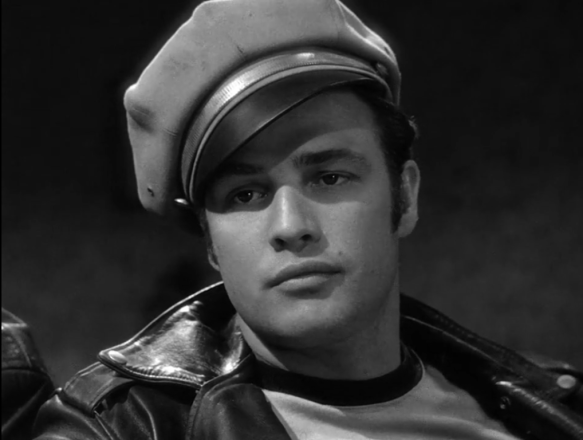
A Streetcar Named Desire made Brando into an instantly revered actor, but The Wild One helped solidify him as a cult hero. A few years before James Dean — shades, leather jacket, riding a motorcycle — he’s the epitome of anti-establishment, and he found an immediate audience. Not only with the general populous but also for icons who would follow on his coattails like Dean and Elvis.

Like the gangster movies of the 1930s, The Wild One is purported to be a cautionary tale, and yet it can’t help but make the pack of motorcycle lug-heads highly intriguing. It doesn’t altogether glorify them; still, we want to watch them, and we can’t help but turn and look.

Their rank and file are made up of some unusual characters. Would you have ever thought Alvy Moore (Green Acres) and Jerry Paris (Dick Van Dyke Show) would start out in a motorcycle gang?

Aside from Johnny Strabler’s (Brando) instant tuff guy image, projected over the opening credits, their reputation is galvanized as a unit when they defiantly saunter across a racetrack in the middle of a lap. The motorcycles veer to miss them as the crowds yell for them to move it.

They nick one of the trophies on their way out as the police usher them away. They know an unruly mob when they see one. There’s nothing for it but to send them out of town so they can terrorize the next stop further down the road…

Because, of course, that’s exactly what happens. The can gets kicked down the road for someone else to deal with. They wind up bringing their pervasive mayhem wherever they go, in this case, a sleepy town’s main street. In a couple of minutes, they instigate a traffic accident and proceed to hoist the always curmudgeonly Will Wright out of his automobile like a band of obstreperous boy scouts.

The mealy-mouthed sheriff (Robert Keith) is pushed around like a sack of potatoes while a local businessman sees this as an opportunity, coaxing the boys into his establishment with cold beer, steaks, and music. They willfully oblige, led by their leader who instantly becomes smitten with the pretty waitress Kathie (Mary Murphy).

In this jukebox-filled, bar counter milieu, their brand of insurrection verges on Don and Cosmo-esque ribbing a la Singin’ in the Rain, where they pull the wool over on the “squares” with their jive and absurdly crazy lingo. They even take turns dancing with a pair of local flirts.

Who else would ride lead on a rival motorcycle mob but Lee Marvin? He plays it over the top with a healthy injection of disorderly conduct like a thuggish circus performer in stripes and goggles. Chino’s both a rival and one-time drinking companion, having it out with Johnny in the main plaza. Their point of contention: the pinched trophy.

With Chino hauled off to jail along with a local loud-mouth, the situation escalates to a precarious tipping point. The evening brings raucous insubordination as the untethered bikers run roughshod over the town with renewed abandon.

It’s slightly painful to watch if only for the extent of the overkill as they run the switchboard operator out of her office, commandeer the keys to the jail to intern a new prisoner, and generally overwhelm the city limits in every conceivable way.

Wrightsville wasn’t built to handle an incident like this. Sheriff Bleeker is in way over his head and his well-meaning but diffident demeanor has no reign over the chaos. It’s taking them to the brink.

The hoodlums systematically pull the beauty salon apart, dancing and prancing and goofing off. But it’s also premeditated. Because this sets the stage for them to chase after the most attractive and genteel girl in town, first mobbing her and then chasing after her on their motorcycle as she flees down the street. It’s a different type of social terror and especially in the modern-day, it’s particularly perturbing to be complicit to the moment even as a powerless viewer.

the wild one 1

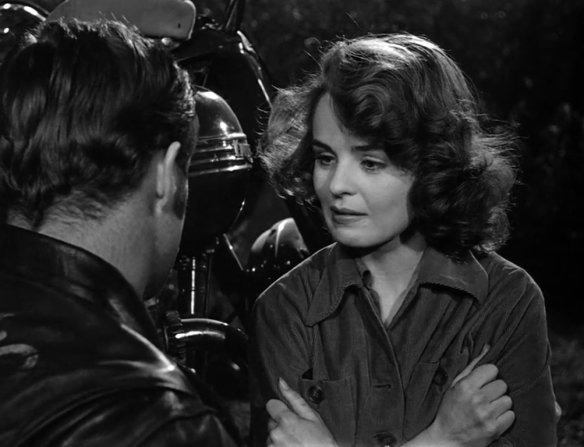
That’s the one key to Brando’s portrayal. He’s a nonconformist against all forms of authority, and yet he still manages to cleave rather nonchalantly to some kind of romantic code of conduct. In a sense, he rescues her only to whisk her off on his motorcycle to some deserted park. She’s tired, not ready to put up any sort of fight. The progression from here seems obvious.

And yet in some curious about-face, The Wild One flips its primary stereotype on its head creating a curious aside. Kathie intimidates him with her breeding, and then, she simultaneously wants to go off somewhere with Johnny and leave the town behind. Both developments feel unexpected. It happens so fast, too fast even, if this wasn’t the heightened reality of a B-picture. For this reason alone with can forgive the moment.

Because the movie constantly corkscrews its logic this way and that to a dizzying degree. The out-of-towners began as the obvious aggressors only for the townspeople to turn on them, giving them a taste of their own medicine. Nothing lines up in terms of what is fair or just. All that is rational spins further and further out of control. It’s part of the intrigue of the movie — a bit like gawking at a car accident — you can’t turn away.

The town, which has sat passively by for some time, is bent on taking retribution into their own hands. They form a posse and go after Johnny pummeling him and taking him to what can only be called their lair. Their tactics have turned ugly as well, and they categorically fail in carrying out justice until a real authoritarian figure (Jay C. Flippen) comes in to excavate the truth.

As it stands, one man is dead and Johnny is accused of murder. The irony is in this drastic turn. Half an hour before we would have convicted Johnny ourselves on reputation alone. Now he is made to look the victim — albeit an ungrateful and belligerent one.

The Wild One concedes in a final moment where Brando finally cracks a smile. The words “Thank You” still don’t come out of his mouth, but he relinquishes a bit of his bad-boy aura momentarily. However, it’s the movie leading up to this point that would help propel the outlaw biker genre forward and make Brando more than a mere stage phenomenon.

Laslo Benedek is not a well-remembered director, and yet he puts together a brassy picture utterly alive with punk sentiment. However, equally importantly, its sense of grungy low-budget drama is not completely devoid of streaks of good humor. For its day, you can see the spikes, and now it’s a simple pleasure for how conspicuous it feels. It’s ripe for parody, yes, but it was also a template for its many descendants. You can hardly consider one without the other.

3.5/5 Stars

Viva Zapata (1952): A Mixed Message of Revolution

viva zapata 1

The place is Mexico City. The year 1909. A contingent of rural farmhands pays a visit to their eminent leader to intercede on behalf of their neighbors. They live a life of poverty and injustice as others gorge themselves on the riches of the land.

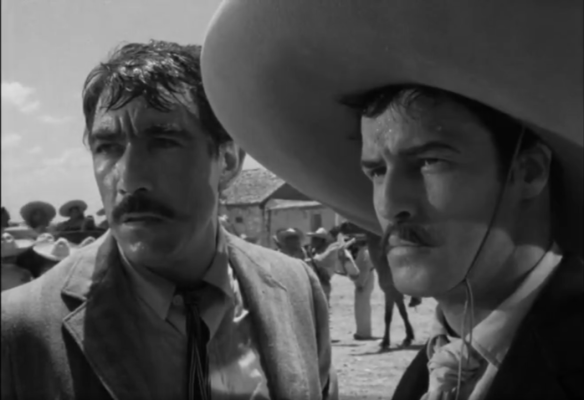
For all his progressive well-meaning, it still is a rather sour note seeing Marlon Brando playing national hero Emiliano Zapata,  especially with Anthony Quinn just left-of-center as his brother Eufumio. It seems like a casting opportunity missed just as the movie itself has so many blatant blindspots.

From the outset, these underlying issues slightly neutralize everything Vivia Zapata tries so desperately to embody, a lot of which is of a visceral nature. An old man is dragged across the dusty roads with a rope around his neck by government soldiers. He’s finally hacked free with a machete only to go careening into a cornfield — one of the first visual casualties onscreen.

Likewise, the peasantry begins clacking pebbles together ominously in the wake of horsemen taking their leader away. They are starting to mobilize and unite under a banner of liberty and equality. The grassroots are surging into action.

It’s evident Elia Kazan is searching out a sense of realism between old-school tintypes and post-war neorealism. He’s navigating a way to humanize Zapata as a sympathetic champion of the rural farmer but also make him seem authentic in his visible plight.

Despite its vast reservoir of talent, it falls flat or at least becomes undermined by the faces in the picture that look anything but realistic. It stands out sorely (even comically) against a canvass striving for this intimate, engaging paean of the Mexican revolution.

Furthermore, the story feels like it falls on the wrong side of the border for John Steinbeck who might know the migrants and cannery workers of Salinas and Monterey well, but the universality of that experience doesn’t always directly translate to the aspirations or patois of Mexican farmhands.

Jean Peters is someone I’ve grown to admire and yet as a virginal love interest, although she’s candid enough, the part still feels compromised. The worst infraction goes to Joseph Wisemen, in particular, who sticks out like a sore thumb or for that matter Mildred Dunnock who would do better in John Ford’s pictures. However, now that the air is cleared, we can leave these grievances where they lie and move forward to something more optimistic.

Like all revolutions girded around a cause, we witness how it ably mobilizes the entire population because they are fighting for something they’d willfully die for while their adversary is just striving for containment and holding onto what they already have. They’re radically different perspectives.

My knowledge of Mexican history is so woefully superficial having Zapata and Villa in the same film does me a service. Otherwise, I would probably have them confused. What’s curious is how the film works in passages of time — these almost elliptical increments — where we see more of the aftermath of each subsequent stepping stone in the struggle than grasping the moments themselves.

There are skirmishes in the cornfields and the forests — merciless executions carried out on both sides to enact discipline and reign in radicals, but most of the movie is a social and moral exercise.

viva zapata 3

Zapata aligns himself with land reformer Francisco Madeira who, for all his idealistic shortcomings, seems relatively sincere in returning the land to the common man. However, he comes up against a self-serving mentality embodied by the tyrannical General Huerta.

The themes to be explored are of a valiant nature. Zapata’s trying to raise up a society and a world for his people of freedom only for it to be dictated by war, continual violence, and national corruption.

There’s this very cynical undercurrent to it as well even as Brando’s protagonist fights with a certain dogged and principled idealism. For him, this is a righteous war never sullied by personal gain or public veneration. And yet other men on both sides are only out for their own consolidation of power and their own vainglory. The few allies Zapata has are either compromised or killed.

One thinks of his own brother, Eufumio, who becomes disillusioned by their continual crusade never seeming to end. And sob driven by desperation and drink, he sets himself up as his own private dictator exasperating the mechanisms they had long been warring against. It signals the beginning of the end as their relations splinter at the seams.

Because one cannot live a life like Emiliano Zapata’s without expecting some form of vindictive retribution. For every man who cherishes his name, exulting him as some kind of national savior, there are still more who censure him as a degenerate outlaw.

Although Pancho Villa (Alan Reed) suggests some kind of middle ground — a way to fade off into the background — though this in itself even feels like an illusion. What little I know about Pancho Villa tells me he did not reach the ripe old age of a white-haired man.

However, in its final push, Viva Zapata does not totally repudiate its own message as the name Zapata becomes the ammunition — the brush fire to set the whole countryside alight — so the revolution might continue in the hearts and minds of the common man. It’s a stirring idea just as this film has a great deal to offer in terms of both talent and theatrical motifs.

Ultimately, it proves a mixed message between its roster of dated performances and conflicting aspirations to appeal to a certain progressive ethos. What helps take the sting out of it comes with the realization Kazan and Brando’s collaboration in On The Waterfront was just around the corner.

And Anthony Quinn, though he faced hardships in his career, didn’t do too bad for himself going forward. He was, after all, one of Hollywood’s most unique and versatile talents and a served him well in a truly serpentine career. At the very least, Zapata should lead to a fitting appreciation of him to go with some of its most admirable ideas in service to the downtrodden.

3/5 Stars

Bhowani Junction (1956) and Racial Identity

Bhowani_Junction

“It’s about time the Lord started making all human beings the same on the outside as well as the same on the inside.” – Stewart Granger as Col. Rodney Savage

“They’d only change it back again, the moment his back was turned.” – Ava Gardner as Victoria Jones

Some will easily take offense with Bhowani Junction for its portrayals. To be sure, it’s working in terms of imperialism, British-Indian relations, and biracial identity. Oftentimes Westerners, and Hollywood in particular, are suspect of taking an oversimplified, superficial perspective when we represent other cultures. It could be the “White Man’s Burden,” The Nobel Savage archetype, or even “The Tragic Mulatto.”

Certainly, a lot of these stereotypes — now decades later — aren’t only indicative of a skewed or misguided sense of portrayal. Rather they get maintained through prolonged underrepresentation. It starts with ignorance and the kind of clumsy cultural shorthand that tries to make sense of other people who are different than ourselves. However, its continued pervasiveness lasts partially because it’s never fleshed out or totally dismantled by a flood of new portrayals. In many cases, we’re still getting over this very same hump in the 21st century.

For this reason alone, Bhowani Junction makes an admirable go at offering a slightly different perspective. It’s hard to say the Indian characters get to reclaim their own story because this narrative is still dominated by colonialism like its predecessors.

Granted, we must also still court issues of whitewashing (if not simply with Ava Gardner). You have both Bill Travers and Francis Matthews playing a mixed-race and a native Indian respectively. It feels especially regrettable since an actor like Sabu was passed over for a role.

Likewise, there is something convenient about Gardner ending up with the strapping white man (her fellow Anglo-Indian dies a sacrificial death). Meanwhile, the kindly Sikh she nearly marries out of gratitude is forgotten in the wake of ensuing drama. Still, these are only a few qualms.

The backdrop of the story is of vital importance in order to contextualize what’s going on. The British Empire’s foothold in India is crumbling. You have the peaceful protests of Gandhi sweeping the country. Meanwhile, more militant riots are being instigated by a local troublemaker named Davay (Peter Illing). Deciphering the socio-political climate is hardly easy and that’s why the conquerors usually got it wrong wherever they wind up.

The curious thing is how Bhowani Junction is not about holding the empire together. One of its main representatives, Colonel Rodney Savage (Stewart Granger), knows it’s only a matter of time before it crumbles. What gains importance is the process of leaving well. The primary objective is based on creating stability and relinquishing power honorably with as little bloodshed and animosity as possible.

It’s people like Victoria (Gardner) and her childhood friend Patrick Taylor (Bill Travers) who must figure out where they fit into this narrative. However, it’s noteworthy that the dissociation going on inside her own being goes beyond existing as a mere social pariah. Far from being an outcast, she’s a respected member of the British military and not completely rejected by the local Indian population.

Still, she is different than both. It’s reality and she must come to terms with it. What presents itself is a surprisingly unique perspective for 1950s Hollywood and even if it is imperfect, it proves willing to grapple with history in an altogether different manner. Thus, Bhowani Junction is a welcomed contour of 1950s Hollywood filling in and shading a cross-section of society we very rarely see.

Subsequently, what the film does is offer up a case study of racial identity with Gardner caught between three men representative of the three “cultures” tugging at her very being. Because Victoria Jones, half-English, half-Indian, has her affections and allegiances split threefold.

However, Bhowani Junction adds a bit more nuance when it comes to the representation of biracial characters. I will dance around these lines gingerly as I know some might vehemently disagree. I can only speak from my own experience as someone who grew up with a similar background. Even if I am rarely accustomed to this kind of racism or private dissonance, questions of my own identity still creep into my mind from time to time. It’s only natural.

Yes, the romance with Granger and the melodramatics might fall within the realm of accepted convention, but under Cukor’s sympathetic eye, Gardner comes at the part with a ferocity — giving it her all. One particularly scarring moment involves a devastating rape scene.

Far from being a mere lynchpin of the narrative, it’s actually suffused with the terror and concern it should rightfully engender. What a horrible experience to be privy to as Gardner struggles for her life by the local train tracks. In truth, it left the actress so affected she had to make peace with her onscreen aggressor (Lionel Jeffries) off-camera. It’s graphic in movement and emotion and that’s terrifying enough.

Amid the foreseeable beats, there is a far more intimate and engaging story attempting to court themes of a far more personal nature. The hubbub and crowded train depots are momentarily diverting, but they are not Cukor’s prime concern nor his forte. He’s no Demille or David Lean. Give him the relationships, person-to-person, and on this scale, he is a wonderful handler.

Cukor also remains vindicated by history. Because the epiphany that his original structure was ruthlessly bastardized by the studio, through hastily constructed voiceover and other such shortcuts, gives me greater faith in the man. It’s only a shame we cannot see his personal cut of the movie. Not only does the thrown-together bookend narration kill the climax, it feels stilted, wrecking the basic integrity of our story. Alas, what could have been.

3.5/5 Stars

The Barefoot Contessa (1954): A Cinderella Story

Screenshot 2020-04-18 at 51159 PM

While it shares elements with the earlier Pandora and The Flying Dutchman in both its techniques and the mystique projected around Ava Gardner, The Barefoot Contessa ultimately evolves and settles into the narrative rhythms one might expect from its creative partners.

Jack Cardiff returns to give Ava Gardner phenomenal lighting and color — flattering her complexion — beams bursting with radiance and vibrant pigmentation. The extraordinary tones of the cinematography are married with Joseph L. Mankiewicz’s penchant for substantial but well-wrought dialogue and a kind of suave dinner repartee dating back to the days of All About Eve. Likewise, the spine of the story is derived from a very conspicuous novelistic device — starting at the end to illuminate the beginning.

Because someone has died. There is a funeral in the gloom of a rainy day in Spain. Although rain falls mainly on the plain, that is no concern of ours. Instead, we meet the onlookers from many walks of life, all sheltered (for the most part) under their respective umbrellas.

Humphrey Bogart is Harry Dawes a veteran movie director and screenwriter halfway around the world from Hollywood & Vine, attending the funeral of one of the industry’s incandescent starlets who burned out far too quickly.

As is commonplace with many of these self-reflexive industry portraits popular specifically during the 1950s, you begin to suspect where stories gleaned their inspirations by weaving fact and fiction together into a new amalgam of the Hollywood dream factory.

This tale of a nightclub singer in Madrid rising to the heights of Hollywood is hardly a far cry from other real-life origin stories. Rita Hayworth was reborn as a screen goddess and eventually married a prince. Lana Turner was discovered at a drug store counter or the likes of Linda Darnell and Ava Gardner herself had Hollywood contracts thrust upon them at such an early age. In other words, this wasn’t just another wishful Hollywood story. There are obvious antecedents floating around the industry.

The world is instantly placeable. Flamenco guitar. The unmistakable Enzo Staiola from the Bicycle Thief as a busboy (in Spain no less). What sets Maria Vargas apart is her startling frankness, hardly enamored with the movie industry.

She makes a startling first impression as much for what she won’t do as for what she does. Because she’s a very hard girl to see — not easily swayed by Hollywood glitz — and terribly grounded when it comes to what she wants for her career.

The wheeling-dealing P.R. man Oscar Muldoon (Edmond O’Brien) talks up what she has to look forward to, continually dabbing his forehead with his hanky from his exuberant bouts of hyperventilation. Meanwhile, the tense and controlling financier, Kirk Edwards (Warren Stevens), sits by expecting everyone to cave to his will.

He’s no Hollywood wunderkind, but he has money to finance the industry’s next big hit. His money speaks and so Dawes and Muldoon follow his lead. He makes the world turn. Maria Vargas knows no such convention. She is the master and perfecter of her own destiny.

Harry’s the first person she feels akin to; he’s a real person without throwing around the pretense of his purported fame. Meanwhile, she’s not completely ignorant of the movie industry, throwing around the names of Lombard and Harlow, Lubitsch, Van Dyke, and La Cava from the golden days.

Even as the lovely dancer sets her sights on Hollywood, she carves out an individual path. She began as an untouchable with no interest in the enticements of men or romance promised by the industry around her.

Because she knows who she is and her grounded roots are signified by her affinity for having her feet in the dirt. You can’t easily change someone to the core of their being. Though she’s not Spanish nor does she exude the qualities of a girl from humble means (looks can be deceiving), Garnder makes the most of it.

There are men jockeying for her affections (or at least ownership of her career) among them Kirk and a frivolous Latin American gigolo, Alberto Bravano (Marius Goring). He is little better, enslaved by his own excesses be it gambling or drink. The man who admires her from a distance and subsequently takes her away from the place is Count Vincenzo Torlato-Favrini (Rossano Brazzi), the closest thing to a decent man she’s ever had in her life thus far.

barefoot contessa 1

Harry remains a steadfast friend and a protector of Maria when the world seems full of ravenous wolves and superficial opportunists. He knows Maria better than most; she owns an acute Cinderella complex, looking for her Prince Charming, even if the glass slippers were never meant for her. The Count seems to be the man. Alas, in life midnight often strikes and there’s no way to reclaim the time. Her fairy tale ends in tragedy.

No fault of her own, I never felt the weight or magnitude of Maria and the loss of her life. The way the story continually circles “the round” of funeral guests somehow hinders us even though the myriad of perspectives are meant to help us comprehend her better.

I found myself wanting more Bogart or at least more O’Brien, who gives an impeccable showbiz send-up, but when topics turned to the other men in Maria’s life, the story grows turgid and uninteresting — partially alienating the audience. They were never established in the same way nor do I have the kind of instant rapport with Goring or Brazzi that I instantly feel for Bogart.

Most regrettably, Gardner’s performance is never truly allowed to cast a spell of enchantment aside from a few intermittent scenes. Yes, once again, she’s remarkably beautiful and Jack Cardiff’s camera does wonders to ignite her God-given features in an extraordinary light. When she dances with gypsies or wanders through grand estates in luxuriant gowns, she has powers to entrance the audience.

However, her actual performance — going beyond her casting as a Spaniard — never seems to play to her true strengths. If I may be so bold, I never consider her much of an actress, but she’s at her most sublime playing shades of who she really was or at least what her reputation made her out to be.

I look at Pandora and the Flying Dutchman, even in its heightened state of reality, or Mogambo and The Night of The Iguana, and I feel like I know and understand Gardner a bit more intimately in and through her performances. Perhaps this is precisely the point, but in The Barefoot Contessa, we only know her due to the recollections of others.

For me, she is merely another portrait of inevitable rising and falling human tragedy. Unfortunately Hollywood has engendered many of those storylines. She feels more like the postscript to other people’s stories than the definitive protagonist of her own biography.

Because a Barefoot Contessa is such a stirring image, both dissonant and complex, well-worth eulogizing about. Sadly, it never harnesses all its assets, and when the credits roll it feels inconsequential at best and at worst disrespectful.

Such a woman deserved a better remembrance. If nothing else, it’s a sad commentary suggesting a woman’s legacy is made by the men who helped shape her and are consequently the ones who live to tell her story. The Pygmalions might live in regret, but it is their creations who are buried in the dirt. “Che Sara Sara” feels like too pat an answer for this tragic Cinderella story.

But, after all, this is Hollywood we’re talking about where it’s tempting to mold everyone into easily digestible, one-dimensional media icons ready for immediate consumption. For all their glamour and tabloid-worthy headlines, Rita, Lana, Linda, and Ava (as well as any other Hollywood casualty) were human beings too.

3.5/5 Stars

Pandora and The Flying Dutchman (1951): Love Across Time and Space

ava gardner pandora 4

Albert Lewin’s romantic fable opens in Esperanza on the Mediterranean coast of Spain. If the director is a generally unknown name, then Jack Cardiff might just as easily draw your attention with his distinct, intoxicating color tones. It’s true the picture opens with a wonderful shot perched from a bell tower. It’s sounding the alarm and, true to form, all the local populations are flooding the beach.

As we get closer, we see what has elicited such a rapid response: a boat beached on the shoreline. How it got there is really the whole reason for telling this story. Geoffrey Fielding (Harold Warrender) is a distinguished and learned fellow of linguistics and ancient antiquities who was an observer of these curious events.

However, he also proves an apt entry point into the story, which is fundamentally obscured from the outset. The erudite chap helps us out by recounting the details, how they happened from the beginning. Breaking with Hollywood convention, for some puzzling reason, he speaks directly to us, and it’s just as well. The movie is replete with these kinds of mystifying pieces of logic.

Whether it’s something in the water, the air, or just the script, characters float through scenes in this mesmerizing near-dream state. Nearly every male, in particular, orbits around a woman named Pandora (Ava Gardner) as if she is the Sun at the center of their solar system. Drunkards, race car drivers, artists, matadors — it’s all the same — and the gorgeous nightclub singer from the Carolinas seems to welcome their advances.

While Pandora Reynolds is not Ava Gardner exactly, it’s difficult not to see how the part plays on her own reputation — one of beauty, high times, and carousing with a penchant for drama. She famously moved to Spain to get away from Hollywood (and probably Frank Sinatra) only to make a life for herself abroad.

Again, this is not an exact representation of Gardner, but Pandora tosses men around like playthings. She gets emotional highs off other people’s passionate pronouncements of romance. She’s also an impertinent even impetus woman who measures love in the most reckless ways with a hedonistic comprehension.

One man (Marius Goring) turns into a blithering alcoholic falling over himself with jealousy. Another man (Nigel Patrick), madly in love with her, gladly pushes his most prized possession — a racing car — off a cliff into the oceans below as a show of devotion. She agrees to an impromptu marriage in its wake. He’s proved his undying commitment at her behest.

However, there is someone else, a Dutchman named Hendrik van der Zee (James Mason), who is quite different. She is drawn to him; his ship is anchored off the coast and she swims toward it — the solitary light it casts in the night sky. For the first time, someone is unphased by her allure and the directness she goes about her affairs.

In fact, he somehow knows more about her than she knows about herself. He’s an artist painting her or at least painting Pandora and her box as she is a present embodiment of a creature who was incarnated eons before. In this way, Pandora and The Flying Dutchman evokes a broader scale by turning a belle, Pandora Reynolds, into a transcendent archetype. It trades worldly coincidence for the heights of mythology.

When Mason and Gardner witness each other for the first time — both garnering a striking closeup — we know we’re in for something ignited with the flames of passion.  Because they’re both the picture of attractive Hollywood A-Listers. Mason, of course, started out in the U.K. and this is a British production but he would hop the pond soon enough.

mason and gardner 2

From thenceforward, the movie is ruled by this uncanny lucidity bridging the years between encounters across time and space. Mason brings with him an aura of his own, and there’s a newfound mystical ecstasy around the frames.

Still, there is some semblance of reality. Pandora Reynolds is to be married. Another past suitor, a cocksure Matador (Mario Cabre), is quick and bold in his new professions of love. Whereas the Dutchman lets her go, the bullfighter tries as brashly as he can to pull her away from the man she is betrothed to. He probably believes rightfully so that she doesn’t truly love her fiancee. It’s more of a token agreement based on his devotion.

Because while the racecar driver is a miserable sot and probably oblivious to the kind of wavelength all the other characters seem to speak and react on, the Matador knows who his true rival is. It goes unspoken and yet he goes to the Dutchman to have it out.

In one of the most curious scenes splitting with any shred of reality and narrative logic, there is a confrontation, a murder, a nightmare — whatever you want to call it. And yet inexplicably the story wakes up the next morning as if nothing has happened.

James Mason and Ava Gardner and Geoffrey take their places at the bullfight only to watch the famed Matador get gored to death. The fates of love are not working in his favor.

If you’ll remember, Pandora and The Flying Dutchman opened with the beaching of a ship with bodies aboard. In the end, this hardly seems to matter. It is material only on this celestial sphere we call earth where living and breathing are of the utmost importance. This is a story not so much concerned with such mundane themes. Instead, it tackles love on this cosmic scale spanning the centuries even the millennia and brings people together like ships passing through the nights of time.

They conquer death — and we are led to believe even eternity — for the sake of their all-encompassing love. The grandiose metaphors are always arresting and make one’s heart swell with an appreciation for the throes of romance. Gardner and Mason aren’t a bad couple to hang our hopes on in this regard even if the narrative shards feel thin or at the very least discombobulating.

It’s more an exercise in Delphic style than it is riveting storytelling and yet there is something moderately powerful in working in ambiguous shades of dream-like reality, where players walk around in this heightened state bursting with almost obscene amounts of color. Romance is considered in these glorious arenas of speed racing and bullfighting and then stretches across great fathoms of time into the annals of history and myth itself. There’s nothing subtle about it, and visually it’s too gorgeous not to appreciate on that level alone.

3.5/5 Stars

Our Man in Havana (1959) and Vacuums in The Atomic Age

our man in havana alec guinness vacuum

Because of the renewed partnership of Grahame Greene and director Carol Reed, it’s difficult not to feel an inclination to compare Our Man in Havana with The Third Man from a decade prior. If you wanted to go out on a limb, you could make the case the earlier film beget this film, at least in a cultural sense.

A post-war world divvied up between Allied powers has evolved into a Cold War with a constant chafing between crumbling imperialist footholds, rising revolutionaries, and the tustling of Western and Soviet superpowers out to establish their doctrines.

Our Man in Havana does not make any bold claims about its purposes. In fact, the movie even begins with a small caveat. Fidel Castro has already taken over Cuba — he even visited the on-location shoot — but it’s made clear this story took place before the Revolution. It’s not that those were more stable times or even simpler, but they were on the cusp of one of Cuba’s most cataclysmic changes.

Because even months after filming was complete, Castro would make his fateful decision to side with the Soviets, therefore pitting himself against the Americans (and probably the British) setting up the confrontation over the Cuban Missile Crisis in 1962.

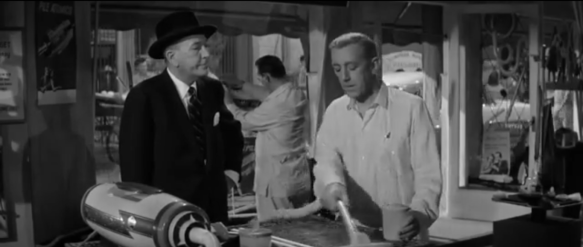
Again, Our Man in Havana makes no claims at this kind of scope. Nevertheless, it’s important when we consider the implications of a story as ludicrous as this one. First off, Alec Guinness is the quintessential British vacuum cleaner salesman in Havana, Cuba.

He feels hopelessly out of place in this world on the edge of great cultural change. Jim Wormold is no earth-shattering, transatlantic figure even as his best friend is a fellow transplant, Dr. Hasselbacher (Burl Ives). Our protagonist’s chipper teenage daughter Milly (Jo Morrow) calls him “invincibly ignorant” and hardly in a critical sense. He’s not offended by the words either. Noting he’s never been a good Catholic. However, there’s something striking about her words pulled directly from Greene’s story.

Maybe it has to do with this kind of naivete — his good-natured, child-like perspective on the world — because the comedy flows from a man like him being embroiled in the international espionage of the Cold War. After all, it was an event in itself that was played off as a conflict between a religious and an areligious society. What it showed more conclusively were our universals blindspots and the shortcomings on either side.

Our Man in Havana purposefully establishes its world with a raised-eyebrow lampooning of the snooty British secret service represented by such equitable British gentlemen as Noel Coward and Ralph Richardson. They take to their roles splendidly.

In their care, the lowly Wormold, who never had a thought of espionage in any form, has become a vital part of the British spy network. As a result, Guinness becomes part secret agent, part science fiction writer, as he dreams up fanciful bits of intel to feed his stodgy superiors.

He even provides schematics and some of his most ingenious drawings inspired by The Hoover. Coincidentally, this was a plot partially recycled in a Hogan’s Heroes episode. To be fair, vacuums being mistakenly passed off as a superweapon is a memorable trope.

our man in havana maureen o'hara

The crucial pieces begin with Wormold. To be clear he doesn’t have an ounce of malintent in his body.  He knows no other way to assuage these chaps, and he wants to make them happy so he obliges as best as he knows how. The joke is how everything becomes blown out of proportion. Soon he’s joined by his own personal secretary (the always lovely Maureen O’Hara) and a radio operator named Rudy.

At the same time, a local tyrant, Captain Segura (Ernie Kovacs feels slightly miscast in the part), has taken a particular interest in the vacuum salesman. First, because of some of his known associates and then because of his pretty daughter. He does his best to make her acquaintance.

As an outright thriller, it would be hopeless to expect Our Man in Havana to replicate the comparable successes of The Third Man, although this is probably the closest Carol Reed ever got. However, it also proves to be a forerunner or at least an early entry in the Bond-ignited spy film craze. Its comic sensibilities anchored by the always dry, forever congenial hapless wit of Alec Guinness are what make it stick.

One line delivered as dry as a Bond martini makes the claim that the new superweapon “Will make the H bomb conventional.” After all, who was ever afraid of something that suddenly loses all of its novelty? It becomes mundane. It’s lines like these that progressively make the farce feel all the more absurd, and with the passage of time, more incongruous and intriguing. Because as alluded to before, the Cold War was still very much in a state of flux in the Caribbean petri dish of Cuba. Soon it would be a battleground of the proxy wars for generations.

Likewise, Wormold’s fabrications are given credence by people in power such that white lies become established reality, incurring all these bizarre real-world consequences, sending him spinning in all directions. In one sequence he’s joined by Ms. Severn (O’Hara) as they look to reach out to one of his “contacts” — a local bellydancer. Guinness mucks it up as per usual only to bubblewrap his “agent” so they can take her out the back window and help her escape the authorities.

Then, you have such disparate situational hijinks as vacuum-cleaning conventions bookended by sudden murder. It reaches such a dizzying inflection point, there is no recourse but to fess up. Wormold is prepared for the consequences. The final joke comes in the utter lunacy of the conclusion. Powers that be would never dare admit how horribly they’ve botched the situation. That would never do!

In the end, since the flavor of Vienna and Cuba have their own particular sense of milieu and culture, I rarely found myself reverting back to The Third Man. There was one moment of commonality, however, right near the end of the movie. Once more it’s a funeral sequence. It’s a different sort of funeral where the factions, cross-sections, and localities are tangled and aligned in such a curious way.

And Guinness gets a postscript of sorts, returning to the British Isles wary of what he will return home to. His ever-vivacious daughter points out the window asking about the formidable castle down below; he notes the Tower of London and slumps down in his chair — a reminder of coming attractions. That’s where the crown stashes its most incorrigible traitors.

What makes The Spy Who Came In From The Cold such a standout Cold War film is how utterly merciless it is in its conclusions. There is no other way to look at it. Our Man from Havana vies for the completely opposite approach with an equally telling result.

We leave our hero in the cheeriest of outcomes only to question the state of the world and the structures around him. Really, they’re one and the same — leading the audience to question — whether through unsentimental drama or out-and-out farce, how are we supposed to make sense of the atomic age? It’s utterly nonsensical.

4/5 Stars

The Long Gray Line (1955) and Martin Maher

the long gray line 1955 Tyrone Power

There’s no other way to put it. The West Point imagery of The Long Gray Line is smart from the outset, and if nothing else, it instills this sense of admiration in the military sharpness of this storied institution. However, although this is a hagiography from John Ford, it feels more full-bodied than a typically blasé biopic.

For one thing Tyrone Power, more so than an Errol Flynn or some of the other earlier idols, proved his candor for meatier roles that might showcase what he could do. And between the likes of Nightmare Alley and Witness to the Prosecution is a picture that probably gets less fanfare written about it. His portrayal of Martin Maher, a lifelong West Point man, is both endearing and surprisingly comic even as his brogue is quick to take over the picture.

Because it is a biography as only John Ford could manage it. He employs broad humor from fisticuffs to falling plates to brawls in the manure pile while assembling all his surrogate screen family together — paying his usual homage to his Irish roots in the process. If none of this particularly piques your interest, it’s probably not for you. Because if we can say anything about The Long Gray Line, there’s no doubt about it. This is another quintessential John Ford picture.

West Point is fit for Ford because you have this underlying sense of tradition, honor, and camaraderie. The drills, men dressed in their uniforms, and the very architecture produces wonderful elements for Ford to exercise his glorious stationary wide shots. However, it’s not merely about composition but motion and people being galvanized together through shared experience, be it song, dance, or the rigors of military drills.

Moreover, it covers such an expansive time frame and yet it feels free from a lot of the typical narrative pitfalls. There’s a general sense it’s more content with the details and observations of life than stringing together a story of dramatic event after dramatic event each comprised of their own life-altering meaning.

Instead, what we see is totally fluid without needing to explain itself, and as we’re not dealing in huge historical events, but one man’s extraordinary life, this lassitude works quite well.

It considers time, acknowledges how life is ordered by time but is never a slave to it.  The guiding light is a meditation on tradition more than a pure devotion to realism. Mind you, there are a few winks with the camera to Pershing, Knute Rockne out on the football field, even Harry Carey Jr. portraying a young version of incumbent president Dwight D. Eisenhower.

We also methodically follow the train of Marty’s life from a “fresh of the boat” Irish immigrant to a bumbling waiter, an up-and-coming athletic coach, and then a corporal training up the youthful cadets and helping instill in them the pride and responsibility of their station.

The Long Gray Line Maureen O'Hara Tyrone Power

Soon after Marty’s arrival, Mary O’Donnell (Maureen O’Hara) arrives from the old country to serve as a cook for a local family. Ford delivers their so-called meet-cute in such a curious manner it could be out of a silent movie. For someone known for talking so passionately, O’Hara nary utters a word, instead, punting one of Marty’s boxing gloves while he trains up the lads in the art. Of course, he can’t help but keep sneaking glances back at her. It’s the beginning of a lifelong love story.

With John Wayne not attached to the picture (Ford wanted him), some of Ford’s other usual suspects get their due chance to shine. Ward Bond is a fitting embodiment of the gruff but effectual Master of the Sword, Captain Koehler, who invests in Marty. The classes of cadets are sprinkled with the likes of Harry Carey Jr. and Patrick Wayne. While Old Man Martin (Donald Crisp) arrives from Tipperary soon thereafter.

Although not a Ford regular, the cast includes Robert Francis, who was Harry Cohn’s answer to the new rebellious class of actors, the antithesis of James Dean and his ilk. Sadly Francis’s career was no less tragic. The rising actor only appeared in 4 movies before dying in a plane crash in 1955. This would prove to be his last project.

The last impression of The Long Gray Line suggests how Martin is as much an institution as the institution itself. In this regard, one’s memories are quickly drawn to Mr. Chips because Marty Maher feels like an analogous figure for the halls of West Point. Ford shows his knack for visual articulation in how he instills similar themes.

Instead of a deathbed pronouncement of a life well-lived, we see it all in action. Marty is older now, white-haired, and coming up on 50 years with the school. He has old friends doting over him, and new ones helping set up the Christmas tree. They put up the decorations and busy themselves in the kitchen

Again, it’s this constant motion and movement leading us toward greater communal well-being. Where we are reminded how much stronger we are together and how much comfort can be gleaned in time spent with others doing all manner of things.

Surely Ford could not have meant any of this and yet that’s the beauty of it because it all feels very organic in nature — organic to how we live as human beings — and bearing the truth of real life. It’s not just the momentary yuletide cheer that draws me back to It’s a Wonderful Life, it’s the community and Ford gives Marty a hero’s send-off full of poignancy (and “Auld Lang Syne”).

Although he’s come a long way from Tipperary, the verdant greens of the landscape feel like an immigrant’s reminiscence of The Quiet Man now on opposite shores, but no less resplendent. His roots and the aspects of his character and the family he holds dear are never far away.

Watching the ending, as a grand exhibition is put on in Marty’s honor, is spectacular unto itself. There is this gravitas similar to The Quiet Man or even the final parasol twirls of Rio Grande where we feel like we have taken part in something substantial just in studying the faces of our leads from their regal posts. They feel like giants on the screen.

After all, we’ve been privy to an entire lifetime and The Long Gray Line keeps on going. True, there’s a temptation to see this as a monotonous even a depressing thing — how time marches on and how there will always be new recruits to replace the old. People leave. Even Marty Martin was buried on the grounds after his 50 years of service.

However, in the hands of Ford, these genuine realities of life somehow have a definitive meaning that feels worthwhile and grand. It’s by no means naïve in its perspective, and yet it seems to grasp the meaning, even the goodness, and the dignity, in such a place. It’s made up of the people as much as any kind of ideals.

What makes the film stick for me is how it is not a true cradle-to-grave epic nor is it a war picture. Ford had been in combat and had seen the Battle of Midway for goodness sakes. He wasn’t some wide-eyed idealist high on the glories of war. And yet his penchant is to still memorialize them in some manner through a lens he can understand, namely, the man, the myth, the legend: Marty Maher.

4/5 Stars