The Slender Thread (1965) Connecting Sidney Poitier and Anne Bancroft

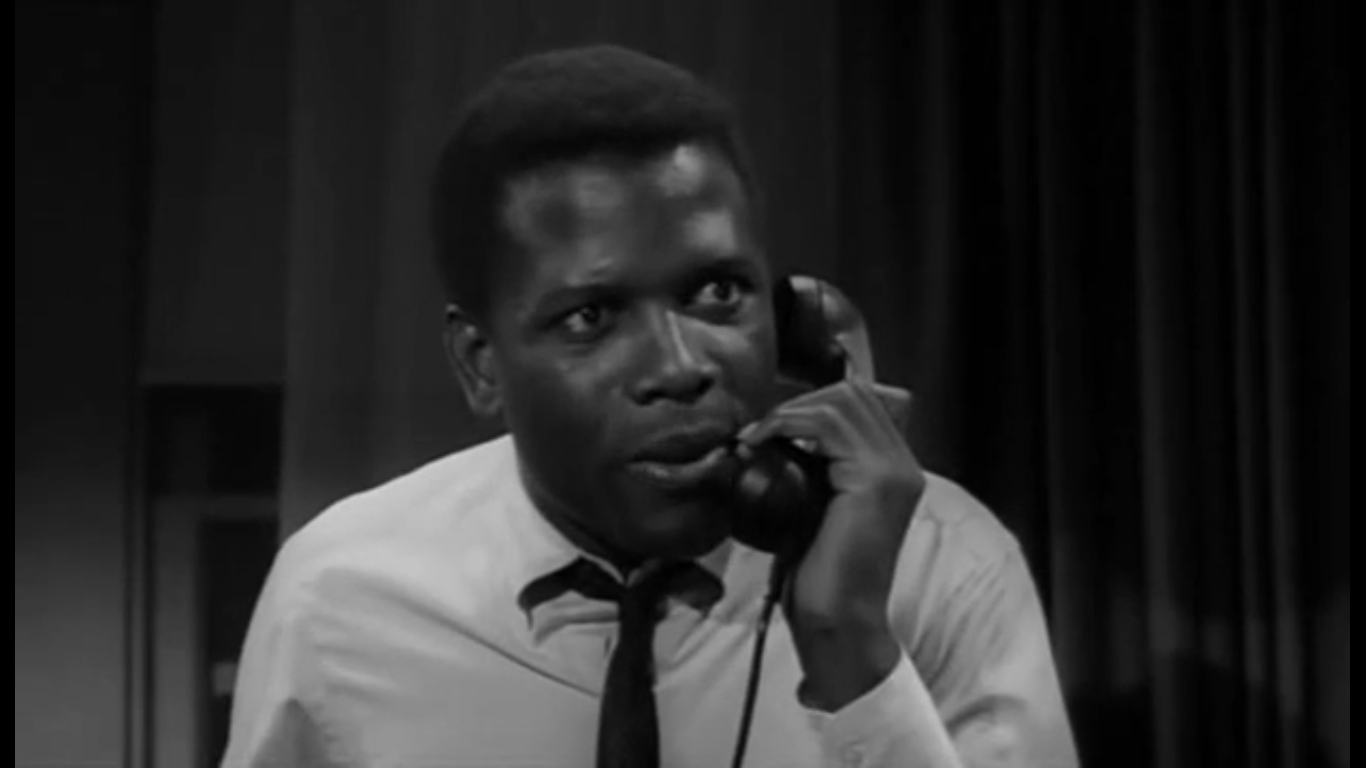
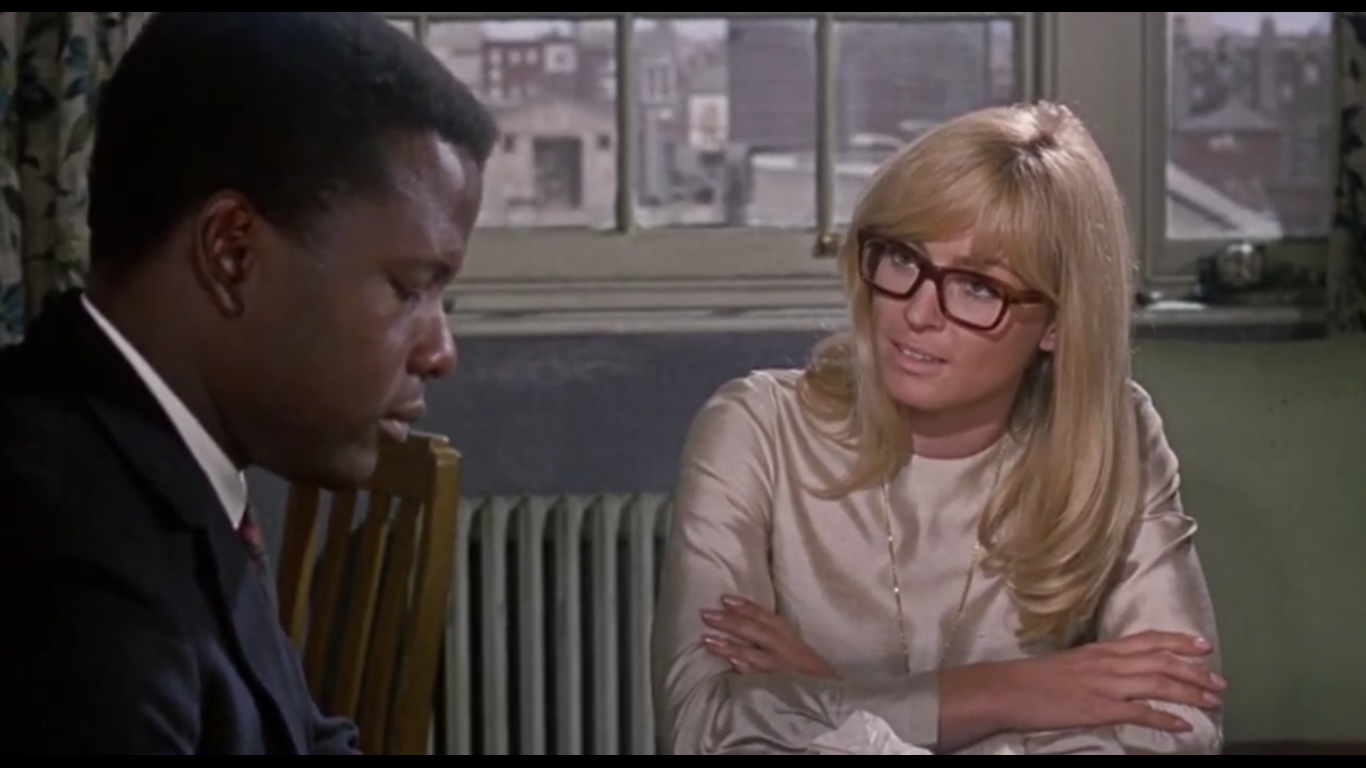
The Slender Thread feels a bit reminiscent of one of those self-contained film noir from a previous decade like 14 Hours or Dial 1119. It’s not a very ambitious scale, still, within its confines, it’s a rather enjoyable film. But, of course, the main attractions are Sidney Poitier and Anne Bancroft.

Like its predecessors, the film has a bit of a hook — a gimmick that everything else in the movie works through. He’s a university student, named Alan, who volunteers at the local suicide clinic. She’s a checked-out housewife. They never share the screen together, but they are marginally connected through the cord of the phone lines. He’s her last lifeline to the outside world and life. Under such duress in such a vulnerable space, an unmistakable bond is formed between two human beings. It’s also a convenient chance to show off some newfangled technology in Seattle’s crisis hotline, which still seemed to be a fairly new concept in the U.S.

The Slender Thread falters when it hews too close to melodrama thereby discounting a lot of the genuine work Poitier and Bancroft do to build real believable chemistry. I’m thinking of the moment where the housewife’s secret is found out by her husband (Steven Hill), instantly decimating their marriage and sending them into freefall.

His solutions are to show up at church on Sunday morning and then take a fishing trip to get away. She resorts to a state of catatonic fugue. Walking the streets of Seattle, along the seaside, and then ultimately looking to end her life.

And while the film does hearken back to earlier procedurals, it does suggest the movie is a bit of a relic, out of step with the times even as it tries to show off some cutting-edge resources. Ed Asner is part of the police force looking to track the housewife down and Telly Savalas is a respected doctor at the clinic who trusts Poitier with the night shift. Neither has much to do though if you’re familiar with the TV landscape of the ’60s and ’70s, it’s easy enough to divvy out some goodwill toward them.

Aside from a few scenes at a disco tech, the rest of the scenario and the black and white pictorials seem to denote an earlier era. It’s as if Hollywood, as is, is still in the past and has yet to fully comprehend the magnitude of the youth movements and counterculture percolating up through society.

The dancing sequences allow debut director Sydney Pollack to break out of the humdrum and come onto the stage into the emerging decade. Later, the film’s Hyatt finale evokes a bubbly gaiety of the time-honored work convention of the old world as the authorities frantically search for Inga with time running out.

There’s something traditional about all of this connective tissue even if in a year or two the whole industry would be flipped on its head. If you take stock of our primary players, you have Poitier’s ascension with arguably the greatest single year for an actor in film history during 1967. He starred in To Sir, With Love, Guess Who’s Coming to Dinner, and In The Heat of The Night! Anne Bancroft would become fiercely identified with the role of Mrs. Robinson, helping to define the generational malaise whether she liked it or not.

Pollack, for his part, would continue to rise up the ranks with pictures like They Shoot Horses, Don’t They effectively leading to more high profile projects in the ’70s and ’80s. Everyone seems to be on the cusp of something more, something dynamic.

But for what it is, in this moment and time, The Slender Thread is easy to appreciate now that it’s unstuck from that particular cultural juncture. Bancroft shows her capability for encapsulating human frailty and the despondency of the nuclear family with the raspy whisper of her voice.

Poitier is totally invested and makes us care just as dearly, with every syllable, every droplet of sweat on his brow, and every iota of his being engaged with Inga. When he lets out a boyish scream at the end of the picture, it almost feels out of place and yet after everything he does, he rightly deserves it.

The final bit of poeticism is the ending. He has the chance to meet this lady — a woman he went through hell and high water with, forever bonded together — and yet he declines. It’s not an anticlimax but something that feels right. She needed him for a time, and he reciprocated. Now they can return to their lives. Anything else might feel forced and disingenuous. In this manner, they carry the picture. It would feel empty and lacking without them.

3.5/5 Stars

To Sir, With Love (1967): Sidney Poitier As a Mentor

In the 1950s Blackboard Jungle was one of the early pivotal roles for Sidney Poitier where he plays a disaffected youth who is ultimately mentored and encouraged by his teacher: Glenn Ford. Thus, it seems fitting, at the height of his own powers in 1967, Poitier left the student behind and graduated with To Sir With Love leaving an indelible mark on a new generation.

By now it feels like a rather tame vestige of Swinging London. In this world, Poitier feels like a cultural anachronism. Yes, he’s black but there’s also a difference in class. Because he has a level of propriety that feels immediately at odds with the British working-class milieu that goes with grungy streetcorners and gossip on the double-decker in London’s East End.

However, director James Clavell envisions a story where Sidney Poitier fits seamlessly into a British world because he was himself a seasoned man of the world having grown up in Australia, gone to war in Asia, and made a career for himself in Hollywood. It does feel like a unique bit of casting for the time, but it also suggests Clavell’s confidence and understanding of his star’s capabilities.

It’s true Mark Thackeray comes to the school with a background in engineering and a world of experience, but he also has ideals and as he figures out his life, he wants to do something meaningful. His new class has a far different context — hard lives — where teachers are observed more like enemies than mentors. They distrust authority and look destined to revolt against yet another victim, first, sawing off a leg of his desk, attempting to drop projectiles on him, and generally undermining his authority by any means possible.

The score gets weirdly antsy, and it doesn’t do Poitier’s performance any favors when he fully blows his top, if not out of vitriolic rage then certainly righteous indignation. Still, he carries this turning point with aplomb, embodying everything I want to be but can rarely muster with a steely resolve.

Following in the footsteps of Ford, he’s strong. He has a backbone. But he also has a caring spirit, and he’s willing to help these kids when no one else will. He speaks to them not as cloying little children but as adults who are capable of rational thoughts and feelings. They employ a certain level of decorum and yet in response no subjects are considered off-limits.

The museum montage is a bit disruptive, but it feels like a relic of the ’60s overlayed by Lulu’s chart-topping theme. In truth, it was a product of necessity with the needed permits falling through. Still, it’s a sign of something greater. There is a trust that forms between a teacher and his pupils even as their horizons are broadened to things they would have never given a thought to before.

If the movie is about one teacher’s task of not simply subduing a classroom but winning their respect and admiration, then, there several specific test cases that prove prudent to consider.

The most precocious and romantic member of the class, Pamela Dare (Judy Geeson), begins to form a crush on Mark, and he does his best to cultivate her talents while at the same time encouraging her to reconnect with her mother.

Then, there’s Denham (Christian Roberts). He has the bad boy scruffiness of a wannabe Keith Richards or Jagger, and his redemption is another one of Thackeray’s ongoing projects. There’s a standoff with the P.E. Teacher where Sir teaches them a lesson about the unfairness of the world only to suffer for it. Then, of course, we’re reminded of lingering racism in all walks of life. This prevailing sentiment is no different here than across the pond.

One key to Thackeray’s success (apart from being Sidney Poitier) is because he actually shares their world and still rose out of it. Not a great deal of focus is given to it. Still, it’s hard not to see how Thackeray’s background mimics Poitier’s own, originating from humble means to become such a prominent and successful figure with extraordinary elocutionary powers. He’s able to command that classroom (and the screen) with the sound of his voice and the reason that lies behind it. He’s wasn’t born with all these abilities, but he certainly polished them.

I’ll be the first to avow, To Sir, With Love is not exactly auteur cinema, but it goes to show the weight a performance can have. I appreciate what the picture stands for and the way Poitier delivers it provides a genuine weightiness. He instills lessons about apologizing when you know somehow else is in the wrong and extending forgiveness to those who don’t deserve it. In a boxing match he exerts dominance quietly and not as an aggressor. Maybe elements of the movie feel antiquated, but I dearly hope that these do not.

In terms of his performance, the way he carries a briefcase or drops a letter into the red mailbox with a slight affectionate tap, you can’t sum them up, and they don’t mean anything by themselves and still, these are the hallmarks of his performance. And of course, there’s that dance. Somehow this is Poitier personified: he’s imbued with such dignity, and we receive that, but he’s also a man measured by joy as much as rage. Tenderness as much as ferocity.

The final “Lady’s Choice” dance where he takes up his spot on the floor opposite Pamela is one of the film’s sweetest culminations. And when the more traditional trappings evaporate into a raucous number by The Mindbenders, he’s more than game to groove along with it. In fact, he seems to relish the moment just as we do. It’s the film’s crowning gift of mutual affection and respect. I couldn’t help thinking that the life that each one of those teens offers up will be a testament to Sir. Because his investment reaped so much reward.

Yes, To Sir, With Love follows the expected trajectory and still it becomes more about the riches along the way expressed through minor victories and then incremental interactions leading to steady levels of understanding and growth. Do schools actually change like this? Do teachers actually make a difference? Can class rebels be reformed just like so? And does a man likely give up on ambitions for the greater good? I don’t know if I can answer these succinctly (or if I want to answer them), but perhaps that isn’t the point.

To Sir, With Love is an exhortation to never stop trying to be that difference. Is it futile? The world would have us believe it’s so. Am I cynical? Most certainly. I felt a particular kindred spirit to Mr. Weston. And yet movies come along and remind us we should have a go at a heartless world anyway.

Bar that opening scene and a jaunt to the market or a quick moment ironing clothes, we rarely see Poitier outside the four walls of that school. It’s as if he exists to be there as a beacon and a guide for those students. I wanted him and Suzy Kendall to really get together. There’s the semblance of romance and only a warm hint.

But again, I fall back on Poitier’s powerhouse performance, which makes us dream of something better. He bears all our hopes and cares, standing in for any teacher we ever had or wished we had.

I resonated with the movie anew because I spent some time in another country working at a school where many of the students might be classified as “rejects,” and yet on my best days, I felt such a connection to them. I wanted dearly for them to succeed, and Sidney Poitier as he is incarnated up on that screen is a far greater man than I. I can only imagine how he felt.

4/5 Stars

Lilies of the Field (1963): Starring Sidney Poitier

The ample joys of Lilies of the Field come out of it being a kind of modern-day parable. It’s a modest and simple story, shot over 15 days by director Ralph Nelson, with a source novel gaining inspiration from the passage of the Christian scripture:

“Consider the lilies of the field, how they grow: they neither toil nor spin, 29 yet I tell you, even Solomon in all his glory was not arrayed like one of these. 30 But if God so clothes the grass of the field, which today is alive and tomorrow is thrown into the oven, will he not much more clothe you, O you of little faith?”

It means different things for our two leads, one who keeps a handy pocket edition for easy travel and the other with a giant tome of a Bible ready to quash everything around it. The image becomes a pertinent one.

Because the film itself concerns itself with an itinerant handyman played by Sidney Poitier. His car is sputtering so he stops by the nearest establishment to get some water for his thirsty engine: it happens to be cared for by a troop of Nuns.

He wants to get out of their sphere of influence as soon as possible. They hardly speak a lick of English. They are Catholic and he is Baptist. And yet he finds himself doing work for them. At first, it’s hardly out of altruism but they are a persistent bunch.

Their leader, Mother Maria (Lilia Skala), has grand visions about what Homer Schmidt (Smith) can do for them thanks to his pair of strong arms. She’s resolute that God will build them a “shapel” and Homer is the readymade conduit.

Of course, he has no such ideas, and he’s interested solely in a buck. He’s ready to do one job for them, get a meal, and then move on with his life. Remember these were the early 60s. Poitier later in the decade would come off stately. He was a doctor, a police officer, a teacher. Here there’s a freedom and playfulness to his movements indicative of a different kind of man.

If there’s any major development to the movie it’s how they slowly teach one another something. Homer comes to understand what it is to slow down, to be present, and to bless other people with your skills. These sisters want nothing more than a place of worship, and he can give them so much. But it’s not just a selfish act of individuality and pride either. It becomes something when others join in to help finish what he began.

However, the Mother is a stern and unyielding lady in her own right. She believes in God’s daily Providence but sometimes at the expense of the human beings around her. She sees them only as tools in God’s plan rather than fellow human beings worthy of thanks and appreciation. Over time she too softens and admires Homer for the monumental thing he has accomplished.

Because ultimately he does bring their dream to fruition. He’s got the dogged resolve to make them their chapel, not because of monetary gain but just because he can. As alluded to already, it begins as a mission of self-aggrandizement.

Both Homer and the Mother can bear a little humbling, and yet in their corner of the world, they see some marvelous things. Homer uses his ingenuity to become the contractor for the project as the local members of the sisters’ parish help finish the building.

Although it’s not a movie of means, it makes up for it with heart and performance. On first look, it seems rather surprising the movie would be such an award boon for Poitier, and yet there’s something warm and appealing about his characterization. Years later there’s still something more to it. There’s a freedom and an energy imbued in him.

He can be exuberant with his shirt off, then badgered and forbearing. They feel like universally human traits that we can understand and relate to. The singing of “Amen” reverberates throughout the movie even if Jester Hairston’s resounding voice sounds nothing like Poitier.

Others like the affable bartender (Stanley Adams) are pragmatic when it comes to issues of faith, the local priest on wheels (Dan Frazer) isn’t overly pious, but he seems a decent human being with genuine aspirations and honest shortcomings. The one other solitary white man (Ralph Nelson himself), a local contractor, seems like he could represent a hedge of racism (Using the word “Boy”), but Poitier fires right back and readily treats him as an equal. They too form a mutual understanding even as he marvels at Homer’s accomplishments. He feels indispensable and Poitier certainly is for the movie.

Except for a rather conspicuous English lesson early on explaining what the colors “white” and “black” mean, from vinyl records to his skin tone, no reference to Poitier’s race is needed. It occurs to me this film, set out in the rural desert, feels like a tale of cultural outsiders, and if not outsiders then at least characters who rarely received Hollywood treatment in the ’60s. We have a black handyman, a parish of European nuns, and then a host of Latino workers.

They couldn’t be more disparate, and yet somehow their ecosystem comes together and blossoms. Whether it’s a shared sense of faith or even a basic human understanding, they gather together and create something beautiful. I can only imagine that this is part of what drew Poitier to such an unassuming picture. Today it still stands modestly alongside some of his best performances.

4/5 Stars

Rocco and His Brothers (1960): An Epic Family Drama

Screenshot 2020-07-12 at 8.02.52 PM

One immediate takeaway from Luchino Visconti’s Italian epic Rocco and His Brothers is its gorgeous, swoon-worthy black & white that’s absolutely magnificent. It shares hallowed ground with films such as The Grapes of Wrath or The Godfather where the palette does yeoman’s work when it comes to informing the drama.

At its most essential level, the movie is about a poor rural family from the South journeying to Milan to make a new life for themselves. Their patriarch is dead and now his wife (Katina Paxinou) heads up north with her four boys to reconnect with the oldest brother.

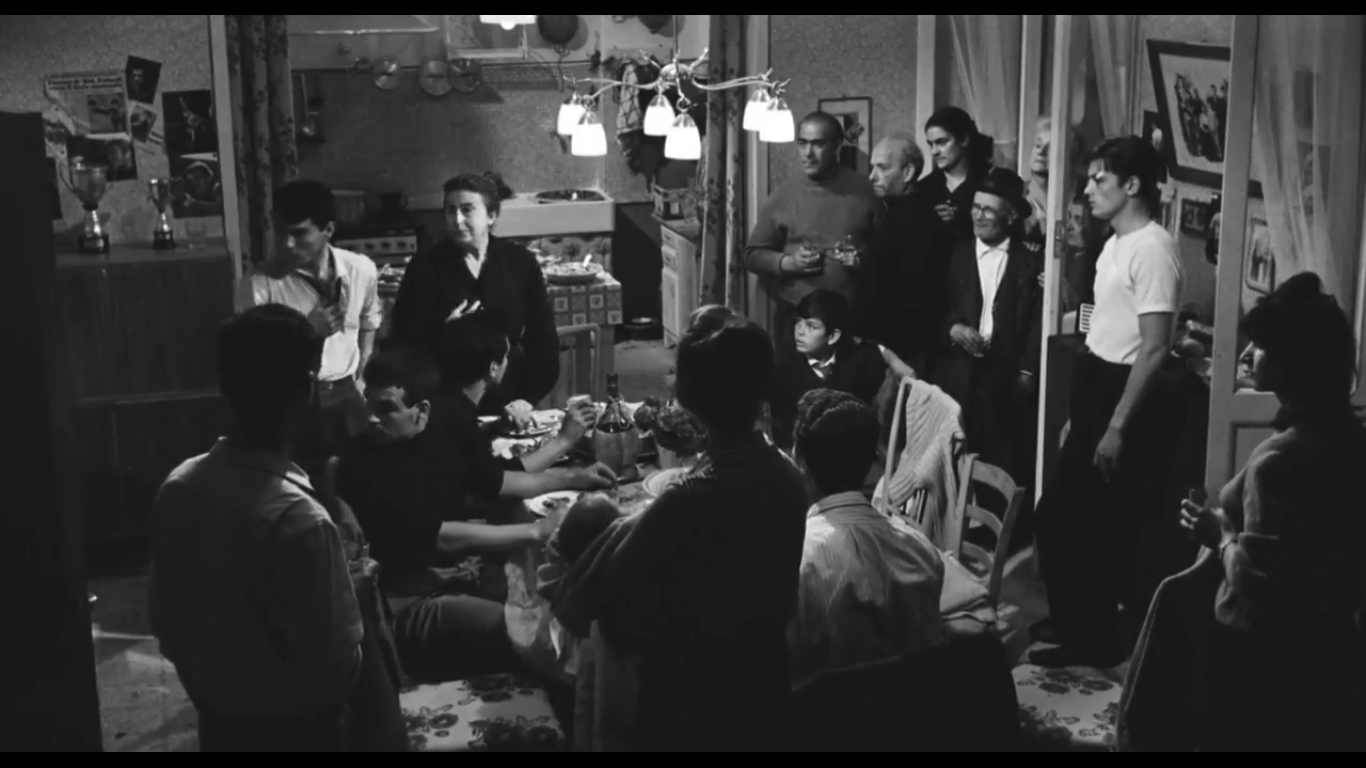
Vincenzo (Spiros Focás) is courting a dark-haired beauty (Claudia Cardinale) with thoughts of marriage once he gets steady work. Their home feels gay and bright with the roving camera capturing the full expanse of their household. It’s positively overflowing with family, and we expect nothing less.

I think some contemporary critics were disappointed by its sheen which is very un-neorealist. But it does boast its own brand of truth about family and life and love and all the constellations of emotions that we grapple with every day whilst living with other people. In this way, it shares a brand of authenticity with those earlier generations of films.

Francis Ford Coppola was certainly influenced by the picture, not only based on his hiring of composer Nina Rota but also in a more general sense in courting themes about family. It makes for a compelling ensemble telling their stories in a manner that feels totally immersive and honest to who they are as human beings. And yet it’s destined for heightened tragedy akin to Rebel Without a Cause or West Side Story.

Screenshot 2020-07-12 at 9.21.48 PM

What a raucous opening it is; it’s spectacular with the families pitted against one another and by families, I mean the mothers butting heads, while their children are left to pick up the pieces and play peacemakers. It feels all too real. Vincenzo quickly finds himself with an angry mother and a whole pack of brothers he has to find lodging for, no wife, and still no job. Everything goes to hell in a matter of moments.

Despite its sheer expanse, Rocco and his Brothers feels simultaneously well-organized and still free to follow the whims of life. Each brother gets a chapter of sorts and yet each one bleeds into the next. They’re never obvious sections and so it feels more like poetry woven throughout a story than hard and fast rules that must be adhered to.

For the time, Vincenzo lands them a temporary place to live, somewhere they can stay on until they get evicted. It’s not a promising life, but the family does receive a couple propitious bits of luck. Newly fallen snow means work shoveling snow, and the boys wake up early, downing their mom’s piping hot coffee, as they scramble out into the early dawn to bring home some bacon as it were.

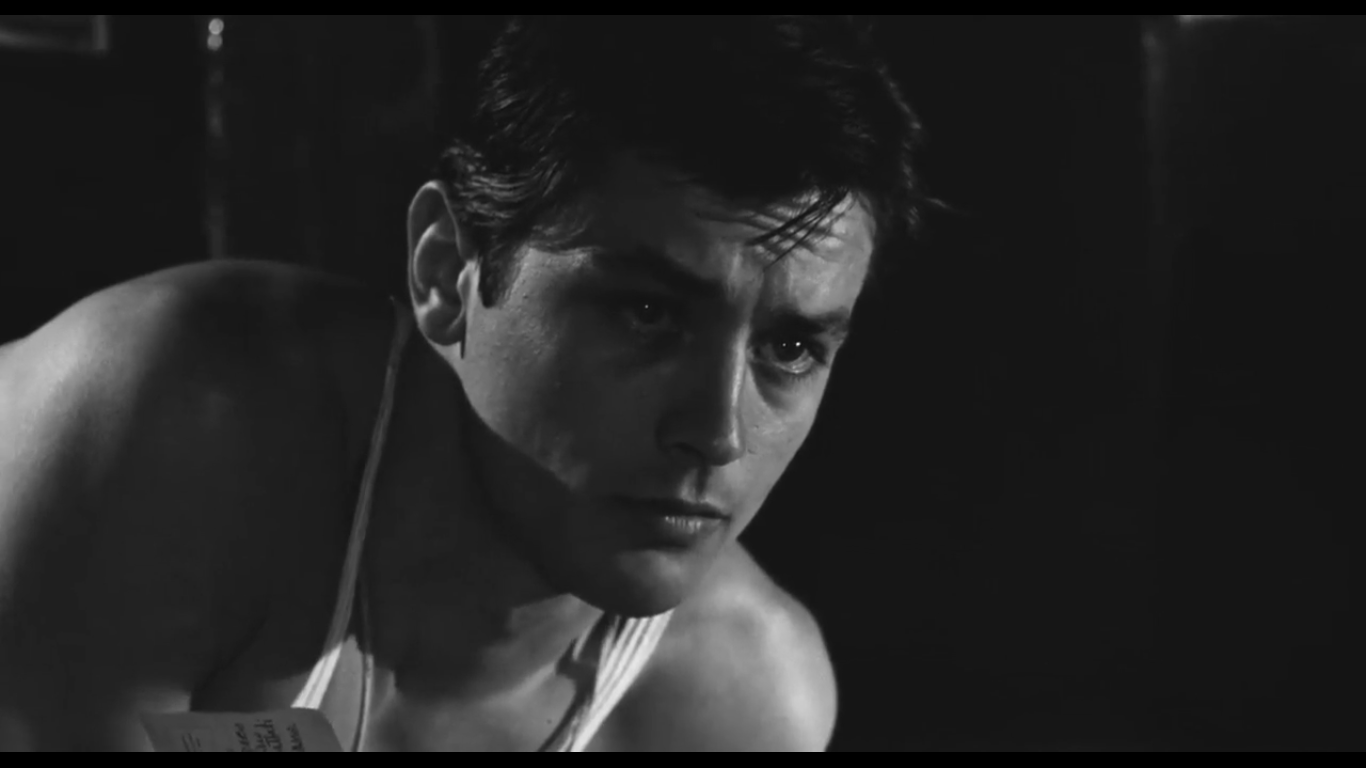
Because it becomes a story of each brother exercising their worth. They are valued by the manner in which they are able to provide bread money to the family unit. Rocco (Alain Delon) bumbles his way around a dry cleaner weathering all the young ladies teasing with a good-natured stoicism. Ciro goes the sensible route, conducting his schooling so he can land a suitable job at the local Alfa Romeo factory.

Simone (Renato Salvatori) fancies the idea of joining the local boxing gym as a chance at some easy dough, and he gets the biggest break out of all of them. A trainer takes a chance on him, and he wins his first fight, despite a belligerent temper.

If these scenes are only preliminary, they provide the framework to understand our characters going forward. Simone presumably lacks the moral prerequisites for a lengthy boxing career: a rejection of drinking, smoking, and women. Rocco is called upon to be his sparring partner and his guardian.

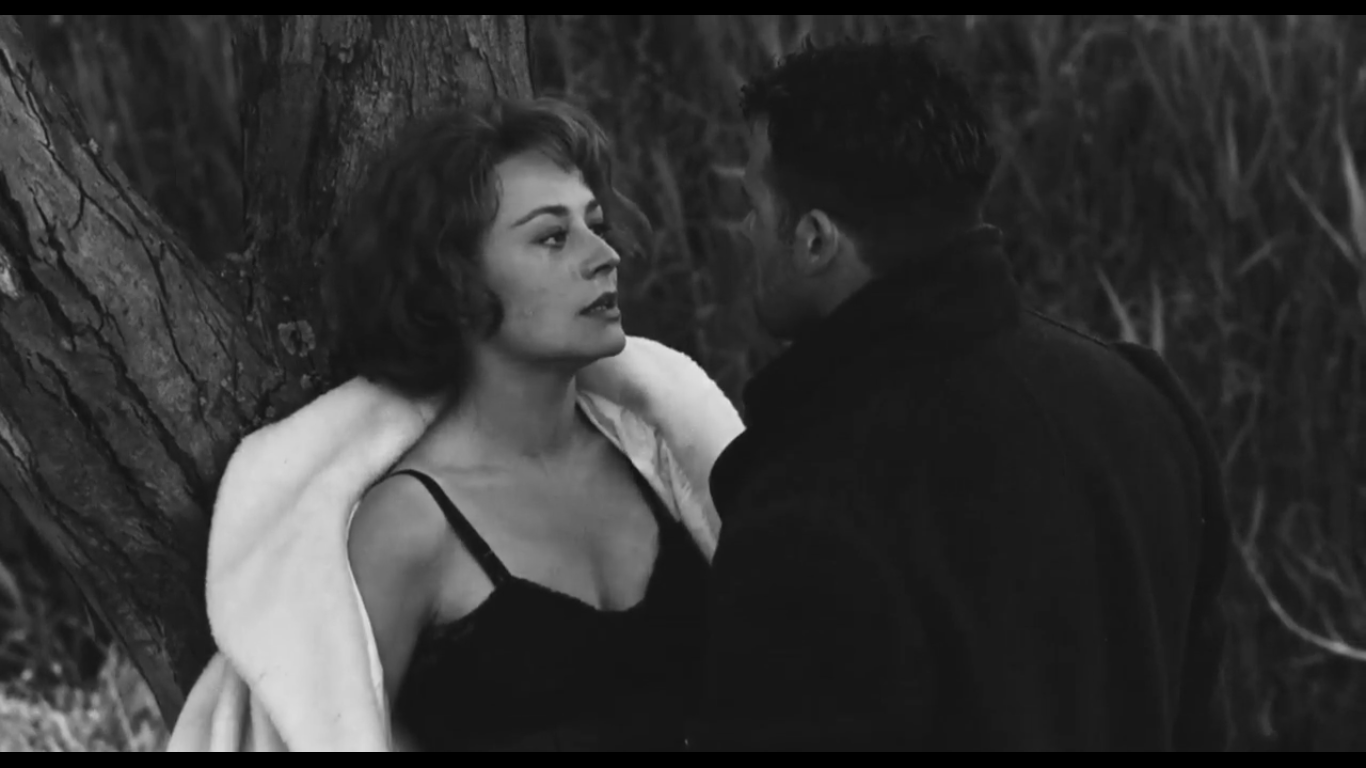
After his glorious showing for the home crowd, the brothers proceed to get embroiled in a street fight only to wander off with the pretty streetwalker Nadia (Annie Girardot). Simone’s behavior doesn’t bode well. Life roles onward and with few prospects, Rocco pursues his military service. It’s far from a digression. Instead, it reflects the passage of time

Screenshot 2020-07-12 at 8.06.38 PM

Rocco is one of those enigmatic figures who watches the world and seems to see everything. Those who think he’s quiet or unfriendly, over time, come to realize he’s perceptive, carrying deep reservoirs to make the most of life and have faith in everything around him. There’s a dashing nobility to him. This becomes even more true when he returns home.

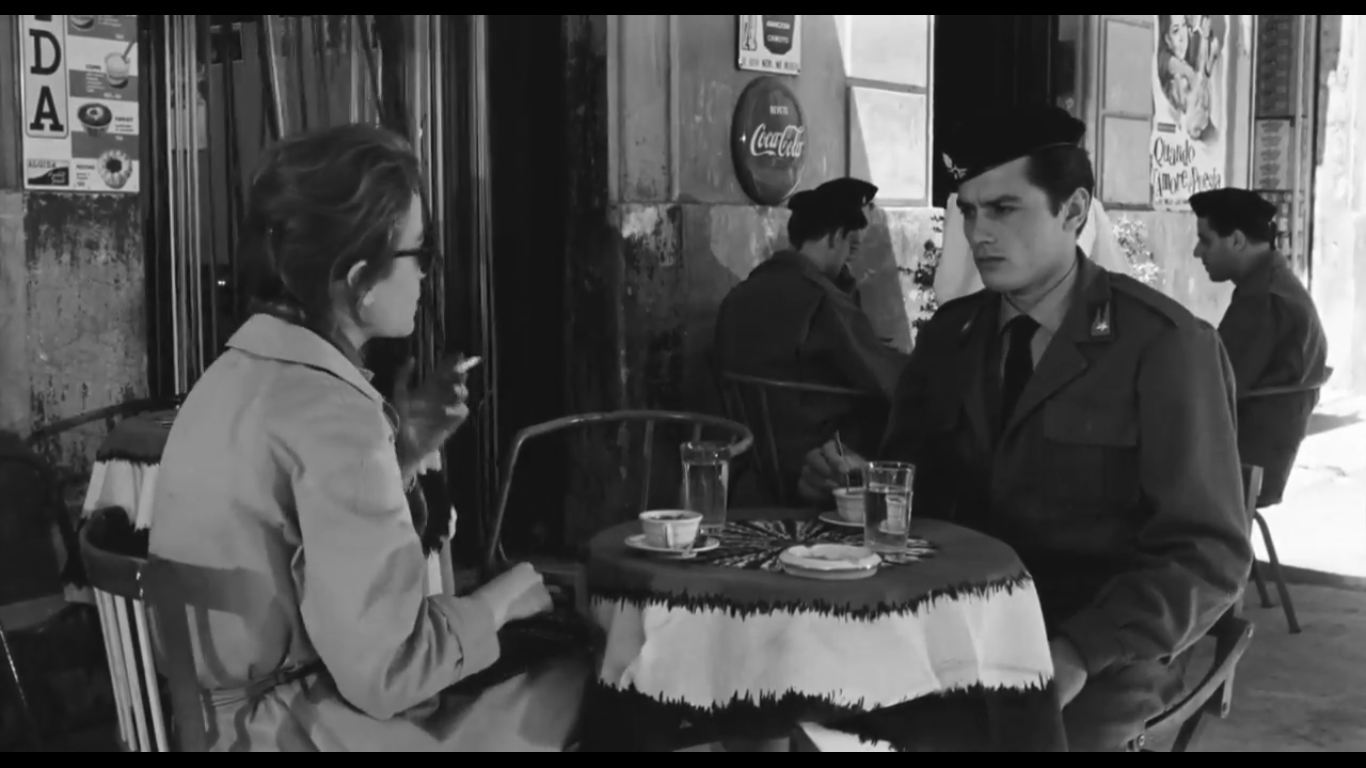
The first person he meets at a sidewalk cafe is a face from his past: Nadia. He, smartly dressed in his uniform. Conservative. She, in her sunglasses looking him over. She’s no longer with Simone — at least they drifted apart — because she was serving a prison term. In Rocco, she finds someone understanding and kind who never demeans her. She feels understood in his company. Pretty soon a subtle romance blooms between them, warm and tender.

What we haven’t taken into account is Simone. The time has changed him as well. Now he’s hardened, disgruntled, and disillusioned with his boxing career. He dedicated himself to smokes, drinks, and pool with the boys. But he’s also intent on ripping Rocco and Nadia apart. Jealousy takes hold, and it’s the stuff of melodrama. To detail it all now would be rote and a disservice.

You need to see it as he brings them down to his level with a wounded tenacity nearly as electric as anything Dean or Brando managed in East of Eden or Streetcar. Suddenly, everything that was so blissfully and right between the two lovers is besmirched. And they cannot get it back. The way the camera clings to them violently as Simone tries to advance on Nadjia feels convulsive. It’s the film’s cataclysmic event.

Screenshot 2020-07-12 at 9.14.36 PM

In its wake, Rocco ascends in his own boxing career channeling his hatred into his rounds in the ring and shedding tears for how the harshness of the world has changed him. 

As Vincenzo settles into his own familial life, it is Ciro’s turn to respond to the fracture between his other brothers. He confronts both on his mother’s behalf, entreating Rocco, “A seed gone bad must be weeded out. After all, trees are meant to bear fruit.” However, the well-meaning boy doesn’t quite know how to apply this teaching into practice.

Rocco continues on the rise in his singular objective. Simone’s sunk into the gutter as not only a malcontent but the laughing stock of the community — his debts piling up and Nadia staying with him, partially out of malice and a promise to Rocco. It is here where the film’s editing comes front and center as the two brothers go their separate ways.

My mind is drawn to a curious interchange between mother and son as they dialogue on the self-destructive nature of the black sheep of the family:

“It’s not for us to judge him but to save him.” – Rocco

“Christ will regret the suffering he visited upon us.” – Mother

“We’re no longer under God’s grace. We’re our own enemies.”

Rocco proves himself again to be this near-otherworldly figure. He has an almost unfathomable amount of grace for others, and yet he’s prepared for penance and to take the burden and sorrow on his back. He is Christ-like and yet unable to be their savior.

It makes for a dismal denouement drained of all hope. Still, the family must pick themselves up out of the muck and the mire and make a way in life — each brother on his own path. Rocco finds his face plastered all over the news kiosks for his latest exploits. Simone has fallen into disarray. Ciro represents a certain hopefulness — what his brothers used to be, and Vincenzo is what they could have been — both settling down with families. Little Luca’s fate is yet to be decided. He’s indicative of the fight still left to be forged.

But I am left to return to my opening metaphor. Whether it’s Tom Joad or Michael Corleone, and in this case, Rocco, these are young men who made irrevocable choices in their lives from which there is no turning back.

The chasm between who they were and who they become couldn’t be more disparate and in all accounts, it has heady implications on their family unit. What they do, they do for their loved ones, and they still see everything they love crumble around them. It’s not a new concept — it’s not novel — but there’s something distinctly profound in this. Because we all experience something of the same.

My final thought is only this. It occurs to me that the Parondi brothers might all represent the seeds in the parable, falling all along the road. I’ll leave it up to you which ones will make their way through the straight and narrow and which ones will bear fruit. Because human beings are often resilient, and they are often granted second chances in life if they accept them. Perhaps they can remain under God’s grace after all or maybe it’s not for us to know.

4.5/5 Stars

Girl with a Suitcase (1961): Claudia Cardinale Shines

Screenshot 2020-07-12 at 1.19.51 PM

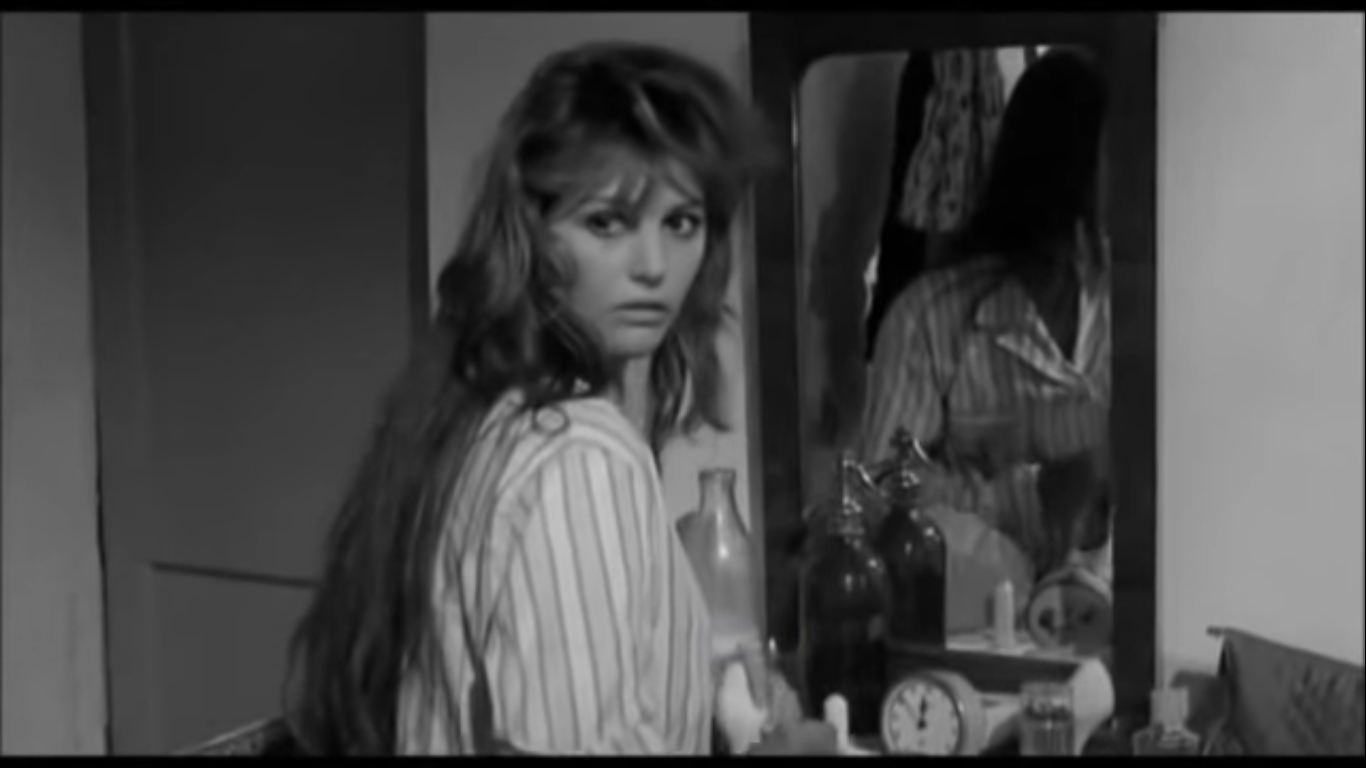
It’s a slippery slope when you begin to consider the attractiveness of women in films because the conversation can get needlessly superficial. All I will say about Claudia Cardinale is that God was very good to her. But beyond her immaculate beauty, the joyous discovery of Girl with a Suitcase is unearthing a character underneath.

No, she is not playing herself, but in the figure of Aida is someone we can readily empathize with. We meet her and she’s riding in a fancy convertible with a suave young, smart-aleck named Marcello Fainardi (Corrado Pani). We watch them, and they make a handsome pair, but all the while it’s a matter of deciphering the nature of their relationship.

When he ditches her suitcase and flees back to his family mansion inhabited by his younger brother and protective aunt, it becomes all too clear. She’s been duped and he led her on, boasting about some business connection of his. It was all a ruse.

As our dramatic scenario becomes more clear, A Girl with a Suitcase suggests a premise not too far removed from Milos Forman’s Loves of a Blonde, both about women who seem to be victims, whether it’s of love or, more broadly, society on the whole.

Forman plays up the comedy to make his story into something, more and the same might be said of Valerio Zurlini’s earlier film. Marcello all but disappears from his movie, and it becomes framed as one of those coming-of-age stories through the eyes of a young impressionable boy. In this case, the eyes belong to Marcello’s younger brother Lorenzo (Jacques Perrin).

He vows to cover for his sibling, although he doesn’t realize the extent of it until Aida shows up on their steps, armed with her suitcase, looking for someone. Instantly he’s conflicted between his initial agreement and the pity he feels for this woman.

In one passing moment, he asks his tutor, a local priest, whether we are responsible for what our relatives do. His mathematics teacher ironically seems generally incapable when it comes to answering questions of morality. In an effort to extend the man some grace, maybe he believes a boy’s problems are never as big as they seem. It takes some perspective, and perhaps he’s right.

However, he also misinterprets the thoughts that occupy his youthful pupil’s mind. There’s an importance and a candor behind his inquiries. You can see the gears turning in his mind because he is a creature of compassion. Youth often knows no other way.

Soon he becomes Aida’s benefactor and confidante. He provides her a loan, invites her to take a bath in their mansion. What’s comforting is how there are no ulterior motives between them and so they relax and come to appreciate one another as equals and as friends.

2020-07-12 at 1.12.31 PM

She in turn tells him of her unofficial fiancee. Sometimes she loves him madly. Sometimes she wants to strangle him for his ego and selfishness. She’s a singer he’s a musician, but he holds antiquated views about a woman’s place; he wants to clip her wings. She says “In art, couples don’t work,” She bemoans the men in her life. One robs me, another dumps me. Only Lorenzo extends her common decency.

I’m no musical savant but the soundtrack is a fine extension of the world with this almost tinny harpsichord quality we often associate with 18th-century drawing rooms. It’s cultured and yet set against the conversations still manages to be intimate.

She becomes more and more loquacious as he eagerly listens to everything she has to say. In the kitchen, they eat eggs and she finishes up the dishes, regaling him with her travails with a troupe of dancers. They frequented the cruddiest hotels on their circuit with nights full of conversations about hopes and dreams, careers, and future husbands. These are the most intimate of things and Lorenzo is let in. They feel a connection.

If there is anything like drama in the movie it’s generally subtle. Aida takes advantage of a big shot and dances with him at the hotel. Lorenzo watches jealous and angry with her for being so phony. Then, her boyfriend returns and it stings a bit more.

Lorenzo’s never had so many conflicted feelings welling up inside of him and so he tells Aida a white lie that might wind up hurting her. There’s a lovely moment on the steps of some museum. She is waiting in good faith. Instead, the father shows up to question her and get to the bottom of what is going on between them. Lorenzo is disconsolate. He came home drunk. Won’t study. He lies.

What can it be but something more than friendship tearing him apart? The movie does well to highlight what an ambiguous task it is to begin making sense of relational boundaries. In one sense it makes sense we do have marriage and dating to try and make sense of romance and feelings. To help us understand our emotions in a manageable context. Still, when you’re in love (and even when you get older), it is such a bewitching force.

How do we describe it? Yes, there is love between them. Is it romantic? Possibly. But there is a level of concern there proving far more genuine than we are normally used to seeing. Because youth often takes people as they are and sees the best in them when others are either dismissive or manipulative. While this is a beautiful thing, it can also lead to heartbreak. Sometimes it happens by accident.

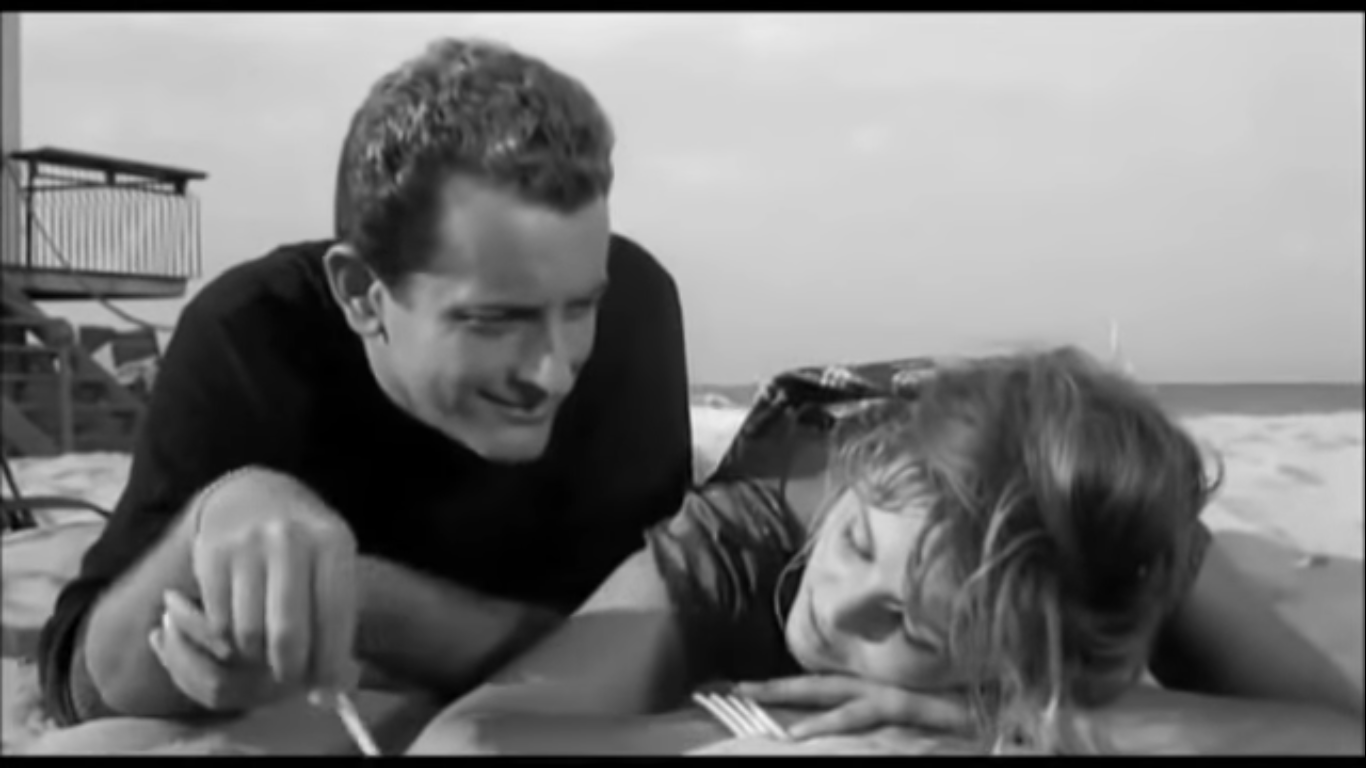
For a good portion of the movie we almost forget about Lorenzo following Aida to the beach as she returns to her lover and then quickly finds a new one. They’re dancing in the cafe and then lounging on the beach together. She’s both obliging but not quite ready to give herself over to him. Then, Lorenzo returns and for the first time in his life, he’s prepared to make a stand to win her.

Screenshot 2020-07-12 at 2.52.19 PM

In everything from The Leopard to The Pink Panther or even Once Upon a Time in the West, Cardinale feels more like a dressing — one element of an ensemble. She does quite well and leaves a lasting impression, but in Girl With a Suitcase, she shines all the brighter.

There’s none of the money or pretentiousness that comes with bigger productions. Granted, there’s nothing wrong with any of the aforementioned movies. I like each one of them, but here it’s different. It’s intimate and alive in its characterizations in ways those other films were never meant to be. That was not their function.

Those were always about Marcello’s story or Alain Delon’s story, Burt Lancaster’s or David Niven’s stories. This is mostly hers. By the time it’s done, we know full well she’s not just a pretty face, but a lovely personality with a beating heart.

To my knowledge, it’s the finest showcase of Claudia Cardinale’s individual talents, and she deserves to be remembered in her own right: As a supernal, full-bodied beauty, yes, but also a tender, joyous personality. She is more than a pretty face. With that beating heart come fears and desires bubbling up through her character. And she’s beautiful inside just as she is broken. They are not mutually exclusive. In fact, they might even be interconnected.

Lorenzo learns this truth even as he grapples with his own affections and desires. Because the ending of the movie is reasonably dismal. If you’ll pardon the liberty, I’m reminded of a phrase: Foxes have holes, birds have nests, but the girl with the suitcase has no place to lay her head. In her case, it might be partially self-inflicted though not all her own doing. The society around her exacerbates her struggles.

I’m not sure if I know an Aida personally, but I can imagine her. A woman who is used or taken advantage of, who wanders or has no one who truly wants them or loves them, so they keep on looking, keep on searching, and continue getting hurt. It’s a downbeat cycle — totally futile — and yet in the youth of Lorenzo is still a resilient hope and a prevailing decency. This is what we must cling to for the future. Otherwise, there is no possible response other than despair.

4/5 Stars

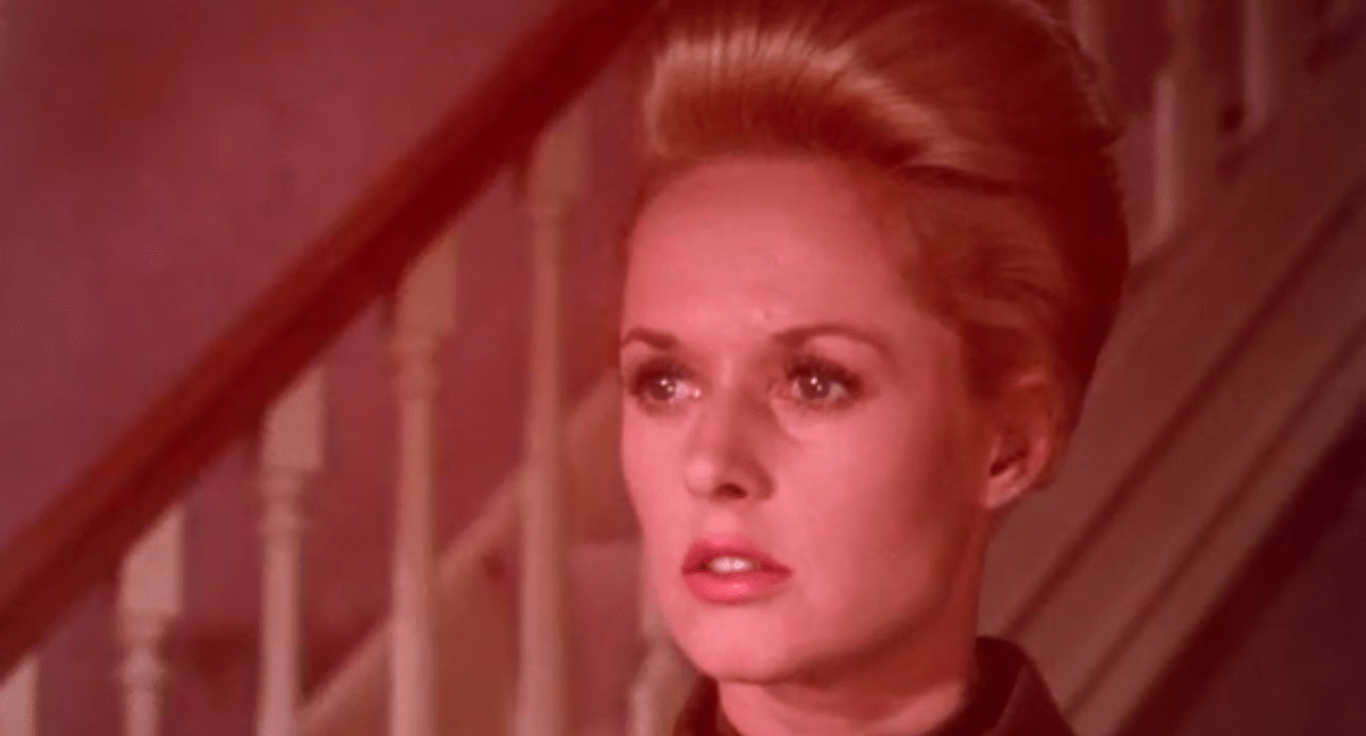
Marnie (1964): An Inflection Point in Hitchcock’s Career

marnie red

“You don’t love me. You just think I’m some kind of animal you trapped.”

Forgive me if you disagree, but Marnie has wrapped around it the full confidence of Alfred Hitchcock with all his trick and thematic ideas. Its use of visuals to cue the action. The intensity of both color and the swirling score of Bernard Hermann (indeed, his final with Hitch), creating this almost obsessive fever dream.

Tippie Hedren returns as an icy, calculated blonde more like Vertigo than The Birds, and it feels like with the talents at his disposal and his harnessing of all the studio system has to offer, he’s able to make it sing like a finely wrought orchestra. While not his best film, it stands proud and tall next to his most identifiable works.

If we are to tinker with the auteur theory, we must also acknowledge cinematographer Robert Burks, who had worked on over a dozen Hitchcock pictures. This would be his last. Then, editor George Tomasini, who had a stellar run with “The Master of Suspense” in his own right, would die in 1964. One could see how you could easily situate Marnie as the end of one of the most fertile periods of filmmaking and also the most terrifying.

These words are chosen purposefully. Because Marnie is not another man on the run thriller or even a game of romantic cat-and-mouse like To Catch a Thief. It fits into the lineage of the Vertigos and Psychos where it feels like Hitchcock is dipping into perturbing territory, partially because it feels self-reflexive, and it deals in the potentially grotesque and unseemly sides of humanity.

Marnie opens on a bag. The back of a woman walking to a train station. We don’t see a face before we cut to a man who bemoans a bank robbery. His secretary ran off with some of his funds.

Eventually, we learn this woman is prone to such behavior. She’s taken many such jobs and undoubtedly committed many such infractions under different aliases. However, her true name is Marnie and like a dutiful daughter, she turns up on her invalid mother’s doorstep to check in on her, give her gifts, and try to earn more of her affection.

Because it becomes immediately apparent this woman has attachment and mother issues; she’s an independent woman yes, who is also independent of men, but she hangs onto her mother’s love. Even covets after it and clings to it jealously when maternal affections are directed towards a neighbor’s little girl. And then, she leaves as quickly as she arrives.

marnie connery and hedren

Her cycle begins again when she’s up for a new job at Rutland & Co. The exchange during her interview would be banal if not for a certain undercurrent, the dissonance at the core of the entire picture. They’ve done business with her former employer, but she has no way of knowing that.

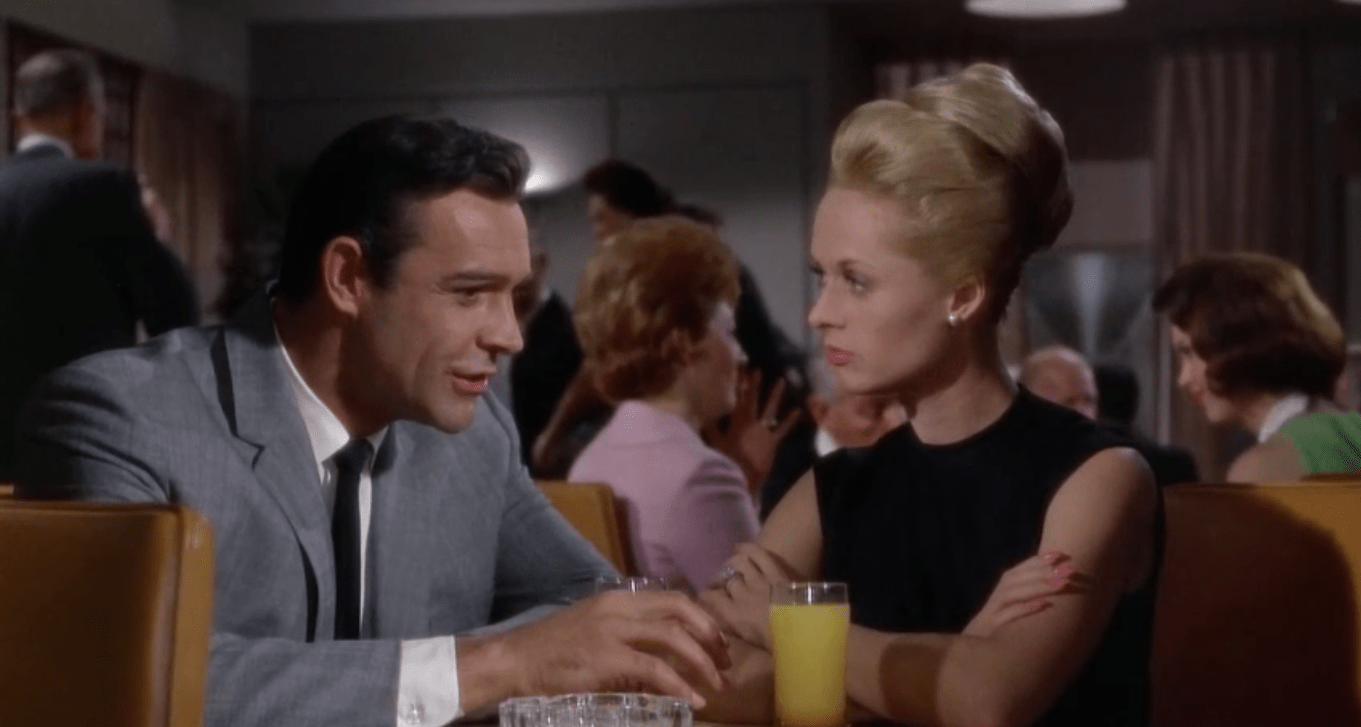
The one man who knows her secret is there too. His name is Mark Rutland (Sean Connery). He looks on rather bemusedly as she explains her backstory to her interviewer. Something about a deceased husband and leaving Pittsburgh behind for more demanding, interesting work. As Rutland watches her, it serves a kind of dual-purpose, giving rise to our conflict while also highlighting this kind of queasy sexism in the workplace. Where women are hired as objects and often viewed as such.

He knows and still hires her out of curiosity — is that the case? However, there’s something more — a kind of kleptomania — and Hitchcock funnels the entire movie through Marnie’s private obsessions. So as a secretary drones on about some HR forms, we are busy watching the office manager pull out his key and unlock the safe. We vicariously take on the obsessions of Marnie — caught in the same vortex thanks to Hitchcock’s camera — a camera that enters a fevered frenzy whenever she sees the color red. It’s akin to Jimmy Stewart’s Vertigo in how it totally usurps the picture in an instant.

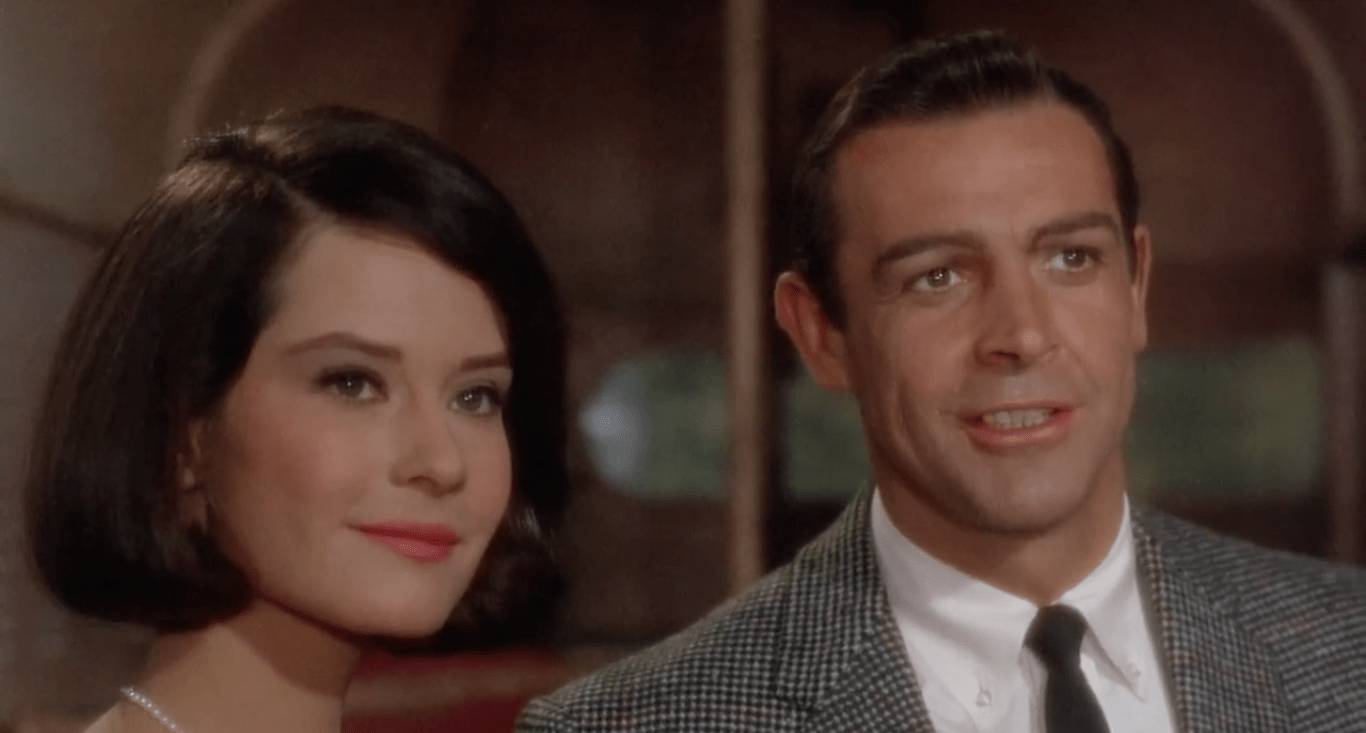
On a very different note, it’s always a pleasure to see Mariette Hartley, a personal favorite in TV reruns, and assuredly in Ride The High Country. But it is Diane Baker who might be the unsung hero of the movie and Hitchcock, if anything, sets her up as an integral figure to cement the film’s core drama. She is Marnie’s foil and ready to protect Mark even as she’s intent on winning him over.

But the relationship between Rutland and Ms. Edgar continues to vacillate, exemplified by very pointed snatches of dialogue. Take for instance, Rutland’s training in Zoological science or as he puts it “instinctual behavior.” He likens predators out on the Sahara to “the criminal class of the animal world,” and he’s as fascinated by Marnie as he is passionate about her.

They go to the races and then to see his father’s stables maintaining these implicit themes of husbandry and animalistic desires raging through Marnie’s core. She cannot help these impulses.

It’s true the film boasts some phenomenal wide shots: The first I’m thinking of is inside the stable before cutting to a close-up to the passionate embrace of our romantic leads. The second is an exercise in irony. Marnie is in the midst of her first burgle of the company safe. She snuck out of a bathroom stall after hours. Just around the partition, the night cleaning lady goes about her duties. To each her own.

For several minutes it is a silent movie. No music. I don’t think Hedren makes a sound. Because of course, Hitchcock is milking the moment only to magnify it seconds later. It reminds us how marvelous he was at punctuating the drama, lest his filmmaking ever be mistaken for realism.

Marnie continues in its duplicity as Rutland first accuses his employee of her theft and then comes right back around with the proposal of marriage. It drudges up the unseemly realities of sexual harassment and powerlessness as Marnie cries out about how she can’t bear to be handled by men. She doesn’t want to get married. It’s degrading. Even animal.

“You say no thanks to one of them and then bingo, you’re a candidate for the funny farm.” It breaks my heart even as I feel implicated in the issues. No, I wasn’t born then, but the indiscretions against women have not totally been expunged at least while men still have lust in their hearts. Hitch is part of the problem. I am part of the problem by any sin of omission or even passivity.

Before there was a mystery plot to hang its hat on in Vertigo or the money propelling Psycho. With Marnie, it hardly feels as if there’s a pretense to the often demented predilections of humanity. Husband and wife are “playing doctor” and free association with Marnie feeling as if she’s continually being needled by her spouse’s callous analysis. Is this love or torture?

diane baker and sean connery marnie

We mentioned Diane Baker before and it’s worth acknowledging her again. She is slightly impetuous and a bit impish — ready to go to war for her man. Hitchcock even gives her a line to mirror Norman Bates from Psycho as she offers observation on Marnie (A girl’s best friend is her mother). But she also eavesdrops because it’s this that allows her to know the film’s main secret and look to bring it to the surface.

The next sequence opens with that unmistakable Hitchcock high angle, at the party. It’s Notorious rehashed and yet instead of a key in the hand, it is the front door because through it will come a very important person: Someone who can implicate Marnie and unravel the stasis Mark has willingly corroborated for her. They must find a way to get out of this, to come to a mutual agreement, or else Marnie is sunk.

I must admit, this and the sense of suspense anticipated by the climax, are of the most intriguing since the psychology the final flashback relies upon feels too convenient. Maybe Hitchcock does not really care about any of this. It is a bit like Spellbound, but now it feels even more antiquated, whereas the moments leading up to the reveal of the trauma are contorted and alive, horrifying and convicting all at once.

Others could do it better, but I would be remiss not to mention the storyline of Hedren and Hitchcock, who harassed her all through the shoot. It’s an unsettling reminder of how he would control women and beyond that, how toxic masculinity has fueled our society and industries like Hollywood. It reveals the underlining brokenness in many of us that come out compulsively. It’s almost like we do what we do not want to do or we give ourselves over to them entirely. And what a nightmare that is.

Psychology cannot completely dispel our fears nor does it warrant a society and social spheres where men take advantage of women and where women feel fearful and scandalized. Forget his films. Hitchcock himself is emblematic of problematic fissures in society. That’s a great deal of what makes his film’s so disconcerting.

However, just as he tanked Tippi Hedren’s career, Hitchcock would never quite be the same. Not because of this mind you, unless there was some force of karma working against him I’m unaware of. Instead, the industry was changing and also the structures around him that he had to work with.

Torn Curtain and Topaz are passable films with glimpses of his cinematic eye, but they never amount to the same kind of intoxicating, bewitching drama we would see during his high point during the 1950s and early 60s. Of course, Frenzy was what some called a return to form, but it was, again, back in his native England so it’s obviously laced with a different flavor. His final film was in 1976 — Family Plot — and if it wasn’t evident already the industry had changed.

By then, he was a revered master but more of a relic than an up-and-coming auteur. No, Marnie feels like an inflection point as if it’s catching his very particular genius in a moment in time. It’s also a startling caveat to the career of one of the most lauded directors Hollywood has ever known. We cannot fully speak about one without reflecting on the other.

3.5/5 Stars

Targets (1968): Orlok Makes You Scream

targets karloff bogdanovich

The story goes Peter Bogdanovich met Roger Corman sitting in a screening of Bay of Angels (1963). What came out of that was an apprenticeship of sorts on Wild Angels (1966) in the Corman Film School where Bogdanovich did everything you could possibly imagine from script doctoring to location scouting etc. What he got for his troubles was hands-on experience but also the chance to direct his first feature…with a couple stipulations.

Corman gave him full control of his own movie as long as he reused some footage from an earlier Boris Karloff picture, The Terror, as well as utilizing the veteran actor’s two days of service he still owed Corman. There you have the birth of Targets, which manages to amount to far more than these contrived beginnings might suggest.

Because Bogdanovich found a way to make these haphazard pieces work — where it feels more like a meditation than a constraint — and the movie uses this to its advantage. It’s like a ’60s rendition of the poverty row pictures of the ’40s where necessity is truly the mother of invention. Sometimes you get a diamond in the rough.

The irony is while the big pictures were giving us entertainment that would become emblematic of the times like The Graduate, Bonnie & Clyde, or 2001: A Space Odyssey, it’s a movie like Targets placing us in the times themselves. In this way, it functions more like contemporary television.

What we are provided is a very concrete sense of Reseda in 67-68. There’s the “Real” Don Steele on the radio waves. Otto Preminger’s Anatomy of a Murder is a modern classic featured as the Saturday night movie on channel 7. A family sits down in the evening together to take in Joey Bishop and sidekick Regis Philbin. And, of course, there are drive-ins.

If this sets the stage and places Bobby Thompson (No, not the ballplayer) in a vaguely familiar landscape, the movie itself comes flowing out of the persona Boris Karloff provides free of charge.

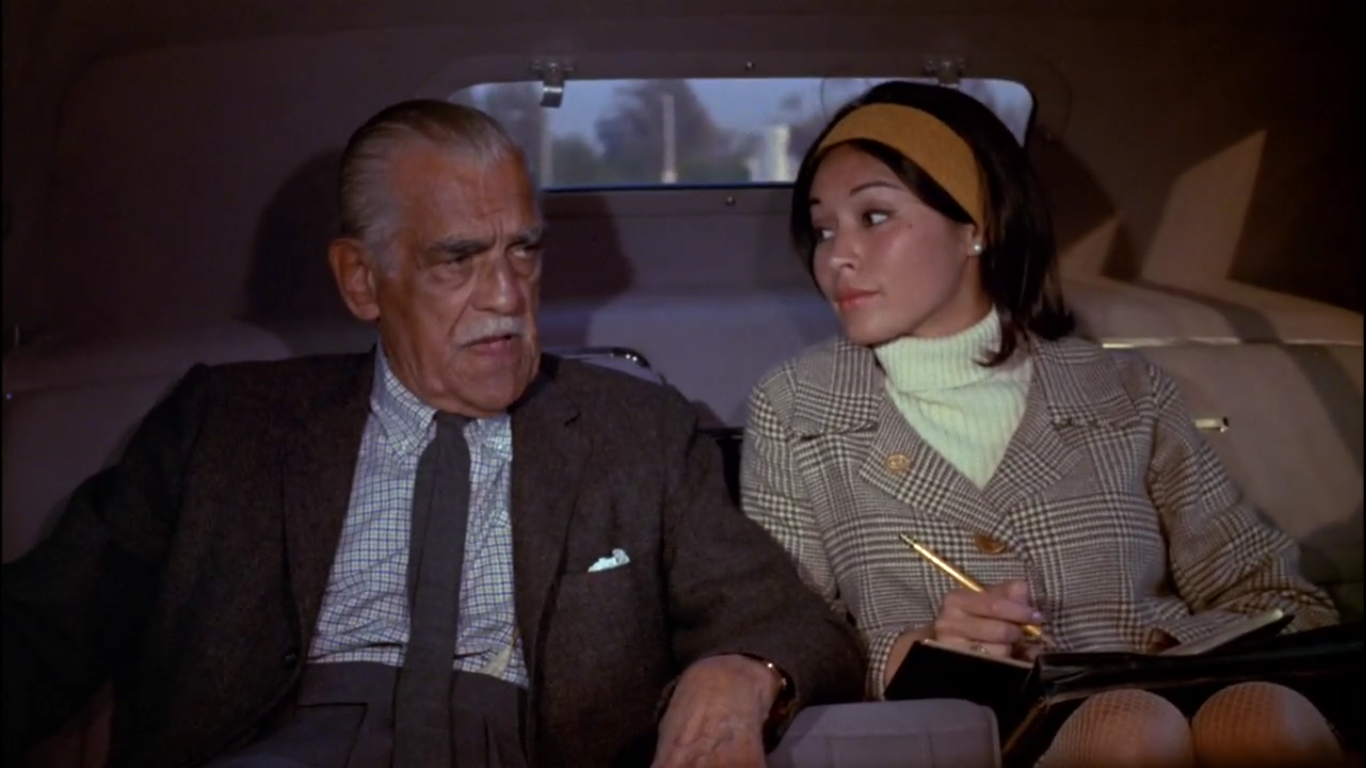
Looking at them without context, there are so many elements of Targets that might leave one mystified. For instance, this white-haired gent with the booming voice. If you put the movie in a time capsule, those who find it probably wouldn’t know this is Boris Karloff. His Byron Orlok isn’t an anagram, but it feels like one.

Although he’s an acclaimed name, he’s resigned himself to a sorry fate. In his own words, “I’m an antique, out of date — an anachronism. The world belongs to the young. Make way for them, let them have it.” He might have seen Bonnie and Clyde and The Graduate too.

Still, he’s continually in dialogue with his own personal legacy and very aware of it. Just as he watches a version of himself on TV. His character recalls a tagline from his heyday, “The Marx Brothers make you laugh. Garbo makes you swoon. Orlok makes you scream.” It’s all part of this persona closely mirroring Karloff’s past.

Likewise, Sammy — that guy’s not much of an actor — although it changes instantly if we know this is Bogdanovich himself. The young screenwriter walks in, sees the TV, and right on the nose says, “It’s Criminal Code. I saw this at the Museum of Modern Art. Howard Hawks directed this. He really knows how to tell a story.”

They become these dueling pawns, partly fiction, partly reality, as Orlok bemoans the fact he has become high camp; he can hardly play it straight anymore, and Sammy coaxes him that the role is something he can do (Targets?). Otherwise, he’ll offer it to Vincent Price.

It’s as if the director beat Orson Welles to the punch with this kind of intratextual dialogue between the medium and its real-life players. Surely history helped out because Targets was just his beginning followed by a whole slew of classics, albeit disrupted and undermined by his own turbulence and troubles replicating his most supernal successes. All these things and more are what make Targets so riveting when it has little right to be.

Targets Boris Karloff and Nancy Hseuh

Orlok’s secretary Jenny (Nancy Hsueh in a charming role) is romantically attached to Sammy, but also has a staunch devotion to Orlok. She doesn’t want the old man to just give up and she feels slighted when he lashes out at her — one of the few people who genuinely cares for his well-being.

He’s ready to turn his back on it all only to reluctantly agree to make a public appearance. He’s fallen to the low of the Drive-in Theater circuit, living off the residual celebrity of his waning fame.

Meanwhile, Bobby has gone through his daily paces. He seems like an All-American boy. He’s married but lives with his parents. He likes guns, and he’s been taught a healthy (or unhealthy) sense of competition. There’s an underlying angst supplied by this deceptively pristine life.

He stakes out on top of an oil well, brown bag and a soda pop in hand, as he sets up overlooking the freeway, prepared to pick some people off. Bogdanovich captures the evolving sequence with a Sam Fuller sense of grab-and-go photography, on the side of the freeway, with a brazen even outlandish sense of drama.

This is real traffic and real places and the director plucks out his shots from these pregnant moments of simulated reality. Between the crosshairs, gunshots, swerving vehicles, and flailing bodies. The scene evokes the Texas tower shooting of 1966 where killing becomes this indiscriminate force of violence.

The Sniper (1952), from over a decade prior, was a picture that, no matter its effectiveness, was meant to elicit a social response. Stanley Kramer’s movies can be strongly identified by this sense of responsibility toward the viewer. Targets hardly feels like a political statement of any kind, but its themes are no less intriguing — probably because it never feels like it’s preaching something. Instead, it allows us to consider its various digressions and still be gripped.

The drive-in finale actually does a solid job of reconciling the two disparate story strands. Bogdanovich had watched enough Hitchcock, heck, he’d interviewed the Master of Suspense, and put in this position calling for such a set piece, he seems to know intuitively what he has to do.

What’s more, it signaled the young director’s ascension as a New Hollywood darling. What’s so striking is how it marries Classic Hollywood with the contemporary climate and does it with a startling sense of command. If you needed a picture to try and sum up Bogdanovich himself, then there is no better lodestone.

He wants to revel in the days of Karloff and Hawks of old — when violence meant monsters and gangsters — and yet he brings it into the 60s. Because violence still existed but in a different form. In the age of social tumult and assassinations, the landscape of the 1960s feels a lot more futile and incomprehensible.

And the images make you shutter as we are implicated in this alongside a killer even as we sympathize with Orlok trying to bow out gracefully. I’m not sure which aspect is more telling. The power is that we need not pick between them. We are presented horror in its various forms, old versus new, and the person who unifies them so evocatively for us is Peter Bogdanovich. It’s quite a stunning feat of ingenuity.

4/5 Stars

Freud: The Secret Passion (1962): Directed by John Huston

freud monty clift

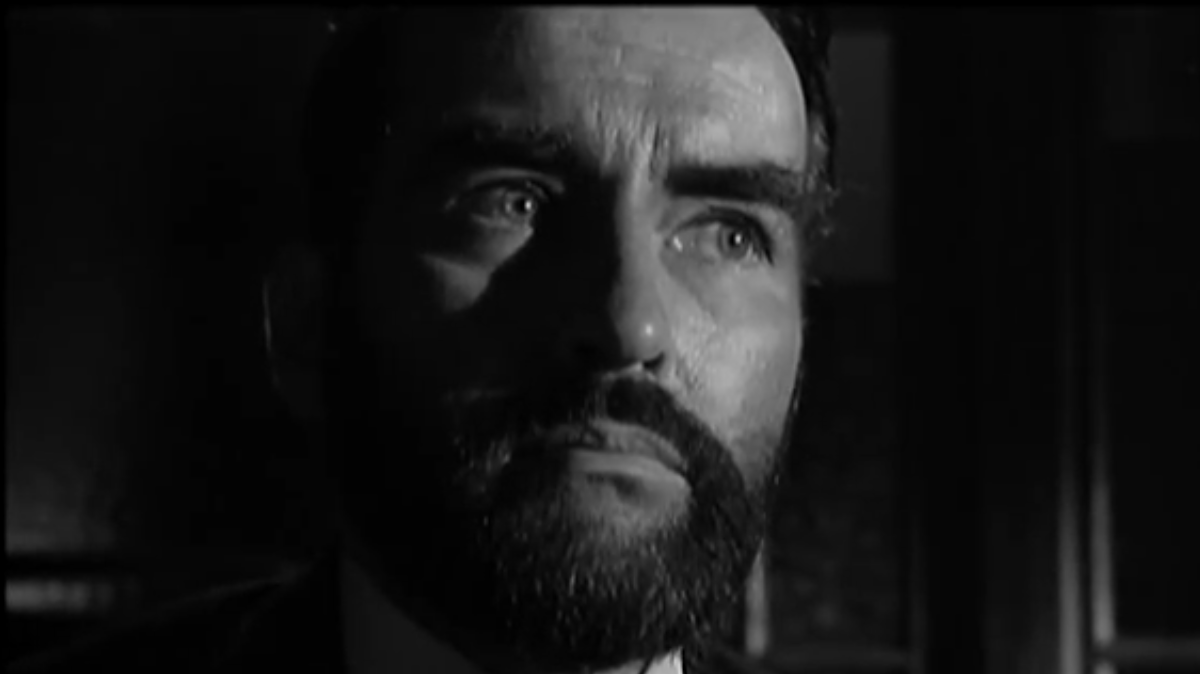
Freud: The Secret Passion is made by John Huston’s sense of narrative posturing. In fact, he goes so far as to narrate the opening himself, relating how men like Copernicus and Darwin boldly went against the conventions of their day to help revolutionize people’s conception of the world. Into this category, he adds a third individual and with him a third frontier.

It was Sigmund Freud who effectively caused mankind to venture to “a region almost as black as hell itself: man’s unconscious.” What a bit of methodical showmanship it is and the styling is something that might only be pulled off by a man like Huston or Orson Welles. There’s a gravitas and a charisma wrapped about him that carries a certain commanding ethos. Sadly, it never has the same impact from thenceforward.

Although the subject comes with its own sense of obvious intrigue, it somehow doesn’t seem to play to Huston’s own skills, restricting his talents to a very specific arena even if it was not slated to be a straightforward biopic.

In fact, his collaboration on Freud: The Secret Passion began with a call on the talents of Jean-Paul Satre to pen a screenplay. Even though the eminent philosopher crafted the skeleton of the story, Huston ultimately parted ways with Satre because the mammoth script he provided was unshootable.

To play Freud, he brought back Montgomery Clift from The Misfits, which immediately seems a strange choice. Clift supplies a sensitivity I would have never attributed to Freud. Granted, this is based on the little I know of him from merely studying his influences on the field of psychology. That and his penchant for cigars.

Though Clift hardly seems the image of Freud nor Huston quite the man to bring the story to fruition, if nothing else, it should quash any rumors of Clift being totally sunk by the end of his career. Despite the fallow years that came following Freud, he is still the picture of distinguished vulnerability. Admittedly, the backstage complications might elucidate a different story. However, I’m not Sigmund Freud so I couldn’t tell you. I only have the film to go by.

Although the world around him appears relatively simple, the black & white baroque style accentuates the metaphors of the light and darkness at war in the human psyches. Even the eerie scoring, infused with rumbling drums, denotes similarly dark caverns in the mind.

In the early years of his career, beginning in 1885, Freud starts kicking around ideas as he comes to understand the subconscious and begins to dabble in hypnosis, “a dark art” many of the most prestigious practitioners in Vienna scoff at. Their subset is embodied most obviously by Professor Meynert, who sees such ideas as being beyond the scope of their profession, “Are we theologians or physicians?”

But while Freud wants the support of his colleagues, he’s not needlessly seeking out vainglory. His research and inquisitive mind prove his guiding light. He shares a conversation with a colleague who notes what a splendid thing to descend into hell and light your torch from its fires. Thus, encouraged, Freud goes into the heart of the darkness, prepared to slay the dragons he might find there. It sounds more like witchcraft than human psychology, and I suppose in 1885 it might as well have been.

The majority of the movie is built around his work with a case study named Cecily (Susannah York); she was a patient of his esteemed mentor Joseph Breuer (Larry Parks). He passes her well-being to the care of his pupil because he has his own issues. It gets to be too much as she transfers her affection first to Dr. Breuer and then to Freud himself.

As they go deeper, Freud, using hypnosis, finds out she is infatuated with the memory of her father. Together they wade through her issues from sexual repressions, nightmares, and childhood traumas.

Even Frau Potiphar and Joseph are brought up as symbolic figures in a parable — well, it’s a case study for Freud really — explaining a bit of Cecily’s buried angst through Biblical allusion.

freud the secret passion

However, to crack his theory, he must come to terms with his own history, and it proves a taxing ordeal for his wife (Susan Kohner) who worries she might lose her “Sigi” to his work or, worse yet, one of his patients.

And still, he keeps probing — daring to wade into his own trauma to better understand Cecily. The most telling imagery comes with Clift spelunking by rope into the depths of a cave searching out his deepest memories. Finally, there is a breakthrough. Finally, he can try and free this girl from her baggage.

He brings his latest findings before the counsel of his peers once more and is jeered for his observation on oedipal complexes and the like. What’s striking is how even today though Freud formed the bedrock of modern psychology, many of his ideas are still considered dubious. They aren’t backed conclusively by empirical findings like other scientific methods.

What’s more, he loses his greatest ally. Dr. Breuer simultaneously stands up for Freud’s brilliance and personal integrity but still cannot help but walk out the chamber doors. The greatest fault of Freud, in the end, is the fact it feels like a story of little consequence on its own. We leave the man and it feels as if very little has transpired. Only with this context supplied by Huston do we attribute any greater meaning.

Huston’s final line is meant to be a telling statement. Know thyself. Our single enemy is our own vanity. Certainly, there is truth in these words. The Secret Passion is one of the more emotionally rich films I’ve seen to deal in themes of human psychology, the subconscious, and psychosexual themes, although the landscape feels generally sparse.

I am reminded of one scene where Clift’s psychoanalyst commiserates about the innocent entering a world of sin, foredoomed to this lot in life — on this earth. We might differ slightly in our interpretations here. Our world is flawed just as we are flawed. We do not come into existence as a blank slate as Locke posited. But we are doomed. Each of us has our own private conclave of demons, and we cannot heal ourselves. Once we give up our vanity and put on a cloak of humility, we often realize we need others — we need help outside ourselves.

3/5 Stars

Sweet Bird of Youth (1962): Paul Newman and Geraldine Page

sweet bird of youth 1

“I like you. You’re a nice monster.” – Chance Wayne

“Well, I was born a monster.” – Alexandra Del Lago

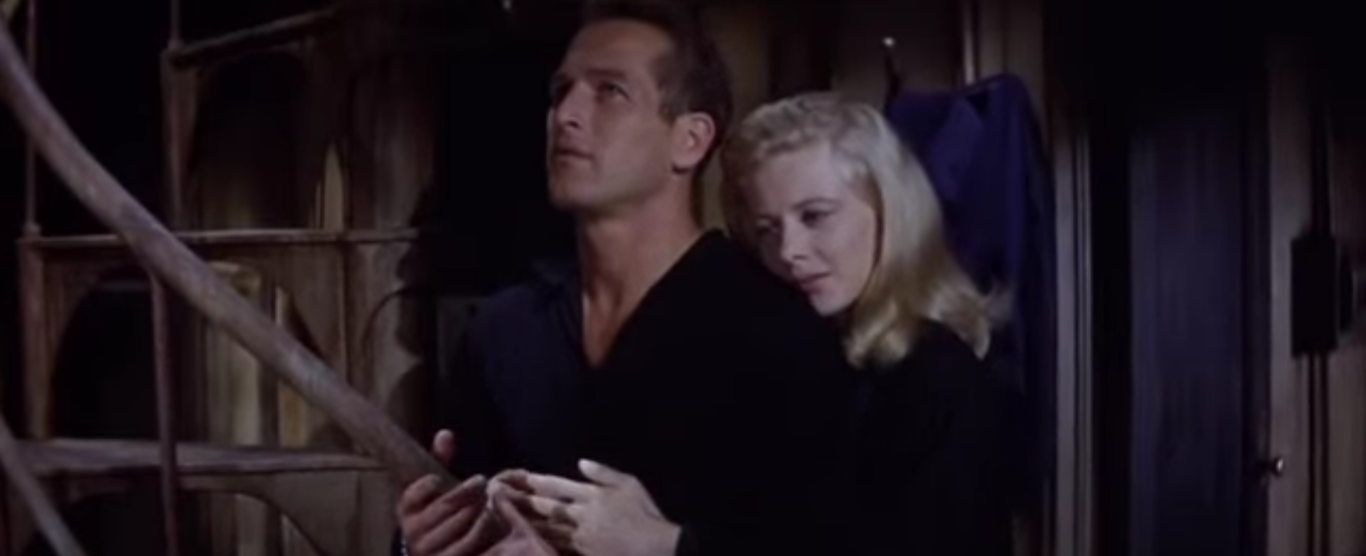
In this interchange between Paul Newman and Geraldine Page, I couldn’t help adding my own connotations. Alexandra Del Lago was born a monster. Chance Wayne is a self-made one. If anything, his environment has turned him into the self-serving creature he’s become. They are both looking to use one another, and they are not alone.

Although Cat on a Hot Tin Roof is the more high-profile entry, the points of connection with The Sweet Bird of Youth are too many to ignore. It’s yet another Tennesse Williams play directed by Richard Brooks for the screen, albeit neutered by the Production Codes of some of its controversy. This is hardly a new phenomenon.

Once more we have a sweaty, hot-blooded showcase for Paul Newman playing opposite a powerful Southern patriarch (in this case, Ed Begley) and other cast holdovers include Madeleine Sherwood.

The premise is simple enough. Chance Wayne (Paul Newman) returns to his hometown of St. Cloud, Florida as a big shot. At least this is the illusion he looks to promote as he sets up in the local hotel.

His companion is a fading movie star plagued by her self-medication and neuroses as she tries to stave off the advances of a has-been career. He has elected himself her PR man — stirring up headlines she doesn’t want — to benefit his own career no less. He fluctuates between opportunism, blackmail, and virile charisma all in the name of getting himself said break.

If Alexandra Del Lago, masquerading incognito as the Princess Kosmopolis, is his Norma Desmond, he is a sleazy sellout looking to wheedle his way into any amount of fame. Chance is looking to use her clout for all its worth because her seal of approval still means something in the industry. Alexandra need only say the word to the Louella Parsons and Walter Winchells of the world, and this nobody could hit the big time.

While Del Lago is on the way out, Williams flips the script with another revelation; Chance is on the way out too — if he ever arrived at all. Because years of striving have found him little success. He believed in the pie in the sky ideas of the local institution: Tom Boss Finley (Ed Begley). Every man can hit the jackpot if he tries hard enough. He didn’t stop to consider Hollywood is a crazy land with walls all around it. All the failures are kept on the outside looking in until they grow old and undesirable.

On Sunday morning the bells ring — it’s Easter, after all — and Alexandra rises from her bedroom suite positively reborn! Chance goes off to the church. The other leg of his personal fantasy involves running off with his sweetheart, the aptly named Heavenly (Shirley Knight). But her daddy, Boss, and the skeevy Tom Finley Jr. (Rip Torn) are bent on keeping her away from Chance. They aren’t opposed to physical violence as Tom Jr. has a group of mobilized hoodlums called the Finley Youth Club at his disposal.

the sweet bird of youth 2

Because if Boss Finley is a pillar of society and a Sunday morning Christian who promotes his virginal daughter and denounces communism and other prurient attacks on the American way, he’s cracked at the seams himself.

His own daughter is skeptical of his deep-seated hypocrisy. Even before his dear departed wife passed away, he kept Ms. Lucy, a lady waiting, well-compensated at the local hotel. It’s the duplicity of this brand of sing-song Southern hospitality with an undercurrent of venom. Although the South by no means has a monopoly on this type of behavior.

If there is anyone to feel sorry for at this point, it might be Del Lago and yet Page ultimately regains her dignity as her frailties fade away long enough for her to see Chance for what he is: Just a name with a body. She’s known many of them before. Men led by a chain for want of fame and stardom only to be kept down.

If Newman is supposed to be an archetype of a callow young man, he has far too much charm and smarts to come off as a Yokum totally duped by Boss Finley’s grandiose talk. Regardless, he and Alexandra each have their own private hell to go to. Where can this story go but down?

In a word, there is a hopeful ending for both of them. It doesn’t aim for the jugular of tragedy. It’s not aiming for the grandest heights of southern gothic melodrama, and so it settles for a minor note. If the sweet bird of youth passes you by, it’s a matter of making your peace with it — finding peace in something else.

I couldn’t help focusing on the hymn playing in the background of the final scenes. These folks have probably sung the words countless times only to have them bounce off the walls of their hearts. Its lines go like this:

Not the labor of my hands
Can fulfill Thy law’s demands;
Could my zeal no respite know,
Could my tears forever flow,
All could never sin erase,
Thou must save, and save by grace.

Rock of Ages cleft for me
Let me hide myself in thee

3/5 Stars

One-Eyed Jacks (1961): Good and Evil is in the Cards

one eyed jacks Brando Malden

One-Eyed Jacks acts as a bit of an anomaly. It was originally meant to be helmed by Stanley Kubrick. Instead, Marlon Brando himself oversaw direction — his one and only time in the director’s chair. The results are as vibrant and totally Brando as they are messy, devolving into something more than indicative of its creative nucleus.

To its credit, the movie, set in the 1880s, earns its world more than Viva Zapata because there is an understanding of cultural differences inherent in the landscape. It does not try to insensitively blur ethnic lines with whites playing Mexicans.

Even Brando’s sense of Zapata, although plaintive, potentially falls prey to this blind spot. But One-Eyed Jacks is as much about the meldings of the cultures as anything. Yes, there are still obvious hierarchies and spheres of existence.  Chinese, for instance (represented by Philip Ahn), are tertiary characters, and the Latino cast is certainly secondary to the Caucasian leads, but this is indicative of the structures in place. There is some attempt at character definition that goes beyond menial stereotypes.

The scenes that strike me, in particular, are between Katy Jurado and Pina Pillicener. Instead of copping out, making these two women converse in English for the benefit of an English-speaking audience, there’s enough confidence in the emotion engendered (even if your Spanish is not up to par to catch every word). It feels wholly honest compared to typical Hollywood convention.

But, in order to explain this world, we must start 5 years earlier with a couple of outlaws. Before the days of Butch Cassidy and the Sundance Kid, Rio (Marlon Brando) and Dad (Karl Malden) are a pair of womanizing bandits robbing banks all over Mexico, living a merry life of crime constantly on the run from the authorities.

It does eventually catch up to them as they are left stranded out in the desert with Federales hot on their heels. The fateful choice to send Dad off to find horses while Rio stays behind winds up altering their steps for good. Rio gets captured and shackled up in a local prison with his compadre Chico (Larry Duran). Dad rides off to start a fresh life for himself without any kind of penance being paid. Their divergent roads spell out what the future must hold.

Even when it lumbers along or willfully bides its time — for instance, watching a couple thugs waiting it out on a porch by the sea — the color scheme as captured by Charles Lang is gorgeous. It’s one of the film’s persistent attributes though it has a handful of others.

My mind drift’s to a shot far later in the story when Brando rides his horse past a gnarled tree right out of Sleepy Hollow. Unbeknownst to him, one of his faithful companions lies shot to death only meters away, and he is riding toward doom — for crimes, crimes he didn’t even commit.

Brando often surrounds himself with interesting folks. Some are tried and true — allies he’s been able to rely on for a long time — like Karl Malden (reunited again after A Streetcar Name Desire and On the Waterfront). And yet even the likes of Katy Jurado and a promising international newcomer like Pina Pellicer bring their own sense of sober candor to the picture. She’s a striking contrast to her leading man even if they share a core sadness.

one eyed jacks

The Ben Johnsons and Sam Gilmans round out the assemblage of talent with the gruff essence of imposing masculinity. Slim Pickens, on the side of law and order, is his own version, equally snide and opportunistic — creating the kind of evocative characterizations that westerns thrive on.

It’s this kind of duality — represented foremost by Brando and Malden, then accentuated through their posses — causing one to mull over the meaning of One-Eyed Jacks. The phraseology is not something that gets used too often today. But its origins are from the profile image on a playing card. In this context, it comes to symbolize people who show off their “good side” while conveniently hiding all their faults through duplicity.

Rio is a pathological liar even in the context of people he likes. He knows no other way to go about it, holding onto his anger and letting it direct him toward revenge. But in one sense, he’s straightforward because he’s always taut with tension and the kind of angst Brando built a dynasty out of. There’s always sensitivity on the other side.

Dad is a jovial character. He’s made a life for himself and he has “reformed,” now on the side of the law. But the stroke of fortune that allowed him to get away from the federales 5 years ago and make a new life for himself, has never really left him. He’s a wheedling even deceptive fellow with a merciless, self-serving edge. He’s a man to be feared because he has popular opinion and legitimacy on his side. It’s a far more terrifying prospect.

Here’s yet another western playing with the conventions of heroics and villainy with this newfound muddied and greying sense of morality as Peckinpah would continually work through in the ensuing years. Because the final act is about a man sentenced to be hanged and the root of justice behind it remains totally immaterial. Brando is cast as a local villain even as he remains part victim to the audience. Malden and his crew are symbols of justice — swift and sure — with at least a couple of caveats.

Up until the final shots, One-Eyed Jacks remains a fairly engaging morality play rooted in a host of fine performances and its provocative imagery. Given the circumstances — how an inexperienced Brando captured exorbitant amounts of footage and remained indecisive in his directorial decisions — it feels like a bit of a marvel we got something as passable as this. Its imperfections only make its virtues all the more fortuitous.

3.5/5 Stars