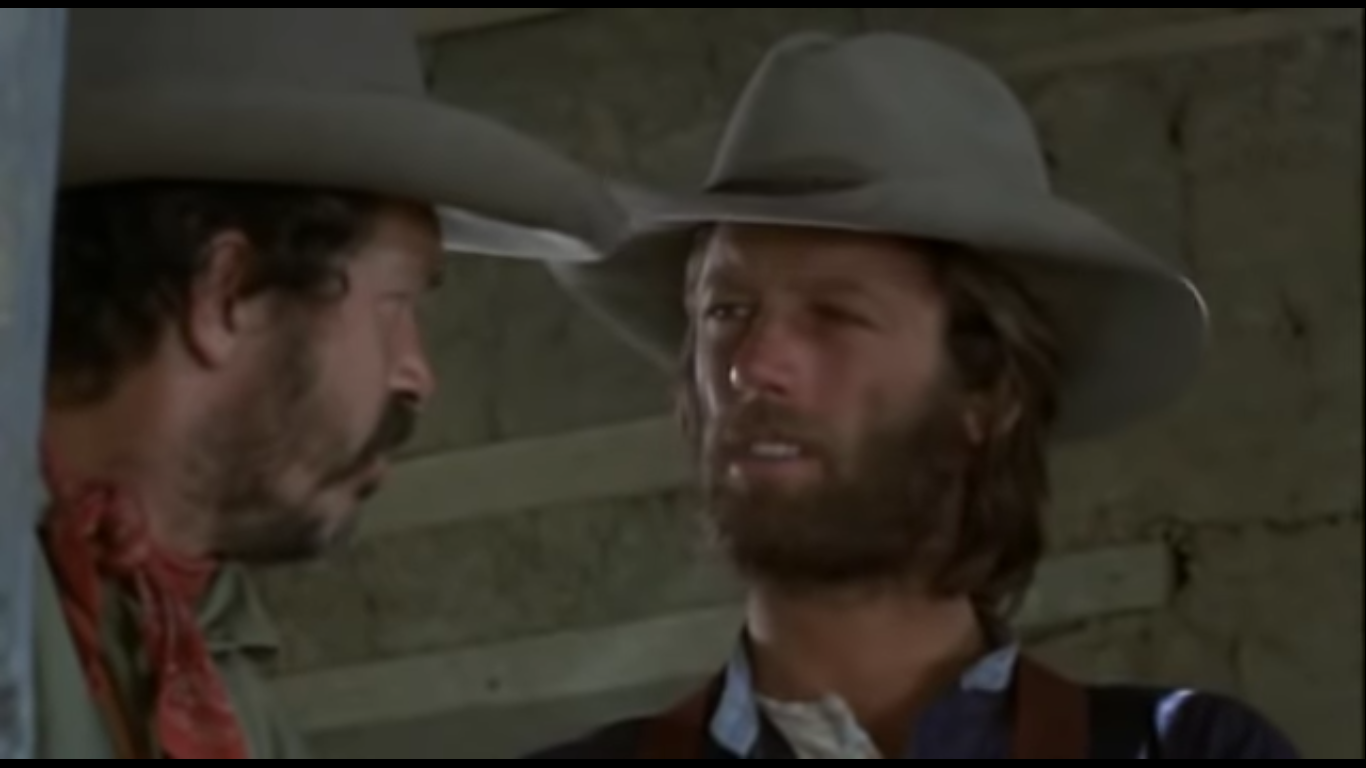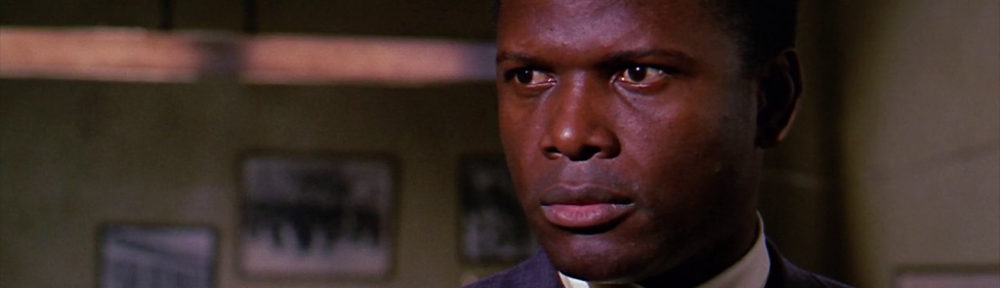
Jerry Schatzberg Films (1970-73)

Puzzle of a Downfall Child (1970)

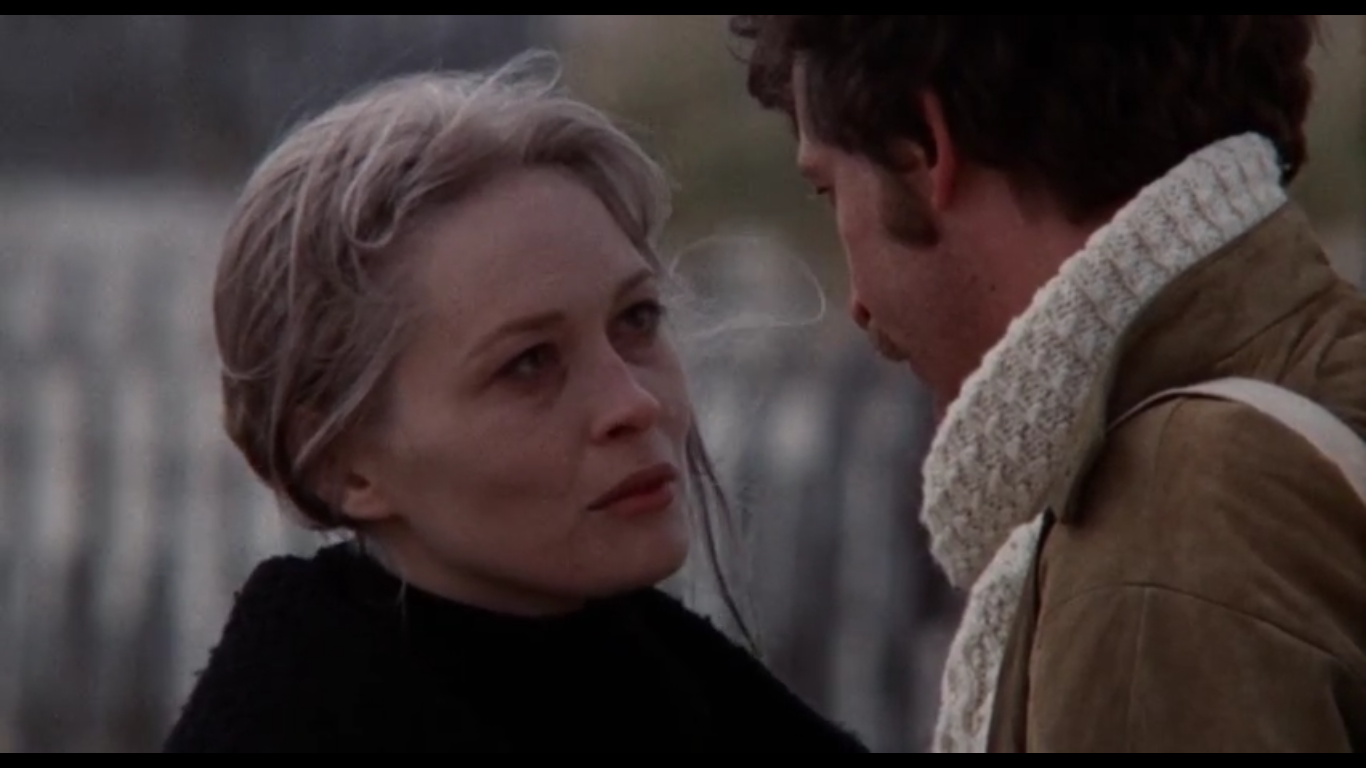
Jerry Schatzberg took his career as a fashion photographer and integrated it into a splintering portrait of a model based partially on his experiences with real-life inspiration Anne St. Marie. Like Blow-Up it is a film about the image, but in this case the visuals often play against disembodied voices obscured from view. The camera also seems to have a general infatuation with lips and speaking voices.

Out of these inspirations, the film becomes a stellar showcase for Faye Dunaway at the height of her powers, giving a scintillating performance — striking and yet perilously fragile. Her very diction fascinates, how it’s stunted — rising and falling — in a very particular cadence, attempting to modulate. It’s just precisely false enough to suggest instability and the film is built on this theme. She is the cypher — the puzzle to be put back together.

As she confides in friends, the picture charts this fractious course of Lou’s career, personal relationships, and insecurities. She slaloms through her memories, past and present, stitching together her life into a disordered patchwork. It becomes a perplexing ever more morose portrait of a woman in need of comfort and support in her vulnerable mental state. But the film really functions best as form over content.

The intrigue comes not in any manner of narrative cohesion but precisely because of the dissolution, a woman becoming more and more fragmented with time. It’s not an altogether original concept. Many great actresses have tried their hand with much success. Still, Carole Eastman’s spin on the dimensions of a gorgeous woman with faltering psychology feels like a nexus in the tradition. It’s also an unjustifiably underseen showing by one of the ’70s biggest attractions. Faye Dunaway admirers take note.

3.5/5 Stars

Panic in Needle Park (1971)

“Needle Park” is a nod to the shorthand of heroin addicts and it totally throws itself in their world and subsequently became one of the most harrowing depictions of drug use in the ’70s. The screenplay was written by none other than Joan Didion and John Gregory Dunne from a novel by James Mills.

We get the opportunity to watch an up-and-coming stage actor, Al Pacino, submerging himself in a role and showcasing a depth that would become the bedrock of all his successes throughout the 1970s. He would join a group of actors, the De Niros, Nicholsons, and Hoffmans, who would help come to define the New Hollywood as it was being formed on the spot.

From the outset, it’s easy to be a bit wary of his mannerisms, the lip-smacking, and the sense of bravado. Then, he proceeds to go for the jugular.  It’s an ugly, tawdry sort of world dictated by sex, drugs, and theft. This is how people subsist if you can call it a living at all. Where everyone’s brother is a two-bit crook and everyone else has done a stretch of time.

It’s a film that has very much a Midnight Cowboy milieu. We have the walk and talks down the streets of New York, but like Schatzberg’s next film, Scarecrow, it’s also fundamentally a film founded on a relationship of two.

If they have so many demons, the one thing they have is their tight-knit community. However, they are personally crippled by relational turbulence, always desperate to find their latest fix. It drives their desires and turns them into momentary ghosts of human beings, self-serving and a shell of their best selves.

Kitty Winn is naturally beautiful like audiences grew accustomed to seeing in the ’70s with actresses like Ali McGraw and Katherine Ross.  However, her particular meekness plays well with the raw ferocity of Al Pacino, and they remain the nucleus of the drama. It doesn’t have to be about much. It simply needs to keep them at its core.

Pacino would get The Godfather next partially on the shoulders of this performance and it’s almost inconceivable to think of Michael Corleone without those deep, searching eyes of his. It’s so easy to look in their eyes — Winn’s too — and see an inkling of who they are. You can condemn their self-destructive tendencies and then turn right around and pity them.

3.5/5 Stars
Scarecrow (1973)

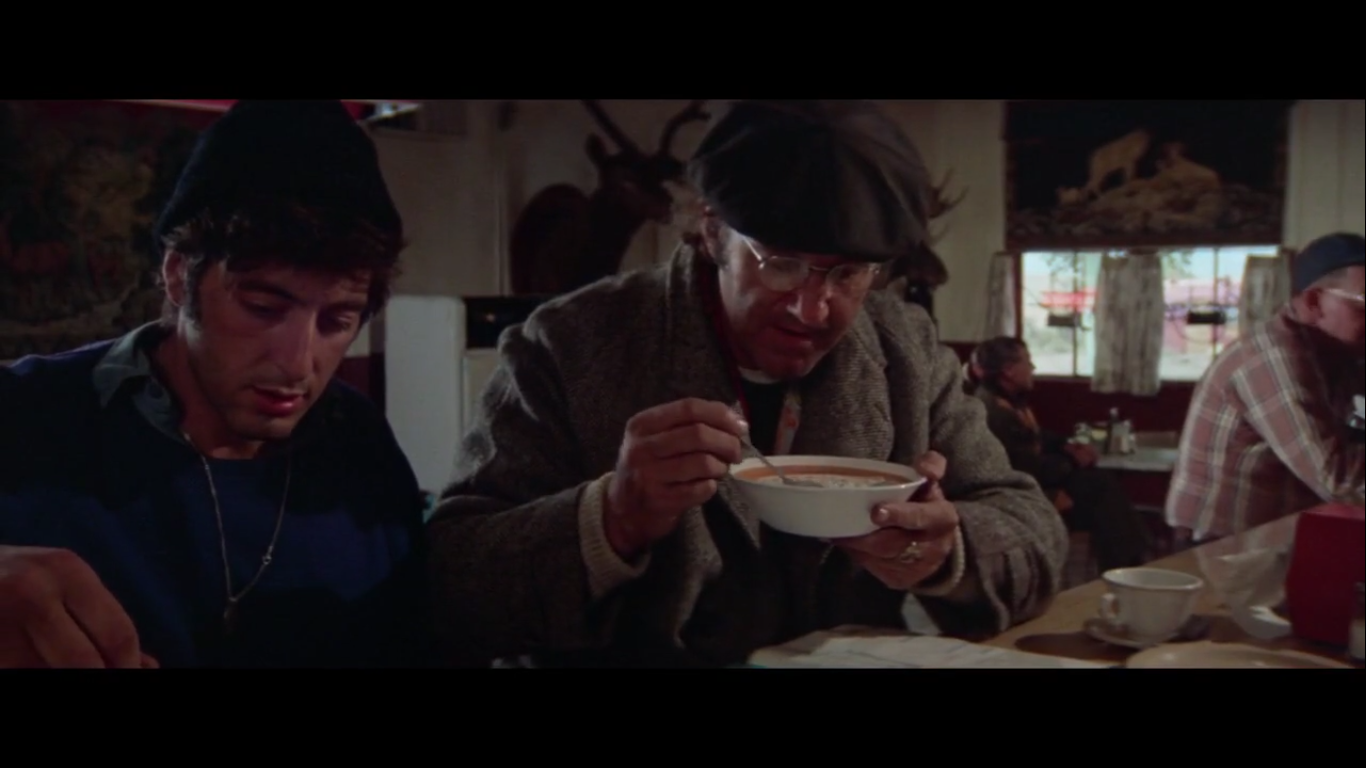
With Schatzberg, the salient features connecting his movies isn’t overtly apparent, but it does feel like the material really guides the output. So much relies upon and flows out of the sense of performance whether Dunaway, Pacino, or Hackman and Pacino here in Scarecrow. But first, can we take a moment to acknowledge what a stroke of luck it is: Pacino and Hackman in a movie together, a movie predicated on character, and they could not be two more disparate personalities.

Because this was on the other side of The French Connection and The Godfather, two of the biggest hits of the ’70s so far, and yet our two stars find it within themselves to do a picture like this. It’s not big budget, with a lot of thrills or prestige, but they more than make it something worth watching regardless of scale.

It feels a bit like Waiting for Godot with tumbleweeds rolling by as photographed by Vilmos Zsigod . Finally, they trade words and make their way to a diner. Their odd brand of friendship is born.

Like any good drifter you might find in the work of John Steinbeck, Max’s idea of a slice of paradise is getting his own car wash. In truth, if the Monterey laureate had been alive and kicking in the ’70s, Scarecrow is exactly the kind of story he might write because it almost feels suspended in time. They have a friendship and camaraderie that feels deeply indebted to George and Lennie. It is almost difficult to unsee it once you’ve drawn the parallels.

Pacino’s philosophy in life is a lot more amenable if a bit eccentric. To borrow the film’s main analogy, he believes scarecrows are not frightening. They actually look so ridiculous that they got the crows laughing and they fly away. So while Max is bellicose, constantly taking umbrage with others, running off his mouth, and getting in brawls, Lion’s always there to provide some equilibrium. As performers and actors, they feel totally at odds and yet we’re ceaselessly fascinated to have them together as a creative battery.

There’s a scene where Hackman tries to chat up the bodacious Frenchy. She’s brought them beers as they move items in the junk heap. But all throughout the scene, Pacino is clunking around making a racket and getting in his way. In another moment of lunacy, he’s sprinting through a department store as a diversion that winds up leaving his accomplice flabbergasted. Max’s so hoodwinked by it all, he sets back down the purse he planned to nick.

Because Lion’s a bit of a jester, simpler in spirit, yet fiercely loyal. Even when they have a spat, he’s hesitant to leave his friend. Hackman’s performance is founded on his irascible nature. He’s loud and obnoxious, begrudging, and yet his slivers of goodness begin to show. He becomes a friend and protector to his buddy. It’s heartbreaking when he finally reveals his tender-hearted feelings. That car wash and Pittsburgh seem so far away. But then again, it was hardly a real place to begin with.

3.5/5 Stars
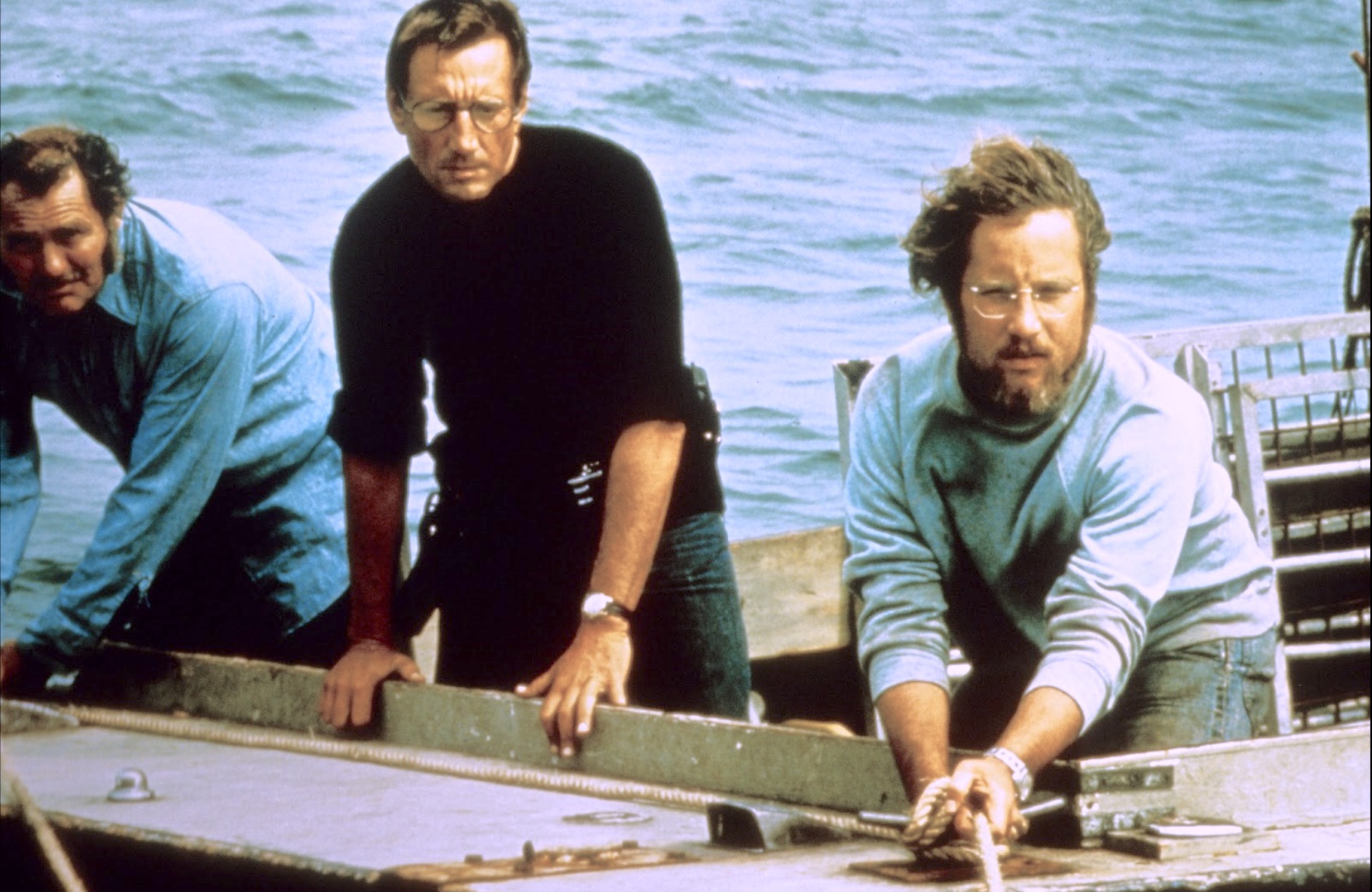
Jaws (1975) at 50

I remember my dad telling a story about the first time he saw Jaws back in 1975, now 50 years ago. He was on a road trip visiting a childhood friend in the Midwest, and though he had spent all his life in California, he was grateful to be in a place that was landlocked when the movie came out. 

If my dad was representative of the general populous, this reaction was not unusual, and for any number of reasons, Jaws was a true cultural phenomenon. It changed the playbook of what a movie could be as a summer blockbuster, even as Steven Spielberg willfully built off the formula of Alfred Hitchcock while bringing his own youth and flair for storytelling to the fore.

It struck me watching the film this time how it is really split into two sections. There are the scenes in the island getaway town of Amity where Police Chief Martin Brody (Roy Scheider) is introduced as a New York City transplant (Coincidentally, it’s convenient to read The French Connection as a bit of backstory). We soon get a sense of his family life, his happy marriage with his better half (Lorraine Gary), and the small-time responsibilities that come with the incoming tourist trade. He also hates the water…

These are the throes of summer, on the verge of the July 4th weekend, and a town like this thrives and even relies on out-of-town business. The first inkling of a shark attack comes when the mangled body of a young woman is found washed up on the shore.

Then, there’s the moment for all time when Brody tries to relax in the arms of his wife on the seashore, only to see an ominous creature emerge from the water and confirm all his worst fears.

A friend pointed out how Spielberg pays homage to Hitchcock with the “Vertigo Effect” or dolly zoom, which gives us as an audience such a perturbing sensation as we are physically reeled into the moment. From then on, it’s not just a threat, but a battle that Brody must wage, dealing with the local repercussions, backroom politics, and general hysteria that gets dredged up in the face of such a news story. As the police chief, it feels like the weight of the whole fiasco falls on him, and what’s worse is that he has so little support.

It all comes to a head when a grieving mother (Lee Fierro) confronts him with a public slap to the face: She found out he knew about the shark threat, and he still kept the beaches open. We know what actually happened, but still, as a beacon of safety, it falls on him, and he internalizes the outrage. Because he has a conscience and a family, too. 

Then there are the later scenes where three men go out on a mission to hunt down the Great White terrorizing the town. It is an elemental story of man vs. nature. The cast thins out with the three primary stars and a big shark playing out a game of cat and mouse on a boat against a vast ocean. It’s an isolating, harrowing undertaking.

Put in these terms, and it feels like an entirely different movie, and yet there’s not a moment when they don’t feel anything but intimately related. A lesser film would have simply shot the second part — extended it — added some more sharks, guts, and explosions, and made it the movie (I haven’t seen the Jaws sequels, so I’m not sure if this formula applies). Although I’m sure this is what drew Spielberg to Peter Benchley’s source material. 

However, this movie is made better by how it builds out an entire world, and we see how it develops the context and creates the stakes and emotional resonance for the entire story.

Scheider is also the only one who can kill that shark in the end. He moved away from the urban jungle to have a quieter life. But the movie calls for him to face this threat head-on, and he does it in an extraordinary way, aided by Richard Dreyfuss and Robert Shaw’s characters.

They both provide two sides of an ethos appeal that lend credence to the evolutionary brutality of this underwater leviathan. Because one represents youthful intellect and scientific know-how of an oceanographer, while the other is a veteran of the sea, grizzled and tenacious. But we know intuitively that the trajectory of the story revolves around Scheider coming face to face with his own fears. It’s inevitable. No one else can save him. 

These words don’t always go together, but Jaws has some delightfully effective expositional scenes. I think of the opening hook where a bunch of young people are on the beach mingling together. The eyes of a young man and woman meet. Then, the camera pulls away as they have their meet-cute. We understand everything without hearing, and the next thing we know, they’re racing off toward the water to skinnydip… 

There’s also the scene where oceanographer Matt Hooper (Dreyfuss) pays a house call. It’s been a tumultuous day, and the police chief has grown introspective, jaded by the day’s events. Hooper awkwardly has two bottles of wine, and he’s wearing a tie. It becomes a scene with the wife talking to the young man, and we learn about both of our leads with this lovely sense of organic humor. 

Then there’s Quint’s moment on the boat one evening, recounting his harrowing experience on the U.S.S. Indianapolis in 1945 on a mission related to the atomic bomb. Ultimately, they were sunk, and many of the survivors were picked off by swarms of sharks in the ensuing hours. An event like that forms a man for life. 

Moments like these are chilling and give the moments of levity even more import. It’s like an escape valve for the tension. Spielberg does an admirable job of choreographing the hubbub of the town with frantic conversations and characters speaking over one another in a manner mirroring real life.

In another scene, Brody is deep in his thoughts, obviously distressed, then, right next to him at the dinner table, his little boy mimics his every move. It’s such an endearing moment of childlike warmth and affection. Or later, a drunken Shaw and Dreyfuss partake in some one-upmanship as they trade tattoo stories gaily after being at one another’s throats for most of the journey. 

Spielberg, at such a young age, already feels adept at creating a total immersive experience in film (You only have to look at his work on Columbo and Duel to see the work he put in before Jaws).

The underwater POV shots from below as human bodies tread above the waterline draw us in, and the notes of John Williams’ score never cease to cause my feet to tense up in my shoes. There are even jump scares I had forgotten about. The cumulative effect is still overwhelming. 

There’s an extraordinary blending of visual compositions that tell us the story succinctly, sprinkled with the kind of humor, exposition, and personal conflict that give the broader drama of Jaws a genuine meaning. Because we are not animals; we are not evolutionary machines. We are embodied creatures. We have hearts, limbs, eyes, voices, and feelings that make us who we are. It’s difficult to extricate ourselves from these realities, and what kind of unfeeling Social Darwinism would that leave us with? 

The Mayor (Murray Hamilton) is a character who is easy to dislike. He does come off as a kind of irrefutable sleaze, and yet when he visits the hospital to give his condolences and reluctantly sign off on Quint’s hunt, he finally makes an admission. His kids were on the beach too, where the attacks happened. For a moment, he is as human as anyone else. 

Because he’s emblematic of a story about locals trying to protect a way of life, and outsiders trying to maintain their own lives somewhere new. It’s a pleasure to watch Jaws and see it not simply as a historical lodestar in the blockbuster age, but 50 years on, it still remains a captivating saltwater thriller showing a young up-and-coming filmmaker on the ascendancy. 

I’ve rarely seen my dad set foot in the ocean during my lifetime. It’s probably coincidental, although Steven Spielberg (and John Williams) might have something to do with this, too. 

5/5 Stars

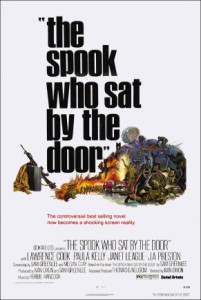
The Spook Who Sat by The Door (1973)

Any chance I get to champion Ivan Dixon, I do my best because he’s such a groundbreaking individual who rarely gets the credit he’s due. Ostensibly, he’s known for playing Kinch on Hogan’s Heroes, a part that was pioneering and ahead of its time, if mostly a thankless role. I love him dearly as an old friend, but I never begrudge him not playing the supporting role in the 6th and final season of the show.

Because Dixon had roots in a rich tradition of stage and film he came by honestly from his formative years in the cultural hub of Harlem.

His early film career is littered with interesting parts including Raisin in The Sun, Too Late Blues, and Patch of Blue. However, his finest hour, showing what he was truly capable of given the right opportunity came in Nothing But a Man, a criminally underseen film with Abbey Lincoln. It feels like an unsung masterpiece of the 1960s.

Although he was never allowed to reach the superstardom heights of Sidney Poitier in the film industry, Dixon was a compelling, intelligent actor in his own right and given the dearth of great roles for black actors, he parlayed his occupation into a career as a director behind the camera.

Beyond showing up in a cult classic like Michael Schultz’s Car Wash, he directed more than a handful of episodes of The Rockford Files and numerous other high profile programs of the ’70s and ’80s, The Waltons and Magnum P.I. among them.

The Spook Who Sat by The Door might have budgetary constraints and, therefore, simple means, but it stands as one of his most visceral achievements behind the camera, especially when he was given worthwhile material.

The film was adapted from Sam Greenlee’s novel of the same name about a man who climbs the ranks of a CIA training regimen as a token black man only to utilize his espionage skills to empower grassroots black power movements in his community.

In this way it plays as a startling and satirical subversion of clandestine counterintelligence activities of the 1970s found in the contemporary moment. It has the packaging of an exploitation film and yet the writer, director, and actors are primarily black. They give the picture a different point of view that runs against the grain and feels ripe for rediscovery by willing aficionados in the 21st century. Because its depictions feel almost like the antithesis of a traditional, innocuous potboiler.

The opening scene in a Senator’s office is a barometer for the rest of the movie; this tone deaf civil servant looks at possible ways to gain the negro vote (after an ill-advised speech on law and order) so he shifts blame to the CIA.

There’s a complete dearth of Black agents within the organization. They respond rapidly to rectify the situation and add some token minorities to their ranks. If it’s not evident already, the satire is blatant and all the white characters feels like wonderfully buffoonish marks.

Dan Freeman (Lawrence Cook) is an exemplary candidate if a bit standoffish. He also becomes the last one standing among his peers. Even if he’s called an Uncle Tom, he knows the primary way to get ahead is to play the white man’s game…

He’s highly-educated, courts a beautiful girl (Janet League), and has the kind of model life broader society extols. Except it might all be a charade because he has far more sinister intentions.

Under the banner of law and order, he runs a parallel operation. He commandeers a radio station to preach his message of revolt against the city, and they’ve taken on guerilla tactics. As part of their righteous war they take over local military arsenals cloaked by night and create a cell of revolution to do battle with the establishment. They bide their time and build up their chain of command reminiscent of The Battle of Algiers.

One of the statement moments involves Dan’s associates capturing their primary adversary, neutralizing him, and leaving him as a black sambo in tar, strung-out on acid and left for dead. It’s such a jarring image one doesn’t soon forget by repurposing black stereotypes in a new perturbing context.

Jules Dassin’s Uptight feels more thematically rich in the wake of Dr. King’s death while pushing the boundaries of reality, but The Spook Who Sat by The Door presages something like Do The Right Thing. It captures the turmoil of the cultural moments like Watts or the Democratic National Convention with a visceral immediacy. It feels like the images could be ripped from the headlines as we watch the world quake and seethe with rage. It’s hard not to feel queasy.

You can easily understand how why the establishment would want to bury a film like this. Now it feels prescient, even dangerous, poking and prodding our nation’s fault lines with a gleefully stark abandon.

While I’m more easily attuned to more sincere cinema — Nothing But a Man is a good example — it’s difficult not to commend Dixon and company for their steely-eyed vision. Because The Spook Who Sat by The Door feels like an uncompromising, unfettered work that shocks us out of our day to day status quo.

Sometimes when people won’t listen or can’t hear, it doesn’t help to whisper politely. You need a resounding gong to shock them out of their reverie. It stings but then that seems like a small price to pay for a fraught history, especially if it leads to some kind of change. The most horrifying reality is a preconceived future where nothing changes…

Sadly, Ivan Dixon didn’t get many more good opportunities to showcase his directorial talents in film. It says more about the industry than anything else. But for the rest of us, his career is filled with work reflecting a persistently compelling actor-director. He made the most out of what he was given with an impressive career. It’s a shame he wasn’t given more, but that makes a film like this all the more important.

3.5/5 Stars

Enter The Dragon (1973)

Turner Classic Movies came out with a podcast to give Pam Grier her plaudits and bring her out of the shadows so she might regain her rightful place as one of the unsung icons of the 1970s.

It occurs to me Bruce Lee occupies a similar cultural place. Because among his devoted fanbase, he’s revered and there is a cult following around him. Still, it’s hard to know if he’s totally understood beyond a superficial appreciation as a martial artist and thrilling symbol of Asian masculinity.

Both stars were either relegated to the periphery of mainstream entertainment or given the lead in the kind of potboilers that would never garner any critical acclaim. And still over the years, they have maintained a steady audience. What they have in common is a kind of “It Factor” born of charisma and an incomparable presence on screen.

Bruce Lee, for one, became the image of the Asian to the broader world with his prowess in martial arts and hint of religious mysticism. This is no fault of his own but rather indicative of a culture that did not totally allow for the proliferation of Asian talents in the ’60s and onward.

He became one of the token archetypes of Asianhood and although the vehicles he was given were not always the best, somehow, like Grier, he seemed capable of wholly transcending the form. It’s easy to be transfixed by his every move.

Previously I didn’t have the vocabulary to recognize how similar Enter The Dragon is to the concurrent Blaxploitation movement of the ’70s. In giving the cinema screen a broader cross-section of society for a new type of action hero, the films nevertheless lean into all the accepted stereotypes one could imagine.

What’s evident is how the movie coalesced as a cauldron of martial arts movies, James Bond influences, and Blaxploitation. It relies on a plot that’s an obvious Bond movie knockoff as Lee is sent to take part in a prestigious martial arts competition on a remote island as a pretense to snoop around the base of a man named Han.

The only other things you need are shoddy dialogue, obvious dubbing, and pretty girls with a lot of punching, kicking, and general brutality. Enter The Dragon has them all. Some of it gets especially gruesome as the story progresses and the stakes rise. The score cycles between Bond-like guitar riffs, blaxploitation funk, and the stringed twangs of “orientalism.”

Lee is not the only man who is invited to the prestigious affair. It might feel like token casting, but it also makes the ride a lot more engrossing. Jim Kelly with his afro and imposing build showcases a prowess in martial arts as an emblem of what black power can look like on the screen. Cool, disaffected, and a ready-made hero.

Former matinee idol John Saxon does well in a role that feels made to evoke a B-grade Burt Reynolds or Sean Connery. He brings some wry good humor to the movie to go with his many appetites and preeminent abilities in the ring. He also loves to gamble on anything. While he might be mercenary, he’s not entirely heartless.

They all make the ferry ride across to Han’s private stronghold. He’s a martial artist in his own right and the perilous embodiment of Fu Manchu villainy replete with a claw for a hand and courts full of all the exotic Asian diversions one might imagine. He’s flanked by a row of shuriken-throwing maidens and a ready-made army including the hulking O’Hara. Han even strokes his cats with the self-assured menace of Blowfeld.

Now that we have the pretense for their introduction, it’s a joy to get down to business watching Bruce Lee take on the whole island after he surreptitiously climbs around the base looking for answers. The scenery and the sets seem totally disposable but that makes it all the better for beating up baddies and tossing them every which way.

To the very last sequence, as he’s bare-chested and sliced up, Lee’s still ready to vanquish his enemy whatever it takes. The production does well to pinch Lady from Shanghai‘s stylish hall of mirrors sequence for some easy atmosphere and a kaleidoscopic showdown.

I had the pleasure of seeing the film in a packed house in celebration of 50 years of the film. Enter The Dragon is clunkier than I remember around the edges. People in front of me looked a bit befuddled with the dubbing, then laughed at some of the primal screams from the heat of battle.

But the whole theater erupted with every showing of Lee’s inimitable dominance. If anyone entered that theater looking only for a cheap action flick, I think they came out appreciating one of the great action heroes of the 20th century.

Given the limited resources at his disposal, it’s still amazing to consider the headway Lee made in the cultural consciousness. I’m not from Hong Kong (he was actually born in California too), but I am quick to claim Bruce Lee as a star who changed the perceptions of what Asians could be.

4/5 Stars

Bill Forsyth’s Films: Gregory’s Girl, Local Hero, Etc.

Bill Forsyth is a director who has flown under my radar, and yet only after a week’s time and a handful of films, he’s quietly become a new favorite. Now I heartily understand why he’s one of Scotland’s most beloved directors. Part of his appeal is because he wrote and directed his own projects, but it also comes down to how he imbues his films with a certain sensibility that’s thoroughly disarming.

That Sinking Feeling (1979)

That Sinking Feeling was his debut, a microbudget caper about a pack of eccentric Glasgow youth who alight on a plan to make a buck stealing sinks. It follows the beats of a heist while straining them through a very specific experience.

What Forsyth brings out of his youthful troupe of actors are the lovely idiosyncrasies his films are all utterly replete with. It’s the kind of humor that feels honest in its truth and the good nature behind it. Many of the faces that show up throughout would crop up in some of his later works as well.

Comfort and Joy (1984)

For some, Comfort and Joy might be a new Christmas tradition. It’s a low-key movie finding its footing by focusing on a disc jockey (Bill Patterson) who’s a kind of local celebrity thanks to his good humor, jingles, and the fact he’s in people’s homes just about every day.

There’s a curious streak to the movie as Dicky becomes a kind of mediator between two rival families in the local ice cream racket. I’m not sure where these premonitions come from, but the way Dicky gets caught up in the late-night escapades in the feud between ice cream vendors, I couldn’t help but think of the milieu of After Hours. It’s probably because the situation escalates into this quirky absurdity with a touch of doom.

It has a few fanciful dreams and feels like it could be a sick nightmare. Still, Forsyth never allows any of this to totality derail the prevailing good nature of his characters.

Housekeeping (1987)

In 1987, he alighted on another journey, writing and directing an adaptation of Marilynn Robinson’s Housekeeping. Although it was his first American production, it also brought him together again with his fellow countryman, producer David Putnam.

It’s a film rather reminiscent of Jonathan Demme’s Swing Shift and it’s not simply due to the inclusion of Christina Lathi. It’s the way Forsyth hones in on a story of keenly observed moments and distinct characters rather than a fierce adherence to form and structure. Yet again, there’s a clear-eyed authenticity to it that feels far from being fabricated. It maintains this ethos, and time and time again succumbs to these quietly profound moments that are all too easy to disregard.

I’d like to take the rest of my time to highlight Forsyth’s two most noteworthy films because they all but embody my newfound appreciation for the director.

Gregory’s Girl (1980)

The opening tag immediately feels like the opening moment in any number of cringe coming-of-age films. A group of prepubescent peeping toms gape at a beautiful woman hidden behind glass. Gregory’s Girl looks destined to join the trashy, smutty cadre of ’80s locker room movies. And yet around every turn as I kept expecting the worst, here is a film that constantly surprised and left the dorkiest, most curious, and strangely poignant impressions.

Gregory (John Gordon Sinclair) is one of those iconic coming-of-age protagonists, meaning he’s a spindly dork with the most atrocious head of hair imaginable, and we’re already talking about the ’80s. Still, in a word that could easily be harsh and unfeeling, he makes it genial and a tad innocent.

He doesn’t have a killer instinct out on the football pitch. He loses his coveted striker spot only to bump his best friend, another loser named Andy, out of goal. They hardly seem to mind. Because they’ve made way for the school’s latest talent: the athletic blonde Dorothy (Dee Hepburn).

Again, this brings with it all sorts of potential problems. The male population is quick to rally around her — cheering her on ardently — though it could be a lot worse. It suggests girls can excel in many facets. However, it does run the danger of turning her into a regressive object where the girl is a trophy to be won.

On more than one occasion, it bends away from the expected gauntlet of crude jokes giving us something lighter, more agreeable. It comes with how it conceives of a very particular version of adolescence: small-town Scotland outside the urban decay of the big city. It feels quieter and more hopeful, even if the world itself and the time in life is incredibly transient.

Gregory’s Girl is nothing like what I expected. It was far better. Yes, it’s a slight film, but this plays to its strengths because it gives us these characters and these moments — observations we can appreciate — and then we get to leave them with a wealth of affection. It’s easy to see my estimation of this one rising after future viewings. Even as I ruminate on the title Gregory’s Girl, it has new meaning, and it makes me smile. It’s a pleasure to have expectations subverted and then exceeded.

4/5 Stars

Local Hero (1983)

Local Hero is bolstered by a simple premise being subverted. A colossal American oil company looks to gobble up land in and around an idyllic Scottish village. However, there’s no malevolent corruption and their eccentric benefactor, Mr. Happer (Burt Lancaster), would much rather chart the stars than deal with any amount of oil refineries.

Likewise, it’s never a story of the little guys trying to hold out against progress. The locals are delirious about the money coming their way. Instead, we come to appreciate what this kind of life has to offer as does our stand-in Mac (Peter Riegert).

It hearkens back to an era — the days that made my parents fall in love with the U.K. –where there were still pockets of the world seemingly untouched by modernity and true western influence. The Texas businessman and his Scottish sidekick (Peter Capaldi), pay a visit to the small town and set up shop in the B&B. The local pub is where the whole town pools their funds to make change for an intercontinental phone call.

At first they look rather out of place: two suits walking across the beaches with their briefcases. But then we get a passing sense of who they are as people. They are romantics even friends of passing rabbits. We come to like them. The same might be said of the town and why not? Wow, is the countryside breathtaking. I miss it so.

This is never a movie about board rooms or business, but the bits of business happening in a community. There are all sorts of people, and the quaint elements prove utterly charming.

What a lovely connection between Star Wars and Local Hero to have Wedge Antilles be the town’s main accountant and hotelkeeper prepared to cut a deal with the man from America. Though any amount of haggling or conflict never materializes and they quickly become best buds.

If there was any conflict, it all but evaporates and what is left is warm humor and the forming of lasting relationships. There are the cultural differences, the manifold eccentricities, but there’s also the congeniality. It’s part of what makes this unassuming movie such a pleasure.  Local Hero is gentle cinema, and it’s exactly what we need.

4/5 Stars

CMBA Blogathon: Classic Hollywood Stars on The Dick Cavett Show

This is my entry in The CMBA Spring Blogathon: Big Stars on the Small Screen

There are several more recent late-night hosts like Stephen Colbert or Conan O’Brien who have managed to use the truncated form (and podcasts) to try and go deeper with guests beyond surface-level pleasantries. Colbert even had Dick Cavett on his show, and I’m sure he’s not the only one.

However, as I’ve pored over more and more of his interviews over on Youtube, it feels like Dick Cavett was often the gold standard for lengthier, in-depth discussions will all sorts of talents and luminaries. He had several Beatles on his show, boxing champions, prominent thinkers, along with plenty of Classic Hollywood talent. And his show in its various forms acted as a representation of the dying art of the extended interview.

Cavett’s gift seemed to be his capacity to somehow straddle two worlds. He was an intellectual with a dry comic wit, but also a midwesterner who dressed mostly innocuously and came off unassuming. He looked establishment and yet crammed his shows full of personalities like Janis Joplin and Muhammad Ali.

Often the pairing of his guests seems downright peculiar (ie. Joplin and Raquel Welch for one). However, when he was given the opportunity to sit down with one individual and have a conversation, there were often some wonderful tidbits that came out in the process. And he has a non-grating style of asking the questions we want to know without making them sound totally asinine. He also normally took time to listen.

It does feel like he sits down, not for an interview, but for a chat with a friend. And in some cases, people like Groucho and Brando became his friends in real life even as he did his best to coax answers out of the most reticent guests by making them feel comfortable.

I could spend a significant amount of time just discussing some of the directors he had on his show like Alfred Hitchcock, Orson Welles, even Frank Capra, but I thought I would focus on a handful of the stars. Here we go:

Groucho Marx (1969 and 71):

Cavett was quick to praise Groucho as one of his heroes, and it’s fun to watch them together full of laughter but also genuine affection. You can tell the appreciation is mutual between them and it makes the discussions lively.

One anecdote involves Groucho’s encounter with Greta Garbo in the elevator. Not seeing who it was, he pulled her hat brim way down over her head, and when she gave him a withering look, he apologized and said, “I’m terribly sorry, I thought you were a fellow I knew in Kansas City.” That’s Groucho to a tee.

In one candid moment, Groucho says he doesn’t read the news anymore before bed because it’s just a remake of what he’s been hearing all day. It goes to show there’s nothing new under the sun or in the news cycle.

Fred Astaire (1970 and 71):

This is a lovely set of interviews. Astaire is quick to deflect praise and mentions how he doesn’t like watching his old movies because he’s always thinking about how he could do it better. He also provides some insight on a few of his numbers from films like Funny Face. It turns out he’s still got it and besides dancing with Dick, he does a seated rendition of “A Fine Romance” much to the audience’s jubilation.

It turns out his grandson likes the Beatles, and Astaire even owns some of their records himself. On top of his career as a dancer (or “hoofer”), he wrote quite a few songs of his own. I recall seeing him do a rendition of his composition “City of the Angels,” but I could not find it anywhere online.

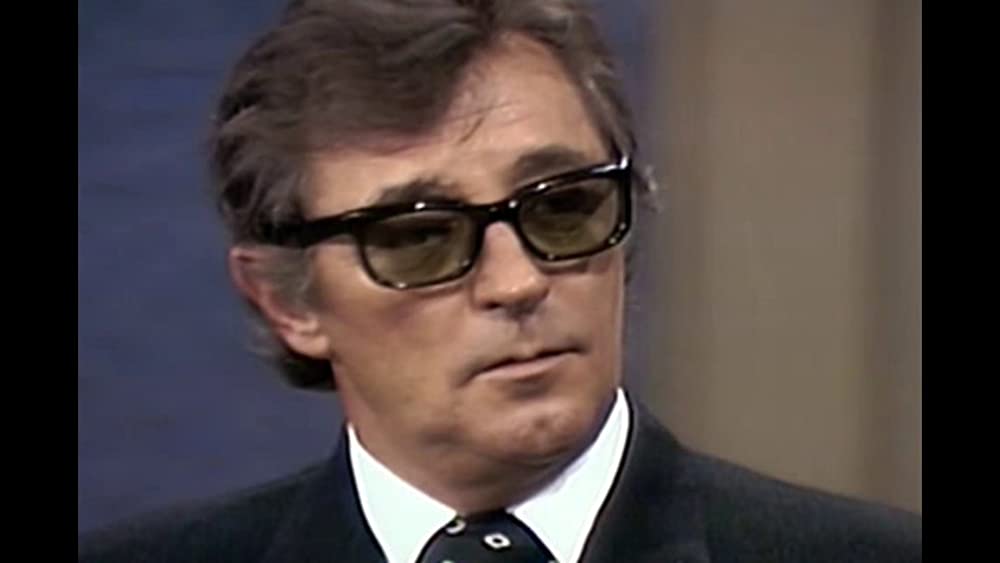
Robert Mitchum (1971)

Mitchum is an actor I’ve grown to admire over the years, and Cavett makes a point of acknowledging he was known in Hollywood as a tough interview. However, he’s surprisingly forthcoming. He talks about his school years, his time in a southern chain gang, his famous drug bust, and also insomnia.

He recounts sitting in on a Hopalong Cassidy movie with his wife early in his career and eavesdropping on a lady saying, “That is the most immoral face I’ve ever seen!” He made a career out of it starting as a “mule” for RKO as he called it. Since the air date is around Ryan’s Daughter’s release, he also mentions an experience when he was in Ireland with Richard Harris, and he got in an altercation with a local who mistook Mitchum for Kirk Douglas! Otherwise, I’m impressed by his use of words like convivial and peregrination.

Bette Davis (1971)

Bette Davis is such a vibrant personality, and she regales the audience with her early career, her battles with Warner Bros, and how she ties into Gone With The Wind lore. She calls Eroll Flynn the most beautiful man to ever live, and the most charming, but in her estimation, he could not have played Rhett Butler.

She also shares how she perceives Now, Voyager would have developed after the credits, in that her protagonist would have ultimately ended up with Claud Rains’ character because he had a strength perhaps missing from Paul Heinreid. Davis talks more about her friendship with Rains — a man she called “witty, amusing, and beautiful.” She even takes time to mention her most repulsive screen kiss with an actor who (in 1971) was still alive and therefore left nameless. Although she is quick to praise some English actors including Richard Harris and Dirk Bogarde.

Marlon Brando (1973)

Marlon Brando feels like another person who was notoriously difficult to pin down. Here he’s quite candid about his thoughts on racism against minorities and, at the time, the quite controversial boycott of the Academy Awards.

When Cavett tries to talk about acting style, Brando makes the case that all human beings are acting all the time in life just to survive. Cavett’s trying to get at how what Brando does is far and away from what anybody else can manage, but perhaps it’s semantics.

Brando goes on to say that acting is a good business — a worthy craft — but he doesn’t think of it in terms of art like other people. It’s intriguing since many would laud him for being a part of some of the most artistic production of the 20th century. (Side note: Brando uses the word “inured” which I thought was pretty impressive).

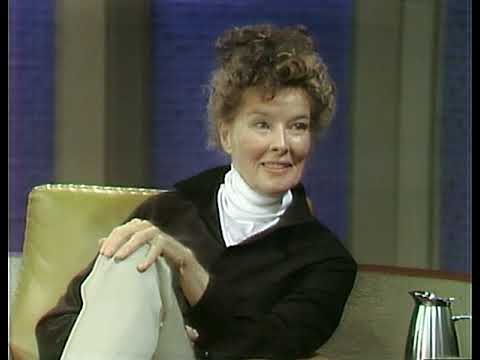
Katharine Hepburn (1973)

Like Bette Davis, Katharine Hepurn was considered for Gone With The Wind as she had working relationships with the producer David O. Selznick and the original director George Cukor. She and Cavett also spend some time talking about Humphrey Bogart, and Hepburn says he was a gent with good manners and completely different than his persona. She said Spencer Tracy always seemed a bit uncomfortable as a man being a professional actor, but Bogey seemed to love it and be proud of his job.

She calls the movie business thrilling, but she had no interest in immortality or people remembering her in the year 2050. As we’re now only a couple decades away, I can say that people certainly will remember stars such as her, and we’re thankful for their movies and interviews like these to help keep their stories alive for ensuing generations. I count myself among this lucky group who can reap the benefit of this readily available visual history both on the big and small screen.

For fun, I wanted to make a list of their films including my personal favorites. In no particular order off the top of my head these were my choices:

Duck Soup (1933)
Night at The Opera (1935)
Swing Time (1936)
The Band Wagon (1953)
-Out of The Past (1947)
-Night of The Hunter (1955)
-The Little Foxes (1941)
All About Eve (1950)
The Godfather (1972)
On The Waterfront (1954)
Philadelphia Story (1940)
The African Queen (1951)

My Name is Nobody (1973): Terence Hill and Henry Fonda

For those familiar with the tales of Odysseus, My Name is Nobody earns its name from the witty trick the Greek hero uses to escape the Cyclops. However, the movie should draw more comparisons to the works of Sergio Leone than Homer.

It’s difficult not to immediately calibrate the film’s first scene against something like the opening of Once Upon a Time in the West; it’s as much about the stretching and manipulation of time as it is the near-wordless actions. There’s even a clock ticking in the background.

We have a callback to Fonda getting a shave at the Tonsorial Parlor in My Darling Clementine (feet even propped up) however, here the scene is done up with this new sense of impending dread, and we can’t quite fathom why. We just feel it.

Again, getting a shave, milking a cow, brushing a horse, are mundane activities undertaken by three strangers, and yet the scene imbues them with this uneasy energy. They could be Jack Elam, Woody Strode, and Al Mulock biding their time at the creaking train depot for Charles Bronson.

Although Leone’s not the director; he conceived the original idea, and Tonino Valerii, who was Leone’s assistant director on some of his most prominent films, knows what it means to milk the moment through images and sound.

It’s not even the heart and soul of the movie, but like the earlier picture, it gives us the essence of the style and certainly Jack Beauregard. Because after giving the public a shock by turning Henry Fonda into a bad man, Leone’s done the western icon one last favor by canonizing his legacy for a final time.

Before any of this gets perilously high-winded and overly contemplative, it should be mentioned forthright that My Name is Nobody remains an unadulterated comedy on multiple accounts. Given what I’ve said already, I’m not sure if this comes as a shock or not. But what’s even more imperative is how it’s intended to be this way.

The dialogue is pure pap. It feels generally tone-deaf and totally out of sink with some of the best images of the movie, but this is all very much in the tradition of the Spaghetti western no matter the language, locale, or subject matter. It’s telling the only actor who actually dubbed himself was in fact, Henry Fonda. Again, he’s given the ultimate deference and his audience probably expects nothing less.

I’m also no music man, but there are elements of Ennio Morricone’s compositions here — the man who wrote the book on the Spaghetti soundtrack — seeming to gleefully parody himself. The interludes during the title credits are merry and gay literally popping with an almost sickening buoyancy. Later, it devolves into a melding of Wagner and chanting chorale arrangements that can only hearken back to The Good, The Bad, and The Ugly.

Here we get our first look at Terence Hill. He’s a vagabond who catches fish with his bare hands. This too builds off the same persona he had in They Call Me Trinity. He’s the anti-Eastwood if we can call him that — bearing a convivial manner — though equally adept when it comes to gunslinging.

Since there is no Bud Spencer, he gets Henry Fonda as his main partner in crime. Nothing against his most prolific friend and countrymen, but you’re definitely getting a different kind of picture with this change in personnel.

True, it’s hardly Fonda’s best work, but he feels strangely at peace with his surroundings and coolly confident since he’s done this so many times before. He’s not capable of going into parody in the same manner as Morricone’s score. Or if he does, it only aids in burnishing his already established legend.

Because he has a pedigree with forging the West you never had in a movie like They Call Me Trinity, though it shared some tonal similarity thanks in part to Terence Hill’s quick drawing ne’er do well. Fonda manages some amount of grandeur in a movie that otherwise is happily preoccupied with slapstick and scatological humor. There’s Sam Peckinpah’s name listed on a tombstone for goodness sake! And yet Henry Fonda, that is Jack Beauregard, provides a certain level of enduring gravitas to the proceedings.

It functions relatively effectively because Nobody (the name of Hill’s character) idolizes the older gunslinger so much. He makes us believe in him even as many of us bring our own history with Fonda to the movie already. The younger gun can best be described as a historian of Jack Beauregard and better yet a fanboy. He knows all about his exploits and has followed him from his earliest days.

He’s a peculiar sort of figure. At once, seeming to jostle for the spotlight and dog the renowned fighter, and at the other end, trying to grow his acclaim. He wants people to remember Beauregard as the larger-than-life figure he was in real life on countless occasions. But he also wants the man to go out by living up to his expectations. He can only do this by facing off with The Wild Bunch, a pack out of outlaw roughriders at least 100-strong.

The fun and games of the movie happen at a bustling carnival. Nobody takes the time to shoot a stilt walker down to size and pie a fat-headed vendor. He’s equally game for some gunplay in the saloon showcasing both his tolerance for alcohol and his uncanny sharpshooting.

All of this feels like an audition for a bout with Beauregard. Because the whole movie they toy with their adversaries, whether it’s in a funhouse, over bombs, or dynamite. Nobody ably turns some of his playthings into bobo dolls and runs off with a train filled with gold after staring down the engineer in a urinal. Yes, this really happens.

But of course, the movie is never about rivalry and this is how it sidesteps the usual trope others will remember from The Gunfighter or I Shot Jesse James, et al. In the final stand we have The Wild Bunch kicking up a dust storm in a face-off against a solitary, bespectacled Henry Fonda at the ready with his shotgun. He’s kept his part of his bargain, for the sake of his legacy and his ever-present shadow has provided him a fitting piece of assistance.

Although I have little call to cast aspersions on the picture, it feels like My Name is Nobody strives to be both comedy and elegy. It can never fully succeeds at either, but there are distinct elements to be appreciated. One of these is Fonda, and he goes out as a “national monument” rightfully so.

It’s not his greatest western by a long shot, but his last round in the saddle puts a fitting denouement on Fonda’s career adding its own addendum to the kind of Liberty Valance mythos or the cyclical lineage of toxic gunfighters. The pronouncement “Nobody shot Jeff Bearegaurd” maintains its double meaning. Sometimes myths aren’t bald-faced lies. They can also be acts of willful preservation and frankly, peace of mind.

In My Name is Nobody, there’s a warm jocularity to it all, down to the very last shot. It’s an accommodating movie, and although this keeps it from being totally profound, that’s okay.

3.5/5 Stars

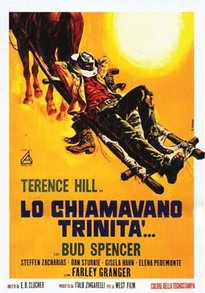
They Call Me Trinity (1970)

When I was living abroad it was one of my European friends who first introduced me to Terrence Hill and Bud Spencer. I had never heard of them and was anxious to learn something about the duo. Regardless of what their names imply, both men are Italians with aliases befitting American action heroes.

They Call Me Trinity is one of their most lucrative pairings together, and it fits into the historical narratives I know well. It is a spaghetti western a la Leone or Corbucci, but it was made with deeply comic inflections.

We all know the laconic heroes: Eastwood’s “Man With No Name” or Bronson’s “Harmonica.” Hill seems to be one of their ilk, although he can be found lounging lazily on a litter pulled by his horse. He proceeds to get up and walk into the nearest cantina looking half-naked as he scarfs down a skillet of beans and drains a bottle of booze with a hearty belch. It’s the kind of showing that draws the curiosity of all bystanders. He represents a different kind of temerity — totally comic in nature. It helps he’s also ludicrously fast on the draw.

If he’s one source of easy laughs, the other is his brother played by Spencer, a sheriff in a nearby town at odds with some of the locals. It doesn’t help he’s got one of their buddies held prisoner. Bambino, as he’s called, showcases some farcical gunplay and superhuman brawn, wiping the floor with anyone who dares challenge him. Also, he’s not too pleased to see his blood relation, who quickly turns the showdown into a spectator sport.

Beyond their sibling rivalry, Trinity is just the man who could let everyone know Bambino is actually an escaped convict and not a true sheriff; he stole the job from the real man while he bides his time waiting for his cronies. None of this is of great importance

It must be said that the sense of reality is always strained to the nth degree in these Italian western pieces, normally shot in Europe with international casts, copious amounts of dubbing for various audiences, and any number of anachronistic flourishes. The dubbing is so prevalent it becomes an artistic decision more than a purely merchandising one. It’s part of the charm of the Spaghetti western and Trinity gladly soaks in this tradition.

The eponymous hero calls on his brother’s sense of propriety to help a clan of defenseless Mormons, whose pious hospitality is brutalized by Mexican marauders who might as well be under the commission of a corrupt landowner (purportedly Farley Granger) intent on pushing the migrants out.

Trinity is rallied to their cause by two bodacious Mormon daughters (Gisela Hahn and Elena Pedemonte) and Bambino reluctantly takes part thanks to their fine stock of horses. He might be able to gain something out of the arrangement. When his friends do arrive, they start instructing the righteous people on how to defend themselves and fight their battles.

They make their final stand, and it’s full of kinds of cathartic poundings and pummelings of the enemy. The good guys put up a valiant fight. It’s not quite The Magnificent Seven, but it has an ending worthy of its own characters.

From time to time, it’s a pleasure having heroes like these who feel a bit like a reincarnation of Laurel & Hardy for the buddy, western, action movie era. Bud Spencer as a bit of an indestructible hulk with an irascible temper. Hill as the handsome rapscallion who’s more than easy to root for.

They would follow up this success with many more — some westerns and then other pairings taking advantage of all the crazes taking over the international movie industry. I was introduced to them in Miami Supercops, which indubitably ripped off a handful of Miami Vice episodes and any number of cop shows being released in the ’70s and ’80s.

Here you have a great deal of the charm in Hill and Spencer. The Spaghetti Western was a hit in how it took the American conventions and gave them a facelift through pastiche and violent homage. It sounds like a formalistic mess and in many ways, it is, but that’s also part of the charm.

3/5 Stars

The Hired Hand (1971)

It’s true that Peter Fonda comes out of a western tradition of sorts, which is merely an indication of his family’s presence in the film industry. Obviously, one of his father’s identifying genres was the western, and he worked with some of the greats from John Ford to Sergio Leone.

Films like My Darling Clementine have become the bar with which to evaluate future generations. Then, Peter’s older sister, Jane, of course, tried her hand with the wildly popular Cat Ballou. It’s not high art, but there’s a great deal to appreciate between her gallivanting around and the drunken histrionics of Lee Marvin.

However, with The Hired Hand, Peter starred and directed a western of a very different breed. There’s a hallucinatory quality to the movie suggesting it’s not too far removed from Monte Hellman’s acid westerns of a few years prior. It’s composed mostly of images swimming in the restless score of Bruce Langhorne.

We already have Warren Oates and Peter Fonda, and it’s obvious the genre is funneled through the vision of the counter-culture that brought us pictures like Easy Rider and even Two-Lane Blacktop. In some of his earliest feature film work, Vilmos Zsigmond provides a casual, unsentimental sense of the landscape fitting the overall canvass developed by both the editing and score.

In their passing dreams, floating just out of reach, the California coast acts as a kind of far-off oasis for the three drifters staked out by a river bed. I couldn’t help thinking of generations before. Peter’s father as Tom Joad headed to California and faced his own brand of disillusionment with the dream packaged for him. Expectations didn’t meet reality.

Peter Fonda is besieged by the discontentment and malaise of his generation, but if we recall The Grapes of Wrath maybe this youthful sense of Sehnsucht, while morphing and evolving, is not totally lost or forgotten. It’s only reimagined in new forms and under new banners.

After days without bathing and nights without a warm bed, they roll into a town. But it’s not much better than the backcountry they’ve been frequenting. At any rate, it’s hardly the picture of civilization.

The film remains mostly a sullen affair plagued by death, but not just physical death, the death of joy or adulation in any sort of quality life. It starts grappling with the life of a drifter — the camaraderie of saddle buddies — and the solace of a settled home life. Because Harry Coilings didn’t always live this peripatetic existence. Once he was married. Funny how he never mentioned it before to his companions, but then again, the overwhelming emptiness in his heart has made him crave something different. So he and Arch pay a visit to his former missus.

Warren Oates has gained some welcomed acclaim since his death as a kind of cult favorite, but in The Hired Hand there’s something especially welcomed about him. He’s congenial and faithful, a source of affability in a movie that is mostly lacking in any kind of generosity toward its audience. Fonda gives us nothing. Verna Bloom has nothing to give because her character has learned to insulate herself. And there’s really no one else to offer any kind of condolence.

The film’s barely a meditation on marriage. There’s hardly time to build this into something substantive nor entirely profound, but we do have a sense of this male camaraderie. And suddenly it gives the movie a central question. Fonda must reconcile this relationship, one that has stayed with him for years on the lonely roads, with that of a distant wife who never expected him to show his face again. Whether he totally acknowledges them, they are both of great importance to him.

At first, I mistook the finale — a giant bloody shootout — for a pointless exercise. What good does it do? Very little aside from bludgeoning us with a bleak view of the world. However, it does speak to a man’s vow of friendship. While other elements of this western are irrevocably different from the past, there’s some small amount of stability in such a simple trait as this. Is this stupid courage like the screenwriter Bill Goldman enthused about? Probably.

It’s also a glimmer of something laudable speaking to the exact same listless despondency an entire generation was looking to grapple with from Easy Rider to Five Easy Pieces. This alone doesn’t make it a superior western, simply by having a muddied, unadorned sense of the world. But Peter follows in the footsteps of his dad and sister to leave his own impression on a deeply American genre.

3/5 Stars

Cesar et Rosalie (1972)

It occurs to me that the title Cesar et Rosalie is a rather peculiar choice for this movie. However, it’s also very pointed. If Jules et Jim was about two friends caught in a ceaselessly complicated love affair with one woman (Jeanne Moreau), then here is a story shifting the focus just slightly. This time it is Romy Schneider caught between two suitors.

It opens with two men who both were coupled with the unseen woman named Rosalie. Formerly she was with a handsome comic book artist, but before they could ever get around to marriage (what would have been her second), she ended up with a middle-aged scrap metal man (Yves Montand). He’s quite successful in his trade while maintaining a penchant for gambling.

Whether it’s solely because they are represented by creative types, it feels like there’s a kind of vacuity about the younger generation. Yves Montand, now there is a man with something interesting about him. After doing some digging, I found out he was actually Italian by birth though thanks to his music and acting, he became synonymous with French cinema. Films like Wages of Fear and Le Cercle Rouge work in a pinch. He’s one of France’s indelible faces, and here he is another character with a lumbering larger-than-life posture.

Both a bit of an overgrown baby and a gregarious teddy bear. He can be found smoking his cigars and establishing himself as the life of the party. He loves to vocalize, and in contrast to his rivals, there’s something refreshing about his blustering style. You know what you’re getting.

In comparison, I’m less inclined to be infatuated with any semblance of the bourgeoise milieu as embodied by David (Sami Frey). This might be a poor descriptor because he’s only a comic book artist, albeit a very successful one. But there’s a detached, casual air about him that feels far more refined. It lacks all of the volatile personality exhibited by Cesar. If I speak for myself, Cesar seems like one of the common men.

However, right about now it’s worthwhile to acknowledge a handful of his shortcomings. He’s quite petty and jealous for the affection of Rosalie. In one instance, his childish antics and brazen show of bravado leave them idling in the underbrush at the side of the road. In the aftermath of a convivial wedding party, a game of chicken ensues between him and David becoming a portent for future drama.

Although he and Rosalie have been together for some time, and they have a contentment between them, there is still this lingering sense of individuality. Rosalie is a mother. She has been married before and maintains her own independence. She remains with Cesar mostly because she wants to be, at least for now. That could easily change, and, eventually, it does. Her whims make her alight once more for David because his quiet charms have not atrophied with time. She feels the electricity between them still.

At the midpoint, the picture hits the skids. Cesar’s ugly underbelly comes alive as his transgressions and jealousy take over. He acts as if he owns Rosalie and in one harrowing scene practically throws her out the front door. He’s a wounded brute prone to violence. There’s no way to condone his behavior even as it reflects the toxic social mores of the era (or many eras).

But of course, he can never forget her. He feels lost without her and so he resolves to find her with David. He tracks them out to their beach getaway but instead of coming to have it out once and for all, Cesar returns sheepishly with his tails between his legs. He’s paid for the damages he inflicted, and Rosalie looks over his sorry figure and can hardly contain her amusement.

It’s moments such as these where it becomes apparent how the movie is mostly able to coast on the goodwill of its stars and their various romantic dalliances. Initially, it feels like Romy Schneider spends a great deal of time in the kitchen grabbing drinks and making coffee for her man. However, she’s also a keen observer of male anthropology.

Like Moreau before her, she really does play the deciding part in this film. As much as it seems framed by the male perspective, though our title subjects have shifted slightly, Rosalie does hold a great deal of sway in the story. It does feel like these men need her more than she needs them or, at the very least, she is not willing to settle into this kind of relaxed equilibrium where they exist in a menage a trois without the intimacy.

Is it wrong to consider this the most French of romantic setups? It becomes plainly apparent that this is never just a film about Cesar and Rosalie. There must be parentheses or ampersand including David tacked on the end (or any other love interest for that matter). The film is far more crowded and complicated than a mere romance actuated by two solitary human beings with Sautet crowding the canvas and relational networks of the film with so many ancillary swatches of life.

Although it feels like it’s not about very much, Sautet is able to hone in on this core relationship and tease out both the comedic eccentricities found therein while still leaving us with this kind of wistful resolution. It’s not a tragedy in the same way Truffaut managed when he detonated Jules et Jim, but it leaves us with that sense of regret that love often conjures up in the human heart.

All these characters could have done things differently to patch things up, to stay together, and earn the Hollywoodesque ending. However, what leaves an impression is this kind of pensive anticlimax. It’s a lighter touch than The Things of Life or Max and The Junkman, even as it might owe something to Lubitsch.

3.5/5 Stars