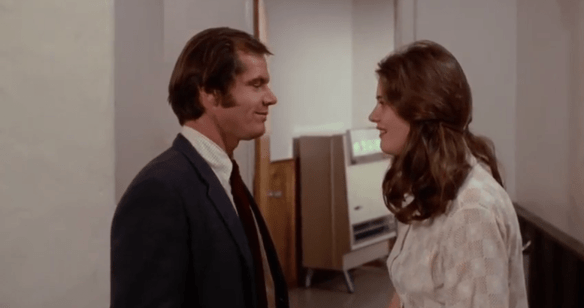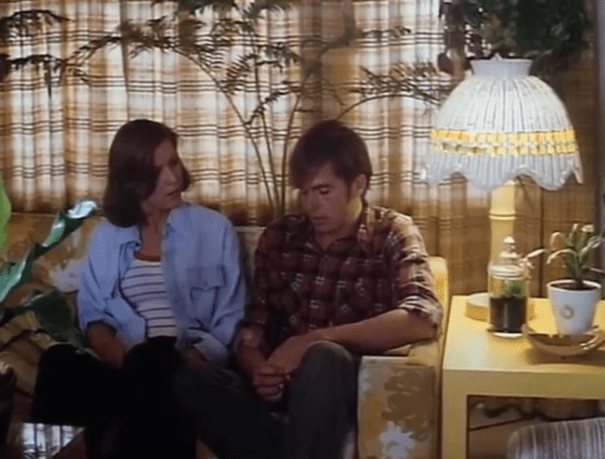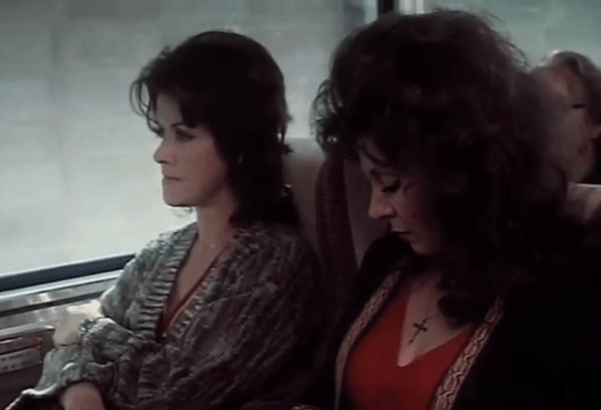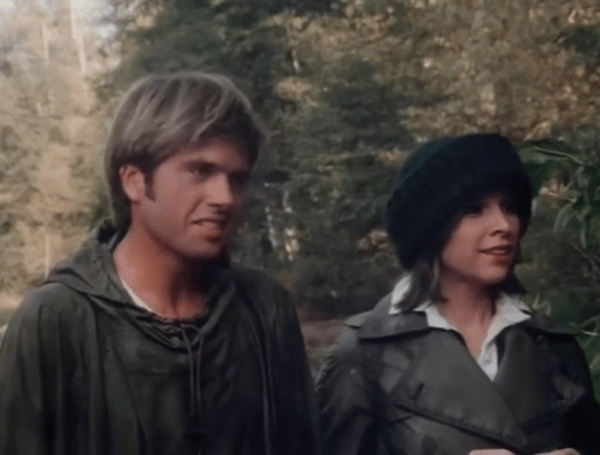
The Hired Hand (1971)

It’s true that Peter Fonda comes out of a western tradition of sorts, which is merely an indication of his family’s presence in the film industry. Obviously, one of his father’s identifying genres was the western, and he worked with some of the greats from John Ford to Sergio Leone.

Films like My Darling Clementine have become the bar with which to evaluate future generations. Then, Peter’s older sister, Jane, of course, tried her hand with the wildly popular Cat Ballou. It’s not high art, but there’s a great deal to appreciate between her gallivanting around and the drunken histrionics of Lee Marvin.

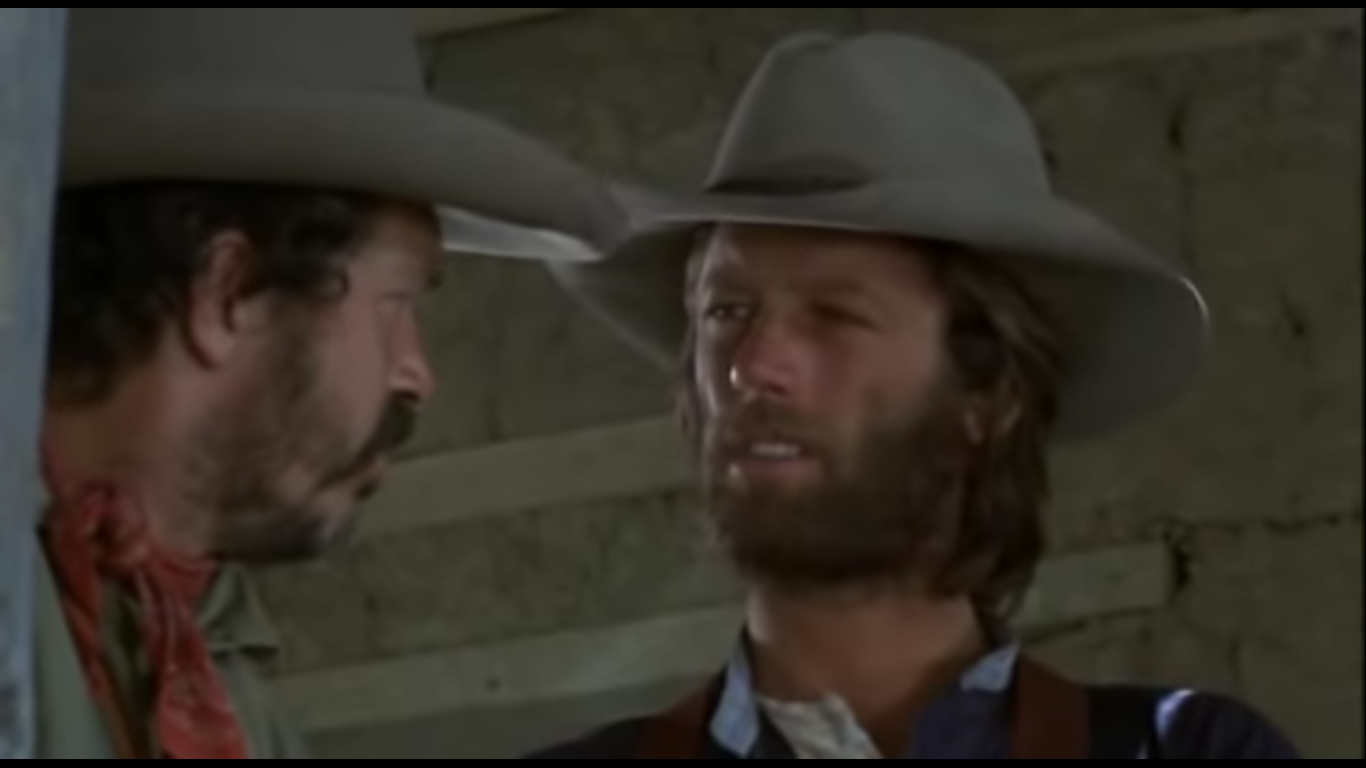
However, with The Hired Hand, Peter starred and directed a western of a very different breed. There’s a hallucinatory quality to the movie suggesting it’s not too far removed from Monte Hellman’s acid westerns of a few years prior. It’s composed mostly of images swimming in the restless score of Bruce Langhorne.

We already have Warren Oates and Peter Fonda, and it’s obvious the genre is funneled through the vision of the counter-culture that brought us pictures like Easy Rider and even Two-Lane Blacktop. In some of his earliest feature film work, Vilmos Zsigmond provides a casual, unsentimental sense of the landscape fitting the overall canvass developed by both the editing and score.

In their passing dreams, floating just out of reach, the California coast acts as a kind of far-off oasis for the three drifters staked out by a river bed. I couldn’t help thinking of generations before. Peter’s father as Tom Joad headed to California and faced his own brand of disillusionment with the dream packaged for him. Expectations didn’t meet reality.

Peter Fonda is besieged by the discontentment and malaise of his generation, but if we recall The Grapes of Wrath maybe this youthful sense of Sehnsucht, while morphing and evolving, is not totally lost or forgotten. It’s only reimagined in new forms and under new banners.

After days without bathing and nights without a warm bed, they roll into a town. But it’s not much better than the backcountry they’ve been frequenting. At any rate, it’s hardly the picture of civilization.

The film remains mostly a sullen affair plagued by death, but not just physical death, the death of joy or adulation in any sort of quality life. It starts grappling with the life of a drifter — the camaraderie of saddle buddies — and the solace of a settled home life. Because Harry Coilings didn’t always live this peripatetic existence. Once he was married. Funny how he never mentioned it before to his companions, but then again, the overwhelming emptiness in his heart has made him crave something different. So he and Arch pay a visit to his former missus.

Warren Oates has gained some welcomed acclaim since his death as a kind of cult favorite, but in The Hired Hand there’s something especially welcomed about him. He’s congenial and faithful, a source of affability in a movie that is mostly lacking in any kind of generosity toward its audience. Fonda gives us nothing. Verna Bloom has nothing to give because her character has learned to insulate herself. And there’s really no one else to offer any kind of condolence.

The film’s barely a meditation on marriage. There’s hardly time to build this into something substantive nor entirely profound, but we do have a sense of this male camaraderie. And suddenly it gives the movie a central question. Fonda must reconcile this relationship, one that has stayed with him for years on the lonely roads, with that of a distant wife who never expected him to show his face again. Whether he totally acknowledges them, they are both of great importance to him.

At first, I mistook the finale — a giant bloody shootout — for a pointless exercise. What good does it do? Very little aside from bludgeoning us with a bleak view of the world. However, it does speak to a man’s vow of friendship. While other elements of this western are irrevocably different from the past, there’s some small amount of stability in such a simple trait as this. Is this stupid courage like the screenwriter Bill Goldman enthused about? Probably.

It’s also a glimmer of something laudable speaking to the exact same listless despondency an entire generation was looking to grapple with from Easy Rider to Five Easy Pieces. This alone doesn’t make it a superior western, simply by having a muddied, unadorned sense of the world. But Peter follows in the footsteps of his dad and sister to leave his own impression on a deeply American genre.

3/5 Stars

Cesar et Rosalie (1972)

It occurs to me that the title Cesar et Rosalie is a rather peculiar choice for this movie. However, it’s also very pointed. If Jules et Jim was about two friends caught in a ceaselessly complicated love affair with one woman (Jeanne Moreau), then here is a story shifting the focus just slightly. This time it is Romy Schneider caught between two suitors.

It opens with two men who both were coupled with the unseen woman named Rosalie. Formerly she was with a handsome comic book artist, but before they could ever get around to marriage (what would have been her second), she ended up with a middle-aged scrap metal man (Yves Montand). He’s quite successful in his trade while maintaining a penchant for gambling.

Whether it’s solely because they are represented by creative types, it feels like there’s a kind of vacuity about the younger generation. Yves Montand, now there is a man with something interesting about him. After doing some digging, I found out he was actually Italian by birth though thanks to his music and acting, he became synonymous with French cinema. Films like Wages of Fear and Le Cercle Rouge work in a pinch. He’s one of France’s indelible faces, and here he is another character with a lumbering larger-than-life posture.

Both a bit of an overgrown baby and a gregarious teddy bear. He can be found smoking his cigars and establishing himself as the life of the party. He loves to vocalize, and in contrast to his rivals, there’s something refreshing about his blustering style. You know what you’re getting.

In comparison, I’m less inclined to be infatuated with any semblance of the bourgeoise milieu as embodied by David (Sami Frey). This might be a poor descriptor because he’s only a comic book artist, albeit a very successful one. But there’s a detached, casual air about him that feels far more refined. It lacks all of the volatile personality exhibited by Cesar. If I speak for myself, Cesar seems like one of the common men.

However, right about now it’s worthwhile to acknowledge a handful of his shortcomings. He’s quite petty and jealous for the affection of Rosalie. In one instance, his childish antics and brazen show of bravado leave them idling in the underbrush at the side of the road. In the aftermath of a convivial wedding party, a game of chicken ensues between him and David becoming a portent for future drama.

Although he and Rosalie have been together for some time, and they have a contentment between them, there is still this lingering sense of individuality. Rosalie is a mother. She has been married before and maintains her own independence. She remains with Cesar mostly because she wants to be, at least for now. That could easily change, and, eventually, it does. Her whims make her alight once more for David because his quiet charms have not atrophied with time. She feels the electricity between them still.

At the midpoint, the picture hits the skids. Cesar’s ugly underbelly comes alive as his transgressions and jealousy take over. He acts as if he owns Rosalie and in one harrowing scene practically throws her out the front door. He’s a wounded brute prone to violence. There’s no way to condone his behavior even as it reflects the toxic social mores of the era (or many eras).

But of course, he can never forget her. He feels lost without her and so he resolves to find her with David. He tracks them out to their beach getaway but instead of coming to have it out once and for all, Cesar returns sheepishly with his tails between his legs. He’s paid for the damages he inflicted, and Rosalie looks over his sorry figure and can hardly contain her amusement.

It’s moments such as these where it becomes apparent how the movie is mostly able to coast on the goodwill of its stars and their various romantic dalliances. Initially, it feels like Romy Schneider spends a great deal of time in the kitchen grabbing drinks and making coffee for her man. However, she’s also a keen observer of male anthropology.

Like Moreau before her, she really does play the deciding part in this film. As much as it seems framed by the male perspective, though our title subjects have shifted slightly, Rosalie does hold a great deal of sway in the story. It does feel like these men need her more than she needs them or, at the very least, she is not willing to settle into this kind of relaxed equilibrium where they exist in a menage a trois without the intimacy.

Is it wrong to consider this the most French of romantic setups? It becomes plainly apparent that this is never just a film about Cesar and Rosalie. There must be parentheses or ampersand including David tacked on the end (or any other love interest for that matter). The film is far more crowded and complicated than a mere romance actuated by two solitary human beings with Sautet crowding the canvas and relational networks of the film with so many ancillary swatches of life.

Although it feels like it’s not about very much, Sautet is able to hone in on this core relationship and tease out both the comedic eccentricities found therein while still leaving us with this kind of wistful resolution. It’s not a tragedy in the same way Truffaut managed when he detonated Jules et Jim, but it leaves us with that sense of regret that love often conjures up in the human heart.

All these characters could have done things differently to patch things up, to stay together, and earn the Hollywoodesque ending. However, what leaves an impression is this kind of pensive anticlimax. It’s a lighter touch than The Things of Life or Max and The Junkman, even as it might owe something to Lubitsch.

3.5/5 Stars

Les Choses de la Vie (1970)

I’m not sure if director Claude Sautet was just never esteemed enough by the cineastes of his day to receive his due, but the string of pictures he made with the likes of Michel Piccoli and Romy Schneider feel worthy of further, more stringent consideration.

What becomes evident is this kind of prevailing melancholy about his films with fated lovers or destined tragedies all but ready to be searched out. Les Choses de la Vie opens with a scenario that would be quick to tap into the minds of any filmgoer wary of the Nouvelle Vague’s most prominent iconoclast. By that, I mean the living legend, Jean-Luc Godard.

Here a rolling tire sets the stage for a Weekend-like pileup. This one was caused by a collision: a man blazing down the country road doing everything in his power to miss a stalling truck. While this event might provide what feels like an excuse for a dramatic movie, the core of The Things of Life is far more intimate. Some might say it’s stereotypically French: a movie concerned with amour. So be it.

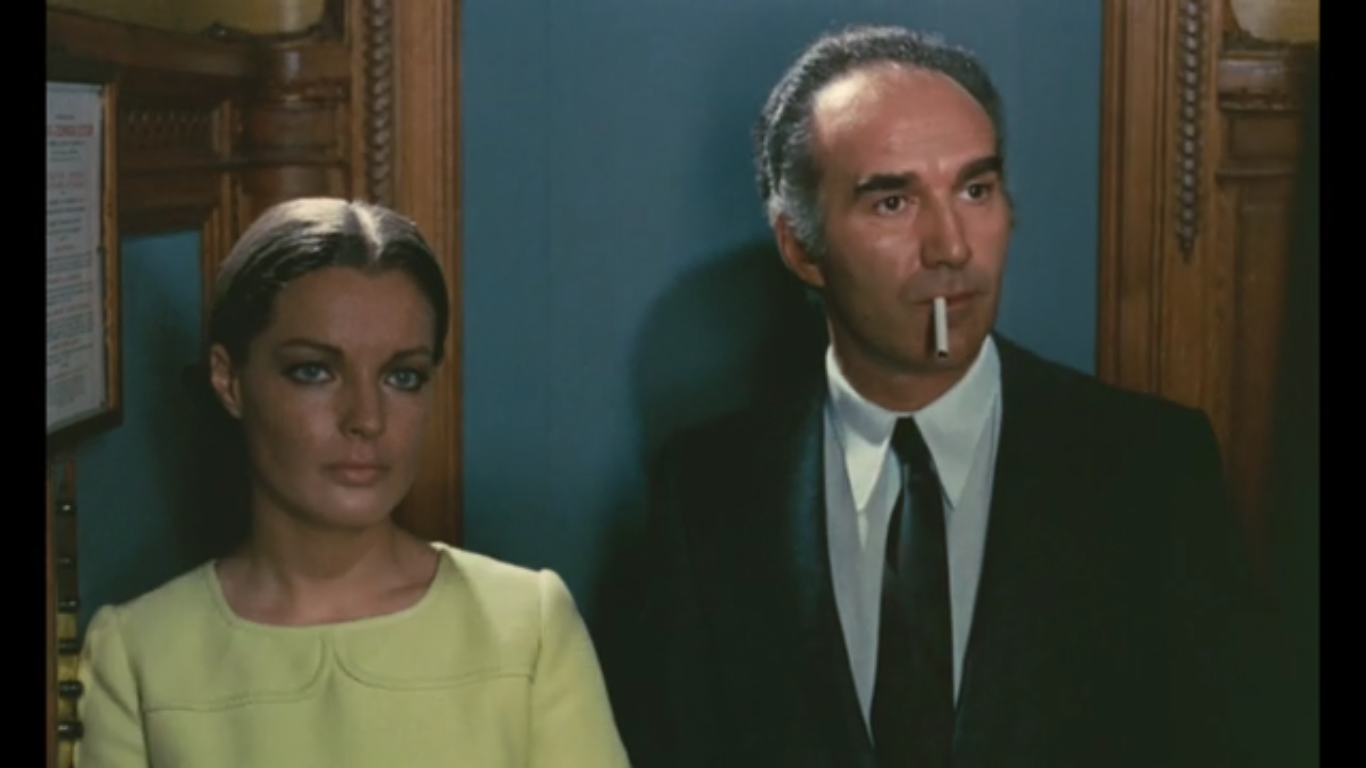
We get a sense of Pierre’s life, past and present, without everything being conveniently spelled out for us. It’s made plain by how people look at one another — how they fill up the space with a shared familiarity. He is now with Helene Haltig (Romy Schneider). You can see the affection with which he gazes at her as she taps away at her typewriter after getting out of bed.

All the allure of Schneider is right there on her face, tucked behind her glasses, as if an instant reminder of why she’s remained such a lasting icon in cinema the world over. A premature end often has a way of canonizing people for posterity, but we cannot sell her short. This has little relevance here. Her vibrancy is undeniable on its own merit.

Pierre loves Helene even as he maintains an amicable, if aloof, relationship with Catherine, his former wife. Over a lifetime, they have shared and shared alike in business, with their kids, and through a vacation getaway on Re Island. There’s still a sense that they are fond of one another. Perhaps time has moved on or maybe they regret their choices. For now, it is what it is.

If Pierre is the protagonist, one would be remiss not to mention the palpable distances between father and sons, be it real or imagined. He grapples with his own father, a spirited fellow who hardly seems like the paternal type, and then there’s his own boy who’s growing up fast into a man with his own ambitions. As much as he wants to rekindle their relationship, it does feel like he hardly knows him now.

It’s this very same inkling, a longing for connection that causes him to agree to a trip to the family isle. Of course, it conflicts with his business arrangements in Tunis and the future plans he already worked out with Helene. Their romantic dinner together becomes deflated having lost all the life that was there before. The wine is spilled.

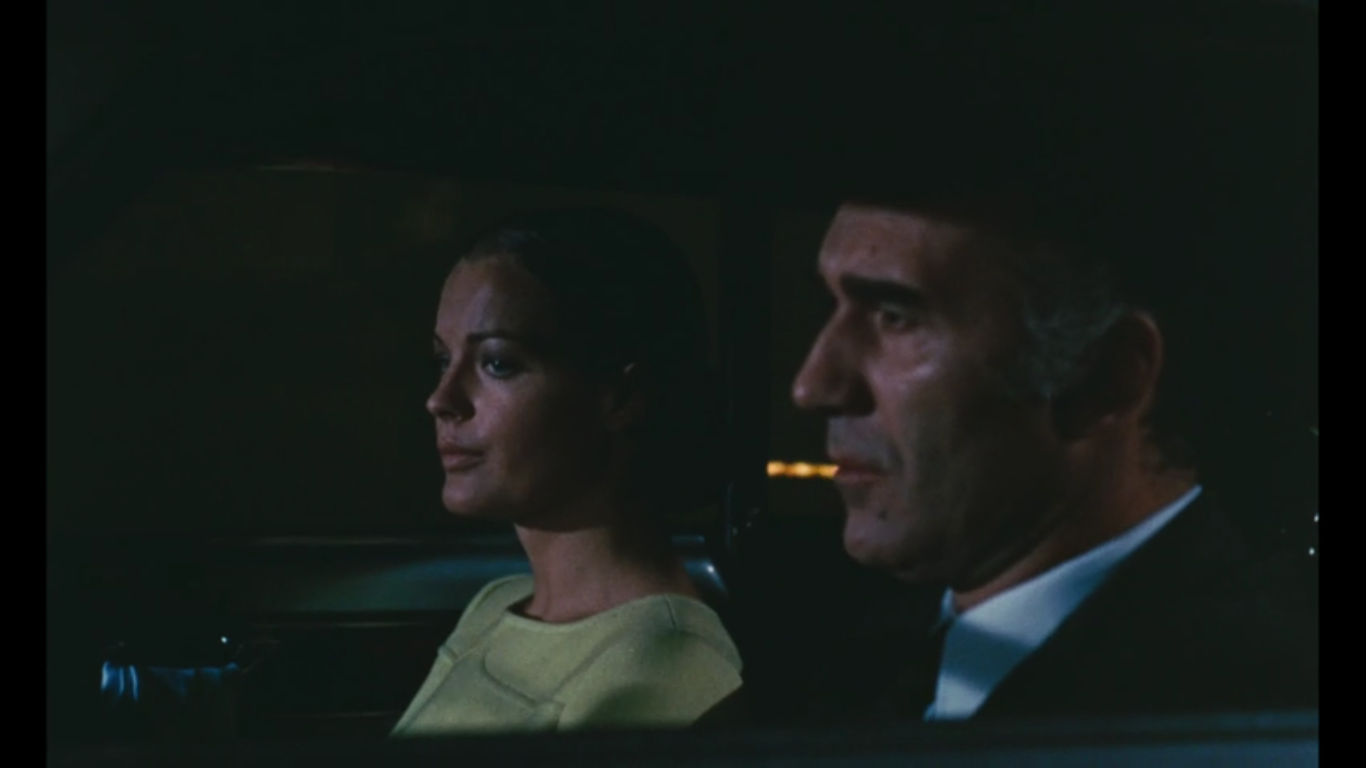
What’s next can only be a wordless car ride. He rolls down the window to toss out his latest cigarette and to keep from suffocating in the silence. Then, he clicks on the radio to fill the void between them. That too gets thwarted. They look to be doomed.

If it’s not evident already, time is allowed a level of fluidity rather reminiscent of Stanley Donen’s Two For The Road even as we motor toward the inevitable — a car wreck and what feels like romantic dissolution. Like its predecessor, the musical accents accentuate the mood. This time it’s not Henry Mancini but Philippe Sarde’s languishing score that is always available, softly plinking away in the background

In fact, it has its own wedding scene — Piccoli observes the giddy guests as they scramble toward a white banquet table set for a feast. He’s a man who’s been all but consigned to his car, smoking cigarettes, and this one exuberant display, far from earning his contempt, provides a seedling of hope…

Then it happens. I need not systematically go through all the gory details. However, in the end, there Pierre is lying on the ground thrown from his decimated automobile at the side of the road in the grass somewhere. It’s an almost out-of-body experience as the world swirls by him, and he exists in his thoughts and his memories.

The motion of the world around him carries on, whether it’s onlookers coming to see the wreckage or the body, then an ambulance comes to rush him to the hospital as the rain starts pouring down. Catherine gets the news and Helene comes rushing to his side too…

The Things of Life is constructed in such an inevitable way, but somehow it’s still entrancing, this sense of moroseness and the elasticity of time in the service of one man’s romantic memories. It’s built around melodrama, yes, but with a very specific bent, totally mechanized, and stylized in such a way as to supply the desired effect. And rather than the Sirkian school of high camp, it seems to hewn closer to the path of John Stahl.

In other words, Sautet, in some ways sucks much of the typical theatrics out of the storyline, or at least they do not seem to be his primary concern. What we are left with is this pervasive sense of lasting melancholy, and it’s a powerful emotive force that would hold over to his next picture together with the same primary players: Max and The Junkmen.

4/5 Stars

Family Plot (1976): Hitch’s Swan Song

Screenshot 2020-07-26 at 3.48.36 PM

You rarely hear mention of Alfred Hitchcock’s last cinematic foray, Family Plot, and you would assume that means a throwaway title — a fall from his illustrious heights. Not so! In fact, it’s rather a shame more folks haven’t turned the movie on because it proves the Master still has it. There’s still a twinkle in his directorial eye as he leads us on one final merry jaunt of murder, crime, and passion.

I was always under the illusion family plot was about some kind of conspiracy. The first inkling is from a cemetery plot even as it evolves into a broader conspiracy unraveling in front of us. It never registered as a pun until the story began to run its course. Allow me to explain.

Our story opens with a quack psychic (Barabara Harris) drumming up business with rich old spinsters ready to fork out money to get their fortunes told. She’s running the ongoing con with her boyfriend George Lumley (Bruce Dern). They’re purely small-time operators.

Soon he is on the beat poking around about a man named Shoebridge. What he’s doing at first isn’t exactly clear — he’s a taxi cabbie by day — however, soon we realize he’s digging up tidbits for future seance fodder.

Their latest coup involves a wealthy widow, if only they can locate her long-lost nephew who was given up for adoption years before. She looks to bequeath him some of her vast fortunes on behalf of her guilt-ridden dear departed sister. They too have a stake in finding him: $10,000 to be exact, which is a fortune to them.

Meanwhile, the headlines are taken with a crime of a different sort: The Constantine Ransom for a priceless gem. It really is the perfect crime. The police are befuddled and there hasn’t been a single false step. Their hands are tied as a mysterious lady in black — a twist on the Hitchcock blonde — shows up to make the trade. She leaves with her gem and orders a helicopter to aid in her getaway, all planned so she can drift back into anonymity.

It turns out she also has an accomplice: her lover, who works as a local jeweler (William Devane). By sheer coincidence, he is the very same man Dern is hunting for. Instantly we have the glorious joke at the center of the drama.

Because these circumstances have nothing to do with his dubious extracurricular activities and still, this uncanny connection becomes a lovely fulcrum for the movie to balance on with comic underpinnings. In one defining moment, the stolen diamond is kept in a very visible hiding spot established by a telling Hitchcock closeup. He looks to be having a gleeful good time of it.

Ernest Lehman’s script (remember he collaborated with Hitch on North by Northwest) is more liberal with the profanities, but it readily amuses itself with the quandary at its core exploring the relationships of these two couples and how these separate scenarios are tied together. In some strange way, it’s all things police procedural, murder mystery, and a bit like a vintage drawing-room comedy. They’re both after two very different pots!

The ransomers’ latest plans involve the brazen kidnapping of a local bishop taking full advantage of the congregation’s shock. Diagnosing the situation later, as they tear off their disguises and zoom away he notes smugly, “they’re all too religiously polite.”

Lumley’s travails take him to a religious setting of his own, in his case, the funeral of a balding gas station attendant named Maloney (Ed Lautner). There’s no need to get into his death although it involved some winding roads and a car chase of sorts…

In the most captivating shot, Hitchcock captures the overgrown cemetery from a birdseye perspective. Maloney’s reticent wife (Katherine Helmond) scurries away and Dern scampers along until he corners her. It’s the same old story. She wants to be left alone, and he just wants information.

The search for A.A. Adamson leads to all sorts of people and visual gags placed in front of us with a wry wink. But this is hardly the grandest joke as Hitchcock allows us to watch the stories converge as we are caught right in the middle. Again, it’s wonderful bits of coincidence getting in the way or more precisely bringing the story to an impeccable climax.

I’ve been mulling over the assertion that the great directors have a distinct point of view. With Hitch, he used the shot-reverse-shot paradigm certainly, but there was always a cadence to it. If he needed to break out of the rhythm he would.

My mind flashes to a scene with Dern as he’s hiding on the stairwell. The couple has returned from their latest crime totally unaware of their guest. Their feet wander around the kitchen as they talk. We’re paying partial attention to that but like Dern, Hitch makes us crane our necks and feel uncomfortable as the audience. In that individual moment, we don’t have the whole picture, and we are forced to be in his shoes for even an instant. There’s definitely a profound level of audience identification and inherent tension. This is all Hitchcock’s doing.

The ending is more than satisfactory, but Barbara Harris’s wink to the camera is like a final curtain call for Hitch. This last gesture sums up his career for me. It was built on suspense and an intuitive understanding of visual cinema and audience manipulation. However, his very own persona and the connection he created with the masses wouldn’t be anything without his sense of humor.

Due to his deteriorating health, he would never complete another film, dying 4 years later in 1980. He was planning on a film called The Short Night, a project that obviously was never realized. With his death, the film world lost one of its most consummate craftsmen and storytellers.

In a Hitchcock movie, you feel well taken care of because the director knows what he’s doing, oftentimes even when we don’t. He scares us when we want to be scared. Thrills us. Gives us romance. And even deigns to allow us to be in on the joke.

Under the circumstances, I can’t think of a more appreciative place to leave the Master. His powers haven’t atrophied. On the contrary, he still knows how to play the game and how to have fun doing it. This might be the most pleasant surprise of Family Plot. Alfred Hitchcock never lost his wonderfully grim sense of humor.

3.5/5 Stars

Frenzy (1972): Cleaning Up The Streets

Screenshot 2020-07-28 at 5.28.11 PM

There we are gliding across the River Thames making our way toward the regal facade of Tower Bridge. Where’s one apt to find a more picturesque view of London? It’s definitely an auspicious return to his native land for the Master of Suspense.

Frenzy is without question a singular Hitchcock movie taking him back to his roots in the ’20s and ’30s — not just the days of Stage Fright (1950) or The Man Who Knew Too Much (1956) — something like The Lodger (1927) or Sabotage (1936) springs to mind.

Of course, it’s a different England. It’s gotten bitten by the bug. Certainly one of them was Swinging London and The Beatles, but even as the old world, the small-town world continues to pass away, there’s a sense this same progression is being documented in Frenzy.

The characters knock around town at all the pubs, street corner grocers, and everywhere else in Convent Gardens — what’s left is a remnant of Hitchcock’s boyhood world. The director’s father was a grocer, and thus, it’s a return to his roots in the most Hitchcockian way possible: replete with murder.

A charismatic civil servant stands atop his soapbox with a rapt audience rallying the people they’ll soon clear the rivers and canals of society’s refuse — pollution will be banished — and right on cue, there’s an interruption from the masses. He gets preempted when an onlooker realizes something bobbing in the river: A woman’s body with a tie twisted around her neck.

Irony notwithstanding, it causes a surge through the crowds as gossip about the rash of necktie murders throughout town. In this way, the traditions of Jack the Ripper have been modernized and remain alive and well in contemporary London.

It’s not only these onlookers but acquaintances in pubs and any other random passerby who all have a callous, morbid curiosity about them — their conversations are overwhelmingly about the killer — and they come off darkly cynical.

The men from New Scotland Yard for their part are on the lookout for a sexual psychopath and a social misfit who might be easily categorized. Because what better way than to put criminals in a box to understand them?

Right about now we must introduce our protagonist, who also becomes the obvious target of all this foreshadowing. We are led to believe Richard Blaney (Jon Finch) an acerbic ex-RAF man who is the obvious culprit, although, for the time being, he’s unsuspected.

Still, after his ex-wife, who runs a new-fangled matrimonial agency is brutally murdered, unbeknownst to him, the forces of the plot are already out of his control. It’s as if the film is cruelly conspiring to ensnare him like all the most crippling of Hitchcock’s man-on-the-run thrillers.

The police are looking for a fugitive with a tweed jacket with patches on the shoulders and elbows. It’s true all pieces of circumstantial evidence, motive, and eyewitness accounts point to Blaney. At every turn, he looks to be guilty and he does very little to help his case. A hotel bellman tips off the law, and then the testy bar owner (Bernard Cribbins) he used to work under accuses him further.

He does have several allies in the generally morose landscape. One is the local barmaid Babs (Barbara Massey), who stands by him in his innocence. Another is Johnny Porter, a buddy who gives Richard asylum, despite the chastisement of his suspicious wife.

Although Johnny feels like a far too convenient character — he implicates himself in a potential crime quite readily — but let’s not allow this to detract from the story. Dick does have one other friend: a local grocery worker named Bob Rusk (Barry Foster), who gives him free handouts and tips at the races, among other things.

Frenzy is the most visually grisly and unnerving Hitchcock picture with a kind of in-your-face depiction of the murders. In this regard, it seems uncharacteristic of the man who often seemed the king of simulated gore and suggested horror.

The Shower Scene in Psycho is the unadulterated pinnacle of this. Where the intensity comes in the layering and total manipulation of all the formalistic elements. Frenzy is on the complete opposite end of the spectrum showing everything far more explicitly. It almost seems to lack the elegance of a Hitchcock picture — Blaney and Bob are earthier types than we’re used to.

Still, in one of Frenzy’s most telling shots, Hitch literally pulls the camera down the stairs out into the street just as we recognize that the dastardly deed is being done. It’s a second murder, and he makes us painfully aware of it without ever putting us inside the room. The same cannot be said in the other instances.

However, what truly sets the picture apart is how Hitchcock scrapes the dividing line between psychotic killer and despicable human being so close that nobody wins. Because Dick’s yet another man on the run framed by fate. The only difference is he’s a wholesale cad. Whether he’s innocent or not is immaterial here. He might be The Wrong Man, but he’s no Henry Fonda and he’s certainly not Cary Grant.

The movie wraps up briskly and abruptly. There’s hardly time to catch our breath though Hitch does put us out of our misery. Our “hero” is exonerated, and the police apprehend the criminal, all in a matter of seconds. All this might be true, but it doesn’t make the world any more livable. There’s still refuse in the waterways and rubbish in the streets. Not only is the nostalgic world Hitchcock knew disappearing — this is sad in itself — it does feel like the world itself is a tawdry, cynical place.

To be fair, this might not be the director’s perspective — he holds a far more perverse sense of humor than mine — but when I look at this world it’s far from comforting. I’m a bit of an anglophile so there’s an appreciation in seeing familiar faces like Clive Swift (Keeping up Appearances) or Bernard Cribbins (Doctor Who), but maybe I’ve been watching the wrong things.

Then again, Hitchcock always did suggest the dark desires and inclinations of society conveyed through this lens of macabre amusement. Now his depictions are simply sharper and more direct.

In other words, the legacies of Jack the Ripper or Jekyll & Hyde aren’t dead. Over time, we just got better at trying to dissect them, and we’ve become increasingly more numb to their depravity. Could it be presumed innocence no longer matters? We’re all on the run. We all go a little mad sometimes. We’re all guilty of something.

3.5/5 Stars

The Passenger (1975): From Dust to Dust

Screenshot 2020-07-24 at 10.07.49 PM

Jack Nicholson was awarded the distribution rights of The Passenger soon after the movie came out, and he purportedly kept it out of circulation until the 2000s. From my understanding, it wasn’t for the typical reasons. He wasn’t trying to kill it so no one would catch wind of what a debacle it was. On the contrary, in some way, he was looking to preserve its artistic integrity and keep it pristine. What better way to do this by only allowing it to exist in your memories.

These circumstances allow for an intriguing dialogue on art vs. commerce and what this means in the Hollywood landscape. Take, for instance, One Flew Over the Cuckoo’s Nest, released in the same year — wildly popular, an Oscar cash cow, and still well-regarded to this day.

I don’t want to make any unfair insinuations about Milos Forman’s film — it can still be art — but by sheer box office appeal, it readily fits the category of commerce. It was a highly successful film in many regards and no doubt a lot of people have seen it and enjoyed it immensely.

Whereas The Passenger is a film, also released in 1975, that probably only cinephiles have a passing interest in because it hardly has any visibility. Even as I dipped my toes into the filmography of Michelangelo Antonioni, I was made aware of all his other works from L’Avventura to Blow-up before I ever had an inkling of this movie.

But it does exist and it’s such a fascinating, understated counterpoint to the rest of Jack Nicholson’s career. You get a sense of why it would remain so near and dear to his heart even as it becomes difficult to categorize. For one thing, he plays journalist David Locke at his most sincere — normally he feels a bit disingenuous, here every action rings with a core resonance.

This in itself might be a strange remark. We meet Locke in Africa. He is following a fast-evolving story about the local liberation front. He’s conducted many interviews and promoted the revolutionaries, but there is this sense he still doesn’t know what he’s in the middle of. In earlier decades he would have been the imperialist trying to make sense of the natives. A generation after that he would have been Jake in Chinatown.

But the most curious development is this: Locke finds another foreigner dead in the adjoining hotel room. They shared a conversation earlier. Now, he looks to take on the man’s identity. It remains to be seen why he does it. Locke’s not a criminal or a spy; he’s a journalist, and yet there’s a premonition that seeing this other fellow’s life — a globetrotter, as it were — proves highly attractive. He’s not weighed down by the same regimen and responsibilities.

If you’re unfamiliar with Antonioni, the premise might sound like a precursor to Bourne or maybe an Alan Pakula paranoia thriller. However, it has none of those hallmarks. It’s never preoccupied with the narrative beats. They only seem to be there — to exist as a conduit with which to explore something else.

The movie shifts to Germany but location is far too convenient a reference point. The movie freely shifts wherever it pleases, within time frames, as a kind of exercise in fluid, stream-of-consciousness storytelling. Where the present and the past can literally crossover and play out into one another within a single scene. Prior conversations echo in Locke’s ears even as he begins globetrotting around the world.

Over time they play more like moments and memories than traditional scenes adding up to what we would consider a conventional plot. He meets with some revolutionaries and realizes he’s a gunrunner. His wife and her lover learn of his death, go digging through his interviews, and go looking for this missing person. However, it all spins together another totally elusive tale as envisioned by Antonioni. This is his whole modus operandi as a filmmaker.

Locke (or Robertson) thinks he’s being followed and he is, but there’s never a true sense of fear or dread. In fact, we don’t quite know what to feel. It could be called a mood piece or a tone poem although I’m not sure those are quite right.

These moments are plucked out of time. There’s a chance encounter in Barcelona. He casually explains to a young French student (Maria Schneider) he’s running away. She wishes him well — hopes he makes it — noting people disappear every day. Sometimes it’s just around the corner, sometimes it’s with the cut of a film, and sometimes it’s for good. In perfect cadence with Nicholson’s amiability, Maria Schneider has a pleasant forthrightness about her; she’s another creature drifting on by, made solely to exist in this world.

Screenshot 2020-07-24 at 9.35.54 PM

It’s very rare to pull Antonioni away from the architectural landscapes he finds at his disposal because this is where he derives geometry, shapes, and with it an overarching composition for his works. Barcelona is a perfect marriage because one of its supreme talents was the incomparable Antoni Gaudi. Even a couple years of remedial art history tell us his buildings were of an unmistakable, singular design. The most startling progression is from dour Gothic interiors to these near-fantastical exteriors. Like Picasso and others like him, somehow in these shapes, or lack thereof, they derive meaning. Because how else are we going to ascribe it to our world?

It’s fitting that a movie that’s plot was incited in a hotel room should end in one as well. There’s a near-imperceptible zoom during the film’s famed denouement — peering out into the world. Up until this point, the story seldom feels chaotic as if our hero is resigned to his fate, and he has a kind of solace in it.

Luciano Tovoli’s camera magically pushes through the bars of the window to view the sandy plaza outside. It’s these tracking shots across the horizontal plane of existence I won’t soon forget opening up the world to be fuller and more immersive. In one full cycle of the camera, it’s like we see the plot and a life’s journey come to its conclusion all in one fell swoop.

Like others, I spent time deliberating over the meaning of the title. In Italy, it was known as Professione: Reporter. In English, it was changed to The Passenger. There might be numerous logical readings for both, but for me, I couldn’t get the picture of those two dead bodies lying on beds. You have to see them to know what I mean. They feel empty when they are found. Only a shell of a human being because it’s true the spirit or the life force of the person or whatever you to call it, is gone.

We are a culture rich in euphemism or closer yet metaphors. In the biblical text, Jesus gave up his spirit. Others have fallen asleep. Hamlet talks about shuffling off this mortal coil. And others have passed on. For me, this is what the title resonates with. This idea of how we are only on this earth a finite time. We are not solely defined by our body and our vocation and all these other intangibles.

It’s the spirit inside — the beating heart, the breath in our lungs, our souls — these are what make us alive as human beings. So quickly do we arrive and in another moment we are gone. In The Passenger, death is not violent. It’s only a voyage finally coming to an end.

What makes it disconcerting is the lingering alienation and dissatisfaction propagated by the world. It feels like a sullen place to be. Death as such seems like a tranquil respite. Each must decide for themselves if this holds true for them. Because surely we are not meant to live life without hope, existing in a constant state of listlessness. There has to be more.

4/5 Stars

Five Easy Pieces (1970): Ours Hearts Are Restless

Screenshot 2020-07-22 at 5.27.29 PM

The world of blue-collar workers is immediately spelled out through a visual shorthand of hard hats, bulldozers, and oil rigs. At the center of Carole Eastman’s story is Bobby (Jack Nicholson) a young man who works alongside his buddy Elton and lives with his sometime girlfriend Rayette (Karen Black).

She’s pretty and nice enough, but there’s a sense Bobby feels like she’s somehow beneath him. Sure, she’s not the smartest girl — working as a local waitress — but she means well and seeks love like any normal human being. Still, it’s the kind of lifestyle perfectly summarized by the sounds of Tammy Wynette singing about heartbreak, songs like D-I-V-O-R-C-E, and the like.

Upon closer observation, it would appear Jack Nicholson is entering his prime — his snide, derisive years — as a seminal antihero of New Hollywood. The only difference, here he’s found in the bowling alley playing a round with his friends. He comes off as a jerk berating his girlfriend for being such a crummy player. So she can’t bowl, but Bobby makes it personal, bringing her to tears. It’s indicative of the toxic cycles that they go through together. He belittles her, pushes her away, and then asks her to come back. He’s never willing to commit. Never able to say I love you. And yet he can’t be without her.

The first third of the movie is mostly about slotting his character. Soon we learn a little more about him. His sister (Lois Smith) is a classically trained pianist. In fact, it runs in their family. Bobby was a bit of a prodigy himself, though he turned his back on the family obsession. Now he learns his father is dying. He doesn’t want to see him — it’s easy enough to tell — because they weren’t exactly on pleasant terms, but the supplications of his sister have an effect and he acquiesces.

The arc of the story is simple and Bob Rafelson’s picture is built out of the framework of the performances more than anything else. I think this is what I missed the first time I watched Five Easy Pieces. I was waiting for something to happen when all the time it was happening right in front of me.

Bobby’s prepared to go it alone and at the very last minute reconciles with Rayette yet again so they head up together. They also pick up a pair of lady hitchhikers making their way up to Alaska because it’s a destination not full of crap like everywhere else. They bemoan a pessimistic world full of maggots and riots; Bobby doesn’t want to hear it because he’s a bit of a misanthrope himself. He takes no pleasure in the trip he is making and they’re not helping.

Again, the prevailing mood of the picture is this kind of rustic, blue-collar atmosphere exemplified by that Tammy Wynette soundtrack and the bowling alley milieu. It plays as the complete antithesis of classical music on the piano and the family’s cozy residence tucked away in idyllic Washington state. It’s the music and change in scenery acting as the main signifier of Bobby’s quaintly middle-class upbringing. Tammy might be great in her own right, but she’s not exactly Mozart or Beethoven.

When Bobby makes his fateful return, he finds his father now is catatonic and looked after by a burly caregiver. His brother Carl (Ralph Waite) is a loquacious eccentric who walks like a duck and wears a neck brace after a recent injury. Parita (Smith) is the most likable but still a creature of this insular and totally pretentious ecosystem. She doesn’t know any better.

It might say more about my own affinities rather than any fault of this film, but I never feel any amount of investment or emotional exchange going on. However, this is exactly the point. We understand the drudgery Bobby associates with his familial life and everything it entails. It’s better to be poor and free than to be trapped by expectations and crowded by pompous self-entitled armchair analysts trying to outdo one another.

Screenshot 2020-07-22 at 5.45.15 PM

Bobby at the same time is self-conscious of Rayette and protective of her because, in her own unadorned, simple manner, she’s a whole lot more real than any of these other imposters. At first, he puts her up in a hotel, and then she shows up unannounced willfully chafing against the propriety around her simply by being herself.

There is one person who does captivate Bobby. It’s his brother’s wife-to-be, another pianist named Catherine (Susan Anspach). The attraction between them is evident though he cannot figure out how she is so contented with the life he has run away from. In observing his condition, she notes he’s a person with no love for himself, no respect for himself, no love of friends, family, work. It strikes a little too close as he strives listlessly after some semblance of happiness.

I will say that Jack’s scene with his father, now crippled and silenced by a stroke, makes me appreciate his individual talents as a performer on their own merit. It’s not about any amount of trickery or charisma as much as we are privy to his acting process. We see him at work evoking a brokenness and a transparency of character I don’t often attribute to him.

Here he is before us laying it bear and crying out. It’s a release if not a total resolution. The film’s ending is another telling evolution in his ongoing saga of discontentment. We watch him as he ditches his car, his girl, his coat, and grabs a ride on a big rig up north. The destination is uncertain. Could it be Canada maybe Alaska? It doesn’t really matter.

What we do know is that he’s incorrigible, and yet it’s only a symptom of a broader problem. I’m can’t personally speak to whether this is true, but there is a sense Bobby is indicative of a broader social enigma. An entire generation of people lost and searching for something in the landscape of the 1970s — the dawn of a new decade — and still weighed down by the baggage of the past. This isn’t a new phenomenon and it’s universal. Because we realize over 50 years later there’s still something relatable by this unabating restlessness.

4/5 Stars

Sidney Poitier: For Love of Ivy, Lost Man, Brother John

In honor of the inimitable Sidney Poitier, I spent some time revisiting a bevy of his finest films and also some underrated ones that were new to me. Because he was a prominent archetype for a black movie star, when he was often the only one, it’s fascinating to see the roles he chose at different junctures in his career and how they evolved and played with his well-remembered screen image.

He will be dearly missed, but he left a sterling career behind well worth our consideration. Here are three films you may not have seen before:

For Love of Ivy (1968)

As best as I can describe it, For Love of Ivy, features Poitier and Abbey Lincoln in their version of a Doris Day and Rock Hudson rom-com. It starts out a bit cringy. Lincoln is the maid of the most hopelessly oblivious white family. Mom and Dad are completely blindsided when she says she wants to quit so she can actually have a life with prospects.

Instead of listening to her, the two teen kids ( a hippy Bea Bridges and bodacious Lauri Peters) scheme to set her up with an eligible black man. They know so few, but Tim Austin (Bridges) settles on Jack Parks, a trucking executive because he conveniently has some leverage to get Jack to give Ivy a night on the town. Some awkward matchmaking (and blackmail) ensues to bring our couple together.

Hence how Lincoln and Poitier become an item. But even this dynamic has some unprecedented delights. They eat Japanese food together and visit a club that positively scintillates with ’60s vibes as seen through Hollywood’s eyes. It’s the age-old ploy where the transactional relationship morphs into real love until the truth threatens to ruin the romance. Again, it’s not exactly new hat from Robert Alan Arthur.

Still, with a happy ending and equilibrium restored, Poitier, who helped develop the story, is trusting his audience can read between the lines of all the dorky craziness. For what it is, the movie plays as a great showcase for Poitier and Lincoln. Since there are so very few movies like this with black leads, it feels like a cultural curio. If the mood strikes you, some might even find a great deal more agreeable than Guess Who’s Coming to Dinner because it doesn’t take its own social importance too seriously. It’s mostly wacky fun.

3.5/5 Stars

The Lost Man (1969)

The Lost Man features an edgier more militant Poitier because there’s no doubt the world around him had changed since he first got to Hollywood in the ’50s. He’s cool, hidden behind his shades, and observing the very same world with tacit interest. It’s a world ruled by social unrest as his black brothers and sisters picket and protest the racial injustices around them only to be forcibly removed by the authorities.

Robert Alan Arthur’s film shows a brief focused snapshot of the social anxieties of the age. It becomes more convoluted when Jason and some other members of the organization rob a local bank. Their motives are in some ways philanthropic as they hope to use the funds to get some of their friends out of prison and support their families on the outside. But it’s also an overt act of insurrection in their battle against a broken system.

It also puts lives in jeopardy, culminating in a frantic murder as the police hunt for the perpetrators in the botched aftermath. Jason flinches in a crucial moment and must spend the rest of the movie as a fugitive nursing a bullet wound. These all feel like typical consequences in a crime picture circa 1969.

However, one of the most crucial and fascinating relationships in the movie is between Joanna Shimkus, who is a social worker, and Poitier. We don’t get too much context with them, but it’s an onscreen romance that would predate their marriage in real-life. Their rapport complicates the story because she is a white woman who is so invested in this community like few people are, and she effectively brings out a gentler more intimate side of him.

Although it’s not necessarily pushed on us, their interracial romance puts them both in jeopardy because it’s not the way the world normally operates. The ending somehow gave me brief flashbacks to Odd Man Out, but Poitier’s marriage with Shimkus would last well over 40 years! It’s the best denouement this movie could ever hope to have.

3/5 Stars

Brother John (1971)

Brother John feels like one of those characters who is a cinematic creation. He joins James Stewart’s Elwood P. Dowd and anyone else who was ever sprinkled with something special that enchants the world around them, whether they’re angelic or extra-terrestrial. But Brother John is a different version for a different generation, and he’s played by none other than Sidney Poitier.

He provides a quiet catharsis for a black audience as a cipher of a man that no one can get a read on. The film itself has a no-frills TV movie aesthetic that somehow still gels with its ambitions.

John comes back to town when he gets news of his sister’s death. The last time he came back was when there was another death in the family. The local doctor (Will Geer), who brought John into the world, is curious about where he comes from and where he goes, but no one takes the old man too seriously.

Still, the police manage to hound him because they’re suspicious of someone they cannot easily intimidate and put in a box. The doctor’s self-promoting son (Bradford Dillman) also needles him in his attempt to gain local prominence. The town’s leaders are looking to quell a factory from unionizing. All of this feels rather mundane in detail. John seems to have nothing to do with any of it.

They remain uncomfortable with him because he’s so inscrutable, well-traveled, knows a myriad of languages, and finds no need to divulge all the shades of his character. He’s contented this way, spending time with family and even calling on a pretty schoolteacher (Beverly Todd) who asks for his company. He won’t play by their preordained script.

There’s one painfully excruciating scene where some cops pay a house call on a black family. The man of the house is left so powerless as he’s subjugated and persecuted in his own home in front of his kids. John is at the table too. Quiet at first. Almost emotionless. Is he just going to sit there or spur himself into action?

In this uncanny moment, he goes down to the basement with one of the officers and proceeds to whoop the tyrant wordlessly with a bevy of skills the backwater lawmen could never dream of. It’s the kind of power exerted over malevolent authority that one could only imagine in your wildest dreams.

As such, Brother John fits in somewhere analogous to the Blaxploitation space but as only Poitier could do it. He wasn’t the same bombastic militant cool dude a generation craved for and received in Shaft or Superfly. He still has his measured exterior, and yet he equally makes quick work of any antagonists: racists, malcontents, white, black, or otherwise. It’s a bit of a boyish fantasy watching a hero vanquish all evildoers quite spectacularly. But, after all, this is what movies are for.

3/5 Stars

Citizens Band (1977): Radio Waves in Everywhere America

Screenshot 2020-05-16 at 93028 PM

“How can such a small mind have such a big antenna?” – Paul Le Mat is Spider

Citizens Band (also known as Handle With Care) is not about music. Instead, it documents the increasing craze during the 1970s for person-to-person radio communication. Initially utilized for emergency messages, the radio waves soon got gummed up by social calls, with every Tom, Dick, and Harry looking to get a piece of the action.

It’s illustrated in the early sequences when Spider (Paul Le Mat) picks up a message from “Chrome Angel,” (Charles Napier) who gets pinned under his 18 wheeler in a rainstorm. It’s partially due to his own negligence on the road (He got distracted by some saucy call signs). Regardless, Spider is quick to search out help for him only to get disrupted by local nuisances like the self-proclaimed “Hustler,” a bratty kid who likes to brag about his exploits. He has a blatant disregard for FCC regulations.

It turns out our trucker isn’t much of a victim. In fact, we find out his broken arm is the least of his troubles because he’s run into the same problems as Edmond O’Brien in The Bigamist: he’s been holding court with two women. Well, three. Recently he’s been getting friendly with a local lady of the night named “Hot Coffee” who uses the radio waves to drum up business.

Screenshot 2020-05-16 at 93821 PM

The only reason he gets found out is through a bizarre piece of comic happenstance. They meet on a bus. There’s the bodacious “Dallas Angel” (Ann Wedgeworth) and the more pragmatic “Portland Angel,” (Marcia Rodd), and after they get over crying about their misfortunes, they laugh, and conspire to make him pay. One bit of malevolence involves releasing his load of cattle out of his trailer hitch. There’s enough here for a raucous subplot.

Back at his home base, “Spider,” aka Blaine Lovejoy, holds down the fort as an emergency radio relay CB station with his buddy Cochise. Lovejoy lives with his father (Robert Blossoms) and struggles through his contentious relationship with his brother (Bruce McGill), the local P.E. teacher. It runs deeper. Both share a complicated relationship with the local crush Pam (Candy Clark).

Their Pops is a near-cataonic figure who is shocked back to life daily by the whizz of the radio waves and his call sign “Papa Thermodyne.” For a brief instant, he’s returned to his glory days trading words with some of his buddies. It pulls him out of his haze and the sorry existence he’s resigned himself to.

The inclusion of both Le Mat and Clark results in an unofficial American Graffiti reunion, though they hardly shared any scenes in the previous film. Even if it is set in a generation later, Citizens Band somehow maintains a similar affection for radios and automobiles. They often act as the conduits for youthful entertainment, love, and the various dalliances and diversions making life what it is each and every day.

A callow teen named “Warlock” chats up the seductive Electra over the car’s radio. Joe Cocker’s “You Are So Beautiful” briefly plays in another sequence. You also get the sense the radios allow people to live double lives, facilitating something more than what they’re usually allowed to be in the everyday.

Much of the movie’s sense of fun revolves around “Spider” laying down the letter of the law. He resorts to patrolling the neighborhood, honing in on signals before raiding the homes and putting the perpetrators out of comission indefinitely.

If it provides any indication, Citizen Band relies on a fairly lax and casual narrative with the breadth of the ensemble bringing to mind Robert Altman without the same comic barb. On its own, Jonathan Demme’s movie settles into an absurd rhythm somehow befitting backcountry, everywhere America.

“Spider” continues on his righteous crusade to rid the waves of needless vermin. His nemeses include a ragtag laundry list of whiny pipsqueaks, self-righteous bible thumpers, paranoid anti-communists, and old ladies droning on about dreary childhood stories.

Thanks to this untethered interest in all the various quirks of the community, which subsequently become some of the films most enthusiastic vignettes, it’s never quite able to pin down its more emotionally dramatic sequences.

Screenshot 2020-05-16 at 102916 PM

This involves the strained relationship between brothers or even Pam’s conflicted, on-and-off romance with Spider. Certainly, there’s more story here and there could have been greater motivation, to empathize and understand them on a personal level. This is generally absent or at least not fleshed out substantively.

But there is enough in the way of world-building, humor, and genuine characterizations by the lead performers to make it feel worthwhile, if not totally sketched out. And because the cast is protean in nature, it’s pleasant enough to follow their lead through the ebb and flow.

Finally, all the cast assembles for one sole purpose. They drive out to the outskirts of town, during another rainstorm, to perform a search and rescue mission to find a vanished Papa Thermodyne. Somehow it turns out an ending to fit the world we’ve come to experience thus far. Everyone gets their individual shoutout.

Citizens Band (or Handle with Care) is a slight film, but with the pieces it has in place and the extent of its subject matter, this is actually a worthy compliment. There’s a warmth and weirdness permeating its frames that, while engaging, also suggests the lingering specters of living in a small town. It’s both the joys and idiosyncrasies. The dark riffs of conflict, and the unifying humanity — all of us flying under the same colors.

Even at this early juncture in his career, Demme seems particularly well-attuned to this aspect of his ensemble. The best part is that he would continue down this same road with future efforts.

3.5/5 Stars

Jean-Paul Belmondo: Up To His Ears, Le Magnifique, The Professional

Because of his meteoric ascension in Breathless, patterning his insouciant hoodlum on the Hollywood image of Bogart, Jean-Paul Belmondo is easily identified with his predecessor. He was a tough guy — gladly so — and he offered up a long line of memorable performances over a stellar career.

Pierrot Le Fou (Godard) and Le Doulos (Melville) quickly spring to mind, but then you only have to look at something like Leon Morin, Priest, where he plays the eponymous clergyman, to recognize the range he was capable of.

In honor of his career, we wanted to highlight three of his later action films. They are not his most acclaimed pictures, but they are defined by his legacy so it seems fitting to acknowledge them.

Up To His Ears (1965)

Up to His Ears is cut out of the same cloth as Philippe de Broca’s prior film with Belmondo from the year before: That Man from Rio. It’s a globetrotting picture all across the orient with madcap chase sequences and quite a few attempts at Bond-like intrigue.

Overall, it bends more toward dated gags and goofy antics than out-and-out thrills, and it seems mostly content with this. When they flee an onslaught of Chinese gangsters, Belmondo and company sneak down into a pillbox, down to an underground tunnel, and on and on. There always seems to be a fortuitous out for them.

If their good fortune and the fact they aren’t completely annihilated seems farfetched, then you don’t understand the ambitions of the film. It’s all sendup. Belmondo seems to be enjoying himself, and his adventures lead to a desert island with Ursula Andress. He can’t believe his luck.

Obviously, the movie cannot quite muster the same glory as That Man from Rio, but Belmondo is still a great action hero able to play the crazy comedic moments and still move through space with vim and vigor. It ain’t Godard, and that’s not necessarily a bad thing.

3/5 Stars

Le Magnifique (1973)

Also known as Our Man in Acapulco, and its dashing hero, Bob Saint-Clar (Jean-Paul Belmondo) feels like an amalgamation of ’70s era Bond (Moore and Connery) with a lot of Get Smart thrown in for taste.

Philippe de Broca’s at the helm again offering up some of the most self-reflexive parodies of the hypermasculine, suave international spy genre. It pulls out all the comic book scenarios — with dastardly villains et al. — and the resolutions, seeing our hero always prevail. He must live to fight another day.

Broca himself readily contributed to this spy phenomenon during the ’60s with Belmondo to boot. However, it’s so over-the-top to the point of being offputting. Then, we realize our secret agent is being dreamed up by a hack writer, named Francois (also Belmondo) on a strict deadline!

Suddenly it breathes new life into the premise with a renewed perspective, and these long-trod pulp-bound conventions become only part of the gimmick and, hence, only part of its appeal. Not to be outdone, he’s taken the English sociology student (Jacqueline Bisset), who lives across the way and dreamt her into his story as the beautiful Tatiana. His supervillain is none other than his own pompous editor (Vittorio Caprioli).

We’ve followed his story umpteen times before. Although he writes pulp trash for a rapt audience of many, his active imagination all but compensates for a fairly nondescript private life. He’s got a bit of Walter Mitty in him. In the most fated of meet-cutes, Christine (Bisset) accidentally picks up one of his works and finds herself instantly inspired for her college thesis.

Soon she’s dropping by to blow through whole shelves of his novels. And then the idealized man dreamed up on the page, must take a stand in his own life. For what it is — plagued by many of the shortcomings of its genre and the era — I can’t help but appreciate Le Magnifique.

It mostly comes down to Belmondo’s dual role and his rapport with Bisset. Again, they’re having palpable fun taking it over the top, and like any great screen icon, Belmondo gets the girl — twice.

3.5/5 Stars

The Professional (1981)

It feels like your prototypical dated ’80s blockbuster replete with gratuitous violence, a rogue’s gallery of heavies with all the other corny ingredients mixed in together. Belmondo is an agent, undercover in an African country, prepared to assassinate their leader only to be drugged and sent to a labor camp.

He escapes and ultimately returns to France as a kind of rogue operative on the lam. His former superiors want to do away with him, but he’s always one step ahead. He’s not going to be eliminated that easily.

Although it’s not a Bond movie, there are pretty girls, and he seems to know them all intimately all while slinking around to preserve his own skin and complete his objective. Belmondo is undeniable, handling everything from fisticuffs, stunts, and seduction with his usual roguish charisma. He never takes himself too seriously. It’s as if he’s in on the joke of it all and enjoying himself in each individual moment.

The final car chase changes my whole verdict of the picture because it really does take my breath away. It’s yet another showcase for Belmondo the consummate action hero, effectively taking the film by the horns and really living and breathing the part.

While the score isn’t prototypical Ennio Morricone, it gained a new life and legacy in The Professional. He receives what might be termed the briefest of homages as the film’s main leitmotif comes to life between crosscut closeups of its hero and villain a la Leone. It’s like a mini showdown transposed to the world of French secret agents.

There is so much of Bourne here beyond the car chase, and it comes down to the inexplicable predicament of the protagonist. He is thrown into a world that is not right-side-up, and his only choice is holding fast to what he knows. He’s smart and cunning, making a real go of it.

But sometimes the world in all its order and pragmatism doesn’t make a shred of sense. At least, to the very last minute, Belmondo looks cool doing his job. In a movie like this, surely that’s all that matters. Adieu, Jean-Paul. Thank you for what you gave us.

3.5/5 Stars