Me & Earl & the Dying Girl (2015)

Me_&_Earl_&_the_Dying_Girl_(film)_POSTERI can say unflinchingly, without a single waver in my voice, that this is the best new release I’ve seen this year. Truth be told, I have not seen a whole lot of new films this year, but even if I had, Me and Earl and the Dying Girl would be the best by far.

The title in itself exudes a quirkiness that continues in a steady stream throughout the film. The same quirks can be found in our main protagonist, the self-proclaimed awkward, pale, rodent-faced high school senior Greg (Thomas Mann). He’s gone through high school with the mission of ingratiating himself to all and befriending no one. At this point in his high school career, the closest thing he has to a friend is Earl, who he simply considers his “co-worker,” since they develop homage short films together (ie. A Box of ‘Lips Wow). That’s another thing. Greg is obsessed with film: He eats up anything from Werner Herzog or The Archers thanks to the influence of his father (Nick Offerman). His other “friend” is the chill history teacher Mr. McCarty with an office that is the lunchtime oasis for Greg. But that’s about it.

That is until his doting mother (Connie Britton) forces him to go visit a girl who has been diagnosed with Leukemia. It’s a very forced scenario and both Greg and Rachel know it right from the get go. They haven’t even hardly talked since kindergarten. But, despite that, the two of them hit it off and Greg begins this doomed relationship with this dying girl.

The next 209 odd days or so Greg navigates this friendship and all that goes with it, while also developing a film for Rachel on the urging of the classmate that he is infatuated with. But do not get me wrong, this film does not fall into some contrived love triangle or sordid high school drama. It has a far broader more mature scope than that.

Yes, this is a high school teen film. Yes, it is a coming-of-age story, but it boasts so much more. It’s a film about films, a film about friendship, a film about regret, and most importantly a film about what it means to be alive. And yet, all the while, it tries to sidestep the normal tropes we expect.

Greg and Rachel have two very different perspectives. Two very different lots in life, but somewhere in between all of that, amidst the fear, laughter, and even anger, they find some special connections.

There is so much to appreciate about the film and for me, it starts with the character of Greg, because in some ways he was analogous to me in high school. I too was a nomad who traveled from group to group never being fully known. I found a passion for film and slowly began to learn about Kurosawa and Bergman among others. It was not until senior year where I finally began to feel comfortable in my own shoes and that was the perfect time for a new adventure in college. Thus, I resonate with Greg, because although he is certainly not me, he’s the most relevant high school character I have seen in a long while.

As for Connie Britton and Nick Offerman, both of them have some nice scenes that add a lot to this story. One as the over-involved mom who generally cares and the other as a free spirit of a dad who likes exotic food, bohemian garb, and art-house, not to mention the family feline Cat Stevens.

With great films, it is always difficult to pin them down, and the same can be said for this one. It has an awareness of film history that is unequivocally refreshing and unheard of for a genre potentially aimed at teenagers during the summer months. It has its own heartfelt crescendo that in some respects reminded me of Cinema Paradiso. In all other facets, it works beautifully as a teen dramedy and it does a better job in that niche than most. Miraculously, it couples humor and quirks with touching notes that are relevant to the here and now, while somehow still being universal. Also, do not get me started on the music, which is absolutely fantastic.

I look forward to seeing it again sometime soon!

4.5/5 Stars

Before Midnight (2013)

Before_MidnightWell, I was expecting great things from this film as the third installment in an intriguing romantic trilogy. I will admit that at first I thought it was decent but I was not blown away.

My favorite moment had to be near the middle when Jesse and Celine took a walk through the ancient streets of Greece. Their conversation was reminiscent of the previous two films and I appreciated that.

However, the beginning of the film was filled with family moments, discussions with friends and little time of Jesse and Celine alone like the years before.

When they finally were alone they were quick to argue and lose their tempers over familial issues and seemingly petty problems. Even to the end of the film, their relationship seemed perhaps more creaky than it had ever been.

However, over time I realized that these things that I did not like made the relationship of Jesse and Celine all the more realistic. They are not the starry-eyed kids or the young lovers meeting up for romance. They have children, strained relationships with former spouses, more wrinkles, full time jobs, and 40 years under their belts, and that is the way that real life often is. So I’ve been told.

I’m not sure if Celine and Jesse will ever be brought back to screen, but I know that I was ultimately satisfied with the place we left them at. As Ethan Hawke said it all began as a story about what might be, then it was a film about what should be, and Before Midnight was the film about what actually is. Linklater did us a favor by not giving into the conventions that we are so often used to, because he was never one to do that before, sunrise or sunset. His lovingly crafted romance would not sink to that level and should not sink to that level. It remained true to itself and even if it was not what I wanted, it was what was called for.

Who knows, 9 years down the road we might get another installment, until then I will be content with the love story Linklater, Hawke and Delphy so graciously gifted us. It’s not perfect by any means, but it’s genuine and that is far better.

4.5/5 Stars

Selma (2014)

Selma_posterMartin Luther King’s legacy will always be the “I Have a Dream” Speech. It’s a crowning moment in history with iconic images and soaring rhetoric. But Doctor King was far more than that. He was a minister, a social activist, and a champion of equality, justice, and peace. Selma is the film his story deserves, taking a magnifying glass to the events surrounding the 1965 march from Selma to Montgomery, Alabama which led President Lyndon B. Johnson to pass the Voting Rights Act of 1965.

So much had already happened. We had Rosa Parks, Sit-ins, Freedom Riders, Malcolm X, the march on Washington, the assassination of President Kennedy and of course the Civil Rights Act of 1964. In the upcoming years, there would be the further escalation of the war in Vietnam, riots in Watts, The Black Panther Party and the assassinations of both Robert Kennedy and Dr. King in 1968. The social unrest was far from over, just like it is not over now. That’s part of what makes Selma so poignant because it is certainly a necessary historical reminder and its relevance remains evident today.

Honestly, the film at times felt rough around the edges and not always the most aesthetically pleasing. For lack of a better word, it felt choppy. That was only a personal observation and not something to get too hung up on though. After all, at its core, Selma is about the characters and the moment of history they were living in. There were some spectacular performances starting with Englishman David Oyelowo as Doctor King himself. He exudes the quiet strength and displays the deliberate but powerful voice that made King the champion of all that was good and right. He is not a perfect man or perfect husband, but he was a man of God who remained true to his convictions and his friends and family.

Ever since I did some reading up on him, LBJ has always been a fascinating character to me, because he was the ultimate politician who was able to accomplish so much and yet he will always have a tarnished legacy due to Vietnam. He is played impeccably by Tom Wilkinson with the imposing figure, southern drawl, and strong will all there. LBJ is at odds with King on occasion and in him you can see a man with a job that no person would desire, trying to make political decisions that no one would want to. Somehow, through it all, the Voting Rights Act was still passed. Then, of course, you have other players like the living legend and present congressman John Lewis as well as Southern Governor and primary villain George Wallace, who seemingly turned his life around in his later years.

Even down to the smallest roles, Selma has power. We begin to see depictions of real-life individuals who lived in a world of fear and disempowerment. Where southern whites ruled with their racist ways and blacks looked for a much-needed answer to the death and suffering. Doctor King was able to lead the movement and yet he had help from friends and the common man as well — black and white. It is interesting how many of the figures who ultimately answered King’s stirring call to action were often pastors, priests, and other clergymen. It’s as if they realized that this was not just a race issue, it was a moral issue, an issue of justice, and ultimately a personal conviction. How could they live hypocritical lives of the status quo while so much was left to be healed in the South? We could ask the same questions of our society now.

The film interestingly enough led many songs to float through my head. There’s Sam Cooke’s “A Change is Gonna Come.” Bob Dylan’s “Only a Pawn in Their Game.” Dion’s “Abraham, Martin, John” and Barry Maguire’s “Eve of Destruction” to name a few fitting tunes.  For that matter, even the award winning anthem “Glory” could have been played during the film and that would have made sense. And yet Selma finds its sound in more traditional tunes that lend a true authenticity to the story that is surprisingly effective.

To say that Selma really resonated is a given. The images of force and brutality, bitter prejudice, billy clubs, and tear gas are still disturbing. They should be and they should never fail to outrage us. But I think there were several times where I was really struck with the weight of all of this. The first being when King kneeled down to pray and all the masses joined him. Such a display was so visceral and moving. Also, the archive footage showing the final march was a cheering reminder that equality and change by peaceful means are possible. Dr. Martin Luther King sadly did not make it to the Promise Land, but he led the United States and his people ever closer. For that, we all owe him an incredible debt of gratitude and for that very reason, we must never forget Selma.

4.5/5 Stars

Birdman (2014)

Birdman_posterIn the opening shot, a man is in his tidy-whities levitating in midair. This is one of those films that can never be figured out completely or never fully dissected in its entirety. It’s a meta film on a whole lot of levels. You could say that Michael Keaton is playing a version of himself named Riggan Thomson. He used to be a superstar in the popular superhero series Birdman. That ended back in 1992. Now he’s old and washed up attempting to revive himself in an adaptation of a Raymond Carver play. Robert Downey Jr. is the guy with the type of box office draw that he used to have.  He is constantly fighting his own inner demons that play like the voice of the Birdman in his head. The character he used to be is so closely tied to his identity that Riggan has trouble getting away from it.

The film follows the loss of one of their lead actors to an accident, and there is a rush to find someone else before their first preview showing. They want Michael Fassbender or Jeremy Renner and yet they do get lucky in Mike Shiner (Edward Shiner). However, much like Norton in real life, Shiner proves to be a handful, but also a star performer who the public love. Riggan needs him and his best friend and lawyer Jake (Zach Galifianakis) pleads with him to say with Shiner. All the previews are a disaster: Mike breaks character over some gin and he tries to have sex with actress and former lover Lesley (Naomi Watts) on stage. To add insult to injury, Riggans locks himself out of the theater and thus begins his frantic pilgrimage through Time Square in only his underwear.

birdman1Riggans wrote, directed, and acts in this play to overcompensate for all his failures. He even refinances his house to cover the cost. He’s spent. His daughter and former drug addict Sam (Emma Stone) is his assistant, and although they don’t see eye to eye, they try to be real with each other. She too is a screw-up, but she sees in him someone who confuses love for adoration. He worries about relevancy, fading away, and he is scared to death that he might not matter. In as many words, she tells him to join the club because every member of humanity has these same fears nearly every day of their existence. He is no different.

Following the final preview, critic Tabitha Dickinson says she will tear his play apart because he is one of those Hollywood celebrities masquerading as an actor. After a rough evening, the Birdman comes back to haunt him before the big opening.

Then, opening night comes and Riggan seems strangely aloof on a night with so much riding on it. He does the unthinkable when in his final scene he uses a real gun and points and fires it at himself. The crowds are as surprised as the viewer before bursting into thunderous applause. Riggan has unwittingly become a sensation on Twitter and on the theater circuit.

The story ends in the hospital with Riggan reconciling himself with his daughter Sam. It looks like it could take a fatal turn because the specter of Birdman still remains, and yet along with Sam we get to see something extraordinary, and at the same time ridiculous, happen. They don’t call him Birdman for nothing.

Birdman has received a great deal of notice for its cinematography that was spliced together to look like one continuous shot. At first, it feels a bit gimmicky watching the camera self-consciously spiral around the actors, but it slowly becomes the routine. It feels like a Goodfellas tracking shot on steroids, and it certainly hearkens back to Hitchcock’s Rope as we often find ourselves following characters from behind down hallways or going from interiors to exteriors. It’s certainly a different perspective of the world.birdman3There are moments that it looked like Edward Norton or Emma Stone might steal the show, but by the end, it is still evident that this is Michael Keaton’s film. This is a story about his struggle. This is his version of Sunset Boulevard that he must overcome. It also has an overarching blend of magic and realism that makes it hard to parse through what the true reality is. But by the end that is far from necessary, because this is a meta experience that is layered and inverted in such a way that makes it fascinating. We think we have our feet on the ground, firmly planted, but we never do, and we are never allowed to.

At times it feels rather like we are in Manet’s painting Bar at the Folies Bergere. It becomes difficult to tell if we are in the audience are simply part of the film. We lose ourselves in the metaness that acts as the thin dividing line between what is real and what is fictitious. There is a cinematic magic in that just as there is a kind of supernatural energy in Riggan Thomson himself.

However, he does not get wholly lost in that, because he is a messed-up human being like the rest of us. No matter how mystical he is, there still is an unmistakable resonance to his story. Thomson would be happy to know that he is relevant just like we are all relevant in some way, shape, or form. It’s all subjective. It just depends on who you ask or what critic says what. In reality, it doesn’t really matter a whole lot.

Honestly, it failed to hit me until afterward,  Birdman is a humorous film where the humor often gets forgotten behind the more philosophical and human aspects. There’s nothing quite like it. It takes its cues from Sunset Boulevard, Jean-Luc Godard, Dr. Strangelove, Batman and undoubtedly so much more, but it is distinctively the creation of Alejandro Gonzalez Inarritu.

4.5/5 Stars

Whiplash (2014)

2b478-whiplash_posterIf ever there was the Devil’s incarnate, it isn’t Terrence Fletcher (J.K. Simmons), he’s probably meaner and harder to nail down. In the world of musicians, there is no school more prestigious than Shaffer Conservatory in New York and that’s where young drumming prodigy Andrew Neiman (Miles Teller) finds himself learning the ropes. Like most of the people there, music is his life and it’s what drives him. His dream is to be the next Buddy Rich. Most people don’t know who that is, but he does and that’s enough.

Nieman thinks he’s made the big time when he gets made the alternative drummer in the orchestra of conductor Terrence Fletcher, a man who seems strict, but still highly passionate about music. Andrew looks to prove himself and let his talent shine through.

He has no idea what he’s getting himself into. He watches with surprise as Fletcher tosses a member of his band out for being out of tune in a rehearsal of Whiplash. Except it was the other guy, but Fletcher feels it’s just as well since the guy didn’t know he wasn’t out of tune. Obviously, he was not a true musician.

Thus, Andrew gets a taste of this sadistic treatment all in the name of art and music. He gets a chair hurled at him. He gets repeatedly slapped for being off tempo. It becomes clear all too soon that Fletcher is a merciless two-faced monster who does everything in his power to improve HIS band at all costs. He never ceases berating, belittling, cursing like a sailor, name-calling, and inducing physical harm. He doesn’t care as long as it leads to results improving overall performance.

About this time Andrew awkwardly asks out the cute girl at the movie theater, and they share an awkward date at a 2nd rate pizza joint. It’s a cute beginning with some real promise. As far as family goes, his dad is a loving man, but Andrew has some real familial conflict with his relatives. They see his aspirations as small potatoes, and he, likewise, sees them as nobodies who are full of themselves. It’s mutual distaste.

Andrew’s education continues on an intense path when, by a fluke, he becomes core drummer. Fletcher also calls Andrew out saying he needs to practice harder, and it becomes a game of survival of the fittest. Kill or be killed. Dog eat dog. Fletcher has no sympathy or emotional attachment. All that matters is fielding the best band he can. He works his three drummers to the point of pure exhaustion, hands bleeding, drenched in sweat before Andrew finally gets the tempo right just to his liking.

He has his chance once more, but on the day of the big Jazz competition, Andrew runs into some roadblocks and since he is hardly capable of playing, Fletcher gives Andrew the boot. The enraged drummer tackles him to the floor. Days later he is expelled from Shaffer while a lawyer is also digging around about Fletcher’s conduct. Andrew reluctantly agrees to blow the whistle on him and he has to go from there.

By this point, the question must be asked. Who is truly insane here? Yes, Fletcher is a nightmare and a tyrant of epic proportions. But what drives someone to do what Andrew does? He drums until his fingers are so ripped up they bleed through bandages. He breaks up with his girlfriend Nicole, all in the name of progress in his career. Perhaps craziest of all, he continues to follow Fletcher until his expulsion. It got to the point that he was losing all touch with reality because drumming was everything. Completely blinded by obsession, spiraling further and further into the abyss that was consuming him.

In many ways, those two were made for each other, and one day they meet on the outside. Andrew no longer a student and Fletcher now fired from his position. Now they just want to play music for the sake of music. Fletcher needs a drummer for a jazz festival he is competing in and Andrew obliges because he cannot stay away from it forever. Of course, his nemesis pulls one last dirty trick, but it was out of this scheme that Andrew realizes himself as a true musical artist letting his hands lead him on an emotional Odyssey of snares and cymbals. For one instant he has Fletcher’s approval and the euphoria of the beats rushes over him. This is all he ever wanted.

Whiplash is a film that is squirm-inducing. Utterly painful and terrifying to watch, thanks in part to the performances of J.K. Simmons and Miles Teller. Teller is inherently likable and that’s what made his turn in the Spectacular Now (2013) so gratifying. His character Andrew is on the complete opposite side of the spectrum, however. He’s utterly friendless and singly-minded, geared towards one thing and one thing only. Teller proved that he could play this role, and it is purposely left ambiguous what happens next. He lost his girlfriend and he got expelled, but what are we supposed to feel for him? Pity, sadness or disapproval?

J.K. Simmons was just WOW… Director Damien Chazelle did a remarkable job and likewise the editing of Whiplash exquisitely fit the theme of drumming. It is completely on form with its frenetic fury to its merciless cutting. It will not give us a break or let us relax as an audience, underlying the generally insane tempo of this film. The name “Whiplash” from Hank Levy’s composition was perfect. Melodious but completely unnerving.

4.5/5 Stars

The Way Way Back (2013)

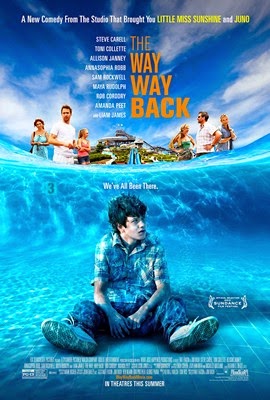
adcf5-the_way_way_back_posterI’m not one to usually laugh out loud during movies but for some reason I felt this sensation during this film. There were a lot of things that seemed to suggest that I should have rated this film lower but I could not help but give it four stars. Maybe it is the nostalgia it created or the typical coming of age story made interesting by some solid characters. Maybe it just reminded me of the times I use to go to water parks. I’m not sure.

Duncan has a life that I would not envy with a Step-father who calls him a 3 out of 10. However, he finds meaning and acceptance where he never expected to. The ending might be bittersweet but it was mostly sweet. There were a lot of supporting characters in this one. A lot of them only popped up on screen for a bit but for the most part they worked well. I think Liam James and Sam Rockwell stole the show though. Their camaraderie really made this film!

4/5 Stars

The Imitation Game (2014)

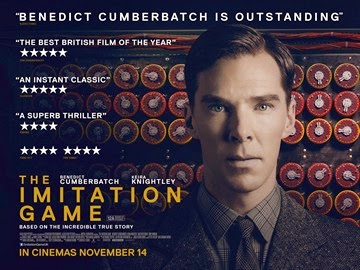
09cf1-the_imitation_game_posterWhen you think of decisive moments in WWII the conversation leads often to D-Day, The Battle of Midway, The Russian Front and The Battle for the Atlantic. If Britain had been cut off from U.S. supplies the case could be made that The Allies would have undoubtedly lost the war. That’s where the Enigma cipher comes into play and along with it Alan Turing.

Alan Turing is one of the unsung heroes of WWII and in many ways the father of modern computers. He’s a big deal and it’s hard to make that point enough. That’s what makes it exciting that he finally got the biopic treatment and with a portrayal by Benedict Cumberbatch no less. It does not get much better than that!

As far as biopics go The Imitation Game is a polished period piece set in War-torn Britain spanning the years of WWII into the early 1950s. Visually beautiful, scored nicely, and generally uplifting, it feels as wonderfully English as a cup of tea and the English countryside. Although the film at times may trod the typical path of other troubled-genius type films,  it often rises above the usual based-on-a-true-story fray. A primary reason for this is Benedict Cumberbatch who plays Turing not with dramatic outbursts, bravado, and bluster, but quite the opposite.
In the year 1939 Turing, a professor at the time, attempted to join the top secret project at Bletchley Park to crack the German’s Enigma code. He seems like an odd candidate for the job since he has only an affinity for puzzles and no knowledge of the German language, but that proves to be unimportant.
He has the right amount of vision paired with the obsession to come at the problem like no one before him. He does not just want to crack one of the tedious strings, he wishes to crack them all using a machine. It was absolutely unheard of and his colleagues discount him, understandably, because he is not much of a team player and far from a social butterfly. However, he discovers a worthy ally in Susan Clarke (Keira Knightley) who proves to be indispensable in his work as well as repairing his rapport with the team.
With the prospect of all his work with the machine being wasted and terminated, his colleagues back him up in front of his superiors. Turing has one last chance to succeed and someway, somehow he does. But success does not come without great responsibility. Once they have the weapon to counter the Germans they must use it cautiously only taking the most necessary steps. It becomes clear that there is a fine line between playing God with human lives and winning a war.
The war is won in the end, however, and the top secret endeavor is disbanded. Alan Turing is far from a war hero because few know what he did. His only label is indecency and he is given the option of imprisonment or hormones in response to his charges of same-sex attraction. A year later he committed suicide at the age of 41.
Cumberbatch is seemingly the perfect Turing with all the quirks you would expect. Except there are also traces of sensitivity and he so adeptly shows subtle emotions on his face. He was an oft-tortured man inside and out, spanning from his boarding school years to his post-war existence. Keira Knightley on her part is enjoyable as a counterpoint, remaining true to Turing no matter the circumstances.
Obviously you can always call into question the accuracy of these types of films and no doubt artistic liberties were taken, but all in all The Imitation Game did a commendable job of painting a picture of a man’s life in a very different age. Alan Turing finally got the credit he was due, and it was done with a great deal of sensitivity, heart, and even humor which mostly overshadowed any saccharine moments.
4/5 Stars

Boyhood (2014)

13113-boyhood1Surely others have said this already but Boyhood struck a chord with me and it was the prettiest of melodies.  Pure and simple in its brilliance.

This is not my childhood by any means or my life or my family, but there are glimpses of it here. Quick flashbulbs or touchstones that for a brief instant take me back. Sometimes many years ago or just one or two. Nostalgia is the strangest type of memory for a young person, because we are transcending the space between the here and now, which we are so used to, and going to the “back then.”

12 years is a long time but even more so when you have fewer years under your belt. Thus, Boyhood in comparison to my own life is an epic film in every sense of the word. Whereas it might only be a wonderful coming-of-age tale for older generations, there is a feeling that this film in some small way represents where I’m coming from.

A film could never fully encapsulate or perfectly represent what it is to grow up in adolescence. It’s different for every child depending on where they live, what their family is like, and so on. But Boyhood is an unprecedented depiction of what that existence looks like to many young people. There is certainly something special and important in that.

1cce5-boyhood2There are so many different vignettes, almost like short films, characterizing each and every year in Mason Jr.’s life. We are given no blatant indication of time and place. It is all context clues, cultural references, and watching Mason and his family grow and evolve around him. Always innovative Richard Linklater does not hold out a giant megaphone saying this happened that year or this year. Instead, Mason’s story plays out like it would in the so-called “real world.” There are some major milestones or life-shaping moments that are shown, but most of this journey has to do with the little caches of time that make up life.

I feel drawn to do something that I don’t normally do, but Boyhood is such a unique film it deserves to be approached in a different light since to put it truthfully, it cannot be pigeonholed into any standard category.

Instead of trying to acknowledge the entire narrative of Mason’s life, which would be as impossible with him as with anyone else, I want to give reference to the many moments and bits and pieces that Linklater placed either by accident on purpose. The fact is Boyhood is chock full of these markers of the passage of time which make it a fascinating journey of human life.

Here we go, get ready:

Coldplay’s Yellow over the credits
Britney Speares fandom
Star War dilemma: Yoda vs. Grievous
Game Boys and Wave Boards
The Astros’ Rocket Roger Clemens
Harry Potter and the Half Blood Prince
The Landlord – Will Ferrell
High School Musical – We’re All in This Together
Wii Boxing with a Nunchuk
Presidential Election in 2008
Facebook profiles
The Dark Knight
Phoenix – 1901
Twilight books
War in Iraq and Afghanistan
Lady Gaga and Beyonce
Iphone Facetiming
Gotye – Somebody That I Used to Know
Atlas Genius – Trojan

and on and on….

c94ae-boyhood3Against this backdrop, the separation of Mason’s parents (Ethan Hawke and Patricia Arquette) takes center stage. Next, follows another failed relationship riddled with abuse. Switching cities and starting a new life followed by another step-dad and another failed marriage. Then, dad (Hawke) gets remarried and it actually works out. There’s peer pressure and experimentation. Girls become a big deal. Photography is a passion. Sister (Lorelei Linklater) goes through the rebellious phase. High School graduation comes around and college soon after. Breakups happen and life still continues ever onward.

You could make an argument that Linklater could have gone on longer. He could have wrapped everything up nice and neat or cheated and fast forwarded to the end. But that was not his way out and it did not have to be. College is a major moment of change, confusion, and finding oneself, so in a sense, it is a fitting place to leave Mason behind.

He remained introspective, philosophical, and aloof for the majority of his life, despite family of origins issues and the like. It is mind-boggling to think of all the people cycled in and out of his life. Ever changing and often forgotten.

Thus, Boyhood is a gift to us for a multitude of reasons, but hopefully, its visual biography of Mason Jr. will lead us down memory lane and cause us to consider our path. For most of us, we have more than 12 years in front of us. Let us use our time well and wholeheartedly navigate the realities of life whether it is movie worthy or not. It’s our life and that’s all that matters.

4.5/5 Stars

Edge of Tomorrow (2014)

24f4a-edgeoftomorrow1

Time loops are fun. Scratch that. They’re fun to think about and to watch as an audience in the comfort of an armchair, but they get old real fast for movie characters. Just ask public affairs officer-turned-time looper William Cage (Tom Cruise).

He’s an indolent former advertising agent who wants no part of the actual fighting that is taking place in Europe with a mysterious alien army of so-called Mimics. In his attempts to avoid combat, he ends up handcuffed, stripped of his rank of Major, and shipped off to a base at Heathrow. His worst nightmare is becoming reality as he is quickly thrown into the front lines where he is headed to face the enemy without any training. He is an absolute pitiful mess and his platoon mates spare him no mercy. After all, he’s a sniveling complainer.

He’s just as incompetent on the battlefield, and it becomes obvious he’s not going to last long (There’s potential for a very short movie). But before he gets killed by one of the aliens, its blood covers him. Did you get that? Although seemingly insignificant the whole film soon hinges on this fact.

Where does he wake up? No not hell or heaven, but back at Heathrow airport, handcuffs and all, with a superior yelling at him yet again. He’s back in this nightmare once more and it continues for the rest of the film.

Honestly, Edge of Tomorrow is an awful name for this film. The tagline Live. Die. Repeat. is a little closer. At least it gets at the heart of what this sci-fi tale is about. In a similar vein as Phil Connors in Groundhog Day, Cage first gets acclimated to his new ability to experience a moment in time. He learns how to manipulate and navigate it to help himself, but as would be expected it gets tiresome and monotonous. With great power comes great responsibility, difficulty, and fatigue.

Live. Die. Repeat. Live. Die. Repeat. Slowly but surely Cage makes it farther and father against the mimics joining forces with famed soldier Rita Vrataski who is the poster girl for this noble war (Emily Blunt). Her early advice, “Come find me when you wake up,” is the strangest of greetings, but it starts the ball rolling. In a world where humanity is continually walking into an ambush, they are the only two who comprehend what is happening. Vrataski knows because she used to have Cage’s ability but lost it, so he is the new hope. Live. Die. Repeat. Live. Die. Repeat. She shapes him into a more efficient fighter over numerous time loops and gives him more insight into their enemy. He’s getting sick and tired of getting killed too. Live. Die. Repeat. etc.

He starts seeing visions of the Omega (the nucleus of the mimic), but they soon realize that the mimic is leading them on. Live. Die. Repeat. By this point, Cage has gone through so much with Vrataski and he cannot bear to see her continually dying. They finally locate the whereabouts of the Omega but after numerous failures, they finally run out of second chances. Cage loses his ability to loop, like Vrataski before him, needing a blood transfusion to pull through. Live or Die. No repeat this time.

Thus, begins their descent into the throes of their foe towards the Louvre where the Omega is. However, this time Cage convinces his squad to help and they prove their worth. An alpha comes after Cage and Vrataski as he blows up the Omega with a pack of grenades. There’s an instant of doubt, an uneasy feeling. Live. Die. Repeat…

Except now Major William Cage is back on the helicopter. No stripping of rank, no orders to the front lines, and with a newly weakened enemy. The nightmare is over so it seems and Cage is twice the man he was before. Only one thing matters. You guessed it. He goes looking for Sergeant Vrataski and sure enough there she is where he always found her before. She greets him with the same curtness as he smiles knowingly and most definitely with relief. For the last time or the first, depending on how you see it.

Quick cut to credits and “Love Me Again” by John Newman and it’s all over. It’s an ending that we hate as an audience, but it is the right one. As far as modern sci-fi films go, this one reminded me a bit of Source Code and Looper. Similarly, once you bought into the premise and invested in the setup, it proved to be a smart and entertaining ride.

Tom Cruise proved he can still do action movies and Emily Blunt carried the film with a toughness that would have made Ellen Ripley proud. This may be summer blockbuster material, but it’s also a worthwhile trip that takes us for a loop. Awful pun intended.

4/5 Stars

The Grand Budapest Hotel (2014)

35f8c-grandbudapest3

The farthest Eastern boundary of the European continent makes the perfect landscape for a new addition to the quirky Wes Anderson canon. But more on that later. First our story.

It gains inspiration from the writings of forgotten Viennese author of the 30s and 40s Stefan Zweig. In fact, the author’s own plot device is used in this story of friendship, love, and murder. An inquisitive writer (Jude Law) from the 1960s becomes intrigued by the aging proprietor of the Grand Budapest Hotel Zero Moustaffa (F. Murray Abraham).

The rather mysterious figure is glad to tell his story and how he came to acquire the iconic hotel. And that’s where our real story begins, back in 1932, with concierge and small time celebrity M. Gustave (Ralph Fiennes). He is a dying breed of a man, full of culture, a bit effeminate, and known to wine and dine older patrons. He also has an immense affinity for poetry.

It was under his leadership that the young, stoic bellboy Zero got his start. What an exciting beginning it was.  One of Gustave’s most faithful patrons, Madame D (Tilda Swinton), dies suddenly and he is bequeathed the priceless painting Boy with Apple.

The family of the deceased is in an uproar led by belligerent son Dmitri (Adrien Brody). Soon Gustave has become the strangest of fugitives as he is wanted for the murder of the old lady.

During that time, young love springs up and Zero meets the love of his life Agatha (Saoirse Roman), a spunky baker who returns his affection.

Now the imprisoned Gustave takes part in an escape attempt a la Le Trou except this rendition is successful to a degree. Faithful Zero meets up with his mentor, and Gustave turns to the only ones he can. The concierges from all the surrounding area. They oblige, getting the two fugitives away, but soon Dmitri’s cold-blooded assassin Jopling (Willem Dafoe) is on their tails at a local monastery.

War is imminent and back at the Grand Budapest things do not look promising.  The ever fearless Agatha agrees to go fetch Boy with Apple, but she is soon spotted and pursued by the ever brutish Dmitri who tries to use his gun. That’s not a smart thing when all the rooms are full of quartered soldiers and a chaotic gunfight ensues.

In the aftermath, a second will is uncovered that makes M. Gustave the sole owner of the Grand Budapest and many other possessions that Madame D owned. In a Deja Vu moment, Gustave and Zero ride the train once again before getting boarded and questioned. Always the gentlemen, Gustave defends Zero who is targeted for his immigration status. It was in that way the story ends and returns to the young author and elderly Zero Moustaffa.

He never could bear to give up the Grand Budapest despite the toll of Communism. It’s not because of Gustave, but his dear Agatha who died only two years after. It’s his only link to the happiest times of his life.

What The Grand Budapest Hotel ends up being is an odd mix of black comedy and romantic sentiment all wrapped up in an Anderson world.

His shots are often framed symmetrically and muted pastels abound as well as scaled miniatures, creating his always distinctive mise-en-scene. He is also a fan of a smooth moving camera often involving zooms.

Anderson is obviously a student of cinema and his film at times are reminiscent to 30s fair such as Grand Hotel and The Rules of the Game. He also channels another famed Viennese Ernst Lubitsch who was a master of highbrow romantic comedies.

Hotel also boast a superb cast comprising most of Anderson’s stock company. If there’s anyone who has been in more than one of his movies, they are probably in this one, even for just an instant.

So given the normal Wes Anderson flair or eccentricities, this film is visually pleasing and quite entertaining. It is a worthy follow up to Moonrise Kingdom, darling.

4/5 stars