I Was Born But… (1932)

800px-I_Was_Born,_But..._1932.jpg

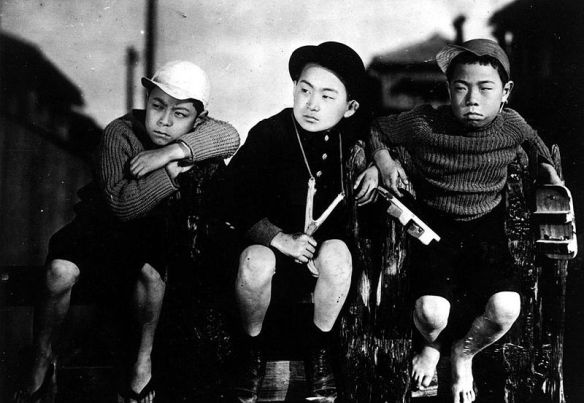
What strikes me right away about Yasujiro Ozu’s silent classic is just how relatable it feels. Yes, this is a Japanese film and yes, it’s silent too but watching the scenarios play out on screen have an undoubted timelessness. This is decidedly fresh material that’s blessed with humor and grace like the best silent comedies.

It’s a narrative about two young boys who have moved with their family to the Tokyo suburbs. As is usually the case it’s brought on by their father’s work and the whole family must get used to it. For the boys specifically, that means a new school and getting to know the neighborhood kids with their carefully enacted social hierarchy. Simply put, the biggest kid rules the roost and the new kid on the block is always bound to get the worst of it.

So obviously we witness the ensuing verbal skirmishes and a few fistfights where the clogs come off and are brandished as built-in weaponry. That’s all part of the rite of passage where the brothers must prove themselves. If we learn anything from this comedy, again, it’s the fact that many things have not changed all that much. Boys haven’t changed that much. At least not in the core important things that still hold weight.

Certainly, this is a less organized and less done up exploration compared to Ozu’s later endeavors but that’s part of the charm. The comedy at times is so pure and simple it gives the sensation of some of the early kid comedies like Our Gang or Chaplin’s The Kid (1921). Watching the posse of boys scamper every which way necessitates no understanding of language or culture. Watch and you understand.

Sparrow’s eggs preclude the pumice stones in Ohayo (1959) decades later as the boy’s favorite keepsake. In this particular hierarchy, it buys them a coveted place at the house of the richest kid whose parents are showing off their home movies. It’s a novel thing for all the boys and they look on with baited breath.

As it turns out, the Yoshi boys’ father is a real cut up, a real funny man, and they couldn’t be more ashamed, from the self-deprecating performance he gives for the bosses camera. This is far more than a few images that garner a few laughs. This is an affront to their father’s character and subsequently their family honor. But this hardly ever feels like a Japanese cultural issue, this is an issue that arises in the hearts and minds of proud, naive boys.

It’s the colliding viewpoints of children and adults and rather surprisingly the film is willing to look at the perspective of the kids. If Ozu’s initial work shares any similarity with Ohayo many years later, it’s at this juncture. The boys decide to protest their father by keeping silent and not acknowledging his presence since he has wounded them so egregiously. They’ve mastered the scowl to perfection as they glower in the front yard eating their mother’s onigiri. It seems like they’ll never be able to face the other kids again and they’ll never forgive their father.

Those very themes alone make this universal storytelling and it’s easy to forget for even a moment that this is a film brought to us from 1930s Japan. Because there is something going on here that feels so real. Every young boy wants to think of their father as a big deal, the king of the hill, a big success, and when we are met with anything that seems to contradict that vision we have, it does hurt us.

Still, what the story does well is to find a resolution where the boys can still be content in who their father is, beginning to comprehend a little bit the situation he is in. Even as they get a little help from the local paperboy to vanquish the local bullies, they ultimately gain a small dose of sympathy for their dad. If they don’t quite understand why he has to say good morning to his boss every day and treat him with such deference, as they grow older they might start to appreciate him more.

However, it does seem like something is lost in the translation of this title for American audiences but the subtitle does suggest more meaning. This is an “Adult’s Picture Book View” so we are looking at a child’s world from an adult perspective and though it’s inherently funny we gain a greater respect for both children and parents.

4.5/5 Stars

I, Tonya (2017)

I,_Tonya_(2017_film)Sufjan Stevens released a song not too long ago as an elegy to Tonya Harding. Being the modern-day folk poet that he is, he cast her as a tragic hero, championing her as a definitive portrait of an All-American girl, larger-than-life, unapologetic, and ultimately beaten back by society at large.
I will date myself and say that I don’t remember much about Tonya Harding because I was barely born when she was in the public spotlight. So, I come at the events as an “impartial” observer or at least one who lacks any clear understanding of what her story was really like in the heat of the moment.

Thus, Stevens’ song and this film, I, Tonya, were necessary for me as obvious mechanisms of empathy. Emphatically the film proves that Tonya Harding — at least for me — cannot be cast as a hero and I don’t necessarily think that she was expecting that. But what has been done on her behalf is equally vital. Finally, it seems like others have been willing to speak up on her behalf in telling a more multifaceted even sympathetic side of the story.

Her life and times as detailed in Craig Gillespie’s film functions as a nearly absurd black comedy as it plunges into familial discord and moments you could hardly make up if you tried. But what we would do well not to forget is that this is a dramatization of someone’s life — someone with inherent worth even as she’s being berated and abused by a mother and then abused by her husband and finally raked over the coals by the mass media.

If anything, this film is an indication that Tonya’s life does have meaning. The flaws are there but also present is immense trauma and the subsequent tenacity that made her the first female skater to ever land a triple axel.

Screenwriter Steve Rogers’ work employs slightly pretentious talking head moments and fourth-wall breaking monologues that were used in a similar fashion to Experimenter (2015), except it’s hardly a gimmick and there’s a great deal of resonance within the madness of narrative dissonance with a smattering of different perspectives colliding.

Because Tonya’s story really is recalled and remembered in so many different ways by all sorts of people with their facts conveniently conflicting. First, there’s Tonya herself (Margot Robbie) who was the skating prodigy by the age of 4 and despite a lack of education, her enduring work ethic made her one of the finest American skaters to ever grace the ice.

Allison Janney is as acidic and foul-mouthed as they come, pushing the envelope as Tonya’s ultra-vitriolic mother LaVona who never seems content, continually berating her daughter in all regards because every penny she makes as a waitress goes into her lessons. Love is not in her lexicon.

Then there’s the infamous Jeff Gillooly with Sebastian Stan donning that regrettable mustache as the awkward boyfriend who no doubt loved Tonya at one point and yet still embroils her in an unhealthy and abusive relationship. His slobbish oaf of a friend Shawn Eckhart, who fancies himself a counterterrorism expert of some kind, is a surprisingly authentic caricature. He’s got grand delusions of how they will sabotage Nancy Kerrigan’s chances in the Olympics by unleashing an onslaught of psychological warfare.

Jeff condones the plans but soon he’s shelling out $1,000 that disappears after Shawn gives it to a pair of dubious contacts. Little does he know that this will devolve into “The Incident” after Shawn okays a hit and an equally vacuous nobody, Shane Shant, injures Kerrigan with a police baton. They’re so inept that the FBI is soon on their trail. First, it’s Shawn, then his fingers point to Jeff, and finally, Tonya is implicated. Right here we have the clearest embodiment of both the real-life farce the and tragedy of Harding all rolled into one.

The extensive soundtrack is utilized not only as casual character development but an instant accessibility point in denoting either an era or a mood. In fact, it’s one of the few constants in a story that regularly hurtles back and forth between different points of views, time frames, and the like. Hearing Norman Greenbaum, Fleetwood Mac, Supertramp, Chicago, Doris Day and a whole host of others offer instant touchstones throughout.

For these very reasons I, Tonya is the most inventive biopic in narrative terms that I can remember since Brian Wilson’s story told so evocatively in Love & Mercy (2014). There is a similar exploration going on here as we try and make sense of someone who has gained, in this case, so much notoriety whether it was totally deserved or not. And the beauty of the picture is that it never fully divulges the truth because in so many words “the truth” in the lowercase sense is relative and like innumerable pieces of history how are we to say that we have the definitive answer?

The media’s part in all of this feels almost damning and yet we cannot condemn them without condemning ourselves too. Some David Letterman footage articulates the ubiquitous reality that Tonya Harding became a punchline in the wake of the Lillehammer Olympics in 1994 even as she received a lifetime ban from skating. Should I feel sorry for Tonya Harding? I’m not sure. Regardless, it’s a sorry affair.

Though it starts to paint some layers of Harding’s backstory and her working-class roots rubbing up against the protocols of standardized perfectly primped and costumed female figure skaters, that’s not necessarily the film’s allure. It gets its zing, admittedly from the almost soap-operatic twists. And yet with anything, if that is what gets you to stay and kept the media involved in the story for such a long time, maybe it’s good that time has passed.

Even as the script tries to put the pieces together it can hardly succeed perfectly though it does give us something to work with. Again, it all comes down to some form of greater understanding. But then again, Tonya Harding probably doesn’t care about what others think about her or about anyone trying to mount a defense on her behalf. So be it.

Now, all that seems left to make is a Nancy Kerrigan movie. Yes, she was cast as the perfect ideal, Snow White on Ice, but as with any media fixation, it cannot always serve true justice nor capture the hardships in a person’s life. Tonya Harding, Nancy Kerrigan, and nearly every other person on God’s green earth is a testament of that. As Sufjan puts it only God knows what they are.

4/5 Stars


Tonya Harding, my star
Well this world is a cold one
But it takes one to know one
And God only knows what you are

Just some Portland white trash
You confronted your sorrow
Like there was no tomorrow
While the rest of the world only laughed

Triple axel on high
A delightful disaster
You jumped farther and faster
You were always so full of surprises

Are your laces untied?
What’s the frown on your face for?
And just what are the skates for now?
Tell me which is your good side?

Are you lonely at night?
Do you miss all the glory
And the mythical story
Of the Olympian life?

Yamaguchi in red
She had high rise and roses
And red-carpet poses
And her outfit was splendid

Nancy Kerrigan’s charm
Well she took quite a beating
So you’re not above cheating
Can you blame her for crying?

Tonya, you were the brightest
Yeah you rose from the ashes
And survived all the crashes
Wiping the blood from your white tights

Has the world had its fun?
Yeah they’ll make such a hassle
And they’ll build you a castle
Then destroy it when they’re done

Tonya Harding, my friend
Well this world is a bitch, girl
Don’t end up in a ditch, girl
I’ll be watching you close to the end

So fight on as you are
My American princess
May God bless you with incense
You’re my shining American star

~Tonya Harding by Sufjan Stevens


Ohayo (1959)

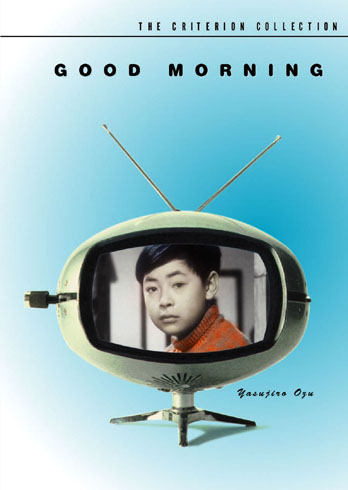
Good_morning_dvdIf Yasujiro Ozu can be considered foremost among Japan’s preeminent directors then there’s no doubt that Ohayo (Good Morning in English) is one of his most delightfully silly films. But that’s only on the surface level.
Young boys are unified in their affection for watching sumo on television and passing gas as a great gag to pull on their friends. Nosy housewives gossip incessantly whether it be the next door neighbor’s new washing machine or the mysterious disappearance of dues for the local women’s association. Meanwhile, most of the men go to work and spend their evenings knocking a few back at the bar noting how much the world is changing around them. Then they go home oftentimes a little drunk.

Ohayo is actually a reimagining of one of Ozu’s most remembered early pictures during his silent days I Was Born But… (1932) and yet he skillfully reworks the storyline into an everyday comedy of family and neighborhood drama that’s full of humor and his brand of quietly observant social commentary.

Ozu always took great care in analyzing family units and matrimonial bonds that affected relationships. Although we have a bit of a fleeting young romance in the works, this film’s greatest concern are two young boys from the Hayashi family who are giving their parents the silent treatment until they are allowed to have a television. Their parents are holding out and it begins a rather humorous ordeal as the brothers Minoru and the ridiculously comical Isamu (constantly exclaiming “I Love You”) try to make it through dinner, school, and so many other daily activities without a word.

As he would dissect many times over, Ozu focuses on the generational divide that was emerging and becoming increasingly prevalent in the post-war years as reflected by technological advancements like television and other such devices slowly turning present Japan into a land of a million idiots. At least that’s what the older generations feel.

Still, it’s just as equally occupied with the moral customs that have long ruled the nation where wives can speak so kindly to their neighbors up front only to slander them behind their backs a moment later. Saving face and personal honor is often cared about far more deeply than anything else — even in some circumstances when it happens to be at the expense of another family member.

Perhaps the most troubling thing is the very Japanese predilection to talk about nothing in particular, filling conversations with salutations, pleasantries, and comments on the current weather patterns. It hardly ever gets to anything of substance and that comes in numerous forms. Sometimes it means a young man never gets around to sharing his feelings with a girl or adults never being particularly candid with neighbors or spouses. There’s very little of that kind of transparency to be had. Few of the words passed along between people in conversation mean all that much.

The irony of the whole situation is that, in one such instance, it’s a young son who calls them out on it and he proceeds to get a heavy scolding from his father (Chishu Ryu) who bluntly tells him that he talks too much. Meanwhile, although Izamu can be constantly chiming “I Love You” in English, there’s an uneasy sense that his parents and most certainly his father, might have never said the words to him.

In these very simple ways Ozu rather delicately and still humorously tackles many of the issues that have long plagued an honor-based culture such as Japan’s but he does it with an adroitness that uses touches of humor and his own understanding of human nature to craft yet another universal tale that’s ultimately sympathetic in its portrayals.

It unsurprisingly feels like it could be a Japanese episode of Leave it to Beaver except for the father never has much of a talking to with his sons and the mother may be as put together as June Cleaver but hardly feels ever as affectionately maternal.

Equally spectacular is Ozu’s mise-en-scene which as per usual is meticulously staged and gorgeous in scene after scene. He offers up each individual image in a flat two-dimensional way that can best be described as taking cues from not only the theater but Japanese woodblock paintings with wonderful symmetry and compositions boosted by color.

He uses the clique of adjoining homes as the perfect set to send his characters in and out of with the hint of comedic forethought. While watching characters walking by on the hillside up above the homes — their figures slowly moving in and out of the frame past the houses — this provides some of Ohayo’s most visually stimulating images pleasing the eye incessantly.

There’s always a visual fearlessness that you see in very few others because he not only has color at his disposal but the staging is on point as is his disregard of the 180-degree rule of perspective. It just works. What is more, he also continues to use what could best be called establishing shots by western audiences. Except they hardly ever need to establish anything. It’s as if he simply put them there because they are vivid depictions of the reality he is painting — adding yet another distinct contour to the world he is working with — going beyond the figures that he places within the frame.

There’s no doubt that this is Ozu but not all that surprisingly this might be my personal favorite in his oeuvre for the aforementioned reasons. It feels like Ozu operating at his most playful while nevertheless maintaining his peak form as a filmmaker.

4.5/5 Stars


Inherent Vice (2014)

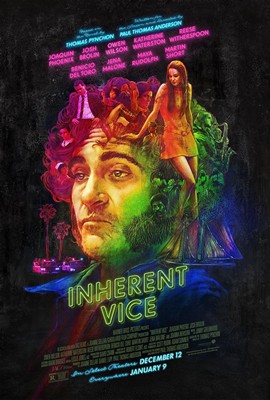
Inherent_Vice_film_posterIt’s not something you think about often but stoners and film noir fit together fairly well. Why more people haven’t capitalized on this niche is rather surprising. Think about it for a moment. Film noir in the classic sense is known for its private eyes, femme fatales, chiaroscuro cinematography, and perhaps most importantly a jaded worldview straight out of Ecclesiastes.
Some of the greats are also notorious for utterly baffling plots that come to no clear conclusion. Still, rather than chocking it up to faulty storytelling, these unfathomable aspects only lead to a greater ambiguity. Thus, you can imagine what occurs when our point of reference is on something. You take something that is already indecipherable and make it absolutely impossible to discern reality because there’s no sense of knowing what is actually real even before funneling down to specific plot points. Inherent Vice is precisely that film, a neo-noir bathed in rays and full of dopers.

Paul Thomas Anderson makes this affectionate and supposedly quite faithful adaptation of Thomas Pynchon’s novel connect most obviously through voice over. It captures a certain rhetoric — the poetic lyricism that manages to anchor the plot in some bewitching way — while also providing a great deal of latitude in storytelling which the narrative gladly capitalizes on.

This private investigator, Doc Sportello (Joaquin Phoenix),  is a benevolent stoner. His girl Shasta flutters back into his life and like they always do she comes as the bearer of bad news — a flower child in trouble with a lead for him to follow before she disappears into the night. Being a private eye he follows up the loose threads but he’s not necessarily a good private eye or a generally judicious one and that doesn’t bode well.

It’s pointless to try and tie everything together. In fact, this is as good a time as any to disclose that Reese Witherspoon, Benicio Del Toro, and Owen Wilson all show up but it’s almost possible to forget about them.

Doc investigates some vague leads about one real estate owner Mickey Wolfmann who has disappeared, gets word of a mysterious syndicate called the Golden Fang while searching after a member of a cult, and subsequently gets hired to find a missing husband. His worst enemy and greatest ally simultaneously is Detective Bigfoot Bjornsen (Josh Brolin). All the cases get resolved without the least bit of satisfying closure.

Still, the incomprehensible plot highlighted by absurdities is almost something that needs to be expected from a film such as this built out of the tradition of The Big Sleep (1946), The Long Goodbye (1974), and even Harper (1966). It’s another knowing riff off of the private eye pictures of old.

The bottom line being that precise malaise. It’s easy to lose it amid the stoned out status quo, characters medicating themselves on smokes and drugs and drink. They seem happy enough. At the very least they’re not torn apart by anything. And yet the very fact that Doc in particular witnesses so much — unveils so many things — and remains despondent is indicative of the whole story.

It’s an understated chill comedy that is meant to mesh rather ironically with the film noir world and like Altman’s film before it, there’s this lovely incongruity that works so well. All highlighted by the very fact that we fail to truly discover what is fact and what is fiction.

Everything is taken in stride rather nonchalantly by Doc who ambles along with his various leads in the relaxed manner that will remain his calling card. His attempts at scribbling down notes only result in random word clusters. But, and I hesitate to say this because it might give the wrong impression, in some sense, it does feel like we’ve seen this humor before in Airplane! (1980) and The Naked Gun (1987).

We like Doc. If he wasn’t high all the time, he’d probably be a pretty nice, cognizant, charming fellow but his response to all that is around him is rather pathetic and pathetic in the way of a dog with his tail between his legs. Flailing to the will of corrupt cops or allowing the vices of others to rule the day. But then again, what is he supposed to do in this world? The everyday villains are too many, the mountain to overcome is too high, and so he slowly sinks back into his fog. It’s a nicer, more comforting place to be than the world at large.

Cross that with Neil Young’s ambient jams in “Journey through the Past” and “Harvest” or the laid-back radio plays of 93 KHJ including The Cascades, The Association, Sam Cooke, and Kyu Sakamoto and it goes down pleasantly. As do the agreeable touchstones of Adam-12 and “Three Hour Tours” on primetime television.

It provides the film with a bit of the nostalgic haze that still manages scintillating vibes of sunny Southern California. But no one need remind any of these characters that this is the same beach paradise that saw the egregious murders committed by the Manson family, the shooting of Bobby Kennedy, the Watts Riots, and so on and so forth.

Taking a hit can sustain for a momentary high. Embracing your girl in the pouring rain can remain a fond memory. Music can float through your brain lazily. Television makes a nice diversion. The pursuit of money and power can drive a life for a while. But surely life is more than all of these — the things we use to mask the hurt and the pain we are subjected to as human beings — the numerous distractions in this “postmodern” world of ours. Surely there’s gotta be more…

4/5 Stars

Road to Rio (1947)

Road to Rio 1.png

My dad has been and forever will be a fountain of pop cultural knowledge. I learned the little I know from the best, the difference is, he lived through most of it. Still, I must admit, at times I didn’t believe some of these touchstones of yesteryear when I was a kid. How could anyone have actually written a song called “Hello Muddah, Hello Faddah” and what in the world does “You’re in the Groove Jackson” mean? They can’s possibly be real.

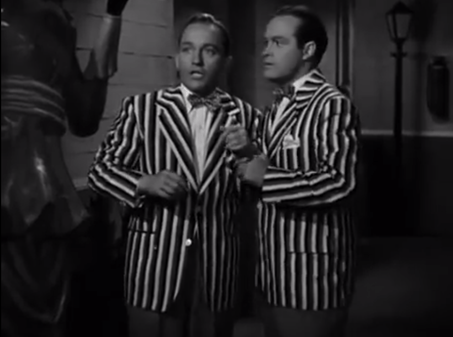
Of course, for those more enlightened than I was back then, you would have already known that both these fantastical things were in fact true. Alan Sherman was quite the nut and the same goes for Bob Hope and Bing Crosby. In that roundabout way, we get to the Road Picture that I’ve always cherished at least a little bit because of one particular gag. But let’s start closer to the beginning.

The wonderful thing about the Road films is the very fact that their two bozos know exactly who they are and they never stray from those characterizations from one picture to the next, even if the schemes change as do their names. There’s the same self-referential jabbing and fourth-wall-breaking executed in a way that later films would pick up on too. People loved Hope and Crosby and they enjoyed their onscreen buddy-buddy just as much. By the looks of it, they always seemed to be having as much fun as the audience and that’s the key. It’s contagious comedy.

I’m inclined to think that some of the greatest comics are the ones who come up with the lines on the spot. But whether or not Hope and Crosby actually ad-libbed any of their verbal jabs, to their credit, they had a complete handle on their personas and so every phrase comes off as genuine.

They’re always trying to pull off some get-rich-quick scheme only to wind up in some wild locale completely broke.  We’re always provided the enjoyment of Crosby’s ever-present condescending pet name “Junior” for his partner in crime. Because he takes on the mantle of the idea man and Hope unwittingly ends up doing the dirty work, in this case, a circus bicyclist up on a trapeze.

Crosby is also always playing the easily duped gentleman — a real sucker for the ladies — who’s not above throwing his pal to the lions except when it really counts. Plus you have to throw a little crooning in there to make all the ladies swoon a bit. We get an appearance by the All-American songstresses The Andrew Sisters performing “You Don’t Have to Know the Language” with Bing.

Still, everyone knows all that is “happening” in the world circa 1947 is in Rio so there the boys go as stowaways, of course, after getting chased out of town by an angry circus promoter. That’s what all the great comics do. Namely, The Marx Brothers, who were consequently also directed by Norman Z. McLeod in Monkey Business (1931) and Horse Feathers (1932).

Our two bunglers now aboard a slow boat to Brazil meet the ever-present Dorothy Lamour, the bodacious beauty in all their movies, as a grateful knockout, a damsel in distress. But something dastardly is going on as the gorgeous woman is caught in the hypnotic clutches of Gale Sondergaard who has a couple hired cronies (one played by a personal favorite Frank Faylen).

There are some real laugh riot moments not least among them watching the pals don their stuffiest British accents as they sway on the ship’s deck to snag an easy meal from a seasick patron or our heroes dressed to the tee doing their best impression of the samba. Of course, you have some tried and true favorites like “Patty Cake” or Hope’s sardonic one-liners such as affectionately calling his trumpet “Grable-bait.” Look it up if you don’t get it.

But the showstopper is the formation of their groovy band Americain made up of our hapless heroes and three Brazilian street musicians who earn a crash course in English. Composed of three universally accepted phrases: “You’re in the Groove Jackson,” “This is Murder,” and “You’re Telling Me.” Presto they’re Americans in a pinch and what follows is “Who’s on First” light.

The final charade is to break up an ill-fated marriage with a bit of safecracking and they bungle it immaculately.  The greatest surprise of all is that Hope actually gets the girl (like Road to Utopia) except this time he gets a little help.

3.5/5 Stars

Review: To Catch a Thief (1955)

to catch a thief 10.png

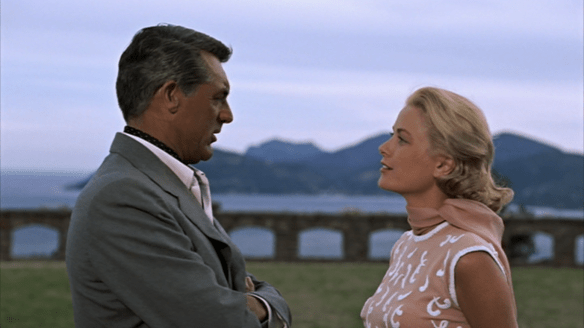
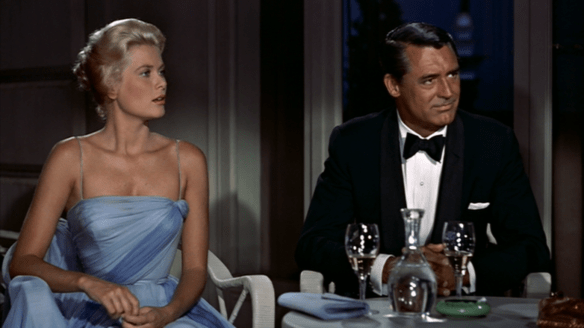
There’s little doubt that To Catch a Thief is Hitchcock at his breeziest and with the once-in-a-lifetime pairing of Cary Grant and Grace Kelly the picture could coast on looks and charm alone. Not simply based on the attributes of its stars either but the extensive on location shooting boasting Cannes shorelines colored in VistaVision and sumptuous flyovers of the winding Riviera, villas and all. It’s a scintillating getaway and a fine departure following the nerve-wracking confinement of pictures like Dial M for Murder (1954) and Rear Window (1954).

Thankfully while it is supremely light entertainment there’s something else to it as well. A rash of copycat crimes has taken place all across the Riviera leading the local police commissioner to suspect reformed cat burglar and French Resistance hero John Robie (Grant). Though the slinking and perfectly executed jewel heists bear the mark of “The Cat,” he’s the best one to acknowledge his own innocence.

Still, that doesn’t stop the police from questioning him nor his old war comrades working at a French cafe to begrudge him for what they deem as an affront to them. They want nothing to do with him. And so with things as they are, Robie must try to exonerate himself by verifying his innocence. John Williams proves the perfect accomplice as a generally agreeable chap from Lloyd’s of London who has vested interest of his own in catching the real culprit in order to recover his client’s assets.

Their introduction could not be more memorable culminating in a tussle in the flower market in Nice with bouquets flying every which way, the local authorities in hot pursuit. From there Robie floats away from the police soaking in some sunbeams as he devises his plan of action. But already we see the dangers as he must essentially play the thief, casing the joint, getting close to the jewels and their owners but all in the name of personal vindication.

What follows is a fortuitous meeting around that whirling pickpocket — the roulette wheel — where Robie makes a dashing entrance. Actually, make that a purposefully inept showing dropping a chip down a lady’s front. What follows is a fairly haphazard routine as Oregon lumber magnate Conrad Burns trading pleasantries with his newfound acquaintances.

to catch a thief 1.png

Jesse Royce Landis knocks her scenes out of the park allowing Grant and the others to laugh along amusedly due to her affinity for bourbon and straightforward speech.  Her daughter Francie (Kelly) tries to maintain her own dignity as an aloof beauty bred on finishing school.

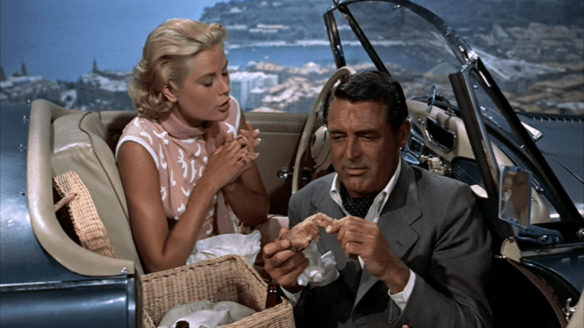
However, she’s more forward than she lets on leading with a wordless smooch in the doorway on her way to bed that begins the chase. What becomes rapidly apparent is the fact that she knows what she wants and doesn’t waste any time pursuing it. First, there’s a jaunt on the beach, then a picnic, and numerous other little romantic getaways perfectly constructed for romancing.

By now the double entendre of the title comes into full relief. On one level Robie is trying to catch someone and Francie is trying to catch him. Charade (1963) would provide a similar dynamic with the woman becoming the huntress out for love. But it’s true that the ravishing gal has a jackpot of admirable qualities which Robie nevertheless tries his best to avoid. Just as he tries relatively unsuccessfully to dodge her flurry of probing questions before finally resigning himself to beer and fried chicken.

to catch a thief 6.png

I’m the first to admit I’m the least fashion-conscious person around but there’s little denying the iconic nature of Kelly’s coral top during the picnic scenes with Grant. Again, the outfit realized by renowned costumier Edith Head is only rivaled in my admittedly meager estimation by Audrey Hepburn’s Little Black Dress (conceived by Hubert de Givenchy) in Breakfast Tiffany’s (1961) during her early morning window shopping.

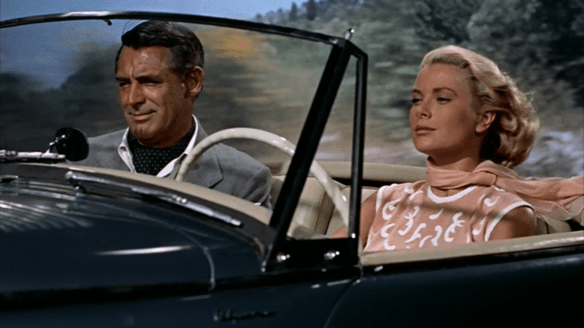
The country road car sequence is a fine summation of the film’s general balancing act of John Michael Haye’s scripting with Hitchcock eye for the visual. It’s broken up by the glib interplay between our stars and yet proves silently comedic with knowing gazes and the dodging of pedestrians and roosters as the police tail close behind Francie’s sporty Sunbeam Alpine.

Though the same scene is underlined with a bit of morbidity as Princess Grace would die in a car crash years later as Princess of Monaco brought on by a sudden stroke which occurred not far from where the film was shot. It’s a tragic moment that left a dark blot the world over.

to catch a thief 7

But for now, the picture is effervescent only bounded by fireworks with the impetuous blonde intrigued by this man who she easily pinned as “The Cat” despite his constant rebuttals. She wants to be a part of his game too, all the while entrapping him with her divine loveliness.

Now’s as good a time as any to marvel at the character of John Robie who must have been made for Cary Grant precisely. At first, it’s easy to surmise that he’s supposed to be a Frenchman who can barely speak any of his native language. However, that would disregard the randomly assorted tidbits scattered throughout the film. For one, he’s said to be an American on multiple occasions. Except as Francie notes, “you’re like an American character in an English movie.” Robie even notes he once toured Europe with a troupe of acrobats, not unlike a young Archibald Leach.

The picture is also littered with what can only be termed touches of Hitchcock whether tops of umbrellas, policemen playing hacky sack on the job, or cigarettes stubbed out in eggs instead of ashtrays.

But back to the action. The final game of cat and mouse is proposed to trap the clandestine specter who has been absconding with all the jewels. It comes down to a decadent Louis 15th extravaganza frequented by the social elite and costumed policemen milling about amid the guests. Robie is waiting to pounce and takes to the rooftops to have it out once and for all!

We think we’re in for one last perfunctory car chase instead Grant and Kelly receive their final rendezvous at a villa which proves far more thrilling. The plot generally took a backseat to the stars anyways even for a Hitchcock movie. We leave them as they embrace with Francie exclaiming, “Mother will love it here!” and Grant’s quizzical look barely visible past his costar’s shoulder. That’s priceless. How could we have more fun than this?

4/5 Stars

The Fortune Cookie (1966)

The_Fortune_Cookie_(1966)_poster.jpg“You can fool all of the people some of the time, you can even fool some of the people all the time, but you can’t fool all the people all the time.” ~ Inscription in the Fortune Cookie

For some inexplicable reason, I expected The Fortune Cookie to be in color. Maybe in some subliminal way, I assumed it would be like a dry run for the zany Odd Couple (1968), pairing the two stars who would make the most delightful comedic coupling in years. But once you get into the nitty-gritty and The Fortune Cookie is less of an intangible idea floating up in the sky, it’s very obvious that this is more akin to The Apartment (1960) and the obvious reason is Billy Wilder.

Once more he lets Jack Lemmon do his sympathetic role, that guy that we all know who is a bit of a loser but not a bad sort of fellow. From such a characterization Lemmon’s scintillating skill at both physical comedy and verbal jokes come off like they always seem to. You can’t help but smile. But Wilder places that same man — that sorry individual — a simple cameraman named Harry Hinkle, into a very cynical world indeed. It’s Wilder’s version of America.

While he unequivocally loves the country that welcomed him when he was an immigrant, that by no means suggests that Wilder is unwilling to satirize its very flaws. In fact, he relishes doing just that. Sometimes it feels like that was what Billy Wilder was put on this earth to do. Make people laugh and do it with a biting style that forces us to look a little closer at the incongruities around us.

You can easily make the case that the main attraction here are two noteworthy dynamic duos (although it’s slightly dependent on how you want to draw them up). First Billy Wilder paired with his writing partner I.A.L. Diamond yet again after their string of successes with Some Like it Hot (1959), The Apartment (1960), and One, Two, Three (1961) among others.

But perhaps just as importantly we have the genesis of the longstanding comedic collaboration between Lemmon and Walter Matthau. It just works. It’s easy to see why they continued starring together because when they’re in the same room wonderfully hilarious things come into being.

Otherwise, the film takes a wacky premise involving a Cleveland Brown’s punt returner leveling a CBS cameraman and draws them out as far as they can possibly go. It’s actually rather impressive that this single spark of an idea gave way to a fairly substantial picture. Because all kidding aside, and without consideration of its title, the film is not unsurprisingly cut out of Billy Wilder’s cynical worldview as already acknowledged.

Yet again he finds his perspective of America derived from some combination of screwball comedy and a more downbeat, melancholy tone. True, he made some delightfully dark films-noir but this same malaise somehow worked fairly well in his comedies too.

Here it’s perfectly enhanced by world-class shyster Whiplash Willie (Walter Matthau) the conniving ambulance chaser who takes great interest in his brother-in-law’s purported injuries on the football field — even if they wind up being next to nothing. The insurance company doesn’t know that and that’s the key.

The periphery is complicated by a private investigator (Cliff Osmond) staked out across the way who has their room bugged and under surveillance. Harry’s mother is constantly bawling. The wife (Judi West) that he once loved and who ran off with another man is tantalizingly close to returning to him. Meanwhile, the soft-hearted football superstar who bulldozed him, Boom Boom Jackson (Ron Rich), looks for any way to make his little buddy’s life more comfortable and it’s taken a major toll on his success on the field.

It’s these very relationships that have Harry seesawing back and forth as his wily brother-in-law coaxes him to keep working the angle so they can nab their $200,000 in recompense. Watching Lemmon pirouette in his electric wheelchair, stiff-necked in a brace is priceless. Concurrently, Matthau seems to be limbering up for all his greatest roles from The Odd Couple to the Bad News Bears (1976) showing off his own impeccable adroitness with curmudgeon comedy — delivering dialogue in such a tone with such a way about him that’s at the same time devious and terribly hilarious. He even answers the phone like nobody’s business.

Lemmon owns the final scenes, however, as he must try and reconcile this lie he has been made to live — this charade he has been playing for the sake of $200,000. Perhaps even more troubling than Harry’s lie and less funny is what happens to Boom Boom. Because he’s such a kind soul even dangerously subservient in how he follows cinematic precedence. But we can make the case that this is part of what Wilder is poking at.

The one moment his protagonist shows any integrity, the one moment he stands up, literally, is in the face of a supposed bigot. Even if it says little, there’s no denying that it says something. Sometimes we don’t need comedies to win the big battles. A film called The Fortune Cookie is not going to garner a lot of respect (nor should it necessarily) but it can at least get us to stop and think. Maybe the utter absurdity in some ways isn’t all that far away from our own existence. That’s part of its charm. Crack it open if you’re so inclined.

3.5/5 Stars

Thor Ragnarok (2017)

Thor_Ragnarok_posterMy heart lept in my chest when I heard that Taika Watiti (What We Do in The Shadows) was going to be helming the latest Thor movie. Because it’s hardly a well-kept secret that Thor has essentially been the weakest of all the Marvel threads (Hulk’s individual film excluded).

So once more Marvel has done an impeccable job of keeping lukewarm bandwagoners such as myself mildly interested. Benedict Cumberbatch as Doctor Strange. Brie Larson in the upcoming Captain Marvel movie — another personal favorite. Then, we have Ryan Coogler directing Black Panther with one of the most glorious casts in recent memory. They make their product so alluring despite my general lack of interest in the perennial juggernaut.

But back to Thor Ragnarok which goes far beyond the quip-filled, light-hearted humor that Marvel has often boasted, to great success, I might add. Even with its darker moments and strains of drama, there’s little doubting that Watiti’s brand of near insouciant humor is alive and well. Exhibit A is the very fact that we are reintroduced to Thor (Chris Hemsworth) as he swings precariously from a rocky prison encased in chains about to be executed by a fiery conflagration of a villain.

In case you haven’t realized it already what we are about to be served up is a comedy about an apocalypse. Oxymoronic as it may sound, the film all but pulls it off. Still, more explanation is in order.

Thor returns to Asgard only to begin quibbling with his black sheep of a brother Loki (Tom Hiddleston) just like old times. They call on their father (Anthony Hopkins) whose imminent death is less an ending and more a god-like dispersal. There are other asides involving Dr. Strange (Cumberbatch) and yes, we even found out a little bit more about the Hulk and what Bruce Banner (Mark Ruffalo) has been doing the last couple years.

Being the weasel that he is, Loki’s always betraying his brother and Thor winds up getting captured by a former Valkyrie (Tessa Thompson) who has taken on the life of a slave trader, bringing in fighters for the Contest of Champions. Thor is destined to be the newest attraction on center stage.

Watiti most obviously makes his general tone felt in the film through his own character Korg, a giant rock monster who is more like the Michelin Man than The Thing. Watiti’s understated voice coming through so clearly as he matter-of-factly talks about the not uncertain death that awaits nearly everyone. But he’s also handy for a few rock, paper, scissor jokes as well.

Jeff Goldblum is probably the film’s other finest creation for his own brand of oddly perturbing flippancy with gladiatorial violence and hedonistic relish of death matches. But in the same breath, The Grandmaster also happens to be probably the funniest addition to the cast for those very same reasons.

In fact, it’s these themes touched on briefly that are most crucial to drawing conclusions about Ragnarok. It’s deeply entrenched in issues of death and mortality, violence and warfare. By no small coincidence, the main villain brought to the fore is Hela (Cate Blanchett) who helped Odin build his kingdom and has come back to rule it as her own. It’s not a particularly inspired creation but what did we expect? It is what it is.

Meanwhile, Led Zeppelin’s “Immigrant Song” is the film’s favorite hard-hitting tune to conjure up for perfect trailer sound bytes to crosscut with the action at hand. Whether it serves any other purpose aside from just being a bit of retro-cool is probably beside the point.

There’s a line that seems apt for such a film that I couldn’t help recalling. It goes like something like this, “We laugh at death because we know that death will have the last laugh at us.” It’s one thing to make light of death as a coping mechanism and as an outlet to grapple with something we don’t completely understand, quite another to completely dismiss it. Because the far easier road is to try and evade dealing with it altogether.

The usual CGI extravaganzas and spectacle aside, there is something still to relish in this movie. What I’m trying to say is that Thor Ragnarok is a deathly funny superhero film. In spite of the usual tiresome amount of pyrotechnics, random cameos, and overzealous action sequences, there is an ephemeral and still a delightful enjoyment to be found in this picture. It no doubt bears the imprint of Watiti while still wearing some of the tiresome Marvel tropes.

The one theme it does suggest most overtly is that “Asgard” was built on past indiscretions, bloodshed, and violence. But moreover, the mythical nation is not simply a place. It’s the people that make it up. And in the wake of an apocalypse, it’s some amount of solace. That and Jeff Goldblum giving the commoners a pat on the back. It’s always good to undercut solemnity with another punchline following the credits.

3.5/5 Stars

It (1927)

It 1.png

“IT is that quality possessed by some which draws all others with its magnetic force. With ‘It’ you win all men if you are a woman and all women if you are a man. ‘It’ can be a quality of the mind as well as a physical attraction.” ~ Elinor Glyn 

I was always under the impression that the It Girl was a concept that came out of this movie but little did I realize it was literally built into the very construct of the storyline. But that deserves a bit of elaboration.

There are really three figures of note in It (1927). We meet the bumbling playboy Monty first as he ushers in his buddy’s first day of managing a department store with some good luck flowers. He bums around for a moment before happening upon an article by columnist Elinor Glyn and immediately he is taken with this idea of “IT.” He tells his friend that they need to find girls with that very same quality.

It’s a rather staid and antiquated concept when you actually consider its implications. Men ogling women trying to pinpoint this elusive quality or trait that seems far more based on physical features and outward appearance than anything else. And all the pretty maids all lined up in a row welcome the attention from the two well-to-do bachelors. Though it’s important to note “It” can apply to men as well.

Still, perhaps regrettably the term has remained prevalent to label women and still maybe it’s morphed for the better into the calling card of anyone who has ever burst onto the center stage and become the next big thing. However, you could argue that said person becomes a bit of a commodity or a fad for the media.

Still, Clara Bow in her own right was indubitably an icon and it went beyond a gimmick or a plot device. In many peoples’ eyes, especially in hindsight, she represents the free-spirit and joy of The Roaring Twenties as one of the foremost sex symbols of that generation.

You get that sense of the eponymous “It” that goes beyond her so-called sex appeal. It’s that genuine winning charm when she peeks in on her friend’s baby and begins cracking him up with a barrage of funny faces. “It” is when she’s snipping away at her dress to get ready for a night of fine dining at the Ritz because that one dress is all she has to work with. It’s frowning when she’s trying to order off an elegant international dinner menu. Yes, it’s even playfully sliding up onto the bosses desk or posing on a yacht to try and win her man back.

But we also cheer for her because she cares about those who are down and out and maintains a certain level of moral restraint. In other words, she has boundaries and standards set up. She’s not about to let a man just have his way on the first date. She’s a take-charge kind of gal but also a proponent of traditional values. Women in the home and taking care of children. Though she shares some of the striking features of Louise Brooks, the makeup of their characters are very different — not to mention their hairstyles.

This silent romantic comedy like so many others in the storied tradition is made of moments of miscommunication. But Betty (Bow) is not about to let miscommunication get in her way. A pair of colliding boats leaves a soaking wet Clara Bow just waiting to be rescued right after she saves her fellow castaway. Not even the long-held blonde versus brunette conundrum can get in the way. In the end, there’s nothing quite so romantic as clinging to an anchor soaking wet with the love of your life.

Though not the same type of comedy, It (1927) is a rom-com that has some similar set pieces to Harold Lloyd’s pictures. Namely the fact that its protagonist is a sales clerk like Safety Last! and there’s an excursion to Coney Island rather like Speedy. By today’s standards, IT might seem like a mere trifle but there’s no denying the unquestionable impact of Clara Bow and the influence she still holds on our cultural lexicon even today.

3.5/5 Stars

Bye Bye Birdie (1963)

bye bye birdie 1.png

Bye Bye Birdie has sunshiny singalong written all over it even before we know the premise. The fact that it’s about the frenzy following the draft notice of a beloved hunky teenage heartthrob Conrad Birdie (a knowing amalgamation of Conway Twitty and Elvis) doesn’t help its case much. It can be rather annoying for the complete and utter squareness of every successive moment. That is true.

But on the whole, that overwhelming peppiness bowls you over with its sheer gaiety and the fervor of teenybopper spirit. So yes, at times it’s nearly suffocating and still intoxicating due to that same excessively sweet 1960s optimism.

Birdie’s unfortunate fate creates the spectacle. In its wake is left a war zone of swooning girls who go absolutely gaga after a particularly spectacular performance. But that’s just the beginning. To set the stage we must look first to a biochemist turned composer named Albert Peterson (Dick Van Dyke) who after 6 years of fruitless toil is looking to leave the business.

But his gal, the chipper Rosie DeLeon (Janet Leigh), hanging onto the hope that he will one day propose marriage, brings a brilliant idea before America’s greatest variety show icon Ed Sullivan himself. Her idea: To have the beloved Birdie kiss an All-American girl as a symbolic gesture of his goodwill towards his booming fan base. Ed, of course, eats it up, and her Albert will pen the song to be heard by millions across the country that fateful Sunday night.

bye bye birdie 2.png

All that’s left is to find the girl and by the most coincidental circumstances the lucky tween winds up being Ohio’s own Kim McAfee (Ann-Margret). Her best boy Hugo (Bobby Rydell) has just “pinned her” and she sits chatting away on the telephone but it’s peanuts compared to the meteor that strikes her household that evening. Soon the whole student body and her family get carried away in the excitement promising them eternal bliss and stardom on the biggest stage imaginable.

The adolescent masses continue going baddie — namely those of the feminine persuasion — while the boys hate Birdie’s guts for stealing away their dates. In the end, Kim and her family, Albert and Rosie are on the brink of getting pushed off of Sullivan. It all seems for naught until some quick thinking gets them the outcome they were long hoping for. The Russian Ballet gets truncated to put it lightly.

What matters is that everyone gets a happy ending. Each person winds up with their respective significant other and just as it opened, Bye Bye Birdie goes out with Ann-Margret belting out the title chorus with a charisma that conquered many a young heart.

What the screen adaptation does well is act as a fitting forerunner for another cultural explosion that would occur on Ed Sullivan’s Show only a year later. In fact, Birdiemania looks strangely familiar and perfectly personifies the older generations befuddlement with their crazy kids. Paul Lynde is the perfectly idiosyncratic father figure to reflect the changing times.

Meanwhile, Janet Leigh seems to relish an opportunity to tap into one of her more ditzy personalities as Rosie DeLeon. While new to film, the beloved Dick Van Dyke struts his physical comedy and provides a charming performance of “Put on a Happy Face.”

Director George Sidney comes in with an innate understanding that musicals are a communal event and just as importantly with the realization that he had a star on his hands in Ann-Margret. If this story was on the stage, Van Dyke and Leigh would have been the stars and they did indeed have top billing. Still, with the purposeful framing device he chose and the many close-ups and set ups he picked Sidney made this Ann-Margret’s picture no question. She obliges by lighting up the screen with that unparalleled mixture of perky sensuality and early 60s innocence.

It’s all so cute and fluffy and sweetly sincere it’s almost difficult to sense the satire sitting there. But I would like to think that it’s purposefully here from the cameos of Ed Sullivan and John Daly to every other spastic characterization. My only hangup is that instead of Elvis Presley himself we got Jesse Pearson. No offense whatsoever, but he’s not exactly the King and besides having Elvis in the picture would have only accentuated the irony of the whole ordeal. Still, fans can still find solace in the fact that there’s Viva Las Vegas.

3.5/5 Stars