The Third Man At 70

Oh, how I love The Third Man (or The 3rd Man). Regardless of how you write it, Carol Reed‘s post-war noir is one of those special films that was a case of love at first sight.  I knew some of the reasons already, but watching the film with a friend (on his first viewing) teased them out even more so. It was a nice reminder of why this film continues to enchant me and engage me on fundamental levels time after time.

Dutch Angles in Post-War Vienna
third-man1

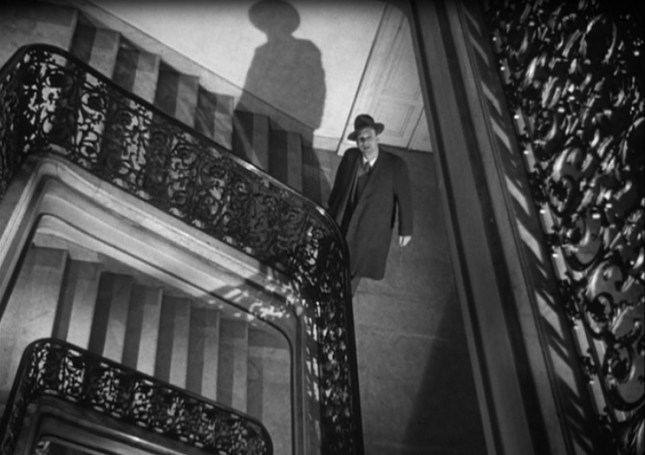
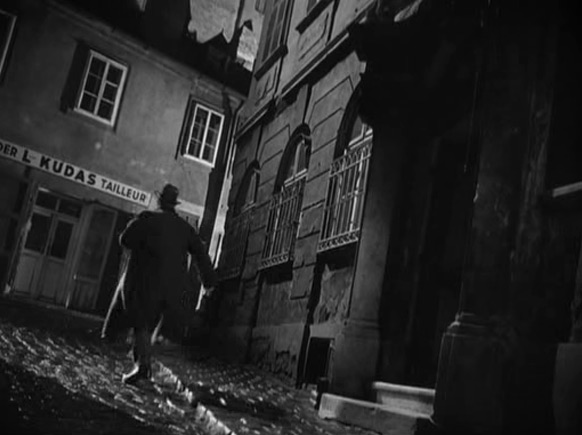
My buddy was right. The Third Man is inherently disorienting. Visually the film presents all of its subjects from a stilted perspective. They’re always slanted, featured in crammed together close-ups, and never quite sitting square in our line of vision from the camera’s uncomfortably low angles. Whether we realize them or not, there’s no doubt the dutch angels (from “Deutch” or German) manipulate how we experience the action.

Starting with these formalistic elements, the mood is perfectly ingrained in the fundamental building blocks of the story with the crumbling city sectioned off into its uneasy alliances between the WWII victors. We have a crosshatching of districts and a melting pot of language and objectives.

Thus, when the blundering American author Holly Martins walks into the story, he, like his audience, has very little understanding of what is going on. His level of comprehension is lost in translation even as he goes around trying to get to the bottom of the scenario. Joseph Cotten does a fabulous job in the part effectively becoming our eyes and ears in the environment.

And this strong association is part of the reason I so vehemently decried Netflix’s tampering with the original film’s ambiguity. If you’re like me and Holly Martins, you’re no polyglot, aside from a few token phrases here and there. When the old man or woman in the house rattles off something, you’re lost in the unfamiliarity. You’re waiting for someone to explain it, even trusting on the good graces of others. In some regards, you are helpless.

It’s part of the way the film toys with us. You realize the whole time maybe you’ve been played and a whole level of the film’s context has flown over your head. Subtitles alleviate our ignorance but also cause us to lose out on some of the perplexity felt as a result of such a global battleground. The Third Man capitalizes on the richness of these cultural ambiguities.

The Zither & Herb Alpert
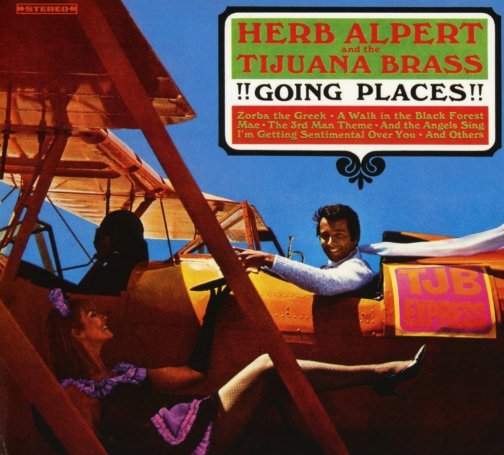
going places

The music is next on my list. My friend was right again. The title song’s awfully familiar and after Anton Karas got plucked off the streets of Vienna to provide the lively but strangely hollow and foreboding soundtrack, it would go onto some acclaim on the music charts (including a guitar rendition by Guy Lombardo).

The tune is one of a select few early movie themes to hit the mainstream remaining fairly recognizable even today. This is even more surprising given its inauspicious roots. My friend connected the dots later only to realize he’d heard the particularly Latin-flavored version by Herb Alpert and The Tijuana Brass on their album !!Going Places!!  He taught me something new, but you learn a lot being friends with an avid record collection.

Quick Pacing
img_thirdman

It might be a mere generalization, but I feel like there are often complains leveled at films of yore that they languish, there’s too much talking, and they don’t boast enough action. But I think my buddy was spot on once more. The Third Man has surprisingly timely pacing (aside from the deliberate final shot).

One of the practical reasons for this might have been director Carol Reed literally being hooked on the stimulant Benzedrine to get through his hectic shooting schedule around the clock. This might be one explanation for the zip, even in the opening monologue. However, there’s also an undeniable drive to The Third Man because it’s stuffed with questions, mystery, and underlying tension.

As information begins to reveal itself, we have screeching taxi rides, reveals, harrowing meetings on Ferris wheels, and climactic chases sequences clattering through the rubble-strewn streets and labyrinthian waterworks. But the reason it grips us has to do with falling in with intuitively compelling characters. That’s as good a place as any to bring him up…

Harry Lime: Super-Villain?
welles_thirdman5

The final observation I found to be particularly interesting was my buddy’s acknowledgment that Harry Lime felt surprisingly modern, a precursor even to the current villain. I want to tease out this idea even more because I’ve been drawn to movies that layer their menace. I can think of the likes of Black Panther or Mission Impossible: Fallout as two recent examples.

However, what I mean by this is how you don’t quite know where the trouble is going to come from, who you can trust, and who will betray you. It makes for a glorious puzzle to navigate. Is Calloway someone we can give our allegiance to? He’s an awful stickler for the law without clemency.

Mr. Crabbin is an unnerving chap before we ever learn who he is and the shifty-eyed likes of the Baron, Dr. Winkel, and Popescu have far more to tell than they willingly divulge. The woman Anna (Valli), who loves Harry, is almost delusional with her unwavering love for a scoundrel. Even Cotten, our initial hero, lumbers around like a drunken idiot, thinking he has everything figured out.

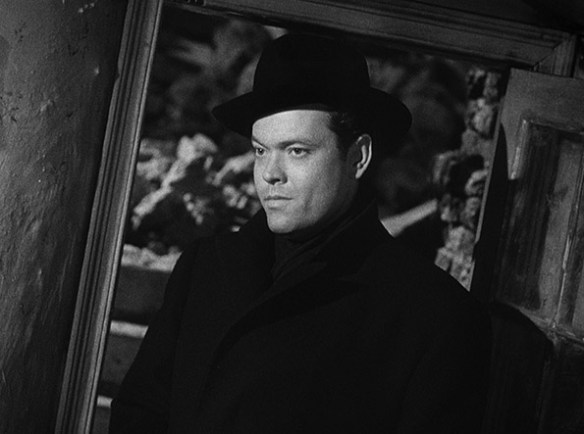
And of course, there’s Mr. Harry Lime himself. The most iconic charismatic, machiavellian anti-hero. Orson Welles makes him a dashing shadowy specter, larger-than-life and theatrical. But there’s no discounting the mercilessness pulsing through him. None of these characters are straight-laced by any stretch of the imagination. They have some flaw, evil, or vice dragging them down. Lime just remains the mastermind and the poster boy of it all.

The one character who seems like a generally agreeable chap is, of course, the one who SPOILERS gets it. Somehow it fits the times and the world. It couldn’t be any other way.

So 70 years on The Third Man still remains one of the preeminent examples of a quality thriller, pulsing with atmosphere, style, romance, and intrigue. To say they don’t quite make movies like this anymore is immaterial.

What’s truly staggering is how brilliantly Carol Reed’s film still holds up. I look forward to many more viewings to come, preferably with a friend or two. After all, they’re the ones who help me appreciate classics like these with new eyes.

Happy 70th Year to The Third Man! You’re still looking great!

I’m also proud to be a part of the Classic Movie Blog Association celebrating 10 years of existence. Here’s to many more.
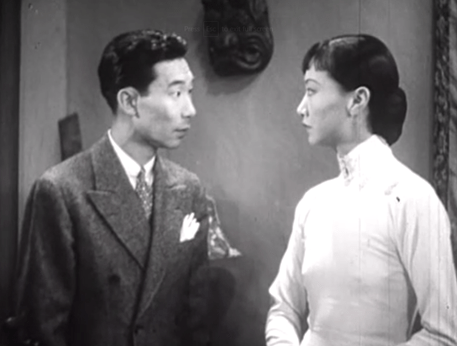
Daughter of Shanghai (1937) Starring Anna May Wong and Philip Ahn

daughter of shanghai

No, this isn’t an alternate universe. There really was a film from the 1930s starring both Anna May Wong and Phillip Ahn. They’re not just supporting players or bit parts to fill in a few stereotypical roles, either, but actual leads. More amazing still, they both speak English without a hint of an accent. They are Asian-American, intelligent and brave — in an era lacking comparable heroes.

Ahn is a G-Man sent by the government to investigate a smuggling ring bringing in hordes of aliens from foreign locales. Wong is front and center as a woman whose father, a local merchant, will not cave to the strong-arm tactics.  He ultimately becomes a casualty of the clandestine syndicate looking to elbow its way further still into the illegal trade.

Lan Ying Lin (Wong) escapes her captors and is intent on infiltrating their racket and putting an end to it, once and for all, to avenge her father’s death. She ends up going undercover as a dancer at an exotic dive in an effort to get to the bottom of the mystery. She does not know the meaning of the word danger, her finest attributes being a certain stubbornness and resiliency.

She makes quite the impression bringing her “Daughter of Shanghai” act to the seedy exotic cantina. Her boss (Charles Bickford) is a grungy braggart who discloses that he is instrumental in helping sneak certain people in through Uncle Sam’s backdoor. Bingo.

Meanwhile, Kim Lee (Ahn) takes up with a mangy sea captain who’s on the other end of the racket supplying the “cargo.” The inside man convinces his not too bright superior that he can speak Russian — a sample of his linguistic skills include those useful Russian phrases, “Alpha, Beta, Gamma, Epsilon.” Being as “exotic” as he is, it’s easy enough to swallow and not another inquiry is made on the subject.

Despite being a quickie, clocking in at barely over an hour, Daughter of Shanghai still manages to have enough time for a couple murders, a barroom brawl, some exotic dance numbers, gambling, and copious amounts of alcohol. The dialogue’s a bit shoddy and there’s no time to waste so the story operates in very straightforward, uncomplicated turns. It’s B level without a doubt, but it utilizes everything at its disposal to draw up the punchy melodramatics necessary to make a story such as this impressionable.

In the end, our two heroes are reunited in their quest only to make the chilling discovery that villainy is a little closer than they ever dreamed. Ahn gets a chance to slug it to Anthony Quinn in a very early spot in the actor’s career. But he gets some much-appreciated help from a pug-nosed, good-natured chauffeur who makes up for his lack of brains with brawn.

One of the strangest dichotomies comes at this point because although Wong has been our guiding heroine thus far, she nevertheless watches the fighting between the men all but powerless to intercede. Regardless, justice is enacted. It’s a group effort.

Admittedly, if it wasn’t for the leads, maybe we would quickly forget The Daughter of Shanghai, but such a cast is so few and far between that this is a historical relic certainly worth unearthing and therefore worth remembering. That doesn’t imply it’s perfect by any means.

The road toward nuanced representation is a long and arduous one requiring baby steps only to be impeded with various obstacles and inevitable steps backward. Because it’s easy to be homogenous, unimaginative, and flat. The outliers are where we find intriguing artifacts suggesting exceptions to the rule, cultural documents that dared to give us a different portrait of humanity. In my labyrinthian odyssey to discover hidden gems, those are the ones I’m invariably drawn to.

Anna May Wong and Philip Ahn should have been bigger stars if not for the perceived impediment of their ethnicity. Daughters of Shanghai is a tantalizing taste of something altogether groundbreaking. That makes it worthwhile even as there’s an air of disappointment. Oh, what might have been. However, we must be thankful this treasure still exists.

3.5/5 Stars

He Ran All The Way (1951): John Garfield’s Final Film

he ran all the way 1.png

We meet the belligerent two-bit criminal named Nick Robey (John Garfield) sleeping one off in the grungy apartment he shares with his acerbic mother (Gladys George). It’s not exactly the lap of luxury but it gives us some immediate insight into who he is. He’s an oafish, pitiful excuse for a human being and he’ll never amount to anything. One very visible reason comes from his open disdain for other people; he and his mother share no amount of affection whatsoever. It’s not a very promising portent.

Norman Lloyd, once again, plays some sidewalk sleaze, like he did in Scene of The Crime (1949), this time coaxing his pal Nick into helping him pull a job. It looks as easy as pie. And it is. The man parks, starts walking away with his briefcase full of dough, and they overtake him easily — without a hitch of any kind. But it’s inevitable; in order for there to be any movie at all, something must go wrong. A nosy policeman starts poking around and they scramble to get away before he nabs them.

The cop fatally wounds Lloyd but Garfield gets away, not before gunning down his pursuer. Just like that he winds up a cop killer. Except no one knows his identity definitively. So he’s got to go on the lamb keeping himself masked with the weekend crowds.

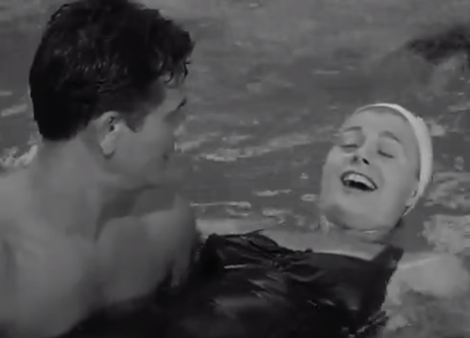
It’s a fascinating documentation of weekend diversions, in particular, community swimming pools. With his payload of money in toe, Nick nervously tiptoes around the pool eyeing the oblivious policemen milling about. There he also meets a girl. She’s not only a cover but a bit of a welcomed distraction from his continual paranoia.

he ran all the way 2.png

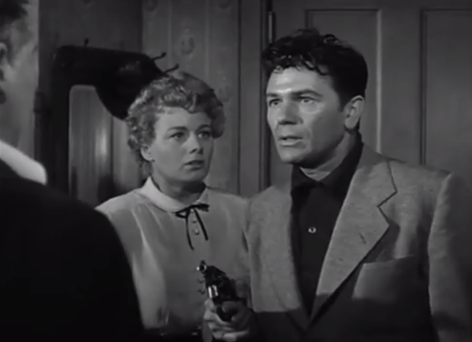
He Ran All The Way takes on a motif reused in Suddenly (1954) and other such pictures as Nick essentially becomes a live-in guest to Peg Dobbs (Shelley Winters), her parents (Wallace Ford and Selena Royle), and her kid brother (Bobby Hyatt). He lets them go about life partially unimpeded, keeping one of the family at home at all times as constant leverage. That way there’s no funny business.

While the picture is hardly Garfield’s best, it is imbued with tightly coiled tension that’s instigated in the opening minutes. The ticking clocks never end aided by confined spaces, oddly intimate relationships between captors and hostages, as well as a volatile showing by Garfield. He’s all turned upside down trying to deliberate on his future plans.

Then they have a clash of principles over the dining room table. The family with their stew and him with the turkey and the lavish meal he’s gotten together. They want no part of it but he’s going to get them to eat even if he has to provoke them at gunpoint. In another scene, he inquires gruffly, “What does that church stuff do for you?” Without skipping a beat, still working away on his model vessel, Mr. Dobbs succinctly replies, “it makes you understand the virtue of love.”

Thus, this dialogue aptly frames the story as a tale pitting family versus romance in such a way that only one can come out intact. Peg is the one forced to make a choice. James Wong Howe’s camera works in numerous close-ups and that continues even until the end of the film to underscore moments of isolated impact. Garfield’s face, in particular, is singled out. We see the fear, the anger, and the confusion breaking out across his features time and time again.

A stairwell finale perfectly epitomizes the dynamic between the two leads, see-sawing back and forth perilously. Until they make it to the ground level and things must come to their harrowing conclusion once and for all.

he ran all the way 3.png

For all the hell Garfield put his captors through, the look on his face is striking, when it all comes to an end. It’s betrayal and fright and forlornness all rolled into one. Even as he’s a hard-bitten, tormented man, there’s still a sliver of something inside of him that we cannot help feeling sorry for. That’s a testament to the earnestness of his talent.

The context of the picture becomes arguably just as important as the film’s condensed narrative. Like any movie, it was hardly conceived in a vacuum and the early 1950s were, of course, characterized by the paranoid finger-pointing culture of McCarthyism.

The emblematic figurehead that always gets brought up is The Hollywood Ten — who subsequently were some of John Garfield’s closest collaborators. Dalton Trumbo even worked under a pseudonym on this script while director John Berry, for all intent and purposes, might have been christened the 11th member of this targeted group. Following the production, he would enter a self-exile in Europe.

But this would also be John Garfield’s last film and it would primarily be his last film — most people agree — because his heart attack, brought on at the age of 39, was caused by undue stress from the allegations he was embroiled in.

Even though he went before the House Committee on UnAmerican Activities, his appearance did not completely absolve him and on top of that, a separation with his wife looked to be ending in divorce. He would die on May 21st, 1952, his funeral attended by masses of mourning friends and fans.

He was the apparent forerunner to such other tragic figures like James Dean and Montgomery Clift and the not-so-tragic decline of Marlon Brando. Without Garfield, those fellows would have come out of nowhere but from him, you trace the line of progression from hardboiled stars like Cagney and Bogart. Watch these films and you recognize that same pent-up alienation and angst. Most importantly there’s a newfound sense of vulnerability being awakened.

3.5/5 Stars

Review: Bonnie and Clyde (1967)

bonnie and clyde.png

Fifty years on and Bonnie and Clyde remains a cultural landmark as the harbinger proclaiming a new American movie had arrived on the scene. As a cinematic artifact, it is indebted as much to the 60s themselves as it is the Depression Era where its mythical crime story finds its roots.

The spark of an idea came from screenwriter Robert Benton’s own knowledge of his father’s fascination in real crime novels, which even led the elder Benton to attend the actual funerals of Clyde Barrow and Bonnie Parker. It’s youth rebellion and a free love revolution by way of the 1930s mythology.

Formalistically, Bonnie and Clyde was an effort by producer Warren Beatty and director Arthur Penn, collaborating with their screenwriters, to channel the French New Wave. It’s true that at a time, two of the movements titans, Francois Truffaut and then Jean Luc Godard, were both attached to the project. Ultimately, it didn’t pan out but the spirit they’re pictures were imbued with remain even as this effort is undeniably American.

Bringing the exciting and at times challenging art pictures of Europe to the American mainstream with a jolt of new blood, squibs included free of charge. Even if everyone didn’t realize it at the time, it signaled a rebirth of a style and philosophy that was fully alive. It only took generations of new film school filmmakers to run with it and in subsequent generations eventually, kill it.

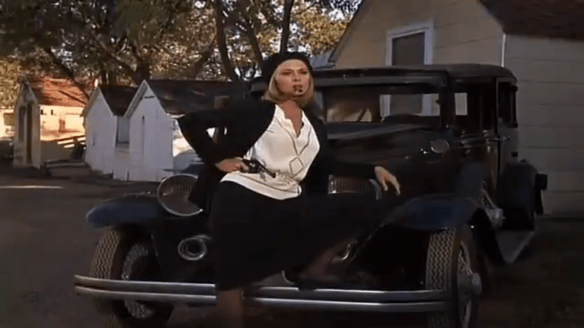
For now, we had the fateful meet-cute, Bonnie Parker (Faye Dunaway) scantily clad, bored out of her mind, and spying the boy trying to nab her mama’s car. She catcalls him and he welcomes her — nay, challenges her — to join him. He’s Clyde Barrow (Warren Beatty) a small-time criminal who did a stint in prison and has two missing toes to prove it (It was his gag to get off a work detail a few days before he was paroled). They share a drink over Coca-Cola in the noonday sun. He’s intent on being a big shot and she’s disillusioned by her waitressing gig.

In a moment, he brandishes a gun to exert his manhood and he’s further coaxed on by Bonnie to rob the cash register in her quaint town. She doesn’t believe he has the gumption. A minute later he rushes out with the wad of cash and they’re on their way to a giddy life of crime so thrilling, at first, with its bouncy jangle of banjo strings. This is only the beginning. They aren’t big name criminals yet. That notoriety is born out of three words: We Rob Banks!

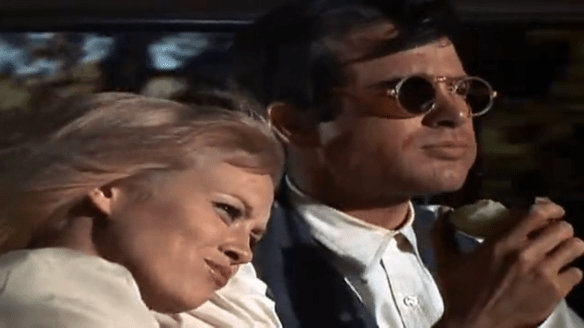
Yes, they do. They bring on slow-witted but able mechanic C.W. Moss (Michael J. Pollard) to keep their gears constantly turning so they can handily outrun the police and dot their native Texas with bank job after bank job. Clyde kills his first man after Moss botches their getaway and the papers start to document their harrowing exploits on the wrong side of the law.

A family reunion follows for Barrow as his older brother Buck (Gene Hackman) and Buck’s quibbling wife Blanche (Estelle Parsons), the daughter of a preacher, join their merry company. It should be noted the ladies take an immediate disliking to each other. Bonnie’s not agreeable to the domesticated lifestyle and she’s wary of Blanche, a woman she deems has no guts. It’s a perceptive observation.

bonnie and clyde 2.png

As their reputation grows, so do the prices riding on all of their heads. First, the cops look to ambush them on their holiday in Missouri. Then it’s a lone Texas Ranger (Denver Pyle) who winds up getting his picture taken to be plastered all throughout the newspapers. He’s not one to forget the humiliation and he’s aiming to make them pay.

Each and every time they take to the road again, starting up their rampage across the countryside a new, casing bank after bank, while gaining a bit of mystique with the common folk. Along the way, they pick up some extra passengers (Gene Wilder and Evans Evans) to terrorize and then make a pilgrimage to the Parker home due to Bonnie’s homesickness.

But even this move is extremely dangerous and soon another police ambush follows on their latest residence that is deadlier still. It’s a downward spiral with an ever larger target being pinned on their backs. Soon they’re picked off like ducks in a shooting gallery with Buck being mortally wounded and Blanche subsequently goes hysterical and spills her guts to the authorities all but sealing the fate of our antiheroes. Bonnie was right about her.

The other three escape by the skin of their teeth though badly battered. With nowhere else to turn, they seek asylum with C.W.’s father who extends some southern hospitality. Although, behind closed doors, he isn’t too keen about his son’s new lifestyle with tattoos and all.

We know the story must end even as Bonnie has successfully canonized their legend nationwide with a poem she penned subsequently published around the country. And they are as in love as they ever were promising to get married and dreaming of a different life where they could settle down and be normal folks. They take what they can get and love each other while they can. Because justice is swift and it comes with a vengeance.

bonnie and clyde 3.png

The old mores are upheld but utilizing a new language that was aberrant and gratuitous in comparison to the traditions of the past. But that was just it. Bonnie and Clyde was somehow the perfect vehicle of antiestablishment both in form and function. It was like the perfect storm of a cultural revolution and a medium to reflect the angst of a generation.

There’s a madcap raggedness to their crime spree that’s almost comical and Penn plays it like a comedy at first. A bunch of hicks out on a road comedy caper, only it’s underscored by graphic blood-spattered violence like the industry had never witnessed before. It’s like putting the frenetic zaniness of the Keystone Kops with the violent gunplay out of the gangster tradition and it creates a disconcerting dissonance ripping apart the standards of Classical Hollywood. Because the industry had showcased degenerate criminals before — the Cagneys, Robinsons, and Bogarts — but they were always hard-bitten figures and, of course, they got their comeuppance.

Up to that point, there was arguably no characterization quite like this where our leads were young and desirable — a new kind of antihero who forged an anarchic path between Gun Crazy, Breathless, and Pierrot Le Fou.

Arthur Penn pointed out at a later date, and you could easily make the argument, for the first time film was being more accurate by showing the actual impact of a bullet on a human body. There was no cutaway. There was no inference or use of the wizardry of editing to imply the results. They were right there in from of us in all their gory reality. That was indeed groundbreaking.

Its final scene ranks right up there with Psycho‘s shower sequence for how it completely shatters everything we knew to be convention. At that point, there’s no going back. You cannot unsee it. It stays with you. Both instances brutal in their meshing of image, sound, editing, and the myriad pieces at the disposal of filmmakers to make us see something deeply manipulating.

Bonnie and Clyde would bear many of the progeny that have challenged me; films that brazenly dabble in violence, comedy, and the darkness of the human heart in almost inconceivable ways. Mixing tones, emotions, and content in a manner that is incompatible at best and deeply perturbing in their most volatile forms.

Surely, we cannot laugh at something and an instant later be subjected to the blackness of death? People cannot be villains and cast as heroes in the same breath. Everything passed down from our traditions tells us this is not the way it works. After Bonnie and Clyde, it was a whole new landscape. No question.

5/5 Stars

Bullitt (1968)

bullitt 1.png

There was never a better city for crime pictures than San Francisco. Much of this reputation comes from Bullitt and the enduring cool of its hero Steve McQueen. He had many great films and he was a part of some truly epic ensembles including The Magnificent Seven and The Great Escape, but Bullitt is unequivocally ruled by “The King of Cool.” There is no other focal point.

Frank (McQueen) and his partner Delgetti (Don Gordon) have an authentically antagonistic relationship running deep. Because they know, without saying anything, they have each other’s backs. However, the ensuing events lay out a premise that will test them incessantly. Self-aggrandizing political hopeful Walter Chalmers (Robert Vaughan) is intent on presenting his key witness Johnny Ross (Felice Orlandi) before the Senate to spearhead his clamp down on organized crime. He’s handpicked Bullitt to give his valuable asset around-the-clock protection until he’s called upon to testify. He knows the cops exploits are popular with the local press and for Chalmers, every decision is an attempt to vie for candidacy.

For Bullitt, it’s just his job and so he Delgetti and a family man named Stanton take on the assignment ready to sit it out with Ross in a two-bit hotel room feeling like sitting targets with the large windows inviting prying eyes. Even as a certain of apprehension is maintained, the police set up watch and tell Ross to get comfortable. But the status quo was not to be. Stanton’s shift gets disrupted by a brutally unsentimental hit on a hotel room.

Ross gets blown through with a shotgun by two fugitives and Stanton is left for dead as well. Things truly ignite as Bullitt looks to pursue the culprit and feels the residual heat from Chalmers who is ready to make Frank’s life a living hell. Buying time, he hides Ross’s body to keep it out of the news and goes after the men he knows will lead him to his elusive answer.

bullitt 2.png

Aside from his motorcycle riding in The Great Escape, Bullitt‘s car chase is McQueen’s finest hour as an action star. Though he shared stunt driving duties in both films with industry-pro Bud Ekins, there’s little doubt his persona was well-deserved and he plays the part well.

10 minutes bouncing and thudding through the streets of San Francisco. Epic panoramas of the chase, swerving through traffic and careening around street corners leading to a straightaway where we get to see The Dodge Charger and Mustang really fly.

The enigmatic nature is the key to the rhythms the story settles into. It’s this sense of uneasiness mixed with pavement and payphone realism as Bullitt does the heavy lifting involved with chasing leads.

The beats of the procedural feel methodical and genuinely authentic while never obscuring the fact this is a thriller with pulsating ebb and flow. Because the best action movies are exactly that: action. Not simply in the climactic moments but the mundane. They rarely get weighed down by exposition or dialogue that we have to slog through. And as a result, they are won and lost in the ambiguity.

Director Peter Yates was hand-picked for the project based on his work on Robbery from the year prior, complete with its own defining car chase. Then, screenwriter Alan R. Trustman works with Harry Kleiner to follow up The Thomas Crown Affair, his other vehicle for McQueen.

Bullitt became the standard neo-noir cop film to measure all others from William Friedkin’s French Connection, its East Coast rival, to Dirty Harry and many of the later works of David Fincher including Se7en and Zodiac.

The film is blessed with unprecedented access to San Francisco, which would be all but unheard of today. From streets being closed off, to shooting in full hospital wings, and taking over SFO airport for an evening. These authentic locations all throughout the city not only guarantee a certain degree of authenticity, they also meant Bullitt needed no sets.

Because at the time the picture was shot, S.F. was not necessarily a film mecca though films such as The Sniper, The Lineup, and of course Vertigo were shot there. But Bullitt and other equally atmospheric projects captured its shading for all posterity in the subsequent years. It became so much a part of the cultural consciousness Peter Bogdanovich would very purposely do a sendup of the chase in his neo-screwball What’s Up, Doc.

Handheld Arriflex cameras allow Yates a fluidity and a similar intimacy with the real world that all but plants us in the environment. Steve McQueen racing across the tarmac to nab his man, ducking and diving under oncoming planes taxiing out masks nothing. It feels real and fearless in a way that’s hardly for show. McQueen embodies this type of tenacity.

bullitt 3.png

In the end, it’s not much of a spoiler that we see another bloody body, this time with wounds inflicted by the police and we’re reminded how similar they look. Yes, one was committed as an act of crime, the other an attempt to maintain public safety but they both lay there horribly mangled.

If the film began with an unsentimental gut punch then it’s safe to assume it would not change and thankfully it does not. Bullitt is the quintessential police film with grit and violence, forged through by a cop who’s willing to go rogue and stand in the face of powerful men to uphold his responsibility. He’s not looking to make a name for himself. Even as he pushes back against the establishment, he’s reined in by his own moral compass. It’s what guides him.

Jacqueline Bisset is enchanting as his girlfriend though she isn’t given much of a purpose in the film except for providing him someone to go home to. She is a much-needed person to draw out the more sensitive side of his normally guarded self. But she’s also the one to put into question his line of work: “Do you let anything reach you? I mean, really reach you? Or are you so used to it by now that nothing really touches you? You’re living in a sewer, Frank.”

Here is the conflict I imagine within most any police officer. This internal tug-of-war between wading through the refuse to clean up the streets and becoming one with it. Of becoming so used to evil, you’re soon callous and cynical toward all good. When the only way to fight violence is with violence in an equal and opposite direction.

At the very least it spells a compromise of integrity and morals and of a belief system. If that’s getting a little too moralistic, know Bullitt is just about the best police procedural we ever had. It certainly holds a well-deserved place in the pantheon of crime genre archetypes. With or without morals.

4.5/5 Stars

Little Caesar (1931)

Little_Caesar.JPG

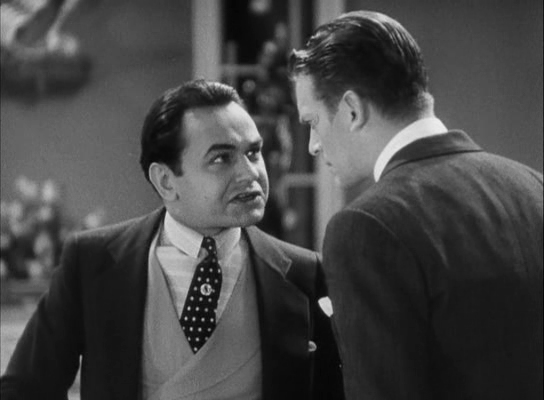
When I was a kid we had an old VHS of Bugs Bunny shorts and one of the caricatures in a gangster-themed storyline — although I didn’t know it at the time — was undoubtedly Edward G. Robinson. That voice. That mug. That smug self-assuredness. They’re inimitable. Even then I knew the image without knowing who this garbled-mouthed gangster actually was. Watch Little Caesar and it’s all right there. In fact, without Little Caesar, one could step out on a limb and say that Bugs Bunny cartoon would never have been made. Though, Robinson was an indomitable personality. One way or another he would have broken through.

As it was, Robinson made a lasting impression in his big break, the picture that would make him a star just as its contemporary The Public Enemy (1931) did the same for James Cagney also at Warner Bros. True, it served as both a blessing and a curse typecasting the stars with their audiences. Still, both men led impressive careers which, at least on occasion, allowed them to break out of the mold and really show who they were as actors. And the beauty of their successes had nothing to do with an imposing physical frame but rather a sturdiness and commanding tenacity that made them into electric performers full of captivating stage presence.

With an opening quotation from Matthew, “All who take the sword will perish by the sword,” we are immediately tipped off this will be a moral tale right from the outset, an act of condemnation not glorification. However, that cannot completely neutralize the unadulterated gangsterism of Litte Caesar. Far from it.

With all these early Warner Bros. crime films we can define the arc of the story by an ambitious lug who’s willing to do whatever it takes to rise to the top, showcasing both guts and gats when necessary. It takes both to get ahead. Rico (Robinson) is a little guy who’s not content with his lot in life so he resolves to change things. He heads to Chicago with his buddy Joe (Douglas Fairbanks Jr.) to see what they can make of themselves.

Already they are on diverging paths as Joe looks to return to his first love of dancing, even finding a capable ally and love interest at a local club. Olga (Glenda Farrel) makes a new lease on life possible for him. But such a life would never do for Rico. He’s already set his sights on big-time crime, moving up the ranks with local mobster Sam Vettori.

Joe is roped in for a job as the inside man and reluctantly he goes along with it. But on the same night, New Year’s Eve, Rico guns down the crime commissioner during an otherwise straightforward hold up of the Bronze Peacock. It has heady implications as the local authorities look to clamp down.

As best as I can describe it, there is a stripped-down unsentimental bent to the action line going through the movie. The talking pictures still feel like a new phenomenon recorded on Vitaphone — a bit rigid and visually unimaginative — but in some respects, it aids in the characterization of the gangster underworld. It’s hard-edged, lacking any sense of freedom of movement or ideals. They play by a “you’re either with us or against us” mentality and they are not about to let you forget who your friends are. Rico and Joe provide the diverging alternative lifestyles available as one tries to go straight and the other becomes more crooked by the hour.

The character of Tony is another convenient case study for the movie as the local mob’s getaway driver who begins to lose his nerve and have remorse for his part in it all. It is his saintly mother who not offers him spaghetti but tries to remind him of his former life when he was a good boy. Convicted to the very core of his being, he goes to the priest for confession. But Rico will have none of this blubbering. His retribution is sure and swift as it’s always been, culminating in an OG drive-by shooting.

A gang war erupts when a failed hit is instigated on Rico. Instead, he and The Big Boy are able to consolidate power and he continues to rise up the ranks. All throughout his ascension, Rico lives by streetwise slogans like, “I ain’t afraid of nobody.” “The resident bosses are getting so they can dish it out but can’t take it anymore.” And of course, “the bigger a man becomes, the harder he falls.” It’s all but inevitable.

His words are prophetic because at some time Rico’s got to face the music and he does. Like The Public Enemy and Scarface, what sets these pictures apart is not necessarily that they glorified crime because you can make the case each tries to hammer home the moral crime doesn’t pay. And yet with the exhibitions in violence and the uninhibited pursuit of power by antiheroes like Cagney, Muni, and Robinson, the public latched onto them and propelled them into being big stars. Without the pre-code era, we would lack some of the legendary mystique of Rico.

In the end, riddled with Tommy gun fire, he looks up into the heavens, exclaiming those now immortal lines, “Mother of Mercy, is this the end of Rico?” With that, he breathes his last. But the miracle of celluloid means that now 85 years onward Edward G. Robinson’s performance lives on.

3.5/5 Stars

Decoy (1946)

decoy 1.png

THIS IS MY VERY LATE ENTRY IN THE CMBA SPRING BLOGATHON: FEMME/HOMME FATALES OF FILM NOIR! 

Like any self-respecting noir, this one chooses to open in a grungy gas station bathroom with a hero (Herbert Rudley) disheveled, hobbling, and covered with grime. We can gather he’s been through hell. Better yet, Decoy begins at the end of the story with murder!

He hobbles past a gas station attendant, stands at the side of the road to hitch a ride to San Fransisco. Mind you, this is without saying a single word. Upon arriving, he wanders into a hotel. He takes the elevator up, pushes open the front door, sees an attractive woman packing and proceeds to fill her with lead! What’s even stranger is the cop who follows close at hand as if he knows exactly what’s about to happen. He plods in to find the shooter dead and the lady dying.

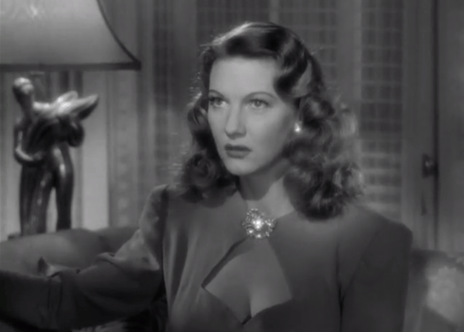
Here’s this pretty dame, Margot Shelby (Jean Gillie), in the arms of a hardboiled flat foot (Sheldon Leonard) recounting her indiscretions on her deathbed. Really all she’s doing is helping him pick up the stray pieces he already knew but for the audience, it’s all news. To get a line on the story, we must start back with an incarcerated gangster named Frankie Ollins (Robert Armstrong).

He is in line for the gas chamber and Margot has long been his girl. She assuages him, saying they’re lining up money to get him out of his jam — but she also is concerned about security — he has promised to keep her sitting pretty. And he has the resources to do it with $400,000 waiting out there for her somewhere. He just needs to give the word. We get the sense foul play might be a central component of our story.

From thenceforward she goes to work efficiently. She exerts her feminine charms on a local clinician who also regularly gives his services to the local prison. You see, he is pegged to do the autopsy on Frankie’s body just to make sure everything’s on the level. Except Margot’s got his head spinning — most of it happens off camera —  but we believe he’s fallen for her, like putty in her manicured, greedy little fingers.

And Margot goes all in, playing it up. The love angle is seemingly candid even as she tells him the plan to revive the “dead” gangster with Methylene Blue. We witness the gas chamber in a groggy POV shot. In another picture about regenerate gangsters, this would be the end. For Decoy it is merely the beginning.

Because Margot is the film’s greatest force as a notable apex in the gallery of B noir femmes. She keeps gangsters madly jealous, twisted around her fingers, and then righteous men start caving, relinquishing their high ideals just to be with her.

Two of the most oddball supporting characters in the pictures are the morgue attendants who distract themselves with solitaire and reading words out of the dictionary — a real hoot — but they are plain folk who don’t ask questions when the good doctor skips out on the normal autopsy.

They go on obliviously as the body gets carted off to the “oven” only to get picked up by waiting gangsters. By now, there’s little doubting it. Owens is to be resurrected and yet it’s the devil incarnate doing it! But someone like Margot is only operating in viable currency. People are only needed for their immediate value to her.

Frankie is out of the picture when he’s not needed, Jim Vincent (Edward Norris) is just a handy thug to have around, and of course, Dr. Craig’s expertise made him invaluable (although he does smoke cigs which always leaves me scratching my head).

Everyone else is under the illusion that she actually wants them. Her intentions surely cannot be completely self-serving? Can they? And yet she can be found jamming the accelerator to get rid of people and gunning down hapless accomplices with waves of giddy relish. Even on her deathbed, she gets the last laugh on a cop who falls momentarily under her spell. But for all her trouble she got absolute zilch. A creature of crazed avariciousness will ultimately be met with total destruction.

Jean Gillie’s accent somehow elevates her performance with an edge of refinement and respectability the British seem to have and yet her actions and words are like vicious daggers of selfishness. There is no other way to see her vindictiveness but within the context of film noir; it’s a pulpy delight. Detour is still the standard bearer and the pinnacle of Poverty Row, throw ’em together noir gems, but Gillie is a preeminent femme fatale, especially for such an unassuming picture.

3/5 Stars


The Lodger (1944)

the lodger 2.png

“Love is very close to hate. Did you know that?” – Laird Cregar as Mr. Slade

Some perceptive viewers might well know that The Lodger is based off a novel by Marie Belloc Lowndes and it garnered a fairly high profile silent adaptation by Alfred Hitchcock followed by a sound version in 1932. Both pictures starred heartthrob Ivor Novello.

What the Hitchcock version boasts is his trademark eye for the visually cinematic even at this early juncture of his career. Still, the young director was a bit unsatisfied with a resolution that lacked the true punch of the original narrative. Honestly, he probably delivered the best thriller he could given the circumstances.

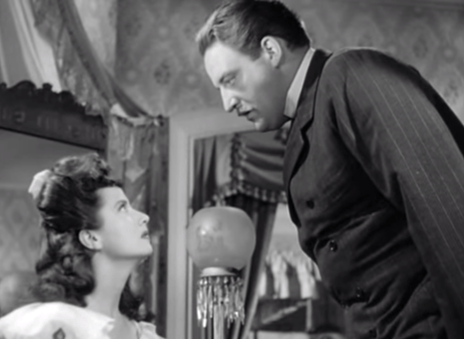
But with John Brahm’s rendition, this is as close to an uncompromised narrative as it can be while still meeting the requirements of the Hays Codes. What we have on our hands is a Jack The Ripper murderer who slits the throats of ladies all across England. And it’s not merely a bout of mistaken identity with Laird Cregar’s foreboding presence hanging over the picture moment by moment.

Merle Oberon, renowned for her immense beauty, did suffer some lacerations and scarring from a car accident in 1937. Her career continued unimpeded and in Lucien Ballard, she found a cinematographer she literally fell in love with. The reason being, he developed a lighting style — still called “The Obie” to this day — that completely hid her minor blemishes. As was the case with Minnelli and Garland, perhaps she fell in love more with the way he made her look than with the actual person. They would get divorced a few years later in 1949.

As far as her performance there’s little to criticize. She’s bright and beautiful as the dancehall singer, Kitty Langley, who lives with her aunt and uncle in the Whitechapel district. Admittedly she does seem a little well-to-do for her specific career path but no matter she’s quite the success.

Meanwhile, the ominous and rather taciturn gentleman Mr. Slade (Cregar) takes up residence in the Bontings’ home forewarning them about his nocturnal habits due to his research as well as his desire to be left alone as much as possible. Meanwhile, the rash of murders across the city continues and Scotland Yard has yet to apprehend the criminal.

An Inspector Warwick (Georges Sanders) comes to call on Ms. Langley as she was the last person to see Jack The Ripper’s latest victim alive — one washed up actress named Annie Rawley. In this way, our stars have been brought together but far more intriguing is the fact that such a foreboding character is staying right in their stead.

And it’s more than just a hunch that Mr. Slade might be the culprit. On top of his often erratic and suspect behavior, he’s obsessed with his genius-of-a-brother now deceased. He claims that beauty led to his sibling’s destruction and there’s little denying that he has some deep-rooted abhorrence for stage actresses.

So the inevitable must come. Everyone turns out for Kitty’s latest performance even the normally reclusive Slade and as he watches the show with its lavish costumes, provocative Cancan lines, and song and dance, we watch something begin to erupt.

What follows is the rest of a thrilling pandemonium-filled stage show that becomes a frenzy when it’s let out that the wanted lady killer is purportedly right in the very building. Cregar crazed and paranoid scrambles past sets and up into the rafters for a chance at escape. Ultimately he brandishes his knife for a desperate face off with the police force. In the end, he takes the path of least residence that nevertheless leaves an indelible impression.

Sanders and Oberon are fine talents, genial and all, but next to their supporting star they feel unremarkable. Of course, that comparison is already so unfairly weighted. Because Cregar is just that chilling. There’s little doubt that he captivates the screen and subsequently steals the picture in the final minutes. He’s the only reason you need to watch this one. If it means anything, the movie was a stirring success and it garnered a follow up in Hangover Square (1945) which might be even better. Cregars a showstopper in that one as well if you needed any indication.

3.5/5 Stars

The Tall Target (1951)

the tall target 1.png

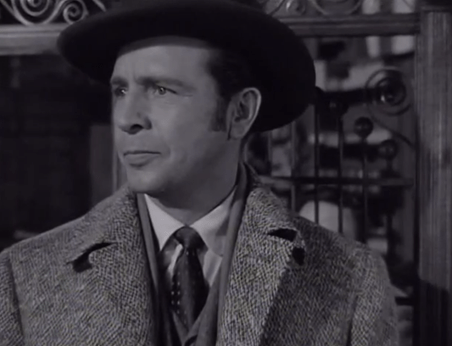
To set the scene our storytellers enlist an opening crawl that runs over the unmistakable strains of train noise. The year is 1861. The event being dramatized is the alleged Baltimore Plot and our hero is New York policeman John Kennedy (Dick Powell).

Despite being common and coincidental I can’t but help to acknowledge the bitter irony of our protagonist’s name. But he is not here to thwart a plot against his own life but a man with a much longer shadow.

His in-depth report warning against an impending threat to Abraham Lincoln on the road to his inauguration in Baltimore is dismissed by his superior as alarmist drivel. Nevertheless, the man finagles a way onto the Baltimore-bound steam engine finding an agreeable ally in Colonel Caleb Jeffers (Adolph Menjou). Kennedy once guarded Lincoln for 48 hours and yet in this perilous hour, he will go great lengths for the same man. However, we will soon find out that not everyone feels that way. He’s a very polarizing figure.

I’ve come to the not so startling conclusion that anything Mann touches turns into noir which I readily agree too. Much like Reign of Terror (1948) before it, the director transforms this antebellum train thriller into a reconstruction of history painted in tight angles, smoke & shadows, and coiled with taut action. We grow embroiled in his composed world of greasy close-quartered combat with grimacing faces and flying fists. Far from being constricting these elements are where the story thrives, trapped in corridors and hidden away in side-compartments with the characters that dwell therein.

Because moving through such a space forces Kennedy to brush up against so many individuals. A conductor (soon-to-be blacklisted Will Geer) who is trying to make sure everything goes as smoothly as possible only to be inundated by troublemakers and drama. A young mother (Barbara Billingsley) who tries to control her antsy son. An incessant windbag constantly worrying about her prized “jottings” and all she’s going to inquire to Mr. Lincoln about. A southern gentleman sounding off in his dismay with the countries future. You get the idea.

Despite the vague difference in context, it’s quite understandable to place The Tall Target up against another film from the following year The Narrow Margin (1952). Rather than try and decide which one is superior, it’s safe to say that both excel far beyond what their budgets might have you suppose and they utilize the continual motion of a train to an immense degree because in that way the narrative is almost always chugging along to a certain end.

the tall target 3.png

Ruby Dee has a meager but crucial part in The Tall Target that I deeply wish could have been more substantial. In fact, in an early version, the established star Lena Horne was supposed to play the part of the slave girl Rachel.

Though the movie doesn’t have too much time to tackle the issues at hand, with its limited runtime it does attempt some discussion in terms of African-American freedoms and the southern relationship to such an ideal as asserted in the 13th amendment. The dichotomy I’ve always heard repeated is that “the North loved the race but hated the individual. Southerners hated the race, but love the individual.” It’s a vexing sentiment that we somehow can see playing out here.

Ginny Beaufort (Paula Raymond) a proper southern belle notes that she grew up so close to Rachel treating her like a sister. So close in fact that she never even thought about giving the young woman her freedom. Meanwhile, her younger brother Lance is involved in more than he is letting on. The mystery is not in his objective — he’s made his sentiments fairly clear — he despises Lincoln. Rather what matters is who his compatriots are and how they plan to go after the future president.

For me, the illusion was broken in the final moments because up until that time the picture has kept its eponymous hero masked. He is the Tall Target and nothing else. When we see him somehow the mythos around him is broken and he becomes another actor more than the idea of the man we know as our 16th president.

Regardless, Anthony Mann’s effort, while not well received in its day, is another picture packed with exuberance. It gives us grit and intrigue aboard a train and like the best thrillers, it uses every restriction to keep the tension palpable while throwing around enough diversions to keep us in our seats.

3.5/5 Stars

Badlands (1973)

badlands 1.png

I’ve always maintained a great admiration for Terence Malick, even after only seeing two of his most renowned pictures, Days of Heaven (1978) and Tree of Life (2011). This a testament to his intuitive understanding of the image and how gloriously sublime it can be. It’s true his pictures seem to exist in their own strata, part reality and then this heightened stratosphere verging on the ethereal.

Now I’ve seen a third, his arresting directorial debut Badlands, and it remains obvious that though his career has progressed, his films at their very essence have remained the same. Malick is a Texas native who attended the AFI Conservatory and became a pupil of Arthur Penn.

It’s true you can see a cursory similarity in content between the likes of Bonnie and Clyde (1967) and this picture because we have the archetypal love-on-the-run narrative. But there’s hardly any confusing them in terms of execution.

Penn’s picture is upbeat, sensual, and almost flippant with these youths in revolt. It does feel like a kind of a statement for the 1960s. But Malick’s film is entirely matter-of-fact, a bit detached, and mystical. Even the music plays into this almost timeless quality that sets it outside of a specific timeline even as it functions as a kind of period piece.

We have a vacant serenity playing a backdrop to all the action with canvasses bathed with soft hues of light. As best as I can describe it there’s a dreamy, gossamer-like tint to the imagery. It feels warm and welcoming at first with a calm cadence until it no longer can exist as such.

Aided by Sissy Spacek’s innocent gaze of mundane wonderment in the world, it’s a southern story of the grimiest sort, which somehow winds up being a fairy tale romance in her eyes. Her voiceover is what holds the film together and never allows it to lose this illusory quality.

Loosely based on The Starkweather case, Kit Caruthers (Martin Sheen) is a high school drop out who collected garbage for a time and fashioned himself after James Dean’s rebellious reputation. He introduces himself to the hesitant, naive Holly Sargis (Sissy Spacek) who nevertheless finds him intriguing. Though many years her senior, they start accompanying one another, much to her father’s chagrin (Warren Oates). He knows the boy is no good.

Kit was never someone to let others dictate his life for him and with cool calculation, he moves forward with a plan, taking Holly with them as he goes out on the road. They commence a life together out in the open and it feels a bit like Robinson Crusoe. It’s no small coincidence they read Kon Tiki while lounging in a tree house they have constructed by themselves. It’s a far cry from its predecessors at this point.

Like Bonnie and Clyde, Badlands is a film depicting killings dotted across the land and yet they are, again, matter-of-fact, even forgettable, which seems terribly callous to admit. But there simply is not the same blatantly violent, in your face, bloodshed of the earlier picture. Continually any amount of drama is replaced with a trance-like dreamscape, aided by the fact writer, producer, director Terrence Malick was never one for intricate, pulse-pounding plotting.

badlands 3.png

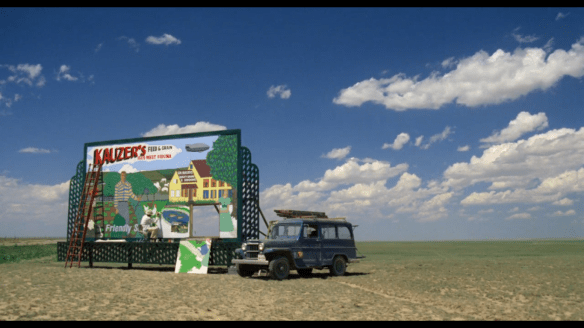
He is a filmmaker and he gifts us indelible panoramas of America. A billboard set up against rolling prairies and the most glorious of cumulonimbus clouds. Naturescapes cultivated with luscious greens that might be found in Rohmer’s Claire’s Knee (1970) and frolicking easily at home in the works of Renoir. Conversely, we have a house burning that feels like an otherworldly funeral pyre. The old must burn to give way to the newfound promised land Kit and Holly are embarking for.

While the image is always paramount in a Malick film, one could argue the music also has a hallowed place with Carl Orff’s “Gassenhauer” adding this oddly tinny, adventurous note to the score. Then, Nat King Cole’s “A Blossom Fell” provides an immaculate encapsulation of romantic ideals whether our fugitive lovers are driving, dancing, or just taking in the scenery. It’s perturbing to have something so melodious play in the wake of such brutality.

To say the film reaches a conclusion is slightly deceptive. More so, it simply fades away. Finally, some local police catch up with them. First, they send a helicopter and then a police car is dispatched. Holly is left behind and caught. She recounts how she moved on with her life after Kit, getting off on her charges and marrying the man who defended her. And Kit was caught too but it came on his own terms. He accepts it with his usual unemotional equanimity.

Watching Martin Sheen in these moments is riveting because he seems content with how things have run their course. As friendly and personable as you might expect and yet capable of such dehumanizing evil. It’s the dissonance of these scarring acts of aggression followed by him pragmatically fielding questions with the media and then being shipped off to his execution with his guard wishing him well. How can such a man exist?

There is no reason to Kit. He simply commits to actions, which are completely detached from any feeling. And yet he is simultaneously capable of some amount of human connection and camaraderie. It leads me to surmise he is a character who could never exist outside the context of celluloid. There you have part of what makes him such a compelling study. Because other films have already filled out the contours of disillusioned antiheroes and killers to our heart’s content.

Like any admirable filmmaker, Malick provides us with a novel distillation of age-old themes. He makes the accepted paradigms feel fresh and perplexing again. Thankfully for us, he’s never ceased going down a road paved with his own vision and personal preoccupations. Because at its best, his individuality is capable of speaking to willing audiences in fundamentally unique ways.

4.5/5 Stars