Review: Murder, My Sweet (1944)

e30de-murdermysweet1Ann Grayle: You know, I think you’re nuts. You go barging around without a very clear idea of what you’re doing. Everybody bats you down, smacks you over the head, fills you full of stuff…and you keep right on hitting between tackle and end. I don’t think you even know which side you’re on.

Phillip Marlowe: I don’t know which side anybody’s on. I don’t even know who’s playing today.

Now after seeing the original Dick Powell as a crooner in light song and dance flicks, his re-imagined image as Chandler’s Phillip Marlowe is that much more surprising. This film quickly dropped being the potential musical Farewell my Lovely and ultimately became a hard-boiled Noir called Murder, My Sweet. To Powell’s credit, his new alter ego works and he brings his own spin to the role. Perhaps he has a little more humor than Bogart but there is still enough of the tough guy in his role to make it work. He’s also deliciously cheeky which is perfectly illustrated by a scene where he lights his match on the butt of a statue. It’s great.

Edward Dmytryk gave us a film that has often been credited with helping to define the film-noir style of the 1940s. It makes perfect sense since his film brims with many of the major hallmarks of the genre. The powder-burned Marlowe’s initial narration carried through a flashback lends a wry and cynical commentary to the entire story. The screen itself is cloaked in shadows, filled with billows of cigarette smoke, and is often superimposed with disorienting images.

Early on one man named Marriot is dead, Marlowe gets clocked over the head, roughed up several times, not to mention drugged up. He gets hired, used, thrown off, and seduced more than once. All because of an expensive jade necklace. As Anne (Anne Shirley) notes, Marlowe goes charging into his case not quite knowing what is going on or who he is dealing with. That ambiguity is one of the strengths of this film because we are never allowed the comfort of knowing who to side with.

By default, we begin the film from the point of view of Marlowe, and so he is our anti-hero who we track with the entire film. He gets the giant thug Moose (Mike Mazurki) tossed his way first. Marlowe meets the pretty Anne who hides her true intentions, introducing him to her wealthy father (Miles Mander) and seductive stepmother (Claire Trevor). Next up is quack doctor Jules Amthor (Otto Kruger) who appears to be our most clear cut villain and yet nothing is for sure.

It takes a late night confrontation at a beach house for things to straighten themselves out. Yet even up until that point, we do not know Marlowe’s true intentions, and he does not find out the resolution of the case until well after, thanks to the powder burns to the face.

Aside from Dick Powell’s anchoring performance, Claire Trevor is a tantalizing femme fatale, while Anne Shirley plays the guardian angel rather well. The juxtaposition of a morally questionable woman and an innocent girl develops the tension, not to mention that they are step-daughter and step-mother. When it’s all said and done, Marlowe got a sweet deal. He didn’t even need the jade necklace.

4/5 Stars

The Big Combo (1955)

b456e-bigcombo1There is so much to the plot of The Big Combo, but the irony is that the story is not altogether extraordinary. Instead, highlights include David Raksin’s (Laura) jazzy score infused with brass which is somewhat unusual for the genre. Cinematographer John Alton also helped in making this film visually and stylistically engaging. There are some crazy, overstated shadows making this undeniably film-noir. There are very few better examples of so-called “dark” cinema with prototypical chiaroscuro and low key lighting.

Honestly, I have never been a huge fan of Cornel Wilde, and I can understand why he is not that popular or well known. He’s relatively beady-eyed, not particularly good looking, and his voice is not altogether memorable. Like Mr. Brown said in the film, “It’s personality. You haven’t got it. You’re a cop.” Even Dick Powell has some wit but Wilde’s character is straitlaced and steady. There’s nothing of much repute about him. But enough about Wilde.

The story is your somewhat typical procedural with a righteous cop facing off against a big time mobster. Mr. Brown is practically untouchable with a large pool of money at his disposal and a group of faithful thugs ready to do his bidding. He has a girl, Susan Lowell, who is about fed up with him, but she sticks around.

Lt. Diamond (Wilde) is totally fed up with the corruption but himself is also infatuated with Lowell. His only lead is the name “Alicia” which leads to trouble with Brown and his thugs who rough him up and leave him drunk. However, he learns from a man named Betini that “Alicia” was Brown’s wife who was supposedly murdered and thrown overboard with an anchor.

Next on the beat is a tight-lipped Swedish antique dealer, and ultimately, Diamond comes up with proof that Brown’s wife is still alive. He’s getting too close so Mr. Brown sends out his thugs Fante and Mingo to shut him up for good. They get the wrong person.

Alicia finally turns up, a few more figures get mowed down in Mr. Brown’s wake including Diamond’s trusty colleague Sam (Jay Adler). All that’s left is a showdown at the airport that is like Casablanca‘s atmosphere on steroids. It truly is a stunning achievement in visual storytelling for Alton and director Joseph H. Lewis.

There is not a great deal of sympathy to be had for a lot of the characters who got it, and though she seemed to have little bearing on the plot, Rita’s demise was surprisingly difficult to take. She was the girl with the heart of gold. Brown’s heartlessness finally came back to bite him but honestly, I could have cared less if Diamond was the one to catch him or not. He couldn’t have done it without Susan anyways.

3.5/5 Stars

The Friends of Eddie Coyle (1973)

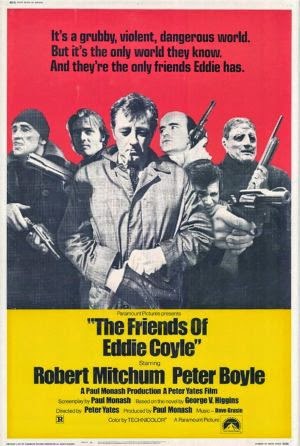
76af9-the_friends_of_eddie_coyleIn this precursor to other gritty Boston crime films like The Departed, Eddie “Fingers” Royle (Robert Mitchum) is a middle-aged truck driver who does some gun running on the side for the mob. On one occasion he got caught with his hand in the cookie jar, and it meant two more years of jail time. He’s seen the clink before.

Three men have been pulling off bank jobs in clear daylight using hostages and new guns each time. Eddie is the guy who has been delivering the guns, and he deals with a young thug (Steven Keats) who acquires the stolen merchandise.

Eddie also gets acquainted with F.B.I. agent Dave Folley (Richard Jordan) who tells Eddie his only way to dodge prison is to become an informer. Unbeknownst to Eddie, Folley has another informant working for him, in fact, it’s the man who set Eddie up. Now Eddie is thinking of himself and so he sets up the gunrunner Jackie because he has everything he needs. Folley closes in and nabs the guy. Eddie wants to be done with it, but Folley wants more. Eddie’s buddies who have been pulling the heists are his next victims, but Folley’s other man gives him the information faster and Royle is left with nothing to bargain with. To top it off, he is suspected to be the stool pigeon, and a hit is secretly planned on him. The middle-aged, hopeless, beat down, world-weary, nobody is knocked off and no one loses any sleep over it.  The manipulative stooge reaps the benefit and agent Folley has what he wants. Royle was the one who got the short end of the stick. Some friends he had.

Peter Yates proves again after Bullitt that he can deliver on gritty crime films. He left San Francisco and car chases behind for Boston, Mass. and bank jobs. Murder seems prevalent everywhere and with the killing comes a wide array of tough guy types. The violence is not over the top and neither is the drama, but it is cool, collected and unsentimental.

I cannot help but compare Mitchum’s performance to earlier crime films of his like Out of the Past. He has some of the same grittiness and toughness, but he is decidedly wearier in this film. He has similar moral ambiguity, but his death is far more pitiful. There is no redemption here, and he is a lowlife loser to the end. Despite his rough edges and shady activity, it is difficult not to feel just a little sorry for the man. The film’s title only helps to point out the irony of his situation. We thought he was the rat, but it turned out it was someone else. He needed to find new friends, but then again it takes one to know one. They were a product of their environment and that environment was not the friendliest place to be.

4/5 Stars

“Look, I’m getin’ old, you hear? I spent most of my life hanging around crummy joints with a buncha punks drinkin’ the beer, eatin’ the hash and the hot dogs and watchin’ the other people go off to Florida while I’m sweatin’ out how I’m gonna pay the plumber. I done time and I stood up but I can’t take no more chances. Next time, it’s gonna be me goin’ to Florida.” ~ Eddie Coyle

Serpico (1973)

acd89-serp2“Come on Frank. Let’s face it. Who can trust a cop who don’t take money?”

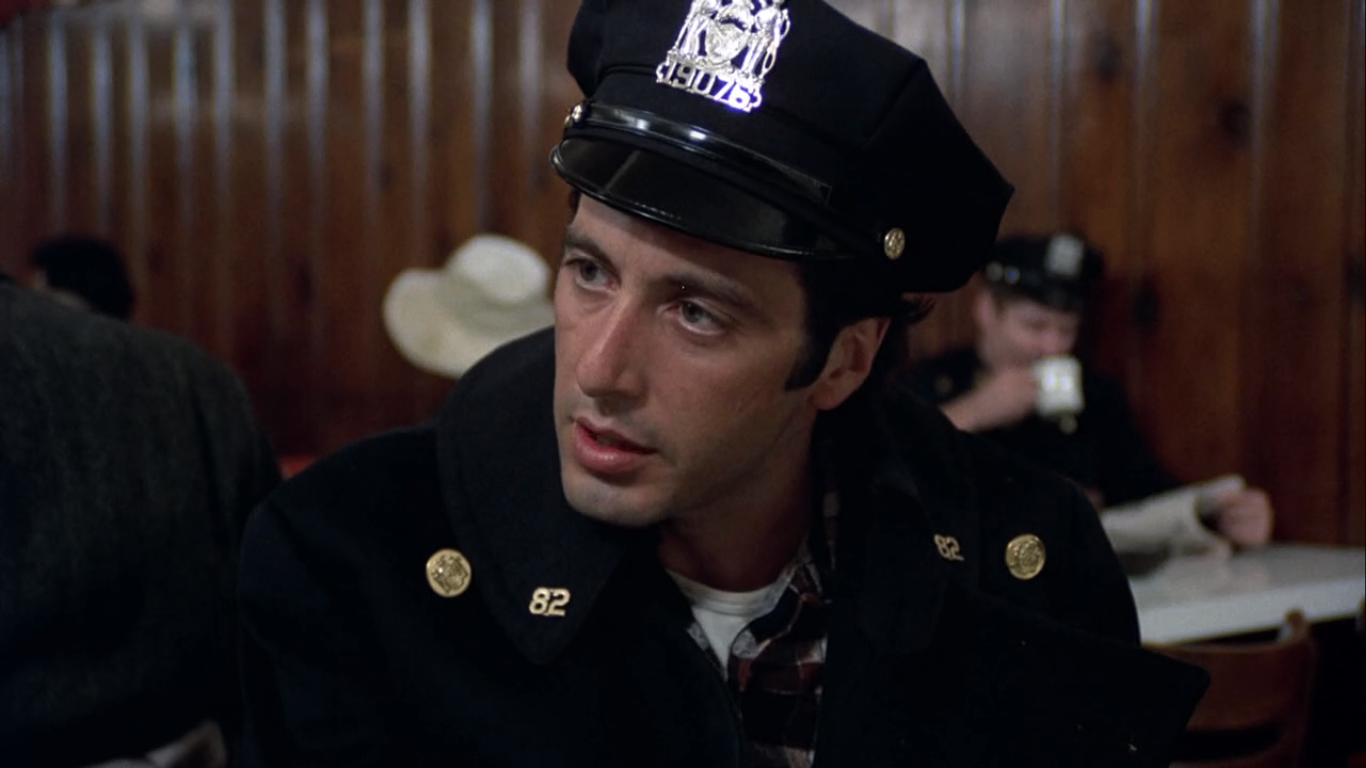
This is the state of affairs in the police department that green police academy grad Frank Serpico (Al Pacino) finds himself thrown into. At first, he is unaware of it all as he moves up the ranks as a young uniformed cop. In fact, he looks exactly like a post-war Michael Corleone at this point. His new role seems like an honorable life of camaraderie, duty, and public service. The corrupt is obvious and distinct from the good. Soon his brash, forthright style creates waves, but it soon becomes apparent that he is not one to care about hurting egos.

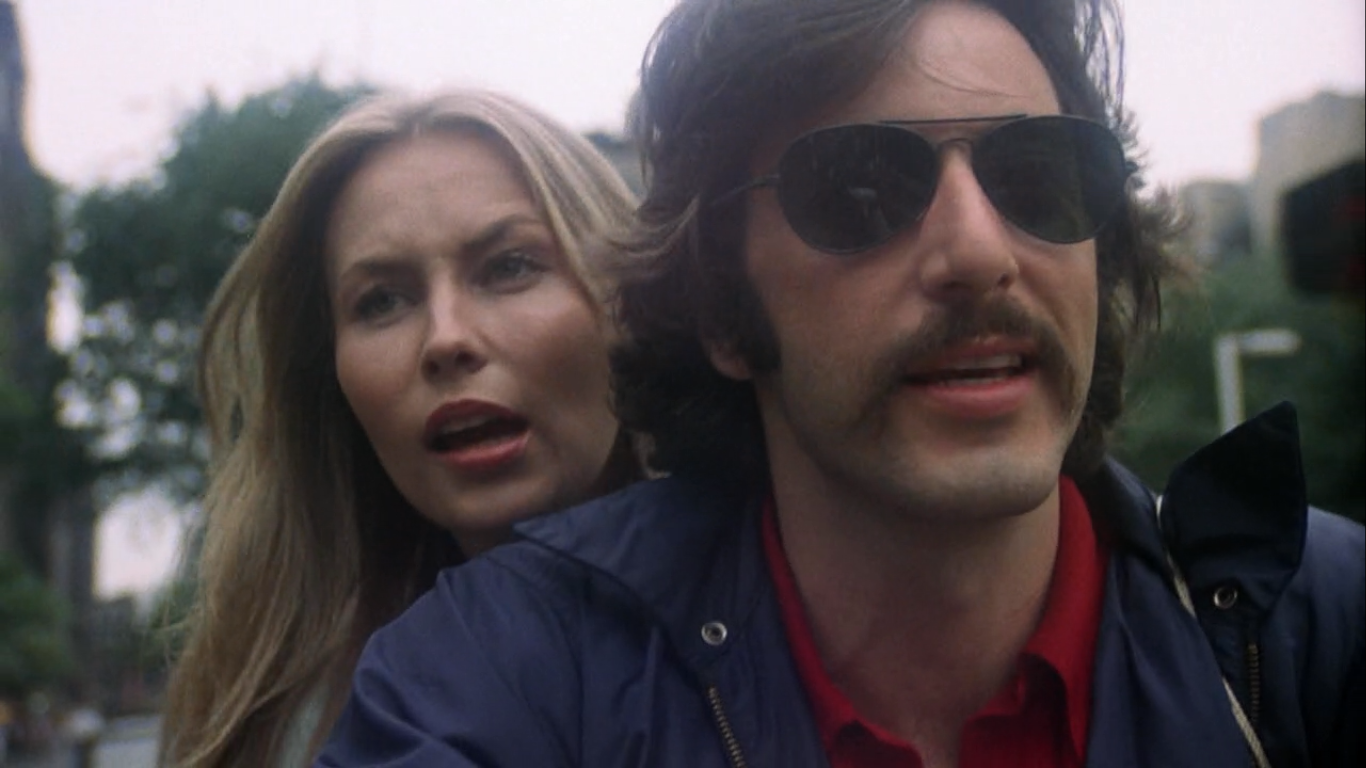
39dd2-serp2b3He moves on with his career working in plainclothes and getting a new apartment followed by a new dog. His appearance begins to change as well as he starts wearing a thick bushy beard and wearing hippy garb. It suits him fine in his work and outside he meets a pretty girl named Leslie Lane, but it’s not meant to be.

Serpico corroborates with colleague Bob Blair (Tony Roberts) trying to figure out how to bring attention to the bribes he has 60789-serp2b4been offered. But honest help is hard to find especially from someone who makes it stick. The higher ups care more about the reputation of the department over corruption, making progress difficult to come by. He continually bounces around from division to division and nobody seems to want him, or trust him for that matter. There are only a few honest Joes around and they are few and far between. Serpico gets transferred this time to the “upright” 7th division and begins seeing his next door neighbor named Laurie. Too soon he learns that one of his acquaintances is instrumental in the extortion that takes place department-wide. By now Frank is feared, hated, and despised because he will not take money under any circumstances. It takes its toll to be all alone in the force, and he lashes out at Laurie who leaves him for good. Now he truly is alone.

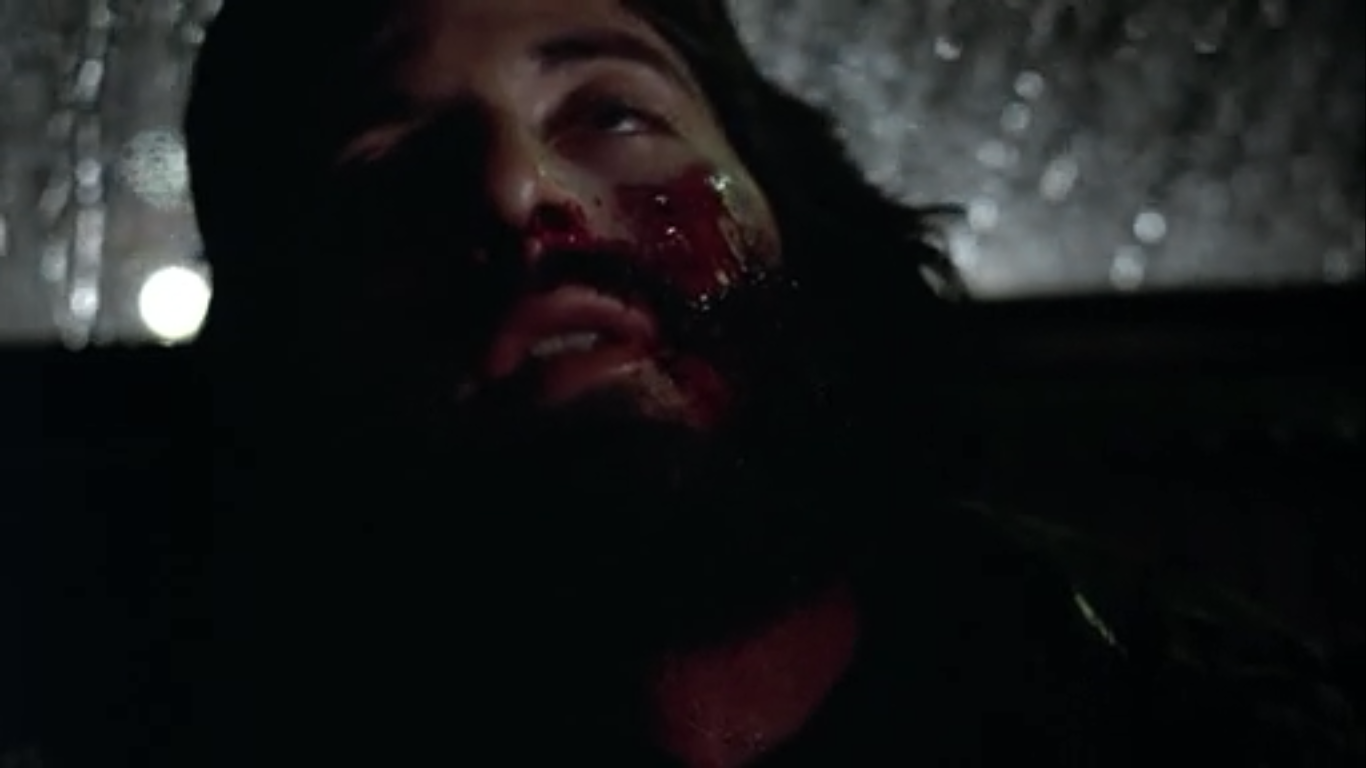
He becomes increasingly combative and paranoid as he gets ready to testify before the grand jury. Another case of bribes comes out and when Serpico and his upright partner try and report it nothing is done. As a last resort, Frank goes to The New York Times and they blow the cover right off. He soon receives an ominous death threat and gets shot when trying to bust someone.

He lays in the hospital recuperating asking for his guards to be relieved and watching the hate mail pile up. His badge is returned to him, but he rejects it in disgust, soon resigning from the police and waiting for a slow boat to Switzerland. That’s as far from New York as he could get.

It seems like there are so very many close-ups of Frank Serpico, and thus, over the course of the film we get the opportunity to truly study his face, or rather the face of Pacino as he embodies this character. His cold, aloof eyes, his facial hair that goes under several transformations, but that is only the outward appearance. It is his inner transformation that is most important because that is where his conscience lies, to guide him each and everyday on the beat.

My New York geography leaves something to be desired but that’s not the problem of native New Yorker Sidney Lumet. This is a story that takes place in New York, made for New York, and fit perfectly with its director. It seems like he knew the streets of the New York like the back of his hand, really creating an authentic atmosphere for this police biopic. It has a touch of The French Connection and yet it is a far more personal look at the life of Serpico himself.


This is also extraordinary because the story of Serpico was so fresh, still only a year or two old at most. Furthermore, the film has the same disillusioning and depressing tone of other dramas that came out of the 1970s. Back in the 1950s films like 12 Angry Men (Lumet’s debut) still had an air of idealism. That had mostly dissipated in the New Hollywood period, because the good guys aren’t black and white. Serpico is not the greatest guy around, but the one thing he has going for him is that he is not crooked and that’s saying a lot in the corrupt world he exists in. This is his story told with all the blemishes, personal troubles, and drama that went with it. The greatest service to him is that his story got told and hopefully truthfully enough.

4.5/5 Stars

City of God (2002)

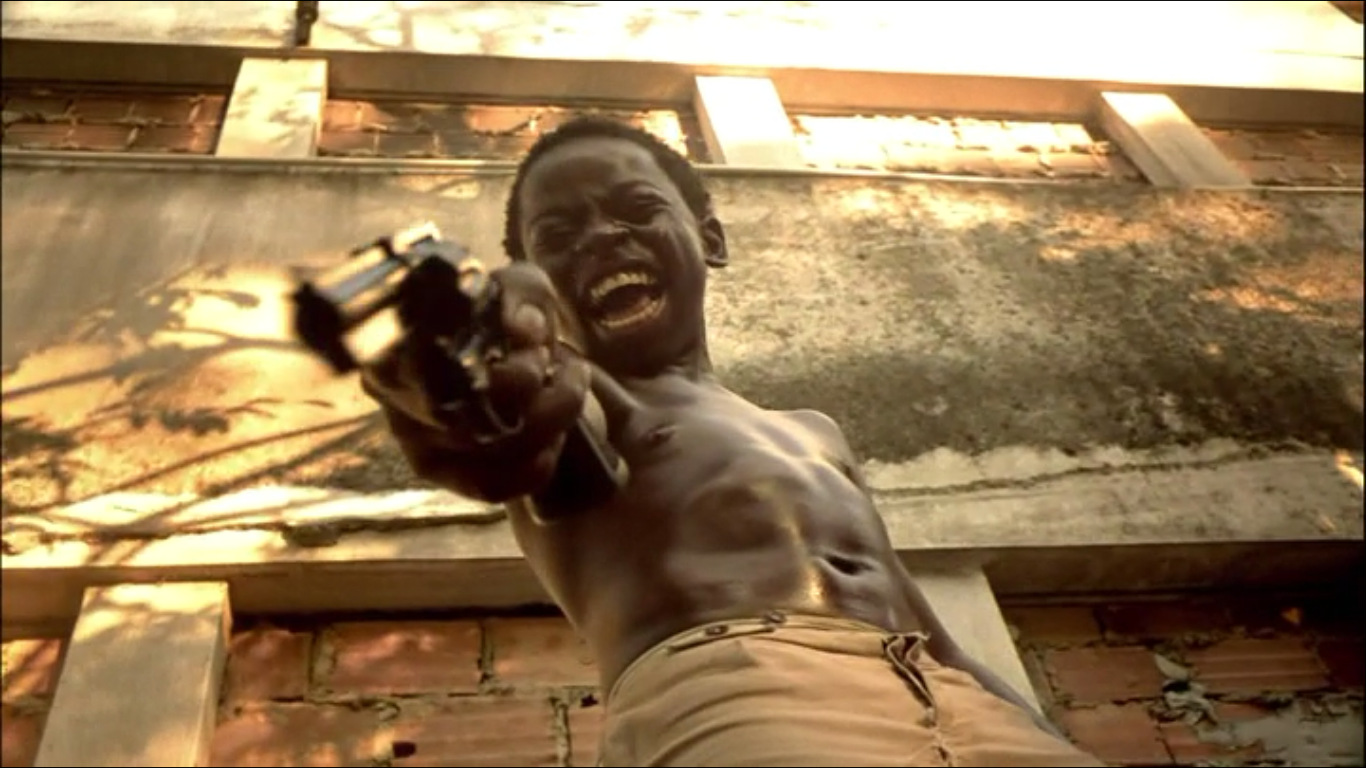
6e6f8-cityofgod1The slash of a sharpened knife grabs our attention and from that point on there is no turning away from City of God. The story is fed to us by Rocket, a character we initially know very little about except he will help us make sense of all that follows. The setting of the story is the slums of Brazil during the 60s and 70s. People are poor, crime is rampant, and adolescents wave guns around like they were toys.

Rocket’s older brother Goose was a part of The Tender Trio along with teenagers Shaggy and Clipper. They have a lucrative revenue stream robbing businesses and gasoline trucks and they share the profits with the people of the town in return for protection. Then a little twerp named Li’l Dice convinces them to rob a hotel and the job pays off big. But soon after begin the police raids and the trio is split up for good. Clipper joins the church, Shaggy is shot by the cops, and Li’l Dice knocks off Rocket’s brother. From that point, the drug trade slowly grew, and ultimately was left in the hands of a young thug named Carrot.

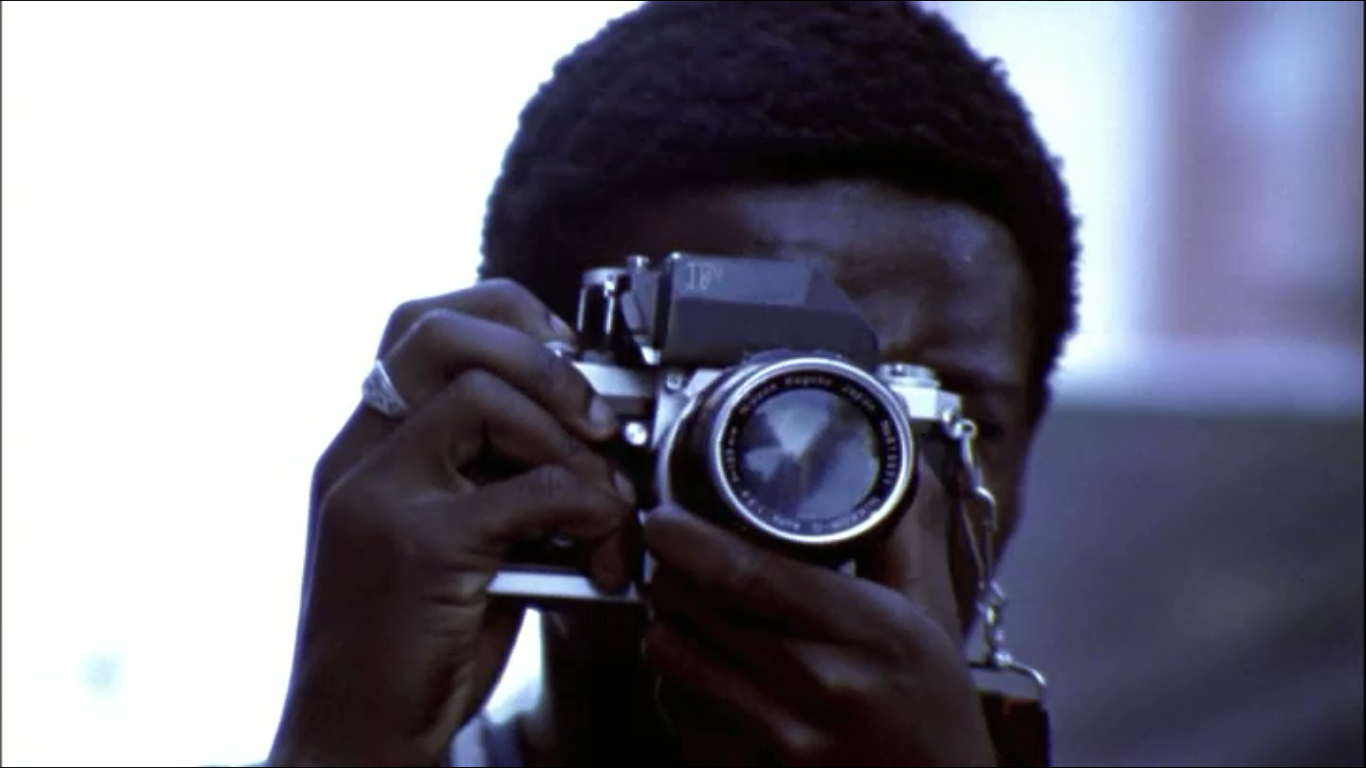
Now it’s the 1970s and Rocket cultivates a love for photography while hanging out with his hippie friends. Meanwhile, Li’l Dice now known as Li’l Z has taken over the drug trade and pushed almost everyone out except Carrot. He is obsessed with being the boss and ironically under his rule, the City of God remains in relative peace. Z’s childhood friend Benny is a relaxed guy who keeps his buddy at bay and earns the admiration of everyone even Rocket.

But the “good times” must come to an end as Benny decides to skip out on the slums with his girlfriend because he does not want the life of a drug lord anymore. At a giant bash tragedy strikes, and Li’l Z is looking for blood. His target is Knockout Ned and the man’s girlfriend. After a night of turmoil, Li’l Z is never at peace again, because there is now a man with a personal vendetta bent on making him pay.

Carrot uses this new ally to his advantage and thus begins the drug war to end all drug wars. Carrot and Ned vs. Li’l Z. Both sides bring anyone and everyone into the fray and load up on guns, guns, ammunition, and more guns. It’s at this time that Rocket’s dreams become realized. He gets a job as a lowly paper boy and ultimately snags some photos of Z and his thugs making it big with the local paper. Soon his photography is in high demand and he’s even on Li’l Z’s good side.

Thus begins the beginning of the end as the rival forces meet in one last skirmish. In the aftermath Ned is shot by a vengeful boy, Li’l Z is jailed then shot, and Carrot is fodder for the papers. The little Runts now plan to run the streets and Rocket becomes famous for his photography. The film holds onto one last secret until the end before it is revealed. As we guessed this film is based on a real story and his name is not Rocket but Wilson Rodrigues.

City of God is an ironic name for such a godless place and likewise, I haven’t felt so squeamish in a film recently and perhaps ever. There is so much violence and crime in this film but we do not seem to get numb to it. It feels like we become more aware of the reality and the vicious cycle that continues its cyclical path. These young thugs are products of their environment and so how they end up is truly saddening. Even such a despicable, sadistic man such as Li’l Z knows what friendship is (ie. Benny), but ultimately even Benny cannot help him. That’s what makes the success of Rocket so extraordinary. In many ways, he is the perfect narrator, first because he survived, but also because he has a view into everything from varying angles and different perspectives.

As far as the film goes, the non-linear story line and multiple points of view made for an engaging story. This piece of storytelling keeps us begging for more crumbs as we attempt to connect the pieces as they are fed to us. Maybe it is a bit of morbid curiosity that keeps us interested or a desire to know if justice is dealt. The quick editing can be disconcerting at times and the often bobbing camera can sometimes get annoying but it fits the style of the whole film. It is part On the Waterfront, part The Godfather, but set in Brazil and a whole lot grittier. City of God reflects the hierarchy of the drug trade that permeates all areas of life and governs an entire community. Rocket was one of the lucky ones.

4.5/5 Stars

The Naked Gun: From the Files of Police Squad! (1988)

7e021-the_naked_gun_posterWhen you hear the names Zucker, Abrahams and Zucker (Airplane!, Top Secret) you automatically know there are boatloads of zany sight gags, puns and parodies to be had. Although weaker than the previous films, thanks to another bang up job by Leslie Nielsen, this police drama parody is still a lot of fun.

After single handedly beating up on the United States biggest enemies, Lieutenant Frank Drebin (Nielsen) returns to the L.A. precinct to investigate the case of a heroin ring and the brutal injury of his colleague Nordberg (O.J. Simpson). Drebin gets the obligatory briefing from his superior (George Kennedy) and the necessary gadgets for the mission. The case brings our hero in contact with the villainous Vincent Ludwig (Richardo Montalban) as well as his alluring assistant (Priscilla Presley). Drebin and Ms. Spencer’s relationship soon becomes sappily romantic (cue I’m Into Something Good) with hot dogs, movies and jaunts on the beach.

The rest of the case involves car chases, fires, incriminating documents, the arrival of the Queen and of course California Angels Baseball. That’s right. The Queen is to be assassinated and what better location than a baseball game? It is Drebin’s responsibility to stop the attempt at all costs and he makes quite a mess of the game (like he did with everything else), but he does get the job done. His methods are far from orthodox to be sure but he gets the girl and the bad guy pays for his misdeeds. Nordberg certainly is lucky to have such a loyal partner, maybe.

This comic trio pushes the wackiness as far as it can possibly go, oftentimes with mock seriousness and overdone tropes that get made fun of. For instance Drebin gives us voice-over narration, Spencer is very much a femme fatale at first and the story is your not so typical procedural format. Unexpected cameos by Weird Al, Jay Johnstone, Reggie Jackson and a whole host of professional announcers are certainly memorable. Furthermore the uproarious baseball sequences with “I Love L.A.” playing were certainly a hit.  This is a comedy classic from the files of the police squad and I cannot help but enjoy it.

3.5/5 Stars

Review: Blade Runner (1982) – Final Cut

edd47-bladerunner1“Too bad she won’t live but then again who does?”

It’s the year 2019 in Los Angeles but this is a far cry from the world we are used to as you will soon see. Blade Runner is a hybrid neo-noir, dystopian, and sci-fi film. The Tyrell Corporation has successfully created humanoids called replicants that are near perfect copies of humans except at one point some went rogue and special policemen called Blade Runners were called in. Their services are still required to get rid of a few remnants

Unlike your typical Noir, the film is not in black and white but it still is faded, dank, and dreary. It’s a world-weary L.A. that doesn’t see the light of day anymore. The sterile environment is filled with unnaturally bluish light, old technology, and spaceships coupled with neon lights. The 1980s aesthetic actually adds to the atmosphere which fills all the more dilapidated and old by modern standards. It is weirdly sci-fi while also being time worn. On the ground, it has the appearance of a Chinatown where it is perpetually raining. There is a melding of cultures, time, and place. The ultimate melting pot.

This is the strangely foreign earth that four replicants escape to. One of the fugitives soon blows away a Blade Runner and thus, the best man for the job is brought in: Rick Deckard (Harrison Ford). Finding 4 so called “Skin jobs” is like finding needles in the proverbial haystack. But Deckard has the experience.

Initially, he pays a visit to replicant mastermind Dr. Elden Tyrell and does a test on the woman Rachael (who appears to be a replicant but without any knowledge of it). Deckard proves his skill to Tyrell and heads off on his investigation. Meanwhile, two of the replicants Roy Batty and Leon interrogate a replicant eye manufacturer (James Hong) who points them to one J. F. Sebastian. Another replicant Pris pays a visit to the hapless man named Sebastian and he invites her into his home.

Deckard’s search leads him to snake scales and his first target. He gets to Zhora by putting on an act as a dweeby member from the American Federation of Variety Artists (reminiscent of Bogart in The Big Sleep). She has none of his pitiful guise but he soon pops her. One down. But Leon sees what happens and is ready to make Deckard pay for his deeds. Luckily the Blade Runner gets some much-needed help. Two down. Two to go.

The leader of the replicants, Roy Batty goes with Sebastian to the lair of Tyrell. Batty meets his maker literally and they trade some choice words. In a strangely horrifying instance, he gives his father a kiss before proceeding to cave his head in. A modern reincarnation of Frankenstein and his creature. Except Batty cannot take his life yet.

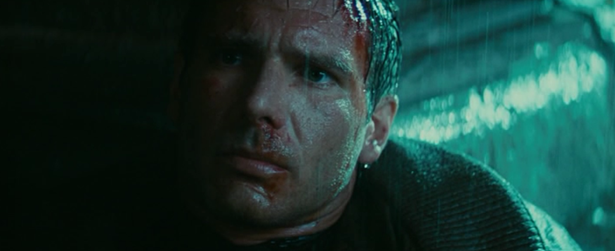
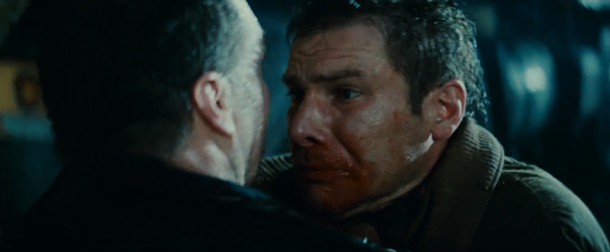
Deckard finds his third replicant and barely notches his third kill. Now it’s only Roy and Rick left to duel it out. What ensues is a game of cat and mouse where a frantic Deckard is playfully stalked by a seemingly deranged Batty. At times both men seem inhuman (I thought you were supposed to be good. Aren’t you the “good” man?), but it is ultimately Batty who remains the unfeeling one. That’s what makes his quiet death all that surprising. Deckard is left looking on bewildered as Batty’s dripping head hangs limp. Four down.

Deckard returns one last time for Rachael. He has fallen for a replicant, but he could care less. Then again, she might not be the only one left. If Gaff’s origami unicorn and Deckard’s dream mean anything at all. The identity of Deckard is one of the many ambiguities that is left for the audience to mull over. That is the beauty of Blade Runner because, with the many different versions, there are various interpretations that can be made. You be the judge of which one is correct. I still say they should have kept the name “Do Androids Dream of Electric Sheep,” but then again what do I know? Blade Runner will continue to befuddle me as well as others and that’s probably a good thing. If all movie mysteries were solved and tied up nicely with a big bow they would all but lose their allure. Not so with this one.

4.5/5 Stars

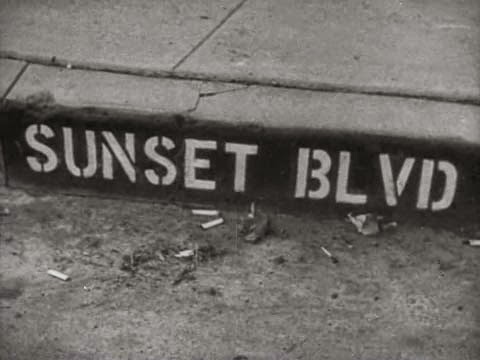
Review: Sunset Boulevard (1950)

f5016-sunset_blvd_title

“Yes, this is Sunset Boulevard, Los Angeles, California. It’s about five o’clock in the morning. That’s the Homicide Squad – complete with detectives and newspapermen. A murder has been reported from one of those great big houses in the ten thousand block. You’ll read about it in the late editions, I’m sure. You’ll get it over your radio and see it on television because an old-time star is involved – one of the biggest. But before you hear it all distorted and blown out of proportion, before those Hollywood columnists get their hands on it, maybe you’d like to hear the facts, the whole truth.”

So begins one of the most caustic dramas ever constructed in Hollywood, or about Hollywood, and it was gifted to us by screenwriter-director extraordinaire Billy Wilder. His previous hard-edged film noir Double Indemnity had its own cynical narrator with a memorable voice-over of his own. However, Walter Neff was only on the verge of dying. When we hear the voice of Joe Gillis he is already speaking from the grave. It is a fantastic angle in which to look at this seemingly perfect Hollywood construction, and Gillis never ceases to tell his story until we wind up at the pool as the story comes to a close.

For now, we learn that six months back Joe (William Holden)  is a writer who is having difficulties being published, and some men want to repossess his car. Desperate, he pays a visit to a friend at Paramount named Mandrake to pitch an idea, but the script is of little merit according to a pretty young script reader. That’s a dead end so Joe leaves, but the men are waiting for him and he zooms away. A flat tire leads him to drive away into an empty garage connected to a dilapidated old mansion on Sunset Boulevard. 

There he is mistakenly introduced to drama queen Norma Desmond (Gloria Swanson) who used to be big on the silent screen, back in the day. Now all she has is money, fan letters, and old memories to rehash, while her butler Max (Erich von Stroheim) watches over her. The theatrical actress believes her big comeback is soon at hand, and when she learns Joe is a writer, she takes an interest. He needs the money so he takes a look at the rough script meant to be a vehicle for her. A small commitment turns into a life-consuming undertaking. Desmond constantly hovers and dotes over Joe, going so far as having his things moved into her home and buying him new clothes and trinkets. He reluctantly accepts the first class treatment, not minding the cushy lifestyle. But to Norma, it’s more. 

He is her closest companion. Her love. Joe cannot bear to tell her that she is washed up and that there will never be anything between them. He ditches her intimate New Years party for a more friendly affair where he crosses path with his old bud Artie (Jack Webb) and his girl, the previously critical script girl Betty Schaeffer (Nancy Olson). She takes an interest in a few of his past ideas, but he does not, and after getting shocking news from Max he is pulled back to his lavish prison.

Eventually, Norma is prepared to drop off her script with her former collaborator the great Cecil B. DeMille. However, it becomes all too clear that her story will amount to nothing, but her friend cannot bear to break her heart. She is sent off again with the strong conviction that her day is coming. Makeover’s, diets, and facials follow in preparation. Joe is indifferent to it all and secretly begins working at nights with Betty on a new screenplay. 

Desmond finds the script and jealousy takes over, causing her to call Betty to ruin the romance that is rapidly budding there. Joe hears it all and angrily tells the disbelieving Betty to come see his set-up on Sunset Boulevard. He acts as if he likes the life, and Betty leaves broken-hearted. Soon after, a fed-up Joe packs his bags to head back to Ohio. Thus, begins the systematic breakdown that we had expected for so long. Norma Desmond completely falls apart and does the one thing she knows to hold on. 

Back in the present the crowds and journalists have turned out to see the has-been movie star who is stark raving mad, and one last time Norma does not disappoint. She glides seamlessly down the stairs with a serenely ethereal look on her face before preparing for her closeup. So ends the career of one Norma Desmond and the life of Joe Gillis. We can only hope that Betty got together again with Artie, otherwise this would remain one of the bleakest tales of all time.

However, that is part of the power of this film. It is strangely dark and ominous. Franz Waxman’s score is fit for a Gothic melodrama and Desmond’s mansion is a creaky old foreboding castle that hardly sees the light of day. Max is a solemn figure who we learn brought Norma stardom, married her, got divorced, and then could not live without her. Joe Gillis gets caught in a cycle he cannot get out of, and in the middle of the whole mess is Desmond herself. She is so preoccupied with herself, so obsessed with her own former glory, and yet she is a lonely, insecure aging actress. In many ways, she is Citizen Kane’s female counterpoint. A person with so much money, prestige, and power who slowly drifts away into oblivion without anyone caring except ravenous journalists. Much in the same way, although Norma is so petty and vain in so many ways, I cannot help but feel sympathy for her sorry existence. She is an utterly pitiful person in the end. No one deserves her fate.

In this way, Sunset Boulevard seems to critique Hollywood, a place that makes stars like Norma Desmond and spits them back out just as easily. It is not easily figured out or understood it just does at is pleases. For instance, Billy Wilder became an immigrant writer and director of great repute. Cecil B. Demille was a longtime respected director. Erich von Stroheim had early success with silent films then had to turn to acting. Gloria Swanson was a silent star then struggled in the 1930s. William Holden broke out in the 30s, hit his peak in the 1950s and continued to act into the 70s. Nancy Olson went on to make a few classic Disney movies and Jack Webb, of course, went on to create the TV Show Dragnet. Each Hollywood career starkly different from the others. 

 There is also such an authenticity in this film so much so that sometimes the line between fiction and reality is blurred. First, Wilder cast Gloria Swanson to play former silent star Norma Desmond in the film, so it seems like she is playing herself (Complete with old promotional photos and silent footage). He also had appearances by both von Stroheim and Demille, who had each directed Swanson in her silent days. Some of Desmond’s bridge friends include other real silent stars including Anna Q. Nilsson, H.B. Warner, and the legendary Buster Keaton (His career had also crumbled). Even gossip columnist Hedda Hopper gets into the mix to tell the tragic story of Desmond, and it all works. 

So whether you watch Sunset Boulevard for the Hollywood angle, or as a film-noir, or a love story, or a tragic drama, the beauty of it, is that it functions as all of those things simultaneously. Gloria Swanson is absolutely loopy, William Holden is as cynical as ever with his smoked-out gravelly voice. Von Stroheim is haunting as the faithful Max, and Nancy Olson is the one young friendly face in juxtaposition with Swanson. Billy Wilder’s script with Charles Brackett is inspired a multitude of times, but instead of telling you I will give you a taste: 

“There once was a time in this business when I had the eyes of the whole world! But that wasn’t good enough for them, oh no! They had to have the ears of the whole world too. So they opened their big mouths and out came talk. Talk! TALK!”

That’s Norma Desmond in a nutshell for you. That’s Sunset Blvd.

5/5 Stars

The Stranger (1946)

f6c39-the_stranger_filmIn a whirlwind, the film goes from a moody foreign locale to a quaint American town called Harper, but it never ceases to be a gripping film noir. Considered Orson Welles‘ weakest project thus far, The Stranger is still thoroughly enjoyable thanks to the performances of Edward G. Robinson, Loretta Young and Welles himself. Much like Shadow of a Doubt, this film shows that noir thrillers can still take place in middle America, and they can be pulse-pounders all the same. Also, an evil man can easily exist in a mundane environment and still be evil.

The reason we end up in Harper of all towns has to do with an “escaped” Nazi war criminal. He was allowed to escape and investigator Mr. Wilson (Robinson) follows him. It’s an idyllic little town and one of its most respected members is professor Charles Rankin (Welles), who is soon to be wed to pretty Mary Longstreet (Young). Little does she know that he is former Nazi war criminal Franz Kindler, and he is the man the escaped Konrad Meinike is looking for. Mr. Wilson is very interested in his whereabouts too.

Meinike soon disappears but not before deterring Wilson. However, not one to shy away from his duty, Wilson soon ingratiates himself with the local people, especially the newly married Mary and her kindly family. He is eager to learn more about the professor and at first, the gentleman seems above reproach, but something lurks underneath his calm exterior. Soon the beloved family dog Red is killed, an increasingly manic Rankin confesses his predicament to his wife and conveniently leaves out a few facts. Now constantly paranoid, Mary’s life is in far more peril than she realizes, and Wilson takes all the precautions he can. The clanging of the newly refurbished clock becomes a point of major contention, and it also serves as the perfect locale for a final climatic showdown (Put aside the absurdity and just watch it).

The whole town turns out for the show and finally after getting conked on the head and nearly killed during the case, Mr. Wilson finally has time to relax. Welles is not quite as memorable as Harry Lime here but still a sophisticated villain of sorts.  Likewise, Barton Keyes is a bit more memorable but Edward G. Robinson still brings his personality, iconic voice, and memorable mug to the table. Loretta Young has a radiant face and eyes like always. In other words, they do what they do. It works in making The Stranger a worthwhile thriller with the expected melodramatic music and shadowy facades of a film-noir. This is undoubtedly an oversimplification, but  then again, Orson Welles needs no introduction, and he certainly does not need me to vouch for creative genius.

4/5 Stars

Review: The Killing (1956)

e4855-thekilling1Stanley Kubrick is one of the most acclaimed directors of all time, and The Killing is his first great film. The main focus of the action takes place at a racetrack, but a great deal of the story occurs in other places before and after the job is pulled.  Recently released Johnny (Sterling Hayden) is the mastermind behind an intricately planned job. It’s a whole complex jigsaw puzzle involving a few “Average Joes” and a couple professionals. When you put it together it all adds up to the perfect heist.

Marvin is a friend of Johnny’s and a fatherly figure who is backing the deal. George (Elisha Cook Jr.) is the paranoid window teller banking on the job so he can hold onto his shallow wife. Randy is the policeman who is set to pick up the plunder. Then, Mike is the bartender who is supposed to help with the distraction. Johnny lines up the brawn, Maurice, to start a fight at the race track with Mike. He gets a sharpshooter named Nikki to bump off a horse and it’s all set. All their plans revolve around the Seventh Race, and they have it planned out to the minute. The beauty of The Killing is that it all but works like clockwork. The horse is shot, the brawl does its job, the vault is cleaned out, and the money gets picked up. Only a few small problems crop up.

After the job is done is another matter, as the perfect timetable begins to break down. In a matter of seconds, things blow up thanks to George’s backstabbing wife (Marie Windsor). Soon the carnage is strewn all over the floor. Johnny holds onto the money as previously decided since things go awry, and he makes the getaway. His girl (Colleen Gray) is waiting at the airport and it looks to be smooth sailing from here on out.

Thanks to a yippy dog and a precarious perch, the money-laden suitcase takes a tumble and the contents fly off. All too soon it’s raining money, and there’s nothing Johnny can do about it. He leaves the terminal with Fay, but with no taxi to be had, he gets nabbed and there is no chance to escape. After everything lining up so perfectly for him, in a cruel turn everything that could go wrong did. He was not going to be so lucky.

The title of this film always struck me as ambiguous, whether it meant the amount of money being taken or the deaths that take place I’m not sure. However, I do know that The Killing is tautly constructed. The non-linear and sometimes overlapping narrative is held together by the narrator. He seems fit for a newsreel, but he complements the straightforward procedure of the film with timestamps included.

Because of the lead performance of Sterling Hayden and the main plot element of a heist, this film can sometimes be confused with John Huston’s The Asphalt Jungle (1950). However, I enjoy this storyline more because the heist is not the issue. It is the aftermath and all the subsequent problems occurring so rapidly.

It is a wonderful unraveling thriller and although we do not see Johnny arrested, he might as well be because there are two men with pistols drawn walking right towards him. The Killing was not a big payoff for Hayden’s character, but it certainly is for the audience.

4.5/5 Stars