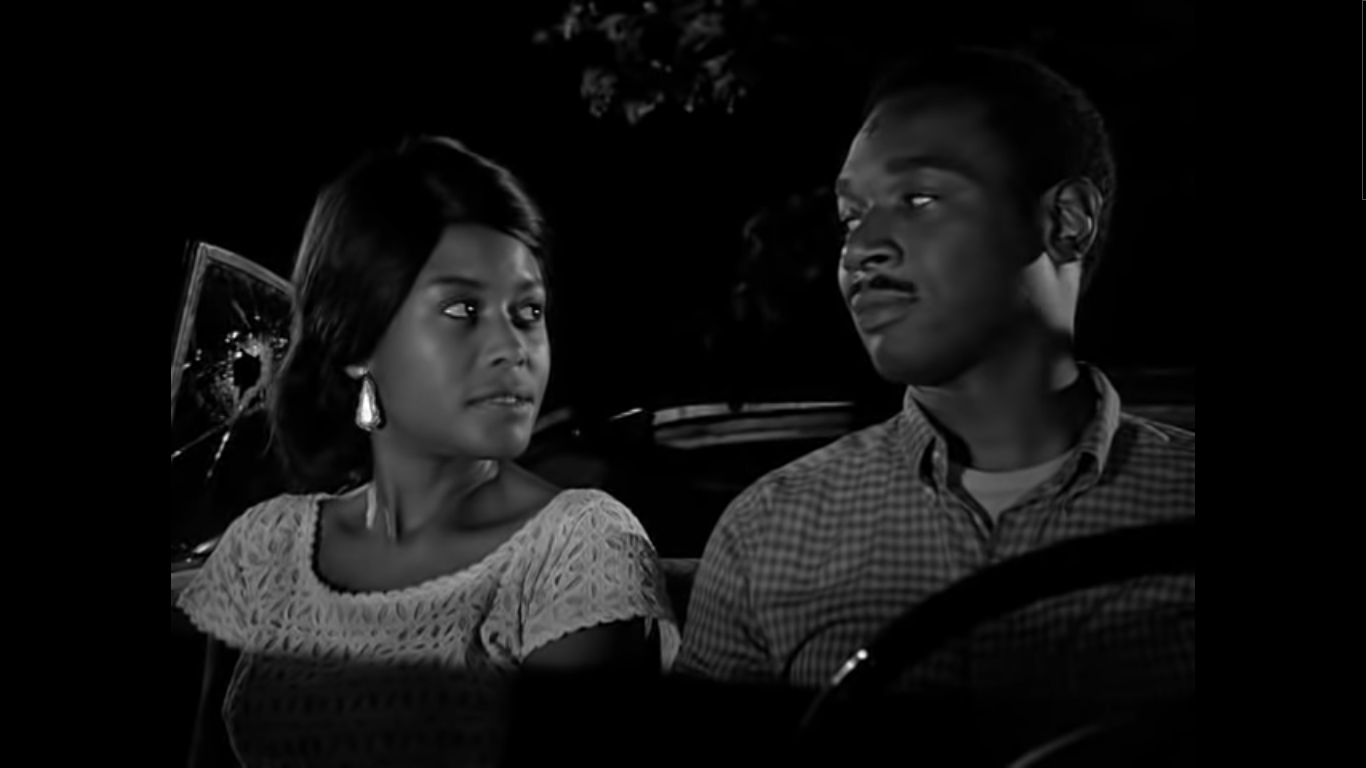
Pressure Point (1962)

Peter Falk with Sidney Poitier sounds like as good a place as any to start a movie. There he is a young man charging into his superior’s office, telling him he’s just about had it with his latest case. Surely, what we have is a story of mentorship on our hands.

Although this review is meant to be standalone and films do not need to be watched in tandem, there’s something to be said when they can interface with one another. Recently, I’ve been delving into the early works of Poitier, and his partnership over several films with Stanley Kramer certainly cannot be understated. Likewise, though John Cassavetes joined forces with Poitier in Edge of the City, it was Falk who would become one of the actor-director’s foremost collaborators. You can rarely imagine one without the other.

However, it shows where my mind goes because all these mental extrapolations are all for naught; it’s only a ploy. We barely catch sight of Falk again because this is not his movie. Instead, we drift into the recollections of the veteran doctor and the one case that almost broke him. Hokey setup aside, you can appreciate the unspoken and altogether unprecedented nature of Pressure Point.

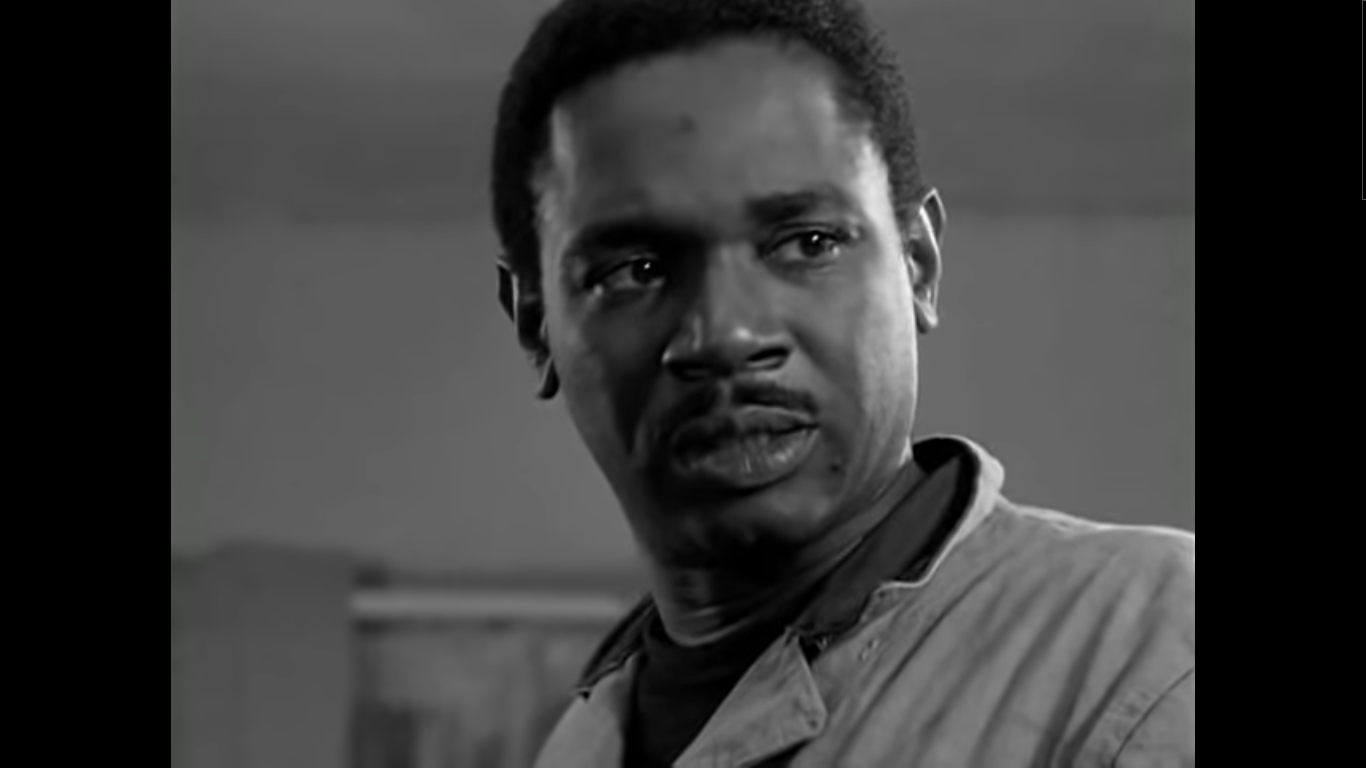
Poitier’s lead doesn’t feel like an explicitly black part, but Kramer earmarked him for the role, and it adds a dimension to the movie that would be unavailable with almost any other actor of the era. In Poitier’s own words, “Obviously a picture about a black psychiatrist treating white patients was not the kind of sure-fire package that would send audiences rushing into theatres across the country. But Kramer had other gods to serve, and he was faithful to them.”

The dynamic of the movie is established thereafter when a new patient (Bobby Darin) pays a visit to the doctor. What becomes apparent after a few minutes is that Darin is really going for it. His giggling neo-fascist is all over the doctor from the outset, and here the mind games begin. He can’t figure out why “people” try to be white and respectable — doctors, psychiatrists — it’s not the place for them. 

However, as Poitier’s character scours the other man’s memories, he begins to establish who he is as a person — what his fears and vices are — all born out of his traumatic childhood. After the shaky narrative device, it’s a relief to admit Pressure Points has some artistic invention at its disposal, namely, in the trippy childhood scenes.

In his youth, Darin’s alter ego flees through a meat locker from the grotesque liver his domineering father waves in front of him, while bouts of paranoia overtake him in the present. The only friendships he forms are through hooliganism and a kind of sadistic dependence on invisible playmates.

It feels a bit like Norman Bates’s splintering dissociative identity disorder but playing out in real-time within Poitier’s office. Darin’s voice dissolves in and out of his adolescent personality in an eerie melding of his psyches. A small but crucial detail is how young Barry Gordon’s rounded features somehow mimic his older doppelganger, thus making the connection between them that much more pointed.

Two scenes that succinctly color his antisocial personality involve a tavern and a Bund Meeting. He takes a bit of artistic license with the Nazis’ early strong-armed tactics. In his version, they use tic-tac-toe to systematically vandalize the hapless owner’s establishment (Howard Caine who was Jewish in real life), while effectively scandalizing his onscreen wife. It’s totally perturbing to witness and one of the most evocative scenes I’ve been privy to in some time; the later Bund meeting causes some queasiness in its own right.

To echo Poitier’s words, it’s no surprise that Pressure Point was far from a box office smash. Take a moment to consider what was going against it. Whether people believed in its message or not, it’s a resolutely unnerving picture causing us to take a long, deep look at the very spine of American nationalism.

One of its primary characters spews rhetoric rallying white Christian Americans. Jews and Blacks are necessary. They need them as a scapegoat so they can mobilize the populous against something. It gives them something to hate and be against. Because they are the unchosen people — somehow oppressed in their own way — and breeding resentment and fear.

What strikes me about Darin’s performance is not the pure evil of it, but if we were to evoke Bates again, there are moments where he feels sane even momentarily reasonable. This unnerves me. How many people has this man taken in? How many people believed his methodologies and had their sense of self and right and wrong twisted by narrow-minded vitriol and hate speech?

Is there any of Darin’s character in me?  Wasn’t Norman the one who said we’ve all gone a little crazy sometimes?  It’s frightening to come up against a man who shows no emotion. Although sometimes I see that very same apathy in myself. But I brush it off. Surely we’re nothing alike. We have nothing in common…

I remember when The Atlantic first premiered the footage from a “Night in the Garden,” with Madison Square Garden full of German-American Bund supporters in 1939. Those feelings of discomfort and dissonance are not easy to dispel because the history we are taught tells us that the Allies are good and the Nazis are bad. Here there’s something fundamentally wrong. We wonder why there is still anti-Semitism. We wonder why there is still race hatred and violence against Blacks.

It seems contrary to the country we know and love. And yet if these newsreel images, Darin’s neo-Nazi, and current events tell us anything, it’s that we need to take a hard look at how these poisonous ideologies take root. They are not fantastical, they are not innocuous, and they certainly are not dormant.

What a horrible thing if these insidious things gain legitimacy and become normalized. Watching Pressure Point, it seems good and right to acknowledge mental illness and to acknowledge our shortcomings as human beings, but there is also a time and place to label evil for what it is.

3.5/5 Stars

Too Late Blues (1962): Art and Commerce

It’s hard not to instantly think of Too Late Blues as a historical curio. Here’s a studio film from John Cassavetes that seems fully aware of the context of Shadows. Shadows, of course, was his independently-made directorial debut that took improvisation and a jazz-like mentality to the streets of New York and the beat generation.

The images here are sleek, but they feature much of the same world carried over from the previous film with a young black audience watching as a group of white musicians play their set. We come to know the boys through their daily rituals: they hang out, shoot pool, drink beer, and play music in parks and beer hauls for pennies. It’s not much of a life, but they seem generally content with what they’re doing.

Cassavetes originally wanted Montgomery Clift and his wife Gena Rowlands in the leads. I would definitely have paid to see that film, but there’s still more than enough that’s intriguing about what he ended up with. Bobby Darin doesn’t sing a lick and it’s a daring career decision because it rests on the bearing of performance.

His Ghost Wakefield is at his best as one of the boys because they function together as a mirthful and inspiring unit. As was thinking when they show up at a local gather how I dig a John Cassavetes party. It’s lively and a packed room, but there’s a cool, relaxed ambiance to it as the boys get greeted by their host and Bobby Darin makes his way up the spiral staircase to mingle.

Cassavetes feels like he’s giving us so many great perches to watch and observe the social experiment going on around us. There are optimal spaces from which to focus on the actors, whether through close-ups or a camera that constantly seems to be following them from the hilt with grave interest.

It’s a bit cleaner, it has the bangles, the bells, and the whistles that give off Hollywood, and yet there are still elements of his directorial debut and future works that bleed into this picture. If you’ll pardon the term, it’s “tainted,” but it still fits fluidly into Cassavetes’s body of work even as it functions at its best as a group effort. It wouldn’t work without the many voices and faces who are more than ready to oblige.

Rupert Crosse as Baby is one such figure as is Seymor Cassel, beginning his own auspicious collaboration with the writer-director. If you’re like me, you also get a private satisfaction in seeing Ivan Dixon even for the briefest of moments.

However, we have yet to mention our heroine: Stella Stevens. We meet her stationed by a piano accompanied by a lively crowd. She’s a flustered young singer and as parties such as these are not for the faint of heart, it’s an excruciating moment to watch her try to perform.

In the aftermath, her eyes flutter like a beautiful deer caught in the headlights. Ghost watches her and compliments her. It seems genuinely sincere. Instead of sticking around, they set up in a booth at a local bar. If it doesn’t sound like Too Late Blues is about anything consequential, at least in theatrical terms, then we’ve come to an understanding of why the movie was never a box office smash.

The sinews of the story are all an examination of characters as only Cassavetes might be fascinated in documenting, and the narrative gladly moseys along at its own predetermined pace. The wheeling-dealing agent Benny with his crewcut wears a crooked smile, though he generally means well. He does his best to scrounge up work for Ghost and the boys as well as Jess with varying degrees of success. The bottom line is that Benny tries and he really is tender at heart.

With all this groundwork, what’s really appealing about Too Late Blues are individual scenes or ideas that have been assembled together to create something else. Take, for instance, the interludes where Jess goes from self-loathing to loving Ghost, even lusting after him. They head to her apartment and on the way take a detour onto the diving board.

She lets him in. Coaxes him to keep the lights low and to wait on the bed. She’s prepared to make his evening as it were, but that’s not what he’s looking for. He wants her common, everyday unadulterated love. It flips the script even slightly as she becomes the aggressor.

However, if Ghost’s masculinity is ever in jeopardy, it’s during a bar room brawl. Vince Edwards gets the most prominent cameo as a rowdy pool player who stirs up trouble after a line of drinks. He gives everyone the business, but as he’s got the pianist in a helpless headlock, his girl looking on, it’s like his dignity has been snapped like matchwood. If she is a fragile human being, his ego is more fragile still, and he lashes out. They are actions he cannot take back.

The one false step might be the arc of Ghost. He’s not altogether the most interesting part of this picture. It’s an endeavor functioning in the crowd and the ensemble — him paired with Princess or the barman or his agent together — living out their lives in these standalone moments strung together. The luster is gone when we start seeing a version of A Star is Born or Limelight. We hardly need another. Time flashes forward and we see he’s just another phony. There is no revelation here.

Thrown back together with Jess, they have a renewed moment of rage. For once the camera shakes, and it feels telling. We are aware of the movie again, and in one glorious bathroom drain shot, there is a cinematic directness of Hitchcockian proportions. The camera cuts to the core of the moment, this final act of drama and duress. Graciously we are allowed an exhale afterward.

It occurs to me this movie is a lovely bit of metanarrative. During their recording session, when Ghost charges into the sound booth vowing to play the music his way, it’s like a switch has been flipped. He intimates that he thought the financier wouldn’t tell him how to play his music — that the Man would just listen. He’s rebuffed. This is not the way the world works; it’s not what people want. Commercialism is what makes the world go round.

Whether there’s more than an ounce of truth in the analogy, it’s easy enough to cast Cassavetes as the jazzman fighting against the constraints around him to make his art as he sees fit. Like Ghost, he’s trying to navigate an industry trading in commerce and art.

To his credit, it seems Cassavetes never became totally beholden to one or the other straddling the line between both quite spectacularly and even holding together some semblance of a personal life. By that I mean he had a wife and family and of course, it helped that his wife Gena Rowlands was an actress, and they remained on the same wavelength for most of his career. In the end, he didn’t fulfill the destiny of Ghost. He found a way to live his own life.

3.5/5 Stars

Take a Giant Step (1959): Starring Johnny Nash

“I guess you don’t have to be colored to be unhappy.”
“No, but it sure helps.”

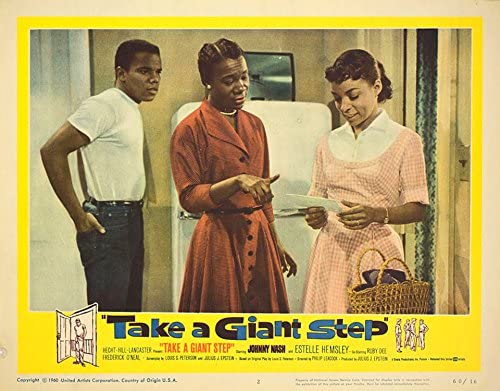
These lines come near the end of Take a Giant Step. The adolescent maelstrom of the movie has subsided and Spence Scott has found a newfound connection with his Pop (Frederick O’Neal). It could be the final moral in a sitcom episode: all teenagers have problems. They’re all disillusioned and unhappy. And yet rather wryly, Mr. Scott subverts the lesson in what feels like an emblematic moment. It’s not a grandstanding watershed, but it speaks to the black experience like few films of the era.

I love Johnny Nash to death, but there are times as he goes through the paces of his performance in Take a Giant Step when he doesn’t seem ready to carry the weight of this movie. He’s constantly stomping around angry at the world and lashing out at everyone. It doesn’t matter who it is. There are moments of sympathy, but most of it is boyish vitriol.

However, the movie itself brings together so many compelling ideas, and to have them out in the public forum in 1959 feels like such a groundbreaking feat. In this regard, it predates A Raisin in The Sun, which has become a bit of the historical standard-bearer.

Here in Louis S. Peterson’s story, adapted from his own groundbreaking stage play, a black high schooler in a predominantly white community feels the anxiety of never fitting in, having “friends” keep their distance, and parents who ride him when he gets home.

It’s teenage angst to its zenith, and then we realize this environment could not be structured better to alienate Spence if it tried. The inciting moment is when his white history teacher recounts the narrative of the Civil War where dumb and helpless blacks had to be saved by Northern benefactors. There’s no mention of Frederick Douglass, willful insurrections, or any counter-narratives.

What makes it worse is the boy’s isolation. No one can understand where he’s coming from even if they wanted to. He is alone in this fight and in his experience. What a helpless and debilitating position to be in. A one-man rebellion is a hard fight to win and in the end, his teenage insurrection gets him expelled from school. Only he knows what that will mean when his parents find out.

While I can’t say Nash is the best actor, he’s surrounded by some luminary talents who elevate this story and make the relationships mean something. I’m speaking, in particular, about the great Estelle Helmsley — boy, do I love her after this film — and then Ruby Dee, who shines in her own right.

Helmsley, a famed stage player takes up her post as the invalid grandmother who spends most of her days incapacitated upstairs. But if her body is weak, then her spirit is more than willing, playing first sparring partner and then confidante for her sharp-tongued grandson. Somehow she has a privileged position, seeing his predicament as his parents never can, and she acts accordingly providing a kind of psychological refuge.

Dee, on her part, plays the family’s cordial housekeeper Christine always affectionately teasing Spence, and then becoming another friend to the friendless. Although black performers were often subjugated to these kinds of domestic roles, Dee is still allowed the agency to speak volumes.

Not only does it say something about her character, it provides commentary on the Scott family that they are able to keep “help.” Likewise, she’s capable of tough love, but also feels inherently inviting. Spence’s disillusionment and raging hormones make Christine an obvious object of affection.

Perhaps because Spence exists in a world where so few people understand him, these two women leave such a stirring impression because somehow they actually get through to him. They receive his ire and turn right around and help him grow up, by simultaneously extending compassion.

In some ways, watching Take a Giant Step reminded me of No Down Payment, another post-war film that takes the white middle-class American dream and puts it up to scrutiny. It’s easy to whitewash the fences and construct sitcoms that either overtly or implicitly construct visions of what the world is supposed to look like.

These two films, in particular, show the fissures that seep into the idealistic depictions of suburbia when there are outsiders who don’t conform to the accepted status quo. The irony is how they try and fit into the prevailing norms and are still rarely granted access.

Rather like the ignorant history teacher, Hollywood rarely gives us such showcases, but every once in a while we get a story that runs against the grain to suggest other points of view, whether they belong to Blacks or Japanese-Americans. Despite any overt imperfections, I’m supremely grateful that we have these films. More people should see them and wrestle with what they have to offer.

3/5 Stars

Edge of The City (1957)

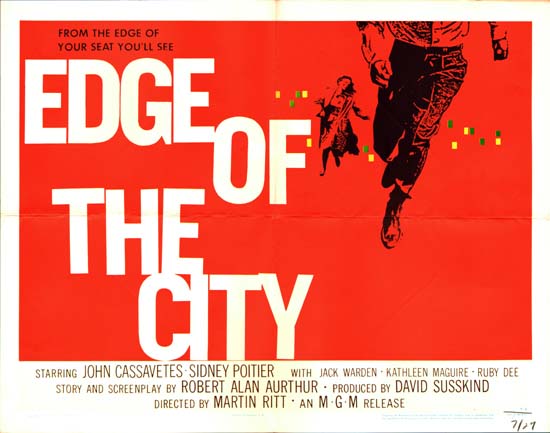
Edge of The City boasts a self-important opening, with a raging score and noirish mood-lightning, especially considering all it shows is John Cassavetes going into work. Even if it is all mood, there’s arguably no better conduit for the time being than Cassavettes. This was a few years before his directorial career kicked off in earnest with Shadows, but it’s as if he oozes unease and discontentment.

He’s not in the same vein as Brando or Clift; each man deservedly stands on his own and Cassavetes was no fan of “The Method,” but he had an innate capacity to present characters with emotions incarnate, whether through the most tangible of fears or tormenting, ever-volatile demons.

He too was totally engaged with the act of crafting characters. He seems to give himself over to them, and thus, later on, behind the camera he offered his fellow actors so much freedom. I imagine it’s both terrifying and invigorating being in Cassavetes’s care, like a thrilling tightrope walk in the best of hands.

For now, he’s in the studio system, but he gets to team with people who arguably appreciated the craft as much as him in a scenario that relies on its main trifecta to create a substantive storyline. At the very least, we’re in for some fine character moments.

Axel North (Cassavetes) finds himself knee-deep in the life of docks where longshoremen make a hard day’s wage with their hands and the sweat of their brows. He gets a gig when a gruff stranger (Jack Warden) vouches for him after he mentions a mutual acquaintance. However, this is hardly an act of pure altruism. He’s a shrewd customer and looks to skim off the top of the newcomer’s pay.

In fact, the most noirish aspect aside from the New York stockyards is a veiled past that doesn’t have the decency to leave him be. Because an itinerant like Axel has to be running away from something; he can’t afford to complain. If Charlie is a symbol of the biting survival-of-the-fittest mentality on the docks, then Tommy Tyler (Sidney Poitier) is the friend you’re always looking to have in your corner.

Poitier’s blessed with a sharp wit in the role, and he feels like the comeback kid, always bright-eyed and ready with the retort. But it also always comes out of a place of camaraderie. He takes Axel under his wing. No matter his color or creed, Tommy knows this world far better than his new buddy. As he maps out the social order, there are the bigs and the lower forms (and probably more than a few loners).

Somehow Cassavetes comes off almost boyish and demure in his first starring role, more so than I’ve ever seen him. It just goes that his normal picture of pent-up intensity took on many forms over the course of his career.

In his film directorial debut, Martin Ritt introduces the kind of themes that would stick with him for the rest of his career. He was passionate about honest character studies focused on people with convictions and conflicts — some good and some bad. How do you begin to categorize Hud, Tommy, or Norma Rae? The catch-all answer is their joint humanity, tainted or not. There’s an inner truth to them imbued by the performers.

In some ways, Edge of The City feels more unprecedented and significant than Stanley Kramer’s Defiant Ones for the sole reason that it’s far more mundane. Its interracial friendship is formed not over an arduous, embittered game of survival, but in the salt mines and urban jungle of the common working man. Axel and Tommy live life together. It normalizes them.

Because one of the greatest joys of the movie comes with depicting the daily activities occurring outside the typical 9 to 5 grind. There are playgrounds overrun with kids, and apartments filled up with mundane rhythms, from cooking dinner to conversations with spouses and friends.

What’s more, the primary female characters as portrayed by Ruby Dee and Kathleen Maguire are intelligent, well-informed human beings. Tommy and Lucy are happily married, and they set Axel up with their friend Ellen, spending evenings together going dancing or bowling. It injects an air of levity onto an otherwise dour canvas.

Still, there are tough conversations too after the laughs have subsided. We hardly expect space for this kind of pragmatic discourse, especially in 1957, and yet here we are. The most noteworthy thing to come out of the inevitable devastation is Ruby Dee’s final stand. For much of the movie, she plays the affectionate wife, who nevertheless has thoughts and opinions of her own. In one shining moment, she showcases her resolute strength even as she decries the madness around her.

It calls for some outward response breaking the code of the docks for the sake of compassion and vindication in the face of heartless human tragedy. Because Martin Ritt studied under Elia Kazan, this might as well be his version of On The Waterfront. It evolves into a tale of collective responsibility where inaction is one of the worst forms of culpability (and also one of the easiest to fall prey to).

In the final hours, Cassavetes becomes his version of Brando’s Terry Malloy and Warden fills in for his 12 Angry Men castmate Lee J. Cobb. Here battles, if not fought with baling hooks, are settled with fists. Finally, Axel casts off his fear and his apathy to stand for something meaningful. So while this is not a wholly original sequence, at the very least, it’s ingraned with a level of moral resonance.

With the birth of the black power movement and blaxploitation in the ensuing decades, Sidney Poitier did not just go out of fashion, he became an easy target. He was a sellout and a relic from a bygone age. It seems time has proved just how uncharitable this is especially when you have the misfortune of becoming acquainted with the likes of Stepin Fetchit and Willie Best.

Sidney Poitier is an inimitable trailblazer, and it’s sorely unfair to place the onus of black representation on one man. Thankfully, he’s had a few others to carry the mantle though progress has been incremental at best. Hopefully, his heirs will keep coming thick and fast, articulating the vast, complex circumferences of the black experience.

However, my final thought is only this. All I could think about after the movie was how he single-handedly built a sub-genre: the interracial buddy film. He could count the likes of John Cassavetes and Tony Curtis among his onscreen friends. Not many men can say that.

3.5/5 Stars

Blackboard Jungle (1955)

Billy Haley and The Comet’s “Rock Around The Clock” is often touted as the first rock n’ roll tune. I won’t get sucked into that discussion for the time being, but whatever we want to call it, there’s this sense of youth culture — teenagers as a demographic — coming into bloom.

Future generations would harness the music of the contemporaneous adolescent culture to greater effect. In Richard Brook’s Blackboard Jungle, it feels a bit more one-note and generally unattached to the marketing and main message of the picture. They haven’t quite harnessed its power. Because like the gangster pictures of old — or even The Wild One and Rebel Without a Cause — this is meant to be another cautionary tale about delinquent youth. In its day, it was no doubt considered dangerous and indecent.

There’s some of that, but an honest assessment would acknowledge how tame most of it feels now. It’s the 50s take on the teenager problem through the eyes of a Hollywood still neutered by the production codes. However, that’s not to say there is nothing to be relished about the movie or gleaned from the depiction of cultural anxieties.

I’ll let you be the judge of whether or not Glenn Ford does an adequate job at playing a teacher. It’s certainly not a western and although there are tinges of an urban jungle, it’s not quite your prototypical city noir. To his credit, in spite of his usual intensity, his scenes with Anne Francis, in particular, do reveal a certain sensitivity. He uses his brawn on a number of occasions; he has a foot in that world, and yet there’s some sense he is a gentleman and an aspiring family man.

Still, his life as a new recruit to North Manual Trades High School feels a bit like baptism by fire. Despite its gruff and no-nonsense administrators as represented by such ready veterans as John Hoyt and Emile Meyer, there’s no question the all-boys, multiethnic melting pot of a school has a major discipline problem.

One wry teacher who’s been around the block calls it the “garbage can” of the education system. And he’s resigned himself to taking out the trash. Nothing more. As such, in preparation for the first day of school, there’s an uneasiness in the air. Even as Mr. Dadier (Ford) desires to reach his class, there’s a sense that battle lines are being drawn up: you have students on one side and teachers forming a rear guard. One new recruit, a bookish Richard Kiley comments, it’s like being back on the beach at Salerno doing the war. In other words, this mission is not for the faint of heart.

The world and the atmosphere around the school evoke so much. One of the primary pleasures of the picture comes with actually familiarizing ourselves with this rank and file replete with familiar faces like the Louis Calherns, Kileys, and even an odd Richard Deacon or Jamie Farr here or there. We can only experience the power dynamics and the underlying conflict thanks to the range of characters.

I have very little practical hands-on knowledge about New York geography, but there is this sense that the high school featured here could exist not too far away from the courtroom in 12 Angry Men. If the morality on what to do with punks and malcontents doesn’t entirely overlap, then the visual landscape feels like a shared space.

But enough delaying tactics. We must acknowledge the emblematic youth at the heart of Blackboard Jungle. Gregory Miller (Sidney Poitier) is cool and disaffected. Dadier ushers him out of the washroom during a mid-period smoke break. He’s made his stance toward education plain. Though he’s a more complex case than his opening introduction might suggest. Most people are.

Artie (Vic Morrow) thrives as the gang’s primary leader, at least in the fact he’s good for a derisive comment and stirring up his cronies in rebellion against the establishment. Boys like Miller’s have intelligence and some semblance of passion.  Artie’s got nothing of the sort. He has a future career of hoodlumism all sketched out.

It’s not a radical hypothesis, but watching Sidney Poitier here, it’s easy to surmise that if he had been white, he would have been lauded as a cult icon on par with Brando or Dean. However, to his credit, he takes the part in a direction commensurate with his specific talents. While Morrow at times feels like the typical street thug, Poitier eschews many of these conventions over time.

Considering the opening preamble and where the movie goes, it’s intriguing to consider the implications. It does preach a message of racial tolerance — that certain people aren’t too far gone and teens are humans too — but there does seem to be an easy fix. You have to pin the blame on the black sheep. They are the ones souring everything. It has nothing to do with skin color, but perhaps the pains, the fears, and the psychological duress of youth.

One of the most powerfully symbolic moments is not any fistfight or savage skirmish. It happens in a classroom where the boys, urged by Artie, bust a teacher’s collection of jazz records. Kiley’s reaction is hardly devastation. He’s more so shellshocked and resigned to bewilderment. What would come over them to do such a reckless thing? They get no utility out of it. It’s merely an act of spite, a way to wreak havoc and target other people so they become inured to it.

Creativity or beauty of any kind, anything that doesn’t conform to teenage masculinity, even flaunted sexuality gets quelled and totally crushed into the ground. There need not be a better summation. Otherwise, there are few revelations in the movie and the finale is tense if not altogether authentic, brimming perilously with self-serving melodrama.

In this facet alone, it seems time has not been kind to The Blackboard Jungle. At the very least, it’s because a myriad of similarly-minded movies were built out of its image — on its shoulders even. If you’ve seen Stand and Deliver or even Poitier’s later success, To Sir, With Love, it makes the work here feel outmoded, if not altogether negligible.

However, after everything else burns off, there’s a particular appreciation for Poitier. If Morrow deservedly filled the space of a punk antihero, then Poitier derives a nuance out of his role that seems unprecedented, and he would keep on presenting such seismic and extraordinary performances to the American screen. Even in his relative youth, I’m always in awe of his intuitive stage presence.

Far from simply offering a convenient context for the movie and its student-teacher factions, Ford’s character reaches out to Poitier because he is the leader that others follow. In 1950s America this seems like an almost startling statement. Here is a black man being acknowledged as capable of leading the masses. But when you watch Poitier, it doesn’t seem implausible by any means because he plays it so assuredly.

Thus, Blackboard Jungle might as well remain as a time capsule of 1950s sensibilities, beatnik-era slang, burgeoning rock n’ roll culture, and most importantly of all, a showcase for one of the movie industry’s incomparable talents. Yes, I’m talking about Jameel Farrah.

3.5/5 Stars

Cry The Beloved Country (1951)

As an American, the history of Apartheid is still something I feel relatively ignorant of even as I must confess to still be learning constantly about our own history of segregation in the U.S. This is part of what makes me marvel at Cry The Beloved Country, which really is one of a kind — a bit of a gem plucked out of the 1950s.

Because the talents are innumerable, a young Sidney Poitier on the rise and Canada Lee in what would turn out to be his final screen role. I haven’t seen many of them, but this might be his best. Because although there is plenty of time to speak of Poitier for any number of movies, well worth our time and consideration, this particular film is carried first and foremost by Lee.

It impresses upon us a certain dignity of spirit. He’s a priest named Kumalo, stately and compassionate in all aspects. His eyes bear the same melancholy of a man who has been forced live under the weight of many hardships. It also makes us yearn that his stage efforts might have been captured for posterity as he famously worked with a theatrical wunderkind in Orson Welles and built up quite a career for himself. Alas, this was not to be.

One must confess that the reason for his starring turn was partially out of necessity. American, now deep in the throes of the Red Scare, was no friend to him or anyone who purportedly had Communist connections, whether real or imagined. The fact that he was black definitely didn’t help matters (Just ask Paul Robeson).

Meanwhile, Sidney Poitier was on the entirely opposite end of his career: Now in his early 20s and coming from the stage to navigate the strictures of Hollywood set before him. He’s so young, but he holds a civility and a stature that make him feel fully present and somehow wise beyond his years. This would be a trend throughout his lifetime.

If it’s not evident already, Alan Paton’s 1948 novel is totally engaged with the contemporary issues of South Africa, ranging from systemic racism to pervasive poverty. If they are contextualized to this culture, surely we aren’t ignorant enough to believe they have no bearing on our own historical background.

So here we are in South Africa offered an auspicious film by Zoltan Korda meant to be about something of real consequence — to speak of the ills and indiscretions of society — when we purposely build structures of oppression. The production is steeped in its share of legends, the most famous one being Korda pronouncing Lee and Poitier as his manservants so he could get them into the country to film. If nothing else, it adds not only to the aura but also the concrete reality of what is in front of us.

For a black man, Johannesburg feels very much like the valley of the shadow of death. When Reverend Stephen Kumalo (Lee) receives a letter, it sends word that his sister is ill. His mission is twofold: support his ailing sibling and track down his son Absalom.

In many ways, Cry, The Beloved Country is a journey film as one man pursues answers and then restitution for a life. I wouldn’t say all the performances feel natural, but at the center of the drama Lee and Poitier act as a bit of an anchor for the entire movie. We have them to cling to. And even if the local, untrained performers leave something to be desired in terms of emotional resonance, the milieu around them speaks volumes.

There is an austere veracity that’s innate to on-location shooting. You could not possibly achieve this kind of atmosphere any other way. The overall degradation and the poverty are palpable in most every frame filled with the blocks of shantytowns.

It also willfully engages with issues of black-on-white crime. In a society whose social structures and racial castes are tenuous at best, these are perilous waters to breach. The newspaper headlines detailing a botched robbery are made far worse by their immediacy.

The man killed was an idealistic reformer envisioning a world of greater equality and stability for the black community. This show of brutality against someone sympathetic to their plight is poor P.R. nor does it placate his crusty old father (Charles Carson), who never believed much in his crusading, to begin with. For people of his age and estate, white is white, black is black, and never the twain shall meet. It’s not to say evolution is not possible…Between the frail sympathies of his wife (Joyce Carey), looking at his late son’s writings, and a fateful encounter, there’s still room for ample growth.

However, this crime also has bearing on Stephen as well. Because his boy Absalom is one of the men implicated in the killing. It’s a father’s worst nightmare, and he’s powerless to prevent it. Here two fathers are juxtaposed while coping with two strains of unfathomable grief.

Soon court dates are set, and there’s a trial for the murder of young Jarvis and the impending deliberations.  Although all the elements are there, the plotting and execution never add up to anything that feels more than intermittently affecting. It’s the kind of film I like the idea of it and what it stands for rather than what it actually culminates to onscreen.

Make no mistake. Cry, the Beloved Country feels like imperative viewing if we want to understand what empathy is in the face of our own limitations and human biases. To my knowledge, it’s nearly an unprecedented historical documentation granting center stage to black actors who deserved more acclaim. And thus, our attention must consider and appreciate the performances.

For Poitier, in a fledgling career, there would be still so much ahead of him. For Canada Lee, an unfairly forgotten talent now, it was the end. He would go the way of his buddy John Garfield and many others, perishing no thanks to the toxic industry around him. Cry, The Beloved Country is not a great movie, but it’s an understated one, brimming with solemnity, and sometimes we would do well to have this posture. We can mourn our own sins, the sins perpetrated against us, and the sobering reality that the world is not as it should be.

3/5 Stars

Note: This review was originally written before the passing of Sidney Poitier on January 6, 2022

A Colt is My Passport (1967)

Nikkatsu studio’s reputation for these kinds of down and dirty pieces of noir pulp employed action and gangster plots to entice the youth market. Obviously, the influence of the American canon cannot be disregarded, and yet the films came into their own given Japan’s own turbulent history with syndicated crime.

However, A Colt is My Passport does something more with the genre archetypes. It starts with this mythical weapon, not traditionally of mobsters and hitmen, but western heroes and villains dueling out on the range. Wherever the firearm might have progressed, it always carries this mythos about it.

As such, the movie is introduced with a whistling, stringed, and partially staccato score that might as well be plucked out of a  spaghetti western. Further strengthening the ties is Quick Draw Joe, a movie Joe Shishido starred in that was also directed by Takashi Nomura. Now half a dozen years they meet again to build on their collaboration.

The initial beats are familiar if you’ve seen any of these types of pictures. There’s a target to knock off. His name’s Shimazu, and when he’s not constantly being shadowed by a bodyguard, he’s stashed away behind bulletproof glass. It’s a tough job with only one day to see it out.

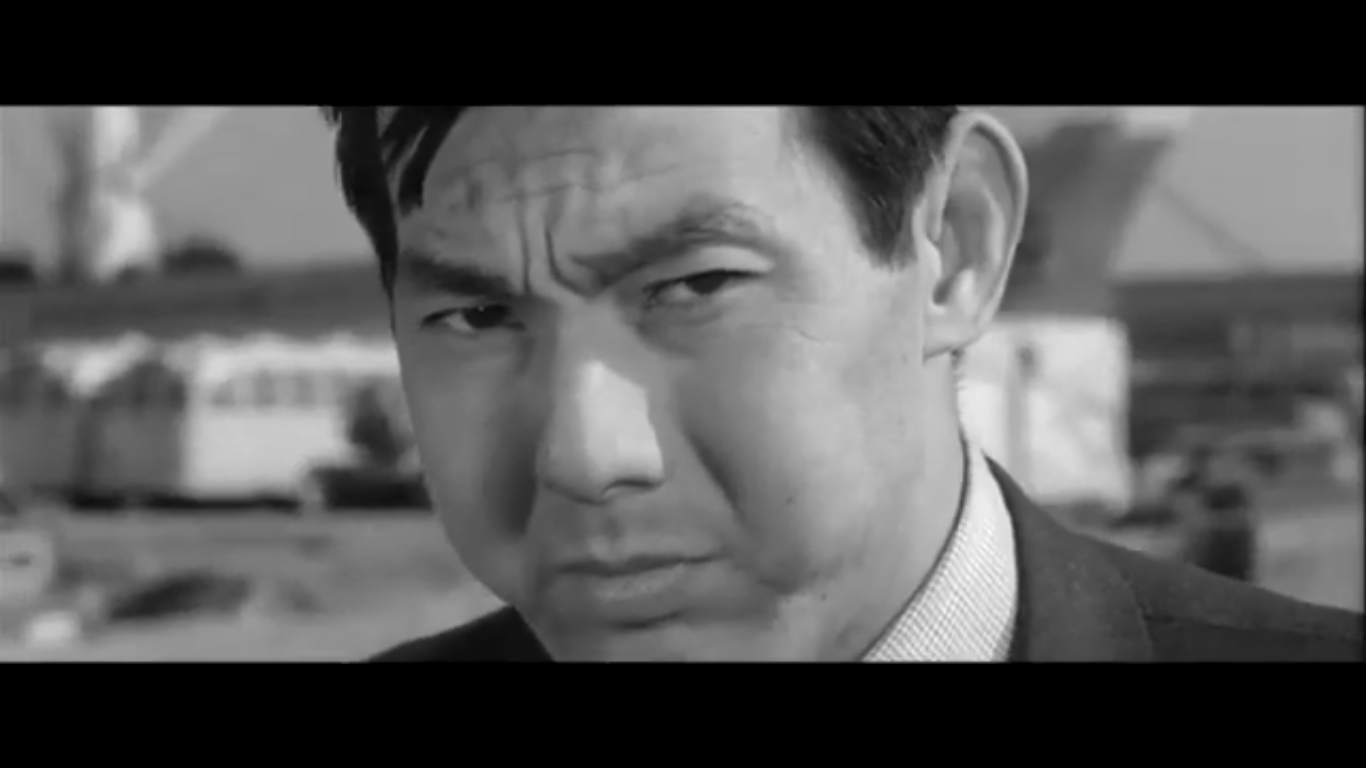
In this world of guns and souped-up automobiles, Shishido, the chipmunked-cheeked cult hero of cool, somehow feels right at home. It’s all part of his work as he studies his target, sets himself up with a hotel room, and then prepares to get in and get out with surgical precision behind his sniper rifle.

If there’s a methodology here it suggests how Colt is a film built out of a regimen and the setting of its protagonist in an architectural world. He is always completely cognizant of his location and how he functions in relation to the spaces around him. Thus, it becomes as much about mood and milieu as it is focused on action and violence.

Take for instance, how the story is constantly switching contexts. It’s in a car, about getting to a plane at the airport, holding up in a hotel, then fetching a barge out of the country, and when that fails, commandeering a big rig to retaliate against the enemy.

Of course, there must be a love interest. In the subplot, Mina, a young woman who works at the Nagisakan hotel, offers them asylum from their pursuers. What draws her to them? She says the god of death follows in her wake. Her former beau must have been like them, and as she spends her days serving the riffraff and sewer rats always loitering around, she looks to take back her life in some way. This is her form of rebellion in a world generally dominated by men.

However, even with the proliferation of gangster imagery and this kind of masculine bravado, the contours are the film consistently emulate the West with its own recurring motifs. There’s a musical aside of guitar not unlike Ricky Nelson or Dean Martin might knockback in Rio Bravo (Your star is a lonely little star…but now your face is a ghost town in the mist”).

It’s a way to bide the time before inevitable showdowns while also distilling this sense of male camaraderie in such a way as to make it palpable. It evokes the loyalty forged between two men, one mentor and his pupil, who have been through so much together. He shields his partner by giving himself up.

He knows where he must go. Where else would we end up but a deserted, windswept landfill where we half expect to see a tumbleweed roll by? Instantly the urban world and streets, even the maritime port of Yokohama, all but evaporate and fade into the periphery. The entire film culminates in one definitive moment where the sides are drawn up all but prepared to have it out in an instant. While the final showdown is fairly spare, it still manages to blow the lid off the picture with its gritty cross-pollination of the noir, western, and yakuza inspirations.

It’s hardly drawn out — finished in what feels like a few suspended moments of chaos — and yet it might be one of the most monumental standoffs you’ve ever seen. As Shishido digs a hole (what might as well be his grave), then sets a charge of dynamite, which might as well be a self-destruct mechanization, and then finally fights for his life, we are inundated by the full brunt of the impact.

There’s hardly any mistaking who came out victorious, but then again it might be just as difficult to claim a hero as a man totters away from the wreckage.  I’m not altogether familiar with the etymology of “borderless action” cinema as marketed by Nikkatsu, but here it feels like one meaning is about this unabashed melding of genre and inspirations.

Shishido channels hitman, gunslinger, and jaded antihero all rolled into one. He’s got a dash of Eastwood, maybe a bit of a Melville assassin, but also a distinctly Japanese sensibility. It creates this pleasing amalgamation that finds something rather gripping in its myriad of influences. There’s an indiscriminate and still somehow an artful freedom to it drawing me in all the more. 

4/5 Stars

Pigs and Battleships (1961)

If you want to make some sense of the rise of Shohei Imamura, it’s convenient enough to fit him into the context of two of Japan’s foremost filmmakers. During his time as a university student at the prestigious Waseda University, he saw a screening of Akira Kurosawa’s Rashomon, which not only became a catalyst for Japanese film worldwide but also for young men like Imamura.

However, upon arriving in the film industry he found himself working with another acclaimed master, Yasujiro Ozu. The only problem is that Imamura’s own sentiments played in stark contrast to his elder’s fairly sedate albeit meticulous style. Imamura wanted to get into the issues and the conflicts of the times. He feels like both a  nonconformist with a bit of a rebellion in his blood and someone with an acute appreciation for humanity.

Here he positions himself as a Japanese New Wave iconoclast having some fun at the expense of his countrymen and their most prominent post-war ally: the United States. In his own words, he was an anthropologist using his films to analyze humanity in all its foibles and messier predilections.

This might be as good a place as any to provide a jumping-off point for Pigs and Battleships. It plays as the antithesis of his elder Ozu by readily showing Japan at its most pathetic with a host of men who might well be a circus of dim-witted ignoramuses in a comedy of errors.

In the opening frames, you get an instant impression of the backstreets and alleyways frequented by American sailors, bums, and pretty girls with their come-hither looks. Vagrants of all sizes can be found scampering around town messing with sailors — swiping their hats — and generally causing mischief. Some of this is organized.

This is the unruly underbelly of Japan as represented by the seaport of Yokosuka and those with a certain perception of civilized Japanese society, would do well to avert their eyes. Imamura has no intent to present some idealized or cloying sense of his homeland

Kinta is one of the ilk of street trash gaining our attention for whatever reason. He’s a lowly gangster yet to earn his stripes.  Hiroyuki Nagato plays him in such a way that his movements come off as those of a callow, entirely overgrown child. While he tries to make a name for himself among the local gangsters, he has an on-and-off fling with a local girl named Haruko.

She’s not a glamour queen, but there’s something good and decent about the naivete found in her eyes. However innocent she might be, she still chides Kinta to get out of the racket and take up a steady factory job out of town.

Whether he meant to or not, you begin to see how the Japanese New Wave was carried on the shoulders of filmmakers such as Imamura. He accentuates a certain world through a particular methodology.

Where hoodlums feel more like snickering hyenas in baggy clothing ready to pound the populous for a good laugh. These aren’t criminals given any amount of deference or import. It feels like we should scorn them even in their hijinks trying to make some money off a drove of pigs.

However, the movie is not without a shock factor. You know when a man’s head is dunked in a tank of gasoline and a thug waves a lighter in front of him ominously, he’s making the threat count. It’s easy to see the director pushing back against any post-war American tokenism. Because Kinta is found right in the crosshairs.

Where being American is king and if you can’t be white Anglo-Saxon — victors of WWII and wooer of Japanese women — at least with the gangs you get to do something cool with your life. You belong to something bigger than yourself. Anything honest and menial is frowned upon. There’s a self-contained scene when a little boy reads out loud how refined and highly cultivated Japan has been able to fluidly integrate aspects of other nations, the irony is not lost.

You only must watch what happens before and after to have a good laugh. The hiccups keep on coming. The mobsters have their hands full disposing of a body, and it feels like a bout derivative from The Trouble With Harry than any hardened crime drama. Try not to giggle with morbid glee when they find a false tooth inside the pig they’re chowing down on!

Even, the yakuza boss, that symbol of towering and lethal villainy is a sorry figure. He’s dying of cancer — looking pitiful when his little brother comes to visit him — the gang gathered around his bedside. He thinks he only has days to live and there are so many affairs to get in order. Namely, all the debts he still needs to collect!

We also meet the man known only as Sakiyama at a bar talking with a Chinese fellow. They’re involved in this pork deal between the Americans and the locals. Although the “Japanese-American” man speaks English, it’s easy enough to tell in a moment it’s not his native tongue. This actor is Japanese and so the illusion is broken, but given the carnivalesque bits of business we’ve already been privy to, it’s not completely out of place.

Because things just keep on falling apart in this ever-changing state of fateful narrative entropy. For most of the film, Imamura remains an observer, but in one specifically pointed setup, he inserts himself into the action. It happens in the aftermath of a row between Kinta and Haruko. They’re probably not getting back together, and she vows to get drunk and party with American seamen as an act of spite.

Instead, she ends up in an empty hotel room with three brawny men prepared to overpower her in their stupor. The overhead shot of Haruka and the three boisterous sailors might be the pinnacle of the film’s hysteria in this intersection of worlds and toxic schemes of life. It breaks the moment down to its most pointed elements as we spin toward oblivion and a horrible outcome that cannot be undone.

Going with its prevailing tone, Pigs and Battleships owns a final act built on total futility. However, there’s something about seeing pigs roaming in the streets that made this feel like Pamplona for porkers. It’s a hilarious image even as the film comes to terms with its own human tragedies. Ozu would never make this movie; not even Kurosawa with his more dynamic proclivities. No, this is something new.

Most important is the implicit message found in the title and much of the comedy. In the post-war landscape, Japan was very much subjugated to America, and they too became conduits of Capitalism.  However, in case it’s not already apparent, our way of life and systems come with their share of flaws. Pigs and Battleships begins to suss out the complexities of this relationship. We’d do well to consider it.

3.5/5 Stars

Tiger Bay (1959)

Horst Bucholtz has always held a soft spot in my heart. There are several very simple reasons. My father’s favorite movie might be The Magnificent Seven, and I grew up watching this young raffish upstart join forces with Yul Brynner and Steve McQueen against the forces that be. Then, years later, there he was again as an old man in La Vita è Bella. Somehow it served the movie and my own history with him well, to see him this way. A mere 5 years later he would be gone.

Of course, Tiger Bay, if you’ve never been acquainted with it before, is the picture that really put him on the map, at least for English-speaking audiences. And it’s easy to see why. He was advertised once upon a time as Germany’s James Dean, and if the comparison makes a modicum of sense at all it has to do with how masculinity can be at one time violent and then sensitive. There would be no other way for him to hold the movie together with Hayley Mills so well. More on that in a moment.

I must take a moment to acknowledge my growing esteem for J. Lee Thompson in recent days because although I am a fan of Cape Fear and not so big an admirer of The Guns of Navarone, it was earlier in his career where he showed his capability with material like Yield to the Night and here in Tiger Bay. The world is easy to place, especially in England with a working-class port town acting as a window to the world. One of the men fresh off one of these ships is the youthful sailor Bronislav Korchinsky, who looks to be reunited with his lover.

Hayley Mills makes her screen debut moments later as a feisty tomboyish pipsqueak ready to roughhouse with all the other street rats. She gleams with a delightful impudence, those large searching eyes of her projecting curiosity and at times rebellion. Her aunt is always scolding her and she always scampers around bumping into neighbors on the stairs or eavesdropping on conversations she has no business in.

One of them is between Korchinsky and his girlfriend Anya. But the scene before us is hardly bliss. It comes seething with angst and vindictive daggers you feel like would hardly have been in vogue across the pond at the same time — at least in mainstream Hollywood. As the woman scoffs at the money he sent home and lets him have it in their native tongue, it becomes apparent this kind of gritty vitriol might only seep into an American noir picture.

In fact, if there is any immediate reference point, it’s possible to find Tiger Bay reminiscent of The Window. However, in this case, Gillie Evans (Mills) is not so much a “kid who’s cried wolf” as a serial annoyance no rational-minded adult looks to take seriously. Still, she’s an eyewitness to what looks to be a shooting. A woman’s dead and the man is on the lam. What’s more, in the moment of initial tumult they crossed paths as he streaked away, and she nicked the evidence to bring back to her aunt’s apartment. For her, this entire scene feels like a novel curiosity, but she thinks little of the consequences in the moment.

Instead, she dodges the inspector’s gentle interrogations (John Mills) before rushing off to drop into church service late, taking up her spot in the choir while still packing the purloined pistol.

It’s fitting that in one moment they seem to be singing a hymn out of Psalm 23 and suddenly the spiritual journey through the valley of the shadow of death becomes all too real. There stands a familiar face in the crowded pews and suddenly her self-assured nonchalance drops off in the middle of her solo. There’s the man!

It feels like a showdown set up for Hitchcockian dread as the church clears out and she’s left to fend for her own against the crazed young man. This can only end poorly. And yet Tiger Bay works because the villain in this equation is not a horrible human being. There are moments he could press his advantage, whether it’s pushing her to her death or doing away with her with the gun, but this is not his character.

In fact, in its best and brightest moments, Buckholtz and young Mills become the welcomed nucleus of the movie, at first as wary adversaries and then companions and finally friends capable of playacting in the morning light. For a few moments, they are able to shed all the worries of the world and enjoy being in one another’s company.

In the latter half, it takes on a different tilt altogether as a little girl, now beholden to her new friend, looks to buy him time as he looks to sneak off on a ship out to sea. We have ticking clocks and stakes, all those storytelling tricks of the trade, but the core of the entire story is the relational capital that we build. It becomes a new, far more compelling kind of movie. Because now a child must live in the ambiguity of the moment and how are they to decipher the difference between right and wrong and what those terms even mean?

The ending feels a bit prolonged and drawn out for its own good though it’s kept afloat by this underlying relational tension. A man’s life hangs in the balance as Mills drags his real-life daughter out to sea to identify the purported killer before he can get away for good.

John Mills feels generally flat and uninteresting if a mostly benevolent authority representing a prevailing moralism. Otherwise, this picture has much to offer and a colorful perspective on the world circa 1959.

Suddenly, British society, cinematography notwithstanding, doesn’t look quite so monochrome. Because of course, it wasn’t. It’s a world of Polish immigrants, vibrant Calypso music on the street corners, and foreign sailors who are not totally subservient to the British powers. It’s a reminder that ports really can be windows to the world even as they can also bring disparate people together.

3.5/5 Stars

Whistle Down The Wind (1961)

Whistle Down The Wind feels like it employs the “kitchen sink” aesthetic in step with British film of the day, bleak and tough around the corners with working-class folks coping with all kinds of toilsome drama. However, if the mantle of that zeitgeist was normally carried by the likes of Albert Finney and Richard Harris, then effectively we have the “angry young men” of the subgenre replaced by children.

It gives the picture a slightly different if altogether refreshing perspective on these same issues. At its center is young Kathy Bostock (Hayley Mills); she lives on a farm with her father (Bernard Lee), an aunt, and the aunt’s two children.

They are three rambunctious little farmhands but not altogether wicked, mind you. They come home with three discarded kittens in tow, looking to sneak past the prying eyes of their betters, so they might raise them in the barn. As such, it provides a safe haven and becomes an even more sacred space given what happens next.

Young Kathy is alone busying herself with their charges, and then she sees a stranger (Alan Bates), rather haggard and disoriented. Both man and child are shocked and as she inquires who he is, he utters the words, “Jesus Christ.”

Now many an adult could tell you lots of people exclaiming the Lord’s name are using it in vain, but this never crosses Kathy’s mind. Whatever you might think of her, whether foolish or otherwise, she takes the name very seriously.

This naive misunderstanding is what the entire movie turns on, and it’s a lovely bit of irony. It takes all our cynical assumptions about these people and their world and completely turns them on their heads. Suddenly, we have this glorious portrait of child-like faith set before us, and this only works because Bryan Forbes’ picture allows children to hold such a central place in the story from the outset.

They are funny and mischievous and yet so very sincere in spirit. A cat can be named Spider, and it’s completely honest to gripe and groan about everything little thing. There are these sublime closeups sprinkled through that, even momentarily, allow us to be in their place and empathize. I think of one where the little boy Charlie (Alan Barnes), always at odds with the girls nevertheless, peers over at the man in the hay, and his face lights up. Curiosity getting the better of him, he asks if it’s really Him? He too wants to believe this is the Christ.

This comparison might be tenuous, but rather like the internal logic of It’s a Wonderful Life and The Bishop’s Wife, there’s something pleasant and powerful about the spiritual reaching into our human environments. We want to believe in their benevolence — that they are able to redeem our families and hardships, with a bit of divine intervention.

There’s still a sense that the spiritual world enters into our lives of its own accord. In fact, there is no true distinction between one and the other, whether they be kindly angels or guests in the haystack. They have the capacity to invade the everyday and breathe new life into it while still feeling almost mundane.

If you’re like me, sometimes religious allegory can feel too on point and obvious. It’s not exactly subtle here, but there’s something about the context that still makes it delightful. After receiving further spiritual insight from their Sunday school teacher, we have the procession of three little kings returning into the presence of their visitor, complete with a musical cue to send them on their way.

The hypothetical question of what to do if Jesus came back takes on very concrete meaning for them because of course, he’s lying right there in their barn waiting for them. And so, with all sincerity, they bring their gifts to place before him. They want him to feel welcome. They want to find favor with him.

It’s a striking allegory — not quite to the degree of Flannery O’Connor’s gothic gallows as it were, but there’s something moving in this picture. Rich in content and meaning, but never in a way that makes one feel put upon or totally scandalized. We watch their visitor become the subject of ensuing pilgrimages of all the local children.

As we’re privy to both worlds, we know this man is actually wanted by the authorities. He’s no Christ; he’s not even a saint, and we must watch and wait for their expectations to be utterly crushed. Because there will always be persecution and unbelief in some form acting in constant opposition. Although they conveniently keep their secret from the grown-ups, it cannot last forever.

A local bully tries to intimidate them all back into the status quo. One small boy on the playground all but recants a visitation with “Jesus,” which in his mind is tantamount to Peter’s denial. There’s personified devastation on his youthful face as he gets a reprieve from earthly torment, but at what cost? It sounds almost silly to speak of these things in such weighty terms, but I’m only treating them with the same gravity as these little children.

If this is the case, we must always return to our protagonist. Hayley Mills shows off all her most extraordinary traits as a young performer, buoyant and yet defiant and determined in the face of naysayers. There’s an assurance she holds onto that guides much of the movie, and it must lead to the inevitable.

The final juxtaposition of Charlie’s boisterous birthday party full of hearty squeals and blind man’s bluff plays against the more ascetic sense of the outdoors as the wanted man tries to escape the local dragnet. He gets cornered in the barn with the police flying to the scene and the whole town hot on their heels. It looks like the children’s faith is bound to be dashed right before their eyes.

What a difference a point of view makes and the intention behind it. Instead of churning up the local rumor mill with clamoring gawkers and gossipers, it feels more like one final act of belief with all the masses set to pay their respects and catch a glimpse of the man. Certainly, the masses are mostly children and that says something in itself.

Because you can take its parable in two ways: either it’s a pragmatic lesson that children must learn how the real world works — with sin, moral ambiguity, and heartbreak. Still, maybe it’s actually a reflection of the Christ’s sacrifice, coming into the world for the humble and the downtrodden, those who would willingly put their trust in him. If we consider these children, their trust is such that they believe he will come back again someday. It’s similarly arresting.

The extraordinary nature of the ending comes with the revelation that this sense of reverence is never broken, keeping with the film’s guiding light from start to finish. This is far from the norm, and it’s rather refreshing that hope is never completely quelled. It’s up to the viewer to decide what to do with this.

4/5 Stars