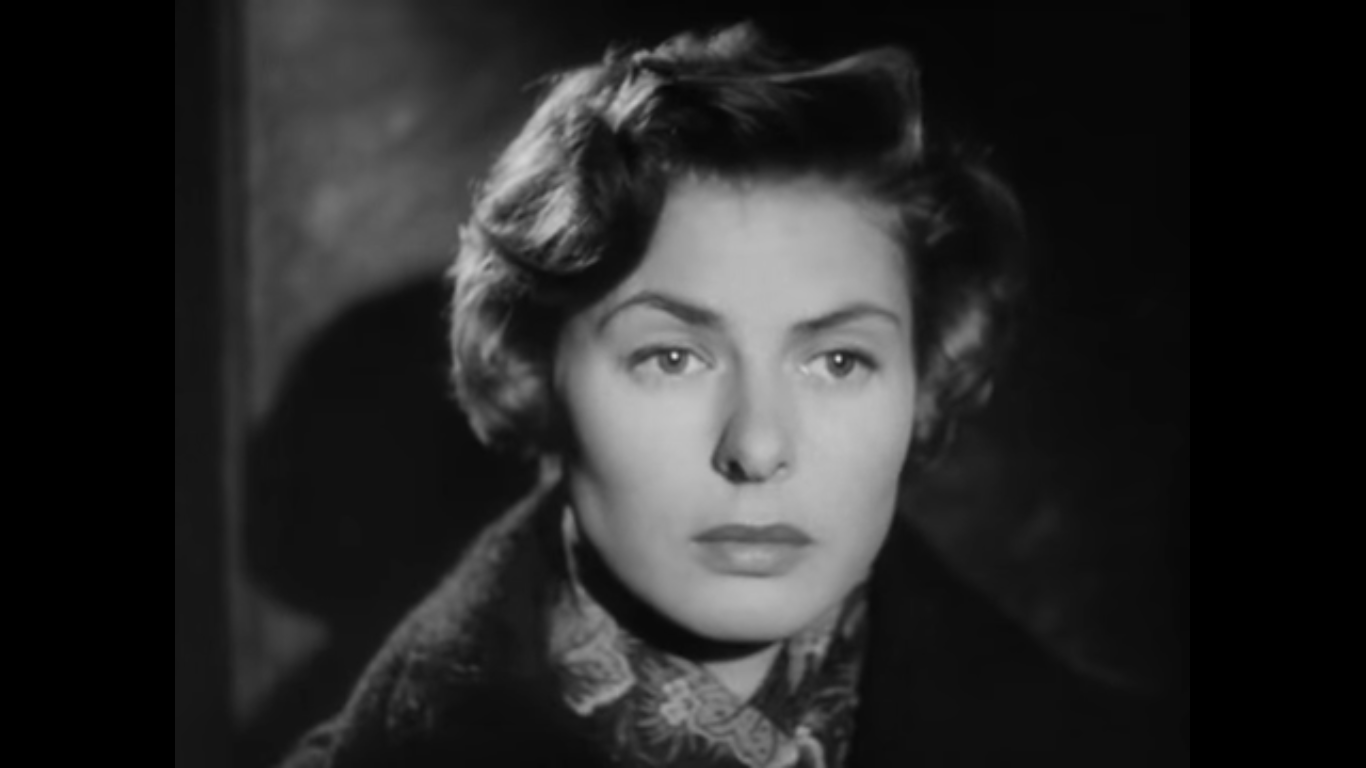
Brothers Rico (1957): Richard Conte and Dianne Foster

I’ll say it again, but Richard Conte is one of the unsung heroes of film noir. He could play ominous villains (Big Combo) or charismatic everymen caught in the pincers of fate (Call Northside 777). But the most important piece is that we buy him in either, whether he’s earnest or simply hard to take our eyes off of.

Digging around in his backstory, it’s telling that he was actually discovered by two fairly auspicious figures in the film and stage community: Elia Kazan and John Garfield. I wouldn’t have immediately drawn the line between them. To my knowledge, they rarely collaborated, and yet Conte does offer something robust and genuine in the majority of his roles. Like a Richard Widmark or a Robert Ryan, he doesn’t get enough acknowledgment, and the dark genre would feel slighter without him.

In The Brothers Rico, he and Dianne Foster are surprisingly frank, and they have a playful rapport between kisses, shaving kits, and showers. It’s all telling character work to set up a more rudimentary story.

It’s difficult to imagine any business more innocuous than running a laundry, but then again, that’s the point because Rico’s somehow connected with a different kind of business: something hot. Although he gave it up long ago with a past that is never fully disclosed, his two brothers are still knee-deep in it.

The film conjures up what can best be described as the fatalistic throes of doom coming back into his life. This growing pull somehow signals the undeniable undercurrents of noir. He gets a clandestine visit from a frightened Gino and learns his other brother Johnny is wanted in the underworld. He’s married a principled woman, and the mobsters are afraid she’ll make him talk. We see the worlds colliding, one engulfing the other, and eating it up.

Eddie’s own marriage is strained as is their dream of adopting a child. Because an old family friend, the kingpin Kublik (Larry Gates), calls on Eddie to search for his missing brother. He needs to straighten the boy out for his own protection. He’s sincere and they have a history. They’re like family. Thusly, Eddie is pulled back into the world.

It deals in terms of family, business, rivals, and all the codes we’ve become familiar with in movies forming the traditions of The Godfather and even an earlier Conte picture like House of Strangers. The family comes first and religion maintains such a crucial moral grip on people and how they make sense of guilt and retribution.

Eddie quickly becomes the seeker hero questioning folks, looking for leads, and going across country to track down Johnny. It’s a bit too convenient how the old world comes out of the woodwork to meet him bearing pretty girls in New York or boasting about gambling in Phoenix, but the point is made.

Finally, he finds his brother (James Daren) in an isolated town, far away from the prying eyes of the urban jungle and salacious gambling parlors. He’s contented himself with a simpler, purer life. Their meeting is inevitable, but it also comes to represent the divergent paths young Johnny wants to take.

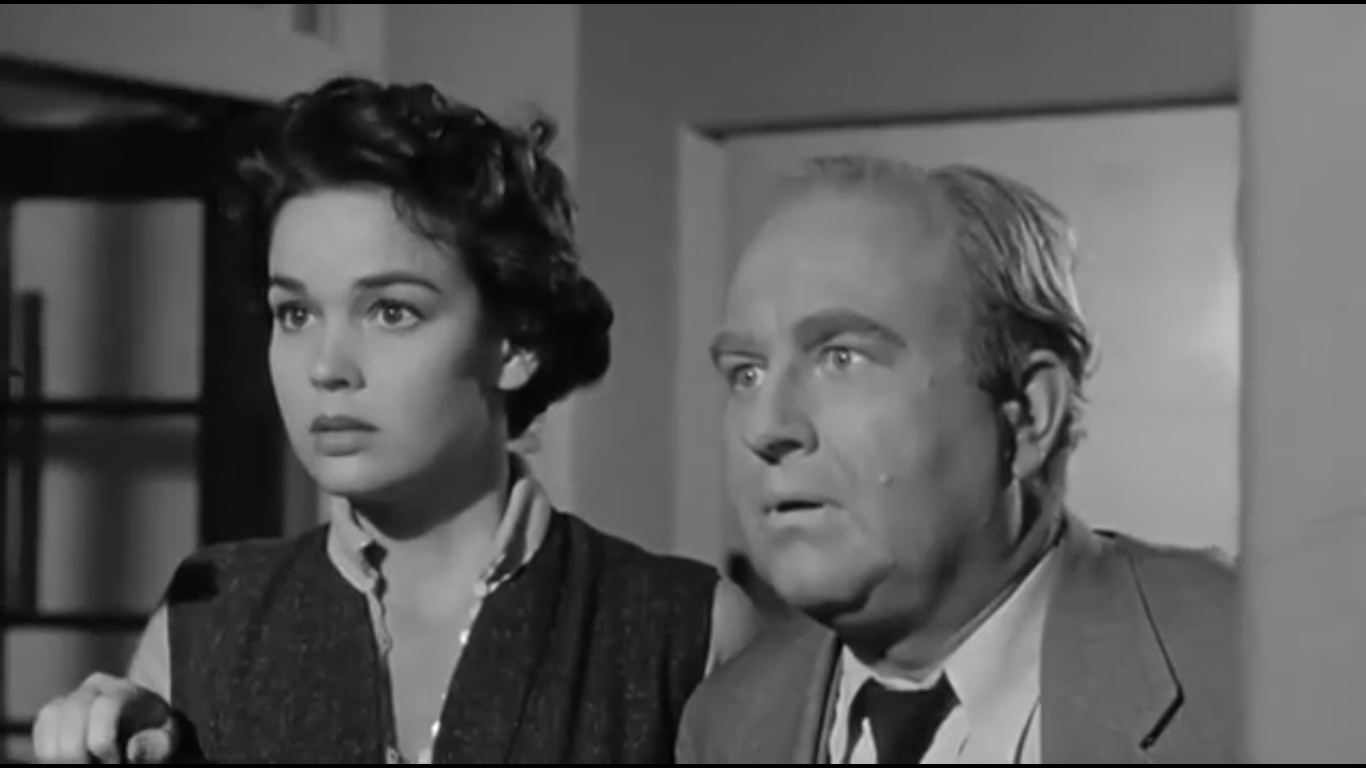
It’s curious how Conte who is forever cast as the hero in another’s eyes becomes almost like a specter and executioner himself, representing everything he’s trying to negate. Kathryn Grant has even less to do than in Phenix City Story, but the way she tears across the set beside herself with anguish serves a tangible purpose.

In all his good faith, Eddie has signaled the end for his brother. And even as he finally shows up at his destination, things suddenly seem more tenuous. Although we know what Kubik is capable of, Conte almost makes us believe that some semblance of honor and integrity still exists in the world. And yet it grows more and more suspect.

When he finally reaches Johnny, it’s like the motor of the movie is gone. The story drags until it finds a new focal point. It recognizes the renewed tension in the moment: Eddie is made to talk with Johnny over the phone knowing full well what is going to happen. His little brother is forced to reckon with the welcoming committee that’s waiting for him. And then the picture can only go one place, with Conte on the run like his brothers before him.

The climax is the film at its most mediocre, overblown, and disposable. In a matter of seconds, it brushes off all of the strenuous work of the picture, settling on histrionics over a clear-cut actionable ending. It doesn’t even give us the pleasure of one of Phil Karlson’s patented fistfights.

The resulting denouement is one of those overly twee numbers no doubt forced upon the production by the censors. Because as Mr. and Mrs. Rico, that couple we came to appreciate in the opening moments, finally show up at the orphanage to claim their child, there’s something uneasy about the whole scenario. It feels false and disingenuous given what we have experienced already.

Noir sentiments like these can never be so easily smoothed over. It’s almost sickening to think something so saccharine even deserves to be in the same picture. Particularly because it doesn’t seem to be earned. In the end, there are so many shortcuts and liberties taken and while the groundwork is in place, including character dynamics, and the like, Brothers Rico fails to have a viable payoff.

Regardless, there is much to recommend. I’m fond of both Richard Conte and Dianne Baker. They had varying degrees of career success, but have much to offer the movie. For Phil Karlson aficionados, it’s worth consideration.

3.5/5 Stars.
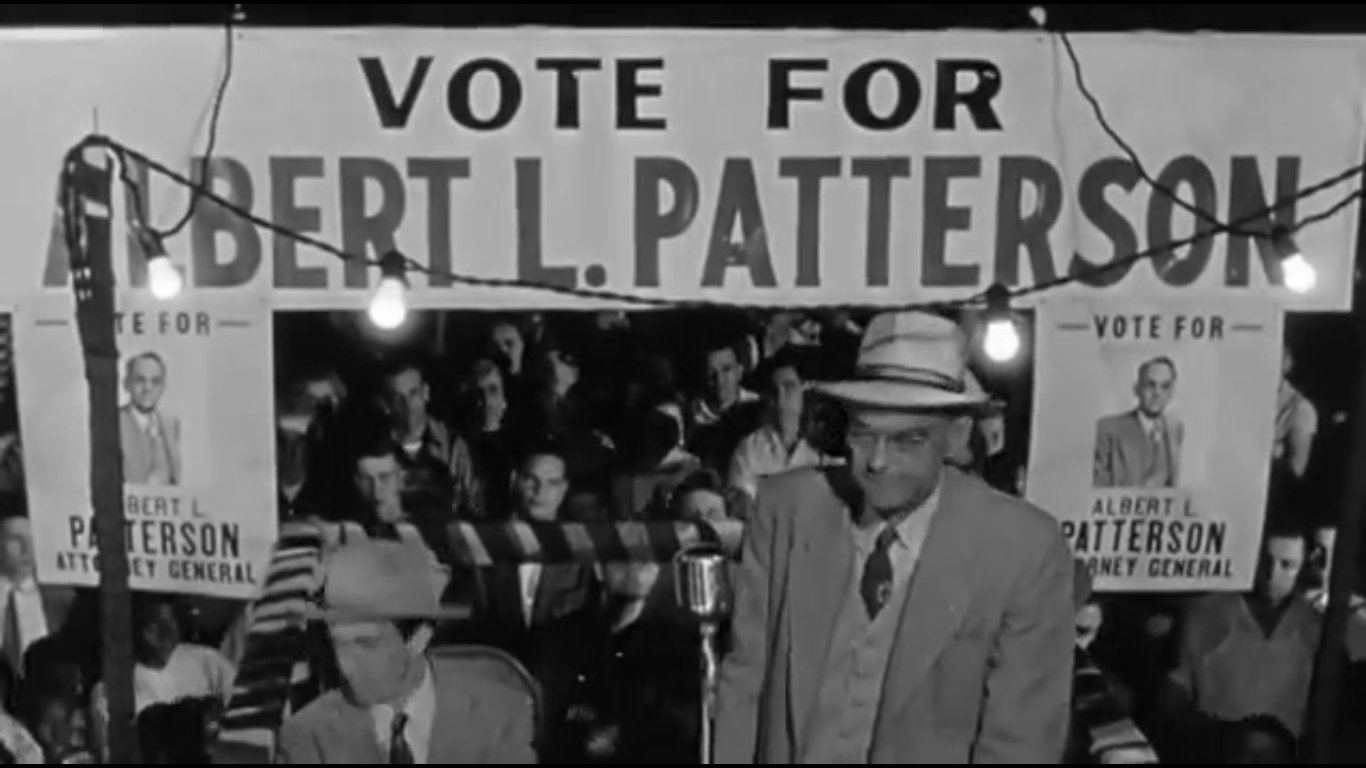
Phenix City Story (1955) and The Voice of The American People.

“From the ashes of Phenix City has risen the symbol of democracy at work. The power of the ballot will always be the voice of the American People.”

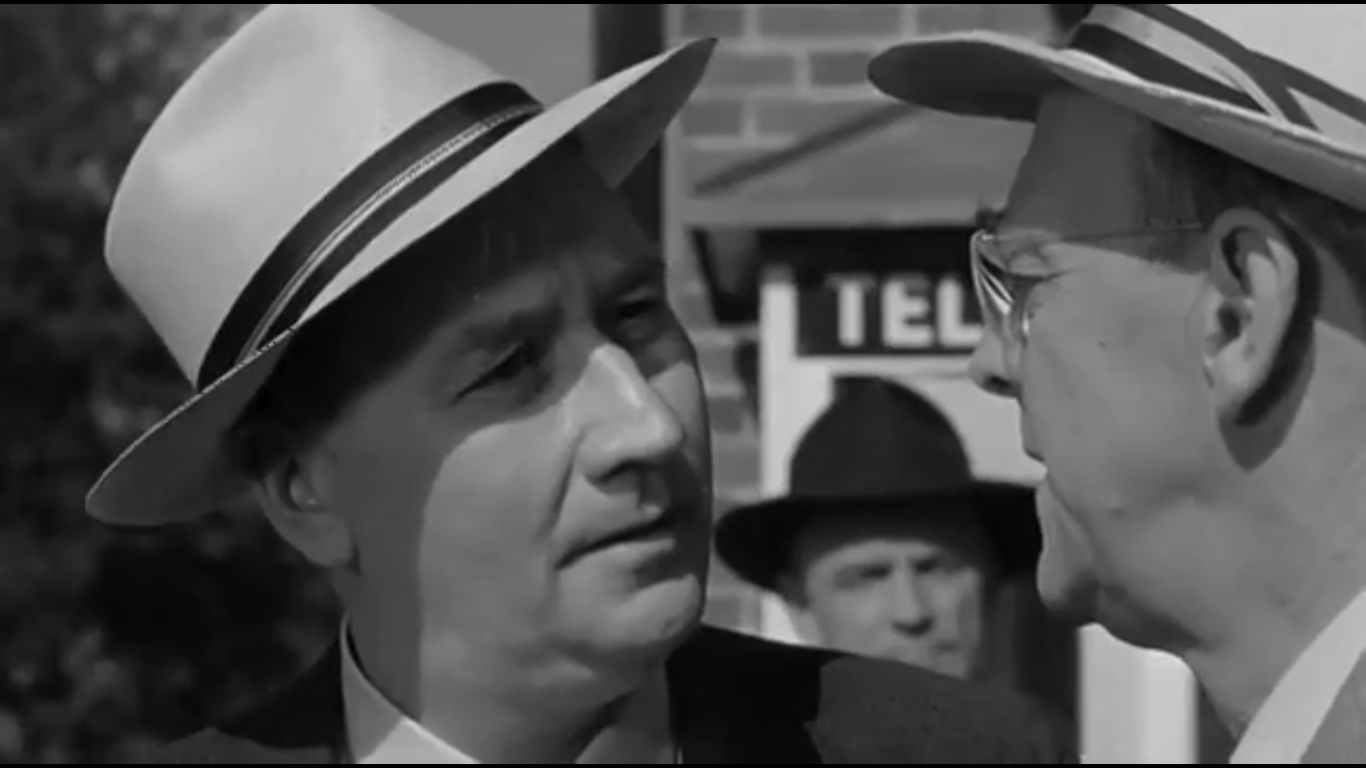
The cut of the film I watched had a rather unique opening prologue complete with interviews by esteemed reporter Clete Roberts (You might remember him from MASH’s Interview episode), and he supplies an instant ethos and credibility to the proceedings.

Faux-newsreel segments have actually been dropped in lieu of actual documentary as he stands on the steps of one of the city’s civic buildings. He takes a moment to talk with a couple notable players including the journalist who broke the story — Ed Strickland — as well as a lifelong resident, Hugh Bentley, who had his home dynamited.

Of course, if we didn’t know any better and we didn’t know these men or see their faces, we might guess this was all for the cause of civil rights. That’s not actually the case. The Phenix City Story is a tale of the criminal syndicate that controlled the city, providing much of its commerce, but also employing rampant coercion tactics.

It’s evident from the first images of Phil Karlson’s actual film, there is an instant dichotomy being created and the two layers of the society. There is the world belonging to the simple, hard-working, God-fearing folks and then the swindlers, gamblers, and generally corrupt subset of society.

Karlson introduces the latter with a knowing visual panache backed by a bluesy dance number. The saucy come-hither floorshow is the epitome of 14th street, and it beckons all men like a greedy seductress looking to bury them. It’s Sin City U.S.A.

What becomes plainly apparent is how evil can come in all shapes and sizes. Rhett Tanner has a gift for southern hospitality. He knows how to schmooze with the locals, chat about the preacher’s Sunday sermons, and keep up appearances. He’s also a shrewd customer behind closed doors as he is the go-to man maintaining the city’s thriving undercurrent of vice. In fact, he’s set himself to be an impregnable despot. No one can topple him because he’s so integrated into society.

Albert Patterson (John McIntire), as portrayed in this storyline, is one of the men who is reluctant to get involved. He’s a lawyer and a good one — he’s one of the town’s best — but he’s also old and feels the fight is not his. He can live on his side of town in relative peace.

It’s his boy, John (Richard Kiley) who really shakes up the status quo. He is a war vet returning to Phenix with his young family after time away, and he’s disillusioned by what he found. He’s faced with the bitter irony of fighting fascism overseas only to see it have such a deathly grip on his childhood home. He’s prepared to fight to give the town back to the good folks around him.

Kiley’s part is actually conveniently whitewashed to make him a more sympathetic hero. In real life, John Patterson ran on a segregationist ticket — although it might have been more pragmatic than anything — he also didn’t have the best track record as a family man.

But in an effort to probe this topic more, James Edwards is one of the characters we must gravitate towards. Edwards certainly never reached star status, and he’s rarely remembered outside of the classic film circles, but through a series of war films, it’s as if he was given an opportunity to exert himself and represent black characters with dignity.

Phenix City Story is one of the few films where he’s not in uniform, and Zeke is not a revolutionary part; he’s only a humble janitorial type, but he has a strong moral conscience. The fact that he, his wife, and his daughter (who becomes a tragic victim) are the only black characters, is also a salient reality of the film’s world.

The movie feels like a microcosm of the whole society, both what is shown and what is not. My historical geography leaves something to be desired, but I think of 1957 and Orville Faubus, or the 16th Street Baptist Church Bombing in Birmingham in 1963, and the brutality of Selma after that. My mind starts going places. If this is how they treat other whites in a movie, imagine how it is with blacks. To its credit, the movie resolves to show some of this.

Pound for pound, it doesn’t feel like the Sunday school truth it’s trying to project itself to be, but in the world and qualities of life — especially the exteriors — we do get a real eye into society circa 1955. This is the aspect of many classic films that’s the most enlightening even if the actually perceived mimesis of the film itself is still beholden to the tenets of Hollywood drama. Thankfully, for all its forays into docudrama, it still holds onto Karlson’s always reliable sense of bruised and bloodied physicality.  It wouldn’t be one of his pictures without it. But of course, even this has real import.

The ensuing climax feels like a foregone conclusion. People feel a tug or a pull to do something and take a stand. Bystanders can no longer watch. They must act to turn the pervasive tides of oppression. One of them is the young woman Ellie Rhodes (Kathryn Grant before she met Bing Crosby), who saw her boyfriend ruthlessly disposed of. Finally, Albert Patterson resolves to fight as well, and he takes it to the top, running as attorney general. Both of them stick their necks out and pay the consequence. However, these weren’t rash decisions. They knew full well what they were getting into. They counted the costs and pushed forward anyway.

If we are to scan the contemporary movie landscape, something like The Captive City is a comparable movie. Whereas the actual visual plane is more pronounced in individual shots of the earlier movie, Phenix City has the advantage of its world, and if it’s not entirely more expansive, then it certainly feels more evocative. In the dark shrouds of night, we feel the sinister threat hanging over the city’s population.

The Captive City also calls on gangsters who feel like callbacks to the 1930s. The tone verges on social horror. Karlson’s picture is probably even more perturbing because it alights on something that feels fresh and honest in how it pertains to current events in 1955. There’s no escaping reality in this case. We’re still struggling against them over 65 years later. Suddenly, that corny rhetoric at the movie’s opening remains prescient. “The power of the ballot will always be the voice of the American people.”

3.5/5 Stars

The Captive City (1952): John Forsythe and Joan Camden

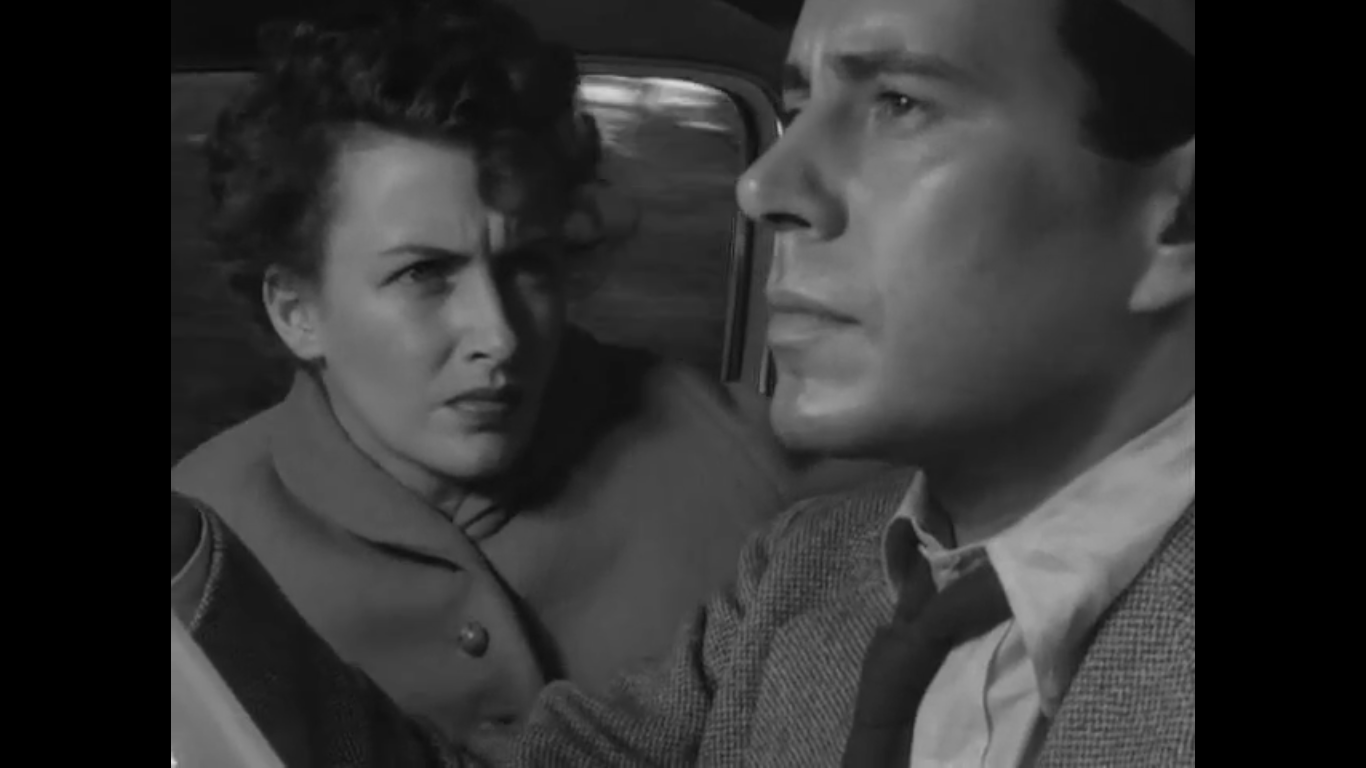
The movie opens briskly with a man and a woman racing through Middle America in their car. The shots provide a lovely, claustrophobic framing and closeups of our characters making the moment especially palpable. From what I can glean, this was actually attributed to a man named Hoge, a former grip for Gregg Toland who made this noticeable advancement with deep focus. This Robert Wise project was purportedly the first movie to use this new technology, and it pays great dividends over the course of the rest of the movie.

The couple continues to fly down the highway until they pull up outside of a police station in a small town to find some support. They don’t fit the surroundings, but journalist Jim Austin (John Forsythe) asks to record his testimony just in case anything should happen to them…

This kicks off the film’s all-encompassing flashback covering most of the movie. James T. Austin (Forsythe) was the local newspaperman in Kennington, which might as well be Everywhere America. There’s nothing too exciting there, but they find ways to keep busy, and life is generally calm and anodyne.

As such Austin has a generally chipper attitude and very little can sour his mood on the beat. He likes what he does and being a member of the local press avails him certain privileges. However, an inauspicious encounter with a P.I. named Nelson in the local library, leaves him feeling queer. The man is positively paranoid. He says he was working on a run-of-the-mill divorce case, but then sounds the alarm suggesting underworld syndicates and other entities are taking over the town. It’s utterly ridiculous. But he won’t stop looking over his shoulder.

That same day an accident takes place in town late at night. Although it’s actually a hit and run, and the man killed is none other than the same P.I. Austin starts to get queasy feelings. At the very least his interests are piqued, and he does what he does best: investigate. His character was built for such a film as this.

It leads him to a divorced couple, Mr. and Mrs. Murray Surak, who are somehow implicated but don’t want to talk. They’re scared of something. This goes far deeper than one or two people. The Police Chief, a genial enough fellow named Gilette encourages the journalist he might as well back off. In truth, he’s running interference for the bookies in town, and some of Austin’s pals even call gambling harmless fun. At any rate, it’s pervasive throughout town — everyone’s complicit — and it all goes back to one man named Dominick Fabretti.

With a conviction to seek out the truth for the sake of his readers and the community, Austin enlists the help of the paper’s budding photographer (a young Martin Milner before his Route 66 and Adam-12 days). They stake out Fabretti’s home base outside of town and grab a drive-by shot of the elusive kingpin. However, the victory is short-lived after Phil is pounded for the negatives. It’s another warning.

The film soon passes the point of no return as the journalist spies a car watching his house from across the street and his greatest allies at the paper start to turn on him. They can’t understand why he’s willfully stirring up the populous. In some ways, it plays like an early prototype of Invasion of the Body Snatchers without the Sci-Fi element as the world closes in on him and no one believes his story aside from his faithful wife (Joan Camden).

Here’s an unrelated observation but watching the movie you begin to understand the plague that beset people like Dr. King who had their lines tapped and were constantly hustled, harried, and intimated by forces in power. Even then this is only a very small representation of this kind of conflict between the powers that be and the righteous rabble-rousers.

Ultimately, Austin feels compelled to go to the local ministers. Surely they can speak truth into the current mendacity they find themselves enveloped in. And yet even in spite of this blatant hypocrisy, the religious leaders do not feel they are able to take on their own communities in this way. They too feel powerless to reach their audiences in the pews on Sundays. In essence, that’s the extent of their powers because for the rest of the week people go and live their own lives as they see fit.

Eventually, we circle back around, and in another sequence predating Body Snatchers, Forsythe, much like Kevin McCarthy’s character, tries to seek help in the present as the story comes back around. All due respect to Senator Estes Kefauver and his civic pursuits, but the last 2 or 3 minutes kill the movie.

It becomes yet another heavy-handed Hollywood public service announcement in the guise of entertainment. Up until that point, it’s a tense newspaper noir brimming with deadly, full-bodied conspiracy. We truly empathize with John Forsythe as the world begins to cave in around him. He makes it take.

3.5/5 Stars

House on Telegraph Hill (1951): Valentina Cortese and Richard Basehart

Like many of the directors of his day and age, Robert Wise cut his teeth on noirish material on his way up the industry totem pole toward more prestigious projects. House on Telegraph Hill supplants a Belsen Concentration Camp survivor named Karin Dernakova (Valentina Cortese) who emigrates to San Francisco on the prospect of a better life.

This might have felt like a very prevalent narrative in a post-war world, but what makes her story unique is her secret: She’s not actually Karin Dernakova. Her real name is Victoria Kowalska but her feeble friend Karin shares the hope of her distant relatives in America. Although Karin doesn’t live to see it, in a moment of decision, Victoria decides to don the life of her friend. It’s a risk but one she is willing to take as it promises more than she would ever have otherwise.

The Allied liberators are decent, enlightened people who handle her with a human touch. They aren’t looking to find her out, instead intent on helping her assimilate back into society. Her first stop is a displaced person’s camp and then her relatives who live in San Francisco.

Richard Basehart is one of the men watching over the assets of her late “aunt.” In fact, he’s a little more closely involved as guardian of a child and his estate. The lady she was meant to stay with is dead, and her young son doesn’t remember his mother very well; Alan does what he can to make her feel welcome. The attraction between them is also of convenience to her as she’s driven by fear and a desire to realize her American dreams. Ultimately, they get wed.

As House of Telegraph Hill settles and finds itself as it were, what becomes apparent are these varied strands coming together. Because it shares elements we see in innumerable films of the same period. The first is the gothic home and the woman in danger noir. At first, it’s not altogether explicit, but there’s an eery sense about the place.

An imperious portrait of a deceased relative sits prominently in the middle of the parlor. There’s something slightly unnerving about it like it might somehow catch her in the lie. Likewise, their governess Margaret (Fay Baker) is built out of the Ms. Danvers prototype, making Karin feel thoroughly unwelcome in her own home. Though this is the undercurrent of the entire movie, isn’t it? It actually isn’t hers to have.

There is this general sense of unease bubbling up from the surface from any number of nooks and crannies. Although Rebecca is a better mood piece and its actors are probably more prominent in their evocations, House on Telegraph Hill not only has an illusory housekeeper and a specter of a proprietress but also a man of the house with dubious intentions.

In order to offset the perceived menace, there must be an escape valve and Marc Bennet (William Lundigan) is just the man. Although Alan is reproachful of his old school chum, he has the kind of good-hearted, easy charm to provide Karin with a much-needed ally — someone to let her know she is not crazy. For that matter, there’s her son, and Gordon Gebert is just about one of the best child actors of the era if we’re basing our criteria solely on spunky adorableness. Playing baseball with his mother is one of the most humanizing activities you might imagine for a young boy.

This general malaise displaces the hope and prosperity brought on by the end of the war and happiness is extinguished by this unnerving sense of unease. It seems the horrors of the Holocaust are given a very real form and expression. We have a paranoia-filled framework perfect for a noirish tale of distress brimming with psychological torment and underlining duress.

There’s a mysterious drop-off in the rickety old playhouse caused by a sudden explosion, and later faulty breaks causing her car to careen violently through the hills. Somehow she survives, and it feels like it could all be an illusion — not just back projections of a studio lot — but also a manifestation of the pervasive mania she finds herself stricken by.

Basehart doesn’t necessarily have a cushy headliner role. Still, he’s good at playing bad with his charming manner and dashing good looks. And yet this becomes a glorious noir portrayal because it provides such a contradictory projection of truth and falsehoods that we must reconcile as an audience alongside Cortese. In other words, the ominous scoring says one thing, while his demeanor says another. We’re always kept in this state of uncertainty. It doesn’t help since we have the contradiction of the budding love affair between Basheart and Cortese in real life.

In Suspicion, Hitchcock was forced to pull Cary Grant away from the brink and if there is one thing in this picture’s favor, it’s that we can still have our villain. True, it resorts to wildly histrionic melodrama in its final moments, stewing in all its gothic glory. There are strings and drums pounding away, as orange juice, not milk, is ingested. If it’s not altogether satisfying, at least it delivers on the kind of cinematic delirium we expect from a movie like this, wearing all its many facets right on its sleeve.

3.5/5 Stars

The Incredible Shrinking Man (1957)

These old Jack Arnold films are a perfect example of how expectations don’t always meet reality. Because if you’re like me, you have a certain preconception about how these movies will go — how they will look — and thus you may have written them off. Part of this might be the fault of the movie posters and the sensationalized advertising, and it also might be chalked up to our cliche-filled cache of old sci-fi and monster movie imagery.

The Incredible Shrinking Man fits comfortably as a twee ’50s-era television rom-com. “Scott” Carey (Grant Williams) is on a vacation with his wife playfully arguing about who will get the beers from the galley of the boat. It’s a bit of levity even as they jockey around the roles of man and wife in a marriage.

Minutes later Scott’s engulfed by a curious mist that comes out over the sea, and it leaves him confounded. For the moment, there’s nothing more to say. Months later, they are back in their suburban life. The milkman stops by in the morning, Louise busies herself in the kitchen, and Scott gets ready for work. Except, this morning his pants are too big — the dry cleaners must have made a mistake — but then his shirt is too big also. It throws him off.

His wife doesn’t have any clue either and so he goes to his doctor for a physical. The genial doctor (William Schallert) tries to explain away the changes with the routine explanations. Because, to put it plainly, people don’t get shorter…unless they do. It’s true there is no medical precedent for what’s going on with Scott.

He’s put through all sorts of tests to make some sense of the change in his body. Finally, the researchers settle on something. The molecular cells in his body have gone through a rearrangement — no, not cancer — but an anti-cancer. In a eureka moment, they realize a cocktail of insecticide and radioactive mist, led to the adverse effects.

But the Incredible Shrinking Man is hardly a story obsessed with the nuclear age. Instead, the premise turns into a far more intriguing conceit about everything from emasculation to Scott becoming a sideshow attraction in the media with national notoriety. The phone rings off the hook and people hang around to gawk at the new pariah.

Going out to clear his head only makes matters worse. Normal, everyday scenarios like walking down a street corner or grabbing a cup of coffee only emphasize his size even as the carnival freak show makes him queasy. He’s one of them. It’s true that one of their members, Clarice, is the same size as him. Being with her is some small comfort to him. Still, even that doesn’t last. He continues to shrink.

Rapidly his loving marriage begins to dissolve around him correlated with his continually diminishing size. Louise hasn’t changed, but Scott is bitter now, understandably discontent, and prone to lash out at his wife regardless of what she tries to do. On a side note, it’s wonderful to simply sit back and appreciate the scale of everything and this is years before similar trickery would be pulled in a film like the Hobbit for instance.

Marvel at the perspectives. There’s the harrowing moment where the cat gets back into the house, and it becomes a fight for survival as the feline terrorizes the dollhouse Scott now inhabits. In the wake of the incident, he is pronounced dead though he’s really only trapped in the cellar with no possible way of climbing up the massive stairs.

The pervading sense of helplessness sets in as Louise leaves the house one last time prepared to sell their home at the behest of her brother. They drive off, and that’s the end of it. What a dismal arc it is when we consider the initial joy of the marriage. We almost forget all of this if only because of the immediacy of the journey Scott still has ahead of him.

This demarcation point sets up the latter stage of the film as it devolves into a Robinson Crusoesque adventure set in the basement. He wouldn’t have given a thought about only a year prior. Now it’s a moment-by-moment struggle.

Realizing he’s trapped, Scott seeks shelter in a forgotten matchbox. Then, he finds himself water and sustenance and even creates some tools — including a spear. The emergence of a tarantula makes it all too evident he is no longer on the top of the food chain. If he is to live another day, he must vanquish the other creature or die trying. When they face off, dread sets in like I haven’t felt in some time. It’s palpable and strangely compelling in some primordial way. It plays better than many of the glossier battles we are served up today courtesy of CGI.

This is not his only trial. There are great chasms to cross, then torrential floods of water; we take on his powerlessness and are privy to his weakness. The perspective is surprisingly weighty and although Grant Williams is hardly a famed actor, there’s something totally spent about his performance. Behind the scenes, he was sent to the hospital several times due to blisters and other ailments. And he goes through the final act of the movie barefoot and scraggly like a real trouper.

As the narrative continually builds on Scott’s story, it increasingly becomes a movie full of soliloquies and at times the verbosity may be ill-fitting, but what they do provide is something running in the face of all those preconceived notions we have about these exploitative-type movies. They actually do mean something. There is an import to what it is trying to express and get across (at least sometimes).

One evening he peeks out and looks up into the heavens. He has an epiphany. In this vast majesty of creation, he realizes it has to mean something, and therefore he must mean something too.  Suddenly the existential crisis of man is given center stage and in another stunning turn, the incredible shrinking man’s struggle is precisely our struggle, coming to terms with our place in the world — the vast infinite spaces of the galaxies as we ourselves are insignificant in comparison. It’s all relative but in a single moment, we are made to feel a lot like him. But if we make peace with our station in life perhaps it is more of a blessing than a curse.

4/5 Stars

Le Petit Soldat (1963)

“Photography is truth, and cinema is truth 24 times a second.”

Although Le Petit Soldat was released in 1963 — no thanks to the censors — it was actually filmed in 1960. This context is all-important because Jean-Luc Godard is still fresh off the sensibilities of Breathless, and they pervade this film as well.

Its plot follows the aftermath of a professor killed in a terrorist attack and a young journalist in Geneva, who is enlisted by French intelligence to assassinate a man named Palivoda. This is in the age of the Algerian War; the young man, Bruno Forestier (Michel Subor), has avoided the draft, and the man he’s assigned to kill is a National Liberation Front sympathizer.

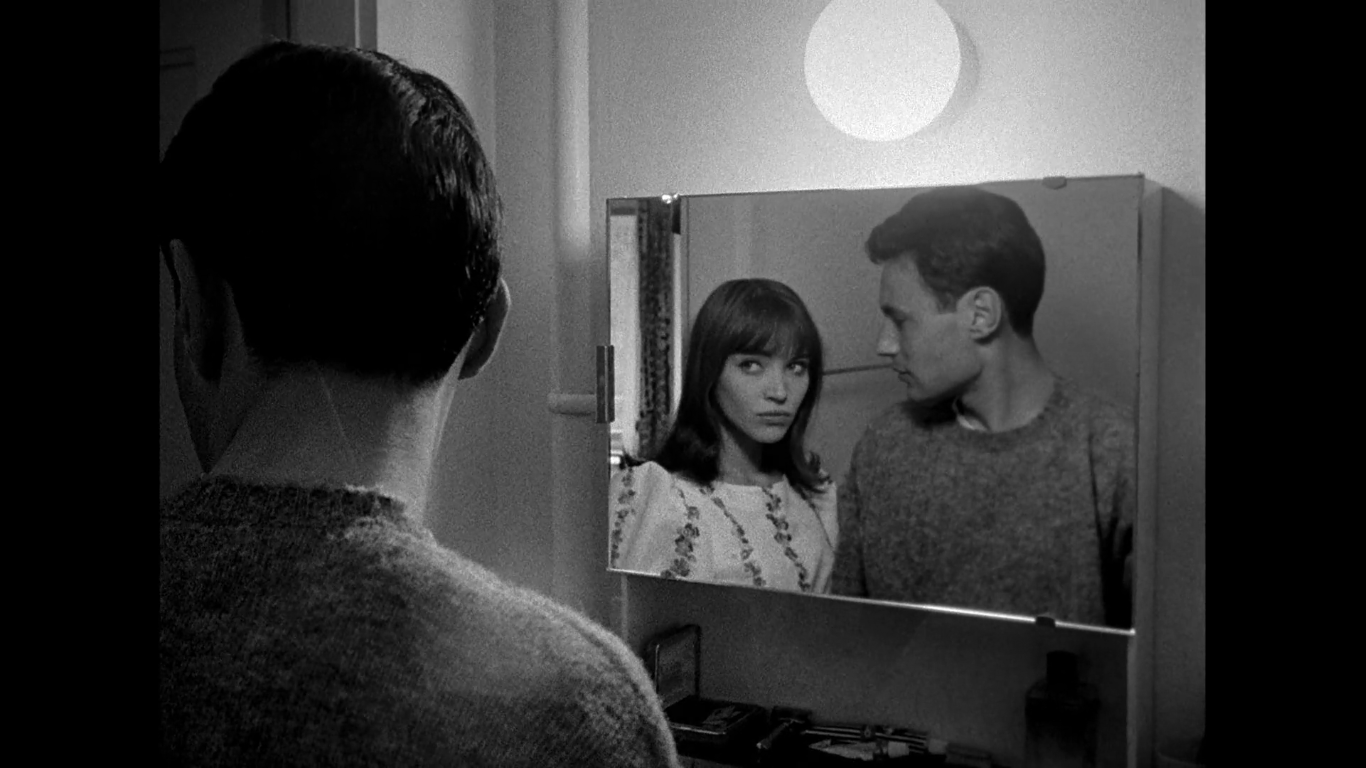
If it’s not apparent already, the groundwork has been set for a political spy thriller. While balking at murdering the man in a drive by, Bruno simultaneously falls in love with Veronica (Anna Karina), a dark-haired beauty in a trench coat. His friends bet him he’ll fall in love the first time he sees her on the street. He sheepishly shells over the money after only a brief introduction. He’s instantly smitten.

Le Petit Soldat is such a literary film thanks in part to its voiceover. Bruno, as Godard’s stand-in and cinematic conduit, references a myriad of things. He asks rhetorically about Veronica, “Were her eyes Velasquez gray or Renoir gray?”

It’s as if Godard is contemplating the muse in his own art. Still, he continues with a steady stream of namedrops including painters, authors, and composers. Van Gogh and Gauguin. Then, Beethoven and Mozart. Anna Karina prancing around to Joseph Haydn is definitely its own mood.

It occurs to me this is a distillation of Godard as a filmmaker. It’s a visual style wedded with these deeply mined traditions of literature and art.  Both cutting edge and steeped in the culture of the past before thenceforward going off and creating its own unique vocabulary.

Godard gleefully inserts himself all over the movie on multiple occasions where we see him in the flesh. It’s a spy movie as only he can conceive it totally deconstructed and aware of itself while simultaneously taking most of the thrills out of the genre.

Soldat remains a precursor to Alphaville by effectively turning the contemporary world around him into the environment for his latest genre picture. Whereas Breathless‘s jazz-infused contemporary aesthetic is accentuated by the black and white streets of France, here they are repurposed. Though it’s as much a film about driving around the city philosophizing as it is about any specific dramatic action.

Because Francois Truffaut, while not always disciplined, could spin stories with a narrative arc and genuine emotion. Godard is at his best as a philosopher and cinema iconoclast where his style doesn’t totally get bogged down by ideas, and he uses the medium in ways that would become the new standard. Or at least his own standard, before he decided to upend them again.

But in order to make the case for Anna Karina as more than Godard’s Pygmalion, it’s necessary to consider her screen image in depth. Whatever Godard gave to Anna Karina in terms of iconography or legacy, Karina gave that much back, and they will be inextricably linked for all times. Because if there was ever a reason to fall in love with her, it’s right there in Le Petit Soldat.

His alter ego riffs about God and politics, political left and right, quotes Lenin, and unravels his entire worldview (ie. about a man who loves ideas, not territories). When he asks his girl why she loves him, she shrugs her shoulders and says I don’t know. I don’t think she’s dumb, but whereas here we have one character who is in their head, she seems to be a creature who is real and present in the moment. She has a heart.

Whatever the digressions and despite the perplexing way Bruno interrogates her during their impromptu photoshoot, she is undeniable. If cinema is truth 24 frames a second, she somehow makes Godard’s cinema more accessible and real — she takes his theorizing on truth and gives it a pulse.

The movie is still a thriller, and it follows its own version of narrative beats. Bruno is framed, he continually has second thoughts about his assignment; he gets the gun, but things always get in his way. His heart is not in it — killing a man mercilessly — because this is not who he is.

Instead, he wishes to run away to Brazil with his girl. He’s locked away and tortured as a double agent for his troubles. These sequences are simplistic — contained in a hotel bathroom — and yet as they light matches near his fingertips and dunk him for minutes on end in the water, there’s a definite heartless menace about it.

We have the political bent of Godard’s cinema detected early on before his other overt efforts later in the 60s. It comes in the guise of his story as it unpacks current events, ideologies, and even controversy around torture.

True to form, he has the audacity to cram the final act of an entire movie into one minute of celluloid. He shows us some things and just as easily explains away the rest with voiceover.

It feels like he leaves just as he emerged. He’s totally singular. At times, maddening and bombastic, and yet always prepared with his own take and alternative approaches to convention. Godard will always challenge the viewer and make you reconsider how much you appreciate cinema even as he continually helps to redefine how we conceive things.

1960 or 63. It makes no difference. Le Petit Soldat has a young man’s malaise acting as a film for the coagulating disillusionment of the ’60s. This isn’t your father’s war nor one of his films — not the “cinema du papa” as Truffaut put it. If Godard’s style was coming into its own, with Karina cast front and center, then the propagation of his ideas is equally evident. Cinema would not be the same without his distinct point of view.

3.5/5 Stars

Note: This review was written before the passing of Jean-Luc Godard on September 13, 2022.

Bitter Rice (1949)

Doris Dowling has a name that sticks out in the opening credits for the very reason she was an American actress and she offered up a particularly memorable role as Alan Ladd’s vitriolic wife in The Blue Dahlia. Here she’s an Italian playing the moll of a two-bit hoodlum wanted by the police.

Bitter Rice opens with a curious kind of introduction. A man stares straight at the camera, breaking the unwritten contours of the fourth wall while providing some explanation of how rice harvesting is a bumper crop not only in China and India but in Northern Italy as well. A moment later, the camera pulls away revealing this presentation is all part of Radio Turin and suddenly the circumstances of the film are instantly placed in a palpable setting.

The lithe even upbeat nature of the picture allows us to fall into the world almost immediately. We have a milieu of migrant workers crossed with bustling train stations, lovers, policemen, and wanted fugitives all playing out in front of us as we try to take in the stimuli and come to grips with everything. The wanted man, named Walter (Vittorio Gassman), tries to mask himself by dancing with a pretty young field worker (Silvana Mangano). She gladly flaunts her dancing in exchange for attention as she’s accompanied by her portable gramophone.

In the aftermath of a chase, Francessca (Dowling) disappears into the crowd of workers to lay low with their cache while her boyfriend flees in order to stay out of the clutches of the police. If it’s not apparent already, a passing street vendor lets us know some priceless jewels were stolen from The Grand Hotel.

If it’s not apparent already, this opening gambit has the kind of thrust we might expect from Hollywood, not a backcountry Italian film, and it’s evident Giuseppe De Santis is well aware of the mechanisms of a thriller. However, he also allows his picture to sink back into rhythms that one would feel much more accustomed to with neorealism and a movie set in the province of Vercelli.

Suddenly a tale of illegals and registered workers is given a new context but timeless relevance to this very day. Francesca does not have a license, but she befriends the saucy young dancer, Silvana, who does her best to assuage the foremen and get her new companion on the ever-crucial list of approval. Her chances are tenuous at best, but Francesca, like so many others, has no other choice.

I couldn’t help thinking, with her chewing gum and sizzling hot music, Silvana is bred out of the same world that supplied movie posters of Gilda in Bicycle Thieves. It’s this influx of American product in its many modes — a new form of cultural dominance — steamrolling the former fascism into submission to good ol’ American capitalism.

The way she flaunts herself and becomes the focal point of the picture, I couldn’t help but compare her to Virginia Mayo in some of her saucier roles like Best Years of Our Lives or White Heat — down to the gum chewing. If it were an American film, Bitter Rice would fit somewhere within the landscape of The Grapes of Wrath or maybe Border Incident.

There’s little doubt it has a kind of collective political philosophy to present — its own vein of social commentary — and it delivers it not only through narrative, but visual depictions of the life these people are subjected to.

In one breathless comment, Silvana tells a soldier (Raf Vallone) posted nearby, “In North America everything is electric!” He’s informed enough to know “even the chair is electric…” As a side note, the Italian constitution completely abolished the death penalty for all common and civil crimes starting in 1948. Already it presents a kind of ideological chafing that must be contended with.

Upon their arrival, the rice workers receive a hero’s welcome, and we are reminded this is a yearly ritual with its own unique patterns. There’s something marvelous about taking part in these seemingly familiar habits even as we see them for the first time as an audience.

The packing of mattresses with straw, the throwing of hats to all the field hands who catch them out of the air en masse. It’s strangely riveting. Or there are the mating customs played out year after year with men yelling over the wall to the fair maidens below, searching for former flings and future partners.

We come to realize it’s built on its own kind of ecosystem. You have the foreman’s, the lines of workers bent over in the muck and the mire every which way, and they sing their river ballads to pass news along the line.

With the jewels to get between them, Francesca and Silvana find themselves positioned among the two factions of documented and undocumented workers. It’s not a simple task, and then Walter turns up again. He can only bring trouble.

Like their opening foray, there’s something about the dance scene between Silvana and Walter burning with a palpable sensuality. But what it also does quite effectively is pluck the film out of its neorealist roots and make it even momentarily something more. It’s like a precursor to the passionate sashaying in Picnic. It feels like very much a Hollywood creation and yet it’s simply De Santis’s version of it.

Likewise, the film is not totally averse to forging its own version of a love triangle (or diamond) with Francesca and Silvana finding themselves attracted and repelled by the conman Walter and another character, the soldier Marco. These see-sawing relational dynamics are the fodder for unadulterated melodrama exemplified by violent pursuits in the pouring rain, passionate embraces in mountains of rice, and a great deal more.

While the rest of the harvesters get overtaken with merriment in the wake of a wedding and subsequent beauty contest, there’s something much more catastrophic going on in the background. Silvana becomes the self-destructive queen of it all.

By the end, I stand totally astounded. Bitter Rice jumps off the deep end going from Italian Neorealism toward gut-busting, blistering drama with the dark tinges of noir. This is what it borrows from Hollywood quite effectively, reminiscent of a picture like Border Incident or even Cape Fear. In tight quarters, violence becomes especially animalistic. When a beast feels cornered, he must lash out.

Also, I still am fascinated to know why Doris Dowling was cast in a film that was otherwise completely Italian, and yet there’s something rather ironic and bewitching in her and Magnano becoming cultural foils for one another. It becomes a far more complicated portrait of the corrupting forces of greed and capitalism.

Dowling, as the quintessential, steadfast Italian girl, and the Italian actress as a poisoned vessel of sensual pop culture materialism. What’s more, it leaves a truly incisive impression and that’s most important of all. You won’t soon forget a film like this, and it just might have the power to captivate viewers on both sides of the globe with its pulpy sensibilities.

4.5/5 Stars

Ossessione (1943): Luchino Visconti Does James M. Cain

You half expect cinema to have remained dormant in wartorn Europe during the 1940s. That’s part of what makes Ossessione such a fascinating curio within this context. In fact, the film almost never made it out of the decade alive. One can only imagine how unpopular the picture might have been with the reigning government.

It doesn’t exactly preach good old-fashioned fascist values and Mussolini looked to exterminate the picture completely. Legend has it that Visconti, who had also joined the communist party, managed to salvage a copy so that his film debut could live on and he got out of the war as well with a sprawling career still to be determined ahead of him.

I learned only very recently that Visconti started out as an assistant on the films of Jean Renoir of all people. Not only does that seem like the most propitious of apprenticeships, but it’s also easy to trace the lineage of the Italian from the Poetic Realism of the French Master that would eventually coalesce into Italian Neorealism.

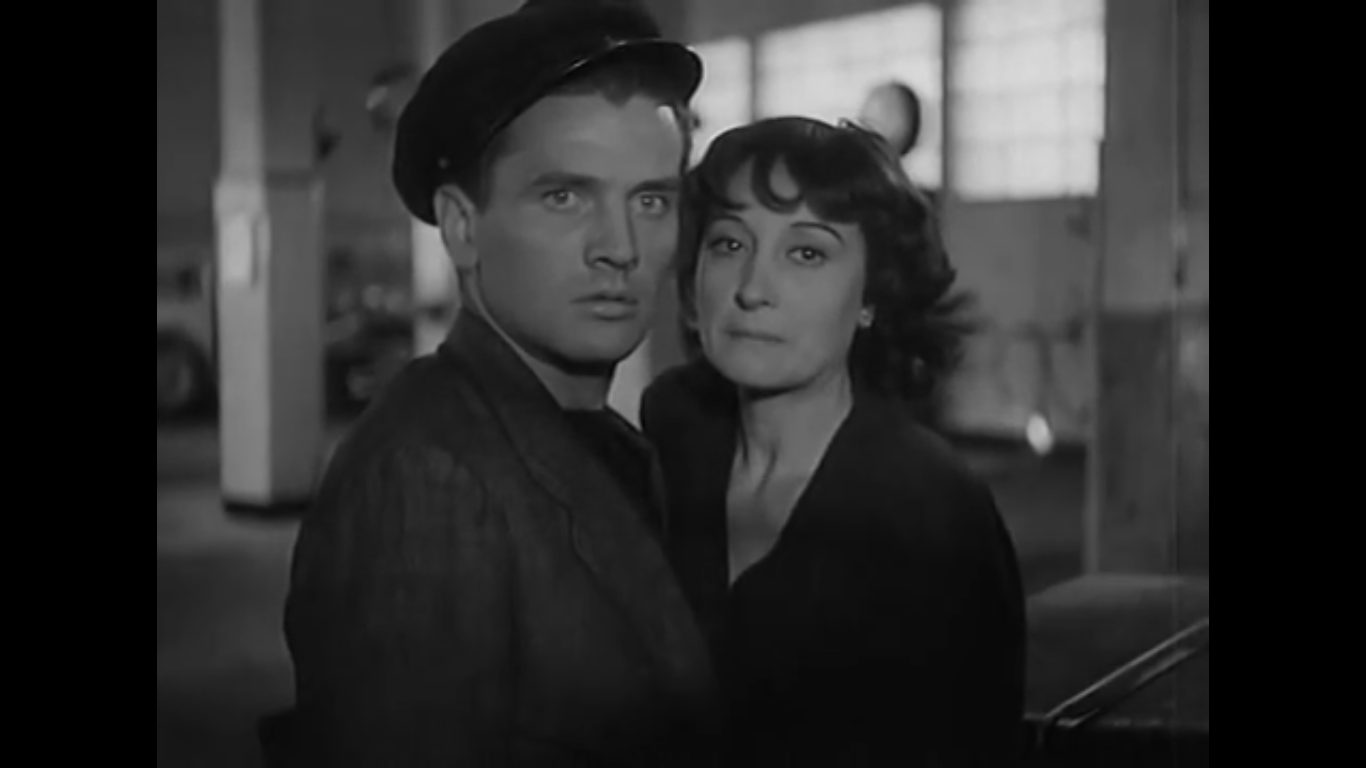
The films of Renoir and Michel Carne are fully present in this early work with the opening images of a train evoking something like Le Bete Humaine or Toni. Gino Costa (Massimo Girotti ) is the kind of working-class hero you’d expect in one of those earlier pictures or even some of John Ford’s work.

He’s an itinerant bum who used to be a soldier and then a mechanic in a former life. Now he’s hitched a ride on a truck bed only to be dumped outside a roadside tavern. And Visconti proceeds to introduce his primary couple through the visual synecdoche of two pairs of legs.

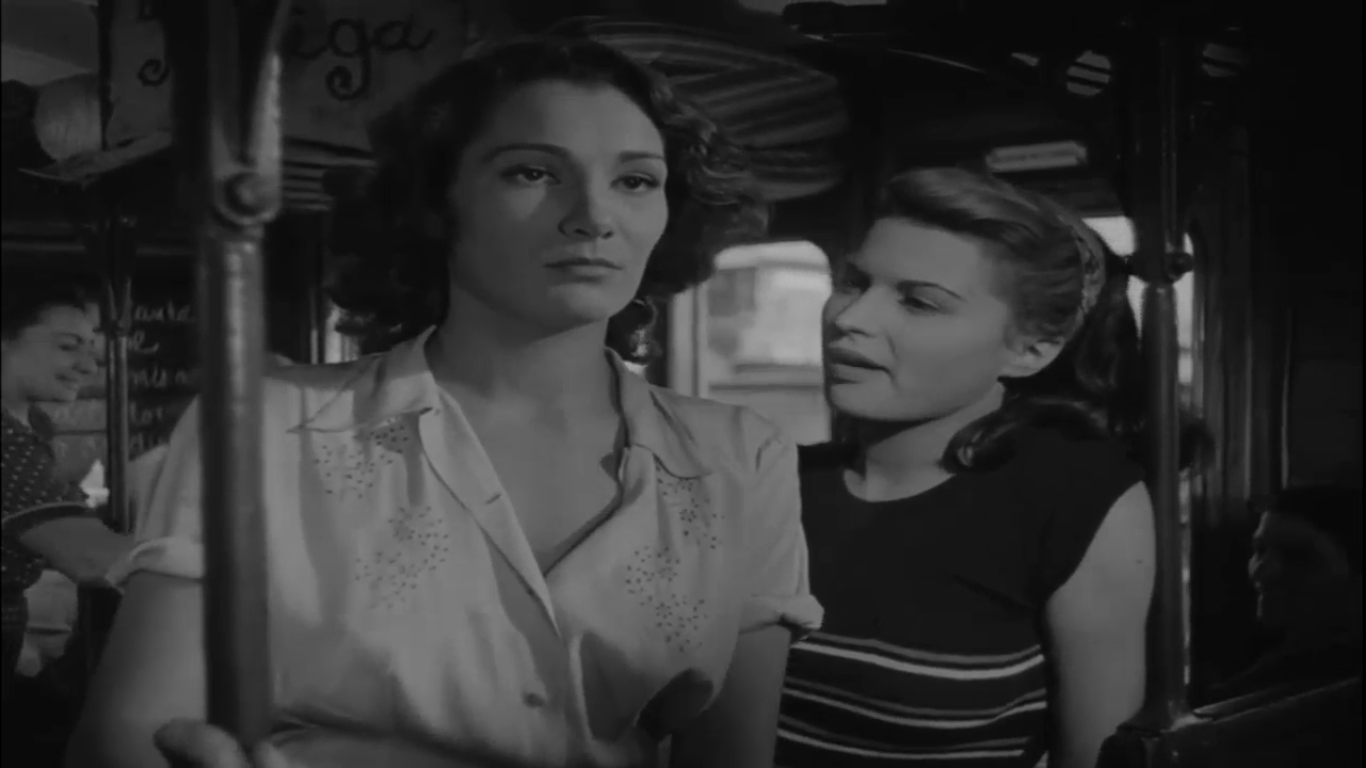
Finally, we see their faces together. They’re in a kitchen. Although Anna Magnani was originally meant to have the role, Clara Calamai channels the sultry come-hither coquettishness quite well even when it’s impossible to unsee the platinum blonde of Lana Turner in the part. But they have their own instant spark, like flint — burning with a consuming passion tantamount to spontaneous combustion.

If you’re well aware of the story already, she is a young woman married to a chubby misogynist named Bragana (Juan da Landa), who thinks he’s more than deserving of the marital comforts afforded by such a wife. He calls on her to rub him down after a long day, and she can’t bear to touch him. She has designs for someone else.

While her husband goes off with the local priest to do some duck hunting, in an early example of a bike-and-talk, Giovanna is quick to stoke the flames of romance with her much more desirable confidante. Visconti’s unauthorized rendition is purportedly more faithful to its source material although it’s hardly as streamlined as MGM’s later adaptation, essentially leaving more space for narrative asides.

When Giovanna clings to the security of her current life, Gino sets off on his own alone soon falling in with a hospitable street salesman, “The Spaniard,” who entertains the crowds. In what can only be expressed as noir sentiment, the tides of the narrative bring the couple together quite by chance.

Bragana is pleased to see their old friend and Gino gets pulled back into the whirlpool taking in some opera at a local tavern. This more than anything betrays Visconti’s affections for the stage.

Consequently, it’s also a film where arguably the biggest moments play out off-screen. I’m thinking of the illicit couples’ first rendezvous and then the fatal accident altering the course of the entire picture. Not all of this is due to content concerns either, but it does highlight how Visconti and his scripting compatriots, Mario Alicata, Giuseppe De Santis, and Gianni Puccini, conceived the story.

It offers another kind of dissonance because we don’t get to see what actually happened even if we’re well aware of their mutual intentions. We must wait for events to play out to see how the canker and unrest reveal themselves in due time. The most explicit response comes when Gino peels off  some bandages and then a violent struggle over a trinket ends in a passionate kiss. This might be the movie summed up in visual terms.

They must reckon with an unsettling state of limbo: freedom that feels more like purgatory as they stew in their infidelities. A man of the cloth suggests that they part ways because people do talk about their situation, real or imagined, and of course, it is very real.

Instead of detonating the story to be a full-blown melodrama like The Postman Always Rings Twice, Ossessione maintains these high levels of human intimacies. Gino reunites with his old pal again beyond delighted to see a familiar face, and yet it ends in fisticuffs because his fellow traveler is able to put words to everything he’s currently tormented by.

Then there’s a demure “ballerina.” Gino meets her knitting on a park bench, and they share an ice cream. I had to acclimate myself, thinking only momentarily that she was Giovana, but the emotions in the scene are enough to give this away. Because being around her Gino feels different; it’s as if, ironically, her purity is able to cover all his sins or at the very least help him forget them.

But the digressions only aid in leading him back to Giovana. If they aren’t totally a destructive pair, frolicking on the beach together, having rekindled their chemistry, then there’s some kind of fatalism that needs to be satiated.

In passing, Ossessione might earn the labels of Italian neorealism for its striking, ever austere imagery emblematic of the post-war working class. But it’s also often designated as film-noir for its sordid details and futile finale. However, I can’t stop but marvel at how Visconti was able to make the picture to begin with. Even after its initial release, it was hit with so many roadblocks of censorship and copyright problems only to gain a second life.

What an auspicious way to start a career, especially under such tumultuous circumstances. Much of the finest pieces of art are born out of the burnishing fires of the furnace and, for that matter, a certain level of creative obsession.

4/5 Stars

Il Generale Della Rovere (1959): Vittorio De Sica and Robert Rossellini

It occurs to me, like with Jean-Pierre Melville (and so many others), that the landscape and context of the war years left such a lasting impact on Robert Rossellini, and they are made manifest in his films. Although it’s shot over a decade later, there’s still a lived-in quality, committed to a kind of authenticity.

Whereas others, namely Americans, experienced the war and then returned home (albeit with PTSD), for these men war was a stipulation of everyday life. It was the water they drank and the bread they ate, suffusing into all aspects of society.

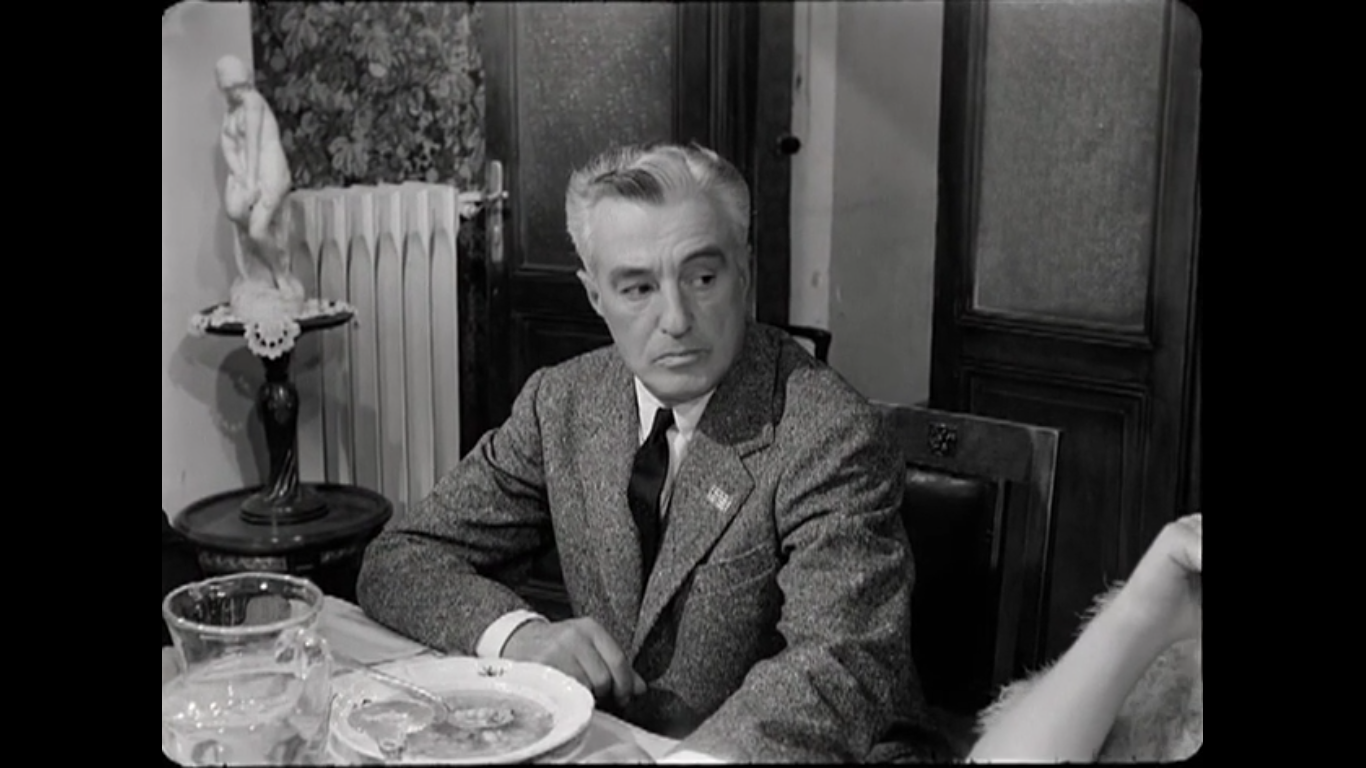
Vittorio De Sica is called upon to play a far different kind of gambler than he was in The Gold of Naples. His blustering lunatic is displaced by a miserable loser stumbling and bumbling his way through a mediocre existence.

Emmanuele Bardone, like everyone else, is getting trampled on by this war, just trying to survive. His debts pile up, no thanks to his rampant gambling habits. He pleads with his girlfriend, a fair-weather beauty (Sandra Milo), who has had just about enough of the meager life he can offer her on his half-baked promises. It’s to no avail. She’s not intent on bailing him out again.

Thus, he must find other means to scrounge up the funds to pay off a German Sergeant Major. They’re buddy-buddy — gambling acquaintances — but it doesn’t keep them from attempting to stab each other in the back. It’s one of those uneasy partnerships engendered by the war. Because Bardone is such a man: feckless, unctuous, self-serving. He’s always looking to get ahead, whether by courting Nazis or fellow Italians frantic to track down missing relatives at any cost…specifically well-off Italians.

Physically, Vittorio De Sica strikes me as a man whose stature and features are impressive, quite effortlessly handsome. Yet, he’s capable of bringing something out of them, wringing the comedy and the tragedy with the body God has given him.

I don’t know why exactly, but I want to compare him to Cary Grant — a man who doesn’t take himself too seriously — so whether debonair or a bit of a cad, we still find it within our hearts to root for him.

He vows to help a rich widow and her daughter-in-law in what feels like just another confidence game preying on their desperation. His gambling gets interrupted by air raids, and he crawls back into the life of one of his other girlfriends (Giovanna Ralli).

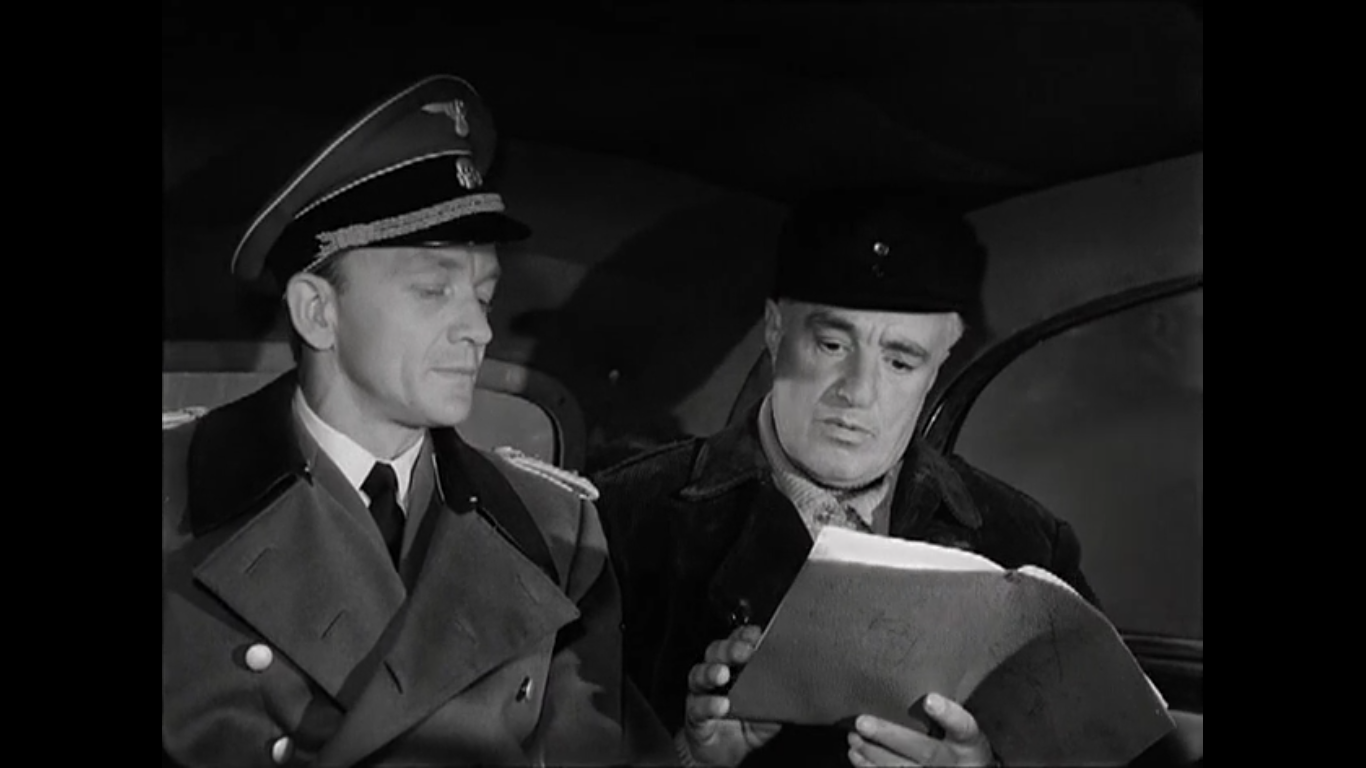
Something else happens that he knows absolutely nothing about, but it changes the course of the entire picture. A famed dissident is accidentally shot dead at a roadblock, but a cover-up ensues. The capture of Generale Della Rovere is spread around town despite a botched assignment within the Nazi ranks. Now they must find a man to fill his place: Bardone is fingered for it, and he has no bargaining power in this economy.

We’re privy to the Nazi’s intricate filing systems and notecard records helping to mechanize their ruthless war machine, but they’re also more than prepared to play spy and counterspy with a sorry drifter’s carcass.

Narrative-wise it feels like the story can easily be split into two distinct segments. Because it takes a good hour before De Sica is actually cast as the Generale and suddenly the stakes of his new life are raised.

This film was one of Rossellini’s more profitable efforts and with it came an actual high-concept idea. But this never feels like what the director is truly interested in. He skirts around the “plot” as much as possible to make this story about a character and a world.

When he is finally in prison, all the rebels and convicted patriots pledge their services through cell windows and the surrounding walls. They believe him to be who he says he is…meanwhile, Bardone maintains his pact with Colonel Muller to coax out the Generale’s contact on the inside. He’s met with a crisis calling for some self-examination.

Aside from De Sica, Hannes Messemer has to be the other obvious standout as the German SS man. He’s hard and difficult to like, especially when wearing a Nazi uniform in wartime. However, he’s not a cartoon and even momentarily there are these ever so faint flashes of nobility. He cannot be pinned down; his duty as a military officer trumps everything, and yet the contours of his person make us grapple with more than we are used to in a Nazi.

Because as much as we don’t want to admit it, every Nazi was a human being. He is another soldier, driven by duty, perhaps an ideology, and yet still complicit in these grievous sins against humanity.

There’s also what feels like a level of moralizing to the picture. Because we have this space created. It is now the 1950s. Suddenly Rossellini is out from under the complete specter of the war, and he’s able to make his hapless vagabond into an unsolicited hero. A cynic could brand it as little better than a post-war potboiler.

And yet as he tramps out into the snowy prison yard, there’s a steely conviction about him for the first time in the movie. It takes the obvious arc of this character and imbues it with something fleetingly profound. Surely this is the sensibility of Rossellini.

I recall Lino Ventura in Army of Shadows, Marlene Dietrich in Dishonored, and now  Vittorio De Sica. They all share something in common. They were valiant heroes to the end and sometimes their heroism is unwonted. It doesn’t matter so much the road you’ve taken as long as you make it there in the end. There was never any doubt.

4/5 Stars

Europa ’51 (1952)

Europa ’51 is one of those films butchered by time and yet eventually, it was stitched back together to resemble how it was intended to be viewed by its director. Its serpentine history to restoration hints at its subversive elements, although on the surface, it seems like a fairly common breed of drama about a middle-class family.

It reminds me somewhat of De Sica’s The Children are Watching Us purely because it provides a striking reminder neorealism is not only an exploration of those in abject poverty. It can be about those who have a relational or familial deficit too.

In this case, we begin with the one and only Ingrid Bergman. She returns home to the bustling preparation for a dinner party. A strike is tying up the local roads, and it’s only a minor inconvenience. The same might be said of her misanthropic son.

She hardly has time or patience for his concerns because there’s so much to do. She treats him with the kind of shortness and insensitivity you can hardly begrudge parents. It feels like a momentary lapse in priorities more than a callous act of neglect. Soon enough she’s with her husband and guests — one of them brings the conversation to politics and “leftists” — and it’s easy to leave childish trivialities behind.

Then, a catastrophic event shocks her, and the dormant maternal side reveals itself — one of warmth and affection. She racked with the kind of guilt you can never hope to placate. With the movie being so weepy at such an early juncture, there’s a question of where it might go, but Bergman remains the driving force. She goes searching for something…

On her pilgrimage, one of the people she finds is Giulietta Masina, playing a mother to all with a generous spirit and a heart of gold. She’s taken on far too many children, only some of them her own, but she loves them dearly, fussing over them and getting so much joy in providing for them. There’s a frantic charm to her as she busies herself and makes the household run in spite of her meager means. It’s appealing to Irene.

Meanwhile, her husband (Alexander Knox) remains mostly unfeeling, blowing his top when he perceives another man in her life. He fails to recognize this is the only man who has extended her any human kindness and understanding. For this and other sins, she winds up in a psych ward. Remember, we are trading in melodrama.

Irene comforts her tearful housekeeper with a newfound poise. She receives a visitation from the ward’s priest, and they share their mutual philosophies. Experience has led her to discover her own distinctive on what life is about: Love for ourselves feels too narrow; she feels compelled to reach out to others. Love has no limits. Evil is born from the fact we never give all our love to those who need it most.

Irene avoids questions from the priest about a God and his grace stating we must be filled with love for all so that all might be saved through love. The words ringing with the most resonancy go like this, “I came to earth not to lose sinners but to win them — the miracle of Christianity.”

Suddenly, I liked the movie more and more as Bergman’s developing character is revealed, and I learned Rossellini envisioned her out of the tenets of St. Francis of Assisi.

For the majority of my life, I’ve lived in a western, predominantly Christian society, where these core truths pervade the mindset in thought and word, if not entirely in our deeds. There continues to be a shift; many more people are unaffiliated with organized religion or don’t identify with a specific faith. Much of this makes sense as hypocrisy becomes more and more visible in the social media landscape.

I’m left curious. Instead of being swayed by the political or social movements of the day and age or their specific tribes and subcultures, either to fit in or to rage against the status quo, what if people decided to stand out in a far more radical way?

What if they actually took to heart the teaching to love their neighbors and God with all their heart, mind, and strength. Bergman feels a bit crazy, she is countercultural, and impossible to categorize: an exceptional anomaly.

She would play Joan of Arc later, but this is her first foray into the part of a modern-day saint who eschews and then slides beyond the conventions of her age. These kinds of characters fascinate me namely because they challenge my own convictions and hypocrisies.  “How many men condemned by their society and burned at the stake in their day were right?” It’s a sobering question…

3.5/5 Stars