Léon Morin, Priest (1961)

leon morin priest 1.png

This is my entry in The Vive la France Blogathon. Thanks to Lady Eve and Silver Screen Modes for having me!

I recently read some excerpts out of Soren Kierkegaard’s “Attack on Christendom” and the Danish philosopher makes the case “Even when you don’t live by a Christian reality you live in a Christianized world. You know when you offend the collective consciousness.”

Although this context is changing in the present day, it very much fits the world of this film from Jean-Pierre Melville. There is this sense of propriety and a propensity toward specific ways and lifestyles as dictated by the prevailing cultural forces. In this case, the church. Though some choose to kick against the goads and challenge the status quo. That’s where our story commences.

The substantial backdrop of World War II also ties Leon Morin to Silence de la Mer (1949) and then Army of Shadows (1969), which came well after. Because, of course, before his days as the idol of the New Wave and a craftsman of pulp gangster classics, Melville actually worked as a member of a French Resistance himself. You cannot take part in something like that without it totally impacting how you perceive the world.

But there is still an important distinction to be made. This is hardly a war movie. Instead, the war serves as a background for the human experience — a human relationship between a man and a woman. Their relationship starts early in the occupation and stretches beyond the boundaries of V-E Day.

However, the terms seem very suggestive and in an unrefined exploration of the material this would be the case. Still, by some marvel, Melville manages to conduct an astute yet still spellbinding examination of spirituality. The woman: a militant communist. The man: a humble priest of a French parish.

It is two years after Hiroshima Mon Amour. Alain Resnais’s film is one of the most poetic meditations you will ever see on the likes of love, war, and memory. Leon Morin, Priest is certainly different. It is a different kind of cadence and rhythm developing its own sense of a world and the related themes to go with it. But it is supernally evocative in its own right.

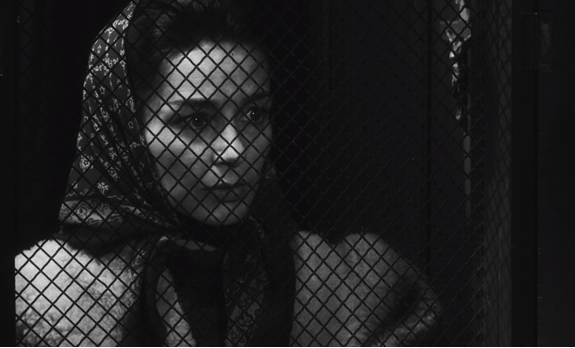
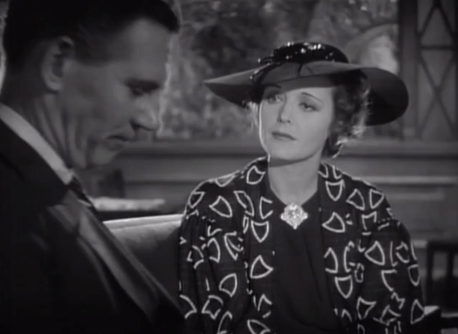
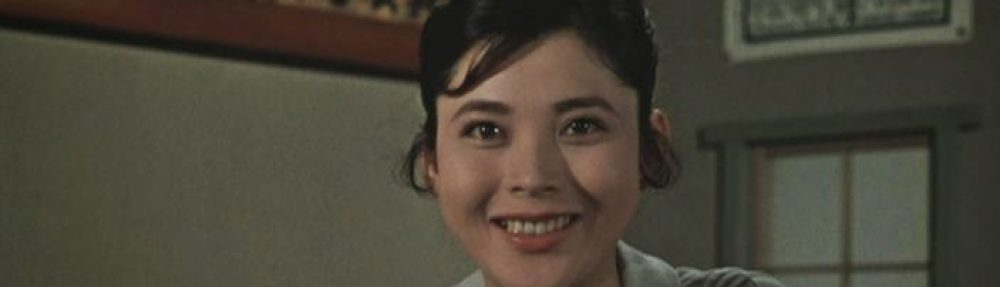
Emmanuelle Riva is Emmanuelle Riva, immaculately beautiful with eyes so bright they speak a language unto themselves. The moroseness is evident and yet they flit even momentarily between the cheery and the slightly provocative.

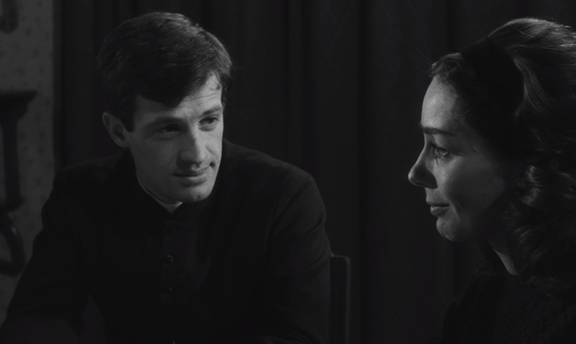
If Riva had her ascension on Hiroshima Mon Amour, Jean-Paul Belmondo was her equal as a nascent shooting star coming off of Godard’s Breathless. In this context, what a curious crossroads to descend upon Leon Morin, Priest. Such a quiet, tranquil picture seemingly more inclined toward the past than any manner of forward thinking. Neither is there a flashy, jazzy lifeblood to it.

leon morin priest 2.png

However, in another sense, it could not be more fitting. Melville, as alluded to before, was the Godfather of many of the Nouvelle Vague talents — certainly Godard — and even if it’s only in particular instances, he still has a flair unto his own.

We might note a stripped-down peer like Robert Bresson as reference, but there are abrupt dashes of pizzazz here that feel like the youth of the New Wave, whether in an implied slap to the face or a jarring jump in continuity. The persistent use of fade-outs allows the passage of time to be conceived at a leisurely pace.

The city is such an extraordinary space brimming with character imbued by the sheer amount of years being lived in its midst. At first, the shroud of war is almost a comical distraction. In its early days, solemnity has not set in. Then, the feathered garb of the Italians gives way to the no-nonsense domed blitzkrieg of the Germans.

Families have their children baptized to conveniently hide their Jewish lineage from any prying eyes within the incumbent authorities. Because soon enough, they start deporting undesirables en force. Paranoia and anti-semitism set in, even within our heroine Barny’s own workplace. Fugitives seeking asylum call on her charity in need of ration stamps and a place to gather themselves on their road to freedom.

Then, one afternoon she resolves to give a local priest a piece of her mind during confessions. She settles on the name Leon Morin as he seems like he might be the most receptive party given the peasantry pedigree of his moniker. If we were to label this decision we might label it as nothing short of Providence.

On first impression, Jean-Paul Belmondo feels like an unconventional casting for a member of the cloth. I often allude to his coming out of the tradition of Bogart but could Bogey have played a priest? Hardly. Still, Belmondo pulls it off with a candor, still blunt and true in its implementation. Because he cares deeply for others nevertheless, aided by his plain features and pragmatic perspective which both suit him well.

His dour space with only a desk, a window, and a shelf of books prove a very inviting place. Because he is such a person. At first an unassuming but ultimately charismatic spiritual leader. His lending library is open to Bardy and she begins to visit him and read his books. Somehow battling her urges to doubt due to curiosity and her own desire to gravitate toward him.

She is adamant about scientific proof for God and we begin an interim period that feels like it might be a precursor to Rohmer’s dialogues from My Night at Maud’s. In subsequent days, all the girls start coming to call on the young priest. Whether it’s merely physical attraction or some other ethereal quality about him is never stated outright. This cynical viewer is reminded of the glib aphorism, “flirt to convert.” And yet with each visitor, he comes ready to share the hope that is within him.

Bardy’s assured coworker Marion is one caller and then another very attractive girl who plans to seduce him; it seems she’s in the business of it with a laundry list of conquests going before her. And yet the perplexing aspect of the priest is how impregnable he is even as he welcomes each woman in, cultivates their spiritual well-being, and deals with them in such a frank manner.

Likewise, from the pulpit, he does not spare his words for the congregation sitting before him any given holy day. Recalling much of what Kierkegaard criticized, he warns them not to be merely “Sunday Christians.” “Not living out a Christian life drives away the undecided” and this is nothing new.

Hypocrisy or closer still being little different from everyone else is often one of the greatest faults of people who are deemed “Christian.” He further extolls them, “They should each be an apostle in their own setting.” It is a fallacy that only a priest can do the work of God. So while he speaks with consternation, he wraps it up with a note of hope. Because according to him,  there is “A God whose grace is given to the heretics and believers alike, loved equally in his sight.”

We see even momentarily his guiding force. Why he pursued Barny and did his best to shepherd her. He’s no elitist. His time and services are extended to all people. He lives it out in the day-to-day of life together with others.

When Barny and Morin must finally say goodbye there is so much in the air, gratefulness, sadness, wistfulness — even as she has fallen in love for his righteous guidance and he remains resolved in his mission to tend after the souls of those in his stead.

To merely say this is a conversion story is too simplistic. To claim it’s suggesting the sensuality of forbidden love is off the mark. We already confirmed it is not a war picture. The brilliance of Melville is painting around these conventional lines with the utmost nuance. Of course, the performances are superb. The two cinematic saints in Riva and Belmondo make it possible. The fact we are fallen humans, ripe with warring desires and doubts, make it necessary. Dealing with spirituality in such a perceptive manner is nothing short of a modern miracle.

4.5/5 Stars

Note: Bogart actually did portray a priest in The Left Hand of God toward the end of his career. Thanks for those who pointed it out to me. Much appreciated!

Jezebel (1938): A Bette Davis Southern Belle

Henry_Fonda_and_Bette_Davis_in_Jezebel_trailer.jpg

The oldest movie theater near where I grew up was built in 1938 and by some peculiar coincidence, Bette Davis is said to have driven by the establishment time and time again. Being the iron-willed personality that she was, the rising star demanded they open with her latest movie. (I assume very few people crossed Bette Davis and lived to tell about it.)

Thus, the first film ever shown at the newly minted theater was her very own Jezebel. One of the attractions of the theater to this day is an old-fashioned parlor in the ladies room reminiscent of the days when women used to sit together while powdering their noses and sharing in the latest trivialities and juicy bits of gossip. At least that’s how I imagine it.

In truth, Jezebel would prove to be the actresses consolation prize for being passed over for the leading role in one of the biggest cultural attractions of the era, Gone with the Wind (1939). Though Davis was beloved and already extremely popular with the viewing public, the big wigs got the final say choosing Vivien Leigh instead. Of course, the rest is history.

But it’s difficult not to look at Jezebel in juxtaposition with its arguably more opulent and ostentatious rival. That begins with the differing palettes — black & white vs. color — and subsequently bleeds into the running times and comparative success as well.

Surely, Henry Fonda is no dashing rapscallion like Clark Gable, but I find him a more understated hero. More pleasantly reserved. Likewise, while Selznick’s behemoth production was a cash cow, you wonder how he was able to tie the picture together with so many moving pieces and names attached as directors, cinematographers, etc.

William Wyler guides Jezebel with his usual expertise and professionalism, cementing a long and fruitful partnership with Bette Davis. Not that they always were the perfect symbiotic relationship; he soon earned the nickname “99 Take Willie” and Davis was already known for her aforementioned recalcitrant nature.

But there’s little denying that they made each other better. He elevated her performance with his care and the collaboration with long-time cinematographer Ernest Haller lighting her in each scene, creates an ongoing continuity, while Davis brought something authentic and inherently obstinate, fearlessly commanding the screen.

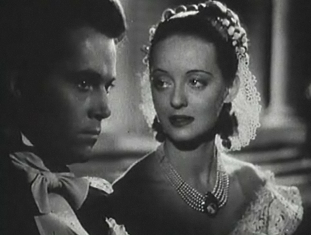
This particular story takes us back in American history to Antebellum New Orleans in 1852. Davis makes a stirring impression as southern belle Julie Marsden arriving late to a fine to-do, not even changing out of her riding crop before bursting in on the company. The churlishness of her impropriety is startling and utterly appalling to the ladies and some of the gentlemen trained up by decades of Southern civility.

Ladies just don’t do such a thing. It isn’t decent. But you get the sense that’s precisely why Davis is impeccable for this role as a woman who willingly tramples over the normative without a second thought. She’s simultaneously an audacious nonconformist and a destructive force clouded by her own pettiness.

She currently resides with her hospitable and generally courteous aunt (Fay Bainter) who nevertheless has her hands full with such a strong-headed woman in her home. The most crucial personal conflict begins with Jezebel’s beau Preston Dillard (Fonda), an up and coming banker. They have a disagreement as he seems more taken with his work than with her.

However, for Julie, in her egocentric world, she is all that matters, and in a form of brash retaliation, she disregards traditional protocol again by ordering a scandalous red dress to wear to the forthcoming ball. Why is it unheard of? Because unmarried women are only ever seen in white. Never in their life would they dream of donning such a brazen symbol.

Throughout the entire film, Davis’ wardrobe, designed by Orry Kelly, essentially becomes an extension of her character, embodying her individuality and defiance of the culture she finds around her.

Henry Fonda maintains a quietly stern resolve much to his credit. Because at face value I always take him for a benevolent soul, and he is when the moments of sincerity are called for. But one cannot acknowledge his candor without remembering the other scenes in You Only Live Once or The Grapes of Wrath where his utter alienation with the world is palpable.

Thus, he’s able to hold his own with Davis even if, by design, this is her picture. The steadiness of his own demeanor is able to be her counterbalance while also confronting the blind devotees of southern convention. Of course, it can’t be helped even as he and his mentor, Dr. Livingstone (Donald Crisp), try and speak sense into those around them.

Julie and Preston weather the Ball together as he forces her to make the ignominious walk of shame and subsequently dance with him, as all eyes fall on them stupefied. Their engagement falls to the wayside after that and Julie will not have him back.

Time passes as Pres goes up north for a spell and Julie becomes inconsolate, clinging to the hope that her former lover will come back to her on his hands and knees. She’s desperate and terribly broken up. Eventually, he does return, just like old times, and yet on his arm hangs his new wife, a charming northerner (Margaret Lindsay), who nevertheless gets slighted by her jealous rival.

In one last-ditch effort to make Prez jealous, Judy tries to use a cocksure southern gentleman named Buck Cantrell (George Brent) to stir up any dissidence she can between the two men. To a degree, her disingenuous contrivance works out in winning the man’s favor with consequences she cannot be absolved of.

Although the conflict between the North and the South is rising to a fever pitch, the film is never actually embroiled in the Civil War. Instead, it is stricken by the peril of the Yellow Fever which fails to discriminate between the rich and the poor.

We see most clearly in these waning moments the arbitrary nature of the southern moral code which would deem two men would have to die in a duel for absolutely pointless means. It’s infuriating to watch because no one’s honor was even at stake. It’s all on account of the needlessly puerile ploys of a woman completely consumed by selfishness, ultimately destroying the relationships around her.

Bette Davis’ pursuit of redemption at the end of the picture generally ruins what we are left with. Especially because she was well-known for playing strong often uncompromising women verging on the unsympathetic. That was part of her allure as an actor, making her so very unlike many of the Hollywood standard-bearers. She had those iconic eyes but also an implacable bullish nature. She’s always a cinematic force to be reckoned with even if her performance gets slightly compromised in Jezebel.

3.5/5 Stars

Dodsworth (1936) Needs Mary Astor

dodsworth 1.png

Sinclair Lewis is one of those literary names I thoroughly recognize and assume must have been a culture-shaper in his day. Yet I can say nothing intelligible about him. In fact, this guttural reaction has more to do with my own ignorance with prose then it does with his fading into antiquity.

But regardless, he is the authorial power behind Dodsworth which was subsequently made into a stage play by Sidney Howard (also starring Walter Huston) before being brought to film by William Wyler. The film itself has always intrigued me as I have great esteem for the director who proved his longevity and ability to construct well-crafted, beloved works out of the Hollywood industry.

The prospect of an authentic examination of marriage circa the early 20th century also piqued my interest bolstered further by Walter Huston’s presence. He originated the stage role and carried it on for over 1,000 performances. In truth, the self-made automotive magnate, Sam Dodsworth, is meant to be the most benevolent of spirits and Huston is flaunting the charm that always made him a likable figure.

He falls seamlessly into the part of a simple man contented where he’s taken his business and ready to give it up to be a family man and devoted husband for once in his life. It is Ruth Chatterton who helps form the nucleus of the story with him, as husband and wife.

To celebrate his leaving the daily grind behind for the welcoming embrace of retirement, the couple plans a luxuriant trip to Europe. Mrs. Dodsworth is looking forward to the culture and fashionable circles to rescue her from the shabby town they hail from. Among the company she keeps is dashing Englishman, Captain Lockerhert (David Niven), who she willingly encourages until his advances get too brazen for her taste.

Meanwhile, Mr. Dodsworth is far more enchanted with the northern lights than the social gatherings, crossing paths with an amiable American, Edith Cortright (Mary Astor), currently residing in Italy. There’s little doubt who is more affable in the marriage or faithful, for that matter. Even when peeved and irascible, there’s still a lovable magnetism Huston seems capable of mustering up, easily seen as the victim of a wife who is trying to stave off old age and the horror of a banal lifestyle.

To be quite blunt, Dodsworth is full of monotonous quibbling. I’m apt to label it a dull showing and a generally sorry business but there you get at precisely what the issue is. Huston labels it “the old triangle stuff” as his wife keeps company with any number of men with varying degrees of seriousness and intent. Eventually, it gets to be too much.

A well-documented point of contention arose between Wyler and Chatterton about divergences in how Mrs. Dodsworth should be played. Chatterton wanted the character to be a full-on villain as it were while Wyler hoped to tease out the insecurities and fears of a woman trying to hold onto or at least reclaim her perceived youth.

It seems apparent upon watching the picture that the actress might have well been in the wrong because you watch her performance and even if it inched more toward the director’s intentions, it lacks any kind of the charisma easily attributed to Huston or even Astor’s performance.

Because they are both contemporaries and prime examples of older couples depicted on celluloid, I could not help but consider Make Way for Tomorrow (1937) in reference to Dodsworth. That film is heartbreaking because it shows two elderly people so faithfully in love and yet pulled apart by circumstance, all but forgotten by their families; the bittersweet nature is in the love story. It’s alive and sentimental in the finest way. We grow to love Victor Moore and Beulah Bondi.

However, in the case of Dodsworth, there’s rarely a moment that captivates in a similar manner. I’m ashamed to admit that I should care and I want to care but for some inexplicable reason, I don’t. Not that the dialogue is rubbish or even that the acting is mediocre. Far from it.

dodsworth 2

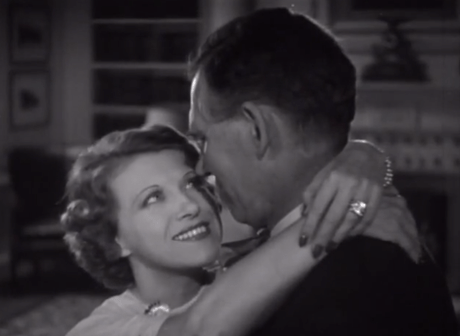
In fact, Astor proves a far more sympathetic heroine and so Wyler’s final decision to leave us focused on her effulgent countenance is probably the best shot selection of the film thus far because in her dwells all that is good and joyous about the picture. For our protagonist and for the audience. Of course, the other striking juxtaposition is Astor’s own real-life woes as she was entangled in a deleterious scandal at the time. In some strange way, while not completely parallel, the screen and reality overlapped.

Although, that still fails to truly reconcile with the troubling moral dilemma remaining within the storyline. We as an audience are far more content with Dodsworth leaving his wife for another woman. Because every delineation of the film suggests that by remaining faithful to his wife the man only gets hurt again and again. Surely, that’s not how the world works? Loyal people should be happy. Those sots prone to infidelity are the ones for which life becomes a shambles. And yet if there are meager conclusions to glean from the picture, the opposite would seem to hold true.

Life is often very unfair. Marriages do not live and die by monumental skirmishes between antagonized parties. Surely that can happen but more often they simply fall apart as apathy ingrains itself and two persons drift away like ships in the night. Because when you love someone you want to be docked by them forever. The banal and the mundane are the most pleasurable because they provide a proper excuse to just exist with the other person.

You know you’re in trouble when discontentedness begins to spring up. Duty, civility, even sexual intimacy are not the building blocks of marriage. They are good things, assuredly, but we need more. Do you actually relish spending time with your spouse? That’s one imperative. When you look at Dodsworth you come to the sad reality that this couple has lived by each other’s sides for 22 years seemingly just passing time. It all seems like a terrible waste. Both the film and the lives at stake. They were made for so much more than this.

3.5/5 Stars


Come and Get It (1936): Frances Farmer The Hawksian Archetype

come and get it 1.png

Author Edna Ferber in both her plays and novels had a penchant for sprawling familial tales of Americana which were indubitably fortified by social issues. Come and Get It gives the initial impression of another Howard Hawks movie released the same year, Barbary Coast (1936). In fact, that’s part of the reason producer Samuel Goldwyn wanted the director, even desiring Miriam Hopkins to play opposite Spencer Tracy. Both Walter Brennan and Joel McCrea were kept from the previous project.

But the other fact of the matter was, Hawks, hailing from affluent American stock,  was purportedly related to the real-life protagonist Barney Glasgow. He was supposed to be Hawks’ grandfather. This background is another fascinating tie-in though it was the behind the scenes antics that were almost more pronounced than the film itself.

Hawks took advantage of Goldwyn’s extended leave of absence, due to ailments, to take the picture in his desired direction, centering it around masculine adventure and love. In a satisfying casting decision, Edward Arnold is given a starring turn as ambitious lumberjack foreman Barney Glasgow. His most faithful pal is the affable Swede, Swan Bostrom (Walter Brennan), ever ready with his catchphrase, “Yumpin Yiminy.”

The world they inhabit is glorious, set against the snow-capped woodlands of Northern Wisconsin circa 1884. The timber trade is ripe and profitable. Even if the work is hard the resident workforce seems generally content.

The imagery alone is breathtaking to such a degree it feels like we are enveloped in a documentary as the trees come tumbling down and logs go shooting down the river with the furious forces of nature behind them. It is a life for those who relish the fresh air of the great outdoors and laboring with their hands. Like many Hawks films, a joint vocation is the source of camaraderie with men banding together over honest toil.

Following their final push to get the job done, Glasgow is the first to reward them with a Jamboree. The drinks are on him and everyone is in a jovial spirit. Again, we have an obvious hallmark of a Hawks picture with a communal environment we cannot help but want to be a part of. It’s infectious.

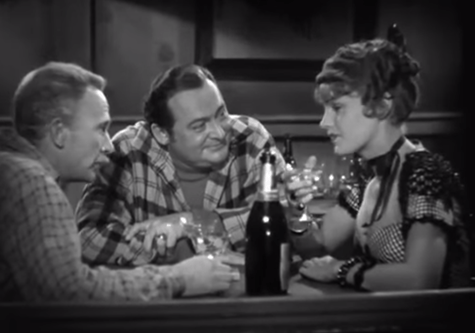
It is here where assured, husky-voiced barmaid Lotta Morgan (Frances Farmer) makes her striking debut. Full of moxie and capable of a captivating rendition of “Aura Lee,” she brings a boisterous bar to a standstill while captivating Glasgow from the first moment he ever sets eyes on her. Her song will remain a motif playing throughout the story even as the memory of her presence holds indelible weight over everyone.

The ever dubious shell game takes place but grander still is the subsequent sequence when the barroom is decimated during a brawl, not by flying fists and bodies but imminently more destructive beer trays doubling up as deadly metal frisbees. It’s in these raucous moments that love and kinship are galvanized between characters and we can understand why.

Except most of what feels Hawksian in content gives way to something else altogether; Barney forgoes the romance of a lifetime to pursue his one true love: the pursuit of wealth and power.

come and get it 2.png

The latter half of the narrative picks up in 1907. Barney Glasgow is now wealthy and successful with two grown children of his own. His son, played by Joel McCrea (once more horribly underused), is generally resentful of his father’s controlling attitude in both business and life.

Meanwhile, his daughter (Andrea Leeds) embodies a precociousness all her own, making a fine second female lead though her screentime seems minimal. She has an ongoing patter going with her father rivaling any of the chemistry found throughout the film because she brings out his most benevolent side.

But we must also talk about Lotta (Frances Farmer once more) the daughter of Swan and the now deceased barmaid. Because she immediately captivates Barney as her mother did before her. Though I relish Arnold in a leading role as he was far too often relegated to supporting authoritative figures, he does get a bit cringe-worthy by the film’s latter half.

Because the context has changed. He’s an older man now completely taken with his buddy’s daughter because she’s the spitting image of her deceased mother, the woman they both loved once upon a time. The aberrant shades of Vertigo (1959) become increasingly evident even as they try and hide under the guise of generosity and general gaiety.

He’s old enough to be her father. In fact, his son is taken with her too. They don’t get much time to forge any chemistry between them but a taffy pulling sequence facilitates the environment to muck about making a mess and trading repartee long enough for sparks to fly.

The behind-the-scenes turmoil between Hawks and Goldwyn and then Ferber’s own disappointment with the reworking of the storyline meant William Wyler was all but forced to finish up the picture. A task he hardly relished, even looking to distance himself as far as possible from the picture later on.

It’s true that his style and that of Hawks do feel diametrically opposed but it does make for a fascinating case study because it feels like there is a fairly clean break where we see one man’s influence on the story end and another man’s, meticulous and more restrained tendencies, beginning.

As such, the most boisterous and thematic elements give way to wistful and tense emotions that ironically are not too far removed from Wyler’s Dodsworth (1936), also made the same year.

If Hawks had stayed on the picture, you get the sense it would have erred more on the side of bravado and comedy. We have fist fights and a strange love triangle that can easily be seen as some kind of father-son precursor to Red River (1948).

But Wyler sets the scene in a drawing room between father and son commencing in a fist fight with a tinge of melodrama. It seems a far cry from our point of entry and even as the film winds down to come to some sort of conclusion, there is a mild tinge of regret Hawks was not able to see the film to completion. But he was a singular mind not willing for a great deal of compromise.

come and get it 3.png

One could contend not only the film but France Farmer, his latest muse who he had groomed for the part, suffered dearly. Of course, McCrea, Brennan, and even Arnold would have fruitful careers in Hollywood for years to come. It is not that this film sunk Farmer by any means but what could have been a shining achievement was slightly neutered due to the last minute personnel shuffling.

Of course, her career would take another hit when she was wrongfully interned within a mental institution in 1942 following a tumultuous episode. Indubitably her story was laced with tragedy upon tragedy and yet this film gives glimpses of her quality as an actress.

It’s this whole slew of elements compounded together making Come and Get It feel like a dark horse. It shouldn’t be good. The flaws and inconsistencies are evident and yet through some curious means, it manages to be an endearing picture channeling both pathos and virile liveliness. Those can be attributed to the directors at its core.

True, the social implications involving nature conservation aren’t resounding but it still manages to suggest the need to care for our environment in the stead of money-grubbing business. Even people who seem generous like Arnold are, nevertheless, beholden to an old way of life.

Above all, the talent comes out in spades making for a compelling portrait of the Hollywood machine at its height during the 1930s — warts and all. If there are many familiar talents, then the showcase we can be most appreciative of is Frances Farmers.

Rather than rue the fact her star never shined as brightly as it might have, we can be thankful for the visibly incandescent qualities on display, even just this once. Because, really, it only takes one picture to immortalize someone for cinematic posterity.

She is the Hawksian heroine you’ve never seen before and would never get another chance to witness. From her descend the Lauren Bacall and the Ella Raines archetypes, along with many others. It is no small wonder Hawks himself claimed her to be the best actress he ever worked with. High praise indeed.

4/5 Stars

Three on a Match (1932): The Epitome of Hollywood Pre-Code

ThreeOnAMatch.jpgThe Pre-Code era of Hollywood is a legitimate marvel because in a span of only a few solitary years was a period of filmmaking bursting at the seams with vice, corruption, and licentiousness that we would never see again until the late 1960s.
One could say that each of these elements was merely an exploitive measure to get folks in the sits. No question about it. However, that’s not to say the era is devoid of meaning nor is Three on a Match any less evocative. In retrospect, we look at something like this and it’s not simply a cultural artifact for us to engage with, one could assert just as vehemently that it was more indicative of the human condition than many later films coming out of the Hollywood mills. Scan the contemporary news columns and you might have to agree. In fact, that’s much of what director Mervyn LeRoy does.

He rapidly spans time with a proliferation of news clippings. They are not simply a montage effect but a continual storytelling device that are almost sinews to this story which must function with hyperawareness of its timescale. Ricocheting with time jumps that you almost get used to by the end and each one is out of pure necessity. Remember with 63 minutes you have to scrimp with every minute. From a historical perspective alone, it’s an absolute goldmine with cinematic images to fit right alongside the current events.

The title Three on a Match seems a foreign concept now but it comes from the old wive’s tale that if three people light a cigarette from the same match the odds are one of them will die. It is often incorrectly cited as originating in the trenches during WWI. Instead, it was the advertising gimmick of a Swedish matchbox salesman to drum up more business.

The story itself ambitiously begins in adolescence with three girls. Mary Keaton (Joan Blondell) is the wayward one who looks to be headed toward a reformatory and sure enough, she grows up and winds up in such a life. Vivian Revere (Ann Dvorak) is the purported “good girl” who ends up with a fine education and marrying a wealthy lawyer (Warren Williams) but she finds her life and her marriage dull and unfulfilling. Meanwhile, little Ruth Westcott (Bette Davis) has grown up into a pretty stenographer who nevertheless is relegated to playing the third fiddle. No matter, Davis would get her revenge in an illustrious career to come.

The root of the drama crops up from Vivian’s dissatisfaction with life because being the understanding husband that he is, Mr. Kirkwood proposes she take a trip away with their little son so she can clear her mind and come back refreshed. She jumps at the opportunity.

Adultery is such an insidious thing since you never consciously think you are going to be unfaithful; I imagine it just ambushes you as it does for Vivian. She meets a man (Lyle Talbot) who is charming and the bubbly is flowing. She has few cares in the world and conveniently has neglected her son. Whom does she have to thank for this good time? Why, it’s Mary. Except Mary has changed; she’s a different person, chiding her old classmate to think before she throws her life away. The tides have changed with the reprobate teaching the classy one something about life.

To divulge any more would ruin the surprise but there’s little doubt, it’s sordid stuff with some mild sense of morality. We have drugs, adultery, scandal, and suicide all rolled up into one tightly woven package. Dvorak is devastating in her self-destructive spiral as Blondell commands the film’s stalwart center.

The most unexpected star is little Junior who is a precocious performer, lovable in every scene he shares with his bevy of costars but also a striking reminder of how innocent children are. To neglect them is to disregard the imperative of parenthood to provide for your progeny with an unselfish, unswerving, sacrificial love.

The rest of the gang are all assigned their assorted parts that became their mainstays. Humphrey Bogart becomes the quintessential heavy in a matter of moments. Ed Arnold is the exacting kingpin overseeing everything. Allen Jenkins is another tough customer with little heart or soul.

It might do well as a companion piece to Night Nurse, which also involves little children being exploited. Joan Blondell gives a spunky turn in both even as the plots verge on the utterly ludicrous and are remembered now as much for their louche content than the actual details of their plots. Part of that has to do with how unusual it seems, especially with the laissez-faire attitude of the production codes at the time.

But also in this specific case, the Lindberg kidnapping indubitably was still fresh in the minds of the viewing public, lending some credence to the believability of such a tale. That’s the key. However absurdly a plotline might slingshot this way or that, as long as something grounds it, even momentarily, in reality, it can captivate us. Three on a Match is not a phenomenal film outright but within its means, it manages to be economically diverting.

3/5 Stars


Ride the High Country (1962): A Sam Peckinpah Western

ride the high country 1

Admittedly at times, I fall into the trap of getting so caught up in the context of a film and its history I miss out on elements of the experience. However, when I watched Ride the High Country it didn’t feel like I was getting distracted by how this story pertained to others — at least not when I was immersed in it.

I probably don’t foster enough of a respect for Sam Peckinpah as other viewers or perhaps as much as I should, but watching a picture like this there’s this undying sense that he knows full-well the tradition of the western. He builds off some of the best themes of the genre with two fine actors straight out of the tradition. It comes with not only tightening the script to make it more resonate but honing in on the inner conflict of our characters as well.

Lucien Ballard’s photography is equally phenomenal in its use of the width of the screen to capture horizontal panoramas of majesty. Instantly he makes the high country synonymous with raw and rugged beauty that’s a joy to behold.

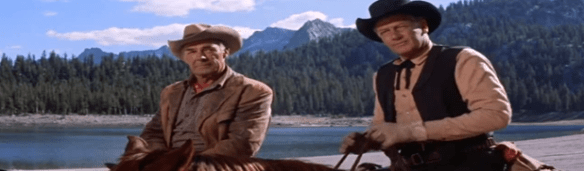
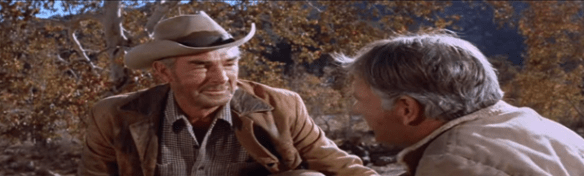
Like the most riveting westerns, this stunning imagery paired with the compelling narrative of two men, played by Joel McCrea and Randolph Scott, picked me up and carried me away. Implicitly I knew that the West was changing; themes that we would be reminded of again most definitively in The Wild Bunch (1969).

In the opening minutes, we already have camels, automobiles, Arabian music, and popcorn machines out in the West and if they’re not purely anachronistic, the times must be changing. And our two main characters too were a different breed of cowboy. It’s more so a simple reality than the point of the drama.

And anyway what we learn and would do well to remember is that sometimes it’s not a generational thing at all. Each person has their own makeup and circuitry that ultimately dictates their decisions and moral framework. But, again, that comes later.

With no acting marshall in the territory and six miners recently killed and robbed trying to get their spoils down to the bank, there’s a need to be met. Steve Judd (McCrea) soon earns the gig guarding a shipment of gold to be extracted from the mining outpost of Hornitos. Granted he’s not as young as he used to be but his name still means something in the territory and when he runs across his old comrade Gil Westrum (Scott) working a carnival show, they bring an entire history with them that we only have to imagine. The other man coaxes his buddy into letting his young partner Heck (Ron Starr) come on too. It’s very reluctantly agreed to.

Their first stop is a ranch ruled by a puritanical homesteader who distrusts all men and their earthly ways; he deems them deserving of God’s wrath. His outlook is so pernicious because there is not an ounce of affection in him and it reveals himself in how he maintains a severe existence that deeply affects his daughter. Such that at the first sign of a man she perks up and runs off to put on some different duds.

Her father begrudingly gives them lodging in his barn far away from his daughter and chides the trio with the words out of Proverbs 22. Perceiving them as godless fortune seekers he lords over them with the words that “gold is a stumbling block.” He’s not wrong exactly and yet Steve coolly comes back with his own scriptural knowledge, suggesting he’s not some heathen. He can ably play the game and hold his own.

Mariette Hartley had yet to become the familiar face who flooded my childhood from The Bob Newhart Show to M*A*S*H but she’s an important piece of this picture just as Ron Starr is. They are the youth, representative of the new generation still trying to find their way. Elsa makes a rash decision to travel up to the mining town to get hitched with a man named Billy Hammond (James Drury) who formerly promised marriage.

She gets there and finds the wheels turning toward matrimony with Billy’s four lascivious brothers intent on the marriage and the added benefits for them. What becomes so striking is the harsh reality of this whirling wedding. It’s crowded with people and photographed in such a way that is claustrophobic, raucous, and dare I say, garish. It hearkens back to a similar sequence in Day of The Outlaw (1959) except the color in this one makes the palette come alive evocatively.

Simultaneously, in her youthful exuberance, it was nothing of what Elsa imagined her wedding day would be like presided over by a drunken buffoon (Edgar Buchannan) and frequented by an ensemble of floozies and lewd miners. It’s completely bereft of the loveliness or intimacy of true matrimony as its meant to be but she’s made her decision. Surely, she has to live with it now.

ride the high country 2

Ride the High Country is situated as a moral tale deceptively simple like a High Noon (1952) or Magnificent Seven (1960) in a sense, and yet it gives way to so much of note. Like many stories, it gets to one place only to realize it must go back from whence it came and yet the game and the stakes indubitably change.

In this case, Steve just occupied himself with his task at hand initially and yet in a righteous moment he decides to insert himself into this young woman’s plight and intercede on her behalf. He doesn’t have to do it but it is the right thing and since Heck’s in love with her, he’s right there too. Judd has the girl and the gold in toe planning to do right by both. Gil has his own agenda planned since the first moment they ever set out. Justice relies on men acting in honor and they rarely do. But when they do, it’s important. It’s what this story ultimately hinges on, this constant shifting of moral tectonics.

There’s a deep satisfaction in watching two giants of the genre riding out together in style. It’s true that both Scott and McCrea took a premature retirement (though McCrea would come back years later). The sentiment being, “why not quit when you’re ahead?” and when you look at the landscape of westerns and where they were headed, Ride the High Country is a perfect cantilever jutting out into the great unknown.

Because most important of all and crucial to understanding this inherently American genre is some sense of a moral code — good and evil that must always be grappled with in the hearts and minds of any man who gets on a horse and takes to the West. That’s Ride the High Country at its finest revealing how muddled this tradition would become even in a few years time. It was the direction of the new west still untrod that Peckinpah’s film openly anticipates.

4/5 Stars


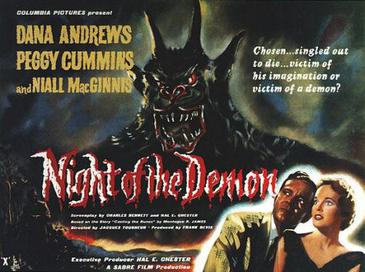
Night of the Demon (1957) Starring Dana Andrews and Peggy Cummins

Nightofthedemonposter.jpg

There’s not a more fitting place to start a horror film set in England than with Stonehenge, those relics of old that we can easily imagine being hexed with pagan cults and rituals summoning some unknown evil into the world.

Jacques Tourneur is no stranger to horror films and Night of the Demon (or Curse of the Demon in the U.S.) has its most obvious roots in his work at RKO with Val Lewton and the traditions hearkening back to the days of Cat People and I Walked with a Zombie. It’s stellar company to keep indeed. What hasn’t changed is filmmaking that surpasses its budget to create something genuinely unsettling through the generation of eerie atmospherics.

Except, one could contend that this production was much more tumultuous thanks to the ongoing struggles between producer Hal E. Chester on one side and Tourneur and screenwriter Charles Bennett on the other. In their estimation, the man supplying them with funds, was compromising the integrity of their vision and what they saw in the script.

One particular point of disagreement was in the actual incarnation of the devilish spirits, which take on an actual form rather than simply being implied or left fully to the imagination. The creation of a windstorm conjured up on the spot was another instigator as Tourneur demanded the use of airplane engines instead of electric fans. It got so bad lead actor Dana Andrews even threatened to quit if there was further interference with his director’s work.

Even in spite of these forms of strife going on behind the scenes, the picture genuinely comes off as a harrowing tale imbued with the ongoing terrors of witch cults and devil worship.

The beauty is when these seemingly supernatural, spiritual, or otherwise questioned forces impart themselves on the real world. The real world is grounded by a skeptical psychologist named Dr. John Holden (Dana Andrews) who is not about to believe in any of that kind of rubbish until he has no choice but to.

You couldn’t have a better and plainly a more blatantly obvious form of opening exposition. A man sleeps on a plane. It’s Dana Andrews and the paper propped over his eyes conveniently shows his picture and bears the headline that a prominent psychologist is about to arrive in England. Behind him, keeping him up needlessly, is Joanna Harrington (Peggy Cummins), a kindergarten teacher. They don’t know it yet but they will be seeing a great deal of each other in the near future.

Certainly people note that Andrew’s career took a tailspin in the 50s due in part to bouts of alcoholism and a changing milieu but if The City Never Sleeps and Night and The Devil are representative of his low budget efforts, then I can’t say I’m too heartbroken. At least his later career gave us a few quality films to relish. At any rate, it still looks like much the same man from Laura (1944) and The Best Years of Our Lives (1946). He’s simply seen more of the world.

Likewise, Peggy Cummins is a winsome heroine and a terribly underrated actress who proves a fine companion for the good doctor. They realize they have both arrived in England much for the same reason, to pay their respects to the late Professor Harrington, who died under mysterious circumstances.

Joanna (Cummins) was his niece and intuition tells her something is gravely wrong with her uncle’s untimely death. Though John is forever the skeptic, he’s nevertheless interested in investigating the research his late mentor was doing, which involved runic symbolism as well as the deceased man’s main rival Dr. Julian Karswell (Nial MacGinnis).

Taken at face value, Karswell seems a deceptively bubbly chap who fancies being a magician for the local kiddies. There’s an eccentric and ultimately ominous charisma about him, first claiming he conjured up a wind storm and then when he feels slighted, proclaiming John will be dead in three days’ time.

At first, John takes it lightly but strange occurrences that follow involving a parchment paper seem to suggest he is indeed a marked man with an impending threat on his life. If he’s not totally afraid yet then Joanne is certainly worried for him. She talks him into attending a seance with the medium of Karswell’s peculiar mother, bringing even more strange revelations to the table.

The doctor and his colleagues look to use hypnosis on a local named Hobart, caught in a catatonic state of immobility, to try and pry out answers about this foreboding ordeal right in their midst. The doctor even rushes to an outgoing train because he knows who he will find aboard; his last chance to make it out alive.

Ultimately over strong objections, Hal E. Chester won out and got images of the demon inserted into the film. I would wager it compromises the picture but it cannot completely detract from its unnerving nature, weaving together reality and mysticism into a compelling tale of irrefutable doom. There’s a shroud of powerlessness and dread overtaking the frames even as there’s a general sense our heroes are facing something they cannot quite comprehend. That works very much to its favor.

You do get the sense that Chester only saw this project as a fledgling picture to slide easily on a double horror bill. Tourneur, being the genre wizard that he was, knew he could do far more. Night of the Demon, like the finest horror films in the tradition, remains with us, lingering even after the credits have rolled.

4/5 Stars

Nightfall (1957): Jacques Tourneur’s 50s Noir

nightfall 1.png

To begin to compare Nightfall with Jacques Tourneur’s Out of The Past (1947), his film noir masterpiece from a decade earlier is a deeply unfair proposition from the outset. One could argue the films feel nothing alike — like apples and oranges — and they came into being in two very different environments. The former is in the world of gumshoes and femme fatales, what we consider now the archetype of noir and it’s true the picture, known as Hang My Gallows High, is a landmark with its photography from Nicholas Murucacas, iconic even on its own merit.

Nightfall is certainly a B-picture but that in itself is a delight. Put it together with a fledgling group of underrated classics like The Burglar (1951), Crime Wave (1954), Kiss Me Deadly (1955), The Lineup (1958), and Murder by Contract (1958) as showcases of how exquisite this genre can be in its very gritty economy. Because we have moved on from the expressionistic facades of the ’40s into a period of more authentically hewn pictures, which were ultimately blessed not simply by the low lighting of studio sets but on-location exteriors.

The script itself by Stirling Silliphant, who consequently would also pen The Lineup, is not altogether extraordinary but it hones in on one man who was caught up in a very unfortunate moment of fate and now has it following him wherever he goes. So we can concede that it shares that same cloud of darkness following Jeff Bailey in Out of the Past.

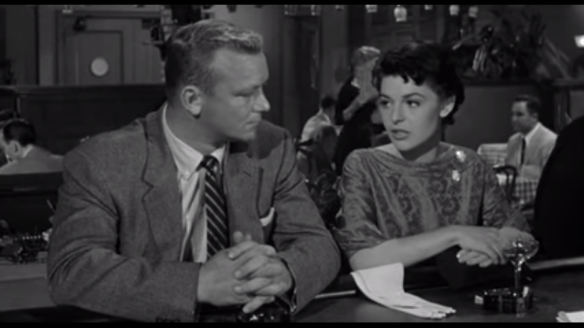
But for Jim Vanning (Aldo Ray), from when we first meet him on an L.A. street corner, it becomes apparent that other stories are being grafted in with his and it starts long before we meet him. He steps into a bar and on pretense is introduced to the working model Marie (Anne Bancroft) sitting next to him.

We wonder where their conversation will end. A good bet is some sort of romantic tryst or at least a future date, except, instead it’s into the grasp of two thugs who seem like they’ve been waiting for him. Eventually, we learn through a flashback what happened.

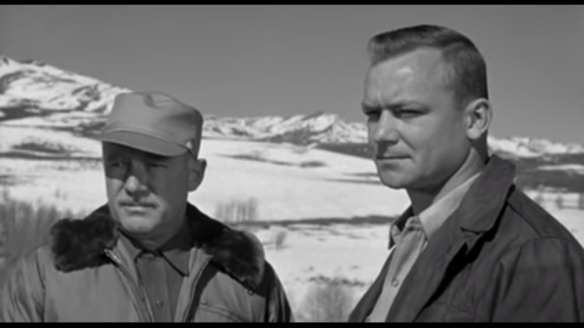
He was having a quiet weekend away with his good friend, a doctor (Frank Albertson). The scenery around them is gorgeous, the snow peaks of Teton country poking up behind them in their white-capped winter majesty extending as far as the eye can see. But against that, a truly harrowing development arises.

They see a passing car careen off the road and they go over like any decent citizen to provide aid only they are met by a pair of bank robbers who have a cutthroat mentality seeing as they ran off with $350,000  worth of cash. Almost instantaneously Jim’s reverie is shattered by the worst reality check he’s ever been stabbed with.

nightfall 3.png

By some miracle, a fortuitous piece of counter fate, he escaped with his life. However, despite a change of location, name, and even occupation — he’s an advertising artist now — like clockwork John (Brian Keith) and Red (Rudy Bond) caught up with him.

He thought Marie was in on it as well and confronts her about it but the romance blooming between them and the fact she’s an oblivious bystander throws them back together. Jim’s resolved to take a bus ride back out to Wyoming to recover the money because his hand is forced. He knows the two robbers will be after it. He doesn’t realize at first they’re not the only ones. A personable insurance investigator (James Gregory) has some vested interests of his own.

Nightfall is generally more fascinating for its locations and elements of style and atmosphere than its actual plotline but sometimes with B noir that’s admissible. The stark contrast is stunning taking us through ’50s era Los Angeles and providing an excellent time capsule juxtaposed intermittently with the snowy scapes of Wyoming.

In a particularly terrific moment, we watch as the noir world seeps into the refined elegance of a ladies’ fashion show where Marion is working the runway. It’s this lovely collision of peoples and settings we are not used to seeing together in the same frame. Meanwhile, the continually dueling voices of Aldo Ray and Anne Bancroft prove a simple pleasure in their own right with such rich tonalities of character that distinguish them fully. Perhaps it’s a mere consequence of cigarette smoke.

Not terribly unlike Nicholas Ray’s On Dangerous Ground (1951), the picture goes back to the powder of the Wyoming winter and climaxes in a snow plow finale, which is invigorating as much for its backdrop as it is for the action. Some will note the character arcs have been much revised from Out of the Past and we get our hero’s happy ending. Nevertheless, it traverses a brutal road in its own right.

3.5/5 Stars

Stranger on Horseback (1955) with Judge Joel McCrea

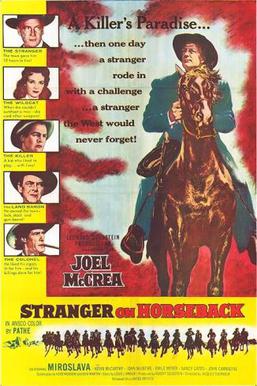
Stranger_on_Horseback_film_poster.jpgI didn’t know my Grandpa too well because he passed away when I was fairly young but I always remembered hearing that he really enjoyed reading Louis L’Amour. It’s not much but a telling statement nonetheless. I’ve read and seen Hondo (1953), which stars John Wayne and Geraldine Fitzgerald, and yet I’d readily proclaim Stranger on Horseback the finest movie adaptation of an L’Amour novel.

Exhibit A is Joel McCrea as a circuit judge, highly principled but firm in his dealings. He’s not simply an idealist either also having the guts to back up his philosophy, packing a gun and walloping thugs when it’s called for. He comes off as an irreproachable, unstoppable enactor of justice — a truly fascinating hero to stand front and center in a western.

Exhibit B has to be one of the most underrated directors of this period in Jacques Tourneur who not only showed an early penchant for low budget black and white horror but in a handful of color westerns, he showcased an equal affinity for visual filmmaking. Shot in Anscolor, Stranger on Horseback is quite the looker, encapsulating the 1950s western landscapes of old. No budget is too minuscule and no runtime too short for Tourneur to make an interesting picture.

The man rides past the unmistakable images of a pine box and a makeshift funeral. The dead man and the reasons for his death are still to be told. However, it becomes apparent very quickly that he was gunned down.

John Carradine leads the welcoming committee as the local attorney and stooge who is very conveniently on the Bannerman payroll and therefore in the family’s pocket. Because in a small place like this hidden away from the long arm of the national government, the Bannerman family and their associates remain king and they have their hand in everything.

The crotchety Josiah Bannerman (John McIntire) is looking to buy out the judge and invite him over to dinner to straighten him out about the killing that took place. He actually meets Judge Thorne and realizes full-well that’s not going to happen with such a principled man. For once there’s someone who isn’t afraid of him, even if he should be.

There’s his niece Amy Lee (Miroslava) who’s handy with a pistol and though she’s on the verge of marrying a feckless local boy, there’s a sense that he cannot give her anything. She is too strong like Bannerman. She needs a man who can match her self-assured toughness.

But it is Tom (Kevin McCarthy) the cocky, smart-aleck son who the judge forcibly takes to the local jailhouse to hold him for the murder of another man. Thorn’s put a target on his back and he knows that the retribution of Bannerman will come swiftly if he cannot be bought out.

He gets the support of the local sheriff (Emile Meyer) who’s eager to shed the apathy that the town breeds and back a man with real guts who will stand by his gun. That’s attractive to him and so if no one else stands up, the Judge has one friend. Meanwhile, he rustles up a few clandestine witnesses to testify against the Bannerman boy because they saw what happened and though initially reluctant they agree to testify since it is the right thing.

With the nearest speck of civilization and with it the nearest courtroom being in the town of Cottonwood 47 miles away, it’s inevitable that Bannerman will send his cronies after the small caravan to stop them in their tracks. It looks to be a daunting proposition at best but again, the Judge never balks.

The finale is all but cut short on an abrupt even awkward note much as we suspected. Our hero has been met and his bluff has been called. But we soon realize since he has been a brazen and thoroughly scrupulous man thus far, he’s not about to change anytime soon. So the final outcomes might surprise just as much as they captivate in a mere matter of minutes.

The question remains, why does the judge go through all this trouble? Is it some vendetta that has him out for vengeance? Is he doing it to prove his stature or receive the admiration of a woman? Is he simply a fellow who’s a stickler for rules and regulations? We never know for sure. Of course, there are obvious markers.

Our best hint comes out of another man’s mouth as he reminds his daughter, “There’s right and there’s wrong and when you see the difference you’ve just got to speak up.” In Judge Thorn, McCrea has brought to life a man who holds to precisely those moral tenets.

He puts his safety in jeopardy, he makes himself unpopular and foregoes major payoffs that could help him live comfortably. All because his view of justice and of right and wrong are so lucid he sees no other way of going about his duties. Let there be more men in our world like the Judge. Not sticklers but men of immense integrity.

Stranger on Horseback is a testament to small-scale westerns that have the guts and the certain level of ingenuity to stand out and weather the ultimate test of time.  Dig it out of obscurity, dust off the mothballs, and you might just find yourself in for a pleasant outing.

3.5/5 Stars

Colorado Territory (1949): High Sierra on Horseback

colorado territory.png

For me, it’s fascinating to consider directors who did not simply direct remakes but they actually reworked their earlier films. Prominent examples are, of course, Alfred Hitchcock, Yasujiro Ozu, Cecil B. DeMille, and Frank Capra, just to name a few.

The reasons could range from any number of things. Maybe they could command higher production values or harbored a desire to reexamine or improve on themes they had tackled previously. In the case of Howard Hawks, he even amazingly returned to the same basic narrative three times over as Rio Bravo, El Dorado, and Rio Lobo respectively. That’s quite the feat even if it initially appears a tad repetitive. However, watch the films and it does feel like you are seeing an altogether different entity each time, albeit with varying degrees of success.

Raoul Walsh’s Colorado Territory fits somewhere in there as a western that very much has two feet to stand on and the fact it was based off the director’s earlier work High Sierra, starring Bogart and Ida Lupino, feels nearly inconsequential. It’s not so much that there is no space to begin comparing the two. It’s more so the latter film, given its new cast and a new location, genuinely feels like an entirely different animal. Yes, we still have Walsh at the helm but the canvas and the language being utilized is essentially different. So from thenceforward, I will treat it as such.

Walsh is no slouch when it comes to western scenery capturing the raw majesty of the rock faces as men on horseback make their way across the planes of God’s country. This certainly is no gangster movie. The distinctions are made straightaway.

We meet Jeff McQueen (Joel McCrea) for the first time in a jail cell where he’s been stowed for his notorious exploits as a bank robber. However, an old friend keeps a promise and gets him out of the clink so he can pull one last job.

It feels like an uncharacteristic role for McCrea, in one sense, but he still fills the boots of his character with his typical principled outlook. McQueen, at this point, has had time to think and favors settling down and carving out a new life for himself with a stretch of farmland, a pretty wife, and a life of honest sweat and toil.

On an outgoing stage, he makes the acquaintance of a hopeful fellow from back east (Henry Hull) who’s also looking to make a new life for his daughter (Dorothy Malone) and himself out west. His philosophy is epitomized by the statement, “The sun travels west and so does opportunity.” He’s intent on finding the Promised Land and even as his daughter remains slightly skeptical, their life appeals to McQueen deeply.

What follows is an epic introduction of our antihero’s attributes, single-handedly righting a runaway stagecoach while fending off incoming bandits with an assured fearlessness. Even in these moments, McQueen cannot completely disown what he is or shed the years of experience he has accrued. He’s a hardened and whip-smart man whether it’s on horseback or handling a revolver. He’s a real man’s man.

So when he finally arrives in the rubble of a ghost town, serving as a hideout, he’s quick to cut the two young bucks waiting for him down to size. One’s your prototypical hothead (John Archer) looking to have it out at the drop of a pin and the other (James Mitchell) is strangely eloquent, though no less treacherous.

In his vast history of bank jobs, McQueen’s met many like them and it speaks to something that he’s probably the only one who made it out alive. Everyone else is either dead or rotting in prison. He’s not a man to take chances or make mistakes because if he had, he would have been dead long ago.

colorado territory 3.png

It’s part of the reason, despite his compatriots’ objections, he tells their gal pal Colorado (Virginia Mayo), a fiery former saloon singer, to leave their company. He’s not afraid of her getting in the way. On the contrary, he’s worried the other two outlaws will find reason to quarrel over her. That’s the last complication he needs now.

And yet Colorado impresses him and ultimately convinces McQueen to let her stay. She’s pumped full of a dogged tenacity making her persistently tough. He likes that and, of course, she’s beautiful because Mayo is sweltering even in her earthy, lacquered state.

If the dichotomy is not obvious already, the weathered outlaw has two girls and two lives calling out to him. He must dispense with one for good before he can take up the other for all posterity. At this point, the story is barreling towards the long-awaited bank job. We know what it means.

As the events unfold, he’s always one step ahead of everyone moment after moment. It’s thrilling to watch really because McQueen’s such a savvy, completely pragmatic man. This constant awareness makes him likable. He feels as much of a hero as he’s a villain and that’s as much as a testament to McCrea gritty candor as anything else — a straight arrow as he always is.

No matter, he outwits his two accomplices and flees the posse looking to string them up with the price tag on his head growing steadily bigger. There is a sense that time is running out on his dreams. He also comes to find things were not as good for his stagecoach acquaintances as they expected. For once in his life, he begins to gamble.

colorado territory 2.png

First, on the prospect they will take him in even as a fugitive on the run and then in his own struggles to protect Colorado. What we get is literally Virginia Mayo versus Dorothy Malone as they have it out in a stellar log cabin struggle, the picture beginning to spiral toward imminent doom.

A harrowing finale takes us back inevitably to the Valley of Death with McQueen climbing over cavernous rock faces in a last-ditch effort to flee his pursuers. It’s easy to see the foregone conclusion. We don’t want it to be but it’s hopeless and Colorado Territory gives us that odd sensation only certain stories can effectively manage.

It made us empathize with a purported scourge on society, wishing that he might find love and escape to a life of anonymity as he had always dreamed. But we knew before it ever arrived such a dream was never to be. Does the ending surprise us? Not necessarily. That doesn’t make it any less bitter as two tragic hands clasp each other one final time in a desperate attempt to stay together.

4/5 Stars