Fruitvale Station (2013)

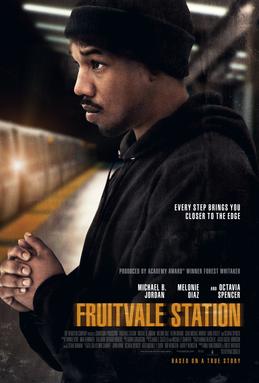
Fruitvale_Station_poster.jpgRyan Coogler is from Oakland, California. He was attending USC Film School in 2009 when Oscar Grant III was shot near the BART station. From those experiences were born his first project. He envisioned Michael B. Jordan in the lead role. Thankfully his vision and the casting came to fruition.

I appreciate smalltime gems like Fruitvale and Short Term 12 (which both came to by attention at the same time). Maybe they are very intentionally crafted into these intensified dramas with heightened bits of reality but there’s also something meaningful in how they are able to tell smaller scale stories in an economical way. That in itself is an art just like making a cohesive blockbuster is an art.

The allure of the picture comes in putting us in the moment. Coogler works in capturing the final hours of Oscar Grant’s life which would seem mundane and unextraordinary if it weren’t for how they were capped off. It’s a film that breeds a certain amount of empathy because the camera is always over the shoulder, at the hip, or in the most intimate spaces putting a lens on what is happening.

But when the picture turns tragic there’s this undeniable sense of immersive drama while still crafting a story that connects to all of us. It feels as if all facets of Oscar’s character are put up to the light.

Because if you put up the magnifying glass to each of us you soon realize that we don’t always act the same way around everyone. When you see Oscar in his different interactions each person brings out something else in him. And he is very much a people pleaser.

What the story offers up are these perfectly manufactured moments (some better than others) to capture the contours of a single individual. None is fake per se — a facade if you will — but oftentimes various interactions bring out a certain side of someone. The lady attempting to have a fish fry and struggling miserably appreciates Oscar’s genial nature to call up his grandma and get her help. There’s the entrepreneur who has created his own web design business who thanks Oscar for finding a bathroom for his pregnant wife. Even the dude who comes to Oscar to pick up his smokes.

They are hardly central characters but each interaction serves the purpose of the story. However, this is not solely a film for the African-American community though it was an important story to tell.

Coogler in the way he purposefully draws up the narrative seems to be suggesting that it is for all of us. It’s not about color as cut and dry as black or white. It’s not even about good versus evil. It’s about issues of race and violence and injustice still clearly visible in our world. But not in a way that makes one party out to be the hero and completely demonizes another.

We connect with Oscar no doubt but we see his flaws as much as his humanity. He’s gone through a long stint in prison. His temper smolders dangerously as much as his spirit is generous to his friends. He rather immaturely covers up his troubles at work. But he’s 22 years old. In fact, maybe its just that. His flaws are his humanity.

And with the law enforcement we see the brutality but what is just as prevalent is fear and confusion. In the heat of that moment I’m not sure what I would do. All I can do at this point is give the benefit of the doubt and mourn the loss of a human being taken from this earth far too quickly in the worst circumstances possible.

Its true the fateful moments — seen in real cell phone footage at the beginning and reenacted later on — are full of chaotic tumult that we can’t quite understand. What’s even more haunting is the fact that Coogler got permission to shoot in the very locations where Grant was fatally injured. In that specific sense, the film couldn’t be more authentic.

One of the sequences that resonated was the communal prayer in the hospital corridors. It’s true you can read someone’s character in the times of pandemonium but also immediately following. It’s in the turbulence where Octavia Spencer takes charge in the best way she knows how and probably in the most effective way. Because there’s a helplessness in the air. This is one way to keep things together.

It’s one of the films most unifying moments for me because amid the torrent of understandable anger and apprehension it establishes a singular instance of calm in the wake of such emotion.

The film ends much as it begins with footage of the real because that’s what this is in a sense. Reconstructed, undoubtedly stylized and put back together with inevitable human biases as it may be, I appreciate its efforts. The intentions seem candid and the results speak in such a way that though calling out this brutality is more concerned with making Oscar into a version of a human being not just another thug or a victim to be pitied in order to rally a cause.

Didactic films get tiresome but Fruitvale Station rarely feels like that. Its platform undoubtedly is a social one and yet the director quite adeptly makes sure his narrative resonates on an individual less austere level.

Of course, to form a truly robust, well-informed opinion of the events more accounts would be necessary but as a film there is definite quality in this production. I still hold that Ryan Coogler and Michael B. Jordan have one of the best collaborations going on in movies right now. Here’s to hoping they don’t let up anytime soon. I’m eager for more stories from them. I think many other people are thirsty for them too.

4/5 Stars

The Fortune Cookie (1966)

The_Fortune_Cookie_(1966)_poster.jpg“You can fool all of the people some of the time, you can even fool some of the people all the time, but you can’t fool all the people all the time.” ~ Inscription in the Fortune Cookie

For some inexplicable reason, I expected The Fortune Cookie to be in color. Maybe in some subliminal way, I assumed it would be like a dry run for the zany Odd Couple (1968), pairing the two stars who would make the most delightful comedic coupling in years. But once you get into the nitty-gritty and The Fortune Cookie is less of an intangible idea floating up in the sky, it’s very obvious that this is more akin to The Apartment (1960) and the obvious reason is Billy Wilder.

Once more he lets Jack Lemmon do his sympathetic role, that guy that we all know who is a bit of a loser but not a bad sort of fellow. From such a characterization Lemmon’s scintillating skill at both physical comedy and verbal jokes come off like they always seem to. You can’t help but smile. But Wilder places that same man — that sorry individual — a simple cameraman named Harry Hinkle, into a very cynical world indeed. It’s Wilder’s version of America.

While he unequivocally loves the country that welcomed him when he was an immigrant, that by no means suggests that Wilder is unwilling to satirize its very flaws. In fact, he relishes doing just that. Sometimes it feels like that was what Billy Wilder was put on this earth to do. Make people laugh and do it with a biting style that forces us to look a little closer at the incongruities around us.

You can easily make the case that the main attraction here are two noteworthy dynamic duos (although it’s slightly dependent on how you want to draw them up). First Billy Wilder paired with his writing partner I.A.L. Diamond yet again after their string of successes with Some Like it Hot (1959), The Apartment (1960), and One, Two, Three (1961) among others.

But perhaps just as importantly we have the genesis of the longstanding comedic collaboration between Lemmon and Walter Matthau. It just works. It’s easy to see why they continued starring together because when they’re in the same room wonderfully hilarious things come into being.

Otherwise, the film takes a wacky premise involving a Cleveland Brown’s punt returner leveling a CBS cameraman and draws them out as far as they can possibly go. It’s actually rather impressive that this single spark of an idea gave way to a fairly substantial picture. Because all kidding aside, and without consideration of its title, the film is not unsurprisingly cut out of Billy Wilder’s cynical worldview as already acknowledged.

Yet again he finds his perspective of America derived from some combination of screwball comedy and a more downbeat, melancholy tone. True, he made some delightfully dark films-noir but this same malaise somehow worked fairly well in his comedies too.

Here it’s perfectly enhanced by world-class shyster Whiplash Willie (Walter Matthau) the conniving ambulance chaser who takes great interest in his brother-in-law’s purported injuries on the football field — even if they wind up being next to nothing. The insurance company doesn’t know that and that’s the key.

The periphery is complicated by a private investigator (Cliff Osmond) staked out across the way who has their room bugged and under surveillance. Harry’s mother is constantly bawling. The wife (Judi West) that he once loved and who ran off with another man is tantalizingly close to returning to him. Meanwhile, the soft-hearted football superstar who bulldozed him, Boom Boom Jackson (Ron Rich), looks for any way to make his little buddy’s life more comfortable and it’s taken a major toll on his success on the field.

It’s these very relationships that have Harry seesawing back and forth as his wily brother-in-law coaxes him to keep working the angle so they can nab their $200,000 in recompense. Watching Lemmon pirouette in his electric wheelchair, stiff-necked in a brace is priceless. Concurrently, Matthau seems to be limbering up for all his greatest roles from The Odd Couple to the Bad News Bears (1976) showing off his own impeccable adroitness with curmudgeon comedy — delivering dialogue in such a tone with such a way about him that’s at the same time devious and terribly hilarious. He even answers the phone like nobody’s business.

Lemmon owns the final scenes, however, as he must try and reconcile this lie he has been made to live — this charade he has been playing for the sake of $200,000. Perhaps even more troubling than Harry’s lie and less funny is what happens to Boom Boom. Because he’s such a kind soul even dangerously subservient in how he follows cinematic precedence. But we can make the case that this is part of what Wilder is poking at.

The one moment his protagonist shows any integrity, the one moment he stands up, literally, is in the face of a supposed bigot. Even if it says little, there’s no denying that it says something. Sometimes we don’t need comedies to win the big battles. A film called The Fortune Cookie is not going to garner a lot of respect (nor should it necessarily) but it can at least get us to stop and think. Maybe the utter absurdity in some ways isn’t all that far away from our own existence. That’s part of its charm. Crack it open if you’re so inclined.

3.5/5 Stars

Blackmail (1929)

Blackmail_1929_Poster.jpgIn one sense Blackmail proves to be a landmark in simple film history terms but it’s also a surprisingly frank picture that Hitchcock injects with his flourishing technical skills. It’s of the utmost importance to cinema itself because it literally stands at the crossroads of silent and talking pictures and holds the distinction of being one of Britain’s first talkies.

So close did it ride the lines, in fact, that two versions were released. It was initially supposed to be a full-fledged silent until it was requested that Hitchcock update the production to follow the tides of the times.

Far from being hampered by the transition, Hitch takes everything in stride and delivers a story that is pure cinema. It means simply that the film functions as a visual narrative. Still partially silent, yet using dialogue, and utilizing all the tools at his disposal to develop the greatest impact to reach his audience.

The story is simple really, about a young woman named Alice (Anny Ondra, future wife of German boxing icon Max Schmeling) who’s having a bit of a rough time with her boyfriend who’s on the police force. Still, she’s trying to make it work but another man has taken her fancy. He’s an artist and he uses the excuse of showing her his work as a pretense to get her up in his room. We all have an inclination of what might happen next. She’s taken advantage of and Alice has no recourse but to defend herself.

A conniving low-level conman is looking for an easy bit of blackmail and the policeman goes to great lengths to protect his girl but she herself is struggling with her guilt with what happened. Her nerves cannot take the constant strain because she was never meant for such circumstances. She’s hardly a bad person. In fact, she has no reason to feel remorse because, in the film’s candid portrayal of the artist’s less than honorable intentions, it’s easy to sympathize with Alice.

What makes the picture extraordinarily refreshing is that Hitch never relies too heavily on dialogue although it was the newest technology. He seems to already have an intuitive sense of how it can be used in cadence with the moving image. He can still make a film that for sequences is much like a silent picture and far from detracting from the story he is developing it further. It only serves to bring out more of the story whether it be the atmosphere or certain amounts of character development.

The local gossip chattering on and on about the murder and how she would never use a knife no matter the provocation but we are also privy to the young woman’s reaction shots as the word “knife” reverberates through her consciousness. Even in that moment, the dialogue underlines her inherent guilt and the further moral dilemma she has been put in.

Hitchcock’s already resorting to using memorable locales, in this case, The British Museum to make his chase sequences pop with character. You might say this is even an obvious precursor to Vertigo (1958) with a chase sequence that takes off across the rooftops of the museum.

But the ending comes with a bit of fateful luck that’s simultaneously darkly comic in quintessential Hitchcock fashion. It’s the perfect punctuation on a film that spun on an unfortunate split second altercation and it just as easily fell back on track with another such moment of good fortune. It’s the director’s way of teasing his audience in a sense and he’s very good at it — mingling murder with wit.

3.5/5 Stars

The Lodger: A Tale of the London Fog (1927)

The_Lodger_1927_Poster.jpgWhat’s striking about Alfred Hitchcock is the sheer breadth of his work and how his career managed to take him in so many directions as he continued to evolve and experiment with his craft from silent pictures, to talkies, then Hollywood, and all the way into the modern blockbuster age. And yet the very expansiveness of his oeuvre begs the question, where to begin with it all? Certainly, his lineup of masterpieces in the 1950s are a must.

But of his early silent pictures, The Lodger is the film that Hitchcock himself noted was really the beginning of his filmography as we know it and within its frames, there are some telling signs of an artist coming to grips with his craft.

His subject matter here is a bit of a Jack the Ripper-type tale set in London. A rash of murders has overtaken the town as coincidentally a new tenant with suspicious tendencies moves into the room of a local family. Their daughter does her best to make him feel welcome but her macho boyfriend, a member of the local police force, is skeptical of the competition. Especially since circumstance seems to point to the lodger’s guilt. So in this central conflict, we have a bit of the innocent man motif that Hitch would scrutinize and continue to tweak again and again.

Hitchcock already shows an immense aptitude for visual experimentation, utilizing his mise en scene in fascinating ways.  He makes great use of staircases whether he only shows a man’s hand as it slides along the banister or he sets up crucial moments along the expanses of the stairwell, characters slowly descending toward us being representative of innumerable tension.

We also unwittingly have one of Hitch’s first documented cameos and his assistant director on the picture is none other than his soon-to-be wife and lifelong collaborator, Alma Reville. That connection alone makes this production crucial to Hitchcock’s future career.

It’s easy to make the assertion that Hitchcock remained in the most basic sense a silent filmmaker his entire career and if we can count F.W. Murnau as one of his major influences from his time in Germany, you have that same sense of visuals over dialogue or even title cards. Some of his greatest scenes are in fact nearly silent. The crop dusting chase in North by Northwest (1959) or Norman Bates discarding the evidence in Psycho (1960) both spring to mind.

Though the parameters set up by the studio and expectations of his audience meant his leading man could not be found to be guilty, Hitch still manages to make the scenario as interesting as he possibly could — even if the degree of moral ambiguity wasn’t quite to his liking.

Consequently, in many ways, The Lodger also manages to be one of Hitchcock’s most tenderly romantic films. Because while his pictures have romance and passion they are more often than not subverted by the macabre, sensuality, or that notable dry wit. But here, the love story seems generally sincere.

Because there are tinges of true heartbreak here and the circumstances that bring the two lovers together are imbued with emotional consequence. Even the intricacies of a flashback and genuine interactions between two people who exude a certain chemistry make up for any overly theatrical moments courtesy of the tenderhearted heartthrob Ivor Novello.

But as he generally had a knack for doing Hitchcock also knows how to squeeze the most out of his ending sequences with the most satisfying spectacle. In this case, although the police have exonerated their suspect, the mob is after him and he flees them only to get caught on the iron works of a fence, his handcuffs leaving him dangling, vulnerable to the onslaught of humanity. He hangs there pitifully, at their mercy, a near Christ-like figure.

Perhaps the outcome was not quite what he wanted but the burgeoning master still manages a true Hitchcockian ending worthy of remembrance alongside some of his more championed pictures.

3.5/5 Stars


Man’s Castle (1933)

220px-Mans-castle-1933.jpg“Blessed are the poor in spirit for their’s is the kingdom of heaven”

With Frank Borzage taking on both WWI and WWII in his career it only makes sense that he would take on the event that in many ways bridged them — The Great Depression.

It’s fairly early on in the story where the local resident Ira (Walter Connolly), a minister by day and a night watchman by night cites the Sermon on the Mount and later references 1 Corinthians 1:27. The moral being: Blessed are the poor in spirit and God chooses the lowly things of this world and the despised things to nullify the things that are strong.

If nothing else a character such as Ira is one of the lovable figures in this fairly dank and dreary tale but his words breathe an inherent worth into the masses of everyday individuals slogging their way through the Depression.  In many ways, this film is a eulogy to those very people, the downtrodden, the poor, the heavy-laden folks.

But sometimes those same folks seem to come in all shapes and size making it nearly impossible to get a line on them. We first meet Bill (Spencer Tracy) a veteran fast-talking Artful Dodger-type who works the streets of New York in his top hat and tails. In this very first sequence, he’s in the middle of a seemingly frivolous activity offering breadcrumbs to the pigeons.

He catches the young gal (Loretta Young) next to him giving him the eye and calls her out. Although she might not look it, she’s destitute, going without food on two days now so he begrudgingly agrees to treat her to some fine dining. Of course, when the time to pay the check comes so comes the big reveal. Bill is just about as broke as Trina and they get thrown out (at least with full bellies).

For the rest of the film they hold up together in a shantytown in the local Hooverville where the existence is sparse but Trina exists as a happy homemaker whose indefatigable spirit never seems to dampen. Bill spends his days drifting finding bits and pieces of work here and there and in the evenings he comes home to his gal. Any other circumstances and their lives would seem fairly normal.

He playing the breadwinner. She playing his devoted spouse. Except he gets the bread by serving a summons to a local stage performer and stilt walking in his free moments, among other things. But he scrapes together enough to get Trina a new stove for their hovel. The fact that they remain unmarried is invariably inconsequential and Trina’s not looking to tie down her man — she’s far too understanding and open-minded for such thoughts.

And although partially unbelievable its integral in how Tracy’s protagonist reveals his true character. Yes, he is a man with restless feet constantly playing the curmudgeon — disdaining the “ball and chain.” However, there’s an old adage that would be apt in describing him. His bark is worse than his bite.

There’s no conceivable way that two individuals such as this should remain together and even in the film there are moments when their symbiotic relationship seems to be splitting at the seams.

Tracy is brusque and surprisingly stink-eyed but as is his custom he comes around and has the audience on his side for the very fact that Loretta Young is so devoted to him. On her part, the sprightly and ever-effervescent Young at the ripe young age of 20 might be skinny but she holds her own and is crucial to making this love story something of substance.

Borzage once more dissects a romance that’s, in this case, one of the most unlikely pairings but Bill ceaselessly subverts our expectations. He’s not such a bad cad after all and Trina makes him be better than he has any right to be.

In this specific instance, the two lovers get their happy ending clutching each other closely in a pile of hay aboard a freight train. The destination nor the future seems to matter because the underlining factor is they have each other. You’ll be hard-pressed to find many affluent people in this picture and this is an important distinction to make. This is not a screwball comedy. On the contrary, center stage is given to members of society who are usually marginalized and it comes off exceedingly well thanks to Tracy and Young.

3.5/5 Stars

Note: It’s most likely that the cut you will see is the 1938 reissued version following the installation of the Hays Codes. I’m not actually sure if an original print is still available or if it’s considered lost.

A Farewell to Arms (1932)

394px-Poster_-_A_Farewell_to_Arms_(1932)_01Again, I must confess that I have not read yet another revered American Classic. I have not read A Farewell to Arms…But from the admittedly minor things I know about Hemingway’s prose and general tone, this film adaptation is certainly not a perfectly faithful translation of its source material. Not by any stretch of the imagination.

However, I do know at least a little something about Frank Borzage a filmmaker that time has been less kind to, though he contributed some quality pictures during the silent era and during the ensuing generation of talkies — even a couple of reputed classics. And yet watching A Farewell to Arms you can see his philosophies working themselves into the story line — the very themes that he would repeat again and again in many of his movies.

It soon becomes apparent that Borzage’s film is not about a war at all though WWI is a major plot point. He would examine an analogous idea with The Mortal Storm. Its his predilection not to focus so much on the carnage or alienation of war and more so on the effects that such a cataclysmic event has on the lives of those thrust into the middle of it. So his narrative borrows from Hemingway but hinges on this idea of lovers battling against the wiles of the world through the sheer euphoria of their romantic fling and yet it proves to be more than transient.

There’s without question a verisimilitude and a candor to the portrayals of Gary Cooper and Helen Hayes as said lovers — an ambulance driver and a nurse. Two seemingly unextraordinary individuals who nevertheless become extraordinary in each other’s arms. They will go to such great lengths to remain together despite the obstacles hindering them on every side. Perhaps it’s heightened by the times but still, there is this general belief in what they do on the part of the audience — that they can actually fall in love and will do whatever it takes to stay together.

Even if it’s not wholly plausible, they lend that needed credence to the parts. Their emotions feel genuine even as their romance gets crippled by the very circumstances they find themselves in. Where years are sped up into days and marriage must be forged in the most humble of moments. There’s no time or space for a normal life with a normal love affair even if that’s what both parties desire. It cannot be so.

Gary Cooper exudes a gentle tenderness in the majority of his scenes and he manages to be as vulnerable as we’ve ever seen him in the part because this romance tears him apart. Helen Hayes is an actress that I, unfortunately, know very little about but she strikes me as a beauty like Claudette Colbert and yet I find an easier time liking her and by some form of transference, the same goes for the character that she plays. It’s also crucial to note the splendorous black & white cinematography of Charles Lang which paints the contours of this love affair with expressionistic shades while never quite allowing us to forget the war at hand.

Though we can compare Borzage’s film with the original novel it seems equally compelling to juxtapose this cinematic adaptation of A Farewell to Arms with Joseph von Sternberg’s romance, Morocco, of only two years prior also starring Gary Cooper and Adolphe Menjou with von Sternberg’s muse Marlene Dietrich. Hayes doesn’t have the same gravitas or allure of Dietrich but that actually serves her better in this film with what Borzage is trying to accomplish.

Because this story is a tragedy as much as it is a romance of faithful devotion. Whereas von Sternberg seems most interested in the locality and the depictions of his stars — allowing them to have looser morals, you could make the argument that Borzage film holds a greater stake in its thematics and what such a romance can represent in such a turbulent world. The Great War is only an unfortunate backdrop to play the action against and it’s unfortunate because love is a rapturous thing. But it’s the many evils of the world that tear it asunder. The kind of troubles that force two people to bid each other a tearful adieu even if it’s the last thing they want in the world.

3.5/5 Stars

Columbus (2017)

ColumbusPosterI wrote an article quite a few years back where I considered what it would be like if and when an Asian made the leap toward a true leading role in Hollywood. The performers I put up for consideration were John Cho and Ken Jeong. Back then I thought they deserved a platform to go beyond the Star Trek and The Hangover franchises.

While Columbus was not exactly the picture I was considering at the time, it’s more than I could have hoped for. I finally got my wish in this moving character study looking for pulchritude in the midst of life’s incessant turbulence. It’s an unassuming even meandering story. A version of it could exist in real life and that’s a glimmer of the allure.

The narrative plants us in Columbus, Indiana (not Ohio), a Mecca of modernist architecture, and not much else. A Korean-American translator named Jin (Cho) comes back home from Korea to call on his estranged father who is currently bedridden in a coma. It’s difficult to discern what is more tragic: That he is dying or that his son could care less.

Then there’s Casey (Haley Lu Richardson) a young college-aged woman who has foregone the typical trajectory of a person her age with her intelligence to stay behind with her mom, a recovering addict with a serial poor choice in men. While her mother tries to keep a menial job, Casey all but cares for her, spending her days working at the local library and the nights preparing their meals.

The proposed dynamic is obvious but nevertheless satiating when it comes to fruition. Where two people who seem so diametrically opposed in their life stage and social circles somehow form an immense bond in a world so often hampered by superficial, surface-level interaction.

In this facet alone, John Cho, a man waiting so long for such a time as this, has confirmed what many of us have long known. He deserves to anchor a film and Columbus proves he is more than up to the task. While relative newcomer Richardson (Edge of Seventeen) provides him a fascinating talking partner and friend who deals in terms that are simultaneously candid and profound.

Especially in the film’s opening moments, there is a brazenness to Kogonada’s staging and often stationary camera, because it creates this so perfectly symmetrical, oftentimes cavernous space. It’s the height of art and overtly so. In such moments where a color pops in a composition so obviously or he dares to linger on an immaculately staged frame, I see the touches of Ozu. Whether this was done consciously or not is hardly up for contention. It’s too close to be mere coincidence.

The framing of shots. How doorways are used as an entry point for seeing an entire sequence. The fearlessness in using what other people would deem establishing shots to tell a story through the building of an environment in front of us.

It strikes me that often shot length corresponds with the confidence a filmmaker seems to put in their work. Because if you constantly splice and dice every second or two there’s no precision necessary. It will go all but unnoticed on the cutting room floor but to be brave enough to put a sequence up to scrutiny for seconds on end — sometimes even achingly so — it’s something that has become a forgotten practice.

Where it’s alright to linger and watch faces and to catch the nuances of reactions rather than a constant barrage of over-articulated actions and histrionics. Sure, we have a few of those moments here that feel like they are the rhythms of a film drama trying too hard to be a version of reality. The character Jin even remarking in one needlessly self-reflexive moment, “This isn’t a movie.”

Whereas Lost in Translation was built around a city full of energy and cultural clout in Tokyo, with its bright lights and cutting-edge society, where there’s so much to do and a lot of stimuli, Columbus is the antithesis of this.

In fact, an issue might be that it tries to derive so many of its conclusions not through actions but the mining of personal struggles and familial strife. Those are vital areas and yet in the same sense, it’s when the film tries to unwind this exposition we feel like we are, indeed, watching a movie. Still, when it intentionally digs into conversation and moments and feelings, it’s done with tact and an undisputed transparency that’s refreshing even in its heightened realism.

Each character has their alternative foils casting a light into their lives. Certainly, they have each other and they have their parents, who have no doubt made them who they are, while also influencing the direction of their lives. But when we look at Jin there’s Eleanor (Parker Posey), his father’s assistant, and though she’s married now, Jin’s long harbored feelings for her since they first met.

Meanwhile, Casey’s coworker (Rory Culkin) is her continuous companion in the vast hall of the library they work at. He is a doctoral student serving as both a friend and someone to assist her in considering her future endeavors. But there’s no doubting he likes her even as she casually dodges his well-meaning advances.

But Columbus is also bathed in a Midwest malaise. Those terms I put together rather tentatively. In fact maybe like Lost in Translation before it, this is less about the location and more about the people who find their paths crossing. I think this might be it.

Richardson appeals to us because there’s something so chill about her. She ambles through life like one of those people who doesn’t take things too seriously, at least on the surface, because you can easily imagine if she didn’t manage to go with the flow her hardships might tear her apart limb by limb. In fact, they almost do.

But I think I only recall one character who ever had the same sense of wonderment and affection for something like the architecture in Columbus. It came in another artistically-minded and entrancing movie, Museum Hours, where the bright-eyed security guard watches over the art in his stead with the same degree of relish. He loves being surrounded by such sights.

Yes, she says most people could care less about these relics, and yet that’s not everyone. She rattles off facts like a seasoned tour guide but that’s not what does it for her. It’s the memories elicited from certain places. It’s the feelings. The undeniable monuments of magnificence found in her humble corner of the world.

There’s a mood wafting over the film’s canvas that can either be interpreted as melancholy or serenity. Because beautiful things often manage to raise our spirits while also burrowing into our distinct places of hurt. That’s how we manage to cope and ultimately come to terms with them.

So Columbus is a picture coming like a whisper, looking austere and aloof, but rip away the walls, the exteriors of some phenomenal architectural marvels, and you will come to find a beating heart that is well worth its weight. No doubt this picture will be glossed over by many. But that makes its discovery all the sweeter.

4/5 Stars

Jane Eyre (1943)

Jane-Eyre-1943-1Are you always drawn to the loveless and unfriended? ~ Edward Rochester

When it’s deserved. ~ Jane Eyre

I can still recall visiting the Bronte Parsonage, marveling at the fact that these sisters were able to have such a lasting impact on the world of literature — a world so often dominated by men at that time — and I simultaneously rued the fact that I had yet to crack open any of their works. Now several years down the road, I still have not opened up Wuthering Heights or Jane Eyre by Emily and Charlotte Bronte and so I can only come into this 20th-century adaptation with certain expectations.

I realize that no film can wholly represent every page of a novel — especially of great length — because in a practical sense it’s simply not theatrically possible. But my hope is that at the very least this version of Jane Eyre maintains the essence of the source material and if nothing else I can revel in the fact that it is a thoroughly engrossing film from director Robert Stevenson.

It feels like some sort of intriguing marriage between Orson Welles’ Mercury Theatre and the recent craze of gothic fiction adaptations — the most noted of course being Hitchcock’s Rebecca only a few years prior — that by some strange happenstance had input from Aldous Huxley. Here we have the ever timid beauty Joan Fontaine starring once more, this time opposite Welles. But the story starts at a much earlier point in the life of Jane Eyre.

Her life is a desolate and horrible affair as we soon find out, due in part to a caustic culture that uses their religion to ostracize others instead of bringing them into the fold of society.

In fact, most of those who hold a Christian belief system are puritanical and more problematic still, hard-hearted. Ironically, there’s no room for grace in the Christian faith that they practice. Foremost among this crowd is Mr. Brocklehurst (Henry Daniel) who runs the Lowood Institution for Girls.

It’s in this very issue revealed early on where the film finds much of its substance. Because thematically all throughout the narrative the audience is forced to grapple with various characters who are subjugated to the fringes of society and for various reasons are labeled as outcasts.

This is how Jane is seen first by her unfeeling aunt (Agnes Moorehead), then by the narrow-minded reverend. They seem absolutely incapable of compassion sitting atop their high horses of proclaimed humility and charity. In reality, they have very little of either to offer. A few do show her kindness including Dr. Rivers (John Sutton) and the cook Bessie (Sarah Allgood) but such behavior is the exception and not the norm.

Still, Jane the very person who has been relegated to a wretched and lesser state is for that very reason ready and willing to reach out to those around her who are treated likewise. The very fact that she has been marginalized allows her to see it in others and be compelled to move toward them when others move away.  She cares deeply for the outsider.

The most galvanizing experience involves her closest friend as a young girl (played by a child who still is very unmistakably Elizabeth Taylor). Then as she grows up and chooses to move away from the oppression of her surrogate home, it is the role of a governess in a gothic manor that once more allows her the opportunity to extend her graces to others. First in the form of the precocious ballerina extraordinaire (Margaret O’Brien) and then the brusque but obviously tortured man of the house (Orson Welles).

She sees in him something that runs deeper than the surface. He’s far from a bad man. In fact, she grows to love and cherish him because she sees the good that dwells in his conflicted soul. Burdened as he is with guilt and a past that still haunts him to the present moment. The film exhibits a bit of a love triangle as Rochester invites many guests to his estate among them the well-to-do Blanche Ingram (Hillary Brooke).

But the film pulling from its source material goes a step further still.  It digs into the dark recesses, involving itself with the less than pleasant realities, namely an unseen person who hangs over the storyline like a specter. In those very designs, whether they are simply employing the rhythms of Bronte’s book or not, there’s another evident parallel there with the 1940 adaptation of du Maurier’s Rebecca.

Gothic tones matched with an impending sense of foreboding with the demure Fontaine similarly relating the action through voiceover even reading verbatim off the page as if from a diary. And once again it works. While there is no Mrs. Danvers, Welles has the same Shakespearian gravitas of an Olivier that accentuates the very modesty of many of Fontaine’s performances. Their exchanges reflect the sensibilities of the time but furthermore help draw up the very differences of their characters. However, as much as that juxtaposition would seem to draw them apart it even more passionately brings them together.

Some might find this rendition of Jane Eyre too stark, too much of a studio production, even too abrupt, but with Welles and Fontaine opposite each other, it’s a frequently enjoyable gothic romance. As much as gothic romances can possibly be enjoyable.

4/5 Stars

Clouds of Sils Maria (2014)

Clouds_of_Sils_Maria_film_posterIt’s my prerogative to respect films that dare to leave me questioning their ambitions and their outcomes. Clouds of Sils Maria is such a film. At times it gets so caught up in its own meta-narrative perhaps too much so.

Still, this is a story about a middle-aged actress (Juliette Binoche) called upon to return to the script that made her famous but this time in the much more unglamorous role. Her stardom is such that she can pick and choose her work still but that doesn’t make growing older and life in general any easier. She must navigate press junkets, paparazzi, divorce proceedings, and on top of it all the death of a good friend — the man who helped make her famous.

The person keeping Maria sane through every bit of drama and every tiresome ordeal is her personal assistant Valentine (Kristen Stewart). She is also the one who cajoles her client to take the role. My gut further suggests that there are the inklings of All About Eve echoed in Olivier Assayas story between a mature actress and a rising star who is a prima donna scandal maker of the social media age (played by Chloe Grace Moretz).

But still that dynamic proves to be less fruitul and ultimately less interesting than the relationship that is examined between Maria and Valentine. It is their scenes together that are tirelessly engaging because their interactions run the gamut of emotions. How do you begin to define them?

The dividing line between this play that they are bouncing off each other and their actual lives at times feel perilously close as they jump in and out. Somehow in some unknowable way, it seems to reflect real truths about their relationship.

The meta moments are innumerable including those that suggest Binoche’s earlier film Rendez-vous, Chloe Grace Moretz forays into superhero blockbusters, even a passing coincidental remark Stewart makes about a film featuring werewolves. There’s a Harrison Ford film directed by Sydney Pollack (a lah Sabrina) maybe lightly poking fun at how Juliette Binoche and Julia Ormond could easily be confused.

But if nothing else these feel like only slight nods if not pastiche that do not necessarily aid the aspirations of the film. They mean very little. The far more fascinating suggestion is just how closely the characters of Maria and Valentine read to the figures in the script while they practice the lines in the mountains. But it’s not just that. It’s how their conversation organically reveals bits and pieces of their personal philosophies.

So to clarify it’s not reality intersecting with fiction but the fiction within the fiction that creates a greater depth that complicates matters. That’s what makes the film at times beautiful and perplexing. The fact that Valentine evaporates is tantamount to Michelangelo Antioni losing his main character in L’Avventura. Likewise, Valentine disappears into the clouds never to be seen again and that’s far more interesting than any amount of commentary that could have been crammed into the storyline about Stewart’s actual career.

And in truth, this has to be without question the greatest performance of Stewart’s career thus far because there’s something streetwise, nuanced, and clever about her. There’s a strange sense through her wardrobe and demeanor that this is part of Stewart that we are actually seeing, although I’m not sure how true that is. It feels the very essence of “un-acting” if we can coin that phrase.

Binoche, of course, has a lauded spot as one of the eminent stars of European cinema for very good reason with a career that has been held in regard for well nigh 30 years. Somehow she feels like oil and water mixed with the likes of Stewart and Moretz, products of Hollywood blockbusters, but that’s what makes this film an interesting marriage of backgrounds.

Far from being conflicting, the pairing of Binoche and Stewart is ripe with interesting qualities because their differences make the interactions pop. They can be so diametrically opposed. Their age, backgrounds, and at the very core how they view these central characters of Sigrid and Helena in the film within the film. Yet at the same time, they’re so closely tied together and interconnected — their relationship of a star with her personal assistant that proves to be even closer still to that between friends and confidantes.

When Stewart disappears from the story much of what was interesting vanished from the picture but then again because she vanished it made the picture’s denouement more interesting.

By the end, as an audience, it feels as if we have little stake in the trajectory of Maria’s career. It’s hard to care too much about her at this point because she’s been a star, she is a star and she probably still will be one unless her own temperamental nature gets in the way. It doesn’t leave us with the same empathy that comes with All About Eve because our heroine still has a career fully intact.

Clouds of Sils Maria’s immaculate classical music played over elegant tracking shots, matched by soft fade outs between sequences is pleasant if not a tad pretentious. But its ambitions thematically, by the time the curtain falls, feel noticeably more nuanced than its predecessor. It leaves us with something mystifying to ruminate over and that is nearly enough if not wholly satisfying.

4/5 Stars

Ride in the Whirlwind (1966)

Ride_in_the_Whirlwind_(movie_poster)Anyone who takes the time to search out this movie whether the reason is a young Jack Nicholson who wrote, helped finance, and starred in this western or because it’s directed by cult favorite Monte Hellman,  they probably already know it was shot consecutively with The Shooting. Whereas the first western has an unnerving existential tilt as the plot takes us through an endless journey across the oppressive desert plains, you could make the claim that Ride in the Whirlwind is a more conventional western.

However, it’s still highly intriguing for its main premise and the dilemmas that evolve as a result. But that’s enough with the big picture. Here are a few more details to fill in between the lines. The action begins with a holdup, a true western staple. True, a pair of men get injured but it’s about what you expect from such a skirmish. In the end, the stage rides off generally unimpeded and the bandits retreat to their lair up in the nearby mountains to wait it out for a while. Maybe they know a posse is on their trail and maybe not.

Either way, they’re mighty careful when a trio of riders make their way through the main pass. Of course, they don’t know that these are only a few cowhands making their way to Texas and they’re looking for a place to bed down for the night.

Both sides have a general sense of the other but rather than make waves they do the mutually beneficial thing and everything goes about their business nice and easy. There’s no need for guns and no ones looking for any trouble.

But the next morning a posse that means business rolls in and they’re not about to wait and ask questions. They set up posts to pin down their adversary and they hardly discriminate between who was a bandit and who is innocent. That’s not the way their righteous form of justice works.

Rather like the early Hollywood Classic The Ox-Bow Incident, they are searching for the men to lynch and it hardly seems to make any difference if the men are innocent or not. They shall be avenged. However, an interesting observation is that in once sense this does not seem like mob rule. The posse is calculated and cool in executing their objective although that’s no comfort to those who are actually innocent.

In the ensuing standoff, one of the ranch hands, caught in the crossfire gets it and the two bandits who come out with their lives get about what we expect. The second half of the film follows the two men who were able to escape and they just want to find a pair of horses so they can ride away from the whole business.

Their quest on foot leads them to a nearby homestead and this latter half of the story brings to mind earlier pictures such as Shane or Hondo where families are seen trying to make a life for themselves out on the plains.

Wes (Nicholson) and Vern (Cameron Mitchell) are desperate to get away yes, and they sneak into the families home but what makes them so different is the very fact that they are not real criminals. They are only doing this out of necessity. They treat the womenfolk respectfully including the ranchers taciturn daughter Abigail (Millie Perkins) but they’re also bent on taking for themselves a pair of horses.

First off, Evan ain’t so keen on having his home invaded or his family held hostage and he’s especially not obliging that they’re going to run off with some of his stock because they’re his after all.

This is in itself another brooding film like The Shooting but for different reasons. It’s filled with genuine tension because the irony of the situation is that we know these men are innocent and yet in order to survive in some ways they must take on the mantle of criminals just to live another day. There’s no space for a rational third way. There’s no grace or any type of understanding and so they’re forced to play by the rules already set up by the posse that’s pursuing them. That’s the moral conundrum at the core of this tale.

Ride in the Whirlwind has the dismal type of ending we expect with a bit of a silver lining but it’s that very shred of hope that makes it an affecting western. It feels right at home with the sentiments of the 1960s where the world is not as innocent as it used to be and the world often does not function by the most equitable standards. Some would say that’s why the western fell out of favor because in the classical sense, it no longer reflected the perceived world at large like it once did.

3.5/5 Stars