Summer Hours (2008)

A few years ago my mother helped sell my grandparents’ home, and it was a home they had resided in for well nigh 50 years. They were not affluent French folk with a fine arts collection; what they did have was a connection to that space.

And it wasn’t just my grandparents but my mother and her siblings, and then all the grandchildren and great-grandchildren, who had varying attachments. It’s a strange sensation when a space that has been an element of your life for many years, or in my case, as long as I can remember, is boarded up or renovated and the cycle of life continues there. It’s these kinds of ideas Oliver Assayas’ Summer Hours bring to the fore, and I’m sure many can easily relate.

The movie opens with the 75th birthday of the family’s matriarch (Edith Scob). It has remained her lifelong mission to the maintain the legacy of the famed artist, and her uncle, Paul Berthier. But she’s also pragmatic and realizes the reality, resigned to the facts. “A lot of things will be leaving with me. Memories, secrets, stories that interest no one anymore,” she says. The same might be said of the Corot paintings and a broken plaster that belonged to Degas. They are impressive relics but relics nonetheless.

They are an imperfect family — what one isn’t — but even if you compare this film to something like A Christmas Tale, the story is not so much borne out of dysfunction, but what the passing of generations and time means to us all. Things cannot mean the same or remain the same for all of us. We are bound to see them in a different light.

The seeds are sown early on: one son (Jérémie Renier ) is based abroad in China and a daughter (Juliette Binoche) lives in New York for work in the design industry. It’s quite a long trek for them to get back to France and see their mother. Only the eldest, Frederick (Charles Berling), lives nearby with his family. This doesn’t feel altogether unusual, in fact, many of the people I know in the fast pace world I live in, are not close to relatives. This is a luxury. Eventually, the presents are opened, small talk is had, kisses are shared, and the family must leave.

Once again, the mother is left alone. It’s not callous; it’s reality. I’ve noticed Assayas employs long fade-outs in his films. It could have several uses, but it also suggests the passage of time. Their mother Helene is gone quite abruptly, and they must contend with her affairs.

If you wanted to be crass, you could pattern the movie after Citizen Kane, instead focusing on a French lady who left behind a lot of artifacts for her family to quibble over. It’s all very tasteful and orderly but still, there’s something so unnatural about going through the possessions of the departed.

The one son who still lives in France has a romanticism about him, assuring his mother all her work will not be dissolved, and they will hold onto her country home for the grandchildren. He doesn’t want to believe what she’s already accepted. Sure enough, things begin to progress just as she foresaw. And although I didn’t want to believe it, I also realized I was blinded because life gets in the way.

It doesn’t really make sense to hold onto the place. It’s not practical and with most of the family out of the country anyway and the money needing to be split three ways, how do you do that without causing rancor to build up? No, it makes the most sense to sell, donate, and auction off as much as possible. And so they do just that.

They work through the arrangements and make sure their mother’s faithful housekeeper is well taken care of or at least as best as they can manage. It still feels like an unceremonious end.

Pretty soon beloved family heirlooms are in a museum where they can benefit more people. It’s history for them to appreciate. But it also feels austere and unenchanted. There’s a distance between it and the people who are meant to enjoy it. Now they are quite literally museum pieces.

I had a friend I met overseas. She was not French but she loved Nice dearly. It was the home of Auguste Renoir, one of the country’s most beloved painters. I bring it up only because she is from a different generation and somehow it feels like they have a greater appreciation for the natural arts. It’s not that they have a monopoly or that none of us care, but we’ve come of age in a different time of modern art, technology, and globalization.

Summer Hours made me grapple with these emerging realities all the more pervasive in an era well after the film’s release in 2008. The past can never quite hold the same sort of import for us because they are not our personal experience and never can be. My parents have memories I will never know or just as easily forget if they tell me. Grandparents lived in generations I will never fully comprehend nor appreciate.

But it’s not like we can sit around taking stock of everything they ever did. It’s not a game we can ever hope to win against the inevitable march of time or unexpected human tragedy. It would be totally futile and hopeless otherwise.

It’s what makes the organic moments we get, a stray memory or a long-hidden away anecdote, all the more special. And yet it seems we would do well to know their stories and their history as best as we can.

I’m still not sold on the importance of leading a lasting legacy. That’s perhaps something only affluent French people and film critics dither about. I’m not sure. But there is something to respecting history and where we’ve come from while still continuing to navigate our everyday lives. We must strike a balance.

In Summer Hours we see the dissolution of years of work right in front of us, not out of malevolence but due to life and necessity  — choosing the path of least resistance. It’s hard to admit, but these are the things we all strive for and so it’s hard to blame these characters for any of their actions. Even if it doesn’t seem entirely right, it’s also a part of life.

One of my primary qualms with the picture is how it seemed to pick up ancillary characters only to drop them. We meet Binoche’s boyfriend in one scene, Eloise’s nephew is a kindly cab driver, and we meet Frederic’s kids.

His daughter was a character I was skeptical of and yet she becomes one of the most crucial as a kind of bridge between generations. The mother’s home is about to be sold at the end of the summer, and so they have a short amount of time to enjoy it. Rather than being prudish about it, they let their kids hold a party. I was half wondering if they expected the kids to trash the place and turn it into a kind of funeral pyre. With all the youth flooding in it feels like the place is about to be met with desecration.

Instead, something else happens. They hold their party. The grounds are full of exuberant young teens and adolescents hanging out and having a good time. It’s somehow a recontextualization and a new life for the space. We almost forget all the old antiquities and works of art and now only see it with all this youthfulness dancing around and enjoying one another’s company.

The daughter sneaks off with her young beau no doubt like her grandmother before her, and we feel a certain amount of catharsis in a situation that is left relatively open-ended. We didn’t have a party in my grandparent’s backyard to send it out — I kind of wish we had — but I’d like to think that like Summer Hours a young family or some kids are enjoying that space like we did a couple of decades before.

4/5 Stars

Irma Vep (1996)

Our entry point into Irma Vep as an English-speaking audience is Maggie Leung, and although this is a French production from Olivier Assayas, it’s almost as if he’s provided us an avatar. The cinematic Maggie in the film becomes our window into the world created around her.

Although the film is from a bygone generation, it’s modern in the way of filmmakers like Jim Jarmusch who seem curious, open-minded, and intent on fleshing out stories that spill out across different cultures.

Cheung is congenial throughout, and it’s no wonder she has become a luminary figure in world cinema. In The Mood for Love will immortalize her and Tony Leung for posterity’s sake. But in Irma Vep she feels so much like a contemporary person we can comprehend and understand intuitively. She’s an actress yes, but there’s something down-to-earth and so personable about her.

In a film of  continual strife, she seems to be this enduring ray of optimism and warmth for everyone around her. Although her being an outsider carries with it a certain naivete, she’s also excited to work and do something she finds to be enjoyable.

Even as the local crew gripe with one another, most everyone is amenable to her, speaking English and doing their best to make her feel at home regardless of what they think about her casting. One of her primary acquaintances is Zoe (Nathalie Richard), a fiery costumer who helps her navigate the chaos by transporting her around the city and welcoming Maggie into their nighttime commune of technicians. She also harbors a little crush on the film star.

It’s a wonderful confluence of worlds being smashed together and even with its humble handheld camera sensibilities, we recognize the international scope of the production. This is what French cinema, what European cinema, can afford us if we burst through our myopic Hollywood blockbuster lens.

It has a brash energy to it that fits in with the up-and-coming directors of the ’80s and ’90s. Some had been to film school, others knew about the French New Wave, and out of it was birthed a generation of films full of grit, life, and personal expression. Assayas might be a few years older, but he looks intent to say something very particular.

Part of me wonders if this period of film is dead as our technology gets more advanced, and it becomes cheaper to shoot better quality footage that more easily hides budgetary restraints. Obviously low budgets are still a part and parcel of making it in the industry, but with filmmakers like Richard Linklater or even Assayas here, there’s a certain simplicity to their work where their personal vision in some ways outpaces or totally transcends the limited resources at their disposal.

I was thinking how much ’90s energy the film embodies when it harnesses Sonic Youth’s “Tunic” doing a survey of Maggie’s hotel room when she returns home late at night. We are constantly bumping up against the self-reflexive nature of the movie with Cheung playing a film version of herself. She is the Hong Kong action star who Rene Vidal (Jean-Pierre Leaud) believes is the only enigmatic beauty in the world who can play the modern incarnation of his heroine: Irma Vep.

When she’s not slinking around her scenes or getting fitted in a latex catsuit, she’s being interviewed by a French journalist about John Woo action cinema and French stars like Alain Delon and Catherine Deneuve — real constellations of film history.

It’s almost second nature to trace the lineage from Day for Night to Irma Vep even as it’s indebted to the silents: Les Vampires in particular. Jean-Pierre Leaud’s eccentric mad scientist behind the camera spouts off his director-speak between sips of his 2-liter Coca-Cola. It’s his mercurial nature guiding the whole production and thus sending it toward a tailspin of discombobulation.

Day for Night is often about this illusion of cinema where you don’t know where the movie ends and reality begins. Irma Vep has some of that — Cheung becoming a nighttime cat burglar quickly comes to mind — but its greatest debt to the earliest project is portraying the behind-the-scenes mayhem of a film production.

So much goes wrong; there’s chaos and personal troubles. Watching films such as these, it’s a wonder movies get made at all. If I’m sometimes uncompassionate toward Hollywood, then Irma Vep gives Assayas license to bash the French film industry whether it be navel-gazing directors or unprofessional crews. However, for all the criticisms he lobs its way, he’s still a part of it, and revels in its traditions because it still manages to be deep and rich. One must appreciate how both can be true at the same time. So it is with Irma Vep.

Leaud is the first of the main players to evaporate into the silence. Then Maggie drives off in a taxi, and we never see her again in the flesh. The film itself descends into a hypnotic montage of shapes and images and rhythms, with eyes scraped out and a kind of gutted soundscape.

What it is exactly? You tell me. All I know is I felt something. Irma Vep is a reminder that the moving image has unadulterated power, and it’s what’s made the movies such a mesmerizing opiate for over a century. We’re still finding new layers and new forms of self-expression in them all these years later. I hope this does not die out any time soon.

4/5 Stars

James Whale: The Old Dark House (1932) and The Invisible Man (1933)

The Old Dark House (1932)

The Old Dark House has a disarming levity that broadsided me at first. James Whale, the man who famously gave us Frankenstein, has all of his notable features with the tinges of horror on hand for another ghastly delight, and then he goes and pokes fun at the whole setup. Raymond Massey is instantly pegged as a slightly stuffy husband. His wife, dazzling Gloria Stuart, a young ingenue has signed up for more than she bargained for with the outrageous downpour dousing them in the dead of night.

Then, there’s old reliable Melvyn Douglas playing his quintessential character type, always good for a wisecrack, with his feet kicked up, and his pipe tucked in his mouth as they proceed to get hopelessly lost. And of course, he can’t help but whistle a few fractured bars of “Singing in the Rain” when their waterlogged buggy has no recourse but become semi-amphibious.

Oftentimes bathos is used as a kind of criticism — this idea of anticlimax or a break of the mood — because it’s too jokey and therefore undermines all the groundwork put down before it. However, Whale seems to be doing something different.

At any rate, it’s not an out-and-out drama and so while somehow deconstructing his tropes and suggesting to his audience he knows precisely what he’s doing, we reap the benefit of the humor and the chills in ample measure. This is the underlying success of the film in a nutshell. It carries off both and becomes invariably more intriguing in the process.

Because The Old Dark House fits seamlessly into the tradition of Cat and the Canary, Hold That Ghost, House on Haunted Hill et al. A dark and stormy night is a genre given, but the abode itself must bring with it the unnerving idiosyncrasies to make the audience ill at ease. Rest assured. It does.

The proprietors include a white-haired gentleman trembling with timidity and his eternally deaf and priggish sister who condemns all blasphemers en masse. Their valet (Boris Karloff) might as well be a grunting prototype for the wolf man. All of this doesn’t quite suggest a warm and amicable atmosphere. It screams something else. But that’s just the beginning of the festivities…

If I’m to be terribly honest, it seems like an utter waste of Karloff’s talents, especially because I was barely aware he was playing the part. He gets partially overshadowed by the more verbal characters. Charles Laughton, for one, comes tottering through the front door soaked through as gregarious Sir William accompanied by his playful and rather giddy companion (Lilian Bond). Her lithe spirit mirrors Douglas, and they gel nicely. The night quickly turns them into an item. In fact, all the guests hang together.

One could wager it comes out of necessity. It’s a ghoulish space filled with funhouse angles and other parlor tricks. Locked upstairs is a decrepit patriarch and behind another closed door is crazy Saul, who makes a cameo appearance spouting the story of King Saul and David. You know the one, where malevolence came over Saul and he proceeded to spear the other man to death.

He finds a knife and brandishes it with a kind of giddy insanity we don’t know how to respond to. He could do anything. Douglas, the picture of casual confidence and charm for most of the picture, finds his own veneer unseated filling in for David. It’s these kinds of digressions that we never expected, and somehow they make the picture by leaving the audience totally nonplussed.

By the time The Old Dark House is wrapped up, it feels like the gold standard of this brand of haunted house movie because it’s just as much about being a mood piece — finding humor in these outlandish scenarios — and Whale does all of the above with assured aplomb.

4/5 Stars

The Invisible Man (1933)

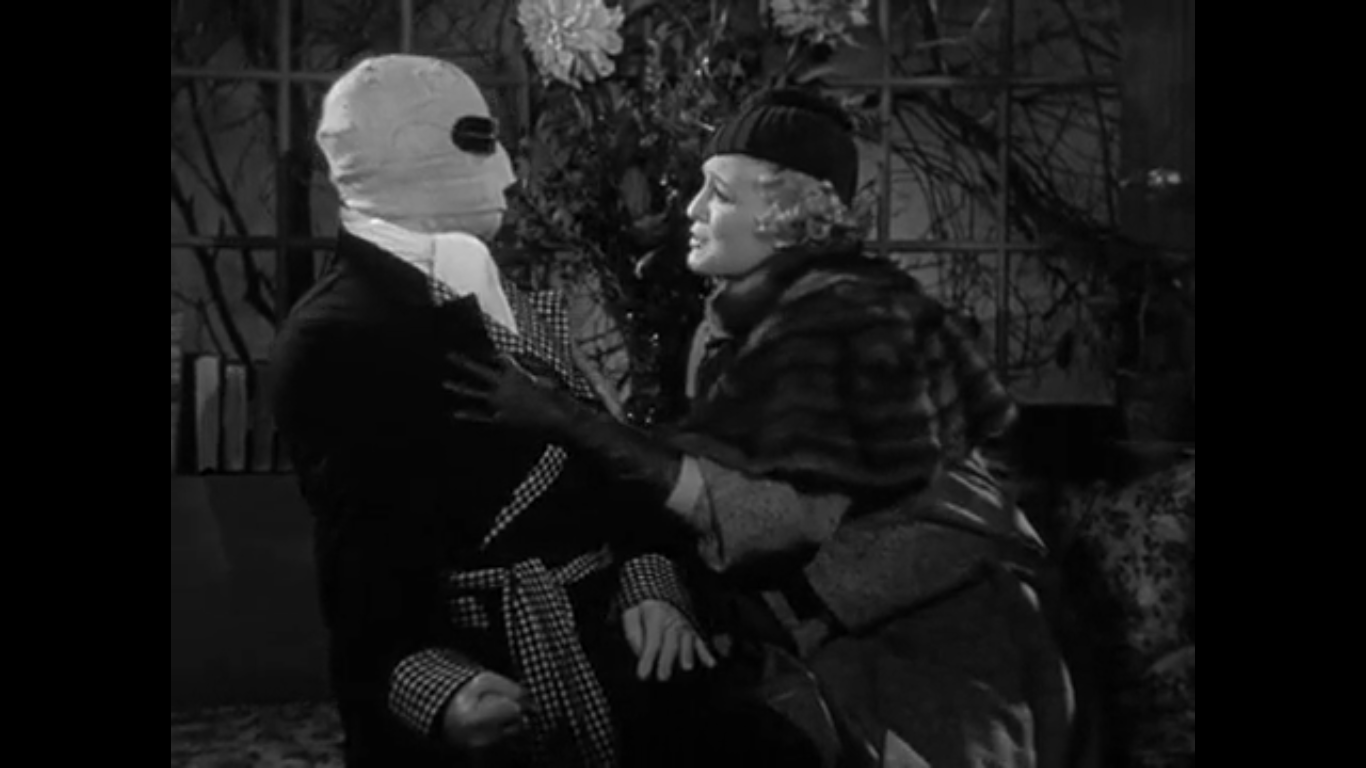
I always thought about The Invisible Man as a scientific marvel, but now I understand how he’s firmly planted in the realm of horror with added superhuman abilities. There’s something that feels somehow modern about Claude Rains’ portrayal of the eponymous character. It’s almost as if he’s the precursor to some enigmatic alien creature from Star Wars.

He’s unique and out of step with this more traditional setting of a bar and lowly establishment as local folks chew the fat and the incomparable Una O’Connor runs the place. One feels quintessentially British, albeit through the prism of the Hollywood dream factory. Rains is totally a movie machination born of smoke, mirrors, and special effects.

But it’s also as if this camouflage provided Rains the means to give one of his most ballistic and volatile performances. It’s not that he couldn’t play, wry, sly, or even bad-tempered, but his typical onscreen disposition was one of regality. He commands the room but in a very different way.

He’s seething one moment and then hysterical the next. The local constable rightly asserts, “He’s invisible. He gets those clothes off and we’ll never catch him for a thousand years!” It makes the stakes obvious. Soon thereafter the maniacal doctor commences a reign of terror making good on his threats by committing murders and diverting trains off their rails. He makes it clear he has the power to make the world grovel at his feet.

If it’s not obvious already, he’s taken on the mantle of a violent “Superman” cut out of the cloth of Dostoevsky’s Raskolnikov. What’s worse, there seems to be no one capable of stopping him.

What’s most fascinating is how the film builds the legitimacy of the Invisible Man. It’s not merely a sitcom-like trope where the invisible are given the freedom to pull practical jokes or take on a Groundhog Day-type disregard of worldly conventions. This is part of it, yes, until it becomes something more.

It turns into a story of fear and broader social implications broadcasted over the news and through every small town by word of mouth. He’s continually left unchecked and the drug he’s taking pumps him full of delusions of grandeur. It’s a drug and addiction of a different sort. Not even the affection of his former girlfriend (Gloria Stuart) can change his mind. He’s too far gone.

The special effects and the choreography get better and better as a crowd of bobbies forms a human dragnet to converge on him in the dead of night. He skips away with a policeman’s trousers sowing chaos and discord wherever he goes. But before anyone gets the idea The Invisible Man is a mere lark, we’re quickly shocked back to reality.

It has a jagged edge of vindictiveness which the production codes would make sure soon enough would never see the light of day (at least for a good many years). For now, it feels like a chilling, compact drama chock full of ideas, invention, and not a wasted minute of running time. It’s also without a doubt Rains’ finest entrance in a movie: It happens in the final frame.

4.5/5 Stars

Reviews: The Mummy, Island of Lost Souls, The Black Cat

The Mummy (1932)

There’s something deeply prescient about The Mummy beginning with an archeological expedition for The British Museum. If it’s not evident from the outset, the film is firmly planted in the reality of 1922 when Howard Carter famously discovered the tomb of Tutankhamun. This is only one historical example, but even I remember hearing about the exploits of this modern discovery.

Now we live in a world in dialogue with the history of colonialism from the cultural tension over the Elgin Marbles to the very idea of ancient antiquities being housed in museums themselves. Even if it’s mostly to capitalize on something the contemporary audience might be aware of, The Mummy makes it plain, this kind of potential cultural desecration is not a totally new idea from our “enlightened” age. It has deeply entrenched traditions.

The British expeditioners come from two different camps, and they must mediate the pull between doing their methodical work of cataloging and then following the finds that will gain the most press. Those who are fully committed know they are working for the cause of science and not for loot.

It begins with a young man who will not heed the terrible curse on a casket, and he awakens a creature from eons before. It is Imhotep (Boris Karloff), who enters back into the world fully prepared to take back what is rightfully his and reunite himself with his long-lost love by any means at his disposal.

The Mummy starts out promising, but it never quite nails down the extent of its mythology and everything feels far too convenient with the re-animated mummy capable of doing anything he pleases to serve his purposes (and the plot). He’s well-versed in mind control, he has what looks like a shortwave television, and he’s all but indestructible to human hands.

The flashback sequences of Egypt hearken back to the expressionistic imagery of silent cinema and here is where our director, Karl Freund, seems to show his origins as the fantastic cinematographer for revered works like Fritz Lang’s Metropolis.

The film’s other compelling theme involves a woman of Egyptian blood (Zita Johann), who almost functions as a doppelganger through time. One man falls in love with her in the present (David Manners) and another man loved her in the past. She’s effectively trapped between two worlds — one distantly remembered — and yet now dwelling in the body of a young woman, breathing and alive.

She is not prepared to make the kind of sacrifice asked of her and only the supernatural can save her. Karloff is expectedly chilling, but the pieces around him aren’t quite as enjoyable as his greatest monster movies.

3.5/5 Stars

Island of Lost Souls (1932)

“Mr. Parker, do you know what it means to feel like god?” – Dr. Moreau

Island of Lost Souls is the kind of movie that all but disappeared with the more stringent implementation of the production codes in 1934. It begins with an uneasy mood as a castaway is rescued by a not-too-genial sea captain, who’s anxious about dumping him at the first sign of land.

This is how our protagonist Richard Parker (Edward Arlen) catches a ride to shore on the Island of Dr. Moreau. There’s something rather uneasy about the whole setup and the movie frequents a landscape and a world not so foreign from The Most Dangerous Game. It’s as if an island conveniently eschews all traditional rules of law and order.

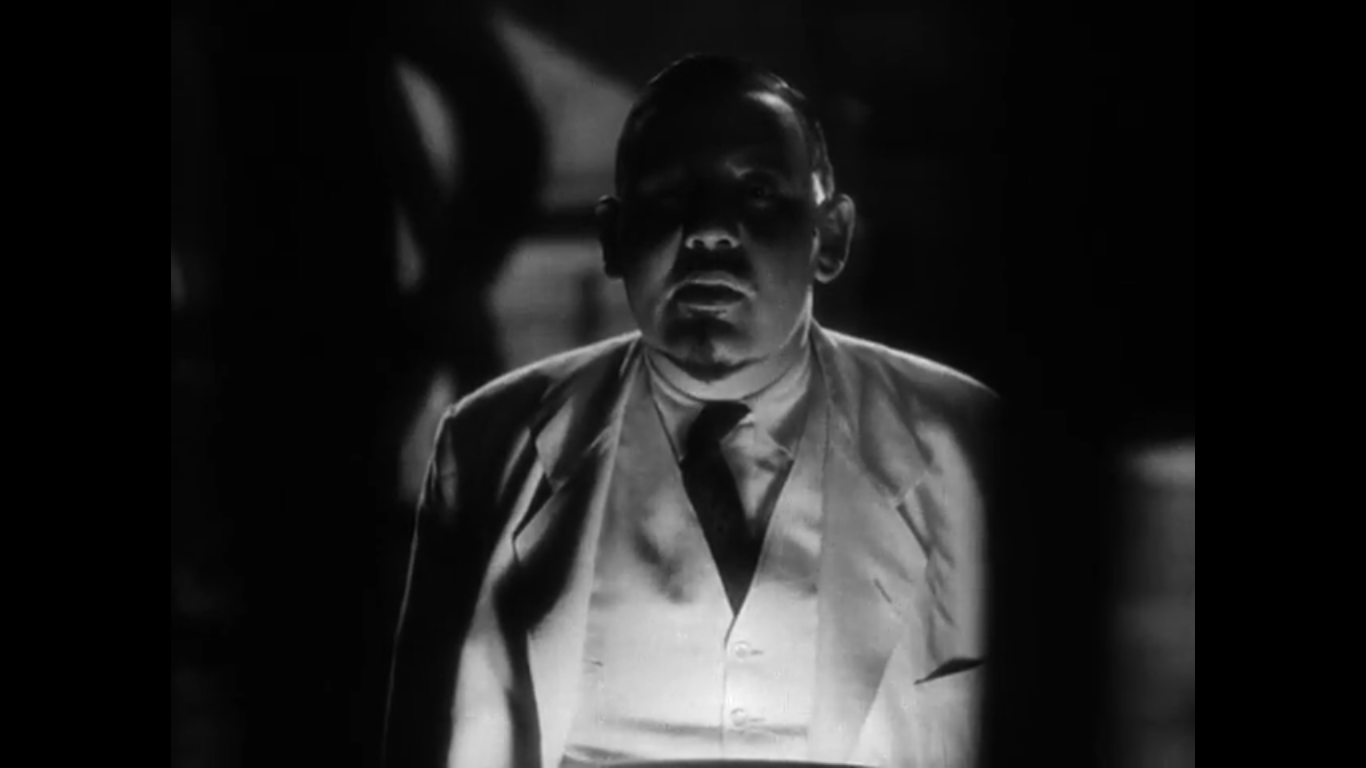
While the earlier film is harrowing, subjecting Joel McCrea and Fay Wray to a grueling game of high-stakes cat and mouse, this one is more thematically rich. This might be entirely thanks to H.G. Wells. He is the man who originally conceived of Dr. Moreau. However, something else must be attributed to Charles Laughton.

There’s a level of devilish forethought to Laughton’s performance. Although he’s not an entirely imposing figure, there’s something mischievous about him. Sometimes he comes off gleefully boyish even as he takes on these calculated and totally premeditated social experiments on his self-made ecosystem.

Parker knows nothing about the world he’s wandered into, but he is our stand-in representing everything inherently decent about humanity. And there is something deeper to this since he is white in the age of colonialism. While he might not necessarily bear the “white man’s burden,” certainly he’s aware of his place in the social hierarchy. He’s a benevolent figure. Dr. Moreau is this privileged mentality gone astray.

Judeo-Christian society would look back to Genesis, and the parallel imagery is made plain fairly quickly. There’s a specific order to the world, a created dichotomy between humans and beasts. Because Moreau has installed himself as god on his own private world. However, he has somehow perverted what is good in strange and troubling ways.

These themes get murkier when you start considering ideas of eugenics and even how the aforementioned production codes forbade the outright depiction of miscegenation or the mixing of races in romance. These are not synonymous terms when it comes to humans and beasts living on the island, but it’s hard not to see how predominantly white audiences at the time might conflate the two.

Because Moreau’s rudimentary imitation of creation has elements to mirror what we already know intuitively. His creatures live by basic laws shouted out by their de facto leader (Bela Lugosi), and they realize through roundabout means certain tenets. He has taught them what pain is, and he’s molded some like his prized creation Lota (Kathleen Burke) into his own human image.

If the Christian origin story hinges on a Fall from grace where Adam and Eve were deceived by the serpent and ate from the forbidden tree of knowledge of good and evil, then Island of Lost Souls has its own paradigm. Suddenly, these indigenous monstrosities of his realize their creator is mortal or at the very least they can rebel against him. The law is no more and it’s been disproven. There is no longer anyone willing to uphold or live by it. Namely, because they realize it’s fallacious.

Parker is mostly uninteresting as we watch his repugnance grow, and he looks to be reunited with his innocent love (Gloria Stuart). Meanwhile, the doctor toys with him and tries to set him up with Lota. Lota fits crucially into this deeply human narrative because there’s a suggestion of her “evolution” within the arc of the film even if it’s not in purely Darwinian terms. Because she has come to understand what sacrificial love is: laying one’s life down for one’s friends.

If nothing else, surely this shows her not to be a creature without reason or logic but predetermined with something deeper and more primal inside of her. I find it impressive how something that feels deeply exploitive could still come down on some deeply philosophical ideas without ever forfeiting its obligation to a paying audience. It’s the kind of genre film capable of triggering all sorts of ancillary conversations, and I’m all the more curious to return to Wells’s source work.

4/5 Stars

The Black Cat (1934)

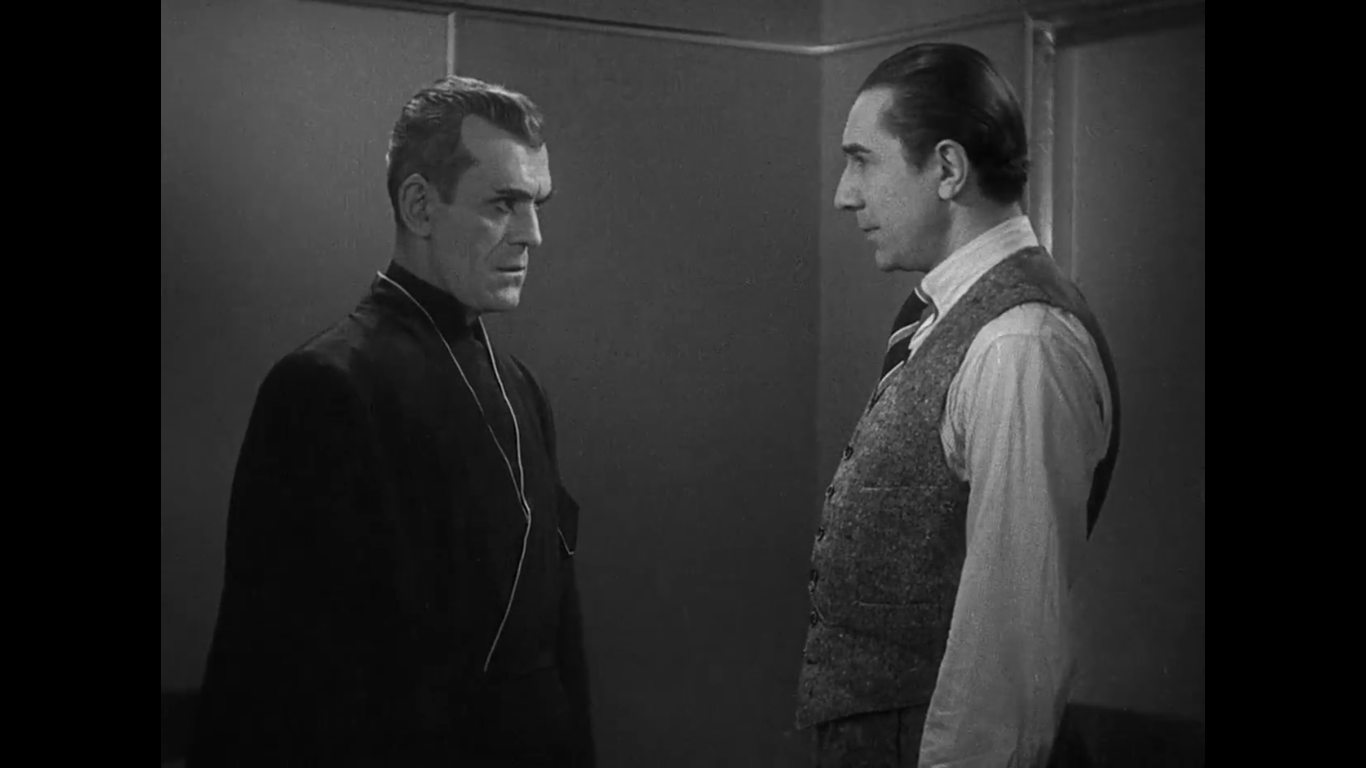
Each lineage of horror movies must have its own in-house aesthetic and stable of performers matched with specific technicians who come to exemplify a studio and their body of work. The Black Cat brings together much of what made Universal Pictures horror so lucrative from the studio, and it gathers together two of their most iconic stars: Bela Lugosi and Boris Karloff.

Although we’re not in Transylvania, the story picks up aboard a train traveling through Hungary, a typically foreign locale for a hometown audience. We meet a newlywed couple (David Manners and Julie Bishop) on their honeymoon only to have their compartment’s marital bliss disrupted by Lugosi’s Dr. Vitus Werdegast. He looks nice enough, but there’s always something menacing behind his eyes (even when he’s playing pleasant).

Inclement weather leads to a devasting crash and the couple and their newest acquaintance show up on the doorstep of one of his old friends, although I use the word friend loosely. Hjalmar Poe is a famed Austrian architect, and his abode lives up to his reputation. We must expect nothing less as we are welcomed into the home of the always foreboding Karloff.

For the rest of the picture, The Black Cat feels like an oblique tour throughout the art deco space with a subtle game of death going on between Karloff and Lugosi. Because instead of bringing two unsuspecting victims into their lair, this is much more a grudge match with two unsuspecting parties caught in the middle.

It becomes a world modulating between the polls of the supernatural and baloney. With a rogue gallery of Lugosi and Karloff, we know better, and as the good doctor demures, “There are many things under the sun.” His evocation of Ecliasstes has very ominous underpinnings.

But that’s not the only source of disquiet. The way the two actors lurk around the corridors, the very way they interact around the woman is unnerving. Karloff always seems to be leering and ogling even if that’s how his face is predisposed. Then, moments later, he’s caressing a chess piece in a disturbing manner. Or is it only our imaginations playing tricks on us?

There were lulls that I wouldn’t mistake for tension, and yet there is so much to be said about the architecture of that house even when the architecture of the film seems to fail. Because this aspect of the mise en scene embodies something that fits so perfectly with the personas of Karloff and Lugosi. Somehow always incongruous and ill at ease.

And the film never feels pulse-pounding; it’s outrageous, yes, but it also builds to these harrowing moments. They’re sinister and escalate into a final descent into the pit of Hades further accentuated by the lines of the architecture.

The ending nearly balks on the entire movie. It’s a wink and a joke that dares us to tell others about what we just saw. They’d never believe it because this is the apex of outlandish storytelling. The Black Cat‘s not great, nor is it mediocre; instead, it feels deeply alive with something probably more indebted to Edgar G. Ulmer than Allan Poe.

3.5/5 Stars

Freaks (1932): We’re All Sideshow Attractions

One of the personal details of Tod Browning’s life was his adolescence spent working in the circus. This gives him an accessibility to the material that some other less-attuned director might have lacked. And yet there’s little denying Freaks is a genuine showpiece when it comes to turning heads. It still bristles with controversy and outlandishness 90 years later.

The movie itself is presented as such to the audience. If you are familiar with any of these carnival entries from Browning’s own The Unknown or later works like Nightmare Alley or The Greatest Show on Earth, you have an immediate comprehension of the milieu.

The people we are about to witness are presented as “living, breathing monstrosities” and “accidents of birth” to the audience. If not outright reviled, they should be reeled at with horror and maybe a dash of pity. These opening moments make it evident the whole movie is quite literally a sideshow exhibition.

But somehow as the movie builds, it both feels exploitative and strangely sympathetic. This seemingly conflicting observation deserves to be broken down. And for this, we must start with the characters and their world.

One of them is the gorgeous trapeze artist, Cleopatra (Olga Baclanova), who is obviously aware of her own attractiveness and uses it to woo those around her. Because perceived ugliness or otherness has a habit of making the vein feel that they themselves are even more superior. Never once does she have a genuine ounce of care for the other performers. They are more like playthings than real people.

Front and center is the dwarf Hans (Harry Earles). Although he already has a girl, he becomes increasingly smitten with the gorgeous blonde and she gladly strokes his ego — fawning over him — she thinks she’s giving him the thrill of his life. When she finds out he’s come into a decent sum of money, that’s even better, and one day they are wed. The fact she is colluding with the local strong man remains to be brought to light.

But this is only one facet — one individual storyline in the world — since Freaks intersperses a lot of narratives throughout highlighting numerous real-life people who existed as sideshow attractions.

A single line of dialogue that might resonate with others goes like this, “God looks after all his children.” The implication is that there are no exceptions or omissions. These people are ostracized simply for the way they look or act, and while they might be different than the norms of their contemporary society, it in no way makes them sub-human. They are worthy and deserving of the same human dignity as everyone else.

Even as Freaks has been hailed as a horror film of the macabre — and there is some truth in this given the way Browning presents the material — he also normalizes the experience of these outcasts. Mind you, this is back in the 1930s. People were more than prepared to gawk at conjoined twins, bearded ladies, a human caterpillar, etc. But we’re not totally enlightened people now by any means. I admit my own shortcomings; some of these characters unnerve me but that is only based on outward appearance. We supposedly learn this in childhood, but how wrong it is to judge people by outward appearance alone.

We need to know their character before we dare to make such rash judgments. In many ways, while Leila Hyams and Wallace Ford are “normal” able-bodied folks, they are also allies and open our own eyes to these characters.

The production was turbulent with footage being heavily cut and talents like Victor McLaglen and Myrna Loy balking at the material. We cannot fully know their reasoning, whether it involved subject matter, money, or costars. Hopefully, we have the opportunity to appreciate Freaks more now because whatever the underlying reasons, Hollywood gave performers on the fringes the spotlight.

As we sink deeper into the bowels of the movie, we are privy to a wedding feast. All the outcasts sitting there, and Hans feels so ashamed as his new wife berates him and his “deformed” friends. It’s so pernicious and ghoulish all at the same time.

My mind could only drift off to what a wedding feast is meant to be. It’s a celebration, it’s a community, it’s a reminder of all the blessings we have been afforded in our lives; it points to a hopeful future of what is yet to come, and it is a capstone of mutual commitment. It’s open to all and everyone who is willing to accept it and be made new. Alas, we live in a broken, befouled world.

Given its shared setting and tortured themes, Freaks plays as a fine companion piece with Browning’s earlier silent feature The Unknown. In fact, it features a finale, equally evocative and terrifying, if not more so. Because a plot to kill Hans is enacted, but he catches wind of it, and they strike in the dead of night as their carnival show moves on amid a downpour.

In some alternative universe, this might be some misshapen, ill-formed hell as Cleopatra is chased off into the darkness by the “Freaks,” who take vengeance upon her. In a moment of self-reflection, the horror is not so much about our own ugliness; maybe it’s more so about how we belittle and dismiss other people. Are we also deserving of such a grisly fate?

Tarred and feathered and paraded in front of everyone as a sideshow attraction to stew in our ignominy for a lifetime. It’s a hellacious image but also a striking warning call. Judge lest you be judged. But enough with the moralizing. If you let it, Freaks still has the power to shock your sensibilities.

4/5 Stars

Hour of The Gun (1967): James Garner and Jason Robards

The story is as old as the mythology of the West. You cannot avoid tales of Tombstone, Arizona on October 26, 1881 and the famed Gunfight at The O.K. Corral. John Ford covered the events most famously in My Darling Clementine headlined by Henry Fonda, Victor Mature, and Walter Brennan in the title roles.

A generation later, Burt Lancaster and Kirk Douglas teamed up to do their version. And the lineage runs a lot wider and deeper than this. It leaves one to wonder how many ways you can retell the same story with the same central characters.

Director John Sturges answers the question almost immediately by doing away with the one scene that this whole mythology effectively hinges on. The movie opens with the gunfight at the O.K. Corral, which feels more like a glorified street fight, done in seconds, with Clanton standing by and unharmed by the events at hand. Whether it plays more to the timber of actual history or not, it sets a precedent and recontextualizes everything we must relearn about these legendary figures of the West.

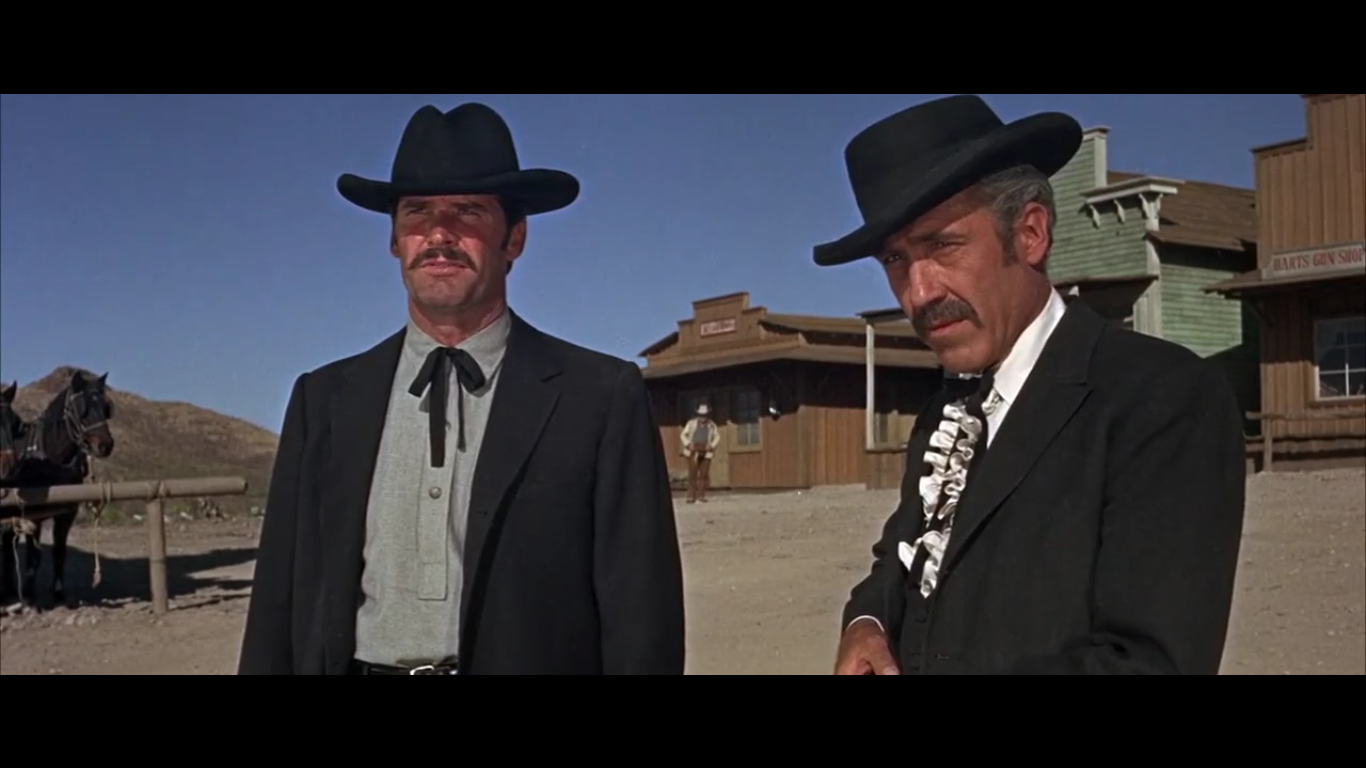
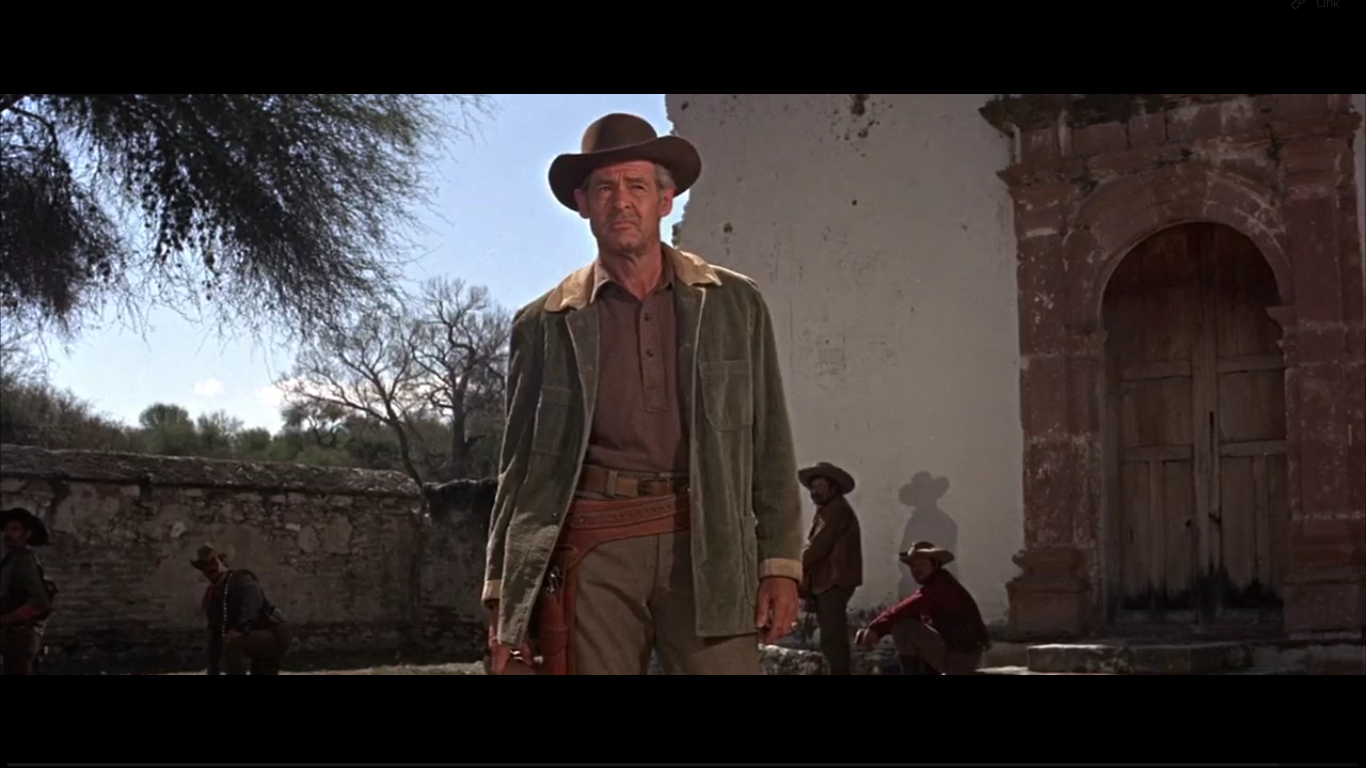
The men who play them are more than up to the task because of what they bring to the characterizations. Their names should be familiar. James Garner. Jason Robards. Robert Ryan. They are featured prominently in the title credits like figures on the marquee.

There might be some questions of where the movie might possibly go from here because it quickly disposes of its most “climactic moment,” underwhelming or not. Still, there manages to be a story built off the foundations of this inciting incident.

It becomes part courtroom drama momentarily, then it’s a town-wide conspiracy against the Earp brothers, and it finally turns deadly when they are ambushed with shotguns in the dead of night. The bloody gunfights and surreptitious ambushes are quickly deliberated over in the very same courtroom. There’s a kind of legal impasse.

Ryan always managed to be a fine villain, and it’s no different here. He plays Clanton as a shrewd businessman with most of the town on his payroll including sheriffs, public prosecutors, and a bevy of wanted gunmen (including a young Jon Voight). Though he never pulls the trigger himself, he has many minions in his pocket prepared to do his bidding. It’s a lot more convenient since he has the money to spend.

Hour of the Gun also feels like a western straddling two generations. Garner and Robards represent it well. Garner’s Maverick and to some extent his Local Sheriff put a different spin on the western genre as a kind of anti-western star, at least compared to the James Arness or Chuck Connors archetypes.

And Jason Robards, who only a year later would find his way into Sergio Leone’s epic spaghetti opera Once Upon a Time in The West, is equally adept in such an environment. He can be rugged and tough but not without a kind of wry sense of humor and intuition. We like them both for who they are. First, as performers and then as two of the West’s most prominent figures: Wyatt Earp and Doc Holliday respectively.

Lucien Ballard was a Hollywood veteran with saddlebags full of movie credits including many entries shooting his wife and leading lady Merle Oberon. Jerry Goldsmith takes on scoring duties with work that observes the purview of the West while reminding us of his crucial role in future New Hollywood and blockbuster hits.

It’s curious how the movie hews closer to history, and it looks to dispel myth and tell a version of the tale that feels more like a procedural. In some ways, it is a more modern expression of the western, though John Sturges is not in the Eastwood, Peckinpah, or even Leone school.

He was actually the very same man who helmed The Gunfight at The O.K. Corral with Lancaster and Douglas. But this is hardly a reworking in the way Howard Hawks remade Rio Bravo multiple times. Rather it feels like Sturges is intent on telling the tale with different terms more to his liking.

Initially, it builds off the legacy of The Magnificent Seven and The Great Escape where there’s something honest and sure about its telling, but it’s not gun shy. There’s still a sense of violence and ambiguity in other ways. Because hypocrisy exists in a world where as long as men have warrants and badges or they are fighting wars, killing is legalized. In all other contexts, it’s not permissible.

It becomes so easy to bend the rules either in service of good and often in the service of evil. Hour of The Gun ultimately is quick to distance itself from the comfortable morality of earlier westerns. This too is a bridge to its future brethren in the genre.

Doc is the man who ultimately assembles the troops; it’s a sequence we know well and somehow Sturges’s best films always captured this brand of male camaraderie — the kind of scenes that little boys of a certain generation aspired to. Getting together with their friends to fight the baddies. There’s still a sense of good fun and the kind of innocent naivete the western used to breed. Though it never amounts to anything.

It all comes down to Wyatt Earp and his personal vendettas. Garner shows a ferocity and a simmering rage that’s rare in him or at least he hides it well often through down-home charm or a coward’s prerogative. Here he’s driven by a sense of justice for the deaths of his brothers. He’s not squeamish when it comes to searching it out either.

The ending could not be a further departure from its predecessors. It feels like the dilapidated, windswept ruins and facades in pictures like Vera Cruz or Butch Cassidy and The Sundance Kid where the classic western modality goes to die in some sense.

Wyatt finally completes his search for Clayton and comes face-to-face with the man who was so very hard to find. Doc and some bandits stand by testily as Earp flips his badge to his friend, signaling this is a personal action not enacted under the letter of the law.

It’s a quick, unsentimental climax, but it stays true to the opening depiction of the O.K. Corral. I would not hasten to say it’s realistic as much as it gives a more murky and unembellished version of the story. Still, whether he meant to or not, Sturges effectively revises one of the most quoted American myths adding yet another complicating footnote to how we come to understand it. All other things considered, from the imagery to this commitment to a raw account of history, Garner and Robards are still the ones who make the picture.

3.5/5 Stars

The Law and Jake Wade (1958): Robert Taylor and Richard Widmark

It’s initially intriguing to have a western pairing of Robert Taylor and Richard Widmark, rather like what we get out of Warlock from Henry Fonda and Widmark the year after. My estimation of the dashing ’30s matinee idol has refined over time as he matured into such worthwhile westerns as The Devil’s Doorway, Westward The Women, and even Saddle the Wind.

Here again, Taylor holds the mantle as the inscrutable, no-nonsense lead and Widmark falls back into his role as a merciless reprobate, prone to all sorts of aggression. What’s more, there’s something delightfully skeezy about his voice. He slips into it so seamlessly playing a kindred of Tommy Udo or any of his more reprehensible characters.

The premise is set up immediately with a brazen jailbreak — one man comes in for his pal — and then they shoot their way out of town toward freedom. However, it quickly becomes more complicated. Jake Wade (Taylor) and Clint Hollister (Widmark) are not so much friends as former acquaintances.

This is merely an act of reciprocation because when they raided the Yankees during the Civil War, they formed an uneasy alliance, out of necessity, before eventually parting ways. If they don’t entirely hate each other’s guts, then at the very least they’re deeply mistrustful.

It’s even more curious when Jake returns to his current life. He’s a town’s marshall. How do you make sense of him? In one moment he commits a brazen act of jailbreak, and yet in another, he sits behind a desk in a decent, sleepy town holding a position of repute. Here the noir element is made evident — the way a dark past always comes back to haunt the protagonist and the life he’s tried to make for himself.

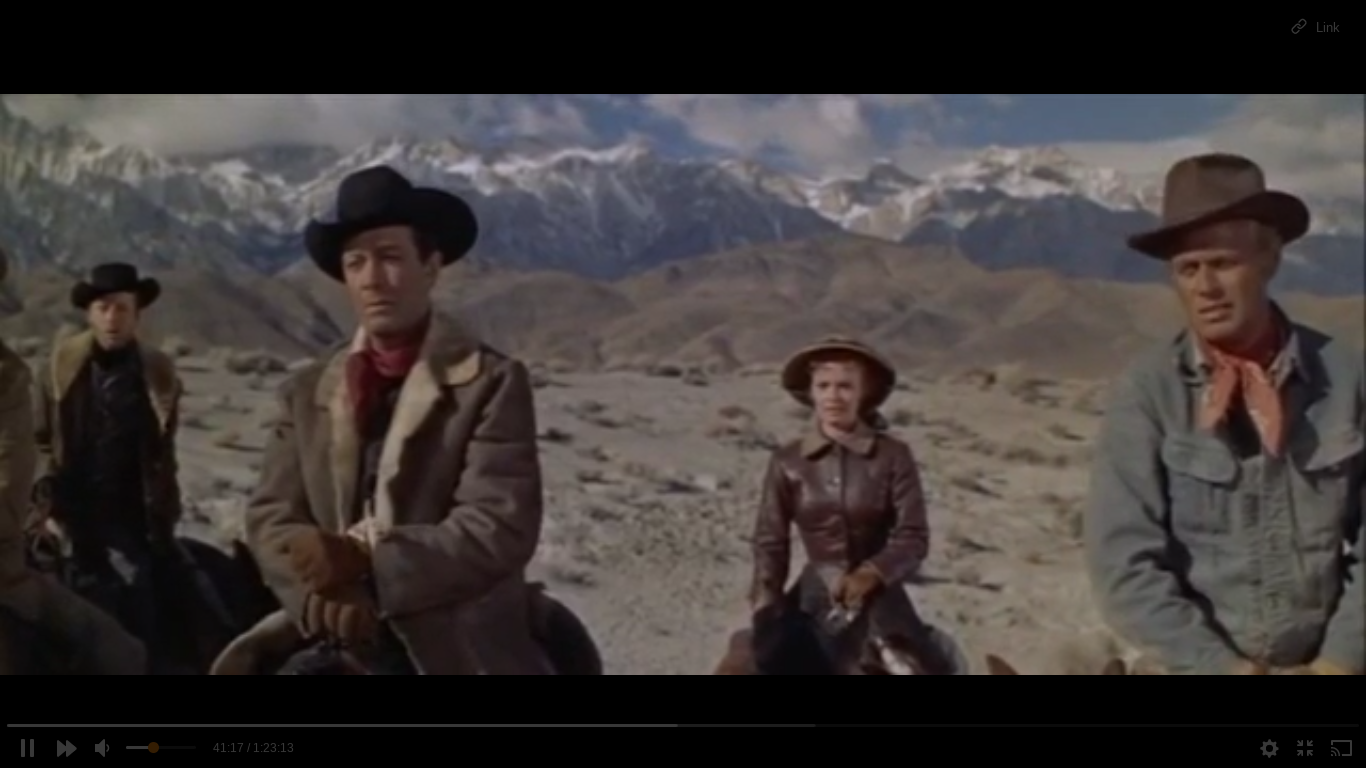
In the meantime, the imagery and more specifically the snow-covered mountains are an awesome backdrop and something only the western landscape affords. Jake also is keeping company with a pretty gal. Patricia Owens reminds me a bit of Julie London, mousier but deeply sensible. Her requests make sense, but her man can’t tell her his misgivings without dredging up unwanted memories.

Because Widmark is the force out of his past he can never totally get rid of. We wonder why he pulled him out of prison. It might come down to some moral prerogative, but it feels a lot like letting the monkey out of the cage so it can end up on your back again.

The old gang moves in and Taylor is taken prisoner with the sole purpose of leading them back to a cache of gold pieces he buried in some forsaken town years before. The journey is long and arduous and the callous Clint makes his old partner do it with his hands tied behind his back. He’ll give him a horse, but he doesn’t trust him with more. If you give him an inch, there’s no telling what will happen.

Deforrest Kelly never quite does it for me as one of the heavies — though he’s quite a psychotic hulk in Warlock. Of all the sidekicks, Henry Silva has real umbrage and a chip on his shoulder, coming off smug and vaguely dangerous.

However, in its best moments, it really becomes a fitting inverse of The Naked Spur held aloft by the two central performances dueling it out. The bad guy is the one holding the reins and dictating the story while our hero and his girlfriend are under his watchful eye as they go on the hunt for the buried treasure. The tension rides with them every moment of their trek.

When Widmark skirts off to catch the Native scouts that bode trouble, there’s a fear something will be lost in the movie. We stay back with the others as they wait it out in the ghost town, and it feels mostly stagnant. The dynamic brought by Taylor opposite Widmark is momentarily relinquished.

In its wake, there’s a run-of-the-mill shoot ’em-up Indian barrage. I couldn’t help but compare it with the shootout in Man of the West also preoccupied with a ghost town. However, whereas that film has Gary Cooper and a mythos about it like a knowing predecessor to Sergio Leone’s stylized showdowns, Jake Wade feels mostly unspectacular. It’s a shame because the film packages together a handful of worthwhile performances and tangible menace in fits and starts.

3/5 Stars

Time Limit (1957) Directed by Karl Malden

Time Limit sounds like it should be the title of a syndicated TV program or at least a game show in the heyday of family entertainment. It is not. The themes are heavy, and there’s a weight behind the picture that means something. And in spite of the clunky title, it bears testament to the main players both behind and in front of the camera.

Like his acting compatriot, Marlon Brando, Karl Malden only ever directed one full feature-length picture. Here it is before us, and you can see his sensibilities in it if only because it does stand for something. There is a purpose to it.

Although we never even see the inside of the courtroom, it still reminded me nominally of Man in The Middle with Robert Mitchum solely due to the scale. They both seem to rely on performance and actors who are up to the task.

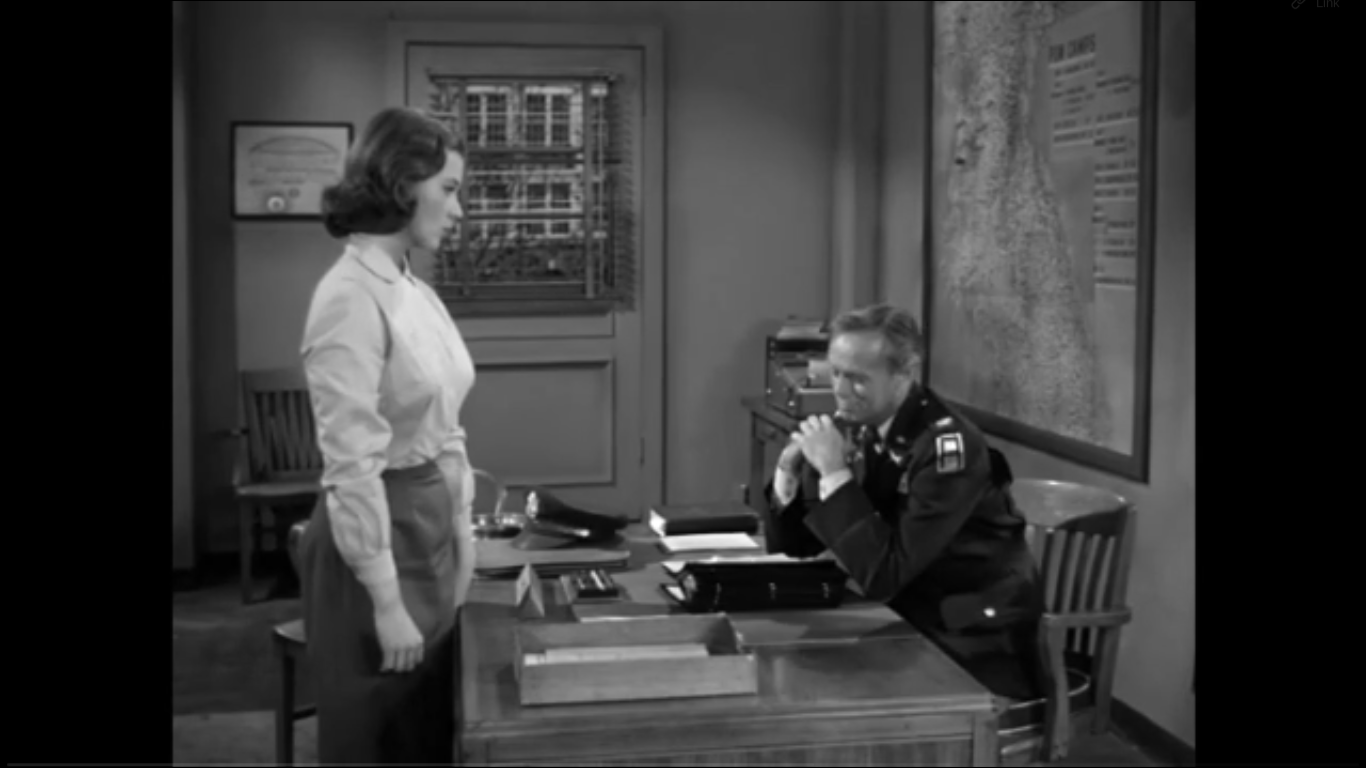
Time Limit hones in on an investigation into a potential court-martial of a major who looks to have caved to Communist ideology and committed acts of treason against his men and his country in a North Korean POW camp.

Richard Widmark, as the producer and one of the primary architects, is the anchor of the movie as the primary officer — a clear-minded Colonel — called upon to compile the details of the case.

But it is really Richard Basehart with the most complicated, ever-shifting role. It’s easy to sleep on him because of his stint in Europe, and he was never intent on being a movie star. And yet over a serpentine career, he left a trail of memorable noir (He Walked by Night, Tension), arthouse classics (La Strada), and mostly forgotten dramas like Reign of Terror or Fourteen Hours.

Because Time Limit functions mostly as a character piece albeit laced with flashbacks and ratcheted with tension. The ensemble itself is made up of a handful of others. General Connors is the Colonel’s immediate superior, and he’s pushing for a quick court-martial. He doesn’t want the boys to suffer through any more trauma. Although he’s not a totally unlikeable fellow, he does have a very concrete way of thinking. It’s abrasive, to say the least.

If you’ve read me before, you know I have a soft spot for Martin Basalm, and it started with movies like 12 Angry Men and Psycho and steadily built over time. He’s just so versatile while never losing his personal DNA as a performer.

Time Limit finds him on the more irksome spectrum as a busybody rat fink, who always has a way of divulging information to interested parties, much to Widmark’s displeasure. But for every tattletale by Sergeant Baker, there’s a supreme act of loyalty by the faithful and whipsmart corporal Jean Evans (Dolores Michaels). If we were to codify the movie purely between good and bad, she is one of the movie’s unsung heroes.

But they must also have witnesses — people with first-hand knowledge of the case — both personal and otherwise. An almost unrecognizable Rip Torn is a clean-cut, fresh-faced member of the unit who was there in the POW camp when the Major turned. Mrs. Cargil (June Lockhart) has a much different point of view because she still can’t believe the debilitating change that has come over her husband. It’s not like him. Something else is going on under the surface.

The score rages too much for my liking, but for what it is Time Limit plays quite well. The General starts breathing down Edwards’ neck — with personal interest invested — his son was one of those killed in the camp. It certainly cannot be discounted. Then, there are these very particular repetitions in the many testimonies (describing factors like acute dysentery). Something does not add up because everything lines up almost too perfectly.

More than anything, it does feel like Malden makes his actors look good. I’m thinking of a particular scene where Widmark is absent. Balsam leads Basehart into the office to wait but then prepares to ambush him and give him a piece of his mind. Michaels makes sure she is present to moderate, but first Balsam leans over his superior in his chair. Then, the close-ups cut back and forth between him and Ms. Evans as they have at it.

The tension in the sequence is palpable because the scene is blocked and covered in such a way that we feel the entire essence of what is going on. The visuals not only augment the performances but also the emotions underlying the sequence.

Winston Churchill is cited as saying, “In wartime, truth is so precious that she should always be attended by a bodyguard of lies. Widmark turns these words on their head because he says, “Truth can be more rotten, more vicious, and destructive than any lie.” Within the context of this move, he’s right.

Like Act of Violence, it becomes a film of making sense of a clouded past under circumstances the offenders are not proud of. The General invokes an unbreakable code for all his men — even his son — a code that must be adhered to with unswerving resolve. It’s a graceless proposition that no one can stand up to. Because for the hundreds of days men are heroes, there’s always going to be a few where they falter.

The question remains how do we canonize others? Is it at their most cowardly and despicable or at their very best? For those paying attention, the irony in the General’s final convictions should not be lost on us, “The Code is our Bible, and I thank God for it.”

If you’ll allow me one final digression, a book that’s pierced me to the core is Silence by Shusaku Endo. It is about Catholic priests, not soldiers, but they face a similar conundrum: the desire to attain some sort of martyrdom. However, what if someone is forced to face the ultimate ignominy instead? Each must struggle and make peace with a world that will openly disdain them, and that is a tough pill to take for any person.

3.5/5 Stars

Backlash (1956): Donna Reed and Richard Widmark

Only in a western could we meet our protagonists in a sand trap known as Gila Valley. It says everything you need to know about the Arizona landscape, and then the sweeping Technicolor tones say a bit more.

Richard Widmark is easy enough to place as an enigmatic figure. There’s a glint in his eyes, and we know from his pedigree he’s capable of playing shifty. The true pleasure is watching Donna Reed — because she becomes very much his equal — another sturdy customer with her own personal agenda.

It feels so very unaccustomed for the woman who played Mary Bailey and anchored her own family comedy. Then, again, the edges of From Here to Eternity are not too far in the past. It’s hard to forget what she did there across from Monty Clift.

The movie gets its legs when a man takes a shot at Jim Slater (Widmark) from the rocky crags above. He thinks he’s been a mark. The woman, Karyl Orton, was trying to play him, and he nearly fell for it. Leaving her behind, he scurries to the rockface to have it out with his enemy on the high ground.

Backlash is a constant exhibition in deciphering characters’ intentions. Because as an audience we are thrown into the action and asked to follow what’s going on. She’s searching for some gold, and he asks us to believe his interests are purely in his father who disappeared in the territory.

Although it’s adapted from source material, it does feel reminiscent of some of Borden Chase’s other patented efforts with a craggy showdown reminiscent of Winchester 73′ (1950). Thematically, John Sturges’s turn as director also proves a decent facsimile of some of Mann’s best westerns where the blending of psychological duress, perturbing imagery, and in-your-face action strings out the story into a taut state of tension.

It’s easy to become genuinely immersed in the first act with a fleeing stagecoach looking to cut across the open plains with Indians in hot pursuit. As they fall back, they’re forced to hold down an isolated trading post against the onslaught of marauders.

Unfortunately, all this buildup feels a bit too convenient. Because Slater searches for a seasoned soldier named Lake (Barton MacLane), who was a part of the detail that found the dead bodies that were left behind in an earlier massacre. In serendipitous Hollywood fashion, the old man keels over from a battle wound, just before divulging the remnants of what he remembers of a “6th man.” Surely he is the key to the movie, and Slater has been propelled forward.

If we can stop for a moment to acknowledge them, Backlash has a couple doozy bits of casting with the normally maniacal heavy Jack Lambert playing a sniveling Indian trader. Then, Harry Morgan, in a role reversal, takes on the role of a squat, no-nonsense heavy out to hunt Slater with his big brother. Because Slater killed their sibling.

But if there was any doubt in the red-hot chemistry of our primary stars, it sizzles while Reed brandishes a knife to cauterize the gunman’s most recent injury. It is a movie moment made for the big screen audience if there ever was such a thing. This smoldering passion and growing relationship are nearly enough to salvage the picture in its slower ebbs as they continue their search for answers.

In the end, they split the thread pretty thin between the two of them. It can only go one of two ways. Either the man he’s looking to find is her long-lost husband, a corrupt man, or it’s his own father — a man he’s never known a thing about. We must wait to discover the answer.

But the factions in the buildup are interesting. Our protagonists meet a man named Major Carson (Roy Roberts), who runs a local ranch. He seems like a pragmatic, sensible sort of fellow, and he’s got a range war on his hands thanks to a man named Bonniwell (John Mcintire).

One hotheaded sharpshooter (William Campbell) goes turncoat, and there are still thugs looking for Slater to gun him down in an act of retribution. The local sheriff (Robert Foulk) aims to remain impartial in all of this while still maintaining some manner of civility. He’s not concerned with private vendettas, only some semblance of local law and order. Widmark quickly gets tossed into the jailhouse, effectively sidelining him and leaving him incapable of exerting any influence on either side.

I won’t spell out the final act because that’s part of the fun of the picture, watching it unfold. There’s a dog-eat-dog mentality; it’s about family, but it never stops being a picture founded on Richard Widmark and Donna Reed. If you’re curious about seeing them together, that’s a good enough reason as any to invest in this western from an often underrated craftsman.

3.5/5 Stars

Autumn Leaves (1956): Cliff Robertson and Joan Crawford

You might not immediately connect Joan Crawford and Nat King Cole, but his brand of velvet crooning provides a fine backdrop (and namesake) for Autumn Leaves. It presents the consummate leading lady with a lighter more congenial personality — the kind of Joan Crawford who seems easier to connect with.

She’s known for her typing speed, working from home before it was en vogue, and banging out manuscripts for thankful clients. Although she leads a solitary existence alone, she’s buddy-buddy with her landlady and seems generally contented with life. When she goes out to a show or dinner, she’s comfortable going alone — it doesn’t feel foreign to her — and she enjoys her time in solitude.

There’s a moment in Autumn Leaves as Crawford sits in an audience, the lights go out so the spotlight is only on her, and the pianist on the stage takes her back into her memories. It felt so reminiscent of a scene in Penny Serenade where music, whether live or on vinyl somehow fills up the human heart and carries with it so many easily-tapped emotions.

“Autumn Leaves” feels less like a gimmick to cash in on the season’s newest love song, and it starts to pervade and then slowly suffuse throughout the entire movie until it becomes the tactful accent to almost every scene of the ensuing romance.

Because this all feels like a prelude. We have yet to meet our other primary player. Cliff Robertson was from the east coast and an actor forged out of his training at the Actor’s Studio. He’s still fresh-faced and Autumn Leaves was his second truly substantial movie role after the movie adaptation of Picnic with William Holden.

When he steps into the bustling restaurant and eyes Milly in the one booth with an extra seat, he makes his way over. There’s a disarming approachability about him. It starts to melt the ice and break down the barriers between him and his new acquaintance. Partially because there’s no threat to him though he’s still good-looking. Rather you feel like you can get to know the guy and like him. And she does.

They spend time together, going out more and even taking day trips. It’s a mutually beneficial relationship, and yet I hesitate to use these terms because it makes it sound mercenary. In the most innocent ways, they just enjoy one another’s company, and it shows.

The former Army veteran shows off his beach body on one outing chasing Milly into the waves. He feels like a movie creation. Can Joan Crawford have her own version of a 1950s manic pixie dream boy? But this is only a momentary suggestion. He becomes more of a person in the ensuing scenes. When she prods him about his old girlfriends, he shrugs them off. “Young people are too young for me,” he says.

If they do seem like an odd couple, they aren’t totally unprecedented. Because while loneliness is not a foundational reason to get married, it’s true we need each other. Burt believes that sometimes you meet someone and you know; they provide something you are lacking. I’m reluctant to say they complete you. Still, maybe with someone else’s hand to hold, it makes the world just a little less lonely and the pain a little less galling. Milly loves him and after minor reservation, falls into his arms for better or for worse.

They have a bit of marital bliss below the border, and yet something starts happening. Burt lets bits of his biography slip. All very matter-of-factly and there’s nothing guileful about it; it feels innocent enough, but she begins to realize they don’t match up. First his hometown, then his military service, and there are other discrepancies.


Then, Vera Miles shows up on her doorstep as a manifestation of all her sinking fears about Burt. His insinuating father (Lorne Green) is next to appear. There was a time when the movie could have easily been Joan Crawford’s Middle of The Night. Instead, she becomes devastated by the newfound revelations about her husband, and then must become protectorate shielding her love from the unfeeling world all but ready to exacerbate his condition.

She’s ready to battle for him. If it’s not righteous anger then it’s certainly indignant anger. She sees people for who they really are and calls them on it. Whatever Burt’s shortcomings, he has everyday, common decency. Her maledictions against the character of others might seem excessive (“Your filthy souls are too evil for hell itself”), and yet she’s not entirely wrong. If nothing else, she’s lashing out as a defense mechanism.

However, she’s also caught in the most excruciating of conundrums — one of those scenarios where it seems you are required to do something against your nature out of the deepest sense of sacrificial love, even if it’s not perceived as such. Her deepest longings are for Burt to be born again — that he might live a new, better life than he had before. It leaves the door open for another outcome. It’s very possible if he overcomes his illness, he might come out on the other side as a man who wouldn’t need her anymore. It’s either keep him for herself or watch him return to a happy, normal life (without her).

In the meantime, Burt isn’t getting better. In fact, his circumstances are far worse, and so Crawford is stirred to action. One of the film’s more pronounced shots is of Crawford as she reaches for the phone and resolves to make the fateful call. The low angle makes her loom large in the frame, not so much in a threatening way, but expressing just how much magnitude this moment is imbued with. Her eyes flicker slightly, this way and that, before she speaks into the receiver. There is no turning back.

Whether it’s purely a credit to the scenario, the direction, or the winsomeness of Crawford, I’ve never felt so devastated for her before. She’s put through the emotional wringer, not from noir tension or antagonism, but the kind of burden cutting deep and breaking your heart in the most tender of ways. She’s rarely been more sympathetic and her fortitude is easy to admire.

The final moments are quick, but that is not to say they aren’t pregnant with meaning. The couple is reunited, and I will leave the rest up to you to experience. Robertson and Crawford make the movie work, and this whole story hangs in the balance of their rapport. They weather both the mundane and the melodrama together. It’s pleasantly captivating watching them.

4/5 Stars