The Lives of Others (2006)

This is a moral tale that could only be told in the context of the GDR. A loyal member of the Stasi is given the task of bugging the home of an influential playwright and he spends countless hours listening in on The Lives of Others. In what would have been a very uncommon occurrence this loyal comrade sees another side of the nation he lives in. It is a place full of corrupt officials, double crossing girlfriends, repression, little free speech, and above all suicides.

In an act that proves detrimental to his own career and even his way of life, Wiesler caves to his emotions to do what is ultimately good and right. After the wall crumbles he and others like him seemingly fade into oblivion. However, the one man who was unknowingly saved finally learns of his savior and resolves to write his next great work. The Sonata for a Good Man. 

I think there is certainly a universal quality to this film because although it is German language and focuses on a subject that is distinctly German, the quality of the characters translates into any language because they are human. The struggle of Wiesler is the same for many of us and we can empathize with his evolution and ultimate resolve. We can only hope that people are not put in these same positions in the future and we must also constantly question our own government so they are never reach this degree.

4.5/5 Stars

Good Will Hunting (1997)

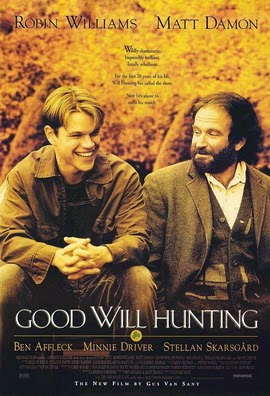
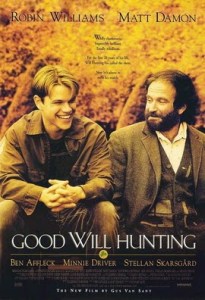
9db12-good_will_hunting_theatrical_posterGood Will Hunting is an extraordinary story on multiple levels because it is about the little guy. The trajectory of a lowly janitor being propelled to MIT genius is moving no matter how often it gets copied or imitated. It just never gets old. Then, there is the story of two young unknowns named Matt Damon and Ben Affleck who shot to fame thanks to some big dreams and a few mentors. Now they are two of the top names in Hollywood over 15 years later and they continue to be (Gone Girl and Interstellar are proof).

However, back then they were a long shot with only a solid idea for a film. It worked wonderfully though because of its core themes. It’s about friendship. It’s about romance. It’s about fear and aspirations. It’s about vulnerability. It’s about long shots making the most of their lives. Admittedly, that could be almost any film so there’s a need to bring the microscope in a little closer.

At face value Will Hunting (Matt Damon) seems like a young thug from South Boston who loves his beer, buddies, broads, and brawls. He and his friends including Chuckie (Ben Affleck) spend their days trying to make ends meet and fill the rest of their time with the aforementioned. We get glimpses of a different Will, however, a brilliant young man holding a plethora of book knowledge and blessed with a photographic memory. He’s able to philosophize rings around conceited Harvard students catching the eyes of a cute British girl named Skylar (Minnie Driver). They are a sweet couple and it seems like it might add up to something good.

Then, comes the necessarily fateful day when Will solves the unsolvable equation on the MIT wall, following that feat with a brawl fight that lands him with a potential jail term hanging over his head. It’s a strange dichotomy and it deeply surprises Professor Gerald Lambeux who quickly realizes the unassuming genius that is Will Hunting. He’s fantastic, but in order to utilize his potential Lambeux agrees to have him meet weekly with a therapist.

What follows is an absurd string of therapy sessions where Will, who wants none of this analysis, makes a mockery of his psychologists. When Lambeux’s former roommate and last resort Sean Maguire (Robin Williams) is called in it looks like more of the same.  But he is different. He sees something more and Sean is not about to give up on the kid. Their sessions begin as a battle of wills until Will’s defenses finally break down. They construct something beautiful, something real,  and in many ways vulnerable.

It is then that Sean teaches Will about true love and living life with no regrets. He had a wife who passed away from cancer, and he is hardly a big name academic, but he wouldn’t trade his life for anything. That’s enough for him. All the while, in between sessions, Will must figure out his life whether he wishes to work in the stuffy world of academia with professor Lambeux, continue living with his chums in Southie, or move forward with Skylar who is off to Stanford soon.

Sean doesn’t force him into one decision or another but he gives him personal advice. As a young man, he met a pretty girl in a bar, the same day in 1975 that Carlton Fisk hit his famed home run. But Sean gave up his seat to spend that evening with a girl and it paid off. She would be his wife for all those happy years before she came down with cancer. In Will’s eyes, and perhaps even the eyes of the audience, he was utterly insane to pass that up, but for Sean, there were no regrets. That’s enough.

On the verge of turning 21, there are so many choices, thoughts, feelings, and fears swirling around. Not to mention Will’s ugly past as a foster kid full of abuse and a heavy rap sheet. It’s the steady and pragmatic consoling of Sean where he finds relief. Sean will not be quelled in reminding him, “It’s not his fault.” That’s simply the hand he was dealt.

In another beautiful scene that is oft cited, Chuckie tells his friend, in the most genuine way that he can, that he doesn’t want Will to stick around. Because, the reality is, Will has been given a ticket out of Boston, and it would be a knock to all of his friends if he stayed around. On the day Chuckie won’t need a note. He’ll have satisfaction enough that his friend will be gone. To this day, it still feels a tad corny, but it works within the film so I will go with it.

Down the line, Sean receives a sincere note in his mailbox and Chuckie walks up the steps to Will’s place and no one answers. No one needs to say anything because they all know Will has gone to follow his dreams. Go west young man after the girl you love and take a chance. No regrets. It is the perfect ending for this film and at the same time the most aggravating.

Robin Williams was an obvious standout in this film, and it saddens me to think that he is no longer with us. I think I appreciate him most in his dramatic roles because he is so genuinely funny it comes out organically. He is a great counter to Matt Damon. Without that dynamic, this would be a far less noteworthy film. Also, the script is full of quips and a great balance of intellectual and laymen terms making for a unique story. It takes time to acknowledge the idiosyncrasies and pain that are a reality of human existence.  That’s why it hits home. Hopefully, Will as well as all of us find what we are hunting for.

4/5 Stars

The Grifters (1990)

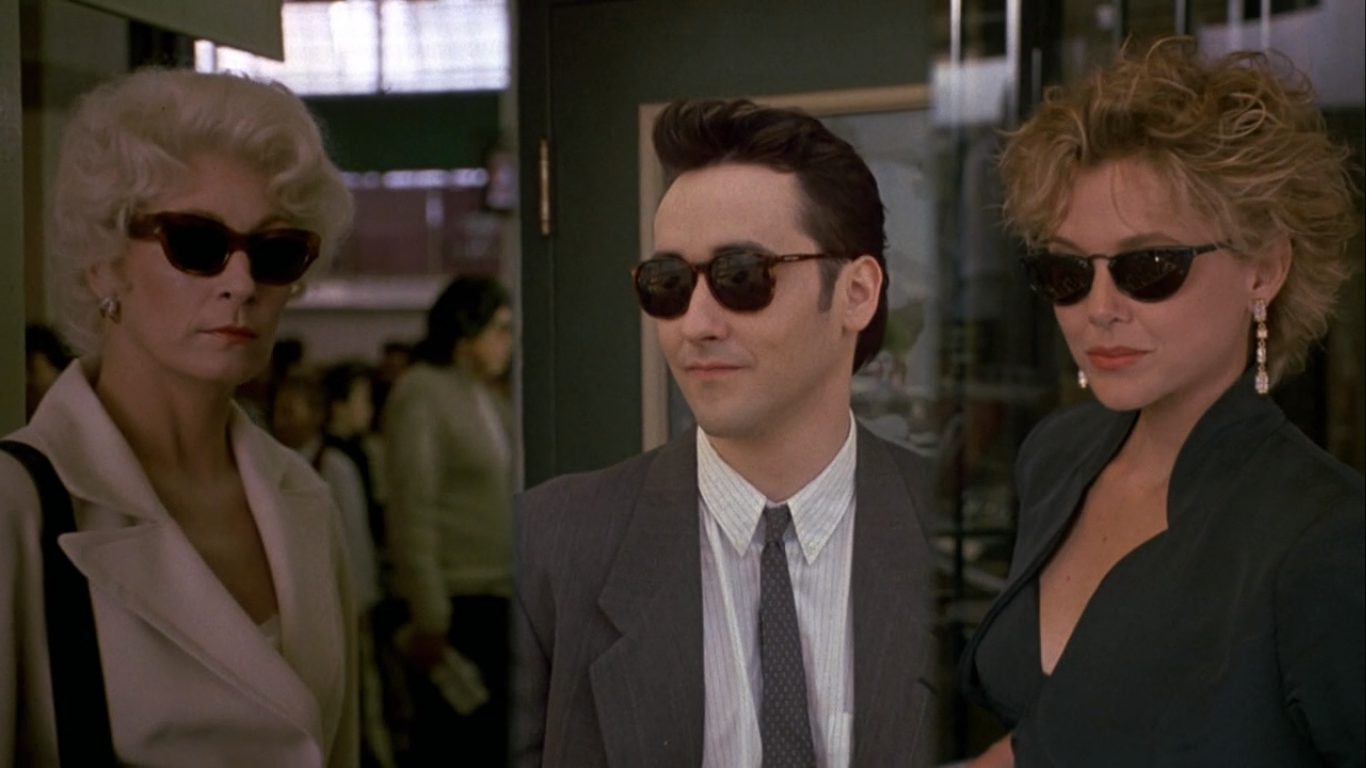
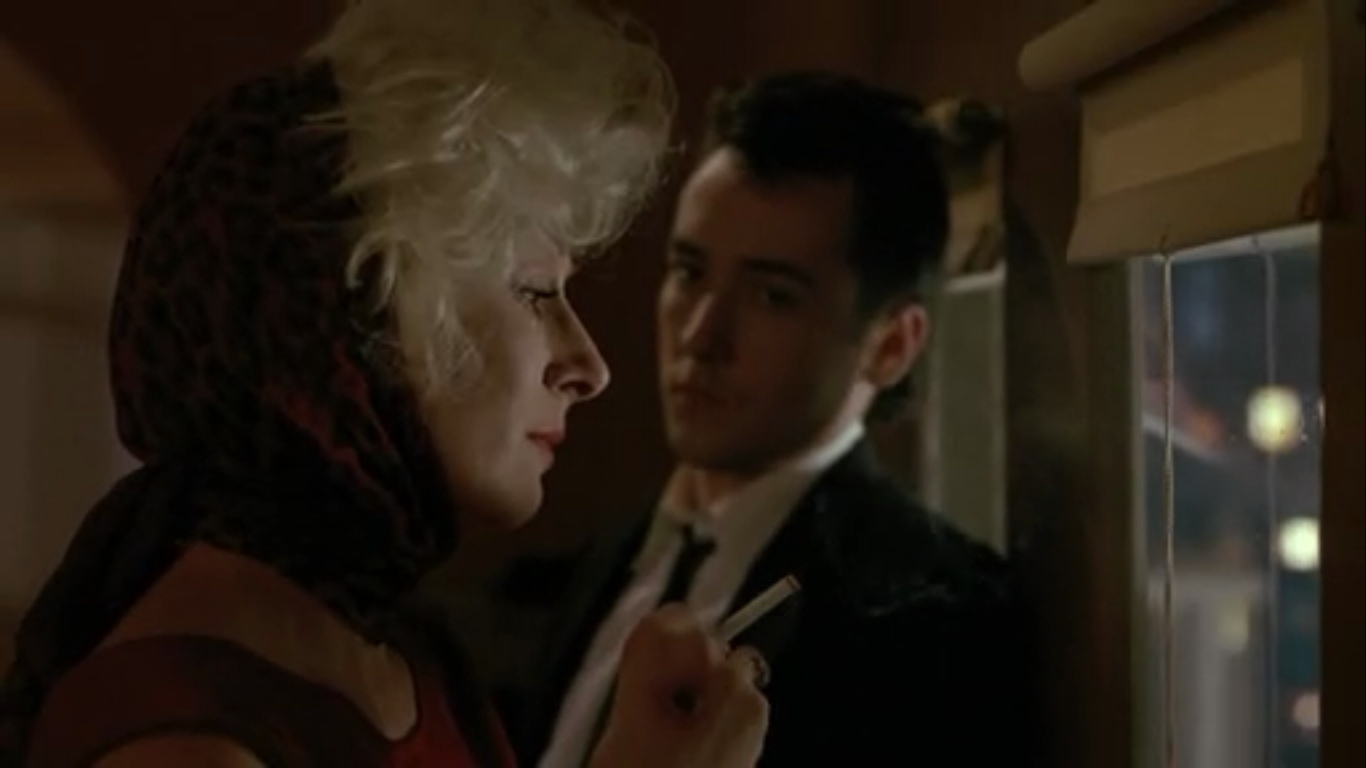
b2415-grifters1When you have Martin Scorsese producing and Stephen Frears directing you are bound to get something intriguing, and The Grifters is just that. It’s a Neo-Noir starring John Cusack (no Lloyd Dobler), Angelica Huston and Annette Benning. It’s got everything you can expect with a title like that from small-time swindling and horse races in La Jolla to deadly Femme Fatales with shady intent.

The film really has three stars in the above, but at the center of it is young grifter Roy (Cusack) who has been doing nicely for himself ever since he went off on his own. But his type of life does not come without a price. Lilly (Huston) is an old vet who has worked all the angles for a long time and now she is in the service of one tyrant of a bookie named Bobo. She hasn’t seen her son for 8 years, and all of sudden she comes back into his life finding him in need of medical attention. Their reunion is far from civil.

Then last but not least is the despicable Myra (Benning) who seduces her way into the hearts and the wallets of many men. Now she’s with Roy but before there was another con man and she is far from exclusive using her sexual wiles to get anything and everything she wants. It’s not surprising Lilly can’t stand her guts. No one could. If he’s honest not even Roy. Soon enough Lilly poisons him towards Myra and the seductress wants revenge and she seemingly gets it.

What follows involves lots of blood, lots of money, and a descent deeper towards a hellish conclusion that feels hollow and cold. Elmer Bernstein’s score accentuates the mood with a tense and altogether creepy string section.  As far as character dynamics, go this has to be the strangest triangles around. Each one of these confidence tricksters is a grifter and each one has a slightly different angle. However, when it’s all said and done only one of them can come out on top even if they didn’t want it to end that way. That’s just the way things go. There is no turning back, only running away for dear life.

The three leads played their roles to a tee and The Grifters proved generally engaging even if all the questions were not answered with loose ends still to be tied up. It also blends the general themes and outlook of noir with a setting that almost feels anachronistic at times. It’s hardly a complaint though and maybe things are better this way anyhow.

3.5/5 Stars

The Imitation Game (2014)

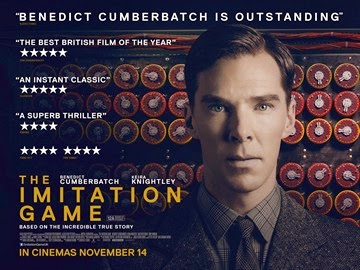
09cf1-the_imitation_game_posterWhen you think of decisive moments in WWII the conversation leads often to D-Day, The Battle of Midway, The Russian Front and The Battle for the Atlantic. If Britain had been cut off from U.S. supplies the case could be made that The Allies would have undoubtedly lost the war. That’s where the Enigma cipher comes into play and along with it Alan Turing.

Alan Turing is one of the unsung heroes of WWII and in many ways the father of modern computers. He’s a big deal and it’s hard to make that point enough. That’s what makes it exciting that he finally got the biopic treatment and with a portrayal by Benedict Cumberbatch no less. It does not get much better than that!

As far as biopics go The Imitation Game is a polished period piece set in War-torn Britain spanning the years of WWII into the early 1950s. Visually beautiful, scored nicely, and generally uplifting, it feels as wonderfully English as a cup of tea and the English countryside. Although the film at times may trod the typical path of other troubled-genius type films,  it often rises above the usual based-on-a-true-story fray. A primary reason for this is Benedict Cumberbatch who plays Turing not with dramatic outbursts, bravado, and bluster, but quite the opposite.
In the year 1939 Turing, a professor at the time, attempted to join the top secret project at Bletchley Park to crack the German’s Enigma code. He seems like an odd candidate for the job since he has only an affinity for puzzles and no knowledge of the German language, but that proves to be unimportant.
He has the right amount of vision paired with the obsession to come at the problem like no one before him. He does not just want to crack one of the tedious strings, he wishes to crack them all using a machine. It was absolutely unheard of and his colleagues discount him, understandably, because he is not much of a team player and far from a social butterfly. However, he discovers a worthy ally in Susan Clarke (Keira Knightley) who proves to be indispensable in his work as well as repairing his rapport with the team.
With the prospect of all his work with the machine being wasted and terminated, his colleagues back him up in front of his superiors. Turing has one last chance to succeed and someway, somehow he does. But success does not come without great responsibility. Once they have the weapon to counter the Germans they must use it cautiously only taking the most necessary steps. It becomes clear that there is a fine line between playing God with human lives and winning a war.
The war is won in the end, however, and the top secret endeavor is disbanded. Alan Turing is far from a war hero because few know what he did. His only label is indecency and he is given the option of imprisonment or hormones in response to his charges of same-sex attraction. A year later he committed suicide at the age of 41.
Cumberbatch is seemingly the perfect Turing with all the quirks you would expect. Except there are also traces of sensitivity and he so adeptly shows subtle emotions on his face. He was an oft-tortured man inside and out, spanning from his boarding school years to his post-war existence. Keira Knightley on her part is enjoyable as a counterpoint, remaining true to Turing no matter the circumstances.
Obviously you can always call into question the accuracy of these types of films and no doubt artistic liberties were taken, but all in all The Imitation Game did a commendable job of painting a picture of a man’s life in a very different age. Alan Turing finally got the credit he was due, and it was done with a great deal of sensitivity, heart, and even humor which mostly overshadowed any saccharine moments.
4/5 Stars

The Diving Bell and the Butterfly (2007)

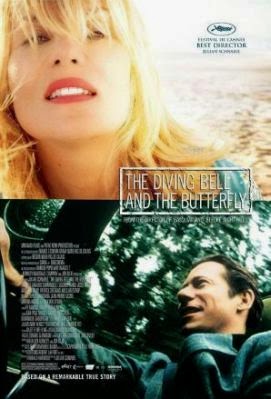
ca161-divingbellbutterflympIt’s beyond me how a film about a man who is all but paralyzed, except for his left eye, could be interesting. The main plot point follows his struggle to write a memoir using a tedious system where he blinks his eye for an assistant to transcribe. Maybe this does not sound all that engaging, but it most definitely is. No question. It has to do with how the film narrative is developed.

Bauby’s struggle is experienced first hand by the audience as we are stuck inside his head for the first portion of the film. It is a disconcerting perspective as we begin the film as helpless and confused as he is. We are there for every painfully difficult piece of progress, every one-sided conversation that Bauby (Mathieu Amalric) is unable to respond to, and every moment when he is powerless to act out. It is absolutely eye-opening. No pun intended. It’s simply the truth.

His progression is absolutely extraordinary. Beginning as a supposed “vegetable” who wished to die, to a man with an imagination that he was able to share with the world. He still had the ability and the passion for sharing his thoughts, memories, and desires with the world. He was physically so powerless and yet mentally so empowered.

Fragments of his story are given to us in pieces, although we still continue to return to the limited perspective he himself experiences. It is not easy to be sure. He must have others bathe him. The television channel is out of his control. There are doctors, therapists, friends, and family coming to see them, and he has no ability to physically interact. He still has feelings for his mistress, but the mother of his children still cares deeply for him. Sundays are hell with no one around.

Despite all that seems to drag him down, Bauby still is able to flutter above it all like a butterfly. With the help of his assistant and a strong will, he completed his memoir. 10 days later he would die, but his mission was accomplished. Maybe it seems like a rather unfortunate ending, but even if the lack of closure is unsatisfying, how it ended is the truth. Bauby was undoubtedly content because, despite the seemingly surmountable obstacles, he never lost his humanity. Being Locked-in could never take his mind from him. Ultimately, he was a winner and so his story ends on a somber yet powerful note.

It has been a while since I have been so affected by a film. I hope I will see another one like it very, very soon.

4.5/5 Stars

Auntie Mame (1958)

32347-auntie_mameWith Rosalind Russell reprising her role from the stage, this film is made by her scene stealing portrayal. The film opens when a rich man dies suddenly and his young son is sent to live with his Auntie Mame. She is a social, energetic and free-spirited woman. Despite the fact that Patrick was raised proper, Auntie Mame soon teaches him how to enjoy life and they grow close to each other.

However, Patrick is taken to a boarding school against the wishes of his aunt. They still remain close as Mame tries to get work and then she meets a southern gentleman. Patrick is growing up as Mame travels the world with Beau. He is killed in an accident so Mame returns home to work on a memoir. She soon realizes how grown up her little Patrick is because there is a girl he is intent on marrying.

Mame does not voice her displeasure with this upper class girl and her superficial parents. Instead she invites them all to dinner and by sabotaging everything Mame makes Patrick realize he is not like these people. He once again embraces her idea that life is a banquet and most poor suckers are starving to death. You have to get out and live a little.

This film was shot almost like a stage play and I found it rather long but Russell is superb and she holds the film together nicely.

4/5 Stars

Kramer vs. Kramer (1979)

c367a-kramervkramer1The title Kramer vs. Kramer brings to mind a film about two people, formerly married, fighting over their kid who is stuck in the middle of their feud. It has the potential for high drama and tense courtroom scenes full of malice and bitter resentment. Sounds like a real winner.

Don’t get me wrong, there is some of that, but Kramer does better. It follows the complex relationship between a working man and his 7-year old son as the newly separated dad struggles to take care of them both. It shows the pain that forms between former spouses as they try and navigate life as best as they can. It shows the pain and heartache that comes with both loving their boy so dearly. There’s a realness and a vulnerability that is extraordinarily hard to discount.

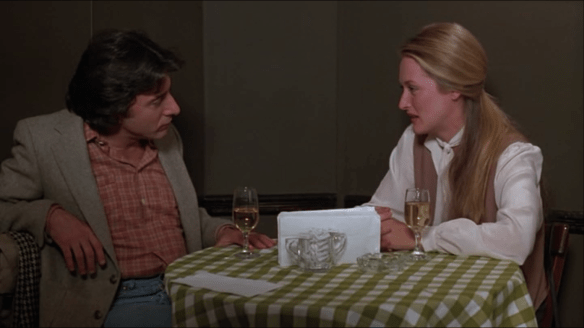
It does not dawdle and within minutes a solemn Joanna Kramer (Meryl Streep) tells her husband she is leaving him, and he can hardly believe her words. What comes next is the imminent trouble of balancing work and his home life. There is an emotional toll that comes since they were together for over 7 years. Their neighbor isn’t helping matters.

The frustration manifests itself in outbursts over breakfast and anger directed pointedly at others. The most vulnerable is little Billy who is a cute kid but dearly misses his mother. At first, he and his dad don’t always see eye to eye. He does all the typical kid things. Refuses to eat food, disobeys, and causes messes. The best example is the notorious ice cream seen where he defiantly starts eating from a pint of ice cream against his father’s wishes. He’s so cute, but it’s not pretty.

Work is hardly getting any better; in fact, it’s getting worse as Ted has more responsibilities to worry about at home. His friend and superior is not happy with what he’s seeing. On her part, Joanna seems mostly out of the picture, still sending cards to Billy faithfully. His only friend becomes the also separated Margaret (Jane Alexander) and they act as confidantes.

One significant moment occurs at the playground where Billy falls from the jungle gym and cuts himself before his father rushes to his crying son’s aid and runs him to the emergency room. He stays with his boy through all the stitches and tears, solidifying their bond and his resolve to continually be there for his son.

On the work front, Ted is regretfully let go and rushes to find another job. On the home front, Joanna is back in New York and a custody battle is in the making. However, neither parent understands what they have subjected themselves to. Things get ugly and it is something that neither Ted or Joanna wanted. They don’t want to make each other hurt — all they want is their son. It’s a complex flood of emotions and feelings as a product of character assassinations. There can be no nuance only “yes” or “no” and that’s the way the court will decide the outcome.

When the process is done it is decided that custody of Billy will be awarded to his mother. Gasp! However, what Ted does next is more noteworthy. He goes home to his boy and with the greatest of fatherly love he tells his boy he will be going to his mother. Billy will have so much fun with his mommy and they will get to see each other a lot. He is strong and positive for his boy while his insides nearly burst.

Then, in a scene mirroring their earlier morning, they calmly make french toast as a team, a happy fat, er and son together. Joanna asks for a meeting and Ted goes down to meet her. Her decision is yet another surprise and this time he peeps through the elevator with a smile waiting downstairs while she goes up to see her boy. It is very taxing to work through divorce. For all parties involved so Kramer vs. Kramer ends at the happiest place it could realistically be.

I admire the portrayals, however, because Hoffman’s character is far from an angel (sometimes prone to outbursts), and yet he acknowledges his shortcomings and proves just how all encompassing his love for his son is. Meryl Streep, on her part, is relatable but it is still difficult to reconcile her leaving. By the end however,  it is quite easy to feel sympathy for her and she too proves to be a well-meaning, albeit, flawed individual.

The scene that really solidified this film for me had to be when Ted is reading to his son from The Adventures of Tintin. It’s a classic moment and it hit home, because it was a story I read many a time with my own father and will hopefully get to read to my own kids. That’s what makes movies truly wonderful. When they transcend time and place making it possible for us to relate to them on even the most basic or mundane level. That is part of the reason Kramer worked for me. At it’s most intimate, it’s about connections. Between men and women and fathers and sons. Not always pretty but always an integral part of life.

4.5/5 Stars

Review: It’s a Wonderful Life (1946)

5632c-wonderfullife4Every time I go through the emotional, romantic, heart-warming and at times uncomfortable roller coaster that is It’s a Wonderful Life, something new always seems to stick out to me.

It is always impressive for a film of this length that so much is packed into it. Within minutes we are fully enveloped in this story, and every sequence gives further insight into these characters. There is hardly ever a wasted moment because there is significance in each scene. Pointing us to the nature of George Bailey.

Furthermore, it is easy to forget the darkness that this film submerges itself in because it reaches such a jubilant crescendo. However, this is a story that covers the years including The Great Depression and World War II. Its protagonist sinks into a state of wretchedness complete with angry outbursts, negative feelings, and drunkenness. George Bailey loses all hope and his perspective is so completely distorted. For all intent and purposes, his life looks like it’s over, and it takes a frightening alternate reality to shake him out of his disillusionment. Put in this framework, it makes sense why it was a commercial flop when you juxtapose it with the big winner that year The Best Years of Our Lives. They both deal with post-war reality, but with very different lenses.

That’s the benefit of hindsight and a new context since we do not usually see It’s a Wonderful Life as a gloomy post-war tale, but a more positive parable that is universal in its impact. The first part of this story feels a bit like a Job story of hardship, and the second act is reminiscent to Dickens’ A Christmas Carol, but that’s the simplest of observations. There is a lot more to be parsed through.

The romance of George and Mary is what many of us aspire to and it causes us to really empathize with their young love that weathers the good and bad breaks they receive. It’s the fairy tale love story we want, with the rock hard reality we are used to in our own lives. Some favorite moments in their life together would be the splash they make during the Charleston dance off, singing Buffalo Gals together, smooching on the telephone together, sharing a makeshift honeymoon together, and embracing after George gets his new perspective on life.

There are a fair number of close-ups utilized in this film, but they are usually used at crucial points in the narrative, and they tell us a great deal about both George and Mary.

The first key moment comes during a freeze frame of grown up George with hands outstretched giving us our first look at the man we will be following from there on out. The next big moment occurs when George learns that Potter will gain control and the Building and Loan will be disbanded if he leaves. He realizes in an instant that he must give up his plans. Then, he waits excitedly for Harry with Uncle Billy and it is a happy moment, but George learns his younger brother might have another job. The camera follows his worried face as he goes to follow his new sister-in-law. Never thinking of himself, he realizes that Harry has a chance for better things and that leaves George still working the Building and Loan.

After their tiff, the scene where George and Mary are talking on the phone with Sam Wainwright is a solidifying moment in their relationship. There are so many underlying emotions and unspoken feelings that they are having trouble figuring out and reconciling. And yet there is that violent epiphany when their eyes link. The tears and anger are quickly traded for passionate kisses reflecting the often complicated facts of romance.

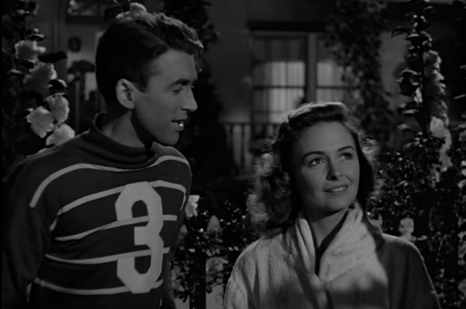
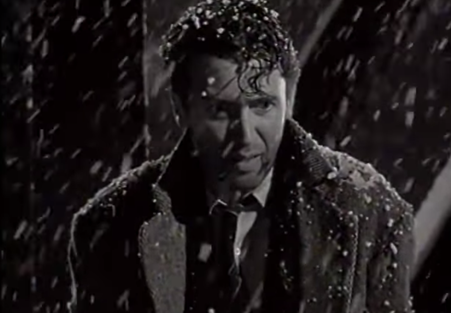
One of the final close-ups that hits home occurs when the now non-existent George stumbles away from the front door of his mother, who now has no concept of him. There is sweat on his brow (maybe from the 90 degree summer heatwave) and desperate bewilderment in his eyes. This is the lowest point he could have imagined. His own mother does not know who he is. His wife has grown old and lonely in an existence of exile. Stewart’s face is so expressive and earnest suggesting that George knows just how important human companionship is. Humanity was made to be in fellowship with each other. Lack of money means very little in comparison to our friendships and family ties. This is essentially what George finally comprehends and what Clarence reminds him. George understandably lost sight of his wife and his children and his friends. They were a gift not to be taken lightly.

Aside from these close-ups, it is also evident that a great deal of  effort was put into creating this world from the characters and their back stories to the town itself which was constructed on the RKO lot. Everything from the building facades, to stray dogs, and snow make the drama more atmospheric. It’s one of those films that reveals the beauty of using real props inhabited by seemingly real people. That’s why I sometimes am disillusioned by CGI. Although it can allow us to create amazing spectacles, oftentimes it creates a world that feels altogether fake and alien. It’s not relatable and it lacks the humanity that makes up our existence each and every day. In other words, it has very little of what makes It’s a Wonderful Life so compelling to me.

Perhaps there are more impressive or greater films, but there are few with greater heart and there is something to be said for that.

5/5 Stars

Review: Miracle of 34th Street (1947)

703c5-miracleon34thChristmas movies do not get much better than this. What a concept! Here’s a film about a man who really is Kris Kringle aka Santa Claus. He gets picked up by Macy’s department store to be their Santa Claus, and he winds up facing a hearing to decide whether he is legitimate or not. His pet project is to make an unsentimental little girl (Natalie Wood), and her practical mother (Maureen O’Hara) believe in him. He finds an ally in a young lawyer (John Payne) who believes in his holiday cheer and is also smitten with the girl’s mother.

Some people would undoubtedly say it’s a bunch a hogwash to make a movie about such a topic. Maybe it is only holiday tripe, but I find it is very hard to refute this “Miracle” of a Christmas classic. The characters portrayed are so spot on and heartfelt it is so easy to get pulled into their story. At the same time, it’s difficult not to like a film where department stores help each other, the hustle and bustle is toned down, and for once mankind has faith in each other for awhile.

As an audience, we gravitate towards Edmund Gwen because he represents the Santa we all wish to know. He is kind, thoughtful, generous, and above all a magical gift giver. Maureen O’Hara goes through a character progression that mirrors that of her daughter, except it is perhaps a little more poignant in her case due to her maturity. It would seemingly be easy to dislike her and yet thanks to O’Hara we cannot help but feel for her. She is also extremely beautiful, even in black and white. Although young, Wood proves to be a memorable little girl in this one, and she was just getting started. Payne is a good addition in his own right — a highly underrated actor.

The film is rounded out by a wonderful array of characters in the Macy’s store like magnate R.H. Macy (Harry Atrim), well-meaning Mr. Shellhammer (Philip Tonge) and friendly young janitor Alfred (Alvin Greeman). Shoppers such as the one and only Thelma Ritter in an early role, and civil servants like Judge Harper  (Gene Lockhart) round out New York’s population with generally decent people who we can relate to. The one exception is Dr. Sawyer (Porter Hall), the company psychologist, and greatest villain of the film, who is the antithesis of Kris and his Christmas spirit.

My hope is that this one never pales, never loses its cheer, and maintains its timelessness for many Christmases to come. Until the next Macy’s Thanksgiving parade comes along have yourself a merry little Christmas and remember all psychologists are not evil jerks looking to ruin the holidays!

5/5 Stars

Boyhood (2014)

13113-boyhood1Surely others have said this already but Boyhood struck a chord with me and it was the prettiest of melodies.  Pure and simple in its brilliance.

This is not my childhood by any means or my life or my family, but there are glimpses of it here. Quick flashbulbs or touchstones that for a brief instant take me back. Sometimes many years ago or just one or two. Nostalgia is the strangest type of memory for a young person, because we are transcending the space between the here and now, which we are so used to, and going to the “back then.”

12 years is a long time but even more so when you have fewer years under your belt. Thus, Boyhood in comparison to my own life is an epic film in every sense of the word. Whereas it might only be a wonderful coming-of-age tale for older generations, there is a feeling that this film in some small way represents where I’m coming from.

A film could never fully encapsulate or perfectly represent what it is to grow up in adolescence. It’s different for every child depending on where they live, what their family is like, and so on. But Boyhood is an unprecedented depiction of what that existence looks like to many young people. There is certainly something special and important in that.

1cce5-boyhood2There are so many different vignettes, almost like short films, characterizing each and every year in Mason Jr.’s life. We are given no blatant indication of time and place. It is all context clues, cultural references, and watching Mason and his family grow and evolve around him. Always innovative Richard Linklater does not hold out a giant megaphone saying this happened that year or this year. Instead, Mason’s story plays out like it would in the so-called “real world.” There are some major milestones or life-shaping moments that are shown, but most of this journey has to do with the little caches of time that make up life.

I feel drawn to do something that I don’t normally do, but Boyhood is such a unique film it deserves to be approached in a different light since to put it truthfully, it cannot be pigeonholed into any standard category.

Instead of trying to acknowledge the entire narrative of Mason’s life, which would be as impossible with him as with anyone else, I want to give reference to the many moments and bits and pieces that Linklater placed either by accident on purpose. The fact is Boyhood is chock full of these markers of the passage of time which make it a fascinating journey of human life.

Here we go, get ready:

Coldplay’s Yellow over the credits
Britney Speares fandom
Star War dilemma: Yoda vs. Grievous
Game Boys and Wave Boards
The Astros’ Rocket Roger Clemens
Harry Potter and the Half Blood Prince
The Landlord – Will Ferrell
High School Musical – We’re All in This Together
Wii Boxing with a Nunchuk
Presidential Election in 2008
Facebook profiles
The Dark Knight
Phoenix – 1901
Twilight books
War in Iraq and Afghanistan
Lady Gaga and Beyonce
Iphone Facetiming
Gotye – Somebody That I Used to Know
Atlas Genius – Trojan

and on and on….

c94ae-boyhood3Against this backdrop, the separation of Mason’s parents (Ethan Hawke and Patricia Arquette) takes center stage. Next, follows another failed relationship riddled with abuse. Switching cities and starting a new life followed by another step-dad and another failed marriage. Then, dad (Hawke) gets remarried and it actually works out. There’s peer pressure and experimentation. Girls become a big deal. Photography is a passion. Sister (Lorelei Linklater) goes through the rebellious phase. High School graduation comes around and college soon after. Breakups happen and life still continues ever onward.

You could make an argument that Linklater could have gone on longer. He could have wrapped everything up nice and neat or cheated and fast forwarded to the end. But that was not his way out and it did not have to be. College is a major moment of change, confusion, and finding oneself, so in a sense, it is a fitting place to leave Mason behind.

He remained introspective, philosophical, and aloof for the majority of his life, despite family of origins issues and the like. It is mind-boggling to think of all the people cycled in and out of his life. Ever changing and often forgotten.

Thus, Boyhood is a gift to us for a multitude of reasons, but hopefully, its visual biography of Mason Jr. will lead us down memory lane and cause us to consider our path. For most of us, we have more than 12 years in front of us. Let us use our time well and wholeheartedly navigate the realities of life whether it is movie worthy or not. It’s our life and that’s all that matters.

4.5/5 Stars