The Big Combo (1955)

b456e-bigcombo1There is so much to the plot of The Big Combo, but the irony is that the story is not altogether extraordinary. Instead, highlights include David Raksin’s (Laura) jazzy score infused with brass which is somewhat unusual for the genre. Cinematographer John Alton also helped in making this film visually and stylistically engaging. There are some crazy, overstated shadows making this undeniably film-noir. There are very few better examples of so-called “dark” cinema with prototypical chiaroscuro and low key lighting.

Honestly, I have never been a huge fan of Cornel Wilde, and I can understand why he is not that popular or well known. He’s relatively beady-eyed, not particularly good looking, and his voice is not altogether memorable. Like Mr. Brown said in the film, “It’s personality. You haven’t got it. You’re a cop.” Even Dick Powell has some wit but Wilde’s character is straitlaced and steady. There’s nothing of much repute about him. But enough about Wilde.

The story is your somewhat typical procedural with a righteous cop facing off against a big time mobster. Mr. Brown is practically untouchable with a large pool of money at his disposal and a group of faithful thugs ready to do his bidding. He has a girl, Susan Lowell, who is about fed up with him, but she sticks around.

Lt. Diamond (Wilde) is totally fed up with the corruption but himself is also infatuated with Lowell. His only lead is the name “Alicia” which leads to trouble with Brown and his thugs who rough him up and leave him drunk. However, he learns from a man named Betini that “Alicia” was Brown’s wife who was supposedly murdered and thrown overboard with an anchor.

Next on the beat is a tight-lipped Swedish antique dealer, and ultimately, Diamond comes up with proof that Brown’s wife is still alive. He’s getting too close so Mr. Brown sends out his thugs Fante and Mingo to shut him up for good. They get the wrong person.

Alicia finally turns up, a few more figures get mowed down in Mr. Brown’s wake including Diamond’s trusty colleague Sam (Jay Adler). All that’s left is a showdown at the airport that is like Casablanca‘s atmosphere on steroids. It truly is a stunning achievement in visual storytelling for Alton and director Joseph H. Lewis.

There is not a great deal of sympathy to be had for a lot of the characters who got it, and though she seemed to have little bearing on the plot, Rita’s demise was surprisingly difficult to take. She was the girl with the heart of gold. Brown’s heartlessness finally came back to bite him but honestly, I could have cared less if Diamond was the one to catch him or not. He couldn’t have done it without Susan anyways.

3.5/5 Stars

Blue Jasmine (2013)

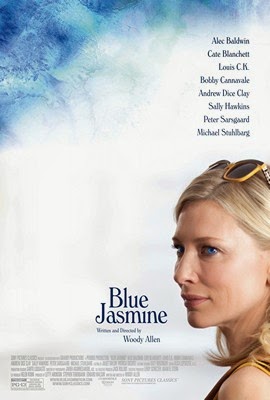
90cbd-blue_jasmineThe emotionally unstable socialite Jasmine (Cate Blanchett) seems to think everyone in the world wants to listen to her talk and reminisce
This film shares a resemblance to Tennessee William’s A Streetcar Named Desire, and it can be know coincidence because Woody Allen knows his history.  On her part, Blanchett ironically shines as Jasmine, a woman who was married to a swindler (Alec Baldwin), has a nervous breakdown and then finds herself penniless in San Fran on her sister’s doorstep (Sally Hawkins). Jasmine is a snobbish jetsetter who had all the possessions that money could buy and a successful hubby. However, pull out the rug from under her and what’s left is a needy hypochondriac plagued by bouts of loneliness.  When she’s not jamming down pills chased by martinis, she’s feeling sorry for herself. She is also often prone to be unstable and throw tantrums. But by the end of this film she is all alone on a bench. No money, no family, not even any love life. Jasmine is a tough case because she is absolutely despicable and on top of that annoying, and yet we still have a small degree of sympathy for her. Allen’s film walks the tightrope between comedy and tragedy to great effect. 
 
4/5 Stars 


Short Term 12 (2013)

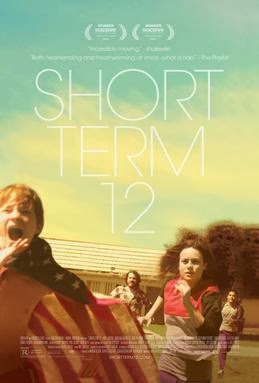
f2b58-short_term_12This is an extremely powerful film having to do with a short term living home for abandoned and troubled kids. Brie Larson, who is one of my new favorites, gives a wonderful performance that should get her more coverage in the upcoming years. Unfortunately this is a little known gem.

This film had a gritty and realistic aspect that I could relate to, because its director and writer Destin Daniel Cretton hails from San Diego, a place that I have seen quite a bit. Furthermore, he does not shy away from the tough issues, but he also shows  a moving and beautiful flip side to this story. Short Term 12 can be hard to watch at times but it seems that what it really depicts is reality for many young people.

Like The Spectacular Now, this film seems to represent a desire of filmmakers with more humble means to make realistic stories full of hard hitting drama and in many ways truth. In my mind, it was well worth it!

4/5 Stars

Drinking Buddies (2013)

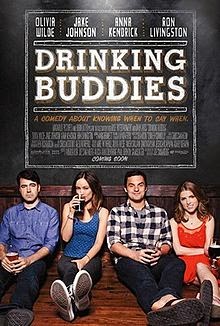
fd0b8-drinking_buddies_posterHere is an interesting little film that while not great has a lot of interesting things to say. It is about relationships, friendships, and life in general. It really revolves around two coworkers who work at a brewery together and also are almost constant drinking buddies.

With this territory comes often complicated lines and boundaries because they both are invested in other relationships with a significant other. The buddy status remains only to be taxed as Kate gets dumped by her boyfriend and struggles through her coping process. The one who ultimately gets most deeply affected is Luke. For one he does not want to see his friend this way, but it probably does not help either that he has deep feelings for her, as a buddy or otherwise.

There is an insanely large quantity of beer consumed which is not surprising given the name. However, what I really found interesting about the film was the “buddies” aspect. It looked at relationships and friendship between the opposite genders through a seemingly real and genuine lens. Sometimes it can be difficult, complicated, awkward, and most definitely painful. It is not anything like a movie. I guess that’s why I was content that the film did not try to tie itself up in a neat bow.

All the matters is that Kate and Luke are buddies again. Sure, there may be some unresolved stuff for them to work out, but then again aren’t our lives always complicated like that? I know mine certainly is and I suppose I wouldn’t want it any other way. As long as I have my buddies to go through it along side of me.

3.5/5 Stars

Vicky Cristina Barcelona (2008)

8c89f-vickycristina2Although he is not present you can hear and see the undeniable hand of Woody Allen behind this romance set in Barcelona. In a film that at times feels like a precursor to the more interesting Midnight in Paris, Allen takes on romance in another elegant city with two young Americans who have been transplanted there from their everyday lives.

Vicky (Rebecca Hall) is the practical one of the two with a fiance who is kind but by no means a romantic. Cristina (Scarlett Johannson) is the more adventurous type and she is intrigued by a forward Spanish painter (Javier Bardem) who invites them to spend a holiday with him. All the red lights are going off in Vicky’s head and she will not have it. But Cristina is interested enough to drag her friend along on this whim. They have a matter of fact narrator to guide their little tale of love and personal revelation.  Enter Maria Elena (Penelope Cruz) stage right and things gets a bit complicated.

This is a Film about love. A Film about people having their mini midlife crisis and a film about trying to figure things out. In that ways it is relatable and yet I have this uncomfortable feeling that Woody Allen is speaking to me veiled behind the worldviews of his characters. It seems like I can hear his voice obviously peeking out behind many of these characters so they lack interest. There’s nothing new and exciting. For instance, I liked Rebecca Hall, but to be honest her character is bland and she soon comes to realize that herself. It’s not just her either but the social circles she interacts in. The people are dull, middle class, American types. Cristina might have a little bit more mischief in her, but that does not necessarily make her all that interesting.

However, Javier Bardem and Penelope Cruz play a pair of characters who are perhaps the most interesting. Maybe it is just a result of playing artists but they are often difficult to read and do not make complete sense. They are both romantics but they are prone to violent passion or angry fights. That’s the dynamic Vicky and Cristina get thrown into and I doubt either one expected it.

The story ends like other Allen films as a quirky romance with touches of comedy and strange acts of fate. Vicky and Cristina leave Barcelona perhaps a little wiser but with little more figured out about life.

3.5/5 Stars

La Notte (1961)

36075-lanotteposterHere is a film full of glitz reminiscent of La Dolce Vita, a cast starring the likes of Mastroianni, Moreau, and Vitti, with a meandering plot courtesy of Michelangelo Antonioni and gorgeous black and white visuals.

This film is certainly not for the action fanatic because we are given very little. In fact the story revolves around a couple who have trouble communicating so even the dialogue seems sparse at times. The marriage is slowly going down the tubes and neither partner is ready to acknowledge it until the end when the wife finally does.

Moreau definitely had stronger performances like Jules and Jim because here she hardly talks and is highly misanthropic. Monica Vitti is more interesting in her role simply because she has more energy infused into her.

One of my favorite moment in the film had to be at the party where Mastroianni first sees  Vitti playing a rudimentary shuffle board. We are watching just like he is except there is a strange sensation that something is doctored with the image. It turns out that we are only looking at the reflection and then the camera swivels to the right to actually show reality. It was one of the noticeable artistic shots that really stood out to me.

La Notte is a subdued film, more often than not, and so if you go expecting that type of pacing you start to enjoy the little pieces here in there that are given to you. By the end it is rather sad because the marriage not working. There is no huge fight, no bickering, just apathy and that is in many ways more painful to see.

4/5 Stars

L’avventura (1960)

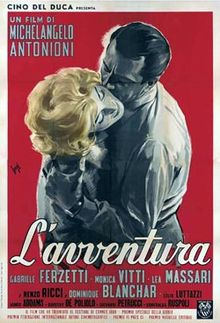
L'avventuraSmallL’avventura is one of those films that it is difficult to make a cohesive review for. If you are watching it purely to be entertained, you have it all wrong, because that is not its main purpose. Its greatest attribute is the special place it has in the pantheon of film art.

It is a film about a group of high society adventurers who go on a boat trip through some islands, only to have a woman passenger literally disappear, practically into thin air. Her boyfriend and her best friend search for her in the ensuing days, only to fall for each other, and that is about it. This is, of course, the most superficial level possible.

L’avventura is quite interesting visually and I wish I could have seen it on the big screen. The reality is, oftentimes, not a whole lot is happening, but it causes you to actually focus on the images in the frame. Michelangelo Antonioni gives us numerous settings all over Italy, and most have something to do with the wanderings of natural beauty Claudia (Monica Vitti) or her companion Sandro.

Anna (Lea Massari), despite her early importance, is hardly in the film. She is only a wisp in the wind and the mystery surrounding her is of lesser importance. The outcome is what matters as her friend and boyfriend become lovers. Theirs is the relationship that is explored as it develops, evolves, and becomes fully tested.

In the final moments, Antonioni toys with us, suggesting just possibly that Anna might be in the picture again. In fact, he must have a very cruel sense of humor indeed. Here in L’avventura as well as Blow-up (1966) he waves a mystery in front of our nose and leaves it unresolved. It is absolutely maddening, in some respects, and yet he makes us look at something else altogether. He also had the gall to name a film with a meandering plot like this L’Avventura! The nerve of it all, and yet I respect him for it because it messes with our conventions and forces us to be uncomfortable.

It is understandable that this was a polarizing film at Cannes in 1960, and I can only imagine that it has the same effect over 50 years later. One thing is for sure. This is no Gilligan’s Island with a three-hour cruise set in Italy. There is a lot more to it than the plot. Not my favorite adventure, but I respect its pure audaciousness of form.

4.5/5 Stars

Blow-Up (1966)

40940-blowup_posterDepicting the time and place of Swinging London in the 1960s, this film is directed by Michelangelo Antonioni and it stars Peter Hemmings as the protagonist. He is a fashion photographer in a hopping city. He spends his day working with models with countless photo shoot after photo shoot. He is skilled at his job and as such he is temperamental and at times irritated by his fashionable but arduous occupation.

After one such string of photo shoots he goes off on an excursion to an antique shop and a park where two lovers have met. He sticks around and snaps pictures of them before he is chased off by the woman. The next day the attractive woman comes to him asking for the negatives and at first he refuses. After she has left he develops the negatives and blows them up only to find something very intriguing. He goes back to the park at night and finds something very perilous indeed. He returns to his flat and then he spots the woman at a club only to lose her during a concert.

Following the lively evening he returns once more to the park, this time to find something even more unusual. Despite all his efforts everything is still a complete mystery that he cannot hope to solve or understand. There seemed to be some superfluous scenes in this film but it was interesting to watch it unfold. The photographer has an intriguing lifestyle but he is not a very likable character. Following the blow up of the image everything begins to change and we begin to sympathize with him. When the film ends and the mystery is still unresolved, it forces him as well as the audience to simply accept it and move forward. This is an anti-mystery if there ever was one.

4.5/5 Stars

Interstellar (2014)

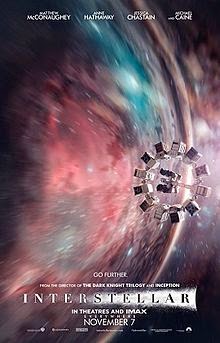
77062-interstellar_film_posterAs has always been his calling card, Christopher Nolan has an eye for grand, expansive, thought-provoking experiences wrapped up in cinema. Perhaps his aims are too ambitious at times, but you can never accuse him of making an everyday film. He always shoots for the moon (or better yet a wormhole) and so his projects are ultimately better than most, even if they miss the target a bit. The reason being, Interstellar is still full of enough questions and concepts to leave us thinking for a good long time after we leave the theater.

Although approximately 2 hours and 49 minutes, hardly anyone could call Interstellar too long, because it is more often than not engaging, as we try and decipher where Nolan is going to take us next. His story starts on a world that is certainly earth but strangely dystopian compared to the planet that we know and love. Reminiscent of When Harry Met Sally or something, old folks speak of the way the world was when the dust first hit and the corn crops had to be burned. Not much explanation is given but it is what it is.

This is the climate that the engineer-turned-farmer Coop (Matthew McConaughey) has to raise his two kids after his wife passed away. They are good kids for the most part. Murph blames a so-called “ghost” for accidents that happen around the house and her brother teases her some. But they hardly complain about this life they have they; just push forward.

However, their father has always been an explorer at heart, a pilot who never got to truly test the vast seas of space or spread out his wings fully. That changes when he and his daughter come across an old relic from the past. No, it’s not a monolith but something far more human. He somewhat reluctantly teams up with his old professor Brandt (Sir Michael Caine) and the professor’s daughter Amelia(Anne Hathaway) in a major undertaking.

They want Coop to pilot a mission to a wormhole which is just out of humanity’s reach. It was seemingly miraculously gifted to the human race by some unknown third person. This is their chance to A: find a new planet for a mass exodus or B: restart a colony on a far away destination. The first option is far less grim. Coop takes the mission in the hopes of saving his kids, but he knows the ramifications. Since time is all relative he does not know when he is coming back. He does not even know what he will find or if he will be successful. He heads off as an angry Murph tearfully watches him fall out of her life.

In a match cut of his own, Nolan transports Coop from his truck to the outer reaches of the galaxy. The real adventure has begun. The mission is clear. Save humanity from most certain extinction. It does not make it easier however that messages are constantly being relayed from earth. Coop and his three colleagues set up a plan of action. Their first target is a water covered environment that looks promising. Not so. Next, Coop overrules Brandt and they head to a desolate world that a previous explorer had labeled as inhabitable. To put it bluntly, he lied and he was not the only one.

Now Murph is older (Jessica Chastain) and she still has a hard time reconciling the departure of her dad. In an especially impactful scene, a still ageless Coop watches tearfully as his older son’s life literally passes before his eyes through the video communications that have been relayed up.

Coop has no way to reply. He can only watch and push forward to try and find a solution. But the answers are few and far between as time continues to move rapidly faster on earth than with the crew of the Endurance. In one final act of selfless valor Coop heads into a black hole and thus begins his own mind-blowing leg of his space odyssey. Some connections are made and when all the pieces are put together all that really matters is his inextinguishable love and family. In the end, Coop spends a nice moment with his daughter under very different circumstances. Together they saved the human race. Together they survived.

For a film that was made for Physic nerds with talk of black holes, worm holes, relativity, quantum mechanics, Newton’s Third Law, gravity and the like, Nolan’s conclusion has a universal ring. As Amelia Brand claims, “Love is the one thing that transcends time and space.” There are still scientific questions left to be debated for years to come, but we know that love is one thing that is forever true.

There are obviously numerous comparisons that can be made between Interstellar and 2001. I would rather focus on the differences very briefly. In Nolan’s film, A.I. is actually useful and more reliable and kind than humanity itself. It is Man who lies, cheats and reverts to animalistic behavior all in the name of survival. Interstellar has a lot of scientific theory behind it (which I will acknowledge I do not know the ins and outs of), however, it also has a very human component. It is grounded on earth with Coop’s kids.

The visuals in Interstellar are often breathtaking but we would probably expect that for such an ambitious space saga. What I really took out of this film was the score and juxtaposition of sound. Hans Zimmer’s compositions were full of pounding organs that somehow fit the mood with their majestic and still austere sound. Furthermore, this film had a lot of dialogue and tense moments of noise, however, when we are outside the spacecraft it is almost completely silent reminding us of the reality of space. It is more often than not a vast, silent unknown.

I am reminded of when Coop explains to his daughter why she was named after Murphy’s Law which seems to be bad. He replies that “Murphy’s law doesn’t mean that something bad will happen. It means that whatever can happen, will happen.” And that was good enough for Coop and his late wife. In some ways I think these words can be used to describe Interstellar. With Nolan, there is the potential that whatever can happen, will. There is excitement and magic in that, even if it sometimes overshoots its bounds. It’s not necessarily a bad thing and that’s good enough for me.

4/5 Stars

Do not go gentle into that good night,
Old age should burn and rave at close of day;
Rage, rage against the dying of the light.
~ Dylan Thomas

Planet of the Apes (1968)

f0ab6-220px-planetoftheapesposter“Take your stinking paws off me, you damned dirty ape!” ~ Taylor

Planet of the Apes is a highly disconcerting tale despite the rubber visages of the apes which feel quite tacky at times. However, they are so unnatural that they seem to still work within the context of the film. This Sci-Fi classic also really works on another level, because it is an inversion of our accepted dogma. Yet it still shares a degree of similarity to our reality making it a frightening dystopian  world to take in.

The story begins calmly enough in outer space as a group of human explorers circle the solar system with the fate of earth up in the air. We assume the worst. After spending time in hibernation the crew finds that their ship is making a crash landing for an unknown reason so the three surviving passengers bailout. There’s Taylor (Charlton Heston), Landon and Dodge and though they do not always see eye to eye, they begin to explore the vast expanses of the seemingly lifeless world for any sign of life.

As time passes, they finally come across human life: a very primitive human society that has no form of communication. They assume they can run this society soon enough with their advanced intellect. However, what they were not counting on were the apes who have advanced far beyond the animalistic humans. Apes are the one with language, culture, weapons, and a whole stratified society.

Taylor and his shipmates are hunted down like common animals along with the rest of the mute natives. What ensues is a rather terrifying story following Taylor as he tries to prove his intellect only to be beat up and caged like a common zoo attraction. It feels strange watching the apes speak in common English as they laugh contemptuously at the stupidity of human lifeforms.

However, a pair of scientists (played by Roddy McDowall and Kim Hunter) become interested in Taylor and he must fight an uphill battle to prove he is different. It is no easy task with beatings, chains, and court trials. The society is so set in its ways that no one will believe that a human actually can have intelligence. It is utterly impossible. This gives context for the famous insult that Taylor hurls at the apes. It’s the first time a mere human has addressed an ape. Needless to say,  they don’t take it well.

Taylor has enough grit and stubbornness to get what he wants, but only when he has gotten away does he really understand what has happened and where he is. How he didn’t realize it before is a puzzle. Then again, he probably was not the only one blinded. Planet of the Apes works on a number of levels, although it can feel a bit corny. First off, the music of Jerry Goldsmith makes every sequence feel all the more unnerving. The lack of CGI in the panoramic images is a breath of fresh air. I will assume that those cinematic shots were actually real, and they would undoubtedly look fantastic on the big screen. Amazing! Furthermore, Charlton Heston does a decent job as the cynical explorer Taylor and as I noted early on he got the girl. Just not the one I expected.

There are a lot of sequels/prequels to be watched and I will certainly try and get around to them some day because this film was definitely enjoyable. Without a question.

4/5 Stars