Phantom Lady (1944)

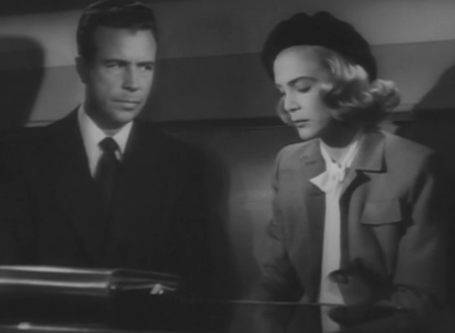
PhantomladyThe film uses the motif of a mysterious lady who cannot be found as the jumping off point for this Film-Noir. It is this so called phantom lady who Scott Henderson (Alan Curtis) meets at a bar after having a spat with his wife. They lift each others spirits and part ways. Returning home, he is met by the police inspector (Thomas Gomez), who found that Henderson’s wife was strangled to death. Scott is the prime suspect and now he needs his alibi which seemed so airtight before.

She truly has vanished and no one remembers her so Henderson is on the verge of the death penalty. It is his smitten secretary Carol (Ella Raines) who takes up his cause. She retraces his steps interrogating a bartender and wheedling information out of a puny drummer (Elisha Cook Jr.). Soon an old friend (Franchot Tone) of Scott’s returns from South America and everything gets a little more interesting.

Phantom Lady stars a cast of only a couple recognizable names, however Robert Siodmak does a decent job at making this noir interesting and it is certainly worth a watch.

3.5/5 Stars

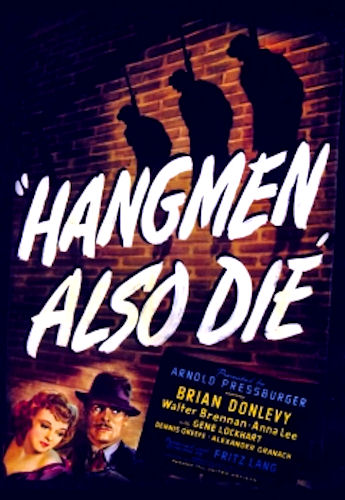
Hangmen Also Die! (1943)

Hangmen_Also_Die_1943There are some fine pieces of intrigue in this modest WWII period film from Fritz Lang. The plot is based off real events in Czechoslovakia surrounding the assassination of Nazi Holocaust proponent Reinhold Heydrich. Mascha (Anna Lee) finds herself admidst a web of trouble when she helps a member of the underground after he commits the killing. But the Nazis are soon hounding her and it brings danger to her father’s household (Walter Brennan) . Ultimately she is forced to choose where her greatest allegiance stands.The film features Gene Lockhart playing the Nazi collaborator Czaka. Perhaps this film is not all that realistic and the casting is not perfect (although I did enjoy seeing Anna Lee in a leading role). At the time it came out this movie functioned as an anti-Nazi film and it still packs a decent punch from that perspective. It deserves some acknowledgement at the very least.

3.5/5 Stars

They Drive By Night (1940)

They_Drive_by_NightThis is a surprisingly nice little film-noir that follows two brothers (George Raft and Humphrey Bogart) who make their meager living transporting loads of produce by night on a big rig. Despite the seemingly mundane topic, They Drive by Night has some juicy bits of drama as the brothers struggle to survive and make their way in life. Along the way there is disaster and treachery. Ida Lupino is absolutely psychotic in her role opposite George Raft and Alan Hale. Then Ann Sheridan plays the nice girl role. I wouldn’t say that this is a great Noir but it certainly is far from boring.

Raoul Walsh proves just how adept he was at making entertaining melodramas and Humphrey Bogart is yet one step closer to his breakthrough with The Maltese Falcon (1941).  The truck drivers can always be found at the local diner getting their burger, talking up the waitress and maybe playing some pinball. When there time is up, it’s a long night ahead hauling fruit crates. The film is a slice of Americana reflecting a bygone era, at least for most of us.

3.5/5 Stars

Moonrise (1948)

MoonriseHere is a low budget yet artistic film from Frank Borzage. I will be honest that I had never heard of Borzage before a year or two ago and he seems to have lost some of the respect he had early on in the 20th century. The same can be said for his stars Dane Clark and Gail Russell who are unknowns to most unless you hailed from those times. I was saddened to find Russell struggled with alcoholism which contrasts with the surprisingly hopeful ending of this melodramatic noir.

Ultimately, Danny Hawkins (Clark) was able to let go of all his hatred and accept justice. Instead of throwing away his life he got the girl and came to terms with reality.

Perhaps the most striking moment of this film was the highly stylized and dark opening showing the hanging of Danny’s father and his early childhood afterwards. In only a few minutes Borzage told us so much about Danny. Thus, during the entire films those images stuck with us and we could still feel a sense of empathy for him.

Despite there small parts, I was excited to see Lloyd Bridges, a young Harry Morgan, and Harry Carey Jr. All in all this was an interesting film and it causes me to want to see more from Borzage.

3.5/5 Stars

Cry Danger (1951)

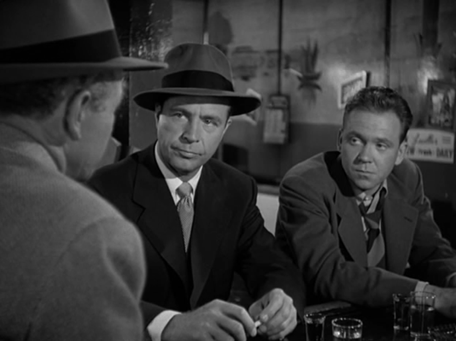
589aa-crydanger2Here is yet another noir gem which would never get made today, much less in a mere 22 days! This directorial debut of Robert Parrish is boosted by an often witty script from William Bowers.

Rocky Mulloy (Dick Powell) is fresh out of prison after a former marine (Richard Erdman) testifies on his behalf though Mulloy already spent five years rotting away in prison. He went in right around the end of the war because of a robbery that he was assumed to be a part of.

Regis Toomey (The Big Sleep, Raw Deal) is Lt. Cobb and he is still skeptical when he is assigned to monitor the newly released man. Richard Erdman is the peg-legged, alcoholic marine who has a penchant for booze and dames. Also, he never actually knew Mulloy before. He just wants some of the loot.

So the two new found chums set up camp in a beat down trailer park of all places, with a music playing proprietor (Jay Adler). It’s not exactly the Ritz, but Delong finds some female company, and it just so happens that Mulloy’s former flame lives there too. Nancy (Rhonda Fleming) is married to Rocky’s pal Danny who is still in the clink. His mission is to prove his innocence, but could it be more harm than good?

Rocky goes to a local mobster named Castro (William Conrad) who left him holding the bag five years ago, and he wants reimbursement for his time. He gets some of it in the form of a horse race which leads to a big payoff.

But as it turns out, the money is hot and Lt. Cobb wants to know where it came from. Rocky obliges but it becomes all too obvious he’s being set up. There was one slip up though, proving Rocky is telling the truth for once, amidst all the lies swirling around. That does not help Delong much and his girl Darlene gets blown sky high. The bullets were obviously meant for Rocky and  Nancy.

Rocky confronts Castro and they play a little game he likes to call Russian Roulette, although it’s very one-sided favoring Rocky. The fearful mobster spills the truth, revealing Danny was actually a part of the plan 5 years ago all the time. Since he took a lighter rap, someone else is holding his share of the payoff. The missing $50,000. Who is keeping it warm for him? You guessed it.

Rocky goes back to the trailer park where Nancy spills all her beautiful guts to him. What she gives is a tempting offer and Mulloy lets her believe it will happen. Off he walks with Lt. Cobb ready to swoop in. Rocky may have gone straight, but it doesn’t mean it makes it any easier. He had to turn on one of the most beautiful girls in the world, courtesy of Rhonda Fleming.

Dick Powell has another laconic performance which nearly matches his turn as Philip Marlowe in Murder, My Sweet. I always love seeing Richard Erdman as a young jokester, because he has gained a following more recently for his work in the television show Community as Leonard. William Conrad will always be the narrator in Rocky and Bullwinkle as well as Cannon. However, his big frame and mustache make for a good criminal type. What can I say about Rhonda Fleming except that she looks stunning in black and white, much less technicolor?

Lt. Gus Cobb: Now, just get it through your heads that the pressure’s on. 
(To Nancy)
Lt. Gus Cobb: I wouldn’t give a nickel for your husband’s chances before that parole board with all this going on.
(To Rocky)
Lt. Gus Cobb: And I wouldn’t give a nickel for your chances with those two apes running around looking for you.
(To Castro)
Lt. Gus Cobb: For you, I just wouldn’t give a nickel.

4/5 Stars

Pitfall (1948)

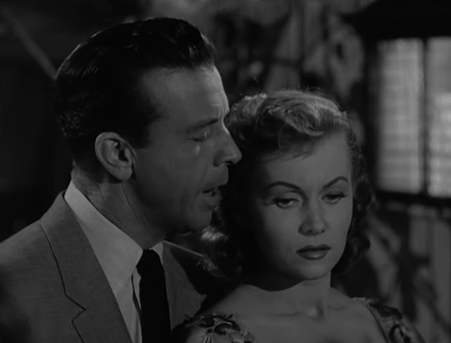
4ac39-pitfall2In Italy Pitfall‘s title was translated to Tragedy in Santa Monica. And that it is, but it plays out as a typical, everyday tragedy. It is far from Shakespearian. John Forbes (Dick Powell) is sorely tired of the monotony of his life: A wheel within a wheel within a wheel so to speak. And he is tired of being the so-called “backbone of the country” employed at Olympic Mutual Insurance Company.

He has a steady job and all, a beautiful, loving wife (Jane Wyatt), and a cute little son Tommy. He’s your prototypical middle-class man from your typical middle-class family. That’s what’s wrong with his life. To put it plainly he’s in a rut and desperately wants to get out.

Pitfall is a  bit of a riff off of Double Indemnity. There is some of the same framework but very different variables and outcomes, so that’s enough comparison.

Things get interesting when Mona Stevens (Lizabeth Scott) comes into the picture. She is a model with a boyfriend who was just recently put into prison for embezzlement. Now Forbes’ company is charged with getting back some valuables from Stevens and she gives them up willingly. Along the way, a hired private investigator named Mac (Raymond Burr) takes a liking for her, but the feelings are not reciprocated. That’s before she meets Forbes.

When they meet, Forbes is immediately struck by her and she takes a liking to his goodwill. Everything would be great in another world. Except in the real world, Forbes is married and Mac is jealous. After he gets accosted by Mac, Mona finds out about her fling’s home life. Surprisingly she lets him off the hook, but Mac won’t let her off.

Forbes’ overall demeanor changes and he feels reinvigorated, even back at home and in the office. But it’s never that simple, and things begin to get messy as Smiley finally gets his ticket out of the clink. Mac has been his constant visitor, filling the paranoid brute with ideas. He thinks Mona has been unfaithful, and he wants to get the guy she was with.

The ending of Pitfall is far more painful than a multitude of meaningless deaths in a monster movie. The reason being, these characters actually have some importance. There is a sense that human life is sacred and if anyone dies it is a big deal, whether they were “good” or “bad.”

Furthermore, there are hardly words enough to describe the look on Jane Wyatt’s face when she finds out the truth. This is one instance when the father did not know best, and their marriage was shaken to the core. It feels all too real. However, this film’s denouement is not quite as fatalistic as Double Indemnity. There still is a tinge of hope that these two individuals can salvage something out of a very difficult situation.

This is yet another feather in the cap of film-noir. So simple and yet so potently effective. I cannot wait for more with Dick Powell.

3.5/5 Stars

The Crimson Kimono (1959)

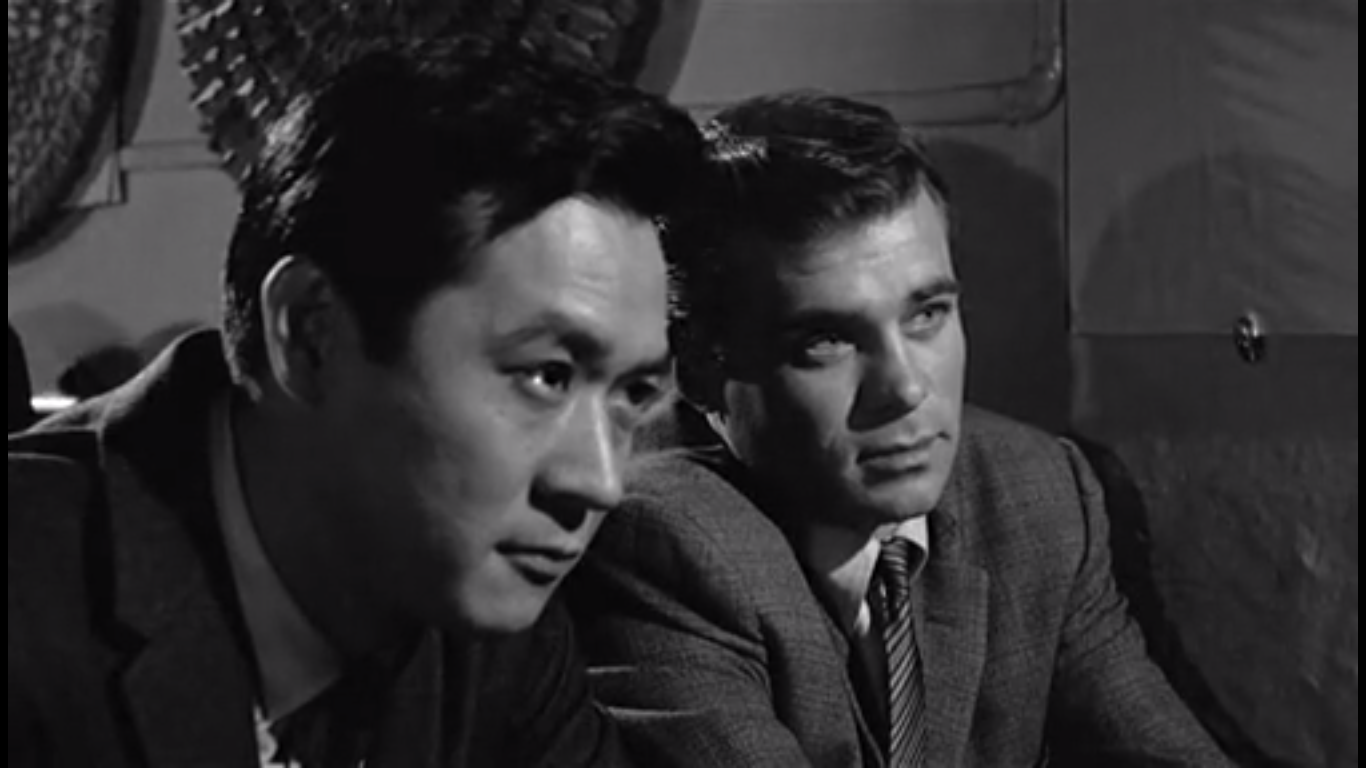
crimson kimono 1 shigeta and corbettFrom director Samuel Fuller comes another welcomed addition to his canon. It features the same type of seedy urban landscapes and back alleys of Pick up on South Street (1953) and there are some equally interesting characters like Mac (Anna Lee). It all is underlined by some sleazy jazz music in the vein of Sweet Smell of Success except this one is set in L.A.

The plot line is basic enough following two policemen as they investigate the homicide of a local stripper with a heart of gold and wasted plans for a new show involving kimonos and karate. Their only real lead is a painting and the name that goes with it. That’s where the more interesting part of the story begins.

I failed to mention that one of the cops is Caucasian. His name is Detective Sergeant Charlie Bancroft (Glenn Corbett). His partner is Japanese-American or “Nisei,” meaning the second generation. Detective Joe Kojaku (James Shigeta) is his name. The beauty of their relationship, which is one of Fuller’s focuses, is that they are equals who are inseparable ever since landing in a fox hole together in Korea.  Charlie was saved by a pint of Joe’s blood, Charlie practices kendo with Joe in their off hours, and they live together on the side. You cannot get much closer than that.

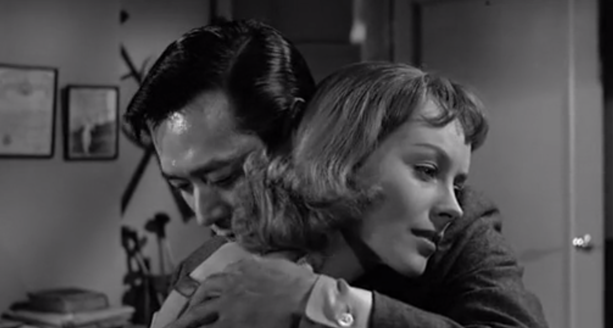
The movement of the plot leads them to Ms. Chris Downes (Victoria Shaw), a pretty young painter who is the only witness who potentially saw the man who shot Sugar Torch. In between looking at journals full of mug shots, she gets to know both Charlie and Joe. Charlie sees himself falling in love with her and like anyone he tells his best friend. Joe is happy for him until the fateful moment when he is alone with Chris. She makes her affection for him quite plain because he’s a pretty great guy, but as a good friend, he doesn’t do anything. It tears him apart and it only hurts them as they plod on with the homicide.

What follows is a painful love triangle embroiled with issues of race, friendship, and misguided notions. It’s jarring because these three are all likable and you want only the best for them, but it cannot be remedied like the murder which ultimately gets wrapped up neatly.

crimson kimono 4 shigeta shawSamuel Fuller always tackles issues of race head on like no other. In fact, he was ahead of his time when no one else would show such relationships, romantic or otherwise, on the silver screen. Beyond whether or not an Asian man and a Caucasian woman romantically involved was accepted back in the 1950s or not, it probably was not what audience cared to see at the movies. To me, now, it’s really interesting, especially to see such non-stereotypical roles all across the board. It’s a breath of fresh air from the Charlie Chans and Mr. Motos.

On another level, Fuller’s camera makes solitary L.A. street corners and the bustling Nisei festival amazingly dynamic. It brings Little Tokyo alive, filling it with genuine people, sights, and sounds. Thank you, Sam Fuller.

It’s like mixing two dabs of paint together. You could never separate them.” ~ Mac on Charlie and Joe

It’s what you think is behind every word and every look.” ~ Chris Downes

4/5 Stars

Review: Double Indemnity (1944)

Double_indemnity_screenshot_8It was a hot afternoon, and I can still remember the smell of honeysuckle all along that street. How could I have known murder can sometimes smell like honeysuckle?” – Walter Neff

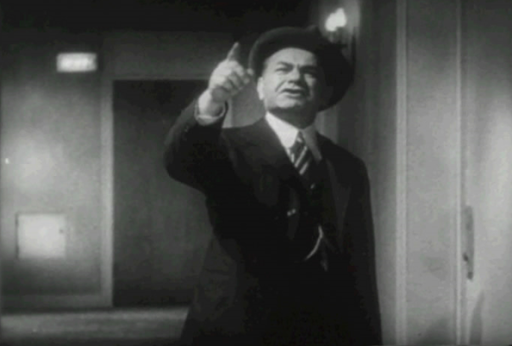
I can’t say this enough. Double Indemnity is so deliciously enticing each and every time I see it. Maybe it’s the A-grade script from Billy Wilder and crime novelist Raymond Chandler with its noir cynicism and memorable phraseology. Maybe it’s the shadowy, low-key interiors or L.A. exteriors. The monotonous beating score of Miklos Rozsa, mourning impending doom. Maybe it’s the plain, laconic way of Walter Neff or his bloodhound buddy Keyes. Is it the innocent Lola who gives the film morality? Or the artificial wig and the silky smooth purring of Phyllis Dietrichson?

In fact, I named many, if not all, of the many facets of this film, because I want to attempt to acknowledge all of them before I forget. But the reality is I love Double Indemnity at its most basic level as a piece of prime American cinema. Yes, it is film-noir and yes, it came from a European director, but it is very much a product of 1940s sentiment as the war years waned.

The story is pulled right from some pulp fiction sleaze by James M. Cain and cemented itself as a noir classic in its own right with all the trappings that are called for.

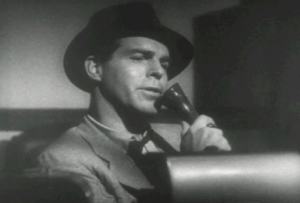
It opens with the beginnings of Rozsa’s score reverberating in our ears and it very rarely lets up. A car blazes wildly down the street and winds up in front of an insurance agency. Out stumbles our protagonist Walter Neff (Fred MacMurray) and for the rest of the film, he relates the recent happenings over the Dictaphone of his colleague Barton Keyes (Edward G. Robinson). It goes something like this:

During his first visit to the home of a Mr. Dietrichson, he instead has his first encounter with the man’s sensual wife, and his heart goes pitter-patter from then on. His motivation is no longer insurance. Now he just wants the chance to see her more. He gets his chance to advise her on a plan, and it all seems playful enough until she insinuates that she wants to knock off her ol’ hubby. At least that’s how Neff reads it. However, he cannot get her out of his head as he has fallen into her web. There’s no turning back.

They think of everything and Neff has everything figured out to a tee. As he suggests, it’s like having the perfect odds on the roulette wheel, you just need an accomplice to spin and Phyllis is just that person. From then it’s just straight down the line. They corroborate on all the details at local Jerry’s Market, Walter sets up his alibi, and he does the devilish deed as Phyllis stares with cool satisfaction at the road ahead.

They set it all up like an accident as the last touch, because as Neff knows all too well if it looks like Mr. Dietrichson was killed from riding a train the Double Indemnity clause of the insurance will mean double the payoff due to how unlikely the occurrence is.

 Double Indemnity (1944) - UpdatedHis only fear is the inquisitive nose of Keyes and the “little man” inside the claims investigator’s stomach, who warns him of the first sign of anything fishy. He gets close to the truth but not quite there. Neff is too close for him to see it. However, as things begin to heat up Phyllis and Neff must separate.

As Neff tries to console Lola Dietrichson over the death of her father, he quickly finds out what the naive girl has to say about her step-mother. It puts a little light on the subject, and Neff realizes what he’s been taken for. He wants to remedy things while he can, patching Lola up with her boyfriend, and going to confront Phyllis one last time.

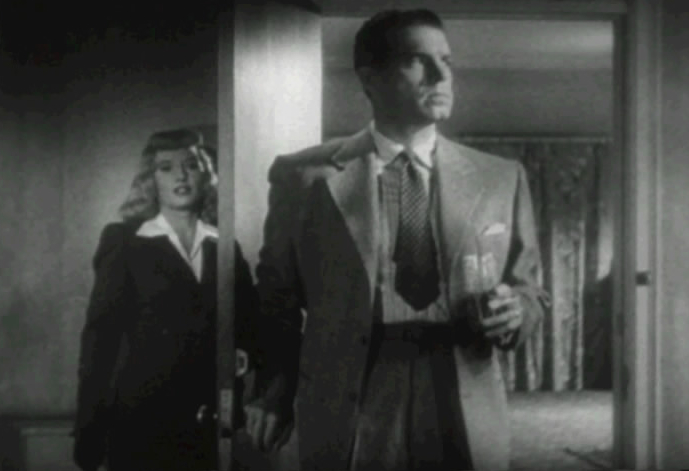
It’s the perfect set-up. Darkened rooms with curtains drawn. Phyllis reclined in an armchair with evil intentions on her mind. In walks Walter and they have it out. Shots are fired, literally. Phyllis will never let up with her ploys until Walter gives her a little help for the final time. I’m sure the Hays Codes loved this one. I certainly did.
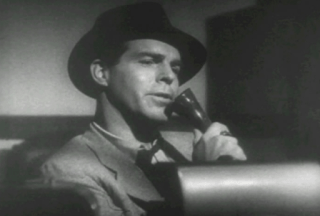
Back in the office Keyes finally overhears the end of Walter’s “confession” as his friend bleeds to death. In one last touching moment, Keyes returns the favor and lights the cigarette like Walter has been obliging to do the entire film.

Walter: “Know why you couldn’t figure this one, Keyes? I’ll tell ya. ‘Cause the guy you were looking for was too close. Right across the desk from ya.”
Keyes: “Closer than that, Walter.”
Walter: “I love you too”

Billy Wilder traded longtime partner Charles Brackett for Raymond Chandler, and despite a rocky partnership, they ended up with one of the greatest scripts, chock full of memorable bits of dialogue. You know you have an impressive cast when Edward G. Robinson is your third lead and each character is playing against type. It’s great casting, in a quintessential American drama solidified by great cinematography and storytelling.

It doesn’t get much better than this and it certainly does not need to. You know Double Indemnity is good when I’ve seen it multiple times and each time the bullets still keep me on the edge of my seat. Thank you, Billy Wilder, for teaching us murder sometimes smells like honeysuckle. That’s absolutely beautiful.

Phyllis: “No, I never loved you, Walter, not you or anybody else. I’m rotten to the heart. I used you just as you said. That’s all you ever meant to me. Until a minute ago, when I couldn’t fire that second shot. I never thought that could happen to me.”
Walter: “Sorry, baby, I’m not buying”
Phyllis: “I’m not asking you to buy. Just hold me close.
Walter: “Good-bye baby.”

5/5 Stars

T-Men (1947)

fb214-tmen3T-Men looks like it could be a dated 1940s procedural right out of a stuffy newsreel. It’s complete with an omniscient narrator overlaying everything. He gives us all the juicy bits without relaying all the superfluous details because, after all, this is a composite case. Also, a lot of effort is made to bring up similarities with the Al Capone case.  So, in other words, it does feel like a heavy-handed newsreel at times.

However, thanks to director Anthony Mann and the pure cinematography of John Alton, T-Men sheds its shallow top layer and gets interesting.

We are given a bit of dry exposition to kick things off. We are following a couple T-Men named Dennis O’Brien (Dennis O’Keefe) and Tony Genaro (Alfred Ryder), complete with full personal bios, who are called on to infiltrate a counterfeiting ring. They get in with the Vantucci mob and make their way from Detroit to L.A. O’Brien aka Vannie Harrigan goes to all the steam baths across town and finally comes across a man named the Schemer. After putting his phony dough in circulation the plan is set in motion as he gets in with the thugs of L.A. too.

And that’s what the rest of the film entails, with O’Brien keeping his cover, while also staying in contact with his superiors and being joined by Tony, aka Tony Galvani from Detroit. It would be run-of-the-mill if not for a few scenes and Alton’s images as previously mentioned.

One day Toni runs into his wife in the most awkward and potentially deadly of circumstances. A well-meaning friend nearly blows his cover in front of a thug and Mary Genaro (June Lockhart) bravely protects her husband. It’s a painful moment.

All too soon Toni’s in trouble and O’Brien soon after, but he’s almost gotten to the top. The digging and prodding have nearly reached their apex. A bit of luck and some timely police support get to O’Brien soon enough so he survives. It’s a show of heroics and gutsy police work like we have undoubtedly seen many times before.

T-Men is kind of like The Departed without all the thrills and plot twists, and cursing if you want to see it that way. But the images are so moody and beautiful that it’s hard not to at least tip your hat if you had one. Do yourself a favor and see Raw Deal, a film with many of the same components and probably a slightly better payoff.

3.5/5 Stars

Pickup on South Street (1953)

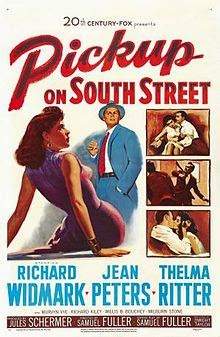
bf34b-pickuponsouthstreetFrom American cult film director Samuel Fuller comes a brief, yet potent film-noir laced with communism, pickpocketing, and a lot of shady business on the streets of New York.
Grifter Skip McCoy (Richard Widmark) is just recently out of the can, and he is back on the streets up to his old tricks again swiping wallets. His victim this time around is a pretty young dame named Candy (Jean Peters) who has a mission of her own to drop off a package. Neither of them knows quite what they have gotten into and to start off with, nothing happens. What exactly has Skip stumbled upon? The answer includes microfilm, spies, and the Commies. All of a sudden things are hot, as McCoy tries to cut a deal with the Reds, and Candy tries to recover the film she unknowingly lost. Candy gets caught in the middle of her boyfriend who is sided with Communists and Skip who wants to cash in on his good fortune. Between Skip and Candy begins a wild and passionate love affair that seems destined for disaster. Both have their own agendas, but it is ultimately Candy who drops hers because of her new found affection. McCoy is callous at first but he comes around, in the end, leaving this noir on a surprisingly positive note.
Thelma Ritter was usually colorful in her many screen appearances and she has another memorable turn as the wheeler-dealer Moe Williams in this film. However, Moe does not just deal ties and secrets; she is a woman with a conscience and a touch of good old-fashioned patriotism. In her own simple way, she is a hero whether people know it or not.
Widmark played a similar conman in Night and the City (1950), but this time around things worked out a little differently for his character. The pickpocket sequences were perhaps less elaborate but still similarly intricate to Robert Bresson’s Pickpocket (1959). It is possible that he got some of his inspiration from Fuller’s work here.
This is a real communist era thriller that Fuller injects with passion, grit, and some unadulterated violence. It is not a pretty film necessarily, but that is not what Fuller is going for, and he never does. Instead, as a former journalist, he reveals to his audience the nitty-gritty of South Street up close and personal. He succeeds with flying colors in delivering a first rate scoop of uncompromising pulp.
4/5 Stars