Patton (1970)

Starring George C. Scott and Karl Malden, the film chronicles the exploits and controversy surrounding the great World War II general. Gaining fame  in Africa, Patton would move on to Sicily, and finally march toward Berlin. Patton was a colorful character who was highly religious, a war romantic, and he also had a big mouth. Despite often being tough and unpopular, over time Patton did garner the respect of many an aid, ally, and even enemy. His heroic 3rd army became famous for their exploits all across Europe. By the end of the war, Patton came out a very complex hero from a former age. The reason this film is good not only rest on it being a war movie but also based on character development. George C. Scott does a wonderful job of portraying the larger-than-life persona of Patton.

4.5/5 Stars
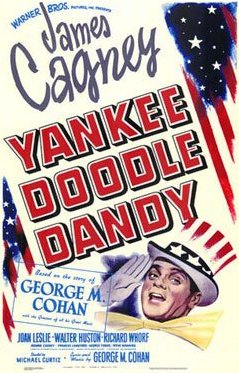
Yankee Doodle Dandy (1942)

Starring James Cagney and an array of others, the film tells the real life story of writer, singer, and dancer George M. Cohan. The story begins with an older Cohan recounting his life story. He began his career with his family in Vaudeville. Slowly he made a name for himself in Broadway and married his love. He and his partner kept making musicals and then the Cohans reunited for one last show. Eventually everyone in the family settled down before they died. The only one left was George who was living with his wife. In his final performance, Cohan gets the country to rally around the flag again as he has done his whole life. This movie has many commendable moments but there is an apparent conflict between biography and musical. Cagney for his part gives a stellar performance as the energetic and ambitious Cohan. The film also doubled as a nice piece of propaganda during World War II.

4.5/5 Stars

42 (2013)

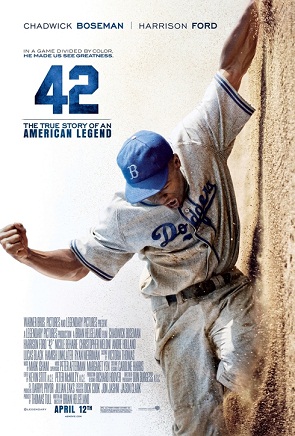
e3a98-42_film_posterStarring Chadwick Boseman and Harrison Ford, this biopic chronicles the life of Jackie Robinson, the extraordinary man and athlete who broke baseball’s color barrier in 1947.  

The film opens and Robinson is playing for the all-black Kansas City Monarchs because the big leagues are still segregated and prejudice still reigns supreme. However, Branch Rickey, general manager of the Brooklyn Dodgers has ideas of his own. He sends a scout to offer Robinson a contract that Robinson accepts and he finds himself with the Montreal Dodgers. After the good news Robinson proposes to his girlfriend Rachel and they get married soon after. The two of them head down to spring training, and with the help of a black journalist Wendell Smith, Robinson begins to settle in. 

Despite being the only black man on an all-white squad, his athletic ability and speed lead to a successful season. Although there is some initial backlash it seems like Rickey’s “noble experiment” might be working. The next spring training in Panama opens and the real trouble begins. The Dodger squad signs a petition vowing not to play with a black man. Then, to add insult to injury Leo Durocher is prohibited from managing. 

It is a rough start to Robinson’s career in the big leagues, and soon it becomes obvious that this is just the beginning. Discrimination is rampant. Robinson is taunted, beaned, spiked, and threatened with death. But in agreement with Rickey, Robinson vows not to fight back. Instead, he beats his adversary on the field. This mindset, along with the support of his wife, and several teammates, lead Jackie to success. He took home the Rookie of the Year and the Dodgers, in turn, won the pennant. 

Fittingly, the film closes with postscripts that describe number 42’s impact on the game. It seems that some have said that from a film standpoint it is unexciting or unremarkable storytelling and that well night might be true, but with a story as good and important as this, I don’t think it matters that much. Fans, including me don’t care. This film is meaningful, because although I knew a lot about Robinson’s life, I never really thought about people like Ralph Branca or Ben Chapman in this light. They are more than just statistics in a baseball almanac. They were men who played a part in this story, whether good or bad. I have always considered Jackie Robinson one of my greatest heroes, not only because I am a Dodger fan but because he was a remarkable man and this movie simply reinforced that notion. Here’s to you number 42.
 
3.5/5 Stars

The Sting (1973)

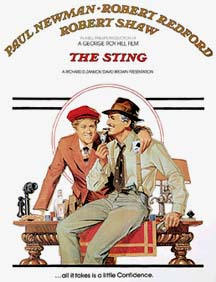
Starring Paul Newman, Robert Redford, and Robert Shaw, the film follows a small time con man (Redford) as he joins forces with an old pro (Newman) to pull an elaborate Sting on a shady banker (Shaw). The two meet after the death of a mutual friend and they set up a complicated plan. With the help of their friends, the two of them make contact and thus begins the adventure. Soon the con man gains the trust of the victim. However, the plan gets even more complicated when a heartless cop and the feds come onto the scene. The double-crossing con is then forced to cross his partners he and faces the consequences. Then, one final twist and you have the worlds greatest Sting. With its ragtime music, 1930s setting, and ensemble cast including Ray Walston, Harold Gould, and Dana Elcar, this film is full of excitement and certainly worth seeing.

4.5/5 Stars

The Social Network (2010)

Starring Jesse Eisenberg, Andrew Garfield, and Justin Timberlake, this film follows the rise of Facebook as well as its creator Mark Zuckerberg.

The film opens with the nerdy Harvard man getting dumped by his girlfriend and it sets the tone for the rest of the movie. The story flashes forward to two lawsuits where Zuckerberg is being simultaneously sued by two twins from Harvard and his former partner Eduardo. The plot shifts back and forth showcasing Zuckerberg’s programming skills as well as his difficult personality.

He then takes the initial idea of the facebook and launches it at Harvard, helping it to quickly become a trend. However, with the help of his acquaintances, he works to expand his idea to other campuses all the way to Stanford. After a falling out with Eduardo, Mark takes his team and heads out to Cali on the urging of an entrepreneur named Sean Parker. Facebook has begun to take off across the globe but not without a cost.

After coming to California, Eduardo learns his share of the company has been diluted while Sean is busted for having cocaine in his possession. We leave Zuckerberg in the present as he sits in front of his lap top, the world’s youngest billionaire, but utterly alone. I cannot attest to how much truth there is in this depiction but I do think it is highly pertinent to this generation. It is impressive that a subject that could potentially be dry, is quite engaging thanks to a great script and solid acting. More than anything I felt sorry for Zuckerberg because he wasn’t really a jerk, he just tried too hard to be one.

4.5/5 Stars

The Aviator (2004)

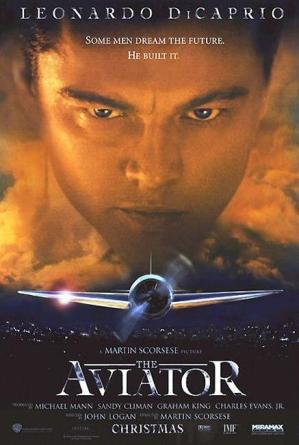
ccda6-the_aviator_posterDirected by Martin Scorsese and starring Leonardo DiCaprio with a good ensemble cast, this biopic chronicle the life of Howard Hughes. The story begins when the ambitious young man begins to direct an epic movie that is nearly a disaster. After his success, we witness the life of this director, playboy, and above all aviator. He makes Scarface and then later The Outlaw. He has relationships with Katharine Hepburn (Cate Blanchet), a young teenage girl, and Ava Garner (Kate Beckinsdale). Then during the war he designs new planes and afterwards Hughes faces his greatest challenge. He is on the brink of disaster in his competition with Pan-Am and he is the subject of a near-damaging senate hearing. All the while his obsessive compulsive disorder gets worse. I found this film fascinating because I knew very little about Hughes. As a director himself, Scorsese also seemed to have sympathy for the man and also admiration for the olden days.

4.5/5 Stars

Titanic (1997)

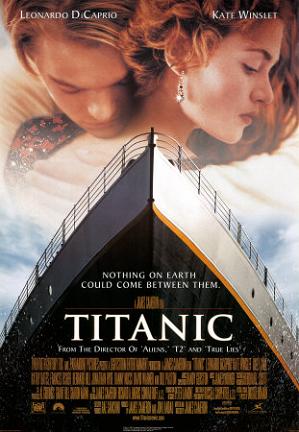
c8571-titanic_posterStarring Leonardo DiCapprio with Kate Winslet and director James Cameron, the film opens with an exploration of the submerged Titanic. An interesting discovery puts the explorers in contact with an elderly woman who was there in April 1912. Rose recounts her arrival as a newly engaged 1st class passenger. She felt trapped in her life until she accidentally met Jack, a 3rd class drifter who won his ticket in a poker game. After he saves her life, their forbidden relationship continues as they spend more time together. Jack, who is an artist, even does a charcoal drawing of Rose. However, all too soon the unsinkable ship hits an iceberg and chaos ensues in the following hours. Heroically, once again Jack keeps Rose alive although he himself perishes in the cold. Back in the present Rose now keeps him alive with her memories. This epic romance is fairly good with a semi-autobiographical story, special effects, and a decent score.

4.5/5 Stars

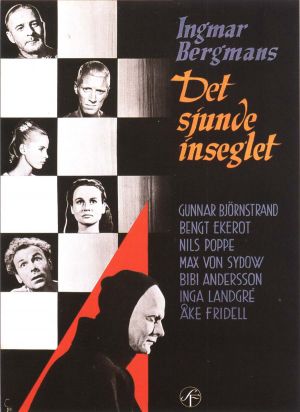
The Seventh Seal (1957)

Starring Max Von Sydow and directed by Ingmar Bergman, this Swedish film revolves around a knight who returns from the Crusades with his squire. He begins a chess match with Death which parallels his travels across a land infested with the Black Death. Along the way he is joined by a pair of married actors and a blacksmith. However, he is tired and disillusioned with his life. To make matters worse he witnesses some terrible things and finally loses his game against Death. He returns to his wife with some of his friends and they face their fate when the time comes. This film was an interesting blending of a Medieval setting and modern disillusionment. Besides being very metaphorical, the cinematography is stark, while the title alludes to the events in the biblical book of Revelation.

5/5 Stars

Mrs. Miniver (1942)

Starring Greer Garson, Walter Pidgeon, Teresa Wright, and directed by William Wyler, this film tells the touching if not sad story of an English family. We follow their life from the happy moments before World War II to the hardships in the midst of it. Through it all Mrs. Miniver is a quietly strong wife and mother who holds her family together. Whether she is waiting in a bomb shelter, capturing a German parachutist, or simply taking care of her family, she exhibits amazing courage and fortitude. She is a testament to those fighting on the home front  Mrs. Miniver is not a part of Dunkirk like her husband. She is not flying like her son but her role is just as important. Even in the closing when tragedy has hit Britain, the country and its Mrs. Minivers stay resilient. First used as a propaganda device in the 1940s this film is till moving today. When you see any of these people rejoice or suffer you too are moved.

4/5 Stars

Inherit the Wind (1960)

Starring two battling greats in Spencer Tracy and Frederic March, with Gene Kelly as well, the film chronicles a fictitious version of the controversial Scopes Monkey Trial which acted as an allegory for the McCarthy era. March is the prestigious prosecutor on the side of Creationism and Tracy is the famed defense attorney fighting for a young schoolteacher (Dick York). The two spar back and forth on the touchy subject while staying friends outside the courtroom. The whole town backs Brady, condemning Cates and Drummond as evil. However, despite all that is against them, Drumond saves the case by bringing Brady to the stand. The two stars have commendable performances if not their best. Gene Kelly proves he can be a serious actor, playing the cynical newspaper man. The cast is rounded out nicely by Harry Morgan and Claude Akins. Here Stanley Kramer puts together a respectable movie version of the stage play.

4/5 Stars