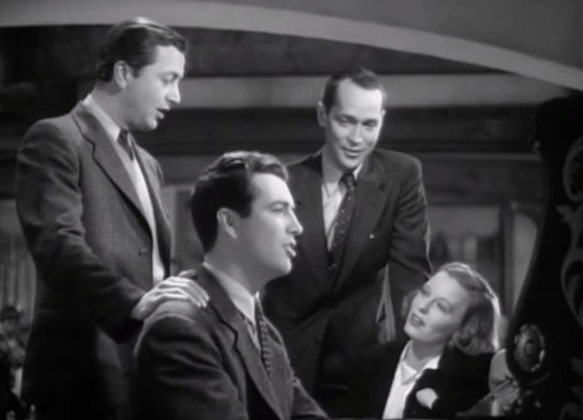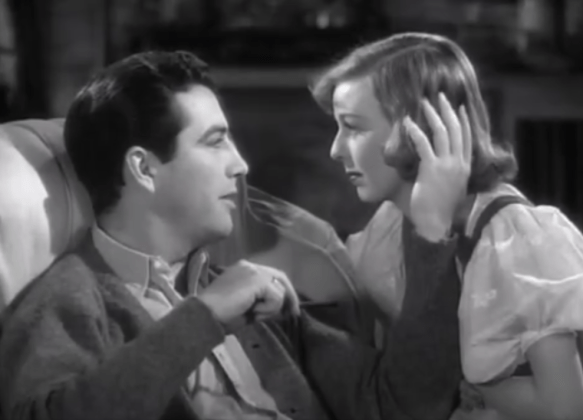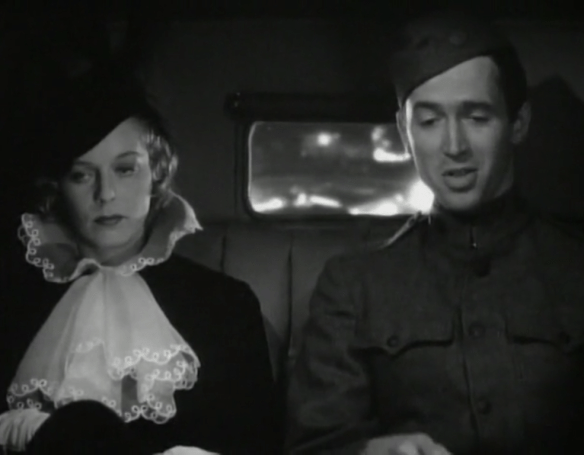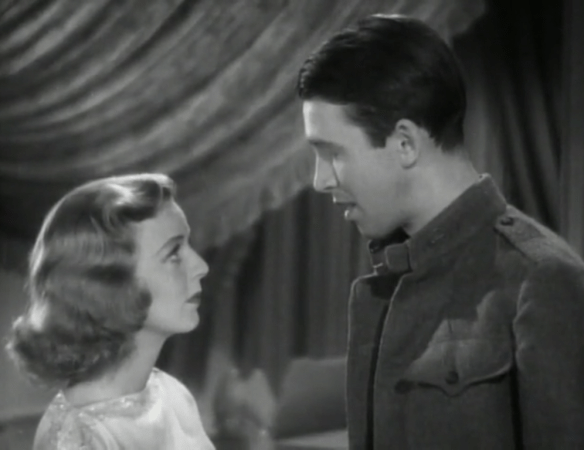
Only Yesterday (1933): Margaret Sullavan Shines

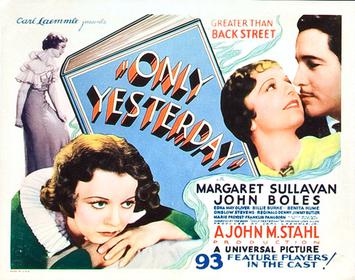
Only-Yesterday-1933-Lobbycard.jpg

In the opening designs of Only Yesterday, the New York Stock Exchange is encapsulated by its usual hubbub only to hit the skids of pandemonium when the market crashes. We’re talking about the Big Crash of 1929. It plays as the backdrop to our story, very much functioning as current events.

The backstory makes the film fall even closer to home. Because like just about everyone else, Universal Studios was saddled with their own financial troubles so it seems fitting Only Yesterday was the project made to get them out of the doghouse and salvage their holdings.

If we are to believe this film, part of what Black Tuesday did was totally humble both the rich and the poor (and the movie studios) in their separate estates. Before the sheer magnitude of the devastation has spread, we get a front-row seat at the party hosted in the home of Mr. and Mrs. James Emerson.

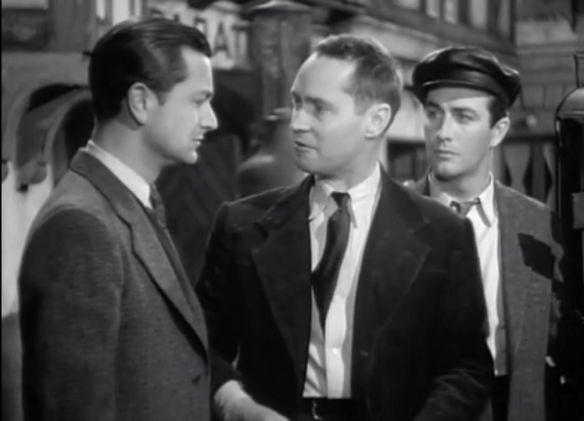
What becomes immediately apparent is the buzz of the atmosphere with tumultuous music and a smattering of glib zingers. There’s a cascading frivolity on all sides to go with the idle chatter supplied by such gossipping fiends as Franklin Pangborn.

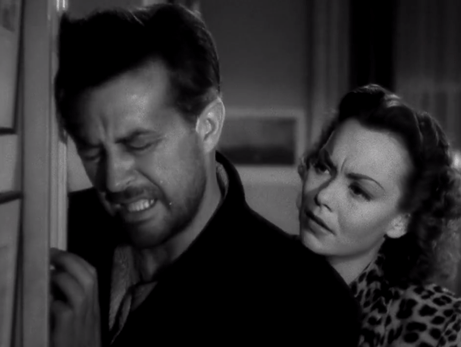
However, Mr. Emerson (John Boles) comes home positively shellshocked because he’s been cleaned out. He’s in no state to make merry opting to disappear into his study. It’s in the backrooms and corridors where the crushing reality sets in, to the point of private devastation.

From the outset, Boles comes off as a sympathetic figure and a calming presence even as he comes to terms with the weight of the Crash and its innumerable implications. It’s true the man of the house looks to be teetering on the brink of suicide, if not for a mysterious letter on his desk.

He opens it up and thereby begins the heart and soul of our story. It is partially his story and someone else’s as well; it began before anyone knew of a Depression, in 1917. If you remember, without leafing through your history books, “The War to End All Wars” was reaching its conclusion.

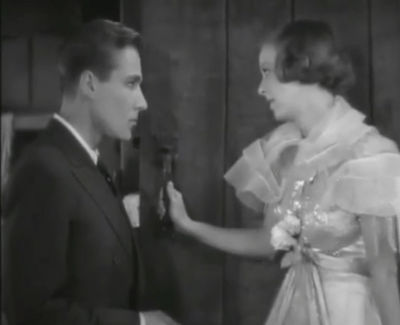
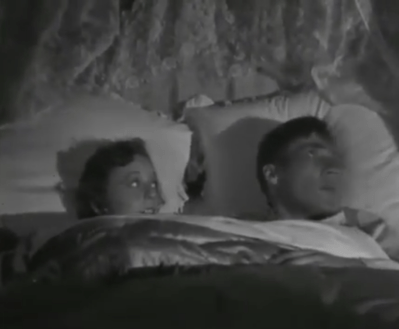
Back then James was a dashing soldier, unmarried, and still looking to finish up business overseas. It was on one such evening back in 17 where he met a buoyant young woman (Margaret Sullavan in her stellar debut) on a dance floor.

She is the picture of youth and her voice has yet to reach depths of only a few years later Regardless, precocious Mary Lane comes out of the woodwork to confess her love for him from afar after well nigh 2 years!

He takes it good-naturedly enough, altogether flattered anyone might look at him in this manner, and it leads to something — a dance and then whatever might come next. If the cynical would term it a one-night-stand, then it’s a little bit of paradise and Mary holds onto the evening.

In her mind, it’s the first of many, if not for the fateful news that the 309th is engaged to be shipped overseas. This is the event her whole life seems to hinge on up to this point; one evening was an entire lifetime. It just goes to show how the same event can take on differing degrees of resonance for two people.

It happens so quickly as to totally catch the audience off guard. James is off to fight a patriotic war and Mary is going up to New York as to not besmirch her family with her ignominy; she is with child.

Shopworn Angel would capture much the same jingoistic “Over There” milieu a few years down the road and yet that time around, not only would Margaret Sullavan be the veteran opposite a still callow Jimmy Stewart, the Production Codes would exert themselves more rigorously.

In terms of solely content, there’s little doubt Only Yesterday is armed with the uncompromising brazenness of the Pre-Code era. This includes a broad-minded perception of a woman’s place in an evolving society. It makes for a fascinating bit of observation, especially considering how Classical Hollywood would eventually settle into a status quo — a cult of domesticity tailored to the mid-20th century.

However, in Only Yesterday, we get Aunt Julia (Billie Burke), a progressive woman who has a life involving such independent-minded things as bob hairstyles and full-time employment. Aside from The Good Witch, Burke often played ditzy oddballs in numerous comedies where she wears on the viewer. Here there’s something resolute and distinctly likable about her because she does beat to a different drum.

The words leaving her lips are both an encouragement to her rejected niece even as they color how she sees the world in the 1930s. She has effectively worked to “kick the bottom out of the bucket called the old double standard” and she fervently believes “Today a woman can face life as honestly as a man can.”

Aunt Julia also helps to temper the situation swirling around Mary helping ease her mind. As a word of comfort, she says, “It’s no longer a tragedy, it isn’t even good melodrama, it’s just something that happened.” Meanwhile, Burke’s jovial suitor (Reginald Denny) seems like a playful generally affectionate chap. This portion is one of the film’s most carefree as a result.

Armistice eventually comes and with it parades of victory. We know what must happen now: a reunion. There don’t seem to be many close-ups throughout the film, but Sullavan gets a few of the most crucial ones when she’s reunited with her man only to realize he doesn’t remember her, having found someone else to love (Benita Hume). It’s a devastating bit of exposition and her face says it all.

If Gold Diggers of 1933 details a forgotten man, she’s a forgotten woman, although she’s not about to wait around to be noticed — she has a son to look after. It shows the depth of her character.

Mary shares a bit of the sacrificial devotion of Stella Dallas or the tragic unrequited point of view a la Letter from an Unknown Woman, maintaining a thin line of communication with her former love through a string of telegrams.

What’s astounding is even in her youthfulness — at only 24 years of age — Sullavan’s more than able to carry the weight of the performance, not only a vivacious ingenue but a mother who’s forced to weather the weight of the world alone. Like Stanwyck a few years later, they prove themselves wise far beyond their years. What a way to enter Hollywood.

Finally, it happens and The New Year brings her face to face with the man she once knew. Boles feels more and more of a cad over time, whether he was meaning to be or not. He has a steady demeanor, a serenity in his favor, but after being so ignorant of one woman, he manages to rebuttal his wife as well, all in a very civilized manner, mind you.

Even as Billie Burke represents something else, there’s still a prevailing sense that women can be cast aside for the sake of a story. Sullavan, on her part, exudes a quiet regality even unto death. What Mary has, however, is a legacy in the life of her child, and in him, like with any life, there is still some hope for the future.

From a historical perspective, there’s a lot to be learned. Even back then a young lad would rather go to the pictures to see Chaplin than read a book, and all the women want to look like Greta Garbo — one of the most sought-after glamour girls of the 30s. Some things never change.

It’s rather sobering to read Margaret Sullavan’s son Jimmy Jr. was played in real life by Jimmy Butler, who was affected by WWII like many were affected by the previous war — killed in action in France at the age of 23. It grounds Only Yesterday in real tragedy.

3.5/5 Stars

Max and the Junkmen (1971): Un Flic With a French Connection

max and the junkmen 1.png

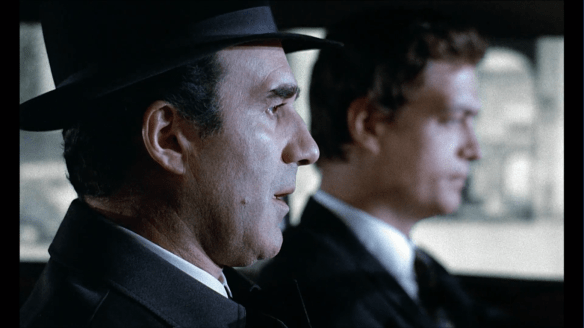
I couldn’t help being reminded of Melville’s Un Flic catching the opening of Claude Sautet’s movie. There’s a policeman, 80 grand missing, and two dead after a heist. It’s not the events that are the same, but the initial sensibilities, the palette, even the world they exist in.

Because Sautet’s hero of choice is Michel Piccoli and not a dashing, virile specimen like Alain Delon. More fallible, morose, and passionate in both his failures and his underlining convictions. In fact, Piccoli’s Max, ironically, shares more in common with Popeye Doyle from The French Connection, exhibiting an unassailable nose for catching criminals under any circumstance.

However, because he hails from across the pond, Max never seems so abrasive and thuggish — there’s a cunning restraint to all the tricks he pulls. In a former life, we learn he used to be a judge but after letting up on a would-be-murderer, he turned his back on the career. Now he catches the criminals where they lie — obsessed with “cast-iron proof” as the chief inspector (Georges Wilson) ruefully observes. He fits somewhere elusively in-between those prior reference points.

For some, Max and the Junkmen might give off the pretension of a talky picture. We get news of this opening heist that ruins Max’s reputation — his informant gave him misinformation — and yet we never see anything. Instead, we are met with the aftermath, in the patrol car, getting word from his superiors, having a meal where he broods over his failures and what he plans to do about them.

Finally, something happens. Max runs into an old acquaintance who deals in scrap. It’s what he’s been waiting for — a spark — and an idea has been conceived in his mind. He’s all but inscrutable as he readies his plans.

All we can do is wait and in the meantime, Sautet explores more of this cinematic space; it’s livelier and more organic as exemplified by Saidani’s Cafe — the people, even the colors are more vibrant.  And while they’re no doubt constructed in some fashion, there’s not the same singular sense of a world being totally sculpted to a vision like Melville’s, even down to the sartorial touches and the bushido-like ethics.

Still, to his credit, Sautet tackles the heist film in a way I’ve never seen and that deserves some recognition. Of course, we’re on the side of the cops instead of the robbers, not an altogether revolutionary perspective on its own. However, as time progress, we realize how cunning the cops are and how foolishly naive the criminals play opposite them. Each of these men is given an introduction of sorts as a policeman relates who they are. It’s not a lot, but it seamlessly tells their stories and bonds them to the audience.

They’re strictly no-name hustlers caught in the pincers of a calculating beast, men barely deserving the title of criminals at all. It’s this element teasing out the almost comic connotation in Max and The Junkmen. Under slightly different circumstances, it could play as some sort of farcical caper.

It’s not merely a contrivance of a story, it’s a totally contrived crime on the inside just so a cop will have an excuse to bring some two-bit, low caliber nobodies in. This is the anatomy of a heist where he’s planning how to nab them even before the idea has ever entered their simple heads to attempt robbing a bank.

This is how far Max will go because we realize soon enough he’s going through his elaborate setup just so he can nab someone — just so he can regain some semblance of justice  to right his reputation. He does it through the means of a woman.

max and the junkmen 2

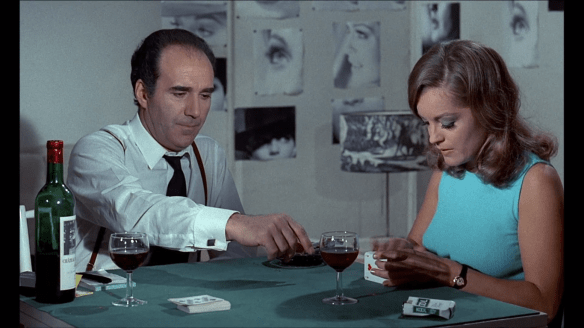
All these plans begin rather deliberately, setting their course and biding their time. However, once Piccoli and Romy Schneider get together the film alights on a compelling relational path. We want to see how they will interact with one another, how their curious relationship will be resolved because hanging in the balance are romance, crime, and justice. Any number of things.

However, we must acknowledge something. Romy Schneider is a cinema icon even outside of the bounds of any of her pictures. Her mere presence feels ubiquitous somehow. It’s easy to liken her to a bit of Dietrich or Betty Bacall, but instead of a husky voice and mid-century roots, she’s all 1970s, liberated woman. And yet with the generational difference, under the surface, human beings are still very much the same. Sautet seems most enamored with this reality. Her voice is softer though defiant when necessary. Independent and still trusting and vulnerable at its core.

Because Max sets up a scenario to totally exploit her. He’s a banker searching out female company, knowing full-well Lily’s boyfriend, Abel (Bernard Fresson), is one of the junkmen he’s gotten a line on. They build trust. He pays her well. They don’t do anything. She finds him peculiar and yet they keep on meeting. Then the hints start coming out slowly. He starts dropping information to make its way down the line. And finally, she takes the bait innocently, as the willing mechanism with which Max looks to nab these crooks. And what’s worse is that they also take to it so easily.

He’s got everything he wants. The police in the precinct have been notified. They’ll block off the streets. There’s an inside man at the bank. They’ve closed it off. It’s the epitome of overkill. The dumb fools haven’t got a prayer.

It’s around this time the shades of Notorious come into sharper focus. The so-called villains feel like the victims. The woman of ill-repute is the betrayed stooge. Our proposed hero somehow feels like the most antagonistic character of them all, and he’s so blinded by his task, when he feels twinges of love for someone, even as he’s manipulating her, there’s this inner crisis of conscience.

Hitchcock lets his protagonists walk out the front door in a harrowing bit of showmanship. Max and the Junkmen has its own devastating finale, which proves wrenching, if not altogether unexpected. Romance has a way of complicating any methodical situation we devise as human beings. Max is tripped up in the same manner. He cannot be a cold-blooded pragmatist even if he wants to; he chooses tragedy instead.

One almost forgets that the whole course of the movie was a flashback because, when it started, we hardly knew who Max was nor that his life would involve a woman who would touch him so.

By the end, getting all the answers doesn’t matter anymore; we’ve been shaken to our core with lives capitulated to unceremonious ends. Like Un Flic or The French Connection, Max and The Junkmen has no space for a happy ending.

4/5 Stars

Les Cousins (1959): Chabrol Takes on Paris

Screenshot 2019-12-16 at 90447 PM.png

“A girl and an exam aren’t the end of the world.”

Most anyone can probably tell you Les Cousins is a fine companion piece to follow-up Le Beau Serge, and it’s true. It features much the same cast — specifically Jean-Claude Brialy and Gerard Blane, in a kind of role reversal. However, instead of pervasive talk about Brialy’s health, this picture is occupied with their familial connection. Otherwise, the action has been transported from the rural to the jazzy street corners of Paris.

Regardless, it doesn’t play like your typical or atypical Nouvelle Vague film, but that’s not to say it’s conventional. Instead, there’s a crispness to it and a composure to the filmmaking.  Truffaut arguably didn’t get there until The Soft Skin, and I don’t know if Godard ever aspired to that. What connects them truly is Cahiers du Cinema and the shared affinity for a new form to upend the preferred traditions of their contemporary French cinema.

Paul is a flamboyant prodigal who, with his goatee, might have been a beatnik if France was lucky to have the craze. They certainly have soiree and cafe culture, and he might as be their elder statesman because he’s not one to fritter his time away on anything so insignificant as studying.

The other primary player, Charles, is a square milquetoast with commendable tact, both proper and reticent, eyes often flooded with shy embarrassment. Whereas Brialy gets to fill up every scene and fly all over the place with hyperbole and a clever line to enter and exit every conversation he throws himself into, Blain easily acquiesces to the story. Somehow the dynamic seems to favor Le Beau Serge and yet there is some mode of fascination to see the roles reversed in a new environment.

Because it’s true Paul’s flat is quite the bachelor pad, laden with a cluttering of artwork and frequented by the gregarious creep Clovis, a sly reprobate who likes a good party, a pretty face, and stirring up trouble. We get a mild suggestion of what might be afoot when a girl from last winter is mentioned to be on the way up. It’s very serious — very cryptic — but when Paul slips her the wad of money, and she slips out again rarely to be seen, it says more than enough.

But it’s quickly lost among the new stimuli and if we are to share the place of Charles, naivete clouds his perceptions. Taking to the streets in the real world as it were, Les Cousins momentarily taps into the New Wave’s invigorating on-location energy. Certainly, the jump cuts of Breathless happened on the streets of Paris, and here we have two fellows taking to the streets and sightseeing with a flurry of abandon.

Next on the agenda, Paul takes his cousin to the local hangout, what is jokingly referred to as “the bowels of hell.” Whatever it is, the tavern is a lively place frequented by people who all seem to know Paul on a friendly basis. The one who sticks out to Charles is Florence; he grows impetuous, immediately taken with the girl.

Between classes, he wanders into a bookstore where the proprietor bemoans the modern generation’s reading habits. They’ve given up Balzac and Dostoevsky for detective fiction and racier fare. Reading is relaxation and nothing more. He effectively acts as a barometer for Paul and his ilk.

That same evening, they hold quite the gathering effectively, playing as the complete antithesis to the humble dance thrown together in Le Beau Serge. This is livelier, full of bubbles, and glamour. Eventually, it devolves into a raucous affair driven by alcohol and the frisky amorousness in the air — a superficial portrait of the debauchery of the idle bourgeoisie. Fellini’s La Dolce Vita is not too far off albeit with an influx of Parisian youthfulness.

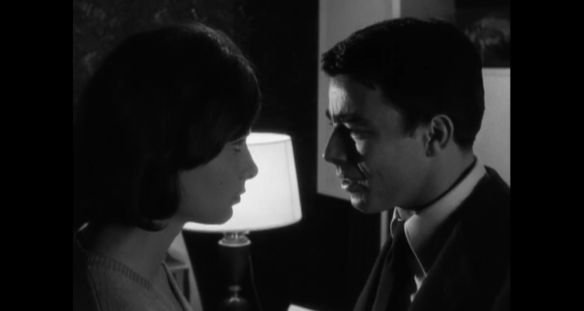
The scenes of two lovers on the street are a gorgeous fixture within the picture, looking sleek and stylish in the patchwork of shadows and moonbeams. Again, it’s an obvious compliment, although it seems to set it apart from some of its Nouvelle Vague brethren.

Screenshot 2019-12-16 at 84938 PM

It’s the beginning of something we can’t quite judge right off. She’s somehow taken with the idea of trying to love him; this at least is genuine enough. Whether it’s his utter devotion — the lovestruck sincerity of his words — or some idealized vision of her own mind, we can’t be sure.

Her friends think it’s a lark and a laugh attempting to serve her with their idea of a reality check. After all, she’s a girl who’s slept around. Why try and play at something inauthentic to who she already is? She and Charles are not from the same walk of life nor the same standards — moral or otherwise. It’s the same old story and as an impressionable girl of 20, she seems to believe them easily enough.

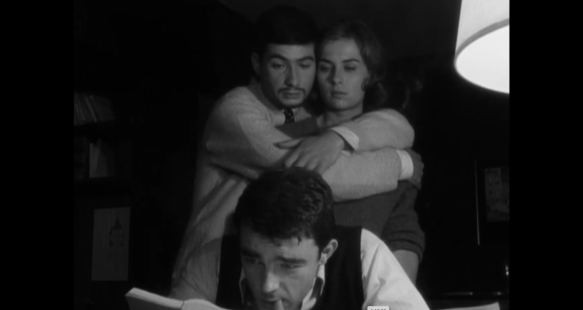
Soon the two young men are warring for the affections of the same girl. Their arrangement is verging on a menage a trois, though they remain admittedly good-natured on the surface. One suspects heartbreak lies dormant. In the follow-up gathering, there’s something more tenuous in the air as Wagner’s “Valkyrie” begins to pick up.

Paul sombers up in a curious change in mood as the movie somehow switches gears. Even as the merriment commences outside, Charles castigates Florence for getting in the way of his studies. He spends the entire evening in the adjoining room feverishly attempting to work in preparation for his impending exam.  Based on my own proclivities, it’s easy to empathize with him and in this roundabout way, it has a pulse on much of the college experience.

However, the most curious of the melodramatic crescendos ramps up out of nothing. This darkly cynical undercurrent begins to exert itself rather insidiously, but it enters in too late to really gel with everything Chabrol has crafted thus far. It feels like an incongruity in its final act — the progression is illogical and at the same time too cleanly resolved. Florence all but dissolves from the story like a phantom as Paul listens to the empty chambers of his gun click, utterly dumbfounded. I’ve let something slip here, but I will leave you to consider the results.

Les Cousins plays as a weaker, less whizz-bang rendition of Jules et Jim, nor can it quite justify its ending. But at this earlier juncture, it feels as if Chabrol already has a better grasp of traditional filmmaking compared to his compatriots, while injecting the picture with mood and artistic flourishes that feel far from conventional. He’s tapping into some still-to-be-exploited reservoirs and even if it doesn’t quite land the finish, Les Cousins offers up something with prolonged interludes of intrigue. This would be a springboard for a prolific career ahead.

4/5 Stars

Steamboat Bill Jr. (1928): Buster Keaton The Human Tumbleweed

steamboat bill jr.

Whatever your thoughts on silent movies, be it based on misinformation, overt loathing, or verging on utter veneration, one has to admit there’s something to the simplicity of these films. And by simplicity, I’m referring to the construction of their stories. They rarely seem to get bogged down by detail. In fact, one could argue they’re at their best on this relatively basic plane. If you’re skeptical, you can call them tropes, maybe archetypes. Regardless, they tap into something universal, even primal.

Steamboat Bill Jr. is a prime case study for what I’m considering. It’s a riverboat tale setting up a conflict between two families overlaid by a Romeo & Juliet romance and spiced up all together by its secret weapon and the main attraction: Buster Keaton.

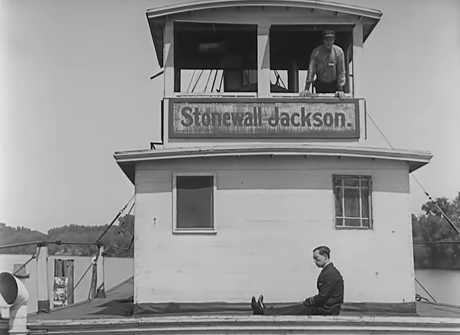
The shoddy but well-loved Stonewall Jackson is another relic of the Confederacy, not unlike Keaton’s prized train in The General. In this case, it’s run by a grizzled veteran of the waters who is about to be pushed out by steep competition. His rival, too, is symbolic as the industrial-era magnate taking over the waterways to go with his hotels and other ancillary attractions. There’s also nothing subtle about his name: King.

The next development is about as absurd as you can get. The steamboat’s captain gets word his son is arriving from boarding school to assist him. He hasn’t seen the lad since infancy and expects a big strapping fellow — not unlike himself. Set up by a prolonged “white carnation gag” full of misidentification, he winds up with timid, squat Buster Keaton to call son. This shrinking schoolboy is a far cry from what he hoped for, and he’s a bit begrudging.

Their ensuing trip to a hat store not only records the contemporary culture’s affinity for a different brand of headwear but also manages to sneak in a nod to Keaton’s ubiquitous pork pie. He slips it off quickly as if afraid someone might recognize him and cause him to break character.

The paces to follow are not surprising. His beautiful and vivacious school chum is the daughter of King. They hold a puppy-like love for one another even as their fathers continue to feud. Just to make ourselves clear, none of this matters all that much.

steamboat bill jr. 2

The secret to Keaton is his innate understanding of the visual gag that could make his brand of comedy funny and, as a result, his stoic everyman too. Stretched out on a plank between two boats — trying to cloak himself in darkness — there’s a shot of King’s boat, and we know they will be lurching forward as they tug at the ropes. He’s going to end up in the drink.

But of course, that doesn’t happen. At least not immediately — his weight perfectly balanced so he juts out on the board like a cantilever, seemingly oblivious of how close he came. So unaware in fact, he tumbles in seconds later. It plays with our perceptions in the most fundamental ways. With irony at his disposal, he milks the laugh and makes it something more compelling and lasting, even to the point of its foregone conclusion.

Later, he raids the rival riverboat in pursuit of his love as his father’s own pride and joy is subsequently decommissioned. His feud with King is exacerbated, and he gets slammed with time in the clink for defying the law.

All these beats are again mundane. They don’t tell us much nor surprise our expectations. Fortuitously, inclement weather comes and Keaton is once more provided a whirling dervish of natural disasters to carry him away in the throes of comedy. Again, this all continues functioning in spite of the story.

Because I’ve dealt with typhoons before first hand — umbrellas upturned in an instant — but this is ridiculous. It defies logic, mass, and normal feats of human ingenuity, but those are the riches of the moviemaking industry and Keaton’s comedy, as facades of entire buildings topple around the human tumbleweed.

He’s whisked away on hovering beds, which might as well be a transplanted flying carpet from Arabian Nights, leading into one of his most iconic and death-defying setups. Again, the visual has primacy, and it works on principles as old as time. We crave security. We fear harm and dismemberment. In all his pluckiness, Keaton takes them on and somehow prevails.

There are a couple moments where it’s like he’s literally suspended in air, fighting against the wind to stand upright, until he’s forced to split the difference. Also, true to form, he uses what feels like a few vaudevillian sleights of hand, supplied by curtains, trapped doors, and a nack for all things physical.

What I admire about Keaton is how he manages to do things that still take the breath away even if only for an instant. He is a bit of a magician and yet he lets us in on the tricks, and he lets the audience take part in them with him — to think we know more than him — and then he proceeds to still pull one over on us.

Even if his character is unwitting, somehow his body and he, as an entity, always seem to know just the right step or movement; it’s just idiosyncratic enough to work in the scenario so he comes out on the other side all in one piece.

When he finally takes command of the ship hopping to and fro, scurrying there, yanking this cord here, it feels like Buster Keaton at the height of his powers, and it shows how this scrawny little guy could be so resourceful on his feet.

Mind you, it’s not just a matter of our story’s hero coming into his own, but it’s a practical expression of the actor’s own prowess — he is an unswerving force of nature packed into what might seem to be a slight frame. He really and truly is a marvel. Because “The Great (Wet) Stone Face” transcends Steamboat Bill Jr. In fact, he is Steamboat Bill Jr. The movie as well as the man.

4.5/5 Stars

When a Women Ascends The Stairs (1960): A Prescient Portrait of Japan

When_a_Woman_Ascends_the_Stairs

A version of this review was first published in Film Inquiry

If director Mikio Naruse’s Floating Clouds is a film about making peace with the war years, then When a Woman Who Ascends The Stairs is a far more forward-thinking endeavor. In fact, I would say it’s a near-prescient portrait of where Japan has ventured now over 60 years onward.

One lady comments you can still see the old Tokyo but it’s obvious — even the classy scoring and the generally sleek compositions suggest as much — modern society is upon us in full force.

It’s the 1960s built on the bedrock of a post-war economy. In a highly fashionable area like Ginza — renowned even today for its shopping and glamour — the western influence is undeniable. Most of the film doesn’t take place on the main streets, however, but in the back alcoves in the lines of bars hidden away. Even here the American influence is felt with many of the bar names deriving from English.

What’s presented is a different type of life, even as it presents its own fashionable conception of the world.  Mama-san (Hideko Takamine), as she is known by all, is one of the women living in this world. She is a kind of hostess. If it’s a euphemism or not, I can’t entirely say.

Still, her entire existence can be summed up by one early shot. The daunting stairs winding up in front of her toward her work. In a practical sense, they lead up to the bar she frequents every evening dutifully, but Naruse’s shot comes to represent something far more.

I’m not sure if we could call it the stairs toward the glass ceiling exactly, but it is true she enters a new world when she steps into work every day. She must fortify herself. She has an untenable veneer built up over the years.

It braces her to be the perfect hostess to all, balancing her customers’ entreaties and come-ons with the utmost ease and floating from each conversation with impeccable tact. Meanwhile, behind the scenes, she works with her longtime manager and bill collector (Tatsuya Nakadai) trying to eke by paying off the creditors they must rent from.

It’s never a sustainable life. Trying to keep customers happy while getting by on only the smallest of margins. Even a regular, named Minaboe, has started frequenting another place. His absence hurts her business. Thankfully, there is other clientele to work on and so she does her best to keep them happy while never quite acquiescing to their wishes. For 5 years in this tawdry business, she’s kept strong in this regard.

Because this is a film all about sex really, though we never see it outright. And if it is about sex, then it’s only as a commodity, a tool, a bargaining chip to be used. Despite being a story about women giving companionship to men on their business trips and away from their wives, for the longest time, no notion of actual love is developed. This should not catch us by surprise.

It is business first. Mama-san is expected to supply small talk and the girls that work under her flirt with the patrons over drinks. But as Keiko later admits, when she returns to her humbler roots, it’s all a created fabrication. They wear kimonos, buy perfume, and pay for taxis and apartments they can barely afford, way above their paygrade just so they can maintain the fantasy for their obliging audience. Meanwhile, there’s another side, a lot more disheartening and downright heartbreaking.

It’s the undercurrent of Tokyo if you wander into the red district or happen to step outside the confines of the beautifully cultivated exterior. It’s not a lie — all the things in front — but there is so much more to contend with. Love hotels, geishas, and hordes of hostesses to go with them. What do they beget? Among many things suicide, loneliness, and helplessness.

If there is any other film I found myself cycling back to it was actually Imitation of Life, directed by the master of luscious American melodrama Douglas Sirk. It also was about a strong single woman trying to make her way in a world all but dominated by men. If it was true in America, it was even more so in an albeit modernized Japan.

Hideko Takamine faces much of the same struggles as Lana Turner in the movie from a year prior when it comes to her own dreams — in this case, gathering enough funds to open her own bar. The only way to get ahead seems to be settling and giving in to the constant implicit or explicit demands of men. Because they hold the power. Society has certain set expectations. So they must play the game or live a life like hamsters on a wheel, in a constantly spinning wheel of survival.

Turner’s life is equally complicated by her relationship or lack thereof with her daughter (Sandra Dee). But in a manner indicative of Japanese culture, Reiko must deal with a nagging mother and a timid brother who are constantly dependent on her for money. It’s the tug and war between familial duty and what she aspires to.

It starts being a film about love once Mama-san finally relents and opens herself up to be hurt. She’s finally human and loves, and the scenes that evolve out of this development are the film’s most devastating. What makes them even more impactful is how they just keep building off one another, scene after scene. There is no relief in this barrage of pain, rejection, and heartbreak that our heroine is taxed with.

There was a certain continuity created between Hideko Takamine and Masayuki Mori thanks to their work together in Floating Clouds and yet the relationships go still further. She’s proposed to and berated and lied to and loved. And yet at the end of the day, she must put a cap on her emotions and saunter up those same solitary steps and put on the genteel facade expected of her. The final action, the smile on the face, and then the token salutation, a last touch of irony.

Even with its touches of humor, in an expression or a line of dialogue, it’s nowhere close to the campy, technicolor crescendo Sirk cooked up for Imitation of Life. But as Sirk was capable of dissecting American life, I would wager Naruse is equally perceptive and adept when it comes to Japan.

Satire and sarcasm infused in drama do not function in the same manner in Japan. In its place, Naruse commits irrevocably to his story and consequently provides another moving examination of his culture. It has a lot to say about a Japan that still seems to exist to this very day in ever-evolving forms.  Loneliness, suicide, and patriarchal ways are not just specters out of the past; they are alive and well to this day.

My last thought is only this. Setsuko Hara was the first Japanese actress I truly recognized across a body of the work; she was a luminary personality, and Hideko Takamine might be right below her, proving herself to be incomparable in her own right.

The performance she gives her yet again is so potent with the range and verisimilitude to all but carry the picture. She’s spellbinding, beautiful, and simultaneously breaks our hearts with the depth of her vulnerability. I won’t be forgetting it any time soon. Because in one go she effectively represents an entire subset of human beings and imbues them with unmistakable pathos.

4.5/5 Stars

A Foreign Affair (1948): Billy Wilder and Post-War Germany

a foreign affair.png

What A Foreign Affair offers is a curious mix of Billy Wilder’s brand of gleeful satire with docudrama. In this regard, it stands alongside the likes of The Search (1948) as one of the earliest American films to explore the world of post-war Europe with so much rebuilding to do both physically and emotionally. It plays as a precursor to One, Two, Three (1961) certainly, offering contemporary observations of the new world order. Still, one cannot even consider these films without acknowledging Wilder’s own background.

He was an exile from Nazi Germany who was welcomed into the American film industry with a myriad of emigre filmmakers, who, subsequently, helped fashion Hollywood into the worldwide powerhouse it would become. He was eternally grateful but never allowed that to totally cow his pointed barbs aimed at America’s inherent flaws.

During the dwindling days of the war, he even served with the Psychological Warfare Department to help develop propaganda material about the concentration camps. His time abroad and the securing of funding launched A Foreign Affair as his latest project.

In the opening moments, a Senate Committee is preparing to make their official visit to observe the current climate. The script’s aims are twofold, setting up the story while also bringing audiences up to speed about the bombed-out world below.

a foreign affair 2

Jean Arthur is more repressed than she’s ever been in her life with some license for her typical comedic chops written in as the narrative progresses. For now, she is a methodical taskmaster very cognizant of her constituents’ tax dollars. Perhaps we need more like her, but for the butt of a comedy, she’s an easy target. The congresswoman entreats her venerable colleagues that they must eradicate moral malaria once and for all as she’s increasingly wary of what they might uncover.

Col Rufus J. Plummer (Millard Mitchell) shows them the sights, stroking his cheek with bemusement (a recurring gag), as he catches everyone up on current events with his wry bent. Meanwhile, serving under him is Captain John Pringle (John Lund), one of the brave boys from home who has taken it upon himself to help rebuild the new world order on the liberating tenets of capitalism.

His typical hobbies include fraternizing with black marketeers to haggle for mattresses using chocolate cakes as collateral. As it turns out, it’s for a girl who drops her key out of the window every time he honks the horn of his jeep. Suddenly the film’s title has become an overt double entendre, and we have our movie.

John Lund is not without charisma and yet somehow the way he goes about this characterization feels all wrong. There’s nary an ounce of genuine charm conjured up by his faux tough-guy persona. It seems ill-fitting. At least he was likable in The Mating Season. Here he can barely hold a candle to the luminary talents of Marlene Dietrich and Jean Arthur no matter how different they might be.

As the Americans make the rounds on their carefully curated sightseeing tour, the representative from Iowa is positively scandalized by all the soldiers with their German gals. She makes a brazen decision, going undercover and winding up at a Hofbrau with a couple of lug head G.I.s,, posing as a reticent German fraulein named Gezeuinheidt.

In the process, she gets the poop on the sultry songstress formerly purported to be in cahoots with Goebbels or Gohring — one or the other. Her gabby companions surmise she still has big brass running interference for her. They’re not too far off and her Phoebe’s detective work brings her even higher up on the totem pole. The very top actually. The Fuhrer himself.

In danger of being ousted in his little arrangement, Captain Pringle starts romancing the congresswoman to keep her off the trail. If the dilemma’s not already obvious, it becomes even clearer in time.

a foreign affair 3

Unfortunately, A Foreign Affair drags a bit in the middle, and the plot doesn’t always maintain the usual self-assured zip of a typical Wilder picture. There are lulls and distractions, which can be enjoyable in their own right, though hardly bolstering the drama. The core issue is a lack of emotional investment in the characters. I love Jean Arthur to death, but her role flip flops too easily on its axle. Dietrich is striking as she ever was, but, again, she is larger-than-life, while the contours of the role itself feel ill-defined and uninteresting. At the very least, the stars the one making it worth it.

There was some talk that Dietrich got all the attention and the favoritism of from her director. And it’s true that she is beguiling even in this latter portion of her career. Arthur felt undercut. It starts with how the script is laid out. However, as she becomes more daring and uninhibited, one could argue Arthur gets the most out of her performance, even down to her always hilarious facial expressions.

Certainly, the camera loves Marlene Dietrich, her sleepy eyes, the husky yet sensual quality to her singing voice. That was her persona. Still, she’s the one playing mistress to an ex-Nazi so that’s not exactly the most flattering part.

a foreign affair 4

Consequently, the denouement doesn’t quite sit right with me. It feels like a muddled conclusion where events just happen, winding up in a manner that tacks on a convenient rom-com ending, instead of leaving us with something that feels truly cynical in the vein you grow accustomed to with the director.

What’s most compelling is the intersection of Billy Wilder and the world of post-war Berlin. Others could have told this story, but he seems uniquely positioned to offer a very personal perspective. The curious clashing of his typical tone of trenchant comedy somehow matched with the war-torn panorama. And there are intermittent moments where this is the case.

Namely, how he’s not squeamish about showing the aftermath, nor poking the beehive of Nazism with his stick. In one scene a heel-clacking father is having trouble with his little tyke who can’t stop habitually chalking swastikas on everything. For a brief moment, we are given a reprieve and license to laugh at such a horrible ideology. It’s almost cathartically hilarious.

In another scene, Colonel Plummer notes in passing how there is rubble of all kinds, be it mineral, vegetable, or animal. We know it to be true, but what an opportunity it would have been to see more of it. I’m reminded of the scenes in the Hofbrau with song and dance and cigarette smoke or the bombed-out streets crowded with black marketeering types. I recognize these are spliced together scenes between Berlin and a Hollywood backdrop.

But this is the exact reality that feels like such a ripe birthing ground for Wilder’s comedy. I never thought I’d be the one to say this; the roots of his romantic comedy all but got in the way of what could have been.

3.5/5 Stars

The Lost Weekend (1945) and Alcohol The Femme Fatale

the lost weekend 1.png

It might be a futile exercise but at least for a brief moment, I will attempt to get back into the headspace from when I first came upon Billy Wilder’s The Lost Weekend. I was younger then. Bright-eyed and a budding cinephile. It is the film that defined Ray Milland’s entire filmography for me as I had never seen another one of his pictures (although Dial M for Murder followed soon thereafter).

Now I understand the crucial context. To say Ray Milland is defined by The Lost Weekend is analogous to attributing Anthony Perkins’s entire persona to Norman Bates and Psycho. You wouldn’t be wrong but in order to understand this inference, you have to understand how the viewing public viewed them in the moment. They were matinee idols and boys-next-door. They fit in comedies and as youthful love interests.

It takes a subversive and inventive mind like a Wilder or a Hitchcock to take the inherent expectations provided by an actor only to toy with the audience. Milland, in his early years, could be defined by the likes of Easy Living or The Major and The Minor. Even noir like Ministry of Fear and The Big Clock, though clouded by menace, rely on the inherent likeability of our hero thrown into trauma though he maybe.

The Lost Weekend was an unequivocal gamble for Milland, in particular, and history has proven to be on his side. He gamely throws himself wholeheartedly into the drama, and it pays heavy dividends.

Don Birnam (Milland) is a struggling novelist with a persistent drinking habit. He’s playing at being reformed, about to go on a trip to the country with his pragmatic brother, but just out of sight and out of reach is a bottle. He’s still beholden to the stuff. It’s a hidden cache of security just in case he needs a nip.

His concerned girlfriend (Jane Wyman) has the cutest way of remedying their height disparity when it comes to kissing (bend down). Even as I’ve gained a more full-bodied impression of Ray Milland, I would like to believe I’ve also reappraised the stardom of Wyman with newfound respect.

She’s not merely an ironic Sirkian pawn in melodrama. During the bulk of the 1940s, she more than asserted herself as a quality performer.  In retrograde, the likes of The Yearling and Johnny Belinda show an extraordinary range, redefining how I perceive her for the better. The Lost Weekend exhibits her at her most likable while still being bolstered with personal resolve.

This is evident even as her boyfriend so quickly falls into outrage as if the people who love him most are turning against him. It all plays as a symptom of the real problem. He feels hemmed in or could it be the withdrawals from the alcohol crying out?

Regardless, the theremin has never used as effectively to denote menace in such a different context than the ubiquitous Sci-Fi trope it would soon become. Because one bottle is snatched away and yet it’s simply indicative of a far more pervasive problem. Don has stashed alcohol all over his apartment in the most ingenious hiding places though his brother is equally adept at hide and seek.The premises are really and truly dry. That is until the cleaning woman unwittingly tips him off to $10 he can splurge on. He’s up for a perilous road ahead.

John Seitz photographs the drama like a brooding noir, and it is as if alcohol — the siren on the shelf — is the deadly fatale entrapping Ray Milland in its web. His girlfriend even goes so far as to label the “other woman” and confidently intimates she’s not going to go down without a fight; she’ll help him beat it and keep Birnham for her own.

the lost weekend 2

Eventually, he succumbs to a bender of a weekend, caught as he is within his own self-exile. What becomes so very evident is how isolating addiction becomes. His only confidante is the local bartender (Howard da Silva in an uncharacteristically sympathetic part).

As Don spirals back into his destructive habit, he recounts how he managed to meet a girl like Helen even in the throes of his alcoholism. There he was sitting in the theater like a fine thespian and yet he couldn’t get it out of his mind. Even the play reminds him of the bottle he has in his jacket pocket, currently stashed out in the coat check. It proved a fortuitous evening as his petulant first impression gave way to charms that won his girl over.

However, it is a portent of all his recurring troubles. The want of liquor leads him into distancing himself from the community just so he can get alone with his bottle. Companionship seems so much more vital and yet we tell ourselves backward lies to rationalize our decisions.

He is a man who suffers from the age-old affliction of Jekyll and Hyde syndrome. He even admits there are two sides to his persona. The man about town with a charming public persona, and then the other Don Birnam. The drunk who remains a tortured writer.

He hits the pits of despair, wandering the streets, desperately looking to hock his belongings for one last satiating drink — even a handout if he can get it. But that’s the lie, isn’t it? Just one more time and we’ll reform. Just one more and never again. We gather together the willpower for an hour, a day, a week, a month, until it comes back with a vengeance.

Birnham’s life is indicative of a whole caste of society. The silent and the forgotten in dark rooms and lonely bouts of aggravation. His brother has turned his back, and he won’t respond to his girlfriend. It quite literally feels like a little slice of hell.

The film makes one harrowing detour to an archaic-looking drunk ward where a sardonic Frank Faylen takes care of the jittery new arrival inside the booze tank. He’s confident Birnham will be a regular customer soon enough. It feels like a harsh and unfeeling extension of the world.

For some, The Lost Weekend might be a tempered now antiquated exploration of alcoholism firmly planted in the past. However, I would like to push against this preconception slightly.

the lost weekend 3

Wilder purportedly penned the piece with his writer partner, Charles Brackett, as a way to explore his relationship with Raymond Chandler and how alcoholism affected their art — the processes of a writer being derailed by drink.  So in this regard, it too is personal and yet about as universal as a picture can be. There is this obvious duality of art and alcohol where one impacts the other in highly detrimental ways.

Wilder’s not always known as a technical director but, if nothing else, he surrounds himself with competent people. A couple names that come to mind in this picture, in particular, are cinematographer John Seitz and then his editor Doane Harrison.

One is reminded of the shots of the overturned lamp repeatedly reflecting the shambles of Birnham’s current life, derailed by drunkenness as it is. In another, it’s Milland’s eyeball spinning psychotically inside its socket. He’s more alive than Marion Crane on the bathroom floor, but we can hardly deign to call this life.

Each of these elements, even the more blatant evocations of his delusions, illustrates the torment of human beings stricken by addiction. It saps our creativity and our energy. It can take away a want for relationships and, in some cases, our desire to live.

The Lost Weekend is a reminder sometimes we need to enter into the storm of our struggles so we might come out on the other side. When you’ve hit rock bottom, the tap is dry, and your body is shaking, the only place to go is up.

However, sometimes we’re not strong enough to pull ourselves up by our own bootstraps. Grit, determination, and resolve only get us so far. We have nothing left. We’re broken, alone, destitute.  Utterly defeated. It’s in this place of helplessness when we are forced to look outside of ourselves…to something or someone else. To reclaim all that is lost and be found again.

4.5/5 Stars

The Major and The Minor (1942) and The Taking of Sudan

the major and the minor.png

Billy Wilder obviously got his start in screenwriting but much like Preston Sturges before him, he desperately wanted creative control to sculpt the vision of the meticulous scripts he helped forge with writing partner (and producer) Charles Brackett.

He got his breakout chance with The Major and The Minor and hardly squandered the opportunity. This might sound silly and high-minded given the plot of the picture:  a young woman posing as a child to claim half-fare on the train to her home state with ensuing complications…

However, the film flows not only out of the script but the execution and total commitment to the gag by Ginger Rogers. At first, it seems like a curious decision. She went from lavish musicals and heady drama to something so zany. Even today her legacy is first and foremost galvanized out of the magic she created on taps with her legendary partner Fred Astaire.

And yet, she took a chance on the neophyte because he had charisma and a gentlemanly manner, and she wholeheartedly believed in his talents. If you take a look at his trajectory after The Major and The Minor, her observations were very well-founded. From these promising albeit still humble beginnings, Billy Wilder shot to the top of Hollywood remaining one of its premier storytellers for decades.

It comes down to his almost holistic approach to comedy and drama. Somehow they become one and the same, tackled with the same gleeful, frequently trenchant wit no matter the subject matter.

This one begins with a typically pointed tagline: “The Dutch bought New York from The Indians in 1626 and by May 1941 there wasn’t an Indian left who regretted it.”

To put the statement in context, we get to know jaded and long-suffering Susan Applegate (Rogers) as she pays a visit to her latest client for a reinvigorating scalp treatment. Everyone including the bellboy gives her a whistle or a fresh word. It’s little better meeting Albert Osborne (Robert Benchley) as he offers her a martini, and she retaliates with an egg shampoo. While she maintains her business-like demeanor, he begins to flirt, mix martinis, and tell a string of increasingly lame cracks, making her fume.

It’s the final straw. She’s had it with the Big Apple and is now prepared to catch the first train back to the welcoming cornfields of her native Iowa. Here’s the catch. They’ve upped the fare, and she doesn’t have the funds to cut it. This calls for a creative solution.

All these types of screwy comedies have to involve some harebrained scheme, the type of fodder made to order for some of the best I Love Lucy episodes. In a similar manner, what is a screwball comedy without a train?

Since she can’t swing a ticket back to her hometown, she dreams up the wackiest solution. Pose as a child… It’s just about as outlandish as it sounds and looks just as strange.

Ginger goes into the Women’s Lounge and comes out a certified bobby soxer no doubt ready to swoon over Frank Sinatra. It becomes increasingly evident we are witnessing a forerunner to Some Like it Hot, as she pulls off the shenanigan with the help of a purloined balloon, a willing accomplice, and an extra high-pitched tone.

As an added alibi for the conductors, she fibs being of Scandinavian stock even speaking Swedish like the great Garbo (“I Want to Be Alone”). Wouldn’t you know, they catch her smoking underage, setting up the obligatory chase scene giving way to the ever-necessary meet-cute.

Enter Ginger Rogers into Ray Milland’s compartment. In a film crammed with cringe-worthy awkwardness, it has to be one of the definitive moments. To his credit, Milland does the storyline a service by committing to the setup in all earnestness. It’s possible to accept his candor, in various moments, chiding her for using her spare change to buy sweets or stumbling through “The Facts of Life.”

He legitimately believes this is a young girl he’s happened upon and treats her accordingly, even as the irony sets in. His one footfall is failing to defend her better against the ravenous boys under his tutelage.

Because he is a military man with a sterling record who, nevertheless, feels stuck in his current post at the military academy. His fiancee’s daddy is his commanding officer and Pamela (Rita Johnson) is used to having everything her way. So when she comes aboard the train to welcome her man home, boy, is she surprised to see another “woman” in his room (unbeknownst to him, of course). In jealous retribution, she sends a tray full of breakfast clattering into his face, which is more worthy of a few hearty chortles. The game is afoot now.

“Susu” as she’s now called is able to smooth things over while maintaining her cover and keeping the good major from public disgrace. As a reward, she gets to experience all the pleasures and perils of Wallace Military Institute, including Rita’s baby sister. However, the aspiring Madame Curie named Lucy, though initially skeptical becomes a willing accomplice in the other “girl’s” ever-evolving plans.

the major and the minor 2

What begins as a fundamental story of escape morphs into a mission of mercy to salvage the life of Phillip Kirby from soul-crushing mediocrity. On his behalf, “Susu” weathers an army of handsy young Cadette Adjutants, who have been trained in, among other things, “The Taking of Sudan,” a handy piece of history if you want to kanoodle.

Using her beguiling feminine wiles to her advantage, Applegate tries to snag the switchboard to send an outbound phone call to get Uncle Phillip’s orders altered. Not only does her ineptitude throw the camp into an uproar; she also raises suspicions.

It only makes sense that the academy’s ball is a space for everything to implode. But first, we must take a moment to acknowledge what a peculiar pairing it is having all the kiddos dancing with Ginger Rogers. Again, she takes it like a sport sans feathery boa or suave dance partner.

Although this is the least of her worries. Something is fated to go awry. It comes in the form of a ticking time bomb of a man who finds little Susu very familiar indeed. The final act falls heavily on the shoulders of the leads’ charismatic powers to rescue it from utter triteness.

Since I’ve been in the habit of mentioning Wilder in the same breath with Preston Sturges as of late, it’s fitting enough to note how The Major and The Minor steals liberally from The Lady Eve‘s playbook. In the end, the after-hours military maneuvers and “The Taking of Sudan” are its own contributions to the screwball genre courtesy of Brackett and Wilder.

3.5/5 Stars

The Palm Beach Story (1942): Another Screwy Sturges Freight Train

the palm beach story 5

“After you’re married… That’s a funny thing to hear your wife say!” – Joel McCrea as Tom Jeffers

All the timeless Preston Sturges pictures have the pace of a freight train barreling down the tracks in loop de loops and figure eights. The Prologue of The Palm Beach Story sets up a raucous race to make it to a wedding ceremony involving a bride and a groom…and a woman tied up… It’s gone in a blink. Hold that thought.

Cut to present. There’s Franklin Pangborn, always hustled and harried. This time as an apartment manager trying to show off the new apartments he has for lease to the grouchy, incessantly deaf Wienie King and his bubbly wife.  These two initial scenes are textbook examples of how to juxtapose people and places for comic effect. In fact, sometimes Sturges will gladly lean into the joke before giving us any indication of what his story really pertains to.

When we finally find a premise, he’s already taken us for a spin. Because the previously revealed bride and groom, Tom and Gerry Jeffers (Joel McCrea and Claudette Colbert), sunk all their money trying to get a bite — namely the $99,000 he needs to get his suspended airport project off the ground. As of right now, there are no takers, and their marriage has tanked. Strangely enough, they still love each other madly. At the very least, their constant quarreling seems to hint at their continued devotion. That’s the wrinkle.

She wants to get a divorce (sacrificially, of course) so she might hook a rich husband to pay for his pet project. He selfishly wants to stay married to her. He tries to hold onto her, racing out of their apartment, in only the bed linens, as she resolves to go to Palm Beach — to find herself a millionaire — for him.

Sturges relishes the comic situation, which verges on the risque, especially for the day and age. The script was even repeatedly balked at by the Production Codes for the very same reasons and still they manage to mention the word “sex” quite frankly (Gasp)!

What becomes most evident is this increasingly flippant disregard for the institution of marriage. The ensuing world and the situations arising make sense originating from a man who himself came out of affluent circles with a row of marriages left in his wake. He’s in a sense writing what he knows intimately while still utilizing his own idiosyncratic perspective.

It’s a glorious trip to Palm Beach as he loads the cars end to end with his stock company, comprising a traveling circus of dopey millionaires making up the Ale and Quail Club. Gerrie gratefully becomes their mascot as they pay her way to the far off land of the Florida coast.

the palm beach story 4

In typical Sturges fashion, he overwhelms the screen with the sheer force of bodies and figures from the likes of William Demarest, Al Bridge, and just about anyone else you’ve ever seen in a Sturges film before. They divert themselves with any number of dalliances including hiccups, trap shooting crackers, and nighttime serenades of “Sweet Adaline.”

What’s even more hilarious is how we never actually see these characters again. They serve their purpose and service the writer-director’s scatterbrained devices. The extended sequence functions as its own standalone vessel of amusement.

He really is the king of writing robust character parts that, while never throwaway, need not be overly important. Today it feels like every bit role must be functional. For Sturges, a character functions, first and foremost, if they add to the comic maelstrom he’s whipping up. When they serve their purpose he can zip onward toward further zaniness.

Likewise, aside from being entertaining, The Wienie King is Sturges’s great enabler within the entire picture, gladly shoveling out money as if it were nothing, for rent and plane tickets — whatever the story requires — and despite his apparent obliviousness, he has these near-surreal bouts of hyper-lucidity. In considering his character, one cannot help surmising a stopped clock is right twice a day – even a tone-deaf one.

There must be a story, but the script gladly supplies a vehicle full of hilarity to deliver the goods for the benefit of the audience. As we progress with the ever-whirling thingamajig of wackiness, there’s the introduction of Rudy Vallee. The former matinee idol shows a certain penchant for comedy in his own right, added to the Sturges hall of fame of crazy aristocrats.

His dry idiosyncrasies serve him well, from the methodical removal and placing of his specs to the ongoing accounting he does in his little black book. Even a couple rueful in-jokes to his earlier crooning days, including “Isn’t It Romantic?,” send a few knowing winks toward the perceptive viewer.

the palm beach story 3

Although she purportedly struggled with her director’s style of mile-a-minute dialogue, Mary Astor, nevertheless, does the corkscrew language a major service as the ably speedy-mouthed Princess Centimillia, who bowls one over with her mixture of glitzy upper crust exuberance and ready-made amorousness. The perfect foil for her dry brother dear “Snoodles.”

To round out the quartet (quintet if you include the single misfire Toto), Tom Jeffers arrives to reclaim his wife but finds himself being turned into a brother named Captain McGlue before he can get in a word edgewise. The quarreling goes on behind closed doors as estranged husband and wife both find themselves romantic objects — currently pursued by other people.

One can’t help to compare it to Midnight, the Billy Wilder penned film with all sorts of little white lies and shenanigans being pulled to keep the charade going for as long as possible. It’s true often the best screwball farces — including some of Sturges’s successes — involve people donning aliases with highly comic ends, of course. Even in this frenetic company, The Palm Beach Story might be more outlandish than most, on par with the rambunctious insanity of Some Like it Hot.

What a glorious wisenheimer Sturges is holding off on the one loose end we’ve been wondering about since the outset of the movie only for it to be the final payoff, setting in motion another story that we’ll never hope to see. Everything is bookended by this ultimate gag that plays as pure Sturges. He’s shoehorned the whole story just so he can swoop in from left field with the most propitious footnote.

At its best, The Palm Beach Story exudes all the zany charms of Sturges’s screwiest works between a finely wrought cast with plenty of whiz-bang patter that time and time again gladly succumbs to silliness. Preston Sturges does his secondary characters a major service, and they more than return the favor. It’s a picture totally stolen away by the supporting cast and rightfully so.

4/5 Stars


The Great McGinty (1940): Preston Sturges & Politics

the great mcginty 1.png

“If it wasn’t for graft, you’d get a very low type of people in politics!” – William Demarest

The Great McGinty feels like a film of many notable firsts. The two most prominent ones being Preston Sturges’s first time in the director’s chair, famously agreeing to a salary of $10 for creative control of his screenplay. The second first has to be Brian Donlevy getting a break at a starring role, even if the picture itself was an inauspicious beginning. As an in-joke, he plays into his image as a heavy only to turn that on its head for something far more intriguing and intermittently hilarious.

We wind up in a banana republic for a hot minute. There’s the usual melange: dancing girls, sailors, drunks, and behind the bar is a very familiar face indeed. It’s the strangest of interludes for such an expedient picture and for a satire that will wind up whipping us all the way around the world to the grand ol’ United States of America. However, one should admit in the mind of such an inspired looney as Preston Sturges, the progression is as natural as X, Y, Z.

Because, formerly, Dan McGinty (Brian Donlevy) was no better than a tramp before his bartending days.  However, even someone like him was a vital cog in the crooked methods employed by a dirty political machine. Led by a bigshot shyster (Akim Tamiroff), they conveniently pad the ballot boxes in the favor of their rather limp candidate.

In fact, they finagle the homeless vote in return for some hot soup and a couple of bucks in their pocket, getting it down to a very dubious science. Each ballot box is manned by an inside man who supplies a name to each new recruit with the deceased, the elderly, and the chronically infirm played by masquerading vagrants.

They’re an easy market to exploit because when desperation is your only guiding light, you’ll bend to any low for some grub. Only one man is cunning enough to take advantage of their shady business for his own benefit. Soon McGinty’s weaseled his way into over $70 bucks and his tough-guy act gets him in with the boss.

He starts out on the lowest rung as an enforcer but soon works his way up thanks in part to his self-assured charisma and the built-in brawn to back it up. When the old mayor gets tossed out on the waves of scandal, the time is ripe for a new up-and-comer. The recurring farce of the movie is how easily the Boss shifts between tickets and candidates with the system all but rigged his way regardless of political affiliation. Is it some uncanny portent Tamiroff originated from the Russian Empire by birth?

the great mcginty 2

The Great McGinty might feel like a one-joke pony if it solely relied on the ludicrous premise of a nobody jumping through the hoops to become mayor and then governor. Instead, Sturges fills out his story with the details of a real life, including the highlights of marriage to his secretary, the new home they purchase together, and the mammoth parade that is thrown in his honor to celebrate his ascension.

Muriel Angelus’s name has been all but buried under years of celluloid — this was her last picture in a truncated career — but she has surprising bearing and charm throughout the picture. One is briefly reminded of Madeleine Carroll. But either way, it serves the movie well to lean into this highly irregular and totally ill-proposed couple. Somehow she manages to be well-suited for Donlevy because they appear so diametrically opposed. His hard-nosed rough and tumble bravado constantly chafes against her inbred propriety and ready-made home life with two kids.

After all, their subsequent marriage is only meant to be a vehicle of convenience although it’s easy enough to infer…perhaps she loves him dearly but is also too proud to force her affections on him. He’s a numbskull, yes, but perhaps there’s some deep-rooted affection in him as well.

They shape one another. He becomes a father figure. Catherine encourages him to tap into his inherent decency and the slivers of goodwill she’s seen glimpses of, even as he feels content to let well enough alone, riding the machine all the way to the governorship.

On the other hand, sweatshops, tenements, and child labor all need a champion to hasten their demise. He has the chance to actually stand for something of substance, and Sturges suggests behind at least some cutthroat half-rate men stands a great woman. They can change for the better.

Admittedly, The Great McGinty is actually a much darker, more foreboding film than we might be initially be led to believe from a production headlined by Preston Sturges. It’s easy to start cross-referencing it with the political graft featured in some of Frank Capra’s notable works, even as the wit and jabs of cynicism of a similar nature would also find their way into the work of Billy Wilder.

Capra’s pictures like Mr. Smith and Meet John Doe probably lay into the graft and corruption harder, but they grant us a sincere happy ending to smooth everything over. Wilder would have to subvert everything to the very last line. And Sturges is more so in this camp although Wilder would come in his wake as another prominent writer-turned-director.

But the stock company is his alone, and he is totally devoted not only to the word on the page but the utter mayhem of it all. It’s a story of graft and corruption where the “bad guy” winds up playing barman alongside the man he was looking to bury earlier on. That in itself is the grand joke Sturges gives us as a parting gag. Thankfully, it doesn’t kill the satire of this otherwise unheralded comedy. In fact, it helps punctuate the utter lunacy of it all. 

3.5/5 Stars