 Children believe what we tell them. They have complete faith in us. They believe that a rose plucked from a garden can plunge a family into conflict. They believe that the hands of a human beast will smoke when he slays a victim, and that this will cause him shame when a young maiden takes up residence in his home. They believe a thousand other simple things. – Jean Cocteau
From the outset director Jean Cocteau entreats his audience to have a “childlike sympathy” and as a viewer, you do well to heed his advice. Because, that posture is exactly what becomes the guiding force behind this entire fairy tale that he has developed, in some ways so planted in reality and in others very much the purest of fantasy stories.
Though simple, the film’s special effects are surprisingly mesmerizing with magically opening doors, mirrors and human columns spewing smoke. You half expect to see strings or some other obvious cue to signal that this is all a facade, all hokey tricks, but a moment like that is never obvious. The film maintains much of its magic even after 70 years.
The Beast’s castle shines with the opulence of goblets and jewel, while the farmhouse of Belle and her family is humble, characterized after the artistic works of the great Flemish master Jan Vermeer.The atmosphere is equally gripping and Cocteau stages some of his shots in invariably interesting ways interrupting the plane of view with candles, smoke and anything else that suits his fancy. And that’s the beautiful things about fairy tales. You are not tied down to any sort of logic or narrative convention. His film is free-flowing, pacing itself as it sees fit. Even it’s ending is enduringly perplexing, hardly as straightforward as a Disney adaptation, but there is still immense power in that.
There are also an equal number of familiar reference points like evil sisters, who are blinded by their own avarice and then, of course, their humble sister, Belle, played so exquisitely pure by Josette Day. Her face beams with a radiance not often equaled and whether clothed in rags or the finest robes, it’s her humble elegance that shines through.
But it’s Jean Marais’s performance that is perhaps even more noteworthy if that were possible as he takes on a dual role. The first is more obvious, as Avenot, the man that Belle secretly loves, but it looks like it will never be due to their circumstances. However, Marais also takes on the monumental role of the beast and hidden behind tireless amounts of makeup and fur, it’s easy to lose him in the role. What would have been lost if he was animated or computer-generated, is betrayed in how he carries himself and even how he talks at points. Certainly, he is a creature prone to barbarism and violence, but innate in a performance such as this are those human characteristics. Thus, the perfect fairy-tale ending that we all know by now — probably thanks to Disney — is also a striking reminder. Yes, the fate of the prince of becoming a beast was due to spells and incantations, but we can just as easily be beasts now.
Without trying to go too far with the idea, it’s easy to recognize moments when we act almost inhuman. In fact, that’s the constant struggle of mankind, fighting against our more animalistic desires to do what we actually perceive to be upright. So you see, the Beast is not just a fairy story or the Beast is not simply someone else acting out in a horrid way, but the Beast can just as easily be you and me. In Cocteau’s film, a lot is made of the mystical mirror. Belle looks absolutely divine under its gaze but her sisters show up as an old woman and then a cackling monkey. If each one of us was to peer into that same mirror what would we show up as? What characterizes our lives? Beauty or bestiality? If this story is any indication, at least there is a chance at redemption. But that’s enough of that. La Belle et la Bete is a sublime fantasy deserving airtime alongside Disney’s more well-known adaptation.
4.5/5 Stars
 The fact that Miracle on 34th Street and this film came out the same year seems to suggest that there was something special in the air of New York City that year. It was a magical place, specifically during the Christmas season with Santa Claus going on trial and winning, while tramps helped reform millionaires. Admittedly, It Happened on Fifth Avenue is one of those films that could easily come under fire for its implausible plot, its unabashed sentiment, and any number of other things.
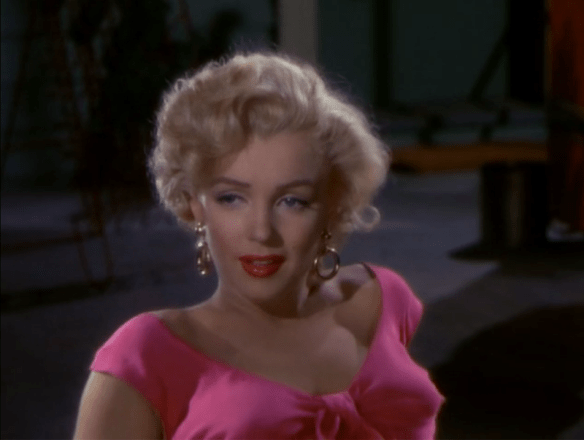 Rainbows, the soft misting of waterfalls, and honeymooning couples going through the tunnel of love. It hardly feels threatening at all, but that’s what makes film-noir so delicious. As the film style most reflective of the human condition, it proves that the dark proclivities and jealousies of the human heart can crop of anywhere–even a gorgeous tourist trap like Niagara Falls.
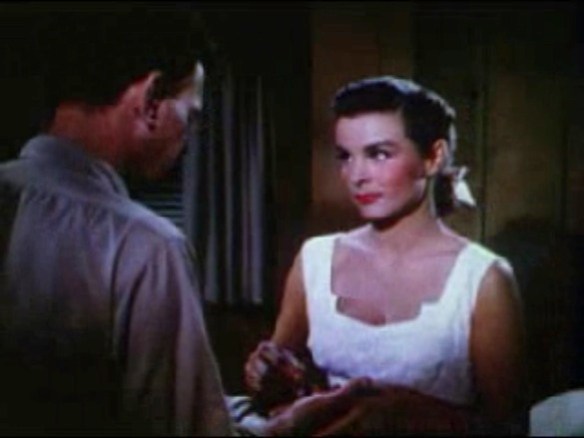 Without a question, Jean Peters becomes our favorite character as Polly, and it was an eye-opening for me personally to see her in a role so vastly different than Pickup on South Street. I had pigeon-holed her, rather erroneously as such a character, but Niagara shows a more tempered side to her persona that felt more representative of her as an actress. Max Showalter plays her husband, the genial and oblivious Ray Cutler, who takes his lovely wife on a long overdue honeymoon, only to have it totally ravaged thanks to the Loomises.
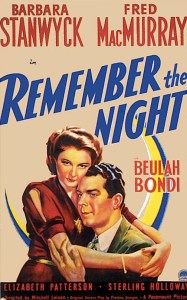 I find that many of the best Christmas movies aren’t really about Christmas at all — at least not in the conventional sense that we’re so used to. Not trees or presents or lights or even holiday sentiment although those might all be there.
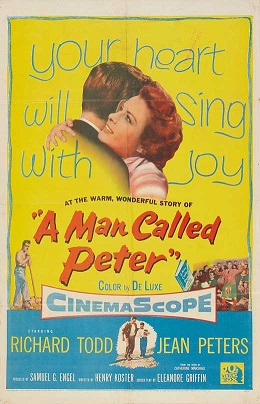 The film’s tagline reads, “Your heart will sing with joy” and that about sums up A Man Called Peter.
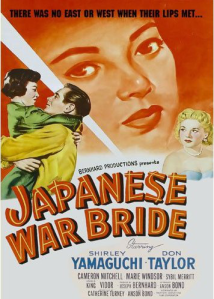 Much like Sam Fuller’s Crimson Kimono (1959), Japanese War Bride’s title carries certain negative stereotypes, however, its central romance similarly feels groundbreaking, allowing it to exceed expectations.
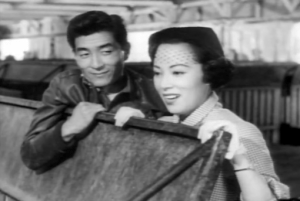 Jim looks to build up a happy life with her as he looks to take some of his father’s land to keep a home of his own and raise crops. Tae begins to acclimate to her new life and gains the respect of the Taylor family while making a few friends including the kindly Hasagawa siblings (Lane Nakano and May Takasugi) who work at a factory nearby. The icing on the cake is when Tae announces she’s pregnant and Jim could not be more ecstatic.
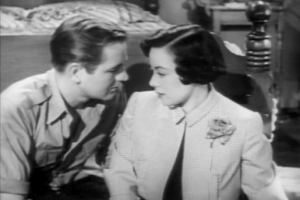 Japanese War Bride is continuously fascinating for the presence of Japanese within its frames. First, we have a rather groundbreaking and relatively unheard of interracial romance between the always personable average everyman Don Taylor and stunning newcomer Shirley Yamaguchi. Their scenes are tender and hold a great deal of emotional impact. It’s the kind of drama that has the power to make us mentally distraught but also imbue us with joy.
 The opening notes of Joan Jett hollering “Bad Reputation” made me grow wistfully nostalgic for Freaks & Geeks reruns. The hope budded that maybe 10 Things I Hate About You would be the same tour de force narrative brimming with the same type of candor. It is not. Not at all. But that’s okay. It has its own amount of charms that forgive the obvious chinks in the armor of this very loose adaptation.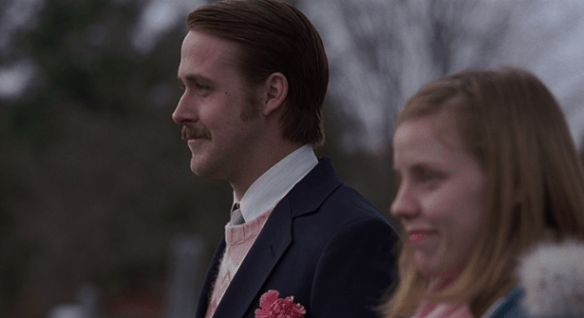
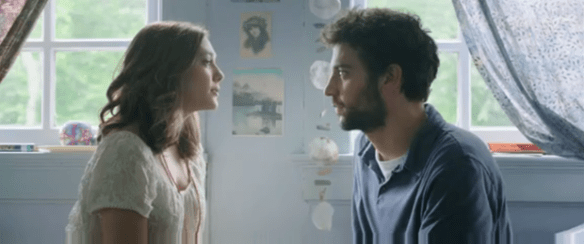 Where to start with Liberal Arts? It’s one of those deep blue funk movies. Zach Braff tackled this issue in Garden State, and Josh Radnor does a similar thing here. Because the reality is that we live in a generation of early onset midlife crises. In the opening moments, 35-year-old Jesse Fisher (Radnor) has nearly every article of clothing he has aside from the shirt off his back stolen from a local laundromat when his back is turned. We can easily surmise that this single event epitomizes his life right now, and this is hammered home rather obviously when his unnamed girlfriend clears her belongings out of his flat. There’s no better symbol of isolation and alienation than a break-up.
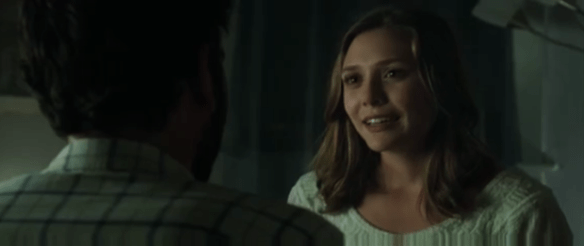 It’s crucial to note that at this juncture nothing substantive builds between these two acquaintances romantically, but they do foster an immense connection. While Jesse is taken by Zibby’s personality, she, in turn, is discontent with a contemporary culture where no one dates–everybody’s casual about relationships. She feels unequivocally millennial and yet she readily admits these areas of old-fashionedness.
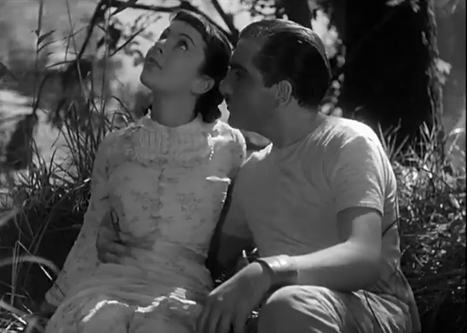 It’s only 40 minutes — hardly a feature film and more of a featurette, but Jean Renoir’s truncated work, A Day in the Country, is nonetheless still worth the time. Admittedly, I still have yet to venture to France and I hope to do that someday soon, but this film propagates marvelous visions of the countryside that resonate with all of us no matter where we hail from. Those quiet jaunts out in nature. Sunny days perfectly suited for a lazy afternoon picnic. Peacefully gliding down the river as men fish on the bank contentedly.
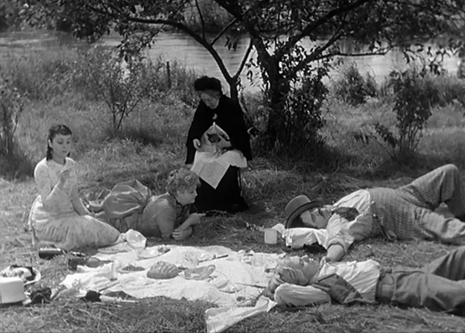 As always these characters set up Renoir’s juxtaposition of luscious extravagance with the earthier lifestyle of the lower classes. However, there is a geniality pulsing through this film, with Mrs. Dufour exclaiming how polite these young men are–they must be of good stock, obviously not tradesmen. Even Mr. Dufour is a good-natured old boy who gets fed up with the elderly grandmother, but he willingly takes the boys charity and advice when it comes to the prime fishing holes.
 We get the essence of what is there and we can still thoroughly enjoy Renoir’s composition. His is a fascination in naturalistic beauty where he nevertheless stages his narrative to unfold in time. But really this mise-en-scene created by the woods, and meadows, trees, and rivers really function as another character altogether. And when all the players interact it truly not only elicits tremendous joy but an appreciation for Renoir’s so-called Poetic Realism. Whether he’s capturing a woman swinging jubilantly on a swing or framing a shot within the trees, we cannot help but tip our hat to his artistic vision. If his father Auguste was one of the great painters of the impressionist era, then Jean was certainly one of the most prodigious filmmakers of his generation, crafting his own pieces of impressionistic realism. In fact, with father and son, you can see exactly how art forms can overlap on canvas and celluloid. They truly share a fascination in some of the same subjects. Universal things like nature and human figures interacting in the expanses of such environments. It’s beautiful really, even in its pure simplicity.
 4 Star Films