
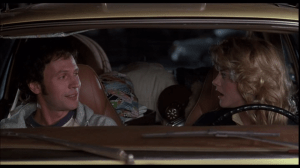
 “Men and women can never really be friends”
When Harry Met Sally…what happened? Well, the first time in 1977 they spend an indubitably long car ride together. Whether or not it’s true, this debate about men, women, and friendship is the driving force behind their choppy relationship over the next decade or so. Back then it began with arguments over Casablanca and late night conflicts at a diner when Harry makes a pass. Good thing they’ll never see each other again. That’s what they think.
5 years later we’re in an airport. It doesn’t seem like much but Harry bumps into an acquaintance he knows, and surprise, surprise Sally ends up being his girl. They don’t give much notice to each other, that is until they end up on the same flight together. Once more they continue the friendly argument they began back in college, although he is now a political consultant and she is a journalist or something. Harry has become more lenient on his hard and fast rule, but they leave each other ready to get together with their significant others. A friendship between the two of them now seems so inconsequential.
But 5 years later role by again and Sally is still unmarried. Things didn’t quite work out and her best friends are hoping to help her move on. Then, she spies none other than Harry Burns in a bookstore and they strike up their quinquennial convo once more. This is a defining moment as they finally decide to become friends. It seems with the passing years they’ve lost a little bit of their idealism and pigheadedness respectively. When you have experienced romance and lost you are more apt for compromise. The passage of time changes people too. So it goes with Harry and Sally.
 Now they have late night chats as they lie in bed listlessly or they grab a bite to eat at the local deli. In that perceived transitional period of loneliness, they find comfort and companionship. They discover what a platonic relationship can be without sex. Except much of their time is still spent talking about love and sex. Harry and Sally are so preoccupied with such topics they probably don’t even see what’s happening to them.
Ultimately a blind date they set up with each other’s best friends fails abysmally, but their best friends hit it off instantly. Bruno Kirby and Carrie Fisher end up making a stellar combination, both exhibiting wonderful personality paired with wit. They make believable best friend material. But during their wedding, Harry and Sally’s friendship goes down the tubes and looks to be finished. It’s in the interim leading up to New Year’s Eve that Harry realizes what is happening inside of him. It took umpteen years, but Harry and Sally finally fall in love! At the end of the film, they fittingly receive their own cutscene like the various old married couples who share their fairytale romances interspersed through the entire film.
 Bob Reiner’s When Harry Met Sally… works unequivocably because, in many ways, it helped define many of the unspoken rules of the rom-com following the mold of Woody Allen’s Annie Hall. Overall, the addition of Harry Connick Jr.’s music gives the film a jazzy feel rather reminiscent of Allen’s work. In fact, it does feel like Reiner emulates Allen and in this case, mimicry is the highest form of flattery. Meanwhile, Nora Ephron’s script is often inventive, creating future cliches rather than falling into old ones. To his credit, Billy Crystal is able to play his role with sincerity and sarcasm when necessary, while Meg Ryan is full of a feisty vim and vigor in her own right.
Perhaps most importantly the film speaks to topics of romance and sex. Sex is not a commodity to be bartered with, but then again it cannot be wholly bad if humans are constantly desiring it. In there lies a mystery. There must be a context in which sex actually means something more than just being a simple act. Perhaps when love comes first. That’s what makes what Harry and Sally have so special. True, it’s marriage, but really it’s a lifelong friendship. That’s what it’s meant to be — the closest bond you’re ever going to have with another person.
4/5 Stars
 “You have the darndest way of bouncing a fellow down and bumping him up again” ~ Henry Fonda as Charles Pike
 In fact, we have a brilliant introduction to her as she narrates the scene unfolding in front of her with the aid of her compact mirror. She trips up the bumbling bachelor and their introduction is the first exclamation point in a bumpy relationship. She’s ready to play him and marry rich and famous, because he’s a pretty naive fellow, and stiff around the ladies. Fonda’s nervous charm proves the perfect recipe for success as he is constantly being overwhelmed by Stanwyck’s frenetic barrage. His defenses are down and he hasn’t the foggiest what has hit him. Either he was really that uncomfortable or otherwise, he does a superb job of faking it since there’s never another moment where he’s not being fondled or manipulated.
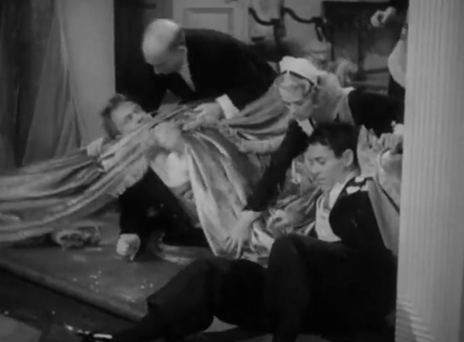 The story could end there, but Sturges has set his story up perfectly for a killer second act. Jean plans a perfectly sneaky revenge plan to get back at “Hopsy” by posing as the British niece of another con man (Eric Blore). He uses his own wily charm and influence to get them an invitation to the Pike household for dinner. There we see several other great character actors in action including Horace Pike (Eugene Pallette), and the perennial sourpuss Muggsy (William Demarest). Jean shows up now as the Lady Eve and successfully convinces her “Hopsy” that she is a completely different individual. The film works wonderfully on this axle of ludicrousness because young Pike is completely befuddled and awestruck again. He goes thudding, clanking, and crashing all evening long, a true victim of love. Pike thought he lost one girl for good and here’s another even better prospect. A whirlwind romance follows and everything is falling into place beautifully. There’s a frantic montage in preparation for the big day and then it happens. They get hitched. Afterwards, it’s all done and the two lovebirds are on a train barreling down the tracks interspersed with the long laundry list of all Eve’s beaus from Angus, to Herman, and Cecil and so on. It’s Charles’ worst nightmare, and he hopes to get out of it as quickly as possible.
 What makes Sturges’ film so wonderful is all the parts making up the whole. His script is perfectly contrived mayhem. He sprinkles it with his typical slapstick, his loudmouthed stock company lends an added layer, and his typically lightning-quick repartee is brought to life by his leads. Stanwyck was the quintessential leading lady of the 1940s and in 1941 she was in fine form (Balls of Fire and Meet John Doe). She can dance so effortlessly between dynamic comedy to heartfelt drama that is positively palpable. She overshadows Fonda in a sense, but they still work together, because he is her perfect foil, the precise innocent fool to fall into her web of feminine wiles. She can muss up his hair, manhandle him, and completely manipulate his feelings. Yet we still like both of them in spite of it. They are a hilarious match, and there’s space for some passionate canoodling as well. It’s probably one of the most perfectly wonderful, utterly dysfunctional relationships we could ever hope to see put on screen. By continually whipping out punch line after punch line to the very last quip, Sturges makes this comedy look positively effortless.
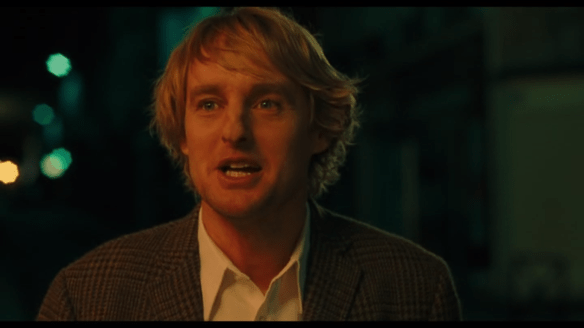 Midnight in Paris begins with scene after scene of the Parisian landscape. It gives off the feel of a lazy vacation, strolls in the park, sidewalk cafes aplenty, and even romantically rainy afternoons. For those who have never been to Paris, it makes you fall in love with the city in only a matter of minutes. Gil Pender (Owen Wilson) is such a person who would easily be content with the Left Banke, Baguettes, and a chance to write his latest novel. There is an air of wonderment that pervades his very being. He’s often naive and unassuming — hardly someone you would peg for a big Hollywood success story.
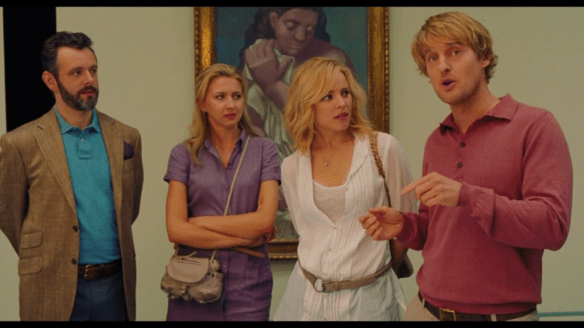 For obvious reasons, Gil cannot stand spending time with his wife’s friends. Instead, those breezy, absent-minded walks down the lanes are more his taste. Inez can’t begin to understand why he does it, but one night he’s in for a big surprise. One minute he’s out for a stroll and then the clock chimes twelve. All of the sudden something a la Cinderella happens. A coach pulls up, Gil tentatively gets in not knowing what he has just stumbled upon, incognizant of the adventure ahead of him.
 The linchpin of the whole story is really the ravishing French beauty Adrianna (Marion Cotillard), the muse of Picasso, the desire of Hemingway, and a newfound friend of Gil. He cannot help but be enraptured by her grace and the time they spend together is wonderful, that is until he tells her that he is pledged to be married. Although, it looks like he and Inez will not be together much longer as they continue to drift further and further apart.
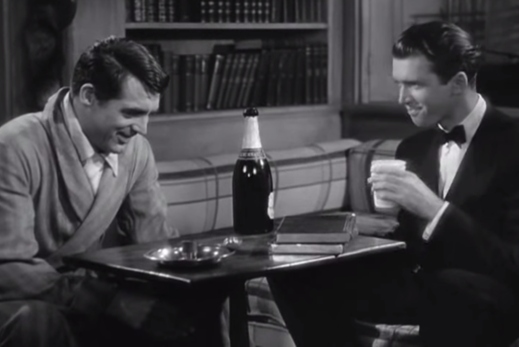
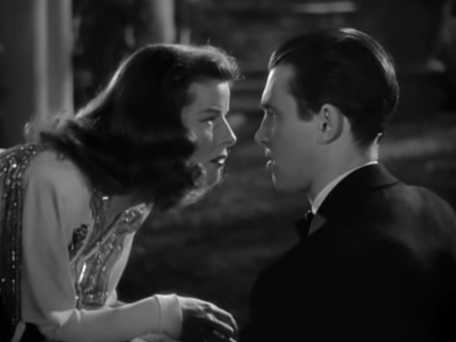
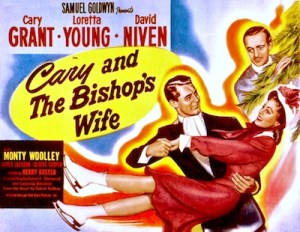 Although its theology probably isn’t sound, rather like It’s a Wonderful Life, The Bishop’s Wife nevertheless utilizes its central plotting device wonderfully.
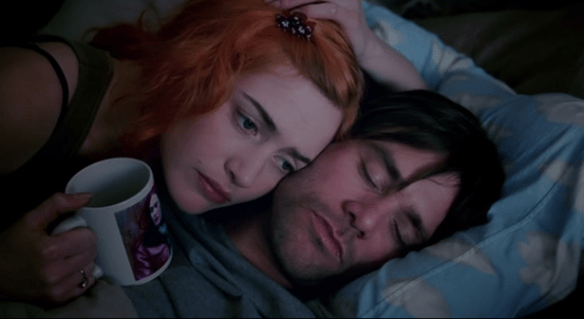 In truth, I always thought this film had a well-suited title for its material. It was rather unusual and unique. There was not much more to think about otherwise. But when you actually think about it, whether or not you consider Alexander Pope’s poem from which it originates from, there is great truth that can be gleaned from this phrase “eternal sunshine of the spotless mind.” In fact, it’s truth that points to the heart and soul of Charlie Kaufman’s story.
 He swims in and out of consciousness between the past and then the present that is going on outside his head. The voices inside his head, or more aptly, the voices right outside his head come from two engineers (Elijah Wood and Mark Ruffalo) from a company in charge of erasing his memories. They create a map of them so they can remove the memories later.
 Finally, the narrative folds over on itself again as Joel’s mind returns to the present — a present without any recollection of Clementine. They meet again and there’s a strange sensation in the air. It’s a true deja vu moment that has them befuddled and confused. Will they go through with their relationship even when they find out about their rocky history?
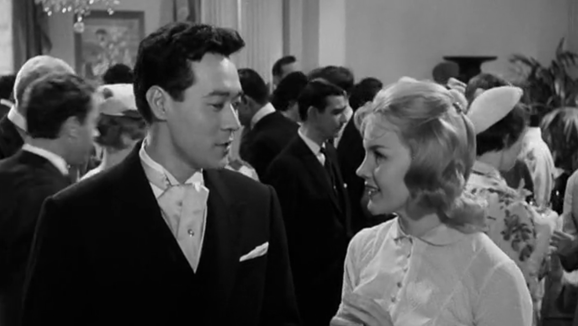 Bridge to the Sun is one of those films that was ahead of its time. Its main players are hardly remembered by modern audiences. Belgium director Etienne Perier was only a little blip on the Hollywood radar. The leading lady Carroll Baker was probably more notorious for her controversial role in Tennessee’s William’s Baby Doll than she was famous. James Shigeta was a pioneering actor, who was famously told, “If you were white, you’d be a hell of a big star.” He aged gracefully, but was slowly relegated from leading roles to bit parts in Hawaii Five-O and Die Hard. In truth, the film, based on the memoirs of one Gwen Terasaki, does suffer from a clunky script at times, and the box office returns were not too favorable. In fact, it was an outrageous flop back in 1961.
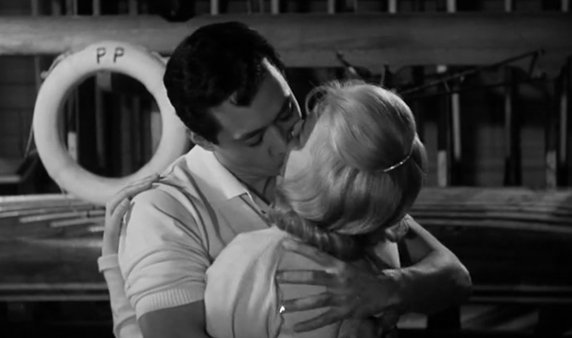 In fact, this film does not shy away from showing that affection, even though it undoubtedly made some viewers squeamish at the time. More than once Gwen and Terry embrace in intimate moments that signify the deep-seated love that holds them together. Because it’s far from easy. Gwen finds it difficult living in a Japanese culture where the woman is meant to be wholly subservient to her husband. She’s fine with the bowing and the taking off of shoes even, but not being allowed to talk is about the limit. With his family, her strong, lovable husband now seems cold and distant. However, they cannot stay mad forever and soon enough their little girl Mako is born, making them a happy little family. But of course, imperial Japan and isolationist America are on the brink of conflict and Terry and his family are tottering on the brink of calamity. He’s seemingly one man trying to hold together the relations of two nations that he has such close ties to. One because of his wife, the other due to his birth. Then, on a fateful day in December 1941 Japan struck the first blow and life would never be the same. Terry is now being detained and Gwen is fearful she might be forever separated from her husband. Disregarding what everyone else says, she takes her young daughter and follows her husband once again to his homeland – knowing full well what might be in store for her and her daughter.
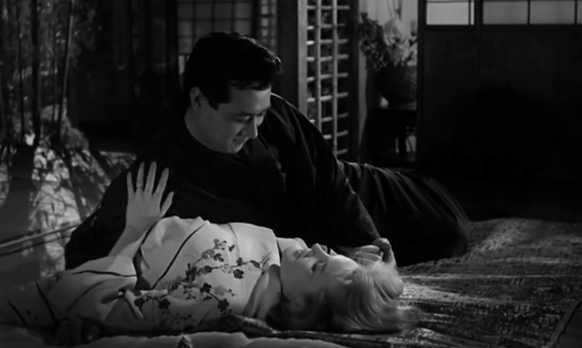 And when they arrive abroad there is the discrimination and the myriad of strange looks. Even as she makes the long journey across the sea all the white folk scoff at her, but Gwen takes it calmly and fearlessly. Once overseas the climate has changed greatly and now Terry is being questioned for his loyalty. The ethnicity of his wife doesn’t help and the firebombs raining down from above don’t exactly calm their nerves. But again and again, Terry and Gwen prove to be a resilient couple. The anomaly that should never have happened—seemingly could never have happened, and yet they did and they remained unequivocally together.



 4 Star Films