Barbara (2012)

Barbara_(2012_film)If you’re acquainted with director Christian Petzold you probably know what you’re in for. A character study that is deliberate and systematic in its execution, courtesy of Nina Hoss, and moreover impactful in more ways than one. In this film, the narrative mode of the period piece certainly serves Petzold quite well. The setting is East Germany circa 1980. The settings are wonderfully stark. Depressed representations of a bygone era and yet somehow still strangely beautiful for depicting a simpler age. As Americans, we have a certain perspective that includes Cold War sentiment, boycotting the Moscow Olympics, and the like. But it’s a much different even intimate picture on the inside.

Our person of interest is the eponymous Barbara, a nurse stationed in Berlin, who tried to get an exit visa to the West. Now she has been transferred to a rural locale to continue her work with close surveillance by the Stasi. Her primary colleague is chief physician Andre Reiser, who is genial, but from the get-go Barbara is aloof. She does not want friends and she knows anyone could be working with the police.  She goes about her work being the best nurse she can possibly be, treating patients humanely. Most notable is Stella a girl from a labor camp, who is suffering meningitis, and finds a comforting figure in Barbara. From then on she is the only person Stella trusts.

In her free time, Barbara can often be seen smoking, riding her bike, or taking the train, but there is always a purpose to her activity. It’s in quiet defiance of her plight — an active form of rebellion as she tries to rendezvous with her boyfriend from the West in an effort to reconnect with him. Unknowingly Dr. Reiser grows continually fonder of Barbara and continues to be nice to her because she is quite remarkable. Together they try and decipher what is wrong with a young man who is recovering from a suicide attempt. But of course, his necessary surgery coincides with Barbara’s set date of escape. What follows is far from melodrama, but it is a far tenser slow burn as we watch events unfold. Our heroine does something that will alter her future although we cannot know for certain. Sometimes the best place to end a story is inside our own minds, and that is true with Barbara.

It’s a film that can make you squirm, but also make you think and feel. The German scenery is often breathtaking, the perfect landscape for bike riding, and the birds chirp blissfully in the background. It is the ultimate irony that in such a peaceful land so much suppression and pain takes place. But then again there can be so much joy taken out of something so minute as a masterwork by Rembrandt, proving that the human spirit cannot be fully quelled even there.

In the film’s nuances, you are apt to find beauty and also great depth of character. Not just in Nina Hoss, who is once again brilliant carrying an air of mystery mingled with moroseness that lingers on her face. This might be a poor comparison, but Hoss reminds me in some respects to other European starlets like Juliette Binoche, Irene Jacob, and Julie Delpy, who all carry a fascinating aura around them. The truth is American actors, in general, have to use so many words and in this way, they lose some of their allure. Nothing is left unspoken. Nothing is left untrod. But with Barbara, we do not know her ins and outs, what she is thinking, or even how her story ends.

Next on the watch list is Phoenix, the latest Petzold/Hoss collaboration. It goes without saying that I am beyond excited.

4/5 Stars

Review: Eternal Sunshine of the Spotless Mind (2004)

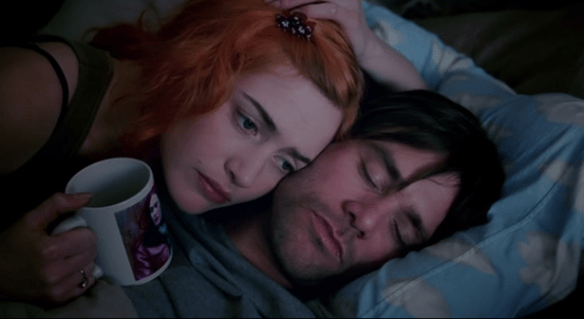
eternalsunshine1In truth, I always thought this film had a well-suited title for its material. It was rather unusual and unique. There was not much more to think about otherwise. But when you actually think about it, whether or not you consider Alexander Pope’s poem from which it originates from, there is great truth that can be gleaned from this phrase “eternal sunshine of the spotless mind.” In fact, it’s truth that points to the heart and soul of Charlie Kaufman’s story.

As humans who love and love to love, there is also the equally likely chance that we might lose that love, or have it come crashing back down upon us. Thus, if we lived with a mind never cluttered with such a thing as love and all the complexities, pain, and emotions that go with it, then could we not be forever happy? There would be nothing to darken our mood, as ignorance truly is bliss. Except in that statement, there is something inherently wrong, because to be human means to be thinking and feeling creatures of reason. Take that away from us and we are little more than animals. But with our minds, we can do so much that is worthwhile. Perhaps we get hurt in the process, and yet that brings to mind another long overused epithet. It’s better to have loved and lost than to have never loved at all. It’s a paraphrasing of Tennyson I think.

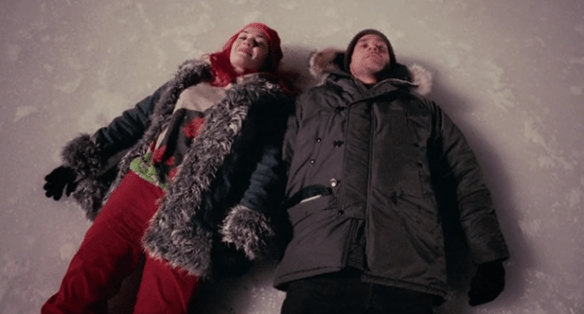
This is a great place to enter into this film — this absurdly idiosyncratic vision of screenwriter Charlie Kaufman and director Michel Gondry. Initially, the story of Eternal Sunshine of the Spotless Mind is a great mess — a great web of confusion. The tone is a bit melancholy only to be injected with a heavy dose of whimsy. A man quite suddenly boards a train and meets a free-spirited girl. It’s a meet-cute, and yet there’s a strange sensation that this is not the first time they have met.

Over time everything begins to fall into place just like memories hidden away in the human mind. In fact, that’s exactly like this film. Joel (Jim Carrey) is a subdued, often lonely man, who decides to get rid of his memories, especially when he learns that his former girlfriend Clementine has done the same. He just wants to be able to get over her. But as part of the process, all his past memories come flooding back from the most recent to the oldest. Each and everyone seems to include Clem in one way or another. It’s quite the strange sensation, although Joel does begin to get used to it. That doesn’t mean he likes it.

eternalsunshine2He swims in and out of consciousness between the past and then the present that is going on outside his head. The voices inside his head, or more aptly, the voices right outside his head come from two engineers (Elijah Wood and Mark Ruffalo) from a company in charge of erasing his memories. They create a map of them so they can remove the memories later.

Paranoia sets in as Joel’s past disappears, and he attempts to stop the inevitable erasing of all his recollections. They’re lucid dreams or more like lucid nightmares accompanied by paralysis. However, Joel goes off grid into the deep cavernous expanses of his brain. Entering places where his deepest desires and deep-seated feelings hide. It might be buried in his childhood, humiliating ordeals he was put through, or his most intimate memories of the girl Clementine.

This film is most certainly inventive, but it becomes endangered of relying too heavily on a concept or a gimmick in a way that gets in the way of the love story. Although that does happen at times, in general, Eternal Sunshine functions in great capacity. While being utterly original, it still manages to be anchored by the story of Joel and Clementine. That is due to the wonderfully restrained performance of Carrey paired with Winslet’s dyed-hair and unfettered turn as Clem.

eternalsunshine3Finally, the narrative folds over on itself again as Joel’s mind returns to the present — a present without any recollection of Clementine. They meet again and there’s a strange sensation in the air. It’s a true deja vu moment that has them befuddled and confused. Will they go through with their relationship even when they find out about their rocky history?

Perhaps the most troubling thing about Eternal Sunshine is that it feels liberating, but it’s liberation without the prospects of romance going anywhere. How do we know that Joel and Clem won’t fall into the same ruts they did before? However, maybe that’s exactly the point. Love often means taking risks and stepping out when it’s hard. The great unknown can be daunting, but without it, there could be no joy or hope in life, only mindless interactions with arbitrary meaning. Love is worth the risk for Joel and Clementine. It’s the same for most people. Therein lies the beauty behind it.

4/5 Stars

Bridge to the Sun (1961)

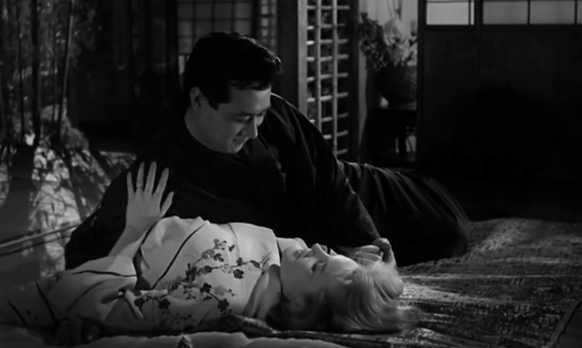
bridgetothesun1Bridge to the Sun is one of those films that was ahead of its time. Its main players are hardly remembered by modern audiences. Belgium director Etienne Perier was only a little blip on the Hollywood radar. The leading lady Carroll Baker was probably more notorious for her controversial role in Tennessee’s William’s Baby Doll than she was famous. James Shigeta was a pioneering actor, who was famously told, “If you were white, you’d be a hell of a big star.” He aged gracefully, but was slowly relegated from leading roles to bit parts in Hawaii Five-O and Die Hard. In truth, the film, based on the memoirs of one Gwen Terasaki, does suffer from a clunky script at times, and the box office returns were not too favorable. In fact, it was an outrageous flop back in 1961.

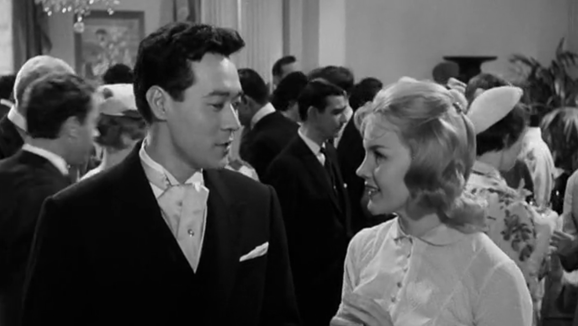
But now, with a fresh pair of eyes from the 21st century, Bridge to the Sun looks different and dare I say, groundbreaking for its candid depiction of interracial romance. Certainly, this is the story of two people falling in love, but under very different circumstances, in a very different world circa 1935. Gwen is a talkative young woman from Johnson City, Tennessee, who is more than thrilled to venture to the Japanese embassy with her aunt. Like any ignorant American she wants to meet a real-life Japanese, altogether bewitched by their manners and culture. Chopsticks are not exactly her forte, nor sushi. And yet the moment she meets the handsome young Japanese Ambassador Hidenari “Terry” Terasaki, there is an immediate connection. Yes, their cultures are so different which they will be reminded of again and again, but most importantly they love each other passionately. So much so that they disregard relatives and even superiors when it comes to whom they will spend the rest of their lives with. Theirs’ is a true romance.

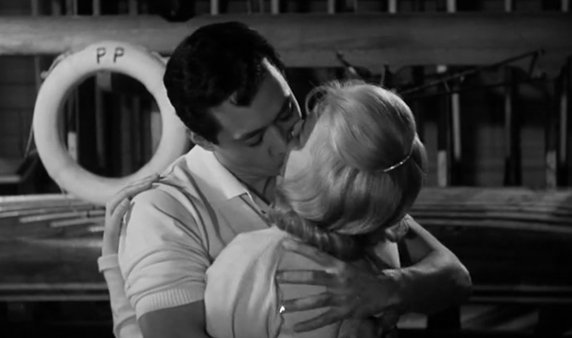
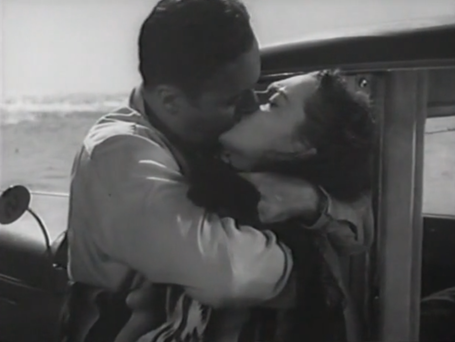
bridgetothesun2In fact, this film does not shy away from showing that affection, even though it undoubtedly made some viewers squeamish at the time. More than once Gwen and Terry embrace in intimate moments that signify the deep-seated love that holds them together. Because it’s far from easy. Gwen finds it difficult living in a Japanese culture where the woman is meant to be wholly subservient to her husband. She’s fine with the bowing and the taking off of shoes even, but not being allowed to talk is about the limit. With his family, her strong, lovable husband now seems cold and distant. However, they cannot stay mad forever and soon enough their little girl Mako is born, making them a happy little family. But of course, imperial Japan and isolationist America are on the brink of conflict and Terry and his family are tottering on the brink of calamity. He’s seemingly one man trying to hold together the relations of two nations that he has such close ties to. One because of his wife, the other due to his birth. Then, on a fateful day in December 1941 Japan struck the first blow and life would never be the same. Terry is now being detained and Gwen is fearful she might be forever separated from her husband. Disregarding what everyone else says, she takes her young daughter and follows her husband once again to his homeland – knowing full well what might be in store for her and her daughter.

bridgetothesun5And when they arrive abroad there is the discrimination and the myriad of strange looks. Even as she makes the long journey across the sea all the white folk scoff at her, but Gwen takes it calmly and fearlessly. Once overseas the climate has changed greatly and now Terry is being questioned for his loyalty. The ethnicity of his wife doesn’t help and the firebombs raining down from above don’t exactly calm their nerves. But again and again, Terry and Gwen prove to be a resilient couple. The anomaly that should never have happened—seemingly could never have happened, and yet they did and they remained unequivocally together.

The days drag on and the plight of the people is worse and worse as Gwen waits anxiously for Terry to return. Finally, he does, badly battered, but soon enough the war ends and a happier ending seems in store. Well, perhaps it’s not quite as cheerful as we should want, but the one true fact is that Bridge to the Sun remains a love story to the end and that’s something you cannot snatch away from it.

As a Japanese-American myself, this film really hits home in many ways. There’s this strange dichotomy developed between Japan and the U.S. Both had their share of prejudice, but it was not so much modern systematic racism, but ignorant bigotry. They got so caught up in their own culture and ways of doing things they were not ready to open up to others. Thus, whites were meant for whites and “Orientals” with “Orientals.” Certainly, this is a narrow-minded presupposition and this story speaks to that longstanding injustice.

Mind you, there is no maliciousness in this statement because it goes both ways. The Japanese at times undoubtedly treated Gwen perhaps far worse than the Americans treated Terry. But the point is that these two represented something special. Maybe they did not think so in the moment because they were in love. But their story is gripping simply due to the fact that it feels like the exception, just like Carroll Baker and James Shigeta playing opposite each other was the exception. That is why I’m drawn to stories like this, and not just in film, but life and history. I don’t want to know just about the status quo, I want to know about those who were willing to step out and be different. I want to know who was brave enough to step out and be a bridge to the sun, whether that may be Japan or somewhere else altogether.

3.5/5 Stars

Review: Vertigo (1958)

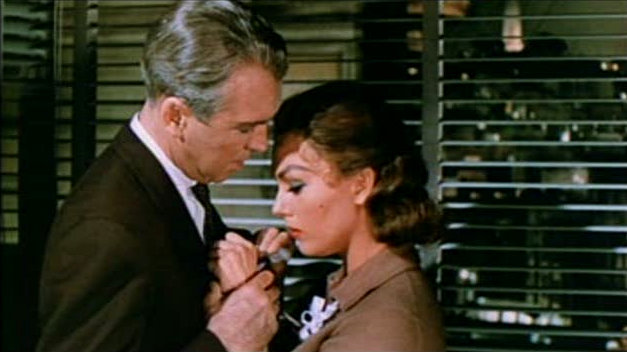
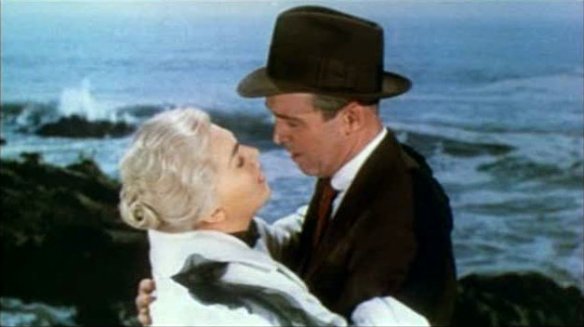
Vertigo_1958_trailer_embrace“The Greatest Film of All Time.” It certainly seems like an arbitrary title, but if nothing else it gives film aficionados something to discuss. And that’s what Alfred Hitchcock’s Vertigo is now being called for many reasons. Rather than join the debate, I wish to take a few moments to acknowledge what makes the film itself special.

On the surface, shall we say the first viewing, Vertigo is thoroughly enjoyable as a psychological thriller and mystery. The title sequence is haunting with an eye staring back at us from behind the credits and as an audience we are quickly thrown into the action, watching the opening chase scene unfold. In only a few moments one man is dead and the other John “Scottie” Ferguson (James Stewart) now has debilitating vertigo that takes him off the police force. We never learn why they were chasing a man on the rooftops. It doesn’t really matter. It’s a time later with his friend Midge (Barbara Bel Geddes) that we first see Scottie after the harrowing events. She obviously cares deeply for him, and he sees her simply as a good friend so we can undoubtedly expect her to be in the film more.

Then, rather mysteriously, an old school acquaintance named Elster (Tom Helmore) calls up Ferguson, hoping to get him to shadow his wife. It has nothing to do with infidelity, but fear, because the worried husband believes that something is wrong with his wife Madeleine. She disappears for hours at a time and is barely conscious half the time. He would describe her as possessed and Scottie is noticeably skeptical. But he relents and agrees to tail her sending himself spinning headlong into a mystery that will become his obsession.
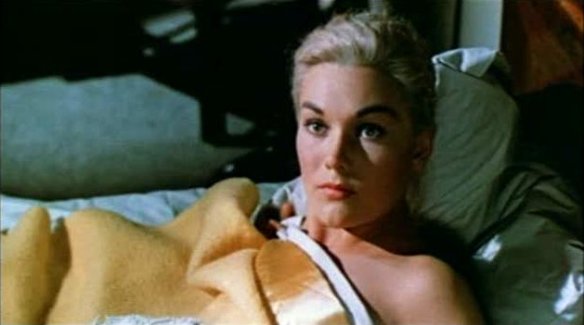
Vertigo_1958_trailer_NovakHe gets to know Madeleine by following her, all throughout the streets of San Francisco, and much like Rear Window, this part of the film becomes a repetition of scenes followed by the reactions of Stewart. Hitchcock’s background in silents is seemingly at work here as he lets the images and score of Bernard Hermann take center stage along with Stewart’s expressions. We end up all over, from a flower stand to a cemetery, an art museum, and an old hotel. Madeleine goes from place to place like a solemn specter and we watch in expectation. Something must happen.

In an instant, she leaps into the water near the Golden Gate to commit suicide and that’s when Scottie swoops in to rescue her. He can’t lose her now because by this point he’s entranced by the icy blond who he only knows from a distance. And so their relationship progresses if you can call it that. They wander together and Madeleine shares her nightmares with Scottie.

The two of them head to San Juan Bautista and that’s when the nightmares become a reality for both of them. It’s devastating to Scottie, and the second phase of the film begins. He’s inconsolable and madly in love with this girl he cannot have. She’s hardly real. But then wandering the streets listlessly he spies Judy Barton, who coincidentally looks strikingly like Madeleine.

So he does the only thing that he can think of, meet her and try to turn into the girl he so desires. His obsessions are the only things that drive him, that and the haunting memories. Finally, he figures out the mystery, but the swirling cycle continues as he goes back to San Juan Bautista. A cruel twist of deja vu rears it’s ugly head once more.
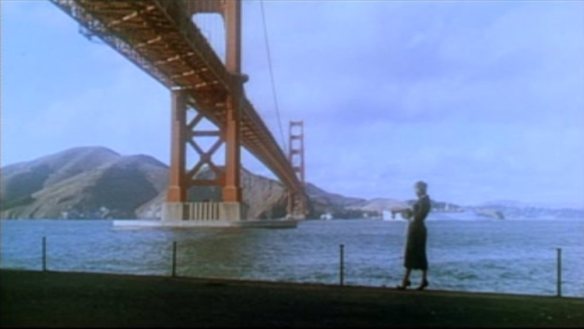
Vertigo_1958_trailer_Kim_Novak_at_Golden_Gate_Bridge_Fort_PointHitchcock always was one for visual showmanship and it reveals itself whether it’s the parallel symbolism that Scottie notes in the painting of Carlotta Valdes or the out-of-body dream sequence that he suffers through. There’s also the dizzying zoom creating the so-called Vertigo Effect whenever Stewart looks down from a great height. These are obvious visual flourishes, but it’s almost more interesting to watch our main characters walk the streets of San Francisco, especially since there are so many real landmarks to work with (ie. Golden Gate, Mission San Juan Bautista, Muir Woods National Monument, and the Coit Tower among others). There’s something mesmerizing and trance-like about all these scenes that’s difficult to discount. It pulls us in as an audience. We want to see more. Bernard Hermann’s score is, of course, noteworthy and at its core, there is a constant disconcerting quality. It is strangely majestic and beautiful, but it pounds away menacingly. And it spirals in and out with the same sounds, the same crescendos. You think you would get sick of it, but strangely enough, you don’t. It enraptures us.
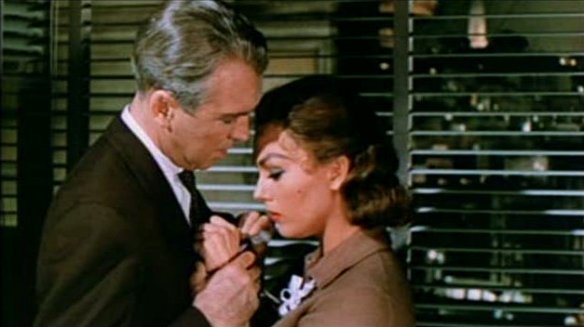
Vertigo_1958_trailer_embrace_2Then there are the players. Kim Novak has the dual role as Madeleine and Judy. She carries out both with the needed precision. Elster’s wife is elegantly beautiful, aloof and ethereal in a way that makes her the obvious fantasy of Stewart’s character. When she casts a sidelong glance or stares up at Stewart there is a faraway quality in her eyes. The clothes. The hair. How she talks. Even how she carries herself. She is spellbinding, otherworldly, and almost unattainable in all ways. Then there’s Judy, the epitome of a Midwestern girl. Pretty but not elegant. Smart but not cultured. But she falls for Ferguson as he falls for an impossible ideal.
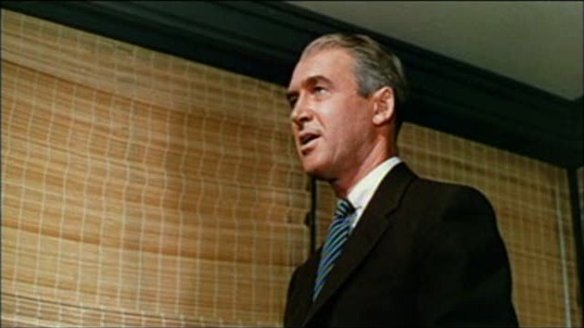
Vertigo_1958_trailer_Stewart_on_a_laddderJames Stewart is an important piece in this film because it’s his character’s obsession that drives the plot. His instabilities, his desires, his anguish, his vertigo. It has been said that Stewart himself is a stand-in for Hitchcock and the own inner workings of the director’s being. His obsession and lusts. That may be true but something else that could be inferred is that Stewart is really a stand-in for all of us. After all, there was no greater every man than him, but there also is a universal quality to the baggage weighing on his being. Stewart’s every man is certainly being subverted, or could it be he is becoming a more accurate depiction of everyone? It’s a scary thought but what is buried inside of us? What are our own fantasies, obsessions, and lusts that lurk under the surface? Let me put it a different way.

For Stewart, he has three prominent women in his life. There’s the fantasy in Madeleine, the perfect ideal, who will ultimately ruin his life because intimacy with her is impossible. There’s Judy who has a passionate love for him, but it seems complicated in so many ways. She’s trying to measure up to his standards. The ideals and fantasies he has created poison what they could have. Then, there’s Midge who is practical, funny, and also completely devoted to Scottie. If his head were on straight he would go right to her because he would undoubtedly find the most satisfaction in that relationship, but his obsessions have undermined that.

There was an alternate ending of the film which showed Scottie with Midge once more, listening on the radio about Elster’s capture. The ending that was kept is more powerful, not because Elster got away scotch free, but because we don’t see Midge again. She all but disappears by the end of the film and with her goes all that could have been decent and good about reality for Scottie. He gets so caught up in fantasy and that tears his life apart. He’s literally spiraling in a web of never-ending hellish obsession.  Who knows what becomes of him? We can only guess.

5/5 Stars
Some Came Running (1958)

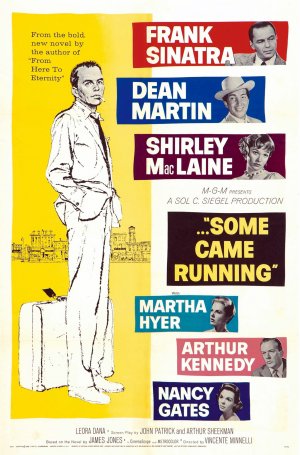
Poster_of_the_movie_Some_Came_RunningSome Came Running is a film that can so easily get lost in the shuffle of 1950s Hollywood. It’s hardly the most well-known picture of director Vincente Minnelli, known generally for his musicals and excellent set direction. Furthermore, this is most certainly a melodrama, certainly affecting, but not quite as falsely superficial to the degree of Douglas Sirk’s work. In a way, it feels like a 50s variation on The Best Years of Our Lives.

In the post-war years drifting vet and one-time author Dave Hirsh (Frank Sinatra) comes back to the town he skipped out on as a young kid. He’s a bit hung over getting off the Greyhound and realizes he has another traveler in his wake. The fellow passenger is the potentially disreputable and slightly dumb Ginny Moorehead (Shirley MacLaine), who came along for the ride from Chicago on his invitation.

Now that he’s back home, he just wants Ginny to head back the way she came, while he gets over with the obligatory meeting with his older brother. After handing his brother over to a boarding school, Frank Hirsh (Arthur Kennedy) did pretty well for himself. He married a wife (Leora Dana) from a good family and inherited a profitable jewelry business. By now he’s living the American Dream and his daughter Dawn (Betty Lou Keim) is growing up to be a beautiful young woman. In fact, you might call Frank a pillar of society, because everything’s working for him and people look up to him for what he has made for himself.

Thus, the arrival of Dave is not without its problems. The brothers have not talked for well nigh 16 years now. Frank looks to play things up like nothing’s changed and they’re both pals. He sets his brother up to an evening with a Professor French and his beautiful and highly intelligent daughter Gwen (Martha Hyer), who happens to be a literature teacher at the local high school. This is his way of trying to get his brother into good company. After all, he can’t bear that people should talk. He’s got a reputation to uphold.

But Dave’s not much for that type of company, although he takes a liking to Gwen, who avoids his advances while still taking a great interest in his work as an author. Furthermore, the cynical drifter begins to keep company with jovial gambler Bama Dillert, played by none other than a boozing, poker playing Dean Martin. Thus, there are some genuinely entertaining moments that feel like nothing more than a Rat Pack hangout.

But Some Came Running is quick to plunge back into dramatic turmoil. There are affairs, hypocrisy, unbridled passion, bar fights, parades, and carnivals all highlighted by the eye-catching staging of Minnelli. In fact, Minnelli always has an eye for his scenes, and there’s nothing different about this film. We are watching the players of course, but the space they fill, the clothes they wear, and so on are almost just as interesting. Colors pop making for vibrant viewing to match the spectacle. The climactic moments feel rather Hitchcockian with the pulse-pounding intensity set to the backdrop of a bustling carnival and the Elmer Bernstein score reverberates with his usual fervor.

Dean Martin is the comedy. Arthur Kennedy is necessary. Shirley MacLaine is the tragedy. Martha Hyer is rationality. But Frank Sinatra is the core of this film because he balances a surface level cynicism with genuine affection. He shows his interior on multiple occasions. His eyes watch over his niece with great care. His heart yearns for Gwen ardently, and he holds a deep sympathy for Ginny. Sinatra was in many quality films, but this is perhaps his greatest performance.

Is it blasphemy that in many ways I appreciate this James Jones adaptation just as much, if not more than, the long-heralded From Here to Eternity?  I suppose I am entitled to my opinion.

4/5 Stars

Garden State (2004)

gardenstate1Garden State was written and directed by Scrubs star Zach Braff before he made it big, while he was still struggling to get into the business. It’s one of those deep blue funk movies where a person has to find themselves in the giant mass of humanity. Andrew Largeman’s mom just died from drowning in a bathtub. He hasn’t seen his dad (Ian Holm) for about a decade because they haven’t really been on speaking terms. Now he lives in L.A. across the vast expanses from his native New Jersey. He works in a very zen Vietnamese restaurant and surreal daydreams clutter his apathetic mind.

The question is what will shake him out of his despondency because the death of his mom is only the inciting incident. As it is with a small town community, he’s constantly meeting all the old acquaintances from his high school days. Most are impressed by his foray in acting even though he hasn’t made much a career of it yet. The people he reconnects with include his old friend Mark (Peter Sarsgaard), who works at the cemetery and doesn’t have much of a life except smoking weed. Then there’s Jesse who made a killing off Silent Velcro and now has all the time in the world for parties in his huge mansion.

That’s not what does it though. It’s when Andrew is sitting in the doctor’s office, hoping to get checked, because he’s been having headaches after being off the meds he’s been prescribed all his life. There he meets Sam (Natalie Portman) for the first time, and he’s never the same. She’s a scatterbrained, off-the-wall personality with a lot of energetic pizzazz. That about covers it except she also has epilepsy and is a compulsive white-lier. But in her Andrew finds a genuine spirit, who can revitalize his life, by giving him sympathy in his pain, while also brightening up his everyday reality.

gardenstate2On his last day in New Jersey, Andrew obviously wants to spend the time with Sam, but it ends up turning into a daylong treasure hunt as Mark tries to track something down. It isn’t much, however, it’s the thought that counts, and on their odyssey, Andrew is finally able to let go of a lot of the hurt and pain he’s been harboring. He’s ready and willing to forgive his father.

Then, there he is in the airport terminal getting ready to leave Sam for L.A. He has to get back and he promises to call her, but he seems to remember he’s a different person now. It’s a delightfully sweet ending to the film and we absolutely want it.

gardenstate3Braff’s wistfully apathetic demeanor is so wonderfully personified by a memorable soundtrack including alternative rock groups like Coldplay and especially The Shins. His brand of acting is really just playing a wet noodle, but he does it well. Those beady eyes of his constantly scanning back and forth nervously around the space he inhabits. And the film certainly has some dirtiness around the edges, but our main couple is so endearingly sweet. I respect a film that respects its characters such as not needing to show them having sex all the time, but it can paint their romance in more playful, soft, even intimate shades. Andrew takes drugs and curses, but only to dull the pain or express his bitter frustrations. Sam’s the kind of girl who states that she’s not innocent, confirming our suspicions of just the opposite. We appreciate both of them exactly for those reasons. He rides an army issued motorcycle with a sidecar for goodness sakes, and she gets teary-eyed over a deceased hamster. They’re quite the pair.

3.5/5 Stars

Review: Bringing up Baby (1938)


bringingup2“Our relationship has been a series of misadventures from beginning to end, so if you don’t mind, I’ll see Mr. Peabody alone and unarmed.” –
David Huxley

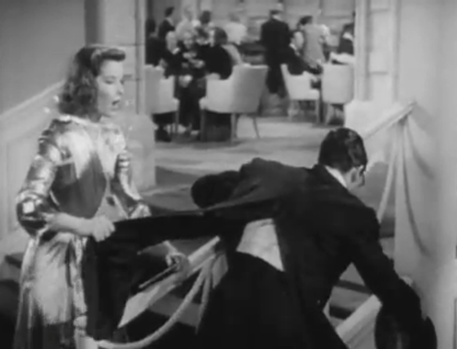
Bringing up Baby is really and truly one of a kind, almost headache-inducing with its sure energy and dizzying with its scatterbrained tracks, but nonetheless it is a screwball masterpiece. From Hollywood master Howard Hawks comes arguably one of his greatest films, boasting the rat-ta-tat-tat of some killer dialogue, some fantastic comedic sequences, and a number of memorable performances.  Honestly, if I learned anything from this film, you can’t watch it just once, because you’re bound to get bowled over, and afterward you probably won’t realize half of what you saw. For instance, there’s so much talking you hardly realize that there’s not much of a score.

Young Katharine Hepburn is at her most radiant and almost smothering with her constant barrage of words. You either love her or hate her. There’s no way to ignore her performance here because it’s completely out there. It’s hard to believe she was a novice when she came into comedy. There’s no inhibition whatsoever. Not in the least.

Cary Grant is the bookish paleontologist who is content with constructing the skeleton of his prized Brontosaurus and then marrying his admiring, no-nonsense sweetheart Ms. Swallow. It sounds like a pleasant albeit mundane lot in life. In an effort to gather a $1 million in funding, he goes out to the golf course ready to do a little business on the side with Mr. Peabody. That’s when hell strikes in the form of one scatterbrained lady extraordinaire Susan Vance (Katharine Hepburn). First, she swipes his golf ball (quite certain it is her’s), then she batters up his car (sure it is her’s again), and to top it all off she causes him to sit on his hat when they cross paths again at a club. Poor Dr. Huxley doesn’t know what’s hit him. He just wants to get away from her and all the fury that comes in her wake.

Good luck with that Cary, because she’s a force of nature! She misunderstands everything, and he gets endlessly caught in her web of miscommunication.  Susan initially roped him into coming along with her, thinking he was a zoologist who could help her take care of “Baby.” Of course, it turns out to be a tame leopard that they must get to her aunt’s home out in Connecticut (Only in a screwball comedy). By now he’s bothered. She’s falling in love.

So she does what any resourceful girl would. She keeps him occupied. First, she swipes his clothes. Then the dog George runs off with his prized possession, the intercostal clavicle. Initially, they want to get rid of the leopard. Then they want to keep it. Auntie comes home along with her gentleman friend Major Horace Applegate. A not so friendly leopard escapes from a carnival. The police get involved led by their bumbling leader Constable Slocum.

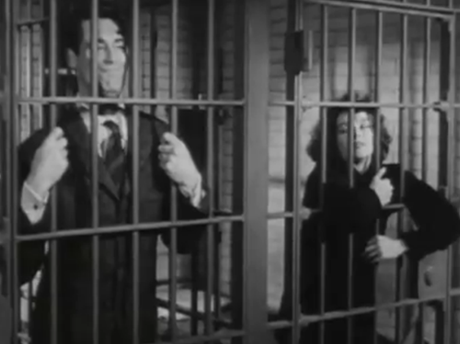
bringingup1It’s a doozy of a masquerade and most everything and everyone is utterly confused. It’s as if everything that enters the world of Susan Vance is further complicated. To her, it’s simply a day in the life and Huxley begins as an outsider, but despite all the madness, he becomes accustomed to it.  Running after the dog, getting soaking wet, tripping, falling, fending off a leopard, getting thrown into the clink. Dr. Huxley realizes that he’s never been happier and it ends pretty much as it began. Never a dull moment.

This has to be one of Hepburn’s greatest performances earlier in her career because she has everyone in a tizzy. Although he’s literally getting the run around from Hepburn, Grant is her perfect comedic foil. He dons the glasses at first and carries the sensibility that goes with them. However, he is equally equipped to go without them as a scatterbrained gentleman ready for all the pratfalls, quips, and escapades that ensue. And they are surrounded by a solid set of character actors including a drunken Barry Fitzgerald, the easily distracted Walter Catlett, the big game aficionado Charles Ruggles, and the peppy dog Asta (of Thin Man fame) among others.

Howard Hawks once said that “a good movie is three good scenes and no bad scenes.” In Bringing up Baby some of the memorable moments include the fateful meet cute at the golf course, the chuckle-worthy encounter at the club, and of course the sequence leading up to jail. But it’s also the little comedic moments wedged in between. Maybe Hepburn’s parked in front of a fire hydrant and trying to pull the wool over the policeman’s eyes. Or perhaps Grant dons the only piece of clothing, a frilly bathrobe, and is forced to answer the front door. It’s utterly absurd. It’s become classic and it shows the ability of Hawks behind the camera to make the action flow so organically.

It’s amazing that this film was a flop, Hepburn was labeled “Box Office Poison” by this point, and Cary Grant had yet to become an established star. Oh, how things changed. Because this film, in a sense, was the beginning of something truly wonderful. When two of the greatest stars aligned with one of the great directors.

5/5 Stars

Like Crazy (2011)

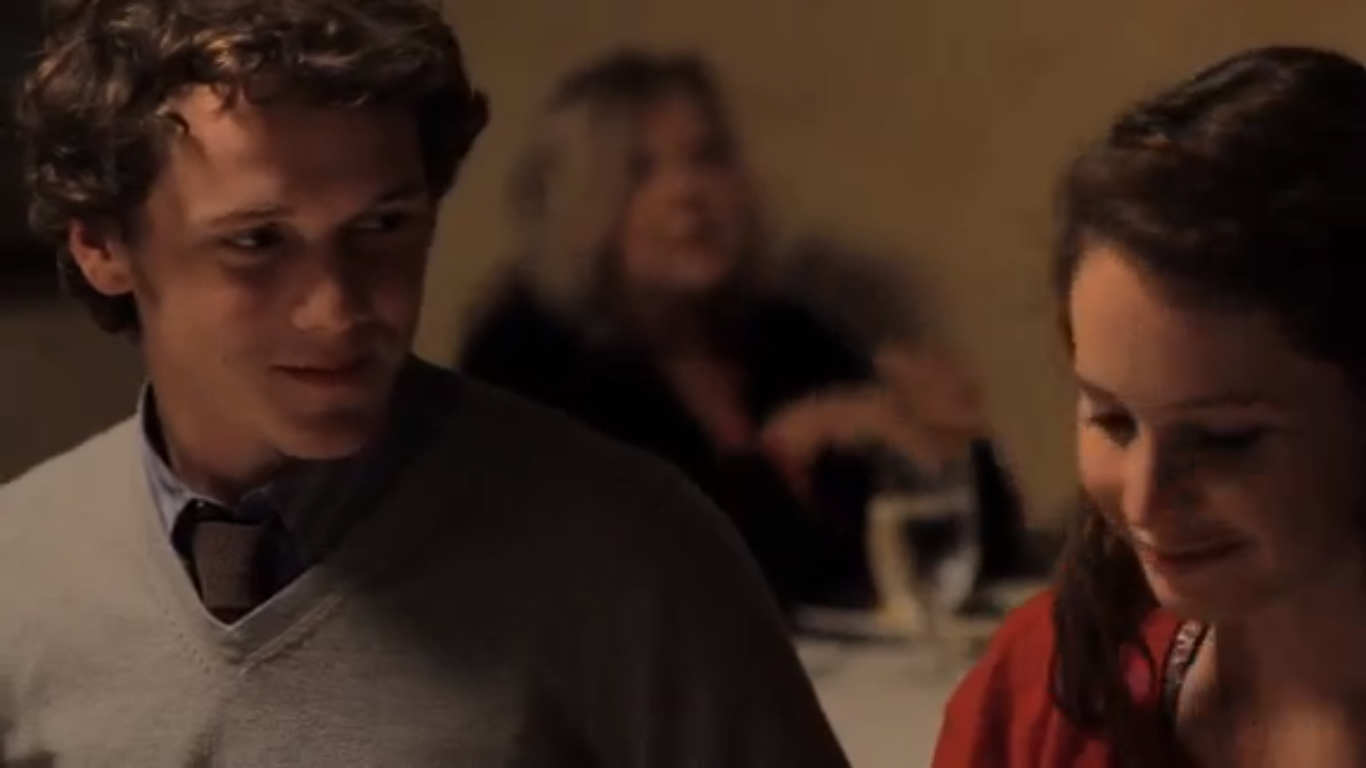
likecrazy7Like Crazy is the genesis, the passion, and the heartache of a romance all wrapped into 90 minutes of film. Our two subjects are filmed as individuals at first and the cinematographer opts for a handheld camera approach to capture their moments together. The loosely woven narrative is based on director Drake Doremus’s own experiences with a transatlantic romance. In the film Jacob (Anton Yelchin) is an American college student living and going to school in L.A. After her heartfelt confession of affection, Jacob begins a relationship with the British-born Anna (Felicity Jones), who is in country on a student visa.

The film slowly evolves into a montage of their time together as they grow closer and closer. It’s a beautiful picture of tentative and affectionate love coming into bloom. And with her visa about to expire Anna decides to forgo it all and stay with Jacob. But the Visa issues come back to bite her and continue to give the couple problems. Soon they are separated by an entire ocean dealing with the many challenges of long distance relationships.

For Jacob, there’s another girl (Jennifer Lawrence). For Anna a guy down the hall who asks to borrow her appliances. It’s so much easier having these people in close proximity, and it challenges their wills. Because airfare is expensive and talking through text message just simply isn’t the same. It works at first but it seemingly is not sustainable.

Marriage seems like the best option for them to hold what they have together as Anna’s Visa problems still loom overhead. But it’s hardly a quick fix and over time there’s a breakdown in what they have. Even when they are together they have trouble connecting, not shouting, and not getting annoyed. Because, more often than not, they are apart now. The best they can do is wistfully remember the intimacy they had before and try and go forward from there.

Likelikecrazy4 Crazy generally stays away from the constricting effects and inflexibility of your typical plot line. The script was more of an outline and the dialogue was essentially the two leads ad-libbing most of their interactions. But this lends an organic quality to this, dare I say, trendy indie love story. There’s vast distance juxtaposed with intimate close-ups. Emotions embodied by images become paramount over words. In a sense, we see their nakedness and not literally, but we see that vulnerability in those most intimate times in a relationship, sharing bits of bliss together. Whether they are in Santa Monica or London, the scenery is only a place in which the two of them are having moments. The type of times they remember in the shower or while they sit in the bar with their friends, or when they sit doodling at their desk. It’s those times that make them want to make this thing work despite the distance. It’s a difficult trade-off and I’m doubtful anyone has found the precise answer for it. Because all the countless advances in technology cannot give us intimacy only imperfect substitutes that will never fully replace the real thing.

likecrazy6It is a great joy watching Felicity Jones and Anton Yelchin play off of each other because aside from one occasion, their performances are quite subtle and refreshing. We even get an appearance from Jennifer Lawrence. For this reason, it’s fun to watch a film like this and see where the talents have gone in only a couple of years. The Theory of Everything, Star Trek, The Hunger Games. But there’s always a necessary niche for smaller films like this. I look forward to more takes on love from Drake Doremus and Felicity Jones has gained one new fan today.

3.5/5 Stars

Crazy, Stupid, Love. (2011)

crazystupid1Here is a film from screenwriter Dan Fogelman where Ryan Gosling acts as wingman for an estranged Steve Carell; seems like a basic enough pitch for a movie, and yet thankfully it’s not quite that simple. Early on Jacob (Gosling) implores the washed-up Cal (Carell) to lose the New Balance sneakers and drop the Gap for good. What follows is a lesson in how to be a “man again.” Also known as picking up women with new clothing, a better hairstyle, and a whole different strategy. Cal’s a man trying to step out and try new things after he found that his estranged wife of 20 years Emily (Julianne Moore) slept with another man. His understandable reaction at the time he heard the news was to jump out of a moving car. It hurt him both figuratively and literally.

So Jacob is the beginning of something new for Cal as he steps out to meet women. Some of the scenes make me want to crawl up into a ball out of the sheer awkwardness and that’s often the type of humor that Steve Carell revels in. He likes to make us squirm, and it happens on numerous occasions. He says all the wrong things at all the right times. You get the idea. But behind all this, he still has feelings for Emily, and he’s wistful in the presence of his kids. Everyone wants them to get back together. However, he’s not the only one facing romantic issues as his son Robbie and wing man Jacob soon have their own problems. Emily must figure out what she wants and up and coming lawyer Hannah (Emma Stone) must figure what is the best for her.

crazystupid2As for Cal, he attends a Parent Teacher Night to end all Parent Teachers Nights and it has to be the worst circumstances you could ever imagine. It gets uncomfortable quick as he learns who his son’s teacher is. I’ll spare you the details. Then there’s a  greatly hilarious twist that hits after all the primary cast find themselves in Emily’s backyard having a few unpleasant revelations. But the film doesn’t end there since the journeys of these characters have a little farther to go yet. They have to find themselves, navigating this crazy, and yes, maybe even a little stupid thing we know as love.

I must admit I like these guys in spite of those pick up lines (Lets get out of here) and attempts at romancing, because that stuff makes funny material for a film and we get some genuine laughs out of it, but it’s when we tear that down for a moment and look underneath all of that. That’s where we find true heart.crazystupid3Most of these characters are well-meaning and likable and with those who aren’t, it’s forgivable, because they are necessary for the film’s humor initially. Namely Ryan Gosling and Liza Lapira, who always seem ready with a quip or maybe a one night stand with an obliging member of the opposite sex. The movie needs these characters I suppose since for starters it’s Jacob who helps Cal find a different side of himself. Liz who goads her friend Hannah to take a chance which she finally capitalizes on. But in truth, most all of these main players have a sense of humanity about them, mixed in with their faults and failures. Cal was once a good father and now he’s made a lot of mistakes. Jacob is a total womanizer, but when he cares about people he really does. He loses all the false pretense about him. Ironically, Cal changes Jacob as much or perhaps more so than Jacob changes him, which is important in the evolution of this film. They teach each other and in turn help each other move forward.

Even the teenagers Robbie (Jonah Bobo) and Jessica (Analeigh Tipton) may have misguided affections in a sense, but we cannot help to empathize with them in their innocence. They’re young and in love and they don’t really know what that means. Very few of us probably do. Whether it’s finding “The One” or discovering your soulmate or not, it’s easy to forgive Crazy, Stupid, Love for its conclusions which might feel a tad cliche and bright. Just this one time, because these are characters who we don’t mind giving a happy ending to.

3.5/5 Stars

Hold Back the Dawn (1941)

holdbackthedawn boyer de havilland 5Hold Back the Dawn was written by the winning combination of Billy Wilder and Charles Brackett, but the director was actually Mitchell Leisen. That was the last time Wilder would let someone else take hold of his work. It’s actually rather meta, a film within a film. We see our director and a film being made (Complete with Veronica Lake), but that is only a pretense for this story to be told.

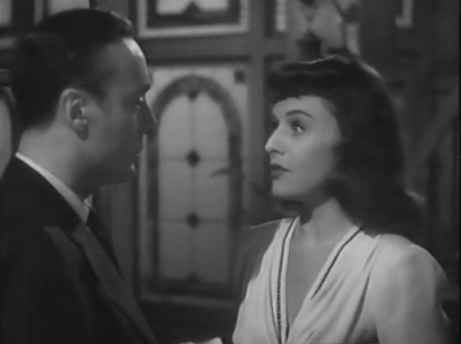
Georges Iscoveu (Charles Boyer) wanders into the studio hoping to tell his story to somebody who might help him. The tale goes something like this. Much like many other hopeful emigrants, he heads to Mexico in an attempt to try and get into the states, but he’s told that he’ll have to wait and so Iscoveu holes up at the Esperanza Hotel with all the other masses. Time passes and he is getting nowhere fast, but he does bump into an old partner in crime named Anita (Paulette Goddard). Undoubtedly using her feminine charms, she wrangled herself a husband in order to secure herself citizenship. Then she swiftly got a divorce to close the deal. She’s a real peach and she plants the idea in Georges because he is desperate after all.

The gears are turning and he sets his sights on the pretty young schoolteacher, who is in Mexico with some of her students. Their car is in the shop, and after swiping a sprocket, Georges goes into action.

With soaring rhetoric, he wins Miss Emmy Brown over and he puts a ring on it, a borrowed ring from Anita to be exact. He’s a real cad, but it is a Charles Boyer leading man.

To her credit, Olivia De Havilland plays this ingenue and small-town teacher with bright eyes and idealism. We cannot help but feel for her because this is a woman who is swept off her feet and she exhibits true affection. She’s naive, but as Georges acknowledges, she’s swell. Anita has plans for them to meet up once the marriage is terminated because she thinks that she and Georges can run in the same circles once more. But all the time he has spent with Emmy has not left him unchanged. Car rides and travels through Mexico becomes intimate and sweet. So somewhere there is a turning point in the psyche of Iscoveu. It no longer becomes a con game with Anita, but a true romance with Emmy.

However, the trouble comes when the inspector named Hammock (Walter Abel) comes sniffing around because the marriage of Emmy and Georges seems obviously fishy to him. But Ms. Brown does the noble thing and defends Georges not out of ignorance, but charity. She knows she was living a dream and is about to go back to reality, making the drive back to her home in Azusa, California.

holdbackthedawn6

Georges has what he had initially set out to get, but the story cannot be over. When he hears of a deadly car accident, he rushes across the border without heed of the law so that he can be with the love of his life. It’s a gushy conclusion that looks like it might end badly. After all, Iscoveu broke some major laws, but Hammock gives him some grace showing he’s a softy at heart. Even Anita gets what she’s always wanted.

The film is a treat because we not only get an A-grade performance from De Havilland, there’s a conniving Paulette Goddard, and even a brief cameo by everybody’s favorite Peekaboo girl Veronica Lake. Curt Bois (the pickpocket from Casablanca) also makes a spirited performance in one of the minor plots.

Hold Back the Dawn certainly begs the question whether Wilder’s own experiences are infused into this story since he often told anecdotes about his emigration into the U.S. which ultimately led him to success in Hollywood. Also, this film suggests that Mitchell Leisen is not so much a great director or a maker of masterpieces, but he is in his element with romances. However, I wonder if part of his success was having the likes of Billy Wilder and Preston Sturges writing scripts for some of his most prominent films (including Easy Living, Midnight, and Remember the Night).

4/5 Stars