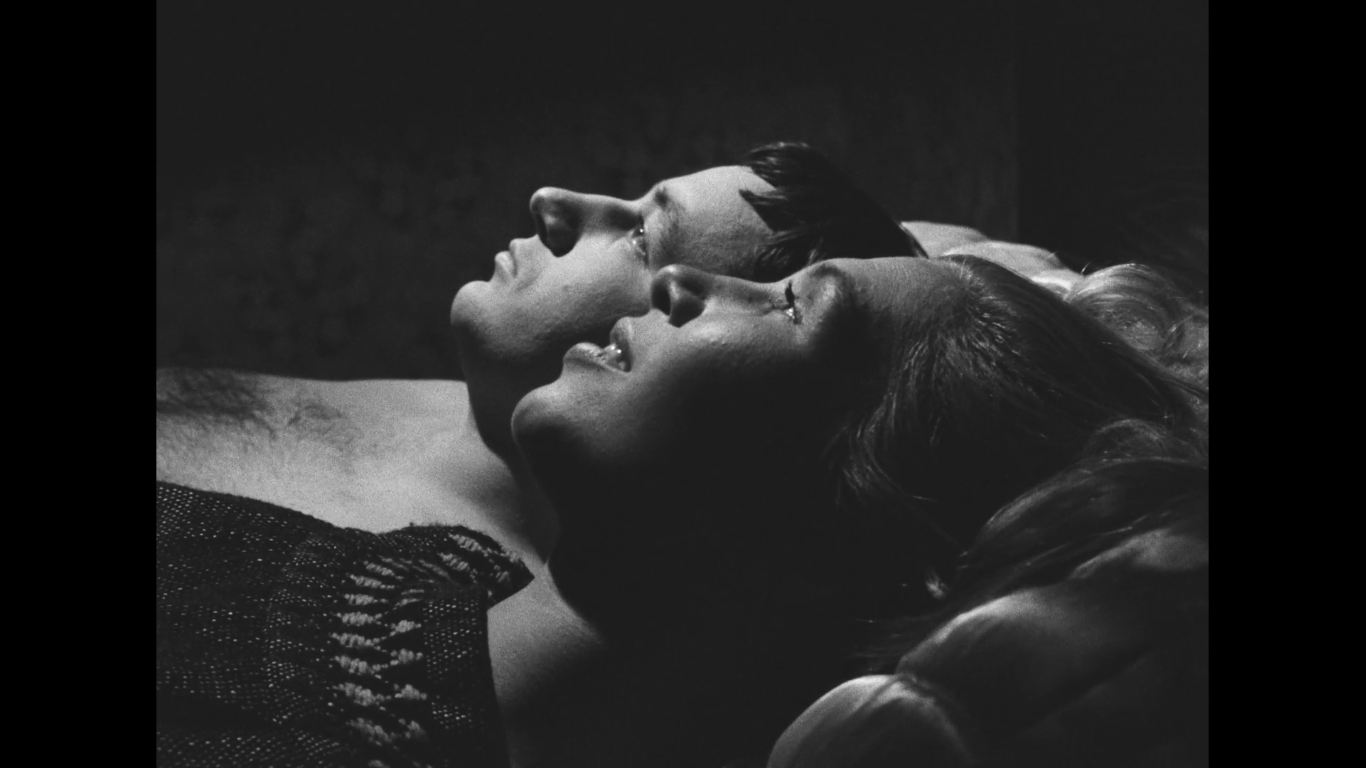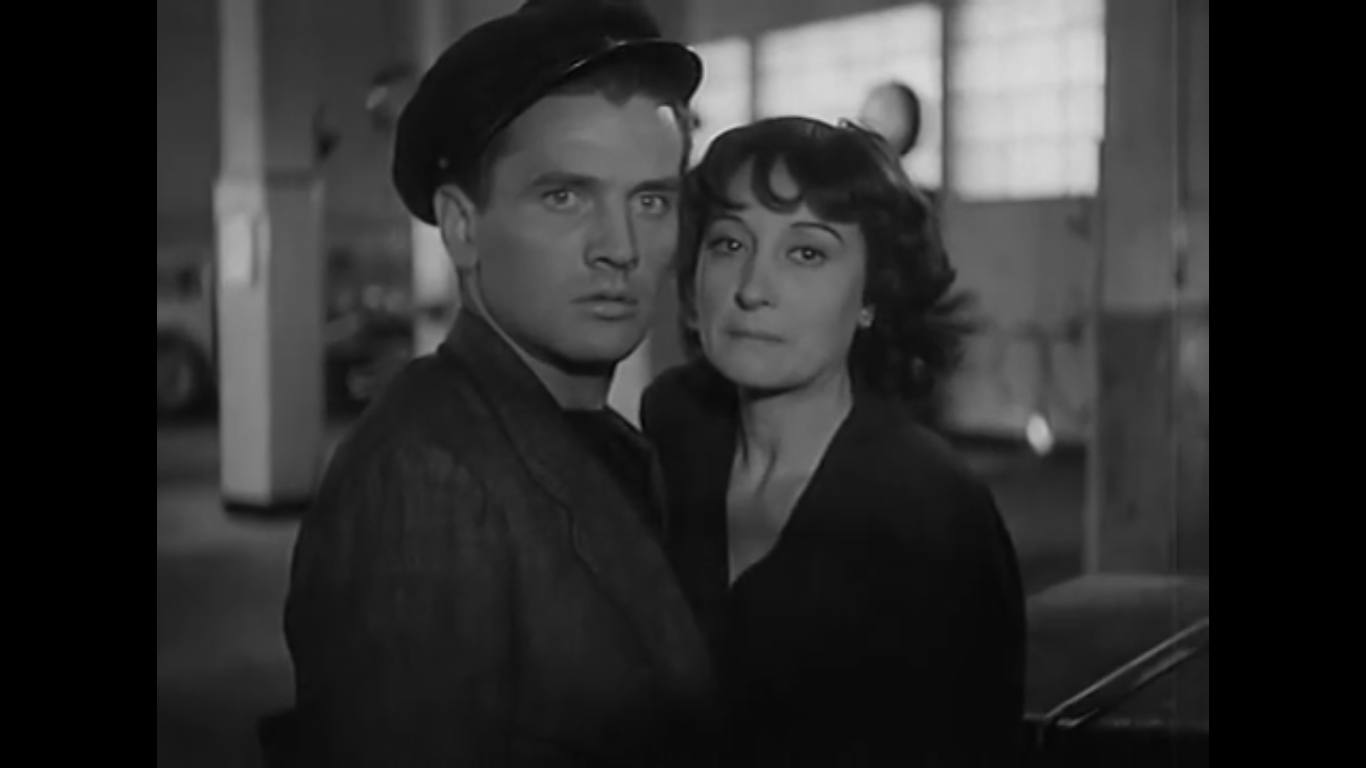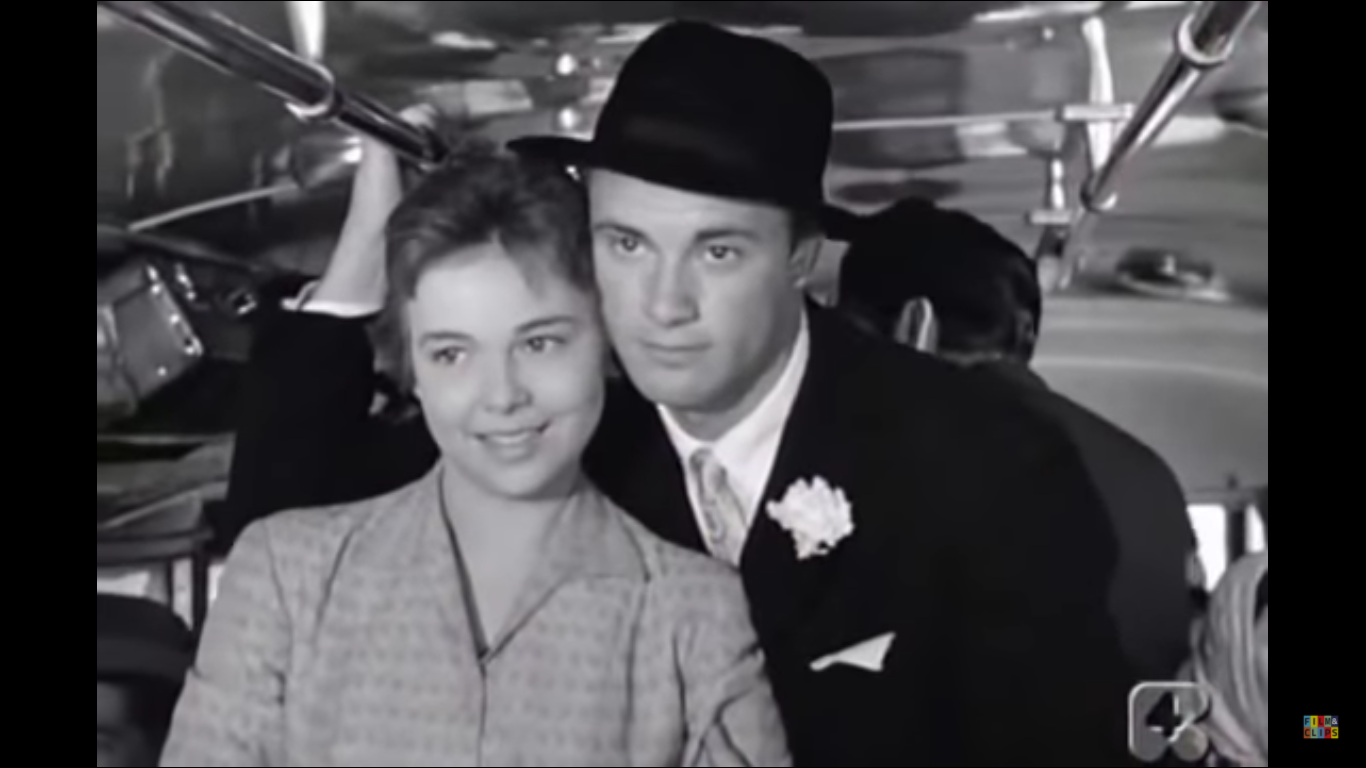
A Woman’s Face (1941)

The movie’s faux Scandinavian backdrop can be traced back to its origins in an early vehicle for Ingrid Bergman back in her native Sweden that was released in 1938. Since I haven’t seen the original, I cannot attest to Bergman, but she doesn’t immediately spring to mind in a role that calls for some amount of moral ambiguity — at least on screen.

Still, A Woman’s Face was a stepping stone part for Joan Crawford, from her effervescent flapper days and pertinacious working gals to something vulnerable and bold for a fresh decade. She sheds all glamour, something used so often as a mask in Hollywood, and willfully puts on a different facade of scars and perceived ugliness. It’s a move her rival Bette Davis readily made as well.

Here Crawford is a creature tormented and self-conscious about her own appearance. She’s crawling with shame. Mildred Pierce always gets the plaudits, and rightfully so, but surely there’s room in the conversation for this picture. Still, let’s not get ahead of ourselves.

We stand by as a prisoner is marched through the hallways of a court. A menagerie of witnesses has been called to testify in the wake of a murder trial. The very same woman, her face hidden by her hat brim, stands accused, and the film effectively uses each of these disparate individuals to elucidate her story for the sake of the jury (and the audience).

It’s not an unheard-of device, but it’s rather clever, starting on the outer ring with a peculiar sort of character before getting closer and closer to who she is as a person with each subsequent flashback. As such, a sprightly waiter (Donald Meek) and a more guarded manager (Reginald Owen) recount their days serving at a local tavern.

One of the guests, Torstein Barring (Conrad Veidt), is a curious fellow. He’s the life of the party and expects certain privileges. One of those is running up an overflowing tab at the establishment after a merry night of wining and dining. He exhibits a piercing kind of magnetism, sleek and somehow unnerving.

When the lady of the tavern steps out of the shadows and excuses his bill, he’s immediately taken by her. She’s scarred over her face, and yet all he sees are those striking Joan Crawford eyes. There’s something immediate between them, and it comes out in the courtroom that the whole tavern was essentially a set-up for petty blackmail. When people get giddy their tongues loosen, and they are availed of all their faculties.

There’s a level of dubiousness and doublespeak with her underlings providing another layer to the film involving both humor and intrigue. Because they ran a fine and highly lucrative con game complete with all manner of deception. Now they’re looking to save their necks.
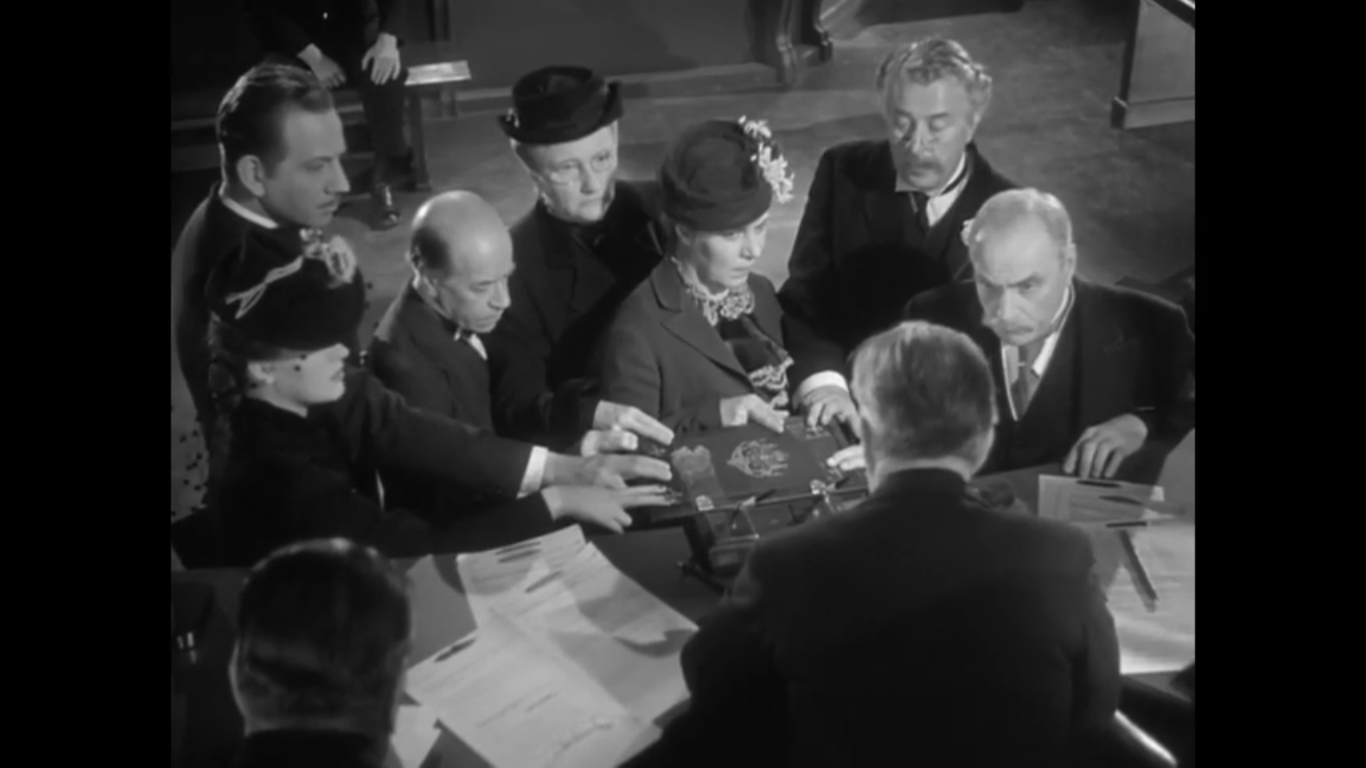
The ready victims are the adultress Vera (Osa Massen) — wife of reputed surgeon Gustaf (Melvyn Douglas) — and then her latest beau. The joy of A Woman’s Face is how there are building blocks for melodrama. In literary form, it might come off as convoluted and unclear, but the cinema screen makes it sing.

In one moment Anna (Crawford) is trying to peddle some stolen letters for a weighty sum with a level of vindictiveness. She scoffs at others. In another, she meets Gustaf, who returns home unexpectedly both catching this woman in the act and becoming genuinely interested in her. His wife doesn’t want any of her dirty business getting out so she reluctantly plays along.

Almost everyone has an enigmatic side, some sort of angle or self-serving motive we’re trying to detect. Melvyn Douglas is the one character who is straightforward and easy to read. He offers to transform her face. Not with an ulterior motive, but out of a sense of decency.

There’s a fine level of suspense waiting to see Anna’s face reconstructed. We know what it will be and yet are forced to wait for moments with the camera working to evade a direct shot of her; it adds something, a level of expectation.

It’s yet another soap opera contrivance that works wonders. Because Joan Crawford takes this blemish and turns it into something powerful and ultimately beautiful. With it comes new confidence and new life. Anna and Torstein grow closer and closer and he’s even more drawn to the vision of her rebirthed self. Also, her disposition shifts.

Still, he has almost a Nietzschean charisma, and he coaxes Anna into playing nursemaid to a young relative who’s set to inherit a large fortune. She’s become a governess of the Phyllis Dietrichson persuasion.

Watching Crawford come down the stairs with the precocious little kiddy, I couldn’t help but think of those old glossies of Marion Davies parties except this is a party at a Scandinavian version of Hearst Castle. Images of piano and dancing superimposed over Crawford’s face say everything.

Actually, I misspoke earlier because aside from the young tyke and the kindly Gustaf, the Consul Barring (Albert Bassman) is a jolly old man, who welcomes Anna cordially even as his housekeeper (Marjorie Main) remains distrustful of their latest guest. In truth, they’re both right. They see the two different sides of Anna on display.

There’s an old Hollywood axiom about getting an actor’s good side, and I couldn’t help noticing how A Woman’s Face plays with this practically. Crawford’s right side is kept hidden for much of the first half of the movie and traditional 180-degree filming means it’s all but masked from us.

I noticed the change at the party when she meets the good doctor again. Finally, she’s on the left side of the frame fully unmasked and open to us. It’s true we see her in a different light just as he does too. Perhaps she’s changing — softening even — and he has something to do with this.

Arguably the best scene of the entire movie comes when Crawford’s with her charge in the trolley over the waterfall. It’s the moment akin to Gene Tierney letting the crippled boy drown in the lake in Leave Her to Heaven. There’s the intent. We know what’s happening, and we watch the mechanisms on the face of Crawford. It’s totally wordless and, thus, so effective because the whole sequence is borne on her features. She has a choice to make — caught in a moral conundrum — and it’s a showcase for the total evolution of her character.

In some strange sense, it feels like the dissolution of a femme fatale starting out one way and then slowly changing and eroding until she has a heart of flesh and blood again. She chooses her inclinations to protect over those to destroy. It comes with consequences. Watching a crazed villain disappear into the snowy rapids below is mesmerizing in black and white. Somehow something so deadly looks equally gorgeous.

The ending itself is pat as Anna is exculpated in the courtroom, and yet it somehow works contrary to a whole generation of noirs made in its wake. In other words, I don’t mind the happy resolution because it leaves just enough to the imagination.

4.5/5 Stars

Le Bonheur (1965): Varda’s Sunshine Horror Film

The aesthetic of Agnes Varda’s Le Bonheur is strikingly deliberate. Her title cards are filled with sunflowers. All her characters — members of a lovely little family — wear a rainbow of colors. There’s a verdant gaiety to the forest landscape around them. The score comprised of the buoyant elegance of Mozart does wonders to accentuate this very salient mood. In short, it’s gorgeous. Surely this is happiness personified.

In the middle of the 1960s, that turbulent time of upheaval and the nouvelle vague, it deigns to be domestic and cheerful in a way Godard would never dare and Truffaut could only manage through a boyish point of view.

But it has such a vibrant and daring color palette on par with anything in Contempt (Bardot included), Pierrot Le Fou or Weekend. In fact, this could very well be her answer to a glorious Jacques Demy musical (her husband) and a predecessor to Stolen Kisses and Bed and Board.

The couple’s children are adorable as they toddle around, ride in the back of the family truck or feed sugar cubes to their daddy’s horse — the bicycle he rides home from work every afternoon. Like any young kids, they like to imagine, they’re enthralled by a newborn baby, and they take naps (under the mosquito netting their mother puts out in the forest for them).

By this point, the movie could feel sickening and twee, but there’s an impulse to see the movie out and where it might go. It leaves some questions about a dramatic situation with its title (especially with how fiercely unironic it resolves to be from the outset).

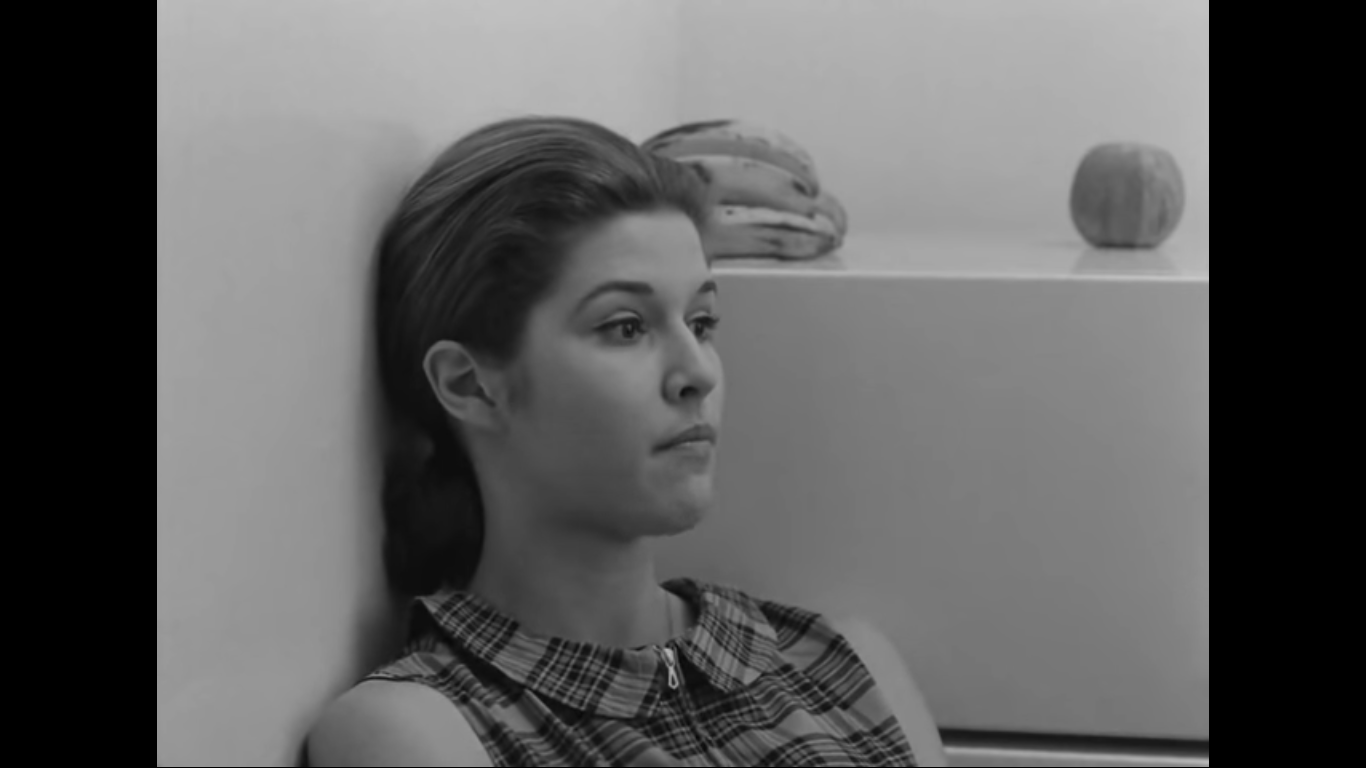
When they return home to their idyllic town, it’s little different. True, the husband, Francois (Jean-Claude Drouot), wants to see a western at the cinema — a prototypical American film. His wife Therese (Claire Drouot) is enchanted by a French film, the first pairing of “[Bridgette] Bardot and [Jeanne] Moreau.” Otherwise, they seem perfectly aligned, going to work and raising their family together.

This all quite effectively lulls us into a false sense of security. Varda knows quite well what she’s doing. As an audience, we want to believe this is what life is like, but we are privy to a movie and so something must change…If there is a source of drama, it’s when the man starts to flirt with a local telephone operator Emilie (Marie-France Boyer). Even this tête-à-tête is light and affable. They feel innocent enough. Hardly prepared to wreck a home.

His wife and his lover aren’t mirror images exactly — they look different — but Varda does very little to distinguish their visible traits (ie. blonde vs. brunette or juxtaposed costuming choices).  They’re both pretty young blondes, affable, draped in bright colors. It feels like a curious coincidence until it builds into something more.

This trifling love affair morphs into exactly the kind of circumstances the exterior does its best to dispel. Surely infidelity does not have license to break into such reverie and tear a family apart. This does not fit with the perfect marital equation or the glorious mise en scene.

So we begin to discover a kind of perturbing even disheartening dissonance about the picture as it continues to break with reality. It builds and begins to ambush us with new contradictions.

Here is a man deliriously happy, both with his wife and then with another woman. He assures his new love, “I have enough joy for both of you. Happiness works by addition.” Then when he cordially breaks it to his wife he says, It’s as if he has 10 arms to love her and he has extra arms (to love someone else).

It doesn’t matter how emphatically or candidly he says those words. They come off poorly. Even as he continues to live in his rapturous dream world without consequence, for the first time the words ring out in the landscape with an inherent hollowness. It’s yet another signal of paradise lost. We have hit upon a point of no return.

Le Bonheur is devastating in a manner that I never would have imagined. Because Varda finally does allow the film’s glorious bliss to crack even if the tone and coloring never waver or fade. The way the young carpenter relives one horrifying moment over and over again in front of the camera feels reminiscent of C.S. Lewis when he wrote about grief and how “The same leg is cut off time after time.”

However, now we have a suspicion of where it might go. The final few minutes of Le Bonheur are not a total surprise; they do feel like a shocking betrayal of our initial assumptions. This is not a criticism; it simply shows how effectively the movie evolves over time while maintaining a certain surface-level palatability. It’s ceaselessly beautiful to look at even as the currents turn.

Whatever its reputation, Le Bonheur feels commensurate with some of the most unnerving psychological horror films and thrillers I’ve seen through the ages. I think of the uneasy denouement of Gone Girl or the unsettling conspiracies in Rosemary’s Baby or Get Out. The curious part is how the perpetrators have no idea what they have done. It’s not a film of premeditated plots, more “happy” accidents, and this in itself is terrifying.

Because we have the same set dressings, the same motifs — almost everything feels the same — but we have an entirely different context. If we’ve settled back into a comforting equilibrium, then something almost imperceptible grates at us. Something has soured with the happiness set before us. It establishes a level of disquietude I won’t forget for some time. Surely something is not right here. I leave it to each viewer to reconcile it for themselves.

4/5 Stars

La Pointe Courte (1955): Agnes Varda and The French New Wave

Agnes Varda became a modern-day cinema celebrity in the 21st century thanks to her immediately recognizable profile and modern incarnations of her work like Vague Visages. Because it’s true she never stopped creating, never ceased exploring this terrestrial sphere.

Watching something like La Pointe Courte (1955), one of her early efforts, one begins to imagine and reconfigure how the movie canon gets forged. Some of it has to do with accessibility (Varda’s Cleo from 5 to 7 seems to gain a resurgence in popularity by the year).

But whereas 400 Blows, Hiroshima Mon Amour, and Breathless became the lodestars for an entire seismic shift in film, Varda is rarely considered in this dialogue. If at all, it’s in tandem with Alain Resnais or her husband Jacques Demy from the Left Bank who were contemporaries of The filmmakers from Cahiers du Cinema. But never is Varda mentioned as a predecessor or the initial pioneer of forthcoming movements and yet she shot a film with little money, passion, and a point of view.

Early on as we glide down the alleyway with the laundry swaying in the breeze I couldn’t help but think how Yasujiro Ozu would have photographed it so differently — stagnant and beautiful — still, Varda makes it feel graceful and alive.

She uses it as a way to get into the house. There’s a man loitering around on the corner, we see boats in the background, and then we’re past the very same laundry through the window into the home of a working-class family.

The stranger by the fig tree has the locals suspicious. They snatch a glance at him, suspecting he’s an inspector come to turn them in. Sure enough, health services show up to pay a house call.

This is a story of the steady degradation of a way of life. These men earn their livelihood through fishing. But with the local bodies of water increasingly polluted, the authorities are quick to come down on them. Young children are tasked with keeping watch and sounding the alarm so the men can rush back to shore and hide their spoils. But the antiquated ways of kids keeping watch don’t stand a chance against newfangled motorboats. Later a man is taken off to prison for such an infraction.

A movie like this looks deceptively simple and yet I’m able to pore over it with such relish. Look at the street, the shape of a tree, some bit of wood, or fishing equipment tossed on the ground. None of this can be fabricated on a green screen. This is a unique and real-world before us that we get to feel and experience in all of its immediate eccentricities.

The way a cat crawls through a hole in a wooden fence. Women crowd in the doorway to acknowledge the death of a child. A man skipping over the train tracks to greet his love. The reunited lovers walking along a stone wall or crouched in the enormous darkened hull of a boat.

Because La Pointe Courte also tells of a Parisian couple (Silvia Monfort and Philippe Noiret), who have returned to the husband’s childhood home. They have different philosophies. For him, it is simple but the lap of contentment. Just living is a pleasure. He can be satisfied here.

His ambitions lie with the intricate, extraordinary things — the kind of everyday visions that prove plentiful in Varda’s gaze, but his woman wants something else. She wants to travel — to see more than the humble alleyways of his small backwater town.

We might liken her to a connoisseur of Hollywood delicacies. Although they are not a pair of Hollywood faces and Varda’s camera finds them immeasurably interesting. She photographs and frames them in all manner of ways: profiles, from up above, side by side, and walking apart. It makes no difference. They are totally worthy of her close consideration.

I find it easy to reminisce about Roberto Rossellini’s Stromboli another film that ties together the worlds of fishing and apathetic romance. There are even touches of  Ingmar Bergman from the boating of Summer with Monika and the visual melding of two human beings in Persona.

It also features water jousting a generation before Cesar et Rosalie. But one must once again acknowledge the imprint of Resnais — he helped edit the picture — and La Pointe Courte predates such seismic works as Hiroshima Mon Amour or Last Year at Marienbad.

This is not an empirical observation but although both their films share momentarily visible sensibilities — how they glide through space — allowing lovers ample opportunity to quibble poetically if not totally inexplicable, Varda seems more invested in the world around them.

These are still real people to her with real problems, not merely the symbols or totems of countries and generations (ie. Nevers and Hiroshima). And so although Resnais’s characters share some intimacies, Varda’s picture is intimate in a different way, allowing for understanding outside the umbrella of romance alone.

She’s intent on humanity — a little boy licking his ice cream cone — in a way Resnais probably wouldn’t devote time to. The moment develops into something bitter and then sweet. He thinks his woman has left him and then she returns with two ice creams (economy size). He gives his cone to a small child. Rather than a mere act of charity or guilt, he’s probably lost any appetite.

The movie is this constant dance between signs of dissolution — these steps back and apart — and then steps forward leading them together again. It’s romance played out in the moments of conversation and indifference rather than any form of malicious Hollywood tirade.

It’s telling Varda ends her movie, not with her couple pontificating as they wade through a local dance party in the streets. For them, it’s practically a joyous occasion. However, she leads us back to a family as they get in their boat to ride off into the distant night. It never loses this level of familiarity in its humble origins. It relishes them even as it signals the inevitable dwindling of a way of life. Whether Varda recognized it or not, her film remains a presage for coming attractions.

4/5 Stars.

A Kiss Before Dying (1956): Technicolor Noir

A Kiss Before Dying signals its intent with a score befitting a light musical or frothy romantic comedy headlined by youthful heartthrob Robert Wagner. For the uninitiated, the story is based on Ira Levin’s novel and remains all but prepared to plunge into the depths of deceitful drama. This happy pretense only remains for an instant.

The first scene of Gerd Oswald’s picture is between two people we would come to know quite well. Joanne Woodward is turned away from the camera and the handsome profile of Robert Wagner is on full display. They share an intimate conversation as she bawls, and he tries to comfort her. The word “pregnant” was a trigger in 1950s society and so much of the dialogue dances around, but the point gets across clearly enough.

This young woman has gotten pregnant, and she’s not married to her young man. They’re still in school. If you’ll allow me the first of many comparisons, Bud Corliss (Wagner) feels like a less conflicted take on Monty Clift’s protagonist in A Place in the Sun. As a sociopath and a man of ambition, he is an even fiercer aberration of the Horatio Alger archetype. He has no intention of remaining with this girl even as he continues to soothe and placate her.

It’s true that premeditated collegiate crime feels so involved in the 1950s. There’s no worldwide web so Bud nabs a book from the school library on toxicology and sneaks into the chemist supply room to mix a deadly cocktail for his girl. His objectives are explicitly clear.

Mary Astor is almost unrecognizable a generation after her greatest successes as Bud’s mother, but she’s still got spunk. Jeffrey Hunter feels a bit out of place in the picture. It’s true his holding court with a pipe throughout the entire movie is not the most believable bit of business for him. If I’m getting my dates right here he is the same year he was cast as young Martin Pawley in The Searchers.

Whether it’s purely bad casting or the fact he gets shoehorned into a convenient role as a college lecturer and part-time police detective, it’s a shame he was not set up for greater success. Regardless of his handsome face, he usually displays an incisive earnestness propelling him into more interesting territory. It plays rather like the inverse of Wagner’s turn here since Wagner pushes past his outward appearance to give us a brooding performance full of palpable malice.

If there is an element of A Place in the Sun in the movie, then the pessimistic adolescent worldview, specifically in the classroom, feels reminiscent of Rebel Without a Cause‘s Griffith Observatory scene. In a brief classroom discussion of man, reconciling predestination and free will and theological determinism, there’s this same sense of young people having no idea what to make of the philosophy they’re being force-fed. At their worst, they totally disregard its bearing on their lives.

Then, Joanne Woodward’s unceremoniously tossed from the picture. One wonders if it’s her early exit or the fact that it was an early film credit that made her rate the performance lowly.

Regardless, the most obvious touchstone going forward is a bit of Psycho. The intrepid sister (Virginia Leith) of the deceased starts by joining forces with a man to get to the bottom of the death, though she lacks the plucky fire we might easily attribute to Vera Miles.

As a fairly curious filmgoer, I’m always drawn to performers I’ve never been familiar with before. My own viewing habits have a way of fastening onto new faces that intrigue me — often those who I’m unfamiliar with — but they carry the screen in an impressionable manner. Even in a picture like Violent Saturday, Leith turned an eye with a performance that stood out. Here it’s generally amicable but never electrifying.

The film also has two moments that might be considered dramatic “setpieces,” and they both feel generally corny. They lack the Hitchcockian ingenuity, the unrivaled commitment to the vibrant theatricality of Douglas Sirk, or the impassioned emotion of Nicholas Ray. It really is a shame because otherwise, buoyed by a gorgeous palette, the movie suggests all sorts of kinetic energy.

A lot of it flows directly from Wagner, who is delightful front to back as a conniving devil. I only wish there might have been more of Astor and George Macready and that Hunter and Leith were put to better use. The same might be said of Woodward who was on the road to bigger and better things.

We’ve seen this story done better in so many other forms. I’ve listed many of them off quite shamelessly all throughout my discussion; here is part of the core issue. How can you begin to compare A Kiss Before Dying with all these bona fide classics? How do you even begin to compare it with its source material? Instead, if we allow ourselves to remain present, and invested in the individual experience, A Kiss Before Dying is a tantalizing Technicolor noir.

3.5/5 Stars

Creature from the Black Lagoon (1954)

“In the beginning God created the heavens and the earth and they were without form or void.” This not only the beginning of the book of Genesis and the creation story but also the film Creature from the Black Lagoon. If this sounds like a curious inclusion, it fits the way the story is being established.

What’s immediately evident is that this has to be one of the most geological austere creation stories; it’s a bit like watching a nature newsreel, which folds nicely into the ethos of the movie.

We get our first sense of potential terror when a South American scientist excavates the skeletal hand of some great beast. It intrigues him, and he’s not the only one. Soon he’s reintroduced to some old comrades, who share his life ambition to better understand the world around them and under the sea through scientific means. They are ichthyologists.

It’s here we meet Dr. David Reed (Richard Carlson) and Kay Lawrence (Julie Adams) for the first time, perfectly matched in both their work and romantic lives. The movie is quick to set the parameters of the story itself and how it chooses to utilize its greatest asset: the creature. In conservative fashion, The Creature from The Black Lagoon remains in the shadows initially with only two lingering shots of its webbed claw early on.

Director Jack Arnold asserted the movie’s whole premise “plays upon a basic fear that people have about what might be lurking below the surface of any body of water. You know the feeling when you are swimming and something brushes your legs down there – it scares the hell out of you if you don’t know what it is. It’s the fear of the unknown. I decided to exploit this fear as much as possible.”

In this regard, it’s an obvious precursor to what Steven Speilberg was looking to accomplish with Jaws, and there’s little doubt he was aware of this Universal production. How could he not be?

Meanwhile, back at the aquarium run by the publicity-minded Dr. Mark Williams (Richard Denning), they have further discussions about the implications of the discovery charting how even their recent studies of lungfish bridge the gap between the fish and the land animal — one of a thousand ways nature tried to get life out of the sea and onto the land.

While it’s true that discussion of the Devonian age and the kamongo (lung fish) might be a giant leap to the Gil-Man, you can at least appreciate the film for expounding on some kind of backstory — a scaffold for the rest of the film to build its credibility off of. Because only then can this great horror of the deep come in and enter into some semblance of our own present reality.

Soon they head off on their expedition set to embark for the Amazon, except it’s not presented in any way we’ve seen before; it’s an ecosystem of monstrosity and we are continually conditioned to understand how such a being could exist. Everything in this jungle is bred to be killers.

Blending a bit of Heart of Darkness and The African Queen on a budget, their Captain Lucas (Nestor Paiva), guides them to the black lagoon — the paradise lost — though no one has ever come back to talk about it. Each has their own way of coping. Carlson is generally a monotone albeit principled lead agile with a scuba tank and spear gun. By his side, Adams always has a constant congeniality — there’s a brightness in her eyes making her heroines alive from the inside out.

But she’s also a point of contention between David and Mark, who both hold a claim to her. It’s true Mark is a testy even maniacal ringleader, who garners a bit of a Captain Ahab complex in pursuit of the creature. The details and dialogue are not always polished, but there’s an agreeable atmosphere to the picture as it verges and willfully plunges into the depths of its own camp.

And yet even as it begins to cull the dark unknown depths, not only is there a forum provided for extensive underwater sequences, something curious begins to happen. In some way, we are put into the headspace of the creature. Yes, he has violent tendencies as the scientists look to track him down, and he becomes bolder, even coming aboard their steamer.

But as it progresses, The Creature from the Black Lagoon becomes a kind of underwater King Kong as they try to capture him and bring their findings back to civilization even as he pursues the one thing that can provide him some semblance of love. It cannot bode well…Because even as they drug the water and reel in the creature for good, there is this underlying sense of unease. Sure enough, he is not meant to be held in bondage, and he redoubles his efforts to impede them from leaving the lagoon. Suddenly, he feels less like a mindless animal and evolves more and more into a monstrosity with a mind of his own.

In fact, as the crew pursues this quest for the creature, it winds up saying as much if not more about the state of mankind. Suddenly The Creature from The Black Lagoon isn’t so black…perhaps it’s the people who drive him to such outbursts of violence etc. It’s a weirdly sensitive perspective to come out of a monster movie with.

Julie Adams may have summed it up best when she noted, “There always is that feeling of compassion for the monster. I think maybe it touches something in ourselves, maybe the darker parts of ourselves, that long to be loved and think they really can’t ever be loved. It strikes a chord within us.”

Whether it’s a stretch or not, we too are that creature, unknowable and unlovable on so many accounts, but still searching tirelessly for affection. It starts sounding less like an amphibious King Kong, and more like Frankenstein’s monster — a super creature missing the most important building block of life: reciprocated love. Perhaps they are one and the same.

3.5/5 Stars

It Came from Outer Space (1953)

It Came From Outer Space looks to check all the boxes when we consider prototypical 1950s Sci-Fi. Based on a treatment by Ray Bradbury, it was shot by director Jack Arnold in black and white to utilize 3D. These are only some of the trappings it offers up in line with much of what you would expect from the era.

Rather than be presumptuous, let’s take a brief moment to set the scene. It’s a basic premise. John Putnam (Richard Carlson) is an amateur astronomer with a telescope set up outside his house, and he’s soon-to-be-wed to the lovely local schoolteacher (the always alluring Barbara Rush).

He’s intrigued by a meteorite they watch dive toward the earth’s surface nearby. The next morning they’re at the crash site ready to explore the giant crater. Except, as he soon finds out, the impact wasn’t caused by a rock but by a spaceship. He catches a glimpse of it before it sinks back into the avalanche.

However, with modern man, eyewitnesses are important as is maintaining the status quo. So when Putnam sounds the alarm and sends shockwaves through the small local community, there’s a lot of skepticism and shaking of heads. After all, it’s one man trying to get people to believe him with the help of his girlfriend. There’s the publicity angle with the press looking for some juicy tidbits and even a man of science lets him down, finding his assertions highly improbable.

And yet they do exist. The alien lifeforms start taking on the likenesses of people around town but not as parasites. Their friends are kept alive, albeit hidden away, to keep hysteria from setting in. Because this is an infiltration that initially feels akin to the Invasion of The Body-Snatchers.

The local sheriff (Charles Drake) is initially cynical about their existence, and when he’s finally forced to accept the facts, he’s not going to take it lying down. He cannot trust that these creatures are harmless, simply trying to get back to their home planet without mishap or international incident.

To be fair, it’s a difficult pill to swallow given our own diet of Sci-Fi and monster movies. Surely this isn’t how they are supposed to work? Because to its credit, producer William Alland and Jack Arnold’s picture suggests so many of these long-held tropes of 50s Sci-Fi movies only to give us a surprisingly lucid alternative.

With the very roots of his story, Bradbury has struck out on a rather groundbreaking path. It’s not about hostile space invaders simply vaporizing and terrorizing Middle America, though this does appear to happen. Nor is it a straightforward paranoia tale made as an echo chamber to put a voice to the latent anxieties of the McCarthy Era.

What becomes evident is a more universal message about humanity. When we fear, when we cannot comprehend something, we have a tendency to lash out. We use science or conspiracy, jokes, and gossip to discredit and then insulate ourselves — maintaining a certain level of comfortability. Because if we really knew what was going on — the sinking feeling in the pit of our stomachs telling us all is not right — we would react in kind.

In some sense, the move posits, with all the obligatory space thrills included — we need not fear extra-terrestrials from outer space. What we should be wary of is the evil and violence inside ourselves — it’s these tendencies to see the worst in others and to suspect they are out to harm us. It settles for a worldview of enmity and malevolence over benevolence. When, in fact, the man from another planet is far more likely to be our neighbor than our foe.

Are these words too high-minded for such a tiny Sci-Fi flick? Perhaps. Is it easy to scoff at the special effects and liberal amounts of theremin music? Certainly. Is it strange seeing “The Professor,” Gilligan’s Island’s Russell Johnson, inhabited by an alien life form? Without a doubt.

But do yourself a favor and enjoy what it has to offer, then take a brief moment to consider what the film manages in its meager allotment of time. It’s not going to change the world; it’s not some great piece of cinema, but somewhere along the spectrum, it’s a classic in its own right.

3.5/5 Stars

Masculin Feminin (1966): The Children of Marx and Coca-Cola

“Times had changed. It was the age of James Bond and Vietnam.”

The film opens with a casual conversation between two young people: the young man, Paul (Jean-Pierre Leaud), bugs the girl, Madeleine (Chantal Goya), sitting across the way. Then, this conversation between young people in a cafe gets rudely interrupted by a marital spat that ends in a gunshot. Surely these are Godard’s proclivities at work.

One could say form follows function. Masculin Feminin is another reminder of how literary his cinema is. We often think of his films for their visual aesthetic thanks to the likes of Raoul Coutard (or Willy Kurant here). There’s no denying this, but they are always so pregnant with ideas and thoughts, some fully formed others feel like they were scribbled out on a notepad (because they were). It’s a task to be inundated with it all as he willfully challenges any level of perspicuity.

However, whether you venerate or loathe Godard, his cinema is a tapestry woven together from all his influences. It feels like dialectical cinema where everything is a symposium of love, arts, and politics as young people converse with explosive intertitles blasting away between scenes. But that doesn’t mean everything is a logical progression. Godard gives himself license to follow every passing whim.

Other times it’s uncomfortably direct. Leaud as his avatar starts interrogating Madeleine as she powders her face, but he gets away with it, since he’s always idealistic and a bit of a romantic. He asks her, “What’s the center of the world?” When pressed, he thinks it’s “Love” and she would have said “Me.”

Eventually, he spends more time with her and gets to know her roommates too, and he finds a new job polling the public. Leaud “polls” Ms. 19 giving her a line of probing, deeply personal questions. Later, he has a whole conversation about mashed potatoes and a father discovering how the earth orbits around the sun.

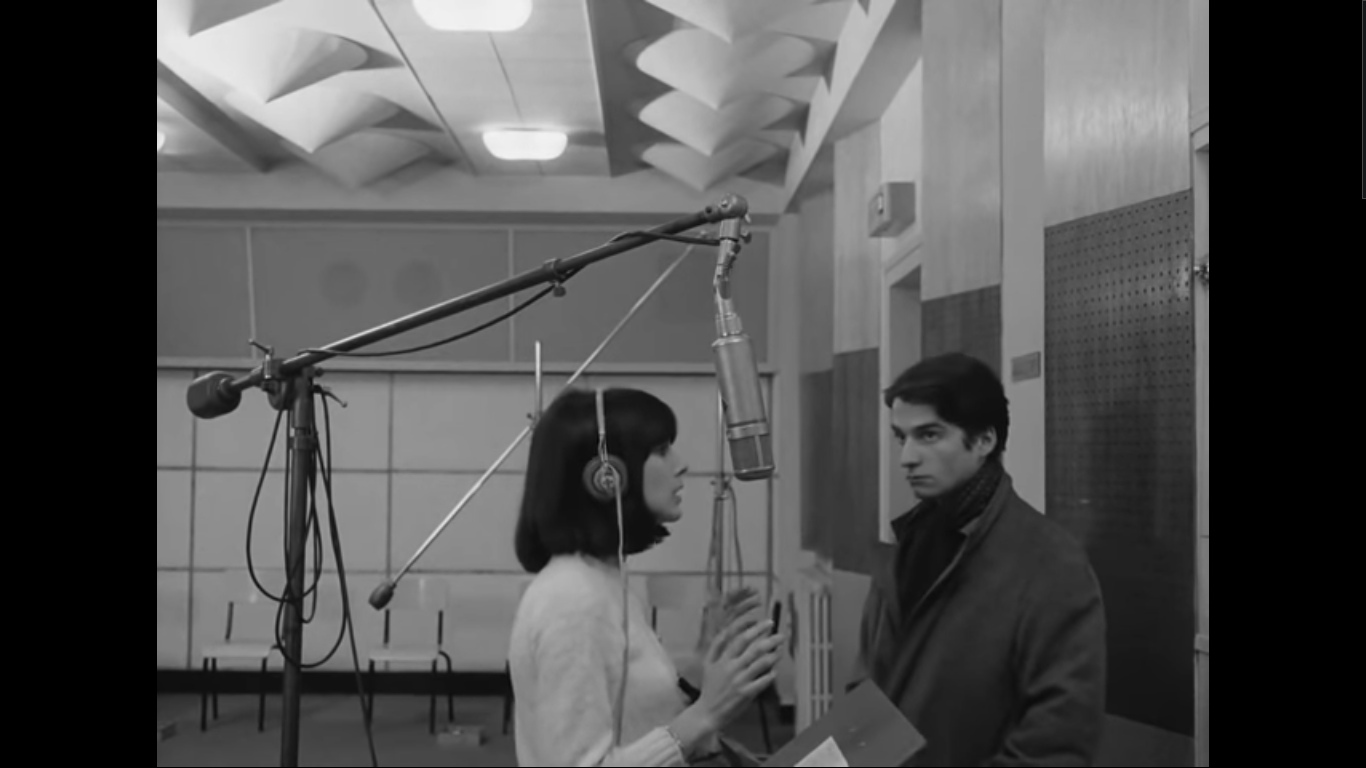
Godard is always in conversation with the films that inform him, but with Masculin Feminin we see a much broader acknowledgment and exploration of the contemporary culture. Madeleine’s meteoric rise as a Ye-Ye singer finds her on the charts in Japan only surpassed by The Beatles, Frances Gall, and Bob Dylan. Not bad!

That’s also not to say Godard gives up being in dialogue with films as well, including his own, which had become part of the cultural conversation in their own right.  Bridgitte  Bardot (from Contempt) shows up receiving notes from her director. Madeleine playfully chastises her beau, “You’re not Pierro Le Fou. He stole cars for his woman!”

Later, they sit in a darkened theater together watching a perturbing arthouse movie:

“We went to the movies often. The screen would light up, and we’d feel a thrill. But Madeline and I were usually disappointed. But Madeline and I were usually disappointed. The images were dated and jumpy. Marilyn Monroe had aged badly. We felt sad. It wasn’t the movie of our dreams. It wasn’t the total film we carried inside ourselves. That film we would have liked to make, or more secretly, no doubt, the film we wanted to live.”

If this doesn’t sum up the aspirations of the youth in front of the camera staring up at the screen within the screen, it must hold true for the young batch of filmmakers who Godard himself came up with. It’s a perplexing bit of dialogue and one of the most apparently self-reflexive and personal annotations within the entire picture.

As is, all of Godard’s male heroes and stand-ins feel dense although Leaud is always miraculously able to pull off some boyish prank or a bit of mischief and still maintain some semblance of relatable humanity.

Otherwise, how could girls ever put up with these guys much less love them? All the young women are pestered to no end and rendered endearing for all they must endure. I think of Ms. 19 and Elisabeth (Marlene Joubert) in particular. We pity them.

What do we do with the totality of this picture? From experience, you usually run into issues when you try and find the narrative arc or a conventional form to follow. Because Godard’s films boast so much in ideas, asides, and digressions. There’s so much to be parsed through and digested.

It’s easier to follow impressions, a train of thought here, or a standalone scene there that left some sort of tangible impact. In the social tumult and the moral morass of the 1960s, it’s almost as if within the collage of the film, we’ll find some substantive meaning. Then, again maybe not.

Leaud walks down the street with a girl and pops into a cafe for a moment only to come back out. He continues to walk and says, “Kill a man and you’re a murderer. Kill thousands and you’re a conqueror. Kill everyone and you’re a God.”

She responds, “I don’t believe in God.” Frankly, I don’t blame her, and if that’s the world’s conception of who God is, I wouldn’t want that God either. Still, we all try and answer existential questions with something, be it politics, pop songs, or fleeting teenage romance.

I read Godard’s film was restricted to adult viewers, but he probably thought he was doing a public service announcement for the youth generations in his own individual attempt to put a voice to the times. Whatever your thoughts on Godard or Coca Cola and Marx, alongside British Swinging London time capsules, Masculin Feminin helps capture this particular moment of ’60s European culture in a bottle.

It feels increasingly difficult to reconcile all the warring forces fighting for primacy and as a young person just trying to find love and make sense of one’s life, it’s never easy. We have more questions than answers. However imperfectly, Masculin Feminin synthesizes some aspects of this universal phenomenon, one that’s not totally restricted by time. We can all relate to this idea as long as we were young once.

4/5 Stars

Note: This review was written before the passing of Jean-Luc Godard on September 13, 2022.

Bitter Rice (1949)

Doris Dowling has a name that sticks out in the opening credits for the very reason she was an American actress and she offered up a particularly memorable role as Alan Ladd’s vitriolic wife in The Blue Dahlia. Here she’s an Italian playing the moll of a two-bit hoodlum wanted by the police.

Bitter Rice opens with a curious kind of introduction. A man stares straight at the camera, breaking the unwritten contours of the fourth wall while providing some explanation of how rice harvesting is a bumper crop not only in China and India but in Northern Italy as well. A moment later, the camera pulls away revealing this presentation is all part of Radio Turin and suddenly the circumstances of the film are instantly placed in a palpable setting.

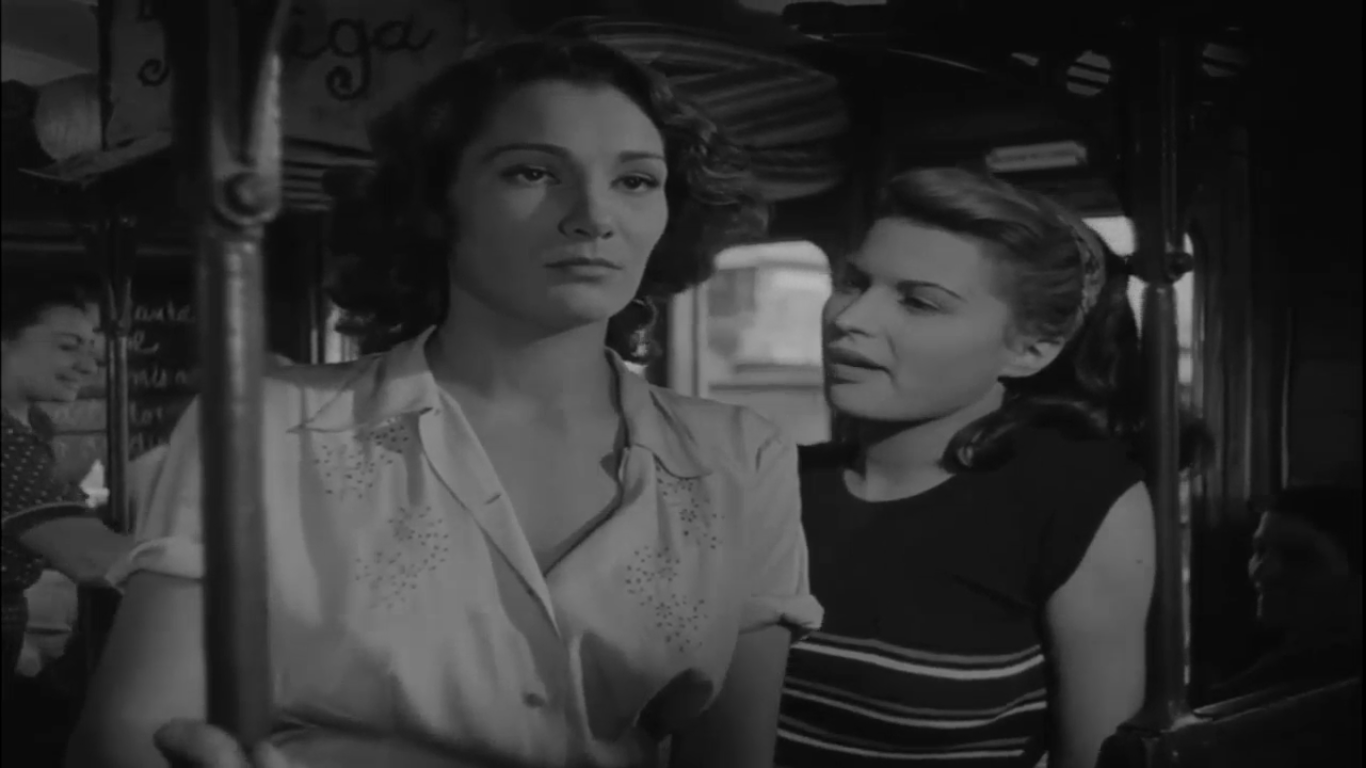
The lithe even upbeat nature of the picture allows us to fall into the world almost immediately. We have a milieu of migrant workers crossed with bustling train stations, lovers, policemen, and wanted fugitives all playing out in front of us as we try to take in the stimuli and come to grips with everything. The wanted man, named Walter (Vittorio Gassman), tries to mask himself by dancing with a pretty young field worker (Silvana Mangano). She gladly flaunts her dancing in exchange for attention as she’s accompanied by her portable gramophone.

In the aftermath of a chase, Francessca (Dowling) disappears into the crowd of workers to lay low with their cache while her boyfriend flees in order to stay out of the clutches of the police. If it’s not apparent already, a passing street vendor lets us know some priceless jewels were stolen from The Grand Hotel.

If it’s not apparent already, this opening gambit has the kind of thrust we might expect from Hollywood, not a backcountry Italian film, and it’s evident Giuseppe De Santis is well aware of the mechanisms of a thriller. However, he also allows his picture to sink back into rhythms that one would feel much more accustomed to with neorealism and a movie set in the province of Vercelli.

Suddenly a tale of illegals and registered workers is given a new context but timeless relevance to this very day. Francesca does not have a license, but she befriends the saucy young dancer, Silvana, who does her best to assuage the foremen and get her new companion on the ever-crucial list of approval. Her chances are tenuous at best, but Francesca, like so many others, has no other choice.

I couldn’t help thinking, with her chewing gum and sizzling hot music, Silvana is bred out of the same world that supplied movie posters of Gilda in Bicycle Thieves. It’s this influx of American product in its many modes — a new form of cultural dominance — steamrolling the former fascism into submission to good ol’ American capitalism.

The way she flaunts herself and becomes the focal point of the picture, I couldn’t help but compare her to Virginia Mayo in some of her saucier roles like Best Years of Our Lives or White Heat — down to the gum chewing. If it were an American film, Bitter Rice would fit somewhere within the landscape of The Grapes of Wrath or maybe Border Incident.

There’s little doubt it has a kind of collective political philosophy to present — its own vein of social commentary — and it delivers it not only through narrative, but visual depictions of the life these people are subjected to.

In one breathless comment, Silvana tells a soldier (Raf Vallone) posted nearby, “In North America everything is electric!” He’s informed enough to know “even the chair is electric…” As a side note, the Italian constitution completely abolished the death penalty for all common and civil crimes starting in 1948. Already it presents a kind of ideological chafing that must be contended with.

Upon their arrival, the rice workers receive a hero’s welcome, and we are reminded this is a yearly ritual with its own unique patterns. There’s something marvelous about taking part in these seemingly familiar habits even as we see them for the first time as an audience.

The packing of mattresses with straw, the throwing of hats to all the field hands who catch them out of the air en masse. It’s strangely riveting. Or there are the mating customs played out year after year with men yelling over the wall to the fair maidens below, searching for former flings and future partners.

We come to realize it’s built on its own kind of ecosystem. You have the foreman’s, the lines of workers bent over in the muck and the mire every which way, and they sing their river ballads to pass news along the line.

With the jewels to get between them, Francesca and Silvana find themselves positioned among the two factions of documented and undocumented workers. It’s not a simple task, and then Walter turns up again. He can only bring trouble.

Like their opening foray, there’s something about the dance scene between Silvana and Walter burning with a palpable sensuality. But what it also does quite effectively is pluck the film out of its neorealist roots and make it even momentarily something more. It’s like a precursor to the passionate sashaying in Picnic. It feels like very much a Hollywood creation and yet it’s simply De Santis’s version of it.

Likewise, the film is not totally averse to forging its own version of a love triangle (or diamond) with Francesca and Silvana finding themselves attracted and repelled by the conman Walter and another character, the soldier Marco. These see-sawing relational dynamics are the fodder for unadulterated melodrama exemplified by violent pursuits in the pouring rain, passionate embraces in mountains of rice, and a great deal more.

While the rest of the harvesters get overtaken with merriment in the wake of a wedding and subsequent beauty contest, there’s something much more catastrophic going on in the background. Silvana becomes the self-destructive queen of it all.

By the end, I stand totally astounded. Bitter Rice jumps off the deep end going from Italian Neorealism toward gut-busting, blistering drama with the dark tinges of noir. This is what it borrows from Hollywood quite effectively, reminiscent of a picture like Border Incident or even Cape Fear. In tight quarters, violence becomes especially animalistic. When a beast feels cornered, he must lash out.

Also, I still am fascinated to know why Doris Dowling was cast in a film that was otherwise completely Italian, and yet there’s something rather ironic and bewitching in her and Magnano becoming cultural foils for one another. It becomes a far more complicated portrait of the corrupting forces of greed and capitalism.

Dowling, as the quintessential, steadfast Italian girl, and the Italian actress as a poisoned vessel of sensual pop culture materialism. What’s more, it leaves a truly incisive impression and that’s most important of all. You won’t soon forget a film like this, and it just might have the power to captivate viewers on both sides of the globe with its pulpy sensibilities.

4.5/5 Stars

Ossessione (1943): Luchino Visconti Does James M. Cain

You half expect cinema to have remained dormant in wartorn Europe during the 1940s. That’s part of what makes Ossessione such a fascinating curio within this context. In fact, the film almost never made it out of the decade alive. One can only imagine how unpopular the picture might have been with the reigning government.

It doesn’t exactly preach good old-fashioned fascist values and Mussolini looked to exterminate the picture completely. Legend has it that Visconti, who had also joined the communist party, managed to salvage a copy so that his film debut could live on and he got out of the war as well with a sprawling career still to be determined ahead of him.

I learned only very recently that Visconti started out as an assistant on the films of Jean Renoir of all people. Not only does that seem like the most propitious of apprenticeships, but it’s also easy to trace the lineage of the Italian from the Poetic Realism of the French Master that would eventually coalesce into Italian Neorealism.

The films of Renoir and Michel Carne are fully present in this early work with the opening images of a train evoking something like Le Bete Humaine or Toni. Gino Costa (Massimo Girotti ) is the kind of working-class hero you’d expect in one of those earlier pictures or even some of John Ford’s work.

He’s an itinerant bum who used to be a soldier and then a mechanic in a former life. Now he’s hitched a ride on a truck bed only to be dumped outside a roadside tavern. And Visconti proceeds to introduce his primary couple through the visual synecdoche of two pairs of legs.

Finally, we see their faces together. They’re in a kitchen. Although Anna Magnani was originally meant to have the role, Clara Calamai channels the sultry come-hither coquettishness quite well even when it’s impossible to unsee the platinum blonde of Lana Turner in the part. But they have their own instant spark, like flint — burning with a consuming passion tantamount to spontaneous combustion.

If you’re well aware of the story already, she is a young woman married to a chubby misogynist named Bragana (Juan da Landa), who thinks he’s more than deserving of the marital comforts afforded by such a wife. He calls on her to rub him down after a long day, and she can’t bear to touch him. She has designs for someone else.

While her husband goes off with the local priest to do some duck hunting, in an early example of a bike-and-talk, Giovanna is quick to stoke the flames of romance with her much more desirable confidante. Visconti’s unauthorized rendition is purportedly more faithful to its source material although it’s hardly as streamlined as MGM’s later adaptation, essentially leaving more space for narrative asides.

When Giovanna clings to the security of her current life, Gino sets off on his own alone soon falling in with a hospitable street salesman, “The Spaniard,” who entertains the crowds. In what can only be expressed as noir sentiment, the tides of the narrative bring the couple together quite by chance.

Bragana is pleased to see their old friend and Gino gets pulled back into the whirlpool taking in some opera at a local tavern. This more than anything betrays Visconti’s affections for the stage.

Consequently, it’s also a film where arguably the biggest moments play out off-screen. I’m thinking of the illicit couples’ first rendezvous and then the fatal accident altering the course of the entire picture. Not all of this is due to content concerns either, but it does highlight how Visconti and his scripting compatriots, Mario Alicata, Giuseppe De Santis, and Gianni Puccini, conceived the story.

It offers another kind of dissonance because we don’t get to see what actually happened even if we’re well aware of their mutual intentions. We must wait for events to play out to see how the canker and unrest reveal themselves in due time. The most explicit response comes when Gino peels off  some bandages and then a violent struggle over a trinket ends in a passionate kiss. This might be the movie summed up in visual terms.

They must reckon with an unsettling state of limbo: freedom that feels more like purgatory as they stew in their infidelities. A man of the cloth suggests that they part ways because people do talk about their situation, real or imagined, and of course, it is very real.

Instead of detonating the story to be a full-blown melodrama like The Postman Always Rings Twice, Ossessione maintains these high levels of human intimacies. Gino reunites with his old pal again beyond delighted to see a familiar face, and yet it ends in fisticuffs because his fellow traveler is able to put words to everything he’s currently tormented by.

Then there’s a demure “ballerina.” Gino meets her knitting on a park bench, and they share an ice cream. I had to acclimate myself, thinking only momentarily that she was Giovana, but the emotions in the scene are enough to give this away. Because being around her Gino feels different; it’s as if, ironically, her purity is able to cover all his sins or at the very least help him forget them.

But the digressions only aid in leading him back to Giovana. If they aren’t totally a destructive pair, frolicking on the beach together, having rekindled their chemistry, then there’s some kind of fatalism that needs to be satiated.

In passing, Ossessione might earn the labels of Italian neorealism for its striking, ever austere imagery emblematic of the post-war working class. But it’s also often designated as film-noir for its sordid details and futile finale. However, I can’t stop but marvel at how Visconti was able to make the picture to begin with. Even after its initial release, it was hit with so many roadblocks of censorship and copyright problems only to gain a second life.

What an auspicious way to start a career, especially under such tumultuous circumstances. Much of the finest pieces of art are born out of the burnishing fires of the furnace and, for that matter, a certain level of creative obsession.

4/5 Stars

Il Tetto (1956)

A lot of memorable films are instigated with a jubilant wedding. A couple takes a photo out in front of the church and ride off triumphantly, leaving friends and relations in their wake. Like most of its brethren, Il Tetto falls back to earth with a more sobering reality.

The wife takes the bus with her new husband back to their hometown. It’s a version of The Graduate after the euphoria has burnt off, and they have to make sense of the future. Now they must come to terms with their decisions. They must cope with a father-in-law who won’t speak to them. It’s not even about unyielding conflict. They don’t get a chance to mollify him. The chance never comes so they go back from whence they came.

They seem fairly well-adjusted as a couple in spite of their youth. Although they are young, without many prospects or money to speak of, the bond between them is undeniable. Because it’s the story of many people, to get married and then become inundated by poverty.

However, these newlyweds are looking to make a life together built on the foundations of the war years with a youthful optimism for future prosperity. For the time being, they must stay crowded in the family house until they can get a leg up and a place of their own.

But anyone who loves their family to death (and sometimes wants to strangle them), knows this cannot last. Between Natale’s elderly parents and little kids bustling around, the sister-in-law Giovanna is about to have a baby and her agitated husband Cesare is always complaining about the lights being left on. He’s not particularly simpatico about the new arrangements. It reaches a tipping point when he and Natale grow chippy and discontented.

It’s sooner than expected, but they realize they need to go out on their own and find a place. The barriers up against them are obvious. They need the funds in order to swing it, and it’s still an issue finding quality housing in the city with buildings coming down as much as they’re going up.

Husband and wife make a pact to split up so they can try and find leads. Natale puts his fledgling skills to use getting a job at a construction site as Luisa calls upon her friend to get work as a housemaid.

This isn’t quite Mr. Blandings Builds His Dream House, but the young bricklayer mobilizes all his work buddies and scrounges around for all the money he can get for materials and labor. What’s more, they’re tasked with putting up a livable structure in the course of one evening. It feels like an act of desperation, an unsurmountable task, but he seemingly has no other choice.

Like an utter numbskull, it didn’t strike me what the core resonance of the title was until the movie was over. I was under the impression that there would be some scene on the roof — that it was a metaphor for their existence — of getting away together as a couple and starting their new life. I’ve listened to too much of The Drifters and vividly recalled a rooftop moment in A Special Day.

But De Sica makes this story even more elemental. This is about the roof over their heads — a home to call their own — and the right to a certain amount of dignity to work and raise a family.

He turns such a premise into a kind of neorealist thriller as the young husband races to literally put that roof over their heads before the local police can reach the premises and condemn them for whatever infractions. It’s a tense round of nail-biting in the final minutes as they race against time. We know what might happen; we’ve seen it already, and now it’s all up to the fates.

Il Tetto is not talked about with the most high-profile De Sica dramas nor, does it have the warm buoyancy of his later comedies as he came upon a new facet of his career.  But even as the neorealist movement was waning and beget future progeny like the French New Wave and other movements, there’s little denying the impact of this kind of cinema championed by the likes of Rossellini, Visconti, and De Sica.

It’s taken a more personal note for me because as I’m writing this, I’m in the process of moving. A lease was terminated, I was forced to rush around trying to find a place of my own, and then there’s the first-world problem of cleaning out all your excess junk.

My situation is different; it’s privileged compared to what this couple have to endure. If anything, it’s a reminder for me to stop my griping. It could be worse. Still, more so, I’m reminded we all have these same urges: for shelter and a place we can live in peace. I empathized with these folks even more than I was expecting.

4/5 Stars