What Price Hollywood? (1932): Starring Constance Bennett

What-Price-Hollywood-Sherman-Bennett

Here is a film so completely attuned to Hollywood celebrity and fandom in its heyday. We open on Hollywood fashion magazines full of stockings and lipstick, and glossies of Greta Garbo & Clark Gable. Then, Mary Evans (Constance Bennett) pushes her retractable bed into the wall to head off to her shift and our dramatic situation is made instantly identifiable. 

She’s not there yet, but she has aspirations to be under the bright lights someday. For now, she frequents Hollywood haunts like the legendary Brown Derby, although she gets in by the back way — through the kitchen. You see, she’s a waitress there. She’s like so many bright-eyed starlets before and after her — even to this present day — looking for their big break. 

In her case, it comes thanks to a veteran director, Max Carey, whom she waits on. Lowell Sherman is not altogether well-remembered today, but he has a smoky idiosyncratic charm about him playing well off Bennett’s vivacity.

He’s not quite the eccentric heights of late-period John Barrymore nor is he equal to the quipping suavity of William Powell, but his career is as remarkable as it was preempted. Not only was he an actor but also a director of such films as She Done Him Wrong and Morning Glory. This was before his sudden passing in 1934.

The fact that Hollywood always seems self-absorbed and preoccupied with its own mystique and inner workings actually bodes well for all those who desire a microscope to see how the industry actually functioned in the past. For this reason alone What Price Hollywood is a lark from the get-go.

Through her cajoling and giddy persistence, Mary gets her bit part, works tirelessly on her craft, and it gets notices. During the rushes, she’s made a contract player on the spot by the demonstrative Mr. Sax, who offers her a notorious 7-year contract. Far from feeling like a straight jacket, it seems to encapsulate her life’s ambition. She’s on cloud nine even as Carey looks on wryly, sunken down in his theater seat. He’s seen this film before. 

You Ask Me! gossip column supplies juicy bits of exposition all throughout the movie charting the rise and fall of our stars. Mary begins her ascension in the industry even as Carey begins to falter. His films are over budget, he’s a bit temperamental, and his drinking problem has gone off the rails.

These are the obvious beats of melodrama, but in the hands of George Cukor, still an up-and-coming director exerting himself, the story is allowed to play like something more. There’s a lot of good-humored charm, but it’s not just about laughs. At the same time, because it leads with this kind of playful screwball sensibility, we never totally enter that perilous territory of overwrought melodrama. It feels quite light on its feet in all circumstances.

Mary has spunk flying out of her left and right, and it sees her straight to the top. Her first big picture gets her mixed up with a polo-playing playboy. Not only is Lonny Borden (Neil Hamilton) rich and dashingly handsome, but he’s also rather forthright. After setting up an extraordinary dinner, he’s not about to be stood up, and he pulls his date right out of bed to dine with our heroine kicking and screaming her way to a luxuriant dinner for two. What a lovely way it is to do romance, at least in the movies.  

The revelations continue as we get to stand with the grips and the stagehands behind the scenes of the magical world of Classic Hollywood. When Bennett sings her French torch song and we see the camera coming toward her, the light nearby and the spotlights up above shining down, it offers such a delightful visual anatomy of a scene.

While not quite Casablanca, we are afforded a different kind of atmosphere. It gives it breadth outside the bounds of typical movie scenes because we are seeing both what’s in front of and behind the camera in equal measures. It also gives Cukor greater narrative freedom, and he can show us more as Mary’s personal and professional life bleed into one. 

Although Max Carey and Lonny Borden never quite play as romantic rivals — the movie never aspires to be that kind of tripe — they do war for Mary’s affections because she has a soft spot for them both. The director and dear friend who got her into the business; the man who discovered her when she was a nobody, and then the other man who swept her off her feet. 

What Price Hollywood?, like so many other such examinations, must chart both a shooting star and a falling star. Mary wins her Oscar. Max Carey is now an untouchable drunk with no place left in the business. Mary remains his only friend even as her marriage takes a nosedive, and she’s forced to soldier on as a single mother. She’s a highly successful mother but alone nonetheless. 

In the final act, it looks like we might have spoken too soon. We’ve seen this melodrama coming from miles away. It’s embedded in the rhetorical evocation of the title. Mary is beside herself with the gossip and the baseless slander of the fickle journalist and viewing public. Now she only has one friend: the old softie Julius Saxe. The public will make you and break you. It’s true. 

But the movie doesn’t end in the pits. This might be the key. Forget a sudden move to Paris that feels all too convenient or another all too expected happy ending. In some ways, it stays true to the overarching mood of the picture. At its best, it channels the effervescence of Constance Bennett and reminds us why she was one of the unsung comediennes, and one of the unsung talents, of the 1930s. 

4/5 Stars
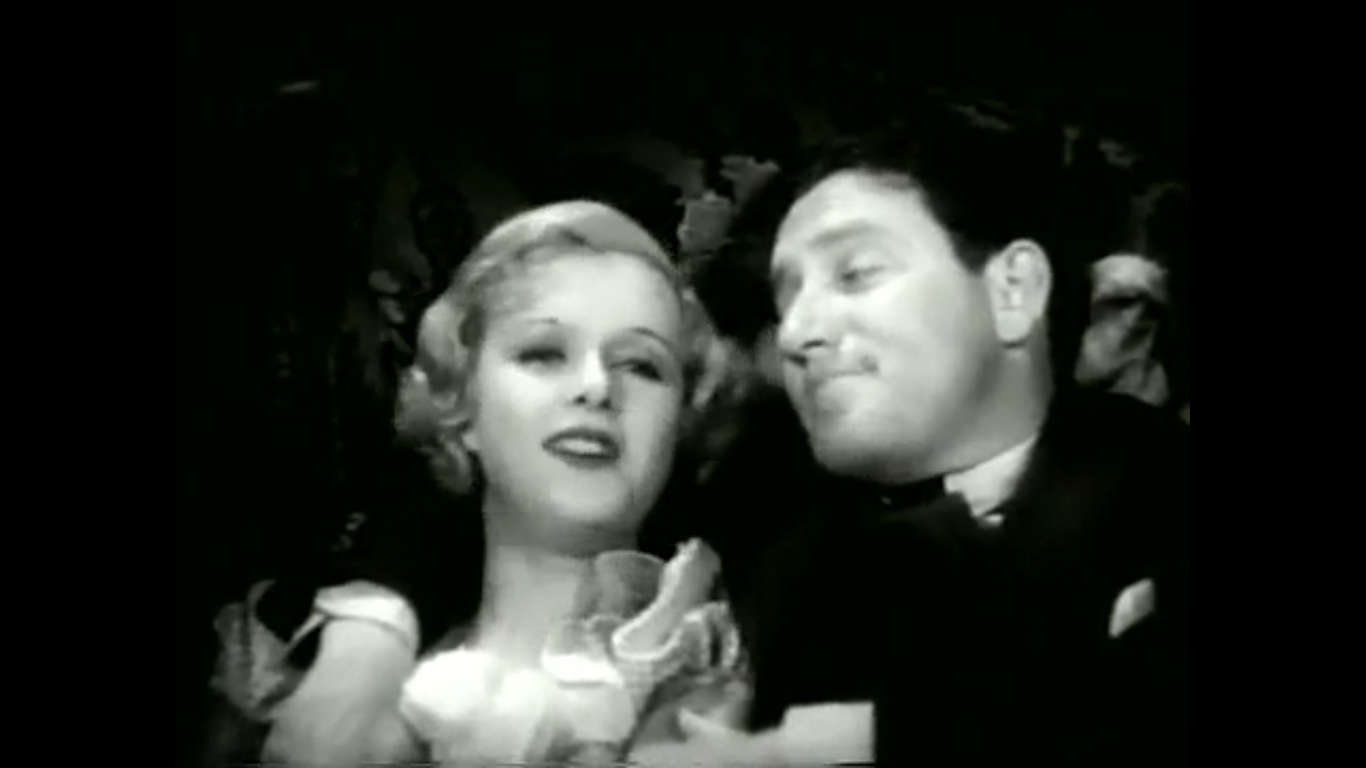
Me and My Gal (1932): Spencer Tracy and Joan Bennett

Spencer Tracy falls easily into the role of an Irish cop on the beat, Danny Dolan, working in the heart of the pier on the Lower East Side. What stands out immediately is his humanity and good-natured benevolence extended to his neighbors. In a matter of minutes, he’s nabbed himself a banana, rescued a dog, and drummed up a bit of small talk with a pretty cashier (Joan Bennett).

The film itself provides a  fairly simple framework. Director Raoul Walsh finds himself sculpting a world out of characterizations and vignettes, not unlike future endeavors like Strawberry Blonde or Gentleman Jim. But it showcases precisely how a couple of weeks of shooting can translate into an enjoyable piece of work.

Dolan falls into company with a detective named Al (Adrian Morris) hanging around the docks and watching out for a big-time gangster named Duke Castanega. However, before they can roll out the welcome wagon, they get accosted and thoroughly distracted by the most persistent drunks in film history (Will Stanton). He’s in a perpetual state of belligerent inebriation only made funnier by the fact he’s probably the scrawniest character in the whole picture.

One of the other scenes bursting with life comes in the wake of the marriage of Kate Riley with her sister Helen (Bennett) by her side. Soon the minister has summed up the proceedings and every man looks to get a smooch from the bride before her nebbish husband can get in edgewise.

Soon the after-party is flowing with beer, belches, drumsticks, and boisterous conversation. Walsh pulls out a trick he would use later in Gentleman Jim where his characters speak to the camera. Actually, they speak over and past it and what it does is intuitive, bringing us into the fold of the movie. So right in this moment, we as an audience are there at the wedding experiencing the frenzy with everyone else.

The chemistry sparks early between Tracy and Bennett, and it slowly grows into a mutual appreciation. He does her a good deed at her sister’s wedding, turning a blind eye and earning points with her blustering father. Later, Danny and Helen trade advice: He straightens his new bowler and she stops chewing gum.

One of their lighter moments on the beat involves the aforementioned drunk in yet another altercation. This time they must defuse a confrontation involving a man who was slapped in the face with a fish. It doesn’t fall into the realm of high-brow comedy, but that doesn’t mean it can’t be delightful.

For Me and My Gal — like many films from bygone eras — also has standalone details we can look at from our current station in history and truly appreciate. A radio salesman pulls out all the tricks to get the Rileys to bite on his best merchandise. The budding couple eat vanilla ice cream together in the kitchen, and a cup of java is two bits.

Even better is the linguistic education. Sporting the new bowler, one asks the other “Well, how do I look?” They say “Jake”  with a playful flick of the brim and a superlative adjective is born. Likewise, the weighty insult getting hurled around on all sides is “beezock.” Look it up. 

In fact, nothing’s sacred. They take a few minutes to razz a contemporary moving picture where they say one thing out loud, and then a minute later express what they really think. The way they amuse themselves with this gag feels like unusual territory for the era as we hear their inner thoughts playing against their spoken words (in a prodding nod to the movie Strange Interlude). 

As he tugs her down and she plops on the couch next to him, they are such a wonderful portrait of romance so perfectly in sync. In these self-reflexive sequences, I couldn’t help but find my mind drifting to Joan Bennett and Spencer Tracy. They both had long and illustrious careers, and almost 20 years later they would play opposite one another in a starkly different picture: Father of the Bride.

For now, they are young and in love. Bursting with all sorts of sass and equally romantic elan. Take the scene later on when he charges into her hash house aiming to marry her, and she’s clattering around behind the counter giving him her glib repartee. It’s the way romance is supposed to play out and around all the cliché beats of wanted gangsters and what-have-you, these are the other elements of the movie that feel singular and almost transcendent.

These are the little “pieces of time” Jimmy Stewart said actors can give an audience. When they reach over the counter to kiss, the embrace sends both their feet shooting up in the air like a pair of cinderellas. Tracy’s a terribly genial chap, but he works all the better with an able sparring partner. Bennett has a whipsmart, blistering independence about her, and she’s also constantly at the defense of her cowering sister.

Kate’s one weakness is the man she’s trying to forget, an escaped gangster named Duke (Walsh’s brother George). We know where the picture is going after a prison escape, the sheltering of a fugitive in an attic, and a brazen bank robbery. Only one logical resolution remains. There’s the obligatory confrontation and Tracy becomes a hero. Why dwell on any of this? We’ve seen it umpteen times before (and after). 

Walsh seems to have a great deal more fun in the final minutes. Now there is a second wedding in process, and it’s yet another excuse for mayhem. We sit there trying to take it all in as Tracy and Bennett get whisked around, swamped by people, trading kisses. How lovely it is to be a part of this contingent living vicariously off their energy. 

Spencer Tracy always makes the toils of an actor feel effortless and Bennett does a swell job to counter him. People don’t talk much about their onscreen partnership, but it’s pleasantly appealing. In the back of our minds, we know with content in our hearts Me and My Gal was just the beginning. More people should seek it out.

3.5/5 Stars

Of Human Bondage (1934): Bette Davis Ascends

“There’s usually one who loves and one who is loved.”

Philip Carey (Leslie Howard) is a sympathetic man who made a go at an artist’s life in Paris. However, a mentor tells him to move on; worse than a failure, he’s a mediocre talent. Although he has the industry, he lacks the genius, so he resolves to devote himself to something else: pursuing medicine like his father before him. It also constitutes a move back to his native London in the process.

Although it has nothing to do with his individual strength of character, wherever he goes in society at large, he is forever marked by his club foot. His history of rejection sets the stage for the story at hand. Of Human Bondage is based on W. Somerset Maugham’s partially autobiographical novel from 1915. I know little about its source material, but the film obviously does condense the narrative and hone in on one relationship in particular.

On the behest of a medical school colleague, they strike up a conversation with an “anemic” waitress (Bette Davis) at a local tea room. There’s a shrill, hard edge to her — denoting the lower classes — and she wears a tough exterior. Howard’s corners are rounded and refined in comparison.

Davis uses certain ticks to her advantage, for instance, how she always tilts her head from side to side. She’s proud and aloof in spite of her upbringing. Philip gives her a playful going over, and yet can’t stop thinking about her. She holds a power over him.

After only one encounter he’s completely smitten, asking her out to the theater, then dinner, while she barely gives him the time of day. Her ploy is to keep him at arm’s length accepting his requests for companionship, even as she keeps company with other men (including Alan Hale).

For those who have been in love, it’s the greatest disappointment when feelings are not reciprocated. She becomes his mind’s primary obsession during medical examinations, totally commandeering his life. He is only a passing fancy for her. Nothing more. Given the circumstances, his hopeless devotion toward her can only end in one way: heartbreak. What’s worse than having it happen once, is the cycle continuing over and over again.

Because she tells him more than once, that she’ll never love him; they have no future together. She goes off and marries something else, only to get thrown back out on the street. Philip finds himself taking her in out of pity because her husband dumps her, and she has an infant child to care for.

Although he’s not well-off, he still extends his hospitality to her even as it scourges him to have her in his space. He knows he cannot give himself over to her again. It would only torment him more.

Even as his medical career progresses and he finds another woman, a decent woman, and one who genuinely loves him, the pull of Mildred is too great. Not that he loves her, but she is in need of someone, someone to have mercy and give her shelter to provide for her child. As there is no one else, it falls on Philip.

Thankfully, there are a few bright spots in his life. One of his patients (Reginald Owen) is a particularly jovial chap who welcomes him into his home after he’s received a good bill of health and even introduces his beautiful daughter (Frances Dee) to the eligible bachelor.

Mildred continues to be the noose slowly tightening around Philip’s neck. Despite all the generosity he’s shown her, she ultimately lashes out at him with a vindictive fury, trashing his apartment and desecrating the paintings he has cherished for so long. But he is a changed man and as Mildred sinks back into the gutter, he continues to rise out of it.

We have a budding love story on our hands and in the company of Thorpe Athelny (Owen) and his daughter Sally, Philip cultivates a life-giving bond with the makings of a happy ending. Suddenly, all the former heartaches and woes have passed away, and Philip is blessed with a new life. Mildred is not so lucky…

Leslie Howard is an able performer and his talents probably get overshadowed a bit today due to playing a supporting role in Gone With the Wind and dying so tragically during WWII. But in a picture such as Of Human Bondage, he exemplifies both a sensitivity of spirit and a capacity for love. Frances Dee holds what might be considered a token role, but she’s teeming with beauty opposite him as one of the unsung starlets of the decade.

However, as you might have guessed, there is no considering this picture in its full breadth without considering Bette Davis’s performance. In hindsight, it’s fascinating to think about how some of the greatest stars made their ascensions. If the role of Mildred acts as an inflection point for Davis, then it’s quite an extraordinary anomaly for the era, but also a stunning showcase.

In some way, Mildred runs very radically against the tide of the times — not the victim but the aggressor — and a femme fatale before they were thoroughly popularized by noir in forthcoming decades

We must marvel at the courage and foresight of Davis to fight for the part, to go at it wholeheartedly, and willingly play a so-called undesirable, unglamorous character. Because she realized in all the mess, all the vulnerability, there is a character worth considering. Frankly, she feels human and honest though we do see her most petty and debased inclinations. This is precisely the point. The actress’s own words do much to color her appreciation of the characterization:

“My understanding of Mildred’s vileness – not compassion but empathy – gave me pause … I was still an innocent. And yet Mildred’s machinations I miraculously understood when it came to playing her. I was often ashamed of this … I suppose no amount of rationalization can change the fact that we are all made up of good and evil.”

Davis seems supremely perceptive, and she touches on one of the keys to creating indelible performances. Great actors are able to empathize with all characters and find their core truth — the wounds and hurts and realities — making them into genuine, broken people. There are a handful of Bette Davis characters that are easy for me to dismiss; I usually look down on them because I don’t like them as people.

Only as I grow older do I realize their flaws momentarily look like my own. Don’t get me wrong, I don’t see myself in Mildred Rogers or Margo Channing, but I’d be remiss to say I’m better than them or totally impervious to similar sins. Bette Davis is such a legendary talent because she forces me to have empathy with wretches such as these. Because on my worst days (and some of my better ones), I am one too.

3.5/5 Stars

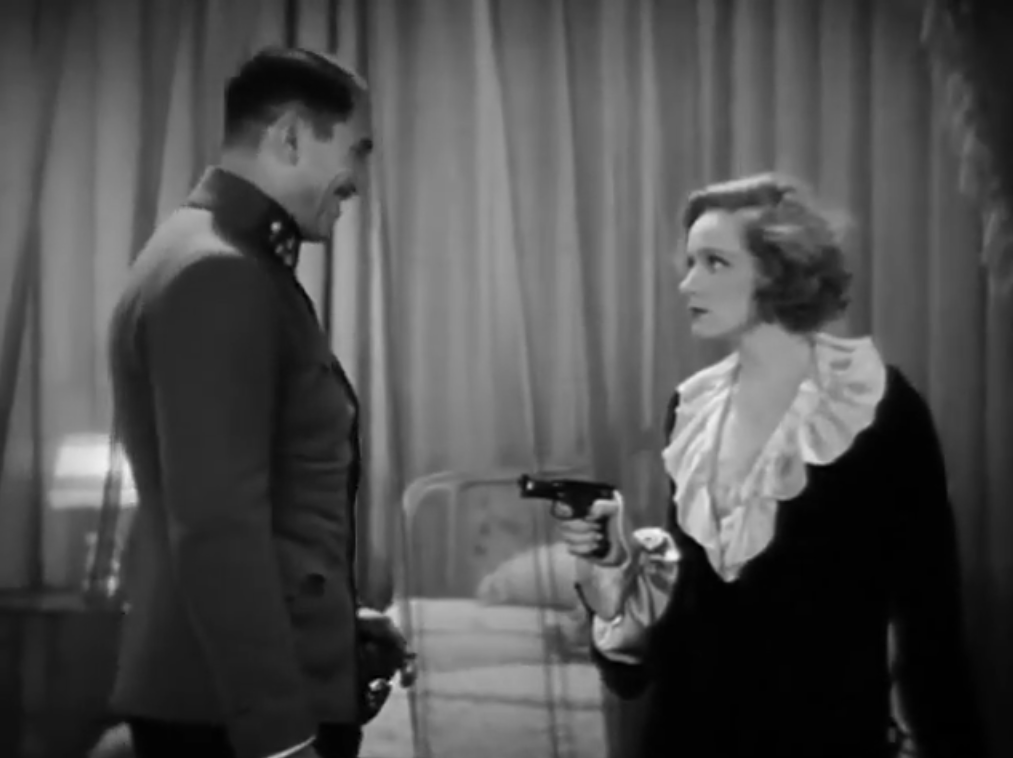
Dishonored (1931): Marlena Dietrich, The Sultry Spy

Screenshot 2020-07-10 at 7.47.31 PM

The premise is established in broad strokes. It’s 1915 and the remnants of the Austrian empire are caught up in war. This can only have meaning if we see some of the chaos in front of us. In this case, a prostitute lies dead in the street — with a host of onlookers crowded around — a mysterious mustachioed man eavesdropping and poking about. He’s looking for someone, listening to their conversation.

As the people walk through the streets, the sensation of rain sounds almost tinny and fake but this is part of the marvelous illusion. Because this is Joseph Von Sternberg, the famed spinner of bounteous tales offering so much to their audiences in the form of sensations and palpable milieu.

Eventually, the clandestine man — actually the chief of Austrian secret police — settles on a woman, but not just any woman. It is Marlene Dietrich in all her glory. They settle on a romantic rendezvous.

Not only does Dietrich give us so much, as is her habit, but her apartment itself is cluttered with all the sorts of trinkets that allow us to make sense of a person or at the very least appreciate them more fully.

There’s the piano. Sketches up on the walls. The place where she stashes her shoes. The little dancing figurines suspended from the ceiling. The empty bottle of wine. However, more crucial than anything else she proves her own character — she might live a meretricious lifestyle, and yet she’s a staunch loyalist and a war widow. Her allegiances are unmistakable.

It’s immediately evident Marlene is a woman in a man’s world, but she sure has her pick of the litter. Because everyone is bending over backward to escort her, to be with her, to get to know her. Her new superior is well aware of her assets supplying her a new alias — X-27 — and an assignment of vital importance to her homeland.

There’s a casual nonchalance to her when being propositioned spy work. But this only works if there’s a brazenness in the face of certain danger. She has both in equal measure. It’s true the subject matter plays as surprisingly lithe and modern for Von Sternberg as he casts his muse as a Mata Hari-inspired spy with steely poise and a touch of class. She’s an inscrutable beauty fit to play the game.

What’s lovely is how everything is delivered in between the lines. Heroes. Villains. Friends. Enemies. What’s the difference? For these people, it’s their business and so they find time for romance whatever the scenario might be. There are no hard feelings because the current climate has bred this kind of immediacy. Nothing beyond the here and now can matter. One must make the most of the moment.

Dietrich is brilliant at the masquerade party. It’s our first chance to see her in her new regalia — plumed and sequined, teeth smiling from under her disguise — and she’s only one of a myriad. It’s the most gloriously decadent party I’ve ever seen. You’ll have to see for yourself if it’s hyperbole or not.

However, X-27 has other business to attend to. Her first mark is Warner Oland a high-ranking General who’s also subsequently purported to be a turncoat. She must use the art of seduction to implicate him. But he’s not the only one.

dis

Captain Kranau (Victor MacLagen) was also present at the party and equally taken with the woman’s allure. He’s a Russian Agent playing the same game of cat and mouse she is. In the service, of Ford, MacLagen always felt broadly Irish. Here he seems toned down and well-fitted for the role if only for the fact he hardly tries to upstage Marlene. It’s better not to have Coop. She needs no equal in this picture and it’s true no one can outdo her. This is her story more than anyone else’s.

What more can be said as they joust back and forth globetrotting across borders and meeting under all varying degrees of circumstances? X-27 does her finest impression of a cleaning woman and a kitty cat all in one sequence. He finally has her cornered. We think this spells the end and yet she riggles free. Her wealth of secrets transcribed into music and memorized. She wins another round.

This is what becomes so riveting because the movie is constructed out of these kinds of jocular bits of leisure, but they are a pretense or a visual projection or smokescreen over a very harsh even cutthroat subject matter. He tells her in one interchange, “the more you cheat the more you lie, the more exciting you become.” It’s like a harbinger of Bond decades later.

However, lest anyone misconstrue his intentions, Von Sternberg is vehemently critical of unyielding military protocol. In fact, in a gut-wrenching final scene, it makes a young soldier blubber. He witnesses the utter cruelty of war when it comes to the rule of spy and counter-spy. Still, Marlene takes it with her usual poise — stalwart to the end — and frankly, she’s unforgettable. As she waits out her final days, her last requests are authentic to her character from the beginning. She requests her piano and the black dress she used to wear in her previous life. These are her identity. This is her uniform.

The ultimate irony of the movie is its title. Against the vociferous objects of Von Sternberg, the studio settled on “Dishonored.” But this cut-and-dry analysis of her station in life fails to understand the intent of the entire film. It’s tantamount to saying Sophie Scholl was dishonored in standing up to the Nazis or that the figure of Christ was dishonored for standing up for what he believed in, what he was called to. In X-27’s case, her guiding light was love — even love precipitated in momentary encounters — it can still be a driving source behind any human heart.

We have a fair amount of modern spy movies now anchored by female stars. Their main objective seems to be an exhibition in showing women as powerful entities, capable of kicking butt. This is fine, but sometimes there is no illusion left. No added depth of character. Dietrich is unparalleled, feeling exciting and aloof until the very last frame. We want more of her not less, but she leaves us while she’s still ahead. What a run she had with Von Sternberg, in her third picture following The Blue Angel and Morocco, with still more to come.

It’s less heralded but might just be the best of the lot. It comes quietly and then ambushes you with all its many assets — thoroughly exquisite to look at and also thematically resonate. What’s more, it has a genuine sense of fun and intrigue which isn’t always the easiest combination to come by. Its range of surprises is the kind you relish as a moviegoer. They stay with you.

4.5/5 Stars

Angel (1937): A Mature Lubitsch Love Triangle

For those familiar with Trouble in Paradise, Angel has a  sublime outside-the-window tracking shot in its own right to bring us flush into the world of Parisian soirees. Thusly, we become acquainted with Russian Grand Duchess Anna (Laura Hope Crews), who facilitates meetings between men and women. 

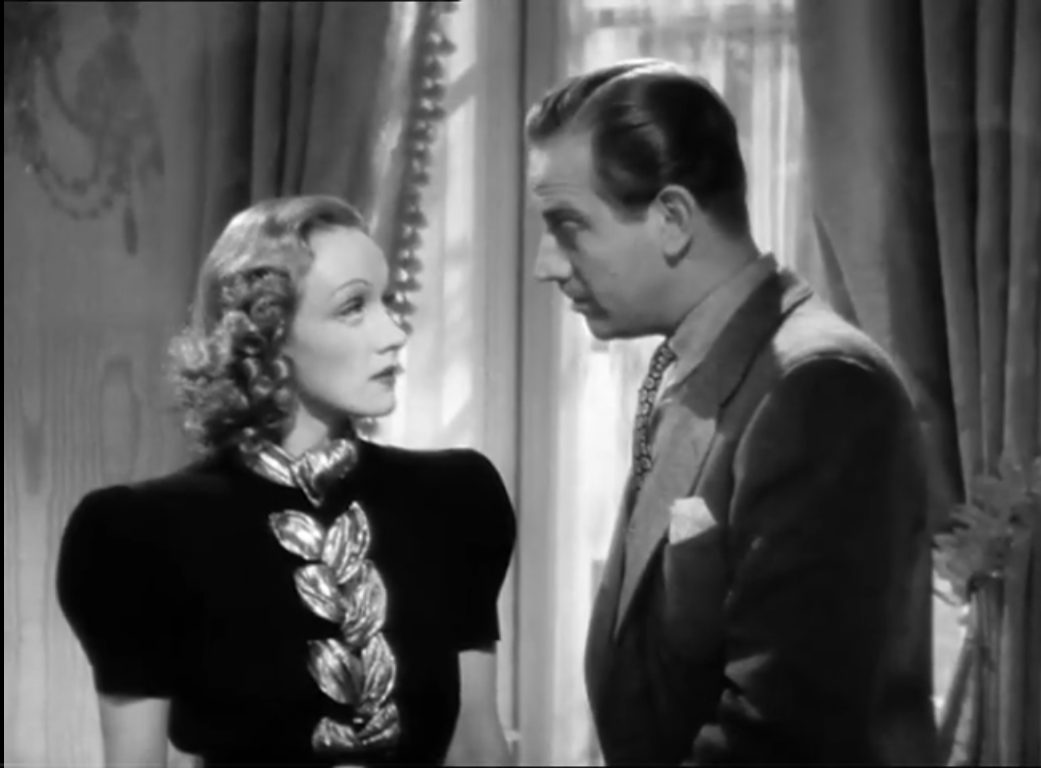
It’s possible to barely catch the subtext here. What’s apparent is by the sheer serendipity of cinema Marlene Dietrich and Melvyn Douglas wind up in a drawing-room together. Dietrich feels particularly laid back. Normally, she’s beautifully aloof; here it’s a bit different because she’s not looking to maintain an aura at all. It makes her all the more genial.

Joseph Von Sternberg always cast and projected Dietrich as a screen goddess. Working with Lubitsch, Dietrich feels like a far more relatable human being albeit a beautiful, refined one. She doesn’t totally overwhelm with her sensuality remaining mostly reserved. 

Tony Halton (Douglas) is in town for the day and is looking for a time. She offers up the Mona Lisa, the Eiffel Tower (that big steel thing sticking up in the air), and Notre Dame. No offense to “The City of Light,” but none of them pique his interest. The lady in front of his eyes is far more incandescent. She’s a bona fide angel.  

It’s true there’s something fresh and appealing about their interaction. They don’t know one another’s names nor does she bother to correct the mistaken identity, and it doesn’t matter. In fact, it even augments what they have because they are so fascinated by one another. It means a dinner invitation and spending the night together. This could be the movie right there. 

Then, Sir Frederick Barker (Herbert Marshall) is shown aboard a screeching steam engine 20 minutes into the picture. We almost forgot about him, and we take a total about-face toward events that remain interrelated. Before we ever meet the man, we learn he must be a gentleman of some renown because he’s all over the papers. 

He is served faithfully by his fastidious manservant (Edward Everett Horton), Graham, who has the ear of a very powerful man. He’s seen his fair share of diplomatic affairs: dinners, white ties, and tailcoats. They make him quick to judge the merits of international diplomats. Because his master is one of the finest, single-handedly standing up to 21 countries in The League of Nations (not including the U.S.). 

Barker returns home late one evening to be reunited with his wife Maria (Dietrich). It’s obvious they have affection for one another — they care deeply about their marriage — but before she fell for another man, there was already a third party in their relationship: his work. 

To grasp at obvious metaphors, there’s a tinge of Casablanca married with a kind of Melvyn Douglas Ninotchka romance and the stuffy propriety of Cluny Brown. Take, for instance, the mélange of servants headlined exquisitely by Horton and Ernest Cossart.

In perfect Lubitschian fashion, a dinner is viewed from the kitchen’s point of view as they perceptively observe two of their dinner guests are out of sorts. They didn’t touch their food. They weren’t hungry. Although it’s never said outright, Lubitsch allows us to put two and two together. One can only surmise it’s due to lovesickness. 

Because there is only one way this movie can get more complicated and more painful. The men must meet. However, far from being antagonistic, they are old friends meeting on a whim. Once upon a time, they shared a French girl all the way back during the war years when they were both still young. Whether they know it or not, they also share another girl: Angel. They have no idea the beehive that’s been kicked. Lubitsch only gives that to us. We are resigned to watching the outcomes. 

The hourglass structure of the movie means we must end where we began. We know time is running out. We are back in Paris, back with the Duchess, and she performs her narrative duties a bit like a maestro. Unwittingly or not, she has all the main players stashed away in different drawing rooms. It’s inevitable that they find each other. The situation calls for it. There is no other possible resolution. 

In the olden days, you have a sense this film would have been lithe and effervescent as only Lubtisch could offer up. Standing before us are all his penchants for drawing rooms, the affluent classes, and their servants. 

But what sets Angel apart is the tone and the profound solemnity Lubitsch often brings to the proceedings. The melancholy of the central love triangle is unmistakable even in the final minutes of the film. In this case, it’s difficult to totally dismiss the extravagance. Still, we’ve come to understand these people, both their passions and their nobility. Because Lubitsch’s films somehow compel me the most when they grab hold of such feelings, where the emotions cut far deeper than the surface ironies. 

As far as Dietrich’s concerned, it might be one of her greatest performances. In the place of ostentatious allure, there stands a quiet dignity comfortable with silence. The whole movie is made in such a mode where these interludes develop the longing. In a quiet encapsulation, husband and wife walk out of the giant estate both together and apart. Their marriage still standing but on the verge of dissolution.  It’s not so much a paradox as it is an indication of the tenuous nature of their lives moving forward.

3.5/5 Stars

One Hour With You (1931): Jeanette MacDonald and Maurice Chevalier

one hour with you

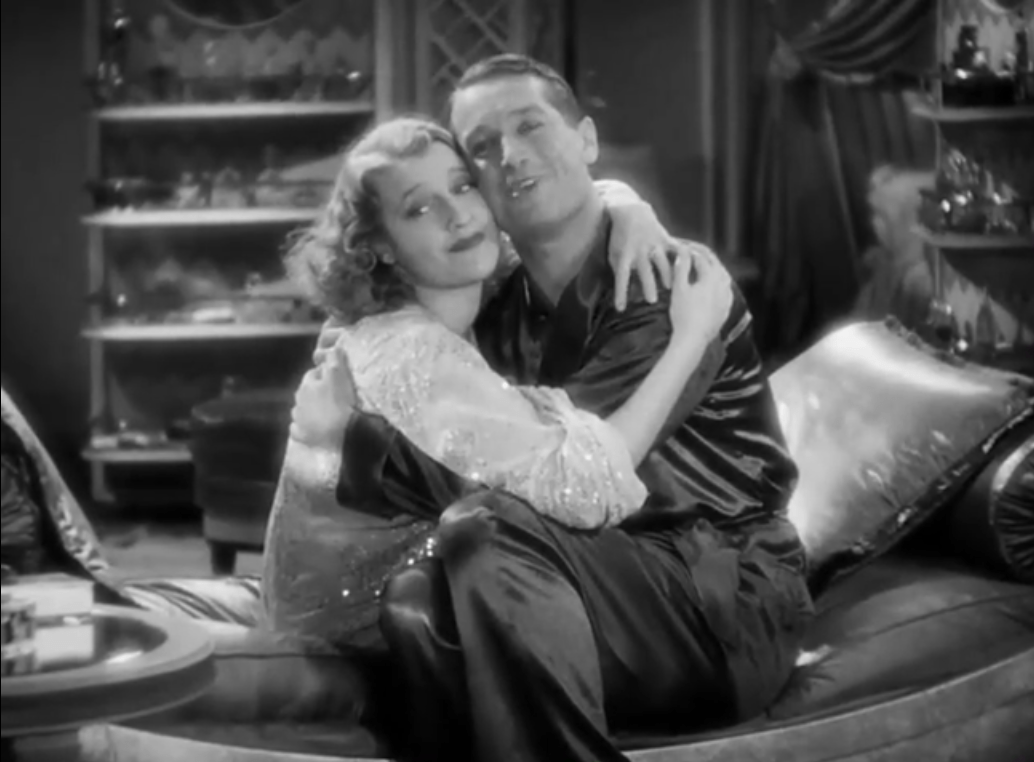
Ah, Spring in Paris! The local gendarmerie is intent on cleaning up the parks of couples canoodling. Among them are Andre Bertier (Maurice Chevalier) and his gal pal Colette (Jeanette MacDonald). But it’s perfectly decent. As they sing, later in bed together, “what a little thing like a wedding ring can do.”

Samson Raphaelson avails himself, having a fine time turning a phrase in all sorts of situations — in a police station or romantic tete-a-tete — it really doesn’t matter, and it serves Lubitsch’s standard suavity wrapped up in the sing-song operetta quite well.

Chevalier offers up his winking monologue to the camera and all the folks sitting out in the audience, providing a theatrical aside borrowed most obviously from the stage. His prevailing charms do not cater to everyone nor does his style of balladeering, but there’s no denying he carved out a niche for himself in the 20s and 30s as one of the most romantic swoons of his generation. Whether that had more to do with his coveted Europeanness or something else…

This story is built out of a taxi ride. Andre happens to hop into the cab with a person of the opposite sex named Mitzi (Genevieve Tobin). The possibilities are endless. It’s the fact that they totally dissect the situation, insinuate and flutter their eyes at one another, taking a banal scenario, and instantly giving it romantic tension. In fact, just about every scene informs a world full of sensual suggestions and connotations.

He abruptly ditches the taxi on the verge of a kiss and infidelity, though the damage is already done. No one will ever believe them to be perfectly innocent, and they’ve conveniently created a comic drama for themselves out of nothing. It almost blows up between them, and they are as good as guilty.

This would all mean nothing, if not for the subsequent scene. Colette is reunited with her best friend: Mitzi! They share all the usual chatter, fawning over wardrobes and shared memories. Imagine the devoted husband’s shock when the woman in the taxi and his wife’s best pal are one and the same! We have a real story on our hands and Lubitsch knows precisely how to work it.

Take another scene where Mitzi feigns illness to get the doctor alone with her. Mitzi’s own husband (Roland Young) walks in on a doctor’s visit. It’s all perfectly innocent (as it always is). They trade pleasantries. One’s a doctor, the other a professor — ancient history. It’s an emphatic punchline hanging in the air.

There’s also a glamorous party put on by the Bertiers. All their friends will be there sitting at a table together in a very public environment. A round of name card roulette takes place between husband and wife with diabolical consequences — romantic speaking of course. Colette is trying to protect her man from the wrong woman even as she rebuffs the blundering advances of a madly infatuated socialite (Charlie Ruggles).

Genevieve Tobin remains out on the prowl for Chevalier. It doesn’t much matter what she’s does; it’s how she does it. This is the secret of most of the characters in this movie. It’s the power of inference.

When she musses up his bowtie, he doesn’t know how to remedy the situation (because he can’t tie a bowtie). Going back inside is tantamount to social suicide — people will talk — but if he follows the beguiling harpy into the garden, who knows what fate will befall him. He’s a prisoner on his own veranda! This is the movie’s persistent predicament in a nutshell.

However, there must be a caveat in any discussion of One Our With You. His name is George Cukor, and he was actually the original director of the picture, although he eventually relinquished his duties to Lubitsch.

With complicated productions such as this one, considering where one director begins and the other ends is always an intriguing conundrum. Take, for example, something like Come and Get It from a few years later, directed by Howard Hawks and William Wyler at different points. One doesn’t often confuse their filmographies but shot to shot it’s not exactly easy to ascertain the difference aside from some intuitive observations.

There are moments of cloying cattiness, particularly between the female characters and at the grand party that we might find down the road in a picture like The Women, but we never quite broach that territory completely. Because ultimately, it’s the overarching sensibilities and the shepherding of the comedy by Lubitsch leaving their mark. It certainly makes for another fine exemplar of his work during the period.

My main qualm is the squandering of its supporting cast. Between the likes of Tobin, Ruggles, and Roland, there are some real personalities, and opposite our stars, they do yeoman’s work in a handful of scenes. However, it does feel like they drop off and disappear rather conveniently. Their arcs never coil up in a sufficient manner — in a way we can appreciate — and they probably deserve a few more minutes of satisfying resolution.

However, Lubitsch is not concerned with a more raucous screwball crescendo. Thus, the ending just about wins it for me, partially because for once MacDonald is in on the gag, and it doesn’t feel like the Chevalier show. They’re in this kissing comedy together, beginning to end, singing to their little hearts’ content. If you like it, you like it…anywhere.

3.5/5 Stars

Our Daily Bread (1934) in The Age of FDR

Screenshot 2020-08-15 at 8.11.51 AM

The title, of course, comes from the Lord’s Prayer evoking images of contrite men and women thankful for the bounties they’re provided on God’s green earth. Director King Vidor took an immediate interest in the project because it was a timely piece in the age of FDR’s public work programs about individual humans looking for ways to eke out an honest living.

Our Daily Bread is based on one such project with a host of men utilizing some vacant, barren land for sustenance. There is a sense the topic was too down to earth for a big studio — at least in the midst of the depression — so Vidor took on the expenses himself because he felt strongly enough about the material.

It’s a  story of hope burgeoning out of the pits of the depression. This is the key. We are used to stories of degradation and hardship in the throes of the 1930s because this was human reality. But King Vidor promotes a story that while acknowledging the headlines, hones in on a nugget of encouragement — a reminder of the indefatigable flame of the human spirit.

John and Mary Sims (Tom Keene and Karen Morley) are like so many other folks, they’re falling behind on rent, work is scarce, and they barely survive by hocking their possessions.

It might be easy to forget that the names of our two protagonists in this picture are plucked out of The Crowd — King Vidor’s magnum opus about the American way of life. The fact that two new actors don the roles feels mostly inconsequential because they are only symbols of the human experience — stand-ins for us all — and thus anyone who is genuine and honest is fit to play them. Surely we can relate.

It’s true Tom Keene and Karen Morley are not altogether well-remembered today. They aren’t electric talents, but she is wholesome (consider this interview), and he is exuberant bursting with new ideas. They set up camp in the dilapidated home on the fallow ground armed with their eagerness. By itself, it seems foolhardy.

However, John is soon joined by a passerby — a Swedish farmer (John Qualen) who knows how to raise crops and more men soon follow from all sorts of trades and backgrounds. They too want a second chance and an opportunity to prove their usefulness.

Although a stirring speech about John Smith and the Mayflower doesn’t play as compelling now, nevertheless, their de facto leader urges them to help themselves by helping others, and they need no further encouragement.

In the ensuing days, the able-bodied men hitch plows up to every conceivable contraption imaginable as they get to work. They become a bustling colony of industry made up of idyllic shanty houses. Best of all, they’re in it together.

As they gain traction, the movie is pregnant with these heart-rendering vignettes leaping to mind one after another. Upon the first sign of a harvest, they celebrate with hands raised aloft and knees bowed as the preacher among them thanks the good Lord for this bounty.

Then, the most formidable and brusque member of the commune — a wanted criminal, nevertheless is beholden to a higher form of justice, sticking out for his fellow man. He goes so far as to turn himself in so the reward money can be used to stock up on much-needed provisions until the first crop can be harvested. He’s yet another noble man who has the good of the whole in mind.

If it’s not apparent already, Our Daily Bread blends its religious sentiment with deeply socialist themes. It was, after all, the age of FDR’s New Deal sentiment effectively retrofitting how American society operated and was perceived. Still, Vidor utilizes an ongoing visual methodology Eisenstein might have appreciated. By 1950, a film as blatant as Our Daily Bread would have probably been excised from the cultural conversation.

However, although the socialist proclivities are quite apparent, for me, it’s never a political film, nor does it bludgeon us over the head with the ideology completely. It’s very much an exercise in promoting this same dogma of the group over a single individual.

Because the story starts out with a couple — we can relate with them and appreciate them — but even as they pool together into this cooperative community, they only become two elements in a broader social amoeba. This hardly seems like an accident, especially as the narrative progresses.

If there are seasons of rejoicing and dance, then there must also be tribulation. Such is life. Tom’s indomitable vision is ultimately soured by drought and the temptation of another woman.

When Barbara Peppers shows up in the rain — we’re wary of her — what purpose could she possibly serve? With her batting eyes and saucy come-on attitude, she becomes a new love interest. And the cinema archetypes suggest Mary in all her devotedness doesn’t stand a chance. Surely, Vidor and his audience have seen Sunrise. I for one took a deepening relish in Peppers part due to her later credit as Doris Ziffel in Green Acres. She’s well nigh unrecognizable as a slender teenager, but if nothing else, it feels like an unknowing if uncanny parallel.

Vidor’s greatest triumph comes in the finale. The men band together to create irrigation to salvage their perishing corn crop before it’s too late. We have this heave-ho as rows of men pickaxe their way in unison, lumbering along to remove all the boulders from their path. They’re like a machine of manpower.

If the Grapes of Wrath is about the unstoppable tractors rolling over the land and taking it over, then these moments feel like a counterargument of frenetic human industry and solidarity. It’s not that there’s a lack of reliance on tools and the like. It only works when the humans who are behind them — living and breathing — are working together and building up a head of steam.

As they forge onward with their work night and day — everyone doing their part and investing wholeheartedly in this group utility — you see the message once more in stark relief. They are cheered onto the finish line by the women and children — their crops in sight and the goal on hand.

What an earnest climax it is! Swelling with angel song, everyone jumping with joy, doing black flips in the muddied ground. And as we watch them wading around in the mud, we know it is a signifier of life and a renewed future.

Here Our Daily Bread ceases to be a mere articulation or mimesis of the struggle to cow the depression. It’s a full-fledged metaphor for the enduring fortitude of the American spirit. Whether or not it’s a myth, King Vidor makes us want to believe in it all the more fervently. Likewise, the swelling angel songs might be too much for some — if you don’t believe in Providence. For these folks, Providence goes hand in hand with hard work.  And that flow of living water, notwithstanding the spiritual undertones, represents their daily bread.

4/5 Stars

The Stranger’s Return (1933): Lionel Barrymore and His Granddaughter

Strangersreturn

Establishing shots often get a bad name for their bland or token quality, but it’s true when done well, they can set the tone and create an instant impression on the audience. King Vidor’s The Stranger’s Return instantly accentuates this rural milieu. It feels like a stable and equestrian existence, a supremely serene safe haven.

As the movie progresses, we are privy to marvelous pictorials feeling akin to Jean Renoir or John Ford. There is a bit of that pastoral sense of space where the landscapes feel untarnished and beautiful down to their very compositions. Regardless, the land is nothing if not punctuated by human beings meant to till the soil and cultivate it.

Inside a farmhouse, we meet a family of grown-ups sitting around the breakfast table with their patriarch. Beulah Bondi is among them, and they aren’t mean-spirited folks by any means, but they’re generally dutiful and reserved.

I am reminded of the moral tale in the Book of Virtues from my childhood where the adult children care for their dying mother and the chest under her table — just waiting to swoop in and get their due. They can only imagine what treasures she will bequeath them upon her death. It’s the same unspoken undercurrent in this film because Grandpa Storr isn’t oblivious. He knows what’s going on. The difference is, that he’s not ready to go down without a fight.

Lionel Barrymore is bearded like you’ve rarely seen him before. He plays Storr as an ornery man of the old world — giving his healthy cereal to the chickens and proceeding to cook himself up some steak and eggs. He grumbles about how he would rather do something he likes for a few minutes than have to live a hundred years hogtied. We understand him and appreciate his convictions in minutes.

He’s rich with recollections of the Civil War and his childhood exploits on the farm he still maintains. There’s this curmudgeonly bluster about him that is the perfect façade for an obvious heart of gold. As he’s advanced in years, he’s aided by his trusty cowhand Simon who’s known to take a nip of the corn liquor but also remains steadfast when it comes to working Grandpa’s land. The elder Storr also keeps up a good-natured feud with this closest neighbor (Franchot Tone). He’s built himself quite a life of contentment.

The entire movie develops out of the momentous return of his granddaughter — just recently divorced and living back east — who’s prepared to pay her grandfather a visit and go back to basics. Louise (Miriam Hopkins) becomes quite the talking point in the household seeing as she doesn’t live with her husband. That just isn’t done. Of course, Grandpa operates outside of the typical small-minded hypocrisy. He’s radically individual-minded and stubbornly prodigal himself.

Barrymore and Miriam Hopkins cultivate what feels like an instant rapport. Consider the moment where they sit outside on the hanging bench together — their conversation so easy and amicable. She might come off a bit like the prodigal daughter, but if this is true, then he’s more than generous in spirit to be the father figure who welcomes her back to her roots.

Together they strike up a fine friendship with Guy Crane (Tone) and his sympathetic wife Nettie, who both live just down the road. Crane’s the old story of a charming young man who went off to college and then wound up marrying his childhood sweetheart and returning to farm life.

It happens rather organically but Guy and Louise strike up an instant chemistry — at first, it’s good-natured and innocent. It comes to a head at a local dance where they spend plenty of time in each other’s arms and people will talk. One, because Louise is a divorcee and totally alluring, and, two, because Guy dances divinely and is spoken for. If the relationship between grandfather and granddaughter is the crux of the storyline, Tone and Hopkins do much to augment the film. He’s deeply charismatic and there’s always a wry twinkle of mischief in her eyes bringing them together gaily.

There’s nothing dismissive in the simple observation that Louise doesn’t seem like the churchgoing type, but it’s a delight when Grandpa is concerned. After all, as a faithful parishioner, he hasn’t missed a Sunday in years. It gives him peace being there.

The preacher gives his fitting message on 1 Corinthians (Therefore let him who thinks he stands take heed lest he falls). Far from being an implicit indictment of Louise and Guy, it seems to be aimed all the more at any snooty-nosed hypocrite who feels affirmed in their own preening self-righteousness. Grandpa is hardly one of their ilk even as he nods off perfectly at ease.

In the tradition of communal farm life, the Storrs put on a huge spread in exchange for local labor. The bountiful feast the women whip together makes the eyes bulge in its sheer extravagance. Hopkins does her duty gallantly by going out to the pump for water and passing around the plates and coffee, turning the heads of all the farmhands as she goes about her work. Grandpa couldn’t be prouder of his kin.

In what look to be his waning hours, Grandpa’s mind gets overtaken by fanciful delusions about the Civil War, and his children look to cart him off away from the farm for his own good. Could it signal the end of Grandpa or is it a ruse to divvy up the goats from the sheep? Metaphorically speaking, he knows the ones who love him will take care of his sheep. That person is Louise.

The Stranger’s Return lingers over an illicit theme as the two lovers have their affections grow deeper by the hour. It’s such an obvious outcome, and yet the story never succumbs to anything. This is never its intent. Instead, it finds meaning and sincerity dancing sensitively around all of this. In the end, it slates itself as an archetypal tale of a city girl destined for the farm and the farm boy who chose the city as an act of preservation.

What sets the movie apart is this amiable quality — how it is blessed with both humor and integrity of character. People don’t want to hurt one another because they’ve forged relationships cutting deeper than convenient altruism. As someone familiar with two worlds, it makes me hold a deeper affection for rural and urban lifestyles. They both have pros and cons, but what makes them impactful are the people you forge bonds with.

4/5 Stars

Safe in Hell (1931): Greater Than Pre-Code Expectations

safe in hell

“Have a little faith will yuh? There’s a great big plan that we don’t get. But the fella that’s made the plan knows what it’s all about.”

Safe in Hell leans into its title as fire literally crackles behind the opening credits.  The story’s origins begin on the back alcoves of New Orleans at the Claybridge Apartments. For those familiar with the reference, Dorothy Mackail’s Gilda Karlson feels like she just might be a Baby Face prototype.

She is a woman strong and independent. She’s seen the seedy side of the street — knows what it means to survive in a man’s world — and she’s done precisely that. Even as the camera admires her slinking form, she sits propped up seductively in her room, speaking into the receiver of the old-fashioned telephone. This says everything that needs to be known about her character. At least at face value.

Mackail is not a remembered talent at least not to the extent of a Barbara Stanwyck or a tragic case like Jean Harlow, but she fits the bill here. If her eyes aren’t exactly sultry they are disaffected by the rotten world she’s grown accustomed to. Cynicism breeds everywhere like rats. It’s become a part of her life.

One of those rats is a man named Piet (Ralf Harolde). He’s supposed to be a picture of the average All-American working man. But he’s a philanderer formerly involved with Gilda while he was married and simultaneously getting the girl fired from her desk job. Now she works out of her hotel room, and he’s back for more.

But she lashes out. Wellman zooms in on her face for dramatics before she races down the stairs to make a frantic getaway. The place goes up in flames another inferno-inspired allusion.  Now she’s wanted guilty or not.

However, we get the benefit of witnessing another facet of Gilda’s personality. She has a hardened shell meant to protect her from the onslaught of a callous world. With her real man, the sailor named Carl (Donald Cook) there’s a skittishness even a sensitivity cloaked about her like the shawl he’s bought for her on his many travels. The way she says his name casual and smooth with a soft-hearted affection.

She deeply loves him and doesn’t want to hurt him by divulging how low she’s sunk. He doesn’t know what she’s been subjected to. It’s another stellar visualization as they stare right at the camera simulating a mirror, but it builds this instantaneous connection with the audience. It’s arresting and difficult to forget moments after. But there is no time to linger.

Carl almost feels Pollyannaish with an overt belief in Providence, but this undoubtedly is part of what makes him attractive to Gilda. He still maintains his optimism. Also, he does provide her a lifeline. With his connections he helps her flee the county as a stowaway, their destination is an island off in the Caribbean where fugitives cannot face extradition.

Far from fire and brimstone, it’s a man-made death trap. Nevertheless, it’s a haven run afoul with murderers and thieves — the lowest of the low from every segment of society.  The isle is ruled rather nonchalantly by the resident despot Mr. Bruno (Morgan Wallace) and it’s swarming with lusty-eyed suitors starved for a little female company.  There are slimy worms in the water and lounging in the hotel lobbies.

safe in hell mirror

They aren’t frequented by many white women and as Carl leaves her nervously in a local hotel, there’s an uneasy feeling, he’s leaving her to the wolves. They lounge in the downstairs chewing the fat, chewing on nuts, sinking down in their chairs, and kicking back in an odd community ritual. They wait for even a glimpse of her and she keeps them waiting — at arm’s length as much as possible — rebuffing each and every advance.

In the rogue gallery, the hotel clerk Leonie (Nina Mae McKinney) and the hotel bellman (Clarence Muse) stand out not just due to the strength of their characters in such a seedy milieu; they feel like genuine people rather than the stereotypical submissive blacks often propagated by Holywood with their ignorance and minstrel dialect. There’s none of that here and as a result, they feel positively modern placed opposite some of their brethren even decades later even as they become two of Gilda’s most sympathetic allies.

It’s when the wolves start circling we remember that when she wants to be, she feels like the female equivalent of James Cagney. Why should he have all the fun slapping and shoving faces in and dousing with water? It proves a universal pastime in Pre-Code cinema and Mackail gets in on the action with a plucky relish.

In fact, the movie is a battle for her propriety in some thematic sense. Carl and she pronounce their wedding vows in the only church on the island, ending with a fitting line out of the Lord’s Prayer, “Lead us not into temptation but deliver from evil.” This is the seat of her entire existence laid bare.

She resolves to remain steadfast and chaste for her sailor until he returns, but you can only play so much solitaire. She finally blows off steam with the boys who gladly oblige though she cuts it short of any monkey business. That doesn’t mean temptation or, closer still, her lingering demons don’t come back to haunt her. It’s a deja vu moment if there ever was one complete with another murder. And if we have learned anything, we know each act must come with a consequence. It’s all the more certain on an island of miscreants.

The ending of Safe and Hell precedes One Way Passage in its emotional heft conjured up in a moment of dramatic irony — all the unspoken feelings imbued through a kiss and an embrace meant to last a lifetime. Once again Carl heads off again on another voyage even as Gilda marches off to her own foregone conclusion.

The picture isn’t everything its title suggests; it’s actually more, and it gives its heroine the benefit of the doubt with multifaceted contours highlighting the fragmented, complicating factors of life.

What a delightful find it is and not for any amount of happiness or goodwill it supplies, but quite the opposite. It feels skeezy and despicable at times, but there’s also a surprising amount of virtue bursting forth. It meets our Pre-Code expectations and still somehow supersedes them to give us something even ampler — all packaged into 73 swift minutes of entertainment.

4/5 Stars

Other Men’s Women (1931): Moving Pictures are Alive

mary astor grant withers

There’s an underlying sense that The Other Men’s Women was a primitive picture and yet it has a plucky energy as if it doesn’t know any better. Warner Bros. was at the cutting edge of talking pictures and Vitaphone wasn’t exactly old hat. The medium was still in its relatively latent stages.

Given this backdrop, William Wellman seems to take to the amount of freedom he has with a maximum amount of relish. The camera already feels slightly more versatile. With the shackles gone and a new amount of mobility, he moves his camera all over the place conducting dialogue scenes in any manner of places we would normally take for granted.

But he also slices the conventional 180-degree line to smithereens. It’s off-putting given our filmgoing sensibilities, and yet there’s something equally raw and frenetic about it that gives it a very appealing flavor. His camera is atop trains or out in the garden by the sweet peas. Moving pictures are alive!

Part of this may have been out of necessity because in 1931 alone Wild Bill churned out 6 movies for Warner Bros! That’s an insane amount of output. But this same rapid-fire outpouring of movies included the likes of Public Enemy, Night Nurse, and Safe in Hell, just for starters.

If we were to scour this movie for a conventional throughline, it would start with our protagonist, a cheeky railroad hand (Grant Withers), bright-eyed and generally contented with the life he leads. His best friend in the engine room is Jack (Regis Toomey), and they have an inseparable camaraderie together. In what world is Toomey lifted out of the periphery and promoted to a primary role? Here he is as living proof.

He brings his good friend home to his wife Lily (Mary Astor). She’s playful and warm. There’s a lovely affability filling up the spaces and planted in the gardens with the flowers. Their next-door neighbor is a kindly man with a peg leg, and they have built for themselves a fine slice of tranquility. It’s innocent until it’s not. In the kitchen Withers and Astor alone. And they don’t realize it until it’s too late.

They look and they kiss — almost on accident it seems — but they love each other. It’s irrevocable. There’s no taking it back, and it pains them both. If this is the film’s menage a trois, it’s the most devastating of outcomes. They never meant to hurt anyone. But then nobody ever does.

The two friends wind up slugging it out on their locomotive overturning their friendship and livelihood in one fell swoop. A stake is forever driven between them. But there’s more. Jack’s life is beset with personal tragedy. Bill is ridden with the ensuing guilt. He never wants to see either of them ever again. It’s too much to take, looking them in the face — especially knowing he can never have Lily.

Whereas the amended title looks to capitalize on the more scandalous element, the original title: The Steel Highway might fit the picture equally well. These are before the days of Le Bete Humaine or Human Desire, but there’s something elemental about a man and the railroad. Like the western, there’s a mythos attached — a historical shorthand — evoking something of expansion and progress.

As such it flits back and forth between its two spheres. That of the man’s working world out on the rails where life feels itinerant. There’s a danger but also a freedom and a mystique about it. The home life is sweet and domestic until it’s not.

The picture also boasts some of the best rain sequences I remember in recent memory. They are worth mentioning in how they augment Wellman’s film in its latter stages. It becomes expressionistic not merely through the illusions of light and dark, smoke and shadow, but the sheets of raindrops showering down. It adds yet another contour, another layer of emotional atmosphere to this film’s final act.

Jack sloshes around in the downpour helplessly as Bill hurtles toward his resolved conclusion. The climax is fated and fittingly catastrophic. Then, days later, he’s back in the old haunts, sitting at the same cafe pit stop, with a different waitress behind the counter, only to cross paths with an old friend…They share a smile, a few words. Does it really matter for us to have this? I don’t think so. It’s spelled out on their eyes.

Then, Jack does something unexpected. He hops back on his train and begins sprinting over the top. Where is he going? He’s got to get to the engine room — to bring it to a halt. We never see it, but we know he’s staying put. My thoughts linger on Wellman again with his camera perched in such a place where he captures his hero sprinting off into the distance. Yes, movies are alive thanks to people like him.

What a curious wrinkle it is to have James Cagney and Joan Blondell off-center with supporting assignments. That very same year they would be spotted together as leads but such is the studio system they could pull duties in a 70-minute railroad thriller like this. Cagney showing off his dancing and that swell-guy charisma of his. Blondell’s got that spark and spunk in spades. They’re equally delightful, and this isn’t even their movie. They provide yet another reason to enjoy the fundamental pleasures of Other Men’s Women.

3.5/5 Stars