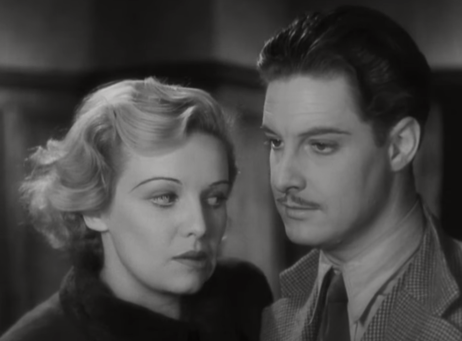
With The 39 Steps, it’s possible to witness Alfred Hitchcock coming into his own and one of the most obvious markers are numerous motifs, character archetypes, and techniques that would crop up in his work again and again. But it’s also conceivable to trace the influences of this film in most every spy-thriller-comedy-romance that has ever come in its stead.
Like The Man Who Knew Too Much the year before, this picture takes little time to get going and Hitchcock strings scenes together in such a way that the narrative is constantly on the move. Our modern sensibilities might tell us that his picture is rushed but it’s unquestionably interesting. It’s equally likely that we might believe other scenes are too slow. And yet he really does offer up a wonderful thriller that maintains a driving force of suspense. The key is balancing the more complacent moments with great jumps and leaps in story that both work to keep us simultaneously engaged and off balance.
He rather brilliantly cuts from scene to scene giving us just enough information to grow invested in his man-on-the-run spy thriller that looks vaguely familiar. In fact, it’s easy to see the groundwork for Cary Grant’s Roger Thornhill from North by Northwest (1959) in Robert Donat’s own credible characterization. In many ways, it’s a humbler version of the later cross-country epic trading the vast expanses of North America for the quaint and still majestic United Kingdom. We even are treated to one of Hitchcock’s original blondes in Madeleine Carroll and like all his greatest stories, he uses the seemingly useless plotting device, the so-called MacGuffin, as the motor to his narrative.
The action opens in a music hall where a lively performance is going on in front of a rowdy crowd and the festivities showcase the rather unbelievable phenomenon of Mr. Memory, among other acts. But in typical Hitchcock fashion a gunshot goes off and pandemonium breaks loose.
In a moment, we’re shown the outside of the venue and our hero Richard Hannay finds his hand being held by a frightened woman. Hitch moves the action forward on this coincidental meeting and never ceases from that point on. You see, this woman is connected with the international spy world. She gives a vague notion of her business but what isn’t vague are the men who are looking to kill her or the subsequent knife found in her back.
It’s yet another thrust forward in the film that sends Donat hurtling toward Scotland, the location where his female visitor noted her contact was located in. But equally telling is her warning to watch out for a man missing the tip of his finger. So, of course, in perfect Hitchcock fashion, in a completely ludicrous turn of events, the double chase is on. Both the authorities and the bad guys are after this innocent man. One for the murder attributed to him and the others for the knowledge that he now has.
From this point onward the almost picaresque plot is continuously streamlined and functions on a subsequent row of fascinating scenes and locales that all could work as separate entities entirely. First, he’s riding aboard the Flying Scotsman jumping free of the train to evade capture. Then, Hannay is holed up in the home of a gruff farmer and his sympathetic wife in the Scottish Highland. He meets the big man face to face and gets away with his life only through sheer coincidence. Next, he unwittingly ends up giving a stirring speech to the local electorate about their obligation to live a life of brotherly love before getting whisked away by the authorities.
Subsequently, he finds himself handcuffed with one of his earlier acquaintances from aboard the train (Madeleine Carroll). The fact that they despise each other perfectly highlights the best comedic elements of The 39 Steps as they bicker and struggle to keep their cuffs inconspicuous moonlighting as newlyweds. This section of the film hearkens to some similar moments in the screwball comedy of the prior year It Happened One Night and it doesn’t hurt that Donat has a mild resemblance to Clark Gable. He happens to whistle a lot too.
Still, this is a Hitchcock thriller and it takes them through the moors of Scotland, their fleeing feet masked by bleating sheep and their mutual distaste finally traded for a general amount of concern. You might say they grow on each other. Yet that does not take away from the bottom line.
Government secrets of the utmost importance are about to be smuggled out of the country and they haven’t the faintest idea how it is to be done. Surprise, surprise, we end up in a packed London Palladium where everything must come to fruition. By this point, we hardly know how we got where we are as an audience and when it’s all over there’s more than a few questions — maybe even a few objections — but there’s no doubt that the 39 Steps is a clinical exhibition in the art of the spy thriller.
Although his actors would arguably become more prestigious (though Donat and Carroll are no slouches) and his whole productions more impressive, it’s decidedly difficult to deny the sublime vision that courses through the film. It could really function as several films all in under an hour and a half and yet ultimately it comes off unequivocally as one picture. It’s not simply one of Hitchcock’s finest British efforts, it’s a high watermark in any conversation of his oeuvre.
If you desire even a single moment of pure ingenuity look no further than the interlude when the maid comes into the murdered woman’s flat. We expect to hear her bloodcurdling screams as she turns toward the camera but instead, we are met with the high-pitched screeching of the train as Donat idly sits now miles away. In the hands of another director, this whole sequence might have slogged on. Hitchcock makes it positively gleam with possibility and that’s indicative of the whole picture.
4.5/5 Stars
 Although Hitchcock did many riffs off the same themes, he very rarely tried to do the same film twice over. The Man Who Knew Too Much might be the one exception and even then if you place these two thrillers from 1934 and 1956 up next to each other, they’re similarities are fairly nominal.
 In the 1970s political paranoia involved issues in the realm of Watergate. Government conspiracy and that type of thing perfectly embodied by some of Alan Pakula’s best films. But it’s important to realize in order to better understand this particular thriller, the 1980s were a decade fraught with fears of Soviet infiltration compromising our national security. The Cold War was still a part of the public consciousness even after being a part of life for such a long time already. So No Way Out has a bit of Pakula’s apprehension in government and maybe even a bit of the showmanship of Psycho with some truly jarring twists.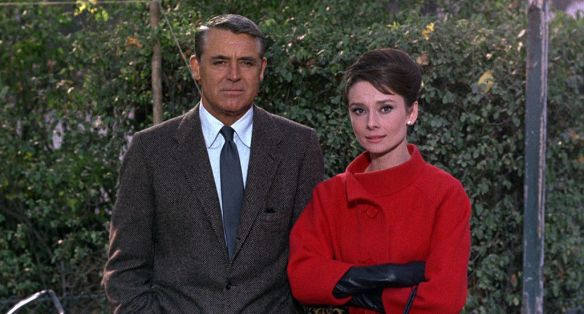
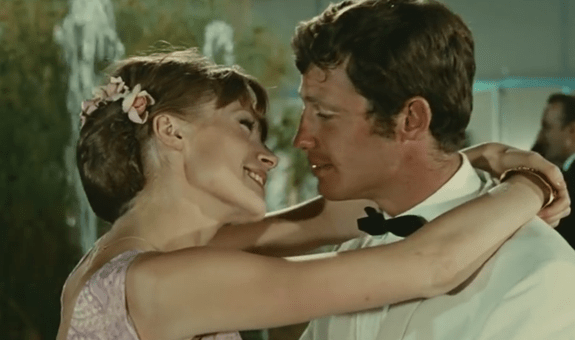
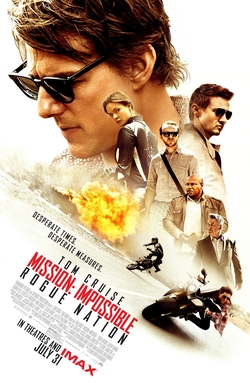 n the last decade or so arguably the greatest action/spy/thriller franchises have been Jason Bourne, James Bond, and Mission Impossible. To their credit, each series has crafted several passable films fortified by a few real stalwarts of the spy thriller genre. Although many of these series thrive on gadgetry, set pieces, and a cynical tone more at home in the modern millennium, one thing that set some of the better films apart were interesting female characters.
 Body Snatchers works seamlessly and efficiently on multiple fronts, both as science fiction and social commentary. Don Siegel helms this film with his typical dynamic ease putting every minute of running time to good use. The screenwriter, Daniel Manwaring, put together perhaps one of the greatest political allegories ever penned and, on the whole, it’s a taut thriller combining sci-fi and horror to a tee.
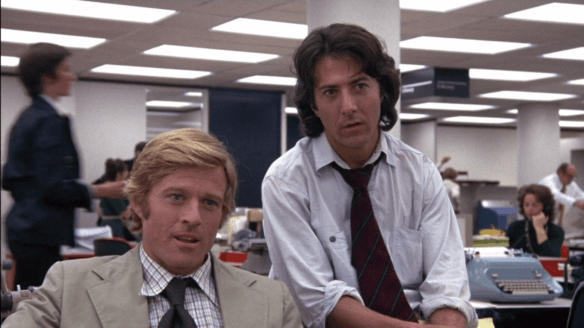 You couldn’t hope to come up with a better story than this. Pure movie fodder if there ever was and the most astounding thing is that it was essentially fact — spawned from a William Goldman script tirelessly culled from testimonials and the eponymous source material. All the President’s Men opens at the Watergate Hotel, where the most cataclysmic scandal of all time begins to split at the seams.
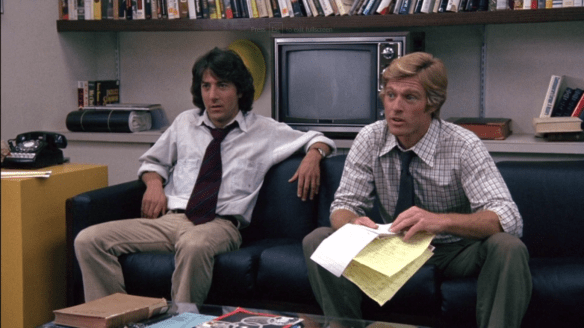 But it only takes a few breakthroughs to make the story stick. The first comes from a reticent bookkeeper (Jane Alexander) and like so many others she’s conflicted, but she’s finally willing to divulge a few valuable pieces of information. And as cryptic as everything is, Woodward and Bernstein use their investigative chops to pick up the pieces.
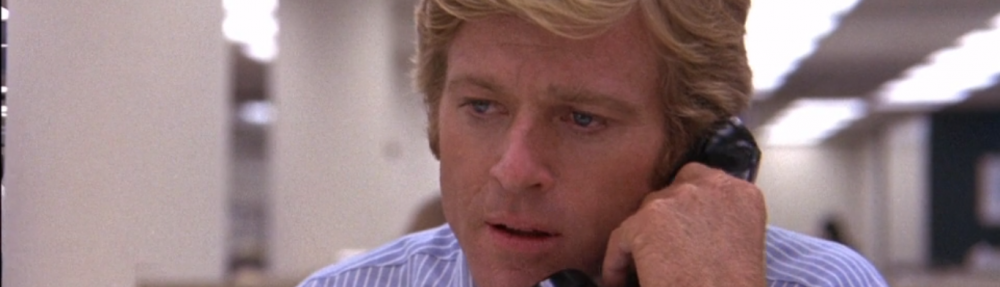
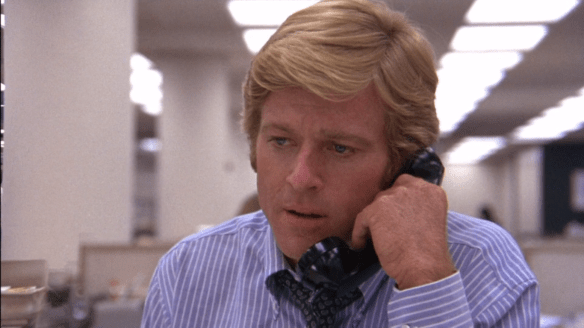 Gordon Willis’s work behind the camera adds a great amount of depth to crucial scenes most notably when Woodward enters his fateful phone conversation with Kenneth H. Dahlberg. All he’s doing is talking on the telephone, but in a shot rather like an inverse of his famed Godfather opening, Willis uses one long zoom shot — slow and methodical — to highlight the build-up of the sequence. It’s hardly noticeable, but it only helps to heighten the impact.
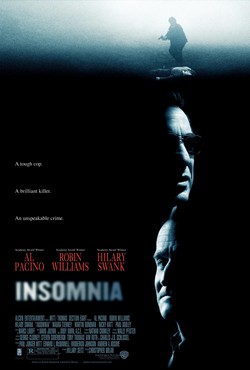 “You and I share a secret. We know how easy it is to kill somebody.” – Robin Williams as Walter Finch
 Inspired directors oftentimes do not make themselves known in grandiose flourishes but in the smallest of touches, and in his debut, Polish newcomer Roman Polanski does something interesting with the opening of Knife in the Water. Perhaps it’s not that unusual, but it’s also hard to remember the last film where the camera was on the outside of a driving car, looking in. We see shadows of faces overlaid with credits and then finally the faces are revealed only to be shrouded by the reflections of overhanging trees glancing off the windshield.
 Thus, it becomes an exercise of technical skill, much like Hitchcock in Lifeboat or any other film that limits itself to a single plane of existence. Polanski’s framing of his shots with one figure right on the edge of the frame and others arranged behind is invariably interesting. Because although space is limited, it challenges him to think outside the box, and he gives us some beautiful overhead images as well which make for a generally dynamic composition. That is overlaid by a jazzy score of accompaniment courtesy of Krzysztof Komeda, a future collaborator on many of Polanski’s subsequent works during the ’60s.
 However, at this point, as a young director, he is simply sharpening his teeth and getting acclimated to the genre a little bit. Knife in the Water builds around the three sides of a love triangle, creating a dynamic of sexual tension because that’s what tight quarters and jealousy do to people. This is less of a spoiler and more of a general observation, but the film does not have a major dramatic twist. Instead, there are heightened tensions, a bit of underwater deception, and finally a fork in the road.
 4 Star Films