Witness (1985)

Witness_movieI think of Harrison Ford much in the same way that I think of Paul Newman. They both play the brash, bold, smart alec characters that we adore as audiences. They make the perfect action adventure heroes but are not always respected as actors which is a shame. For Ford, his reputation hinges on a number of great characters from Han Solo, to Indiana Jones, to Rick Deckard. They all are magnificently memorable action heroes. Ironically it is the plain, seemingly everyday cop, John Book that allows Ford to truly show off his acting chops like I have never seen him do before.

The film begins when a young Amish boy named Samuel gets to take his first adventure into the big city with his mother, as they head to see some relatives in Philadelphia. Little Samuel has a pair of dark brown, wonderfully inquisitive eyes in which to take in this world that is so foreign to him. That is, in fact, one of the major themes of Witness, the colliding of two worlds that are at odds.

But anyhow, when he ventures into the restroom to use the toilet, he unwittingly sees a violent murder committed and he is able to hide in the stalls, but he also gets a look at one of the perpetrators. And so, just like that, this little boy who never spent a day in the real world is a key witness to a murder investigation.

That’s when steady, straight-arrow cop John Book comes into the picture. He’s not a bad man by any means, and he wants to wrap up the case quickly so he can let Samuel and his mother go as soon as possible. You can see he finds their customs strange, and Book feels a trifle awkward being around them, but he does his job the best way he knows how, by confiding in his superiors and having his partner watch his back.

Everything blows up in his face. He gets shot and he must make a mad dash with Samuel and his mother to their quaint Amish home. Now the roles are shifted as he must wait it out building up his strength as his pursuers try and locate him. His world of cops and guns seems to have no place in this farm community of peaceful people. But as a former carpenter and a decent individual, Book is able to adapt rather well. Rachael Lapp soon finds herself enjoying his presence around their home since she is a widower and her father-in-law Eli reluctantly allows him to stay.

Book learns how to milk a cow and helps in a barn raising, all the while building a rapport with Rachael, but others seem to be wary of the presence of such a man.

As would be expected, we have our final showdown between Book and his pursuers who are a lot closer to home than he would ever expect. When it’s all resolved he leaves the country peaceful once more, but not without some intense memories.

Peter Weir’s film has a rather interesting pacing for a thriller, starting out slowly, but we know it must be building up to some impending doom so I would reserve from calling it boring. When that moment comes, it becomes a breakneck thriller before quieting down once more in the Amish town. Then the last 20 minutes are that of a dynamic action film. However, it is in these more tranquil moments that Harrison Ford gets to show off his humanity, whether it is talking about guns with young Samuel or dancing to a car radio with Rachael. There’s no doubt that you have not seen Ford like this before, and it’s definitely worth seeing him in this gripping ’80s thriller.

4/5 Stars
Review: Jaws (1975)

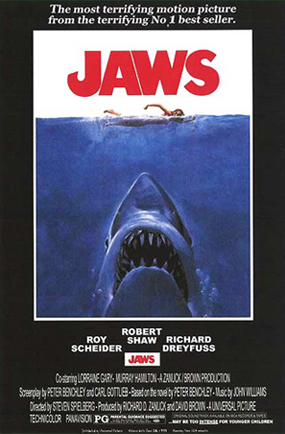
JAWS_Movie_posterAlfred Hitchcock once was quoted as saying, in typical Hitchcockian fashion, “There is no terror in the bang, only in the anticipation of it.” A young Steven Spielberg channeled this type of sentiment when he directed the smash hit and archetypal summer blockbuster Jaws in 1975. It’s still a cultural phenomenon and for good or for bad, it has forever instilled a fear of great white sharks in the general populous.

The film is a man-versus-beast type of story. It starts off on Fourth of July weekend on a New England resort town named Amity. After a girl is found the beach chewed up, it starts a frenzy. Well, not quite initially because although police chief and mainlander Martin Brody (Roy Scheider) wants to shut down the beaches, the local mayor will have nothing of it. Really, the first half of Jaws is very much political, as the mayor attempts to do anything he can to keep the masses flocking to his town because Amity gets all their revenue from the summer months. Meanwhile, Brody has the beaches monitored, but that does not stop a young boy from getting attacked. Up until now, we have only seen the handiwork of the beast, but in a brief instant we can catch a glimpse of him and it is shocking.

The vacationers flee the shoreline, and Brody is left to answer to the boy’s mother since he did not close down the beaches. She holds him responsible. However, Brody’s hands are still tied, especially when local fishermen catch another shark that they assume is the culprit that has terrorizing the town. He is met by a young marine biologist named Matt Hooper (Richard Dreyfuss), who also realizes the gravity of this shark problem. No one will take him seriously except Brody, and Hooper labels him the only other sane man on the island.

Because all the precautions that are taken cannot avoid still another shark attack from going down. And it is at this point that Brody and most certainly the Mayor, have to change things. At a tense news conference, they must walk a fine line in order to assuage the locals and the business owners. Ultimately, Brody convinces the mayor to let him go out with the salty veteran seaman named Quint (Robert Shaw) who agrees to take the shark down for a fee.

For most of us, the second half is what we all remember or at least equate with the film (probably for the iconic line, “We’re going to need a bigger boat.” It is this part of the story that breaks the adventure down to three men, our stars, going off on a mission to take on the terror of a great white (ie. “Bruce”). It feels very Captain Ahabesque, thanks to the addition of the grizzled fisherman Quint, but if he is a stabilizing force it soon becomes obvious that not even he is fully ready to take on this behemoth creature. It seems like no amount of barrels, harpoons, or even a “shark-proof” cage can humble it.

What we end with is utter destruction that spirals out of control. That’s what makes this shark such an intriguing foe because we certainly cannot really call it evil, but it certainly is an overpowering force of nature. Brody stands in for many of us who have an innate fear of the ocean and what lies underneath the surface. For all the plucky young adventurers they have a stand-in in Hooper. I am struck by how tense this film is even to this day, and Spielberg never seems to show is hand too early and he never gives us too much of the shark. Otherwise, it might look faker, and it would lose that heightened anticipation. Above all, John Williams lent a great deal of potency to Jaws, single-handedly, with his ominous score. Without his score, Jaws is nowhere as scary and certainly not as memorable.

5/5 Stars

Point Blank (1967)

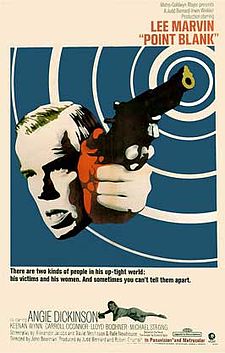
225px-PointBlankPosterJohn Boorman and Lee Marvin came together as equal parts in this venture called Point Blank and it’s quite something. You can call it neo-noir, you can call it a revenge story, a crime film, but nothing quite sums up what you end up with.

It’s a brutal, stark, psychedelic trip at times that never falters to any level of convention that we are used to. You have the clip clop of shoes on the concrete. Solemn, self-assured, repeating and ultimately deadly. There’s a man named Walker (Lee Marvin) on a seething rampage. He personally totals a car with the victim inside scared out of his wits. He’s shooting up victims all across kingdom come. Watching, waiting, then acting.

Point Blank is full of repetitive, reverberating sounds and images. Time too is repeating and evolving; fractured shards of the past followed by the present. It does not always line up or add up. Walker’s past is being fed to us through his own memories.

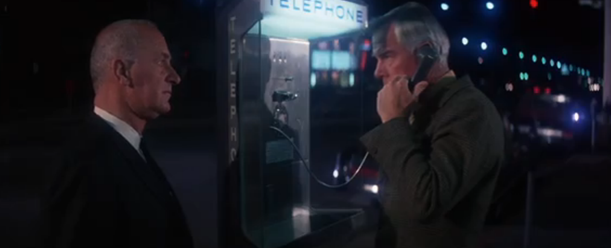
We get to pick up the pieces as he pushes forward on his vendetta. His wife is dead and he is after a man named Mal Reese, who double-crossed him, stole some of his money, and his girl. But the hunt doesn’t end with Reese. That would make too much sense and it would be too easy. Walker keeps going. Keeps hunting until it leads him to the next man and then the next. He gets together with the older sister (Angie Dickinson) of his wife Lynne (Sharon Acker). She is the repetition of Lynne who is now dead, just as each one of these targets is the new Reese.pointblank2There’s a point where we must beg the question? What does Walker even want now if all he gets is $93,000? What is going on in this world? Why does it tick in such a way, because to be honest, it doesn’t always add up? Is the Alcatraz we see and then the L.A. landscape true reality or is this a dream that Walker has created so he can act out his revenge? After all, he was shot, right? It might be a long shot, but the plan of Walker in itself is a long shot. He just continues pushing on and the hunt leads him back where he was in a perfect circle.

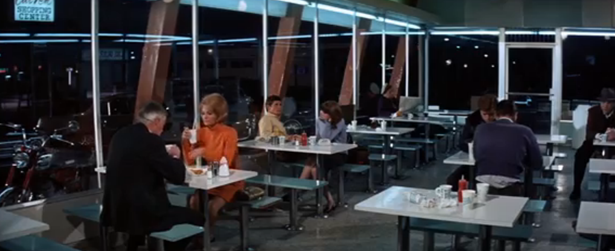
Now what? Reese is gone. Lynne is gone. Every single middleman is gone. He has a load of money laying out at Alcatraz for him and perhaps Chris is stilling waiting for him. We don’t know. That’s where Point Blank finds its conclusion and it’s just as vague as where we jumped in.pointblank3It’s understandable that it has gained a cult status over the years since Lee Marvin is an uber-cool gunman and his journey is hard to figure. His world is a bleak cityscape of 1960s L.A. and S.F. We can never hope to fully understand him or this world either and that’s the beauty of Point Blank. There is a degree of ambiguity that is fascinating. Heck, we don’t even know this man’s first name and yet we invest time in his story. I want to see Point Blink again because it’s not just your typical shoot ’em up action film. It makes you think and it has such a cool aurora and style. It deserves another viewing at some point soon.

4/5 Stars

Review: Goldfinger (1964)

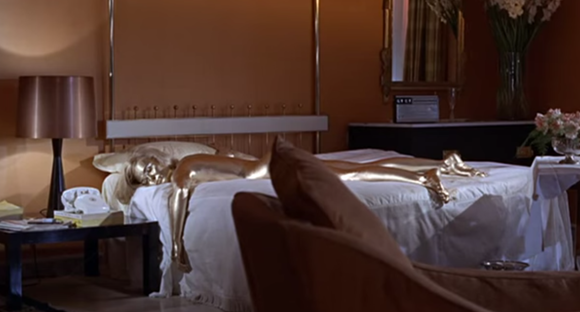
goldfingerThe film opens with a wonderfully unnecessary opening gambit, which allows us to reenter the world of dashing MI6 super spy James Bond (Sean Connery). His electrifying escapade culminates in the memorable quip, “Shocking, positively shocking” and just like that we jump headlong into his next adventure, Goldfinger!

Shirley Bassey’s striking rendition of the title tune reverberates over the metallic credits setting the tone for one of the great Bond films. It starts with the music and never wavers as we pick up with MI6 on a nice holiday in Miami Beach. He has his first run-in with international gold dealer and suspected smuggler Auric Goldfinger (Gert Frode). Bond has a little fun with the cheater at the expense of a young woman while also having his first encounter with the mysterious Odd Job.

Goldfinger leads Bond all over the place from Switzerland then back to the United States. MI6 discovers how Goldfinger does it while also crossing paths with Jill Masterson’s sister Tillie, who has a personal vendetta to make Goldfinger pay. It doesn’t go so well.

Bond is imprisoned but not before proving himself to be a nuisance. He is nearly mowed down by an industrial laser, but Goldfinger thinks better of it and ships him off to his base on a Kentucky farm. Bond gets his first tete-a-tete with pilot extraordinaire Pussy Galore, and needless to say, he is intrigued. Meanwhile, his American ally Felix Leiter attempts to track his whereabouts and keep tabs on his progress.

Imprisoned yet again, he, of course, escapes just long enough to witness the plans of Goldfinger to use a deadly Delta 9 nerve gas to incapacitate the defenses at For Knox so he can swipe all the gold from the stronghold.

He first gets rid of some lowly American mobsters and captures Bond again. Operation Grand Slam begins as Pussy leads her group of pilots over Fort Knox deploying the gas over the premises. It takes effect instantly and soon Goldfinger rolls in with his forces and Bond in toe. It’s like taking candy from a baby and Bond can do very little as he is handcuffed to the bomb which is to set off in the vault. A rather sticky situation indeed.

But alas it was all a ploy. The gas did not actually work and all the troops suddenly get up and convene on Fort Knox with Goldfinger and his forces still inside. The game seems to be up, but not before another shocking moment between Bond and his old nemesis Odd Job.

The rascally Goldfinger gets away but Bond at least ends up with Ms. Galore. He used all his power of persuasion to acquire her help. What happened to Goldfinger, you ask? He comes back to enact his revenge, of course, and it nearly works. Instead Bond and Pussy get in some passionate necking while the search parties are out looking for them.

It is hard to top this early Bond installment for a plethora of reasons. It has the best theme song. It has arguably the best villain (or villains if you include Odd Job). Perhaps the best Bond in Sean Connery. The best decked-out car in the Ashton Martin DB5. And a couple memorable Bond girls. When it is all said and done, it adds up to an enjoyable spy thriller stuffed with intrigue, wit, and a crumbling of early 1960s sensibility. Above all it’s a “positively shocking”  piece of entertainment sure to give you a volt.

4.5/5 Stars

Review: From Russia With Love (1963)

fromrussia1To Love it, To Love it Not… Sean Connery is back as Bond and so there is plenty to enjoy with From Russia with Love (1963). Out of personal preference, my top three favorite films in the franchise would have to include Goldfinger (1964), Casino Royale (2006) and this beauty, all packed with quintessential Bond.

Sean Connery is arguably the best Bond. Some of that resulting from being the original and also simply because he was made for the role with dashing good looks, an impressive physique, and one smashing accent. Next, comes arguably one of the best so-called “Bond” girls in Tatiana Romanova (Daniela Bianchi) who plays the beautiful Russian opposite the handsome Brit. They’re a match made in heaven beginning with steamy encounters, followed by violent escapades, and topped off with playful romance. There’s not more you would want, except action and villains and gadgets, which we also get along with some ubiquitous Cold War sentiment.

In this installment, the Soviets are pitted against the CIA and MI6 with the nefarious SPECTRE manipulating both sides. They have received the aid of one of the Soviet’s highest officials in Rosa Klebb, who puts their plan into action. She, first and foremost, recruits deadly assassin “Red” Grant (Robert Shaw), followed by the pawn Tatiana Romanova, who works at the Soviet consulate in Istanbul. She is to be the siren to lure Bond into a trap with the tantalizing promise of a Lektor device (which MI6 desperately wants).

Thus, as any good spy would, Bond goes after this presumed admirer and first meets with station head Ali Kerim Bey. One man is dead and the Soviets suspect the Westerners. Bey’s office is bombed and the Soviets are the obvious culprit. However, the whole time it’s Grant working incognito.

Bond is taken by Bey to a gypsy camp for refugee and after an evening capped by ambush, he has his first meeting with none other than the beautiful Romanova. The new accomplices ultimately steal the Lektor without a hitch and board the train as “newlyweds” with Bey. However, the ever lurking Grant is waiting for Bond and his companions. Without getting into all the gory details, it sets the stage for a great fighting sequence.

007 gets away with a recently drugged Romanova and puts a helicopter as well as a fleet of motor boats out of commission single-handedly. Number 1 of SPECTRE is very displeased, and Klebb has one last time to make things right. She has a wicked pair of kicks. That’s over soon enough.

What’s left is a romantic gondola ride with our two lovebirds and the notes of Matt Monro playing over the kisses. Talk about a first date, this one was a great one, even for all us third-wheelers.

Goldfinger maybe the apex of Bond viewing, but From Russia with Love is a close contender for that title. Its action does not look half bad even after 50 years, and Sean Connery is quite the hero. What more is there to say about Daniela Bianchi except God was very good to her. Very good indeed. It’s a great adventure with everything you would want and expect in a spy thriller. It’s from Russia with love.

4.5/5 Stars

Act of Violence (1948)

ActofViolenceAct of Violence is an interesting post-war moral tale from director Fred Zinnemann. Frank (Van Heflin) returned home from war a hero. He now has a small child with his pretty young wife Edith (Janet Leigh) in the vibrant California town of Santa Lisa.

Little is known about his P.O.W. past and all his comrades were killed. Except one. His friend Joe (Robert Ryan) is still alive but he is plagued by a crippled leg now. He finds out about Frank’s whereabouts and it become his personal vendetta to straighten him out. The innocent Edith is in the dark about the whole ordeal and with the shadow of Joe constantly haunting him, Frank must family face the specter of his past.

He goes off on a business trip to escape and there out of desperation he winds up hiring a hit man to get Joe off his back. The two former buddies set up a meeting (which is really a trap), But as would be expected it does not work out as planned. Justice is dealt but there is still a strange sense of moral ambiguity. This is  certainly not Zinnemann’s best work, but it brings up some interesting questions about moral scruples and personal conflict.

3.5/5 Stars

Review: The Shawshank Redemption (1994)

ShawshankRedemptionMoviePoster (1)This film originated from a Stephen King novella called Rita Hayworth and Shawshank Redemption. The actress actually does play into this movie and her famed hair flip from Gilda even makes a memorable appearance. However, the shortening of the title not only simplifies things, but it refocuses the film on what it is all about. You guessed it. At its core, Shawshank is about the redemption of one man who would never let his hope or ardent spirit be quelled. That man is the memorable, but generally unassuming, Andy Dufresne (Tim Robbins).

His story began back in 1947 when he was put on trial after being accused of riddling his unfaithful wife and her lover with bullets in his drunken rage. We see bits and pieces of what happened, but not everything. Andy quietly maintains his innocence, but he is dealt two back-to-back life sentences in the Shawshank state penitentiary.

When he gets there initially he looks to be a pushover, not ready for the dark recesses and the harsh reality that is prison life. In his typically smooth mode of voice-over, Morgan Freeman, as camp grifter Red, recalls when he first set eyes on this man. He didn’t know it then but Andy would prove to be a life-changing acquaintance, and he also proved to have more guts than Red was expecting.

They first cross paths when Andy comes to Red inquiring about getting a rock hammer and Rita Hayworth. Red obliges and these trinkets allow Andy to shape rocks to form a chess set. The poster goes up on his wall and others soon follow. He’s a man who always strives to stay busy, and he never lets his circumstances get him down.

It doesn’t come easy though because the local prison gang christened “the sisters” are used to getting their way with any inmate they cross paths with. Andy is not one such individual, and he pays the price, receiving beatings on multiple occasions. Still, he keeps on living and ultimately makes a name for himself by providing tax advice for one of the most notorious guards. It’s after this specific moment when he wins a round of beers for his mates that they begin to see the extraordinary individual in their midst. He goes by the credo, “Get busy living or get busy dying.”

Following his own words to a tee, Andy begins to prove his worth and earn respect as he gives tax advice to many of the prison attendants and guards. Even the hypocritical warden uses his services to keep his finances and office in order.

Andy is also transferred from doing grunt work to helping the aged prisoner Brooks in the library. It’s a step up and unprecedented in the history of the prison, but then Andy is truly special. After Brooks is released and tragedy strikes his life, Andy continues to improve things. He regularly writes his representative for funding so he can get more books and his work finally pays off. He also sets up a program so prisoners and workers alike can gain the equivalent of a high school education.

As the years pass, the prisoners get older and the posters change on Andy’s wall from first Rita, to Marilyn, and finally Raquel. About that time, a young prisoner named Tommy finds himself in prison and all the old timers like his energy. Andy resolves to get the young man an education and Tommy, in turn, shares some potentially life changing evidence with Andy. But it all comes to naught. The warden maintains his tyrannical reign and the defenseless Tommy is struck down.

Andy begins to lose some of his privileges as the warden starts to clamp down on him again by throwing him into solitary confinement for two months. When he gets out, Andy’s hope is still alive, sharing with Red about his dream of someday going to Zihuatanejo in Mexico to live in solitude. Red thinks it’s all folly, but agrees to do something for him if he ever gets out.

Then during an upcoming roll call, all of a sudden, just like that, Andy Dufresne is gone for good. To add insult to injury, he used his business acumen to stick it to the warden who is investigated by the police. Andy has the last laugh.

After so many rejections and denials, Red finally gets his parole and he looks like a mirror image of Brooks, a man who grew to know the Shawshank as his only way of life. It looks pretty fast and grim on the outside now. But Red has a purpose that Brooks did not, in Andy. He keeps his promise to Andy and rendezvous with his old friend.

Shawshank is a thoroughly engaging film and it works because of the performances of Tim Robbins and Morgan Freeman. Robbins acts as such a bright light despite his solemnity and subtlety. He is unceasingly upright;  the perfect contrast to this prison which is a vile, disgusting place full of corruption and violence. Freeman is the cynic and in many ways, he stands in for the audience. He wants to believe in a man like Andy as much as us, but the world initially tells him he cannot. However, Andy proves Red and the world wrong, by redeeming what has fallen. I can never get over that truth because it is such a powerful message told in such an engaging way.

4.5/5 Stars

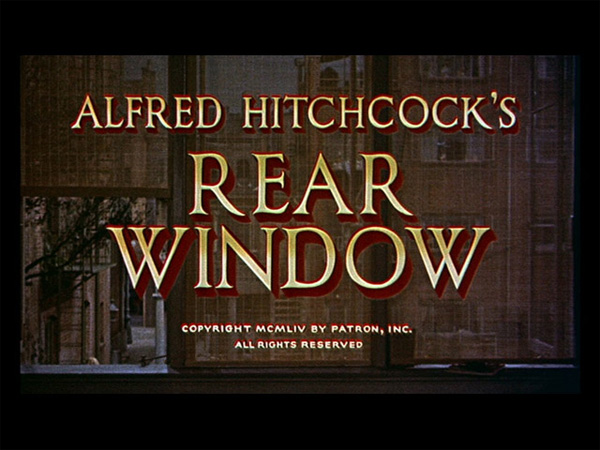
Review: Rear Window (1954)

Hitchcock_stills_0006_rear-windowWho in their right mind would make a film that takes place in a courtyard? Rear Window has always been fascinating from a technical standpoint, and Alfred Hitchcock is certainly not “The Master of Suspense” for nothing. He uses the confined space of a single Greenwich Village courtyard with an incapacitated individual to truly build the tension to immeasurable heights. The events within the film are often highly bemusing as Hitchcock has a wicked sense of humor, whether Jefferies is trying desperately to scratch that itch or the conversation turns morbid as he tries to eat breakfast.

The script has so many great little moments of back in forth repartee; some supplied by the always dynamic Thelma Ritter who plays the nurse with a lot of advice and opinions about rear window ethics: “We’ve become a race of peeping toms. What people ought to do is get outside their own house and look in for a change. Yes, sir. How’s that for a bit of home-spun philosophy.

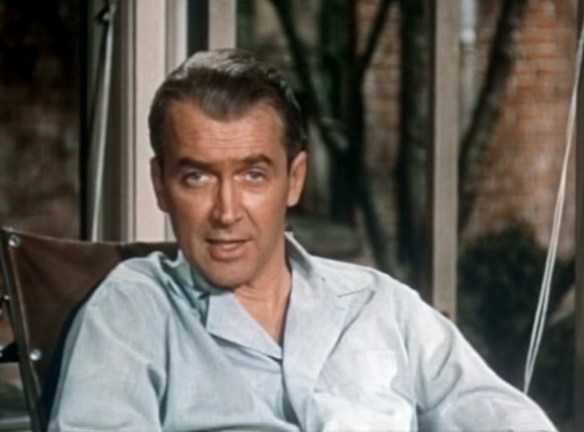
James Stewart is always a pleasure, but this time around he is perhaps at his most constrained as famed photographer L.B. Jefferies, who is laid up in his apartment for weeks on end with a leg in a cast. He got the injury thanks in part to his last big photo shoot where he ran in front of an oncoming race car. With nothing better to do, he spends his idle moments people watching and getting to know his neighbors. That’s one way to put it at least. As an actor, Stewart is stuck and relegated to conveying his whole performance through his gaze and the dialogue he speaks to those few who come in and out to see him. Most of what he’s doing is simply looking across the way and yet it works.

His neighbors are as follows:

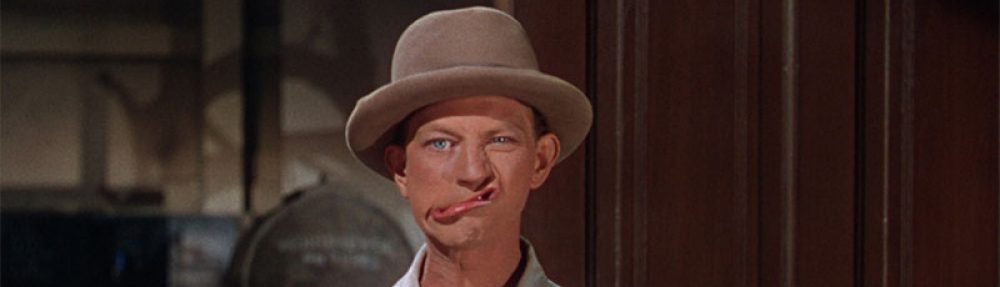
There’s Ms. Torso who is an aspiring dancer and always the target of many men. There’s Ms. Lonelyheart who never can find the love she so desires. A washed-up composer spends the entire film trying to figure out his newest project (even getting a visit from Hitchcock himself). There are the newlyweds who hardly ever leave their bedroom because they’re doing something… Then, comes the older couple on the second floor with a cute little dog and the sculptor who lives below.

Most interesting of all is the couple directly across the way from Jefferies’ because that’s where a long-suffering husband and his wife live. All seems normal, to begin with, however, Jefferies begins to have his suspicions thanks to circumstantial evidence and no sign of Mrs. Thorwald. His first thoughts immediately shoot to murder, but it seems highly unlikely. Day and night he continues to watch seeming to get more evidence, only to have his theories crushed, and then gain new hope through more evidence.

James_Stewart_in_Rear_Window_trailerThe interesting part is that as an audience we are fully involved in this story. We see much of the picture from Jefferies’ apartment, because there is no place to go, and so we stay inside the confines of the complex. In this way, Hitchcock creates a lot of Rear Window‘s  plot out of actions occurring and then the reactions that follow. We are constantly being fed a scene and then immediately being shown the gaze of Jefferies. It effectively pulls us into this position of a peeping tom too. Danger keeps on creeping closer and closer as he discovers more and more. The narrative continues to progress methodically from day to night to the next day and the next evening.

In the climactic moments, he finally faces the man who he always looked in at from the outside and yet by the end the roles are reversed with Jefferies space being fully invaded, and yet he can do little to flee, because of his cast. Hitchcock cuts it in such a choppy and chaotic way which breaks with the smooth continuity of the rest of the film, but it works so wonderfully in stark juxtaposition.

This is one of the main appeals of Rear Window because it has this Hitchcockian story of murder, mystery, and suspense. However, I am constantly eager to revisit this story, since there are so many other intricacies that are of interest.

Although the film uses a score by Franz Waxman, the majority of the sounds heard are diegetic and they either are street noises or music wafting around the courtyard from one of the apartments.  Also, there is only one small outlet to the outside world. At times, it becomes fun to survey what is going on whether it is kids playing on the street corner or cars passing back and forth. It builds this sense of realism suggesting that this world that has been created is larger than this one set full of apartment buildings.

Another important element is themes of romance and love. Jefferies comes into the film with issues in his own love life. His girl is the elegant and refined Lisa Fremont (Grace Kelly), who seems perfect, too perfect in his estimation. In his mind, they just don’t seem compatible enough, and he cannot see marrying her. It’s something they have to work through because she truly loves him.

Really every character essentially has a different outlook on love and different struggles, because romance is never an easy thing. Like the lyricist’s song, it is so often fragmented, but in their case, Jefferies and Lisa seem to figure things out just as the song finally gets finished. The moment where you can see it in Jefferies’ face that he is both impressed and worried for Lisa’s safety seems to be the time when things change. He realizes his love for her since she is very dear. He quits his thinking and his analyzing of their relationship, as gut-wrenching emotions take over when she is caught. In a sense, he listens to Stella’s earlier advice: “Look, Mr. Jefferies, I’m not an educated woman, but I can tell you one thing. When a man and a woman see each other and like each other they ought to come together – wham! Like a couple of taxis on Broadway, not sit around analyzing each other like two specimens in a bottle.”

Wendell Corey, in his supporting role as Jefferies’ friend and the police detective, is a man who can be a skeptic and still prove his loyalty as a friend. They can be at odds and still poke fun at each other with mutual affection. It feels real. Raymond Burr as the villainous Lars Thorwald works well too because he is certainly an angry, unfriendly grouch, but he does not seem altogether evil. It shows how easy it is for the lines to be blurred.

rear-window-first-shot-of-gkAbove all, Grace Kelly shines opposite Jimmy Stewart. There’s no one quite like her, so elegant, eloquent, with a touch of playfulness and adventure. She is willing to fight for her man and even go out on a limb for him (ie. breaking into Thorwalds’ apartment). One of the film’s most extraordinary images, out of many, has to be when a shadow covers the face of Stewart as he rests. Then there is a close-up of Kelly, her face slowly descending towards him. It’s hard to forget and for the rest of the film, she attempts to not let him forget her.

It’s not often easy for me to make statements like this, but Rear Window has to be close to my favorite film of all time. Yes, I said it. It never gets old for me, and I pick out new things every time. It’s more than just a mystery thriller. Hitchcock made it a technical marvel that is also steeped in themes of love and ethical questions. The players are the best of the best from James Stewart, to Grace Kelly, to Thelma Ritter, all down the line. It’s at times deliberate, but never boring, completely immersing the viewer into this drama as a firsthand witness. It’s the type of cinema we just don’t get every day because it has everything and it cuts to the core — to the most visceral level. That is the sign of cinematic greatness.

5/5 Stars

To Catch a Thief (1955)

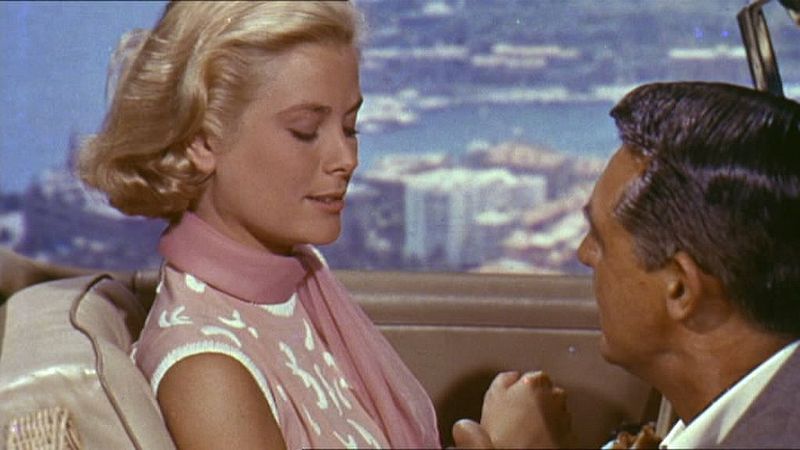
800px-To_Catch_a_Thief3Robert Wagner certainly knows It takes a thief, to catch a thief. The same goes for Cary Grant in this film which has him playing reformed cat burglar John Robie who is suspected for a series of thefts that have struck the French Riviera.

However, he knows he is not the culprit so he must clear his own name by catching the cat himself. The police want to nab him, his old French resistance buddies suspect him, and a beautiful young American woman (Grace Kelly) traveling with her mother is sure he is the cat. With a little help, mixed with some passionate romance, he is able bring some closure and get the girl.

That is all fine and dandy if you wanted a typical romance thriller. However, no one does it as well as Hitch. He somehow wonderfully balances the little bits of humor with his darker moments of suspense.  Jessie Royce Landis helps bring that comedy whether she is putting her cigarette out in some eggs or holding her book upside down as she commits a little white lie.

Hitchcock certainly had better films, but this one is so fun and it has the same glamorous Hollywood look as Hitchcock’s Man Who Knew Too Much (1956) with location shooting and vibrant colors.

Cary Grant and Grace Kelly make quite the pair, perfectly matched with the French Riviera in all its glory. I am convinced that Grace Kelly is and always will be one of my favorite actresses, period. Any era, any genre. Her name sums up her persona, because much like Audrey Hepburn, she has an extraordinary grace in how she carries herself. She can also be quite mischievous as well in her role as Francie. She is sure to set off fireworks.

4/5 Stars

Jurassic Park (1993)

690f7-jurassicpark1Jurassic Park was yet another smash hit for Steven Spielberg back in 1993 and it, as well as the animatronics, stand up pretty well over 20 years later. It might feel slightly underwhelming at times, but it definitely still carries the ability to entertain.

Without giving away too much plot, although most should have already seen it, Jurassic Park plays out like a modern-day King Kong story. John Hammond (played by actor/director Richard Attenborough) is a white-haired billionaire with an eye for spectacle. He has put his money to good use (so it seems) pouring resources into a new sort of attraction. This is no Disneyland and as such the stakes are much higher.

He calls upon the services of a paleontologist Dr. Grant (Sam Neill) and a paleobotanist Dr. Sattler (Laura Dern)  to give the seal of approval on his grand endeavor. There’s also a nosy lawyer who is curious for the sake of his investors. Round out the group with an authority on Chaos Theory (Jeff Goldblum) along with Hammond’s grandkids and you have all you need.

These lucky few are the ones who get shipped out to a remote island off Costa Rica to see first hand the majesty of Jurassic Park. But rather like Frankenstein, Hammond does not know what he has created. What was meant to be good, turned sour all too quickly, except in this rendition of the story he gets a little help from a pudgy programmer who is looking out for himself.

There’s not much character development to speak of, but if you have real life dinosaurs terrorizing an island you do not need much else. Accompany it with a truly epic and iconic score from John Williams and you have something quite special and quintessentially ’90s. If kids did not want to be paleontologists before they undoubtedly did after Jurassic Park.

As Dr. Grant so aptly puts it, “Dinosaurs and man, two species separated by 65 million years of evolution have just been suddenly thrown back into the mix together. How can we possibly have the slightest idea what to expect?”

That is the general intrigue behind Jurassic Park aside from the awesome fact that we get to see a T-Rex, Raptors, and many other dinosaurs recreated. This is not necessarily a kids movie due to the intensity at times, but it definitely is meant for the young at heart. Those are the people who unashamedly love dinosaurs.  But then again who doesn’t love dinosaurs?

4/5 Stars