A Big Hand for The Little Lady (1966)

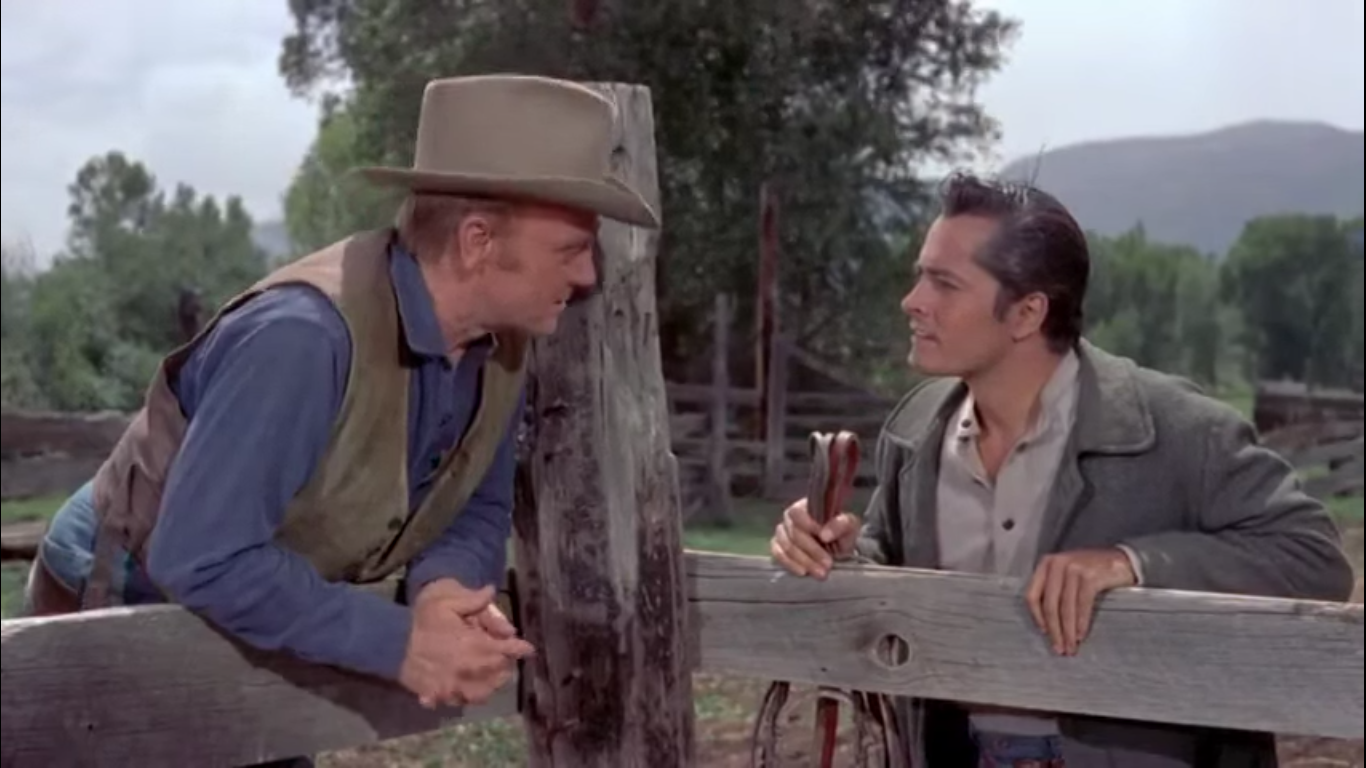
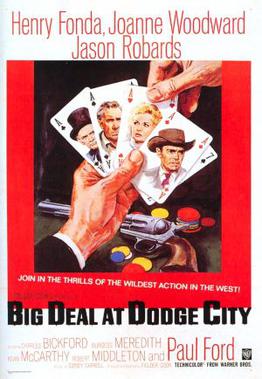
A Big Hand for The Little Lady is not something we see anymore: It’s a big, sprawling western brimming with comedy and a dash of intrigue. There’s a romping score from David Raksin and a frenzied opening as we watch the assembling of our secondary stars. And they are quite formidable from the grizzled Charles Bickford, Kevin McCarthy as a rapscallion with a glint in his eye, and the always irascible Jason Robards. They’re coming together, not for a showdown or a hanging, but for something far more momentous: a once-a-year poker game with astronomical stakes.

It’s mostly a contained western within the town and not just within the town, but within the local hotel and the backroom where only the richest and wealthiest are allowed a seat at the table. There’s little doubt that they could hold down a movie themselves, but they feel more like the entrée than the primary attraction.

For a time as an audience we are kept outside just wondering what’s happening between these rarefied few and then Henry Fonda, Joanne Woodward, and their son enter the scene.

Coming out as it did in 1966, A Big Hand for The Little Lady is one of those films that so easily melds with the TV age because it feels like a family movie and it was something that came of age originally on the stage courtesy of Fielder Cook.

What sets it apart as a movie are these stars, and they dole out. Fonda is his late period affable self and all his roles come off so seamlessly. Joanne Woodward may have been superseded finally by her super star husband Paul Newman, but this picture is a fine reminder of what a jubilant talent she was.

They come into town on their way to 40 acres of farm. They need some repairs on their wagon and they look to spend the night before heading on their way. It’s simple enough. Bu there must always be complications. Meredith (Fonda) proves himself to be a reformed gambler, but the temptation of a poker game is too great for him.

Kevin McCarthy has eyes for his radiant wife or sees a walking stooge before him. For whatever reason he vouches for the man and allows him in despite the remonstrations of his compatriots. They’re not accustomed to such interruptions to their yearly ritual.

Based on the facts that rules have never been bent for anyone, all of this feels like a very unprecedented development — not to mention a compromising of the rules. But Fonda goes to his hotel room to retrieve some of their life savings to front the $1,000 needed to just sit at the table.

What follows is a bizarre even absurd scenario as Fonda gets in too deep with all their funds, and he’s not left with enough collateral to stay in the game. They’ve bullied him out even as he has a killer hand of cards.

He proceeds to keel over on the spot into the loving arms of his wife, only for her to take up his mantle at the poker table as he gets attention from the local doc (Burgess Meredith). This, again, is highly irregular. They look down their noses at womenfolk, especially ones who have never played before.

After she learns the general premise of the game, she vows to put it on hold as she speaks with the bank manager. They go traipsing to the bank single file to meet Mr. Ballinger (Paul Ford), another irregular turn. While he won’t initially give her any help, once seeing her hand (another dubious red flag), he agrees to back her. What follows next is not something that needs writing about.

I’m not much for playing poker, but as a narrative device it’s one of my favorites because there’s always two levels to the game. It provides a concrete reason for a varied assortment of characters to sit down together — The Odd Couple is a favorite example — and there are usually stakes of another kind too.

However, here the movie almost feels like it reaches a premature climax with Joanne Woodward carrying a sway with the men that she hardly has time to build since most of the minutes beforehand she was away watching their wagon.

The film’s saving grace is it’s final abrupt revelation — I’m not sure if there are warning signs of any kind — but it’s a twist nonetheless. It’s also difficult not to see how Woodward’s acumen presages Paul Newman’s first-class showing and antics trying to agitate Robert Shaw in cards during The Sting.

The beauty of this movie is how it gives the actress the reins, and she proves herself to be the consummate performer. What’s more the cast is loaded with old pros who all seem game for a good time.

3/5 Stars
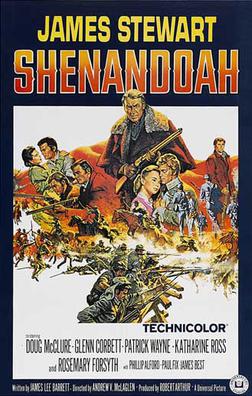
Shenandoah (1965)

Shenandoah is a curious movie on multiple accounts. It’s not unreasonable to think that large families like the Anderson’s existed in real life for mere practicality sake. More children means more farmhands to put in a day’s work and keep things running. It’s a survival tactic.

However, this is a Hollywood family loaded to the hilt with handsome young men and pretty women who crowd around the dinner table as their father blesses the food. He believes in hard work and not relying on anyone for anything. That’s why you have so many kids. He also happens to be played by Jimmy Stewart.

His faith is rudimentary. He prays to God and wanders into church conspicuously late on Sundays at the behest of his late wife, but he’s a self-made man who believes in the effectiveness of his own sweat and toil.

The movie also happens to be released near the centennial of the Civil War’s end in 1865. 100 years have passed and there’s still an uneasiness about it. There’s a brand of nobility between a certain class of white man represented especially by George Kennedy in a brief but memorable cameo. These are good men caught up in an ugly conflict, slavery and racism notwithstanding.

But in the same context, there’s only one black man of note and he’s a childhood friend of Anderson’s youngest boy (Phillip Alford most known for To Kill a Mockingbird). Otherwise, Shenandoah doesn’t have much dialogue about the scourge of slavery; perhaps we can be generous and say this not the film’s primary focus. It’s content focusing on its Southern heroes as they attempt to stay out of the fray. It just happens to be against this particular landscape, but its aims are smaller.

Charlie Anderson and his family continue keeping to themselves and working their land. But their Virginia territory is being surrounded by skirmishing Confederate and Union soldiers. It’s inevitable they’re going to have to get involved; they won’t be allowed to sit it out. That’s not how humanity functions. It will affect them in some way.

Although we can see it happening a mile away when the youngest Anderson lad picks up a rebel hat in a stream and starts to wear it around, it’s a necessary choice. He and his buddy Gabriel (Eugene Jackson Jr.) are ambushed near a pond, and he’s taken away as a prisoner of war. In spite of his father’s best efforts, he’s forced to grow up fast and become a man.

While it’s not quite The Searchers, Charlie vows to get him back and he’s intent on finding him even if conditions seem dire. It gives the movie its drive and he and his sons (as well as his daughter played by Rosemary Forsyth) must navigate a treacherous world inflamed by war.

He leaves behind his son (Patrick Wayne) and daughter-in-law (Katharine Ross) to watch over their estate, and we know deep down in the recesses of our beings that no good can come of this. This intuition proves to be correct.

It’s a credit to James Stewart as an actor how he takes a painful if inevitable moment and makes it into something so gut-wrenching. He and the rest of his kids have gone searching for his youngest boy to no avail and they come back empty-handed.

Watching the road on their return is a young Rebel soldier of only 16 and his first reaction is to fire. Jacob Anderson (Glenn Corbett) is instantly killed, slumped in his saddle.

The boy is shocked and Stewart comes upon him with the seething rage pent up from all his Anthony Mann pictures. He’s going to kill the boy for what he’s done. He’s got him in his grips and for a split second he’s choking him to death in a surreal out-of-body experience. The emotion has overtaken him.

Then, he realizes what he’s doing and with anger still smoldering and tears almost welling in his eyes, he tells the boy he wants him to grow up and have children so that one day when someone kills one of them, he’ll know what it feels like.

Stewart elevates this scene into this galling interaction between two people that’s somehow vindictive and still heartbreaking. Because it’s the rage Stewart was always capable of in his Westerns, but this time he’s a father with the unconditional love that comes with such a distinction. He loves his children so deeply just as he loved his wife. It’s the root of all his fury.

When they sit down before the table to pray again, it’s a far more somber and scarce occasion. Half the bench is empty and it just doesn’t feel right. It’s their new reality. This is what war does. But on Sunday at the church service, something very special happens, and it makes Charlie’s shattered heart full once more.

Because of the time period of its release, I feel like Shenandoah functions better on this more universal gradient as a story about a father, one who just happens to live during the Civil War.

It’s hard not to watch the film and also place it up against the current events of the Vietnam conflict which was still in its relative infancy, at least based on U.S. involvement.

James Stewart was of course known to be a more conservative man and even flew a bombing mission over Vietnam on February 20, 1966. By the end of his military career, he would end with the rank of brigadier general. It’s necessary to come to grips with the ambiguity of this.

Because whether he recognized the implications or not — and he was hardly a dummy — Shenandoah does become a kind of antiwar statement running parallel to the Vietnam conflict. And this is while it still remains firmly entrenched in the kind of old Hollywood depicted in family westerns like The Rifleman or The Big Valley.

It’s not like you’re going to see hippie haircuts, acid trips, or postmodernist revisionism. It’s resolutely clean-cut. Within this framework, the pacifist inclinations are still clear in the tradition of William Wyler’s Friendly Persuasion (1956).

I was ruminating over this idea that while Stewart was an obvious patriot who was an avid pilot and served with honor during World War II, I’m not sure if he could be considered a war hawk. They aren’t quite the same thing.

Of course, you could have an entire sidebar about how the Vietnamese in the 20th century or the Blacks during the Civil War weren’t given the same considerations and dignity as whites, but I’m an optimist.

When I watch this film it makes me want to fight for family, something far greater than any political or personal agenda. It’s something worth living and even dying for. Of course, when you bring it into modernity and it butts up against current events, the issue becomes a lot more tangible and equally murky. It’s easier when you can take ideas in a theoretical context and they aren’t staring you right in the face.

3.5/5 Stars

Run for Cover (1955)

Run for Cover is rarely talked about in conversations of westerns, but there’s something fascinating about getting a James Cagney-led sagebrusher.  Like seeing Edward G. Robinson in The Violent Men, it’s hard not to read his entire history of gangster pictures into his backstory because although it’s a different decade, genre pictures still hold a place in the viewing public’s hearts.

Before they broke out with the likes of Hud, Harriet Frank Jr. and Irving Ravetch penned the story this movie was based on. Although it hardly has the pedigree of Nicholas Ray’s Johnny Guitar, the images of the picture are still stunning in their own right shot on location in Aztec, New Mexico.

The opening premise is frankly pretty corny. Cagney meets John Derek at a watering hole very conveniently. They ride on together with no apparent purpose except to get to the nearby town. Then, in a freak misunderstanding, while they’re shooting some scavengers out of the sky, the two men are mistaken for train robbers, and they have a bag full of cash literally dropped in their laps.

The locomotive heaps on the coal to race back to town to sound the alarm after their close scrape with the “outlaws.” Realizing what has happened, Cagney, always the level-headed one, looks to follow behind and return the money. They have nothing to hide. Still, there’s only one way this might end.

The mountains in the background are towering — truly awesome to look at — but there are more pressing matters at hand. It’s rather foreboding. It’s been some time between viewings, but there definitely are elements of The Ox-Bow Incident and Johnny Guitar here where the lynch-mob mentality takes over the local populations driven mostly by fear and traumatic experience.

However, this is all a false start, a way of developing the scenario ahead of us. It’s about that same man played by Cagney — now the town marshal — and his young companion who’s stricken with a life-altering injury. They must figure out what it means to live their lives.

Cagney rarely got a lot of late-period credit. There’s White Heat and then One, Two, Three comes to mind — these are marvelous showcases for his tenacious talents. Run for Cover is rarely talked about, whether it’s in the context of ’50s westerns, the career of Nicholas Ray, or that of Cagney himself.

But it does feel like another picture to buttress his legacy with. Not because it’s some grand masterpiece; he proves that he can make a slighter, quieter picture like this sing. Because his talents were not always purely bellicose or irascible. He has a more general charisma even later in his career.

He’s summed up so beautifully in a crucial scene. The doctor says Derek will never walk again. Cagney won’t hear of it, and he walks into the adjoining room as the boy lies on the floor crying out that he can’t get up. As their kindly Swedish benefactor (Viveca Lindfors) attends to him, Cagney simply beseeches him to “get up.”

There’s an authority in his words that feels almost Christ-like. It might seem like it comes out of a place of callousness, but really there is so much concern there. He doesn’t want the boy to give in and waste his life. In some manner, he is a miracle maker, a man of faith looking to bring the best out of this boy.

it’s a fairly slow-paced, straightforward western and this means much of the brunt of the movie must be carried by the merit of the performances — the relationships cultivated between them.

John Derek feels like little more than a pretty face, and the young actor might have said as much, but Cagney seems generous to him just as his character is generous to his young companion enlisting him as his deputy. He gives him credence and importance in this movie that he wouldn’t get otherwise without such a consummate professional to partner with.

There is some menace in the picture. Ernest Borgnine represents one — a shifty outlaw — and later some godless out-of-towners come tumbling into church mid “Christ The Lord is Risen Today” prepared to raid the bank.

What Run for Cover has to its advantage is how it turns all manner of dynamics on its head. The sheriff lambasts the townsfolk who are so righteous, so willing to condemn others, even as they are supposed to represent civilized society.

Then his one protégé becomes the film’s final and most crucial point of conflict, and this is not just like the Searchers, the ornery old man budding heads with the impetuous youth.

It’s a different kind of complication as they must face off against one another and come to terms with who they are down to their very core.  There’s a clear-cut emotional intensity that can only be resolved in one telling act. It’s tragedy and redemption all rolled up into one, and here we have something that feels distinctly of Nicholas Ray.

3.5/5 Stars

Hour of The Gun (1967): James Garner and Jason Robards

The story is as old as the mythology of the West. You cannot avoid tales of Tombstone, Arizona on October 26, 1881 and the famed Gunfight at The O.K. Corral. John Ford covered the events most famously in My Darling Clementine headlined by Henry Fonda, Victor Mature, and Walter Brennan in the title roles.

A generation later, Burt Lancaster and Kirk Douglas teamed up to do their version. And the lineage runs a lot wider and deeper than this. It leaves one to wonder how many ways you can retell the same story with the same central characters.

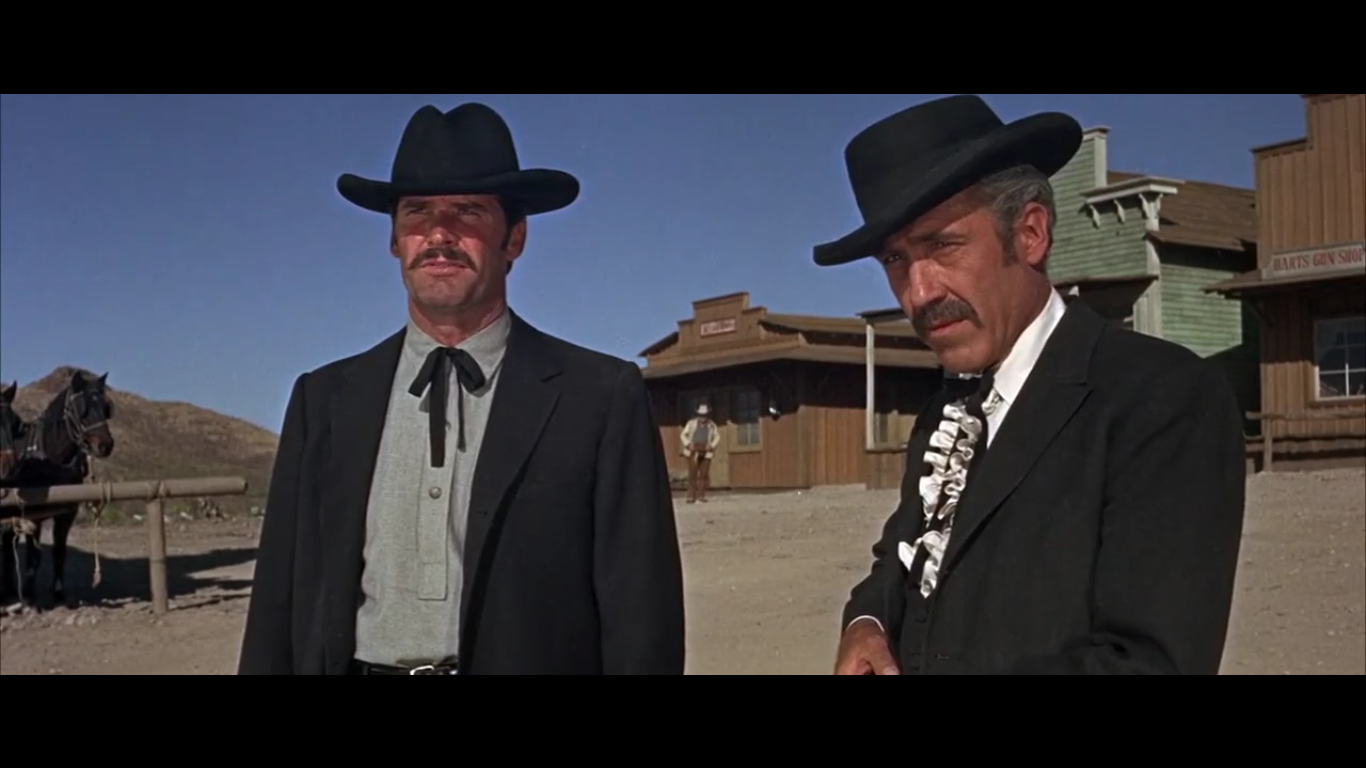
Director John Sturges answers the question almost immediately by doing away with the one scene that this whole mythology effectively hinges on. The movie opens with the gunfight at the O.K. Corral, which feels more like a glorified street fight, done in seconds, with Clanton standing by and unharmed by the events at hand. Whether it plays more to the timber of actual history or not, it sets a precedent and recontextualizes everything we must relearn about these legendary figures of the West.

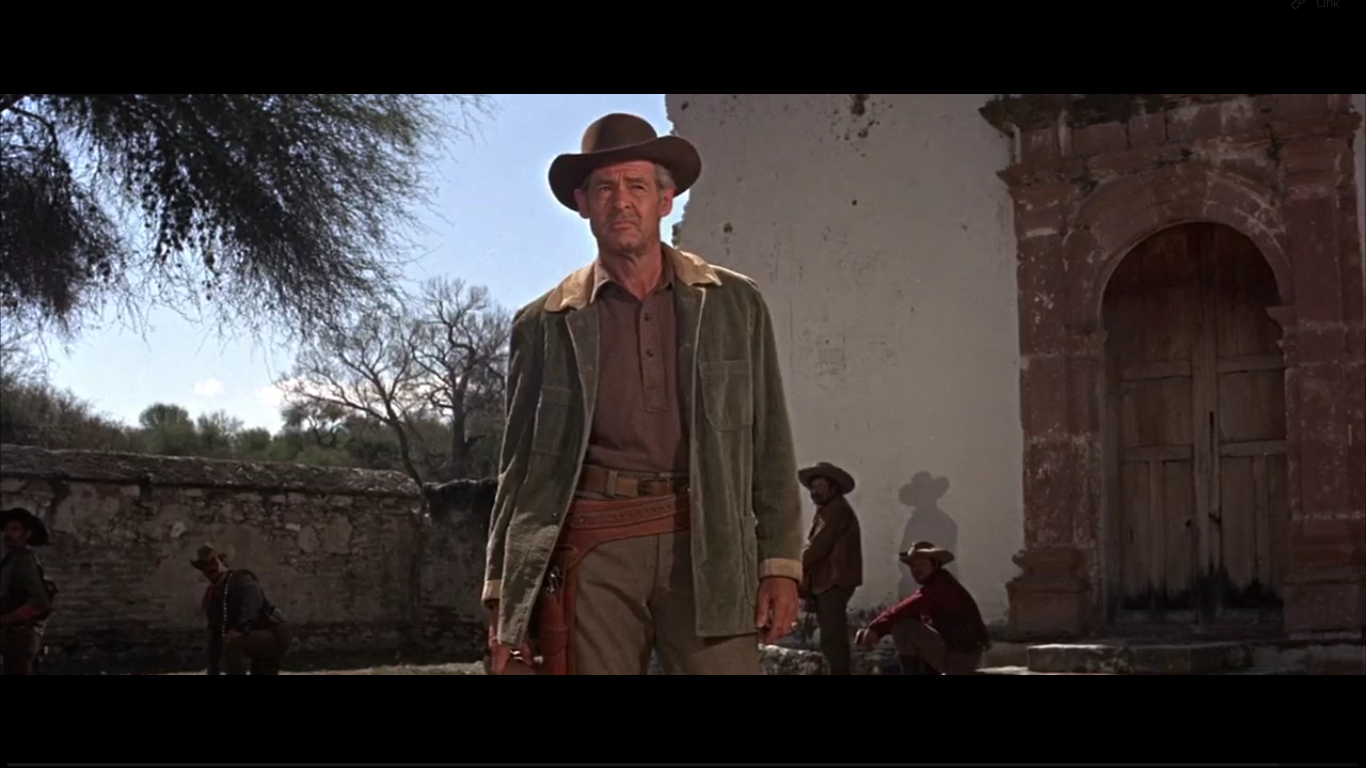
The men who play them are more than up to the task because of what they bring to the characterizations. Their names should be familiar. James Garner. Jason Robards. Robert Ryan. They are featured prominently in the title credits like figures on the marquee.

There might be some questions of where the movie might possibly go from here because it quickly disposes of its most “climactic moment,” underwhelming or not. Still, there manages to be a story built off the foundations of this inciting incident.

It becomes part courtroom drama momentarily, then it’s a town-wide conspiracy against the Earp brothers, and it finally turns deadly when they are ambushed with shotguns in the dead of night. The bloody gunfights and surreptitious ambushes are quickly deliberated over in the very same courtroom. There’s a kind of legal impasse.

Ryan always managed to be a fine villain, and it’s no different here. He plays Clanton as a shrewd businessman with most of the town on his payroll including sheriffs, public prosecutors, and a bevy of wanted gunmen (including a young Jon Voight). Though he never pulls the trigger himself, he has many minions in his pocket prepared to do his bidding. It’s a lot more convenient since he has the money to spend.

Hour of the Gun also feels like a western straddling two generations. Garner and Robards represent it well. Garner’s Maverick and to some extent his Local Sheriff put a different spin on the western genre as a kind of anti-western star, at least compared to the James Arness or Chuck Connors archetypes.

And Jason Robards, who only a year later would find his way into Sergio Leone’s epic spaghetti opera Once Upon a Time in The West, is equally adept in such an environment. He can be rugged and tough but not without a kind of wry sense of humor and intuition. We like them both for who they are. First, as performers and then as two of the West’s most prominent figures: Wyatt Earp and Doc Holliday respectively.

Lucien Ballard was a Hollywood veteran with saddlebags full of movie credits including many entries shooting his wife and leading lady Merle Oberon. Jerry Goldsmith takes on scoring duties with work that observes the purview of the West while reminding us of his crucial role in future New Hollywood and blockbuster hits.

It’s curious how the movie hews closer to history, and it looks to dispel myth and tell a version of the tale that feels more like a procedural. In some ways, it is a more modern expression of the western, though John Sturges is not in the Eastwood, Peckinpah, or even Leone school.

He was actually the very same man who helmed The Gunfight at The O.K. Corral with Lancaster and Douglas. But this is hardly a reworking in the way Howard Hawks remade Rio Bravo multiple times. Rather it feels like Sturges is intent on telling the tale with different terms more to his liking.

Initially, it builds off the legacy of The Magnificent Seven and The Great Escape where there’s something honest and sure about its telling, but it’s not gun shy. There’s still a sense of violence and ambiguity in other ways. Because hypocrisy exists in a world where as long as men have warrants and badges or they are fighting wars, killing is legalized. In all other contexts, it’s not permissible.

It becomes so easy to bend the rules either in service of good and often in the service of evil. Hour of The Gun ultimately is quick to distance itself from the comfortable morality of earlier westerns. This too is a bridge to its future brethren in the genre.

Doc is the man who ultimately assembles the troops; it’s a sequence we know well and somehow Sturges’s best films always captured this brand of male camaraderie — the kind of scenes that little boys of a certain generation aspired to. Getting together with their friends to fight the baddies. There’s still a sense of good fun and the kind of innocent naivete the western used to breed. Though it never amounts to anything.

It all comes down to Wyatt Earp and his personal vendettas. Garner shows a ferocity and a simmering rage that’s rare in him or at least he hides it well often through down-home charm or a coward’s prerogative. Here he’s driven by a sense of justice for the deaths of his brothers. He’s not squeamish when it comes to searching it out either.

The ending could not be a further departure from its predecessors. It feels like the dilapidated, windswept ruins and facades in pictures like Vera Cruz or Butch Cassidy and The Sundance Kid where the classic western modality goes to die in some sense.

Wyatt finally completes his search for Clayton and comes face-to-face with the man who was so very hard to find. Doc and some bandits stand by testily as Earp flips his badge to his friend, signaling this is a personal action not enacted under the letter of the law.

It’s a quick, unsentimental climax, but it stays true to the opening depiction of the O.K. Corral. I would not hasten to say it’s realistic as much as it gives a more murky and unembellished version of the story. Still, whether he meant to or not, Sturges effectively revises one of the most quoted American myths adding yet another complicating footnote to how we come to understand it. All other things considered, from the imagery to this commitment to a raw account of history, Garner and Robards are still the ones who make the picture.

3.5/5 Stars

The Tall Men (1955)

We open in Montana 1866 with the Allison brothers (Clark Gable and Cameron Mitchell), two former Confederate soldiers, leaving behind the “heartbreak memory of Gettysburg” for the promise of wealth in California. But first they must traverse frostbitten exteriors.

It’s no picnic as they join forces with Robert Ryan and face a treacherous trail overtaken by blizzard conditions. It chills your bones just watching them wade through the snow, fighting against the icy landscape.

When Jane Russel gets into the picture, the story and the dialogue start to pick up. She always had a way with words — and meeting in a snowstorm has a way of bringing folks together — she’s quickly trading repartee with first Gable and then Mitchell. Ryan just sits by and lets them have at it.

Gable and Russell end up in a cabin together out of the cold. It’s not quite the “Walls of Jericho,” but as Gable cooks up some meat over the fire, and she warms her feet on his back with a few playful kicks, the moment becomes the highlight of the picture thus far. We understand and appreciate the human connection unfolding before us going beyond dialogue or plot points even the nature outside. It’s about two people connecting with one another in a movie but also as individual performers.

In fact, I liked it all very much until I realized I was being imposed upon by a story and a plot. The characters are forced apart and spend the night pouting in their separate corners. It feels like a cheap rom-com ploy in a movie that might have been about something far more gripping and substantive. Instead, it becomes a feeble excuse to inject some amount of tension into the picture.

Sadly, it’s never able to reignite the same alluring lightheartedness of their opening introduction. They’re too busy trying to be distraught with one another to make time for much fun. In this way, Raoul Walsh is not Howard Hawks.

Ryan is frankly subdued if fairly determined with what he wants, be it cattle driving, making money, or charming the women he keeps company with. In his own quiet, self-assured way, he’s out for status and remains the envy of every other man. He can never be mistaken for a villain or even a real rival for Gable. They never play it that way. Even when his hot-headed brother, played by Mitchell gets belligerent, Gable’s quick to defuse the situation.

There’s also little push or purpose to the ensuing cattle drive as it is more of a conduit for the romantic tension, and it hardly seems to be enough to carry the weight of such a lengthy picture. Jane Russell is given ample opportunity to sing, bathe herself, and remove her stockings for the camera. Whatever the contemporary audience might have clamored for, it’s a sorry use for her talents and adds very little to the film.

They do indeed run tall in this movie. What the title fails to mention is how each man is pretty old, past the prime of a cowboy, and so we’re asked to let it slide. It’s almost laughable that Cameron Mitchell is meant to be a youthful hothead. Instead, it feels like he’s caught in a state of arrested development. It could be worse.

So while there’s a desire to see the mythos of the West played out in front of us on a grandiose scale, the movie never quite manages the whole package. Walsh is a consummate professional, and he makes the images as grand and as resplendent as he knows how with all the resources availed him. And yet the narrative itself — the sinew that makes up the story — never hits a lasting resonance. One exception might be a thrilling standoff with some Kansas extortionists.

Alas, there isn’t very much more to appreciate on the journey. It does feel like a sizeable waste of talent even as the film itself has vistas well worth our time.  It is a pity because I couldn’t think of a better way to draw up a western than enlisting the help of Clark Gable, Jane Russell, and Robert Ryan at the height (or even the trough) of their powers. Surely they were deserving of a bit more consideration.

3/5 Stars

The Law and Jake Wade (1958): Robert Taylor and Richard Widmark

It’s initially intriguing to have a western pairing of Robert Taylor and Richard Widmark, rather like what we get out of Warlock from Henry Fonda and Widmark the year after. My estimation of the dashing ’30s matinee idol has refined over time as he matured into such worthwhile westerns as The Devil’s Doorway, Westward The Women, and even Saddle the Wind.

Here again, Taylor holds the mantle as the inscrutable, no-nonsense lead and Widmark falls back into his role as a merciless reprobate, prone to all sorts of aggression. What’s more, there’s something delightfully skeezy about his voice. He slips into it so seamlessly playing a kindred of Tommy Udo or any of his more reprehensible characters.

The premise is set up immediately with a brazen jailbreak — one man comes in for his pal — and then they shoot their way out of town toward freedom. However, it quickly becomes more complicated. Jake Wade (Taylor) and Clint Hollister (Widmark) are not so much friends as former acquaintances.

This is merely an act of reciprocation because when they raided the Yankees during the Civil War, they formed an uneasy alliance, out of necessity, before eventually parting ways. If they don’t entirely hate each other’s guts, then at the very least they’re deeply mistrustful.

It’s even more curious when Jake returns to his current life. He’s a town’s marshall. How do you make sense of him? In one moment he commits a brazen act of jailbreak, and yet in another, he sits behind a desk in a decent, sleepy town holding a position of repute. Here the noir element is made evident — the way a dark past always comes back to haunt the protagonist and the life he’s tried to make for himself.

In the meantime, the imagery and more specifically the snow-covered mountains are an awesome backdrop and something only the western landscape affords. Jake also is keeping company with a pretty gal. Patricia Owens reminds me a bit of Julie London, mousier but deeply sensible. Her requests make sense, but her man can’t tell her his misgivings without dredging up unwanted memories.

Because Widmark is the force out of his past he can never totally get rid of. We wonder why he pulled him out of prison. It might come down to some moral prerogative, but it feels a lot like letting the monkey out of the cage so it can end up on your back again.

The old gang moves in and Taylor is taken prisoner with the sole purpose of leading them back to a cache of gold pieces he buried in some forsaken town years before. The journey is long and arduous and the callous Clint makes his old partner do it with his hands tied behind his back. He’ll give him a horse, but he doesn’t trust him with more. If you give him an inch, there’s no telling what will happen.

Deforrest Kelly never quite does it for me as one of the heavies — though he’s quite a psychotic hulk in Warlock. Of all the sidekicks, Henry Silva has real umbrage and a chip on his shoulder, coming off smug and vaguely dangerous.

However, in its best moments, it really becomes a fitting inverse of The Naked Spur held aloft by the two central performances dueling it out. The bad guy is the one holding the reins and dictating the story while our hero and his girlfriend are under his watchful eye as they go on the hunt for the buried treasure. The tension rides with them every moment of their trek.

When Widmark skirts off to catch the Native scouts that bode trouble, there’s a fear something will be lost in the movie. We stay back with the others as they wait it out in the ghost town, and it feels mostly stagnant. The dynamic brought by Taylor opposite Widmark is momentarily relinquished.

In its wake, there’s a run-of-the-mill shoot ’em-up Indian barrage. I couldn’t help but compare it with the shootout in Man of the West also preoccupied with a ghost town. However, whereas that film has Gary Cooper and a mythos about it like a knowing predecessor to Sergio Leone’s stylized showdowns, Jake Wade feels mostly unspectacular. It’s a shame because the film packages together a handful of worthwhile performances and tangible menace in fits and starts.

3/5 Stars

Backlash (1956): Donna Reed and Richard Widmark

Only in a western could we meet our protagonists in a sand trap known as Gila Valley. It says everything you need to know about the Arizona landscape, and then the sweeping Technicolor tones say a bit more.

Richard Widmark is easy enough to place as an enigmatic figure. There’s a glint in his eyes, and we know from his pedigree he’s capable of playing shifty. The true pleasure is watching Donna Reed — because she becomes very much his equal — another sturdy customer with her own personal agenda.

It feels so very unaccustomed for the woman who played Mary Bailey and anchored her own family comedy. Then, again, the edges of From Here to Eternity are not too far in the past. It’s hard to forget what she did there across from Monty Clift.

The movie gets its legs when a man takes a shot at Jim Slater (Widmark) from the rocky crags above. He thinks he’s been a mark. The woman, Karyl Orton, was trying to play him, and he nearly fell for it. Leaving her behind, he scurries to the rockface to have it out with his enemy on the high ground.

Backlash is a constant exhibition in deciphering characters’ intentions. Because as an audience we are thrown into the action and asked to follow what’s going on. She’s searching for some gold, and he asks us to believe his interests are purely in his father who disappeared in the territory.

Although it’s adapted from source material, it does feel reminiscent of some of Borden Chase’s other patented efforts with a craggy showdown reminiscent of Winchester 73′ (1950). Thematically, John Sturges’s turn as director also proves a decent facsimile of some of Mann’s best westerns where the blending of psychological duress, perturbing imagery, and in-your-face action strings out the story into a taut state of tension.

It’s easy to become genuinely immersed in the first act with a fleeing stagecoach looking to cut across the open plains with Indians in hot pursuit. As they fall back, they’re forced to hold down an isolated trading post against the onslaught of marauders.

Unfortunately, all this buildup feels a bit too convenient. Because Slater searches for a seasoned soldier named Lake (Barton MacLane), who was a part of the detail that found the dead bodies that were left behind in an earlier massacre. In serendipitous Hollywood fashion, the old man keels over from a battle wound, just before divulging the remnants of what he remembers of a “6th man.” Surely he is the key to the movie, and Slater has been propelled forward.

If we can stop for a moment to acknowledge them, Backlash has a couple doozy bits of casting with the normally maniacal heavy Jack Lambert playing a sniveling Indian trader. Then, Harry Morgan, in a role reversal, takes on the role of a squat, no-nonsense heavy out to hunt Slater with his big brother. Because Slater killed their sibling.

But if there was any doubt in the red-hot chemistry of our primary stars, it sizzles while Reed brandishes a knife to cauterize the gunman’s most recent injury. It is a movie moment made for the big screen audience if there ever was such a thing. This smoldering passion and growing relationship are nearly enough to salvage the picture in its slower ebbs as they continue their search for answers.

In the end, they split the thread pretty thin between the two of them. It can only go one of two ways. Either the man he’s looking to find is her long-lost husband, a corrupt man, or it’s his own father — a man he’s never known a thing about. We must wait to discover the answer.

But the factions in the buildup are interesting. Our protagonists meet a man named Major Carson (Roy Roberts), who runs a local ranch. He seems like a pragmatic, sensible sort of fellow, and he’s got a range war on his hands thanks to a man named Bonniwell (John Mcintire).

One hotheaded sharpshooter (William Campbell) goes turncoat, and there are still thugs looking for Slater to gun him down in an act of retribution. The local sheriff (Robert Foulk) aims to remain impartial in all of this while still maintaining some manner of civility. He’s not concerned with private vendettas, only some semblance of local law and order. Widmark quickly gets tossed into the jailhouse, effectively sidelining him and leaving him incapable of exerting any influence on either side.

I won’t spell out the final act because that’s part of the fun of the picture, watching it unfold. There’s a dog-eat-dog mentality; it’s about family, but it never stops being a picture founded on Richard Widmark and Donna Reed. If you’re curious about seeing them together, that’s a good enough reason as any to invest in this western from an often underrated craftsman.

3.5/5 Stars

My Name is Nobody (1973): Terence Hill and Henry Fonda

For those familiar with the tales of Odysseus, My Name is Nobody earns its name from the witty trick the Greek hero uses to escape the Cyclops. However, the movie should draw more comparisons to the works of Sergio Leone than Homer.

It’s difficult not to immediately calibrate the film’s first scene against something like the opening of Once Upon a Time in the West; it’s as much about the stretching and manipulation of time as it is the near-wordless actions. There’s even a clock ticking in the background.

We have a callback to Fonda getting a shave at the Tonsorial Parlor in My Darling Clementine (feet even propped up) however, here the scene is done up with this new sense of impending dread, and we can’t quite fathom why. We just feel it.

Again, getting a shave, milking a cow, brushing a horse, are mundane activities undertaken by three strangers, and yet the scene imbues them with this uneasy energy. They could be Jack Elam, Woody Strode, and Al Mulock biding their time at the creaking train depot for Charles Bronson.

Although Leone’s not the director; he conceived the original idea, and Tonino Valerii, who was Leone’s assistant director on some of his most prominent films, knows what it means to milk the moment through images and sound.

It’s not even the heart and soul of the movie, but like the earlier picture, it gives us the essence of the style and certainly Jack Beauregard. Because after giving the public a shock by turning Henry Fonda into a bad man, Leone’s done the western icon one last favor by canonizing his legacy for a final time.

Before any of this gets perilously high-winded and overly contemplative, it should be mentioned forthright that My Name is Nobody remains an unadulterated comedy on multiple accounts. Given what I’ve said already, I’m not sure if this comes as a shock or not. But what’s even more imperative is how it’s intended to be this way.

The dialogue is pure pap. It feels generally tone-deaf and totally out of sink with some of the best images of the movie, but this is all very much in the tradition of the Spaghetti western no matter the language, locale, or subject matter. It’s telling the only actor who actually dubbed himself was in fact, Henry Fonda. Again, he’s given the ultimate deference and his audience probably expects nothing less.

I’m also no music man, but there are elements of Ennio Morricone’s compositions here — the man who wrote the book on the Spaghetti soundtrack — seeming to gleefully parody himself. The interludes during the title credits are merry and gay literally popping with an almost sickening buoyancy. Later, it devolves into a melding of Wagner and chanting chorale arrangements that can only hearken back to The Good, The Bad, and The Ugly.

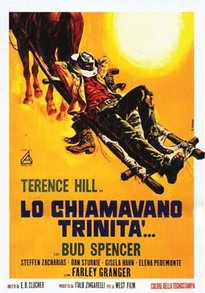
Here we get our first look at Terence Hill. He’s a vagabond who catches fish with his bare hands. This too builds off the same persona he had in They Call Me Trinity. He’s the anti-Eastwood if we can call him that — bearing a convivial manner — though equally adept when it comes to gunslinging.

Since there is no Bud Spencer, he gets Henry Fonda as his main partner in crime. Nothing against his most prolific friend and countrymen, but you’re definitely getting a different kind of picture with this change in personnel.

True, it’s hardly Fonda’s best work, but he feels strangely at peace with his surroundings and coolly confident since he’s done this so many times before. He’s not capable of going into parody in the same manner as Morricone’s score. Or if he does, it only aids in burnishing his already established legend.

Because he has a pedigree with forging the West you never had in a movie like They Call Me Trinity, though it shared some tonal similarity thanks in part to Terence Hill’s quick drawing ne’er do well. Fonda manages some amount of grandeur in a movie that otherwise is happily preoccupied with slapstick and scatological humor. There’s Sam Peckinpah’s name listed on a tombstone for goodness sake! And yet Henry Fonda, that is Jack Beauregard, provides a certain level of enduring gravitas to the proceedings.

It functions relatively effectively because Nobody (the name of Hill’s character) idolizes the older gunslinger so much. He makes us believe in him even as many of us bring our own history with Fonda to the movie already. The younger gun can best be described as a historian of Jack Beauregard and better yet a fanboy. He knows all about his exploits and has followed him from his earliest days.

He’s a peculiar sort of figure. At once, seeming to jostle for the spotlight and dog the renowned fighter, and at the other end, trying to grow his acclaim. He wants people to remember Beauregard as the larger-than-life figure he was in real life on countless occasions. But he also wants the man to go out by living up to his expectations. He can only do this by facing off with The Wild Bunch, a pack out of outlaw roughriders at least 100-strong.

The fun and games of the movie happen at a bustling carnival. Nobody takes the time to shoot a stilt walker down to size and pie a fat-headed vendor. He’s equally game for some gunplay in the saloon showcasing both his tolerance for alcohol and his uncanny sharpshooting.

All of this feels like an audition for a bout with Beauregard. Because the whole movie they toy with their adversaries, whether it’s in a funhouse, over bombs, or dynamite. Nobody ably turns some of his playthings into bobo dolls and runs off with a train filled with gold after staring down the engineer in a urinal. Yes, this really happens.

But of course, the movie is never about rivalry and this is how it sidesteps the usual trope others will remember from The Gunfighter or I Shot Jesse James, et al. In the final stand we have The Wild Bunch kicking up a dust storm in a face-off against a solitary, bespectacled Henry Fonda at the ready with his shotgun. He’s kept his part of his bargain, for the sake of his legacy and his ever-present shadow has provided him a fitting piece of assistance.

Although I have little call to cast aspersions on the picture, it feels like My Name is Nobody strives to be both comedy and elegy. It can never fully succeeds at either, but there are distinct elements to be appreciated. One of these is Fonda, and he goes out as a “national monument” rightfully so.

It’s not his greatest western by a long shot, but his last round in the saddle puts a fitting denouement on Fonda’s career adding its own addendum to the kind of Liberty Valance mythos or the cyclical lineage of toxic gunfighters. The pronouncement “Nobody shot Jeff Bearegaurd” maintains its double meaning. Sometimes myths aren’t bald-faced lies. They can also be acts of willful preservation and frankly, peace of mind.

In My Name is Nobody, there’s a warm jocularity to it all, down to the very last shot. It’s an accommodating movie, and although this keeps it from being totally profound, that’s okay.

3.5/5 Stars

They Call Me Trinity (1970)

When I was living abroad it was one of my European friends who first introduced me to Terrence Hill and Bud Spencer. I had never heard of them and was anxious to learn something about the duo. Regardless of what their names imply, both men are Italians with aliases befitting American action heroes.

They Call Me Trinity is one of their most lucrative pairings together, and it fits into the historical narratives I know well. It is a spaghetti western a la Leone or Corbucci, but it was made with deeply comic inflections.

We all know the laconic heroes: Eastwood’s “Man With No Name” or Bronson’s “Harmonica.” Hill seems to be one of their ilk, although he can be found lounging lazily on a litter pulled by his horse. He proceeds to get up and walk into the nearest cantina looking half-naked as he scarfs down a skillet of beans and drains a bottle of booze with a hearty belch. It’s the kind of showing that draws the curiosity of all bystanders. He represents a different kind of temerity — totally comic in nature. It helps he’s also ludicrously fast on the draw.

If he’s one source of easy laughs, the other is his brother played by Spencer, a sheriff in a nearby town at odds with some of the locals. It doesn’t help he’s got one of their buddies held prisoner. Bambino, as he’s called, showcases some farcical gunplay and superhuman brawn, wiping the floor with anyone who dares challenge him. Also, he’s not too pleased to see his blood relation, who quickly turns the showdown into a spectator sport.

Beyond their sibling rivalry, Trinity is just the man who could let everyone know Bambino is actually an escaped convict and not a true sheriff; he stole the job from the real man while he bides his time waiting for his cronies. None of this is of great importance

It must be said that the sense of reality is always strained to the nth degree in these Italian western pieces, normally shot in Europe with international casts, copious amounts of dubbing for various audiences, and any number of anachronistic flourishes. The dubbing is so prevalent it becomes an artistic decision more than a purely merchandising one. It’s part of the charm of the Spaghetti western and Trinity gladly soaks in this tradition.

The eponymous hero calls on his brother’s sense of propriety to help a clan of defenseless Mormons, whose pious hospitality is brutalized by Mexican marauders who might as well be under the commission of a corrupt landowner (purportedly Farley Granger) intent on pushing the migrants out.

Trinity is rallied to their cause by two bodacious Mormon daughters (Gisela Hahn and Elena Pedemonte) and Bambino reluctantly takes part thanks to their fine stock of horses. He might be able to gain something out of the arrangement. When his friends do arrive, they start instructing the righteous people on how to defend themselves and fight their battles.

They make their final stand, and it’s full of kinds of cathartic poundings and pummelings of the enemy. The good guys put up a valiant fight. It’s not quite The Magnificent Seven, but it has an ending worthy of its own characters.

From time to time, it’s a pleasure having heroes like these who feel a bit like a reincarnation of Laurel & Hardy for the buddy, western, action movie era. Bud Spencer as a bit of an indestructible hulk with an irascible temper. Hill as the handsome rapscallion who’s more than easy to root for.

They would follow up this success with many more — some westerns and then other pairings taking advantage of all the crazes taking over the international movie industry. I was introduced to them in Miami Supercops, which indubitably ripped off a handful of Miami Vice episodes and any number of cop shows being released in the ’70s and ’80s.

Here you have a great deal of the charm in Hill and Spencer. The Spaghetti Western was a hit in how it took the American conventions and gave them a facelift through pastiche and violent homage. It sounds like a formalistic mess and in many ways, it is, but that’s also part of the charm.

3/5 Stars

The Hired Hand (1971)

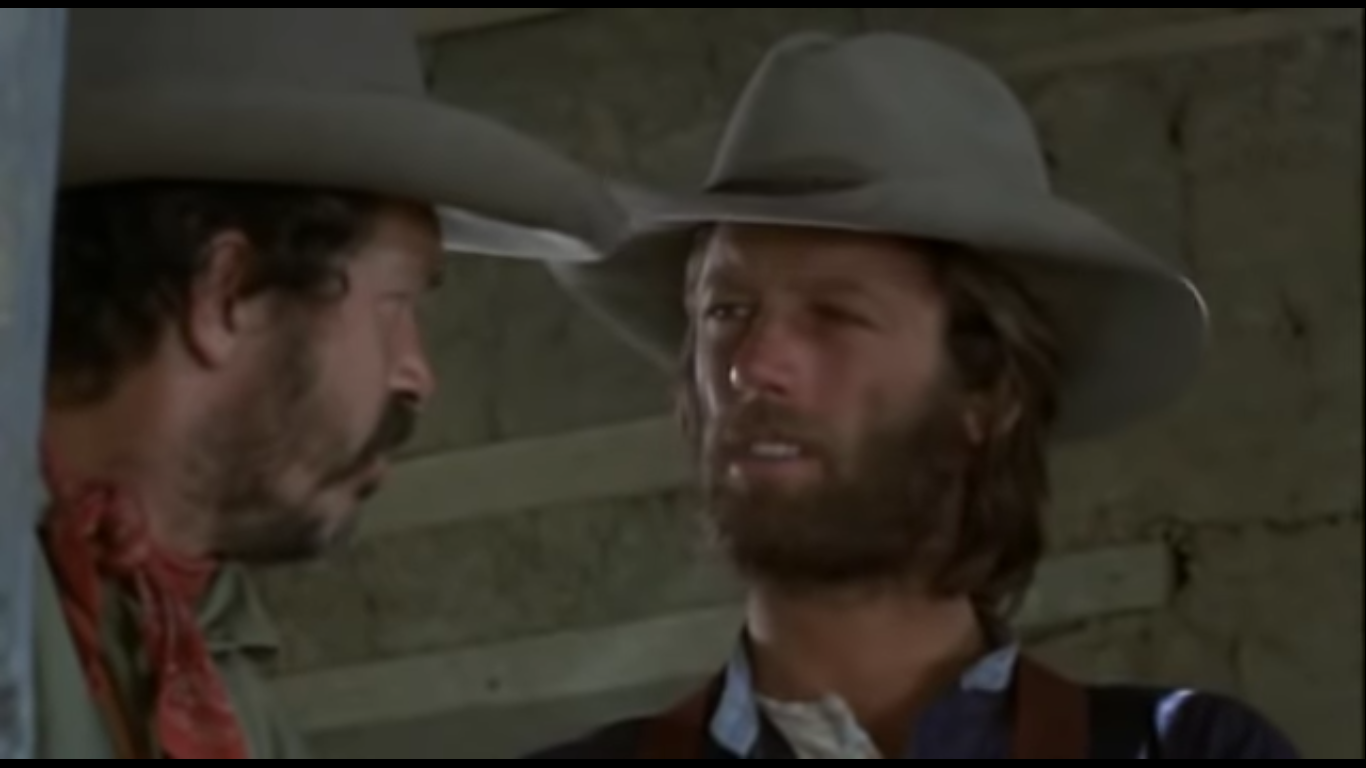
It’s true that Peter Fonda comes out of a western tradition of sorts, which is merely an indication of his family’s presence in the film industry. Obviously, one of his father’s identifying genres was the western, and he worked with some of the greats from John Ford to Sergio Leone.

Films like My Darling Clementine have become the bar with which to evaluate future generations. Then, Peter’s older sister, Jane, of course, tried her hand with the wildly popular Cat Ballou. It’s not high art, but there’s a great deal to appreciate between her gallivanting around and the drunken histrionics of Lee Marvin.

However, with The Hired Hand, Peter starred and directed a western of a very different breed. There’s a hallucinatory quality to the movie suggesting it’s not too far removed from Monte Hellman’s acid westerns of a few years prior. It’s composed mostly of images swimming in the restless score of Bruce Langhorne.

We already have Warren Oates and Peter Fonda, and it’s obvious the genre is funneled through the vision of the counter-culture that brought us pictures like Easy Rider and even Two-Lane Blacktop. In some of his earliest feature film work, Vilmos Zsigmond provides a casual, unsentimental sense of the landscape fitting the overall canvass developed by both the editing and score.

In their passing dreams, floating just out of reach, the California coast acts as a kind of far-off oasis for the three drifters staked out by a river bed. I couldn’t help thinking of generations before. Peter’s father as Tom Joad headed to California and faced his own brand of disillusionment with the dream packaged for him. Expectations didn’t meet reality.

Peter Fonda is besieged by the discontentment and malaise of his generation, but if we recall The Grapes of Wrath maybe this youthful sense of Sehnsucht, while morphing and evolving, is not totally lost or forgotten. It’s only reimagined in new forms and under new banners.

After days without bathing and nights without a warm bed, they roll into a town. But it’s not much better than the backcountry they’ve been frequenting. At any rate, it’s hardly the picture of civilization.

The film remains mostly a sullen affair plagued by death, but not just physical death, the death of joy or adulation in any sort of quality life. It starts grappling with the life of a drifter — the camaraderie of saddle buddies — and the solace of a settled home life. Because Harry Coilings didn’t always live this peripatetic existence. Once he was married. Funny how he never mentioned it before to his companions, but then again, the overwhelming emptiness in his heart has made him crave something different. So he and Arch pay a visit to his former missus.

Warren Oates has gained some welcomed acclaim since his death as a kind of cult favorite, but in The Hired Hand there’s something especially welcomed about him. He’s congenial and faithful, a source of affability in a movie that is mostly lacking in any kind of generosity toward its audience. Fonda gives us nothing. Verna Bloom has nothing to give because her character has learned to insulate herself. And there’s really no one else to offer any kind of condolence.

The film’s barely a meditation on marriage. There’s hardly time to build this into something substantive nor entirely profound, but we do have a sense of this male camaraderie. And suddenly it gives the movie a central question. Fonda must reconcile this relationship, one that has stayed with him for years on the lonely roads, with that of a distant wife who never expected him to show his face again. Whether he totally acknowledges them, they are both of great importance to him.

At first, I mistook the finale — a giant bloody shootout — for a pointless exercise. What good does it do? Very little aside from bludgeoning us with a bleak view of the world. However, it does speak to a man’s vow of friendship. While other elements of this western are irrevocably different from the past, there’s some small amount of stability in such a simple trait as this. Is this stupid courage like the screenwriter Bill Goldman enthused about? Probably.

It’s also a glimmer of something laudable speaking to the exact same listless despondency an entire generation was looking to grapple with from Easy Rider to Five Easy Pieces. This alone doesn’t make it a superior western, simply by having a muddied, unadorned sense of the world. But Peter follows in the footsteps of his dad and sister to leave his own impression on a deeply American genre.

3/5 Stars