
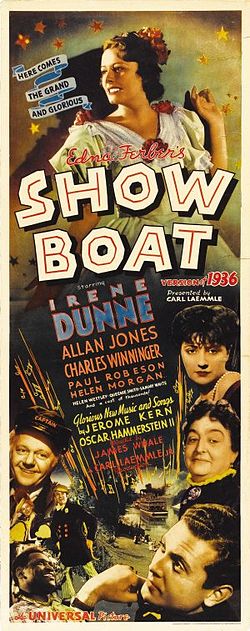
 Most of what I know about riverboats can be gleaned from Mark Twain, Davy Crockett and the River Pirates, and that ever beloved Snoopy incarnation The World Famous River Boat Gambler. The 1936 musical Show Boat falls into that very same rich tradition but some clarification is in order.
In truth, this is not the most remembered or even the first adaptation, for that matter, of the wildly popular stage hit of the 1920s. Those laurels go to the 1951 version starring Kathryn Grayson and Howard Keel and then the original partial-talkie released in 1927. But it’s easy to go out on a limb and reckon this is the best of the lot.
James Whale noted for such reputed monster movies as Frankenstein and The Invisible Man proves an equally compelling helmsman of musicals. Here his obvious attention to period authenticity is highlighted making the riverboat world of Missippi circa the 1880s incredibly atmospheric.
The story starts exactly where its title suggests with a Show Boat and the traveling crew of performers who turn up in every town to add a little gaiety and charm into every man, woman, and child’s life. The personable mastermind of it all Cap’n Andy Hawks promises big things to the general public who turn out in droves to get a chance on the entertainment.
But as is the case with any such narrative the true meat and potatoes is either on the stage with every song and dance or behind the curtains where people are living life and trying to get by the best they know how. Hawk’s wife is constantly nagging him and demanding that their daughter never become an actor. Instead, young Magnolia (Irene Dunne) is relegated to sit behind the piano.
Still, there is another plot thread with major implications on the contemporary constitution of race relations. I personally had no idea what was at the core of Edna Ferber’s Show Boat. I assumed it was only a musical perhaps bred in the rather sorry tradition of Gone with the Wind and other such pictures when it comes to depictions of African-Americans.
It’s true that there are some of those stereotypes present but this is a surprisingly forward-thinking narrative at first because at its core is miscegenation–in simpler terms the marriage of a white man with a woman of color. The two tragic lovers are actually depicted in a sensitive light while at the same time giving Magnolia her break with their sudden ignominious departure in the midst of the public scandal.
Still, in this small way, it’s not unlike Ferber’s later work Giant in how it begins to dissect the hypocrisy in society. For his part, singing giant and future blacklist casualty Paul Robeson’s epic rendition of Old Man River is one of the true capstones of the film imbuing the story with even more meaning and power. For another minor instant, it seems like the point of view of the downtrodden and marginalized is, at the very least, being acknowledged and given a place of significance. as if to say even for a split second that there are dignity and worth there.
Of course, it loses all the credibility it could have in one regrettable stage number where the happy notes make the blackface feel even more abhorrent. Though I have no major qualms enjoying this movie on a whole, any discussion must come with a substantial caveat.
In its second half, Show Boat does admittedly succumb to some pacing problems hitting its peak early on and slowly dropping off from its frenzied and energetic openings to more wistful conclusions that are understandingly less diverting even purely from a tonal perspective. It seems to even acknowledge its own weaknesses by condensing decades for the sake of time and the audience’s attention span.
It all began with lively commotion, spirited passion, and young love. In the end, it settles for a sentimental reunion of two lovers torn apart by destitution and time itself. It’s a lovely feel-good conclusion but it’s not nearly as satisfying as it could have been if Show Boat had kept its steam from the starting gates.
Though this is far from being Irene Dunne’s greatest role, she still gives a winning performance that memorably showcases her vocal training opposite her romantic co-star the rich-toned tenor Allan Jones. As a side note, she also exhibits the most unique churning dance you’ve seen rather like a caterpillar in a dress–only surpassed by Lauren Bacall’s shoulder shimmy in To Have and Have Not.
Still, Paul Robeson stands as one of the titans of this film. I hope he got the respect that he deserved for this role and if nothing else time seems to have honored him as “Old Man River” still remains one of the great musical numbers out there.
4/5 Stars
 Like the fella says, in Italy for 30 years under the Borgias they had warfare, terror, murder, and bloodshed, but they produced Michelangelo, Leonardo da Vinci, and the Renaissance. In Switzerland they had brotherly love – they had 500 years of democracy and peace, and what did that produce? The cuckoo clock.
 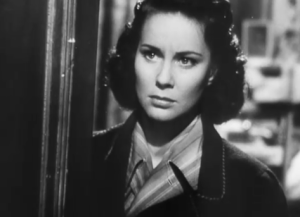 Joseph Cotten is surprisingly compelling as the poor, unfortunate stiff and it’s hard not to feel sorry for him in his ignorance because we can relate with him. Alida Valli is striking as the aloof beauty who nevertheless has an unswerving affection for her former love that remains the only joyous thing in her current existence. Then, of course, there’s Orson Welles as the charismatic myth of a man–arguably the most intriguing supporting character there ever was even if it’s mostly thanks to the legend created by those who knew him.
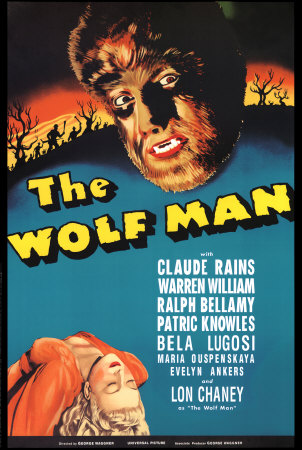 Even a man who is pure in heart, and says his prayers by night; May become a wolf when the wolfbane blooms and the autumn moon is bright.
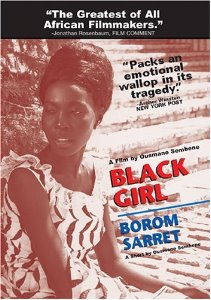 What’s fascinating about this film is how it manages to give voice to those who are normally silenced and even in her subservience this narrative powerfully lends agency to a young Senegalese woman’s perspective. Because even when she is silent and words are not coming out of her mouth and her status ultimately makes her powerless, the very fact that her mind is constantly thinking, her eyes observing and so on mean something. Inherently there’s a great empowerment found there even if it’s only known by her and seen by the outside observer peering into her life. That’s part of her. We are given a view into what she sees. We can begin to understand her helplessness and isolation. Where she came from and the life she left behind. Giving up the master narrative of the entitled and shown the flip side of the world for once.
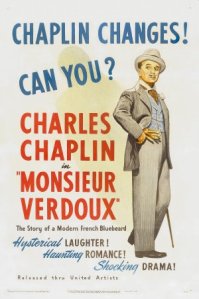 Prior to the making and release of Monsieur Verdoux Charlie Chaplin had undoubtedly hit the most turbulent patch in his historic career and not even he could come out of scandal and political upheaval unscathed. To put it lightly his stock in the United States plummeted.
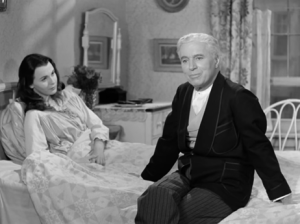 The glamour of limelight, from which age must pass as youth centers
 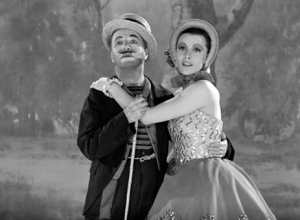 But now no one’s there. The seats are empty, the aisles quiet, and he sits with a dazed look in his flat the only recourse but to go back to bed. It’s as if the poster on the wall reading Calvero – Tramp Comedian is paying a bit of homage to his own legend but also the very reality of his waning, or at the very least, scandalized stardom. It adds insult to injury.
 It’s important to know that he writes off such an assertion as nonsense and one can question whether this is Chaplin’s chance at revisionist history or more so an affirmation of his life’s actual trajectory–working through his current reality that the world questions (IE. Marrying a woman much younger than himself in Oona O’Neil who he nevertheless dearly loved).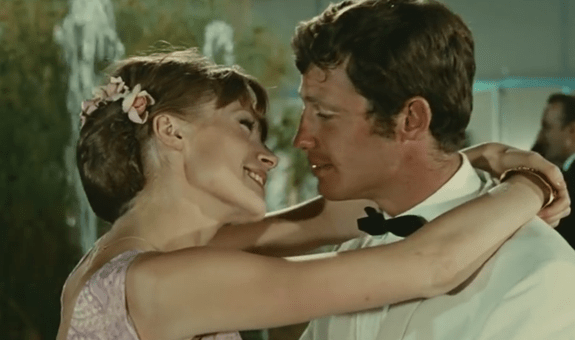
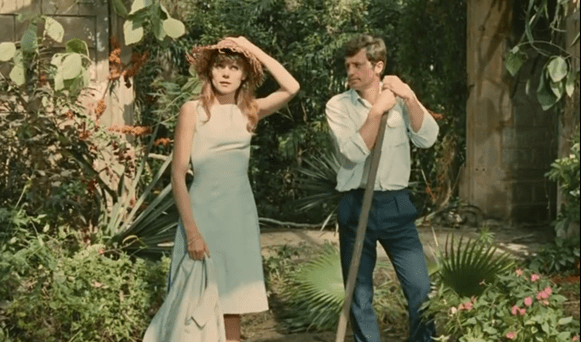
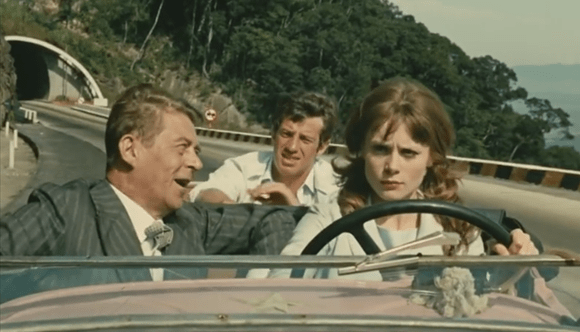
 There might be an initial predilection to call The Soft Skin Francois Truffaut’s most conventional film to date, but for me, it shows at this fairly early point in his career he seems to have grasped the main tenets of traditional filmmaking. Because his first films are full of life, energy, and idiosyncratic verve that easily charm their audience but here we see a film that in most ways looks like other classic works, well constructed and still quite engaging. Because within this very framework Truffaut is able to play around with issues that in themselves are still quite compelling. Love, intimacy, infidelity, and the like. Even with familiar names like Truffaut and Raoul Coutard, it feels very un-Nouvelle Vague. And that’s okay.
 Blanche Dubois and Stanley Kowalski. They’re both so iconic not simply in the lore of cinema history but literature and American culture in general. It’s difficult to know exactly what to do with them. Stanley Kowalski the archetypical chauvinistic beast. Driven by anger, prone to abuse, and a mega slob in a bulging t-shirt who also happens to be a hardline adherent to the Napoleonic Codes. But then there’s Blanche, the fragile, flittering, self-conscious southern belle driven to the brink of insanity by her own efforts to maintain her epicurean facade. They’re larger than life figures.
 Cat People has one of those sensationalized B-picture premises and there are moments when its meager aspects let slip that this is a low-budget effort, but within those restrictions, it moves with a certain purpose and chilliness. It’s true that producer Val Lewton had a B-movie renaissance going on at RKO Studios and Cat People is one of his treasures.
 At Oliver’s work, talk around the water cooler is made compelling in that his best pal and colleague is the sensible Alice (Jane Alexander) always ready to lend a listening ear. She’s genuine in accepting Irena for who she is because she can tell that Oliver earnestly loves her. But at the same time, she serves as a contrasting figure — someone who is completely different than this enigmatic creature.
