
 Themla & Louise hardly feels like typical Ridley Scott fare but then again, neither is this a typical movie. It pulls from numerous genres that have been depicted countless times before from buddy movies to caper comedies, road films, and the like. But perhaps the intrigue begins with the two leads.
It’s not simply the fact that they are two women sharing conversations together although that is often not a common enough occurrence in a world where the Beschel Test is often a stumbling block, but it is the fact that the two women are played so exquisitely by Susan Sarandon and Geena Davis.
They start out as two people stuck in a deadend world and they feel like the heirs to some of Altman’s heroines in films like Nashville and 3 Women. In fact, it’s a rather ironic development that screenwriter Callie Khouri went onto another project called Nashville. Still, when we look at their lives one is a small town waitress with a gruff boyfriend (Michael Madsen) the other a bit of a bubble-headed subservient housewife married to a grade A jerk. It’s easy to pity them and to want something better for them–at least some kind of escape from their everyday monotony. In one sense, that’s what the entire length of the film gives them and much more.
A single weekend away in a single irrevocable moment of decision evolves into not simply a gripping film but a rather astonishing adventure where they get to step out in ways that they never knew possible. True, there is murder and armed robbery involved but what makes the movie work at all is the very fact that we still care a great deal for these individuals. They tiptoe across boundaries but it never feels brazen. It’s accidental, brought on by necessity, fear, and the like. Even to the end, it’s as if Thelma & Louise naively believe that they are a notorious pair of outlaws but they don’t quite know how dark a place the world can actually be. It’s neither Bonnie and Clyde or Badlands. For good reason, they are simply Thelma & Louise.
One of the most memorable sequences involves Davis robbing a gas station register just as nice as you please using the pithy monologue she learned from the charismatic charmer J.D. (Brad Pitt in a key role early in his career) who always sports a cowboy hat and also ran off with all their dough. She feels completely out of place committing such an act, waving her gun around as the attendant empties the cash register into her waiting bag. But still, she does it and it epitomizes the inhibitions the two women begin to cast off.
But it’s also the same rascal J.D. who rats on them as they look to make their way to Mexico away from the authorities they believe are hot on their tail. Louise is paranoid of such things and Thelma is still just looking for fun but they’re together and that’s the important thing. Except the authorities on the other end of the line, digging around for answers, are actually led by a cop with integrity (Harvey Keitel) who seems generally worried about their well-being. He sees so clearly that their situation is atypical. They are not criminals even if they want to be.
Importantly Thelma & Louise remain friends to the end, even going so far as to visit the grand canyon together one final time. And that brings us to the film’s conclusion. While not wanting to sound too cryptic and simultaneously not wanting to spoil the experience for others, I can only say I wish Ridley Scott would have chosen a more brazen denouement or otherwise done away with his conclusion altogether. What he comes to is a compromise of an ending that lacks any satisfaction. But then again, maybe it reflects Thelma & Louise. They thought they had so much–that they were such big, bad people–except what did they end up with? Nothing at all aside from a polaroid picture to forever immortalize the craziest of road trips.
4/5 Stars
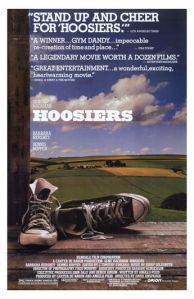 The last time I saw Hoosiers it was on VHS and I was only a boy and I hardly remember anything. Gene Hackman yelling. Dennis Hopper as a drunk. Jimmy the boy wonder, “The Picket Fence”, and of course Indiana basketball at its finest. But in those opening moments, as he drives into town and walks through the halls of his new home, I realized just how much I miss Gene Hackman. Yes, he’s still with us but the moment he decided to step out of the limelight and retire from his illustrious career as an actor, films got a little less exciting. His passionate often fiery charisma is dearly missed.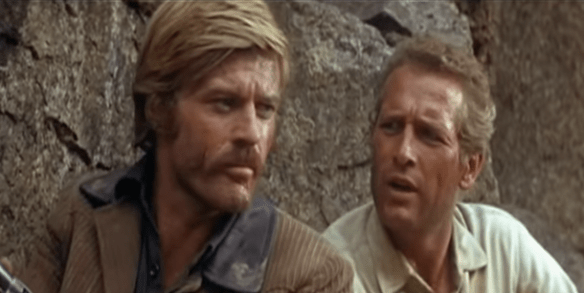
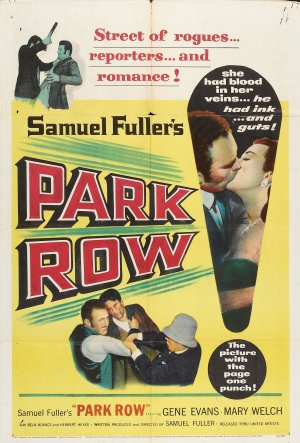 It’s no secret that Sam Fuller cut his teeth in the journalism trade at the ripe young age of 18 (give or take a year) and so Park Row is not just another delicious B picture from one of the best, it’s a passion project memorializing the trade that he revered so dearly.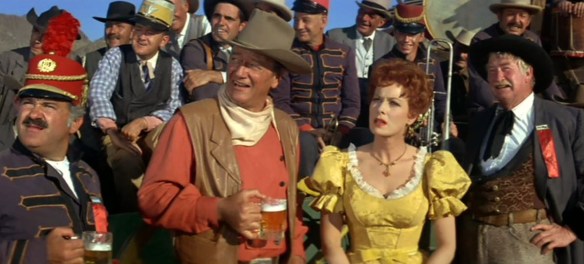
 Initially, I Remember Mama comes off underwhelmingly. It’s overlong, there’s little conflict, and some of the things the story spends time teasing out seem odd and inconsequential at best. Still, within that framework is a narrative that manages to be rewarding for its utter sincerity in depicting the life of one family–a family that feels foreign in some ways and oh so relatable in many others.
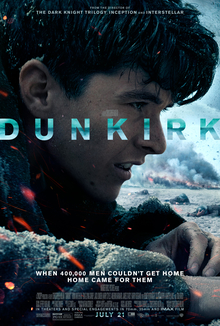 Upon being thrown headlong into Christopher Nolan’s immersive wartime drama Dunkirk, it becomes obvious that it is hardly a narrative film like any of the director’s previous efforts because it has a singular objective set out.
 Before the exoticism of Casablanca, Algiers, or even Road to Morroco, there was Josef Von Sternberg’s just plain Morocco but it’s hardly a run-of-the-mill romance. Far from it.
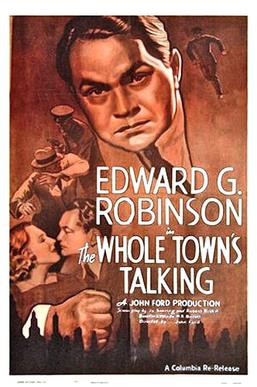 Comic mayhem was always supercharged in the films of the 1930s because the buzz is palpable, the actors are always endowed with certain oddities, and the corkscrew plotlines run rampant with absurdities of their own. Penned by a pair of titans in Jo Swerling and Robert Riskin, The Whole Town’s Talking opens with an inciting incident that’s a true comedic conundrum.
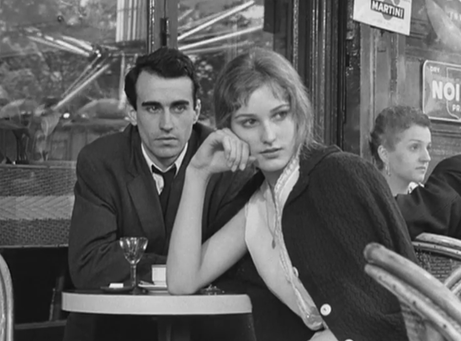 Pickpocket is an intricately staged, truly intimate character study from the inimitable Robert Bresson solidifying itself as one of his greatest works. As was his practice, Bresson took Martin LaSalle, a non-actor to be his leading protagonist.
